


Zhiji LS7 Urban Fit Launches With AI Cabin Features to Ease City Commuting
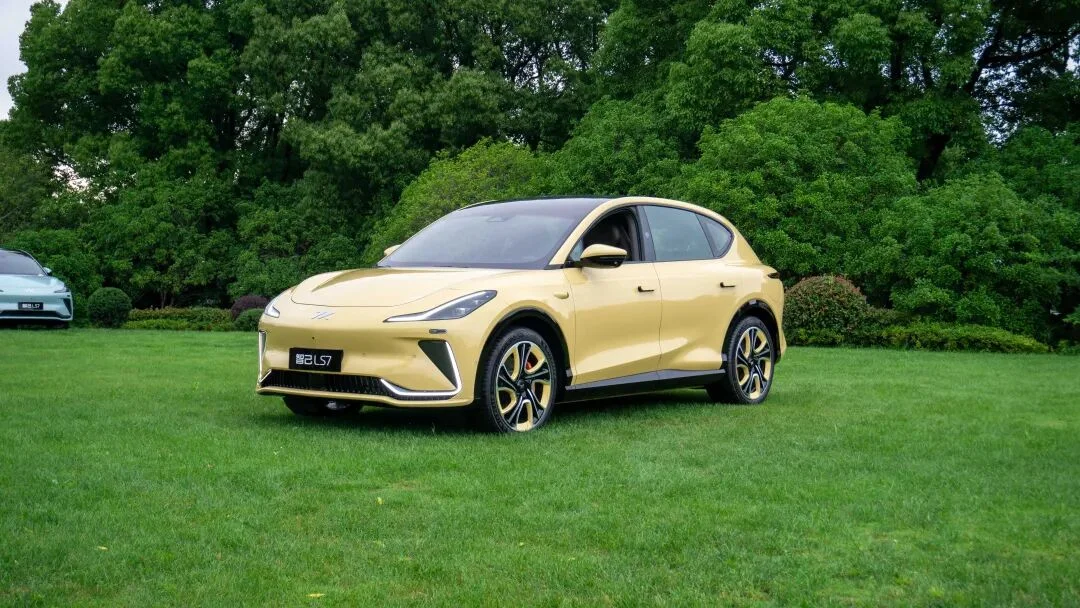
For a city commuter vehicle in the RMB 300,000 class of popular electric SUVs, which one would you choose?
At this price point, there are models with long range, those supporting full-scenario urban and highway assisted driving, and others offering smooth infotainment systems for passengers...
However, despite the intense competition in hardware specifications, user experience has failed to keep pace. Traffic congestion, blind spots, and charging anxiety remain the three core pain points of urban commuting.
So how can these anxieties be resolved? I found an excellent answer in the recently launched Zhiji LS7 Urban Fit. This car makes my daily urban commute simple and enjoyable.
01Hardware Competition Is Intense, Experience Lags Behind
Among the most popular electric SUVs in the RMB 300,000 class that I have observed, top contenders all invest heavily in intelligent hardware: large screens, high-performance chips, and LiDAR sensors are all standard.
Yet when it comes to actual owner experience, I still feel anxious about urban travel.
Recently, the Zhengzhou Traffic Police in Henan province conducted a test demonstrating that up to 75 children could fit into the blind spot of a police SUV driver. A momentary lapse in attention could easily lead to a traffic accident.
Urban mobility involves similar anxieties. I will share three core concerns and explain how the Zhiji LS7 Urban Fit’s full-scenario AI cockpit resolves them.
Anxiety One: Blind Spot Visibility
Today, vehicle-mounted sensors for driver assistance are ubiquitous, with detection ranges often reaching hundreds of meters. However, there is still no effective interaction system that allows drivers to better monitor blind spots during turns or lane changes.
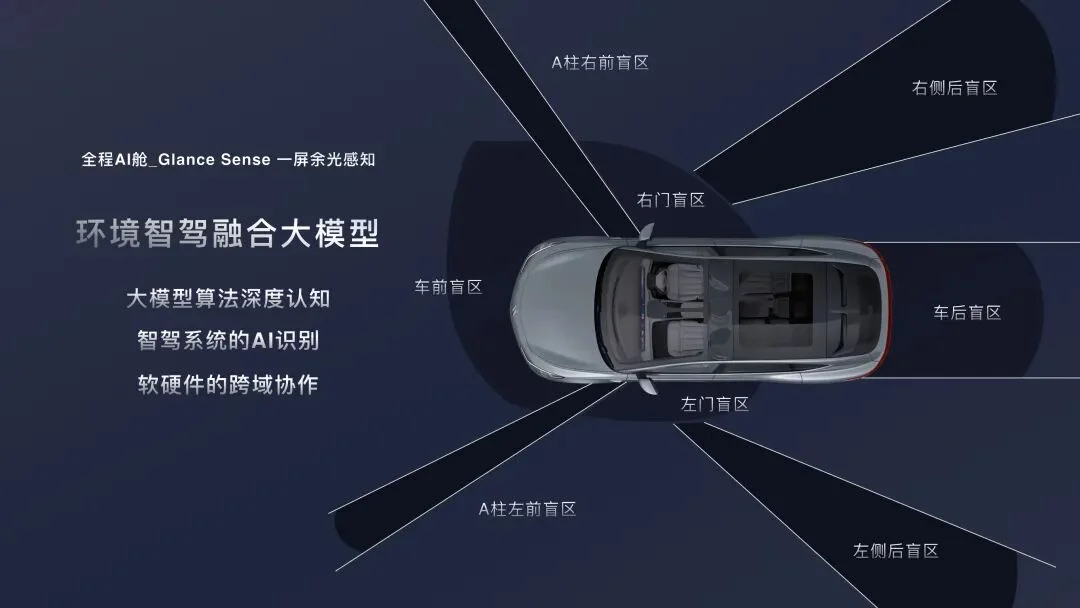
Zhiji’s recently launched 'One-Screen Peripheral Awareness' addresses this blind-spot visibility anxiety.
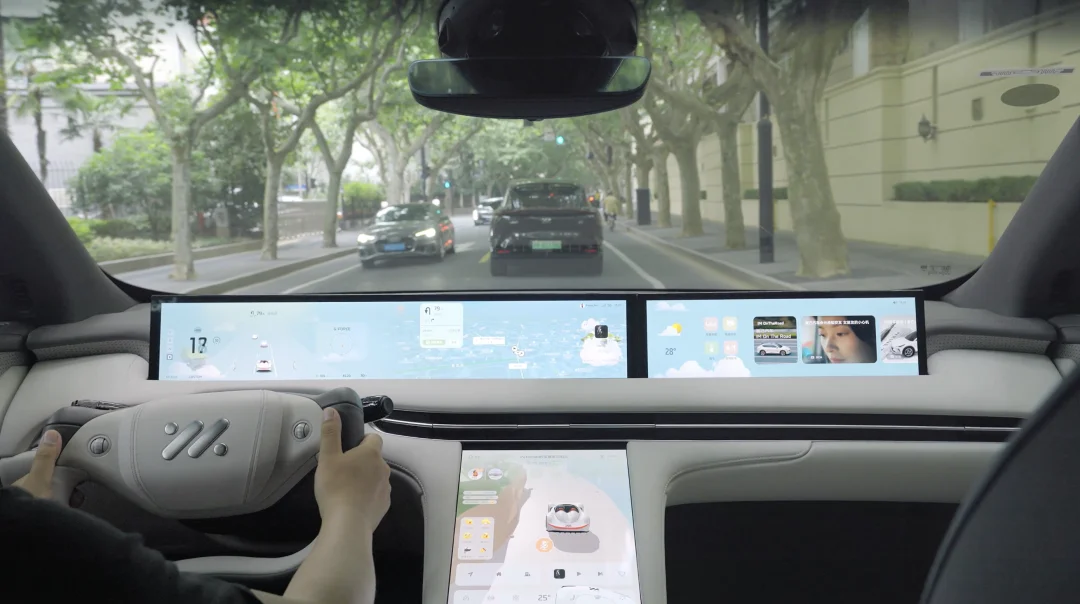
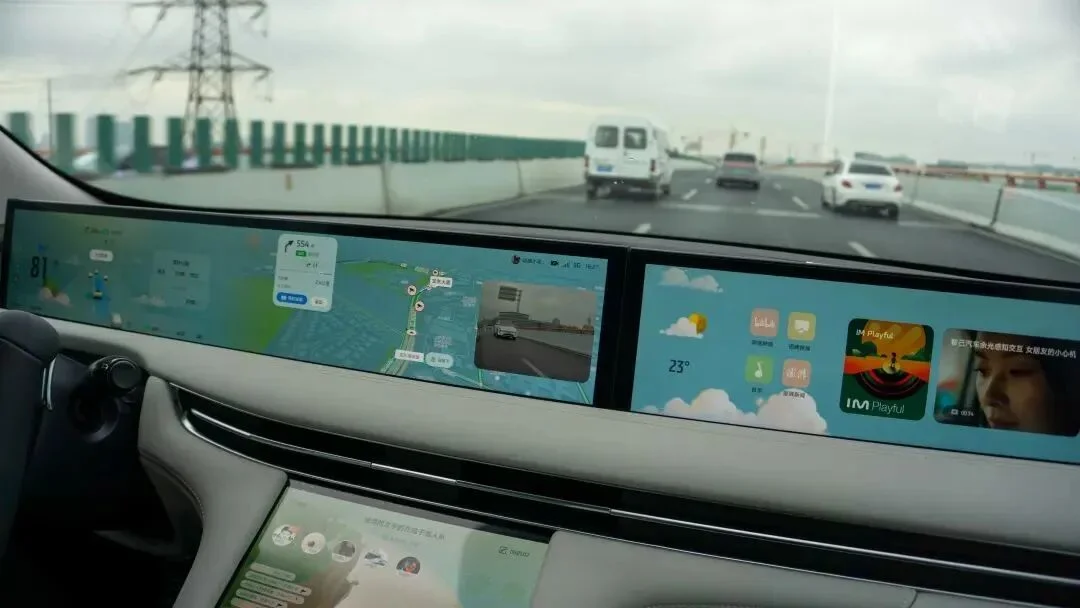
During city driving, a driver’s gaze inevitably shifts between the road ahead, rearview mirrors, and the infotainment screen. This shifting focus can create safety hazards. By integrating the vehicle’s sensors with its smart cabin systems and utilizing an adjustable smart scenario screen, Zhiji enables drivers to maintain their forward field of view as much as possible.
The first component is the environmental intelligent driving fusion model, which essentially functions as an intelligent blind-spot camera system.
When the driver signals a left turn at speeds below 20 km/h, the A-pillar blind-spot view appears on the left side of the screen. The vehicle activates the higher-mounted 8-megapixel front camera to ensure a clear image.
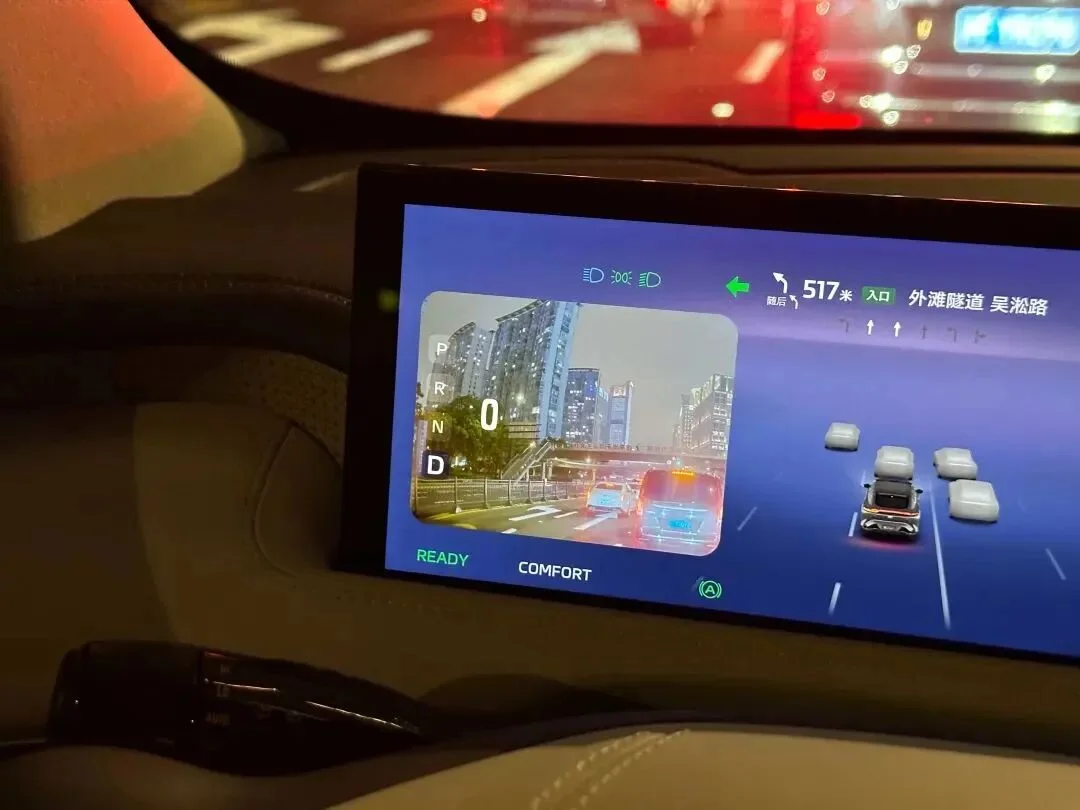
At speeds above 20 km/h, signaling displays the corresponding side-rear view via the rear surround-view camera. In our experience, the camera images are sharp and well-toned. The display resembles a digital rearview mirror but offers a wider field of view.
Turning at intersections often causes anxiety due to pedestrians and non-motorized vehicles, with fear of blind-spot hazards forcing drivers to crane their necks for safety. Zhiji’s solution is elegant: it directly displays the blind spot in the driving direction, allowing drivers to check the infotainment screen peripherally to assess danger.
The second standout feature is the intuitive breathing light interaction.
This function is designed to help drivers "look less at the screen and focus more on driving." It has two application scenarios: navigation intersection light guidance and BSD (Blind Spot Detection) side-blind-spot alerts.
Approaching a left-turn intersection triggers dynamic blue light effects at the top of the screen, sliding from right to left to indicate an upcoming left turn.
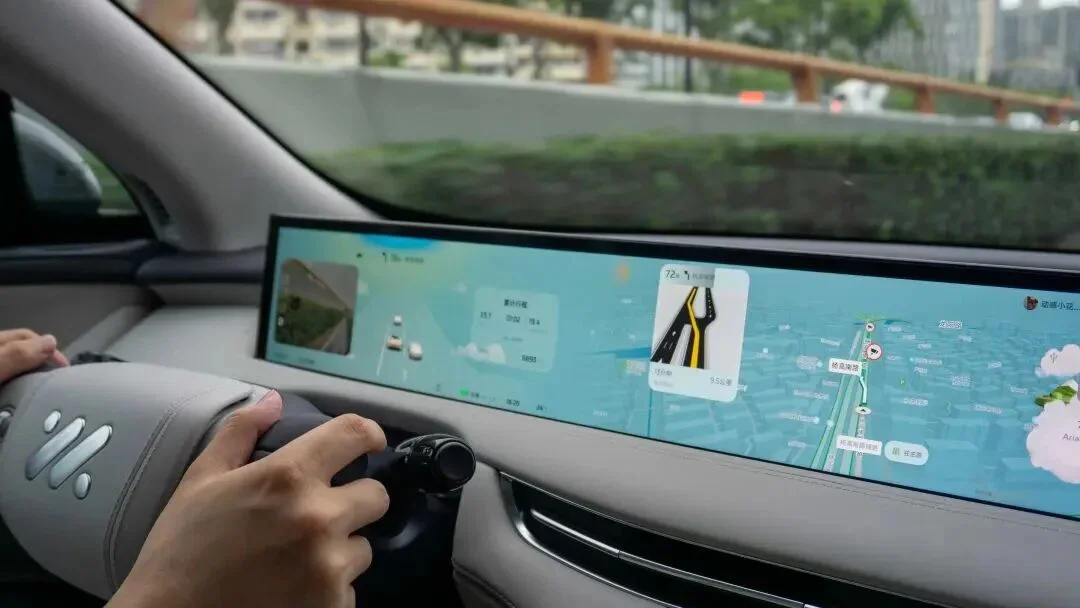
This feature integrates navigation intersection zoom views, turn-by-turn guidance, GPS positioning signals, and vehicle speed data to provide drivers with a more intuitive route, thereby enhancing driving safety. In other words, even if you are focused on the road, you won't miss navigation cues; the system uses superior interaction prompts to guide you and prevent wrong turns.
The mission of the navigation intersection light-effect guidance is to deliver an elegant experience that does not distract the user.
When facing traffic jams at intersections or waiting at red lights, the navigation light effects do not flash continuously. Instead, they slow down and fade, reminding the driver of their presence without causing distraction. These are thoughtful details developed during the software process.
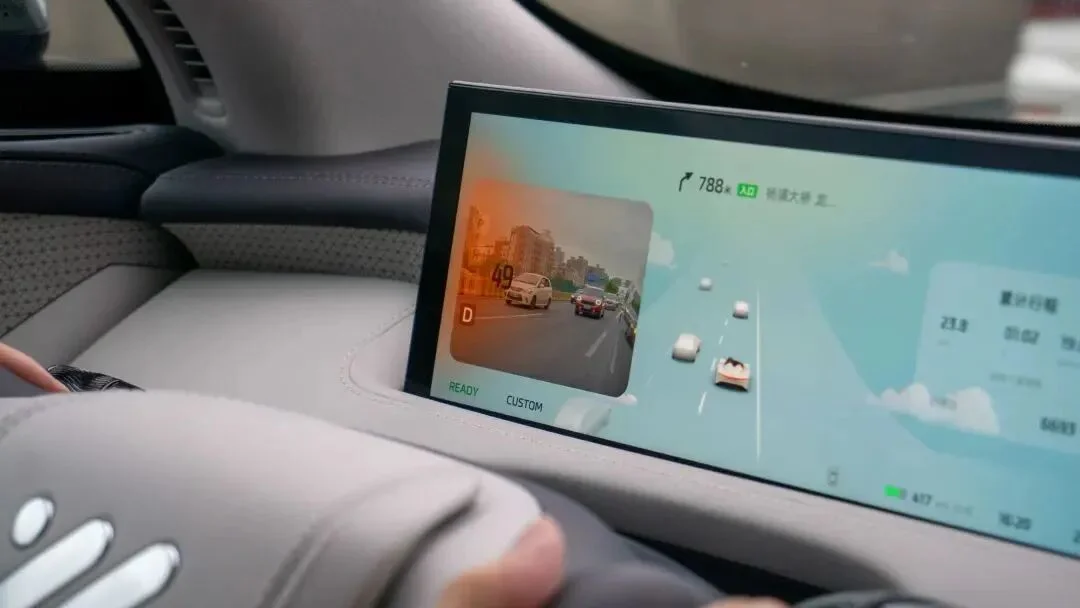
In lane-change or turning scenarios, if the vehicle detects a car approaching in the blind spot with collision risk, it alerts the driver through breathing, pulsating red warning light effects on both sides of the screen. This allows the driver to easily monitor blind-spot dangers. Compared to conventional blind-spot warnings on side mirrors, this method is more intuitive and elegant.
Anxiety Two: The Most Difficult Scenario Is Parking
In urban travel, the initial 50 meters when exiting a parking space and the final 50 meters when entering are often the most challenging. Especially in older residential areas in cities, roads are narrow with mixed pedestrian and vehicle traffic. After squeezing into the community, parking spaces are often extremely tight.
One of the core experiences of the Full-Process AI Cockpit, "One-Click Scenario Chauffeur," addresses three key anxieties in these parking scenarios: edge-hugging, getting unstuck, and path-following.
When it comes to parallel parking, my biggest challenge has always been getting close enough to the curb. The infotainment system offers a 'One-Touch Park Close' button for this. The vehicle automatically adjusts the distance to the curb based on its surroundings, with centimeter-level precision, making parking effortless.
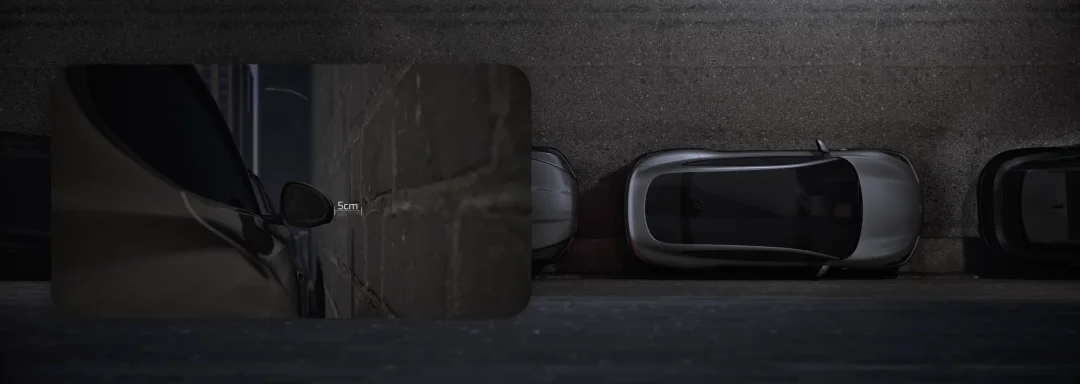
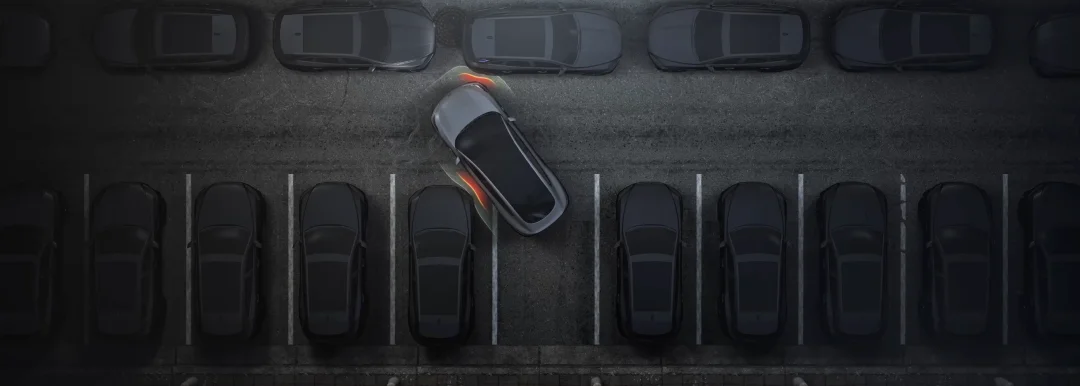
Another common headache in urban environments is exiting tight spots from narrow streets. The 'One-Touch Escape' feature allows the car to adjust its steering angle and maneuver itself out of difficult situations.
Finally, there's the trace-back reversing function, typically found only on high-end SUVs. When you enter a narrow road and can't turn around, or are hesitant to reverse blindly, 'One-Touch Trace Back' automatically guides the vehicle back along the exact path it took to get there.
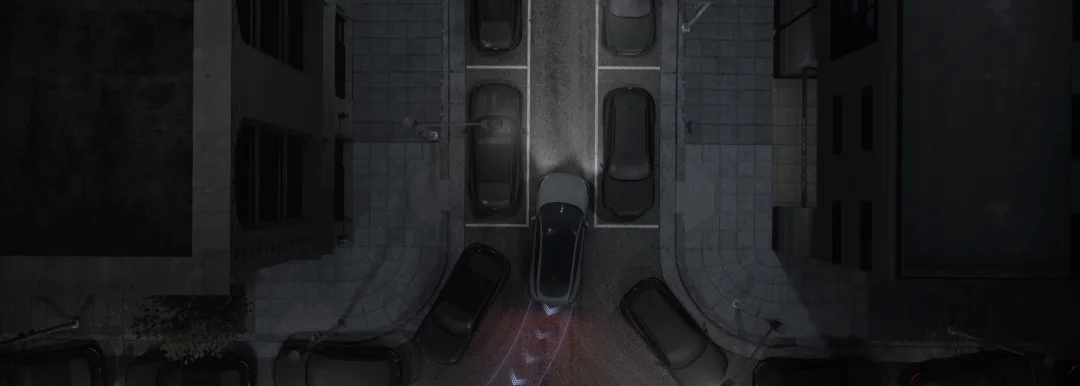
This feature is not yet available via OTA, but stay tuned. I believe that once the official version of this feature is pushed to users, the anxiety associated with the first and last 50 meters of my trips will be significantly reduced.
Anxiety No. 3: The Infotainment System Focuses on Entertainment, But It's Not Engaging Enough
A cabin centered on entertainment offers very few usable functions while driving. For average users, practical and engaging features are still absent from the infotainment system; for tech enthusiasts, the AI capabilities of the car’s software remain insufficient.
Starting last year, large language models have been quietly transforming every industry. What happens when they enter the smart cabin?
Zhiji is currently conducting customized pre-research with leading AI algorithms in the industry at varying levels of depth. This initiative combines the intelligent driving system with an algorithm-fused GPT-based model to deliver a "continuous immersive experience." Related features will go live this fourth quarter.
Here are some application scenarios that have already been implemented.
"IM GO Fantasy Island Squad" is a strong use case: multiple vehicles depart simultaneously, and their multi-screen interfaces can send emojis and voice messages to other cars, paired with dynamic animations to make group travel less monotonous.
The "Say Hi" feature allows drivers to greet nearby fellow motorists during urban commutes, enhancing social interaction.
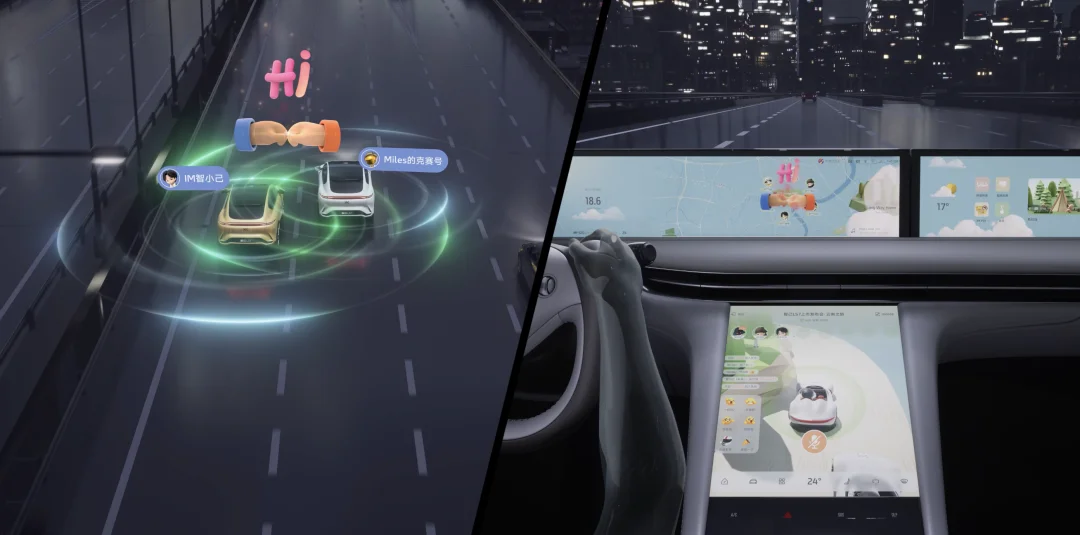
Additionally, new experiences such as the car owner community, IM PET, and POAP Nebula Marks will break through physical space limitations, connect mobile phones with vehicle infotainment systems, and transform the 'Full-Journey AI Cabin' into a new social node.
During use, the 'Full-Journey AI Cabin'—composed of one-screen peripheral vision awareness, one-touch scenario driving assistance, and continuous immersive experiences—effectively alleviates most driving anxiety during urban commutes. This allows me to focus more on the road in this era of human-machine co-driving.
It is clear that human-machine co-driving will remain prevalent for the next 3 to 10 years. Empowering human drivers with intelligent driving technology is the optimal solution for reducing driving anxiety.
02Sufficient for Commuting: Under RMB 300,000
Zhiji empowers human drivers with intelligent driving technology, eliminating my anxiety during urban commutes. Meanwhile, the Zhiji LS7 Urban Fit, priced under RMB 300,000, eliminates my financial anxiety.
Positioned as the entry-level configuration for the Zhiji LS7, the two Urban Fit models are equipped with 77 kWh ternary lithium batteries from Shangqishidai. Featuring a single motor, they achieve zero-to-100 km/h acceleration in 6.5 seconds. Crucially, there are no compromises on core features such as the Full-Journey AI Cabin, super wide field of view, intelligent sensors, chips, or screens. The starting price is RMB 289,800.
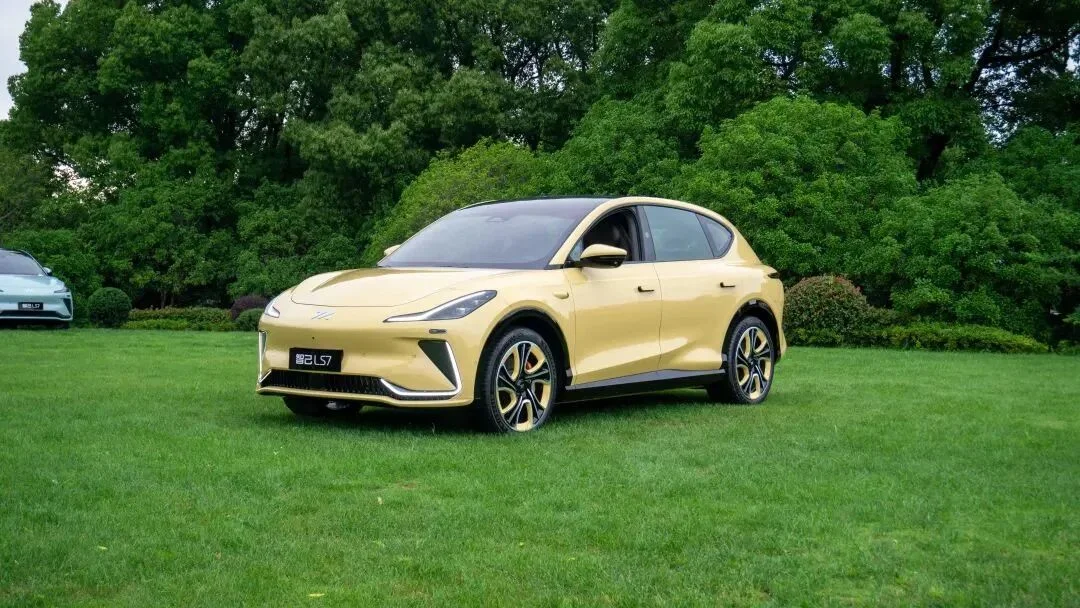
You might first ask: Is a 77 kWh battery sufficient?
The Zhiji LS7 Urban Fit delivers a CLTC-rated range of 510 km, while most users’ weekly commuting needs fall within the 300–400 km range. This means the battery can cover an entire week’s worth of commuting.
You might then ask: Is charging really that convenient?
In today’s Jing’an District of Shanghai, there are 13 times as many charging stations as gas stations. Rising land rents and the adoption of new energy vehicles have reduced fuel consumption, meaning the number of gas stations in urban core areas will likely continue to decline.
It is foreseeable that anxiety over refueling will emerge in city centers in a few years. If you happen to buy a pure internal combustion engine vehicle or a plug-in hybrid electric vehicle (PHEV) with limited electric range, you may experience refueling anxiety throughout the vehicle’s lifecycle. The ownership experience for PHEVs could be even worse, as you would also face anxiety over running out of electric range.
Pure electric urban mobility, by contrast, offers a solution that is anxiety-free today and increasingly practical in the future.
A third question you might ask is: Why not just install a larger battery?
If your driving is primarily urban commuting, carrying a heavier battery every day is not necessarily a better choice. A heavier battery leads to higher energy consumption and makes the vehicle less agile.
At the same time, those who have followed this model have likely compared it with several competitors in the same class. You may have noticed that opting for a larger battery often results in a higher purchase price or lower interior equipment levels.
With charging anxiety no longer a primary concern, I prefer choosing models with larger interiors and higher specifications at the same price point, rather than sacrificing those features for extended range.
On highways and urban expressways, the Zhiji LS7 Urban Fit also features NOA (Navigation Assisted Driving) capabilities. The vehicle is equipped with an NVIDIA Orin X intelligent driving chip, utilizing a sensor suite comprising 11 cameras, five millimeter-wave radars, 12 ultrasonic radars, and two high-precision positioning units.
When high-definition maps are available, simply pulling down the stalk once to activate NOA. In Shanghai’s stop-and-go traffic on the Yan’an Elevated Road, the Zhiji LS7 Urban Fit’s NOA system delivered an excellent experience. The acceleration and deceleration while following vehicles were smooth, providing a high level of comfort for passengers.
The Zhiji NOA system feels more like having a professional driver assist behind the wheel, offering a silky-smooth ride with fewer of the jerky, mechanical sensations typical of automated driving.
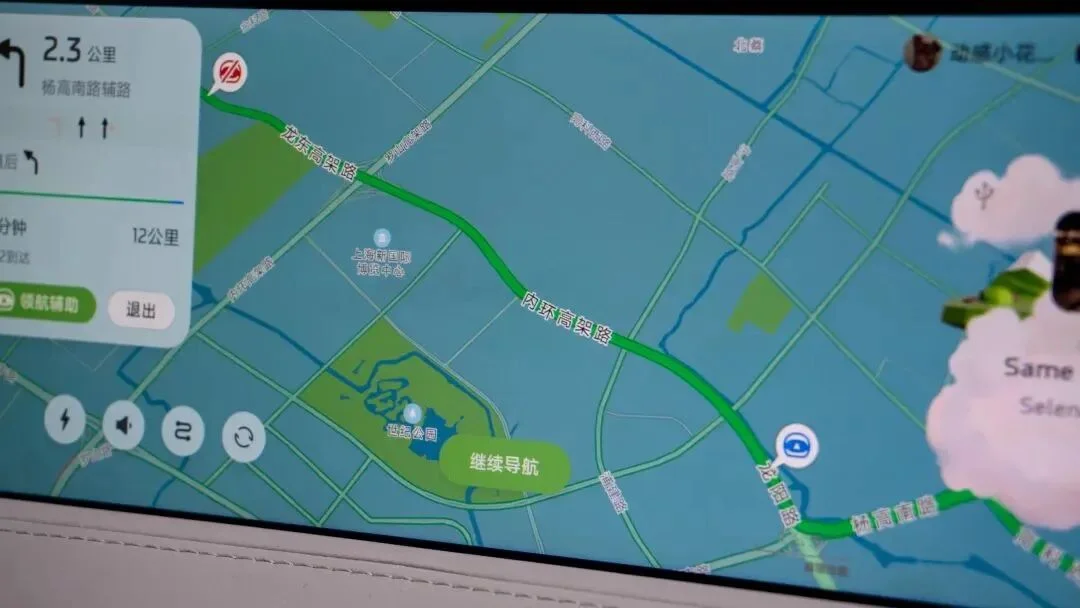
We encountered scenarios involving entering and exiting ramps, where the Zhiji LS7 Urban Fit performed impressively. Approximately 800 meters before an expressway exit, the system initiated a lane change to the rightmost lane. Despite heavy traffic, the LS7 successfully negotiated with surrounding vehicles to complete the merge into the ramp.
In the Zhiji LS7 Urban Fit Urban Series, adjustments were made to the rear seat configuration, supporting one-touch electric folding in a 4/6 split ratio. When folded flat, the cargo volume expands from 733 liters to 1,731 liters.
You can fold the seats flat with one click to create a "private nap room," carry large grocery items home yourself, or easily store bicycles for weekend rides in the countryside.
Meanwhile, the front cabin’s 106° panoramic roof, yoke steering wheel, and retractable ultra-wide display work together to deliver an iMAX-level expansive field of view.
In the mid-to-large pure electric SUV segment, the Zhiji LS7 has ranked as the category’s top seller for three consecutive months. With the launch of the new Urban Fit series at a more competitive price point, sales could reach even higher levels. Especially with the addition of the "Full-Process AI Cabin," the Zhiji LS7 Urban Fit is tailored for urban commuting, making city travel more engaging.
Written by: James Edited by: Daji