


NIO CEO William Li Targets Q4 Profitability with 'Lean Management' and Nine New Models
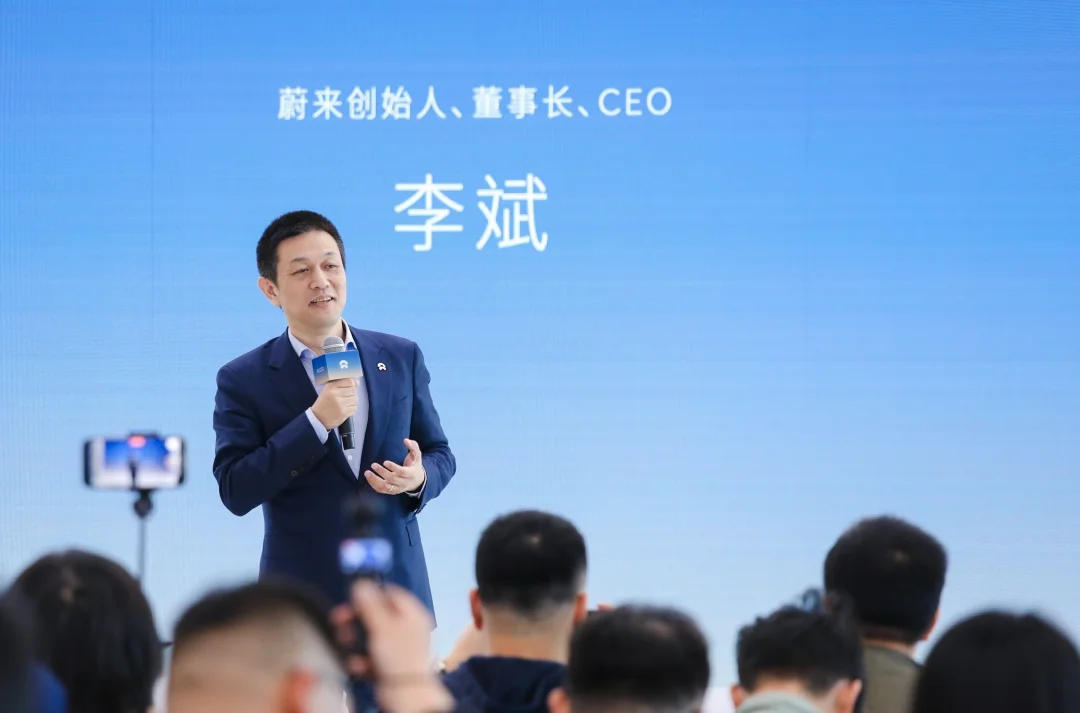
On the afternoon of April 13, NIO celebrated its 100,000th vehicle delivery in the Shanghai region. The company held a collective handover ceremony at its Jiading Delivery Center in Shanghai, where William Li personally opened the door for owners and raised his hand to protect their heads as they exited, creating a highly ceremonial atmosphere that drew cheers from the crowd.
Shanghai serves as a key barometer for NIO’s performance. Since the beginning of 2024, one out of every two pure electric vehicles sold in Shanghai with a price tag exceeding RMB 300,000 has been a NIO.
Shanghai has long been a critical battleground for new energy vehicle manufacturers. NIO is now the first Chinese brand to reach 100,000 owners in the segment with an average transaction price above RMB 300,000 in the city.
During the "Brother Bin Face-to-Face" session preceding the delivery ceremony, William Li addressed numerous questions regarding profitability, new model plans, charging and battery-swap networks, and strategies for boosting sales.
Throughout the event, William Li appeared relaxed and confident, signaling his determination to achieve profitability by the fourth quarter of this year. Phrases such as "improving spending efficiency," "increasing return on investment," and "implementing refined management" were frequently used during the session.
William Li stated, "If NIO cannot achieve profitability and sustain healthy operations, I would consider myself an incompetent CEO, and also an unworthy friend to everyone."
01The Product Year Has Arrived
NIO's total March delivery volume was 15,039 units, while the ONVO brand alone had initially planned a delivery target of twenty thousand units for March; this result fell noticeably short of expectations.
William Li remains confident in sales growth and NIO’s profitability in the fourth quarter, citing a robust lineup of new models this year. He stated that nine new vehicles will be delivered starting with the ET9.
Next, the new NIO ET5, ET5T, ES6, and EC6 models will also be launched successively. In addition, the same-name models of the Yinghuochong brand will be launched and delivered by the end of April.
ONVO has three models planned for this year; following the L90, another large vehicle from the brand will launch in the fourth quarter, followed by a large model from the NIO brand.
Regarding Yinghuochong, William Li noted it is one of the few compact cars eligible for green license plates in Shanghai and built to European five-star safety standards.
"New models will definitely boost sales," William Li said. "Although Q1 results missed expectations, volume grew 40%. As new products roll out, sales will return to expected levels, and our technological advantages will gradually materialize."
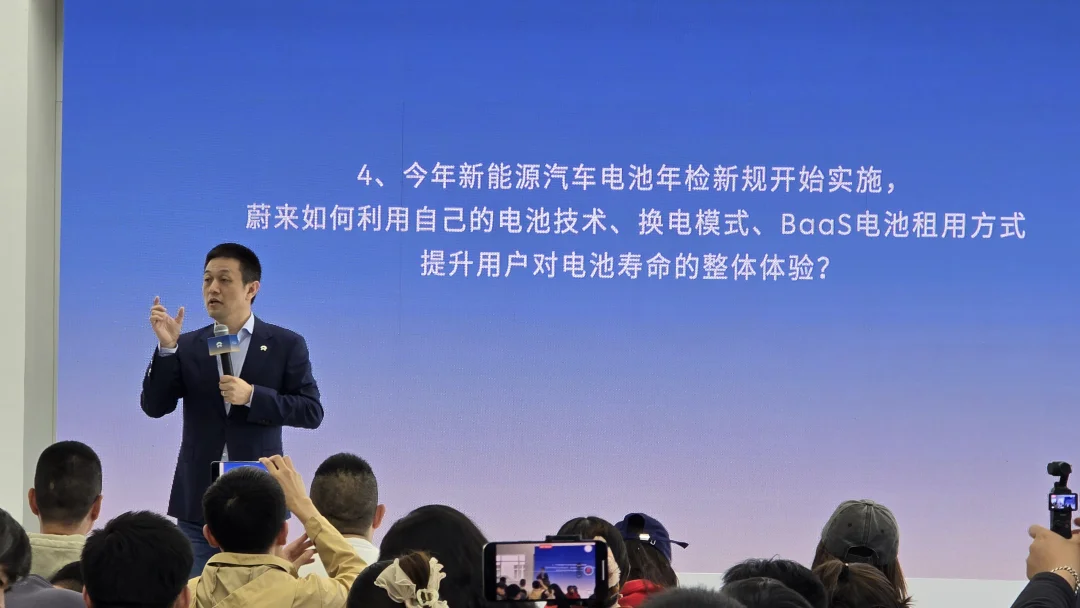
NIO’s dense product schedule fuels confidence in sales growth, but the company is also running promotions on existing models ahead of the new launches.
NIO has invested heavily in its promotional policies, adopting a combination of financial incentives and battery-swap benefits for older models. In early April, NIO announced the introduction of "five years of free battery swapping" benefits, building upon existing "five-year zero-interest" financial preferential policies, trade-in subsidies, and various local new energy vehicle subsidies.
In accordance with regulations, users who pay a deposit in April to purchase NIO ET5, ET5T, ES6, EC6, ET7, EC7, or ES8 models will receive 240 battery swap vouchers worth more than RMB 20,000, which can cover the vehicle's five-year lifecycle.
Following the policy launch, NIO added more than 3,500 large orders during the three-day Qingming Festival holiday. On the first workday after the holiday, it secured 1,400 locked orders, bringing the total order volume over five days to exceed 5,000. This demonstrates that NIO's promotional campaign had a significant stimulating effect on new orders. When discussing April sales, William Li also stated: "We've been selling reasonably well in recent days."
On intelligent driving products, NIO's performance continues to attract user attention. In response to questions such as "When will NIO's intelligent driving capabilities be upgraded?", William Li stated that NIO is currently conducting internal testing for its urban navigation-assist feature based on end-to-end intelligent driving, which will go online soon. "Recently, the state has issued relatively strict regulations regarding OTA updates. We should be among the first batch to participate in the announcement process, and the feature will go online after the announcement concludes."
02"Profitability Isn't That Complicated"
During this face-to-face event, William Li frequently mentioned the goal of achieving profitability in the fourth quarter of this year, stating, "We must do our utmost to achieve profitability." He also remarked, "From a corporate perspective, achieving profitability is not overly complex."
However, since its founding, NIO has not yet had a single quarter of profitability. How does William Li plan to achieve this?
For profitability, sales volume and scale are the foundation and a strong boost. Rigorous cost control and refined management, along with improved gross margins, are essential paths to achieving profitability.
William Li said that the increase in sales volume mainly relies on frontline colleagues and 700,000 users. "As for improving gross margin, we will carefully calculate every aspect to raise the gross margin to a reasonable level as much as possible." William Li mentioned 2021, when the gross margin once exceeded 20%, which was NIO's closest moment to profitability. "If we return to a 20% gross margin, our operating performance would be much more impressive."
Regarding cost control, William Li replaced the phrase "reduce expenses" with expressions such as "improve spending efficiency" and "increase the return on investment." "We do not expect to return to our leading position in 2018, nor do we expect to return to the highlight moments of 2021. Now that we are climbing out of the trough, we must rely on refined management and operational management to become a healthy company with sustainable operations."
During the entire Q&A session, William Li cited numerous cases to demonstrate NIO's determination to improve spending efficiency and implement refined management.
He mentioned that NIO's Nio House in Shanghai recently "earned" a sum of money because Yinghuochong decided to hold its press conference at the Nio House. "Previously, press conferences required setting up stages outdoors, which were dismantled afterward, resulting in significant waste. At the Nio House, the only cost incurred is the opportunity cost of potentially affecting vehicle sales at the store," William Li said. After negotiations, the time occupied by the Yinghuochong press conference at the Nio House was reduced from five days to two days, with a fee of RMB 350,000. "If held outdoors, an event would cost between one and two million yuan."
The daily operation of NIO Houses also requires refined management. With fixed costs, improving usage effectiveness and utilization rates has become the core issue. William Li described the ideal state for NIO House usage: ideally, there would be users from opening to closing every day from Monday to Sunday. However, some time slots may be exclusive to NIO, while others are open to the public. Operations can be refined on an hourly or two-hourly basis.
This delivery event for 100,000 units in Shanghai serves as a typical example. The venue was selected at the NIO delivery center in Jiading, Shanghai. William Li stated that improving spending efficiency is reflected in every aspect, but it will not compromise the quality of user service. "Our hearts will be warmer than before, but we will spend more carefully and smarter, avoiding unnecessary expenses. The next 100,000-unit delivery event will also be held here."
Additionally, regarding the promotional policy for older models, NIO's approach is to issue 240 battery-swap vouchers that cover a five-year lifecycle, rather than offering direct free battery swapping for five years. This decision is also made with the consideration of balancing battery-swap resources and improving the utilization efficiency of swap stations.
William Li said that doing a good job with NIO is the greatest responsibility. "Actually, from a profitability perspective this year, there aren't many tricks; it's about selling more cars and controlling costs well. By carefully managing expenses, we will definitely achieve profitability in the fourth quarter."
03'Replicating' Shanghai
NIO took root in Shanghai, a region that has played a pivotal role in the company's development.
This is also the most fiercely contested market for new energy vehicles (NEVs), a territory that every NEV manufacturer considers essential. In previous years, some even claimed that 'he who controls Shanghai controls the world.'
'If we cannot succeed in Shanghai, how could we possibly succeed elsewhere? I would not dare to claim so,' William Li said. He noted that Shanghai users' acceptance of NIO 'demonstrates our ability to withstand the most intense market competition.'
NIO delivered its 100,000th mass-produced vehicle in Shanghai, making it the first Chinese brand to achieve both an average transaction price above RMB 300,000 and a user base of 100,000 in the city.
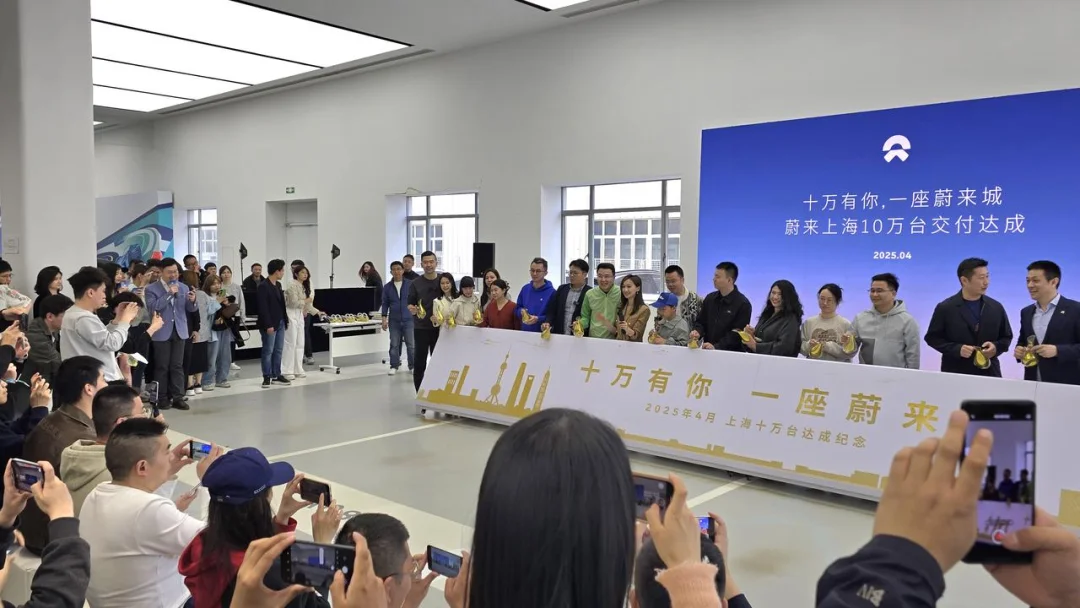
Currently, Shanghai users account for one-seventh of NIO's total 700,000 users. Zhejiang and Jiangsu provinces each reached the 100,000-delivery milestone in July and November 2024, respectively. This brings NIO into the '100,000+ delivery club' across Jiangsu, Zhejiang, and Shanghai, with cumulative deliveries in these three regions exceeding 300,000 units—nearly half of NIO's national sales volume.
William Li stated: 'The fact that half of NIO's users come from the Yangtze River Delta, where market competition is fiercest, underscores the competitiveness of NIO's products and services. It proves that our refueling model—which supports charging, swapping, and upgrading—and community models like NIO House are viable. This gives us significant confidence.']
NIO’s service network in the Jiangsu, Zhejiang, and Shanghai regions is also its most comprehensive. In Shanghai, NIO has built 187 battery swap stations, with a coverage rate of over 95% for "battery-swap-friendly" residential areas (where users live within walking distance of a station). On average, there is a swap station within 3 kilometers of every user; each station serves more than 500 vehicles per day, meaning a fully charged NIO departs approximately every 8.7 seconds.
Currently, NIO has constructed 1,044 battery swap stations in the Jiangsu, Zhejiang, and Shanghai region, accounting for 32% of the national total. It was the first to achieve "county-wide battery swap connectivity," turning the Yangtze River Delta's "free shipping zone" into a "free battery-swap zone."
William Li stated that swap stations have strong network effects: "The number of swap stations is highly correlated with our overall market share, so no matter how difficult it gets, we will firmly push forward with the construction of the swap network." By the end of April this year, all 122 counties in Guangdong province will also achieve county-wide battery swap connectivity.
The question remains: Is NIO’s competitiveness in Shanghai replicable?
William Li said, "We do very well in many other cities across the country. For example, Suzhou, which is close to Shanghai and does not have license plate restrictions, has also grown rapidly." Regarding the construction of swap stations, NIO intensified its efforts in Anhui and Hubei provinces last year, which became its two fastest-growing markets.
Final Thoughts
After repeatedly postponing its profitability targets, NIO once again faces the challenge of achieving profitability this year. Confidence stems from the sales boost driven by nine new products being released sequentially, as well as a commitment to refined operations and improving spending efficiency.
The challenge lies in the fact that for NIO to truly achieve stable profitability, it cannot rely solely on its user base in the Jiangsu, Zhejiang, and Shanghai regions. The key questions to answer are how to replicate NIO’s influence in Shanghai to more cities, and how to build brand awareness and establish deep connections with users in markets where performance has previously been mediocre.
Beyond market influence, NIO must replicate the reputation and brand equity of its main brand across two sub-brands: ONVO and Yinghuochong.
NIO has shifted from being a brand that aggressively tells stories to a company focused on return on investment and profitability structure. This indicates its battlefield is no longer just capital markets, but the broader, more pragmatic user market.
The key question is whether NIO’s asset-heavy yet highly sticky systems—battery swapping, NIO House, direct sales, and user communities—can succeed and stabilize in regions beyond Jiangsu, Zhejiang, and Shanghai. Can they continue to deliver high-quality user experiences while further improving output per unit of input? NIO will need time and data to prove this.
In the new energy vehicle industry’s post-subsidy era, every automaker must learn to speak through products and survive through efficiency.
Will NIO experience another highlight moment in 2025? We will wait and see.
Written by: Da Yong | Edited by: James