


Wuling Unveils 30,000 rpm Motor and World Model Tech Ahead of Baojunxiangjing Pre-Sale
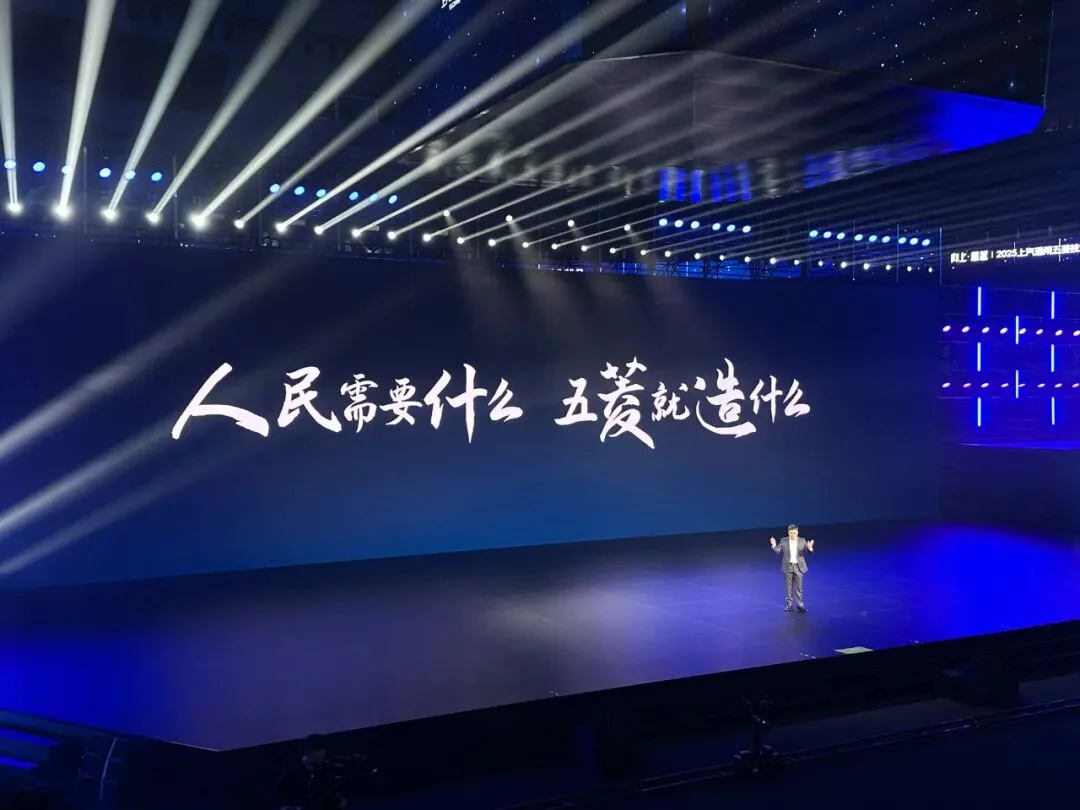
Wuling's ambitions to elevate both its technology and brand were on full display at the technical evolution event held on April 7.
During the press conference, Wuling unveiled a series of surprising technologies, including the Lingxidongli 3.0 motor with a rotor limit speed exceeding 30,000 rpm, high-manganese batteries capable of 6C ultra-fast charging, and Lingmouzhijiaqijianban based on generative world models. It appears that technologies once reserved for top-tier electric vehicles are soon to become widely accessible.
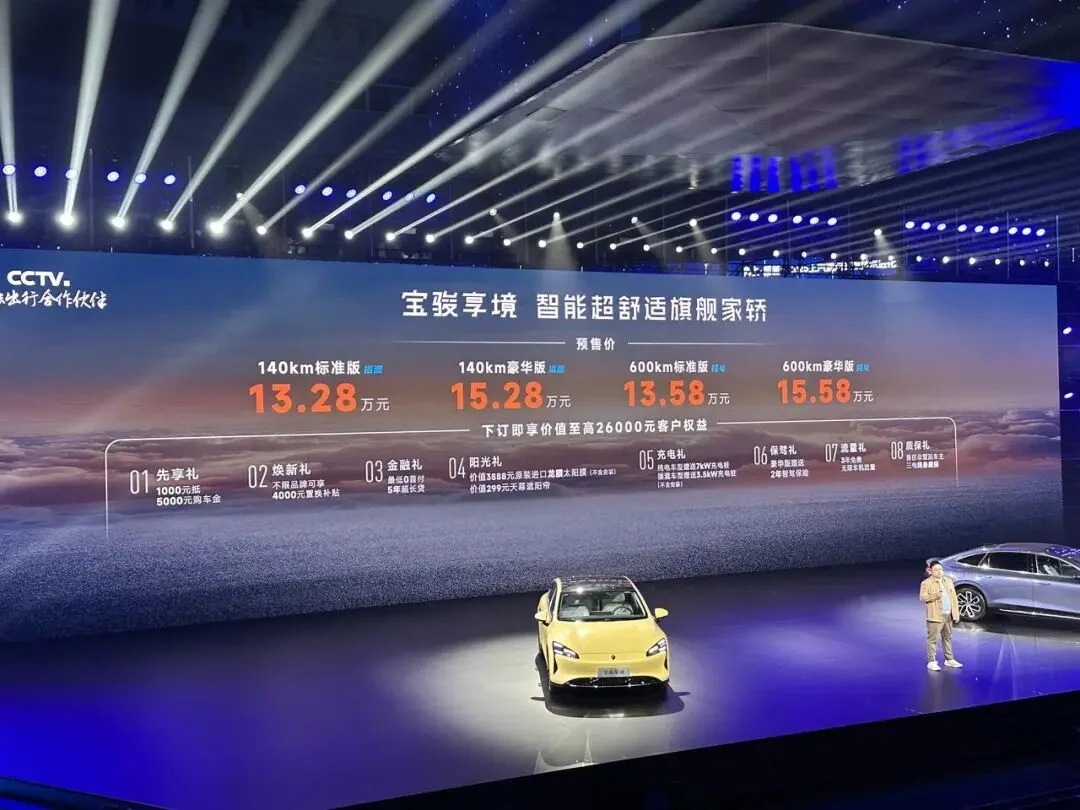
Meanwhile, Baojunxiangjing, a key product in Wuling's brand-upgrading strategy, officially launched its pre-sale with the following prices:
140 km plug-in hybrid standard version starting from RMB 132,800;
140 km plug-in hybrid luxury version starting from RMB 152,800;
600 km pure electric standard version starting from RMB 135,800;
600 km pure electric luxury version starting from RMB 155,800.
Wuling is a major brand in China's mainstream automotive market. From the Wuling Hongguang of the internal combustion engine era to the Wuling MINIEV of the new energy era, Wuling has produced one "legendary car" after another.
By 2025, technology democratization is an inevitable trend and market competition is intensifying. For Wuling, this means not only facing BYD's strong dominance in the sub-RMB 200,000 market but also withstanding the impact of emerging dark horses like Leapmotor. Creating new "legendary cars" in such a challenging environment presents significant hurdles for Wuling.
However, based on the content from its Technology Evolution Day event, Wuling appears well-prepared to face these challenges.
01Describing Intelligent Driver Assistance as 'Most Pragmatic'
It was surprising that Wuling would use the relatively modest term 'most pragmatic' to describe its intelligent driver assistance system, a stark contrast to the industry norm of creating marketing shock value and dramatic contrasts.
Wuling's 'pragmatic' intelligent driver assistance consists of four versions derived from Lingmu Smart Driving: Basic, Standard, Advanced, and Flagship.
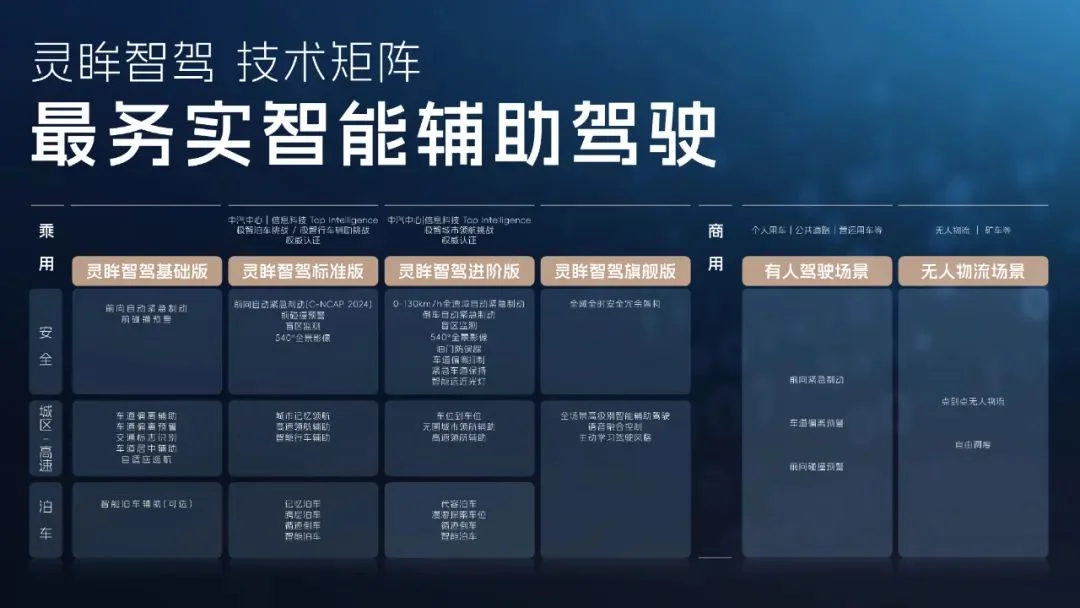
Official specifications for the base model's computing power and hardware configuration were not disclosed. However, it is confirmed that the system lacks navigation-assist features, offering only basic functions such as adaptive cruise control, lane departure warning, and forward automatic emergency braking (AEB).
The standard version provides 96 TOPS of computing power with a hardware configuration of seven cameras, one radar, and twelve ultrasonic sensors (7V/1R/12U), supporting more complex intelligent driver-assistance features such as highway navigation assist, city memory navigation, and memory parking. The advanced version offers 200 TOPS of computing power and two hardware configurations: 7V/1R/12U or ten cameras, three radars, one lidar, and twelve ultrasonic sensors (10V/3R/1L/12U), enabling spot-to-spot intelligent driver assistance.
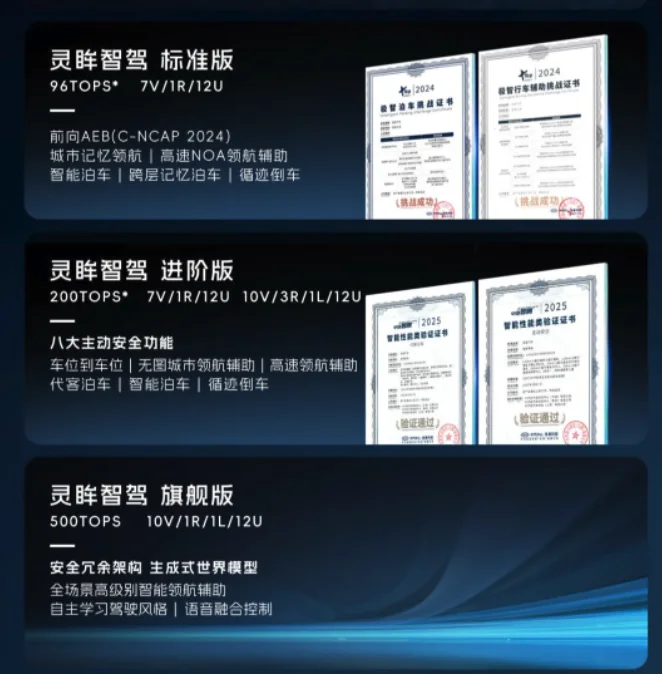
The Lingmouzhijiaqijianban (Lingmou Intelligent Driving Flagship Edition) is even more powerful, featuring 500 TOPS of computing power and a hardware configuration of 10V/1R/1L/12U. It employs a generative world model, includes a lidar, supports full-scenario intelligent driver assistance, and enables voice-controlled driving and autonomous learning of user driving styles.
However, the Lingmouzhijiaqijianban has not yet entered mass production. According to official statements, this version is a product of deep cooperation between Wuling and Zhuoyu, and the specific selection of the 500 TOPS chip remains undetermined.
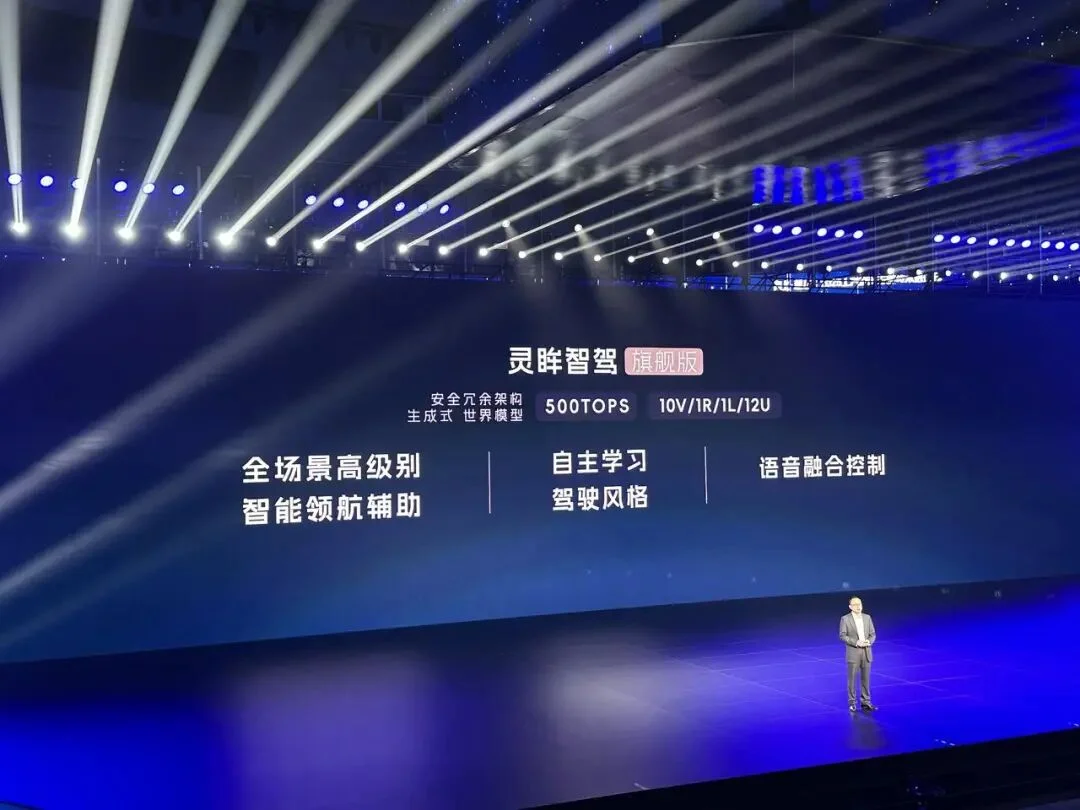
Officials also stated that Wuling’s highest-level intelligent driving capabilities will be deployed first on Baojun-brand vehicles. This suggests that the Lingmouzhijiaqijianban will likely debut on Baojun models, potentially at a relatively accessible price point. In a sense, Wuling is accelerating the democratization of world-model-based intelligent driving technology.
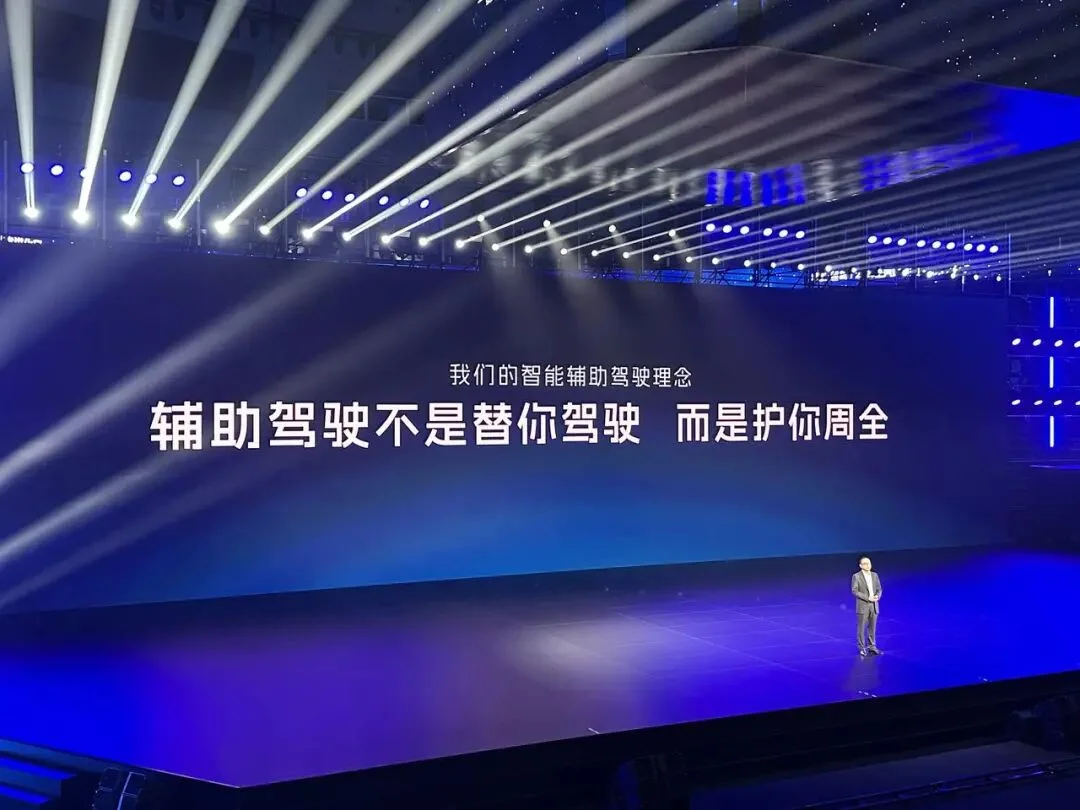
When discussing the actual experience of Lingmou Intelligent Driving, Wuling officials adopted a notably conservative tone. During the launch event, Wuling specifically presented a slide emphasizing its philosophy on intelligent driving:
Autonomous driving is not about driving for you, but keeping you safe.
In the post-launch press briefing, Wuling officials stated that even 'parking-to-parking' functionality should not be marketed as autonomous driving, as it ultimately remains advanced driver assistance.
Meanwhile, Wuling addressed recent hot topics regarding intelligent driving accidents. The company noted that these incidents encourage more rational thinking and usage of intelligent driving systems, urging all manufacturers to promote such technologies responsibly to protect the hard-won progress in the field.
The emphasis on avoiding over-promotion, managing expectations, and highlighting the 'assistance' aspect may be the most significant manifestation of pragmatism in Wuling's Lingmu Intelligent Driving system.
Beyond intelligent assisted driving for individual consumers, Wuling has also introduced a commercial vehicle safety and intelligent driving popularization plan, covering two major scenarios: manned driving and unmanned logistics, with a strong emphasis on safety. According to official information, road testing for the commercial vehicle intelligent driving system has already covered several tens of thousands of kilometers, and related products aim to launch within this year.
The content released during the Evolution Day regarding Lingyuzuocang was relatively sparse. Based on official information, Lingyuzuocang is equipped with Wuling’s self-developed AI hub large model, deeply integrated with DeepSeek. It can flexibly answer various user questions and supports recognition of eight major dialects, including Cantonese, Sichuanese, and Chongqing dialects, with an identification rate exceeding 95%.
02Wuling is indispensable for democratizing intelligent driving
At the Evolution Day event, Baojunxiangjing officially announced its pre-sale, with its most significant highlight being the inclusion of the Lingmou Smart Driving Advanced Edition, which supports parking-to-parking-level intelligent driving.
However, the Lingmou Smart Driving Advanced Edition is not standard across all trims of the Baojunxiangjing; it is only equipped on the luxury version with a 140 km range priced at RMB 152,800 and the pure electric luxury version with a 600 km range priced at RMB 155,800.
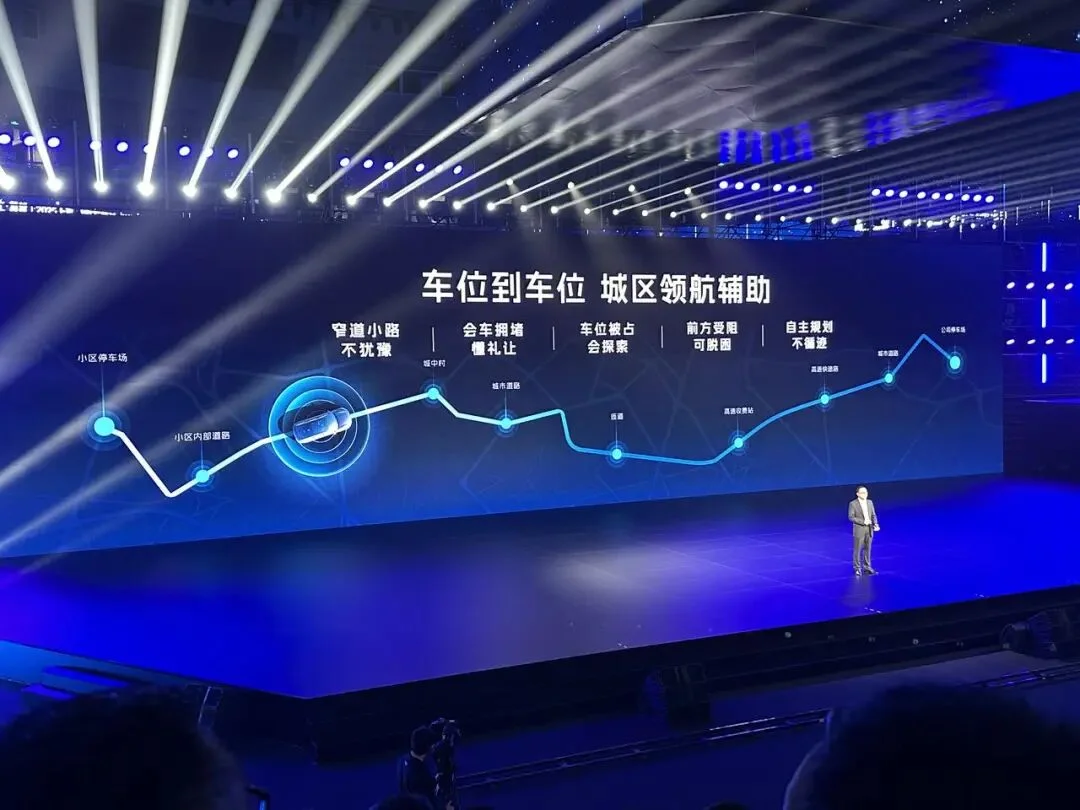
In the RMB 150,000 price segment, vehicles featuring parking-to-parking autonomous driving remain very few. It must be said that Baojunxiangjing is also contributing to the democratization of smart driving.
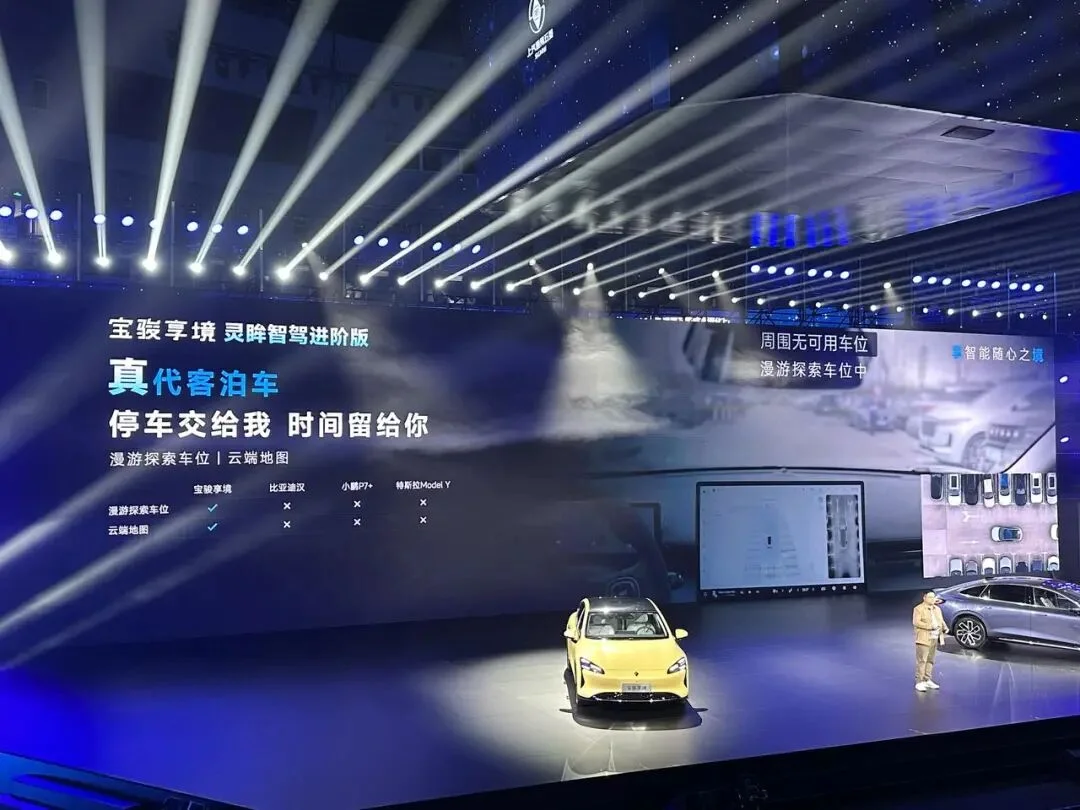
Beyond parking-to-parking functionality, Baojunxiangjing also features the 'Roaming Spot Search' function. During valet parking, if the target parking space is occupied, 'Roaming Spot Search' can continue to automatically find other available spaces and park into them.
Currently, the 'Roaming Spot Search' function is limited to popular parking lots in over 20 cities nationwide. The specific locations were not disclosed during the launch event.
In terms of active safety, Baojunxiangjing features full-speed AEB from 0-130 km/h and reverse AEB from 0-10 km/h. To address cases where novice drivers mistakenly press the accelerator or brake pedals, Baojunxiangjing has also added an anti-misapplication function for the accelerator pedal.
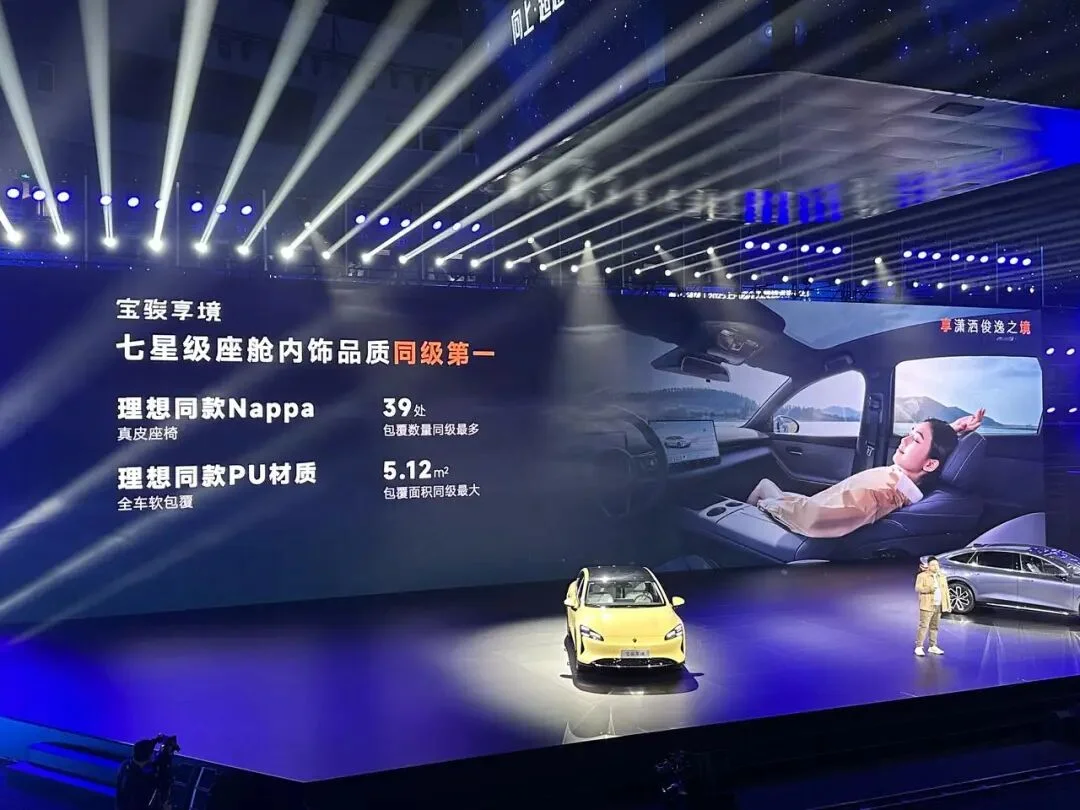
For the cabin, Baojunxiangjing features the Lingyuzuocang described earlier. Additionally, it is equipped with Nappa leather seats, suction-type seat ventilation, double-glazed acoustic glass on all four doors, and a 1.71-square-meter heat-insulating panoramic sunroof.
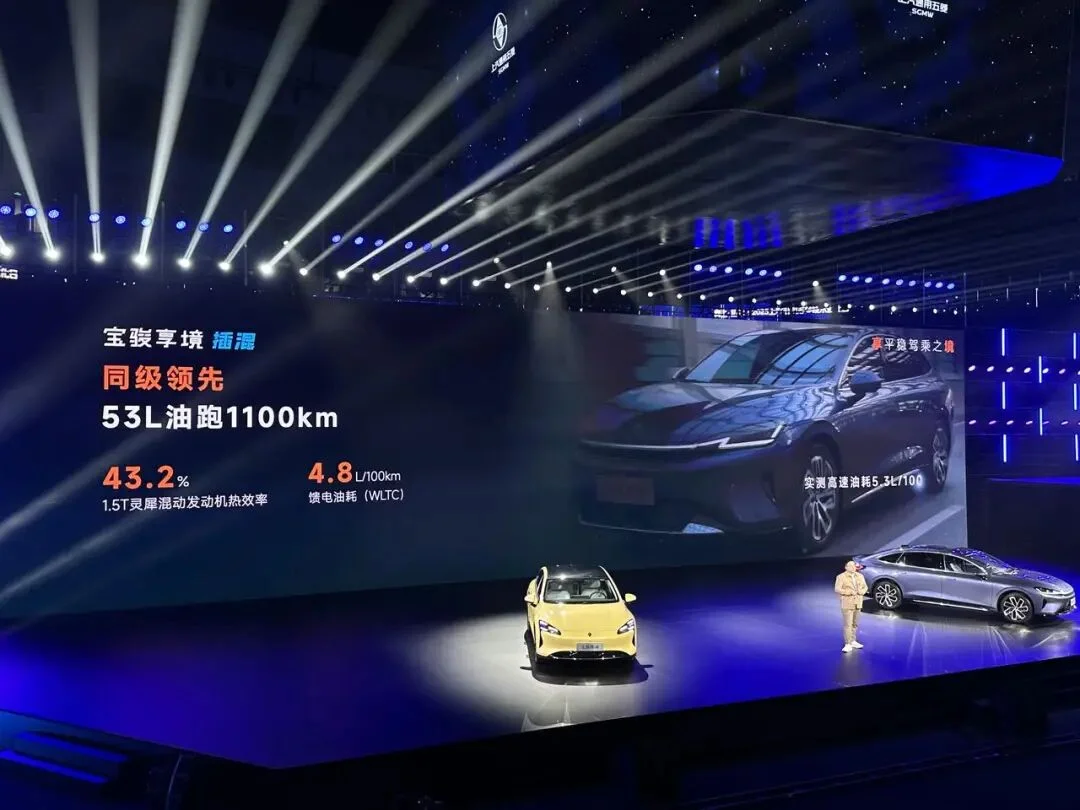
Turning to driving dynamics, the plug-in hybrid version of Baojunxiangjing is powered by a 1.5-liter turbocharged Lingxi hybrid engine. The official fuel consumption in a depleted battery state is 4.8 liters per 100 kilometers, allowing for a range of 1,100 kilometers on a single tank.
Baojun officials stated that whether using plug-in hybrid or extended-range technology, they aim to achieve a fuel consumption level of 2 liters per 100 kilometers in the future.
The pure electric version of Baojunxiangjing can add 300 kilometers of range after charging for just 20 minutes. Its highway range achievement rate exceeds 72%, and even in cold environments at minus 7 degrees Celsius, the range achievement rate remains above 62%.
As the vehicle is currently in pre-sale, the information released by Baojun regarding the Xiangjing is not yet comprehensive. More details will be available only when Baojunxiangjing officially launches.
Interestingly, during the dispersal after the press conference, some attendees remarked that the price of Baojunxiangjing was still not low enough. At present, the product's cost-performance ratio is quite high. However, following typical industry patterns, there may be more surprising pricing when the vehicle officially hits the market.
03Megawatt Supercharging Is "Unnecessary"
In the post-launch press briefing, Wuling addressed BYD's megawatt supercharging. Wuling stated that industry competition has already reached 4C, 5C, and 6C rates, making further escalation to megawatt levels unnecessary. They argued that simply increasing battery capacity is sufficient and that pursuing megawatt charging wastes industry resources in a race for time savings. Wuling noted that they could achieve megawatt supercharging if they chose to do so.
Although not offering megawatt supercharging, Wuling presented concrete battery solutions, including the current Shenliandianchi 3.0, future Shenliandianchi 4.0, and the 6C high-manganese battery known as Shenliandianchi M.
First, let's look at Shenliandianchi 3.0. During the launch event, Wuling emphasized safety capabilities above all else for Shenliandianchi 3.0.
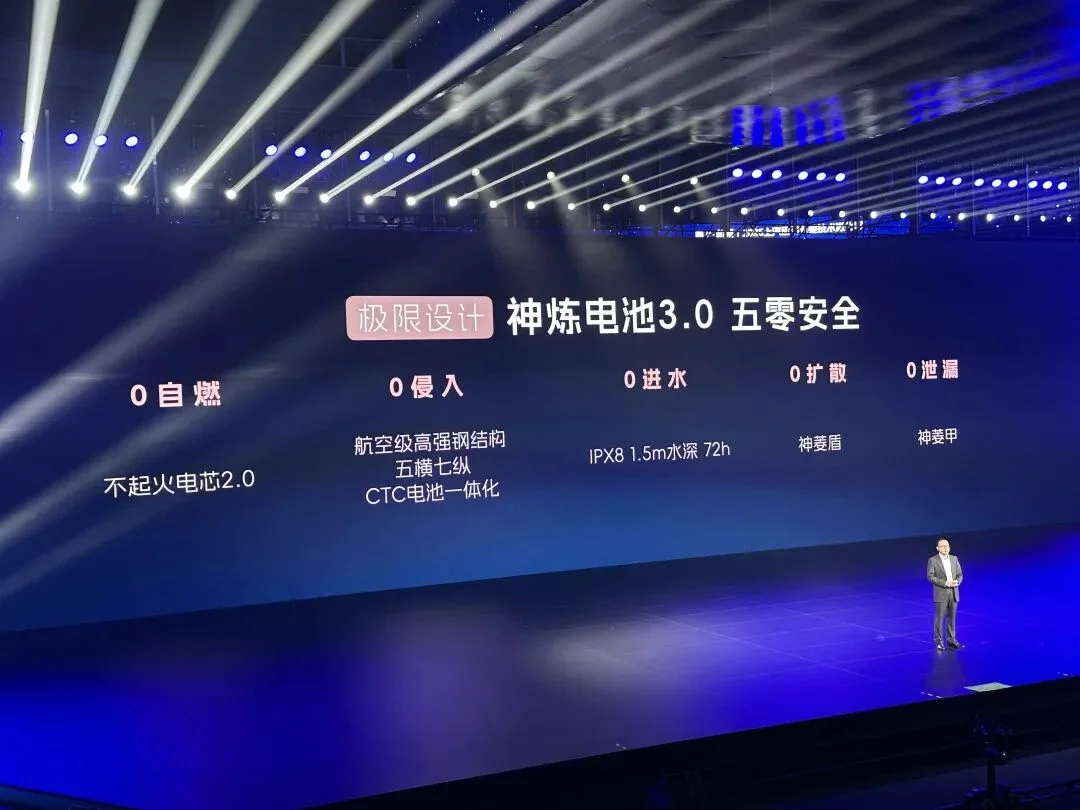
According to official information, Shenliandianchi 3.0 underwent extensive safety testing, including gravel impact, bottoming out on manhole covers, water immersion, exposure to 200°C high-temperature ovens, and penetration by 5.8 mm bullets. In every test, Shenliandianchi 3.0 achieved zero instances of ignition or explosion.
Shenliandianchi 4.0 builds upon the 3.0 foundation with further evolution, adopting an 800 V platform, CTB (Cell-to-Chassis) technology, wireless BMS (Battery Management System), and AI energy management. The wireless BMS reduces failure nodes by 50% and improves cabin space utilization by 2%. CTB enhances battery strength by 56%, thereby improving overall safety.
Wuling officials believe wireless BMS will gradually become standard equipment in the future. As vehicle high-voltage platforms continue to rise, wireless BMS not only frees up more space but also isolates high-voltage and low-voltage systems, further ensuring safety.
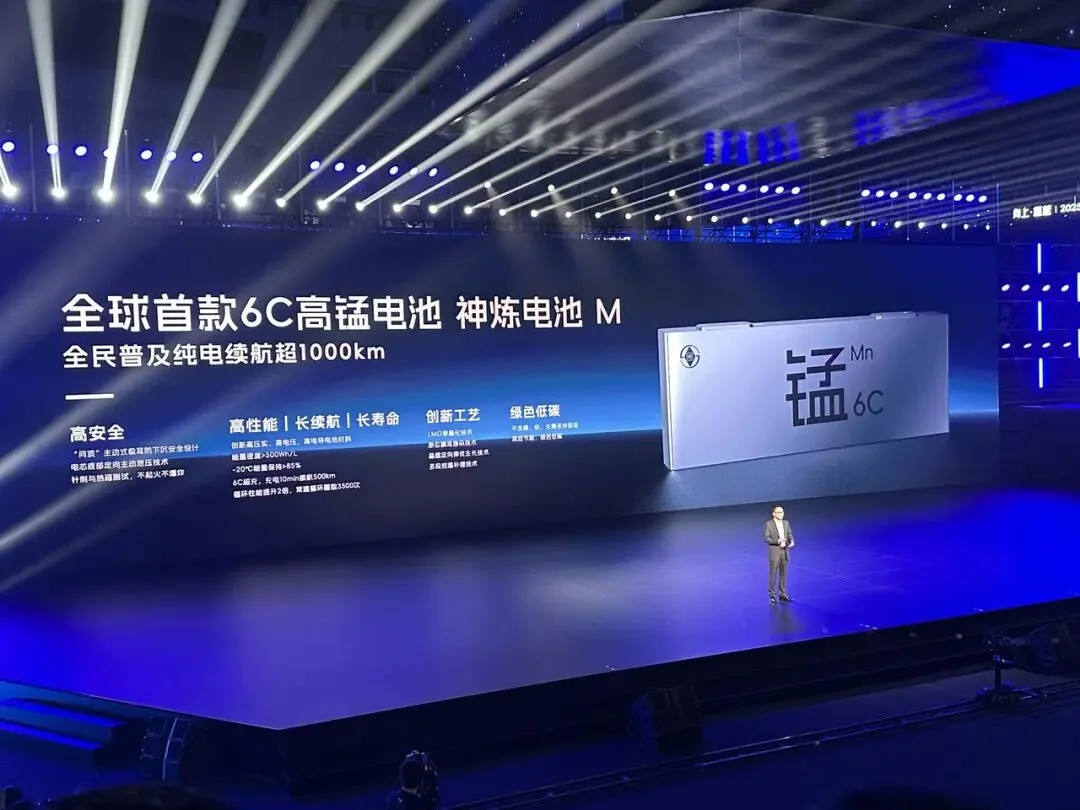
The Shenliandianchi M is also highly anticipated. According to official information, in addition to not catching fire or exploding after an accident, it can achieve a pure electric range of over 1,000 kilometers and add 500 km of range with just 10 minutes of charging.
Battery safety is crucial for new energy vehicles. However, Wuling has frankly stated that safety has certain boundaries; it cannot guarantee complete safety at speeds of one or two hundred kilometers per hour. Therefore, safety must be ensured from the perspective of the entire system, including battery safety, active and passive safety, and more.
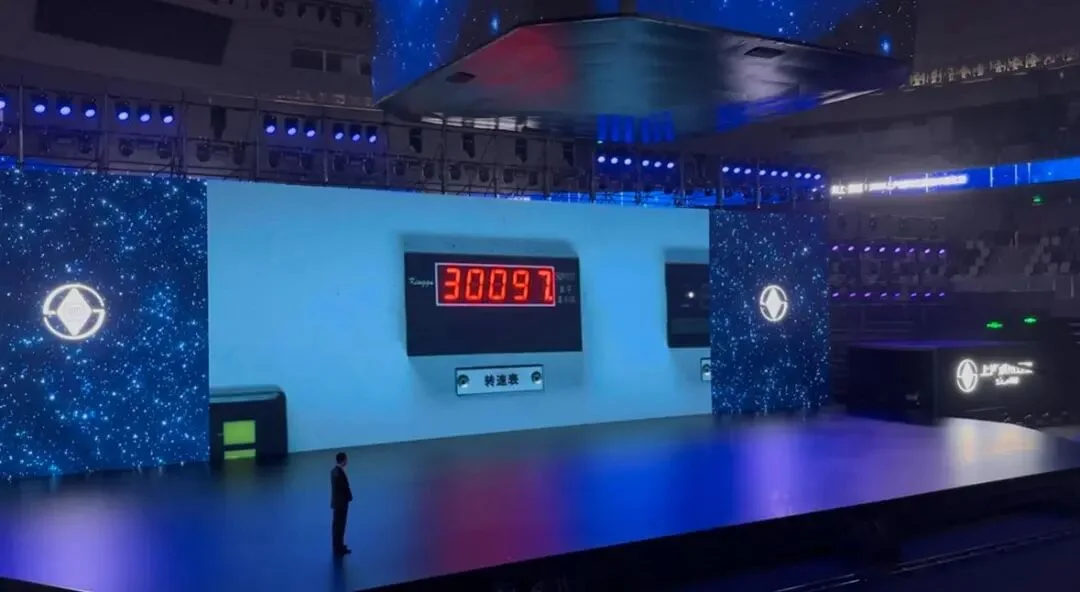
Notably, at the Evolution Day event, Wuling released Lingxidongli 3.0, which can achieve a maximum operating speed of 21,000 rpm, a maximum mechanical speed of 27,258 rpm, and an extreme speed exceeding 30,000 rpm.
For Lingxidongli 4.0, the company stated it would "continue to challenge performance equity for 30,000 rpm motors in the 150,000-yuan price segment."
04Conclusion
Wuling is now a force to be reckoned with. According to official data, Wuling's new energy vehicle penetration rate has reached 52%, with cumulative sales reaching 2.75 million units. Its transformation speed is impressive.
Amid intense market competition, Wuling’s response speed is remarkably fast. A notable detail: after DeepSeek went viral, Wuling was among the first automakers to announce its integration into vehicles.
During a press conference group interview, Wuling officials recalled that in 2019, while the industry was still debating between ternary lithium and lithium iron phosphate batteries, Wuling firmly chose the lithium iron phosphate route, while also maintaining technical reserves in sodium-ion and high-manganese batteries.
Strong scale capabilities and rapid response times are key forces for Wuling to strive upward in a high-pressure competitive environment, and they also serve as important pillars for Wuling’s deep involvement in the wave of technological democratization.
According to official information, Wuling has three to five more models targeting the mainstream market lined up next, followed by efforts to elevate the brand.
Brand elevation requires sustained effort, paved by a series of products with significant market influence. Therefore, for Baojunxiangjing, steady sales performance is particularly crucial at this stage.
Written by: Isaiah Edited by: James