


NIO: Can It Really Achieve Profitability by Year-End?
This year, William Li has repeatedly emphasized one goal: achieving profitability in Q4 2025. However, based on the Q2 financial report released today, the path to profitability remains somewhat winding.
According to NIO's Q2 2025 financial report released today, the company achieved total revenue of RMB 19.01 billion, a year-on-year increase of 9% and a quarter-on-quarter increase of 57.9%. Gross margin rebounded from 7.6% in Q1 to 10%. The net loss was RMB 4.995 billion; although this is significantly narrower than the RMB 6.75 billion loss in the first quarter, there is still a considerable gap to true break-even.
On paper, NIO's financial indicators seem to signal a turnaround, but a closer look reveals unresolved concerns—revenue grew quarter-on-quarter but year-on-year growth slowed, gross margins have not yet stabilized, and cash reserves remain under pressure. NIO is still quite far from truly emerging from its loss-making quagmire.
Compared to the single-quarter loss amount, what the outside world cares about more may be: Does NIO have the fundamentals to turn a profit within the year?
After all, in this race against time, NIO is accelerating with all its might, but capital markets are not cheerleaders; they are referees who only look at results.
01The Profitability Promise Hanging in Mid-Air
NIO delivered a financial report for Q2 2025 that appears to show losses narrowing while revenue grows, with rapid revenue recovery, gross margins stabilizing and rebounding, effective expense compression, and a significant narrowing of the loss magnitude. But at the same time, if the perspective is extended from short-term fluctuations, NIO has still not crossed the critical threshold of break-even.
First, revenue is showing signs of recovery. Driven by the launch of the updated '5566' lineup, deliveries of the ET9, and rising demand for the ONVO L60, NIO delivered 72,056 vehicles in Q2, a 71.2% increase from the previous quarter. This successfully met the delivery guidance of 72,000 to 75,000 units set during the Q1 earnings release. The breakdown includes 47,132 units for the NIO brand, 17,081 for the ONVO brand, and 7,843 for the Yinghuochong brand.

The rise in sales directly boosted automotive sales revenue to RMB 16.14 billion, up 62.3% from the previous quarter, marking the highest level in the past five quarters. This also pushed total revenue to RMB 19.01 billion. The simultaneous recovery in deliveries and revenue is the clearest positive signal for NIO at present.
NIO’s gross margin performance in Q2 also showed improvement. Vehicle gross margin returned to 10.3%, basically matching the same period last year; overall gross margin rose to 10.0%, a new high for the past three quarters. Gross profit was RMB 1.898 billion, up more than 100% quarter-on-quarter. This partly reflects the initial effects of optimizing the vehicle mix, and is also attributable to compression of per-vehicle costs and stabilization of pricing strategies.
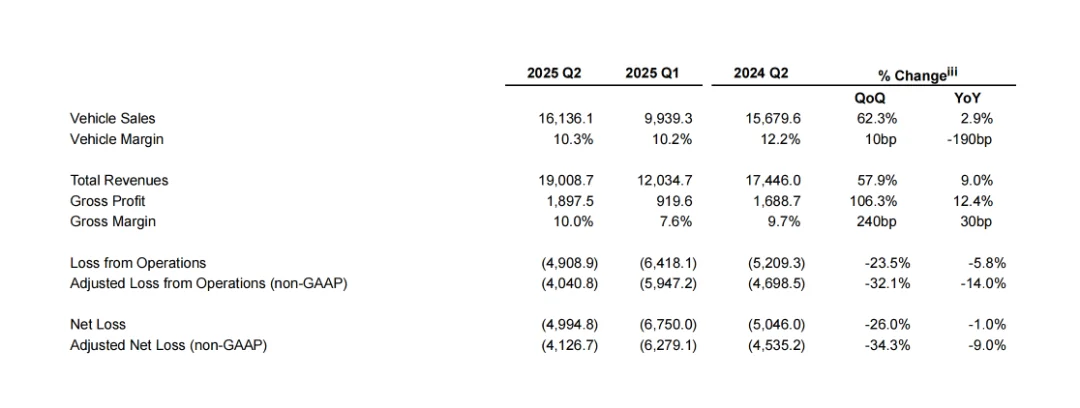
However, the other side of the financial report remains stark. Despite growth in revenue and gross margin, the net loss stood at RMB 4.995 billion. Although this is a significant narrowing from the RMB 6.75 billion loss in Q1, it remains at a high level.
A less optimistic figure is that NIO’s total liabilities currently stand at RMB 93.4 billion against total assets of RMB 100 billion, resulting in a debt-to-asset ratio exceeding 93%. While this is slightly lower than the 100.28% recorded in Q1, it remains far higher than XPENG’s 67% and Li Auto’s 54%.
Cost control has become key to NIO’s attempt to stem losses. Adjusted operating loss in Q2 fell to RMB 4.041 billion, a 32.1% decrease from the previous quarter. Sales and general administrative expenses decreased compared to Q1, while R&D expenses remained largely flat, indicating an intent to tighten internal operations and shift gears in growth. However, gross profit of less than RMB 1.9 billion cannot cover RMB 3 billion in R&D expenses and approximately RMB 4 billion in sales, general, and administrative expenses.
In terms of cash reserves, as of the end of June, NIO held a combined total of RMB 27.2 billion in cash, short-term investments, and long-term fixed deposits, marking a slight quarter-over-quarter increase. This provides a certain buffer for the brand’s upcoming expenditures on new product deliveries, the further rollout of its sub-brands, and infrastructure construction.
Overall, the improvement in some second-quarter financial data stems more from a quarter-over-quarter recovery driven by economies of scale rather than a fundamental improvement in the profitability structure. With two quarters remaining until the Q4 profitability target mentioned by William Li, NIO is still walking on the edge of a cliff and has not yet truly entered a safe zone.
02Is the Acceleration Fast Enough?
Looking back at the second quarter, NIO’s business pace was nearly maxed out across the board. The updated “5566” models completed their generational transition, effectively supporting the mid-to-high-end foundation of the NIO brand. Although the delivery volume of the ET9 was modest, it had a relatively positive impact on NIO’s brand power. Meanwhile, sales of the ONVO L60 continued to climb, and the Yinghuochong brand, targeting the entry-level market, achieved its first large-scale deliveries in the second quarter.
The three-brand lineup truly formed a delivery synergy in the second quarter, and this pace has continued to accelerate into the third quarter.
NIO’s three brands collectively delivered 21,017 units in July, with numbers rapidly climbing to 31,305 in August, pushing cumulative deliveries past 830,000 units. At the end of July, ONVO’s second model, the L90, officially launched and began deliveries.
This vehicle has become one of the key models determining whether NIO can achieve profitability in the fourth quarter. William Li revealed that within three days of its launch, the L90 ranked among the top three weekly sellers in the large SUV segment, trailing only the AITO M8. He also stated during the earnings call today that L90 orders exceeded expectations, reaching a record 10,575 units in its first month of delivery. The strong sales of the L90 have boosted the momentum of the ONVO brand and stimulated demand for the L60, with L60 orders hitting a new high for the year in August.
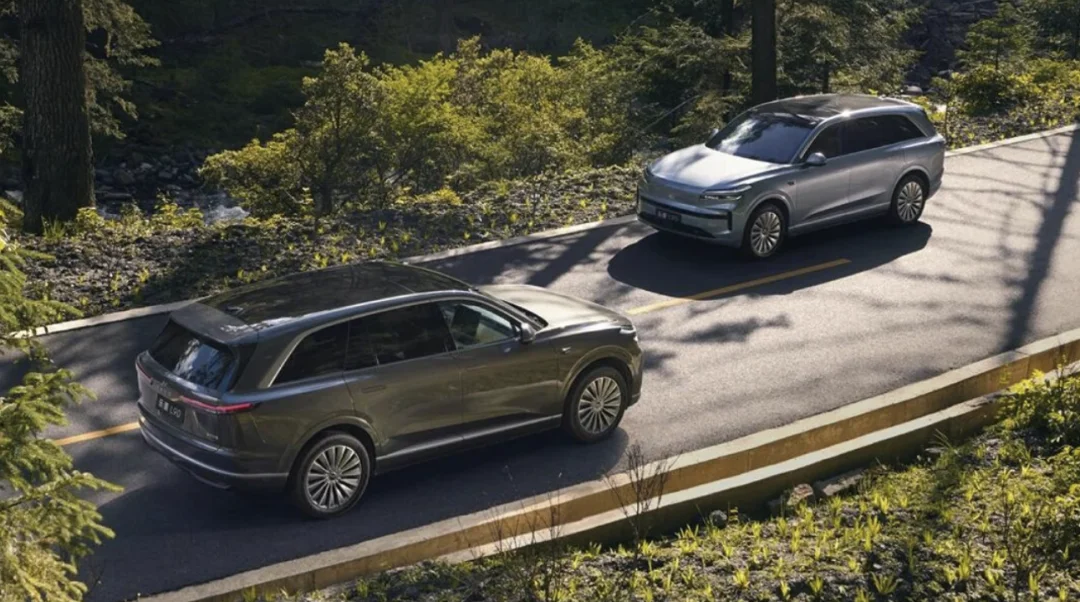
On August 21, the all-new ES8 was launched for pre-order, with its official market release and delivery beginning in late September. The new model has also received a strong market response. During the earnings call, William Li shared delivery data for Yinghuochong: having been on the market for three months, it delivered more than 10,000 units, becoming the number one player in the premium pure electric small car segment.

According to William Li, to ensure production capacity for current models, none of NIO’s three brands will see new model deliveries this year. At least three new vehicles are scheduled for launch next year: the ONVO L80, NIO ES9, and ES7.
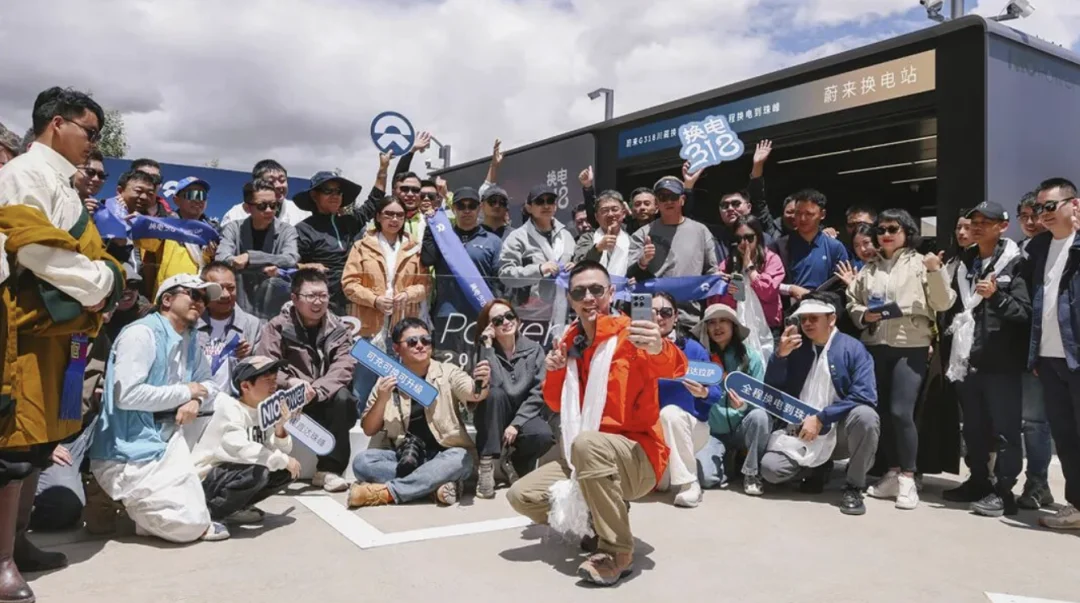
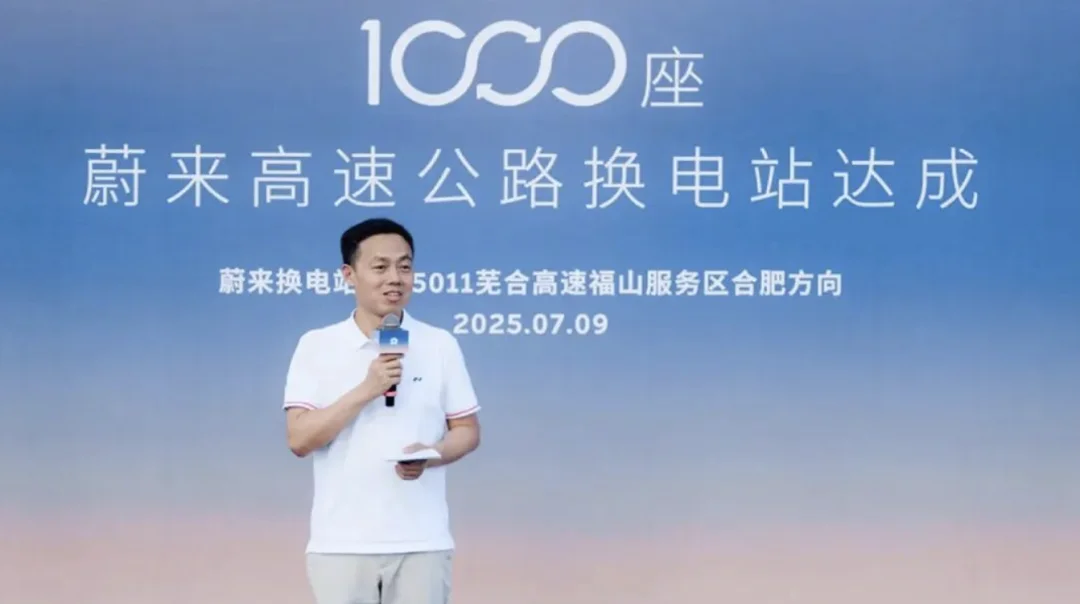
Over recent months, NIO has been aggressively expanding its infrastructure. By the end of August, NIO had cumulatively built 3,539 battery swap stations and 4,755 charging stations globally. On August 16, the NIO G318 Sichuan-Tibet swap route was fully connected.
Overall, NIO is attempting to build a high-growth, highly execution-focused brand image in the third quarter through a denser new product rhythm, a more cost-effective product lineup, and faster infrastructure deployment. However, whether current growth rates can translate into genuine profitability, whether profits can be maintained amid the price war, and whether cash flow can be stabilized under high investment are all realistic challenges NIO must face in the near future.
03Q4 Monthly Delivery Sprint Targets 50,000 Units
Following the release of NIO’s second-quarter earnings report, NIO CEO William Li and CTO Qu Yu addressed questions regarding this year’s production planning, sales expectations, gross margin improvement, and next year’s new product roadmap. We have edited their responses without altering the original meaning:
Q: What is the production capacity for the NIO ES8 and ONVO L90, and what are the delivery targets for the remainder of this year?
A: Demand for the NIO ES8 and ONVO L90 has indeed been stronger than originally anticipated. Consequently, we are working with our supply chain partners to comprehensively ramp up production. The ONVO L90 will reach a monthly production capacity of 15,000 units in October. The all-new NIO ES8 will hit 10,000 units per month in October and scale to 15,000 units by December. Based on current demand and supply conditions, our target for the fourth quarter is an average monthly delivery volume of 50,000 units across all three brands.
Q: How will gross margins change in the second half of this year?
A: The gross margin of the whole vehicle in the second quarter was 10.3%, mainly because we were in a product transition period. The 2025 model 5566 gradually completed its transition in mid-to-late May. In terms of sales volume share, among the total Q2 sales of 72,000 units, the share of 5566 deliveries accounted for approximately only 20%. Therefore, the increase in the whole vehicle gross margin in the second quarter compared to the first quarter was not as significant.
We aim to further increase the gross margin in the third quarter. By the fourth quarter, full-quarter deliveries of the L90 and ES8 are expected, allowing us to achieve a break-even point with a vehicle gross margin between 16% and 17%, with a hope of reaching 20%.
Other business segments achieved a positive gross margin of 8.2% in Q2. This was driven by increased profits from after-sales services and financial services generated by existing users, as well as a narrowing of losses in energy operations. More importantly, we also realized significant profits from external basic services during the second quarter.
Q: What are the upcoming production arrangements for the ONVO L90 and NIO ES8?
A: From a production standpoint, we will prioritize ensuring deliveries for the ONVO L90 and the all-new ES8. Even the ONVO L60 must yield priority to the L90, which means L60 customers are currently waiting for their vehicles. We expect the production bottleneck for ONVO to ease starting in October, aiming to raise the full supply chain capacity for both ONVO and NIO brands to 25,000 units per month in the fourth quarter.
Yinghuochong’s production capacity is steadily increasing, with a target of 6,000 units per month at peak levels in the fourth quarter. This would bring the combined capacity across all brands to approximately 56,000 units.
The earliest plan was to release the L80 this year, but considering that current production capacity is mainly used to meet the delivery needs of existing models, no new products will be delivered this year. Whether it will be released this year still depends on market conditions.
Beyond the ONVO L80, NIO will launch two major SUVs next year: the ES9 and the ES7. The centerpiece of this year’s NIO DAY is the launch of the all-new ES8.
Q: What are NIO’s gross margin targets going forward?
A: For NIO, the target is to achieve a gross margin of 20%. The NIO brand aims to strive for 25% based on the 20% baseline, ONVO seeks to achieve higher gross margins while maintaining a 15% baseline, and Yinghuochong is around 10%. Compared to the previous generation of products, our current generation has sufficient cost competitiveness. This is achieved through self-developed technological accumulation and cost control measures to reduce costs.
Q: Which new models are scheduled for 2026?
A: The main lineup still includes three large vehicles: the ONVO L80, NIO ES9, and ES7. For the recently refreshed '5566' models this year, there are no plans for new versions next year. We recently announced that 100 kWh batteries will become standard equipment, which can further enhance their range competitiveness. We believe their competitive edge will remain very strong in the foreseeable future. There may be some minor trim updates, such as a Champion Edition. Yinghuochong also has no second model planned for next year.
Q: What will the quarterly R&D expense level be by 2026?
A: We have made significant efforts regarding R&D expenses this year. Going forward, starting next year, we plan to maintain a quarterly R&D expenditure of approximately RMB 2 billion to 2.5 billion. We believe this level is sufficient to sustain our long-term competitiveness.
A: There are few specific projections for the scale of investment at this time. For next year, we hope to rely more on social resources to assist in the construction of battery swap stations. Regarding the launch and development pace and costs of new models next year, we aim to keep them roughly consistent with this year's levels.
Q: What is the financial impact of making 100 kWh batteries standard equipment, and how much additional cost does it incur?
A: As mentioned when we announced the previous policy, for the '5566' lineup, we already offered substantial promotions upon the launch of the 2025 models. This price adjustment essentially reclaims those promotional discounts and incorporates them into the standard pricing. Therefore, the final transaction price paid by customers remains largely unchanged. Consequently, there is minimal impact on the gross margin and transaction prices for the '5566' series. The long-term impact on sales volume still needs to be observed; however, current indicators suggest a positive effect on sales.
Q: How much cost can be saved by using fully self-developed chips?
A: There is not a strong correlation between delivery volume and the unit price of chips. Compared to second-generation chips, the same computing power comes at a significantly lower cost. Compared to externally sourced chips with similar performance, the cost reduction is also substantial. We prefer not to disclose the exact amount saved.
Q: What potential impact will the current product portfolio have on new products next year?
A: The L90 has had a positive impact on the sales of the L60. In August, orders for the L60 reached their highest level this year, significantly outperforming July figures. Additionally, we recently made the 100 kWh battery standard equipment on the 5566 model. We believe this combination has helped clarify the overall pricing structure.
Following the strong sales of the L90 and ES8, several large pure-electric SUVs have exited the market, demonstrating that consumer perception is heavily influenced by these models. The competitiveness of large pure-electric SUVs is becoming apparent, signaling the arrival of an era defined by this category. Consequently, the shift in consumer mindset has a very positive impact on NIO's existing products.
Q: Looking ahead, how do you view the sustained sales performance of the L90 and ES8?
A: The competitive landscape in China remains extremely intense. From the perspective of smart electric vehicle sales trends, new car launches initially generate strong momentum before settling into a stable sales period. It remains quite challenging to see any single model maintain high-volume sales over a long period. Starting this year, we have been building a new marketing paradigm aimed at extending the initial launch effect and maintaining a higher level of stable sales volume.
Written by: Da Yong | Edited by: James