NIO Reports First Quarterly Profit After Seven Years, Revenue Hits Record High

Seven and a half years after its launch, NIO has achieved quarterly profitability for the first time, with net profit of 283 million yuan.
In the evening of today, Beijing time, NIO released its full-year and fourth-quarter financial reports for 2025. The key financial data for the fourth quarter is as follows:
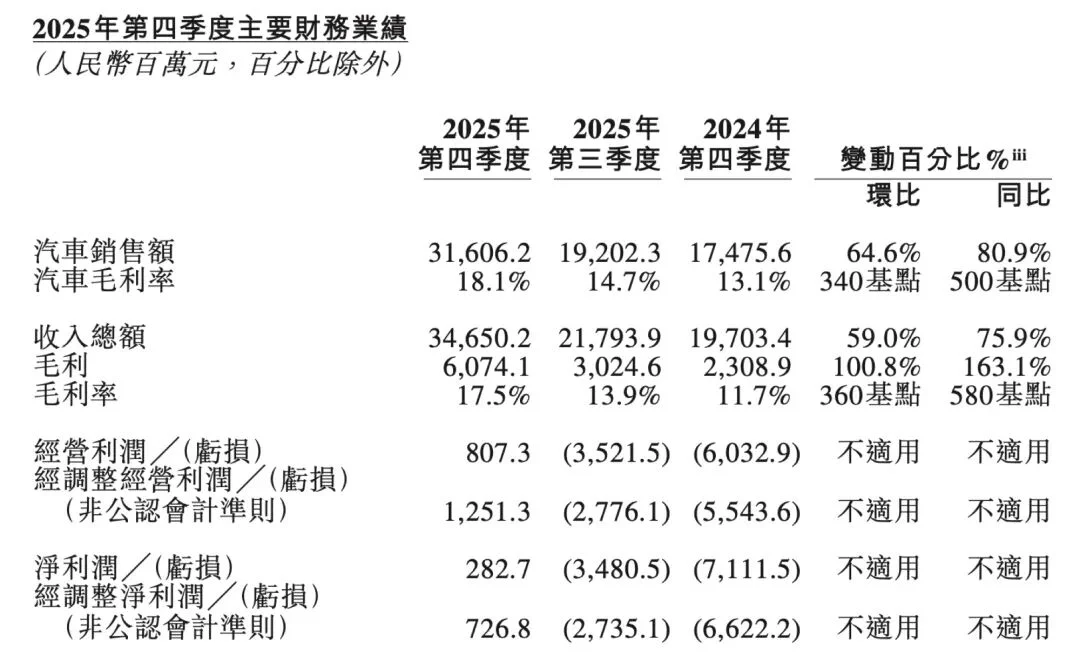
Quarterly revenue reached RMB 34.65 billion, a record high, up 59% quarter-on-quarter and 75.9% year-on-year.
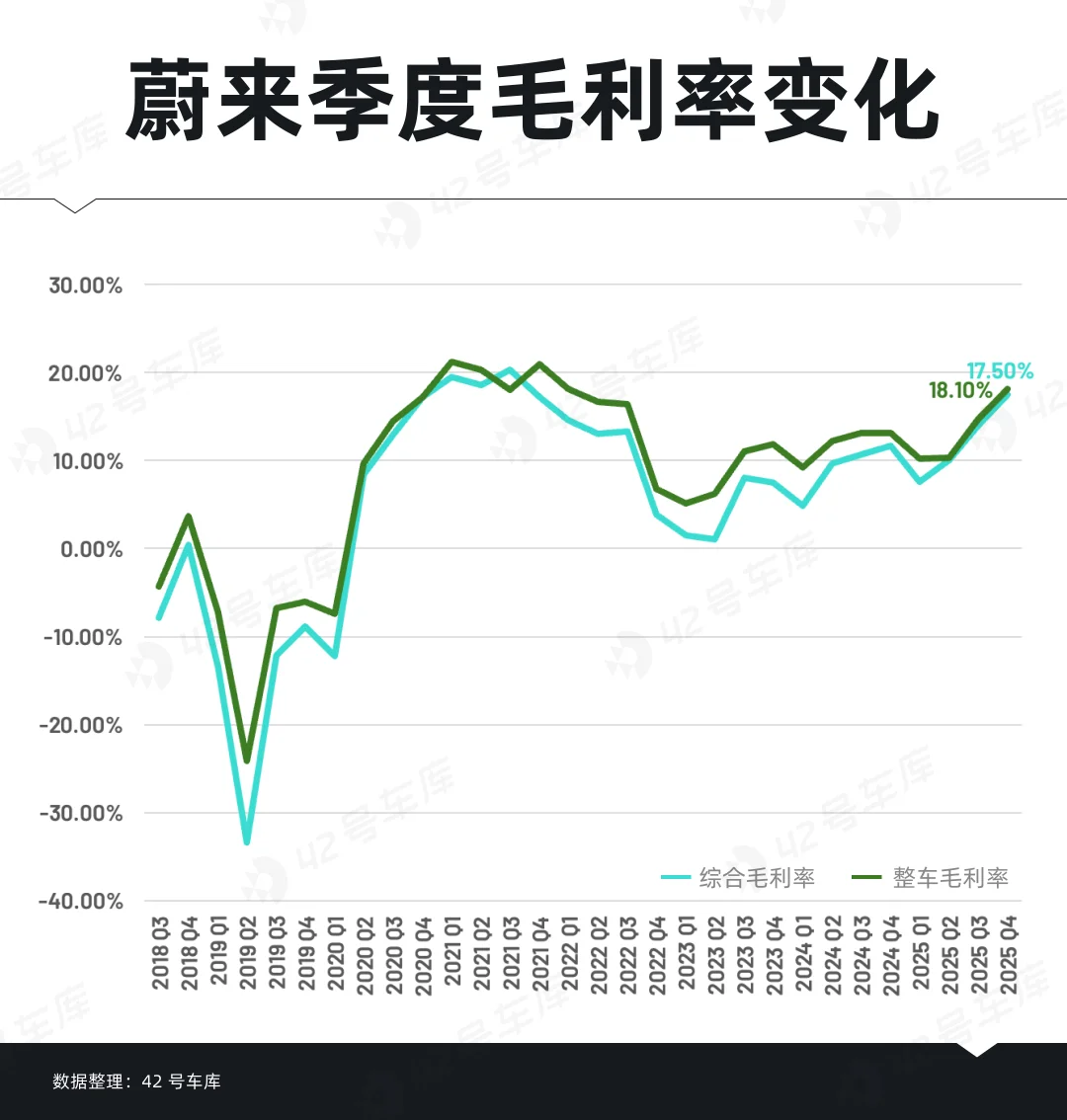
The vehicle gross margin was 18.1%, and the consolidated gross margin was 17.5%, both reaching new highs since two thousand twenty-two.
Net profit of RMB 283 million, marking NIO's first-ever profitability. This compares with a net loss of RMB 7.112 billion in the same period last year and a net loss of RMB 3.481 billion in the previous quarter.
Operating profit was RMB 807 million, compared with an operating loss of RMB 6.033 billion in the same period last year and an operating loss of RMB 3.522 billion in the previous quarter.
Quarterly new vehicle deliveries totaled 124,800 units, including 67,400 for the NIO brand, 38,300 for the ONVO brand, and 19,100 for FIREFLY. Year-over-year deliveries grew by 71.7%, while quarter-over-quarter growth reached 43.3%.
Key 2025 figures include:
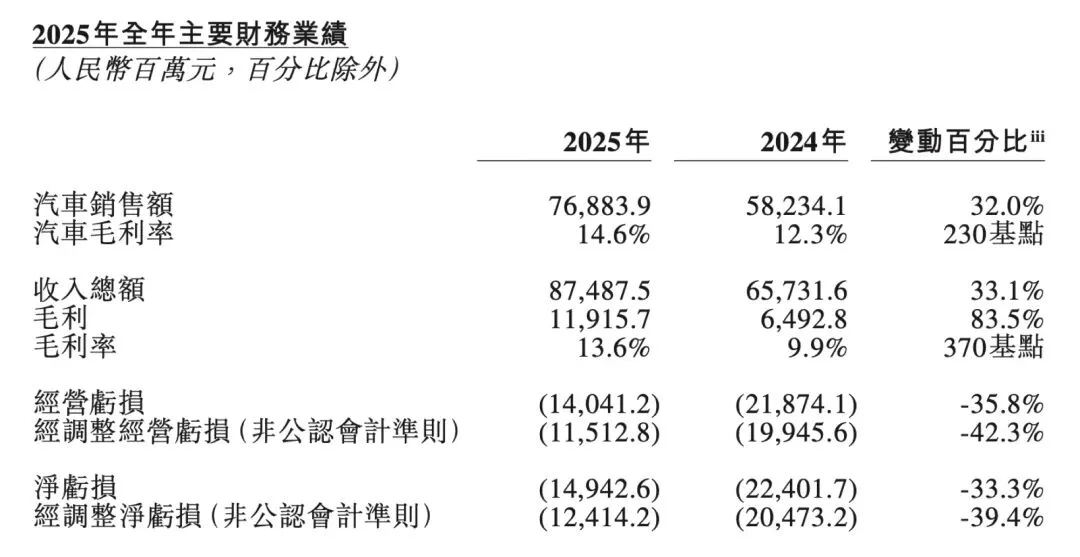
Full-year revenue reached RMB 87.488 billion, a 33.1% increase.
Full-year net loss was RMB 14.943 billion, down 33.3%; full-year operating loss was RMB 14.041 billion, down 35.8%, marking a significant narrowing of losses.
Vehicle deliveries totaled 326,000 units, an increase of approximately 38% compared to 2024.
So, how did NIO achieve quarterly profitability?
In fact, William Li had previously outlined a formula for NIO’s profitability in July last year: total monthly sales across its three brands exceeding 50,000 units; gross margin controlled at 17%–18%; selling, general and administrative expense ratio around 10%; and research and development expense ratio between 6% and 7%.
In the fourth quarter of 2025, NIO achieved a combined gross margin of 17.5%, with selling, general and administrative expenses totaling RMB 3.537 billion (10.2% of revenue) and research and development expenses at RMB 2.026 billion (5.8% of revenue). However, its sales volume still fell short of the quarterly target of 150,000 units by approximately 25,000 units.
At 8 p.m., NIO held an earnings conference call for the fourth quarter and full year of 2025. NIO founder, chairman and CEO William Li and CFO Qu Yu addressed questions regarding new models, the Shenji chip, and the impact of ultra-fast charging on battery swapping.
As of press time, NIO’s pre-market price in the United States was USD 5.46, up 10.33%, with a market capitalization of USD 13.73 billion.
01First Quarterly Profit
NIO’s first quarterly profit came 30 quarters after its listing on the New York Stock Exchange.
Financial report data showed that NIO reported a net profit of RMB 283 million and an operating profit of RMB 807 million in the fourth quarter of 2025. Adjusted net profit (Non-GAAP) reached RMB 727 million, while adjusted operating profit (Non-GAAP) stood at RMB 1.251 billion.
Although the company turned profitable on a quarterly basis, NIO’s profitability remains fragile.
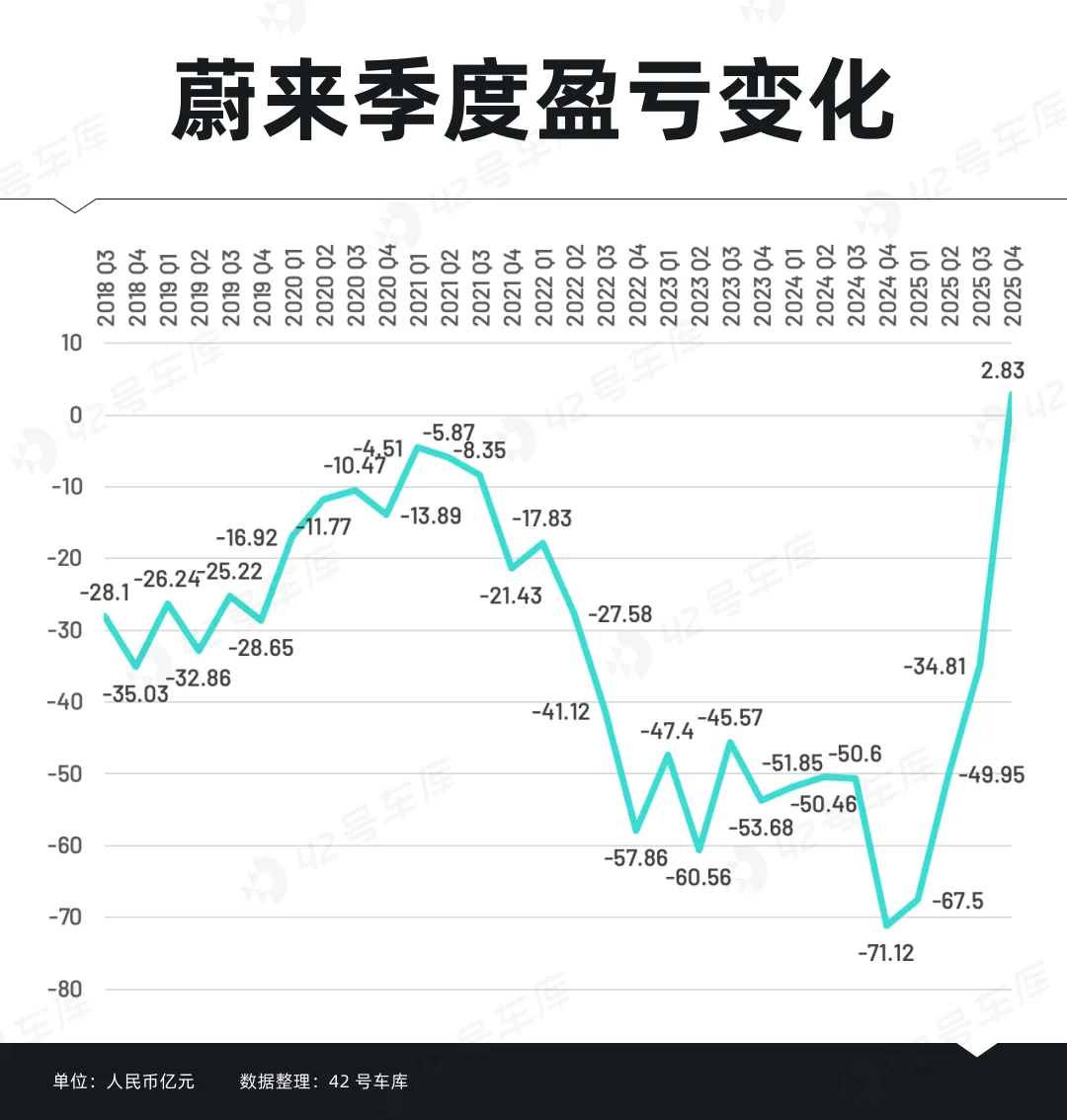
We analyzed NIO’s profit and loss data across 30 quarters since 2018. The results show that NIO incurred a net loss of RMB 99.72 billion over its first 29 quarters. The trend line reveals that while NIO approached profitability around 2021, it missed the opportunity. Consequently, losses widened from 2023 through 2025, peaking in the fourth quarter of 2024 at a quarterly loss of RMB 7.112 billion.
The turning point arrived in 2025. NIO’s losses narrowed continuously through the first three quarters, culminating in a profit for the fourth quarter. For the full year 2025, NIO reported a net loss of RMB 14.943 billion, a decrease of 33.30% compared to the previous year.
With this milestone achieved, achieving annual profitability in 2026 has become NIO’s new target. NIO CFO Qu Yu stated that the company aims to achieve Non-GAAP profitability for the full year 2026.
According to the financial report, NIO’s revenue in the fourth quarter of 2025 reached an all-time high of RMB 34.65 billion, representing a year-over-year increase of 75.9% and a quarter-over-quarter growth of 59%. Automotive sales accounted for RMB 31.606 billion, up 80.9% year-over-year and 64.6% quarter-over-quarter, indicating significantly faster growth in vehicle sales.
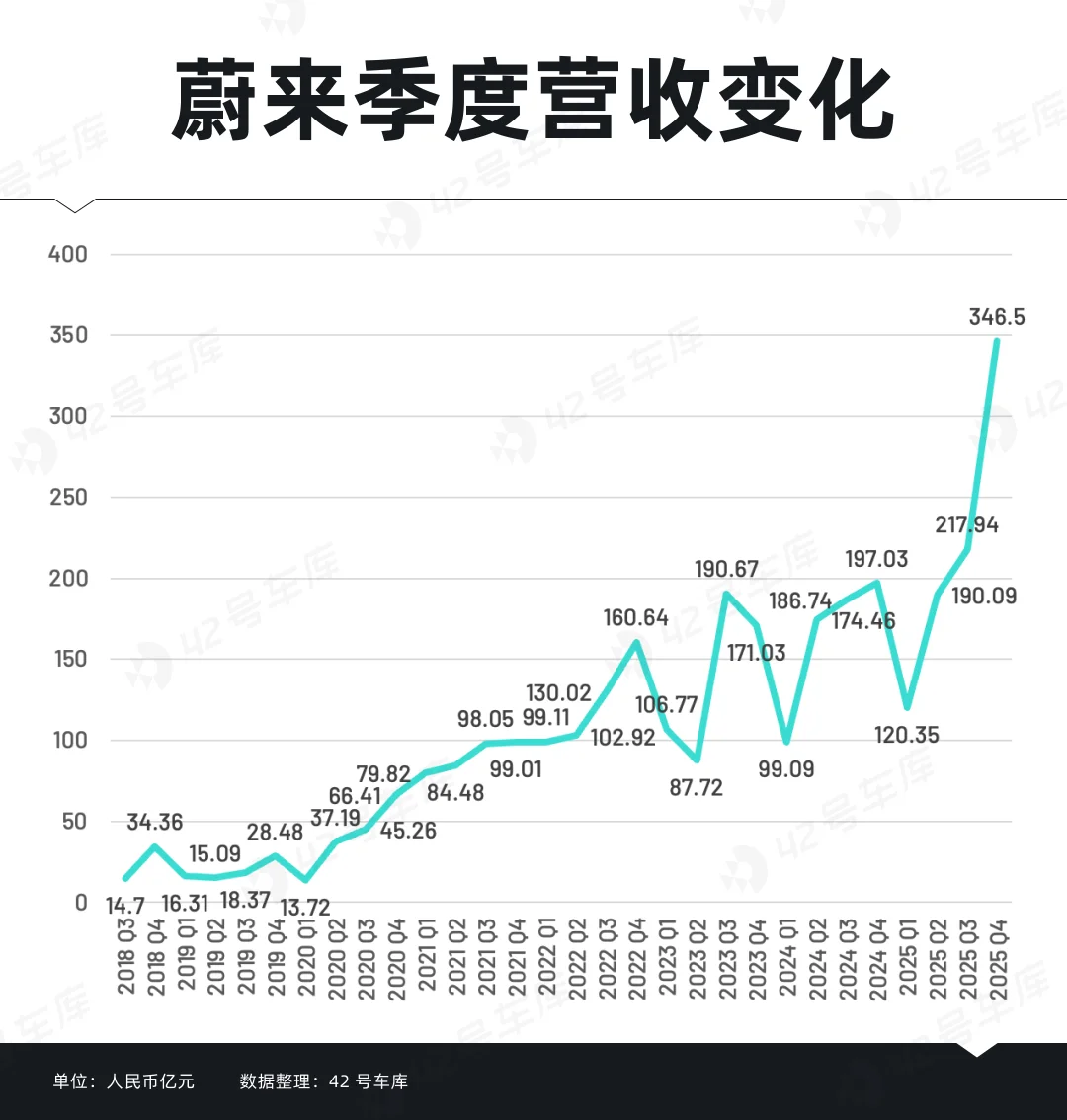
Looking at the full-year 2025 data, NIO’s total revenue was RMB 87.488 billion, reflecting a robust 33.1% year-over-year increase from 2024.
Gross margin is a critical metric for corporate profitability. In the fourth quarter of 2025, NIO’s overall gross margin stood at 17.5%, with a vehicle gross margin of 18.1%.
For the full year 2025, NIO’s gross margin was 13.6%, an improvement of 370 basis points compared to 2024. Meanwhile, the vehicle gross margin rose to 14.6% from 12.3% in 2024.
NIO has significantly tightened its spending on operating expenses.
R&D expenses for NIO in the fourth quarter of 2025 amounted to RMB 2.026 billion, a year-over-year decrease of 44.3% and a quarter-over-quarter decline of 15.3%. For the full year of 2025, R&D expenses totaled RMB 10.605 billion, down 18.7% compared to 2024.
The financial report provided distinct explanations for the year-over-year and quarter-over-quarter declines in R&D expenses, but organizational optimization and reduced personnel costs were common factors. Compared to the same period in 2024, the Q4 2025 decline was primarily driven by lower costs for R&D function staff due to organizational restructuring, as well as reduced design and development expenses associated with different stages of new product and technology development. Relative to the third quarter of 2025, the decrease was mainly attributable to lower personnel costs resulting from organizational optimization.
Meanwhile, sales, general and administrative (SG&A) expenses for NIO in Q4 2025 reached RMB 3.537 billion, representing a year-over-year drop of 27.5% and a quarter-over-quarter reduction of 15.5%. For the entire year of 2025, SG&A expenses totaled RMB 16.088 billion, an increase of 2.2% compared to 2024.
NIO attributed the simultaneous year-over-year and quarter-over-quarter declines in SG&A expenses to reduced marketing and other support function personnel and related costs stemming from organizational optimization, alongside a reduction in sales and marketing activities.
According to NIO’s latest financial data, as of December 31, 2025, NIO held RMB 45.9 billion in cash and cash equivalents, restricted cash, short-term investments, and long-term deposits. However, current liabilities exceeded current assets.
Looking ahead to the first quarter of 2026, NIO projects vehicle deliveries between 80,000 and 83,000 units, marking a year-over-year growth of 90.1% to 97.2%. Total revenue is expected to range from RMB 24.482 billion to RMB 25.176 billion, reflecting a year-over-year increase of 103.4% to 109.2%.
02New Cars, New Chips, Battery Swap vs. Ultra-Fast Charging
At 8 p.m. tonight, NIO held its earnings call for the fourth quarter and full year of 2025. During the conference, NIO CEO William Li and CFO Qu Yu addressed questions regarding new vehicles launching in 2026, the second chip in the Shenji series, sales and gross margin outlooks for the first quarter, and the impact of ultra-fast charging on battery swap technology.
According to the plan, the NIO ES9 will launch in the second quarter of this year. Additionally, annual updates for the ET5, ET5 Touring (ET5T), ES6, and EC6 models will also be released in Q2. A large five-seat SUV based on the ES8 platform is scheduled to launch in the third quarter. Within the ONVO brand, the ONVO L80 will launch in Q2, while the ONVO L60 and L90 will undergo product upgrades and refreshes.
With this product lineup, NIO will have five large SUVs on sale this year, giving Qu Yu strong confidence in gross margin performance.
Qu Yu expects NIO’s vehicle gross margin in Q1 to remain at the level seen in Q4 of last year. This is because there are still outstanding orders for the NIO ES8, and the gross margins for large SUVs are expected to perform even better (in Q4 2025, the ES8’s gross margin exceeded 20%, approaching 25%).
However, on the supply chain side, prices for components such as copper, lithium carbonate, and memory chips are rising. Qu Yu believes that the price increases have only just begun, but NIO aims to keep the negative impact within a reasonable range.

Regarding the Shenji chip, William Li stated that the second generation of the Shenji chip has completed tape-out and is currently in the mass production process.
Shenji’s second chip is positioned in the mid-range segment, built on a 5-nanometer process. While its positioning is slightly lower than that of the NX9031, its performance remains comparable to three Orin-X chips combined. William Li stated that the cost of this new chip is significantly lower than that of the NX9031. Additionally, Shenji’s second chip has already entered preliminary testing and engagement phases with industry clients, though William Li did not disclose the names of these external customers at this time.
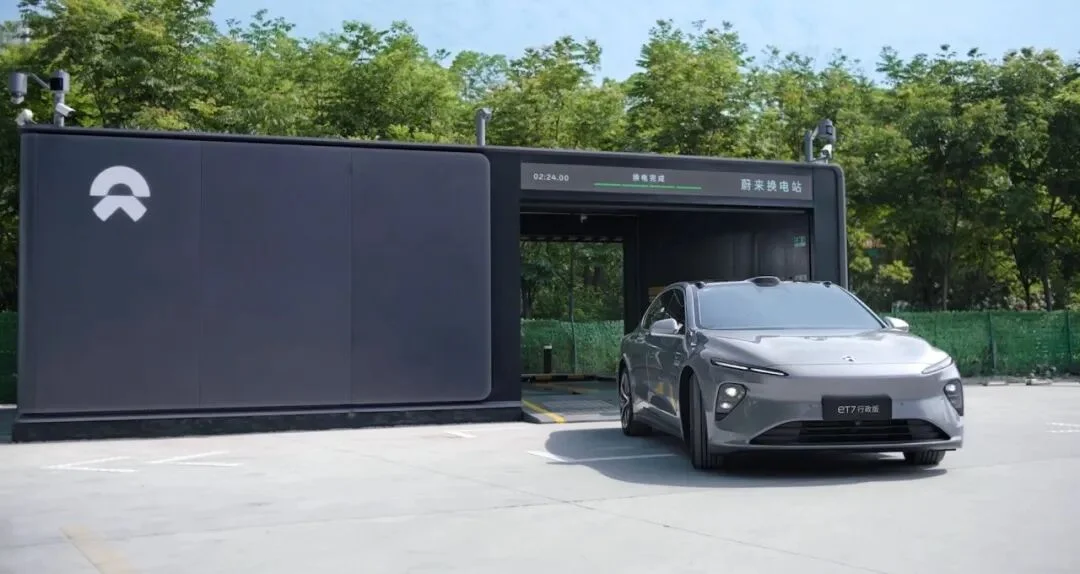
Recently, ultra-fast charging versus battery swapping has become a hot topic within the industry. With ultra-fast charging advancing, does battery swapping still hold an advantage?
William Li believes: "Charging and swapping are not contradictory. We have recently observed progress made by some companies in the industry regarding charging speeds, which is certainly very good technology. However, in the foreseeable future, we believe that the speed and experience of fast charging will still fall short of battery swapping. This should be a point recognized across the industry."
William Li emphasized that battery swapping is a systematic solution, not merely a matter of being "a bit faster or slower." He outlined the advantages of the swapping model from three perspectives.
First, battery swapping can systematically address the issue of mismatched lifespans between vehicles and batteries. Currently, most of the industry adopts a warranty standard of eight years or 160,000 kilometers, with a battery health degree of 70%. However, if a vehicle is used for 15 years, safety becomes a significant concern after the warranty period expires. Under the battery-swapping model, combined with long-life battery design, charge-discharge strategies, and health monitoring measures, William Li believes that battery safety can be significantly enhanced and the lifespan maximized.
Second, William Li views battery swap stations as distributed energy storage facilities. They can participate in power storage and consumption, engage in grid interactions, and offer substantial commercial opportunities and value. Compared to general storage-and-charging setups, NIO can reduce electricity loss by 6%, resulting in higher economic efficiency.
Third, the continuous expansion of the battery-swapping network not only provides users with a better experience but also brings significant competitive advantages for NIO’s long-term commercial success.
When discussing the progress of NIO's driver assistance systems, William Li stated that there are only two metrics to evaluate whether the system is good or bad: the duration of assisted driving usage and the reduction in accidents.
Data shows that after the NMW update in February this year, the duration of assisted driving usage by NIO users increased by 80% compared to January. However, NIO has not yet deployed all its cloud computing power. According to the plan, NIO will release two major version updates for its driver assistance system in the second and fourth quarters of this year.
From a numerical perspective, NIO's profitability in this quarter does not mean the company has completely exited its loss-making cycle. The cumulative losses of nearly RMB 100 billion over the past 30 quarters remain a heavy historical burden on the financial statements.
More importantly, NIO's profitability still relies on sales volume, gross margin, and expense ratio all remaining within ideal ranges simultaneously. If any one of these variables fluctuates, profitability could be broken again. Therefore, this quarterly profit is not the end; the real test lies in 2026.
Written by: James Edited by: Daji