


NIO's William Li Defends 10-Year Strategy Amid Profitability Push and New Brand Launches
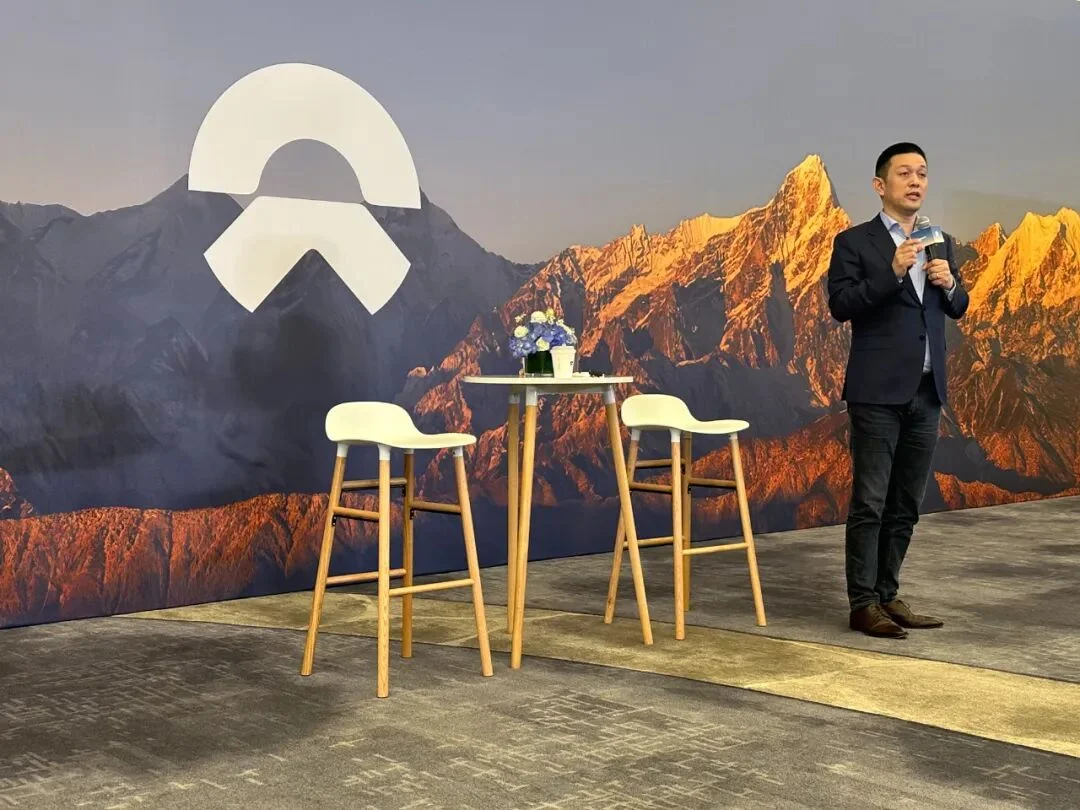
At a media briefing on December 12, NIO Chairman William Li stood for three and a half hours, answering more than 200 questions from the press.
The questions were all-encompassing, covering everything from the ET9 to Yinghuochong, single-brand versus multi-brand operations, technology versus marketing, losses versus profitability, and domestic markets versus Europe. They left no aspect of NIO unexamined.
NIO, which has completed a ten-year journey, now has three brands under its umbrella, nine models on sale, one model in pre-sale, and one model set to debut. Surrounding these vehicles, NIO has also built numerous battery swap stations, NIO House, and other facilities, while developing products such as the NIO Phone and the Shenji NX9031 smart driving chip.
Compared with other new energy vehicle startups, NIO’s business footprint is particularly large. Yet, in today’s fast-paced competitive landscape, NIO appears unusually slow—slow to achieve profitability, slow to significantly boost sales volumes, and slow to deploy advanced autonomous driving features. Even when ONVO L60 emerged as a hit model, it faced external perceptions of sluggish production ramp-up.
Indeed, NIO still faces many issues that require clearer explanation to the public. At the media briefing, William Li strove to paint a clearer picture of NIO’s present and future.
William Li Is the Target User for the ET9
The ET9 is undoubtedly one of NIO’s most important current products.
On one hand, the ET9 carries the responsibility of driving the NIO brand further upward. William Li stated that the ET9 will position NIO on a more equal footing with traditional luxury brands such as BBA.
On the other hand, the ET9 plays a significant role in improving NIO's gross margin levels. Financial reports show that NIO's corporate gross margin for Q3 this year was 10.7%, while the vehicle gross margin was 13.1%, leaving considerable room for further improvement. According to William Li, the gross margin from a single ET9 is equivalent to that of several ET5s.
Meanwhile, William Li also stated that the ET9 can show the outside world where NIO has spent its more than 50 billion yuan in R&D investment over the years.
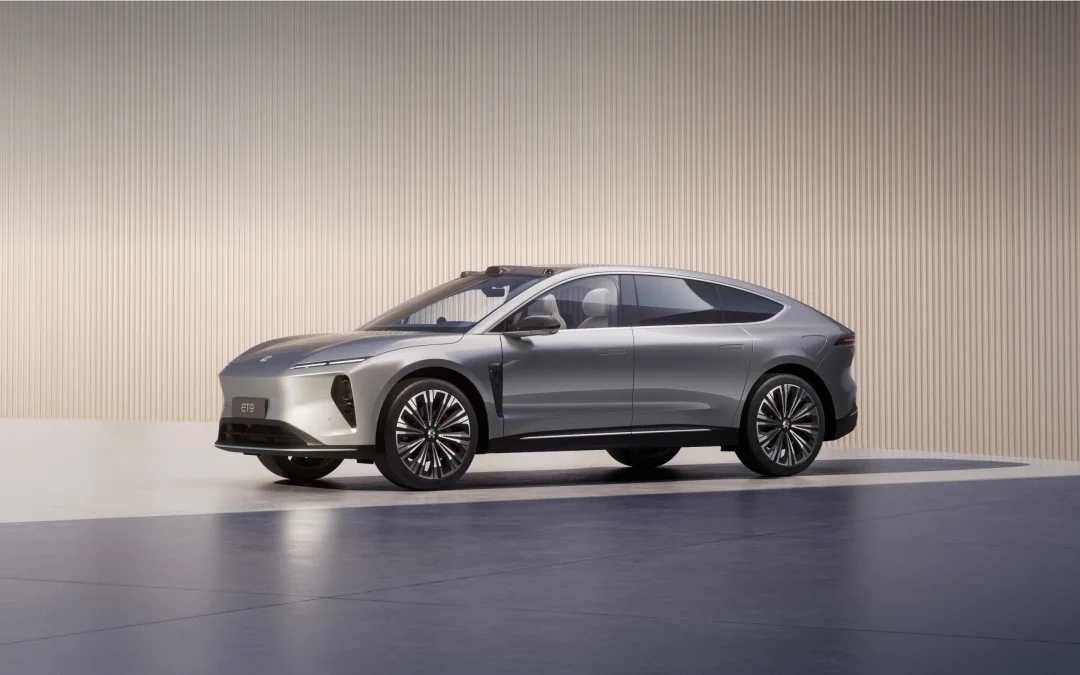
The ET9 was officially announced for pre-sale at NIO Day last December, with a price of RMB 800,000. In terms of product specifications, according to official information, the ET9 measures 5,324 mm in length, 2,016 mm in width, and 1,620 mm in height, with a wheelbase reaching 3,250 mm. It is currently the most expensive and top-tier executive flagship sedan under NIO.
William Li believes that executive flagships have always been technology flagships. As such, the ET9 serves as a culmination of NIO's technological advancements, featuring its most cutting-edge in-house developed technologies including steer-by-wire, SkyRide chassis, and the Shenji NX9031 chip.
Among these, NIO has recently intensified its communication regarding steer-by-wire technology. According to official information, the ET9 equipped with steer-by-wire requires only 0.66 turns of the steering wheel to lock the wheels in one direction; during automatic parking and battery-swap parking, the ET9's steering wheel and steered wheels can be completely decoupled, turning merely 10° to indicate the direction of travel; compared to the electric power steering systems currently widely used, the reliability of the ET9's steer-by-wire system has been improved by 2.2 times.
Additionally, because there is a 0 mechanical connection between the steering wheel and the steered wheels, with control entirely via electrical signals, ET9 can freely design the steering wheel angle and resistance torque. NIO also stated that steer-by-wire is one of the core components for achieving L3 and higher-level intelligent driving.
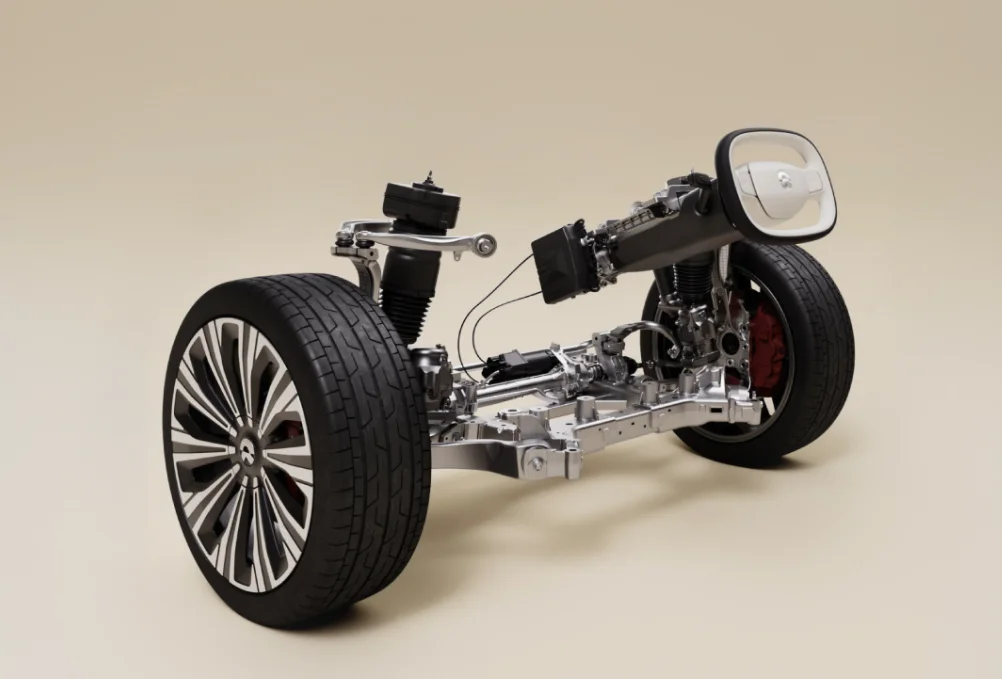
Regarding steer-by-wire, William Li added during a media briefing that this is not merely a technical issue but involves numerous announcements, certifications, and regulations, making it far more complex than many realize. Once NIO has validated the system, it will also hold value for China's broader intelligent electric vehicle industry.
Notably, William Li candidly stated that steer-by-wire is not fully in-house developed by NIO; rather, it was co-developed with partners.
As for the driving feel of the ET9 based on steer-by-wire, William Li said its handling flexibility is comparable to that of a BMW MINI. He joked that they could produce a comparison video of the ET9 versus a BMW MINI later on.
So, will the ET9 sell well?
William Li believes that addressing the luxury car market segment where the ET9 sits—priced in the eight- to nine-hundred-thousand RMB range—is both simple and complex. Ultimately, success depends on technology, products, and services. He expressed hope that the ET9 would not adopt the 'old money' aesthetic associated with Maibahe, but instead reflect the spirit of the current era. William Li added, 'I am the target user for the ET9.'
According to official information, the ET9 will be delivered in the first quarter of next year. Regarding specific sales volumes at that time, William Li stated that exceeding monthly sales of the Audi A8 and BMW 7 Series is certainly achievable, but catching up to the Mercedes-Benz S-Class and Porsche Panamera (which have monthly sales of approximately one or two thousand units) remains challenging.
Yinghuochong has only one model, but built its own battery-swap network
By the time NIO Day arrives on December 21 this year, NIO’s third brand, Yinghuochong, and its sole model will make their debut. Yes, Yinghuochong is a brand with only one car: a premium compact electric vehicle priced similarly to the BMW MINI.
William Li explained that NIO launched Yinghuochong because the Chinese market has demand for such small cars but lacks high-quality, safe products. Globally, the small-car market is also significant, with annual sales exceeding 10 million units, which holds important implications for NIO’s global expansion.
During this media briefing, William Li did not disclose extensive product details about Yinghuochong. Instead, he used three keywords and two phrases to describe the brand’s core product philosophy and competitive positioning.
Regarding the core product philosophy, William Li stated that Yinghuochong aims to embody "agility, trustworthiness, and ingenuity." For competitiveness, he claimed Yinghuochong would be "more MINI than smart" and "smarter than MINI."
On the aspects of "agility, trustworthiness, and ingenuity," William Li described agility as referring to both the exterior design and handling dynamics of Yinghuochong, which would be highly nimble. Trustworthiness refers to class-leading active and passive safety features; he emphasized that safety would serve as the most critical foundation of the product, complemented by the best-in-class intelligent driving capabilities. Ingenuity denotes clever spatial design solutions within the vehicle.
The phrases "more MINI than smart" and "smarter than MINI" are literal comparisons. William Li noted that current smart models are too large, so Yinghuochong will be smaller than them. Conversely, compared to MINI, Yinghuochong will offer greater intelligence.
As a NIO-branded vehicle, battery swapping remains a standard feature. However, unlike the NIO and ONVO brands, Yinghuochong uses smaller batteries that cannot fit into existing NIO swap stations. Therefore, Yinghuochong will build its own independent battery-swapping network, potentially increasing NIO’s financial pressure further.
Nevertheless, William Li pointed out that Yinghuochong’s swap stations utilize container-style designs, making deployment convenient and significantly reducing costs.
Regarding channels, Yinghuochong will no longer add to NIO's financial pressure and will reuse NIO's sales and service system. Meanwhile, William Li stated that whether Yinghuochong will also leverage ONVO's channels is still under consideration; additionally, Yinghuochong will introduce its own innovative services.
The question of whether Yinghuochong owners can enter NIO House was also raised. William Li did not answer directly, but said that even if one is not a NIO owner, sometimes being invited allows entry to NIO House.
Regarding the sales volume of Yinghuochong, William Li stated that selling several thousand units per month is feasible, but there was no expectation to reach a monthly sales figure of ten thousand. Interestingly, regarding the delivery of Yinghuochong, William Li mentioned that they might accumulate a batch of orders before delivering them, otherwise, explaining it to the outside world would be too troublesome.
In addition, Yinghuochong will also target global regional markets and, together with ONVO in the future, become the main force of NIO's globalization.
William Li: "No Room for Failure," Ai Tiecheng: "Full of Confidence"
In William Li's targets, NIO achieving profitability by 2026 is a goal that cannot be missed.
As early as 2022, William Li had stated that NIO would achieve break-even in 2024, but this goal clearly fell short. NIO's Q3 financial report showed that in Q3, NIO incurred a loss of RMB 5.06 billion, up 11.1% year-over-year and 0.3% quarter-over-quarter. On a more positive note, NIO's Q3 free cash flow turned positive, rising from RMB 41.6 billion in Q2 to RMB 42.2 billion.
At this media briefing, William Li stated that we have postponed our profitability target; achieving profitability in 2026 is indeed a baseline and a "must-not-fail" task.
Meanwhile, William Li also did the math on stage to support NIO’s projection that it can achieve profitability by 2026. He stated that NIO’s annual R&D expenditure is roughly over RMB 10 billion, and the company will maintain this intensity in the near future. Many current R&D investments are expected to begin yielding returns in the next one or two years. If sales grow next year, revenue would likely increase by approximately 67% compared to this year. With steady gross margin growth and controlled expenses, he noted that achieving profitability is a straightforward equation.
Among these, the "sales growth" referred to by William Li means that NIO's overall sales volume next year will double, exceeding 440,000 units.
Next year will be a major product year for NIO. In addition to the ET9, the NIO brand will launch new models. However, William Li noted that NIO will not switch abruptly from the NT 2.0 platform to the NT 3.0 platform; instead, the transition will be gradual, with the NT 2.0 platform remaining the mainstay for a considerable period. Additionally, ONVO will introduce two more SUVs, and Yinghuochong has one vehicle.
In William Li's view, NIO's sales next year will take the following shape — ONVO will deliver an average of 20,000 units per month, totaling over 200,000 units for the year; the NIO brand will not double but will grow reasonably, and combined with ONVO, it will exceed 400,000 units; Yinghuochong can still sell several thousand units per month. Therefore, in William Li's opinion, a total sales figure exceeding 440,000 units for NIO next year is a reasonable number.
Before achieving the annual target of 440,000 units, NIO faces a more specific and urgent immediate task: delivering more than 30,000 units in December, comprising 20,000 from the NIO brand and 10,000 from the ONVO brand.
Regarding whether the NIO brand can deliver 20,000 units in December, William Li revealed that orders for the NIO brand during the first 11 days of December set a new high for the same period over the past six months. In short, William Li is very confident.
In contrast, whether ONVO can deliver 10,000 units in December remains more uncertain. ONVO delivered 4,319 units in October and 5,082 units in November. Based on these figures and the current growth trend, ONVO still has a gap to bridge before reaching the 10,000-unit milestone for December.
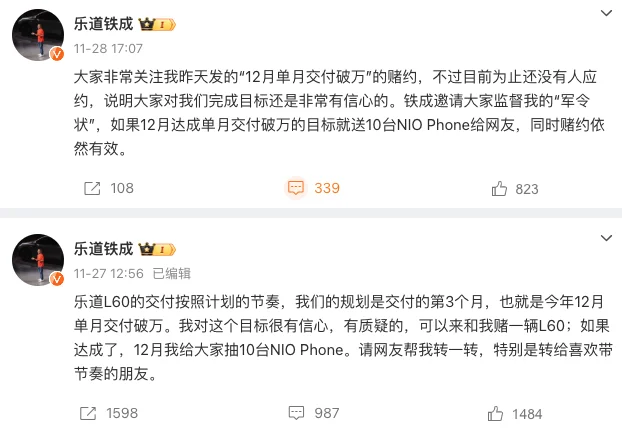
In recent weeks, ONVO CEO Ai Tiecheng has repeatedly expressed confidence that ONVO will deliver 10,000 units in December, even wagering an ONVO L60 on his Weibo account against netizens.
During this media briefing, Ai Tiecheng reiterated his delivery confidence, stating he is "fully confident" that ONVO will surpass 10,000 deliveries in December.
However, William Li noted that the version of the ONVO equipped with an 85 kWh battery pack will not reach full production ramp-up until January next year.
Additionally, William Li outlined several goals NIO aims to achieve in the near future, including the launch of end-to-end autonomous driving based on world models, shifting the focus of autonomous driving from safety to usability, and entering at least 25 global markets next year. He also mentioned his personal plan to travel from Chengdu to Mount Everest via battery swapping in May next year.
The elimination round in the new energy vehicle market is extremely brutal, with a batch of emerging brands falling behind this year. While there is ample room for imagination regarding NIO's future, it is critically important for the current NIO to steadily accomplish its goals one by one, convey confidence to the market, users, and investors, and appear more certain.
Final Thoughts
"How long can NIO survive?" This was a question William Li was asked during the media briefing, likely reflecting the concerns of many.
In response, William Li stated that NIO will certainly last much longer than in 2019. Regardless of circumstances, NIO's operating cash flow remains healthy, with RMB 42.2 billion in cash reserves. Sales are growing, and having survived since 2019 for five years, it will undoubtedly endure for significantly more than five years thereafter.
Meanwhile, William Li analyzed the current competitive landscape of the automotive market. He believes that it is no longer enough to simply talk about products, technology, and services; the industry has become one where there can be no weaknesses. The entry of Huawei and Xiaomi has brought significant changes, with technical competition beginning to converge, while operational capability and execution are now more critical.
William Li also stated that the final stage of the qualifying round for the automotive market has begun. It will become clear within two or three years which brands remain on the track. Without establishing scale, competing will be difficult.
Regarding the current competitive situation, according to William Li, NIO’s strategic direction is clear, but there is still room for improvement in product definition and execution. NIO will not engage in U-turns or make the dramatic adjustments (referring to range-extended electric vehicles) that some might expect. NIO’s systemic capabilities are also improving, and the construction of its entire system strength will be completed in the first half of next year.
Clearly, William Li is leading NIO in making full preparations and taking action to respond to potentially fiercer competition in the future.
The high-end pure-electric path chosen by NIO involves too many business lines, leaving no precedent to follow. Some feel that NIO’s road is becoming narrower, but based on William Li’s comments—NIO has healthy cash flow that has turned positive, with a goal of profitability by 2026—its path is actually widening.
Written by: Isaiah Edited by: James