


Why Is NIO So Stubborn About Battery Swapping?
From Xi'an to the Khorgos border crossing, the Silk Road spans 3,133 kilometers. NIO owners can now complete the journey relying on 33 charging and battery swap stations along the route, making the Silk Road the 60th route in the NIO Power Journeys energy layout project.
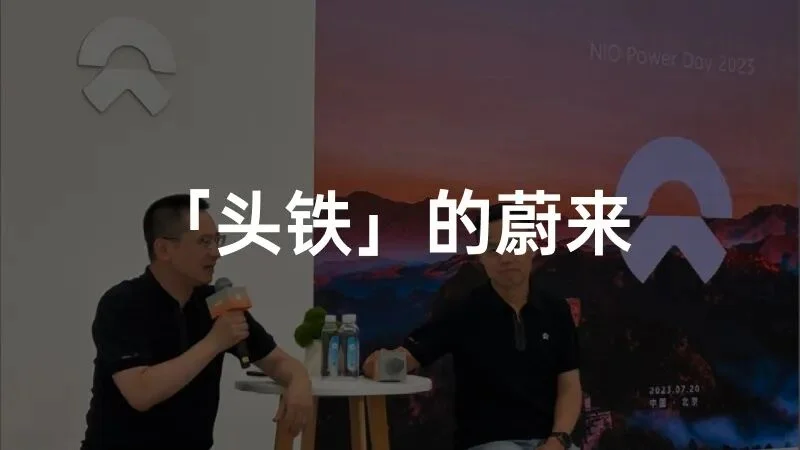
On July 20, this route appeared in the opening video of the NIO Power Day 2023 event, serving as a representative example of NIO's energy layout system.
Notably, this event marked NIO's third NIO Power Day since 2021, and a large-scale showcase following the fifth anniversary of NIO Power. Furthermore, during the communication session, NIO specifically shared details on NIO Power's systemic support, product updates, and future plans.
Among these, NIO once again placed unprecedented emphasis on the value of the battery swap model.
01NIO Power's Latest Performance
Viewing NIO from the perspective of its energy replenishment system, two key points stand out: NIO is the automotive brand with the largest number of deployed battery swap stations in China, and simultaneously, the brand with the largest number of deployed charging piles in China.
Swapping stations and charging piles form the two key pillars of the NIO Power ecosystem.
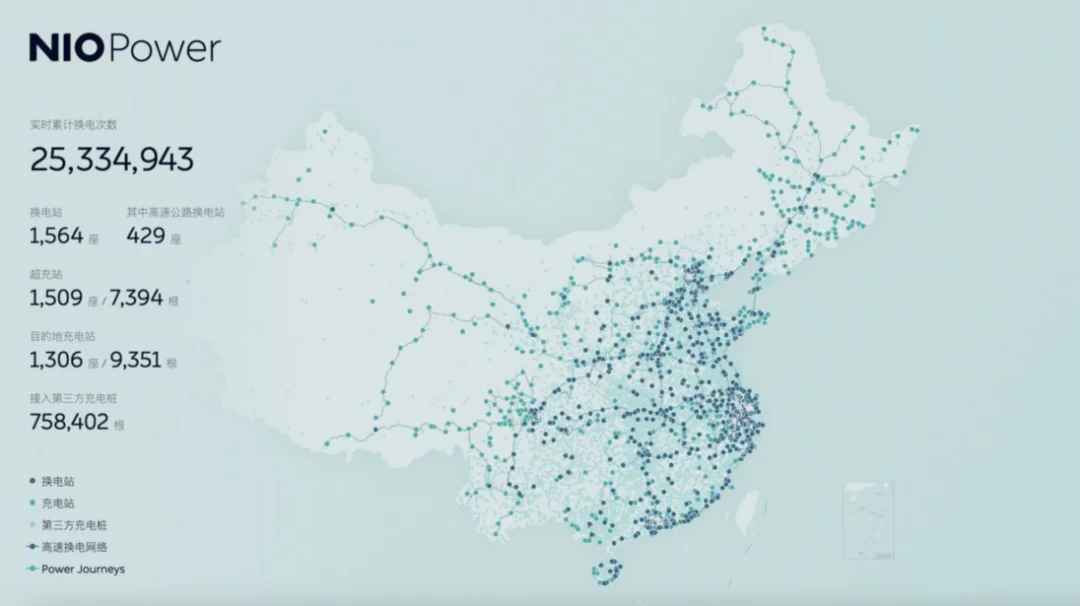
At NIO Power Day 2023, NIO unveiled a series of latest achievements in its energy replenishment network, with the most eye-catching element being a summary table. The data showed that as of 12:00 p.m. on July 20:
NIO had completed a cumulative total of 25,334,943 battery swaps;
A total of 1,564 swapping stations had been built, including 429 located on highways;
There were 1,509 supercharging stations equipped with 7,394 charging piles;
1,306 destination charging stations were established, featuring 9,351 charging piles;
The network had connected to 758,402 third-party charging piles.
Given these overall figures, NIO's performance across various charging and battery-swap operational scenarios also warrants attention.
Power Journeys: Connecting 60 Routes
The Power Journeys initiative, designed to allow NIO users to reach their destinations with ease, has now completed the connection of 60 routes nationwide following the Silk Road project.
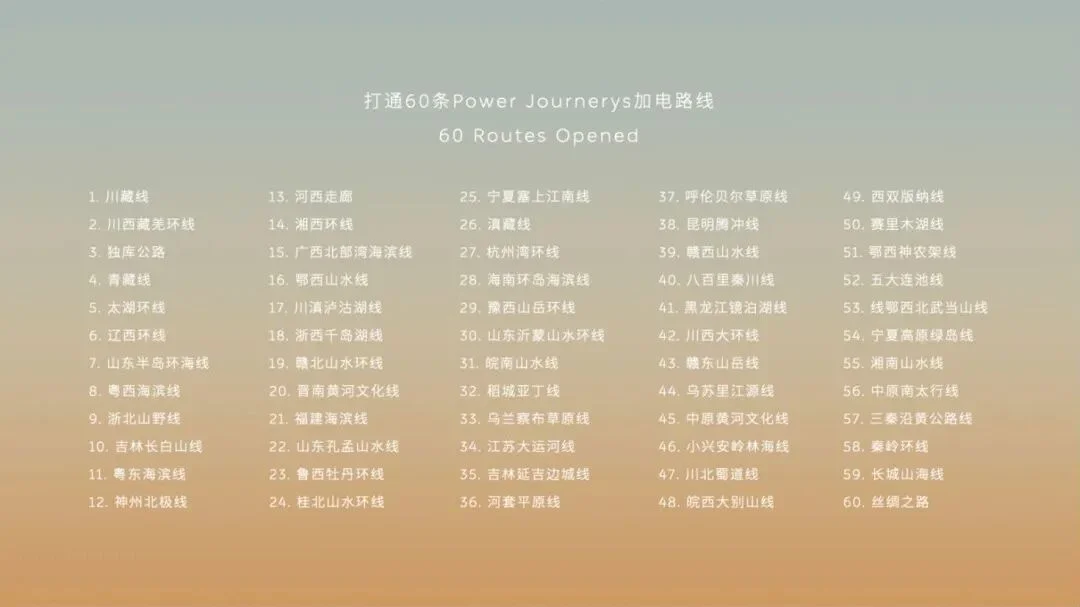
By the end of this year, Power Journeys will connect additional routes including the Gannan route, the Shenzhou Dongji route, the Qiandongnan route, and the Xilin Gol Grassland route. The company also plans to expand its layout overseas, traversing five European countries: Germany, Norway, Denmark, Sweden, and the Netherlands.
Charging Piles: Serving More Than Just NIO
NIO currently deploys 16,745 public charging piles, making it the automotive brand with the largest number of charging piles in China.
Among these, NIO has established 150 high-speed supercharging stations containing 459 high-speed charging piles on highways, making it the automotive brand with the most charging infrastructure deployed on Chinese highways.
Among the vehicle brands using NIO’s public charging services, 20.3% are NIO vehicles, 19.2% are BYD, and 13.1% are Tesla. Other brands include Geely, Rongwei, XPENG, Lixiang, Changan, and others.
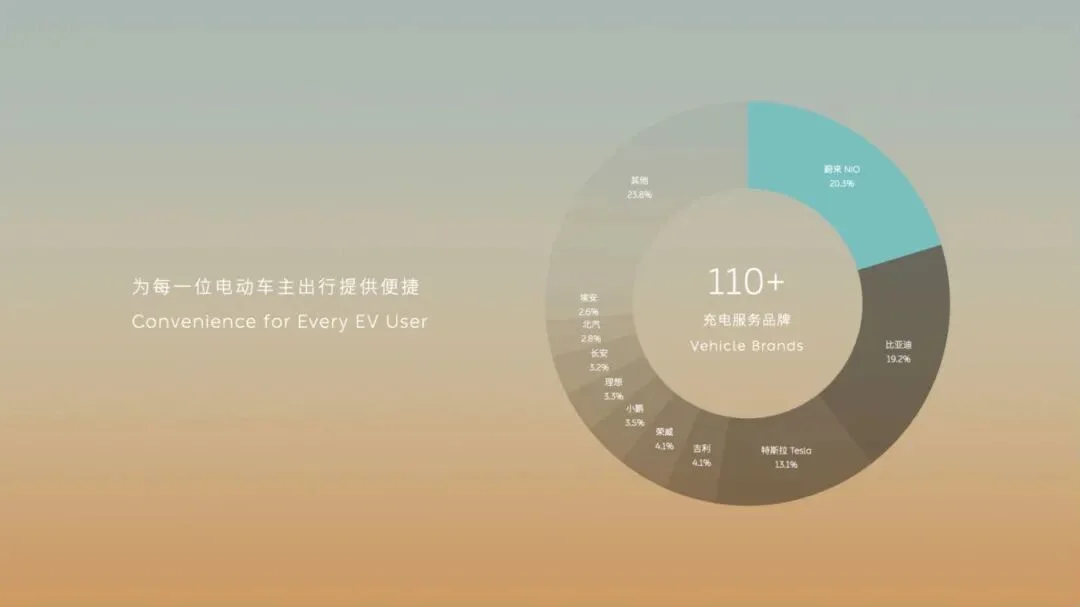
This highlights the value NIO has created for the broader industry in terms of energy replenishment.
Additionally, according to Qin Lihong, President of NIO, the company is rolling out 500 kW ultra-fast chargers that can deliver a maximum current of 600 A and a maximum voltage of 1,000 V in real-world scenarios.

Notably, NIO has installed home charging piles for 197,596 users, a figure approaching 200,000. The company also offers the most comprehensive range of home charging products in the industry, including 7 kW, 11 kW, and 20 kW models.
1,000 New Battery Swap Stations by Year-End: Secured
Battery swapping is the core component of the NIO Power energy replenishment ecosystem. With an existing network of 1,564 swap stations, NIO’s performance stands out.
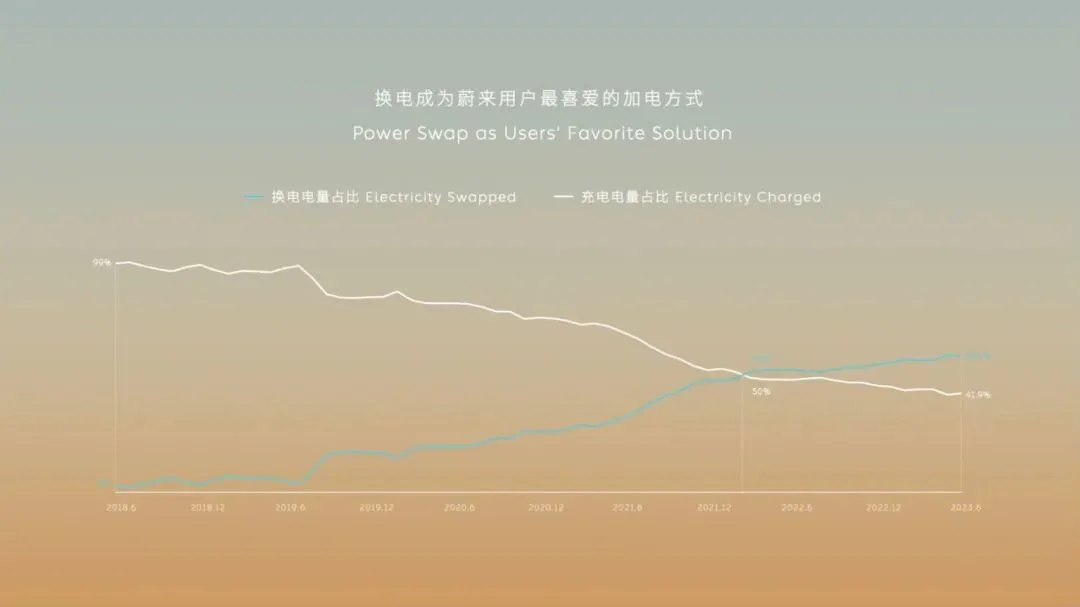
For instance, on average, a fully charged vehicle departs from a battery swap station every 1.6 seconds. Meanwhile, battery swapping has become the preferred charging method for NIO users; in June this year, energy obtained through swapping accounted for 58.1% of total energy replenishment, surpassing the share of charging by 16.2 percentage points.
According to the definition used by the NIO community—a 'battery zone house' being a residence within three kilometers of a swap station—NIO’s coverage of such zones across China reached 73%.
In first-tier cities like Shenzhen and Shanghai, the coverage of battery zone houses exceeds 90%, while in cities including Haikou, Xiamen, Nanjing, Wuxi, Chengdu, Hefei, Suzhou, and Taiyuan, coverage also surpassed 80%.
Furthermore, over five years, NIO has built a highway battery swap network covering six vertical and four horizontal routes across eight major urban agglomerations. With continued expansion of its swap infrastructure, NIO plans to complete a highway swap network spanning nine vertical and nine horizontal routes across 19 major urban agglomerations by 2025.
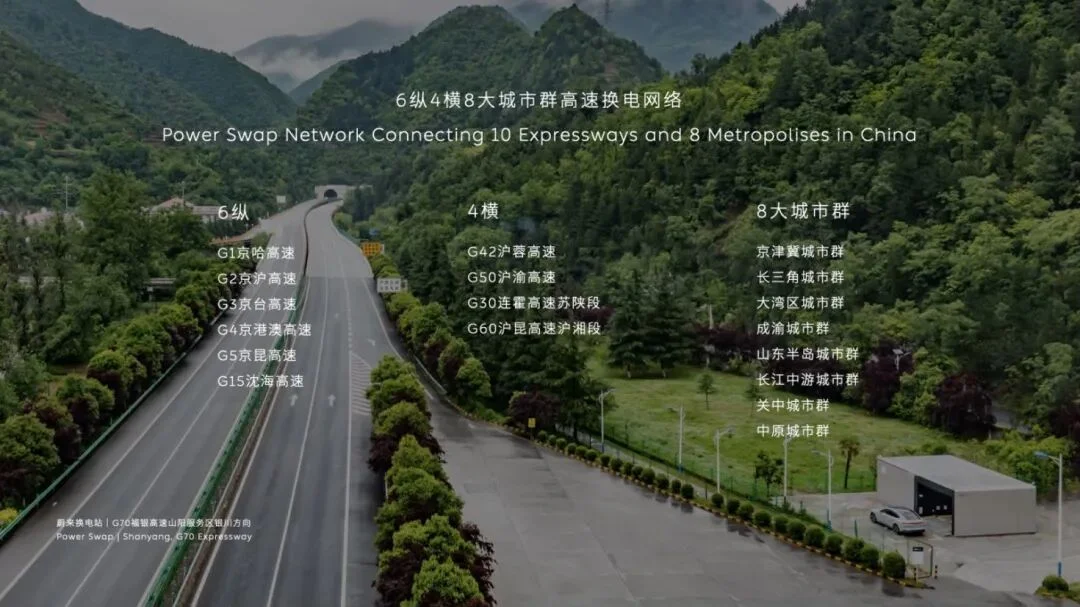
Through this layout, NIO’s slogan for its swap business is: 'NIO Swap, convenient wherever you go.'
Notably, regarding the goal of 1,000 swap stations this year, Qin Lihong stated that progress was slightly slower in the first half due to production ramp-up issues at third-generation stations. However, in the second half, NIO will accelerate deployment, describing it as 'like dropping dumplings into boiling water,' and confirmed that the target of 1,000 stations will be met by year-end, possibly even ahead of schedule.
02The Present and Future of Battery Swapping Services
For both the NIO charging ecosystem built by NIO Power and the NIO brand itself, battery swapping remains a key label—so at this year's NIO Power Day event, NIO's battery swapping business remained the core of many discussions.
Battery upgrades available for daily rental, including a 150 kWh battery
In conjunction with this event, NIO launched the "Flexible Battery Upgrade Daily Rental Service." This service supports return at a different location, allowing users to pick up a battery in one place and return it nationwide at any swap station along their journey, further reducing long-distance travel costs.
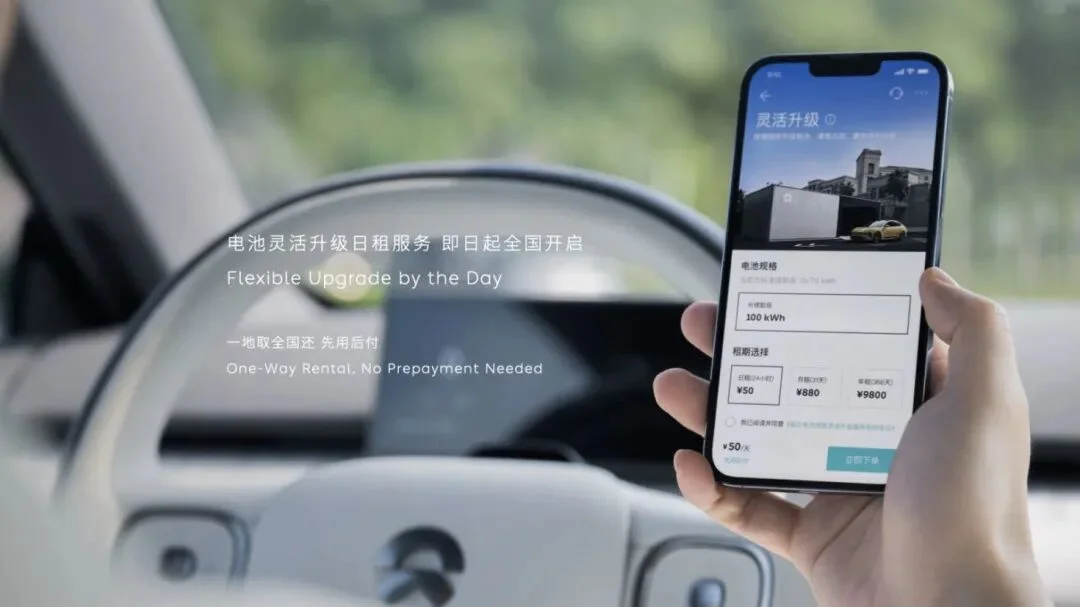
For pricing, the base rate for upgrading from a standard-range battery pack to a long-range battery pack is RMB 50 per day (totaling 26 hours, including one hour each for pickup and return), with a cap of RMB 880 for 31 days.
Regarding this service, NIO stated that the "Battery Flexible Upgrade Daily Rental Service" was originally intended to accommodate the 150 kWh battery pack. However, due to delays with the 150 kWh battery pack, the service was launched ahead of schedule.
Notably, regarding the 150 kWh battery pack, NIO also revealed some information: The research and development and validation time for the 150 kWh battery pack was indeed a bit longer than expected. It was originally planned for late July, but it has been delayed. However, NIO has already made operational preparations for the 150 kWh battery.
Additionally, the pricing for the 150 kWh battery pack will not be particularly cheap, nor will it be exorbitantly expensive. However, the daily rental service is designed to provide a more user-friendly experience.
At the press conference, NIO representatives stated that the 'Battery Flexible Upgrade Daily Rental Service' significantly increases operational complexity for the company, with difficulty rising geometrically.
For instance, this requires establishing robust operational systems for software, inventory management, and logistics, while also addressing imbalances across different stages and regions. NIO acknowledged that some of these processes are not yet fully prepared and that operational experience must be accumulated through iterative development.
Revealed: The R&D Direction for Next-Generation Battery Swap Stations
Beyond the daily rental service, NIO's battery swap system is undergoing upgrades across several specific areas. For example, automated valet parking during the swap process will see speed improvements, with the 'one-shot parking' feature scheduled to launch in the third quarter of 2023. Simultaneously, the battery swap speed at second-generation swap stations will be comprehensively accelerated.
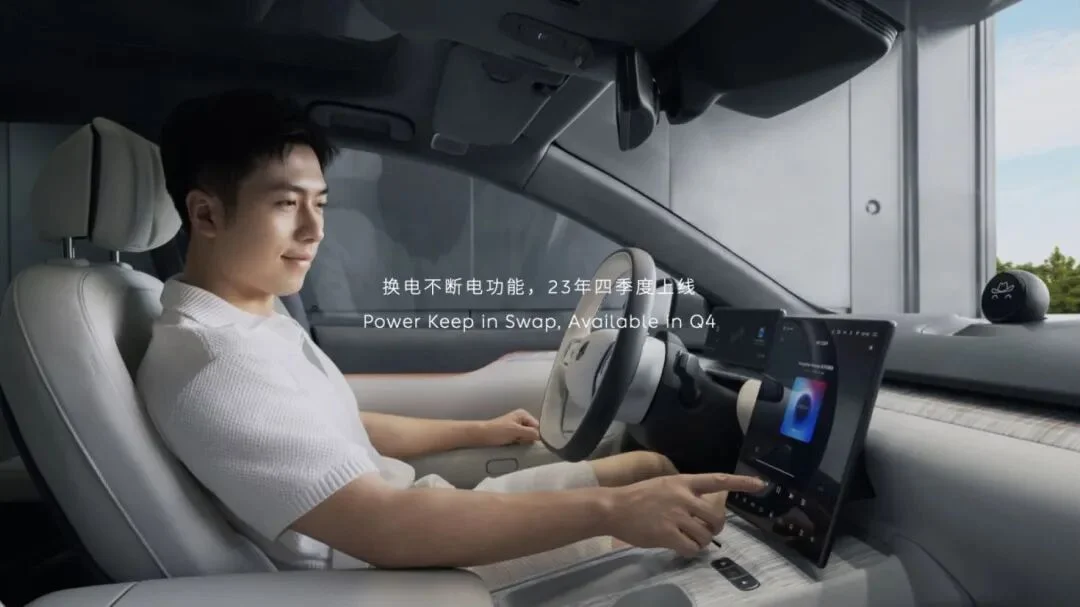
Notably, during the event, NIO also released the 'Swap Without Power Interruption' feature, which has been highly requested by users and is scheduled to launch in the fourth quarter. Based on this feature, users can continue to enjoy audio-visual entertainment, ventilation, and other experiences during the battery swap process; however, air conditioning is not supported.
So, what is the future R&D direction for swap stations?
In response, NIO Senior Vice President Shen Fei stated that there is currently no internal concept of a "fourth-generation battery swap station," but the company will address issues in the current swapping experience, such as speed and smoothness. He emphasized that intelligence is the clear direction for next-generation swap stations, primarily aiming to provide a better user experience through intelligent features.
Shen Fei also stated that future R&D directions for battery swap stations include considerations regarding grid interaction, whether competitors will join the swap network, and product collaborations with different companies and brands.
03The Other Side of NIO Power
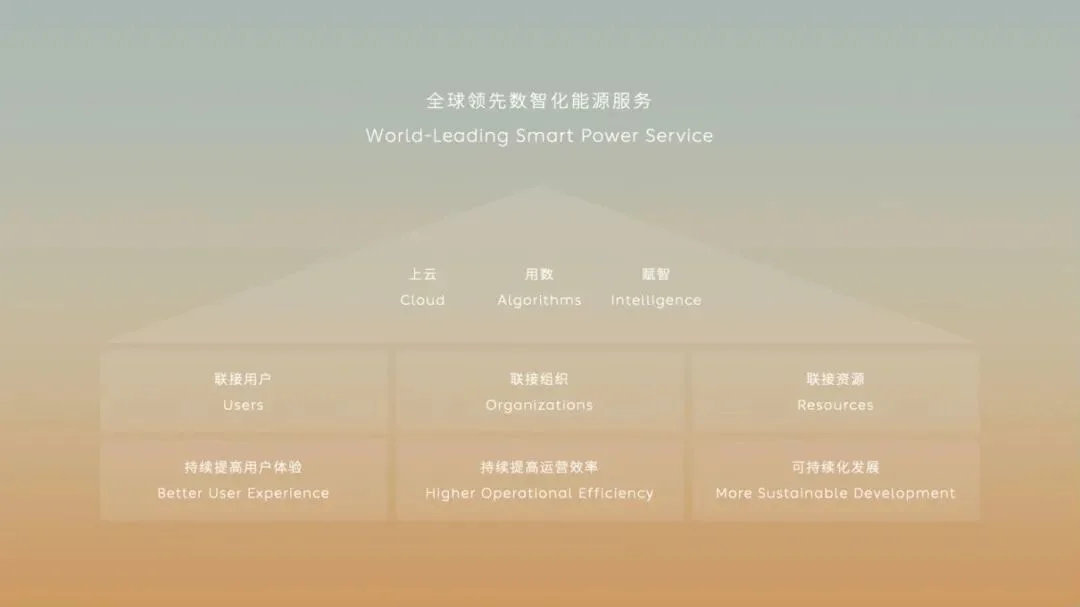
At this NIO Power Day, NIO once again showcased the internal support system for its entire energy replenishment experience, which it calls "globally leading digital and intelligent energy services."
This is another side of NIO Power.
From a conceptual standpoint, the core of this system lies in moving to the cloud, leveraging data, and empowering intelligence, which is essentially based on cloud computing, big data, and artificial intelligence.
Underpinned by these technologies, the system is dedicated to achieving six objectives: connecting users, connecting organizations, connecting resources, continuously improving user experience, continuously enhancing operational efficiency, and ensuring sustainable development.
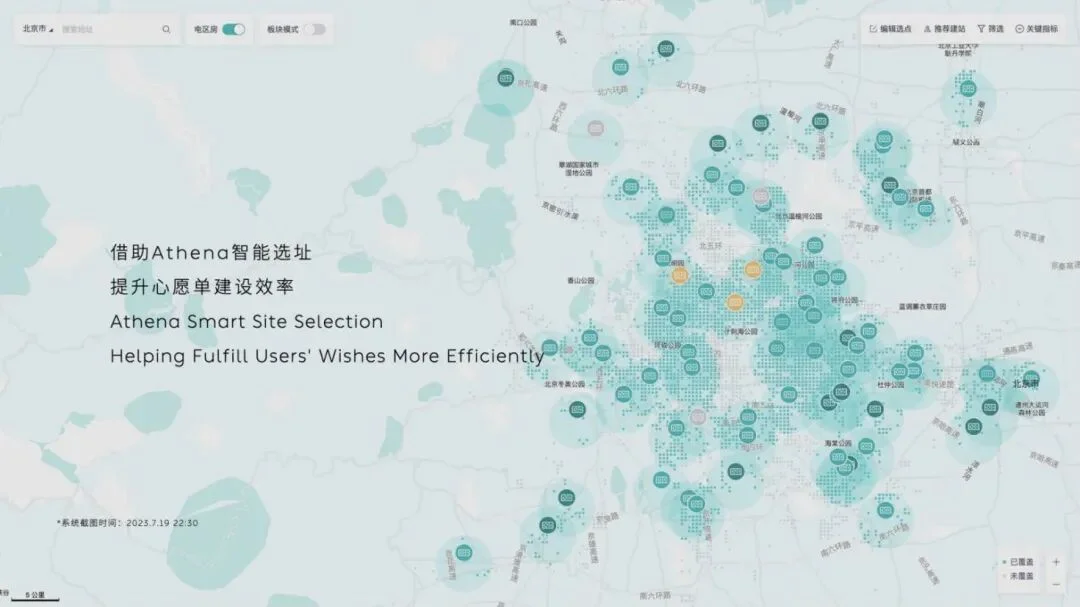
For example, in selecting sites for charging and battery-swap stations, NIO has developed the Athena intelligent site-selection system. This is an AI-assisted decision-making system based on spatial big data, which can effectively improve the efficiency of building users' wish lists.
To enhance the user’s refueling experience, NIO created a scenario-based intelligent refueling recommendation system that integrates route navigation with energy-planning features. It provides comprehensive recommendations by analyzing location, time, and preferred energy methods.
NIO also introduced 3D route guidance to help drivers locate energy-supply stations more easily. Meanwhile, its real-time 3D swap visualization allows users to monitor the battery-swap process closely, delivering improvements in both experience and operational efficiency.
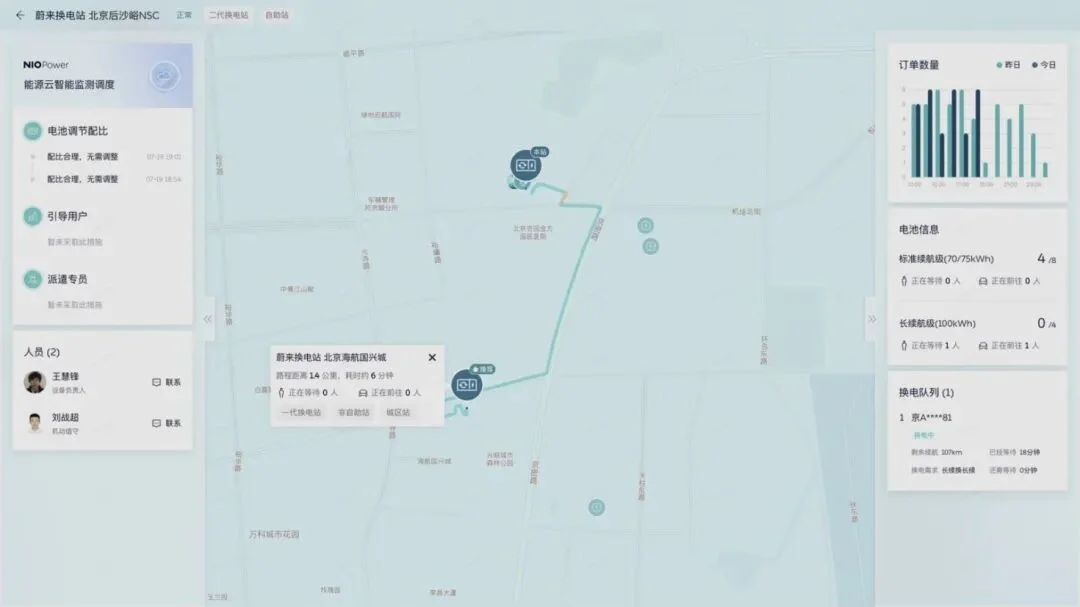
Furthermore, to better connect vehicles, users, stations, and energy resources while boosting operational efficiency, NIO developed an “intelligent dispatch” feature. This system displays real-time data on battery inventory ratios, order volumes, battery status, and swap queues, enabling the smart allocation of maintenance personnel.
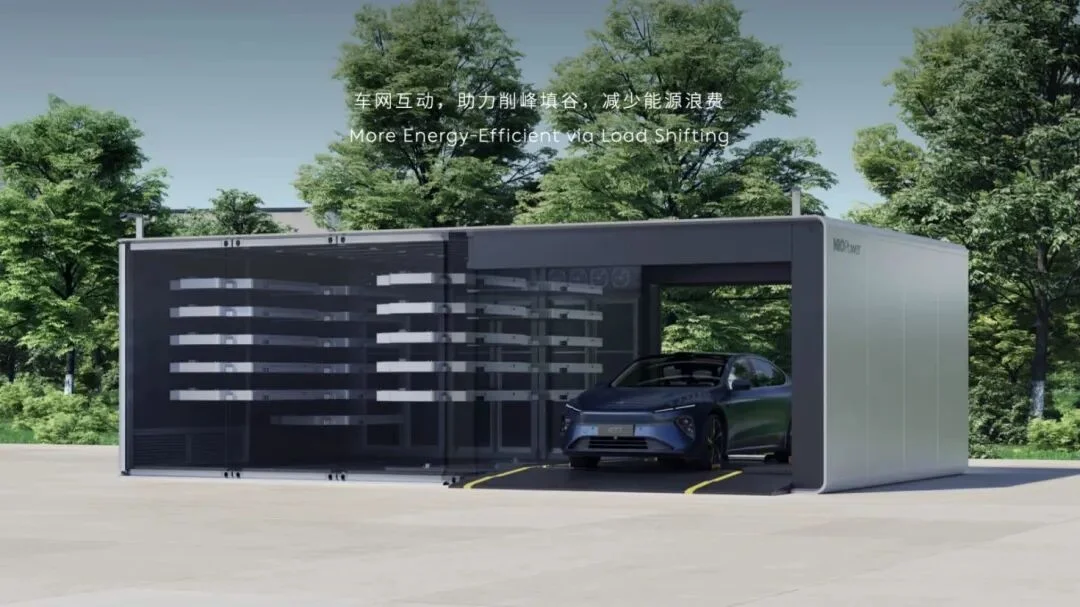
On another front of NIO Power, its most significant social value lies in its participation in grid dispatch through “virtual power plants.”
As the only automaker currently operating battery-swap stations at scale in China, NIO is also the first car brand to integrate into the grid’s virtual power plant dispatching. Shen Fei stated, “Electric vehicles help build a new-type power system.”
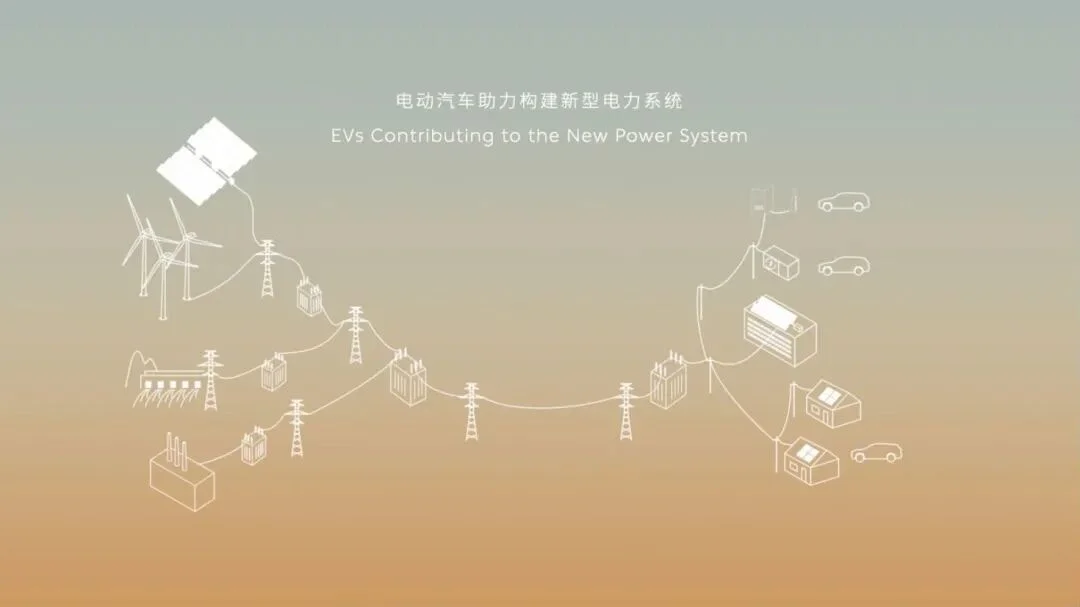
Let’s look at NIO’s current performance metrics.
NIO has 1,012 battery swap stations participating in peak-shaving and valley-filling operations, with a total energy capacity exceeding 54.55 million kWh.
NIO has 483 stations and 25,000 home charging piles participating in demand response and peak regulation.
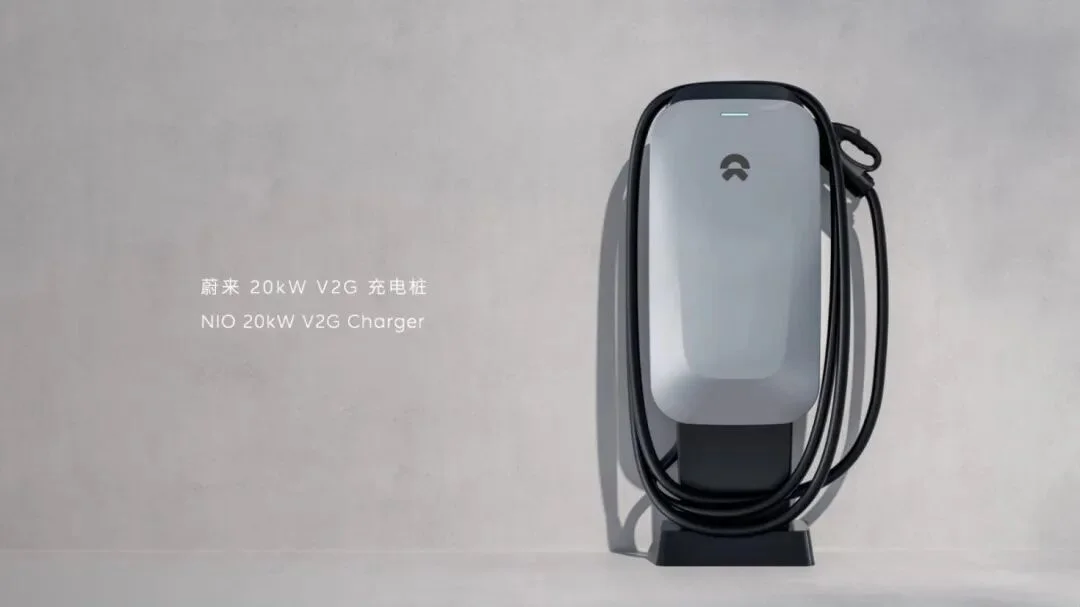
On site, NIO unveiled a 20 kW V2G charging pile. This unit not only supports fast charging but also adds discharge functionality, allowing electric vehicles to absorb electricity when grid load is low and release it when load is high. This enhances vehicle-to-grid interaction and assists in grid peak shaving and frequency regulation.
Notably, NIO announced a partnership with Qilianshanguojiagongyuan to build the world’s first V2G photovoltaic self-circulating energy replenishment system, which will officially enter service in August.
04Reassessing the Value of NIO Power
At this year's NIO Power Day, questions regarding the costs, revenue, and value of NIO's continued investment in battery swap stations and supercharging piles were raised repeatedly—with the value of the swap stations themselves emerging as a key focus.
Interestingly, for the first time, NIO officially summarized nine distinct advantages of its battery swap model, including:
Battery swapping is as fast as refueling, taking just three minutes.
Eliminates range anxiety, making travel convenient anywhere.
The process is fully automatic without requiring the driver to exit the vehicle, offering greater comfort than charging.
Allows for flexible upgrades, such as using smaller batteries in urban areas and larger ones for long-distance trips.
Separates the vehicle from the battery, meaning buyers do not need to purchase the battery, thereby lowering the initial cost of entry.
Each swap includes a health check for the battery, enhancing safety.
Optimizing charging current extends battery life compared to ultra-fast charging.
Flexible battery swapping facilitates recycling and reuse of batteries.
Vehicle-to-grid interaction helps peak shaving and valley filling, reducing energy waste.
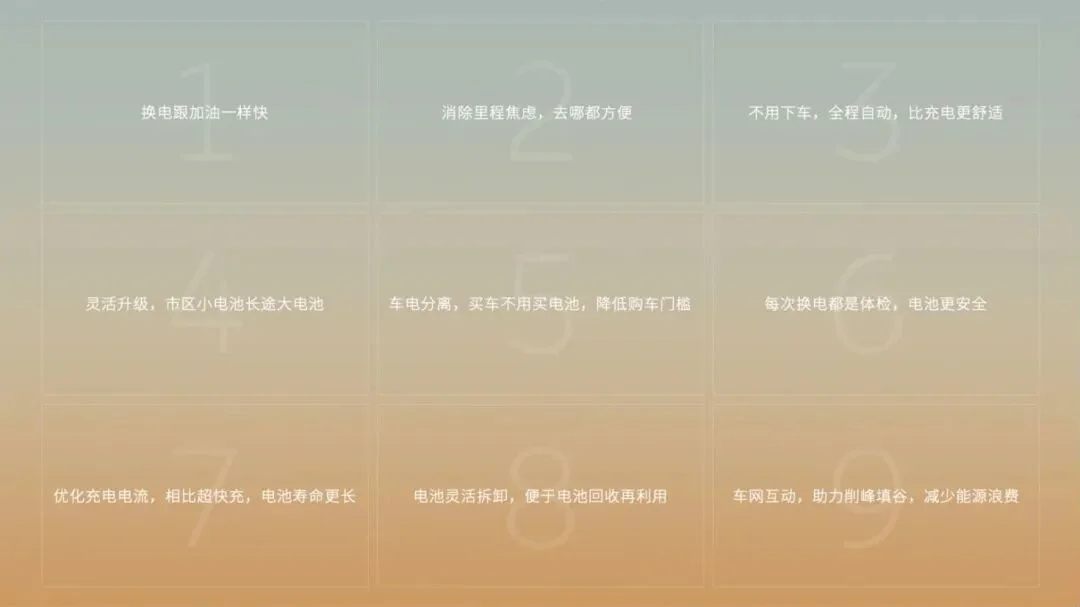
Among these, six points address the economic and convenience aspects of user refueling experience, falling under user value; three others target the B2B sector, representing social value.
Qin Lihong also acknowledged that 'nothing is perfect,' noting that battery swapping comes with costs, such as high initial expenses. Additionally, the standardization requirements for battery packs impose constraints on NIO’s vehicle development, and achieving cross-brand unified standards for this swapping network remains challenging.
So, how should one calculate the return on investment when extending from battery swapping to the entire NIO Power ecosystem?
Shen Fei responded that NIO focuses on creating value, as some value can be measured in monetary terms today, while other value accrues over the long term. 'It’s like raising a child.' If calculated solely by revenue from charging service fees, NIO is currently operating at a loss. However, NIO Power enables users nationwide to purchase electric vehicles with confidence—a value that is difficult to quantify.
To this, Qin Lihong added that NIO Power’s current layout also generates an advertising effect. Simply put, charging stations are often installed near NIO battery swap stations. As a result, owners of other brands frequently see NIO vehicles completing swaps and driving away quickly while they wait to charge. This experience increases the likelihood that these drivers will choose NIO for their next vehicle.
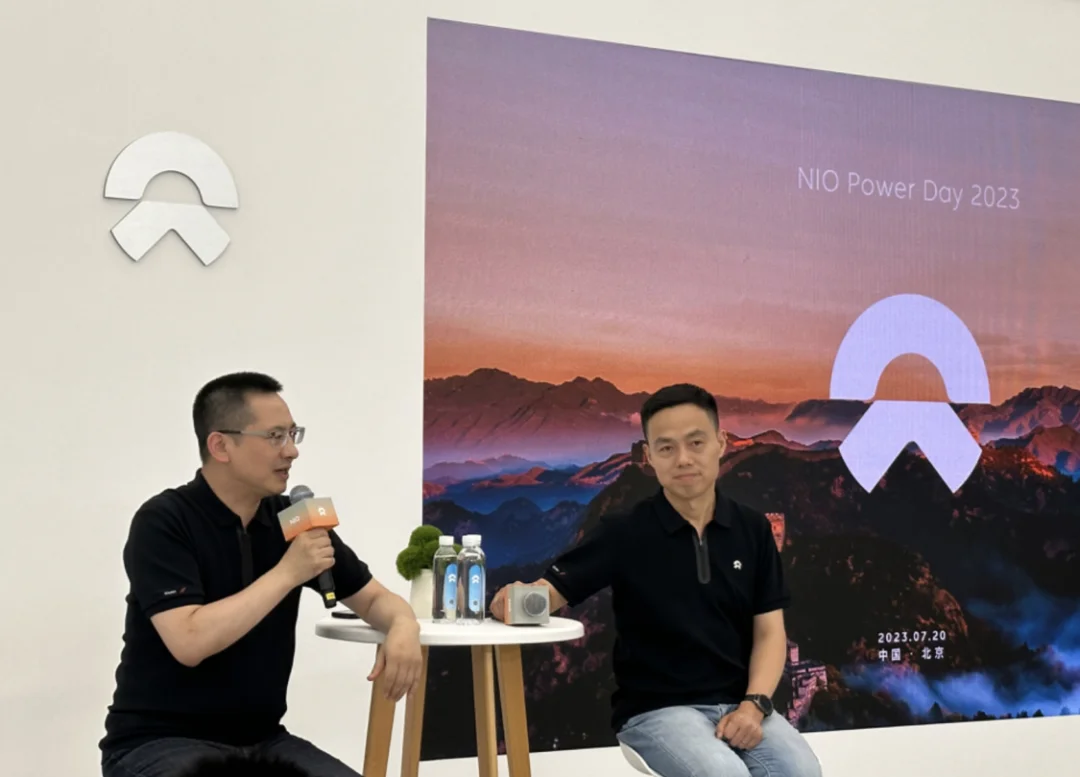
Qin Lihong emphasized that financially, NIO internally maintains a 'simulated ledger.' This ledger shows that if one excludes investments in technological updates such as V2G (vehicle-to-grid), NIO Power is profitable on a daily operational basis. However, it utilizes a more effective method to allocate these costs across NIO’s marketing expenses.
Therefore, Qin Lihong stated, 'We are quite stubborn and patient.' 'Regardless of how the financial statements look, we will continue to invest firmly.'
Notably, as NIO continues to expand its NIO Power infrastructure, it has begun to receive positive responses.
During the discussion, Shen Fei noted that the battery swap model was initially very complex, involving site selection, power capacity issues, and constant coordination with local government departments. Fortunately, industry recognition of the battery swap model is rising. The national policy level has introduced supportive measures, and NIO has gained more partners, reducing overall difficulty.
Qin Lihong said:
"We are often paving the way, and we sincerely hope that battery swap stations will succeed in the future, with clearer national standards to be issued. We have encountered some pitfalls; therefore, brands that follow later may find it easier when facing similar issues."
05Conclusion
NIO Power has developed into one of the most critical value pillars within the entire NIO ecosystem.
Judging from this NIO Power Day, NIO continues to invest heavily in energy replenishment experiences that users can directly perceive. Features such as the 'Battery Flexible Upgrade Daily Rental Service,' speed improvements at second-generation stations, non-stop power during swapping, and one-key parking functions provide tangible benefits to NIO owners.
The objective is precisely to achieve the goal emphasized by William Li: making electricity replenishment more convenient than refueling.

Beyond user value, NIO's layout in NIO Power, particularly in battery swap stations, has begun to demonstrate social value based on grid interaction once a certain scale is reached, and is starting to gain recognition and support from the industry and policy sectors.
This can be viewed as a rare positive return on NIO's long-termist investment in NIO Power.
As Shen Fei noted during the discussion, for NIO Power to deliver a superior user experience, its immediate priority is expanding the scale of battery swap stations and charging piles. This scale also enables NIO Power to engage more effectively with the power grid, unlocking ongoing social value.
However, viewed within the broader NIO ecosystem, the scale of NIO Power—particularly its battery swapping network—is fundamentally built upon NIO’s vehicle sales volume.
Therefore, while continuing to invest heavily in NIO Power, NIO must simultaneously intensify efforts to expand its automotive sales volume.
Only by doing so can NIO leverage NIO Power as a value anchor, amortize initial costs through scaled vehicle sales, achieve overall profitability, and establish a systematic, positive commercial cycle. This process requires time, but given the intensifying market competition, NIO cannot afford to delay; it must accelerate.
Written by: 308 Edited by: 308