


BMW Deepens AI Partnerships with Alibaba and Huawei Ahead of 2026 Neue Klasse Launch
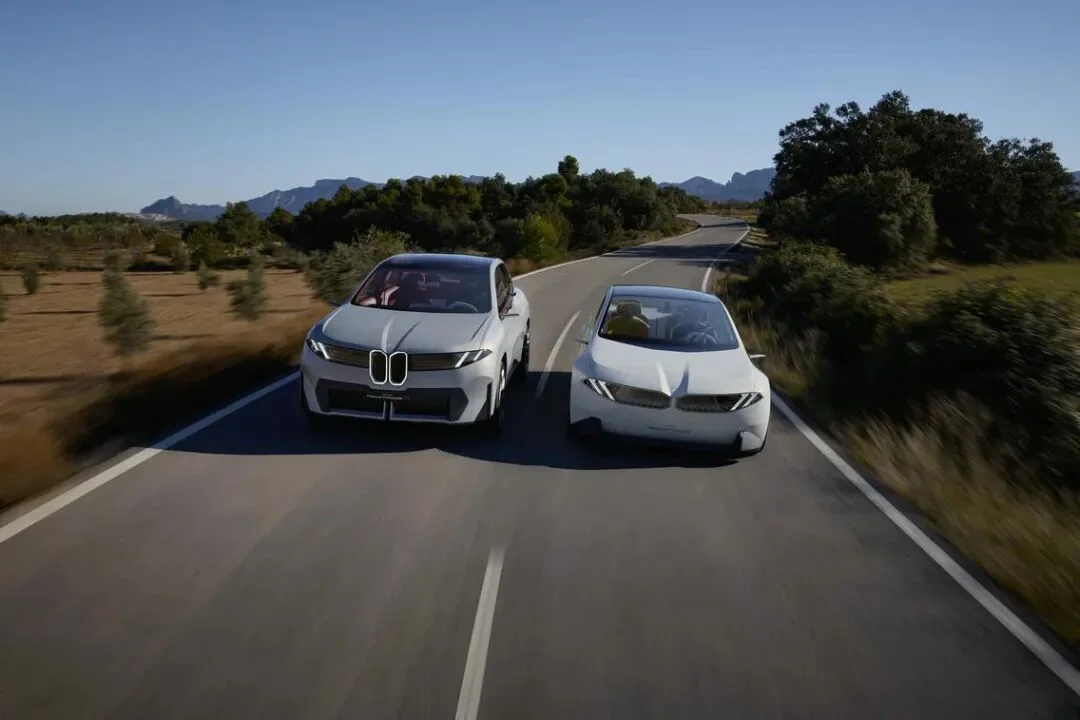
BMW is currently making a full sprint toward a breakthrough in China's new energy vehicle market in 2026.
On March 26, BMW held the 2025 BMW China Innovation Day. During the event, BMW's China team showcased the next-generation model's smart cockpit and the 'Heart of Joy' driving super-brain.
Notably, BMW also announced a deepened strategic partnership with Alibaba. According to official information, BMW and Alibaba will jointly develop a customized AI engine for the all-new BMW Personal Assistant, which will be integrated into the next-generation models. Additionally, on March 17, BMW announced a collaboration with Huawei, with HUAWEI HiCar set to be deeply integrated into the next-generation vehicles.
The mass production and launch of the next-generation model in China by 2026 is no longer news. However, BMW continues to generate buzz around this model to create more anticipation for its 2026 performance. Given BMW's increasing localization and enthusiasm for partnering with Chinese companies, 2026 promises to be an exciting year.
01An AI Engine Built on Alibaba's Shoulders
The deepened strategic partnership with Alibaba serves as a key cornerstone for BMW's future AI experience development.
On March 6, Alibaba released and open-sourced the QwQ-32B reasoning model. With a parameter scale reduced to 32 billion, its reasoning and comprehension capabilities approach those of the fully powered DeepSeek-R1 model with 671 billion parameters.
BMW officials stated that, under the cooperation framework, BMW will gain immediate access to Alibaba's QwQ-32B inference model to ensure technological leadership and deliver best-in-class products.
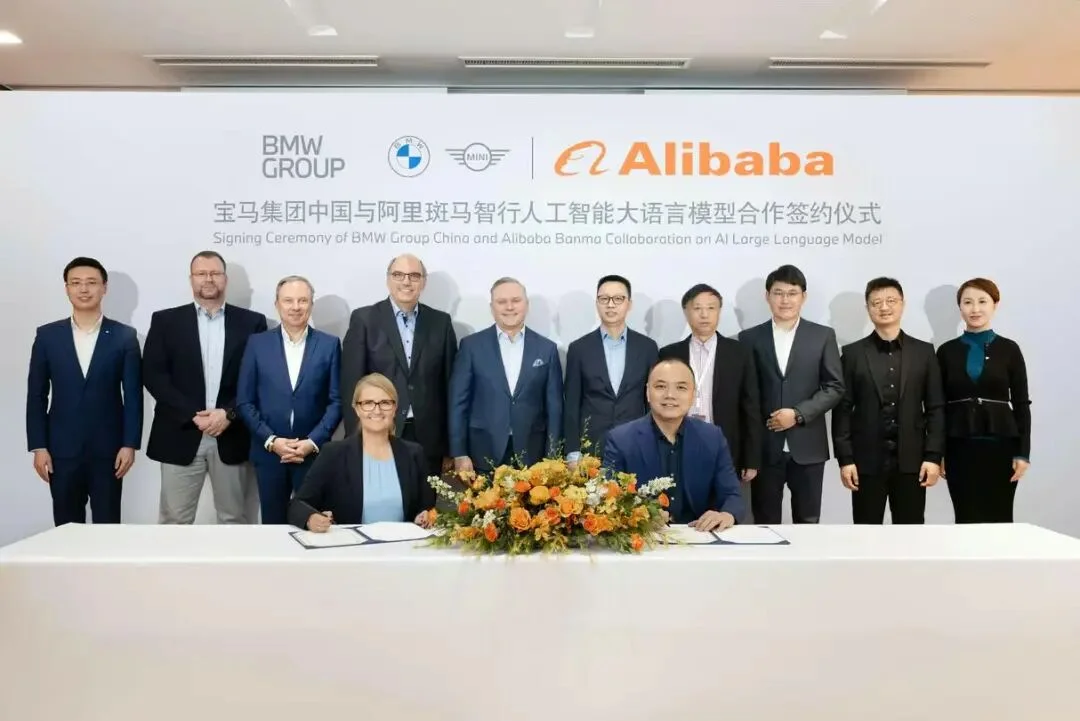
Regarding current implementation, based on the Tongyi large language model and Zebra Yuan Shen AI, BMW and Alibaba will jointly develop a custom AI engine tailored for BMW. At the foundational level, this AI engine features voice recognition, voice generation, proactive services, and data services; at the interaction layer, it offers multimodal interfaces distinctive to BMW.
Higher up in the stack, BMW’s AI engine will integrate numerous third-party applications. According to official descriptions, BMW employs a modular design combining edge and cloud capabilities, allowing flexible integration of various AI agents—such as Amap for mobility and Tencent for entertainment—where each AI agent functions as an expert in its respective domain.
To summarize the flexibility of its AI engine, BMW coined the phrase: 'Drawing on strengths from all schools to fulfill BMW’s ambitions.'
BMW will initially launch two AI agents: a Vehicle Expert and a Travel Companion. The Vehicle Expert provides vehicle services and resolves issues, leveraging BMW’s accumulated database of over one million real-world after-sales cases to comprehensively address potential user problems.
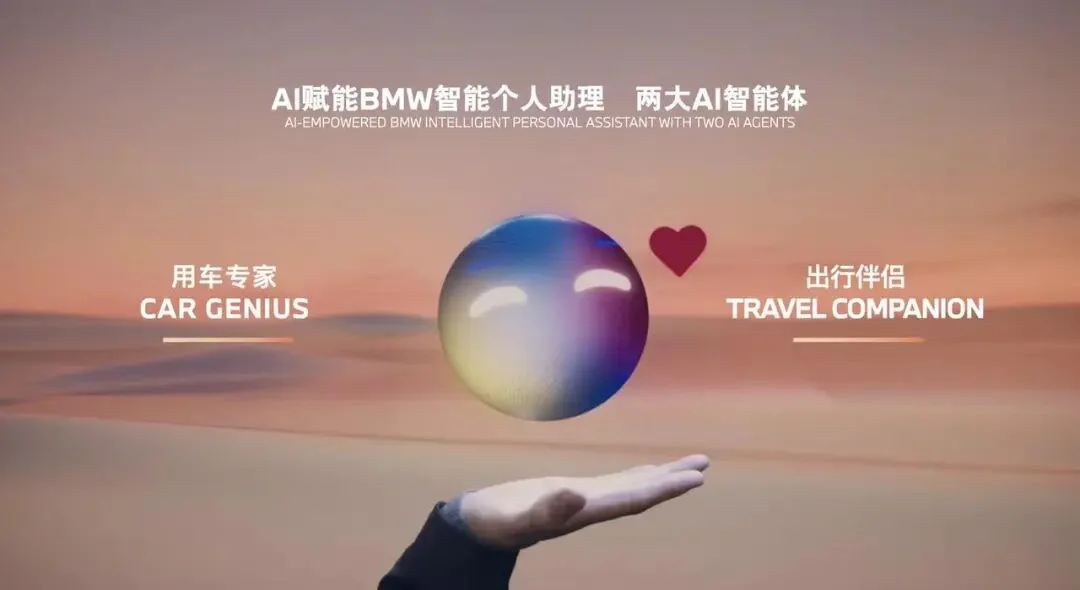
The Travel Companion features a deep collaboration between BMW and Amap, incorporating more than 80 million of Amap’s deep points-of-interest data. This enables the Travel Companion not only to plan routes for users but also to provide highly specific recommendations, such as ideal photo spots at destinations.
Meanwhile, drawing on BMW's user profile characteristics, the AI agent can also provide highly personalized services.
In summary, the practical experience shows that BMW's goal is for its AI agent to achieve precise intent capture, complex instruction parsing, ambiguous semantic understanding, and rigorous logical deduction, enabling highly human-like communication.
By the time of the Shanghai Auto Show in April, Vehicle Expert and Travel Companion will make their appearance. Interested readers can go see them then, or follow our published content.
It is important to emphasize that BMW's application of AI extends far beyond the cabin. Just one day before Innovation Day, BMW announced the launch of a 360-degree full-chain AI strategy in China. Beyond the vehicle cabin, BMW will adopt AI technology across the board—from the production floor to back-office management, and from supply chain optimization to quality control—to drive efficiency gains.
Dai Hexuan, President and CEO of BMW Brilliance, stated that as China's 360-degree full-chain AI strategy advances, the integration of AI into the supply chain will accelerate in 2025. Together with our core supplier partners, we will further leverage AI to improve quality and efficiency, moving toward a broader future of "mobility + AI".
02New-Generation Models: The Culmination of BMW Driving Dynamics?
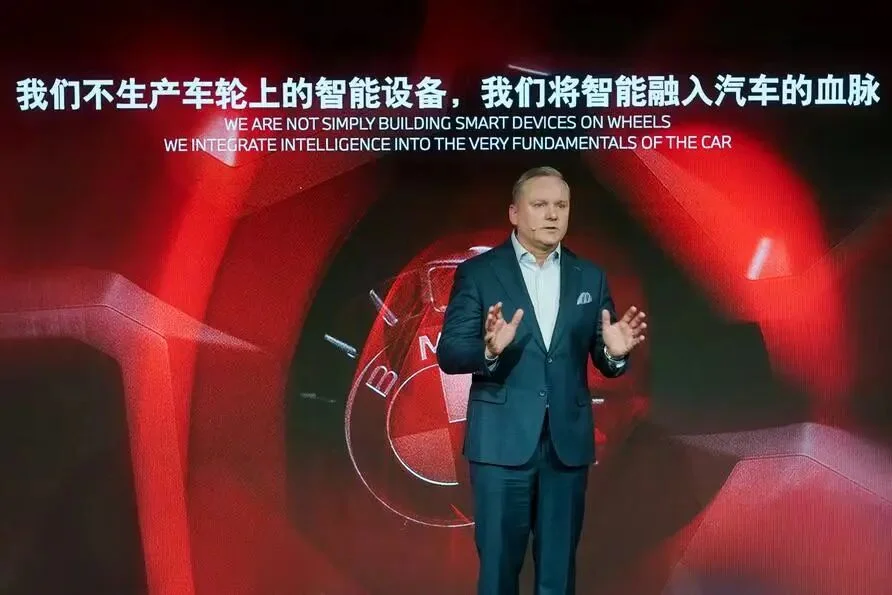
Gao Xiang, President and CEO of BMW Group Greater China, stated that BMW does not simply place smart devices on wheels but integrates them into the vehicle's "bones and blood," creating disruptive driving dynamics that allow every driver to experience the feel of a top-tier racing driver.
For half a century, BMW has championed itself as the "Ultimate Driving Machine," pursuing driving dynamics with relentless effort. Its handling capabilities have long been widely acclaimed. For BMW, superior driving dynamics are an essential soul. Under BMW's dedicated development, the new generation models promise to deliver highly anticipated driving performance.
Inside the cabin, BMW introduces the concept of a "visual cone" in its new generation vehicles for the first time. Interaction information is layered: core driving data is positioned in the central field of view, while entertainment and comfort functions are distributed in the peripheral vision. This design minimizes the time and frequency of visual focus shifts during driving, enabling drivers to keep their eyes on the road and hands on the steering wheel.
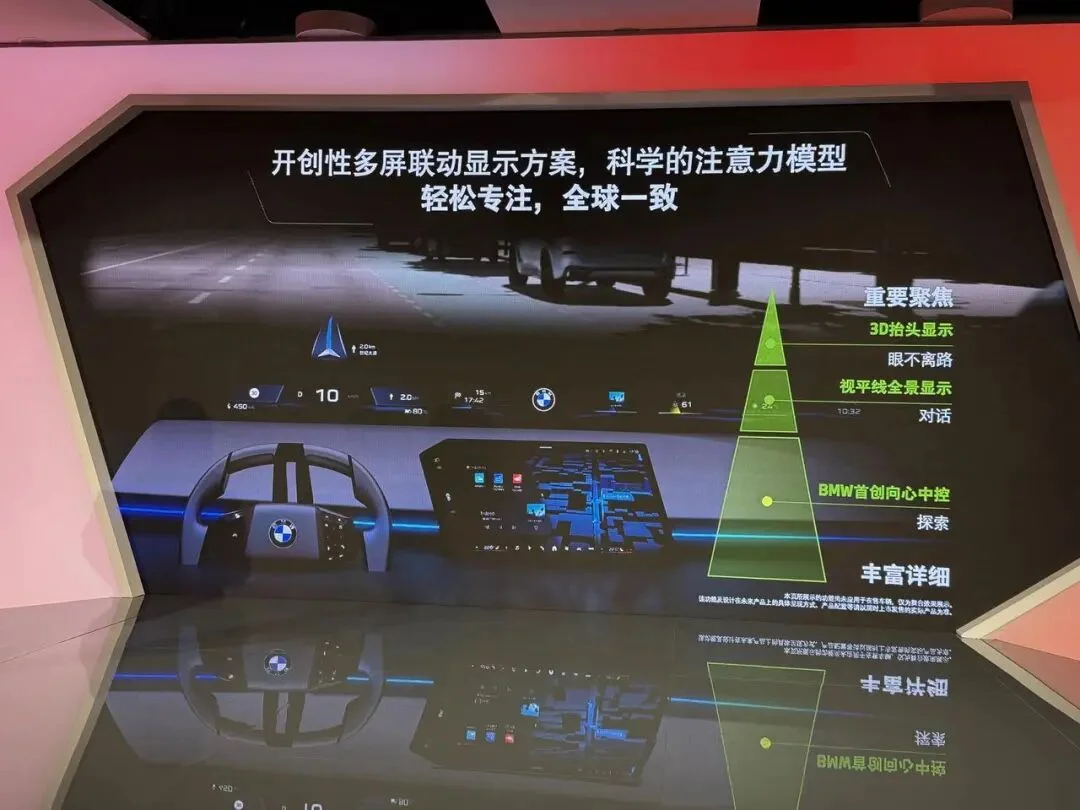
The overall cabin layout of the BMW new generation models is also distinctive. Dubbed the "HyperSense Intelligent Cockpit," the design appears quite aggressive. The center console screen is shaped like a parallelogram with the top-left and bottom-right corners cut off. In addition to the Head-Up Display (HUD), BMW has designed a Horizon Panoramic Display system that projects driving information onto the black coating at the base of the windshield, replacing the traditional instrument cluster. According to official specifications, users can clearly see the projected information even when wearing polarized sunglasses.
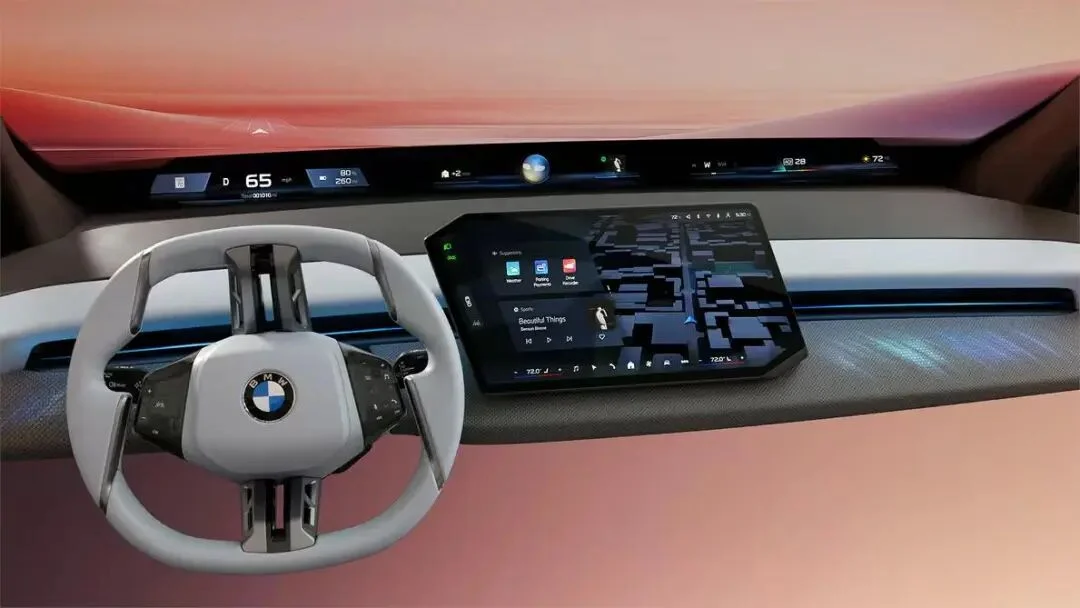
With the disappearance of the traditional instrument cluster, BMW has equipped the new generation models with a sporty, vertical two-spoke steering wheel. The company states that this design provides a more ergonomic grip at the nine-and-three positions, preventing the driver's hands from slipping off during extreme driving maneuvers.
Notably, the "HyperSense Intelligent Cockpit" includes eye-tracking technology to monitor subtle user changes. This system aims to prevent driver distraction and enhance road safety.
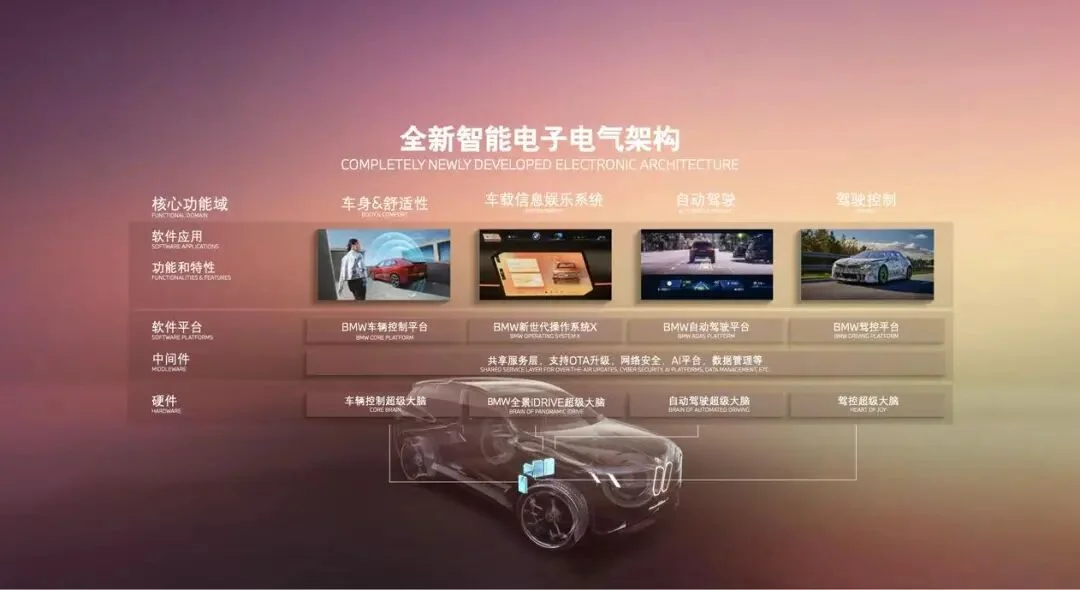
Meanwhile, the Neue Klasse models are equipped with BMW’s newly developed "Driving Control Super Brain." This system unifies the powertrain and chassis domains, efficiently integrating transmission, braking, charging, energy recovery, and steering functions. The entire decision-making latency is less than 1 millisecond, enabling comprehensive analysis and processing of dynamic driving conditions in an extremely short timeframe.
Additionally, BMW officials stated that driving experience and decision-making strategies accumulated from Nürburgring tuning and track racing will be consolidated into the Neue Klasse models.
Consequently, BMW’s Neue Klasse models are likely to represent a culmination of the brand’s driving performance capabilities. Furthermore, based on their completely new cabin design, users’ sensory experiences are highly likely to undergo a significant transformation.
03Conclusion
BMW today is indeed different from its past self. Judging by changes in the interior and exterior design and functional definitions of the Neue Klasse models, BMW is becoming increasingly localized for China, appearing even more aggressive than some Chinese brands.
At the same time, BMW’s core characteristics remain intact; for instance, the kidney grille on the Neue Klasse models still allows the vehicle to be instantly recognizable as a BMW.
In fact, amidst the revolutionary wave of new energy vehicles, BMW is currently standing at the intersection of tradition and innovation. Particularly in the Chinese market, BMW must adapt its offerings to meet the rapidly evolving tastes of Chinese consumers.
By 2026, the Neue Klasse models will be launched domestically in China. For BMW, these models serve as a microcosm—a reflection of the painstaking efforts made over many years to advance its new energy transition—and also as a grand blueprint for capturing a substantial share of the global new energy market in China and beyond.
The performance of the Neue Klasse models will profoundly influence the trajectory of BMW's new energy transition. It is evident that BMW, which has invested heavily in the Chinese market, is eager to leverage these Neue Klasse vehicles to trigger a breakthrough moment for its new energy transformation in 2026.
Written by: Isaiah Edited by: James