


Three Hours at the Li Auto Launch: The Most Significant Move Is VLA Going on the Road
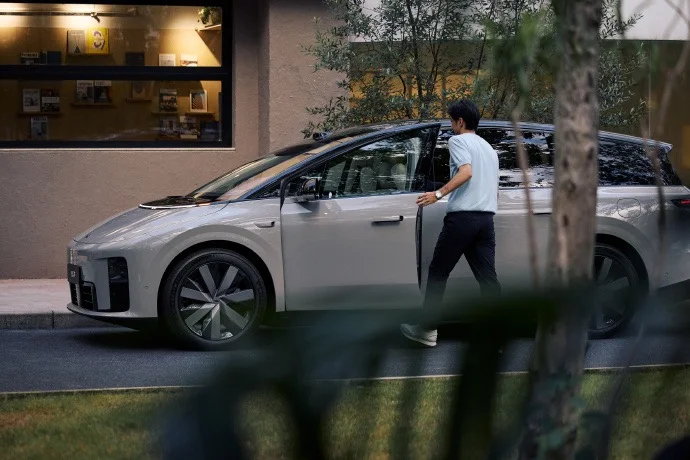
On the evening of July 29, the long-awaited Li i8 was officially launched, timed to coincide with the tenth anniversary of Li Auto's founding.
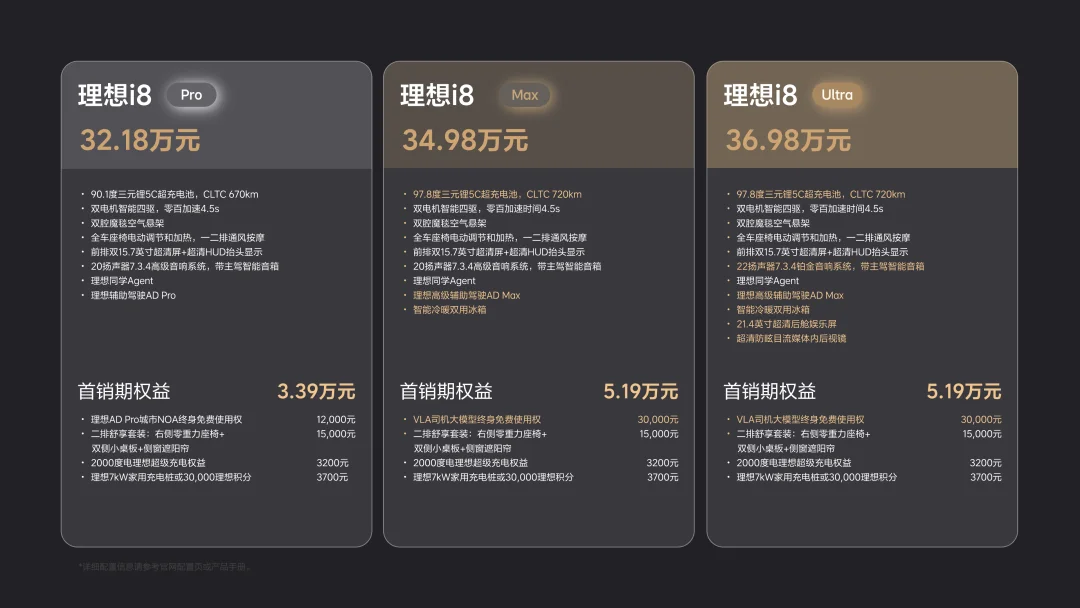
The Li i8 was released in three versions, priced between RMB 321,800 and RMB 369,800. Here are the specific prices and configurations:
Pro version at RMB 321,800, Max version at RMB 349,800, and Ultra version at RMB 369,800.
Dual-motor intelligent all-wheel drive, dual-chamber Magic Carpet air suspension, seat comfort features, front-row screens, HUD, and LiDAR are standard across all trims.
The Pro version is equipped with Li Auto’s AD Pro driver assistance system, while the Max and Ultra versions feature AD Max.
This launch event was packed with information; the product reveal for the Li i8, the VLA (Vision-Language-Action) driver model, Agent, and the supercharging network were all covered within a two-hour presentation.
The highlight of the launch event was the car, and more specifically, the significant upgrade to the driver assistance features debuting with the Li i8.
Li Auto's VLA (Vision-Language-Action) model and the i8 were released simultaneously, making the i8 the first Li Auto vehicle equipped with a VLA driver large model. The VLA will be delivered on the i8 in August.
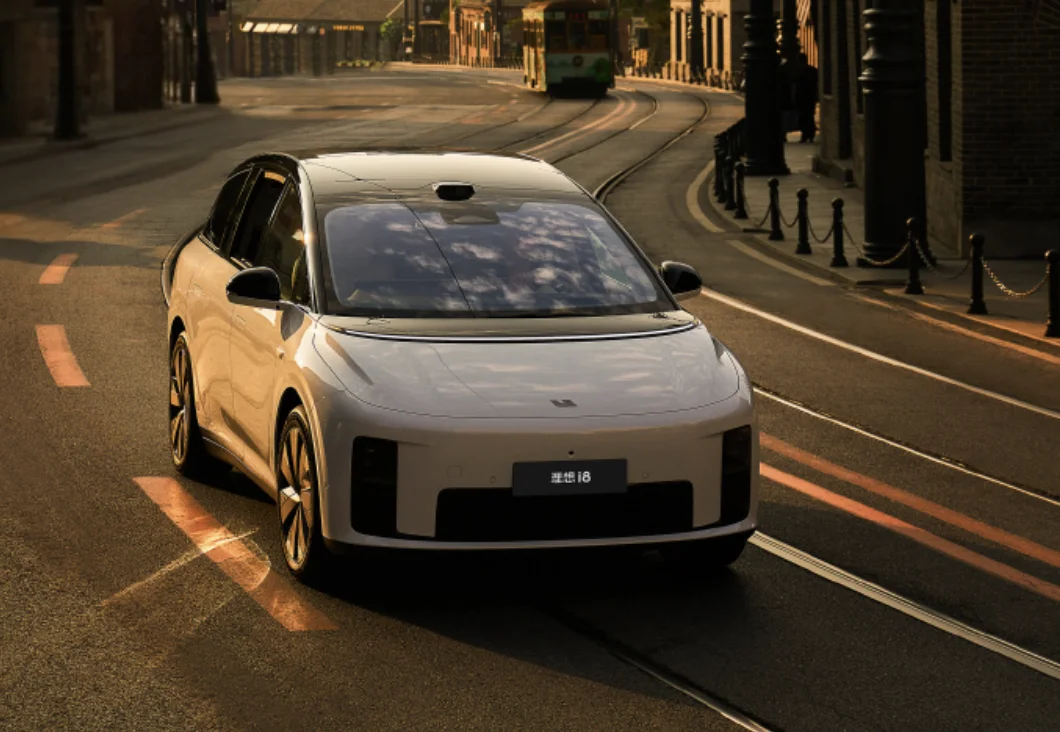
All AD Max owners will also receive a synchronized OTA update in August, covering those with the Thor-U and Orin-X platforms. Additionally, AD Pro models equipped with J6M will have urban NOA fully rolled out by year-end.
Just days before the launch event, we not only got an early test drive of the Li MEGA and Li i8, both equipped with VLA capabilities, but also held a roughly 3-hour in-depth discussion with Lang Xianpeng and his team. This provided clearer answers to questions such as what VLA is, what it can achieve, and how Li Auto developed it.
The improvement in VLA capabilities is concentrated in three areas: a deeper understanding of semantics, stronger reasoning skills, and driving intuition that more closely resembles human behavior. Specifically:
While driving, it can understand natural language commands such as "pull over and stop for a moment," "move forward 50 meters," and "hurry up," and execute the corresponding actions;
The system can autonomously set speed limits for specific road segments based on past driving memories;
It can locate destinations based on voice commands, such as 'Find the nearest Starbucks for me.'
In complex traffic conditions, it can assess passage risks, choose the correct lane, and proactively avoid obstacles.
In Li Auto's view, VLA brings not just better driver assistance, but a 'driver' that understands human language and thinks independently.
This represents a leap in the field of driver assistance, with Li Auto taking the lead into uncharted territory.
01Why VLA
Over the past few years, driver assistance has undergone three architectural iterations: rule-based algorithms, end-to-end systems, and VLA. This is a process from command control to behavior imitation, and finally to intent understanding. Each generation of technology continuously improves computing power and average mileage between manual interventions, essentially striving to approach human driving capabilities.
On July 25, Dr. Lang Xianpeng, Senior Vice President of Autonomous Driving R&D at Li Auto, shared Li Auto's development journey and logical thinking regarding VLA during media exchanges. Lang Xianpeng believes that the watershed moment dividing the manual era of driver assistance from the AI era is the transition from map-light to end-to-end systems. In the previous light-map, NPN, or map-free manual era, the core of driver assistance was rule-based algorithms. 'A typical scenario is that engineers would design algorithms themselves and use programming to control vehicle operations. The core determinant of performance in the manual era was the engineer; human experience, programming skills, and algorithmic capabilities determined whether the system performed well.'
The limitations of the manual-driving era lie in the fact that human effort alone cannot solve all scenarios. As Lang Xianpeng put it, addressing one problem often causes another to pop up. Consequently, driver assistance has entered the end-to-end era.
The core of end-to-end systems combined with VLMs (Vision-Language Large Models) is imitation learning, which trains models using data from human driving. In this technological phase, "data" is the decisive factor: abundant data covering a wide range of scenarios, coupled with high quality—ideally sourced from experienced drivers—results in significantly better model performance.
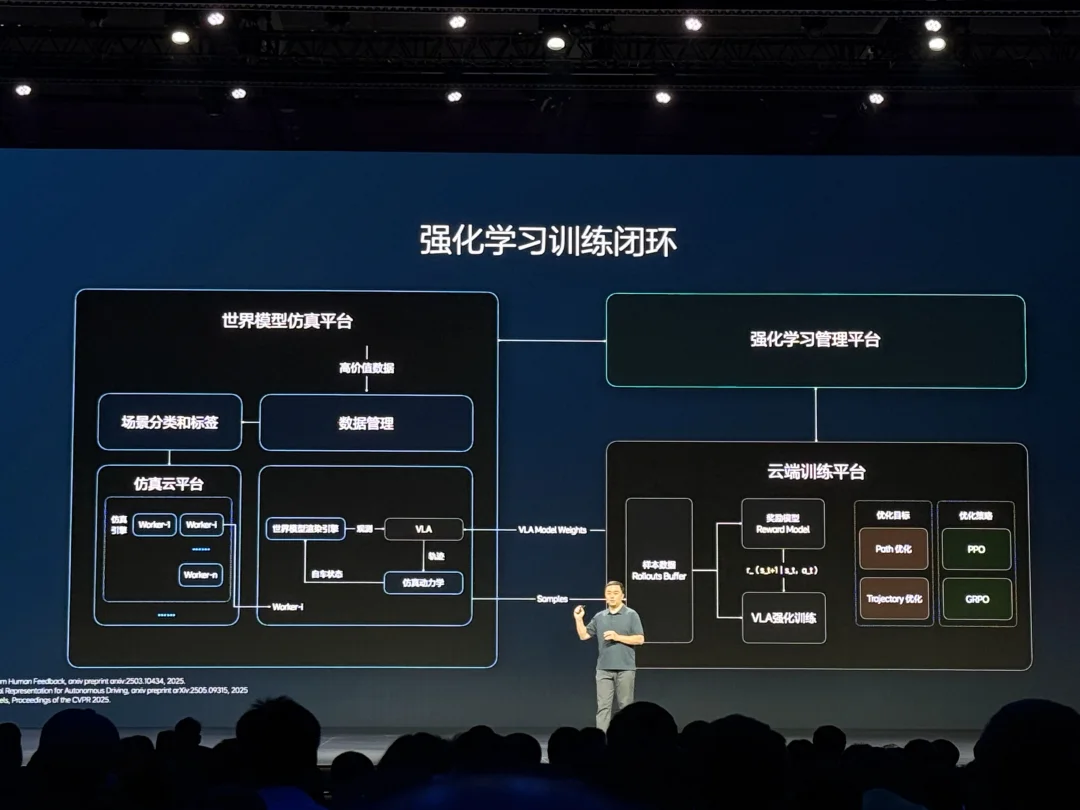
However, imitation learning ultimately has its limits. Li Auto was among the first companies to recognize this and pivot toward reinforcement learning. Unlike relying solely on real-world driving data, VLA combines generated data with simulation environments, allowing models to evolve autonomously in a risk-free, controlled virtual world. This approach is now being adopted by more automakers, making VLA a new consensus in intelligent driving.
Lang Xianpeng explained that generated data is necessary for training because human driving data suffers from severe distribution imbalance. Most data concentrates on routine scenarios such as daytime, clear weather, and normal commuting, while data for complex or dangerous conditions remains scarce and difficult to collect. Training models with genuine decision-making capabilities requires precisely these edge and extreme scenarios.
This necessitates the introduction of synthetic data and high-quality simulation environments to build datasets that are more comprehensive and broadly distributed through generative methods, while continuously evaluating model performance. Ultimately, the key determinant of how quickly model performance improves is not the volume of real-world data collected, but the efficiency of simulation iterations. Compared to traditional data-driven approaches, this represents a more proactive training methodology.
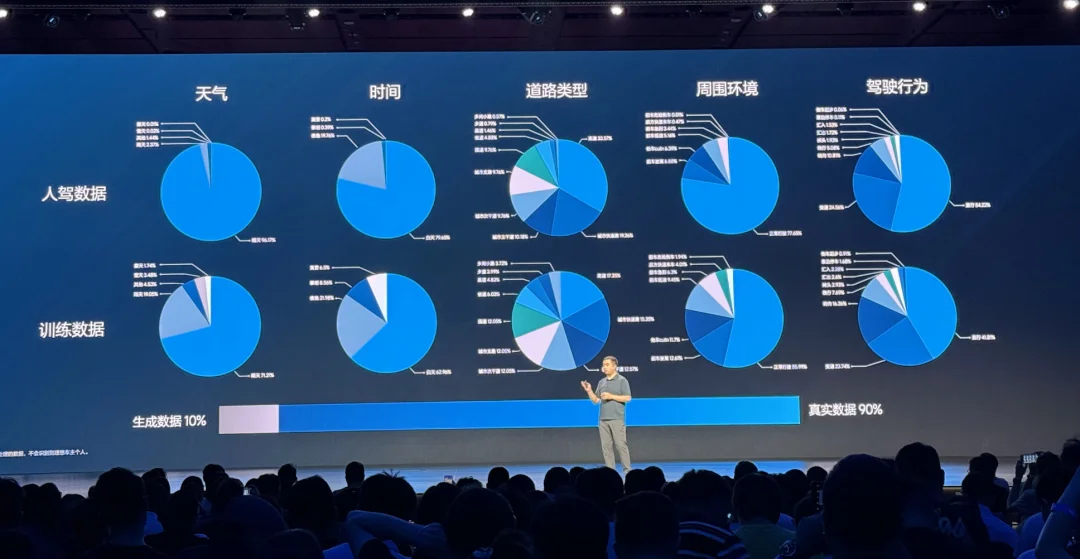
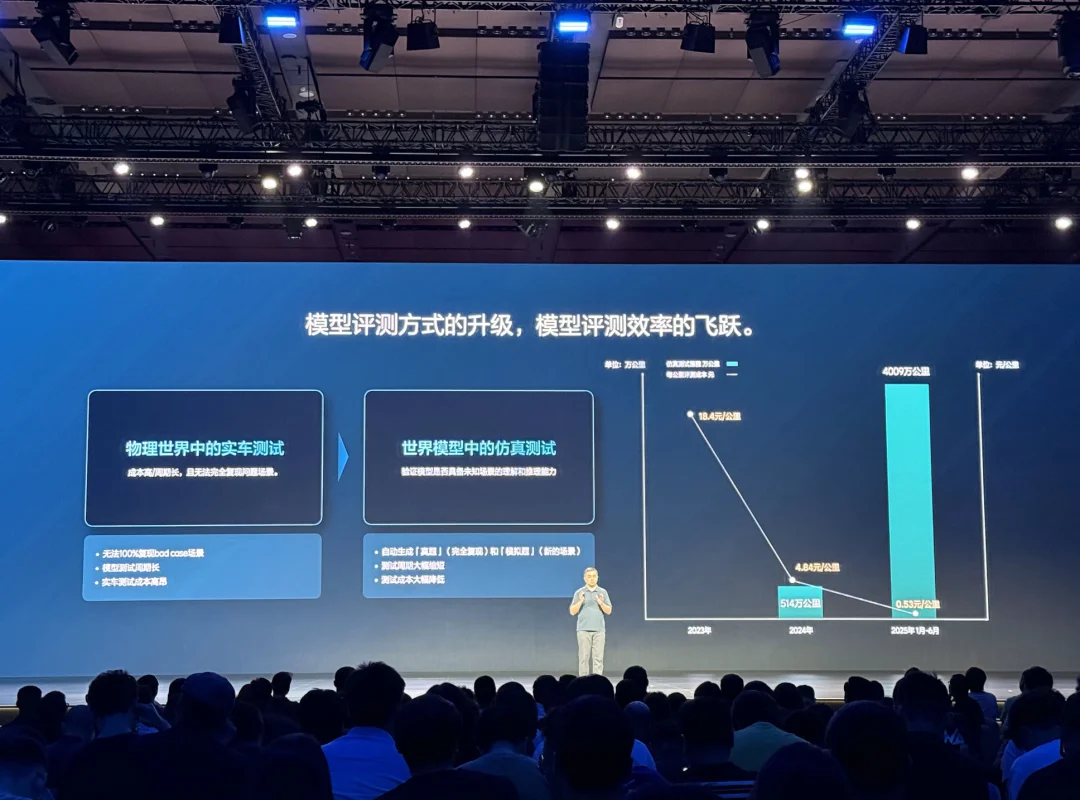
The training approach for synthetic data also directly drives down costs. According to Lang Xianpeng, in 2023, the effective test mileage accumulated from real vehicles was approximately 1.57 million kilometers, at a cost of RMB 18 per kilometer. By the first half of this year, total testing reached 40 million kilometers, with only 20,000 kilometers derived from real vehicles, bringing the average test cost down to five cents per kilometer. "It’s essentially just paying for electricity and server fees, yet the test quality is higher; all scenarios can be extrapolated and fully retested with exact reproducibility," he said.
What is the core strength of the VLA model, and why did Li Auto pursue it after end-to-end architectures and Vision-Language Models (VLMs)?
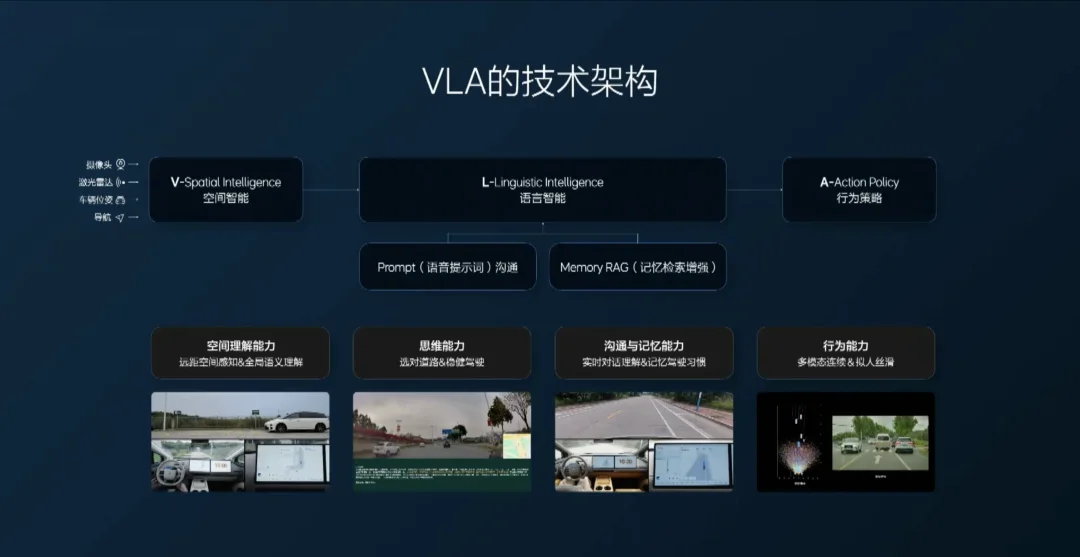
VLA stands for Vision-Language-Action. In this architecture, the 'V' component handles spatial perception, building an understanding of the surrounding environment through inputs such as cameras and navigation data. The 'L' component translates this perception into clear language, while the 'A' component generates behavioral strategies based on scene encoding—essentially determining how the model should drive.
In simple terms, a VLA model can understand natural language, interpret images, and act on both simultaneously. This allows users to control agents like robots and cars through natural speech rather than specific voice commands, text instructions, or buttons, enabling independent task execution and accountability.
The system can follow verbal instructions such as 'slow down' or 'change to the right lane.' It can also remember preferences, such as maintaining 80 km/h on a specific route, and anticipate defensive maneuvers like slowing down before a low bridge to avoid sudden obstacles. These capabilities are beyond the reach of traditional end-to-end models.
Lang Xianpeng stated that end-to-end architectures lack deep reasoning capabilities, functioning more like reflexive responses where input yields output without underlying logic. He compared this to a monkey driving: if fed bananas, the monkey might perform actions according to intent but lacks understanding of why. It responds to stimuli like gongs and drums without comprehending the purpose behind its behavior.
Consequently, even when Li Auto attempted to integrate VLMs into end-to-end systems to improve decision-making, the end-to-end model struggled to comprehend the VLM's outputs.
The core capabilities of VLA can be summarized as thinking, communicating, remembering, and self-improvement. For users, these translate into safer, more comfortable driving with advanced skills and natural interaction. On the Li i8, these VLA advancements have driven a comprehensive upgrade in product experience.
Li Auto has also evolved its functional positioning for driver assistance from a "professional driver" that is safe and usable, to "providing everyone with a better family driver."
This requires that driver assistance systems, beyond functional value, must also meet passengers' emotional needs. Lang Xianpeng said: "When you are driving with your family in the car, your driving style is different from when you are alone. You will definitely drive more safely and comfortably, adjusting to your family's preferences."
Before the Li i8 launch event, a video showcasing the VLA experience was played. Xiang Li admitted in it that his previous definition of an "old driver" for assisted driving was somewhat flawed. "An old driver means the person driving is comfortable, but the passengers may not be. We later created a new definition: professional driver, following the standards of state guest drivers, so that no one has complaints."
During our test drives, we also found that the new "state guest driver" standard is no mere slogan. The VLA shuttle bus experience provided at the trial site was not complex; it mainly took place within the Li Auto campus, with a speed of approximately 10 kilometers per hour. Nevertheless, it could already complete operations such as pulling over to stop, turning left and right, and accelerating via voice control. When the vehicle was in an unmanned state, it could simulate completing daily tasks such as "going to a coffee shop, picking up packages at a courier station, and then automatically returning."
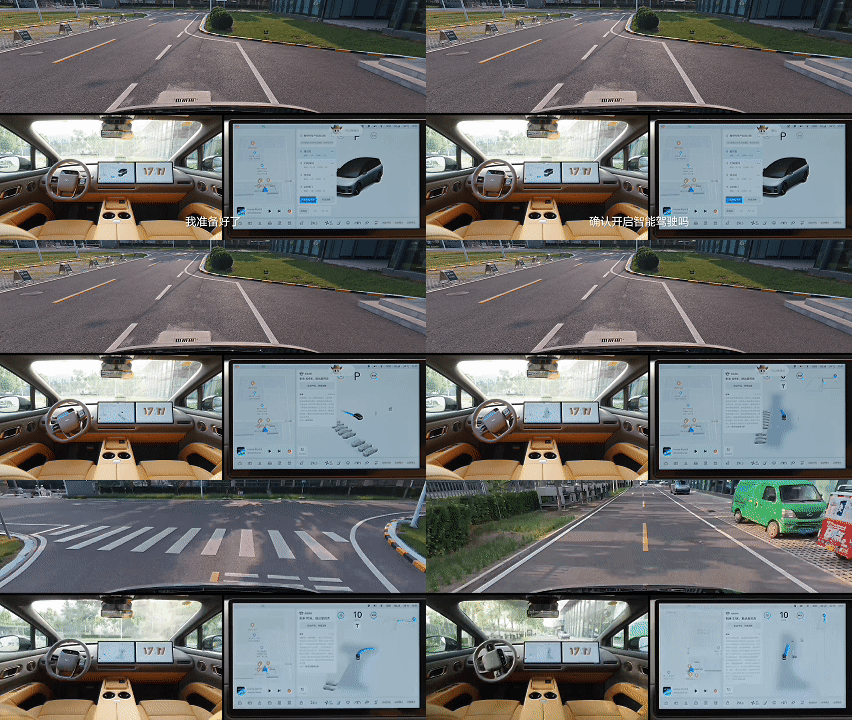
More notably, when facing extremely narrow intersection passages, the VLA demonstrated considerable stability in its ability to pass through. It can also exit the campus and merge onto public roads to reach the next destination. The overall performance is similar to the Driver Agent version on the L9 test vehicle earlier this year; although not stunning, it is indeed more stable in terms of execution precision and movement rhythm.
02Is Li Auto Destined to Be the First to Deliver VLA?
VLA has emerged as a new direction in the intelligent driving industry. Beyond Li Auto, companies such as Xiaomi, XPENG, and Geely are advancing similar architectural transformations to varying degrees, alongside suppliers and autonomous driving firms like DeepRoute.ai and Waymo. However, in terms of actual implementation speed, Li Auto is clearly leading the way.
At the Li i8 launch event, Xiang Li announced the following timeline:
Delivery of VLA on the Li i8 in August;
All AD Max owners will also receive a simultaneous OTA update in August, covering users of both the Thor-U and Orin-X platforms.
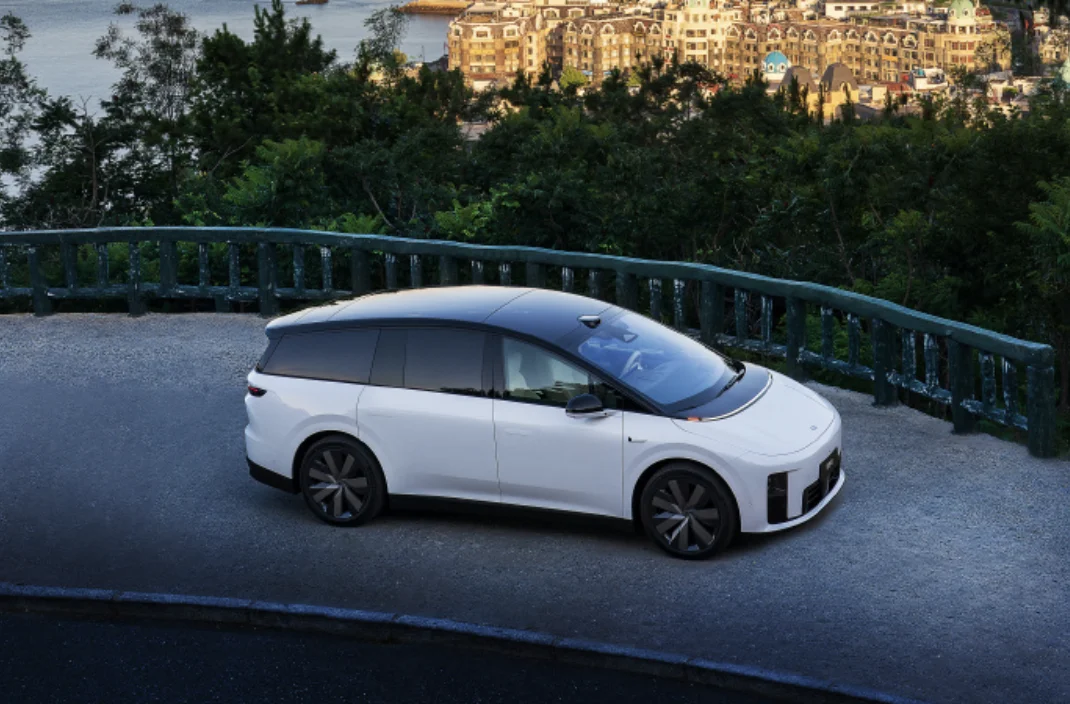
This was not an accidental outcome.
In Lang Xianpeng's view, VLA is not a leapfrog strategy but a natural evolution after end-to-end systems. Without complete training of the model through the perception, decision-making, and control stages during the end-to-end phase, it is impossible to jump directly to VLA.
Lang Xianpeng stated in an interview that although VLA's data and algorithms may differ from previous versions, they are still built upon prior foundations. "Without a closed-loop data collection process using real vehicles, there would be no data to train world models. The reason Li Auto has been able to deploy the VLA model is that we have 1.2 billion kilometers of data. Only by fully understanding this data can we better generate new data."
When asked why Li Auto was the first to implement VLA, Lang Xianpeng answered, "We are strong in all four areas: data, algorithms, computing power, and engineering."
Li Auto's core algorithmic capability is first reflected in its understanding and utilization of data. "Not everyone has access to data," Lang Xianpeng stated, "by July 2025, we had accumulated one billion two hundred million kilometers of effective data. This data benefits from our sales growth; we have sold more than one million three hundred thousand vehicles."
Since 2020, Li Auto has systematically refined tags across dimensions such as weather, road types, and traffic conditions, establishing a data system covering complex operating conditions and long-tail scenarios. Lang Xianpeng stated, "Reaching ten million clips or twenty million clips is not difficult, but generating so many types of valuable data is one of our advantages. Our ten million clips consist of data from many categories and include carefully selected data."
When traditional real-world vehicle data can no longer provide significant improvements, Li Auto has massively introduced synthetic data. Leveraging world model technology, Li Auto can reconstruct and expand upon historically recorded scenarios—a standard highway ETC toll booth, for instance, can be virtually simulated under various conditions such as rainy nights, foggy days, or dusk—and extended to include extreme situations like slight deformations or interfering vehicles. Scenarios where the VLA previously made errors are automatically adapted into a series of variants for continuous, iterative training.
Lang Xianpeng expressed strong confidence in the effectiveness of simulation data during the interview: "Our current simulation results are fully comparable to real-vehicle tests. In our latest Super Version and the Li i8 VLA version, more than 90% of tests are conducted via simulation. We began validating simulation testing with our end-to-end version last year; we currently consider its reliability and validity to be very high, so we have used it to replace real-vehicle testing."
However, he also noted that some tests cannot be replaced. "For example, hardware durability testing must still be conducted physically, but for performance-related tests, we essentially use simulation instead, and the results are very effective."
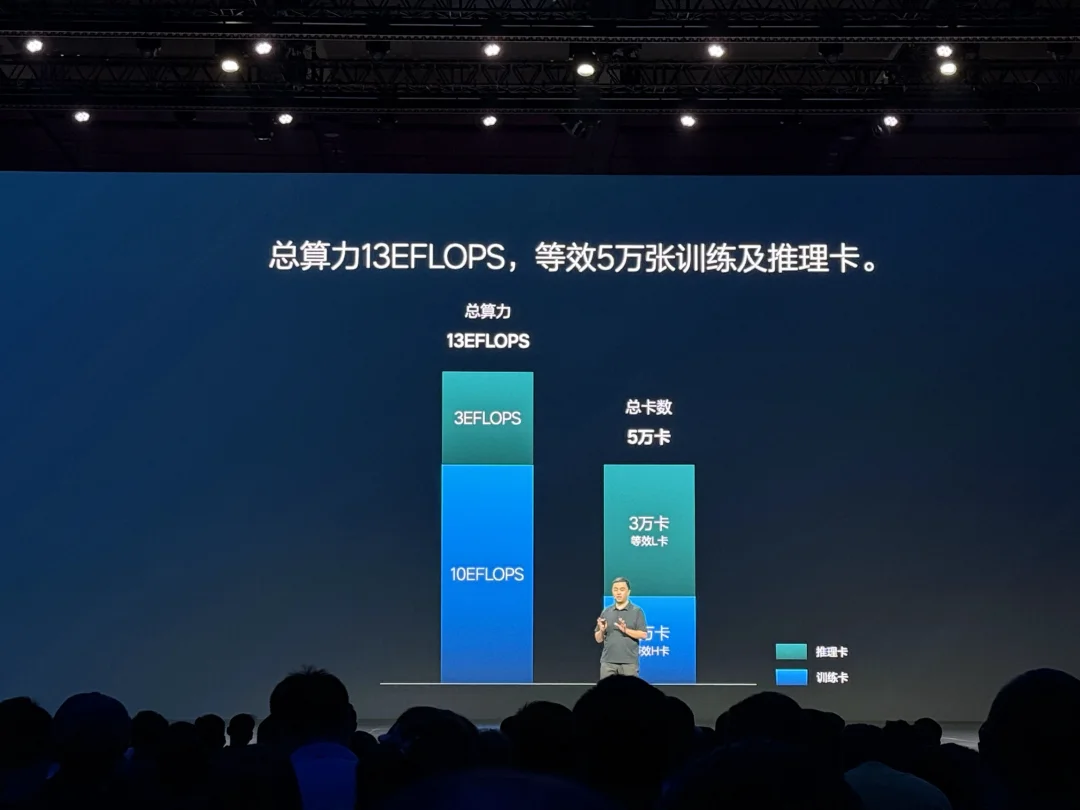
The foundation of this system lies in Li Auto's resource investment in reasoning and training compute. Lang Xianpeng explained that Li Auto currently possesses a total training platform capacity of 13 EFLOPS, with 10 EFLOPS allocated to training and 3 EFLOPS dedicated to reasoning. The importance of reasoning capabilities is amplified in the VLA era, as world model generation and scenario expansion both rely on reasoning performance; without powerful reasoning cards, truly effective reinforcement training cannot be conducted. According to internal estimates at Li Auto, its current reasoning resources are equivalent to 30,000 NVIDIA L20 reasoning cards.
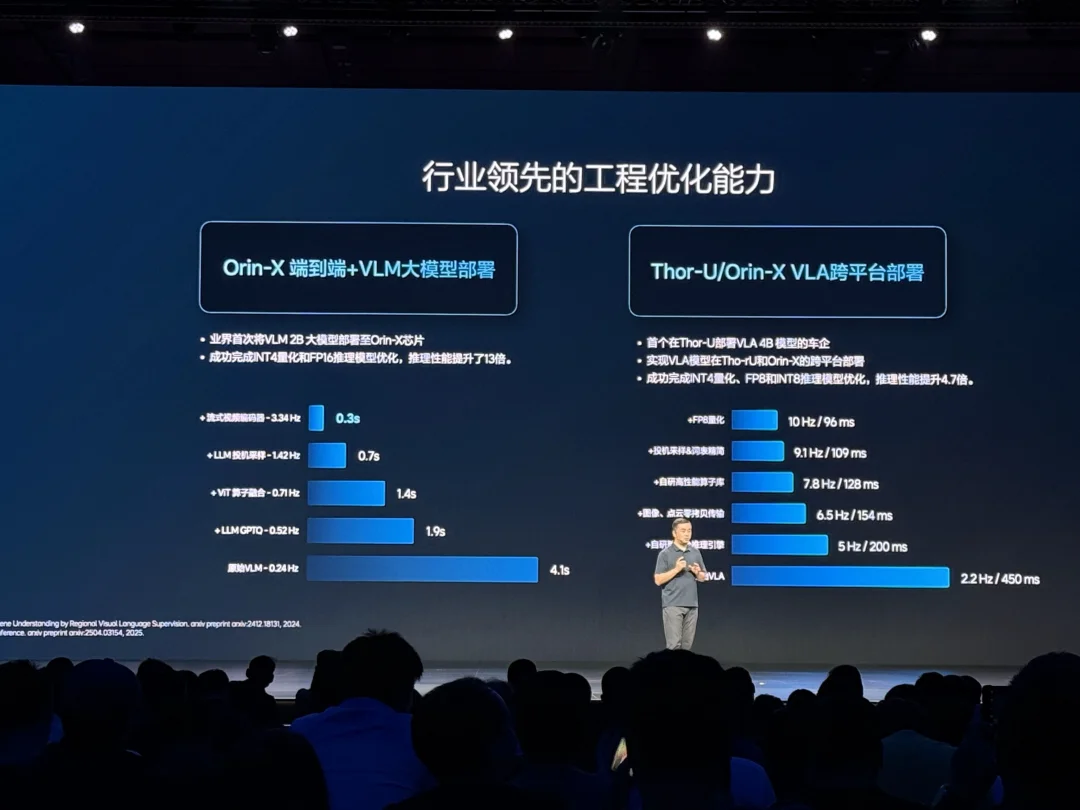
But compute power does not guarantee deliverability. Whether VLA can truly enter the vehicle depends on crossing the engineering implementation threshold. Over the past year, Li Auto has persisted in chip adaptation and model compression: last year it successfully deployed a 2B model on the Orin-X, and this year it achieved deployment of a 4B MoE (Mixture of Experts) model on the Thor-U chip, compressing inference precision from FP16 to FP8 and INT8. Currently, VLA is adapted for both the Orin-X and Thor platforms, with future plans to advance toward FP4, continuing to squeeze out every bit of potential from compute resources.
Lang Xianpeng proposed a viewpoint: "We believe the upper limit of the previous generation's technical capabilities is the starting point for the next generation's." This perspective stems from Li Auto's practical experience in iterating its driver assistance architecture. From 2021 to 2024, during the rule-based era, Li Auto achieved an MPI (Mean Intervention Distance) of approximately 10 kilometers across full scenarios (highway + urban). This data marked the starting point for end-to-end systems; today, the MPI for the end-to-end + VLM solution has reached around 200 kilometers.
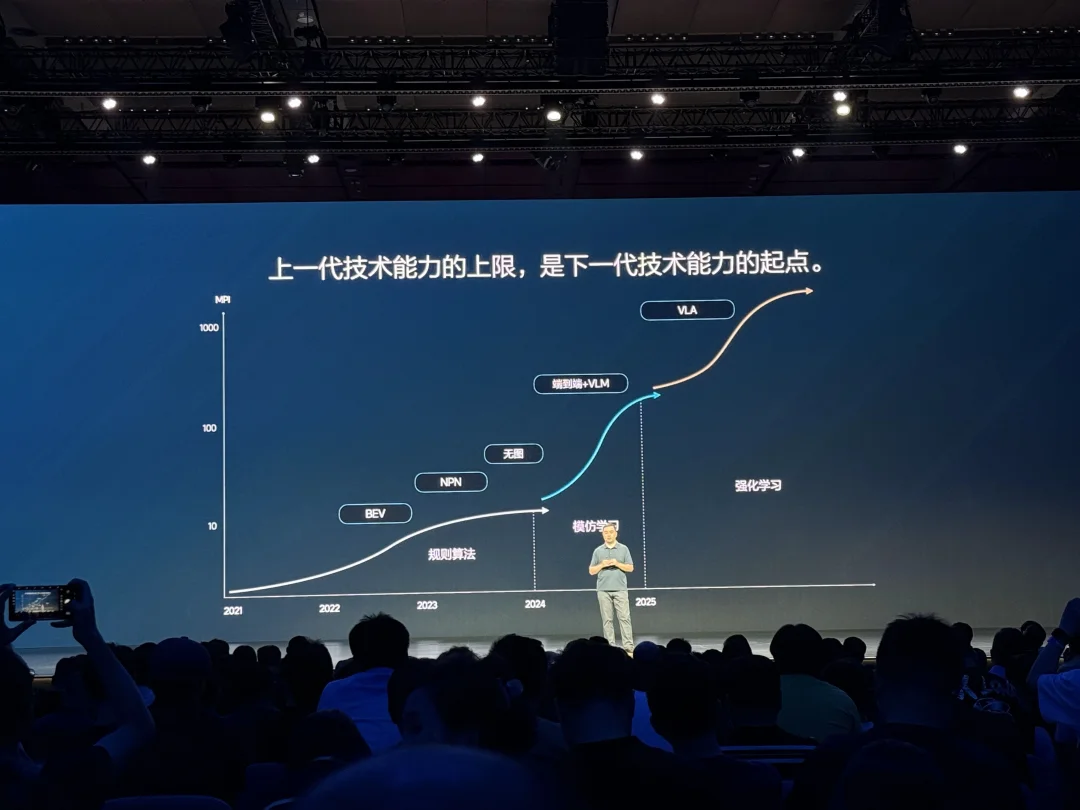
"Now, if the MPI can truly be raised to 1,000 kilometers, it would mean interventions might occur only once every two or three months, which could signify stepping into the next era."
When Will the ChatGPT Moment for VLA 03 Arrive?
On July 25, 42HOW Auto and several industry media outlets held in-depth discussions with Li Auto's autonomous driving team. Interviewees included Dr. Lang Xianpeng, Senior Vice President of Autonomous Driving R&D at Li Auto; Zhan Kun, Senior Algorithm Expert for Autonomous Driving at Li Auto; and Zhan Yifei, Senior Algorithm Expert for Autonomous Driving at Li Auto.
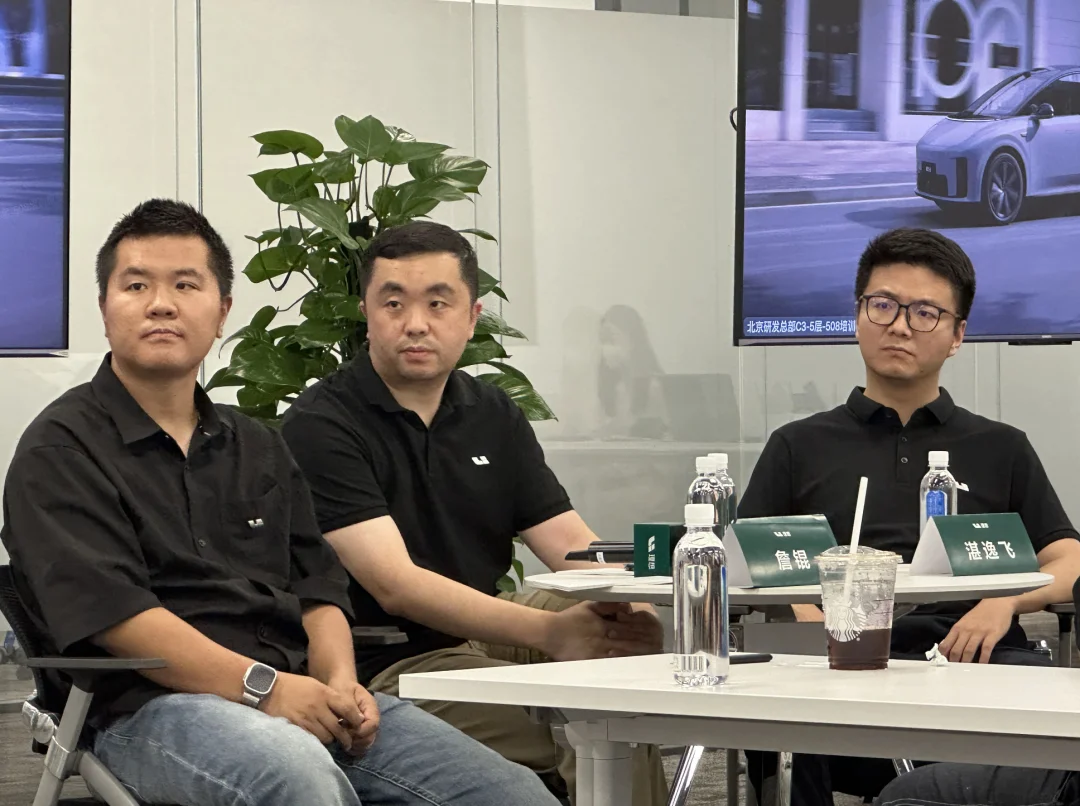
In this interview, Li Auto’s autonomous driving team addressed key questions regarding VLA’s reasoning capabilities, current performance metrics, and deployment timeline. They revealed that the biggest hurdle behind VLA is actually the simulation capability of world models; for competitors, it is difficult to quickly close the entire chain. Below is the main content of the group interview, edited without altering the original meaning:
Q: The VLA driver possesses reasoning capabilities and behaves more like a human, but requires several seconds for reasoning. How does the VLA driver perform fast thinking in sudden scenarios?
Lang Xianpeng: The perception that the thinking process is slow is actually due to display reasons. The inference speed itself is very fast; we simply extracted some important thinking processes to make them easier for everyone to see. Currently, VLA’s inference frame rate is around 10 Hz, which is more than three times higher than the previous VLM. The end-to-end VLM part was previously around 3 Hz.
Q: How do you determine the timeline for autonomous driving deployment? How will commercial monetization be achieved?
Lang Xianpeng: From a technical perspective, we believe the VLA model can move toward higher levels of autonomous driving, but it is currently in its early stages. In this technology cycle, an early-stage VLA model is roughly equivalent to the upper limit of end-to-end systems, and there is still a long way to go. However, I believe this process will not be particularly slow. End-to-end systems went from 10 MPI to 100 MPI in about a year. I believe VLA’s iteration speed will also be very fast; by the time we sit here next year, it may have already iterated to 1,000 MPI.
Commercial monetization is influenced by many factors, with national laws and policies being the most core. Li Auto is also actively participating in discussion groups on relevant national policies and regulations. Technically, the deployment of L4-level autonomous driving is very fast, but from a business perspective, many issues need to be considered, such as insurance and compensation after accidents.
Q: Intelligent driving has an 'impossible triangle,' where efficiency, comfort, and safety are mutually constraining goals, making it difficult to achieve all three simultaneously at the current stage. Which metric is Li Auto’s VLA optimizing first at this stage? Regarding MPI mentioned earlier, can it be understood that Li Auto’s ultimate goal is to improve safety to effectively reduce takeovers?
Lang Xianpeng: MPI is one of our measurement metrics. Another metric is MPA, which refers to the mileage per accident, currently around 3 million kilometers. For Li Auto owners, human-driven data shows an accident occurs approximately every 600,000 kilometers, whereas when using driver-assistance features, an accident occurs every 3.5 to 4 million kilometers. We will continue to increase this mileage data. Our goal is to raise MPA to 10 times that of human driving, meaning 10 times safer than human driving. We hope to achieve an accident only once every 6 million kilometers under driver-assistance features, but this must wait until the VLA model improves.
We have also analyzed MPI. While certain safety risks can trigger disengagements, poor comfort—such as sudden or heavy braking—can do the same. Safety risks do not occur every time, but if the driving experience is uncomfortable, users will still choose not to use the driver assistance system. MPA allows us to measure safety; for MPI, in addition to safety, we have focused on improving ride comfort. If you try the Li i8’s driver assistance, you will notice a significant improvement in comfort compared to previous versions.
Efficiency ranks below safety and comfort. For example, if the vehicle takes a wrong turn, efficiency is lost, but we will not correct it immediately with dangerous maneuvers. We pursue efficiency only after ensuring safety and comfort.
Q: You mentioned that the shift from rule-based systems to End-to-End + VLM represents a major technological innovation. However, VLA does not seem to disrupt End-to-End + VLM. Can we understand VLA as an innovation leaning more toward engineering capabilities?
Zhan Kun: VLA is not merely an engineering innovation. If you follow embodied AI, you will see that this wave is driven by the application of large models to the physical world. This essentially proposes a VLA algorithm. Our VLA model aims to introduce the concepts and pathways of embodied AI into autonomous driving. We were among the first to propose this and the first to put it into practice. VLA is also end-to-end because the essence of end-to-end is scene input and trajectory output, which applies to VLA as well. But the algorithmic innovation lies in adding 'thinking.' End-to-end can be understood as VA (Vision-Action), lacking Language. Language corresponds to thinking and understanding. By incorporating this part into VLA, we unify the paradigm of robotics, making autonomous driving a type of robot. This is an algorithmic innovation, not merely an engineering one.
However, for autonomous driving, a significant challenge requires engineering innovation. Because VLA is a large model, deploying it on edge computing hardware is highly challenging. Many teams do not believe VLA is inferior; rather, they find deployment difficult. Bringing it to market is extremely challenging, especially when edge chip computing power is insufficient. Therefore, we can only deploy it on high-compute chips. Thus, while it is not solely an engineering innovation, extensive engineering optimization is indeed required for deployment.
Q: From an industry perspective, current intelligent driving experiences are becoming increasingly homogeneous. In the future, will Li Auto share its intelligent driving capabilities with the industry, open-source them, or sell them to other automakers?
Lang Xianpeng: I believe it is possible. We hope to contribute to the industry. However, there are two prerequisites. First, we must be able to thoroughly validate this system, as the development of VLA is still in the early stages of the technology cycle and needs further improvement. Second, whether others have the capability to collaborate with us, as they would need their own evaluation methods, simulation environments, and reinforcement learning training capabilities.
From the company’s or my personal perspective, we hope to promote industry development. However, given the current stage of VLA technology, it remains relatively primitive. Its development speed may be quite fast, similar to end-to-end systems, which improved performance tenfold in just one year. The industry’s development pace will be very rapid. I believe that by next year, when we communicate again, we might discuss the issue of open-sourcing.
Q: With various automakers advancing VLA starting in the second half of this year, what are Li Auto's advantages or technical barriers regarding VLA technology?
Zhan Kun: First, our technology stack is continuous. We did not suddenly jump from the previous rule-based era to VLA, which would inevitably cause various issues, such as whether data accumulation has been sufficient, whether training quality is adequate, and whether simulation evaluation systems are robust. Our current work on VLA builds upon a continuous technical architecture, leveraging existing strengths and standing on the shoulders of giants to continue developing.
Lang Xianpeng: There are certainly technical barriers. Li Auto's core barrier lies in world model simulation, which is extremely high and difficult for others to replicate in a short time. Because its iteration speed must be maintained and real-vehicle testing is required, it is hard to surpass us.
Q: Li Auto defines the VLA driver as a better family driver and a secure mobile space. Will VLA technology expand to other product lines or service processes beyond commercial vehicles?
Zhan Kun: We believe VLA will eventually form a larger, unified architecture. We also consider VLA to be a highly consistent and forward-looking technology for implementing AI in the physical world. It is not limited to autonomous driving but may represent the most reasonable direction currently visible for physical AI.
Lang Xianpeng: Expansion is definitely possible. We have established various other robotics departments. VLA serves as an excellent embodied intelligence framework that can extend to other directions.
Q: Will subsequent version updates for Orin X be synchronized or differ? Additionally, when pushing VLA with Orin X, what is its capability ceiling internally? How long will it take for Orin X to fall behind Thor U, or will it maintain synchronized updates?
Lang Xianpeng: Updates are pushed synchronously. When the i8 launches, existing AD Max owners, including those who purchased vehicles in 2022, will receive simultaneous updates provided they use either Orin X or Thor chips. Current testing shows no difference in capabilities or frame rates; our engineering optimizations are excellent, maintaining 10 frames per second. The only difference lies in the chassis: the i8's chassis differs from the L9's, leading to some variation in comfort experience.
The push-update schedule is synchronized as well, with both the Orin and Thor platforms receiving updates simultaneously. As for when a performance gap will emerge, we definitely will not pursue such differentiation at this stage. However, with further iterations, if we achieve breakthroughs in INT4 quantization, there may be some divergence then; but it is too early to discuss that now.
Q: What score would you give the current real-vehicle version of the software in your internal evaluation? What score do you believe is necessary before mass deployment to users?
Lang Xianpeng: We have an internal scoring mechanism. Taking simulation as an example, we are currently fully benchmarking against OTA7.5, which is our last version in the end-to-end approach. This version's score has been internally evaluated. When we launched the first version of VLA, including this version of VLA that everyone is test-driving today, its internal score has already comprehensively surpassed that of OTA7.5. However, there may be some fluctuations in certain minor scores. In terms of overall scoring, this version has slightly surpassed the end-to-end approach.
However, before pushing the update to users, we will ensure a noticeable improvement in effect. The version you tested today was specifically designed to let you experience improvements in comfort. If you are familiar with our vehicles, you will certainly notice it. In the next phase, we will make significant improvements in safety, compliance, navigation, efficiency, and other dimensions. This will provide a substantial experience upgrade for those familiar with our cars who buy the Li i8 and get in. For users new to driver assistance systems, it will offer a strong sense of security and peace of mind, along with high comfort levels.
Q: Many say multimodal models have not yet reached the so-called 'GPT moment.' Whether in understanding the world or data training, while everyone vaguely sees a direction, there is no clear solution. Given that you need to launch a mass-production solution to the market, do you consider this approach sufficiently good? And how long until it reaches that 'GPT moment'?
Zhan Kun: When people say multimodal models haven't reached the 'GPT moment,' they might be referring to physical AI like VLA, rather than VLM. In fact, VLM has already achieved a highly innovative 'GPT moment.' If focusing on physical AI, current VLA, especially in robotics and embodied AI, may not have reached that moment due to insufficient generalization capabilities. However, in autonomous driving, VLA addresses a relatively unified driving paradigm and has the potential to reach a 'GPT moment' through this approach. We fully acknowledge that the current VLA is the first version and the industry's first VLA version being pushed toward mass production, so it inevitably has some flaws.
This major attempt aims to explore a new path using VLA. It involves many trials and areas requiring practical exploration. Just because it cannot immediately achieve a 'GPT moment' does not mean it should not be deployed for mass production. Delivering a 'better, more comfortable, and safer' experience to users is sufficient for delivery.
The 'GPT moment' primarily refers to strong universality and generalization. As our autonomous driving expands into spatial robotics or other embodied AI fields, stronger generalization or more comprehensive coordination capabilities may emerge. After deployment, as user data iterates, scenarios become richer, logical thinking improves, and voice interactions increase, we will gradually migrate toward a ChatGPT-like moment. It is not mandatory to reach a 'GPT moment' before creating an autonomous driving model.
For example, once we deploy VLA, we cannot simply migrate it to ChatGPT. This is the first version of our deployed VLA; subsequently, we will gradually evolve the VLA model toward richer, more general, and more diverse capabilities. As Lang Xianpeng mentioned, if we reach 1,000 MPI by next year, users may feel that we have truly reached a 'ChatGPT moment' for VLA.
Written by: Da Yong Edited by: James