


DeepRoute Unveils VLA Model: Is the Goal to Teach AI Fear? | Full CEO Interview
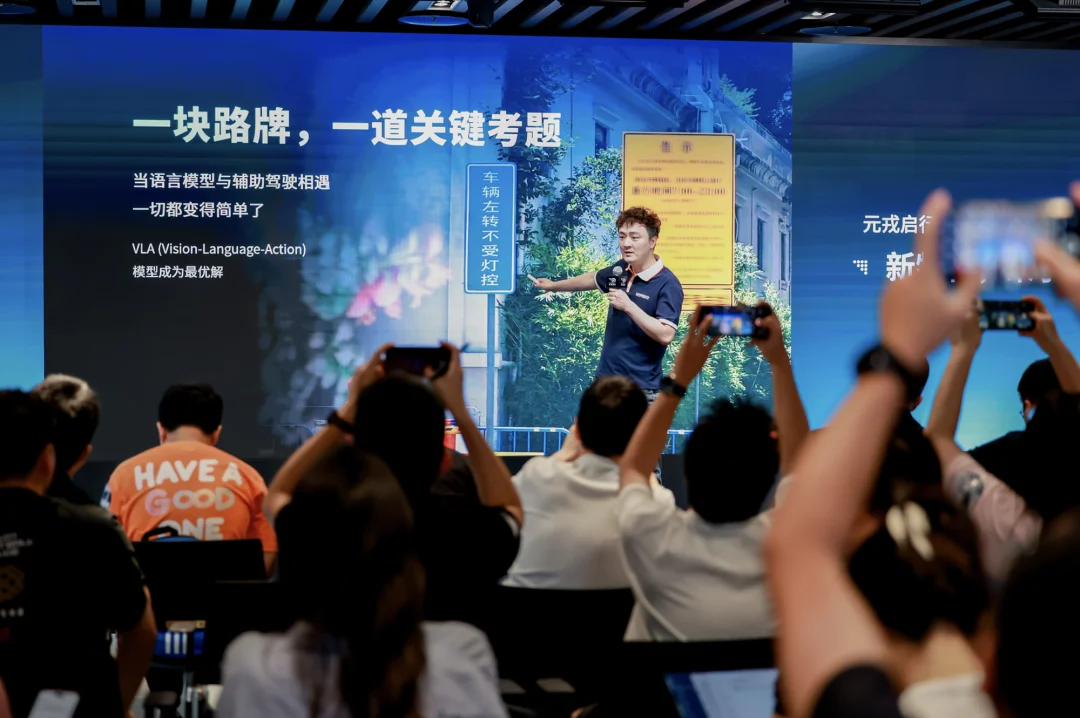
VLA is one of the hottest driver-assistance technology routes in 2025. The Li i8 has already entered mass production, XPENG’s P7 is hot on its heels, and Huawei says it does not use this technology.
Just yesterday, another new player joined the VLA camp: DeepRoute released its next-generation driver-assistance platform, DeepRoute IO 2.0, equipped with a self-developed Vision-Language-Action (VLA) model.
DeepRoute CEO Zhou Guang revealed that the starting point for developing the VLA model was to teach AI to be afraid. Just because sensors cannot see something does not mean there is no danger; this highlights a limitation of driver assistance in the previous end-to-end era.
Drivers who frequently use driver assistance often have this experience: in scenarios that drivers perceive as dangerous—such as occlusions, turns, or lane merges—the system may confidently and quickly navigate through them. A more serious problem is that such performance is often perceived by drivers as indicating higher efficiency than human driving, leading to over-trust. As the number of vehicles equipped with driver assistance continues to grow, any issue could be magnified.
The root cause is that AI has not learned to be afraid.
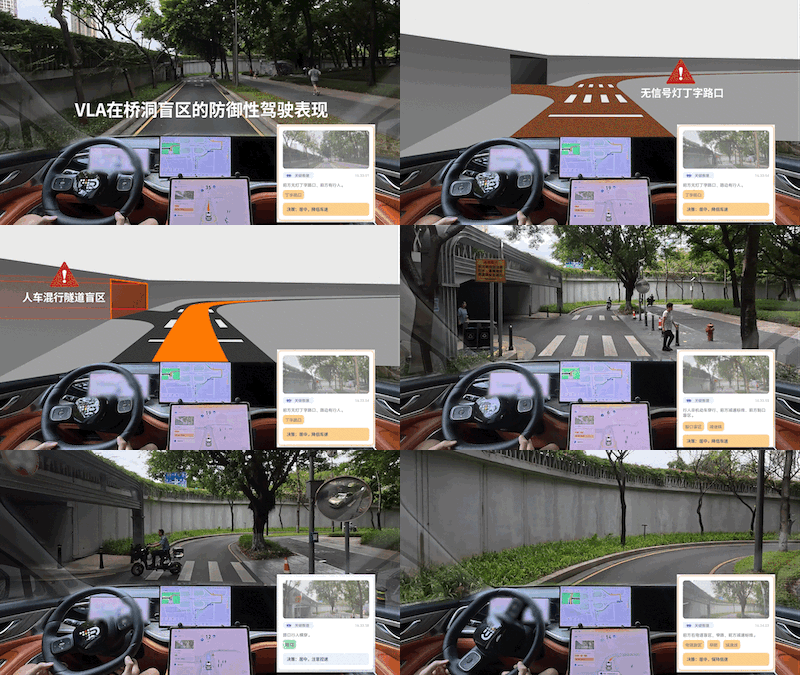
DeepRoute’s VLA model features four main capabilities: spatial semantic understanding, irregular obstacle recognition, text-based guide sign comprehension, and memory-based voice control.
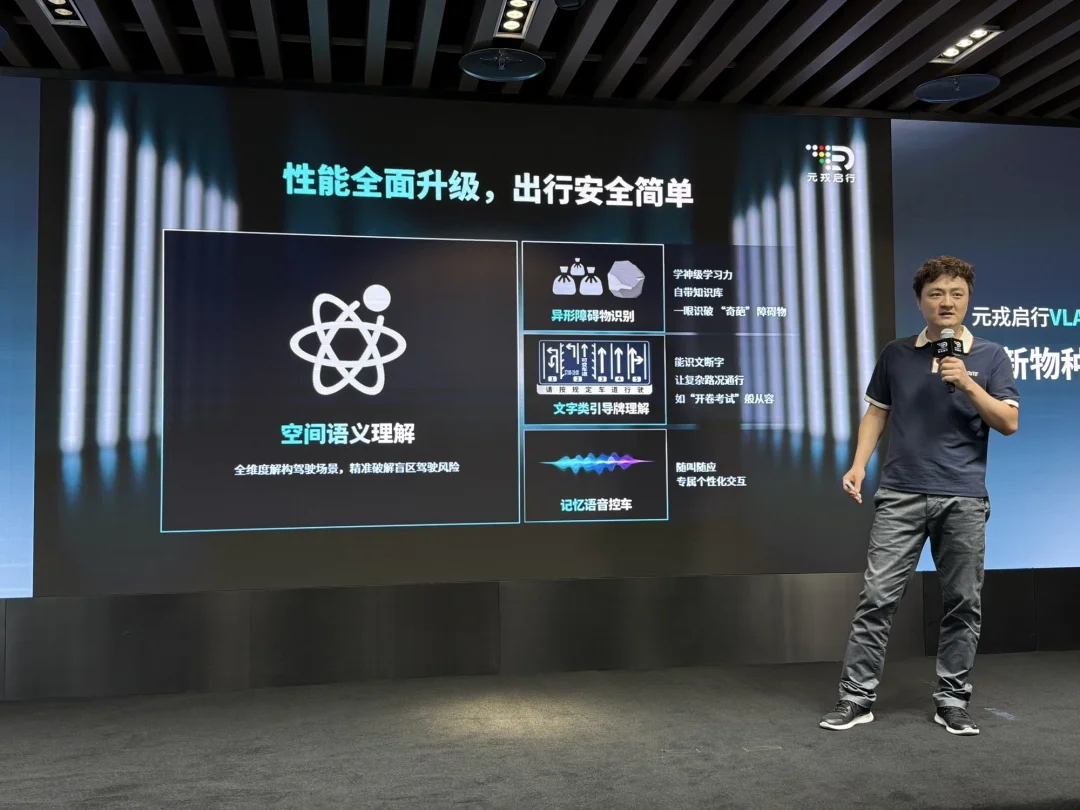
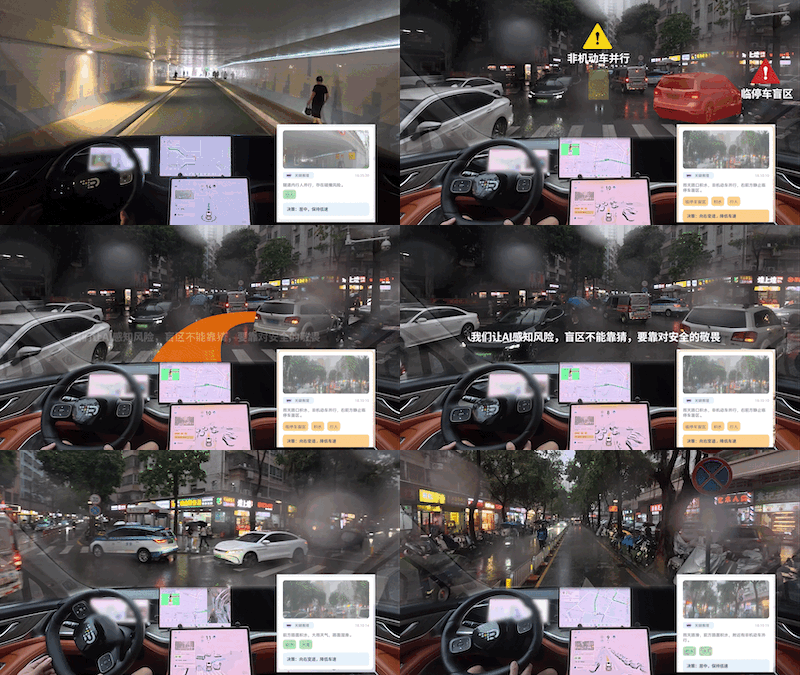
Spatial semantic understanding has become the core function. During driver assistance, the vehicle performs semantic analysis on front-camera footage using Vision-Language models. When driving through blind spots such as occlusions, complex intersections, or underpasses, the system can make preemptive judgments and ultimately decide to reduce speed.
The system can identify and flexibly handle irregular obstacles, such as construction cones and overloaded small trucks. It also recognizes text-based guide signs, interpreting information like tidal lanes and bus-only lanes. The memory voice control feature supports natural language command interaction and gradually learns user preferences to deliver a personalized, human-like driving experience.
Zhou Guang revealed that the DeepRoute IO 2.0 platform adapts to 'multimodal + multi-chip + multi-vehicle' configurations, supporting both LiDAR and pure vision versions. Currently, based on the DeepRoute IO 2.0 platform, DeepRoute has secured design wins for five vehicle models, with the first batch of mass-produced vehicles about to enter the market.
01Conversation with Zhou Guang: The Greatest Challenge of VLA Lies in Chain-of-Thought and Long-Term Reasoning
Following a brief launch event, DeepRoute CEO Zhou Guang accepted a joint interview with 42HOW Auto and other media outlets.
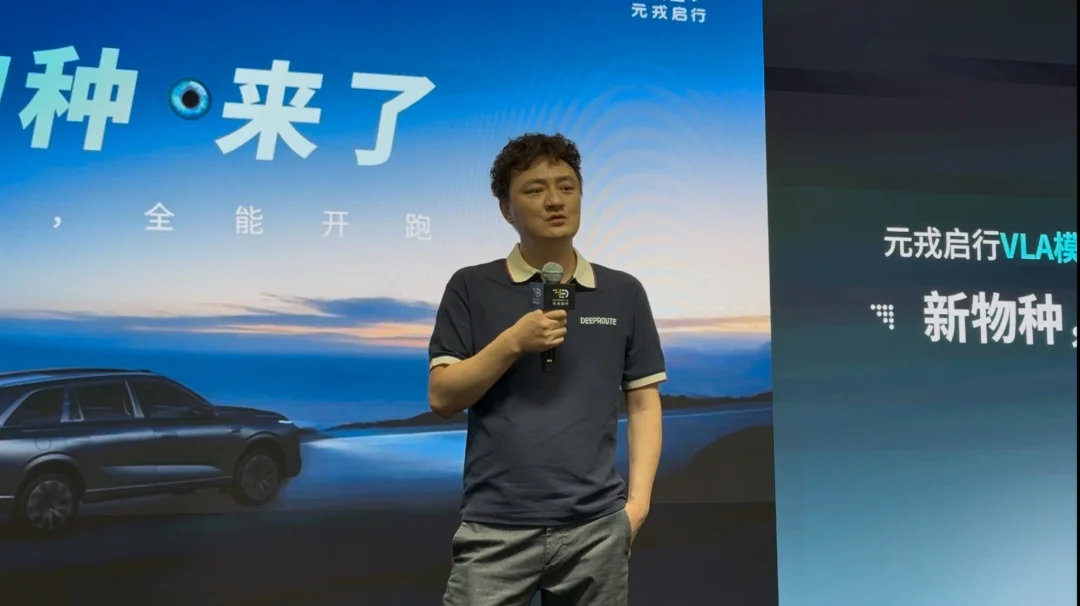
Focusing on the technical details of the DeepRoute VLA model, Zhou Guang stated that based on NVIDIA Thor chips, the VLA can operate at a few Hz, enabling real-time response.
During the development of the VLA, the greatest challenges were Chain of Thought (CoT) and long-horizon reasoning. Zhou Guang noted: 'This is the true core capability of a VLA. CoT is a fundamental requirement for this architecture. Without it, it cannot be considered a VLA.'
Recently, there has been considerable discussion in the industry regarding whether advanced driver assistance systems (ADAS) require LiDAR and whether the VLA approach is a superior solution for ADAS. The two figures who initiated these discussions are Elon Musk and Huawei.
Zhou Guang believes that LiDAR still plays an important role in identifying general obstacles. However, with the advancement of large models, vision will play an increasingly significant role in perception, and large models are expected to gradually handle tasks currently reliant on LiDAR.
So, does ADAS really need a VLA? Zhou Guang believes that achieving true CoT requires pursuing the VLA direction, unless computational power is insufficient, in which case alternative paths might be chosen.
In a one-hour in-depth interview, Zhou Guang discussed the technical details of the DeepRoute VLA model, VLA training, and addressed various hot topics in the industry. We have compiled the full dialogue, making slight edits for clarity without altering the original meaning, for your reference.
Other Technical Details of Mass-Produced VLA
Q: What is the target operating frame rate for mass-produced VLA models?
A: The current frequency is at the level of several hertz per second. While I cannot disclose the exact figure, it certainly achieves real-time response and does not suffer from frame rates as low as one frame every few seconds.
Q: For different chip platforms, what optimizations has the VLA model undergone in terms of algorithms and training? Is there a forward-looking layout in its technical architecture?
A: The development and training of the VLA model are inherently independent of chips; deployment adaptation occurs only after training is complete. Different chip platforms primarily affect the workload of engineering deployment and do not, in turn, alter the training methods or the model architecture.
Q: DeepRoute supports multiple chip platforms. What is the specific scope of this support? With the development of domestic chips (such as Dipingxian) and automakers' self-developed chips, can all of them be adapted? Can automakers specify their preferred chips?
A: Chip adaptation comes with certain requirements, such as basic computing power and bandwidth. After model training is completed, distillation and quantization are performed, and adaptation requires meeting these basic conditions. In collaborations, automakers can propose chip requirements, and the costs of adaptation (time, funds, and data) are negotiable. We currently use a specific chip as a starting point but will support more chips in the future, without being limited to just one vendor.
Q: Currently, it seems that only DeepRoute and Li Auto are clearly pursuing the VLA route. There is also a view that while large language models excel at text reasoning, spatial perception is not their strong suit. How do you view this perspective?
A: More accurately, the VLA is essentially an "end-to-end model based on GPT." Companies currently committed to investing significant computing power, including XPENG, are indeed moving in this direction. For instance, Tesla's latest chip delivers 2,500 TOPS of computing power. CNN models do not require such massive computing resources; only GPT architectures need large parameters and substantial computing power to function effectively. CNN models have limited parameter counts, whereas the GPT architecture is naturally suited for scaling, which represents the future direction.
Q: Regarding voice-controlled vehicles, you mentioned that it belongs to basic functions. So, what is truly difficult within the VLA model?
A: The most difficult aspects are Chain of Thought (CoT) and long-horizon reasoning. These constitute the core capabilities of a VLA model.
Q: Can the performance of Chain of Thought be used to evaluate the quality of a VLA model?
A: Chain of Thought is a fundamental requirement for this architecture. Without it, a system cannot be considered a VLA. Currently, the industry lacks a unified evaluation benchmark comparable to those in NLP, but specialized benchmarks based on physical scenarios may be established in the future.
Q: Can the quality of a VLA model be intuitively judged from the vehicle’s infotainment interface?
A: At this stage, we are focused on solving the problem of going from 0 to 1. Tesla’s user interaction is already highly mature, but we must first ensure that core capabilities are implemented before optimizing the user experience.
Q: What size models can actually run on vehicles?
A: We prefer not to disclose specific parameter counts. However, constrained by automotive-grade computing power and power consumption limits, even GPT-class models deployed in vehicles remain in the category of “small models.”
Q: Do VLA models also suffer from hallucinations? How can such risks be mitigated?
A: Hallucinations can indeed occur during the pre-training phase, but post-training alignment techniques have significantly mitigated this issue. Mainstream large language models, such as Doubao and Qwen, now exhibit very few hallucinations, indicating that effective solutions are already in place.
Q: As technologies like VLA (Vision-Language-Action) and VLM (Vision-Language Models) advance, the baseline for driver assistance capabilities is rising across the industry. Will different solutions converge? How does DeepRoute maintain its distinctiveness?
A: End-to-end technology does face convergence, with differences largely lying in the pace of implementation. DeepRoute has been an early mover in areas such as defensive driving, emphasizing this direction half a year ago. The accuracy of technical judgment is critical, especially in broad domains like VLA.
Q: The frame rate of the current VLA model is lower than some end-to-end solutions (10–20 fps). Is this a limitation of the current stage? Are there compensatory measures?
A: Frame rate fundamentally affects latency. Reducing latency from 100 milliseconds to 50 milliseconds yields significant benefits. A slightly lower initial frame rate for VLA is normal. Higher frame rates are not always better; enhanced predictive capabilities can compensate for frame rate limitations.
Q: If VLA’s reasoning capabilities continue to improve, what breakthroughs might this bring in the future?
A: VLA has not yet fully achieved Chain-of-Thought (CoT) reasoning, which represents a key gap. In the long term, language and reasoning abilities are core to achieving fully autonomous driving. For example, when encountering temporary signage such as 'left turn not controlled by traffic lights,' relying on map updates is insufficient; real-time understanding is required upon first encounter. VLA has a long way to go and requires further technological accumulation. Tesla’s investment of ten times the compute power and parameters stems from the fact that the GPT architecture is a clear direction, whereas CNNs cannot support such scalability.
Q: What is the minimum vehicle price tier compatible with the VLA model system? Which specific models can apply it?
A: Currently, models priced above RMB 150,000 can be adapted. Models in the RMB 100,000 range may also be equipped through optimization. End-to-end solutions offer lower costs, whereas VLA models currently rely more heavily on computing power. In terms of sensors, an 11-camera setup is becoming a mainstream configuration; for instance, Tesla adheres to a pure vision approach. The industry as a whole is enhancing computing capabilities, with next-generation chips reaching 5,000 TOPS, and even 10,000 TOPS levels not far off.
Q: How much more expensive is the VLA model compared to end-to-end solutions? Is the cost gap significant?
A: The primary cost difference lies in the chips; other components are largely consistent. Chip costs depend on manufacturing processes. We have already entered the era of thousand-TOPS chips—for example, Tesla’s 2,500 TOPS chip, where dual-chip configurations can achieve 5,000 TOPS.
Q: At the last auto show, you mentioned that the VLA model would not only be used in vehicles but also expanded to robots. Could you share more details? Are these humanoid robots or autonomous driving systems? Are there any relevant partnerships? Are the VLA models used in vehicles and robots the same?
A: Yes, the VLA model itself is a general-purpose architecture, no longer customized for specific scenarios. As stated in our RoadAGI strategy released earlier this year, this technology can be generalized to various mobile scenarios—including indoor and outdoor environments such as residential communities, elevators, and offices. Many current robots still rely on remote control or line-following technologies, while we aim to achieve truly autonomous and general mobile capabilities.
Q: What score would you give the current version (out of 10)? What is the biggest challenge?
A: I personally give it a 6, just passing. The VLA model is still in its early stages, akin to a 'juvenile' phase, but its upper limit is far higher than that of end-to-end solutions. New-generation architectures require new-generation chip support, which is incomparable to the CNN era.
Q: Non-VLA architectures can also achieve defensive driving. Is VLA necessary?
A: Statistical methods can partially implement defense strategies, but complex scenarios require true reasoning capabilities. VLAs, with their Chain of Thought (CoT) and language reasoning, can more thoroughly resolve these issues. BEV has inherent limitations in spatial understanding.
How Is a VLA Trained?
Q: Is the base model for DeepRoute VLA Qwen?
A: We will employ multiple models for distillation. Qwen is a relatively strong open-source model, and we have also attempted solutions based on Qwen as well as our proprietary distillation approaches. Therefore, we are not entirely dependent on any single specific model. There are technical components derived from Qwen, but they are not completely identical.
Q: You didn't mention the cloud-based world model and simulation data. The industry currently relies on simulation paths; how does DeepRoute address the issue of inference accelerator resources?
A: The fundamental difference between VLA and the first generation of end-to-end models is that the model architecture has changed—from CNN to GPT. Training methods, such as whether to introduce RL, are merely strategic choices. The CNN architecture itself cannot achieve human-like reasoning and generalization capabilities.
Q: What is the source of the training data? Does it come from the company's own test fleet and Great Wall?
A: The data sources are diverse, including our own test fleet, production vehicle data, and generated data. To achieve pre-training with a GPT architecture, reliance on large-scale, diverse datasets is essential—a task that CNN models cannot handle.
Q: Regarding the training resource requirements for VLA models, some manufacturers state that tens of thousands of GPUs are needed. How does DeepRoute view this massive resource consumption? Will it create cost pressures? Additionally, why is the industry currently emphasizing reinforcement learning and AI training so heavily?
A: Reinforcement learning is merely one method of model training, belonging to the 'post-training' phase. The industry has now entered the post-training era, but this itself does not warrant excessive emphasis—just as GPT or Waymo do not single out reinforcement learning for special mention. DeepRoute has always been precise in its technical selections. VLA is a brand-new field with many directional choices; if there is a clear technical judgment, resource consumption can be made far more efficient. In fact, the scale of GPT-like models for driver assistance scenarios is relatively controllable; for example, a 7B-parameter model does not require extremely massive computing power.
Q: In terms of simulation testing, some manufacturers have significantly reduced real-vehicle testing while increasing simulated mileage. Is this an industry trend?
A: We focus more on our own technical route. Simulation is just one source of data. The key lies not in whether the data is real or simulated, but in data quality. High-quality datasets are the core of model optimization.
Q: Looking long-term, what proportion of training will simulation data account for? Will simulation data generation capabilities become a barrier to entry?
A: Simulation must be based on real data; otherwise, it cannot effectively simulate reality. Real-world data remains the main body, with simulation serving as a supplement. From the pre-training to the post-training stages, the proportion of simulation will gradually increase. The industry should focus on the overall development of large models rather than limiting itself to the autonomous driving sector. The underlying technology is essentially the same; for instance, the neural structure of the human brain does not differ significantly.
Views on Industry Hot Topics
Q: Recently, Elon Musk stated that 'LiDAR will make autonomous driving increasingly unsafe.' What are your thoughts on this?
A: LiDAR still plays a crucial role in identifying general obstacles, as previously mentioned. Large models' knowledge base capabilities can recognize many unknown obstacles. I believe that with the development of large models, vision will play an increasingly important role in perception. In the short term, liDAR retains its value due to limitations in technological development and dataset maturity; in the long run, large models are expected to gradually solve some tasks currently reliant on liDAR.
Q: How do you view other automakers launching VLA models? For example, XPENG. What is DeepRoute's differentiated advantage?
A: XPENG's VLA progress is also good; they have achieved tangible results based on the Qwen model. VLA covers a broad scope and is not as direct as end-to-end systems, requiring more precise technical judgment and continuous accumulation.
Q: From rule-based algorithms and End-to-End 1.0 to VLA models, if automakers or suppliers want to self-develop driver assistance systems now, can they directly jump into VLA? Is it necessary to go through all previous R&D stages? Did you foresee the upper limit when developing end-to-end systems?
A: No stage can be skipped. The entire development process from map-based, mapless, end-to-end, to VLA models is essential. At best, certain stages can be compressed in time, but they cannot be completely bypassed. As for the upper limit of VLA models, their current lower bound already exceeds the upper bound of end-to-end solutions.
Q: Over the past few years, smart driving chips launched by domestic and international manufacturers have not supported Transformer models well. Since VLA is a GPT-based E2E architecture, does this mean that in the future, when developing high-level intelligent driver assistance chips, manufacturers must make native, efficient support for Transformer models a core design metric, in addition to achieving thousands of TOPS of computing power?
A: Indeed so. Early chips were mainly designed for CNNs. In the future, there will definitely be strengthened support for Transformers, especially in optimizing precisions such as FP4 and FP6.
Q: Huawei does not follow the VLA route. What is your view on this?
A: If computing power is insufficient, it may indeed be necessary to choose other paths. However, the true realization of Chain of Thought (CoT) still requires the VLA direction.
Q: As industry participants, how can we collectively expand the autonomous driving market? Beyond technology, what other support is needed?
A: Promotion must be rational, avoiding overpromising, especially regarding safety. Technological development takes time, and user expectations need to be properly guided. Regulation and industry self-discipline are also important.
Q: Will DeepRoute participate in the L4 competition? What is the current progress?
A: The traditional classification of autonomous driving levels is outdated. True driverless vehicles require reasoning capabilities; pure rule-based systems cannot handle issues such as "left turns on red lights."
Written by: James Edited by: Daji