Li i8 Tops C-IASI Safety Ratings: Engineering a Short-Overhang EV for Maximum Protection
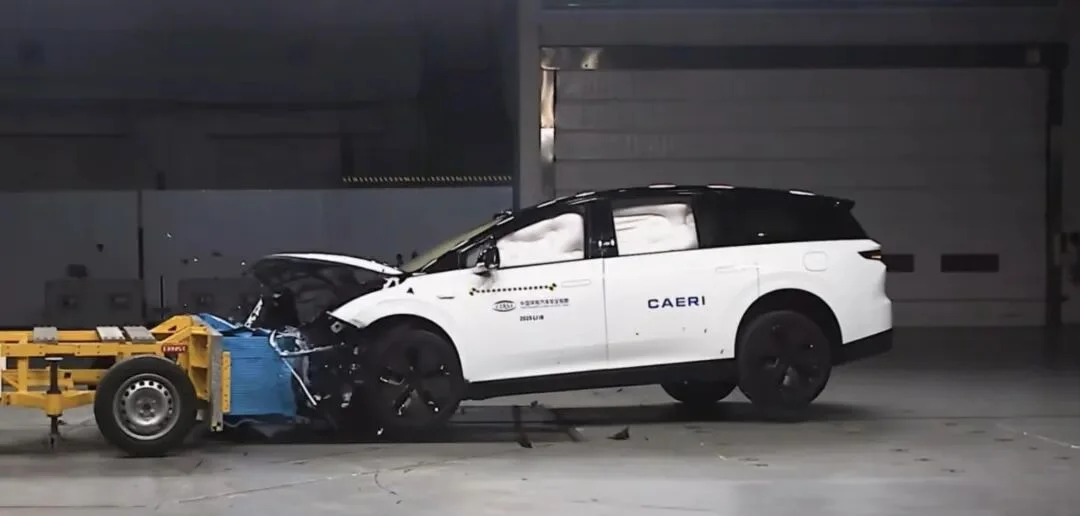
On March 1, 2025, the China Insurance Automotive Safety Index Management Measures (2023 Version, 2024 Revision) officially took effect. For new energy vehicles (NEVs), it introduced a dedicated test protocol focusing on battery safety performance, widely regarded by industry observers as one of the most systematic and stringent testing standards for NEVs to date.
Last week, C-IASI released the second batch of results for its 2025 vehicle evaluations. The report covered four models, with the Li i8 achieving outstanding scores: three G+ (Good Plus) and two G (Good) ratings.
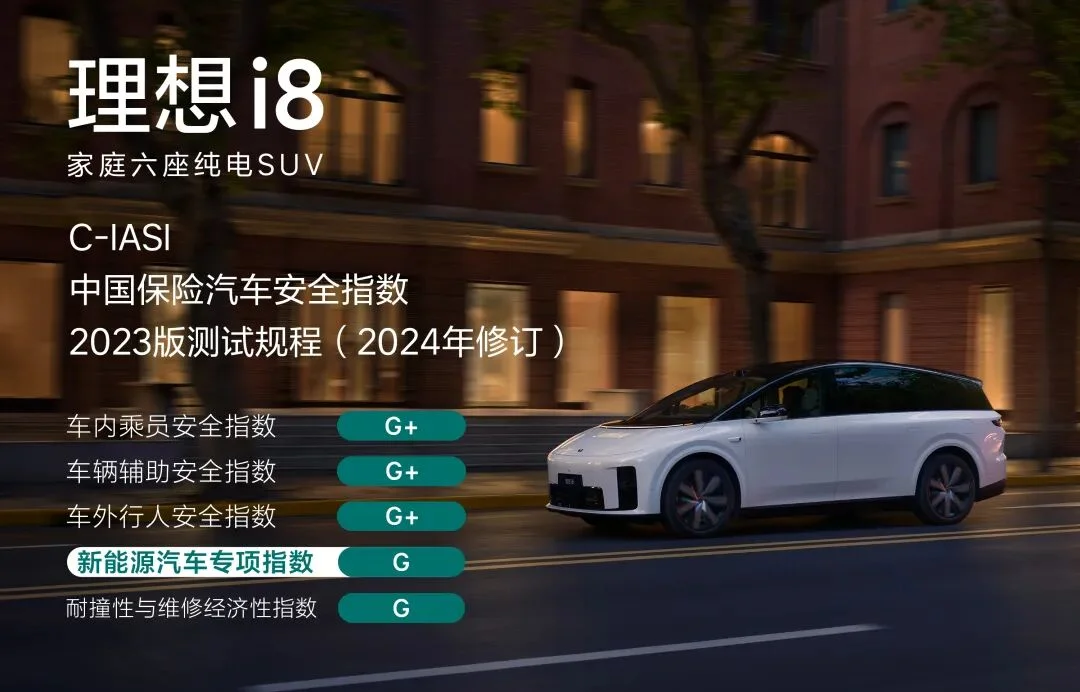
These results demonstrate that the Li i8 meets industry-leading standards across multiple indices, including occupant safety, vehicle assist safety, pedestrian protection, the dedicated NEV special tests, and crashworthiness with repair economics.
However, behind this report card lies an engineering paradox that has long plagued the automotive industry: To maximize interior space for family users, the Li i8 employs a typical short front overhang design. Yet, conventional industry practice often requires a longer hood to serve as a crumple zone buffer to ensure survival in severe collisions.
Under such conflicting demands—wanting both spaciousness and safety—how did the Li i8 manage to preserve cabin volume while maintaining a solid safety baseline? After dissecting the Li i8’s various test scores, we found the answer.
01Is a Short Front Overhang Safe?
Compared with previous protocols, the biggest difference in the China Insurance Automotive Safety Index Management Measures (2023 Version, 2024 Revision) is the addition of special test indices for new energy vehicles: specifically, the light-to-moderate underbody collision test for power batteries and the vehicle safety test. In both tests, the Li i8 received a G (Good) rating.
The first of these is the light-to-moderate underbody collision test for power batteries. This test simulates one of the most dangerous scenarios for new energy vehicles during driving, focusing on the safety of the battery pack.
In the test, the vehicle coasts freely over an obstacle at a speed of 10±1 km/h, replicating real-world road underbody contact. The obstacle’s height creates a slight overlap with the designated impact area of the battery pack. After the collision, inspectors check whether the battery pack has deformed, leaked fluid, or suffered damage to its insulation and air-tightness. They then assign a final rating based on two dimensions: crashworthiness and repair economics, incorporating repair plans and costs.

Following the collision, the Li i8’s battery pack remained fully functional and air-tight. Furthermore, no smoke, fire, or explosion occurred within two hours after the underbody test. On the other hand, the battery pack casing did develop a dent, though it was not large. (For reference: if the dent depth Z satisfies 3 mm < Z ≤ 6 mm, it is considered minor; if the lower casing has gaps with the cells or modules, the threshold is 6 mm < Z ≤ 9 mm.)
Repair economics are evaluated using the “repair ratio.” A lower repair ratio yields a higher score. The Li i8 achieved a repair ratio of ≤10%. The calculation method is as follows:
Repair Ratio = (Battery Pack Repair Cost ÷ min(Battery Pack Assembly Price, 0.5 × Vehicle Price)) × Ground Clearance Coefficient
Breaking this down item by item, the algorithm is rigorous and reflects the perspective of the insurance industry.
Battery pack repair costs: These figures come from 4S dealerships or manufacturer-approved repair centers. They determine whether the repair involves replacing the entire battery pack, a module, or individual cells. Lower repair prices result in a lower final repair ratio, which essentially tests whether 4S dealerships or repair centers are engaging in 'minor damage, major repairs.'
The battery pack assembly price or half of the vehicle's total price (whichever is lower): If the cost to repair the battery pack is low but the cost for the entire battery pack assembly is extremely high, the repair ratio would naturally be favorable. This does not align with the insurance industry's interests. Therefore, even if the battery pack assembly price is very high, if it exceeds 50% of the vehicle's price, it is capped at 50%. This prevents the occurrence of 'sky-high battery pack' scenarios.
Ground clearance coefficient: This distinguishes the hardware differences between vehicles. For example, sedans have lower chassis and are inherently prone to underbody scraping. In such cases, this coefficient adjusts the score downward for sedans. This means that due to the ground clearance coefficient, a lower chassis does not automatically result in a worse evaluation; rather, it acknowledges that a low chassis is more susceptible to underbody contact.
Based on the two dimensions of crashworthiness and repairability, the Li i8 ultimately received a Good (G) rating in the light underbody collision test for power batteries.
The second newly added test is the vehicle safety test, which resembles a 'comprehensive exam.' It integrates underbody collisions and side protection, divided into New Energy Vehicle Underbody Collision Tests and New Energy Vehicle Side Pole Collision Tests, comprehensively evaluating the overall safety of new energy vehicles.
In the New Energy Vehicle Underbody Collision Test, three items are conducted sequentially:
- Whole-vehicle underbody impact test: A hemispherical impactor with a diameter of 25 mm strikes the battery pack vertically upward. There are two impact points, randomly selected from weak spots in the battery pack. After the test, the vehicle is observed for two hours at ambient temperature to monitor for any leaks from the battery pack or system.

- Underbody Scraping Test: The vehicle travels at 30±1 km/h against a hemispherical scraper with a diameter of 150 mm, targeting a randomly selected weak point. After the test, the battery pack’s status is monitored for two hours under ambient test conditions.
- Post-Collision Testing: After the two preceding tests are completed, a water wading test is conducted using one of two methods. The first method involves driving through water with a depth of 300±5 mm at a speed of 8±3 km/h for a duration of ≥10 minutes. The second method requires removing the battery pack after the collision and fully submerging it in water for 30 minutes.

If any smoke, fire, or explosion occurs during any of the three tests, or if the high-voltage system fails to meet anti-electric shock requirements, the result is immediately rated P (Poor).
To achieve a higher rating, all four of the following conditions must be met simultaneously: the battery pack casing remains intact; no leakage occurs within 30 minutes after the collision; high-voltage harness connectors show no breakage or disconnection; and battery mounting points exhibit no failure.
In the New Energy Vehicle Side Pole Crash Test, the vehicle strikes a rigid pole with a diameter of 254 mm on the driver’s side at a speed of 32 km/h and an angle of 75°±3°. Two hours after impact, the vehicle is observed for signs of smoke, fire, or explosion.
The Li i8 received a G (Good) rating in the vehicle safety testing segment, indicating a score of over 85% and confirming that no thermal runaway occurred in the battery pack throughout the entire testing process.
Finally, with excellent (G) ratings in both the new energy vehicle-specific index and the two G-rated evaluations for moderate-to-light underbody collision tests of power batteries and vehicle safety tests, the Li i8 achieved an excellent (G) rating in its new energy vehicle-specific index.
Additionally, the Li i8 received excellent (G) or excellent+ (G+) ratings across standard test items: crashworthiness and repairability index, occupant safety index, pedestrian safety index, and auxiliary safety index. With three G+ and two G ratings, it ranked first among models in its class.
However, automotive history has long been plagued by a physical challenge: vehicles with short front overhangs typically suffer from poor safety performance. This issue became particularly evident after authoritative testing bodies introduced small overlap crash tests, resulting in dismal outcomes. The IIHS once produced a video dissecting the crash test results of multiple short-front-overhang models.
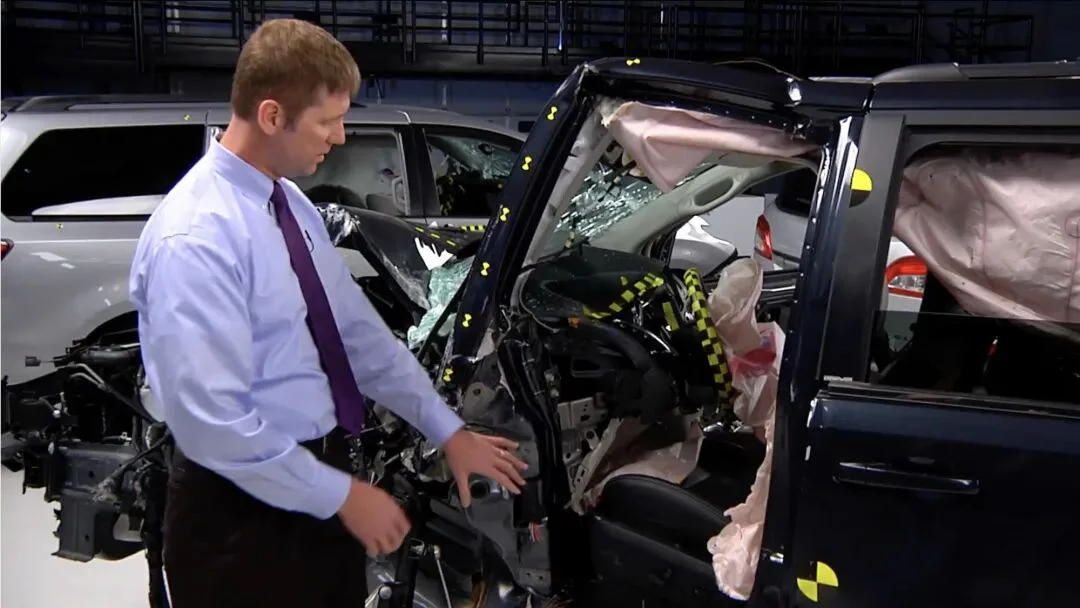
The reasons for these poor crash test performances likely stem from three factors:
Insufficient energy-absorbing area in the short hood, causing energy to concentrate on the A-pillar.
Wheel intrusion into the passenger cabin.
Engines or motors positioned close to the firewall, potentially intruding into the cabin.
To maximize interior space, the Li i8 features a short front overhang and an A-pillar positioned forward. Despite facing the most stringent test protocols in the history of the China Insurance Automotive Safety Index (C-IASI), the Li i8 achieved top scores across all categories, a result closely tied to its superior body design, materials, and driver assistance systems.
02Safety Is Not Optional
Data shows that the Li i8 boasts a body torsional stiffness of 49,500 N·m/deg, with high-strength steel and aluminum alloy comprising 84.7% of the body structure, reaching an excellent level for the industry.
This clearly contradicts the stereotype that 'short front overhangs are unsafe.' Under the laws of physics, is a short front overhang really a fatal flaw?
Through more scientific structural design and higher-quality body materials, the i8’s solution is termed the 'Fortress Safety Body 2.0'.
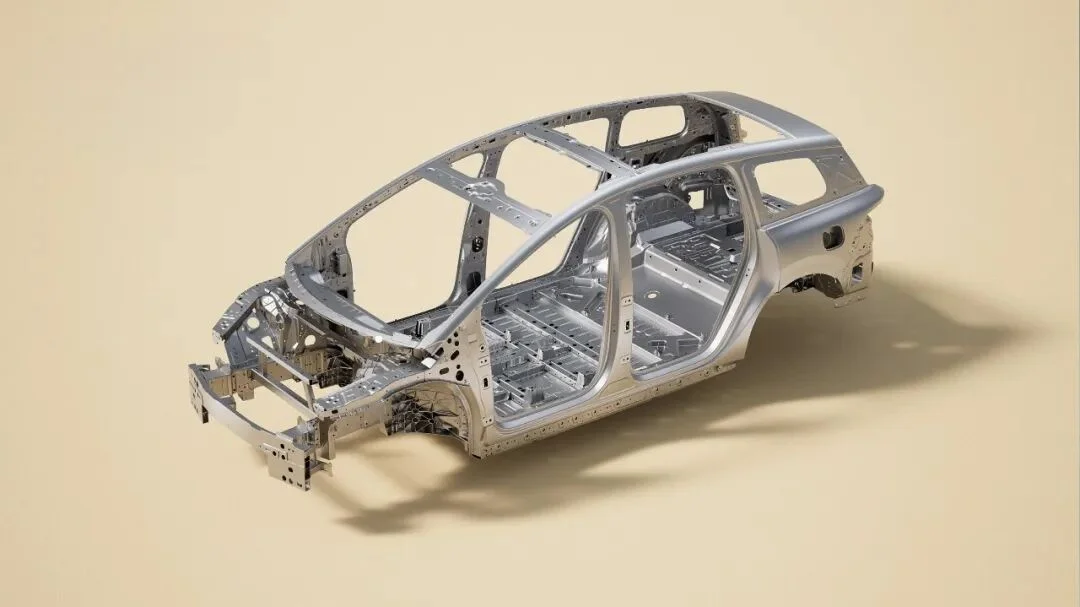
In the engine compartment area, engineers designed three longitudinal force paths and six transverse force paths. These nine paths intersect to form thirteen ring-shaped energy-absorbing structures. During a collision, massive impact forces do not pierce the passenger cabin like a sword; instead, they spread into a vast net, instantly dispersing throughout the vehicle's skeleton. Data indicates this mesh-like structure improves the front compartment's energy absorption by 31.5%.
More ingenious is the handling of small overlap collisions—the scenario where short-overhang models are most likely to lose points or suffer severe damage in crash tests.
Li Auto has incorporated a specific design feature into the front longitudinal beams of the i8, expanding them outward by 8 degrees to form a palm-like structure. Combined with specially designed thrust blocks and small offset cross-members, this configuration avoids rigid impact during offset collisions; under extreme conditions, it generates lateral thrust exceeding 70 tons.
This effectively uses the force of the collision to actively push the vehicle body sideways, preventing hard impacts that could lead to cabin intrusion.
A notable highlight is Li Auto’s self-developed 2000IH hot-stamped steel.
Historically, steel strength and toughness have been difficult to balance: high-strength steels tend to be brittle, while tough steels lack sufficient strength. The 2000IH steel achieves a strength level of 2,000 MPa while offering 22% higher toughness than standard 2,000 MPa steel. This means that in extreme collisions, critical areas such as the A-pillars can withstand compression without brittle fracture, preserving the survival space of the passenger cabin.
If body structure represents implicit safety, airbags and active safety features constitute the explicit baseline.
In traditional automotive specification sheets, safety is often tiered. The number of airbags varies between trim levels, and additional protection may require paid options. However, this practice does not exist within Li Auto’s product philosophy.
Li Auto’s chairman and CEO has publicly stated that any expenses related to safety do not require his personal approval and are automatically authorized. Furthermore, configurations and functions involving life safety, such as LiDAR, should be standard across all vehicles rather than optional.
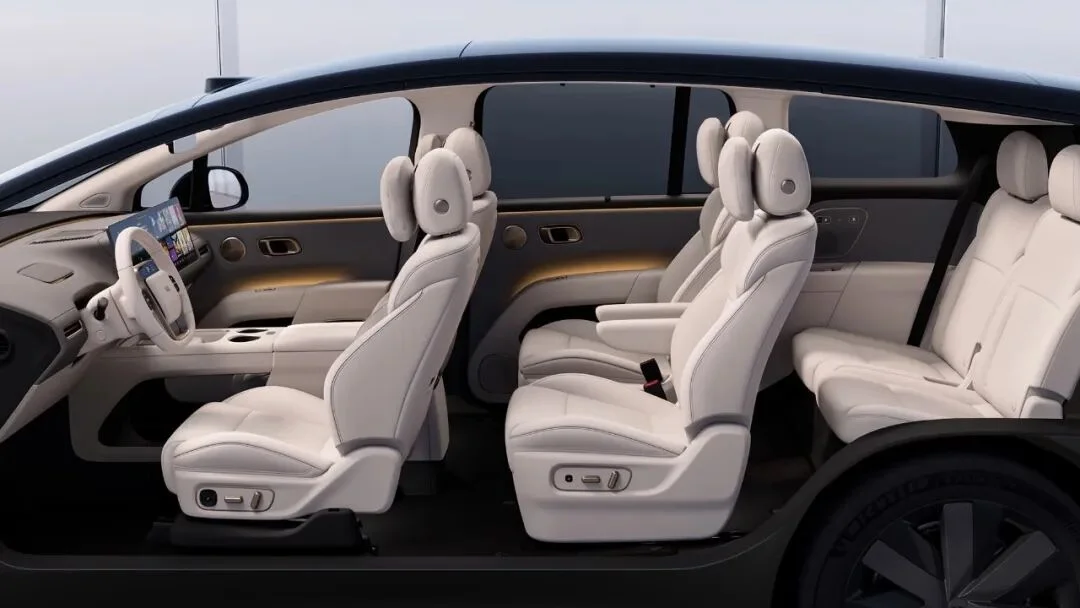
The Li i8 comes standard with nine airbags across all trims. Addressing the unique configuration of its six-seat layout, Li Auto equipped it with a 3-meter-long side curtain airbag that runs from the A-pillar to the D-pillar. This ensures that even children in the third row or elderly passengers resting in zero-gravity mode in the second row are securely cushioned by this "air shield" during a side impact or rollover. The airbag maintains pressure for 36 seconds.
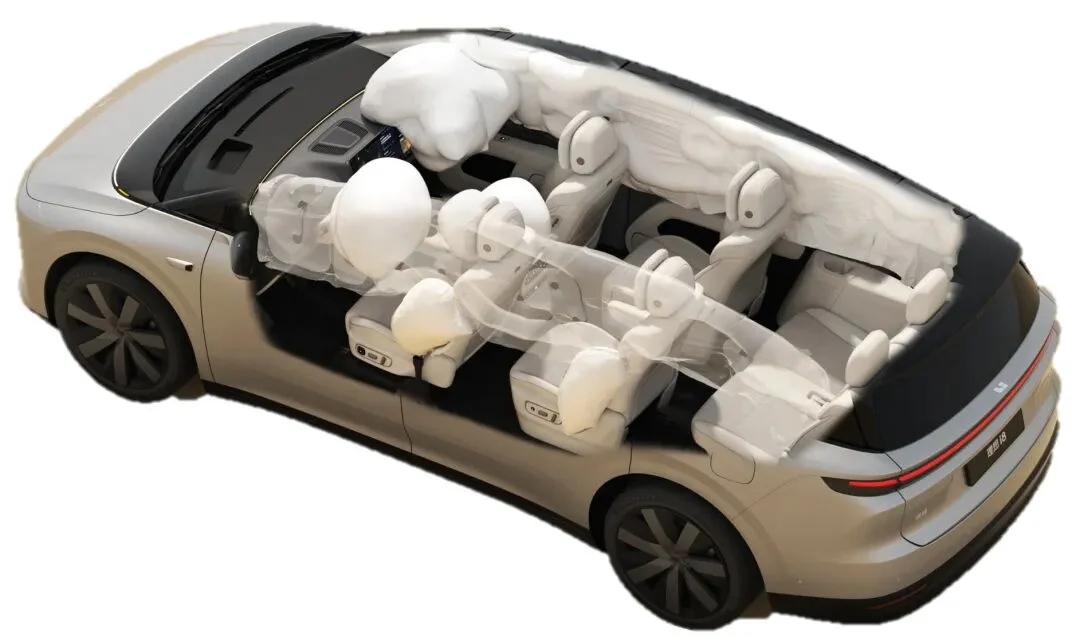
Furthermore, front dual-chamber far-side airbags and second-row side airbags, which are typically optional features on high-end vehicles in the industry, are also standard equipment on the Li i8. This forms a 360° flexible protection net with no blind spots.
Passive safety serves as the final bottom line, while active safety aims to prevent that bottom line from being breached.
Starting in 2025, Li Auto has made LiDAR a core component of its safety redundancy strategy, standardizing it across all models. Leveraging the fusion of LiDAR data and the VLA driver large model, the Li i8’s AEB (Automatic Emergency Braking) capability covers the entire speed range. According to official data from Li Auto, the i8 can achieve a complete stop at speeds up to 120 km/h in extreme nighttime scenarios without street lighting.
However, this is not enough. In extremely high-speed scenarios (such as above 135 km/h), braking alone cannot avoid collisions. To address this, Li Auto launched the AES (Automatic Emergency Steering) function, an industry first. When the system determines that braking is insufficient but the adjacent lane is safe, the vehicle automatically triggers steering to execute simultaneous deceleration and evasion.
From structural design to equipment configuration, and from passive to active safety, the Li i8 protects every occupant using a comprehensive safety package that does not differentiate between trim levels.
03Beyond National Standards: Tackling Over-Syllabus Questions
Although the China Insurance Automotive Safety Index (C-IASI) full-credit rating is impressive, its tests are effectively an "open-book exam" for all automakers. All testing and scoring criteria are public, meaning companies can achieve high scores through targeted development.
However, real-world traffic environments are not controlled test facilities with fixed scripts. To address unknown risks outside the standard syllabus, Li Auto has tackled even more challenging problems.
For battery underbody protection, the industry standard approach designs for 99% of common accident scenarios. But what about the remaining 1%? Uncommon hazards such as raised manhole covers or sharp curbs are often the culprits that pierce defenses and trigger fires.
To mitigate this 1% probability, the Li i8 built an invisible "bridge" beneath the vehicle. Its battery underbody borrows from the truss structure of the Yangtze River Bridge, combined with aviation-grade high-strength aluminum alloy skid plates and a crushable energy-absorption space reserved between the skid plate and the cells to protect the battery pack.
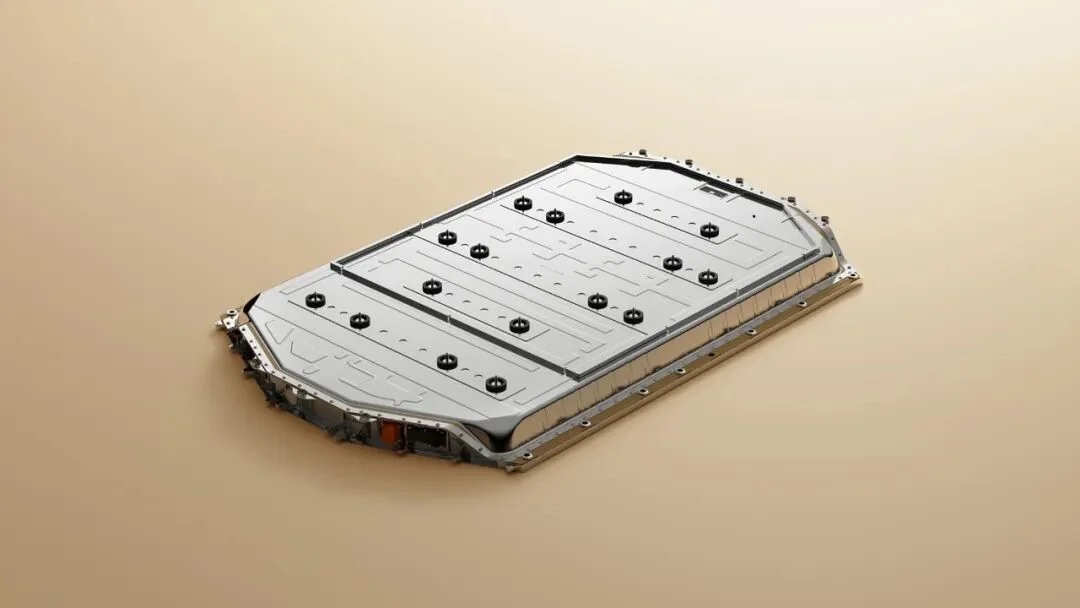
Regarding thermal safety, Li Auto constructed a "five-in-one" protection system spanning from individual cells to the entire system.
At the source, it uses cell materials with high thermal stability.
For thermal insulation, aerogel fire-retardant pads are placed between cells to isolate temperatures up to 800°C, preventing a loss of control event in one cell from spreading to its neighbors.
Regarding cooling capacity, the water-cooled system leverages powerful heat exchange capabilities to rapidly dissipate heat.
For insulation, the Li i8 achieves 1,000V high-voltage insulation protection, preventing secondary disasters caused by high-voltage arcing.
In terms of exhaust capability, if thermal runaway occurs, a high-sealing explosion-proof valve combined with a directional large-diameter channel instantly expels hot gases outside the vehicle, ensuring toxic fumes do not enter the passenger cabin.
On the more concealed software level, the 'Smart Battery Manager' utilizes vehicle-charging-cloud integration technology to monitor battery health 7×24 hours a day.
Furthermore, during the vehicle development process, Li Auto included real-world accident scenarios common in actual road conditions beyond regulatory and certification test cycles, such as 30-degree front and rear angle collisions, 360-degree pole impacts, drilling impacts, center pole impacts, high-speed rear-end collisions, and rollovers.
Currently, there are approximately 50 publicly developed test scenarios in the domestic industry. However, according to Li Auto’s corporate standards, this number exceeds 100.
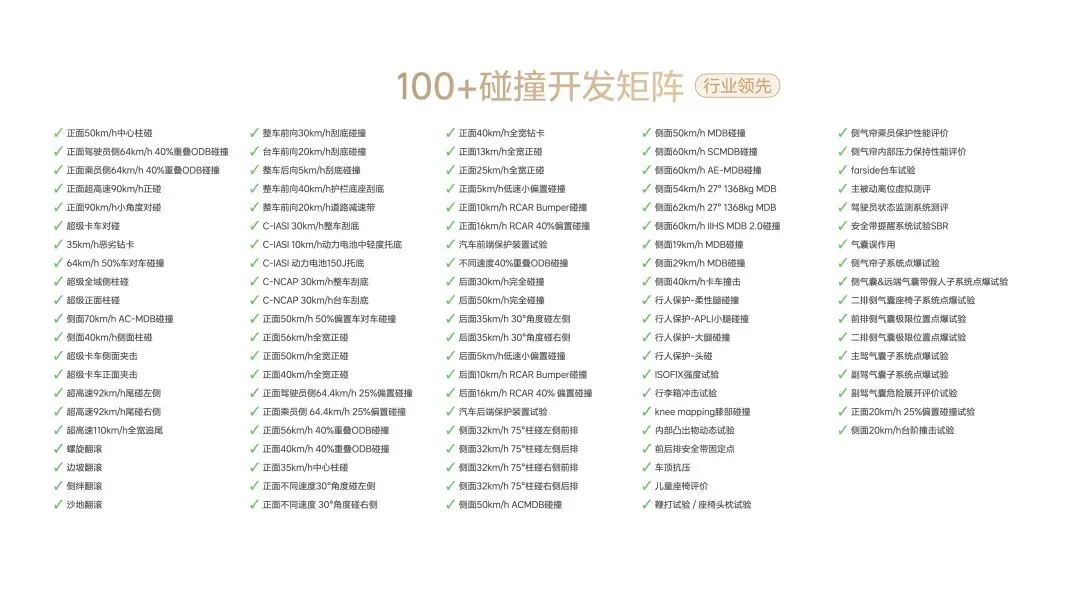
For example, the 110 km/h ultra-high-speed rear-end collision scenario. National standards typically cover only low-speed rear-end collisions, but highway rear-end collisions are often fatal. Li Auto’s standards exceed even the strictest U.S. standards, ensuring that after a high-speed rear-end impact, functions such as high-voltage cutoff and four-door unlocking remain operational to protect occupants across all three rows.
At the same time, Li Auto will conduct 360-degree full-column crash tests. While national standards only test side-pole impacts, Li Auto includes any position on the battery pack’s side in the impact range to ensure comprehensive, blind-spot-free protection.
Additionally, Li Auto simulates extreme scenarios such as a vehicle sliding under a large truck or rolling over, verifying the strength of the A-pillar and the pressure-retention capability of the curtain airbags.
The end of a crash does not mean the danger has passed. Li Auto has established more than 40 functional requirements for post-crash rescue, surpassing the 12 items in domestic standards and the 21 items in European standards.
04Conclusion
Returning to the original question: why did the Li i8 achieve an all-excellent rating in the China Insurance Automotive Safety Index (C-IASI) under the strictest new regulations?
A technical breakdown reveals excellent body design, self-developed 2000 MPa steel, standard laser radar, and numerous other measures. The driving force behind these technologies is Li Auto’s deeper understanding of the word “family.”
In the new energy era, many automakers face trade-offs between space, safety, and cost. However, the Li i8 proves this is not a single-choice question. By applying a comprehensive systematic safety mindset and a family-oriented engineering system, it provides an answer that “has it all,” while also defining a new standard for family travel safety.
Written by: James Edited by: Daji