Chery Unveils AI Strategy, Robotaxi Plans and New Models at 'AI Night'
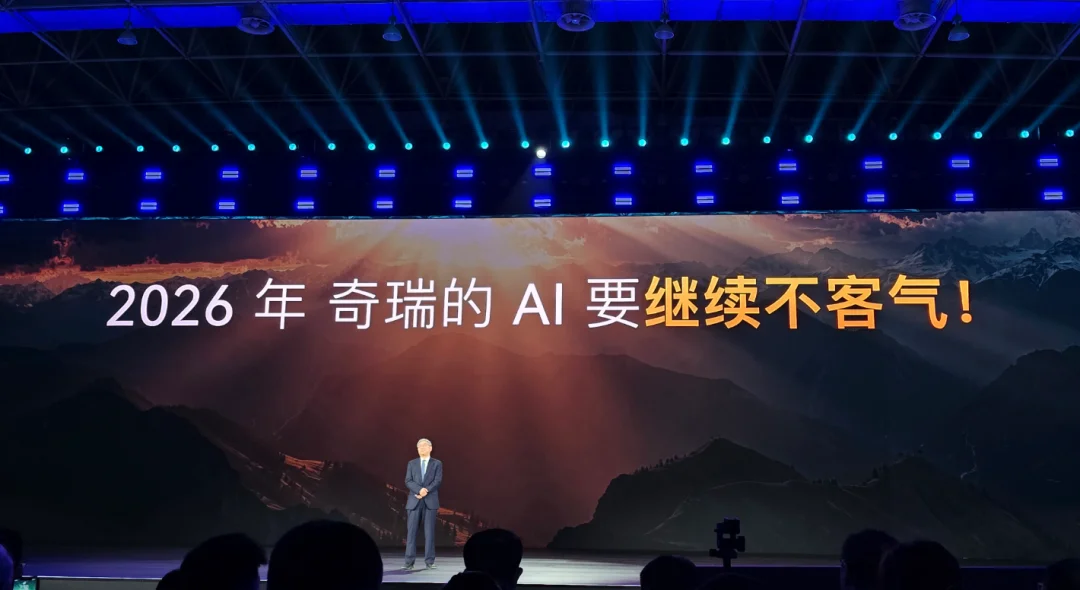
Last night, Chery released a series of updates on its AI strategy, announcing its pivot to becoming a technology-driven mobility enterprise. Even its entry-level QQ model now features an intelligent cockpit and driver assistance systems, with the goal of fully deploying AI robots, AI vehicles, and foundational AI models by 2028.
This time, the spotlight is no longer on individual technologies or models, but on more fundamental issues:
As AI begins to fully integrate into the automotive ecosystem, what changes will occur in the vehicles themselves? When AI becomes as fundamental a utility for automakers as infrastructure, where else can their AI capabilities extend?
In the context of the entire industry, such questions are not unfamiliar. Over the past two years, almost all automakers have been talking about AI, large models, and agents. But a real divergence is emerging: Will AI remain merely a smarter interaction tool in the cabin, or will it gradually intervene in core systems such as driving, control, and energy management, becoming part of the decision-making process?
At this AI Night, Chery presented its own answer through long-honed underlying technology capabilities, a clear implementation pace, numerous models slated for launch, and expansive imagination.
01How AI Entered Chery's Vehicle System
"Chery is a restless, trend-chasing company that likes to wake up early and rush to the market."
At yesterday's AI Night, Chery Chairman Yin Tongyue summarized the company's stance on the current wave of artificial intelligence technology with a single statement.
The "keeping up with trends" Yin Tongyue referred to is not about blindly chasing new concepts. Chery aims to transform into a technology-driven mobility enterprise, positioning the automobile as the most important carrier for AI while keeping mobility as its core focus.
Information revealed at the AI Night indicates that Chery has already launched relatively clear AI applications in three directions centered on the vehicle itself: smart cockpits, driver assistance systems, and vehicle control systems.
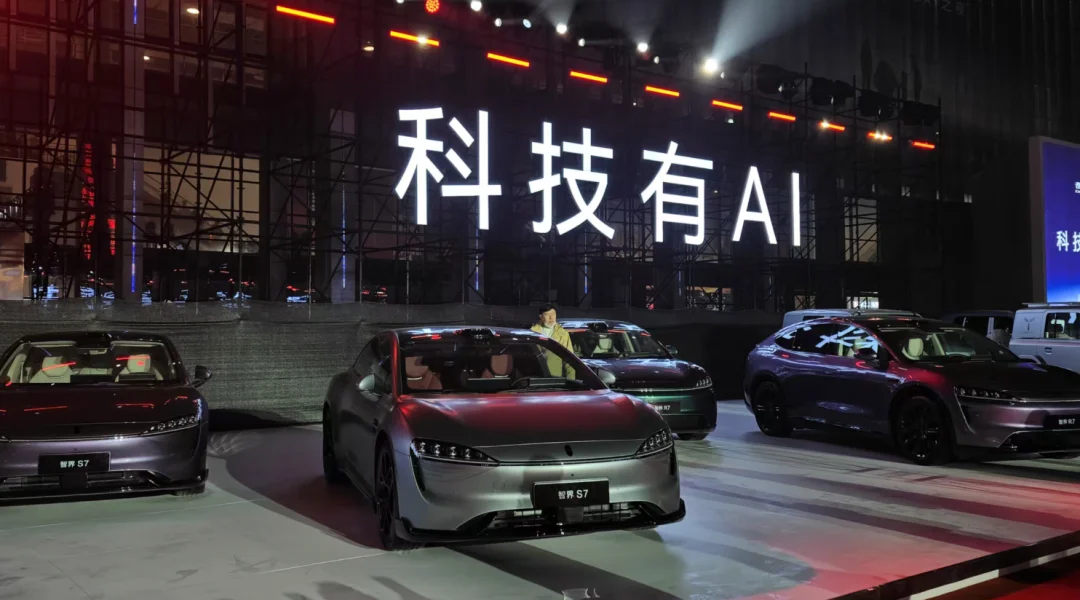
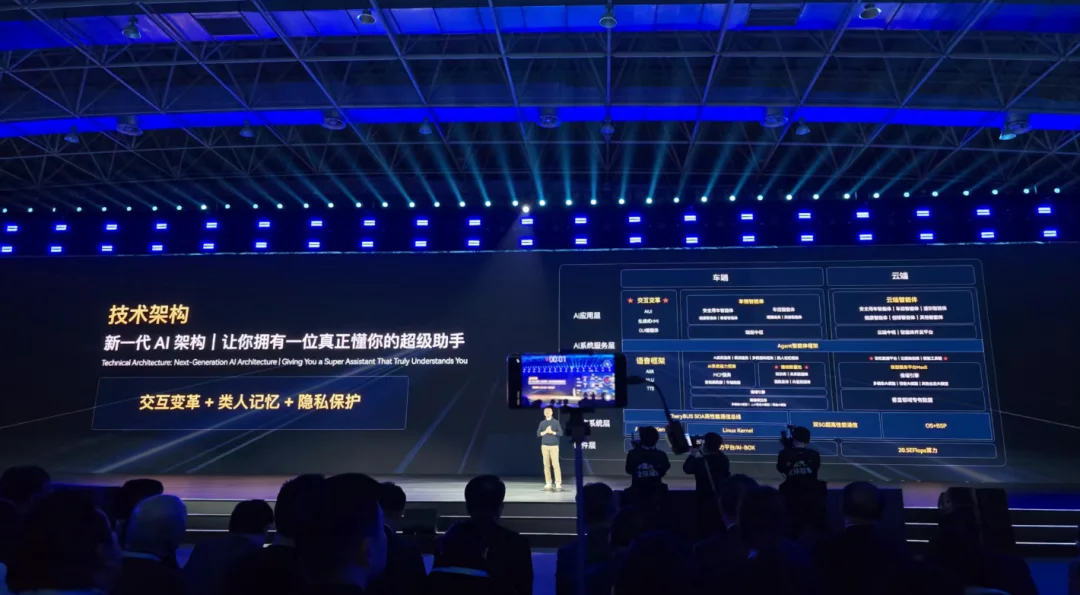
In terms of the cockpit, Chery showcased Lingxi Smart Cockpit 3.0 and its corresponding AI agent, Xiao Qi Tongxue, which supports cross-device and cross-scenario applications. Unlike traditional voice assistants that primarily execute commands, Lingxi Smart Cockpit 3.0 enables AI to perceive the environment in real time, accurately understand user intent, and dynamically generate interactive interfaces and content. For example, it can detect the color of clothing worn by the user.
Meanwhile, acting as a super butler, the AI allows users to simply express their intent without operating any interface; the AI understands and executes tasks on their behalf. During a live demonstration involving a scenario where a user plans to have dinner with friends, the AI super butler could reserve a table number in advance while navigating. If the location changed midway, the navigation would seamlessly switch to the new destination and restart the queue process.
Chery also introduced the human-like memory capabilities of the cockpit AI, which draws inspiration from the human hippocampus. This feature focuses on two aspects: efficiently forming valuable memories and mimicking human traits such as forgetting and updating information. However, the actual user experience will need to be evaluated through real-world testing.
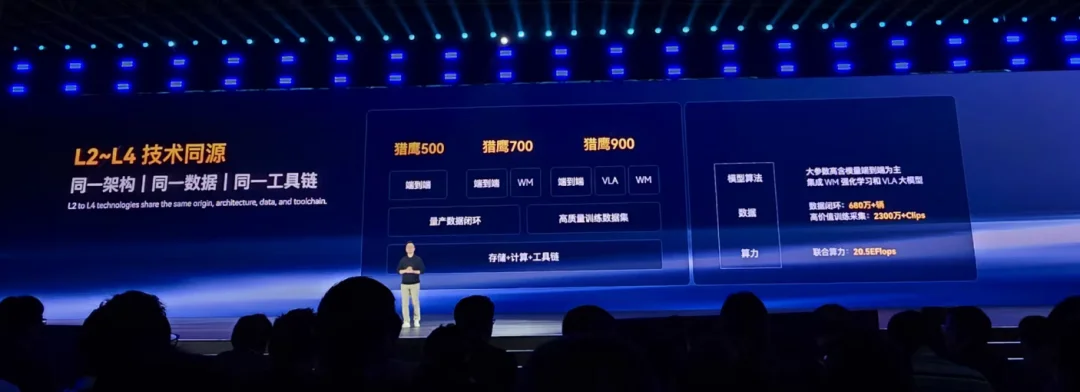
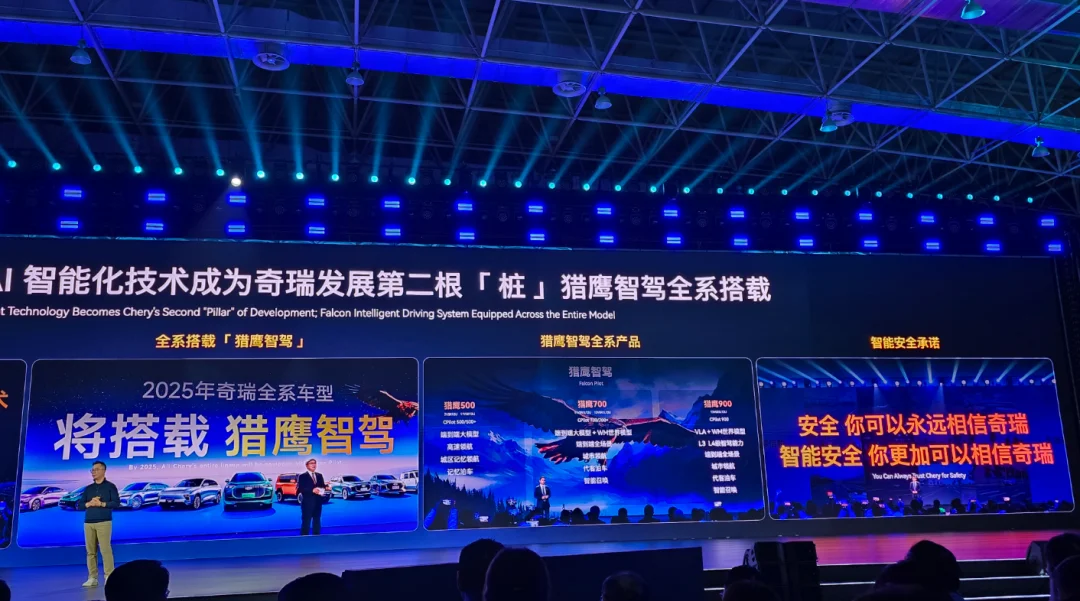
In the realm of driver assistance, Chery positions Falcon driver assistance as a unified capability architecture covering both internal combustion engine and electric vehicles. Its core objective is not merely to enhance processing power for complex scenarios but to leverage a single technical foundation to extend urban assisted driving capabilities to a broader range of vehicle models.
Currently, Falcon driver assistance is divided into three tiers: Falcon 500, Falcon 700, and Falcon 900. The Falcon 500 serves as the entry-level tier in this system, yet it already covers highway NOA (Navigate on Autopilot) and is expanding into urban navigation-assisted driving, while also supporting features such as memory parking. Utilizing an end-to-end model scheme with 11 cameras, 3 radars, and 12 ultrasonic sensors, it enhances active safety capabilities while reserving space for subsequent urban capability upgrades. This forms the technical basis for Chery’s emphasis on 'urban readiness from the entry level.'
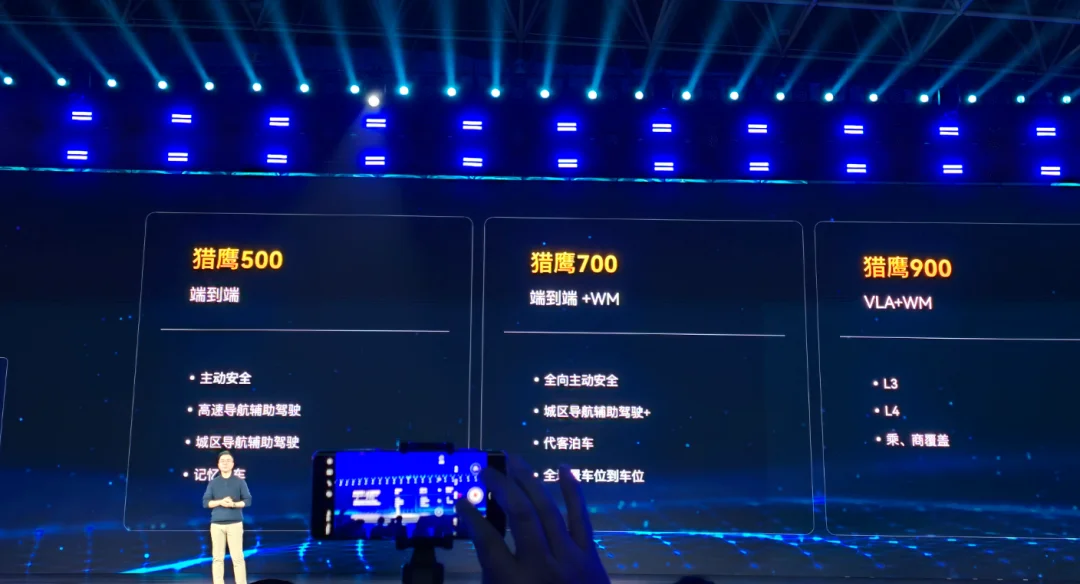
The Falcon 700 acts as the main solution for urban assisted driving. In terms of hardware, it upgrades to a configuration of 11 cameras, 3 radars, 12 ultrasonic sensors, and 1 LiDAR, incorporating LiDAR alongside end-to-end models and World Models (WM) to achieve more comprehensive urban navigation-assisted driving capabilities. This version covers point-to-point navigation-assisted driving, valet parking, and handling more complex urban road conditions, while achieving omnidirectional coverage in active safety. Chery explicitly stated at the launch event that Falcon 700 will serve as a key carrier for the widespread adoption of urban assisted driving in the future.
Positioned as the highest tier, Falcon 900 is a technical platform aimed at higher levels of autonomous driving. Its hardware configuration increases to 11 cameras, 5 radars, 12 ultrasonic sensors, and 4 LiDARs, providing ample room for L3 and L4 autonomous driving in terms of sensor quantity and redundancy. Falcon 900 simultaneously introduces a fusion scheme combining VLA large models with World Models (WM), covering both passenger and commercial vehicle scenarios, serving as Chery’s core technical foundation for advancing high-level autonomous driving and Robotaxi services.
Notably, Chery emphasized at the launch event that the different versions of Falcon driver assistance are not isolated; rather, they form a unified architecture with shared technology from L2 to L4. This means that whether it is highway assisted driving, urban NOA, or future L4 autonomous driving, the underlying layer is built upon the same system solution, the same model framework, and the same data closed-loop.
Building on this, Chery outlined a relatively clear roadmap for L4 advancement. According to its plan, POC (Proof of Concept) trial operations for Robotaxi will begin in 2025. Between 2026 and 2027, the first generation of pre-installed Robotaxis will enter mass production, covering both passenger and commercial scenarios. By 2027 to 2028, the second generation of pre-installed L4 vehicles will be further advanced, laying the technical groundwork for steering-wheel-free designs.
At the vehicle control level, AI's involvement is relatively more subtle. For example, Flying Fish Digital Chassis uses algorithms to participate in suspension and body attitude control, dynamically adjusting vehicle response based on road conditions and driving states.
02AI Capabilities Accelerate into Vehicles
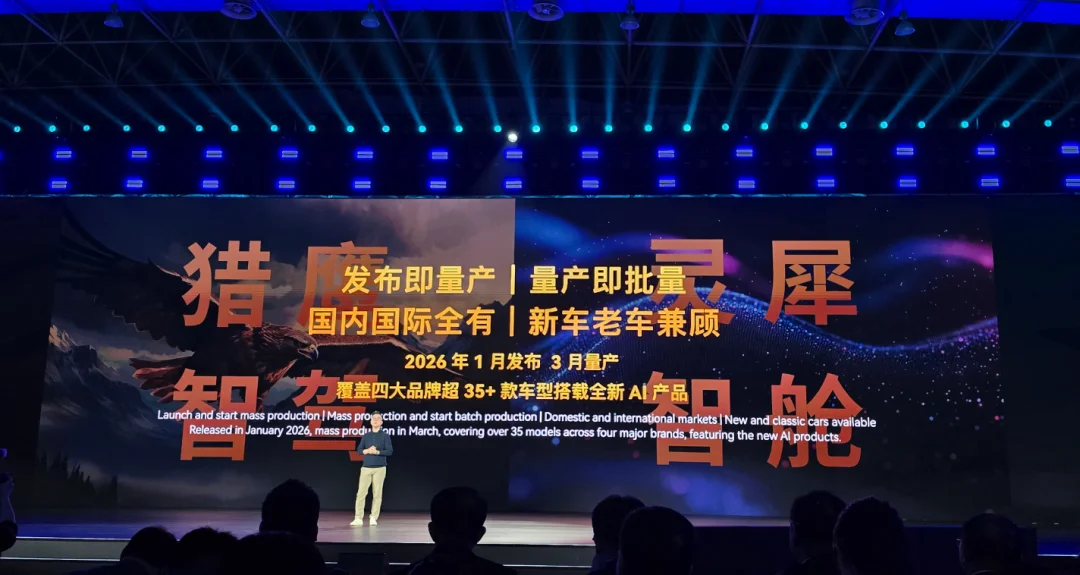
After covering the technology, Chery introduced a batch of models that are either about to launch or in the process of being rolled out. Three new models will be unveiled in the first quarter of this year, and more than seventeen new products will be launched throughout the year. These vehicles span hybrid, internal combustion engine, and pure electric powertrains, ranging from A0-segment compact cars to SUVs and off-road models, with prices spanning from RMB 50,000 to RMB 300,000. The presentation detailed how AI capabilities are integrated into specific products.
Chery Automobile Co., Ltd. Executive Vice President Li Xueyong stated at the AI Night event that Lingxi Cockpit will be fully integrated into vehicles in the first quarter of 2026, equipped across all main models of the entire brand lineup, and widely adopted on Falcon 500/700 models. All future plug-in hybrid electric vehicle (PHEV) models launched will feature an all-electric range exceeding two hundred kilometers.
Fengyun T9L: AI Energy Management Starts with Hybrids
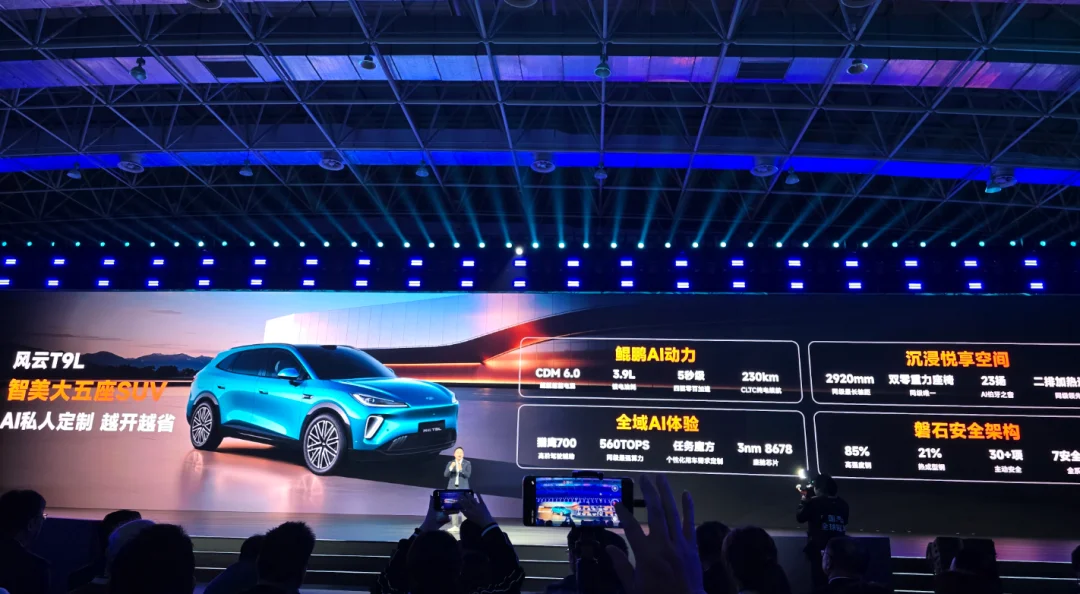
The first car is the Fengyun T9L. As one of the core mass-produced models at this AI Night, this large five-seat SUV serves as a key platform for Chery's Kunpeng AI powertrain and Falcon 700 driver assistance system.
In terms of powertrain, the Fengyun T9L is equipped with the Kunpeng AI Power CDM 6.0. This hybrid system introduces an AI energy management logic that covers multiple dimensions, including navigation linkage, driving intention recognition, road condition prediction, and temperature management.
For example, the system combines navigation routes with historical driving behavior to proactively plan power output and energy distribution. It can predict whether there are hills or traffic jams ahead and dynamically adjust strategies under different operating conditions such as urban roads, highways, and mountain passes. As a result, official data shows that comprehensive working condition energy consumption can be reduced by approximately 15%, with a significant decrease in the frequency of braking interventions. Additionally, during charging and thermal management, AI predictions can shorten replenishment time.
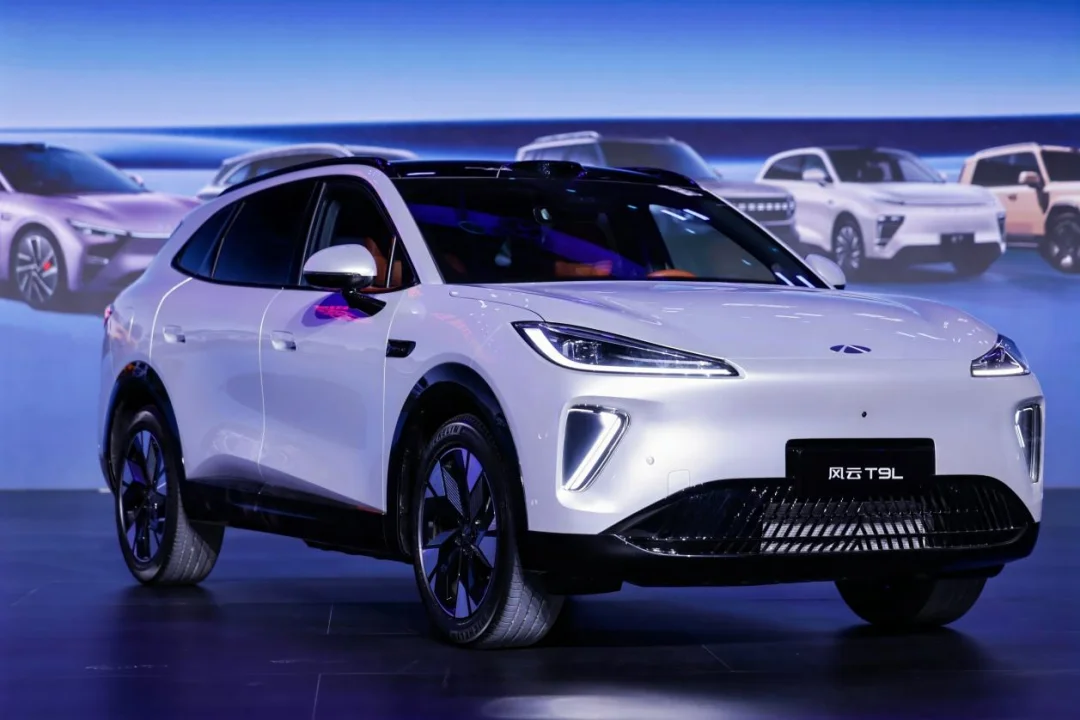
In terms of cabin and driver assistance, the Fengyun T9L will be equipped with the Falcon 700 advanced driver assistance system, paired with a 560 TOPS computing platform to cover functions such as urban NOA, highway NOA, and full-scenario parking. The cabin side adopts MediaTek's 8678 chip built on a 3nm process. Currently, the Fengyun T9L has opened blind reservations and is scheduled to launch after the Spring Festival.
Fengyun A9: Putting the AI Focus into Cabin Experience
Compared to the T9L, which leans more toward the collaboration between powertrain and driver assistance systems, the Fengyun A9's AI focus is clearly on the cabin experience. It features the Lingxi Smart Cabin and the Carmind intelligent agent, powered by the 8678 chip. This model implements deeper AI applications centered around audio and interaction. For instance, the Boya Sound System introduces independent AI computing power for sound source reconstruction, spatial audio generation, and personalized tuning, supporting automatic matching of "one thousand sounds for a thousand people."
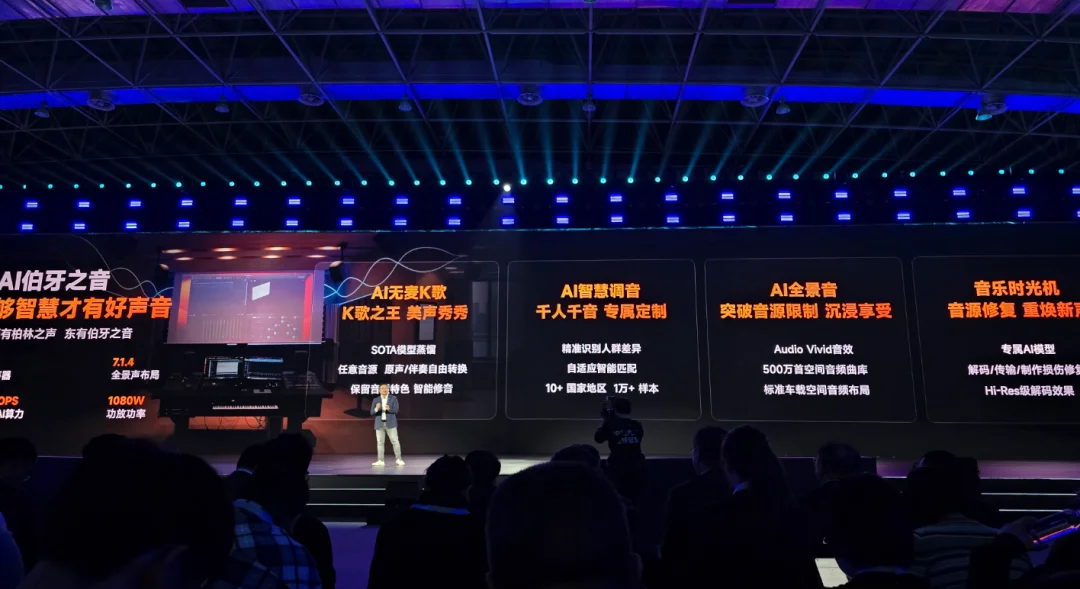
For entertainment, the Fengyun A9 offers AI microphone-free karaoke. Using model distillation and real-time pitch correction, it achieves vocal separation from any audio source and allows accompaniment switching without requiring additional hardware.
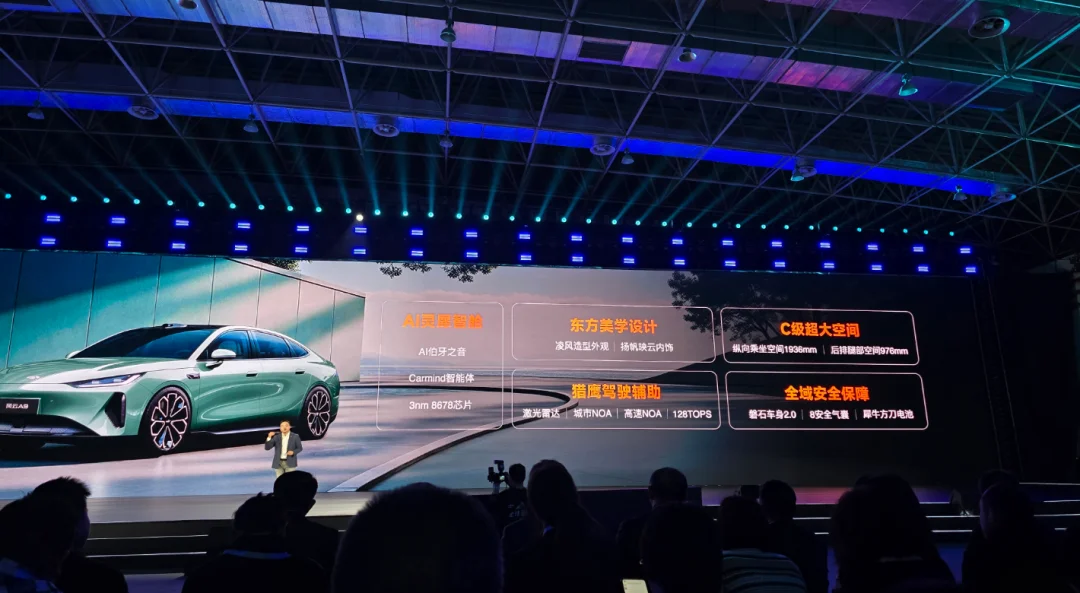
In terms of driver assistance, the Fengyun A9 will feature a LiDAR-based solution supporting urban NOA and highway NOA, powered by a 128 TOPS computing platform. The Fengyun A9 has launched a public crowdfunding campaign, signaling its entry into mass production preparation. Participants can contribute RMB 999 to unlock exclusive features worth RMB 8,000, including custom paint finishes, AI microphone-free karaoke, intercom functionality through closed windows, and a light-sensing power tailgate.
Tiggo 9X: Internal Combustion Engines Embrace 'Oil-Electric Intelligence'
The Tiggo 9X made its debut at this launch event with a clear positioning: to verify whether AI capabilities can be fully integrated into internal combustion engine (ICE) vehicle architectures.
As a key product under Chery's 'oil-electric intelligence' concept, the Tiggo 9X is equipped with the Falcon 500 driver assistance system. It supports highway NOA, urban memory navigation, and parking functions covering over 300 scenarios. On the hardware front, this ICE vehicle is fitted with 22 sensors and a high-compute platform to support active safety and assisted driving.
Regarding driving dynamics, the Tiggo 9X introduces an AI-based spatio-temporal joint algorithm model. By predicting operating conditions in advance, it aims to deliver shift and power delivery smoothness closer to that of electric vehicles.
Inside the cabin, the Tiggo 9X utilizes the Qualcomm Snapdragon 8255 chip, supporting AI large-model voice interaction and a 3D HMI interface.
iCAR V27: Bringing Advanced Autonomous Driving to Rugged SUVs
This SUV, positioned as a 'smart rugged large five-seater,' is equipped with the Falcon 700 advanced driver assistance system. It features 560 TOPS of computing power and 27 high-precision sensors, including a LiDAR, millimeter-wave radars, and multi-camera arrays.
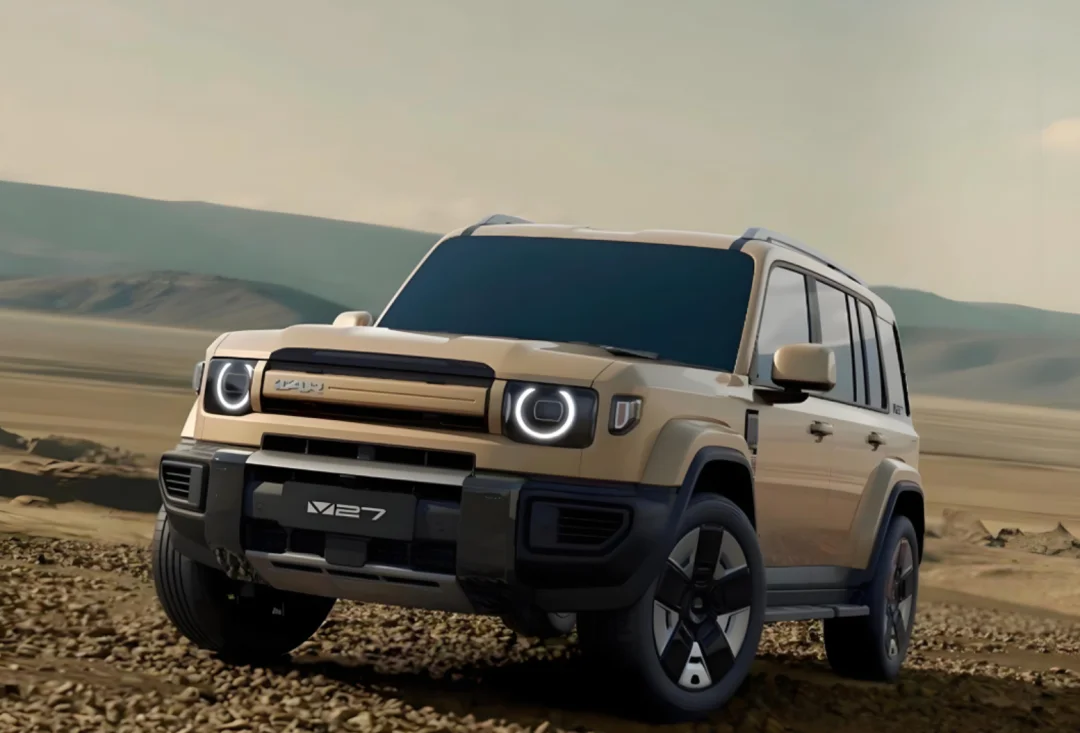
Functionally, the V27 supports City NOA, Highway NOA, and full-scenario parking. It also introduces a Roaming Mode, which enables assisted driving in off-road or unpaved environments without HD maps or clear lane markings.
Structurally, the V27's body-in-white torsional stiffness exceeds 32,000 N·m/deg, with numerous ecosystem interfaces reserved for future feature expansion. Li Xueyong stated that blind reservations for the iCAR V27 have opened, with a launch planned for after the Spring Festival.
All-New QQ3: AI Democratization for Entry-Level Models
Among all models, the All-New QQ3 may be Chery’s strongest embodiment of its AI democratization philosophy.
As an entry-level smart electric sedan, the QQ3 retains the Lingxi Smart Cockpit paired with the Carmind large language model, supporting 'what you see is what you say' voice commands and multi-scenario voice interactions. For driver assistance, it uses the Falcon 500 system to provide Highway NOA, City Memory Pilot, and full-scenario parking capabilities. Hardware specifications include a 15.6-inch central control screen and an 8155 chip.
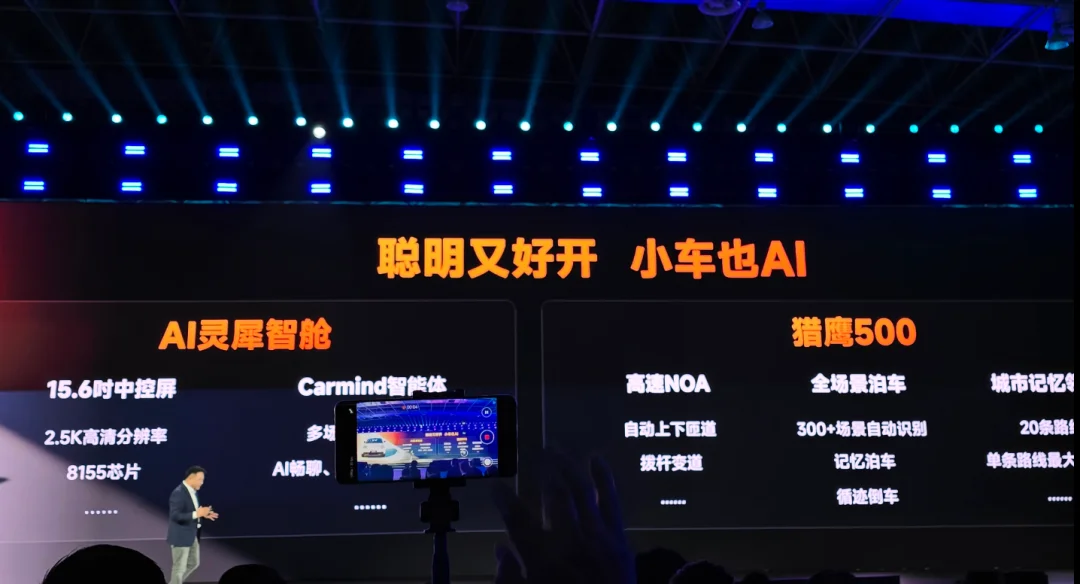
Beyond hardware specifications, the QQ3 emphasizes space, safety, and comfort, featuring B-segment wheelbase dimensions, a rear-wheel-drive layout, and multi-link suspension. This approach brings AI capabilities and fundamental travel quality to a more accessible market segment.
Li Xueyong stated that Chery will hold the QQ Brand Night in early February, at which time more information will be revealed.
The signals released by these models, which serve different roles, are that whether hybrid, fuel-powered or pure electric, products on different platforms and in different price segments are all using the same underlying intelligent logic.
03AI Extending Beyond the Mobility System
Not just cars: Chery’s AI applications extend beyond cars into a wide range of areas.
At this AI Night event, a very intuitive change was that the figure standing center stage, taking on hosting and interactive roles, is no longer human but Chery's humanoid robot "Moyin". In the technology exhibition area outside the venue, humanoid robots and robotic dogs also attracted considerable attention.
Moyin and Chery's wholly owned subsidiary AiMOGA Robotics can do far more than perform; they have entered the stage of practical implementation. The humanoid robot Moyin completed multiple batches of deliveries in 2025 and, in the same year, obtained dual CE certification for software and hardware from the European Union, entering the European market. To date, its applications have covered more than 30 countries and regions, landing in over 100 specific scenarios such as showroom reception, store services, and public exhibitions.
A more concrete implementation occurred earlier this year. Robot traffic police, jointly launched by AiMOGA Robotics and local traffic management authorities, have officially begun operations on the streets of Wuhu. Capable of connecting to traffic signal systems, they execute tasks such as traffic direction, violation detection, and road condition monitoring. This indicates that Chery's AI capabilities have moved beyond internal corporate use and are now entering public governance and urban operation systems.
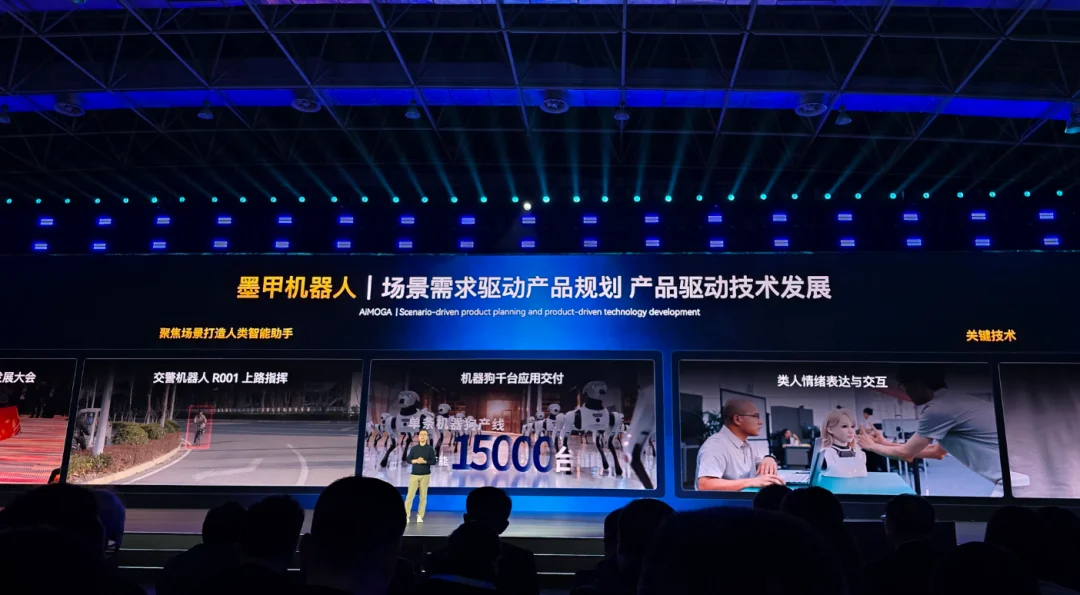
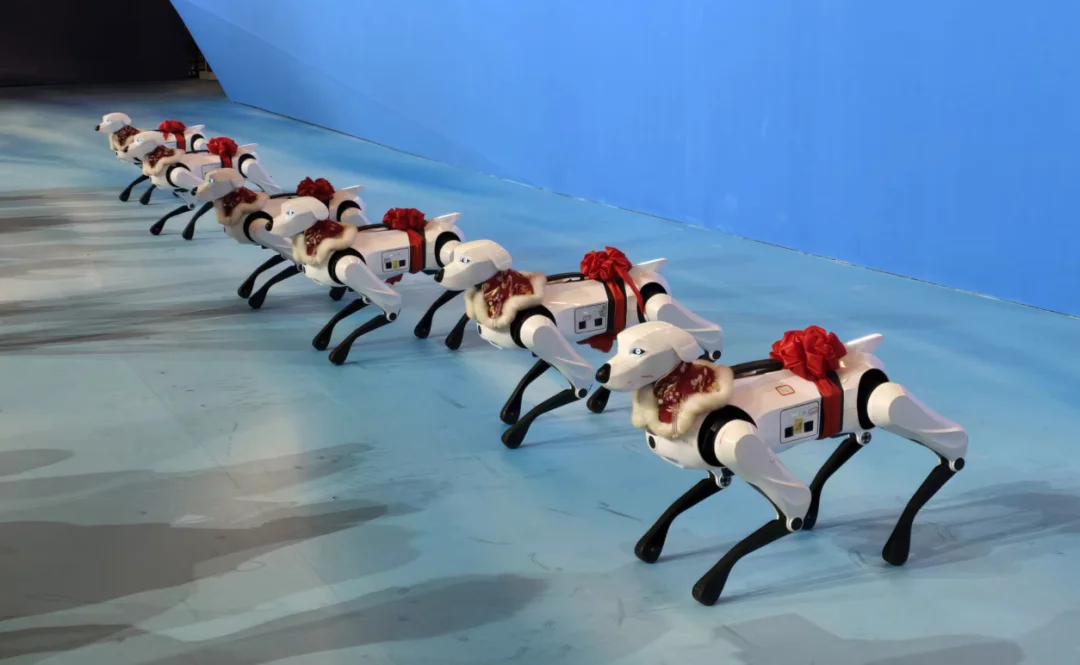
Running parallel with the humanoid robots is the quadruped robot dog, Argos. Chery disclosed that this product has achieved delivery at a scale of thousands of units, deployed in scenarios such as campus inspection, industrial reconnaissance, and security assistance. In some high-risk or repetitive tasks, the robot dogs are beginning to take on roles previously held by humans, reducing the costs and risks associated with manual intervention.
Beyond tangible manifestations like humanoid robots, AI has also deeply penetrated Chery's R&D, manufacturing, and operational systems.
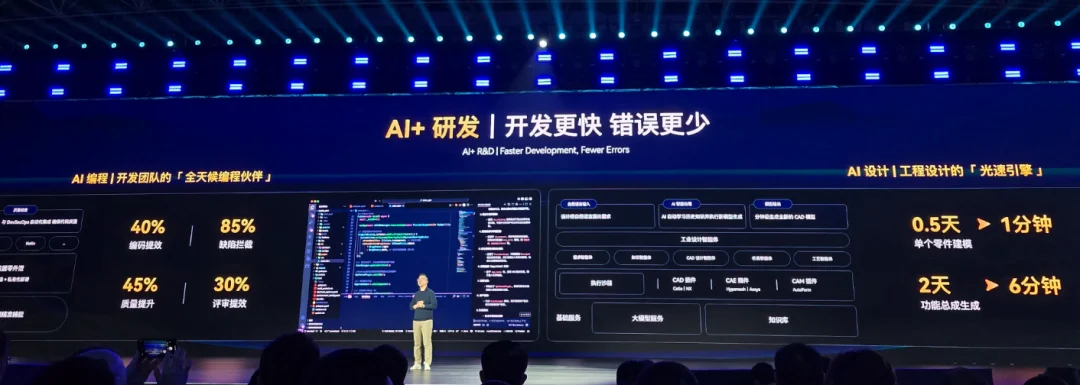
In the R&D phase, AI is utilized for engineering design, programming, and simulation. Through AI programming tools, development efficiency and code quality have improved simultaneously. On the design side, CAD design agents can directly participate in modeling components and assemblies, compressing work that originally took days into minutes.
In the manufacturing phase, AI is also applied to production scheduling, quality inspection, and error prevention. An advanced planning and scheduling system based on AI can optimize global production plans within minutes. Visual error-prevention models have already covered multiple production processes to intercept defective products from leaving the factory.
This means AI is no longer just enhancing the user experience; it is now actively involved in vehicle manufacturing.
Looking back at this "AI Night," Chery used a comprehensive framework to demonstrate how AI can be implemented within the automotive industry. The company has expanded its application from user-facing systems such as the cockpit, driver assistance, and vehicle control into R&D, manufacturing, and operations, thereby influencing both the efficiency and methodology of car production.
This signifies that AI is evolving beyond simple feature additions to gradually participating in product definition and system architecture. While the extent of its impact remains to be seen over time, the strategic direction is already clear.
Written by: Dayong Edited by: James