China’s Auto Market Slows in Early 2026: Why Buyers Are Waiting
Starting from the morning of yesterday, automakers have successively released their sales figures for January 2026.
The data show that brands such as Harmony Intelligent Mobility Alliance, Geely, Leapmotor, NIO, and Xiaomi achieved year-on-year sales growth. However, among all automakers, only Geely Automobile Group reported month-on-month growth.
In January 2026, the majority of brands saw month-on-month sales declines. For instance, IM Motors’ January sales dropped by 57.5% month on month, falling by more than half; NIO’s three-brand combined sales grew 96.1% year on year but fell 43.5% month on month. Brands with relatively smaller month-on-month declines included Zeekr, which fell by 21.1%, and Xiaomi, which declined by approximately 20% (Xiaomi did not disclose specific sales figures); AITO brand sales fell by 30.7%, while VOYAH’s sales dropped by 34.1% month on month.
Historical data from the China Passenger Car Association (CPCA) over the past five years indicates that January is typically a slow season for auto sales following the end-of-year sales push. In the previous five years, sales in the narrow passenger car market (sedans, SUVs, and MPVs) in January always decreased compared to December, with declines ranging from a minimum of 1.4% to a maximum of 40.4%.
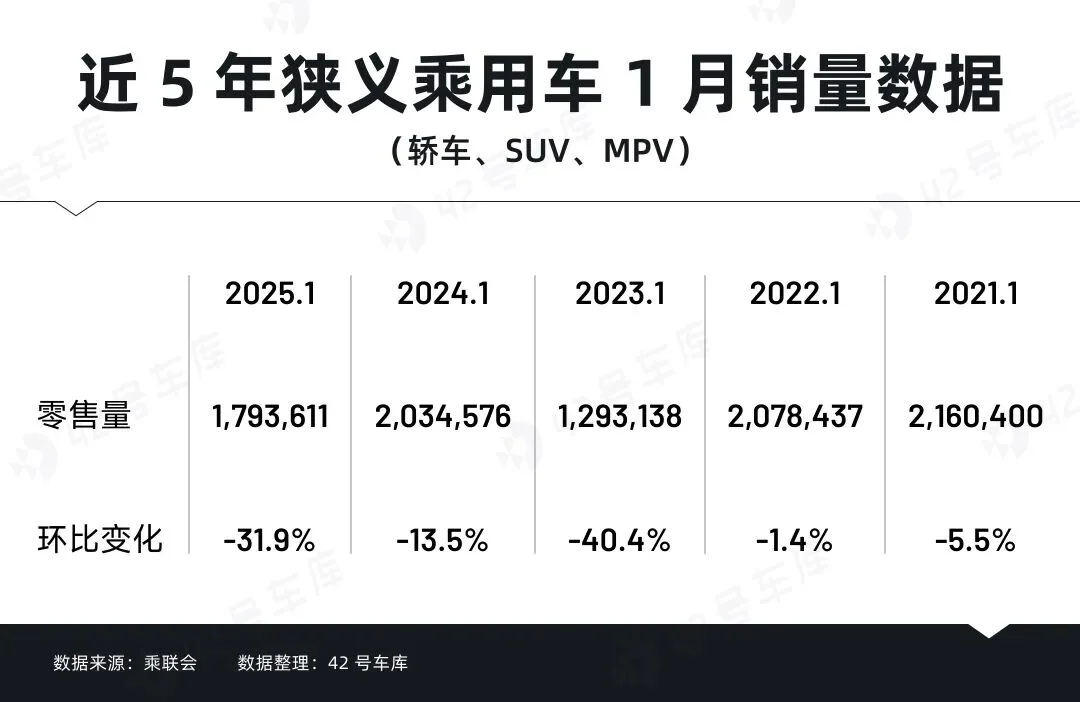
Therefore, the widespread phenomenon this January of automakers experiencing month-on-month sales declines exceeding 30% can be considered part of the normal seasonal slowdown. Sales are expected to gradually recover thereafter, with May, June, and the period from September to December serving as peak sales seasons.
Meanwhile, the automotive industry has become one of the fastest-changing sectors. At the start of 2026, influenced by comprehensive pricing policies, new vehicle plans, changes in purchase tax rates, and sharp increases in memory component prices, many consumers chose to adopt an “wait-and-see” approach in January. Is the adage “buy early to enjoy, buy late for discounts” still valid? For consumers, the decision to purchase a car in 2026 may remain a process of hesitation.
01Year-over-Year Growth Approaches Doubling
Compared with January 2025, sales data for automakers in January 2026 generally showed steady progress, with the fastest year-over-year growth approaching a doubling. However, month-on-month figures saw widespread declines; mainstream new energy brands experienced month-on-month drops ranging from at least 20% to as much as 60%.
NIO's three brands delivered 96.1% more units year-over-year, nearly doubling compared to last January, reaching 27,182 vehicles. The NIO brand itself achieved a 62.8% year-over-year increase, representing one of the fastest growth rates in the entire industry.
Nevertheless, NIO's three-brand deliveries fell by 43.5% month-on-month in January. ONVO delivered 3,481 units, down 41.1% year-over-year and 61.9% month-on-month; Firefly delivered 2,087 units, down 60.3% month-on-month.
Outside of NIO, Zeekr and Xiaomi also exhibited similar year-over-year trends, both nearing double-digit growth. However, their month-on-month declines were smaller, hovering around 20%.
Zeekr delivered 23,852 units last month, up 99.7% year-over-year but down 21.2% month-on-month. Xiaomi delivered over 20,000 units in January last year, surpassing 39,000 this month, primarily driven by the YU7 model. Similarly, Xiaomi's monthly deliveries saw a slight dip of approximately 20%, making it one of the brands with the smallest month-on-month decline in the industry.
The the five brands of the Harmony Intelligent Mobility Alliance achieved a 65.6% year-over-year increase, with January sales reaching 57,915 units. The AITO brand accounted for 40,016 units (69% of the Harmony Intelligent Mobility Alliance total), marking an 83% year-over-year growth—a strong performance closely tied to recent deliveries of the AITO M7 and the continued popularity of the M8 and M9 models.
Regarding month-on-month data, the Harmony Intelligent Mobility Alliance's deliveries dropped by 35.4%, with AITO declining by 30.9%. Among key automakers, this represents a relatively modest decline.
Brands that achieved rapid growth in 2025, including Leapmotor, VOYAH, and IM Motors, also saw significant year-over-year sales increases in January. Leapmotor's sales grew by 27% (from 32,059 units the previous month), VOYAH increased by 31% (from 10,515 units), and IM Motors rose by 44.2% (from 5,017 units).
However, all three brands experienced month-over-month declines. Leapmotor fell by 46.9%, VOYAH dropped by 34.1%, and IM Motors saw a decrease of 57.5%.
XPENG reported simultaneous year-over-year and month-over-month declines in January deliveries, totaling 20,011 vehicles. This represents a 34.1% drop compared to the same period last year and a 46.6% decline from the previous month. BYD, the automaker with the highest new energy vehicle sales, also faced dual declines in January. Its passenger car sales decreased by 30.7% year-over-year and fell by 50.5% month-over-month.
Li Auto's delivery volume also declined both year-over-year and month-over-month, though the year-over-year drop was smaller. Li Auto delivered 27,668 new vehicles last month, marking a 7.5% year-over-year decrease and a 37.5% month-over-month decline.
While most automakers achieved year-over-year growth, their sales showed noticeable declines compared to December. What is the reason consumers have become "wait-and-see" buyers in January?
02Will the Wait-and-See Buyers Never Lose?
In January each year, sales inevitably decline due to multiple factors, including changes in new energy vehicle purchase policies, the end of promotional offers by some automakers, and the approaching Spring Festival holiday. Consequently, consumers adopt a wait-and-see stance.
What exactly are users waiting for? Generally, this can be categorized into three types: waiting for lower prices, waiting for policy updates, and waiting for new models.
"No rush; prices will drop anyway." This is the prevailing sentiment among consumers after multiple rounds of price wars.
Starting last year, new models have even faced a three-month "sales curse": hype concentrates in the first three months after launch, then quickly fades due to competitive diversion or saturated demand, with some models becoming slow sellers. To maintain sales and visibility, automakers must offer purchase benefits and terminal discounts without fail, and the longer the release date, the more generous the benefits.
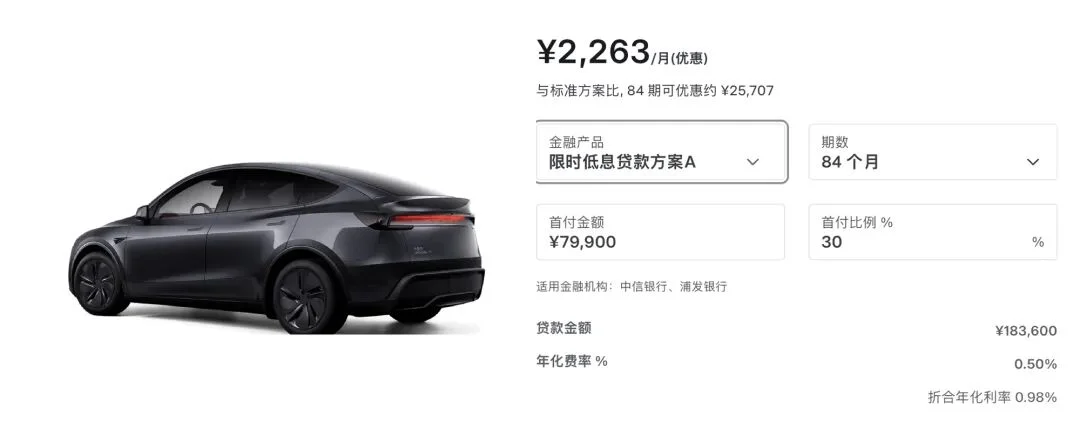
Taking Tesla Model Y, one of China's best-selling new energy vehicles, as an example: it launched in January 2025; its high-spec version saw a price increase of RMB 10,000 in March last year; a five-year zero-interest policy was introduced in April last year; and in January this year, a seven-year low-interest policy was rolled out again.
For most automakers, Tesla’s ability to go a full year without a price cut (or even raising prices) while only changing its sales policies twice represents remarkable stability. In contrast, at dealerships for many other brands, vehicle price discounts, installment policies, and even points and gifts change far more frequently.
Meanwhile, late December typically marks a threshold for sales and subsidy cycles, prompting consumers to wait for next year’s policies. The "Automobile Trade-In and Renewal" mini-program shows that seven provinces, autonomous regions, and municipalities have already issued their 2026 renewal policies. Beyond national subsidies, numerous city and district-level subsidy policies are expected to be released sequentially.
Furthermore, starting this year, several automakers have followed Tesla’s lead on the seven-year low-interest policy. Geely Galaxy, ONVO, VOYAH, Li Auto, Xiaomi, and XPENG have all introduced similar seven-year low-interest financing options.
42HOW Auto learned from a Tesla sales representative that, compared to the five-year interest-free option, the seven-year low-interest plan is often recommended because keeping cash flow in hand is considered crucial. Additionally, according to CheFans, a frontline Tesla salesperson noted that the seven-year low-interest policy has not yet boosted sales: well-qualified customers do not need such long-term loans, while those with poorer credit qualifications cannot get approved for them.
For potential buyers, a seven-year low-interest loan may not be the most attractive option, but there is hope: a seven-year interest-free loan could be imminent.
In January this year, consumers were waiting for upcoming refreshed models. At the start of the new year, several brands have already begun teasing their updates.
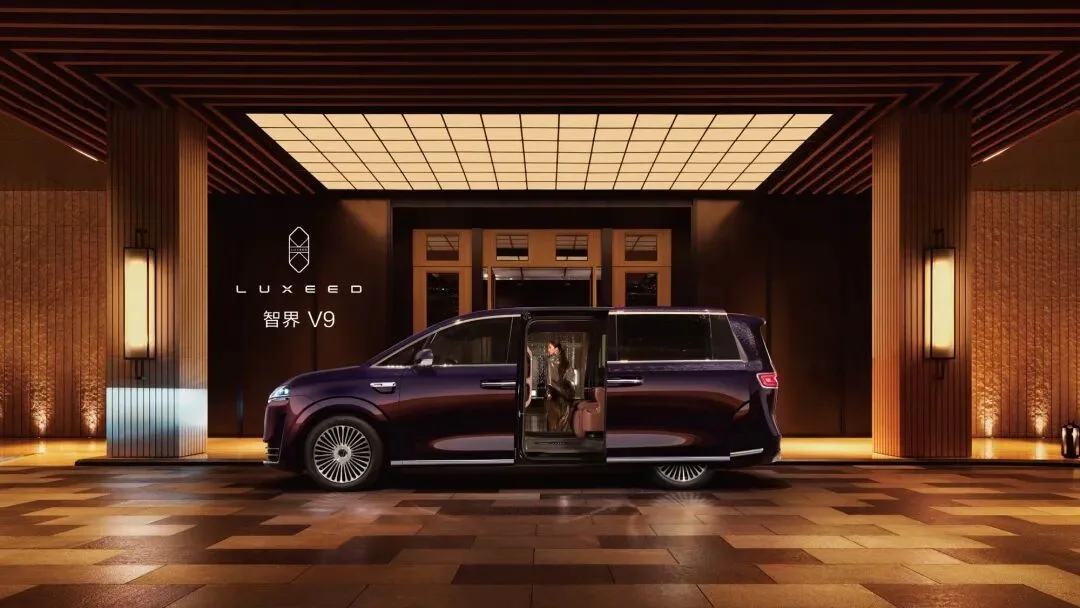
A major trend this year is larger SUVs and MPVs, with some vehicles exceeding 5.3 meters in length. The unveiled NIO ES9 and Luxeed V9 both offer six- or seven-seat configurations. For users requiring spacious interiors, these two models are certainly worth anticipating.
Among large five-seaters, the AITO M6 and Zeekr 8X have bolstered the segment. Additionally, the Xiaomi SU7, which has been popular for two years, is expected to receive a refresh and launch in April.
For potential buyers, the selection of new cars available in January this year is indeed limited; most options had already been seen extensively in 2025.
03Will the price go up?
Compared to 2025, will the final prices of new cars in 2026 be lower? Most likely not.
For new energy vehicles, the root cause of the increase in on-the-road prices this year is the change in purchase tax policy. Starting this year, the exemption for new energy vehicle purchase tax has been replaced by a half-rate reduction, with a tax rate of five percent and a maximum deduction of RMB 15,000.
If purchasing a new energy vehicle priced at RMB 100,000, the consumer needs to pay a purchase tax of RMB 4,425; for a vehicle priced at RMB 200,000, the purchase tax is RMB 8,850. For price-sensitive users, this price increase is nearly equivalent to upgrading one trim level. In particular, users with tight budgets who originally planned to buy a high-spec model may now settle for a mid-spec model.
For higher-priced models, the impact of the purchase tax change on consumption decisions is not as significant.
If purchasing a new energy vehicle priced at RMB 1 million, the purchase tax was RMB 58,000 in 2025, and will be approximately RMB 73,000 in 2026, resulting in an additional cost of RMB 15,000. At this price point, RMB 15,000 might only cover the option for a single paint color—a 1% price fluctuation that consumers are unlikely to be highly sensitive to.
Of course, several automakers have recently introduced purchase tax subsidy programs to alleviate some of the pressure, but this is not a long-term solution for automakers, as purchase taxes cannot be subsidized indefinitely.
Beyond purchase tax, another potential factor driving up prices is the continuous rise in memory component costs.
Starting from the second half of last year, DRAM and NAND flash prices began to rise comprehensively, and this trend will spill over into the automotive industry starting this year. Previously, Lei Jun mentioned during a live broadcast that, following the upward trend in memory prices, car memory costs could increase by several thousand yuan this year. Additionally, lithium ore raw materials and certain bulk materials have also seen severe price increases.
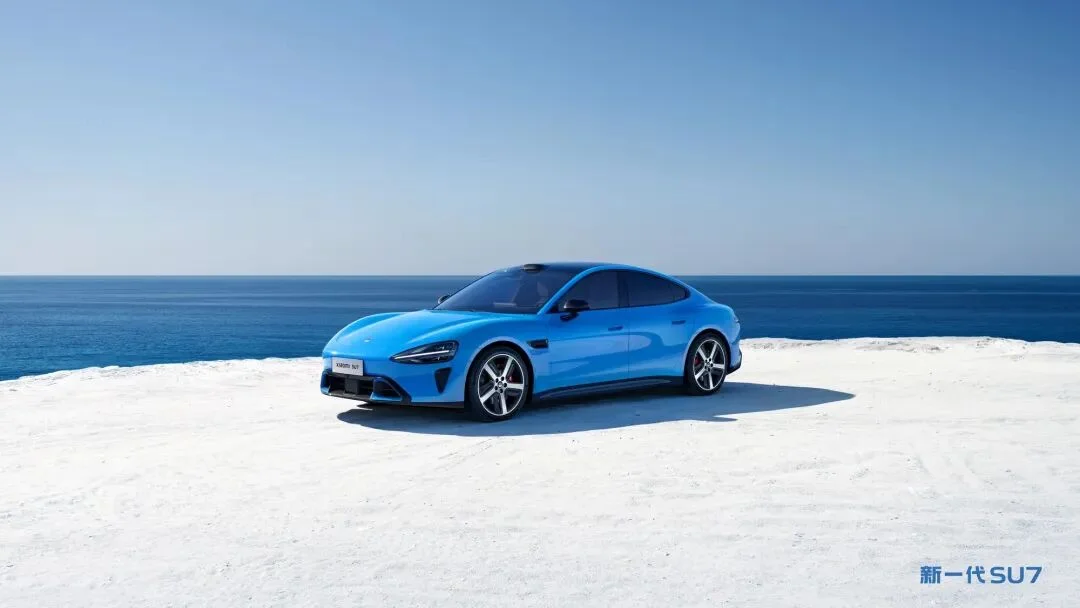
Lei Jun concluded: "The industry norm is that the final price will be one or two ten-thousand yuan cheaper than the pre-sale price. Here, I really want to tell everyone that this is unlikely for the new SU7."
04Conclusion
The collective drop in sales volume in January 2026 does not indicate a disappearance of demand, but rather a postponement. What consumers are waiting for is not a single price cut or policy change, but a more certain answer—namely, when to buy so as not to make a mistake.
It is foreseeable that the "late spring chill" in January's sales figures is merely a brief adjustment. As the first quarter sees a dense schedule of new vehicle launches and the gradual implementation of policy benefits, the automotive market's momentum will eventually rebound. However, in 2026, an era of accelerated industry reshuffling, neither automakers' pricing strategies nor consumers' purchasing decisions can afford hesitation or misjudgment. After all, in the new era of stock competition, only those who adapt faster to changes in the rules will truly emerge victorious.
Written by James Edited by Daji