


Tesla Dojo Enters Mass Production as Core Infrastructure for Musk’s AI Ambitions
Tesla Dojo has finally entered mass production.
According to information released by Tesla AI's official account in June, mass production of Dojo officially began in July 2023—nearly two years had passed from its public debut to the start of full-scale manufacturing.
However, for Elon Musk, Dojo today is no longer just the supercomputer Tesla uses to train autonomous driving models in the cloud; it has effectively become the computing infrastructure supporting the development of Tesla's entire AI business.
From a broader perspective, Dojo is actually a key vehicle for Elon Musk's AI ambitions.
The Level of Technical Sophistication Is World-Class
From the outset, Dojo has embodied Elon Musk's ambitious technological vision.
In April 2019, at Tesla’s Autonomy Day, Elon Musk first spoke about Dojo, saying:
Tesla indeed has a major project we call Dojo. It is an extremely powerful training computer designed to ingest massive amounts of data and perform training at the video level... Through the Dojo computer, large-scale unsupervised training can be conducted on vast quantities of video.
Thus, from its inception, Dojo was primarily intended to solve model training challenges posed by massive volumes of video data.
There is a fundamental premise here: as Tesla’s vehicle sales increase and the complexity of features required for autonomous driving rises, the volume of video data Tesla must process grows exponentially. This places higher demands on Tesla’s cloud-based model training capabilities, with computing infrastructure being the key factor.
Based on this premise, Elon Musk defined Dojo’s technical characteristics as:
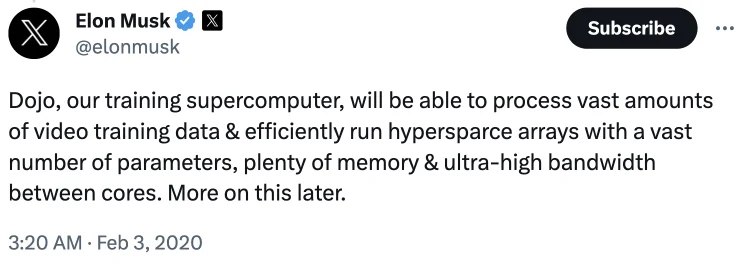
Possessing substantial computing power to handle large-scale video training data and efficiently run hypersparse arrays featuring numerous parameters, large memory capacity, and ultra-high bandwidth.
To emphasize its power, Elon Musk even referred to it as 'a beast!'
Based on information released by Tesla at its AI Days in 2021 and 2022, Dojo effectively embodies the aforementioned technical characteristics.
In terms of product form, the final deployment unit for Dojo is a supercomputing cluster called ExaPOD. It integrates 3,000 D1 chips manufactured using a 7 nm process, comprising 120 training tiles, and ultimately delivers:
A peak computing power of up to 1.1 EFlops (exaflops) in BF16/CFP8 precision;
1.3 TB of high-speed SRAM;
13 TB of high-bandwidth DRAM.
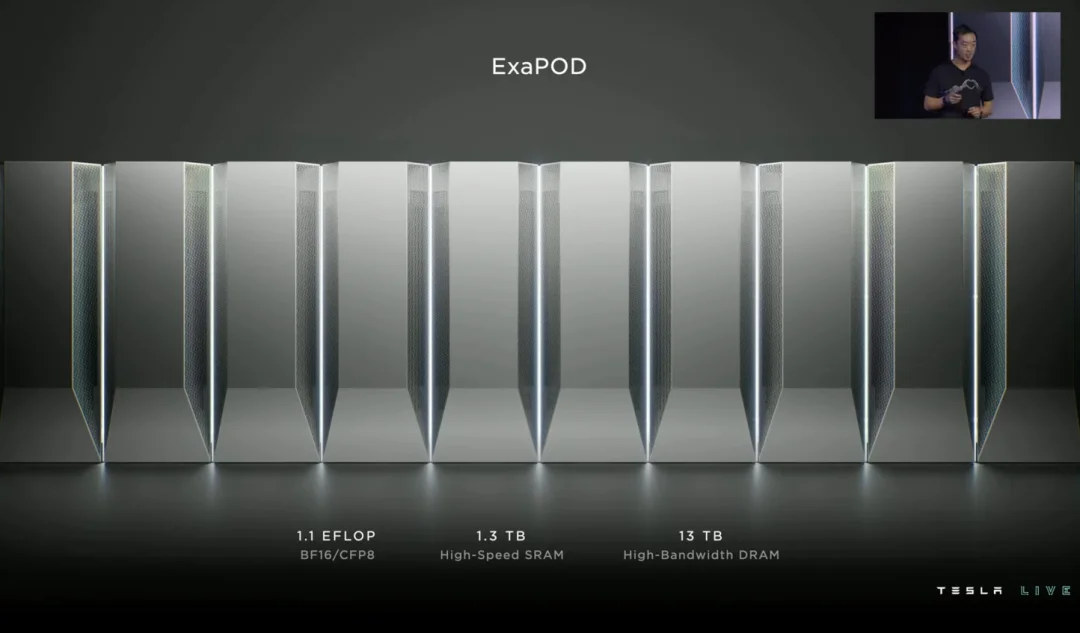
It should be noted that ExaPOD, as a supercomputing cluster, is not the final form of this supercomputer. Theoretically, it can be scaled up in quantity to meet Tesla's larger computing needs, thereby 'stacking' higher AI computing performance.
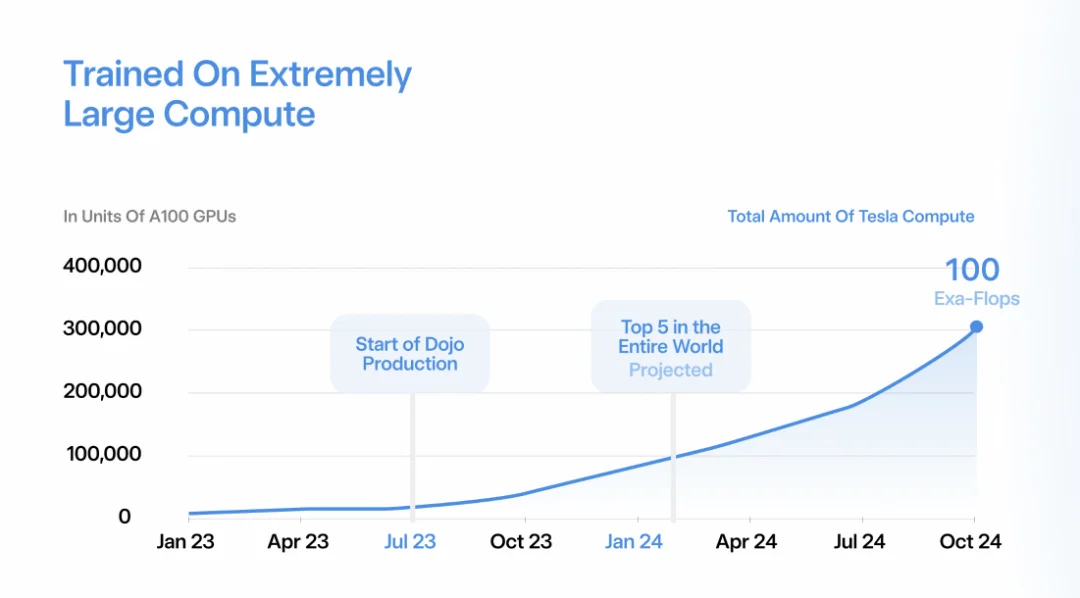
In fact, according to Tesla's computing power development plan released in June of this year, Dojo will become one of the top five computing facilities globally in the first quarter of next year, and will reach a supercomputing power of 100 EFlops by October of next year.
Beyond hardware, Tesla has made significant investments in software to support Dojo’s operation.
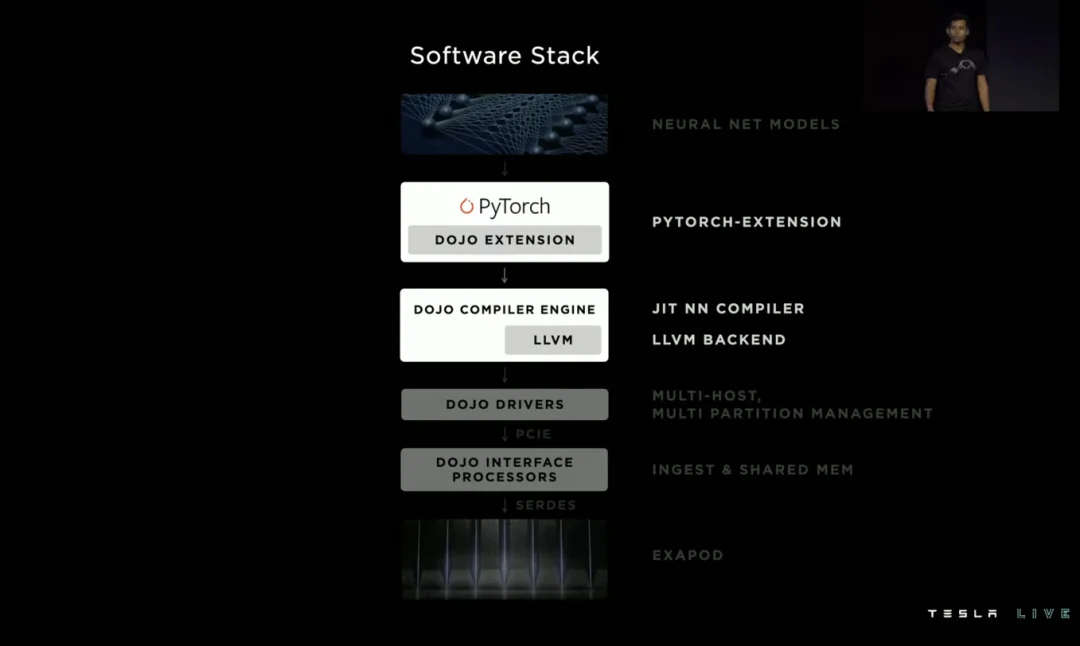
Adhering to a principle of integrated hardware and software with full-stack self-research, Tesla developed a dedicated full-stack software system for the Dojo project by combining proprietary and open-source software. This includes low-level driver software, compiler engines, PyTorch plugins, and upper-layer neural network models.
Additionally, building the Dojo supercomputer required solving not only technical challenges related to computing power—such as chips, memory, bandwidth, and software—but also critical issues closely tied to its operation, including power consumption and cooling. Elon Musk specifically emphasized that the latter posed significant difficulties.
This is one reason why Elon Musk spent several years constructing Dojo.
Furthermore, according to Tesla’s statements at last year’s AI Day, mass production of Dojo was originally scheduled for the first quarter of this year. However, it did not begin until July, indicating a notable delay caused by cost reduction targets falling short of expectations.
From a technical perspective overall, Dojo undoubtedly represents a major self-imposed challenge for Tesla in the fields of artificial intelligence and autonomous driving, concentrating multiple technological explorations in supercomputer cluster construction.
Notably, before Dojo, Tesla’s layout in AI and autonomous driving was already deeply established. Its self-developed algorithms and the FSD chips on vehicles demonstrated capabilities that amazed the industry.
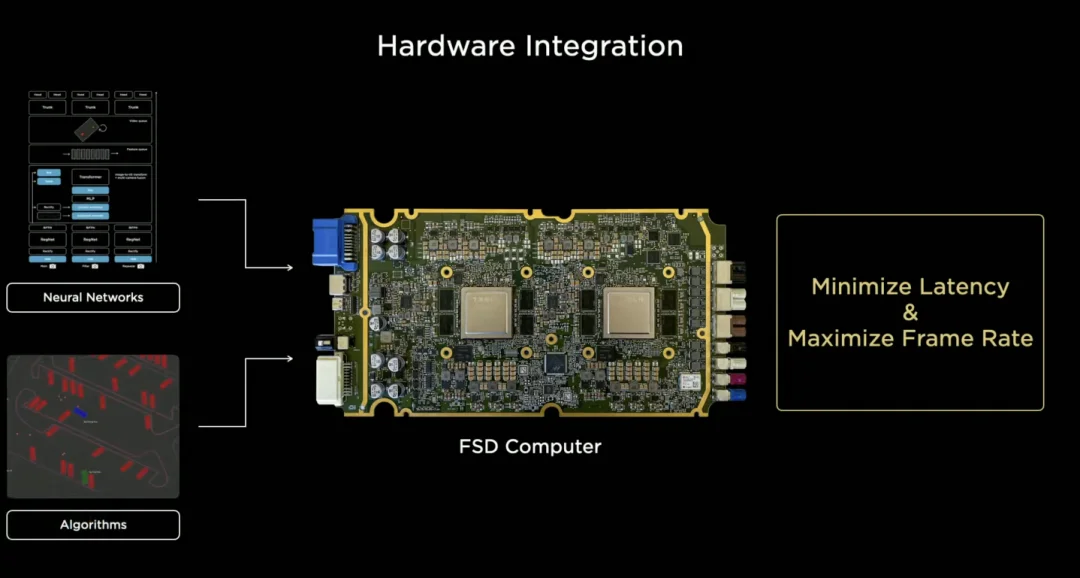
With the release of Dojo, Tesla has taken a further step, becoming an AI company with true full-stack self-research and vertical integration capabilities spanning from cloud to edge, from chips to algorithms, and from hardware to software. Such companies are rare worldwide.
Consequently, the hardcore technological depth presented by Tesla in the Dojo project is world-class.
Multiple Considerations Behind Tesla’s Self-Developed Dojo
Tesla’s decision to self-develop Dojo was not driven solely by technical considerations.
In fact, before Dojo, Tesla had deployed a supercomputer for cloud-based training based on NVIDIA GPUs.
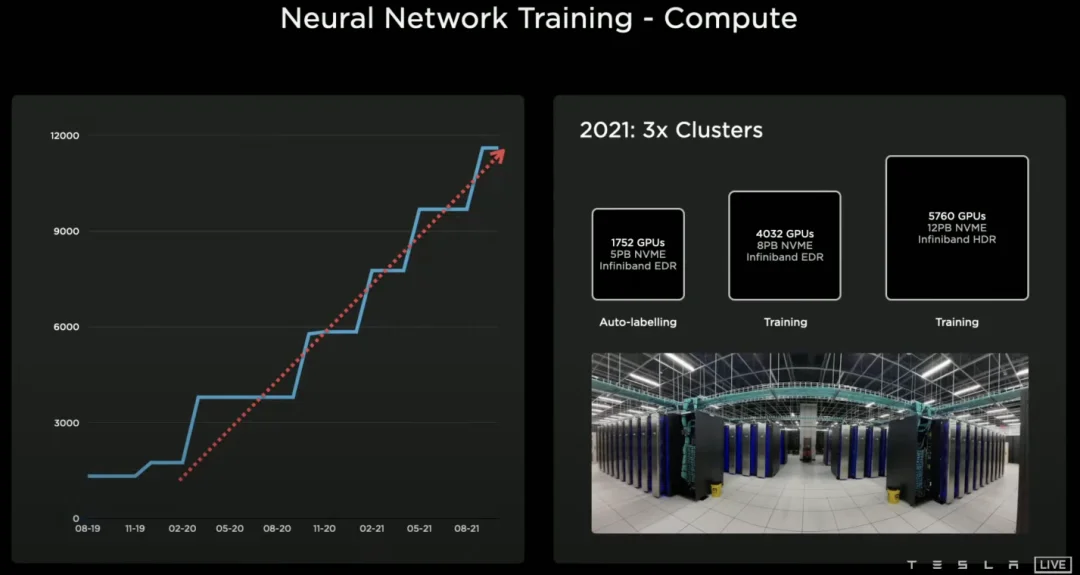
In August 2019, this supercomputer required fewer than 1,500 GPUs. However, over the following two years, as Tesla’s data volume grew exponentially, the number of GPUs needed increased multiplicatively.
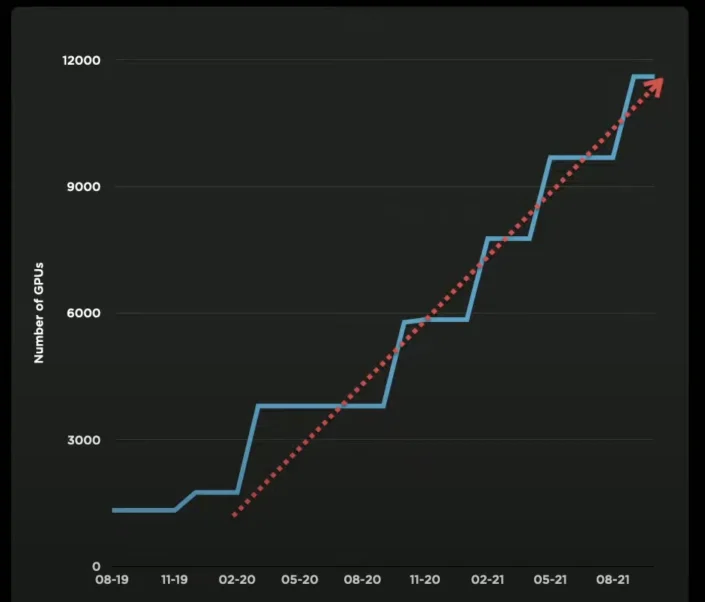
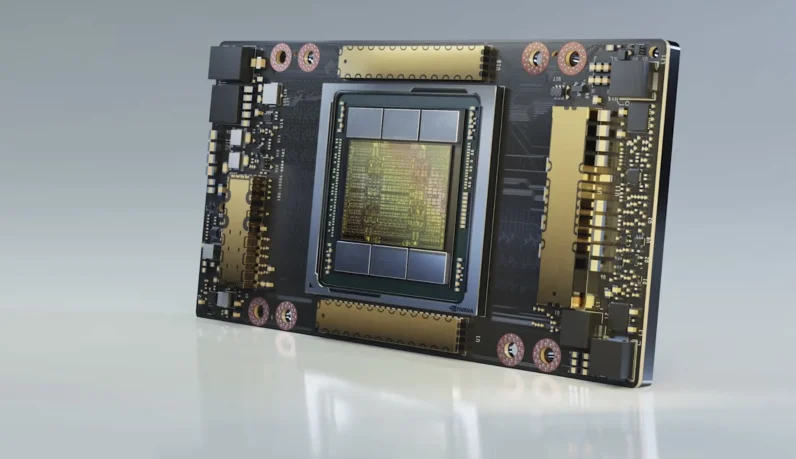
Interestingly, during that period, Tesla aggressively purchased NVIDIA GPUs, including the A100 GPU based on TSMC’s 7 nm process, which NVIDIA released in 2020. By August 2021, Tesla’s cloud-deployed supercomputer comprised 11,544 GPUs, seven to eight times the number it had two years prior.
According to Tesla at the time, this ranked as the fifth-largest supercomputer globally.
This supercomputer consisted of three computing clusters.
One of these, the largest cluster, was presented by Andrej Karpathy, then head of AI at Tesla, at the CVPR conference in 2021. It featured 5,760 NVIDIA A100 GPUs (with 80 GB of VRAM each), delivering 1.8 exaflops of AI computing power.
The other two clusters were dedicated to training, using 4,032 GPUs, and auto-labeling, using 1,752 GPUs.
For any company with substantial AI computing needs, purchasing GPUs from NVIDIA to build its own computing infrastructure is a standard practice.
At the time, nearly every major cloud computing provider in the industry was purchasing NVIDIA GPUs, including tech giants such as Microsoft, Yamaxun, Google, Alibaba, Tencent, and Baidu. Meanwhile, numerous technology and internet companies from both China and the United States also required GPUs to build their own AI computing power. Therefore, Tesla's purchase of GPUs from NVIDIA at that time was a very natural thing.
So why did Tesla decide to develop Dojo independently?
The primary reason is to improve efficiency.
Simply put, while NVIDIA GPUs possess powerful AI computing capabilities, they are also designed for general-purpose AI tasks. As a result, their efficiency in handling specific, single-type tasks does not match that of specialized chips.
In Tesla’s FSD business scenario, the supercomputers used for cloud-based training tasks primarily handle a single type of workload: video training. Therefore, building a new computing system with self-developed specialized chips and software specifically adapted for these tasks can significantly boost efficiency.
According to data released by Tesla during AI Day 2022, compared to NVIDIA’s A100 GPU, each D1 chip (paired with Tesla’s proprietary compiler) can achieve up to 3.2 times the computing performance in auto-labeling tasks and up to 4.4 times the performance in occupancy network tasks.
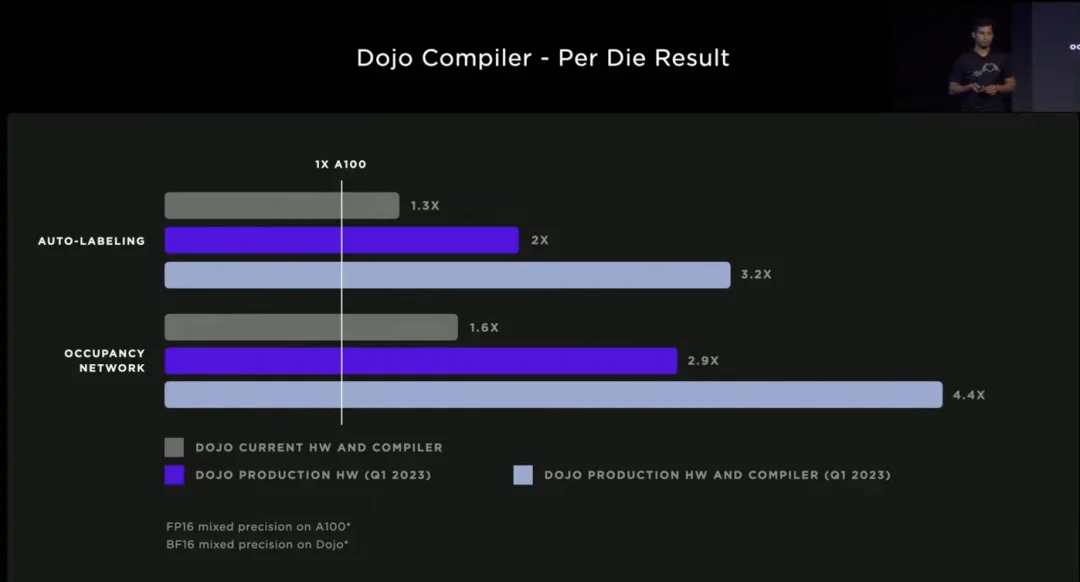
From a broader perspective, official Tesla data indicates that, for the same cost, its Dojo supercomputer can deliver four times the performance, improve energy efficiency by 1.3 times, and reduce the footprint of the computing system to one-fifth of previous models.
Second, of course, is the need to reduce costs.
According to industry calculations, by August 2021, Tesla had already spent more than USD 300 million on hardware alone to build a cloud-based supercomputer at that time. A significant portion of this expenditure went into NVIDIA’s coffers—Elon Musk himself publicly stated on Twitter that NVIDIA GPUs are too expensive.
Furthermore, just as with its self-developed FSD chip, Tesla’s motivation for developing Dojo was vertical integration: to reduce reliance on NVIDIA GPUs.
In reality, after its release, the NVIDIA A100 GPU quickly became highly sought after in the AI industry. Numerous cloud computing companies and internet technology firms placed orders with NVIDIA, including Tesla. However, due to limited production capacity for the A100, supply was allocated sequentially. As a result, Tesla received a relatively small allocation, which was insufficient to meet its computing needs driven by exponential data growth.
More interestingly, while Tesla had previously collaborated with NVIDIA on cockpit chips and autonomous driving chips, it eventually parted ways with the company in both areas. This was particularly evident in autonomous driving, where Tesla insisted on self-development and severed ties with NVIDIA. Although the two companies continued to do business regarding GPUs, it was clear that Tesla could no longer expect any special favors from NVIDIA.
From this perspective, Tesla’s decision to develop Dojo represents a major move to maintain its strategic autonomy.
Supporting Elon Musk’s 'AI Empire'
From any perspective, Dojo—a hardcore technology product launched by a commercial company, particularly one like Tesla that is so focused on cost control—must be driven by very careful business considerations.
After all, as an integrated hardware and software product spanning from underlying chip design to software adaptation and development, and finally to computing cluster systems, Dojo has already involved substantial commercial investment during its development process.
Notably, during the latest earnings call, when asked how much had been spent on the Dojo project, Elon Musk stated that Tesla would not disclose the specific expenditures for Dojo. However, he confirmed that the company plans to invest USD 1 billion in the project next year, given Tesla’s truly immense volume of video data that requires training.
Furthermore, Elon Musk emphasized that anyone wishing to replicate Tesla’s Dojo project would need to spend billions of dollars on the computing power required for training. This allows for a reasonable inference that Tesla’s financial investment in the Dojo project amounts to several billion dollars.
So, given that the Dojo project's costs are so high, why is there such a strong commitment to invest?
Elon Musk’s answer: to achieve FSD (Full Self-Driving) that is safer than human driving.
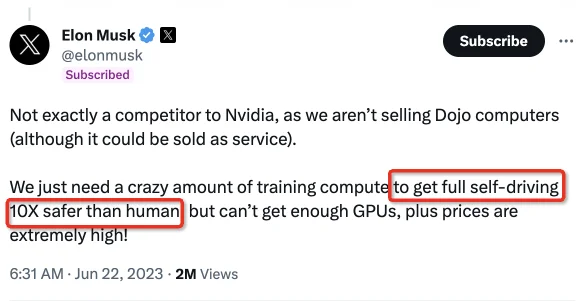
During the earnings call, Elon Musk said this:
Tesla’s goal for FSD is not to match human performance, but to exceed it by tenfold or even a hundredfold. We aim for perfect safety, which requires an incredible volume of video data and computing power... making it absolutely critical for our video training. In the development of FSD, the most fundamental bottleneck is training; with more training compute, we will progress faster.
He stated that given such massive data volumes, developing custom chips is the best solution.
The Dojo project exists to enable better safety and autonomous driving capabilities for FSD. Elon Musk previously noted that if FSD is sufficiently advanced, Tesla could sell cars at zero profit; this confidence clearly stems from Dojo’s contribution to FSD.
Notably, as Tesla’s vehicle sales increase, the upfront costs of the Dojo and FSD projects will be amortized across a larger fleet scale. With Tesla targeting 20 million annual units by 2030, it demonstrates strong confidence in recouping investments through expanded sales volume.
Thus, from its inception, Dojo has been a forward-looking, long-term investment.
Of course, as an entrepreneur with strong business acumen and intuition, Elon Musk has also considered other ways to dilute the costs of the Dojo project—he stated in 2020 that it might be possible to open up Dojo’s computing power as a subscription service, similar to Yamaxun’s AWS.
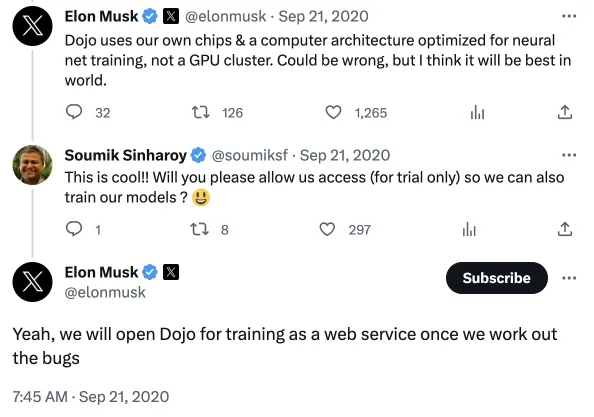
If this subscription model is implemented, it would serve as an effective way for Tesla to generate revenue to cover Dojo’s initial costs.
Furthermore, if we shift the focus of the Dojo project beyond Tesla vehicles, it becomes clear that Tesla’s humanoid robot business, Optimus, actually runs on the same FSD software. In Elon Musk’s long-term commercial vision, Optimus is a key pillar of Tesla’s value system; its future production volume could far exceed that of Tesla’s cars.
Elon Musk has even stated that part of Tesla’s long-term value will derive from Optimus.
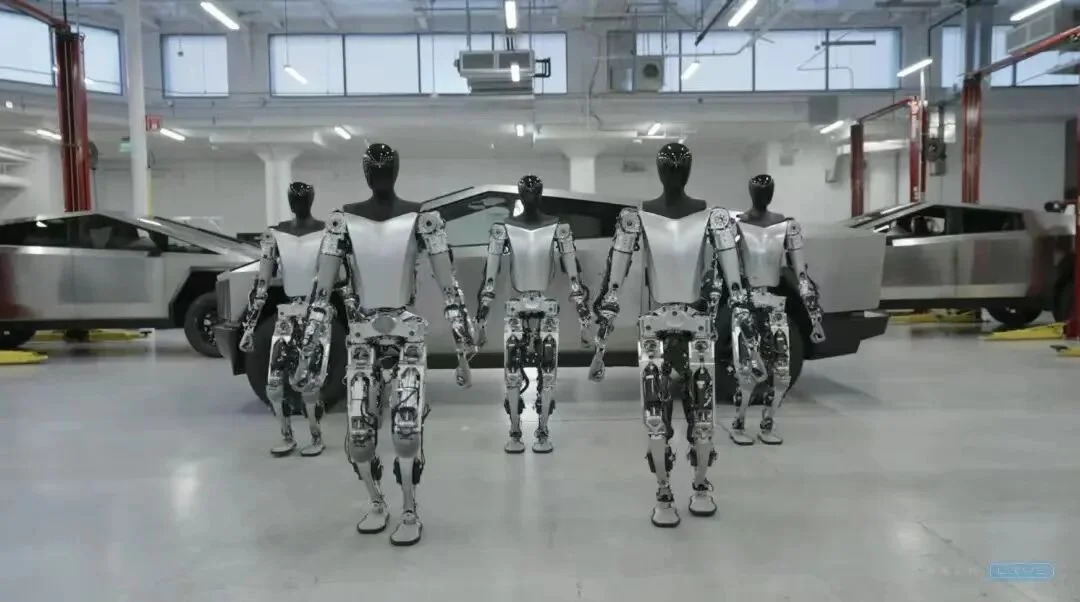
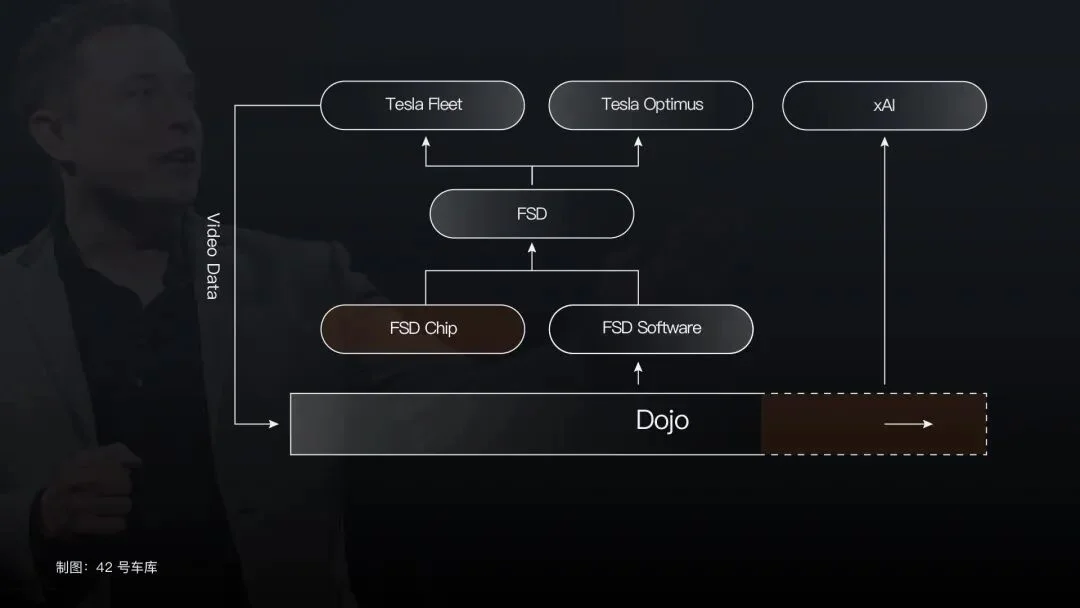
From this perspective, the Dojo project not only supports Full Self-Driving (FSD) for Tesla’s automotive business but also for what may be an even larger scale of FSD deployment in the humanoid robot sector—the greater the adoption of FSD across both cars and robots, the higher the potential value of the Dojo project.
This explains why Elon Musk, who places extreme emphasis on cost control, has invested so heavily in money, manpower, and time into the Dojo project. He dares to do so because he is firmly betting on the future he believes in.
Notably, for Elon Musk, the value of Dojo can extend well beyond Tesla.
For instance, in June this year, Elon Musk posted on X (formerly Twitter):
The Dojo V1 version is highly optimized for large-scale video training rather than general-purpose AI; however, Dojo V2 will address such limitations.
This implies that once Dojo evolves to a certain stage, it will likely be used not only to support FSD but also to solve problems related to artificial general intelligence (AGI)—the core focus of Elon Musk’s newly established xAI company, which he has publicly declared as a "competitor to OpenAI."

From Elon Musk’s perspective, the Dojo project is already serving as the vehicle for his AI ambitions and acting as the "infrastructure" of the "AI empire" he is building.
Interestingly, during the Q2 earnings call, Elon Musk specifically stated that Tesla would continue using NVIDIA hardware while simultaneously advancing the Dojo project. He emphasized his great "respect" for Jensen Huang and NVIDIA, acknowledging their incredible work.
At present, Tesla undoubtedly still relies on NVIDIA, as it has many AI tasks running on GPUs.
However, for Elon Musk, the moment he made the decision to pursue the Dojo project, the divergence between Tesla and NVIDIA in cloud computing and AI was already sealed.
Whether through Tesla or xAI, it is clear that Elon Musk is the type of person who insists on firmly controlling his own future, destiny, and ideals—his massive ambitions in the AI field are no exception.
Written by 308 Edited by 308