


Cadillac LYRIQ Ruige Price Cut Targets 350,000 RMB Segment
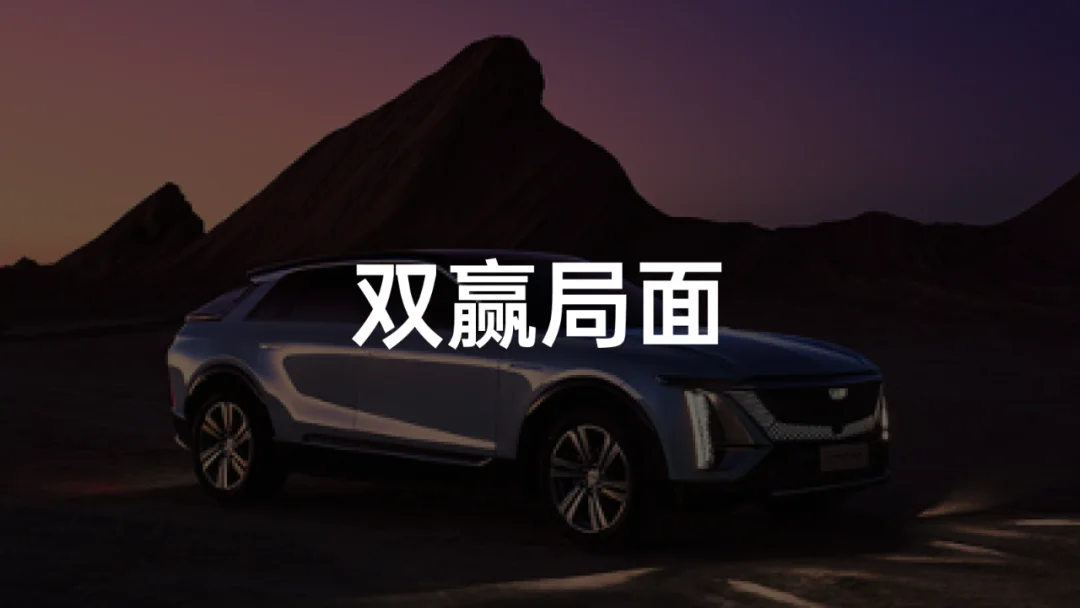
On July 10, discounts for the Kaidilake LYRIQ Ruige were announced.
The original manufacturer's suggested retail price (MSRP) for the LYRIQ Ruige was RMB 439,700 to RMB 479,700. After adjustments, the new MSRP is RMB 379,700 to RMB 419,700. Additionally, customers who place a deposit by August 31 can choose between two benefits: a deposit expansion offer of RMB 2,000 offsetting RMB 20,000, or a combination of RMB 3,000 offsetting RMB 20,000 plus a free home charging pile. The total comprehensive discount amounts to approximately RMB 80,000.
Alongside the price reduction, the promotional benefits have also been adjusted. Customers can decide whether to purchase benefit packages based on their actual needs.
After the discount, customers can now buy a luxury mid-to-large electric SUV for the price that previously only bought a luxury mid-size fuel-powered SUV. Kaidilake has taken this step toward "price parity between oil and electricity."
With discounts of around RMB 80,000, optional benefits, price parity with internal combustion engine vehicles, large dimensions, and luxury status, the current moment presents an ideal opportunity to buy the LYRIQ Ruige.
01Prices Down, Competitiveness Up
With discounts of approximately RMB 80,000, the LYRIQ Ruige, originally positioned in the RMB 450,000 tier, has entered the competitive price range of the RMB 350,000 tier.
At the 450,000 RMB price point, LYRIQ Ruige faces stiff competition from rivals like NIO ES7 and Mercedes-Benz EQE SUV 350 in the same segment and price bracket. Despite its attractive styling and strong product capabilities, it lacks a standout competitive advantage that directly appeals to user preferences and has not yet established a clear positioning distinct from its competitors, making it difficult to stand out among numerous formidable rivals. However, the situation changes significantly when entering the 350,000 RMB market.
First, the positioning of the LYRIQ Ruige has been clearly defined as the only luxury pure-electric mid-to-large SUV in the RMB 350,000 price tier.
In the RMB 350,000 price segment, most luxury-brand SUVs are mid-size, and some are even compact, such as the NIO ES6 and Mercedes-Benz EQB.
Even with an official guide price of RMB 405,000 to RMB 445,000, the BMW iX3 remains a mid-size SUV. The official guide price for luxury mid-to-large SUVs such as the Mercedes-Benz EQE SUV ranges from RMB 486,000 to RMB 630,600.
Consequently, the market for luxury pure-electric mid-to-large SUVs priced around 350,000 RMB is nearly empty, a gap that LYRIQ Ruige precisely targets.
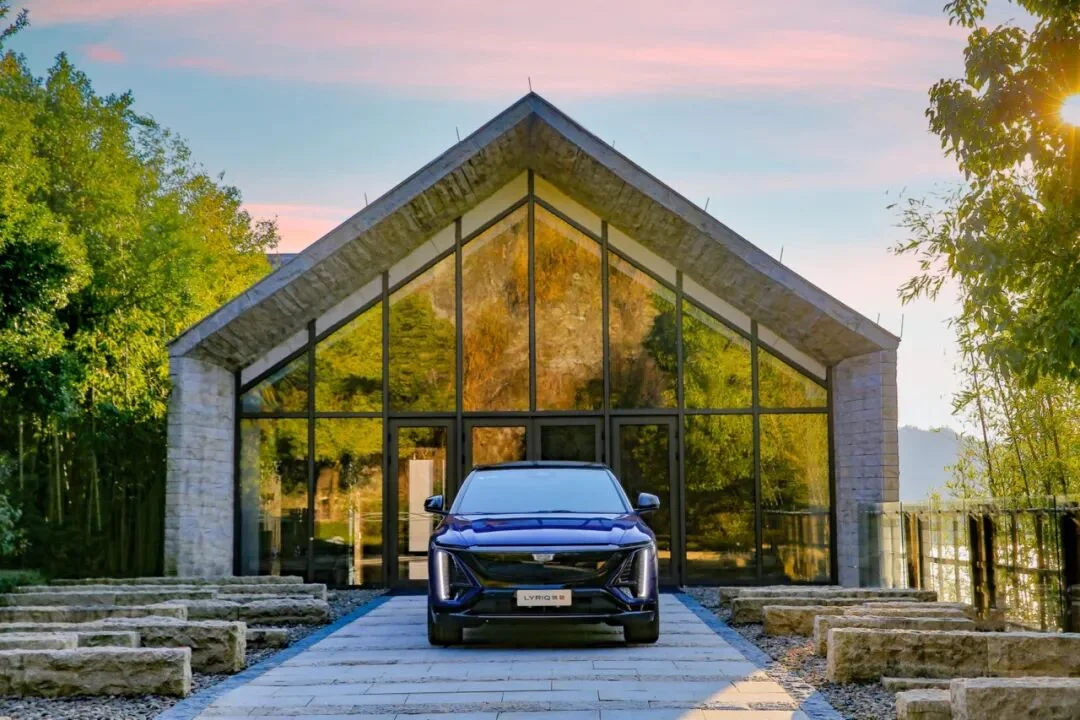
Second, as prices come down, the product's competitiveness improves compared to other models in the same price range.
The user base in the 350,000-yuan price segment possesses considerable financial strength and tends to make more rational choices. They typically have high expectations for brand power, luxury feel, driving and riding quality, and distinctiveness. This is especially true regarding "brand," as cars serve not only as their personal space but also as an important tool for expanding social connections.
These are precisely the areas where mainstream joint-venture brands with deep automotive manufacturing expertise and heritage, such as Kaidilake, excel. We can compare the LYRIQ Ruige directly with its competitors.
LYRIQ Ruige VS BMW iX3
Although the official guide price for the BMW iX3 ranges from RMB 405,000 to RMB 445,000, current dealer discounts have effectively positioned it in the RMB 350,000 segment, creating strong direct competition with the LYRIQ Ruige at a similar price point.
Let’s first examine a data comparison between the two.
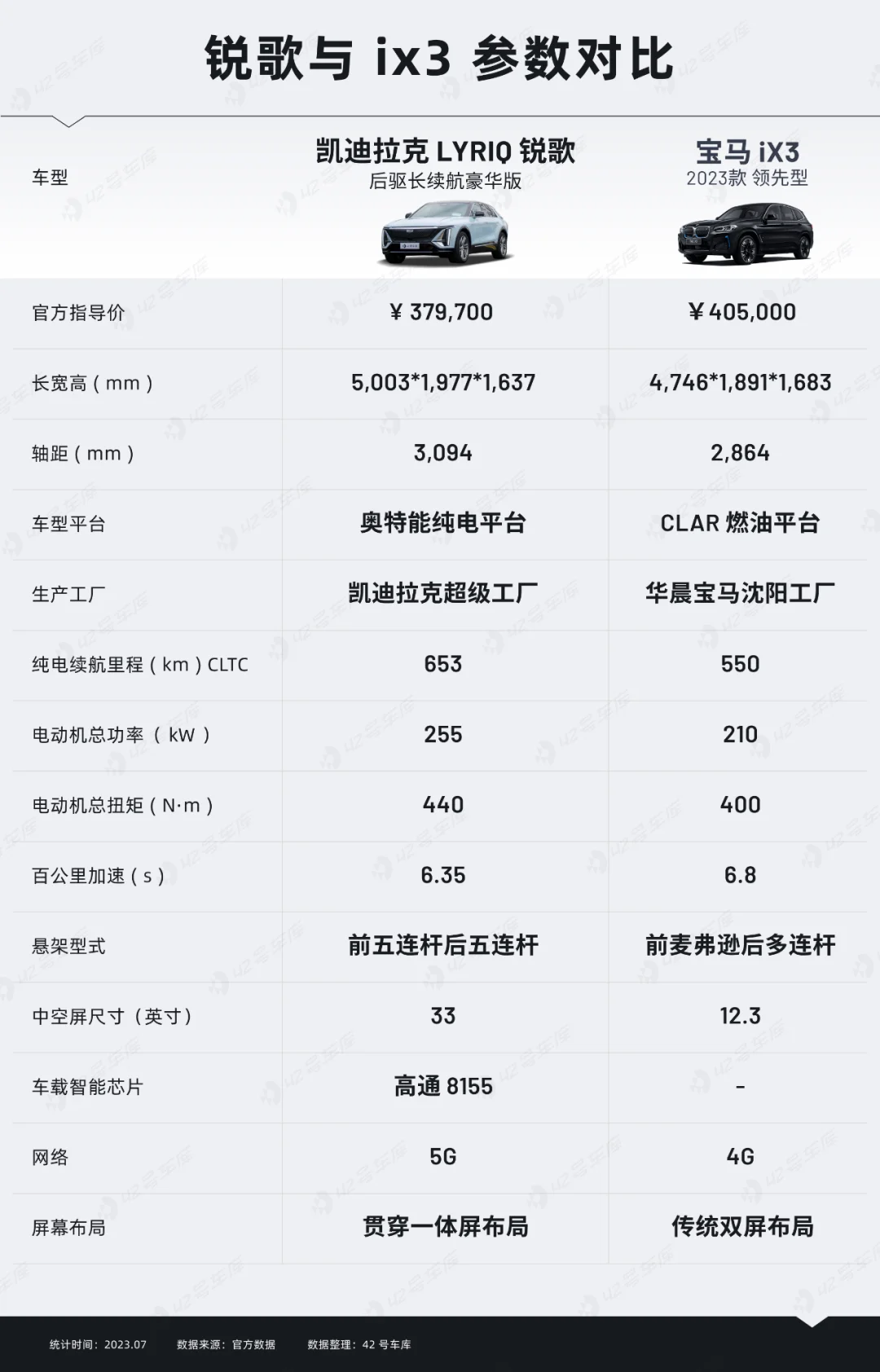
The data table reveals that the LYRIQ Ruige holds a decisive advantage over the iX3 in practical aspects such as interior space and driving range, largely due to its mid-to-large SUV footprint. In terms of configuration, including suspension systems and intelligent features, the LYRIQ Ruige demonstrates more substantial material investment. Furthermore, its continuous integrated screen cockpit layout aligns better with current consumer aesthetic expectations for pure electric vehicles compared to the iX3.

Relative to the iX3, the LYRIQ Ruige’s core advantage stems from its dedicated “pure electric platform,” representing a fundamental hardware superiority in production architecture.
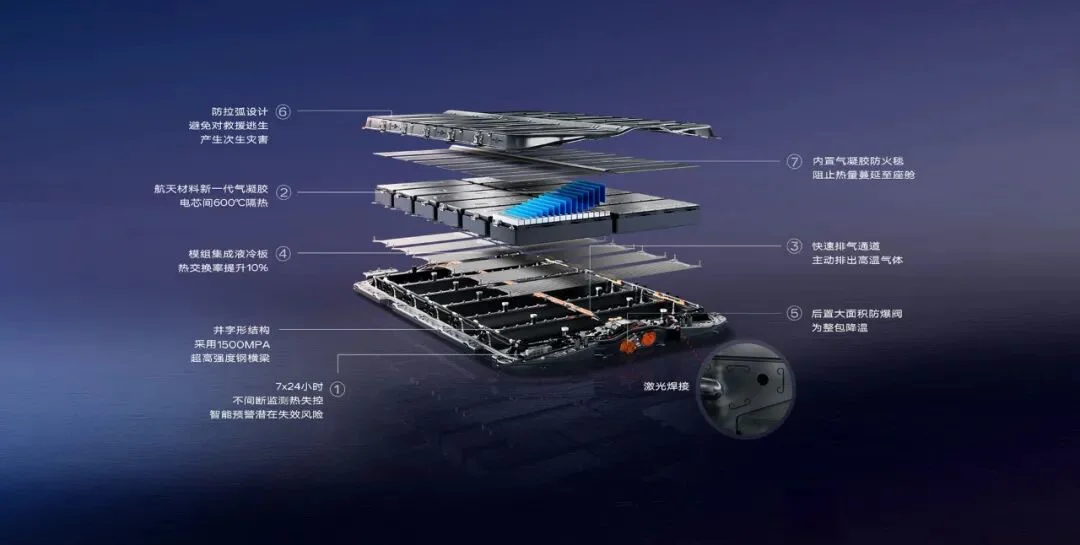
The LYRIQ Ruige is built on the Aotenengchundianpingtai. Launched by Shangqitongyong in 2021, this all-new pure electric platform offers superior top-level design and planning for "pure electric vehicles," far surpassing the makeshift approach of retrofitting internal combustion engine platforms with batteries and electric drives.
The Aotenengchundianpingtai reduces wiring harnesses in battery modules by 90% to optimize battery layout, thereby enhancing vehicle range. In terms of safety, the platform employs a 1500MPa ultra-high-strength steel crossbeam for structural protection of the battery and features the wBMS wireless battery management system, which monitors battery health status in real time 24 hours a day.
From a brand perspective, while the iX3 holds an advantage in traditional brand perception within the Chinese market, the value assessment of mainstream luxury brands in the luxury new energy vehicle segment is becoming blurred. If product strength is sufficiently robust, the extent to which brand leverage can drive success is not guaranteed.
LYRIQ Ruige VS Domestic Brand Products at the Same Price Point
For domestic brand products at the same price point, their greatest advantage over the LYRIQ Ruige is "intelligence," an area that joint-venture brands like the LYRIQ Ruige must relentlessly pursue.
However, in other aspects, the LYRIQ Ruige maintains a clear competitive edge.
First, in terms of brand heritage, the Kaidilake brand has a 120-year history. Having officially entered the Chinese market in 2004, it has cultivated its presence there for nearly twenty years. Compared to relatively young domestic brands, Kaidilake has a certain historical and user foundation for recognition of its luxury attributes.
Second, in terms of practicality, the LYRIQ Ruige offers ample space and riding comfort characteristic of American luxury vehicles, while its range meets the needs of most driving scenarios.
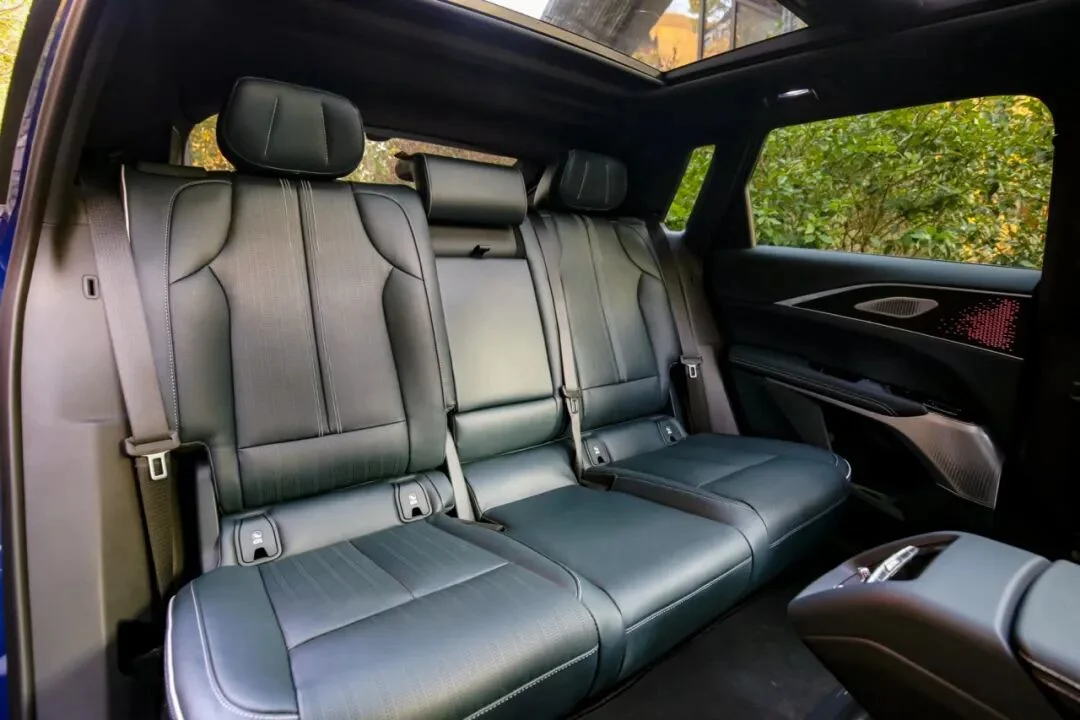
The LYRIQ Ruige is also equipped with a front and rear five-link suspension, a traditional area where Kaidilake and other luxury brands excel in tuning.
Unlike domestic brands at the same price point that often focus on family or outdoor scenarios, the LYRIQ Ruige can cater to a wider range of uses—including business, family, and outdoor activities—thanks to its brand positioning, load capacity, and driving dynamics.
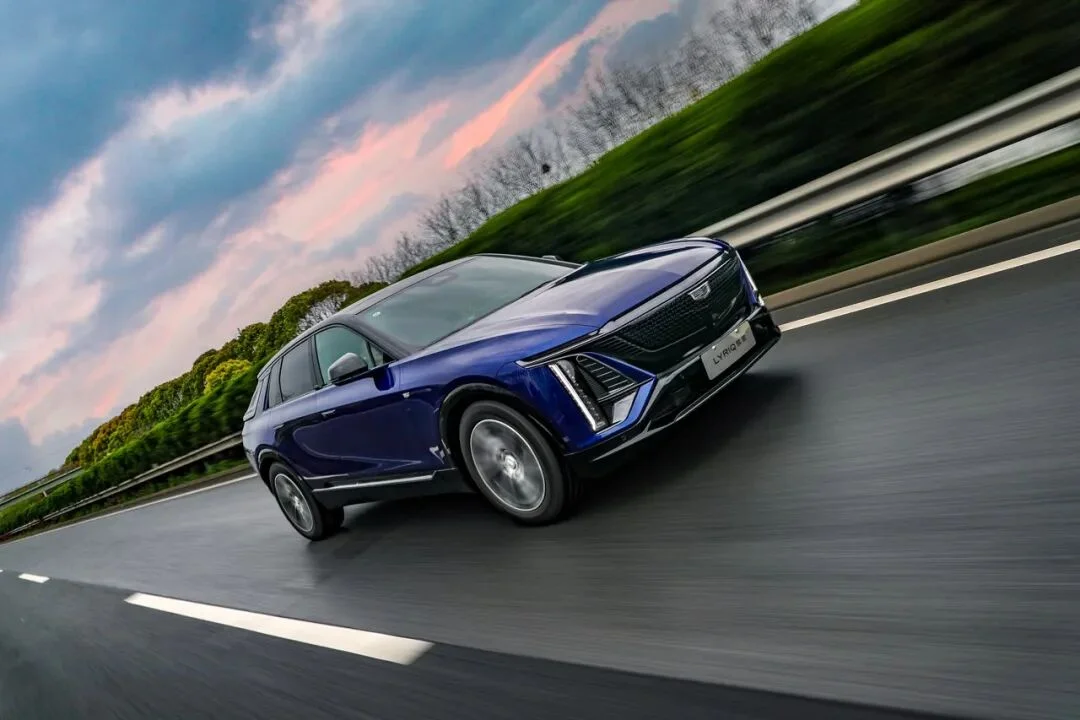
Third, in terms of vehicle manufacturing, Kaidilake itself has a deep heritage in car building, providing users with greater peace of mind regarding quality and reliability. Furthermore, its exterior design features both classic foundations and an "electric" core, resulting in high recognizability.
Overall, the LYRIQ Ruige demonstrates strong competitiveness in areas with frequent daily driving demands, such as space, driving feel, and safety. The Kaidilake brand adds significant value to the LYRIQ Ruige.
Considering the characteristics of the 350,000 RMB price segment and its competitors, in the 350,000 RMB luxury pure electric SUV market, LYRIQ Ruige's competitiveness has indeed improved, entering a range where its price and value are more closely aligned.
02In the Era of 'Oil-Electric Price Parity,' Kaidilake Chooses to Lead
As demand for new energy vehicles (NEVs) intensifies and the NEV market expands, the slogan of "oil-electric price parity" is gaining momentum.
According to relevant research, from 2018 to 2022, the starting price of the NEV version of a given car model was, on average, approximately RMB 46,000 higher than that of its fuel-powered counterpart. Before the NEV industry achieves sufficient scale to amortize costs, high prices remain an unavoidable reality.
After all, before Ford introduced assembly-line manufacturing, handcrafted and expensive fuel cars were merely luxury items for a few. It was mass production via assembly lines that created economies of scale, reduced automotive manufacturing costs, and facilitated widespread adoption.
By the 1980s, automotive platforms emerged. Standardization and commonality of parts, along with the ability to produce different models simultaneously, further lowered production costs and amplified manufacturing value, reducing the barrier to car ownership.
The same logic applies to the NEV era. As the market matures and companies develop the internal and external conditions for large-scale production, crossing the threshold of "small scale-high cost" creates the premise for lower NEV prices, making "oil-electric price parity" more than just a slogan.
The Confidence Behind LYRIQ Ruige's Price Cut
Since Shangqitongyong officially launched the Ultium platform in September 2021, its transition to electrification has clearly entered "sports mode".
In October of the same year as the Ultium platform launch, the Shanghai Jinqiao Ultium Factory was completed and began operations. In June of the following year, the first mass-produced model, LYRIQ Ruige, went on sale; in December, the Wuhan Ultium Factory was completed and started operations. In April this year, the second mass-produced model, Bieke E5, launched; in June, the third mass-produced model, Bieke E4, launched; and in July, construction began on the third Ultium factory, Yantaidongyuegongchang, which is expected to commence production in the first half of 2025.
If the Ultium factory is the fist that Shangqitongyong swings, then the supply chain is the network of veins that sustains it. The establishment of the Ultium factory has created a highly localized business ecosystem, achieving over 95% local procurement for components.
According to Tongyongqiche's plan, by 2025, it will launch more than 15 pure electric models based on the Ultium platform in the Chinese market and achieve an annual EV production capacity of 1 million units in China.
Expanding production scale and strengthening control over the entire manufacturing system have begun to reveal the 'economies of scale' effect across the Shangqitongyong system. Backed by Shangqitongyong, LYRIQ Ruige has sufficient confidence to lower prices.
'Going First': The Responsibility of Luxury Brands
The explosion of the new energy vehicle market and the rise of new forces have shaken the traditional luxury value system. The invisible hand of the market is pushing luxury values back to their appropriate price points.
Although the recent price cuts by many luxury brands are often driven by necessity, at this historic juncture of industrial transformation toward new energy, luxury brands can no longer cling to the automotive industry's 'old values.' They should not set prices for new energy vehicles that ignore user needs and emotions merely to protect profit margins and brand prestige.
Instead, luxury brands should once again act as pioneers, leading the automotive industry forward as they did when the sector was just beginning, ensuring that technology benefits users.
Now, the automotive industry has reached another milestone. Luxury brands like Kaidilake have accumulated massive scale and influence over a century. While one hand grips tightly to forge ahead, the other reaches out to users—not to take money from their pockets, but as a bridge to deliver the dividends of this era back to them.
Although LYRIQ Ruige launched only last year, making it a "latecomer" in the broader new energy market, as a luxury brand with its own scale advantages, Kaidilake is taking the "lead" into the era of "oil-electric price parity." By driving the return of value in the luxury EV market and benefiting users, Kaidilake should assume this responsibility.
This responsibility extends beyond Kaidilake; every luxury brand should share it.
03Final Thoughts
The price reduction of LYRIQ Ruige creates a win-win situation for both users and Kaidilake.
On one hand, users reduce the cost of purchasing a "luxury pure electric mid-to-large SUV," gaining richer and potentially superior options in the RMB 350,000 segment.
On the other hand, through discounts, LYRIQ Ruige avoids highly competitive price intervals where it lacks clear advantages. This growth in sales volume may find a new breakthrough point, while Kaidilake itself identifies a more accurate positioning of price and value for this new era.
Furthermore, from a macro perspective, during the early stages of new energy vehicle development, products from new energy brands have posed a fierce challenge to the product systems of joint-venture luxury brands like Kaidilake.
But in the second half of the new energy vehicle market, particularly as we approach the era of parity between internal combustion and electric vehicles, joint-venture luxury brands are well-positioned to leverage their substantial scale advantages to deliver a fierce impact on the pricing structures of new-energy brands.
With LYRIQ Ruige offering discounts, its ability to compete across segments with heightened competitiveness sends out a clear signal.
As "parity between oil and electricity" becomes the mainstream trend, the competitive landscape may once again reach a juncture filled with uncertainty. Will the LYRIQ Ruige, priced for this parity era, help Kaidilake secure a successful and definitive start to its electrification strategy?
Written by: Isaiah Edited by: 308