


Over 800,000 Viewers Watch William Li Drive as NIO Elegantly Unleashes Its Edge

On December 17, a temperature of minus two degrees Celsius enveloped Shanghai at six-thirty in the morning. While many were still asleep, NIO CEO William Li had already begun a live-streamed range test drive southward in an ET7 equipped with a 150 kWh battery, unsure of how far he would ultimately travel.
Although the final distance was unknown, William Li set a target of exceeding 1,000 km. However, the minus 2-degree weather led him to doubt his ability to achieve this goal.
With no turning back now that the stream was live and viewers had arrived, William Li had to continue on his chosen path.
Throughout the journey, William Li alternated between elaborating on NIO’s strategy and values, acting like a sales host while eating and promoting NIO’s Food Research Institute products, and chatting casually about his childhood and life as a friend would.
As always, William Li consistently emphasized his commitment to long-term value, regardless of the significant short-term pressures it might entail.
However, unlike previous instances, William Li demonstrated a strong desire to improve NIO’s short-term business efficiency. Just as he chose to personally livestream the range capabilities of the 150 kWh battery, he began taking more pragmatic and incisive actions to boost short-term operational performance.
01A Livestream That Resembled NIO Itself
With only 3% battery remaining, the ET7 equipped with a 150 kWh pack had traveled 1,044 km, while William Li had been live-streaming continuously for approximately 14 hours under the watch of more than 800,000 viewers.
Despite broadcasting continuously for 14 hours, there was no sign of fatigue on William Li’s face; instead, what was visible was joy, satisfaction, and an unmistakable sense of victory.
In terms of results, William Li achieved his set goal, and NIO officially announced via its WeChat public account that "the era of smart pure electric vehicles exceeding 1,000 km in range" has arrived—making this live stream a significant triumph for NIO.
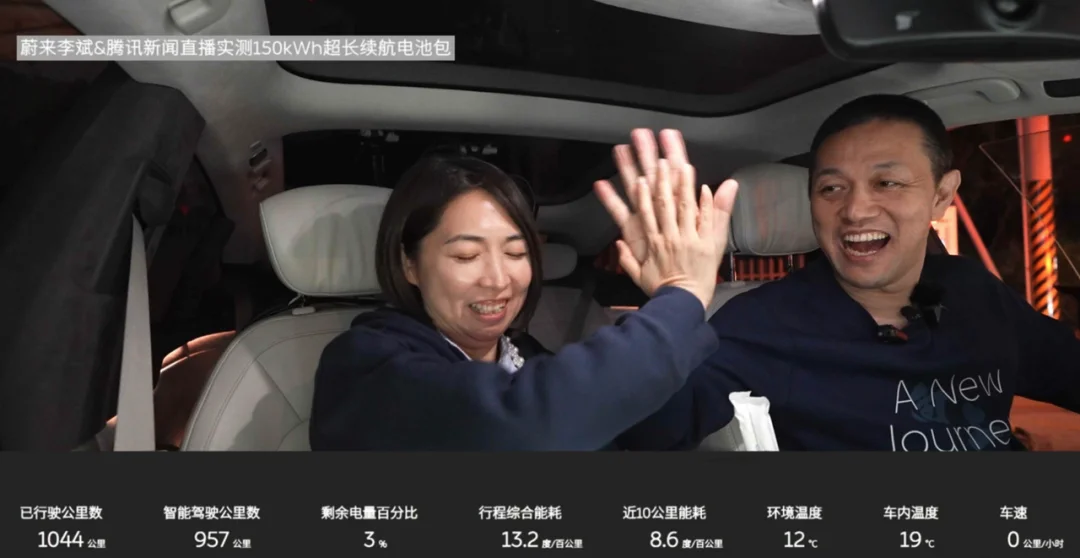
However, the process revealed issues that went unresolved, and even as William Li was conversing with Huang Chenxia, General Manager of Tencent News Operations, the stream abruptly ended without warning.
In a sense, this all-day, 14-hour broadcast reflected NIO’s hesitant progress in the new energy vehicle market over recent years.
First, NIO’s business layout, grounded in long-termism, is akin to this live stream: there is no turning back.
Once the broadcast began, under the scrutiny of hundreds of thousands of viewers, William Li could not stop unless the 150 kWh battery was depleted or nearly so. His only option was to keep his eyes forward and drive ahead until he either completed the objective or failed.
NIO’s business layout, grounded in long-termism, follows the same pattern.
NIO has already invested heavily in its charging and battery-swap network, smartphone division, autonomous driving capabilities, and customer service. These investments do not yield obvious returns in the short term, and halting them would mean writing off all prior expenditures. To see these efforts bear fruit, NIO must continue investing relentlessly.
Secondly, this live stream once again exposed a recurring flaw in NIO’s strategy: while its strategic direction is clear, its tactical execution often remains ambiguous.
Regarding the overall arrangement of the live stream, it appeared that NIO was solely focused on achieving the goal of breaking the 1,000 km range barrier, neglecting to handle various aspects of the broadcast more carefully.
For instance, during the stream, issues arose beyond the sudden display indicating the end of the broadcast; there was also a brief dispute between William Li and NIO Vice President Shen Fei over whether to use NOP. Audio pickup was poor, but because they were driving, they had to endure it — clearly indicating that NIO’s internal communication and contingency planning for such events were neither thorough nor complete.
NIO’s development mirrors this situation. While NIO has a clear understanding of its strategic goals, it frequently encounters various problems during tactical implementation.
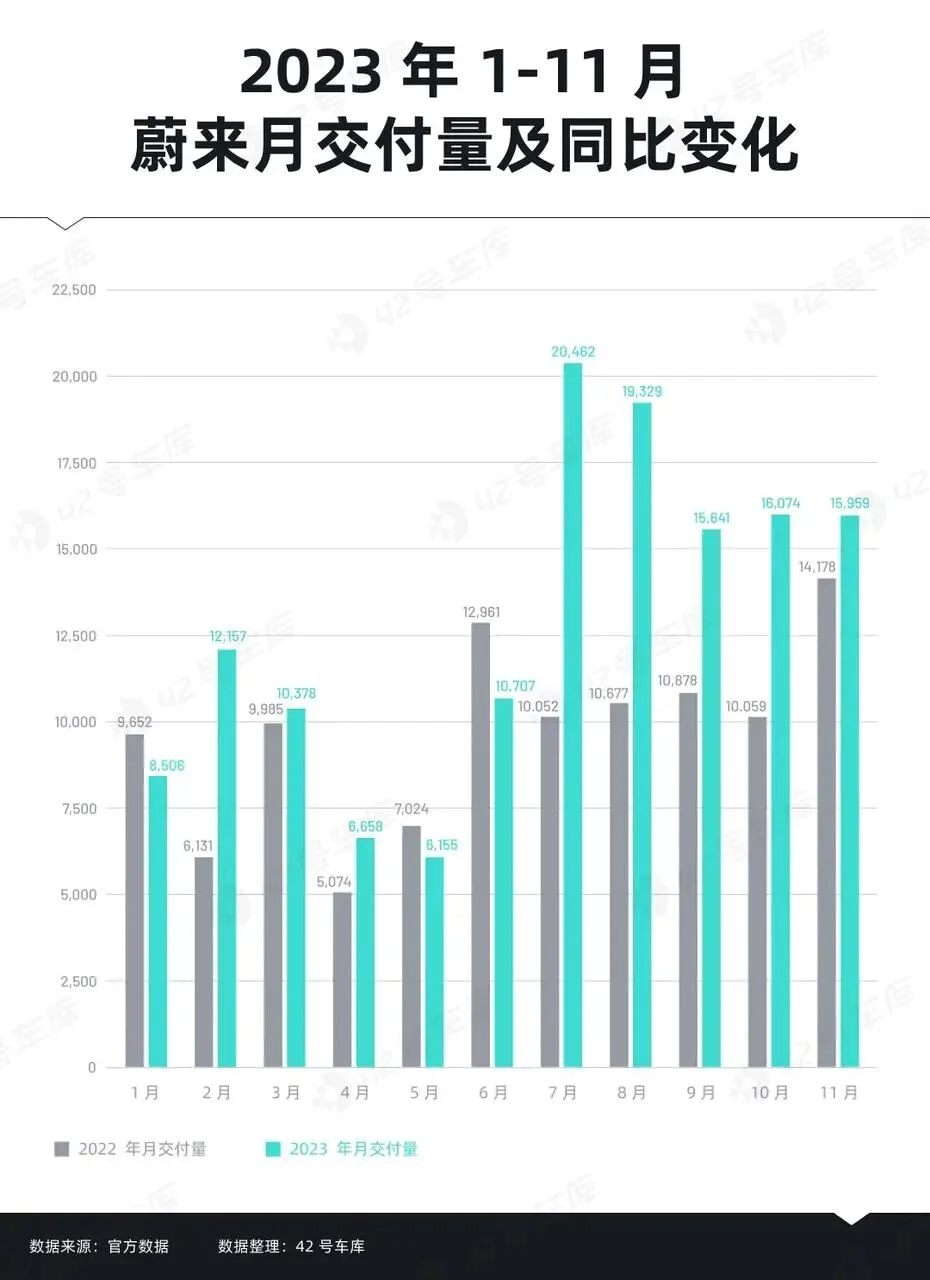
For example, despite spending significantly more on R&D than competitors, it has almost no distinct technological labels; when the ET7 gained popularity, sales were severely hampered by production capacity constraints; and when sales finally exceeded 20,000 units, profitability failed to keep pace.
Finally, throughout the entire livestream, William Li’s discussion covered a wide range of topics, including products, management, life, business enlightenment, photovoltaics and controlled nuclear fusion, and the impact of US bipartisan politics on the automotive industry.
William Li’s comments make it clear that he is indeed an idealist with many broad concerns and long-term, ambitious goals, as he stated during the livestream:
"No one who runs a company wants to become a martyr, but at the same time, they do not want their business to be merely about making a profit."
This helps explain why William Li is so passionate about building NIO’s extensive product and service ecosystem, and why he places such high value on long-termism.
However, while still advocating for long-termism, William Li also noted that he has recently begun repeatedly emphasizing within the company that long-termism should not be used as an excuse to compromise short-term execution efficiency.
02When William Li Starts Focusing on the Short Term
"Don’t say NIO is a long-termist company, as that might lull our colleagues into complacency. Instead, say NIO is a company that pursues short-term execution efficiency; that would be better."
At the NIO media face-to-face event on December 14, William Li told us.
Although William Li may not wish to be described as a company adhering to long-termism, it is undeniable that NIO, with its nine-year history, is beginning to reap the benefits of the long-term value it has built, particularly in battery swapping.
At the end of March this year, at the China Electric Vehicle 100 Forum in China, William Li stated that NIO's battery swapping system has reached a stage where it can be exported, and is currently discussing cooperation with several automakers.
As expected, in November, NIO announced partnerships for its battery swap business with Changan Automobile and Geely Holdings, injecting a strong dose of confidence into the initiative.
Although battery swapping has reached a new level, it cannot be ignored that NIO remains mired in financial losses and unmet sales targets, while external market competition is so fierce.
NIO must withstand internal and external pressures. After nine years of building a vast system, it has reached a critical moment where rapid output of strength is urgently needed. This means that the efficiency of its short-term business execution is crucial to NIO.
In fact, to boost short-term operational efficiency, NIO has already implemented many visible changes for the market beyond this range test livestream.
On September 21, NIO held its first Innovation Technology Day, systematically showcasing its full-stack technological capabilities for the first time and emphasizing the company's underlying logic of trading gross margins for R&D.
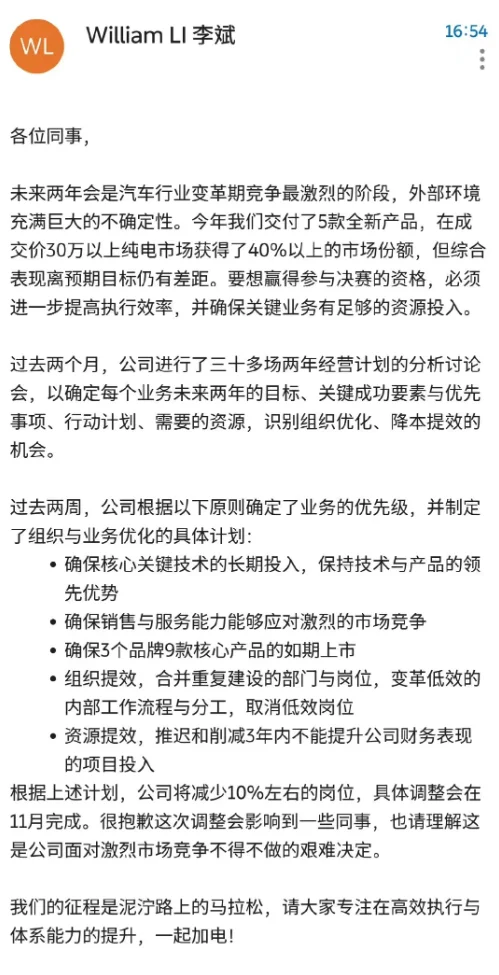
On November 3, William Li issued an internal memo announcing a 10% workforce reduction. The company will eliminate inefficient roles and delay or cut investments in projects that cannot improve the company's financial performance within three years, unusually emphasizing the need to further enhance execution efficiency.
On December 5, NIO reported in its Q3 earnings that it had signed a definitive agreement with Jianghuai to acquire the factory for RMB 3.16 billion, a move expected to reduce NIO’s manufacturing costs by 10%.
While these changes will take time to materialize and demonstrate their full value, NIO’s execution efficiency in autonomous driving is already visibly high.
On December 12, Ren Shaoqing, NIO’s Vice President of Intelligent Driving R&D, announced that NIO has accumulated 195,270 km of validated mileage for urban navigation routes. NIO is confident it will complete 250,000 km of such validation before year-end, surpassing its original target of launching the feature on 60,000 km of routes during the fourth quarter.
This improvement is not just a result of short-term execution gains but also reflects NIO’s long-term commitment to R&D and building a robust technological foundation. As William Li put it:
"If you want to build a skyscraper like the Shanghai Tower, you need to spend a lot of time compacting the foundation."
Looking ahead, William Li is attempting to strike a balance between long-termist values and short-term business performance. The path to this balance is clear: cut fat, build muscle, and improve gross margins.
At a media briefing with NIO, William Li explained his thinking and strategic plans.
To rapidly improve gross margins, NIO’s management is becoming more refined. The most obvious move was directly divesting its asset-heavy battery business. Meanwhile, William Li has instructed that project approvals in both marketing and R&D must be grounded in fundamental logic and accompanied by meticulous calculations of return on investment.
On the product front, NIO’s second brand, launching next year, will target the family market to reach a broader user base and boost sales volume. However, William Li emphasized to us that NIO is not introducing a second brand due to losses; rather, it aims to monetize its intelligent driving investments by expanding sales scale.
Additionally, NIO is adopting a more cautious approach to estimating operational risks. William Li stated:
We used to formulate five-year strategic plans starting from late 2019, but this year we have adjusted them to two years. Discussing strategy often requires significant spending. If expectations are not met after the money has been spent, it creates considerable operational risk.
Although emphasizing short-term execution, NIO remains committed to its core long-termist values.
In terms of brand building, NIO will maintain its premium positioning. William Li was direct with us: Do not expect to buy a NIO-branded vehicle cheaper than the ET5. Prices for the NIO brand will continue to rise, and the company intends to enter the high-end business market with the executive flagship ET9 to further solidify its premium status.
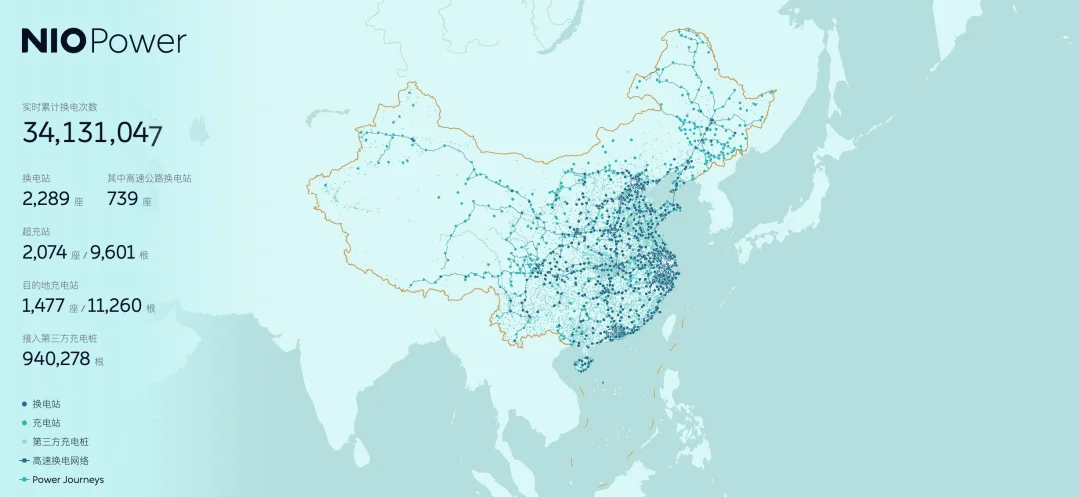
Regarding battery swapping, William Li views it as NIO’s moat. As the swapping network expands and the number of partners increases, this moat will become even deeper.
Notably, William Li also addressed smartphones. He believes it will take three years to determine whether NIO’s entry into the smartphone market is a success or failure. "When giants like Huawei, Xiaomi, and even Apple see their car sales grow significantly, the significance of this move will become clear," he said.
Based on his current stance, William Li appears to have become more cautious and targeted in balancing long-term value against short-term business performance.
Meanwhile, William Li has also cascaded this attitude downward. He previously told colleagues to abandon illusions about the ferocity of market competition and to let go of expectations regarding decisions that prioritize volume over price.
Despite this caution, William Li remains optimistic about the future. In his view, as pure electric vehicle (BEV) product experiences improve and charging/swapping networks expand, 2024 and 2025 will be two years of explosive growth for the premium BEV market. This means NIO still has ample opportunities to seize.
Therefore, NIO must adjust quickly now to capitalize on these opportunities in the coming two years, William Li stated:
"Organizational agility has certainly improved, because every company has its own inertia... We are still some distance away from being able to flexibly expand and contract as needed."
03NIO Needs Aggression Despite Its Elegance
During a face-to-face media briefing, NIO co-founder Qin Lihong said:
Please understand the real NIO. We hope to present ourselves with elegance.
While elegance is indeed the posture expected of a premium brand, in today’s fiercely competitive market—particularly given that the price war has persisted for a year and shows no signs of abating—NIO must also demonstrate some aggressiveness alongside its grace.
In fact, this range-test livestream elegantly conveyed NIO’s aggressiveness.
Through this broadcast, NIO undoubtedly succeeded in showcasing the product capability of its 150 kWh battery, which can achieve over 1,000 km of winter range.
At the same time, William Li livestreamed continuously for 14 hours without attacking competitors or exaggerating claims. Instead, he drove, chatted, snacked, spoke with family, and mingled with NIO owners. He not only displayed his role as NIO’s chairman and CEO but also revealed more personal facets: an industry thinker, a traveler on a long journey, a friend, and a father. This approach significantly boosted appeal for both NIO and himself.
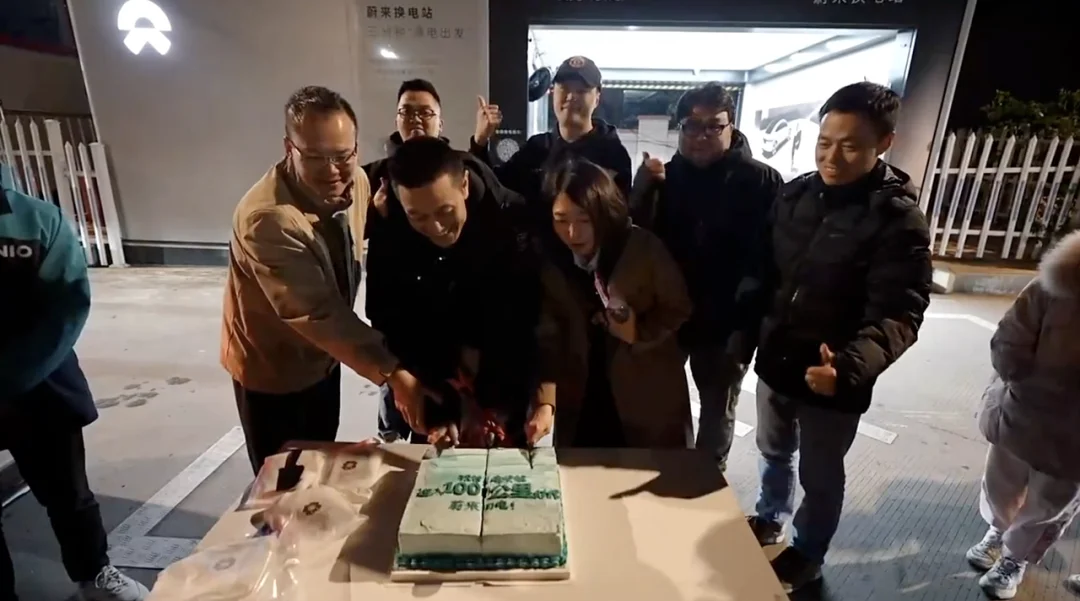
Interestingly, during the livestream, William Li mentioned that NIO tends to attract criticism and that he himself has received much education from it. In reality, William Li has indeed become increasingly cautious in his speech; he no longer posts personal opinions even on Weibo.
However, NIO’s current product strategy, battery-swap business, mobile ecosystem, and many other aspects have faced scrutiny. Coupled with the fact that NIO’s development has shown certain signs of fatigue, the company now urgently needs William Li to step forward and speak out.
One fact worth noting is that in previous years, the main speaker at NIO's media face-to-face events was Qin Lihong, but this year it was William Li. Three days later, William Li conducted a live-streamed range test.
Perhaps NIO intends to send a signal to the market through this: the company is rallying strength from top to bottom, adopting more pragmatic tactics to balance long-term value with short-term business performance, standing firmly in the market with an elegant yet assertive posture.
Coincidentally, the day after the live stream, NIO announced a new round of strategic investment of approximately USD 2.2 billion from Abu Dhabi-based investment firm CYVN.
A series of facts indicate that despite a harsh present and an uncertain future, NIO still has many cards to play.
Written by: Isaiah Edited by: 308