


Can the New XPENG X9 Match Sedans in City Energy Consumption?
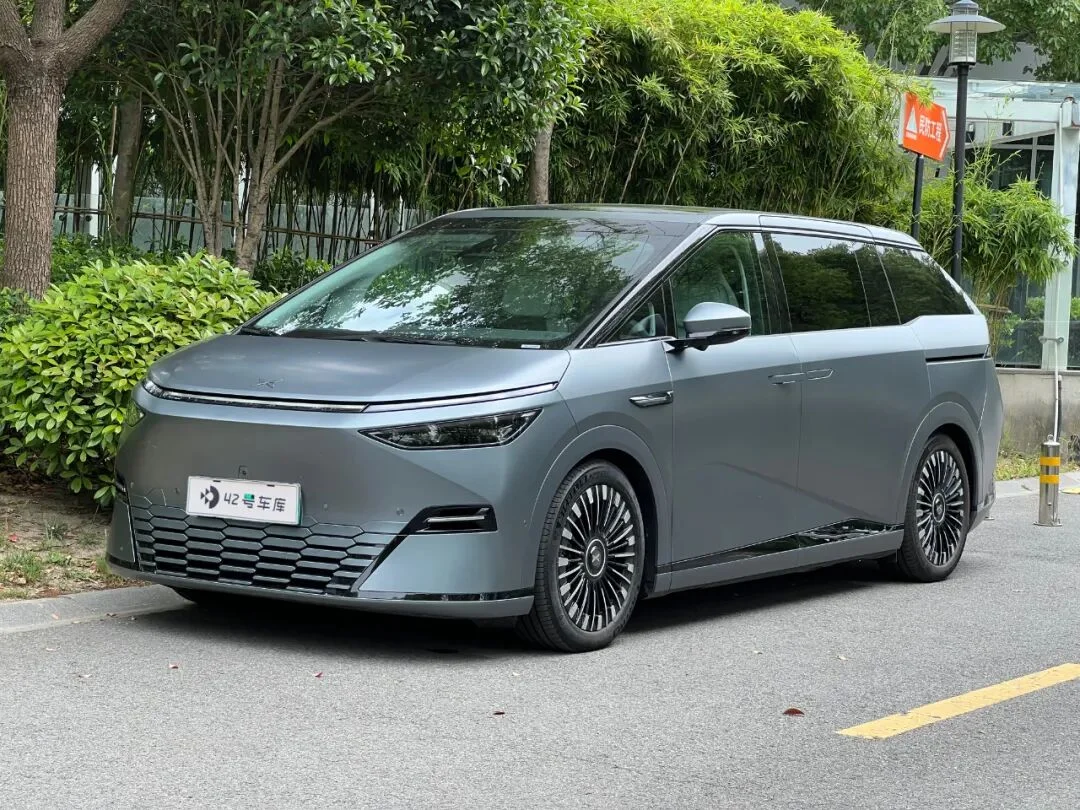
Is it believable that a massive MPV measuring 5.3 meters in length achieves urban energy consumption comparable to a sedan? During our XPENG X9 urban range test, the displayed energy consumption was so low that I hardly trusted my eyes. It is undeniable that XPENG has distinct advantages in energy management.
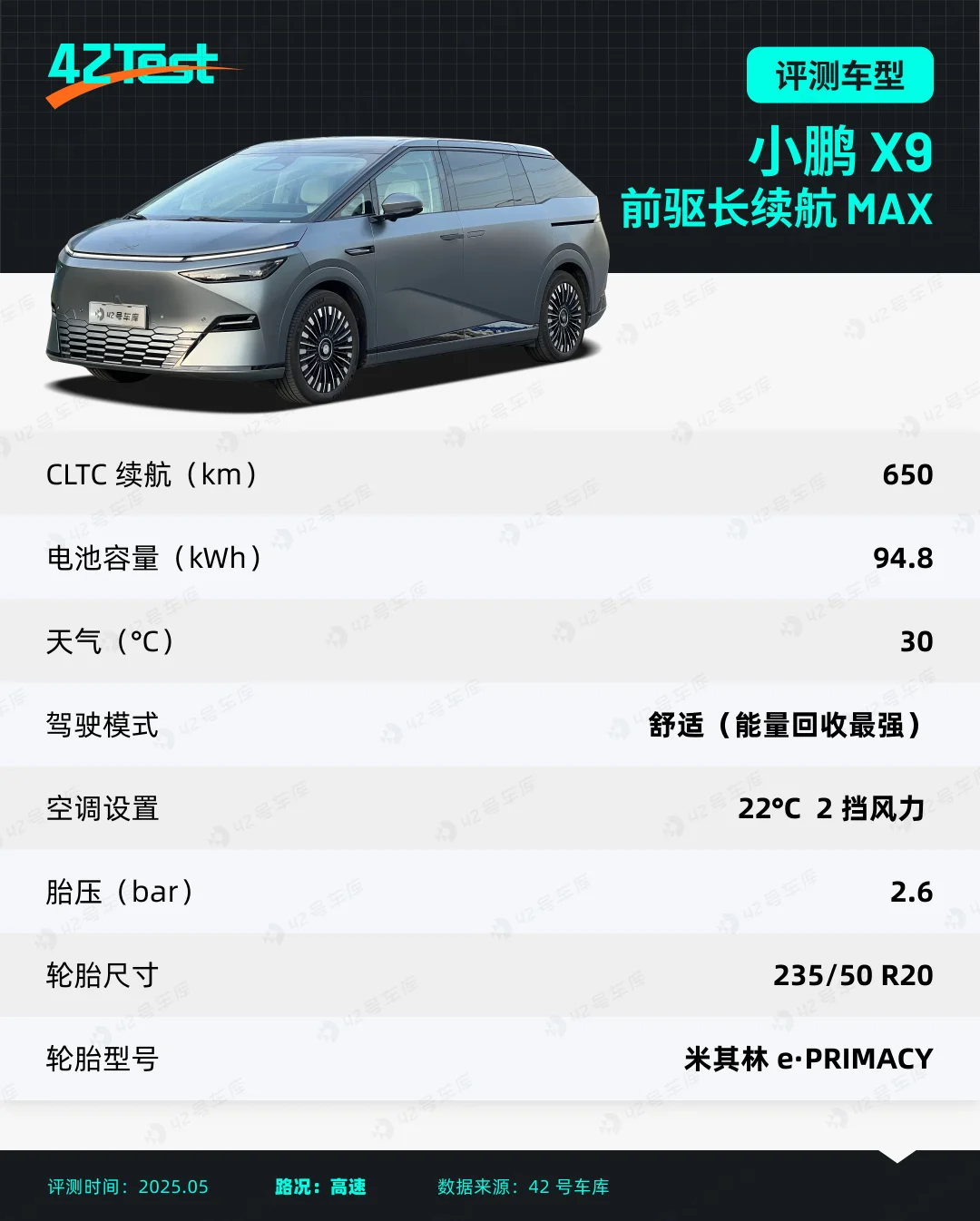
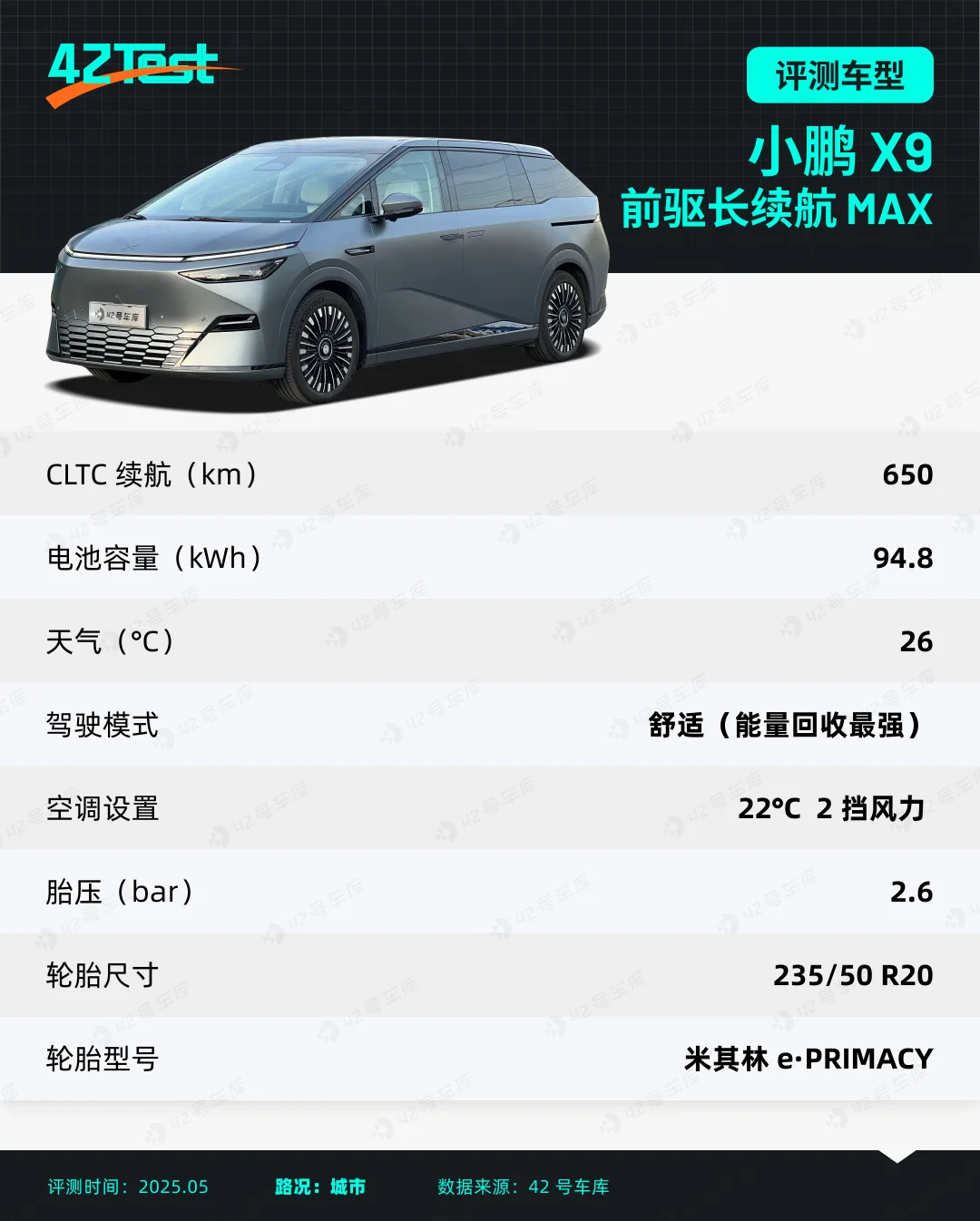
We tested the entry-level version of the 2025 XPENG X9: the front-wheel-drive Long Range Max, priced at RMB 359,800. This is currently the most recommended variant in the XPENG X9 lineup. Compared to the three higher-priced versions, it shares identical chassis hardware, intelligent driving features, and comfort equipment; the only differences lie in battery capacity and motor configuration.
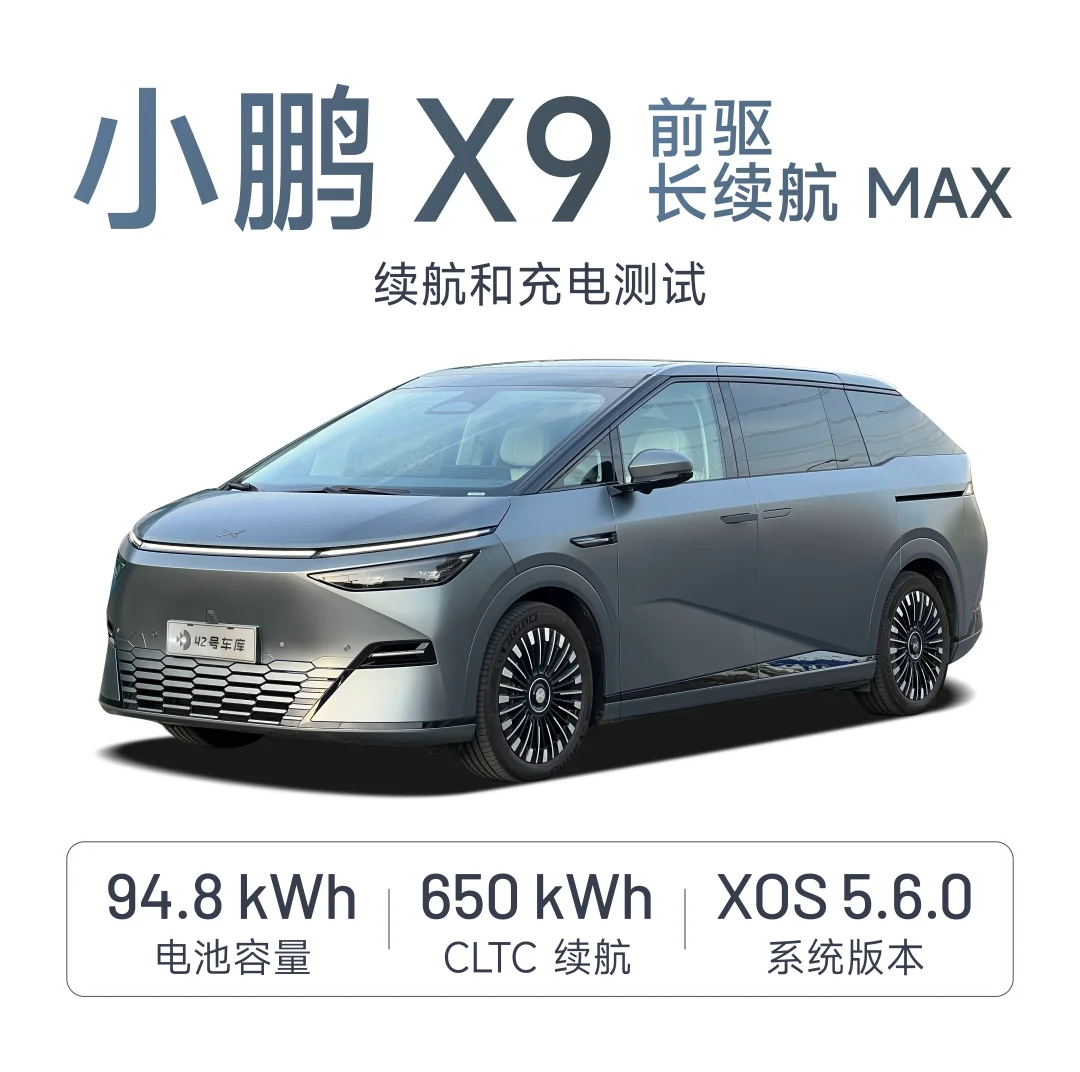
Although classified as the entry model, the Front-Wheel-Drive Long Range Max features a substantial 94.8 kWh lithium iron phosphate (LFP) battery. Notably, it supports 5C charging, whereas the more expensive ternary lithium versions are limited to 3C charging—a setup that seems counterintuitive.
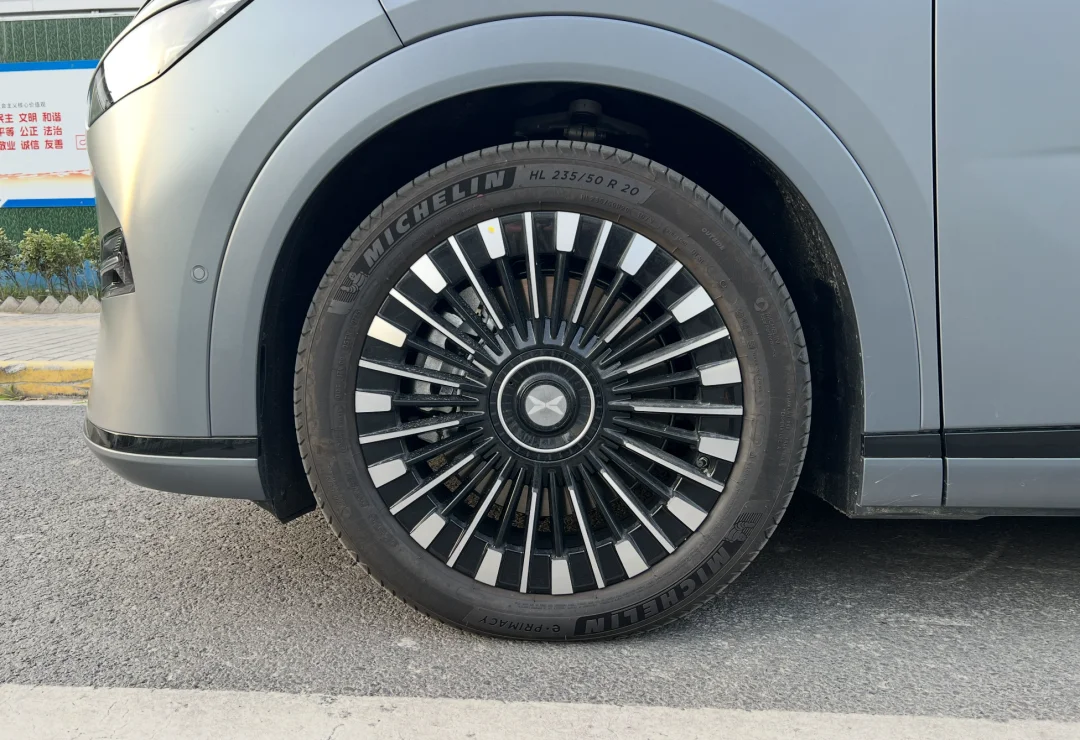
The official CLTC range for the Front-Wheel-Drive Long Range Max is 650 km. Interestingly, our test vehicle was equipped with optional 20-inch Starlight Floating wheels rather than the standard 19-inch set. Yet, the full-charge display still showed a CLTC range of 650 km. Does wheel size truly have no impact on the XPENG X9’s energy consumption? Even though the tires are Michelin e·PRIMACY models designed for quietness and efficiency, such minimal variance seems excessive.
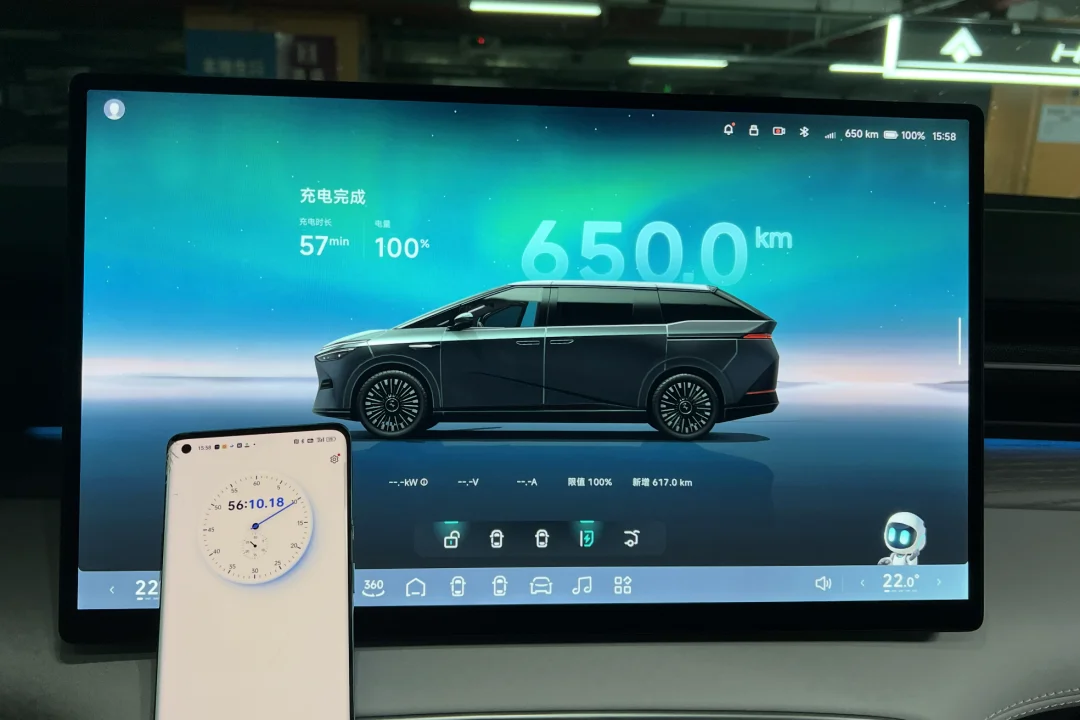
With this question in mind, we began our test. First, let’s outline the conditions: following 42Test standards, we set the air conditioning to 22°C with fan speed level 2 and turned on A/C. Cold tire pressures were adjusted to the recommended 2.6 bar as specified on the vehicle’s placard. Driving mode was set to Comfort, energy recovery to its highest setting, and the trip meter was reset before starting the highway and urban range tests.
01Highway Range
As per convention, we selected a highway route with a uniform speed limit of 120 km/h to maintain a high average speed. Throughout the drive, we used the highway assist system as much as possible, setting the speed limit offset to +10 km/h to mimic typical driver behavior on highways. The highway segment started with a full charge and ended when the displayed battery level reached 5%.
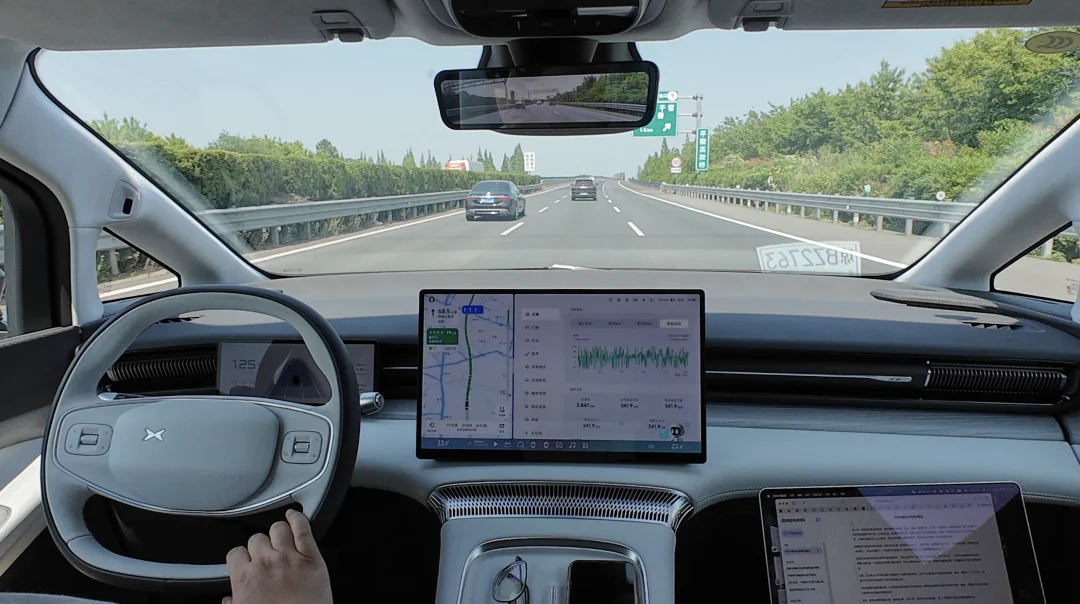
Before the test, I assumed that the XPENG X9 Front-Wheel-Drive Long Range Max, with its relatively small battery and large MPV body, would finish the highway portion quickly. However, my expectations were too low. Starting at 100% charge, it took 4 hours and 37 minutes on the highway for the display to drop to 5%, showing a remaining range of 35 km.
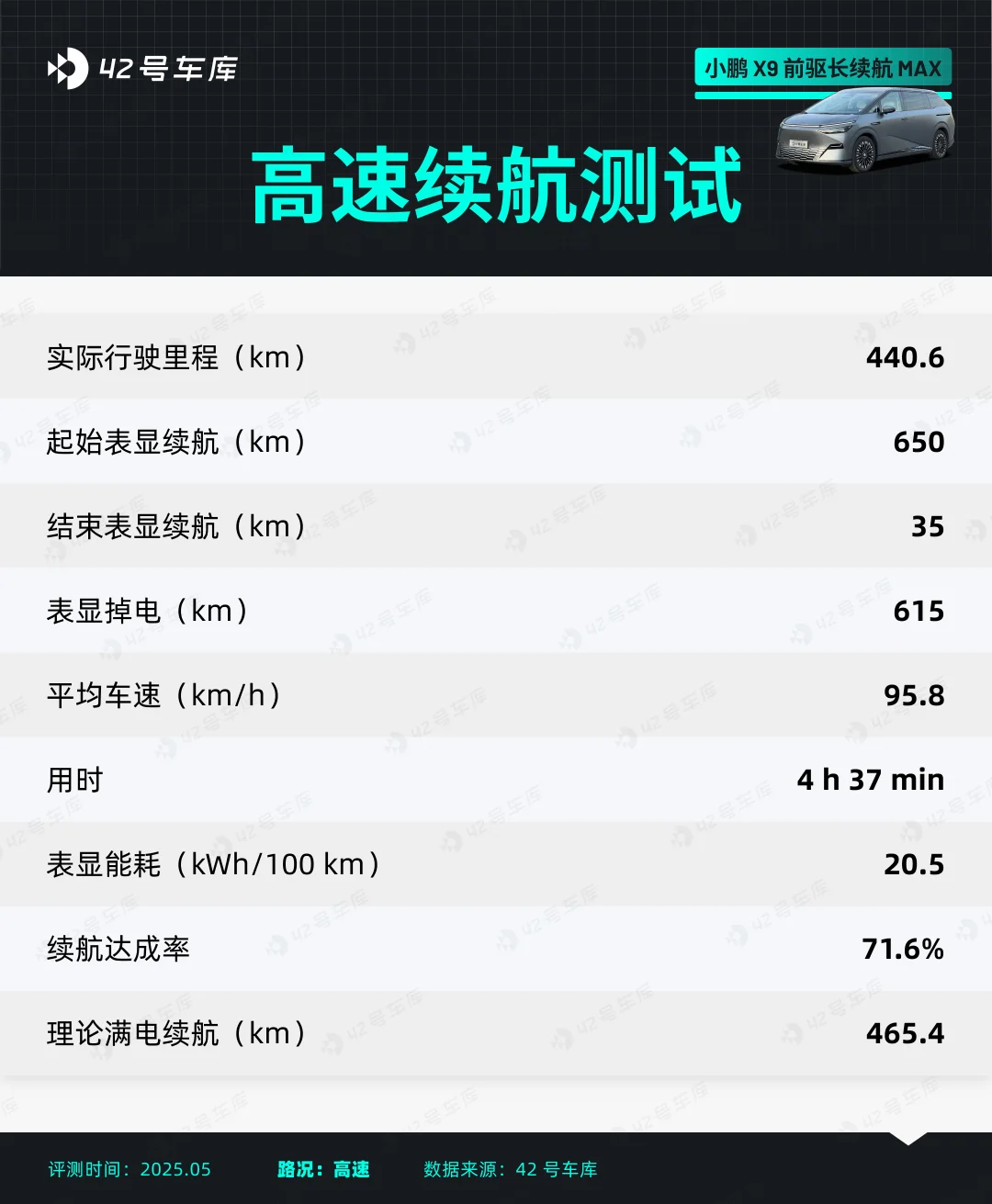
During the entire highway segment, the XPENG X9 Front-Wheel-Drive Long Range Max traveled 440.6 km, with an average displayed energy consumption of 20.5 kWh/100 km and an average speed of 95.8 km/h. Although the average speed did not exceed 100 km/h, it is still quite high for highway driving. Given the vehicle’s dimensions and this average speed, the energy consumption performance is considered excellent.
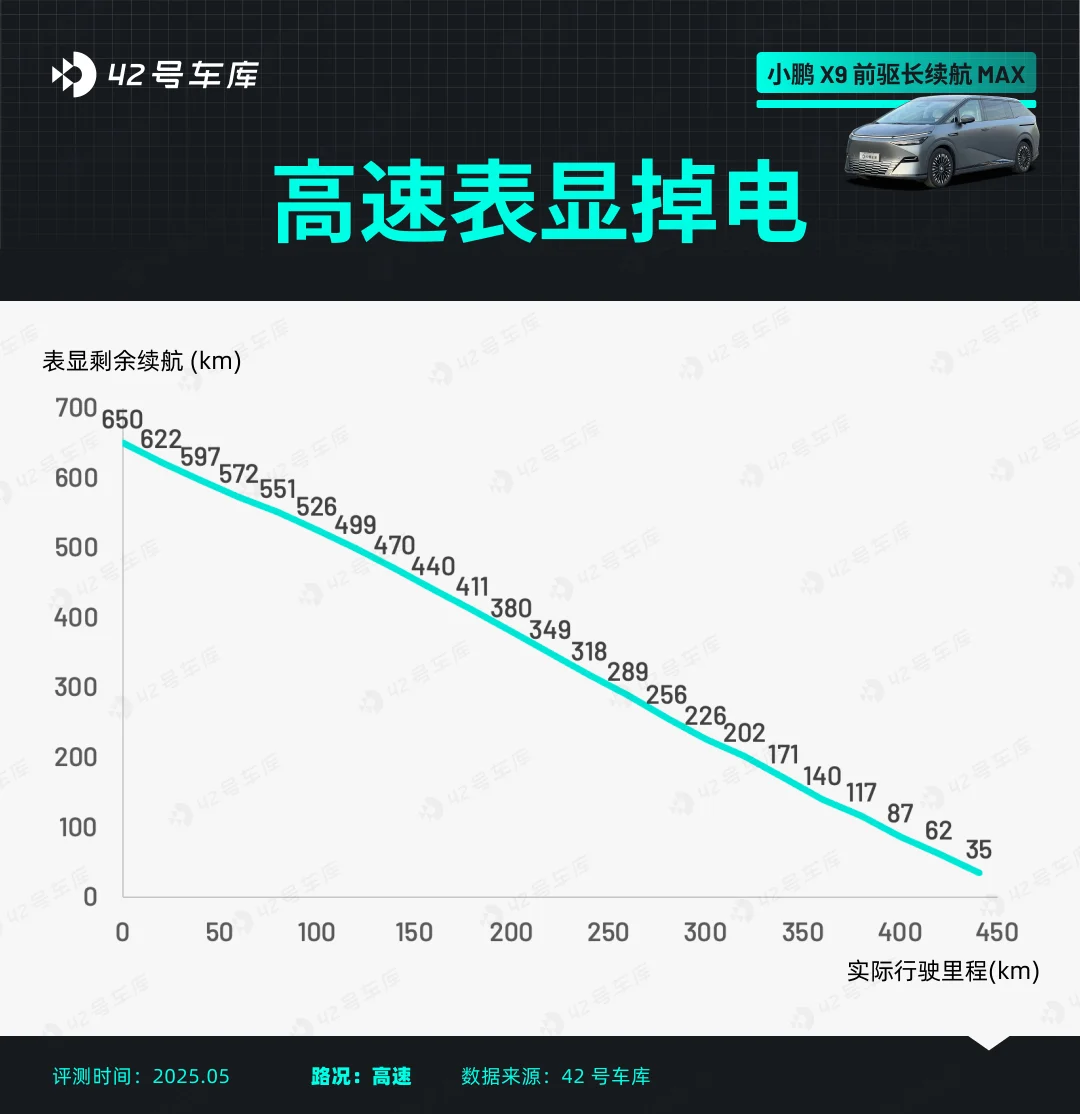
The 2025 XPENG X9 Front-Wheel Drive Long Range Max achieved a highway range attainment rate of 71.6%, with a theoretical highway range of 465 km. In this test, there were two occupants; if the vehicle were fully loaded with six people, the range attainment rate would likely be lower. However, achieving a highway range of approximately 400 km should still be feasible. If readers wish to see the results for the X9’s highway range under full-load conditions, please let us know in the comments.
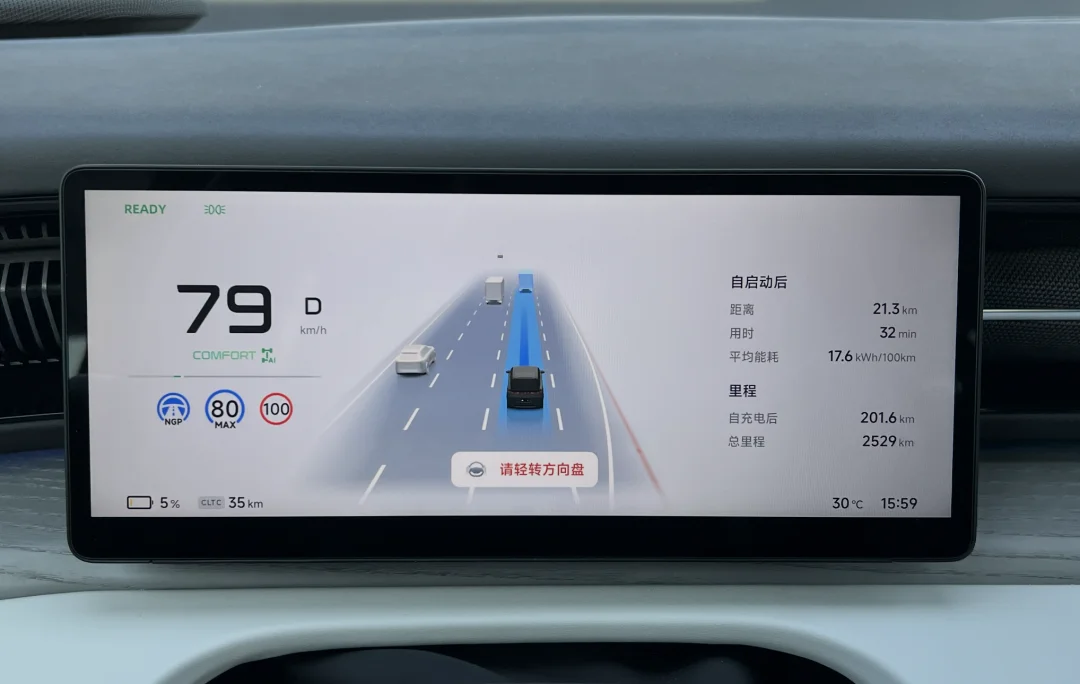
During the highway segment, we also noted that wind noise control is not optimal. At speeds exceeding 100 km/h, a noticeable roaring sound can be heard in the front seats. Improving this aspect would be beneficial. Additionally, while the 2025 XPENG X9 comes standard with the XNGP driver assistance system across all trims, it still uses a torque-steering wheel. Although less effort is required compared to previous models, given the vehicle's price point, a capacitive steering wheel would have been more appropriate.
02Urban Range
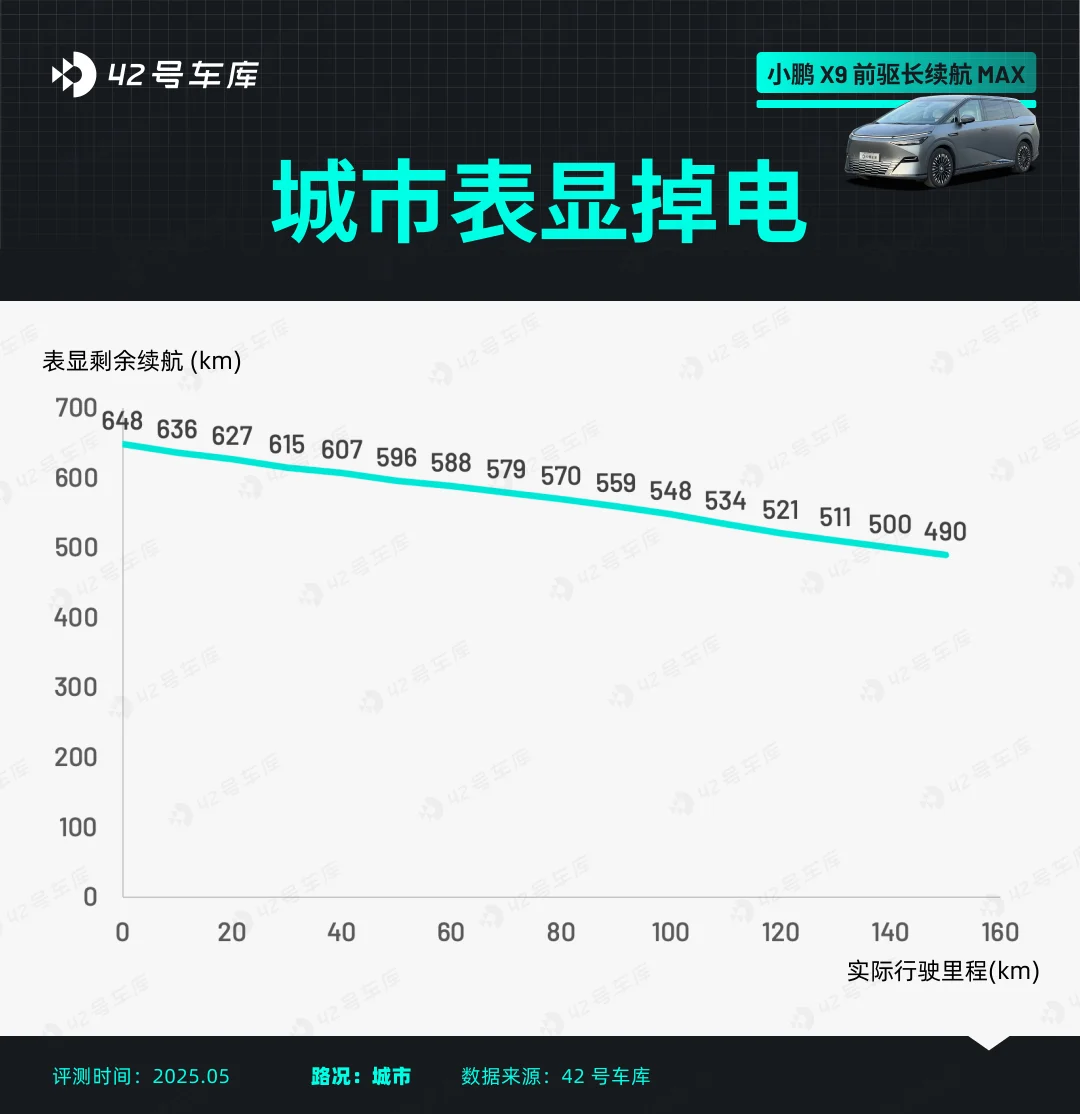
Compared to highway driving, the energy consumption of the 2025 XPENG X9 Front-Wheel Drive Long Range Max in urban settings was truly surprising. The route followed the 42Test standard: first driving 100 km on the Shanghai Outer Ring Road, then proceeding to congested surface roads for another 50 km, aiming to simulate daily urban driving conditions as closely as possible.
With an average speed of 33.3 km/h, the XPENG X9 Front-Wheel Drive Long Range Max achieved an impressive energy consumption of 15 kWh per 100 km, comparable to many sedans. Based on this performance, its urban range attainment rate reached an astonishing 95%. Although the temperature was a favorable 26°C for electric vehicles, it was not so ideal as to justify such extreme efficiency. We did not expect that among all the pure electric models we have tested, the highest urban theoretical range attainment rate would belong to an MPV.
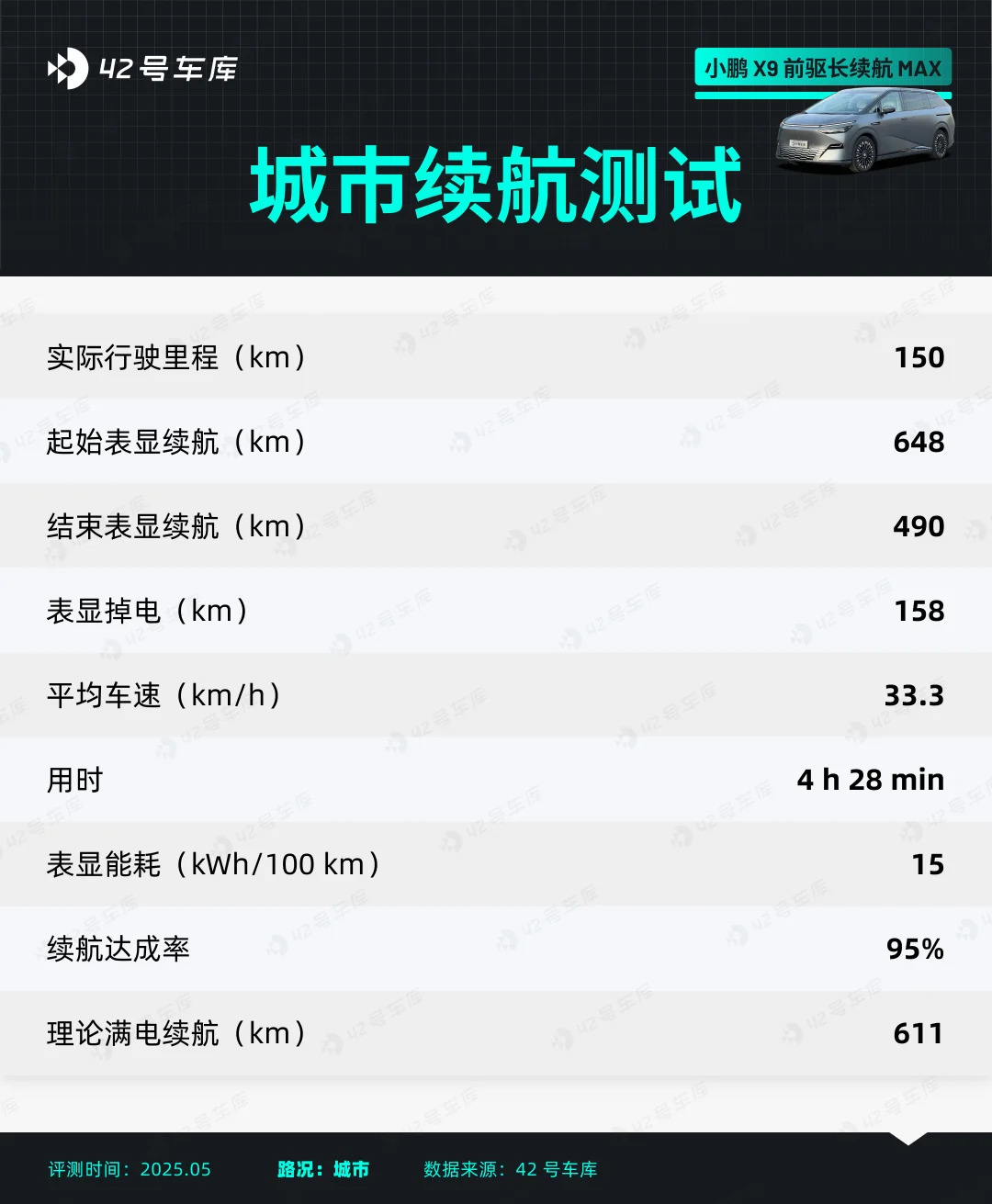
At this average speed and energy consumption rate, the XPENG X9 Front-Wheel Drive Long Range Max has a theoretical range of 611 km. If used primarily for school runs, this range significantly reduces charging frequency, sparing family members from worrying about battery levels. Of course, if you choose the 2025 XPENG X9 Front-Wheel Drive Long Range Max with 5C support, charging concerns are minimal due to its fast charging speed.
03Charging Test
Given the 5C capability, we tested it using our standard Huawei 600 kW liquid-cooled charging pile.
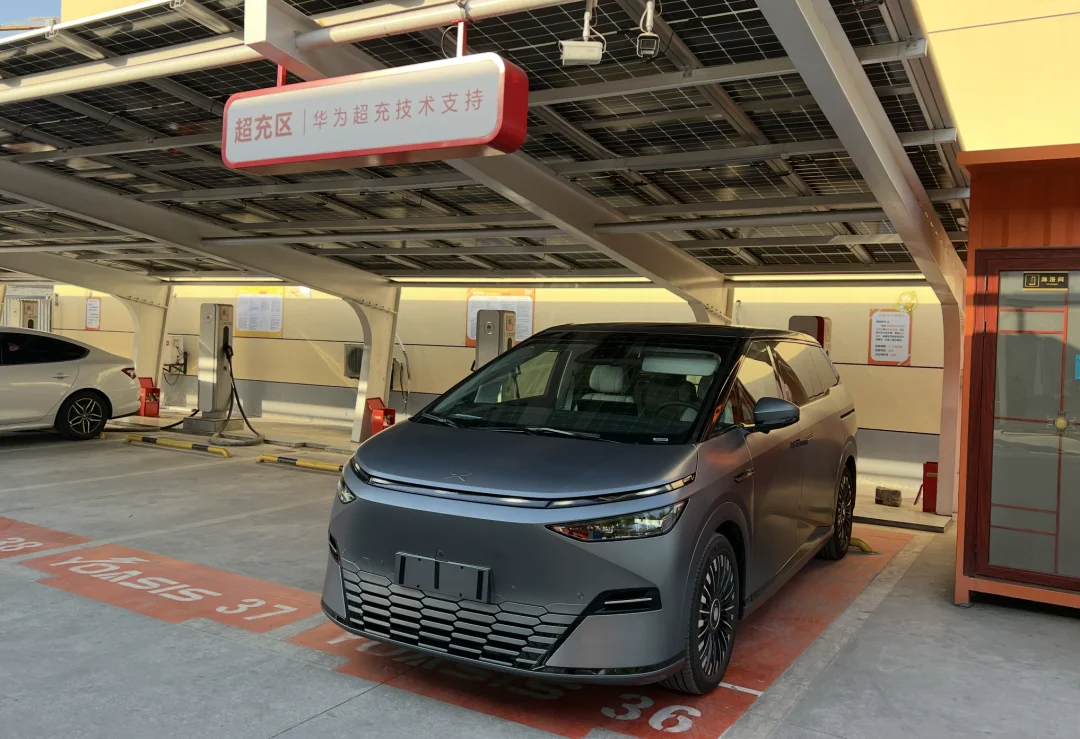
After starting the charge, the XPENG X9 Front-Wheel Drive Long Range Max quickly demonstrated the power of 5C technology. Starting at 5% state of charge (SoC), the initial power reached 274.1 kW. Just after crossing 10% SoC, it hit its peak power of 420 kW, securing the second spot on our garage’s charging peak power list.
Who holds the top spot? It remains the Li MEGA. When the MEGA launched last year, we tested its charging capability on a Huawei 600 kW liquid-cooled pile, recording a peak power of 324 kW. Later, users reported that the MEGA’s charging power had increased. In early this year, we retested it, and the peak power reached 450 kW, suggesting an optimization of the charging protocol. This peak is now very close to that of Li’s own 5C charging piles.

Regarding XPENG X9’s charging performance, its 420 kW peak power was maintained until the state of charge (SoC) reached 33%, after which it began to decline. However, the drop was modest, falling only from 420 kW to 382 kW, keeping the power output at a very high level. The vehicle sustained approximately 320 kW up to 74% SoC. This strong peak-power retention resulted in an impressive average charging power of 326 kW during the 5% to 80% charge cycle.
High average power translates to rapid charging speeds. XPENG X9 requires just 13 minutes to charge from 5% to 80%. This is roughly the time it takes for a quick restroom break, meaning the car will be nearly ready by the time you return. To avoid parking fees for occupying a charging spot, it is advisable to keep your restroom visits brief.
You can also choose to charge the vehicle to full capacity. XPENG X9’s charging speed remains robust even in the final 20%; at 90% SoC, the charging power is still 158 kW. The total time to charge from 5% to 100% is exactly 30 minutes, with the last 20% taking 17 minutes. For daily use, charging to 80% offers a better experience due to the faster rate.
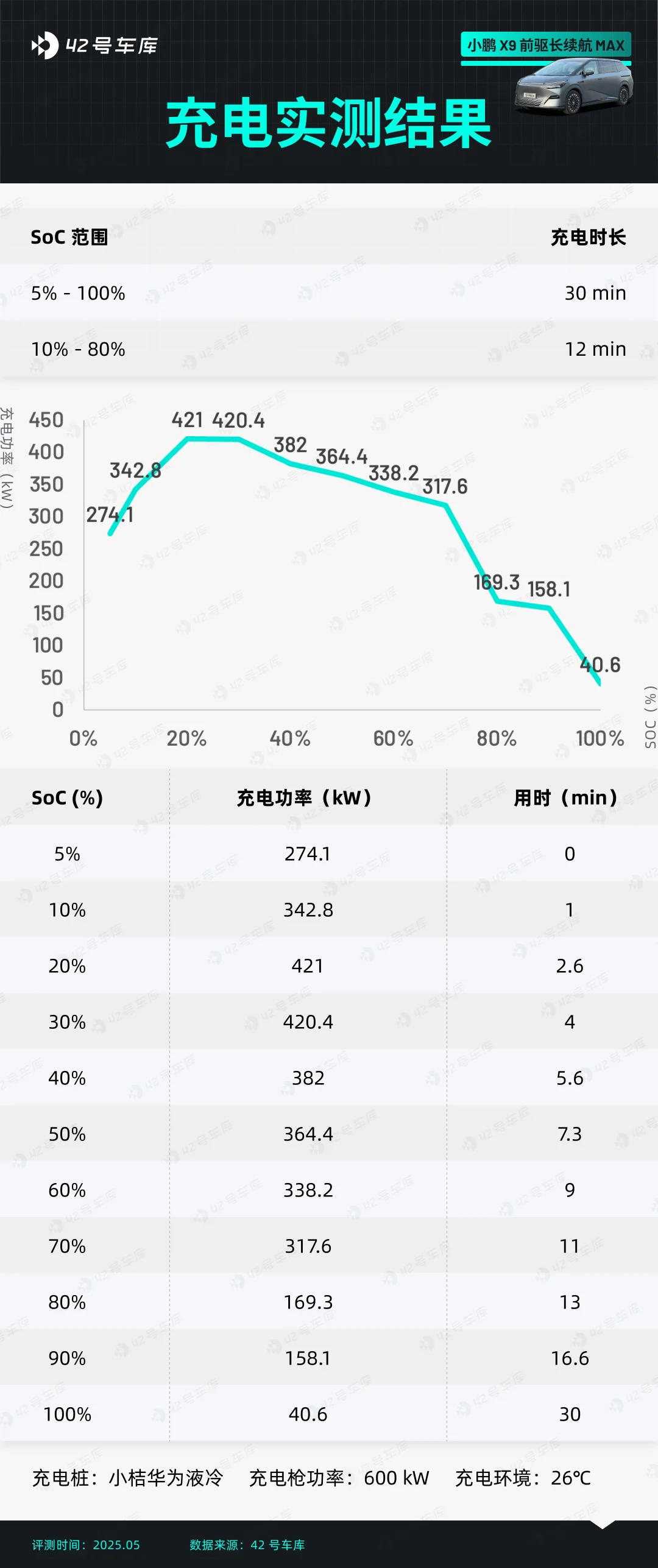
In addition to ultra-fast chargers, we also took the XPENG X9 Front-Wheel Drive Long Range Max to test charging speeds at more common 120 kW chargers. With this combination of 800 V and 5C, it is unsurprising that the power was fully utilized when using 120 kW chargers. However, somewhat strangely, the XPENG X9's peak power state only lasted until 80%, after which it began to decline. It is worth noting that on 600 kW liquid-cooled chargers, the power was still 158 kW at 90%. The reason for this is unknown.
Ultimately, the XPENG X9 front-wheel-drive long-range Max took 39 minutes to charge from 5% to 80% on a 120 kW charger and 56 minutes in total to charge from 5% to 100%. This comparison shows that the advantages of 5C are only evident on ultra-fast charging chargers.
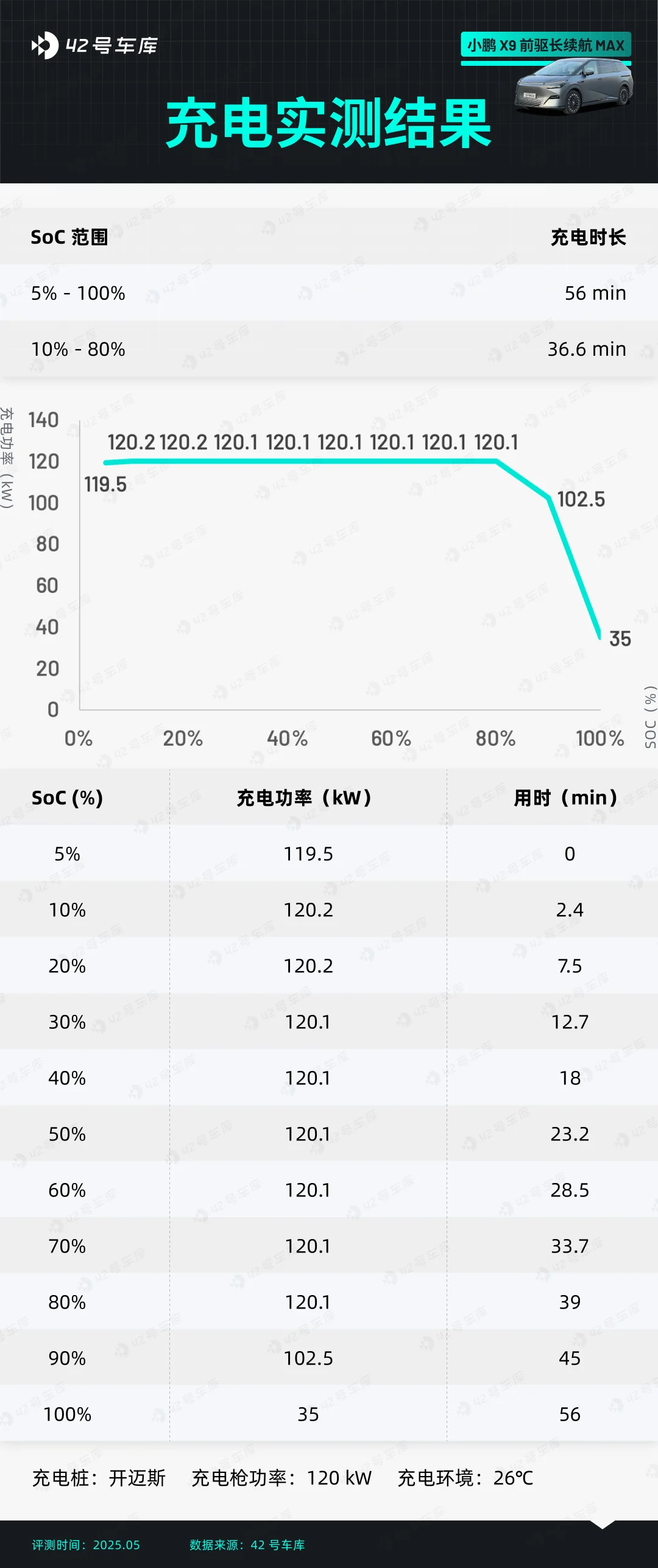
Beyond those two third-party chargers, we also attempted to test the XPENG X9 at an XPENG S5 ultra-fast charging station to see what power output its 5C battery could achieve on official infrastructure. After some searching, we found that XPENG S5 stations are scarce in Shanghai, with only three located in the entire city.
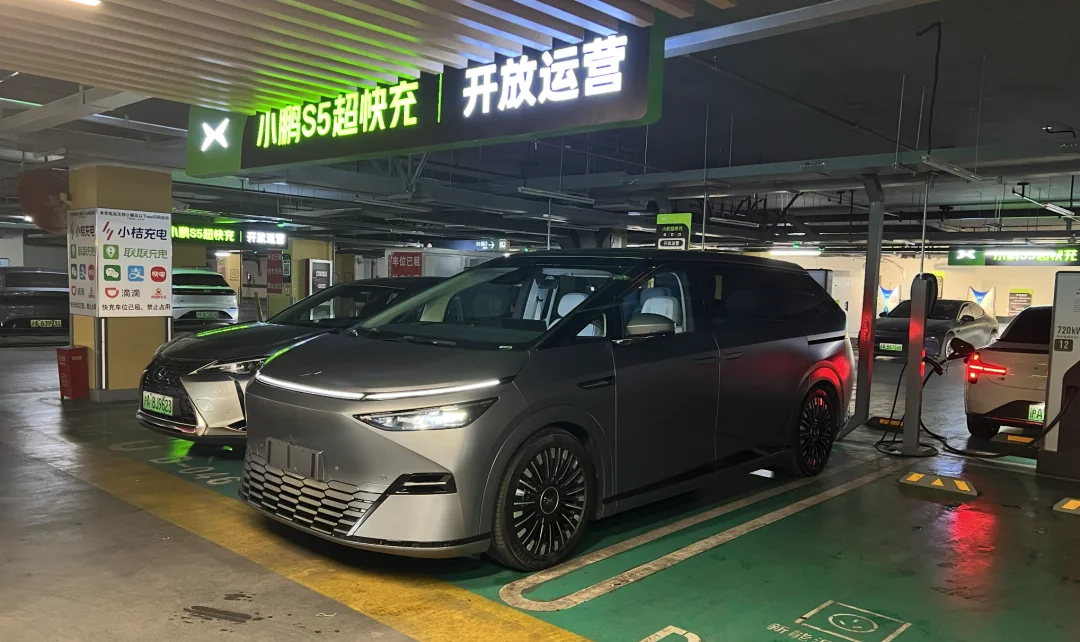
Because our test vehicle carried a temporary license plate from another province, we ultimately chose to head to an S5 station in Pudong for testing. Unfortunately, that station was too busy; we visited twice but were redirected both times, capping peak power at around 180 kW, and we were forced to abandon the attempt.
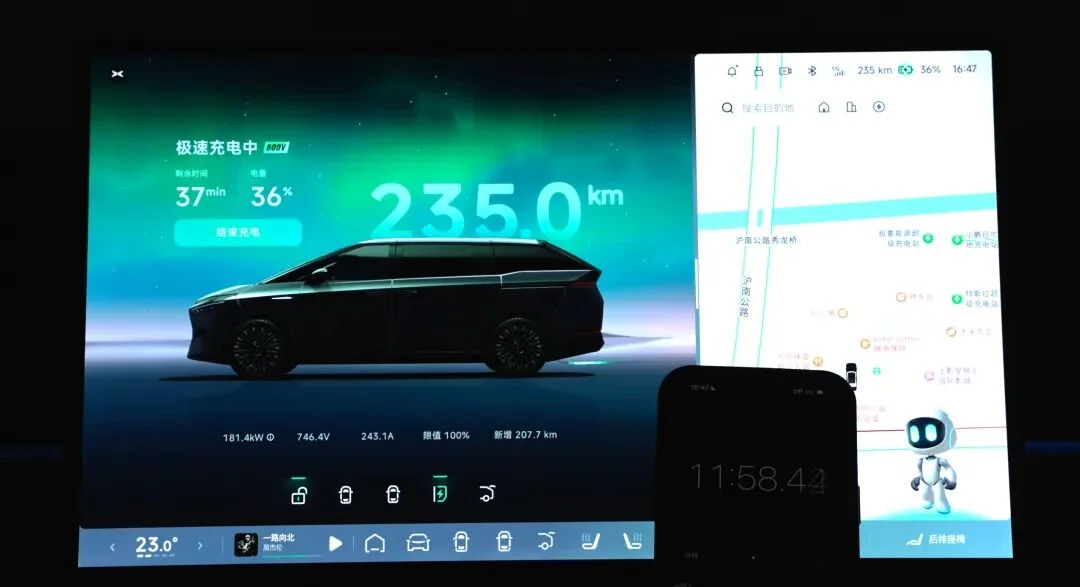
This incident indirectly highlights that to deliver a good ultra-fast charging experience, high power must be maintained not just by the vehicle’s capabilities, but also by the charging infrastructure. Otherwise, as our experience at the XPENG S5 station showed, the advantages of an 800 V architecture paired with a 5C battery may not be realized.
04Conclusion
Before starting the test, we did not anticipate that the entry-level XPENG X9 Front-Wheel Drive Long Range Max would deliver such pleasant surprises in terms of range and charging performance. Based on past testing experience, large and heavy MPVs are rarely known for energy efficiency. However, the XPENG X9’s results have refreshed our understanding of energy consumption in this vehicle class, particularly in urban driving. Both its specific energy consumption figures and its actual range achievement rate are outstanding.
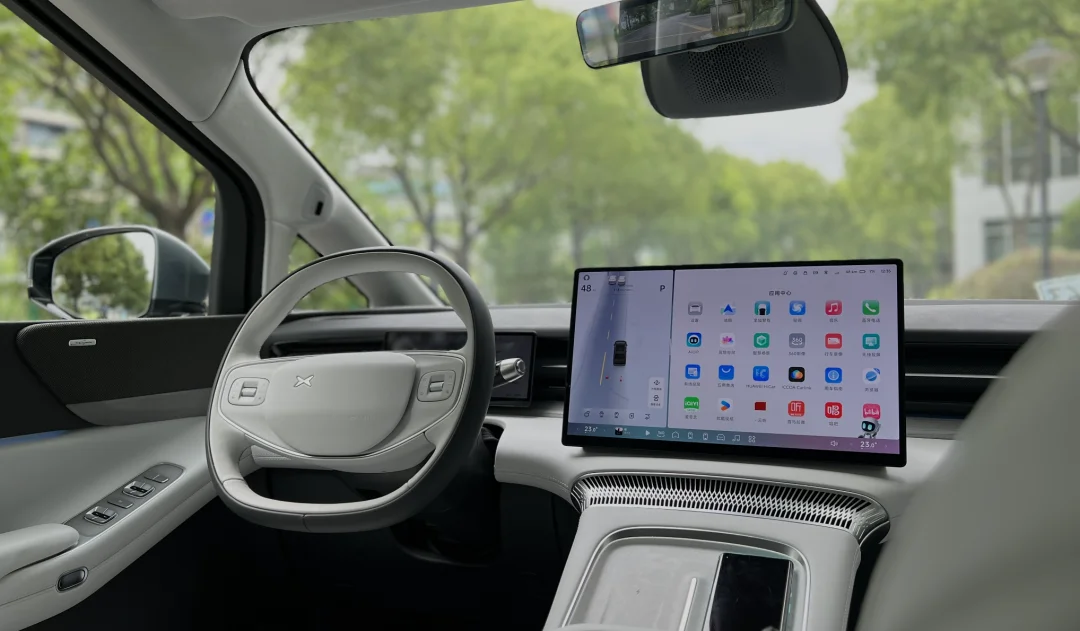
With excellent energy efficiency and the 5C ultra-fast charging experience, the XPENG X9 Front-Wheel Drive Long Range Max variant stands out even more for its cost-effectiveness. Especially with the 2025 model now standardizing driver assistance, air suspension, rear-wheel steering, and second-row zero-gravity seats, the advantage of the high-spec trim seems less pronounced. The vehicle offers an entry-level price but a premium experience, which may be the reason for the XPENG X9's strong sales performance in May.
Written by: Wentao Edited by: Wentao