


Li Auto Cuts Prices on L Series and MEGA by Up to RMB 30,000
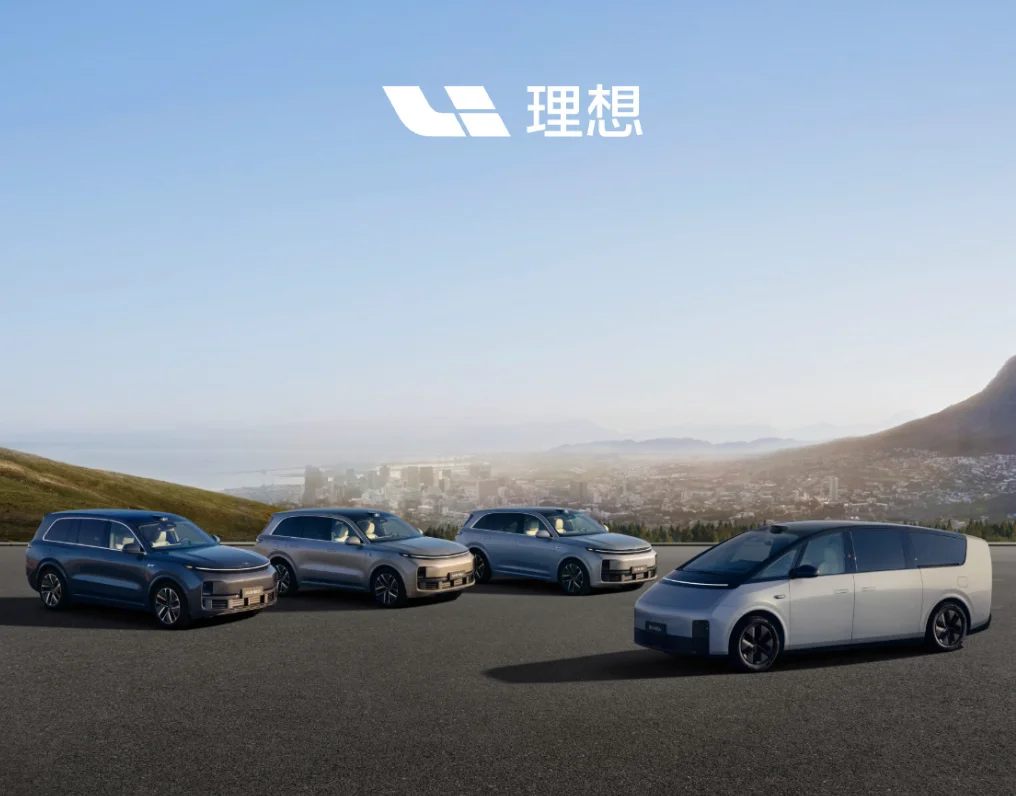
Li Auto, actively seeking change, has just implemented the largest adjustment to its pricing structure since its inception.
This morning, Li Auto announced a new pricing system for three models in its L series—the Li L7, Li L8, and Li L9—as well as the MEGA. Specifically:
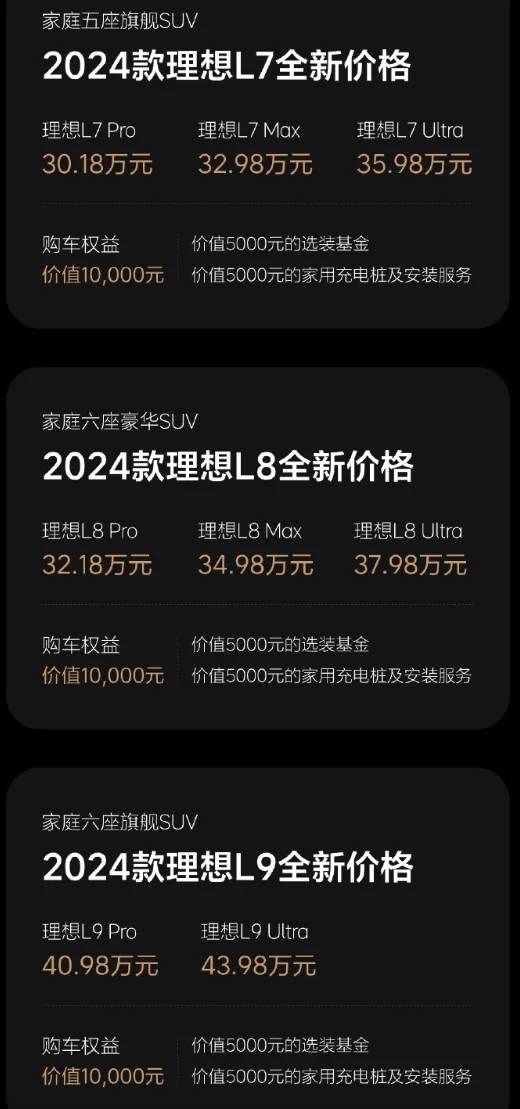
The 2024 Li L7 is available in Pro, Max, and Ultra trims, priced at RMB 301,800, RMB 329,800, and RMB 359,800, respectively.
The 2024 Li L8 is offered in Pro, Max, and Ultra trims, with prices of RMB 321,800, RMB 349,800, and RMB 379,800, respectively.
The 2024 Li L9 comes in Pro and Ultra versions, priced at RMB 409,800 and RMB 439,800, respectively.
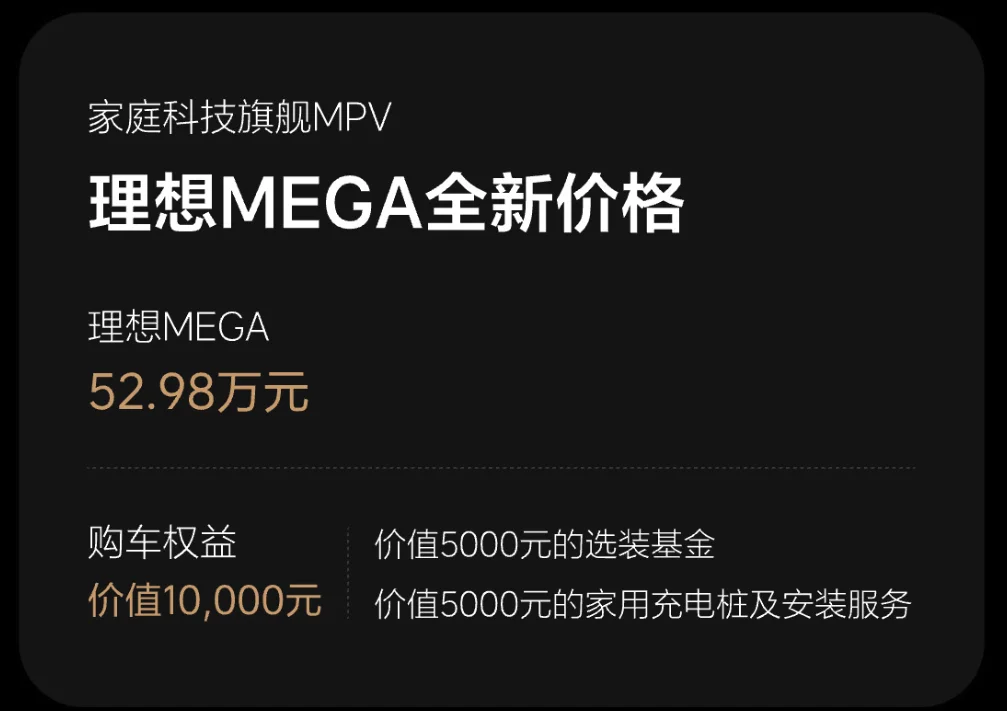
The latest price for the Li MEGA is RMB 529,800.
Official statements indicate that under the new pricing system, both new orders and existing unfulfilled orders will benefit from the updated prices. Additionally, Li Auto will provide cash rebates to owners who have already taken delivery of the 2024 Li L7, Li L8, Li L9, and Li MEGA.
With this price adjustment, the pricing range for the Li L series, excluding the Li L6, has been set between RMB 301,800 and RMB 439,800. Meanwhile, the price of the Li MEGA was also reduced by RMB 30,000, settling at RMB 529,800.
For Li Auto, this round of price adjustments carries profound significance. It is not merely a reactive measure to cope with increasingly severe external market competition; to some extent, it also represents a proactive transformation driven by Li Auto's self-reflection and active adjustments across multiple dimensions.
In simple terms, by lowering prices, Li Auto is working to "slowly climb out of the hole."
01Prices for the L7, L8 and L9 generally decline; L6 begins its journey from zero to one
For Li Auto, the impact of this pricing adjustment is most widespread on the three L-series models released prior to the launch of the Li L6 series: the 2024 Li L9, Li L8, and Li L7.
From the perspective of the logic behind price adjustments:
These three models no longer include an Air version. From a product configuration perspective, this means that the Li L9, Li L8, and Li L7 models all come standard with air suspension across their entire lineup.
The Pro versions of these three models have seen a price reduction of 18,000 yuan, meaning the starting price for the Li L7 Pro has been adjusted to 301,800 yuan, which is also the lowest price standard for these three vehicles.
The Ultra versions of the Li L9, Li L8, and Li L7 each saw a price reduction of RMB 20,000. This brings the maximum price for the Li L9 series down to RMB 439,800, while the Max versions of the Li L8 and Li L7 also dropped by RMB 20,000.
Consequently, within the RMB 300,000 to RMB 450,000 segment, these three models from the Li L series now tightly cover the price range from RMB 301,800 to RMB 439,800.
It is important to note that when the Li L series launched on March 1, it adopted a strategy of maintaining the same pricing as the previous generation. However, by mid-March this year, Li Auto adjusted the product configurations for these three models. It introduced an Air version without air suspension to lower the entry price, though deliveries had not yet begun.
This latest adjustment effectively removes the Air version while shifting the entire price band of the three Li L series models downward. Through these changes, Li Auto has passed on price benefits to consumers while keeping the overall market positioning of the three models unchanged.
Although the interim product adjustments may have appeared somewhat hasty or disorganized, the resulting price structure is a positive development for potential buyers.
According to internal sources, this adjustment reflects Li Auto’s comprehensive consideration of market competition and product positioning.
On one hand, macroeconomic headwinds have made consumer demand more conservative. Meanwhile, competition in the Li L series segment has intensified, particularly after BBA brands faced pressure, triggering widespread price cuts. Against this backdrop, Li Auto chose to proactively respond with an across-the-board price reduction for these three models.
On the other hand, from a product positioning perspective, the Li L7, Li L8, and Li L9 are positioned in the RMB 300,000 to RMB 500,000 price range. Although overall concessions were made, removing the Air trim levels allowed them to maintain a price floor of RMB 300,000.
From the standpoint of streamlining Li Auto's product lineup, this adjustment to the pricing structure is also the result of Li Auto simplifying its L-series offerings.
Interestingly, this price adjustment does not affect the recently launched Li L6.
According to relevant internal sources, during the early pricing process for the Li L6 in 2023, the company had considered positioning it at RMB 269,800. However, with the arrival of 2024 and the challenges faced by the Li MEGA, Li Auto made an active decision to lower the price of the L6 following organizational adjustments.
Therefore, the current price of the Li L6 reflects a decision based on adhering to the latest Li Auto pricing system, while fully taking into account the results of market competition.
Additionally, an insider close to Li Auto told us that within the company, the positioning and target customer base for the Li L6 are inconsistent with those of the Li L9, Li L8, and Li L7 models. After all, in the RMB 200,000 to RMB 300,000 price segment, market competition is exceptionally fierce. The Li L6 faces competitors such as the AITO M7, and the corresponding consumer group is relatively price-sensitive, leading to significantly different sales strategies.
This insider stated: "Inside Li Auto, we are now treating the L6 as a project going from 0 to 1, rather than one scaling from 1 to 10."
02Why did the Li MEGA drop in price by RMB 30,000?
In this major adjustment to the pricing structure, a notable development is that the Li MEGA's price was directly reduced by RMB 30,000, dropping from RMB 559,800 to RMB 529,800. Meanwhile, to appease existing MEGA owners who had already taken delivery of their vehicles, Li Auto implemented a strategy of providing a RMB 30,000 cash rebate.
This move benefits both new and existing users.
According to reliable information obtained by our team, the initial internal consideration for this round of pricing adjustments was to apply them only to the L series. However, following the recommendation of Donghui Ma, President of Li Auto, the company ultimately decided to lower the price of the MEGA by RMB 30,000 as well, serving as a form of compensation or explanation to MEGA owners.
In fact, the Li MEGA's price reduction accompanying the L series did not come as a surprise.
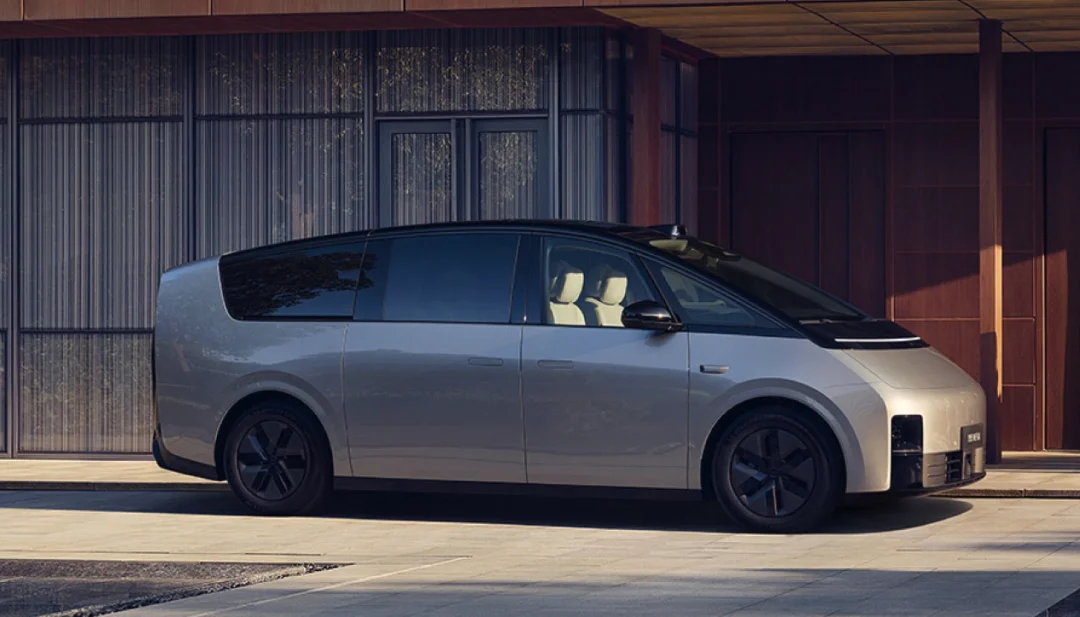
As Li Auto's first premium pure electric vehicle, the Li MEGA may not have carried heavy sales targets, but internally it did have specific volume goals. It is understood that Li Auto's initial monthly sales expectation for the MEGA was between 6,000 and 7,000 units. Current actual sales performance for the Li MEGA has fallen short of this target.
Therefore, using a price reduction strategy to attract potential buyers for the MEGA is a viable approach.
A source familiar with the matter told us that in response to the underwhelming market performance of the MEGA after its launch, Li Auto conducted a series of internal reviews and drew several lessons.
First, the charging issue.
The MEGA targets the premium pure-electric market above RMB 500,000. In this segment, customers value their time more and are consequently more concerned about charging for pure-electric vehicles, making direct-operated charging a necessary supporting service for automakers. Although Li Auto had built 5C charging stations before the MEGA, they were limited to highways rather than urban scenarios, which is the core problem.
Second, the public relations issue. This insider stated that, according to Li Auto’s internal review, the negative publicity facing the MEGA after its launch was far more severe than anticipated. As the controversy intensified, it also impacted the MEGA’s sales to some extent.
Of course, the launch of the Li MEGA also affected the pace of the frontline sales team to a certain degree. From the perspective of sales efficiency, the initial sales strategy for the MEGA consumed the energy of Li Auto’s frontline sales staff and squeezed the market acceptance of the Li L series. As Xiang Li himself noted, "the main model, the Li L8, didn't even have display space in showrooms anymore."
From the results, this not only failed to achieve the predetermined sales target for the MEGA but also negatively impacted the sales efficiency of the L series.
Furthermore, during its internal review, Li Auto realized that launching the 2024 models of the Li L9, Li L8, and Li L7 alongside the MEGA at the same event was ill-timed. Essentially, this was a negative outcome driven by Li Auto's "desire for sales volume."
Despite this, the problems faced after the MEGA's launch also carry positive significance.
A source close to Xiang Li told us that after the setbacks with the MEGA, Li Auto conducted significant internal reflections and learned valuable lessons. This process helped clarify the company's strategy in the pure electric vehicle market, allowing it to avoid similar pitfalls when launching future volume-focused electric SUVs.
Conversely, if the issues had arisen with Li Auto's pure electric SUV lineup, the consequences would have been far more severe.
The same insider revealed that during internal reviews, Xiang Li personally acknowledged that the MEGA was designed for him. However, he insisted that the Li MEGA would maintain its product positioning targeting family users, a core aspect of Li Auto's brand identity that cannot be changed.
03Slowly climbing out of the pit while laying the groundwork for the future
This recent adjustment to the pricing structure clearly indicates that, following the unfavorable launch of the MEGA, Li Auto has entered a phase of rapid strategic adjustment.
These changes were already hinted at in an internal letter written by Xiang Li in March. In that letter, he stated that Li Auto's excessive focus on sales volume had significantly eroded its strengths in user value and operational efficiency. Consequently, the company aims to lower its sales expectations and desires, returning to healthy growth.
An insider noted that Li Auto has recently emphasized 'lowering expectations' repeatedly. This shift reflects both an internal correction of past overconfidence and a realistic assessment of the broader external market environment.
After adjusting its mindset, Li Auto has taken more decisive actions. Regarding this price adjustment, insiders stated that the company has 'completely abandoned illusions,' meaning it is fully committed to delivering the expected value to customers.
Beyond mindset, Li Auto conducted a crucial internal review focused on resolving issues in its existing decision-making mechanisms through organizational restructuring.
An insider involved in Li Auto's internal review told us that while Li Auto has consistently focused on process management, bringing many benefits and enhancing operational capabilities, the emphasis on processes also trapped some key business leaders who drive actual results. This caused Li Auto to temporarily resemble traditional automakers where top executives issue commands and subordinates merely execute.
Li Auto has recognized this problem across all levels and implemented adjustments.
According to sources within Li Auto, the recent major adjustment to its pricing system was initiated by the newly established Product Department during an organizational reshuffle in early April. Specifically, Liu Jie convened meetings with the new product line team, which concluded that the L series needed a price cut. Liu Jie successfully persuaded Xiang Li of this course of action.
In essence, the current mechanism allows internal voices to challenge Xiang Li’s personal decisions—a significant shift. The sensitivity of Li Auto’s internal organizational adjustments is reflected in this change to the pricing structure.
It is important to note that despite the substantial price adjustments and concessions to users, Li Auto has not lost its strategic footing as a whole.
An insider close to Xiang Li stated that his approach during this pricing adjustment was clear: he agreed to the proactive strategy of lowering prices but simultaneously emphasized maintaining sales volume while ensuring the company retains healthy profitability and stable cash flow.
After all, "Li Auto is a company that carefully calculates its books."
Furthermore, Xiang Li himself repeatedly emphasized at internal meetings that the company must invest in next-generation technologies, particularly those centered on autonomous driving, such as end-to-end models and large language models. In the long term, as intelligent capabilities advance in both software and hardware, electric vehicles and humanoid robots will become different carriers of the same underlying technology; this is also where Li Auto intends to make significant investments and layout its strategy.
From this perspective, although Li Auto is striving to extricate itself from current difficulties, its vision remains focused on the long-term horizon of steady progress.
Looking back at Li Auto’s development since its inception, the Li ONE helped the company achieve its initial breakthrough from zero to one. The three models in the Li L series (Li L9, Li L8, and Li L7) enabled Li Auto to build out its product lineup and achieve commercial success. Meanwhile, the Li MEGA marks a new phase for the brand, entering a dual-track strategy combining extended-range electric vehicles (EREVs) and pure electric vehicles (BEVs).
Currently, the start of this new phase has not been smooth, and the company has indeed encountered setbacks.
Fortunately, the mistakes Li Auto made were not fatal. It still possesses sufficient opportunity, room, and capability to adjust itself, though this will be a lengthy process. Adjusting the pricing structure is only the beginning. If Li Auto is to “slowly climb out of the hole,” as Xiang Li stated, it will require more time.
Written by: 308 Edited by: 308