


After Months of Fierce Competition, Li Auto Holds Firm at the Peak
On October 31, Li Auto released its third-quarter 2024 financial report. Both quarterly deliveries and revenue hit all-time highs. Quarterly net profit reached RMB 2.8 billion, marking the eighth consecutive quarter of profitability—a notably strong performance.
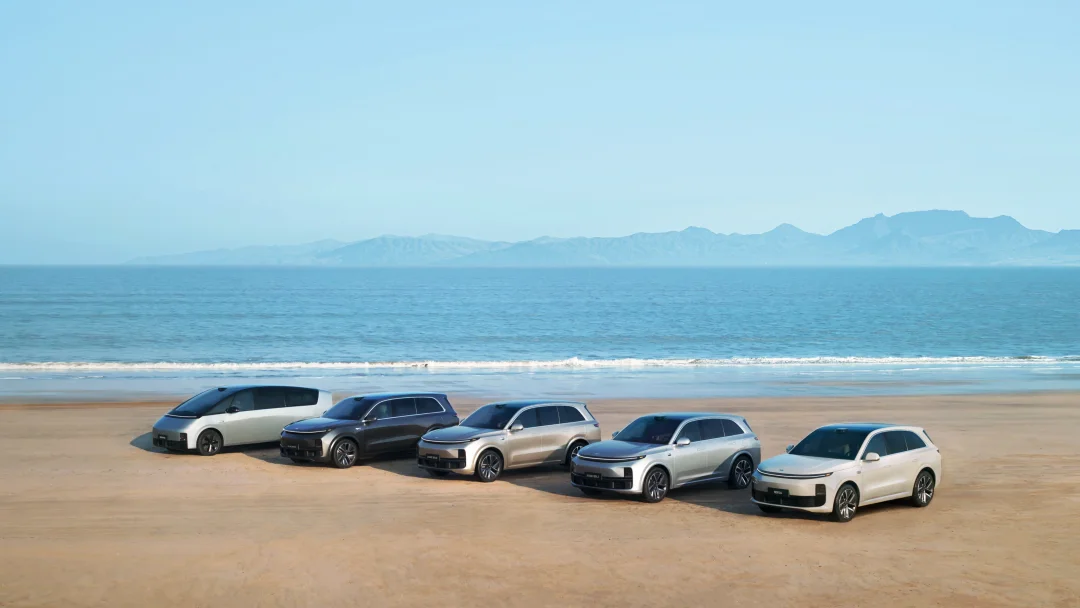
In China's luxury car market, Li Auto's third-quarter sales surpassed those of BMW and Audi in the Chinese market. This achievement stands regardless of body style or powertrain type.
During the earnings call following the report, Li Auto executives including Xiang Li and Donghui Ma addressed questions on products, market strategy, autonomous driving, charging infrastructure, and overseas expansion plans.
In the third quarter this year, Li Auto's market share in the NEV segment priced above RMB 200,000 reached 17.3%. Li Auto's long-term goal is to "capture more than 25% of the market share in the NEV segment priced above RMB 200,000".
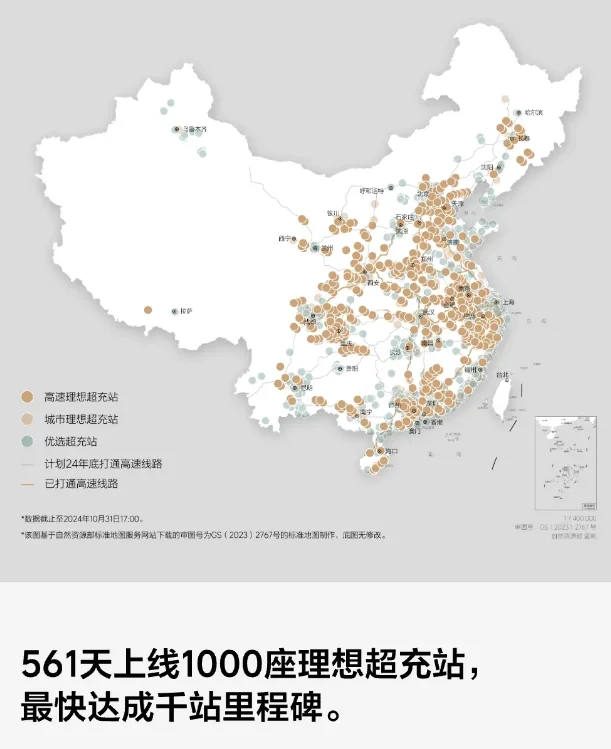
Throughout the third quarter, Li Auto steadily advanced its layout in sales, charging networks, and intelligent driving. Just yesterday, Li Auto achieved a milestone with over 1,000 operational charging stations across its network.
Building on this foundation, Li Auto has set ambitious targets for next year: by the launch of its pure electric models, more than 2,000 charging stations will be operational; by April next year, the network will cover the entire G318 National Highway; and by year-end, it aims to build 4,000 stations.
In intelligent driving, after rolling out "end-to-end + VLM" technology, Li Auto plans to fully deploy parking-to-parking driver assistance within this year. It will also introduce a feature allowing vehicles to pass through ETC toll gates without exiting autonomous mode. Additionally, Li Auto has begun pre-research on L4 autonomous driving, focusing on a reinforcement learning system that combines stronger vehicle-side VLA (Vision-Language-Action) models with cloud-based world models.
Donghui Ma judges that due to the massive investment required for autonomous driving vehicles, cloud infrastructure, and data, combined with increasingly demanding requirements for large model algorithms, the gap in autonomous driving capabilities among different companies will widen.
The topic of Li Auto's overseas expansion, which has been widely discussed recently, now has a clear target. Li Auto has already established service outlets in Kazakhstan, and its first stop for going global is set to be the Middle East region. However, Li Auto is not currently considering entering the Western European and North American markets.
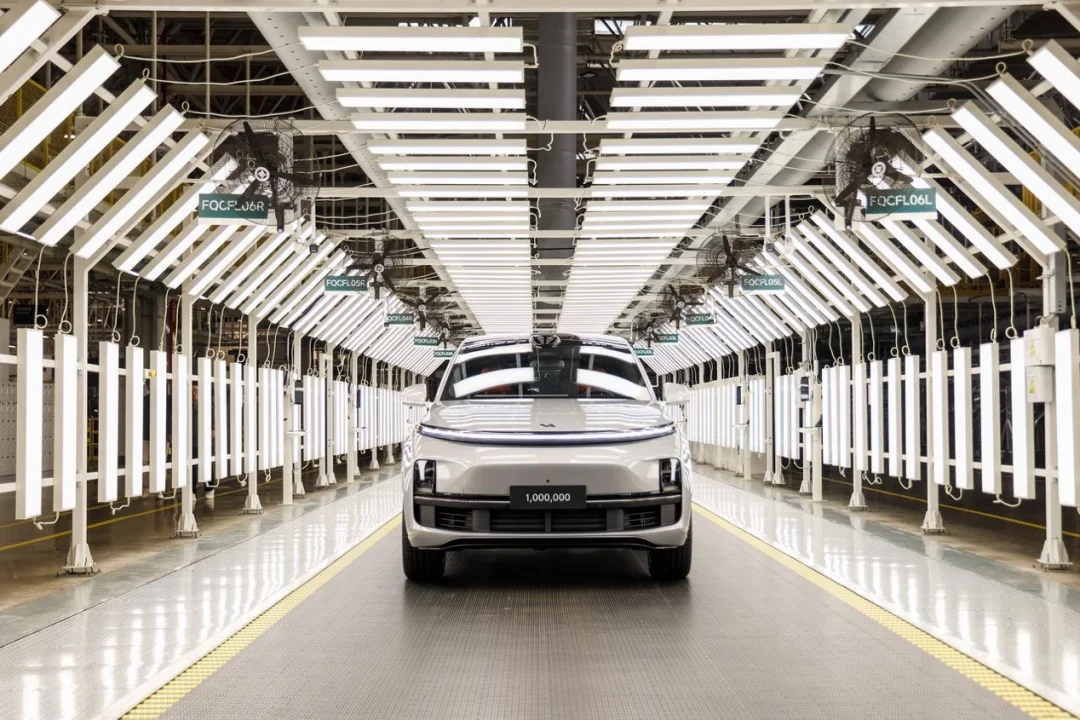
On October 18, the 1,000,000th complete vehicle of Li Auto—the Li L9—rolled off the production line at the Changzhou factory. Since the first Li ONE rolled off the line in November 2019, it took Li Auto 58 months to reach this milestone. Subsequently, Li Auto became the first Chinese new energy brand to break through the million-delivery mark.
Having emerged from its predicament, Li Auto has adopted a pragmatic, action-first approach across sales targets, delivery guidance at each stage, and the development of intelligent driving and charging networks. No longer aggressive, it has returned to a stable and healthy state.
But selling cars is like rowing upstream: if you don't advance, you retreat. After stabilizing operations, where is Li Auto's next growth point?
01Delivery and Revenue Hit Record Highs
With Tesla reporting its best third-quarter results to date, with revenue and profits surging, the market is also optimistic about Li Auto's Q3 performance, expecting it to replicate Tesla's success.
Li Auto has met this expectation, delivering a performance report that exceeded expectations:
Vehicle sales revenue reached RMB 41.3 billion, up 2.9% year-over-year and 36.3% quarter-over-quarter.
Vehicle gross margin was 20.9%, compared to 21.2% in the same period last year and 18.7% in the previous quarter, achieving a quarter-over-quarter increase.
Total revenue was RMB 42.9 billion, up 23.6% year-over-year and 35.3% quarter-over-quarter.
Gross profit amounted to RMB 9.2 billion, up 20.7% year-over-year and 49.3% quarter-over-quarter.
Overall gross margin stood at 21.5%, compared to 22% in the same period last year and 19.5% in the previous quarter.
Net profit was RMB 2.8 billion, up 0.3% year-over-year and 156.2% quarter-over-quarter.
Cash reserves reached RMB 106.5 billion, showing significant growth both year-over-year and quarter-over-quarter.
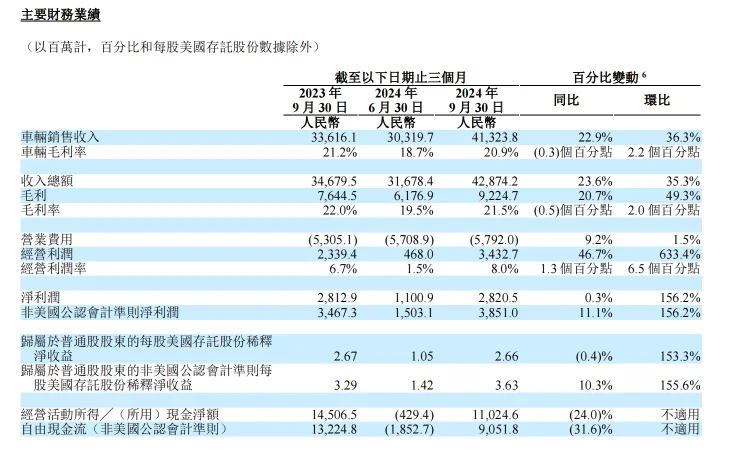
A summary of Li Auto’s third-quarter financial performance: ample cash reserves, steady confidence, and improving health.
Financial data shows that Li Auto’s revenue, gross profit, and cash reserves all saw significant year-over-year and quarter-over-quarter growth in Q3. Net profit increased the most, rising by more than 150%.
Vehicle gross margin and overall company gross margin both exceeded 20%. For comparison, Tesla’s automotive business gross margin and overall gross margin for its Q3 were 17.1% and 19.8%, respectively. Li Auto’s gross margin levels are already among the best in the industry.
In its earnings report, Li Auto stated that the quarter-over-quarter increase in vehicle gross margin was primarily due to cost reductions, although this was partially offset by a lower average selling price caused by changes in the product mix. The increase in overall company gross margin was mainly driven by the rise in vehicle gross margin.
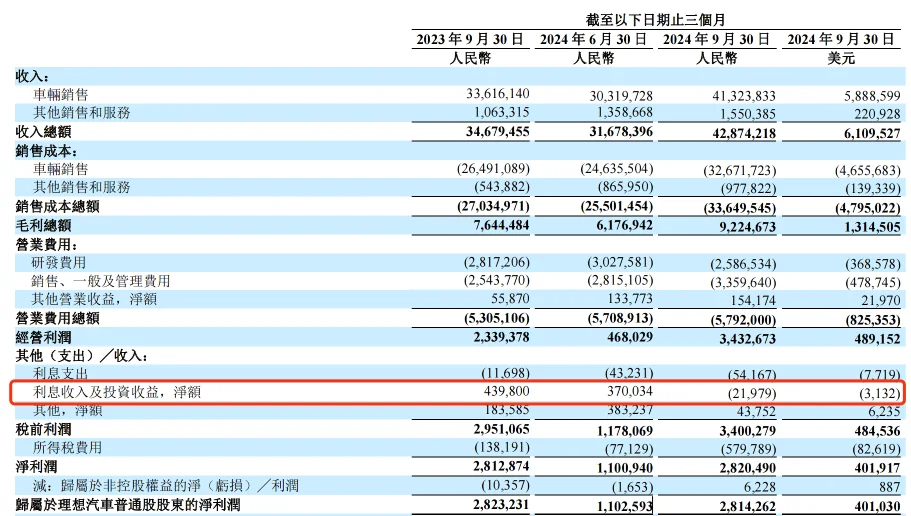
Profitability has always been a top priority for new automakers. Although Li Auto achieved profitability earlier, its high income from wealth management products previously drew criticism for masking the true nature of its earnings. For instance, in this year’s interim report, Li Auto’s net profit was RMB 1.692 billion, but included RMB 1.439 billion in interest and investment income, which directly covered an operating loss of RMB 117 million.
In the Q3 report released yesterday, wealth management did not generate substantial income; instead, it resulted in a loss of over RMB 20 million. Wealth management returns significantly impact new energy vehicle makers. While losses are certainly not ideal, this recent loss from wealth management highlights the strength of Li Auto’s core profitability from vehicle sales.
02L6 Emerges as a Sales 'Dark Horse'
Even without looking at financial reports, the market could sense Li Auto’s changes since the second quarter: weekly sales rankings, which had stopped updating for a month and a half after the MEGA setback, were being released earlier and more consistently, with Li Auto holding the top spot; the company no longer mentioned plans for pure-electric SUVs, focusing instead on selling its existing models well; and target setting became more conservative, avoiding aggressive sales forecasts.
This steady-and-steadfast strategy helped Li Auto emerge from the slump. With L6 production capacity ramping up, Li Auto’s third-quarter deliveries saw significant growth:
Third-quarter deliveries reached 152,831 units, a year-on-year increase of 45.4%.
Monthly sales from July to September were 51,000, 48,122, and 53,709 units respectively, averaging nearly 51,000 units per month;
Recent monthly sales for the Li L6: 23,864 units in June, 24,856 in July, 24,897 in August, and on September 13, the 100,000th mass-produced Li L6 officially rolled off the assembly line.
In its Q2 report, Li Auto provided guidance stating revenue would be between RMB 39.4 billion and RMB 42.2 billion, representing a year-on-year increase of 13.7% to 21.6%; and sales volume would be between 145,000 and 155,000 units, a year-on-year increase of 38% to 47.5%.
Viewed this way, Li Auto’s revenue slightly exceeded expectations, and its sales target was met at the upper limit.
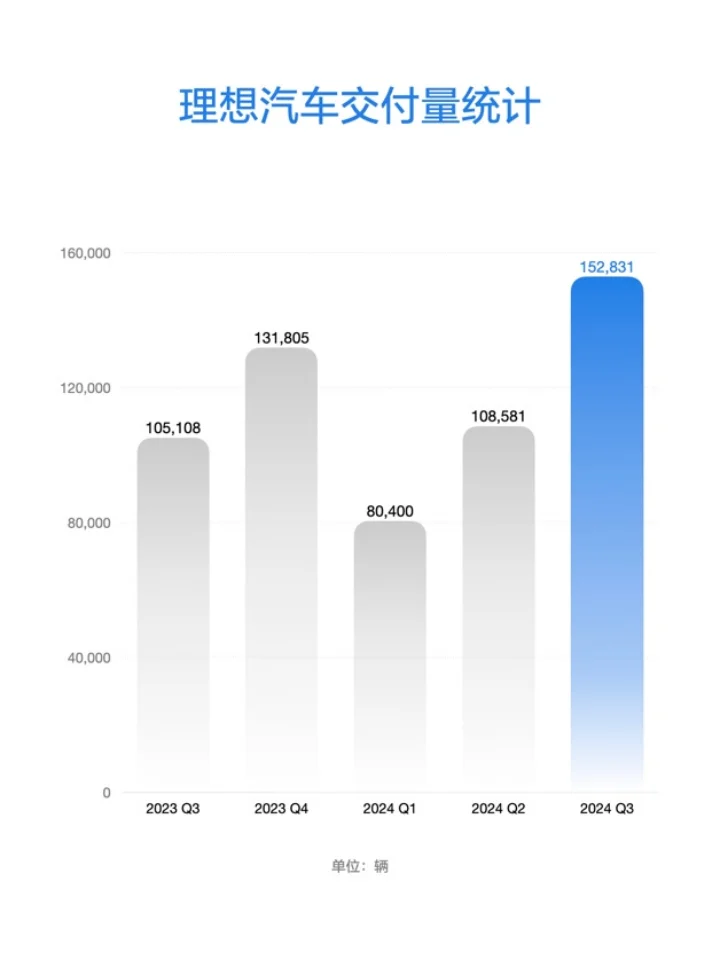
Li Auto’s fourth-quarter guidance projects quarterly deliveries of 160,000 to 170,000 units, representing a year-over-year increase of 21.4% to 29.0%. Quarterly revenue is expected to reach RMB 43.2 billion to RMB 45.9 billion, up 3.5% to 10.0% year over year.
Achieving this target requires Li Auto to sell at least 53,000 units per month on average. September sales already reached this level. With increased year-end purchasing demand and the phase-out of national subsidies, the final sprint of the year poses primarily a test of production capacity for Li Auto.
Compared to unpredictable sales figures, more controllable goals involve advancing autonomous driving and charging network construction. Li Auto has been steadily progressing in both areas, moving at its own pace without haste.
While various end-to-end internal testing versions have drawn attention, Li Auto took the lead on October 23 by announcing that its 'end-to-end + VLM' system would be fully rolled out via OTA 6.4, covering models equipped with AD Max.
During the earnings call, Xiang Li announced progress in intelligent driving:
As of October 30, Li Auto’s autonomous driving training mileage had reached 2.6 billion kilometers, with user NOA total mileage reaching 1.39 billion kilometers. The cumulative usage of the smart parking function exceeded 60 million times.
Over three months, the model training data scale increased from 1 million clips to 4 million clips, and the average mileage between each intervention increased by 2.5 times.
Donghui Ma, president and chief engineer at Li Auto, stated during the earnings call that the company completed several major iterations of its intelligent driving system over the past 10 months. The evolution progressed from light-map reliance to mapless navigation, and finally to end-to-end architecture. "After the deployment of end-to-end combined with Vision-Language Models (VLM), intelligent driving has truly evolved from a feature into a capability."
The construction of its charging network is also a key initiative for Li Auto to alleviate users' range anxiety and enhance product appeal. Earlier this year, Li Auto announced plans to deploy 2,000 charging stations in 2024. On October 31, the company's 1,000th charging station was officially completed. With only two months remaining in 2024, can the target of 2,000 stations still be met?
Sun Guangmin, vice president of Li Auto's charging network, said the annual goal remains 2,000 stations.
Furthermore, when Li Auto launches its new pure electric vehicles, more than 2,000 charging stations will be operational. By the end of 2025, this number is expected to reach 4,000. Li Auto will also deploy over 1,200 charging stations along highways, covering 95% of national roads.
03Where is the next growth driver for sales?
On April 22 this year, Li Auto implemented the largest price adjustment since its founding, reducing prices across its entire lineup by RMB 18,000 to 30,000.
However, plunging into a price war is a desperate measure taken only in times of crisis. If accommodating price wars becomes the norm, it would mean voluntarily abandoning the high-end brand value painstakingly cultivated. This approach not only hinders revenue growth but also exacerbates consumers' wait-and-see attitude.
With ample cash reserves and sales and profitability back to healthy levels, Li Auto is now in a strong position to open up new growth drivers.
However, the company must navigate an increasingly fierce competitive landscape, encirclement by rivals, and relentless price wars. Where will the next growth driver come from?
First is the vitality brought by new products. Xiang Li could barely conceal his pride over the L6's massive success during the earnings call: 'A small point to remind everyone: The Li L6 is the most consumer-recognized new car in the global market so far in 2024, a tangible result on the sales side.'
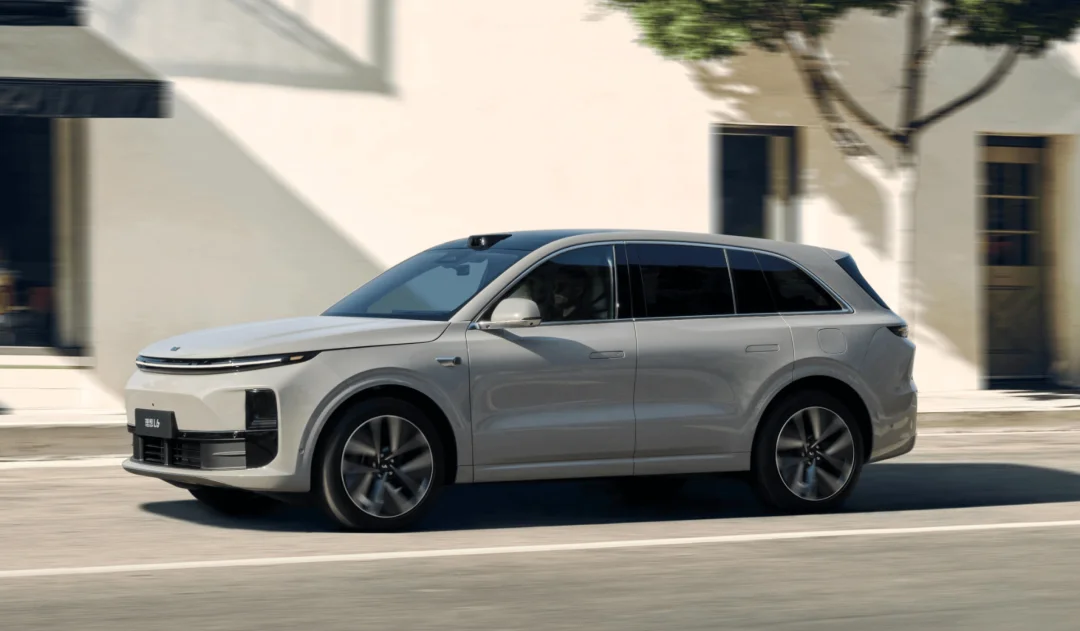
He also noted that L6 deliveries have already exceeded 139,000 units. Current production capacity clearly cannot meet order demand; the factory needs to expand capacity before the Spring Festival in 2025 to satisfy more consumers.
This explains why the delivery guidance for the fourth quarter was so conservative. The L6's market acceptance has been validated; the next challenge is testing production capacity.
The launch of the Li L6 indeed served as a 'lifeline,' boosting Li Auto's overall sales and helping the company move past the pressure caused by the MEGA's underperformance. However, by dropping prices into the RMB 200,000–300,000 range, Li Auto has faced some profit pressure due to the lower average selling price.
In Li Auto's semiannual report and the recently released third-quarter report, explanations for declines or lackluster growth in various financial metrics were all attributed to 'a reduction in average selling price resulting from different product mixes.'
The Li L series was first launched in 2022. Will it remain competitive in the extended-range and hybrid markets? Xiang Li is optimistic: "The extended-range versions of the L series are still in their prime for the next one to two years."
Xiang Li is equally confident in his products' strategic positioning, stating there are no immediate plans to expand into new markets. He said that the exploration of the family market has only just begun. With advancements in artificial intelligence, autonomous driving, and cabin experience, the potential and creativity of family space will grow significantly, so there is no rush to enter new segments. "There is no market for pure-electric products with strong product appeal priced above RMB 300,000 like the L7, L8, and L9. There is more room to tap into the mid-to-large SUV segment; you shouldn't beg while holding a golden rice bowl."
Xiang Li also announced the long-term market share target: "Before the launch of pure electric SUVs, Li Auto's market share in NEVs priced above 200,000 reached 17.3% in the third quarter. We next aim to secure over 25% market share in EVs priced above 200,000 with our range-extended and pure electric product lines together."
He also cautioned: "Looking ahead three to five years, I believe the biggest variable comes from artificial intelligence. Intelligent driving based on true AI and intelligent assistants powered by AI will deliver experiences fundamentally different from today's, marking the beginning of a qualitative shift."
It appears that Li Auto has fully recognized the importance of its smartization route.
However, is Li Auto ready to meet the challenges of intelligent technology?
Xiang Li remains confident: "Currently, after consumers purchase a Li Auto vehicle, the car continues to receive functional updates, enhancing product value through the integration of software and hardware. In this regard, we likely have the best performance in the industry."
In terms of autonomous driving, Li Auto's advantage in end-to-end competition relying on data training is unique, given its fleet of over one million vehicles—the largest among domestic high-end new energy brands.
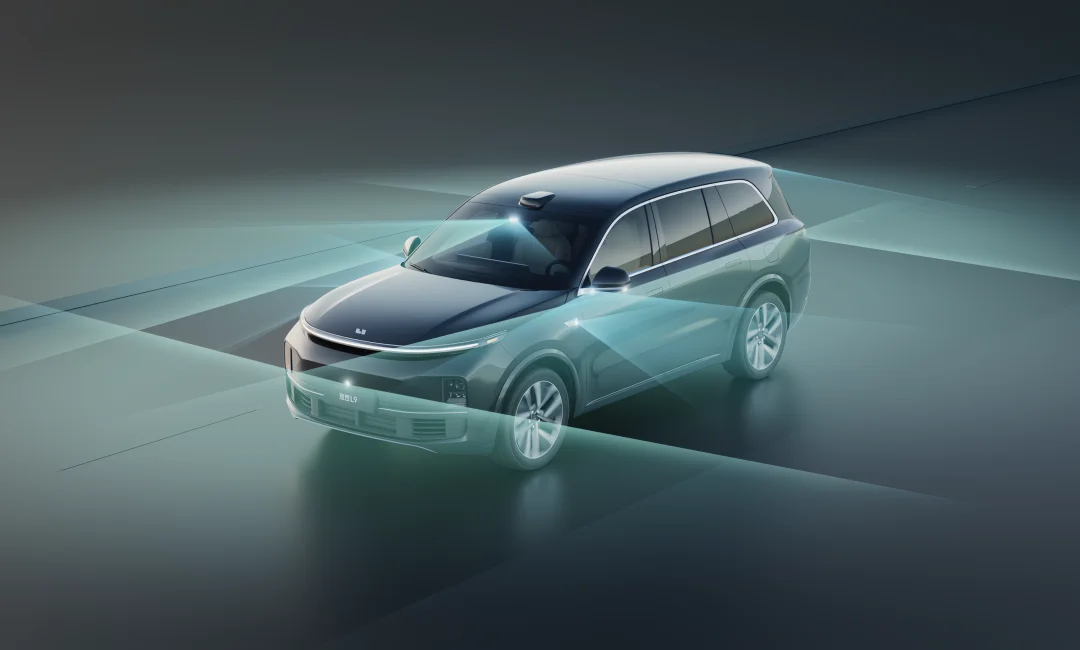
Ma Donghui noted that following the rollout of 'End-to-End + VLM' technology, the Mile per Intervention (MPI)—the average distance driven before a human takeover—will increase significantly as model parameters and training data volumes grow. Companies with high-quality training data will hold an absolute advantage in future competition. Additionally, the Full-Scenario Safety Mileage (MPA) will rise to three to five times that of human drivers.
Regarding the specific product roadmap for intelligent driving, Donghui Ma stated that 'parking spot to parking spot' intelligent driving capabilities will be fully rolled out to all AD Max users by the end of this year (before December ends), and a feature allowing vehicles to pass through ETC toll stations nationwide without exiting intelligent driving mode will also be released.
In supervised intelligent driving, Li Auto has innovated its human-machine interaction and is currently in internal testing. Furthermore, the company has initiated pre-research on Level 4 autonomous driving, focusing on a reinforcement learning system that combines stronger vehicle-side VLA (Vision-Language-Action) models with cloud-based world models. Li Auto continues to invest heavily in intelligent driving infrastructure, maintaining a lead in training volume and mileage.
The maturity of intelligent driving will be directly reflected in the increase in intelligent driving mileage and sales. Donghui Ma stated that AD Max has a very significant impact on sales: 'Whether for models priced above RMB 300,000 or the Li L6, the sales share of AD Max versions has risen to a certain level.'
For the final quarter of this year, Li Auto’s projected sales growth space is limited due to production capacity constraints. However, with over RMB 100 billion in cash reserves serving as financial backing, the company is well-positioned to make significant strides in intelligent driving and charging station construction.
More exciting developments are expected next year: the launch of multiple pure-electric SUVs, paired with 5C supercharging battery packs and a nationwide charging network, alongside the implementation of end-to-end 'parking spot to parking spot' intelligent driving. The synergistic effects of these initiatives remain highly anticipated.
Written by Dayong; Edited by James