


Margins Keep Sliding, but Tesla Is Playing for the Future
Tesla faces a dual squeeze from internal and external risks.
Internally, as Elon Musk has stated, Tesla’s rapid global expansion has led to bloated staffing and organizational inefficiency—typical ailments of large corporations—that have shackled efforts to reduce costs and boost productivity.
Consequently, on April 15, Elon Musk announced that Tesla would cut more than 10% of its global workforce.
Externally, Tesla’s vehicle lineup is aging significantly, while competitors’ models—particularly those from Chinese rivals—are rapidly closing the gap in product competitiveness during this transitional period for Tesla.
As a result, although Tesla’s sales volume remains at the top of the market, it frequently struggles with sluggish growth. When faced with the risk of declining sales, Tesla turns to pricing strategies to mitigate the threat: either raising prices to pressure buyers or cutting prices to stimulate demand.
Between April 20 and 21, Tesla launched another round of price cuts, announcing reductions across its entire lineup in both the U.S. and China markets. The Model Y hit historical lows in both regions, priced at RMB 249,900 in China and USD 42,990 in the United States.
Amidst global layoffs and significant price cuts in the U.S. and Chinese markets, Tesla released its Q1 2024 financial report, adding a heavy layer of gloom to an already unimpressive set of results.
01Is Elon Musk Not Working Hard Enough?
During Tesla’s Q1 earnings call this year, Elon Musk stated that he dedicates time and energy to the company every day, maintaining a state of hard work to ensure Tesla’s continued prosperity.
However, based on Tesla’s Q1 2024 financial data, Elon Musk may need to seriously consider whether it is necessary to devote even more time and energy to Tesla.
Specifically:
Total revenue was $21.301 billion, a year-over-year decline of 9%;
Gross profit totaled $3.696 billion, a year-over-year decline of 18%;
The gross margin stood at 17.4%;
Total automotive revenue was $17.378 billion, a year-over-year decline of 13%;
Operating expenses reached USD 2.525 billion, a year-over-year increase of 37%.
Service and other income totaled USD 1.171 billion, down 56% year over year.
Cash, cash equivalents, and investments stood at USD 26.863 billion.
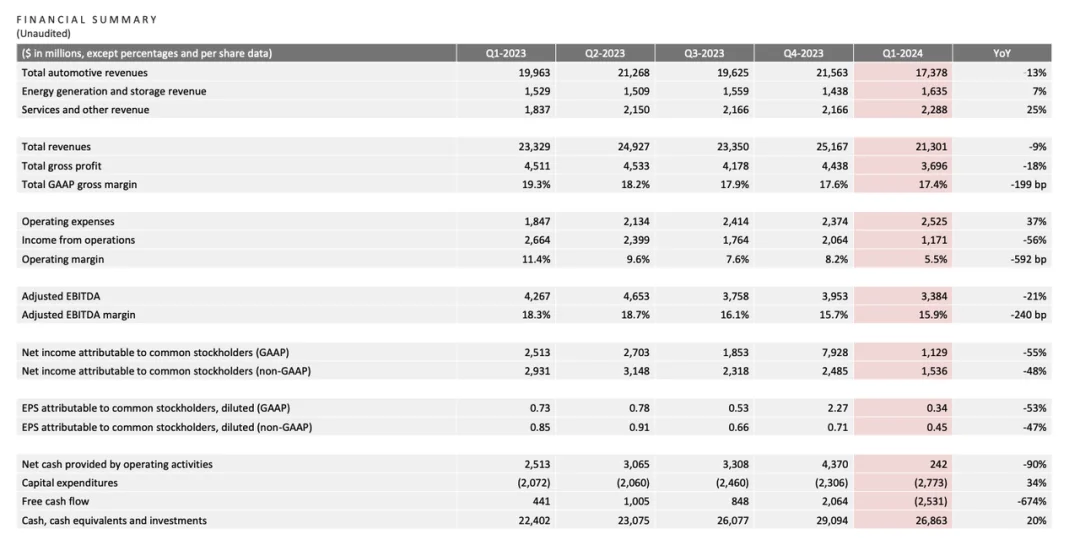
These figures indicate that Tesla’s core automotive business experienced significant year-over-year and quarter-over-quarter declines in the first quarter, with free cash flow dropping by USD 2.53 billion.
Regarding the decline in automotive revenue, the financial report attributed it to lower average selling prices per vehicle and reduced delivery volumes; as for the drop in free cash flow, the report explained that during Q1, Tesla's inventory increased by USD 2.7 billion, while USD 1 billion was spent on AI infrastructure.
In sharp contrast to the decline in automotive revenue, Tesla's other business segments continued to grow steadily:
Energy generation and storage revenue reached USD 1.635 billion, up 7% year over year.
Service and other income reached USD 2.288 billion, a year-over-year increase of 25%.
In its earnings report, Tesla stated that energy storage deployments grew to 4.1 GWh in Q1, with gross margins increasing by 140% year over year, making it the business segment with the highest profit margin among all of Tesla’s operations.
Meanwhile, as more automakers adopt Tesla’s NACS charging standard and FSD rolls out in North America, Tesla’s service and other income has found new avenues for rapid growth.
Overall, Tesla’s Q1 earnings report fell short of market expectations and sent warning signals to the company. However, Tesla specifically noted in the report:
We will focus on growing profitability, including launching new and more affordable products using existing factories and production lines.
02The Demand Crisis Behind Production-Sales Imbalance
In Q1 this year, Tesla experienced an unusual imbalance between production and sales.
According to the earnings data, Tesla’s Q1 production was 433,000 units, a quarter-over-quarter decrease of approximately 12.5% and a year-over-year decline of about 1.8%; deliveries totaled 387,000 units, down approximately 20% quarter over quarter and 8.5% year over year.
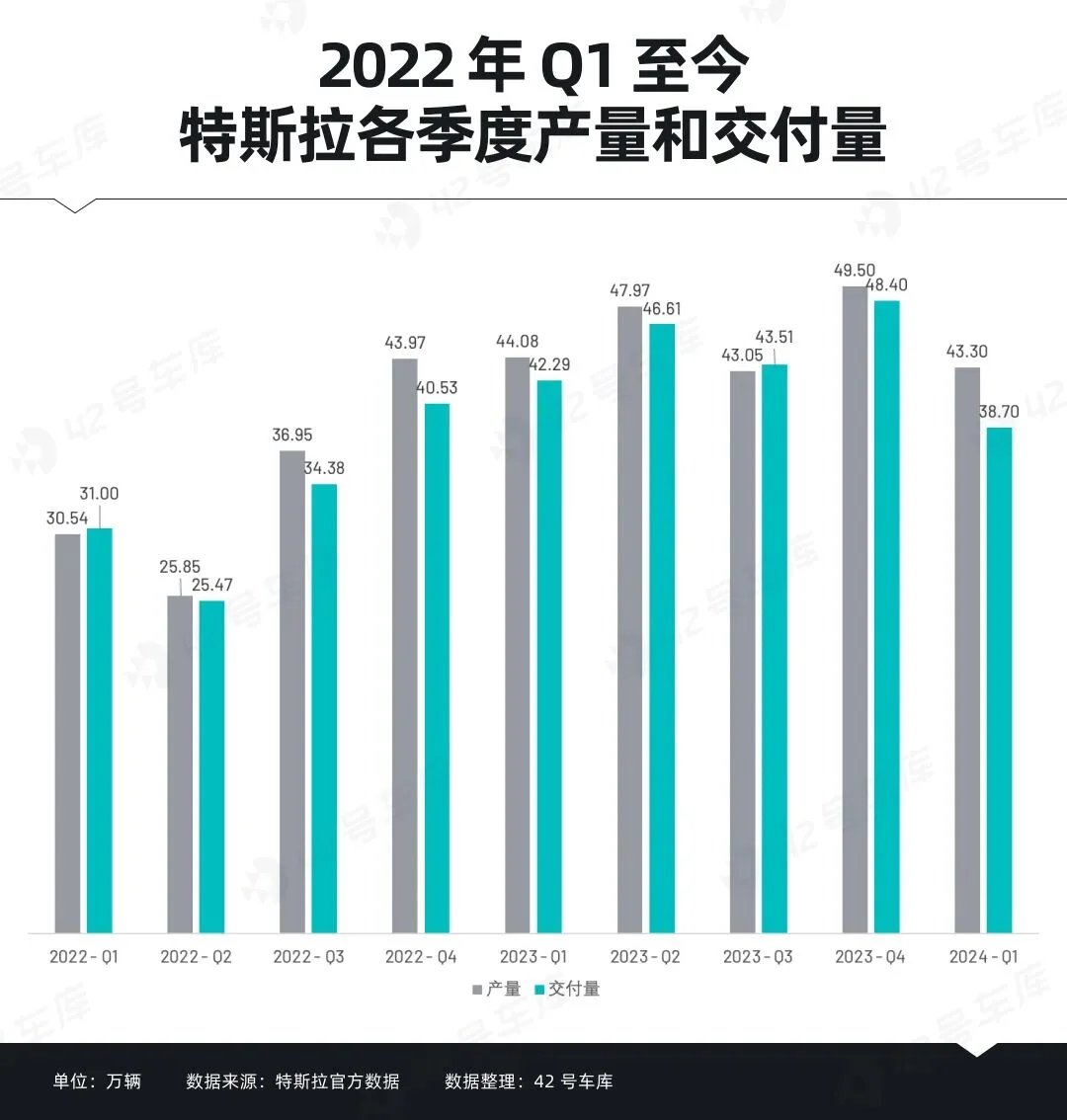
As both year-over-year and quarter-over-quarter figures declined, Tesla’s Q1 production volume exceeded its delivery volume by 46,000 units. This gap indicates that approximately 10% of Q1 production ended up as inventory.
Although Tesla’s production and delivery volumes remain far ahead of most new energy vehicle manufacturers, these numbers clearly signal a development alert for the company itself.
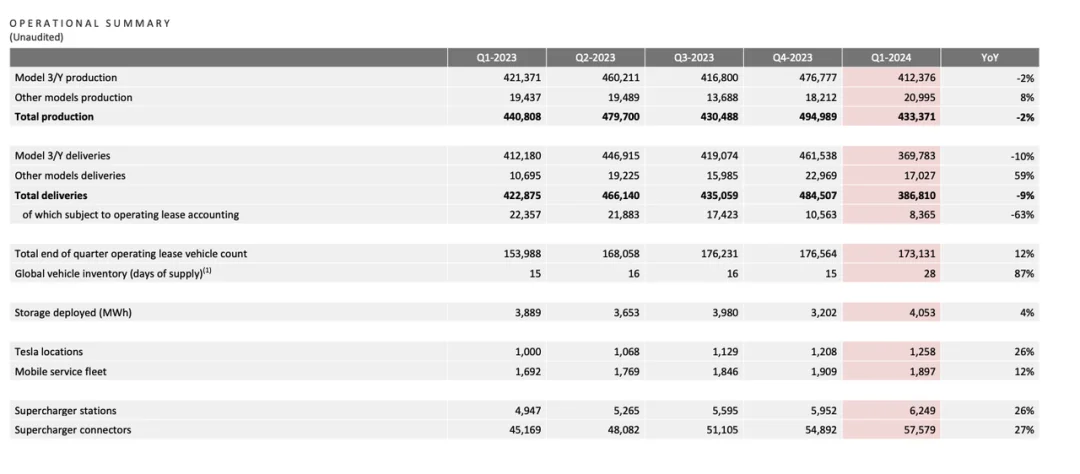
Tesla attributed the collective decline in production and deliveries to three main factors: capacity ramp-up for the refreshed Model 3 at the Fremont factory, supply chain disruptions at the Berlin Gigafactory caused by the Red Sea crisis, and production halts resulting from arson attacks by environmental activists on the Berlin facility.
Clearly, Tesla’s explanation focused solely on reduced production capacity, offering little support for the drop in delivery volumes.
Regarding the decline in deliveries, Elon Musk added during the earnings call that seasonal factors and a challenging macroeconomic environment were responsible. To put it more plainly, the key factor behind Tesla's delivery drop was actually weak consumer demand.
Tesla Is Showing Signs of Nervousness
As noted above, Tesla’s product lineup is aging significantly.
For a global company that has been in operation for 20 years, Tesla has relied on just two main-selling models, the Model 3 and Model Y, to dominate the global market. The Model Y, in particular, is an older model that has not received a major facelift in nearly five years.
In fact, Tesla has been attempting to introduce something new to its customers.
Take the refreshed Model 3 launched last year as an example. Tesla made sweeping changes to the Model 3’s styling and steering wheel controls, removing both the turn-signal stalk and the gear selector. However, these changes failed to deliver the excitement users had hoped for; instead, they forced users to incur costs to adapt to the new design.
By the first quarter of this year, Cybertruck deliveries officially began. Although the Cybertruck is not available for sale in China, Elon Musk still brought the vehicle across the ocean for a touring exhibition in the country. This move not only drove another wave of heightened consumer interest in Tesla but also generated a rich pipeline of sales leads for the company.
Notably, Elon Musk announced in early April that the Robotaxi would be unveiled on August 8. Although it remains to be seen whether he will break his word again, this announcement at least generated new expectations among users, causing Tesla’s stock price to rise by 5% in response.
Additionally, following the release of its financial report today, Tesla announced the Model 3 Performance variant starting at RMB 335,900, with deliveries expected in the third quarter of this year.
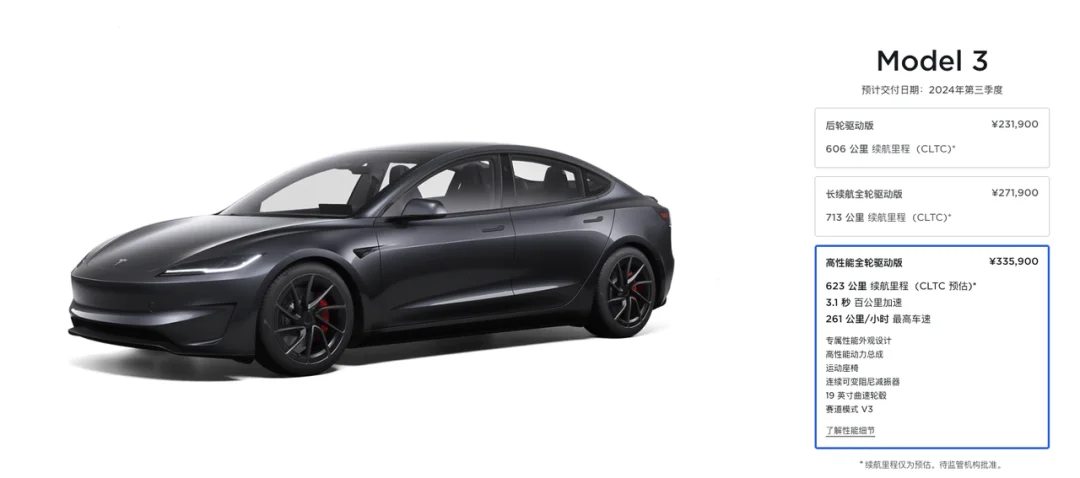
Yet, in the mainstream market, updates to the Model 3 and Model Y—the two most critical volume drivers—have been far too slow over the past two years, and Tesla has still failed to deliver innovative experiences that win universal acclaim from mainstream users.
It is undeniable that a single model, the Model Y, can achieve monthly sales for Tesla that exceed the combined total of all models sold by certain Chinese new-energy automakers. However, competitors, particularly those battling it out in China’s intensifying price wars and cutthroat elimination contests, are pushing forward with relentless effort.
In such a white-hot competitive landscape, Tesla risks falling behind if it does not advance, especially in the Chinese market.
The potential of Chinese automakers is widely recognized; even Elon Musk has stated that 'Chinese automakers are the most competitive, and without trade barriers, they would eliminate most carmakers in the world.'
Over the past two years, Chinese automakers have launched a steady stream of new products, with many specifically targeting the Model 3 and Model Y. These vehicles are not only closing the gap with Tesla in battery, electric motor, electronic control systems, and manufacturing processes, but are also more willing to sacrifice margins on price, sometimes even selling at a loss.
Meanwhile, the entry of Huawei and Xiaomi—two companies leading in both brand recognition and product R&D capabilities—into the new-energy vehicle market has intensified threats to Tesla not just in product performance, but also in more intangible areas like brand appeal, emotional connection, and narrative allure.
Faced with an increasing number of aggressively positioned competing models, Tesla appears to be showing signs of unease.
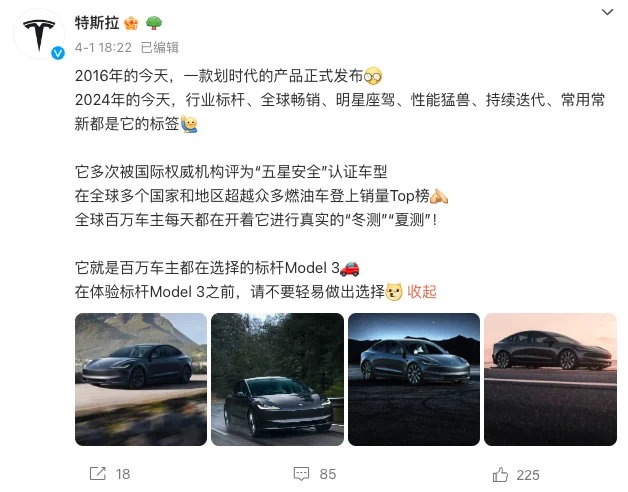
A typical example is that the Xiaomi SU7 benchmarks the Tesla Model 3 almost pixel-for-pixel. Facing the Xiaomi SU7, which saw its "confirmed orders" exceed 88,898 units within 24 hours of launch, Tesla—which typically ignores competitors—stated on its official Weibo account: "Before experiencing the benchmark Model 3, please do not make a choice lightly."
However, Elon Musk believes there is still no need to pay excessive attention to Chinese competitors. He stated:
"We don't know what our competitors are doing, but we know we are doing very well. We want to focus on doing our job well, rather than constantly staring at what competitors are doing. In fact, their sales have also declined; comparatively, we are doing better."
03Betting on FSD as the New Driver of Growth
Compared to product innovation in the Model 3 and Y, Tesla is clearly more focused on the progress of FSD.
At the Q1 earnings call, Elon Musk again emphasized that Tesla is essentially not an automotive company, but an artificial intelligence company.
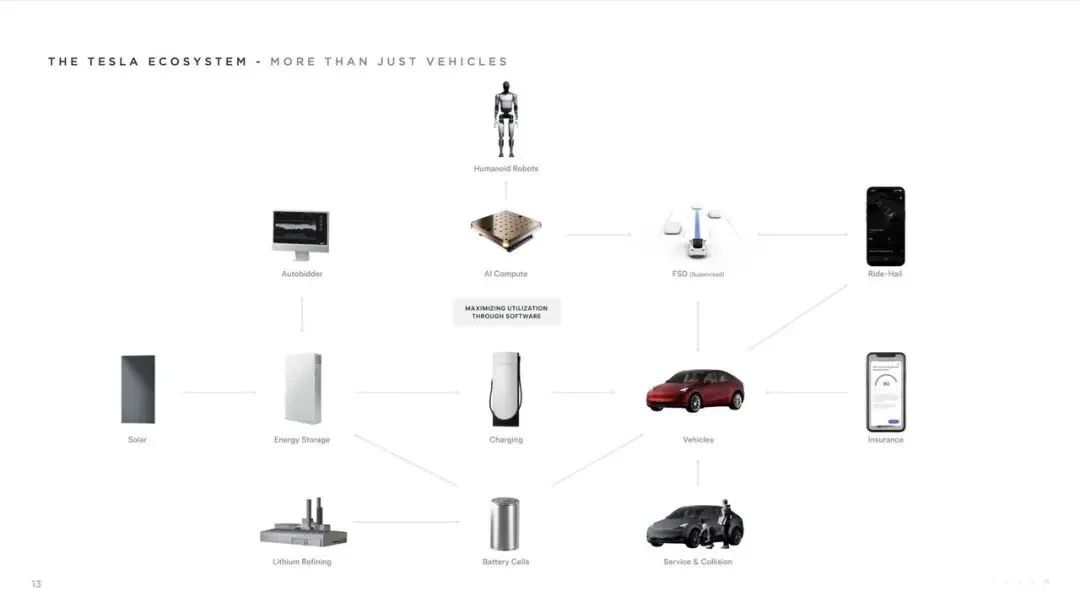
Based on this positioning, Tesla is unremittingly investing in R&D for intelligent technologies, particularly the progress of FSD.
Regarding Full Self-Driving (FSD), Elon Musk stated on X that Tesla will invest more than USD 10 billion in the technology this year. Since the beginning of the year, Tesla has indeed achieved new milestones with FSD.
According to official information, Tesla completed its transition from perception hardware to HW 4.0 in Q1 and is gradually rolling out FSD V12. The software has now been updated to version V12.3.3.
A user on X stated that Tesla FSD V12.3 represents a leap forward in autonomous driving but suffers from overly slow driving speeds; another user reported taking six ride-hailing trips using FSD, with none of the passengers realizing the car was being driven autonomously.
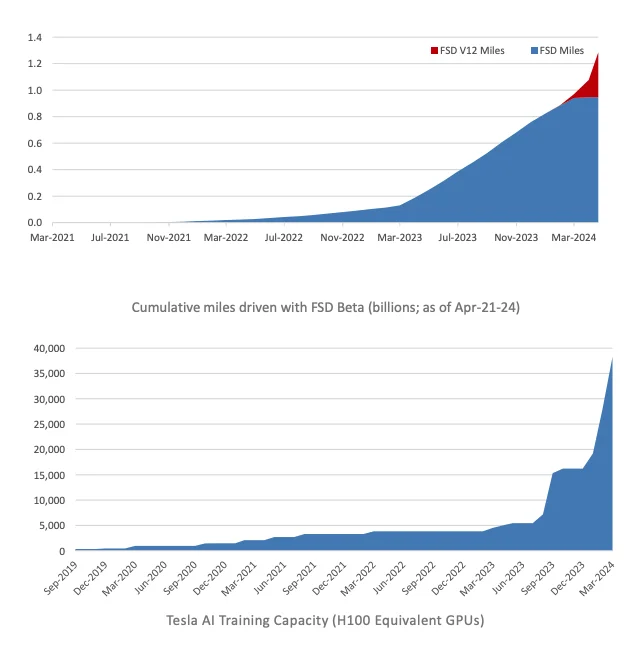
Meanwhile, the cumulative mileage recorded by FSD is growing rapidly. Financial report data shows that as of March, total FSD mileage has exceeded 1.2 billion miles. Additionally, Elon Musk stated on X that this figure will soon surpass 10 billion miles.
However, despite these "leap-forward" improvements, FSD still faces challenges regarding consumer demand.
At the end of March, Elon Musk sent an email to all Tesla employees stating that "almost no one realizes how good FSD actually is."
To increase user awareness of FSD's capabilities and stimulate demand, Elon Musk announced at the end of March that vehicles across the United States would receive a free trial of FSD. He also required that all vehicles delivered in North America must have FSD V12.3.1 installed and activated prior to delivery, allowing customers to test drive the feature.
Recently, Tesla significantly adjusted the pricing for Full Self-Driving (FSD) in the United States. Specifically:
The one-time purchase price was reduced from $12,000 to $8,000.
The monthly subscription fee was cut from $199 to $99.
During the third-quarter earnings call last year, Elon Musk stated that FSD’s current pricing remains relatively low. Despite believing the price is still low, Musk has made concessions to accelerate FSD adoption.
Tesla’s core objective in these moves is to expand its user base to validate a software-driven profit model.
According to information shared during the earnings call, Tesla plans to begin mass production of Robotaxi before the second half of 2025. As a key vehicle for FSD, how Robotaxi will help realize Tesla’s software profitability model remains to be seen.
Capital markets appear relatively optimistic about Tesla’s Robotaxi prospects. Despite disappointing financial results, Tesla’s stock surged nearly 12% shortly after market open.
Notably, another positive development is the continued evolution of Optimus. Elon Musk indicated that Optimus will conduct limited production activities within Tesla factories by the end of the year. Furthermore, Musk views Optimus as having greater potential value than any of Tesla’s existing business lines.
04Conclusion
Although Tesla is experiencing a temporary downturn, it remains an overwhelmingly powerful company with few viable competitors.
On one hand, despite Elon Musk’s acknowledgment of personnel redundancy and organizational inefficiency, Tesla has achieved a profit scale far exceeding that of BYD—which employs 600,000 people—using only a workforce of over 100,000, demonstrating superior efficiency.
On the other hand, even as production and sales volumes decline, Tesla still significantly outperforms most rivals, backed by substantial talent, technology, capital, and a high-efficiency organizational structure driven top-down by Elon Musk.
Thus, despite current setbacks, Tesla retains an insurmountable competitive advantage.
However, under Elon Musk’s autocratic management style, Tesla is currently channeling all its resources into autonomous driving, disregarding other concerns. This bold move may once again astonish the world, but it also pushes Tesla into a vortex of risk. Yet, this dramatic trajectory may well be exactly what the adventure-loving Elon Musk prefers.
Written by: Isaiah Edited by: 308