


Beyond TOPS: How Qualcomm’s Snapdragon Ride Platform Balances Performance and Cost in Driver Assistance

Driver assistance is accelerating toward mass adoption, and the market pie continues to grow.
According to IDC data, the penetration rate of L2-level driver assistance in China's passenger car market reached 59.7% in 2024. In the segment above RMB 100,000, the penetration rate for L2 driver assistance hit 70%.
However, since April this year, a more pragmatic discussion has emerged within the industry. Safety and reliability have become the shared focus of both industry players and consumers.
This does not signal a slowdown for driver assistance. On the contrary, technological evolution remains rapid, and competition among automakers is intensifying. This rivalry no longer hinges solely on single metrics like computing power or algorithms; it has evolved into a multi-dimensional contest involving chip deployment strategies and practical application implementation.
In recent years, NVIDIA rose to prominence, dominating the high-end driver assistance market. Meanwhile, another technical force is accelerating its entry. Public information shows that Gaotong’s Snapdragon Ride platform has been adopted by more than 30 Chinese automakers and tier-one suppliers to develop driver assistance and cabin-driving integration solutions. Globally, over 20 automakers have announced plans to implement this platform in mass-produced models. More forward-looking still, as automotive electronic and electrical architectures evolve toward central computing, Gaotong aims to address all in-vehicle intelligent needs with a single chip.
The current automotive market in China is fiercely competitive. One of the core demands for automakers in the field of driver assistance is to strike a balance between performance and cost. Scalable system-level platforms precisely meet this need—likely a key reason why solutions represented by Gaotong are gaining market favor.
01How to break through when performance cannot drop and costs cannot rise?
For a long time, the relationship between TOPS (the number of operations per second performed by an autonomous driving chip) and driver assistance capability seemed to be positively correlated. However, in 2024, as mapless urban driver assistance systems gradually came to market and end-to-end technologies matured, the notion that "TOPS alone determines performance" became increasingly untenable.
In fact, under identical computing power conditions, driver assistance capabilities can vary significantly; simply stacking computing power does not necessarily yield an ideal user experience.
Over the past two years, as the industry reflected on whether computing power equates to chip capability, two chips from the Gaotong Snapdragon Ride platform—featuring equivalent sparse computing power of 200 TOPS for the Snapdragon 8650 and over 100+ TOPS for the Snapdragon 8620—have been integrated into vehicles. These chips enable urban road driver assistance functions and cover multiple vehicle tiers ranging from entry-level models priced at tens of thousands of yuan to premium models costing hundreds of thousands of yuan.
Two key insights are worth noting:
First, widespread adoption is inevitable. Urban road driver assistance, a feature with high hardware costs and significant development challenges, was once an advanced option available only on vehicles priced above RMB 300,000. Now, this functionality is trickling down to more mainstream markets. According to industry data, Zhuoyukeji’s solution based on the Snapdragon 8650 chip has a hardware cost of approximately RMB 7,000, making it a highly cost-effective option across the entire industry.
Second, the market scale is substantial. Vehicles priced below RMB 300,000 account for nearly 90% of the Chinese market, representing an annual volume of 20 million units. This indicates that the market segment Gaotong and its partners are targeting with these downward-expanding solutions holds immense potential.
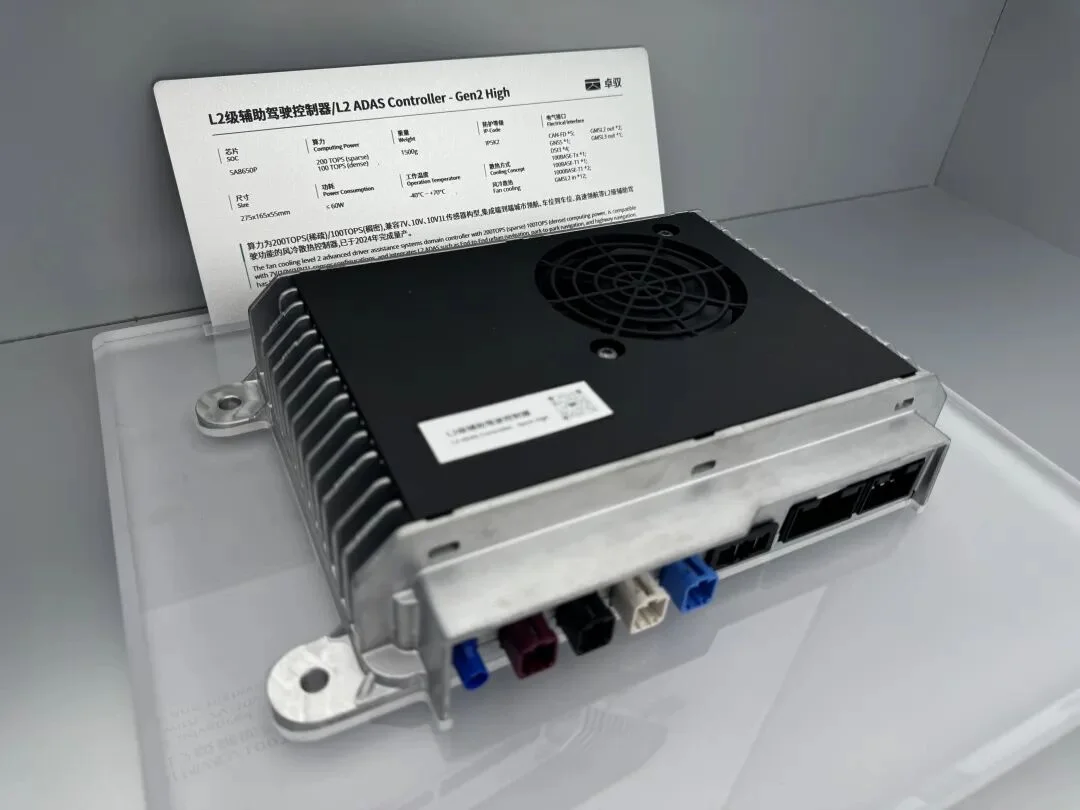
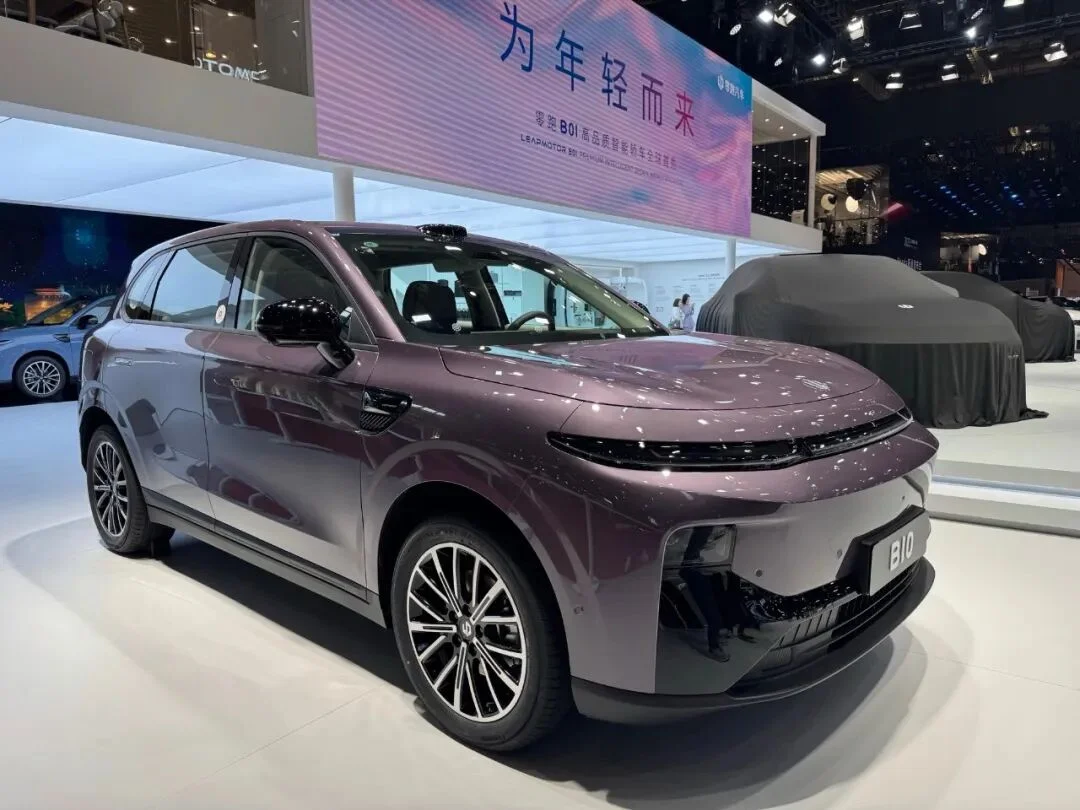
From last year to this year, brands such as Leapmotor, Shangqitongyongwuling, Chery, and Zhongguoyiqi have all mass-produced vehicles equipped with the Gaotong Snapdragon Ride platform. The primary reason Gaotong’s driver assistance solution has gained rapid adoption among numerous automakers is its ability to balance performance and cost.
In February this year, Feng Biao, CEO of the product line for Zhongguoyiqi Hongqi brand, revealed that the Hongqi Tiangong series would introduce a "parking spot to parking spot" feature. He stated: "The combination of inertial navigation and triple cameras, along with Gaotong's Snapdragon 8650 high-compute platform, creates advantages in hardware foundation and performance parameters, enabling pure mapless driving across the country with confidence, allowing operation on any open road nationwide."
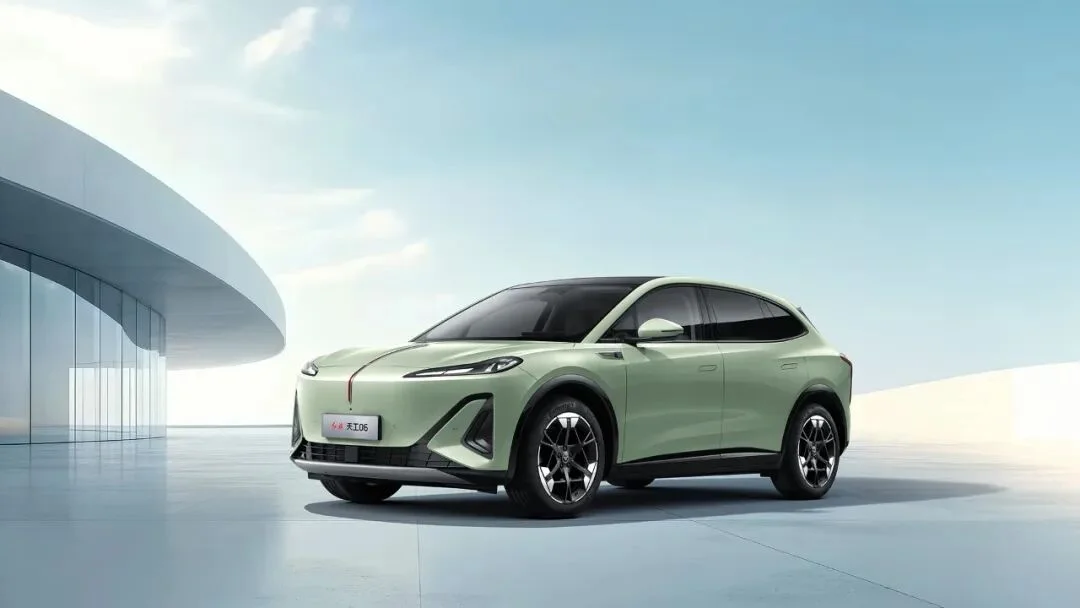
Zhuoyukeji is the tier-one supplier for driver assistance in the Hongqi Tiangong series. Regarding the collaboration among Zhuoyukeji, Gaotong, and FAW Hongqi, Ma Jianyun, Deputy General Manager of Zhuoyukeji, stated: "I believe this relies on Gaotong's full support, as we have very deep cooperation with them. On a single chip and a new platform, through our extreme algorithm optimization, we bring out the chip's advantages."
Based on the Snapdragon 8650 chip, Zhuoyukeji has deployed end-to-end technology and plans to deploy generative AI and world language large models in the future.
It is clear that the competitive landscape for driver assistance has shifted significantly compared to a few years ago, when the industry scrambled to stack hardware and inflate chip compute power. The sector now seeks a balance between performance and cost, placing greater emphasis on support capabilities for open programmability and ecosystems, as well as scalable delivery capabilities for automotive-grade safety. Meanwhile, the evolution toward integrated intelligent cockpit and driving systems is emerging as a new trend.
In April this year, Nakul Duggal, General Manager of the Automotive, Industrial and Embedded IoT Business Unit at Gaotong Technology, shared Gaotong's progress in safety and scalability during an interview.

Nakul stated: "When it comes to safety, especially in the ADAS field, every technology module developed by Gaotong integrates safety-related technologies."
Gaotong also mentioned in its recently released technical white paper, Snapdragon Ride: A Solution for Popularizing Driver Assistance Among Chinese Automakers and Consumers, that the Snapdragon Ride platform features several advanced safety capabilities, including redundancy and fail-safe mechanisms, real-time monitoring and diagnostics, secure boot processes, and secure firmware updates. These features are specifically designed to comply with international safety standards such as ISO 26262 and IEC 61508.
The scalability Nakul discussed encompasses two aspects. First, Gaotong’s solution offers cost advantages and supports passive cooling, allowing both internal combustion engine vehicles and new energy vehicles to meet energy efficiency requirements while deploying driver assistance systems. Second, Gaotong has assembled a strong, synergistic ecosystem of partners. The specialized expertise and solutions from these partners further expand the capabilities of Snapdragon Ride, jointly creating a comprehensive driver assistance solution that can be seamlessly integrated into automakers' models. This approach accelerates the democratization of driver assistance technology.
02More Complex Functions, Simplified Architecture: How to Solve It?
As automotive intelligence advances rapidly, software and algorithms directly impact user experience. Although the vehicle's electronic and electrical (E/E) architecture serves as the underlying platform, it determines the upper limit of automotive intelligence.
The roadmap for E/E architecture evolution—from individual ECUs and domain controllers to centralized integrated architectures—is already clear. Many automakers have already taken their first steps toward adopting integrated E/E architectures.
However, simply packaging an ADAS chip and an intelligent cockpit chip within a single domain controller completes only half the job. At this stage, a single domain controller still contains multiple PCBs and multiple SoCs.
Today, Tesla’s entire lineup and the upcoming Xiaomi YU7 both adopt this architecture, yet no vehicle currently relies on a single chip to deliver all intelligent features.
Gaotong has taken the lead with its Snapdragon Ride Flex platform, centered on the Snapdragon 8775 chip. This product runs multiple virtualized operating systems simultaneously on one chip, integrating two critical functions: the cockpit infotainment (IVI) system and the driver assistance system.
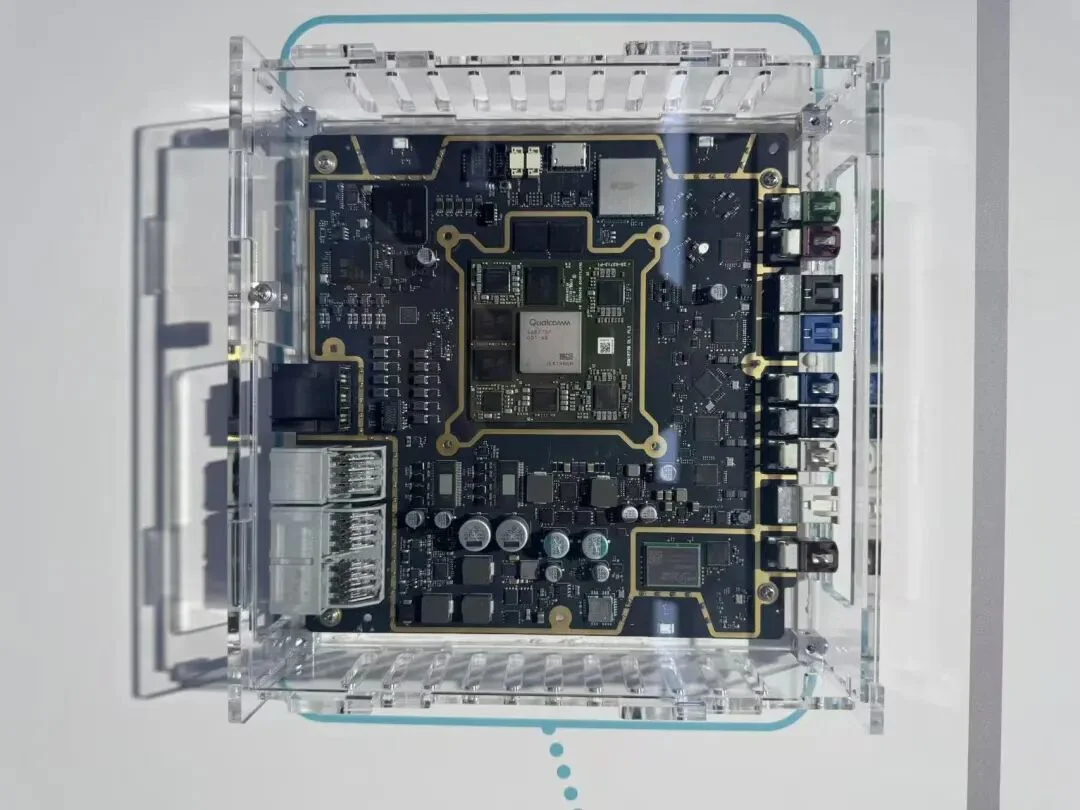
For automakers, the most immediate benefit is reduced bill of materials (BOM) costs, simplified development processes, and faster time-to-market.
Previous solutions involving multiple printed circuit boards (PCBs) and several system-on-chips (SoCs) are now replaced by a single PCB and a unified SoC for scheduling and support. This shift lowers costs associated with power supply and thermal design. Additionally, algorithms previously developed by automakers on Gaotong’s cockpit or driver assistance platforms can be seamlessly migrated to the cabin-driving integrated Snapdragon Ride Flex SoC, enabling rapid commercialization of the new solution.
When automotive computing is consolidated within a single chip, system latency drops significantly while data throughput increases substantially. The streamlined calculation process enhances overall system efficiency and scalability.
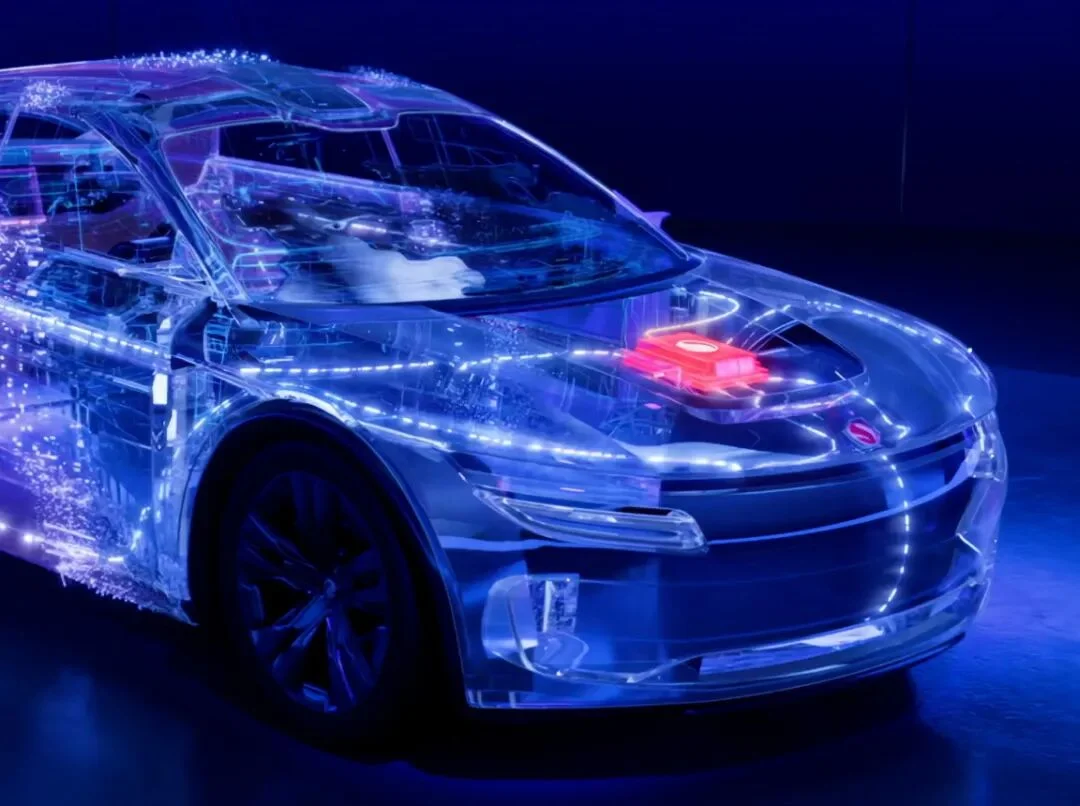
For drivers, the delay in the Surround View (SR) display on the instrument cluster when activating driver assistance will be further reduced. Moreover, as many automakers develop voice-controlled driver assistance features, running both voice-dependent cockpit functions and driver assistance functions on the same SoC improves the user experience.
Currently, Tier 1 suppliers including Bosch, Meijiakeji, Zhuoyukeji, Cheliantianxia, Huayang, Hangshengdianzi, Changxingzhijia, Momenta, and Desaixiwei have launched or are developing cockpit-driving integration solutions based on the Snapdragon 8775. These leading supply chain players are positioning themselves around a single-chip approach to support cockpit-driving integration, signaling that the next phase of automotive electronic and electrical architecture evolution is imminent.
03Chinese Speed, Serving the Globe: How to Proceed?
Over the past 20-plus years, Gaotong started with communications to connect cars to networks; in recent years, during the period of fastest development for automotive intelligence, Gaotong has used systematic, platform-based Snapdragon Digital Chassis full solutions to support the smart vehicle ecosystem, allowing ordinary consumers to perceive increasingly rich intelligent features and continuously improving experiences.
Today, Gaotong has become almost a standard choice for smart cockpits.
The XPENG MONA M03, starting at just over RMB 100,000, and the premium BMW 7 Series, priced at nearly one million RMB, share a common feature: both utilize the Snapdragon 8155 chip. Furthermore, based on the more powerful Snapdragon 8295 chip, various brands have already implemented vehicle-side AI functions. Additionally, Leapmotor has equipped multiple models with a 'Dual Snapdragon' platform, integrating two chips—the Snapdragon 8650 for driver assistance and the Snapdragon 8295 for the smart cockpit—into a single One-box solution.
Meanwhile, Gaotong’s driver assistance products are also appearing frequently at automaker launch events and in external communications.
From cost-effective basic driver assistance solutions to those supporting L3 and L4 levels of driver assistance, the scalable portfolio of driver assistance products makes Gaotong’s automotive layout more comprehensive.
Last October, Gaotong launched its latest Snapdragon Automotive Platform Elite Edition, comprising the Snapdragon Ride Platform Elite Edition and the Snapdragon Cockpit Platform Elite Edition. Similar to the Snapdragon Ride Flex platform, the Snapdragon Automotive Platform Elite Edition can also support running smart cockpit and driver assistance functions simultaneously on the same SoC. This reflects Gaotong’s forward-looking perspective within the industry and its continued support for the automotive sector’s transition toward central computing architectures.

The Snapdragon Ride platform’s top-tier version supports more than 40 cameras and multimodal sensors, enabling AI-based end-to-end sensor fusion to generate a 360-degree surround-view (SR) of the vehicle exterior. It also supports running large end-to-end Transformer algorithms.
In April this year, Gaotong announced a technical partnership with domestic driver assistance solution provider Yuanrongqixing. The two parties will develop an ADAS solution based on the Snapdragon 8650. During the Shanghai Auto Show this year, Gaotong showcased multiple models and products equipped with the Snapdragon Ride platform in collaboration with partners Baojun, Leapmotor, Chery, Shangqitongyongbieke, FAW Hongqi, and Zhuoyukeji. Additionally, domain controllers built by Shangqitongyongbieke and Beiqijituan based on the Snapdragon Ride Flex platform were also unveiled at the show.
The foundation for Gaotong’s extensive cooperation with Chinese automakers and tier-one suppliers is its establishment of a dedicated automotive team in China.
Describing this localized team, Nakul stated: 'This team maintains close collaboration with our automotive partners and customers. Whenever we observe that the market requires faster responses and accelerated innovation, we can align with the pace of local Chinese clients to meet localized development needs.'
Nakul believes that Chinese automakers’ global leadership in vehicle intelligence stems not only from active domestic market demand but also from the country’s talent pool in software and AI. He noted: 'China possesses many of the world’s finest software and AI talents, empowering Chinese automakers to apply cloud-first and mobile-first software architectures to vehicle platforms, which is crucial for driving the development of China’s automotive ecosystem.'
From balancing performance and cost to evolving toward central computing architectures and deep integration with local ecosystems, Gaotong is building an ADAS platform that adapts to China’s speed while maintaining global competitiveness.
The democratization of ADAS is not merely a sign of technological popularization; it represents the convergence of user value, traffic systems, and industrial innovation. In this process, balancing performance and cost, ensuring safe and scalable system capabilities, and adopting advanced technical architectures are all indispensable.
Meanwhile, Gaotong is emerging as a rapidly rising force and an indispensable key variable in this competition, leveraging a comprehensive ecosystem that integrates high-performance chips, hardware-software synergy, and large-scale ecosystems.
Written by: James Edited by: Daji