


DJI Automotive Unveils 7,000 RMB Urban Navigation System; Hongqi EH7 Launches; Wuling Introduces Yangguang Van
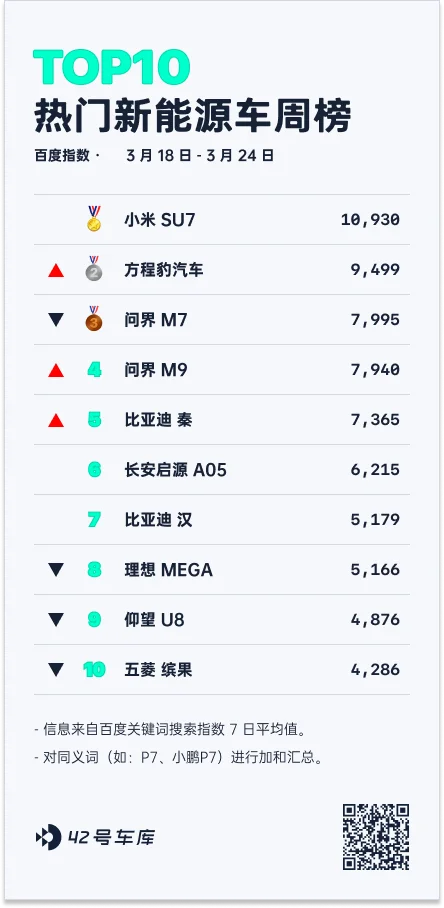
01 Weekly Index
02Weekly News
DJI In-Car Navigation: RMB 7,000 for Urban Areas
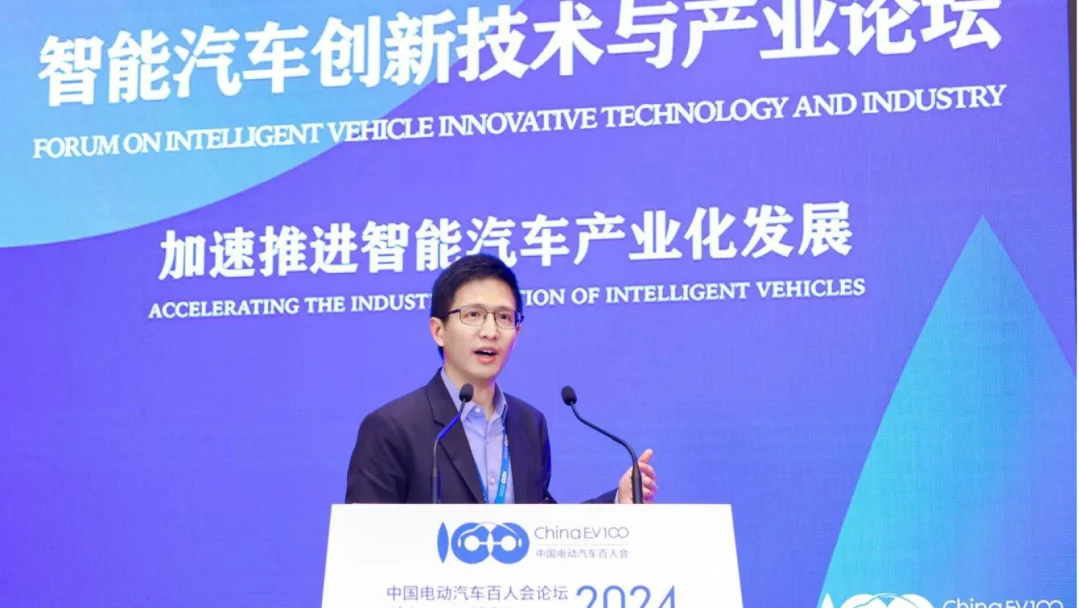
At the Zhongguodiandongqichebairenhuiluntan on March 17, Shen Shaojie, head of DJI Automotive, stated that DJI’s automotive solution using a 7-camera and 100 TOPS configuration can achieve urban navigation without high-definition maps. This solution will be equipped in vehicles priced around RMB 150,000 this year, with hardware costs to automakers as low as RMB 7,000.
First, consider the RMB 7,000 figure. Since DJI’s hardware cost to automakers is RMB 7,000, the price passed on to consumers for vehicles in the RMB 150,000 segment will likely not be prohibitively expensive. It is even possible that some automakers, eager to boost sales volume, may proactively offer discounts to users.
For comparison, if users choose a vehicle above RMB 200,000 that supports urban navigation, they typically must pay an additional RMB 20,000 or more. For instance, at brands like AITO and XPENG, opting for the intelligent driving version costs over RMB 20,000 extra, while Tesla’s Full Self-Driving capability comes at a price of RMB 64,000. The price disparity between the 7-camera + 100 TOPS solution and these alternatives is significant.
Next, let's look at the 7V + 100 TOPS solution itself. According to Shen Shaojie, the "7V" refers to seven cameras: a pair of front-facing 8-megapixel inertial-guided binocular cameras, one rear-facing 3-megapixel monocular camera, and four 3-megapixel surround-view cameras.
In terms of algorithms, the 7-camera + 100 TOPS solution employs a Transformer-based road topology perception model and a joint prediction and decision-making model. It also utilizes 4D scene flow based on binocular and omnidirectional fisheye inputs.
Furthermore, the 7-camera + 100 TOPS solution can be used with millimeter-wave radar and ultrasonic radar, or without them. The entire solution does not rely on high-definition maps and is independent of powertrain type, making it compatible with both electric and internal combustion engine vehicles, demonstrating high flexibility.
Clearly, DJI Automotive’s 7-camera + 100 TOPS solution serves as a versatile option for vehicles in the RMB 150,000 segment.
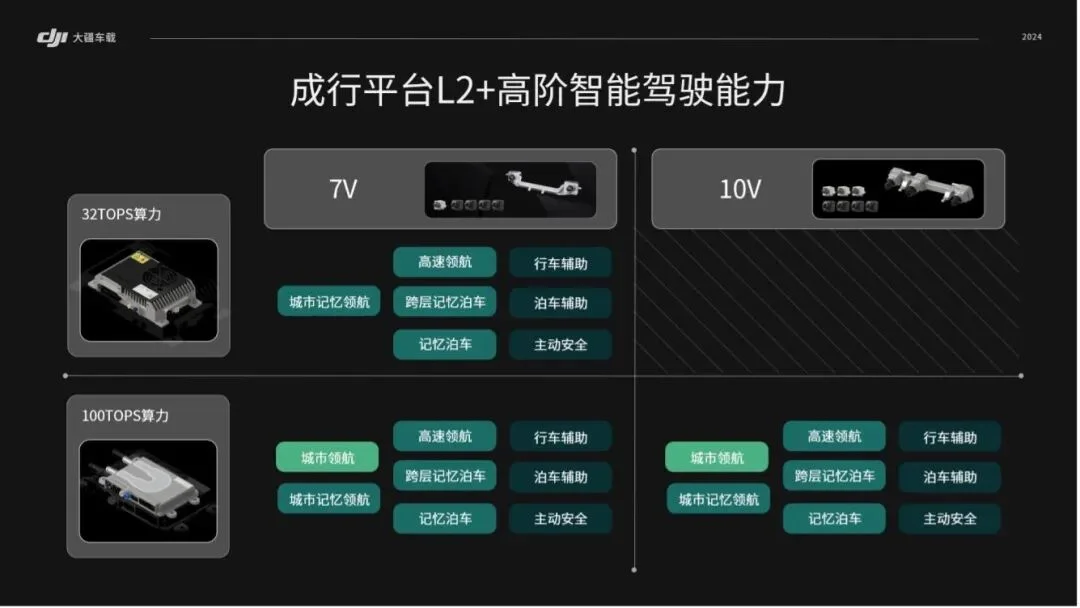
The 7 V + 100 TOPS solution originates from DJI Automotive’s Chengxingpingtai, which was officially announced during the China Electric Vehicle 100 Forums (CEVF100) last year. Chengxingpingtai encompasses DJI Automotive’s full-stack software and hardware design and delivery capabilities, serving as its core product for providing intelligent driving solutions to automakers. By this year’s CEVF100, Chengxingpingtai has evolved into three versions:
• Base version: 7 V + 32 TOPS;
• Upgraded version: 7 V + 100 TOPS;
• High-spec version: 10 V + 100 TOPS.
The base version supports intelligent driving features such as highway navigation and memory parking. It is already in mass production and is equipped on the Yunduolingxiban, iCAR 03, and Yueye Plus.
Starting this year, DJI Automotive will gradually make the base version standard equipment on models priced between RMB 80,000 and RMB 150,000.
Compared to the base version, the upgraded version retains the same perception hardware but swaps the chip from Dezhouyiqi TDA4-VH to Gaotongxiaolong 8650, boosting computing power to 100 TOPS. This enables higher-level urban navigation assistance for models priced above RMB 150,000.
The upgraded solution will be deployed on new mass-produced vehicles this year. DJI Automotive plans to standardize the upgraded solution in models priced around RMB 150,000 within the next two years.
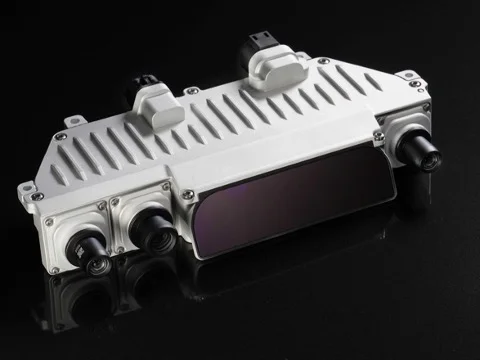
Compared with the upgraded version, the high-spec version keeps the Gaotongxiaolong 8650 chip unchanged and upgrades the perception hardware from 7V to 10V. This means replacing the front-view inertial-guided binocular cameras in the 7V setup with an 'inertial-guided tri-eye and LiDAR assembly'—which includes a pair of inertial-guided stereo binoculars, one telephoto monocular camera, and one LiDAR unit—to achieve L3-level autonomous driving.
DJI Automotive expects to apply the high-spec solution to models priced around RMB 250,000 by 2026, and aims to standardize it in models priced around RMB 200,000 within three years.
Notably, because the perception hardware of the basic version is identical to that of the upgraded version, the basic version can be converted into the upgraded version by swapping chips via a pin-to-pin interface.
Overall, DJI Automotive’s intelligent driving solutions emphasize affordability and volume, allowing automakers to select options as needed. Regarding DJI Automotive’s intelligent driving solutions, Shen Shaojie stated at the Hundred People's Conference forum:
Some people say that DJI Automotive excels at 'carving flowers on sesame seeds.' I think this evaluation is only half right. Sesame seeds are too small; what we have actually achieved is not carving flowers on sesame seeds, but carving forests on watermelons.
Quick Review: DJI Automotive’s 7V + 100 TOPS solution achieves an urban navigation intelligent driving system with a hardware cost of just RMB 7,000, representing a disruptive innovation. The launch of this solution will make intelligent driving technology more accessible, no longer exclusive to models priced above RMB 200,000, allowing more users to experience the convenience of intelligent driving. Furthermore, the solution offers high flexibility, does not rely on high-definition maps, and can be equipped in both electric and internal combustion engine vehicles, which will undoubtedly greatly promote the popularization of intelligent driving technology.
However, DJI Automotive’s goal is not merely to popularize intelligent driving technology, but to make it a standard feature. This requires concerted efforts in technological R&D and market promotion. Meanwhile, DJI Automotive is seeking to expand its market positioning, targeting vehicles priced from RMB 80,000 up to RMB 300,000. This expansion presents greater challenges, but also brings larger opportunities. Overall, DJI Automotive’s development strategy is worth watching; its exploration in the field of intelligent driving will bring new possibilities for the entire industry.
Hongqi EH7: The Starting Point of Its RMB 230,000 New Energy Strategy
On March 20, Hongqi officially launched the first model under its "All In" new energy strategy—the Hongqi EH7. Positioned as a B-segment pure electric vehicle, the Hongqi EH7 was released in five variants: EH7 600 Pro, 690 Pro, 640 Pro+ Siquban, 820 Pro, and 760 Pro+ Siquban. Prices range from RMB 229,800 to RMB 309,800. Specific pricing is as follows:
• 600 Pro priced at RMB 229,800;
• 690 Pro priced at RMB 239,800;
• 640 Pro+ Siquban priced at RMB 259,800;
• 820 Pro priced at RMB 269,800;
• 760 Pro+ Siquban priced at RMB 309,800.
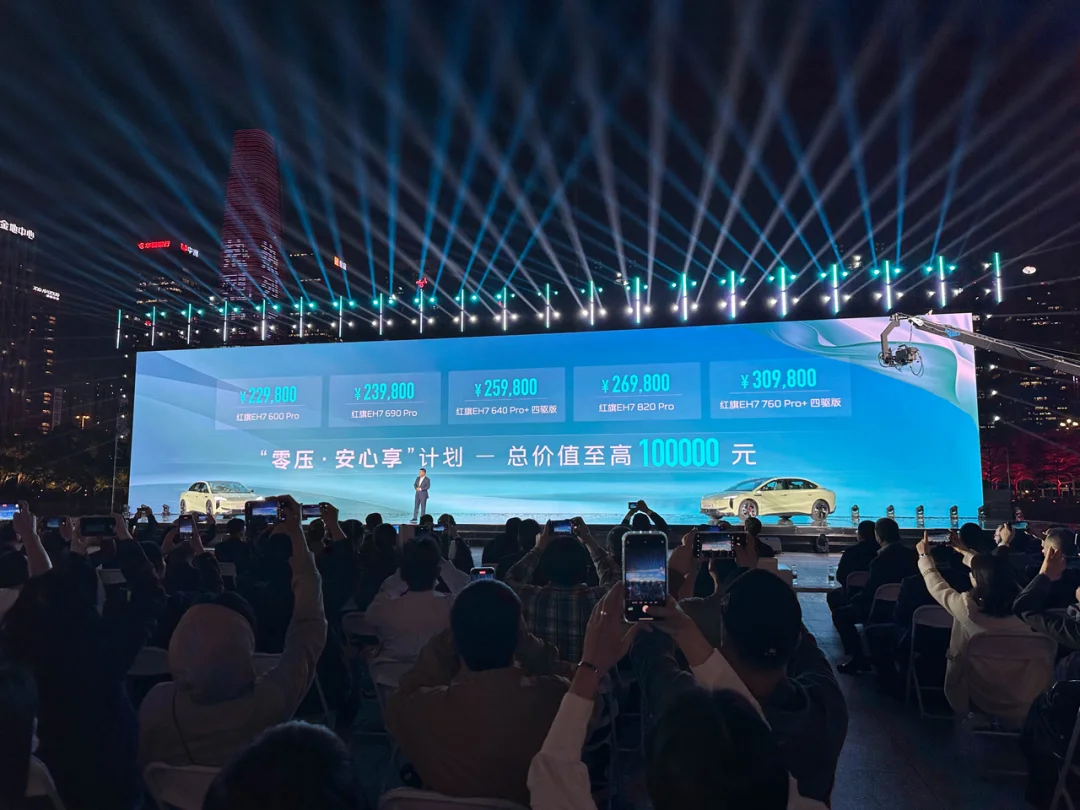
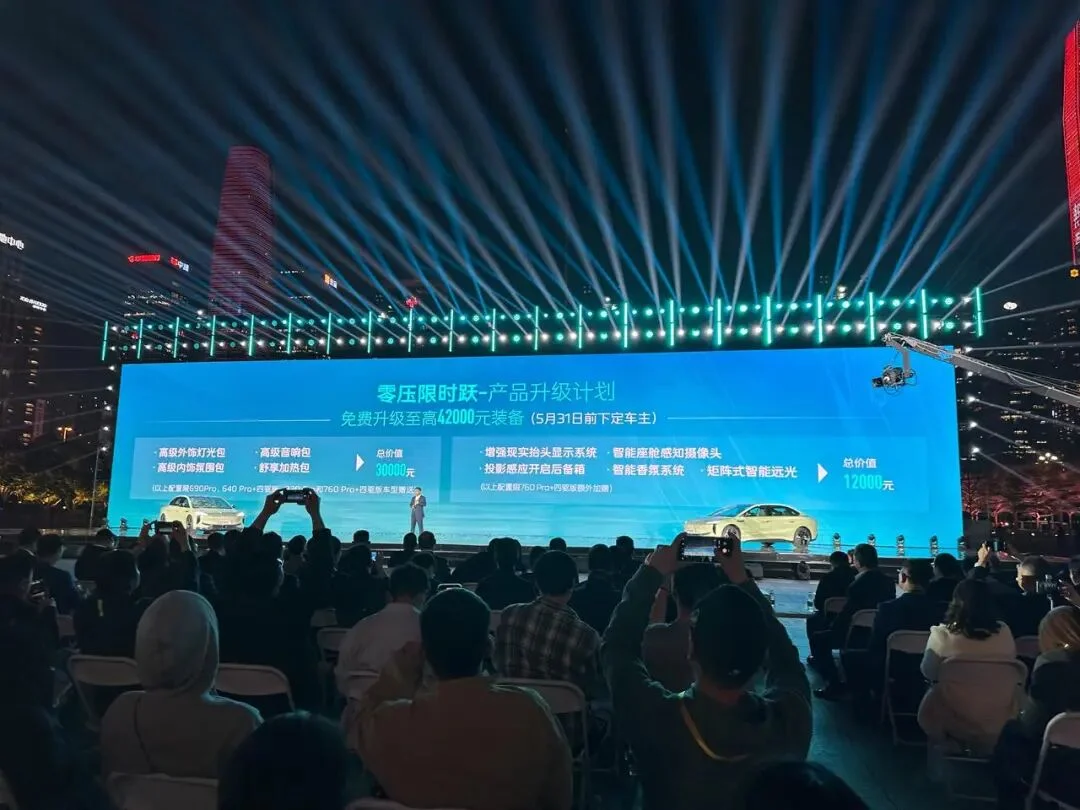
Purchasing any model other than the base trim includes a complimentary Advanced Exterior Lighting Package, Advanced Interior Ambient Lighting Package, Advanced Audio Package, and Comfort Heating Package, with a total value of RMB 30,000.
In addition, purchasing the top-trim model includes complimentary AR-HUD, cabin camera, kick-to-open tailgate, smart fragrance system, and matrix headlights, valued at RMB 12,000.
The primary configuration differences among these models lie in powertrain and range. The single-motor version comes standard with a 253 kW motor on the rear axle. For the all-wheel-drive models, an additional 202 kW motor is added to the front axle, bringing the system's maximum combined output to 455 kW.
For the battery, the entry-level 600 Pro model is equipped with a 75 kWh battery, while the two mid-range versions (690 Pro and 640 Pro+ Siquban) feature an 85 kWh battery. The top-tier two versions (820 Pro and 760 Pro+ Siquban) are fitted with a large 111 kWh battery.
In terms of the cabin, the Hongqi EH7 comes standard with the 8155 infotainment chip, ensuring responsive performance and smooth operation. It also features advanced technology and comfort amenities such as an AR-HUD, heated seats, headrest speakers, and power-adjustable steering wheel.
Quick Review: The launch of the Hongqi EH7 undoubtedly demonstrates Hongqi's determination and strength under its new energy strategy. As a B-segment pure electric vehicle, the EH7's positioning and price range fall squarely into the most fiercely competitive segment of the current market. The release of five models covers a price range of RMB 229,800 to RMB 309,800, with each model offering unique configurations and performance characteristics, representing a precise strike tailored to different consumer needs.
The Hongqi EH7's exterior design and interior configuration demonstrate the brand's innovative capabilities and keen insight into fashion trends. Its unique design language gives the EH7 a distinctive and modern appearance. Meanwhile, its interior features a curved dual-screen setup comprising a 6-inch and a 15.5-inch display, providing consumers with a good human-machine interaction experience.
In terms of power performance, the Hongqi EH7 is no pushover. The single-motor version comes standard with a 253 kW motor on the rear axle, while the all-wheel-drive model adds an additional 202 kW motor, bringing the system's maximum output to 455 kW. Regarding battery capacity, options range from 75 kWh to 111 kWh, meeting the range needs of different consumers.
Overall, the launch of the Hongqi EH7 is not only a significant step in Hongqi's new energy strategy but also an important attempt in China's new energy vehicle market.
Wuling Launches New Energy Commercial Vehicle 'Yangguang'
New energy vehicles are becoming the core driving force for the transformation of the automotive industry, a trend that is particularly evident in the commercial vehicle sector. As one of the world's largest automotive markets, China is actively promoting the high-quality development of its new energy commercial vehicle industry. Against this backdrop, Wulingqiche has launched its latest new energy commercial vehicle, the Wulingyangguang, aiming to seize new market opportunities.
From a technical parameter perspective, the Wulingyangguang demonstrates its competitiveness in terms of range, charging, and body design. The vehicle offers range configurations of 230 km and 300 km, utilizing liquid cooling technology and ultra-thin lightweight structural technology. This not only ensures battery stability and safety but also enhances the vehicle's overall performance. The fast-charging capability can increase the state of charge from 30% to 80% within 30 minutes, significantly improving the vehicle's usage efficiency.
The body dimensions and wheelbase design of the Wulingyangguang ensure ample cargo volume, while the 270° dual-opening tailgate and side sliding door provide significant convenience, reducing the difficulty of loading and unloading goods. Furthermore, the vehicle's payload capacity, tire configuration, and pairing with a high-power motor demonstrate Wuling's professional standards in the commercial vehicle sector.
In terms of comfort and safety, the Wulingyangguang also spares no effort. The design of the central entertainment screen, the combination instrument cluster, and the storage spaces enhances the driver's experience, while the use of ABS + EBD, EPS electric power steering system, high-strength body steel, as well as the provision of LED headlights and fog lights, provide strong assurance for the vehicle's safety.
Wulingqiche also provided customized solutions tailored to the needs of different industries, including refrigerated trucks, energy-refueling vehicles, and delivery vans, demonstrating its deep understanding of market segmentation.
The Wulingyangguang launched three models:
• Practical Edition with a 230 km range at RMB 71,800;
• Practical Edition with a 300 km range at RMB 79,800;
• Comfort Edition with a 300 km range at RMB 83,800.
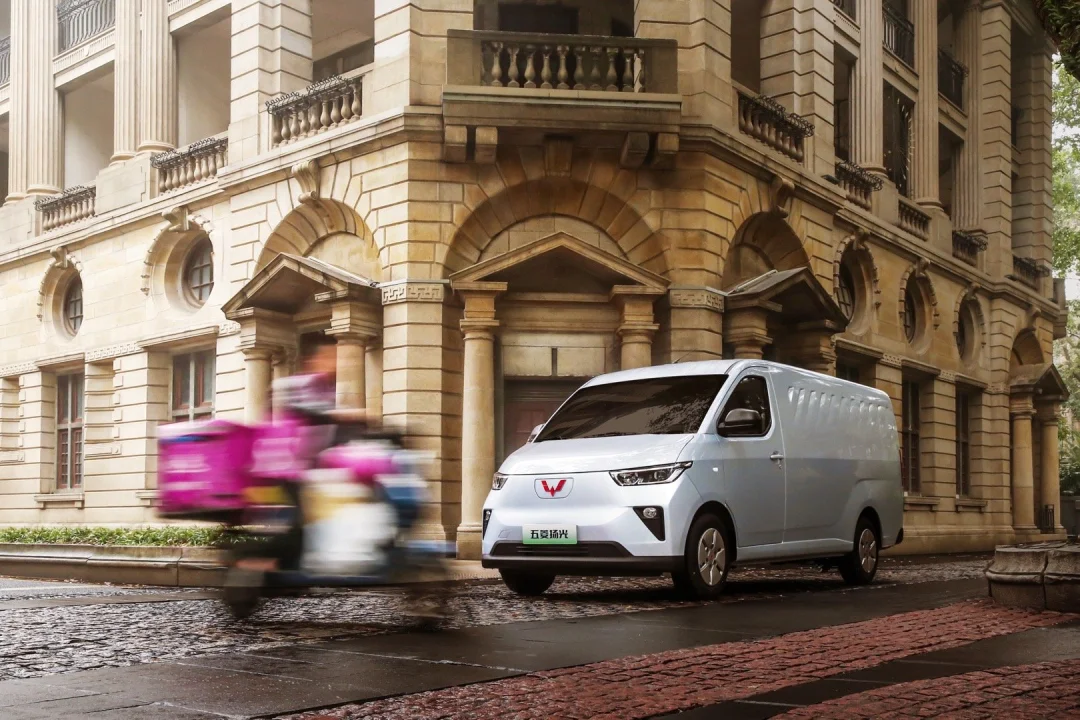
With over 40 years of manufacturing experience, Wulingqiche’s launch of the Wulingyangguang is not only a response to demand in the new energy commercial vehicle market but also reflects its technological innovation and market insight. As the new energy vehicle market continues to expand, the Wulingyangguang is expected to become an important competitor in the commercial vehicle sector.
Editorial Comment: The launch of the Wulingyangguang is undoubtedly an important attempt by Wulingqiche in the new energy market. From technical parameters and design, this vehicle demonstrates excellent competitiveness in terms of range, charging, and body design, while also putting considerable effort into comfort and safety. Particularly noteworthy is that Wulingqiche has provided customized solutions for different industry needs, which is a reflection of its deep understanding and precise grasp of market segmentation. However, how the market responds and what the sales figures are will be our key focus going forward. Only by truly entering the market can we test the strength and market acceptance of the Wulingyangguang.
Written by: Lin Yibo Edited by: Lin Yibo