


Q3 Profit Beats Expectations: Is Elon Musk Finally Delivering?
In the early hours of Beijing time today, Tesla released its Q3 2024 financial results after U.S. market close. Net profit increased by 17% year over year, beating expectations and marking the company’s best third-quarter performance in history. Following the report, Tesla’s stock surged more than 12% in after-hours trading.
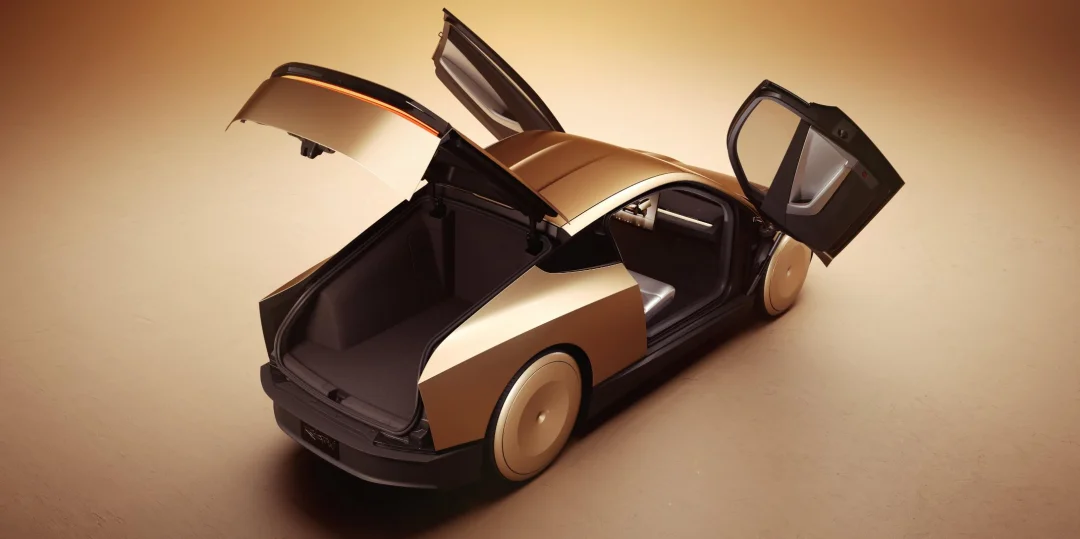
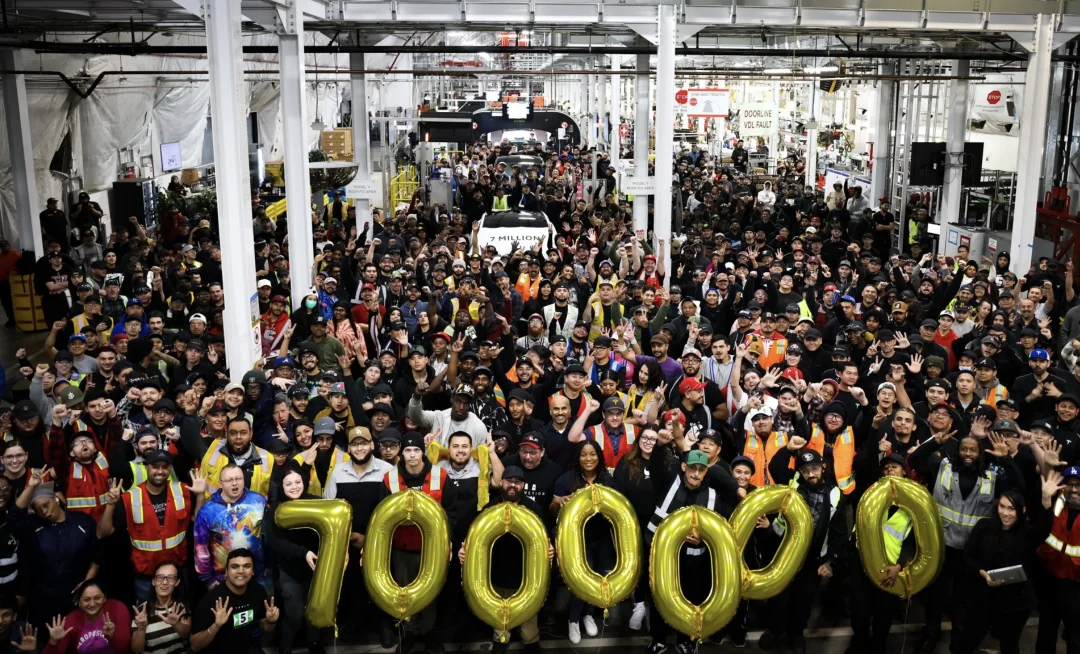
Coincidentally, on the day before the earnings release (October 22 local time), Tesla produced its 7 millionth vehicle. Under Elon Musk’s plan, Tesla is scheduled to mass-produce its budget model next year, with full-year deliveries expected to grow by 20% to 30%. In 2026, the recently unveiled Cybercab robotaxi will begin mass production, with a target of 2 million units annually and a final capacity of 4 million units per year.
However, at the start of the earnings call, Elon Musk stated: 'Global automakers are facing margin pressure, and so is Tesla.' Amid such intense competition, achieving the significant sales growth Musk projected will likely depend on the upcoming budget model, as well as the highly anticipated facelifted Model Y.
Tesla also shared updates on its autonomous driving capabilities. FSD Version 13 is set for release later this winter, showing an approximate five- to sixfold increase in miles per intervention compared to Version 12.5. The company expects further increases in miles per intervention by the second quarter of next year, at the latest by the third quarter.
Additionally, Tesla plans to offer hardware upgrades for vehicles equipped with HW3 autonomous driving hardware to meet the requirements for unsupervised FSD. Users who have purchased FSD can upgrade to HW4 free of charge.
In its Q3 2024 earnings report, Tesla noted that it currently sits between two waves of growth. The first wave was driven by the expansion of Model 3 and Model Y sales, while the next wave will be fueled by the rollout of autonomous driving technology and new products.
This aligns with Tesla's financial performance in recent quarters. Year-to-date, Tesla's earnings reports have not been particularly impressive, and its gross margin, which had remained at a high level, has been gradually declining. However, this quarter's financial results and future outlook have shown the automotive industry a Tesla ready to make its move, with 2025 set to be the main event.
01Financial Data Exceeding Expectations
Tesla's Q3 earnings report featured excellent performance in gross margin, per-vehicle sales cost, and overall revenue, marking the company's best Q3 financial results in its history. Specific figures include:
Total revenue reached USD 25.182 billion, up from USD 23.35 billion in the same period last year, representing an 8% year-over-year increase;
Automotive business revenue was USD 20.016 billion, up 2% year-over-year;
GAAP operating profit was USD 2.7 billion, GAAP net income was USD 2.2 billion, and non-GAAP net income was USD 2.5 billion;
Overall gross margin stood at 19.8%, an increase of 1.9 percentage points from 17.9% in the same period last year, marking the highest level in nearly a year;
Automotive business gross margin rose significantly to 17.1%, compared to 14.6% in the previous quarter.
Net profit reached USD 2.167 billion, a year-over-year increase of 17%, with a net profit margin of approximately 8.6%;
The cost per vehicle sold dropped to USD 35,100, the lowest in history.
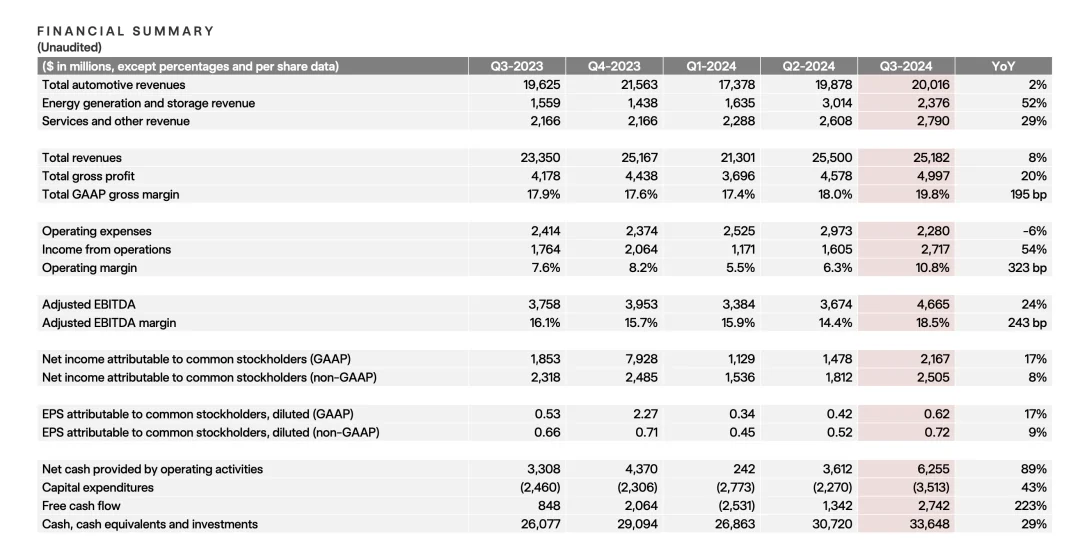
Except for revenue that was slightly below analyst expectations, all other financial metrics exceeded expectations. In particular, the growth in gross margin in Q3 indicates that Tesla’s gross margin has finally returned to a sustained upward trend.
Tesla attributed the significant increase in profits to higher vehicle deliveries and the sale of government carbon credits.
In terms of deliveries, according to the official announcement at the beginning of the month, Tesla delivered 462,890 electric vehicles in the third quarter of 2024, an increase of approximately 6.4% compared to the 435,059 units delivered during the same period last year. Elon Musk mentioned on the earnings call that this figure set a new delivery record.
Additionally, the Cybertruck became the third best-selling electric vehicle in the United States, trailing only the Model Y and Model 3.
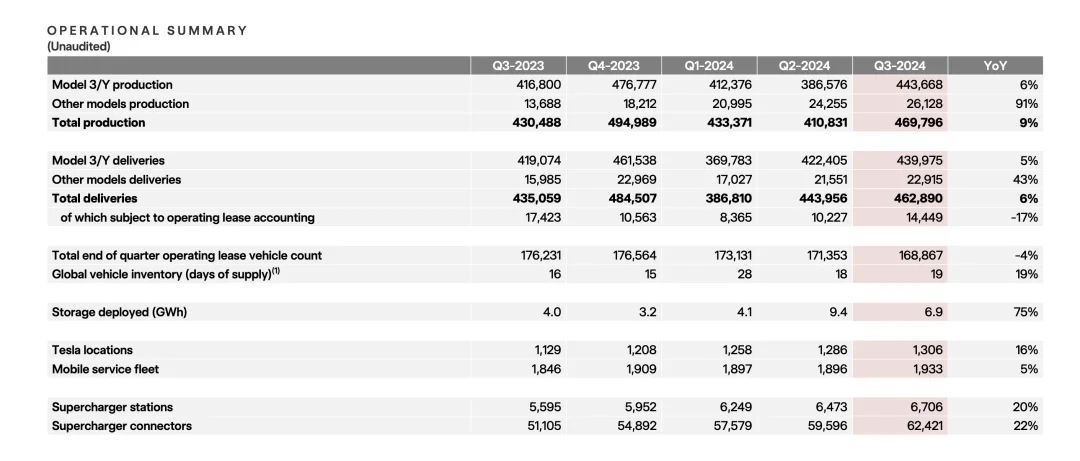
Previously, every sales increase by Tesla triggered an immediate rise in its stock price; this time was no exception. Tesla expressed strong confidence in its sales growth for the year: "Despite the ongoing macroeconomic situation, we expect a slight increase in vehicle deliveries in 2024."
However, even though Tesla achieved its lowest per-vehicle cost in Q3 2024, it remains obsessed with further cost compression. During the earnings call, Tesla stated that while vehicle margins improved sequentially, maintaining current profit levels in Q4 2024 may face challenges given the current economic environment. It emphasized that continuing to compress costs is crucial without compromising user experience.
Another source of profit growth is carbon credits. As Tesla only produces electric vehicles, it generates more carbon credits than it needs and has consistently sold them to generate revenue.
In the three months ended September 30, revenue from selling carbon credits reached USD 739 million, setting a record for the same period, but remained lower than the USD 890 million recorded in the second quarter. On the earnings call, Tesla noted that total revenue from carbon credit sales this year is approximately USD 2 billion, all of which count as pure profit for Tesla.
Beyond the automotive business, Tesla's other segments, such as energy storage, are also gaining momentum. Energy generation and storage revenue was USD 2.376 billion, up 52% year-over-year, though it decreased from USD 3.014 billion in Q2. Service and other income reached USD 2.79 billion, up 29% year-over-year and showing a slight sequential increase.
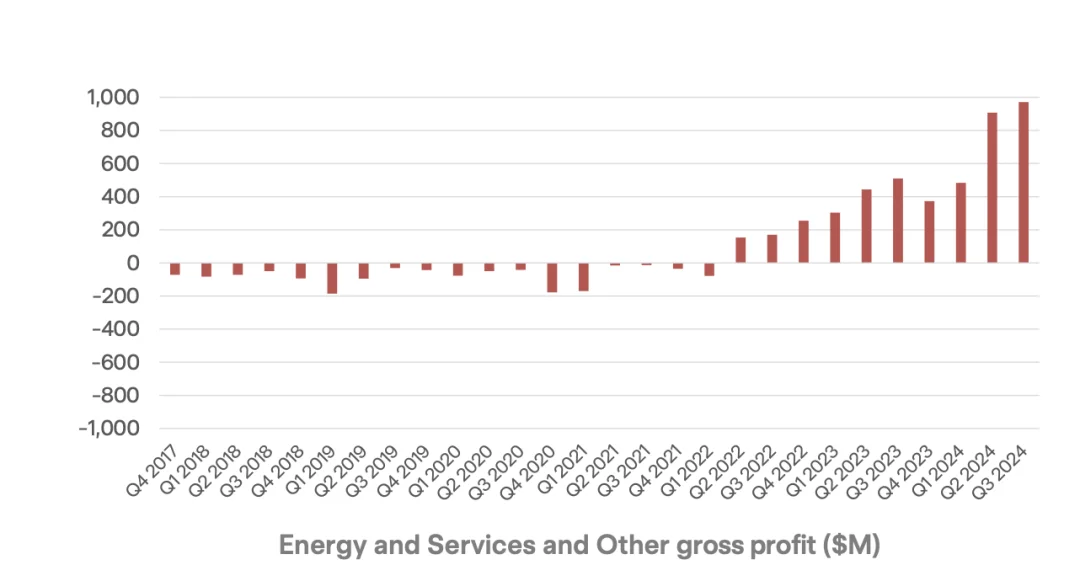
Amid this sustained growth trend, Tesla's operating cash flow in Q3 was USD 6.3 billion, with free cash flow at USD 2.7 billion, demonstrating robust liquidity. Additionally, the company's cash and investments increased by USD 2.9 billion in Q3, reaching a historical high of USD 33.6 billion.
02When Will Full Self-Driving Actually Be Implemented?
During the earnings call, Elon Musk shared several new updates on Robotaxi. The information disclosed this time was more detailed than ever before. In addition to confirming that Cybercab is expected to enter mass production in 2026, Musk stated that Tesla is actively advancing regulatory approvals.
Regarding the ride-hailing service scheduled for public launch next year in Texas and California, Musk revealed that the approval process in California has been somewhat lengthy, whereas progress in Texas has been much faster than anticipated.
Musk also disclosed that internal testing of Robotaxi has been opened to employees. Staff members can place orders via their smartphones, and the vehicles can transport passengers to any location within the Bay Area; however, safety drivers are still present inside the cars at this stage.
Elon Musk expressed strong optimism about the prospects of FSD. According to him, Tesla’s Vehicle Safety Report released for the third quarter of 2024 indicates that accidents occur once every 700,000 miles on average in the United States. The report shows that Tesla vehicles’ safety levels far exceed those of other models on U.S. roads. Tesla internally estimates that by the second quarter of next year, FSD will be safer than human drivers. "We don't need to wait for Robotaxi to achieve full autonomy; we expect to reach this goal with existing models next year," he said.
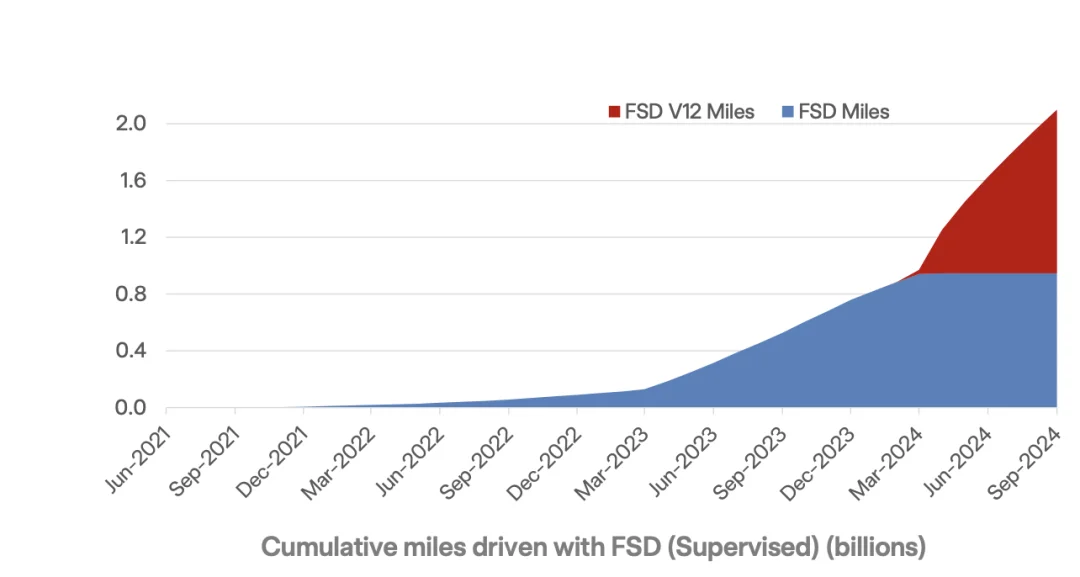
As of the third quarter, cumulative mileage driven under FSD (Supervised) exceeded 2 billion miles, with more than 50% of that achieved on the FSD V12 version.
When will the $25,000 model actually be released? This is a question of great concern to investors and the entire market.
However, when repeatedly asked about this affordable model, Elon Musk stated that the car itself is not the most important factor and emphasized that "Tesla will not produce a low-cost vehicle without an autonomous driving version."
He noted that while he had previously indicated such a model would be launched, it must follow the right timing, as all future vehicles are moving toward full autonomy. "Focusing solely on when a $25,000 model will be released is not very meaningful; we should consider what the overall mobility scenario looks like and what kind of travel experience vehicles should provide. We aim to reduce the cost per mile across the board."
Regarding the computing power required to advance autonomous driving, Tesla reported in its earnings statement that it increased AI training compute capacity by more than 75% in the third quarter, further propelling its development in autonomous driving technology. When asked about the relationship between xAI and Tesla, Elon Musk said that xAI has assisted Tesla's AI efforts multiple times. He explained that xAI is attempting to create general artificial intelligence or superintelligence, whereas Tesla is focused on manufacturing autonomous vehicles.
03Conclusion
Ultimately, Tesla's current challenge lies in whether its core automotive business can return to a growth trajectory. If Tesla shifts its development focus to businesses like Robotaxi while neglecting the core automotive sector, the market may view this negatively.
Fortunately, Tesla's delivery volumes and profit margins in this third-quarter report provided the market with positive signals through tangible growth.
Tesla's financial performance and the details revealed by Elon Musk during the earnings call convey an important message: Tesla's focus has become sharper.
For Tesla going forward, the prolonged absence of new flagship models and numerous restrictions on the advancement of FSD have placed the company in a transitional phase where there is a gap between past achievements and future offerings.
Based on real-time stock market feedback, investors are currently more focused on the launch of specific products and actual profit changes than on grand future blueprints. This explains why the market reacted so negatively to Tesla’s highly anticipated Robotaxi event.
Although Elon Musk has long resisted limiting Tesla’s identity to that of a car manufacturer, fulfilling the role of an automaker remains the primary prerequisite for gaining external trust.
Written by: Dayong Edited by: James