Li Auto says self-developed battery strategy is not a backup plan
When buying a car, consumers rarely ask whether the steel used in the body comes from Shougang or Baosteel. But if the battery supplier switches from CATL to Sunwoda, some may reconsider their order.
Why does the name of the battery supplier become part of the purchasing decision?
Consumers find it difficult to judge the safety and lifespan of a battery when buying a car. A familiar supplier brand becomes a basis for trust. When the battery shifts to 'self-developed,' that trust must be backed by the automaker's own capabilities.
This is the first mandatory test Li Auto faces as it advances its self-developed battery program.
According to the plan, the new-generation Li Auto MEGA and i9 will initially offer batteries from CATL, with a subsequent switch to Li Auto’s self-developed batteries. For consumers, the vehicle model remains unchanged, but the battery name changes. The judgment previously built on both the vehicle brand and the battery brand must be re-established.
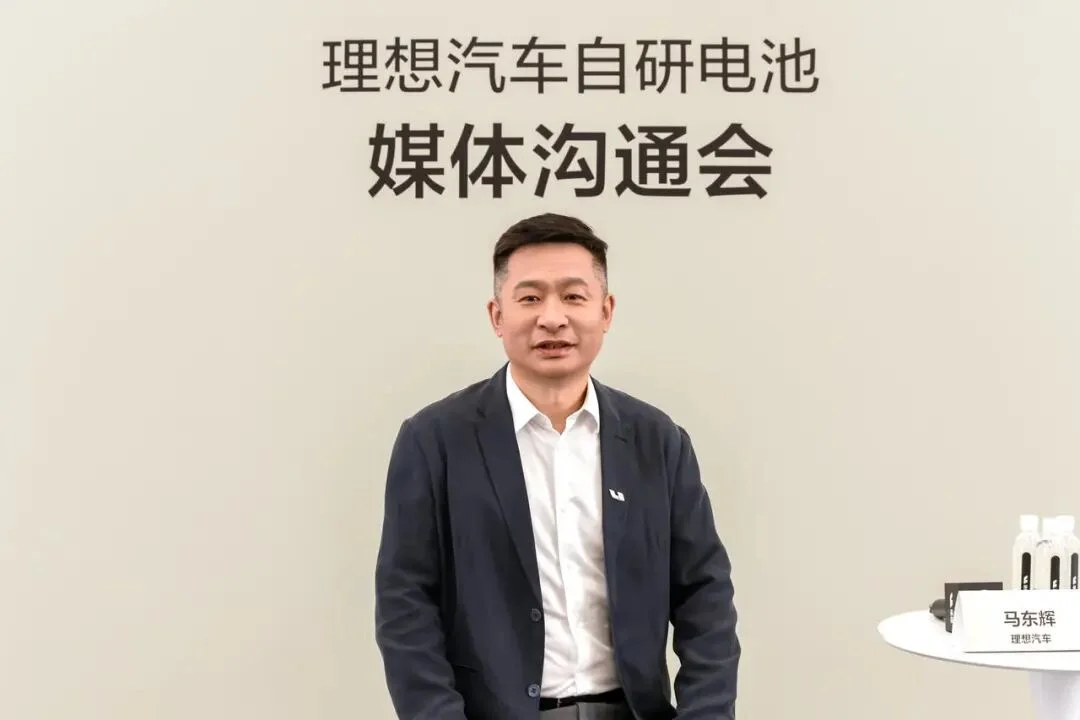
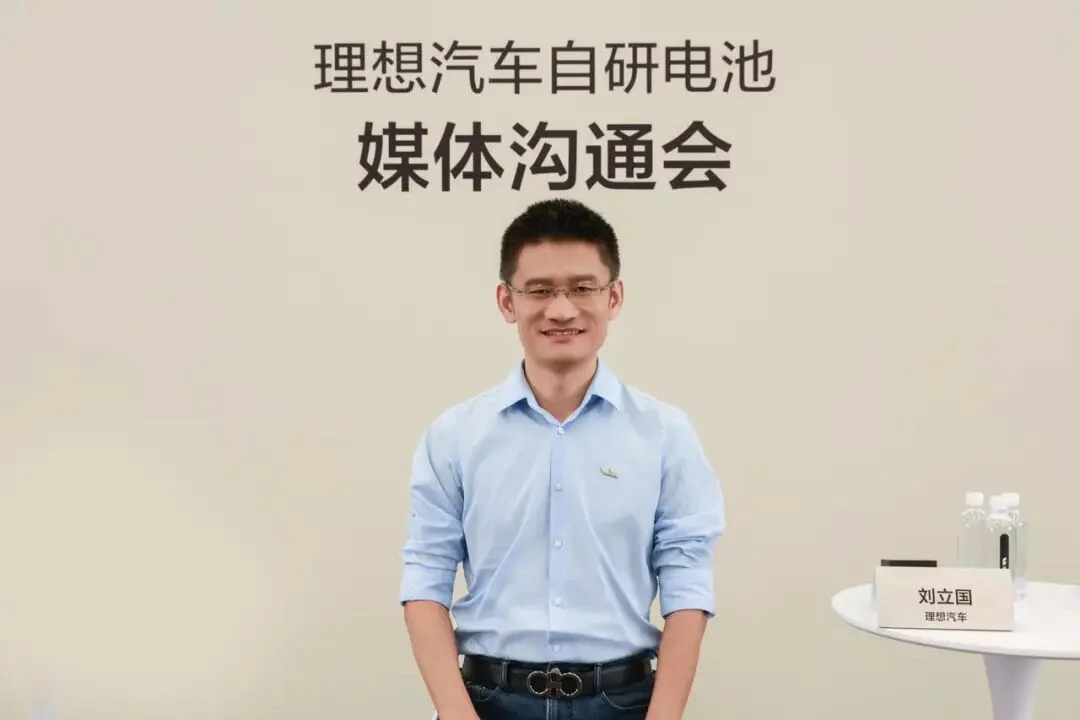
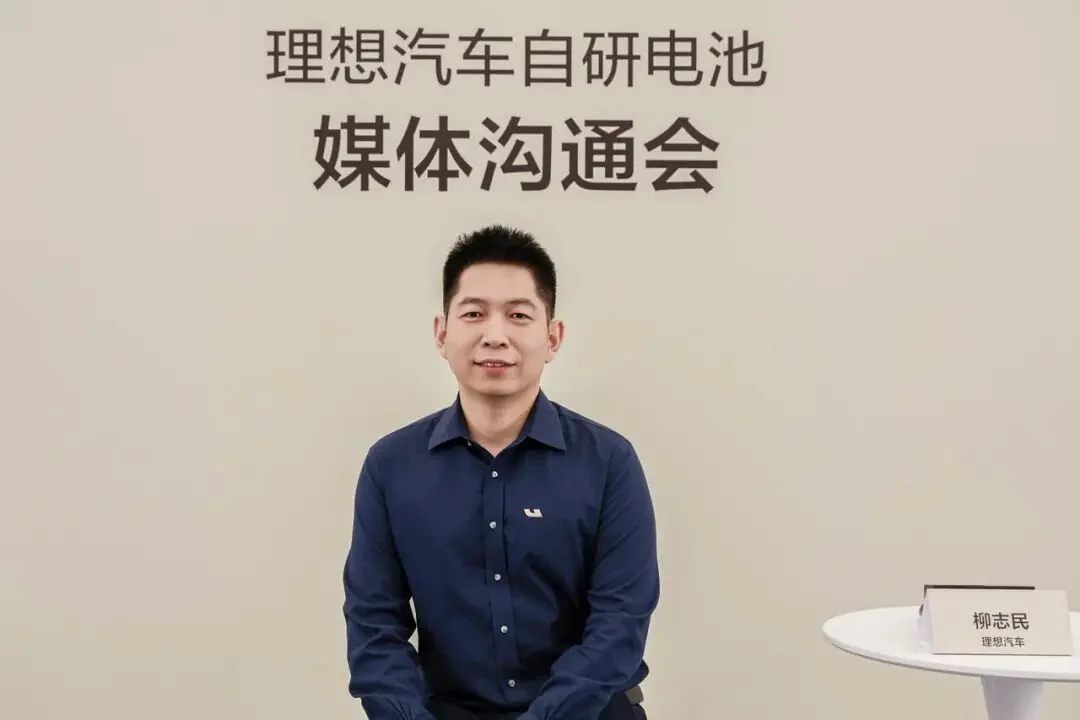
On the afternoon of September 21, 42HOW Auto and other media outlets visited Li Auto’s Beijing R&D headquarters for an in-depth two-hour conversation with Ma Donghui, Co-founder, President, and Chief Engineer of Li Auto; Liu Liguo, Senior Vice President of Vehicle Electrification R&D at Li Auto and Chairman of Shandong Li Auto Battery Co., Ltd.; and Liu Zhimin, CEO of Shandong Li Auto Battery Co., Ltd. and Senior Director of Power Batteries at Li Auto.
Li Auto President Ma Donghui emphasized that users purchase Li Auto products, and Li Auto is ultimately responsible for product quality. Of course, some users specifically choose vehicles because of CATL. Ma Donghui stated that Li Auto will clearly disclose which battery supplier is used and respects user choice.
The direction of Li Auto’s self-developed battery strategy is very clear. When asked about the role of self-developed batteries within the company, Ma Donghui stated: "This strategic direction for self-developed batteries is firmly established; it is not a backup plan." In his view, Li Auto currently possesses the technology, battery pack production lines, and capital necessary to continue developing its own batteries.
This implies that Li Auto also aims to redefine its division of labor with battery manufacturers.
According to the introduction, Li Auto leads the R&D in key areas such as selecting cell technology routes, developing material systems and structural processes, Pack integration design, BMS development, and cloud-based safety system development. In the manufacturing phase, cells are produced by partners via contract manufacturing, while battery packs are assembled by Li Auto.
The cooperation with Sunwoda Power illustrates this shift more concretely. In 2022, Li Auto invested RMB 400 million through its subsidiary to acquire a stake in Sunwoda’s power battery business. This September, Li Auto proposed an additional investment of RMB 2.65 billion to increase its capital in Sunwoda Power.
Furthermore, the two parties jointly established a joint venture—Shandong Li Auto Battery Co., Ltd.—with Li Auto and Sunwoda Power each holding a 50% stake. Liu Liguo and Liu Zhimin serve as the chairman and CEO of this company, respectively, which explains the "Shandong" prefix in their titles.
Equity participation, additional investments, and the establishment of a joint venture trace the path of Li Auto’s deeper involvement in battery manufacturing.
In Ma Donghui's view, without in-house R&D and manufacturing capabilities, a battery is like a "black box." Li Auto aims to link the data of each cell at the time of factory shipment with its charging/discharging and aging conditions after being installed in vehicles, to assess lifespan trends and detect anomalies early. This is also why Ma Donghui repeatedly emphasized that underlying data must be fully integrated when discussing partners.
From this perspective, in-house development allows Li Auto to trace quality management further upstream. Consumers see the battery brand when buying a car, but automakers need to understand how that battery is manufactured and how it will be used. Li Auto aims to have more complete information on both ends, ultimately proving that this data helps it identify and resolve issues earlier and more effectively.
Liu Liguo offered another assessment: under the current technological framework, the gaps in basic performance, reliability, and quality among different batteries are narrowing. Automakers need to find differentiation through vehicle-level synergy. This is where Li Auto believes its involvement is justified.
Ma Donghui cited a specific scenario: after a long summer drive, you stop at a service area to charge. The outside temperature is 40°C, passengers remain in the car with the air conditioning running, and the battery also requires cooling. Whether the vehicle can sustain fast charging depends on how well the battery, the vehicle’s thermal management system, and the charging station work together. The cell’s peak capability is just one part of the equation.
Li Auto has already mass-produced 5C batteries and is also preparing 15C technology. Liu Liguo revealed that the goal for 15C is to add 500 kilometers of range in five minutes. However, higher C-rate charging technologies have not yet entered specific product plans. Ma Donghui noted that even after mass-producing batteries with higher charging rates, factors such as heat dissipation, grid power supply at stations, and the cost-benefit analysis of saving a few minutes must be considered. These conditions determine when the technology will actually reach production vehicles.
Therefore, Li Auto’s first priority is to perfect the battery in its own cars. Liu Liguo stated that Li Auto currently concentrates its R&D efforts on 5C batteries. He contrasted this approach with battery manufacturers like CATL. "Battery makers need to meet product demands from various customers across 2C, 4C, 5C, and higher C-rates. Their product lines are extensive, and their investments are huge," Liu Liguo said. "We focus solely on the 5C ultra-fast charging category. This focus is the prerequisite for us to deepen our technology. In terms of investment per single product, we are no weaker than any other company."
Starting with the Li Auto L8, Li Auto adopted an in-house definition model, outsourcing manufacturing to Sunwoda. The market volume has now reached 420,000 units. Liu Liguo expressed strong confidence: "The overall after-sales quality performance is no weaker than products from any battery supplier. Regarding current products, I believe there is no gap whatsoever."
At the same time, Liu Liguo acknowledged that in frontier technologies for the future, such as solid-state battery R&D capabilities, Li Auto still has a significant gap compared to CATL.
Liu Zhimin stated that Li Auto spends over RMB 200 million annually on battery R&D. Over the past six years, cumulative spending has exceeded RMB 1 billion, in addition to fixed asset investments.
This money ultimately has to be factored into product costs. Ma Donghui noted that in the past, R&D expenses were included in suppliers' quotes; now, Li Auto bears more of these costs directly. The extent to which the developed battery cells can be used across multiple vehicle models determines how thinly this investment can be amortized.
Li Auto's efficiency strategy involves standardizing cell specifications as much as possible. Liu Zhimin explained that the company aims to cover all its models with just one or two types of lithium iron phosphate (LFP) cells and one or two types of ternary lithium cells. Under this approach, batteries customized for Li Auto can achieve maximum internal commonality, allowing R&D, production line, and logistics investments to be spread across more models.
Returning to consumers' initial question: after switching batteries, how trustworthy are they? That depends on whether these arrangements translate into more stable performance, longevity, and long-term safety once implemented in vehicles. By taking control of more links in the supply chain, Li Auto must provide a more comprehensive answer.
The following is an edited transcript of a conversation between Ma Donghui, Liu Liguo, Liu Zhimin, and 42HOW Auto among other media outlets.
01Self-developed batteries are not a backup plan
Q: What is the positioning of self-developed batteries within Li Auto? Are they a backup plan or a definitive long-term strategy?
Ma Donghui: Li Auto's direction is very firm. Starting with the new-generation Li Auto L8, new products will gradually be equipped with Li Auto's self-developed batteries. This strategic direction is certain; it is not a backup plan.
We are pursuing full-stack in-house battery development, which is fundamentally a matter of timing. We now possess the necessary technical capabilities and PACK (battery pack) manufacturing lines, and our current investment scale can support this strategic goal. For us, this is a clear strategic choice.
Liu Liguo: The core issue here is determining what to do and how to do it.
PACK integration has a strong relationship with the vehicle platform. In-house development allows for better platformization of PACK design across the vehicle lineup. With a unified PACK standard, we will specify customized requirements for cells. Regardless of the supplier, all future partners must conduct customized development according to our systems and dimensional standards.
Price is secondary; meeting our requirements is mandatory. If partners can integrate manufacturing and usage data, vehicle systems, and service networks, we welcome collaboration with every excellent partner in the industry.
Q: At what level does Li Auto’s R&D extend, and where do partners begin their involvement?
Liu Zhimin: We start from the cell material level, including cathode and anode materials, electrolytes, and formulation systems, completing prototype technology validation in the laboratory.
The typical path involves developing prototype technology solutions in the laboratory first. Once the technology matures to a certain stage, we collaborate with partners to convert these solutions into engineering plans, implementing them one by one for mass production.
Regarding the technological layout for 5C ultra-fast charging and subsequent 15C ultra-fast charging, both ternary lithium and lithium iron phosphate routes are being advanced. The focus is on high energy density, high charging performance, and more stable material skeleton structures.
Q: Li Auto has collaborated with CATL for many years. Why are the current co-developed and co-manufactured battery partners Sunwoda and CALB? What are the criteria for selecting partners?
Ma Donghui: Li Auto is open to collaboration. We welcome cooperation with any excellent supplier that meets our conditions.
We primarily evaluate TQCD: Technology, Quality, Cost, Supply, and Delivery capabilities. In addition, we place great emphasis on openness and collaborative spirit. As product iterations accelerate, it is equally important whether partners are willing to engage in deep synergy regarding data, R&D, and manufacturing.
Data integration is not the end goal; user value is. By connecting key manufacturing and quality data, we can identify issues earlier and provide better early warnings. Therefore, open collaboration and TQCD are both important standards for Li Auto when selecting partners.
Q: What additional benefits does the investment in Sunwoda bring compared to a simple co-development and co-manufacturing model?
Ma Donghui: We have a longer history of cooperation with Sunwoda. We began connecting in 2017, invested in Sunwoda in 2022, and made an additional investment this year.
Comparing Sunwoda and CALB, at the cell level, the co-development and co-manufacturing model is the same: we conduct independent research and development, while they manufacture the cells using their production capabilities and process expertise, forming joint innovation.
The difference is that we established a PACK joint venture with Sunwoda. In terms of collaboration duration, investment depth, and synergy breadth, Sunwoda has a first-mover advantage, creating a sequential relationship between the two. However, there is no difference in cell quality standards.
As sales volume and production capacity demands rise, we aim to collaborate with leading battery manufacturers, provided that underlying data is fully integrated. This integration enables early warning systems for potential performance and quality issues.
02Cost Reduction Must Come from Efficiency
Q: How many specifications does Li Auto plan to use across cell and pack levels to cover different vehicle models?
Liu Zhimin: Regarding pack platformization, if different models require the same energy capacity, we will use the same pack design as much as possible.
For cell platformization, we also aim to match varying energy requirements by using a single cell type and adjusting the number of cells in series. The more standardized the cell specifications, the greater the improvement in R&D and manufacturing efficiency.
We utilize both lithium iron phosphate (LFP) and ternary lithium chemistries. Our goal is to cover all vehicle models with one or two LFP cell types and one or two ternary lithium cell types. By gradually standardizing cell and pack specifications, we enhance R&D and manufacturing efficiency while meeting the diverse product needs of different models.
Regarding cell form factor, we selected the prismatic aluminum-can route after comprehensively evaluating platformization requirements, technological availability, and production line planning. This decision aligns with Li Auto’s product roadmap and our ongoing efforts to improve charging performance.
Q: Without the scale of major battery giants, where does the cost advantage of self-developed batteries come from?
Ma Donghui: Battery costs consist of five main components: production line amortization, manufacturing expenses, raw materials, logistics and warehousing, and R&D investment. We believe the opportunity for cost reduction lies in enhancing end-to-end efficiency while maintaining performance and quality.
First is production line investment and allocation. By platformizing our battery cells to maximize line reuse, we increase utilization rates, which lowers the per-unit amortization cost.
Second is manufacturing expenses. Li Auto’s intelligent industrial team and the Lianshan System monitor production processes and analyze data. This enables quality warnings and identifies waste during manufacturing to improve yield rates.
Third is raw materials. Previously, when raw material prices fluctuated, we largely accepted them passively. With self-developed and self-manufactured (or contract manufacturing) batteries, we can take a more proactive approach to upstream materials and risk management, improving our ability to manage cost volatility and supply stability.
Fourth is logistics, warehousing, and transportation. A unified battery system allows for more efficient warehousing, packaging, tooling, and transport, reducing waste caused by redundant storage and shipping.
Fifth is R&D investment. R&D costs inevitably impact the bottom line. Previously, suppliers bore the R&D costs, which were reflected in purchase prices; now, Li Auto covers R&D investment, allowing partners to focus on manufacturing and process technology. This clarifies the division of labor across the entire chain.
The goal of self-development is to reduce waste and enhance efficiency at every stage without compromising performance, quality, or safety.
Whether using contract manufacturers or purchasing externally, it is essential to maintain reasonable gross margins. If no margin is left for partners, they cannot develop healthily. The same applies to us: users expect Li Auto to remain healthy and sustainable, otherwise they may worry about post-purchase maintenance and repair issues.
Q: Is the RMB 500 million mentioned by outsiders for battery R&D investment Li Auto’s total contribution?
Liu Zhimin: The RMB 500 million covers only a portion of our R&D expenses, including laboratory materials and testing verification. Li Auto’s annual battery R&D spending exceeds RMB 200 million, with cumulative investments totaling over RMB 1 billion across the past six years. Additionally, there are related capital expenditures such as fixed assets.
Over the next two to three years, we will continue to increase our investment. Leveraging the Beijing Intelligent Supercharging Key Laboratory, we are researching technologies for future products while also laying out next-generation technologies aimed at 2035, coordinating with scientific resources in Beijing for forward-looking research.
Furthermore, we plan to establish an R&D center at our factory in Shandong to strengthen localized R&D capabilities, forming a collaborative battery R&D system connecting Beijing, Shanghai, and Shandong.
Q: Does deeper material research imply that all equipment and research capabilities must be built in-house?
Liu Zhimin: For deep-level material characterization, we rely on external research institutions. We have established long-term partnerships with numerous research organizations in Beijing and Shanghai, enabling us to conduct material characterization as needed. For equipment with lower usage frequency, such as cryo-transmission electron microscopes, we have chosen not to build everything in-house; instead, we utilize external research resources to meet requirements while maintaining efficiency.
For high-frequency, general-purpose characterization and testing capabilities, Sunwoda has deployed extensive equipment to satisfy the frequent testing needs during cell development. Li Auto participates in product definition, technical standard setting, and end-to-end validation.
Our proprietary R&D platforms are also under continuous construction. The laboratory visited today is just one part of this effort; Changzhou hosts a larger testing base, including pack-level testing and black-box testing for Battery Management Systems (BMS). We also collaborate with universities, utilizing molecular-level simulation and AI-driven high-throughput screening to study electrolyte additive formulations, material doping, and coating structures.
Q: How does battery production capacity align with vehicle demand? Will surplus capacity be absorbed by a second brand?
Ma Donghui: Starting from the announcement of self-developed batteries in 2026, our new products will gradually be equipped with self-developed batteries. Production capacity planning is closely linked to the launch timeline of new products in 2027 and overall sales forecasts.
The PACK production line is planned according to vehicle sales forecasts. If there is surplus capacity in the cell production line dedicated to Li Auto, Sunwoda can also use that capacity for other brands. Therefore, at the planning level, vehicle sales and battery capacity are coordinated and matched. We have no plans for a second brand.
03Underlying Data Must Be Connected
Q: What data do you hope to obtain through self-development that was previously inaccessible, and how is this data useful to users?
Ma Donghui: Without self-development and manufacturing capabilities, we cannot access all parameters during the cell production process, including electrochemical raw material formulations, production process parameters, and test data for each individual cell. Otherwise, what we receive is merely a 'black box.'
Vehicle delivery to the user marks the true starting point of battery usage. We aim to connect manufacturing data with vehicle data and user usage data, including driving and charging data. For users, the value lies in the ability to monitor battery condition and lifespan trends in advance; if production parameters show anomalies, early warnings can be issued.
The ideal scenario is to resolve issues before the battery is installed and delivered in the vehicle. This is precisely the core reason we insist on 'self-developed and contract-manufactured cells' and 'self-developed and self-made PACKs.'
Q: Specifically regarding vehicle control, what changes does self-developed battery technology bring?
Liu Liguo: A typical scenario is discharge power under low-temperature conditions.
Previously, following the traditional cooperation model, battery manufacturers provided a power MAP—a table calibrating the upper limits of discharge power at different temperatures—and the vehicle was calibrated according to this table. Through self-development, we have independently developed APC (Active Power Control) and ATR (Adaptive Thermal Regulation) algorithms to more accurately calculate SOC (State of Charge) and the power MAP.
We utilize the time window from when the driver presses the accelerator pedal to when the demand signal is issued to provide feedforward control signals to the battery. By coordinating vehicle control algorithms with the battery system, we mitigate issues of insufficient power performance under low-temperature conditions.
Deeper integrated control can also be achieved in areas such as thermal management. Through self-development, we possess basic data for each cell, such as capacity, during the production phase. Especially after long-term use when health status changes, we can perform more precise collaborative management at the vehicle level.
Q: From R&D requirements to mass production, how do you ensure manufacturing consistency?
Liu Zhimin: A complete product solution typically consists of three stages.
First, a technical solution is formed around product requirements, linking to the product's technical characteristics; then, in the engineering solution, these technical characteristics are converted into engineering characteristics; finally, the engineering characteristics are aligned with the control plans on the manufacturing side.
We have over 8,000 control standards at the cell level and more than 1,000 at the PACK level, totaling over 9,400 standards, to ensure manufacturing consistency.
Beyond the control plan, the production line features online CT and AI inspection systems, as well as liquid-lens CCD cameras paired with AI detection to monitor anomalies during manufacturing. We integrate our AI algorithms with the Lianshan System to identify abnormal trends, enabling continuous optimization and iteration.
Q: Where will deeper involvement by OEMs in R&D lead battery innovation?
Liu Liguo: Under the current technological framework, from a user experience perspective, the gaps in basic performance, reliability, and quality among different power batteries are narrowing. As foundational capabilities mature, it is becoming increasingly difficult to differentiate products solely through battery components themselves.
OEMs need to think holistically from the vehicle level on how to collaborate between batteries and other systems to deliver a superior comprehensive experience to users.
Ma Donghui: Another value of OEMs developing their own batteries lies in driving system integration innovation from a vehicle-wide perspective.
The question of which functions are integrated into the battery and which remain independent—including how low-voltage batteries, DC converters, power distribution units, and thermal management systems merge—requires unified design according to the vehicle architecture.
This can be compared to steer-by-wire chassis systems. Lateral, longitudinal, and vertical controls involve steering, braking, and suspension, traditionally supplied by different vendors. However, many driving experiences rely on the fused control of these three directions, making it difficult for a single supplier to solve the complete problem alone.
Batteries are no different. OEMs integrate batteries with vehicle electrical components, thermal management systems, and control systems, designing them collaboratively from the perspective of the overall vehicle architecture.
04Existing 15C Technology Reserve
Q: Why did Li Auto initially set its ultra-fast charging target at 5C?
Liu Liguo: We comprehensively considered the battery's own technical capabilities, the vehicle's heat dissipation capacity, the construction conditions of charging stations, and the power supply capacity of individual stations. The result was calculated based on the entire chain.
Further increases in battery C-rate ultimately depend on whether stations and the grid can provide the corresponding power supply capacity. If the battery achieves a higher C-rate but the station's power supply cannot keep up, the vehicle cannot fully utilize this capability. This is a constraint of real-world infrastructure and the underlying logic considered when defining 5C.
Q: From battery to vehicle, what is the hardest challenge in achieving sustained high-C-rate charging?
Ma Donghui: 5C is a systematic engineering project. Whether it is 10C or 15C, attention must be paid to how long it can be sustained. With constant internal resistance, the greater the current, the greater the heat generation.
Thermal management on the vehicle side is the key challenge. For example, after a user drives a long distance, the battery temperature is very high. When charging at a service area without getting out of the car, if the external environment is 40°C and the interior still requires cooling, the entire thermal management system faces significant challenges. Further increasing to 10C presents even greater thermal management challenges, as there is a big difference between instantaneous achievement and sustained output.
Solving the issue at the vehicle level is not enough; the ability of charging stations to continuously deliver high current remains a bottleneck. Whether relying on energy storage or drawing directly from the grid, higher C-rates mean higher instantaneous power, imposing greater demands on infrastructure.
Liu Zhimin: Each cell has six surfaces available for heat dissipation. We adopted a dual-side cooling solution targeting both the terminal surface and the bottom surface. During R&D, we found that directly cooling the terminal surface allows for more efficient heat removal.
Q: Why did the next stage of research target 15C directly, rather than increasing incrementally from 10C to 12C?
Liu Liguo: When we initially defined 5C, the market mainstream was around 2C, with users requiring about half an hour for a full charge. Reducing this time from half an hour to 10 minutes represents a significant improvement in user experience.
If we were to increase the rate incrementally from 10C to 12C, we would need to adjust not only R&D investment but also foundational supporting facilities such as supercharging piles. However, the actual reduction in charging time perceived by users might be limited. Therefore, we aim to target 15C directly to focus on actual charging duration.
Our goal is to achieve 500 kilometers of range with just 5 minutes of charging, bringing the refueling experience closer to the efficiency of gasoline vehicles. Based on this target, a technical capability of approximately 15C is required. Thus, we will leap directly from 5C to 15C to keep technology investments more focused.
Q: Does this mean that higher C-rates are already included in specific product plans?
Ma Donghui: We consider 5C to be a relatively balanced solution for the current market. Whether to further increase the C-rate in the future depends on a comprehensive assessment of technological maturity, infrastructure conditions, and user value. It has not yet entered specific product planning.
Higher C-rates mean users must bear higher costs for both the product and infrastructure. Whether this is worthwhile requires careful assessment. Both technology and products must demonstrate clear user value and sound commercial logic.
Liu Liguo: We believe 5C charging will continue to offer significant user value over the next two to five years. At the same time, we are also preparing 15C technology.
A technology must go through stages including scientific research, engineering development, mass production validation, and commercial feasibility verification. We focus on when it can truly translate into user value. Take solid-state batteries as an example: at the current stage, we will continue to track and research them, focusing on key issues such as materials, interfaces, and devices. Different technologies at different maturity levels require different investment approaches.
05Ultimately Responsible by Li Auto
Q: How does Li Auto view the difference in R&D scale between itself and battery companies?
Liu Liguo: The number of personnel is highly correlated with business volume and the scope of R&D. Battery companies may serve multiple automakers simultaneously, while also covering energy storage, different material systems, and platform technologies, which naturally requires more manpower.
For automakers, what matters more is the depth of R&D, focused directions, and whether there are clear user and product goals.
Li Auto’s investment in batteries is highly focused. Other battery companies need to layout energy storage, sodium-ion batteries, and other systems, while also meeting different customers’ demands for 2C, 4C, 5C, and higher C-rates. We only focus on the 5C ultra-fast charging category, which is a prerequisite for deepening technology.
The R&D effort extends beyond the battery team alone, with collaborative support from the vehicle materials and thermal management departments on issues such as cathode and anode materials, and PACK cooling.
Q: After focusing on its own products, which capabilities does Li Auto believe it has mastered, and where gaps remain?
Liu Liguo: Products defined in-house and manufactured via contract production have been on the market since the first-generation L8 and L7, with a cumulative fleet of 420,000 units. In terms of after-sales quality performance for current products, I believe they are not inferior to those of any battery supplier.
Our goal is to refine our battery capabilities to fully support Li Auto’s product experience, ensuring that the battery performance of every vehicle is defined and owned by us.
However, regarding frontier technologies for the future, such as solid-state battery R&D capabilities, we do acknowledge a significant gap compared to CATL. We admit this frankly. CATL positions itself as leading the entire track, while we currently adopt a strategy centered on product experience. Our strategies differ, as do the scale of investment and technical accumulation.
Q: How does Li Auto hope in-house development will change battery after-sales service?
Ma Donghui: There are still some after-sales pain points in the industry. When issues arise, automakers, users, and battery companies may have different criteria for judging problems like mileage degradation. The question is whether the quality issue stems from integration, cells, PACK, or software?
Users purchase a complete product. When quality standards are not met, they should not need to worry about which link is at fault; Li Auto should take full responsibility.
We aim to integrate product definition, service standards, and the after-sales service system to unify after-sales standards. Users do not need to worry about who supplies the battery cells or where the brake chassis comes from; they just need to turn to Li Auto.
Q: Some users still prefer CATL batteries. How does Li Auto build their trust in its self-developed batteries?
Ma Donghui: I understand, and this is also the user's right to choose. We have issued announcements during the launch of the i9 and MEGA regarding battery switching arrangements, clearly informing each user of the battery brand corresponding to their order. If it does not align with the user's wishes, we feel regretted, but of course, we respect the user's choice.
A brand is not static. Users purchase the ideal product, and when issues arise, they do not seek resolution from component suppliers. Nothing is achieved overnight; we welcome continued attention to the after-sales quality performance of our self-developed products following delivery.
I have confidence in Li Auto's technology and products, and ultimately, Li Auto is responsible for product quality. We hope to win trust through actual performance, including charging speed, battery durability, driving range, and winter degradation performance; this requires time to prove.
Written by: James Edited by: Daji