Sunwoda EVB Unveils 15C Fast-Charging Battery and Sodium-Ion Cells for TWh-Grade Storage
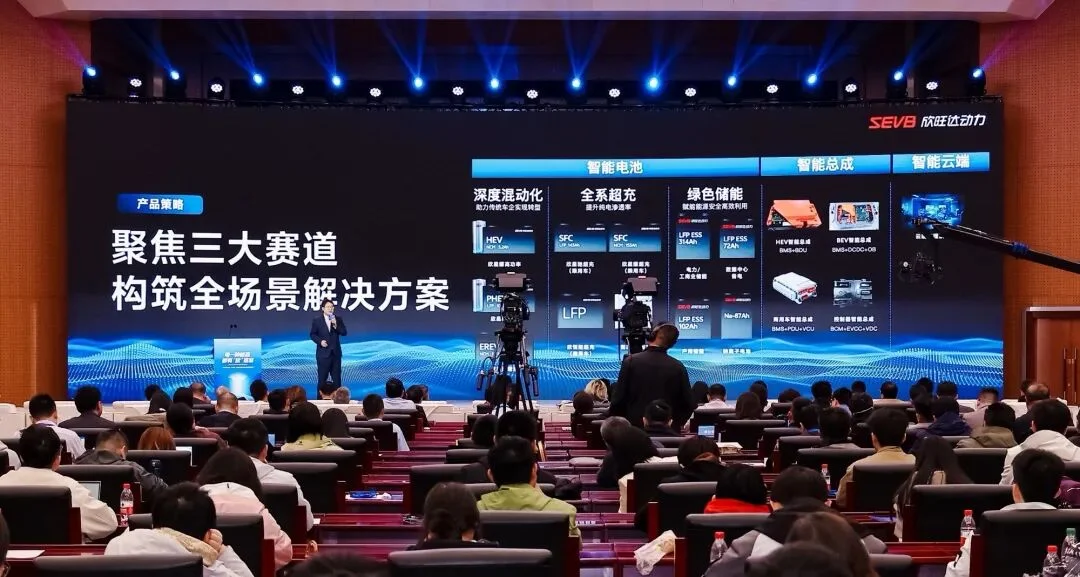
This afternoon, Sunwoda EVB unveiled a comprehensive battery product portfolio covering hybrid electric vehicles (HEVs), pure electric vehicles (BEVs), commercial vehicles, and energy storage systems.
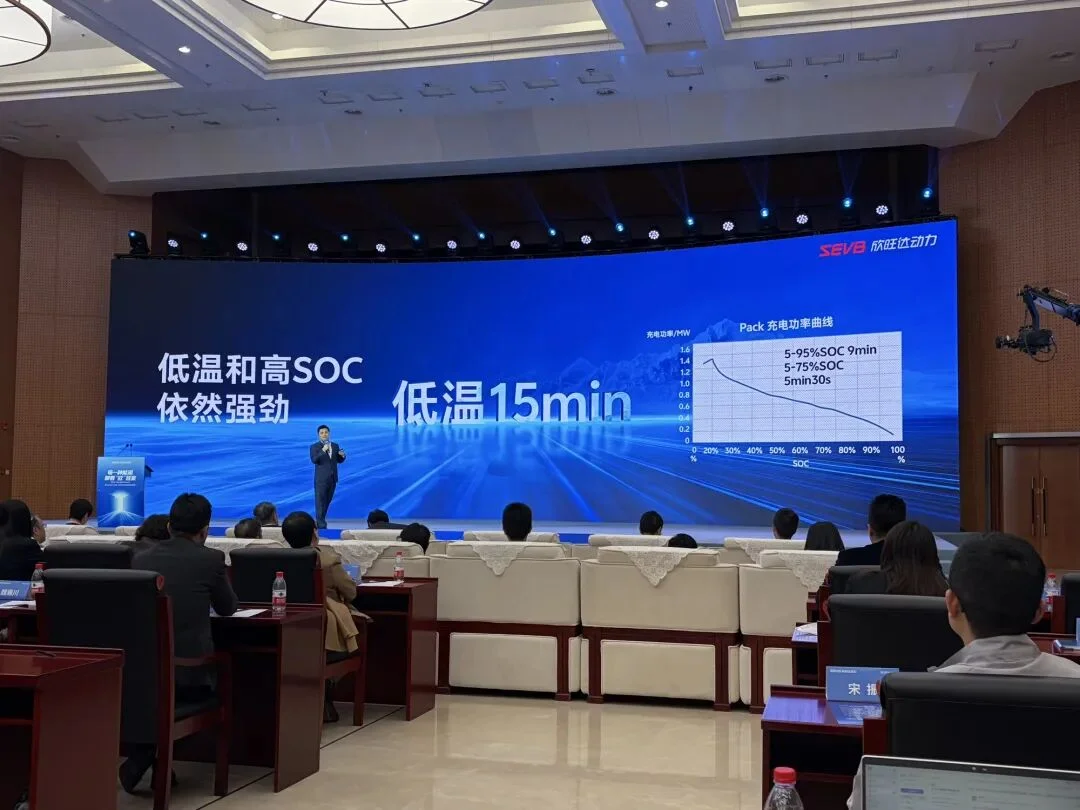
Overall, the latest release consolidates Sunwoda EVB’s prior advantages in the HEV sector while refining its product lineup. It also marks a significant leap in charging capability: for passenger vehicles, batteries capable of 15C charging have been introduced, enabling a charge from 5% to 95% in just nine minutes; for commercial vehicles, dual-gun charging power can reach up to 1.44 MW.
Additionally, targeting the energy storage sector, Sunwoda EVB launched five different capacity cells combining sodium-ion and lithium iron phosphate technologies to meet the surging demand for energy storage as the industry approaches the TWh era.
Previously, Sunwoda EVB maintained a relatively low profile in the power battery sector. However, with the rapid maturation of cutting-edge technologies and its consecutive entry into the supply chains of leading new energy vehicle manufacturers, Sunwoda EVB’s industry standing is steadily rising, establishing it as one of the key players in the power battery field.
Prior to today’s launch event, 42HOW Auto and other industry media conducted a joint interview with Xu Zhongling, Dean of the Central Research Institute at Sunwoda EVB, who provided an in-depth analysis of the mass production of solid-state batteries and the application of sodium-ion batteries within the company’s full-scenario battery portfolio.
01Three Fast-Charging Batteries, Fully Charged in as Little as 9 Minutes
Sunwoda EVB unveiled three power battery models for pure electric passenger vehicles, each targeting a different segment and emphasizing high-power fast charging.
The first is the high-energy-density Xinxingchi Supercharge Battery 2.0. This battery uses prismatic lithium iron phosphate (LFP) cells with a single-cell capacity of 117 Ah. It offers the strongest charging capability among the three models, supporting a maximum current of 1,800 A and a peak charging rate of 15C. According to official data, the battery can charge from 5% to 95% state of charge (SOC) in nine minutes, and from 5% to 75% SOC in five and a half minutes.
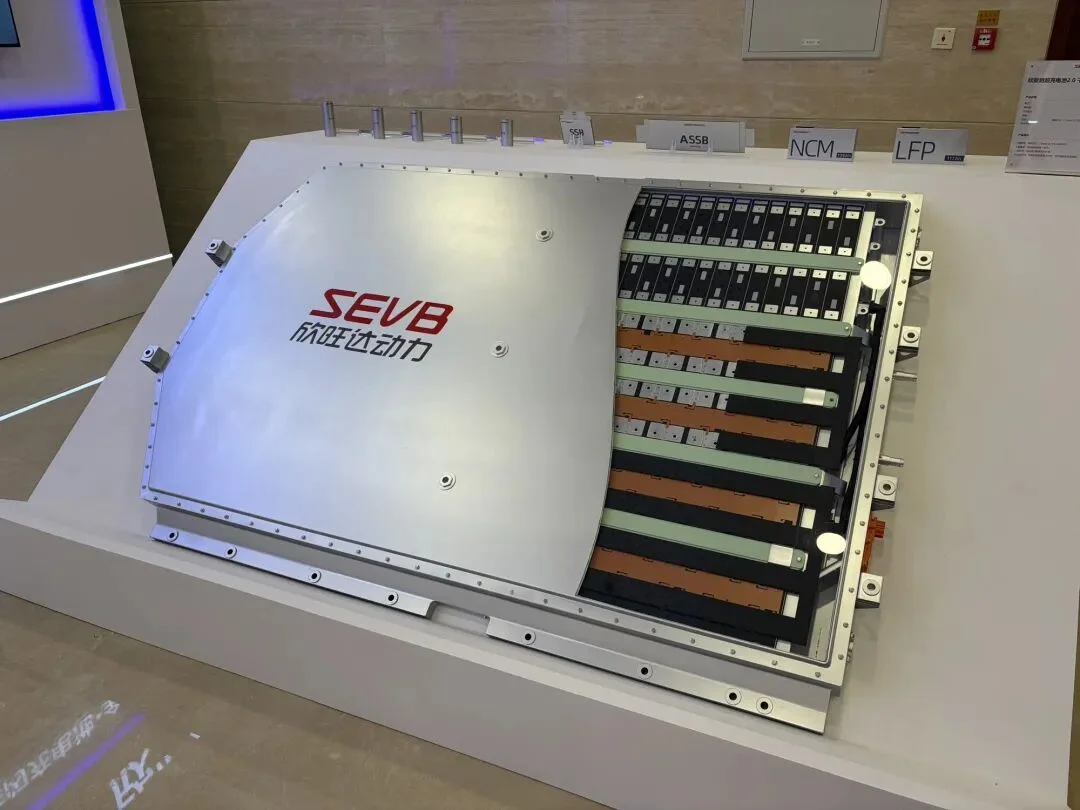
The battery pack displayed on-site consists of 264 cells connected in series, with a voltage of 844.8 V and a capacity exceeding 98.8 kWh. Its cycle life exceeds 1,500 cycles.
Battery longevity is the most critical factor. While supercharging is convenient, it may negatively impact long-term battery health. Zhou Zaoyuan, General Manager of Sunwoda EVB’s LFP cell product line, announced at the event that the Xinxingchi Supercharge Battery 2.0 comes with unlimited supercharging allowances during its warranty period.
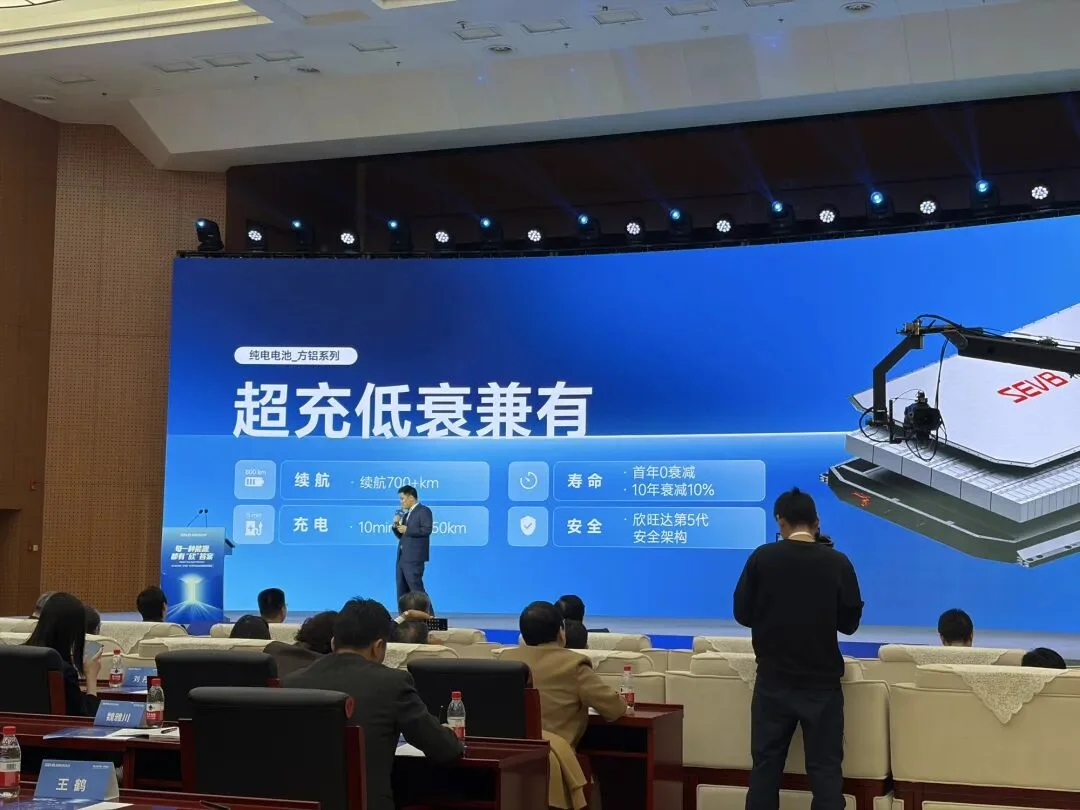
If users remain concerned about battery degradation, another long-life version might be a better choice. Sunwoda EVB announced that this battery achieves zero degradation in the first year and only 10% degradation over ten years.
In terms of charging performance, this model makes some compromises: it can add 450 km of range in just 10 minutes of charging.
Additionally, a battery designed for extended-range electric vehicles (EREVs) uses large cylindrical cells to balance range and ultra-fast charging capability. This battery will be compatible with A00- to A-segment cars, capable of charging from 10% to 80% state of charge (SOC) in 10 minutes, and offers unlimited ultra-fast charging sessions throughout the warranty period.
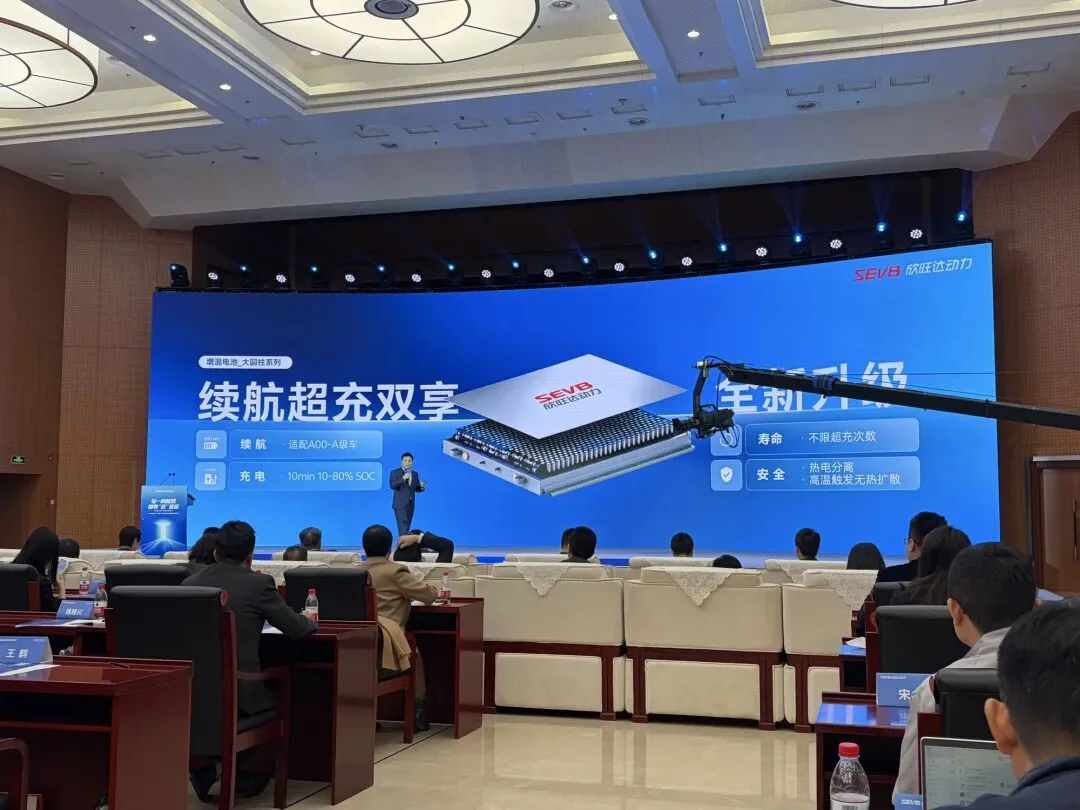
Sunwoda EVB has spent seven years researching and developing flash-charging batteries. In 2019, it began pre-research on the technology. In 2022, Sunwoda EVB launched Flash-Charging Battery 1.0, enabling ternary lithium batteries to support 4C fast charging, adding 400 km of range in 10 minutes. The 2023 Flash-Charging Battery 2.0 achieved 5C charging for ternary lithium batteries, delivering 500 km of range in 12 minutes. In 2024, Flash-Charging Battery 3.0 enabled both ternary lithium and lithium iron phosphate (LFP) batteries to achieve 6C charging capabilities. Last year, the technology saw a rapid upgrade with 15C LFP and 8C ternary lithium batteries achieving flash-charging performance.
02Battery Help Saves Money for Various Industries
Another theme at this afternoon's press conference was saving money. First, Sunwoda EVB expanded its HEV battery product lineup to help gasoline vehicles achieve better fuel efficiency. Second, it launched sodium-ion and lithium iron phosphate batteries, leveraging their advantages in lifespan and cost to meet the demands of the TWh-level energy storage market.
Sunwoda EVB newly launched a battery pack for HEV models with a capacity of 3 to 7 kWh, internally using large cylindrical cells with a diameter of 46 mm.
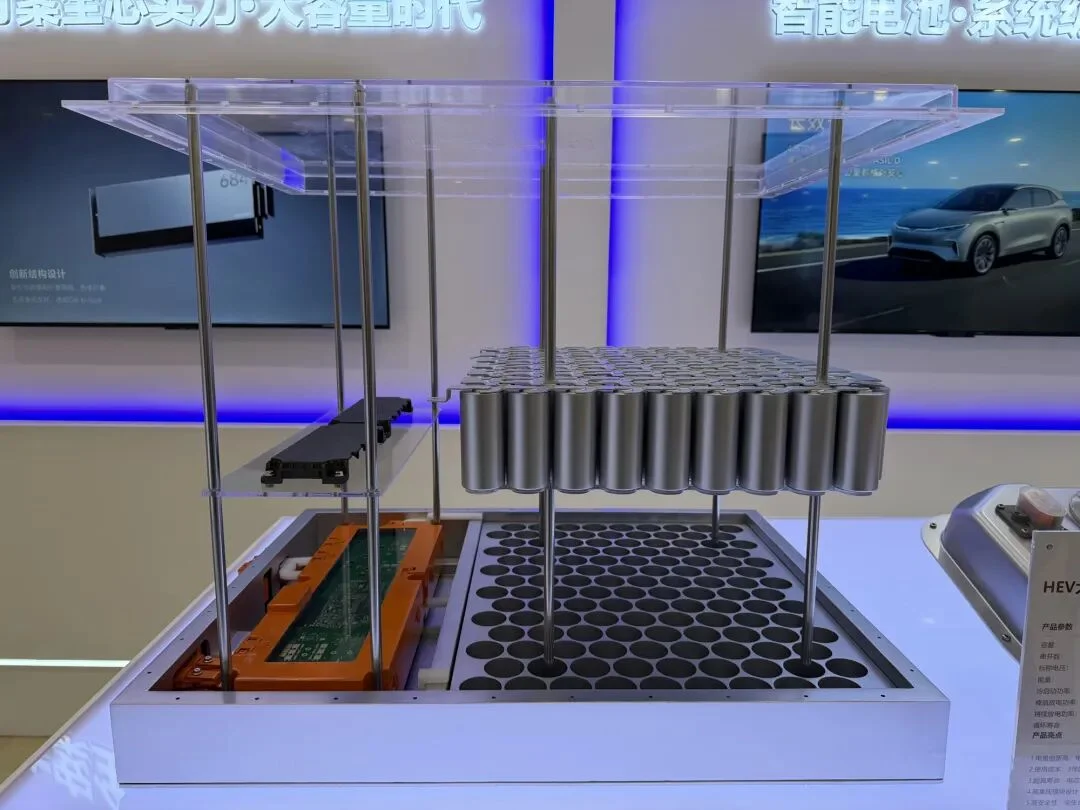
In terms of performance, this battery can deliver 150 kW of power output and provide a pure electric range of more than 15 km. In addition to driving the wheels, this small battery can also power practical scenarios such as air conditioning, the smart cockpit, sentinel mode, and external discharge.
Fuel vehicles equipped with small batteries can significantly improve NVH and fuel consumption performance, while extending driving range.
The battery pack displayed on-site has a capacity of 5 kWh, consisting of 130 large-format cylindrical cells connected in series, with a total pack voltage of 414 V. Additionally, this pack integrates a DC-DC converter and a 12V low-voltage power supply, achieving higher overall integration.
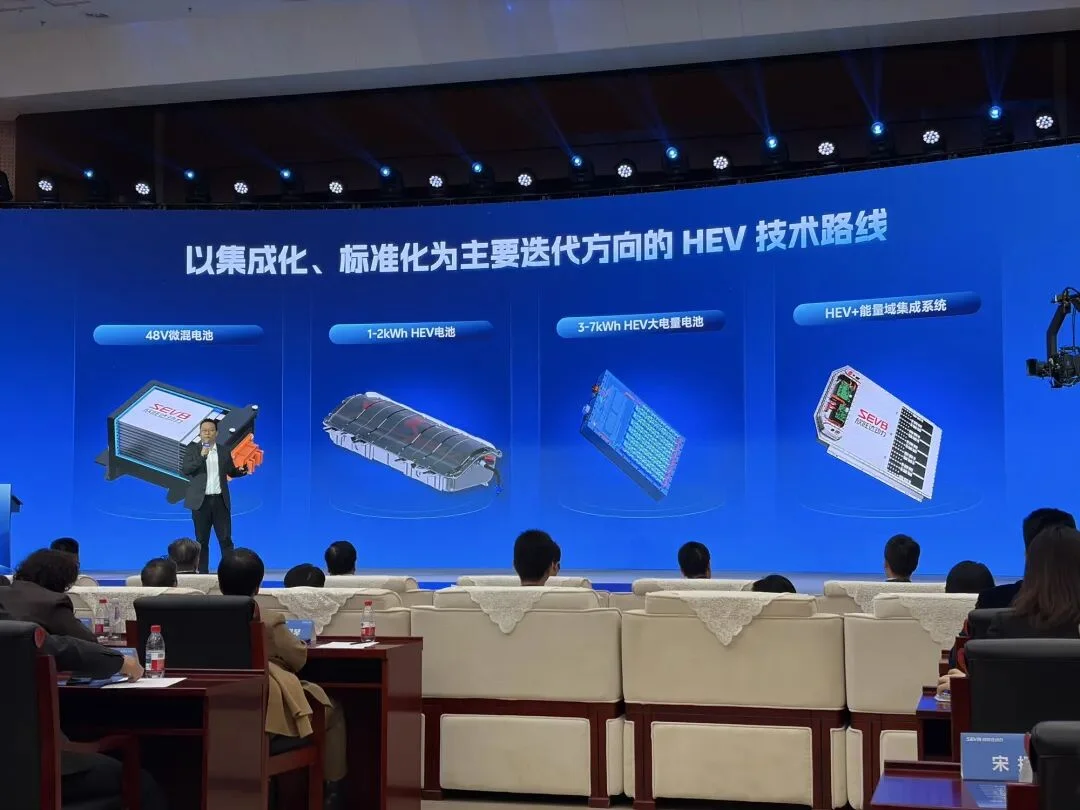
In the energy storage sector, Sunwoda EVB has launched multiple sodium-ion and lithium iron phosphate (LFP) battery models to meet the diverse needs of various industries.
According to Xu Zhongling, Dean of the Central Research Institute at Sunwoda EVB, sodium-ion batteries offer three distinct advantages.
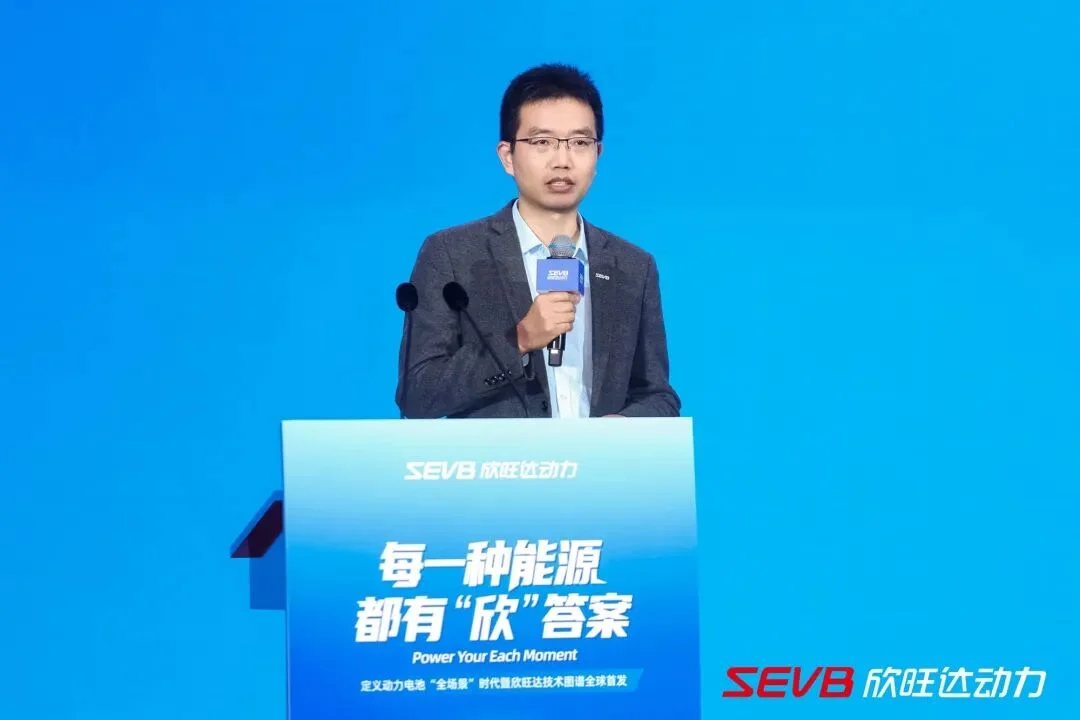
First, global sodium reserves are abundant, eliminating resource bottlenecks. Unlike aluminum, where industry expansion can cause drastic price fluctuations or geopolitical shifts can lead to supply shortages, sodium is not subject to such volatility. Furthermore, the manufacturing process for sodium-ion batteries is not overly complex, leaving room for cost reduction.
Second, evaluating a battery requires looking beyond production costs to its operational costs over its entire lifecycle. Here, the longer lifespan of sodium-ion batteries is a significant advantage. They can achieve more than 20,000 cycles at room temperature and over 10,000 cycles even under high-temperature conditions.
Furthermore, sodium-ion batteries offer safety advantages over both lithium iron phosphate (LFP) and ternary lithium chemistries.
Xu Zhongling noted that sodium-ion batteries are currently primarily used in the automotive sector for low-voltage auxiliary power. Due to their long lifespan, they can achieve maintenance-free operation over the vehicle's entire lifecycle. However, a significant drawback of sodium-ion batteries is their relatively low energy density, making them unsuitable for power batteries in high-end models. In small or entry-level vehicles, sodium-ion batteries can offset the substantial range reduction experienced in low-temperature conditions.
'Regardless of the battery chemistry, every type has its strengths and weaknesses,' Xu Zhongling said. 'In practical applications, the goal is to maximize the strengths while mitigating the weaknesses.'
03Conclusion
For the past few years, the narrative in the power battery industry has revolved around energy density and cost. But as charging efficiency becomes the most intuitive variable for user experience, the focus of competition is quietly shifting.
15C flash charging addresses time anxiety, long-life batteries counteract usage anxiety, and sodium-ion batteries point toward a longer-term issue of cost and resources. They may not be the same answer, but they collectively point to the same trend: batteries are no longer just 'spec-sheet products' but are gradually becoming system solutions tailored to different scenarios.
Written by: James Edited by: Daji