


L3, Zunjie S800 Is Ready
「2025,L3 Ready。」
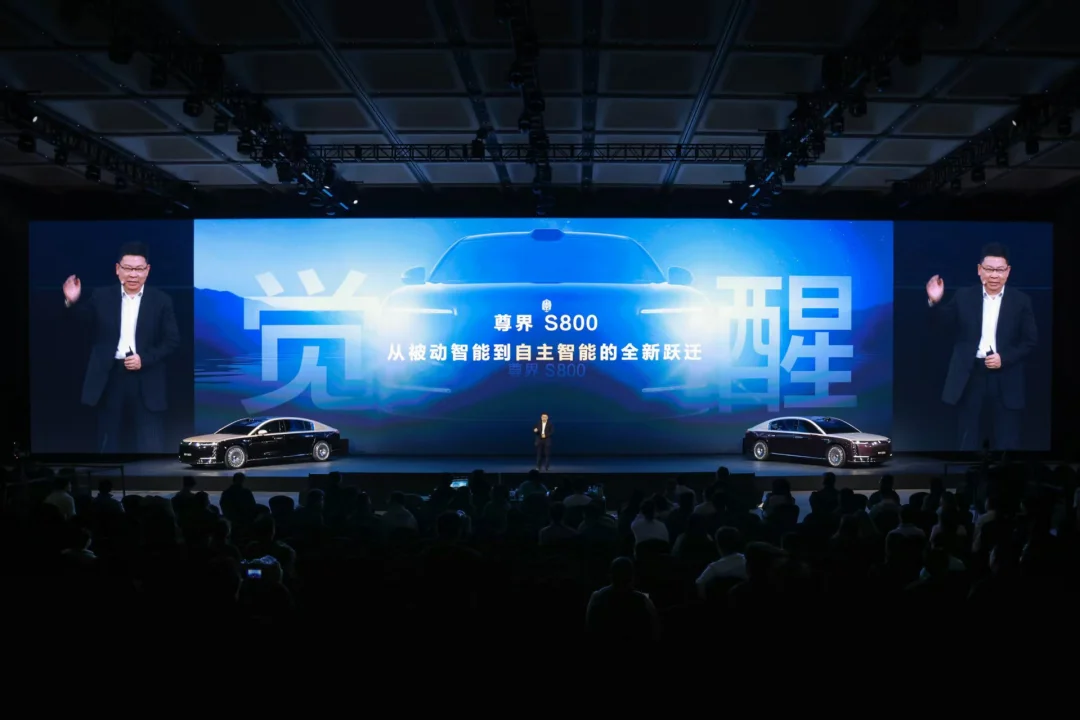
This was the content on the final slide of Richard Yu’s presentation during yesterday’s Zunjie S800 technology launch event, specifically when he discussed intelligent driving. Frankly, announcing Huawei’s readiness for the L3 autonomous driving era in this manner seems somewhat understated.
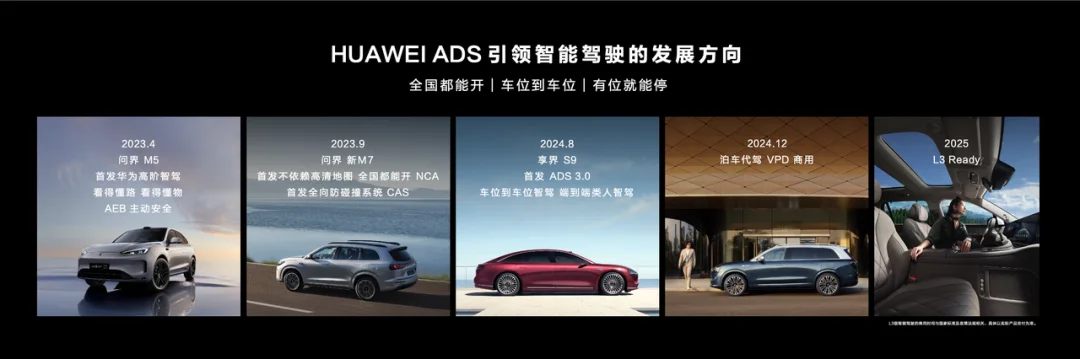
Perhaps the reason for this approach is that the Zunjie S800 features so many technologies to showcase that Huawei did not want L3 capabilities to dominate attention, thereby overshadowing the fact that the Zunjie S800 is a technological flagship fully embodying Huawei’s latest innovations. It is worth noting that during the event, Richard Yu compared the Zunjie S800 to a "sixth-generation fighter jet" within the automotive sector.
Some may perceive such comparisons as slightly exaggerated, but after watching the entire launch event, you will understand the confidence behind his statement. Looking back at the whole presentation, the most striking remark from Richard Yu was: "From passive intelligence to autonomous intelligence, automobiles have finally reached their moment of awakening!"
This concept of "autonomous intelligence" permeated the entire event.
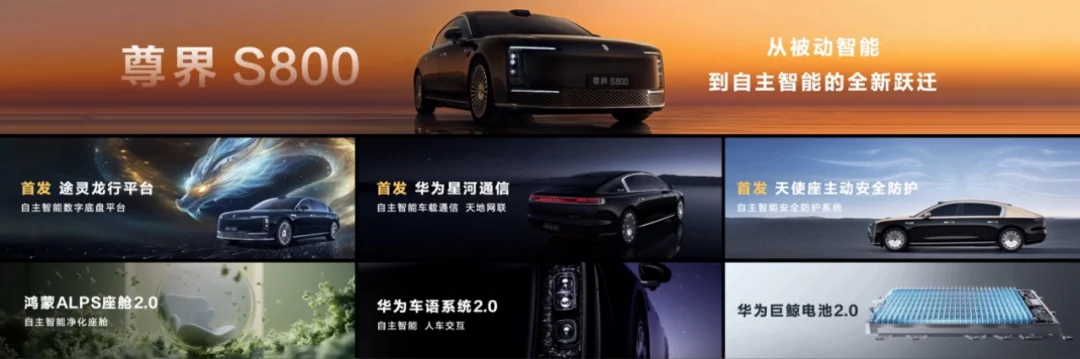
First Launch of Huawei Tulinglongxingpingtai Platform
When discussing autonomous intelligence, most people immediately think of advanced driver assistance systems (ADAS). However, at the Zunjie S800 launch event, the first topic discussed was not ADAS, but the chassis. The Zunjie S800 debuts with the Huawei Tulinglongxingpingtai. Huawei claims this is the industry’s first autonomous intelligent digital chassis platform.
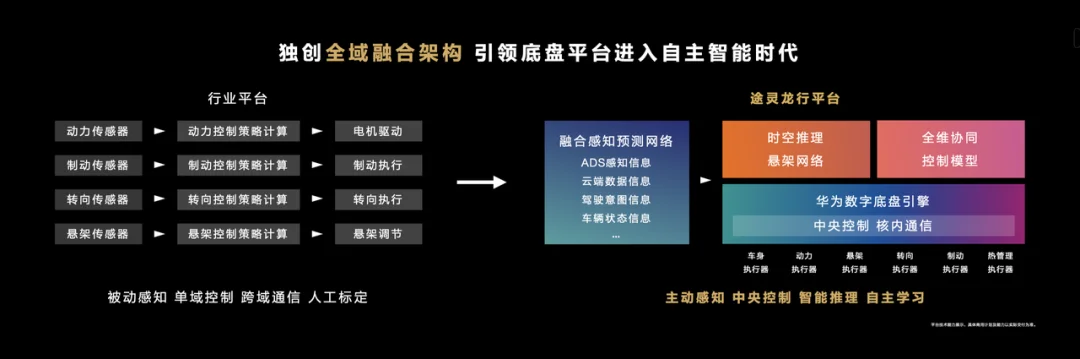
The platform adopts a domain-integrated architecture. It relies on ADS sensors to perceive road conditions in real time. It then fuses vehicle data and driver intent. Using spatiotemporal reasoning for the suspension network, a full-dimensional collaborative control model, and Huawei’s digital chassis engine, it performs centralized, full-dimensional collaborative control. It sends commands to vehicle actuators to anticipate various road conditions ahead. Thanks to high integration, the latency from decision-making to chassis actuator execution is less than 1 millisecond, enabling timely responses.
Meanwhile, the Tulinglongxingpingtai is a distributed, flexible platform. Regarding power layout, it supports multiple distributed electric drive configurations, including dual-motor, triple-motor, and quad-motor setups. The Ministry of Industry and Information Technology has previously disclosed that the Zunjie S800 will offer dual-motor and triple-motor powertrain options. It remains to be seen which model will debut with the quad-motor configuration. Here is a small hint: the Tulinglongxingpingtai is compatible with SUVs.
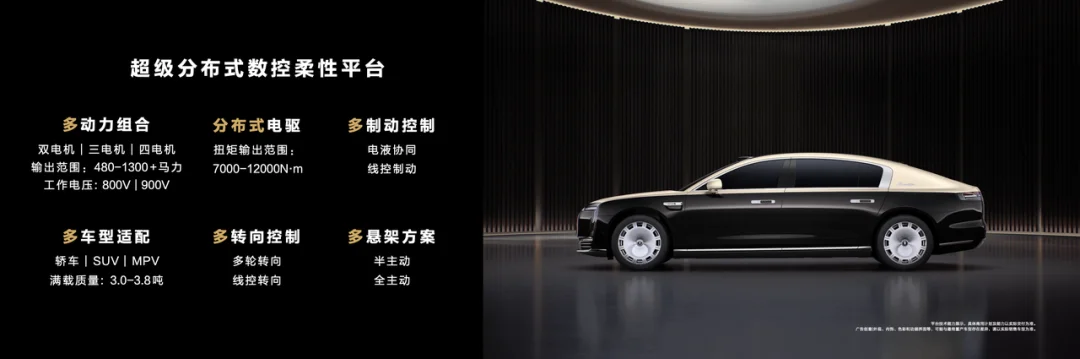
Furthermore, the Tulinglongxingpingtai supports both 800 V and 900 V high-voltage architectures. This makes it only the second platform architecture on the market, after NIO’s NT3, to support a 900 V high-voltage system. For suspension, the platform can accommodate passive or active suspensions, as well as multi-wheel steering, brake-by-wire, and steer-by-wire technologies. At this point, readers may have guessed that the Huawei Tulinglongxingpingtai falls within the category of fully by-wire chassis systems.
The combination of autonomous intelligence and the high bandwidth of the platform’s hardware capabilities allows the Zunjie S800 to easily handle various road conditions and scenarios. For example, during the launch event, the vehicle demonstrated stability on split-friction roads. On a surface composed of asphalt and ice patches with different friction coefficients, the Zunjie S800 maintained control while performing emergency obstacle avoidance at speeds up to 80 km/h.
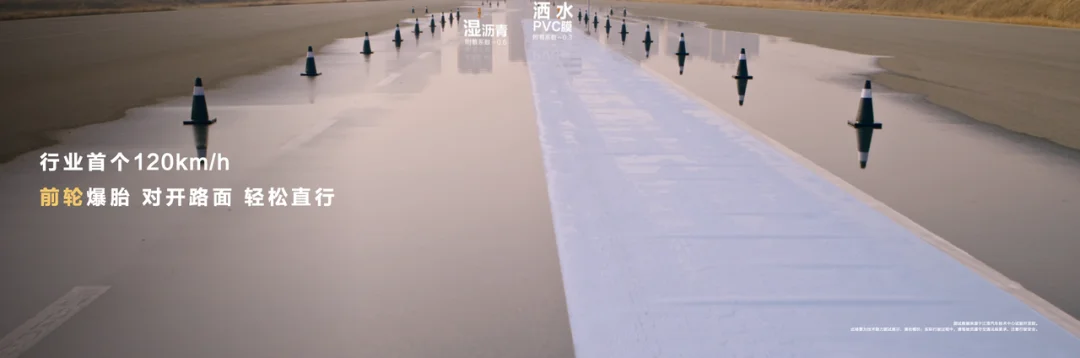
During the launch event, the Zunjie S800 also paid homage to the NIO ET9’s demonstration of maintaining control after a tire blowout. However, the Zunjie S800 slightly increased the difficulty by simulating a front-tire blowout on a split-mu road surface (different friction coefficients). The demonstration video showed that the vehicle remained stable and did not lose control after the front tire blew out.
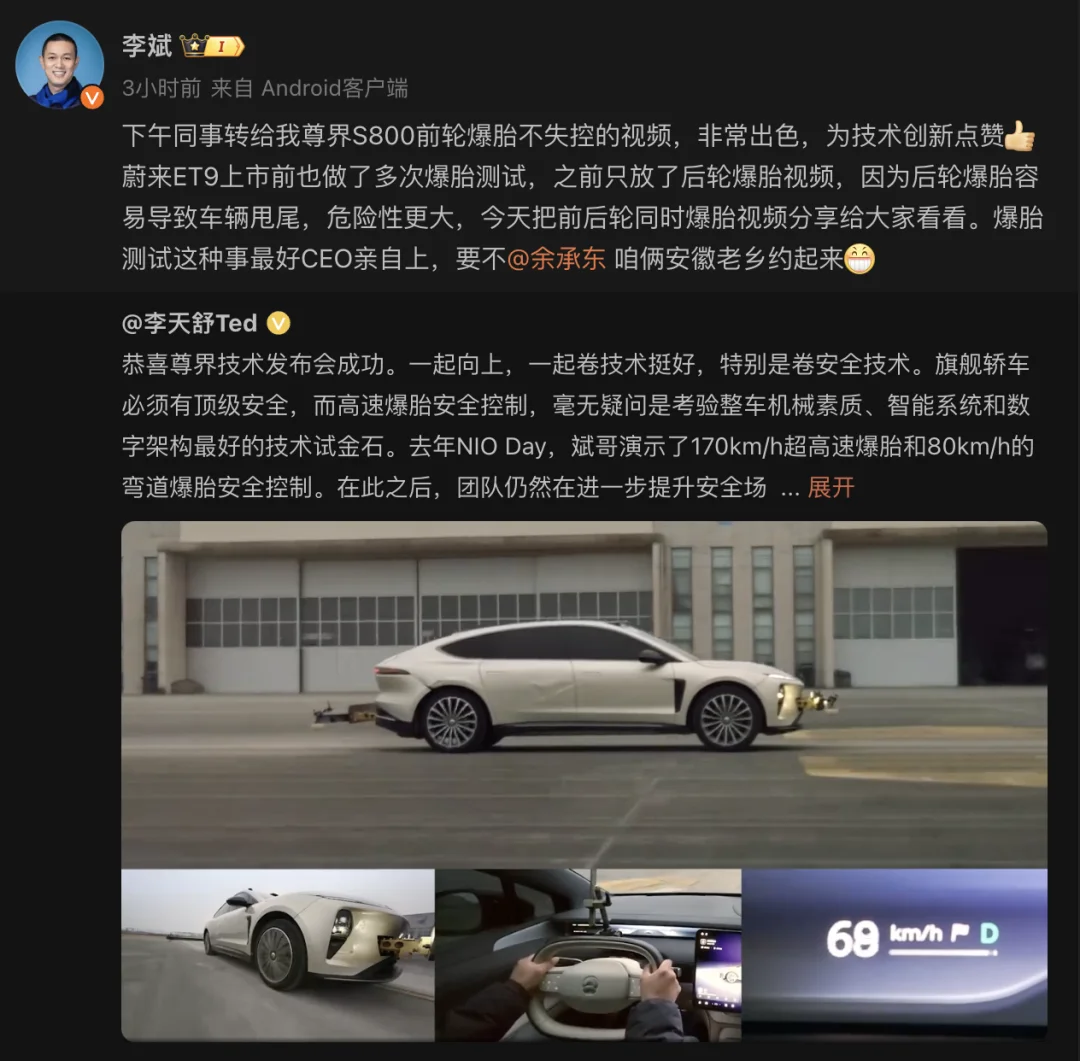
Interestingly, following the Zunjie S800 launch event, NIO responded. The ET9 had conducted tests for simultaneous front and rear tire blowouts at speeds of 80 km/h and 150 km/h, releasing videos of these tests. It remains to be seen whether Richard Yu will further increase the test difficulty in the future to showcase the Zunjie S800’s performance limits.
Certainly, the excellent suspension control capability also contributes to the Zunjie S800’s high comfort level. During cornering, the vehicle significantly reduces body roll, ensuring a smoother ride for occupants. As for bump absorption comfort, previous videos of the Zunjie S800 navigating potholes have already demonstrated this effectively.
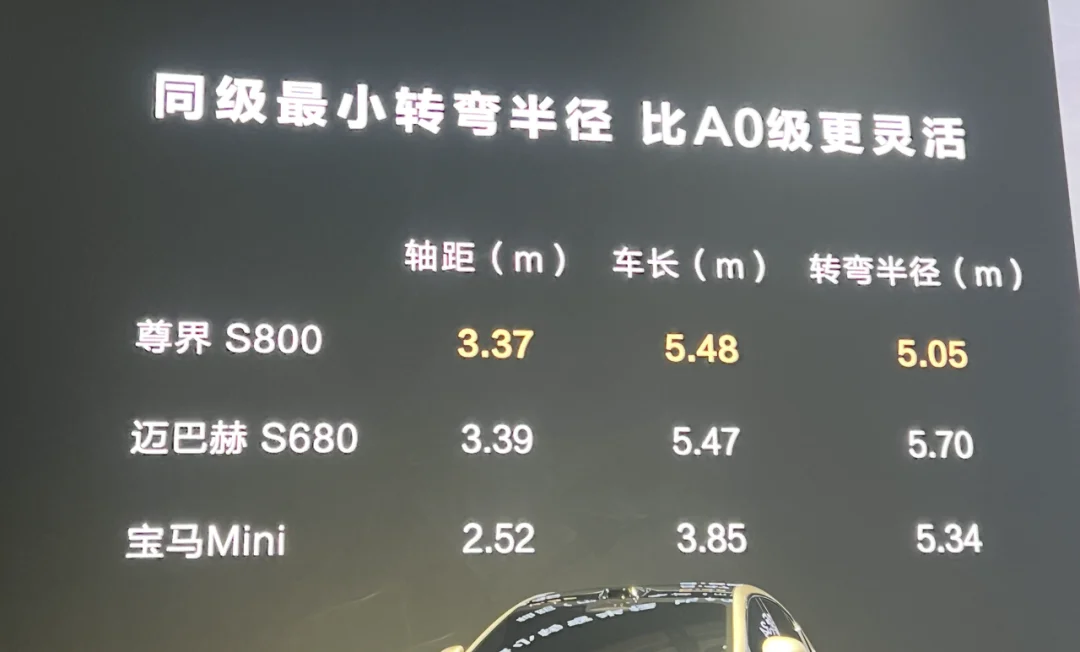
Beyond chassis stability, this nearly 5.5-meter-long vehicle with a wheelbase approaching 3.3 meters exhibits surprising agility. Its minimum turning radius is only 5.05 meters, smaller than that of the BMW MINI. This is primarily due to the rear-wheel steering system with a maximum steering angle of 12 degrees. Furthermore, through torque vectoring control via dual motors on the rear axle, its turning radius can be reduced further to 3.8 meters, enabling U-turns within two lanes. We expect to see many owners demonstrating this narrow-road maneuverability once deliveries begin.
The ADS with the Most LiDARs
Before attending, I had assumed the launch event would focus on ADS 4.0, but the entire presentation never mentioned ADS 4.0; L3 was only referenced in text on the slides, suggesting it will have to wait until the official market launch.
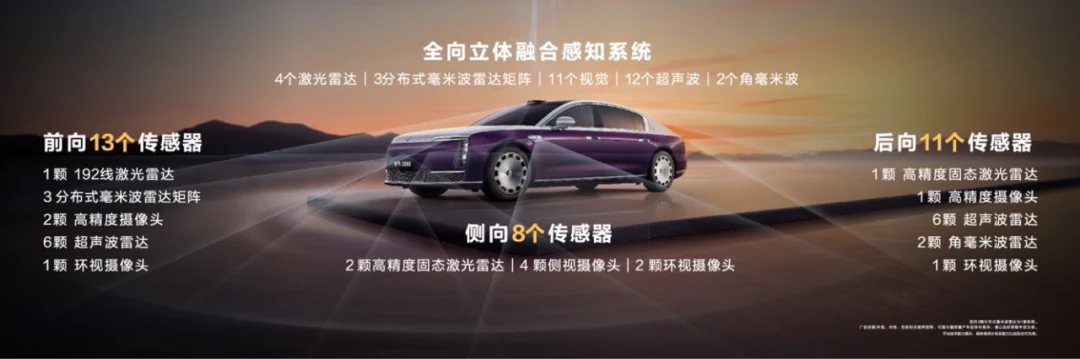
This session merely revealed the hardware specifications of the Zunjie S800. The vehicle is equipped with a total of 32 perception sensors: four LiDAR units, three distributed millimeter-wave radars, two corner millimeter-wave radars, eleven visual cameras, twelve ultrasonic radars, and two additional corner millimeter-wave radars. This sensor count represents a significant increase over the ADS 3.0 configuration, reflecting the higher safety redundancy requirements for L3 systems to ensure vehicle security in extreme scenarios.
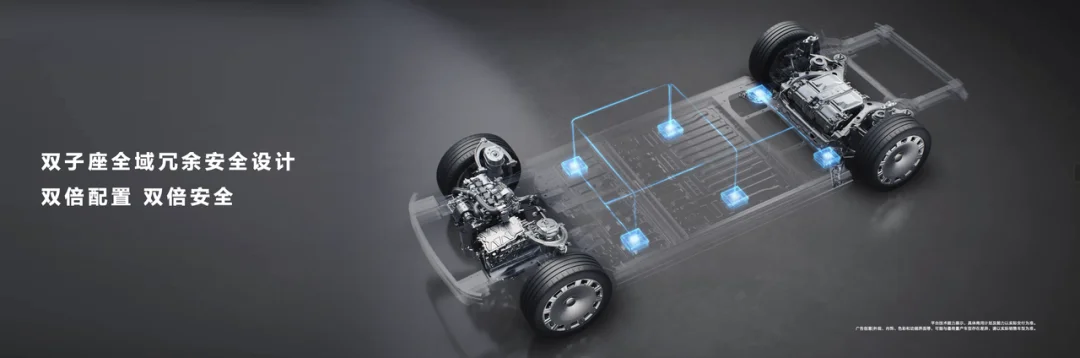
The LiDAR units located on the left, right, and rear are solid-state types, making the Zunjie S800 the first mass-produced model to feature solid-state LiDAR. These three LiDARs achieve a detection accuracy of ≤ 3 cm, significantly enhancing the identification of negative and suspended obstacles such as roadside ditches and fire sprinkler heads in underground garages. They can also detect steps, charging piles, and curbs. To support L3 operations, all systems on the Zunjie S800 employ dual-redundancy design. Since liability shifts to the manufacturer upon entering L3, automakers must guarantee that their provided functions meet rigorous safety standards.
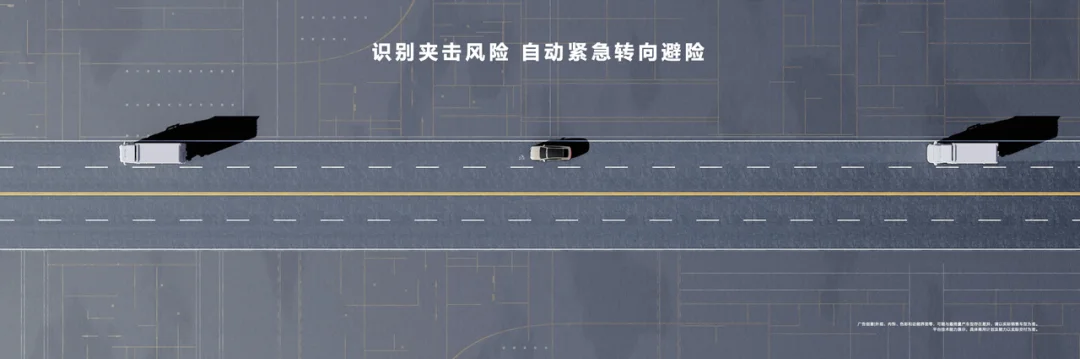
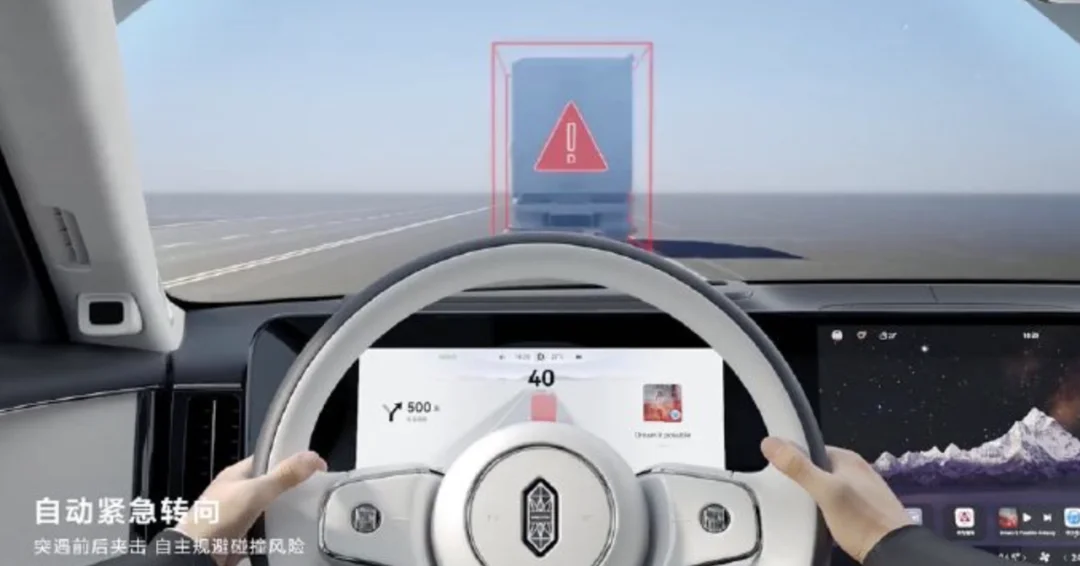
Enhanced omnidirectional spatial perception has improved the Zunjie S800’s AES (Automatic Emergency Steering) capability, enabling automatic emergency avoidance in front-and-rear squeeze scenarios. Specifically, when a vehicle ahead brakes suddenly while there is a risk of being rear-ended, the car will automatically steer to avoid collision. With this feature, accidents involving vehicles being squeezed between trucks should become less frequent.
Leveraging this hardware foundation, the Zunjie S800 will feature Huawei Angel Seat Active Safety Protection, which possesses autonomous intelligent safety protection capabilities. The system continuously monitors collision risks from multiple directions. When an imminent collision cannot be avoided, the vehicle autonomously adjusts seat positions, tightens seatbelts, raises windows, unlocks central door locks, and modifies body posture to mitigate crash impact.
After a collision, the vehicle can autonomously switch to redundant power sources, make emergency calls, and transmit rescue information to facilitate rapid extraction and assistance. It also end-to-end protects owner data, which is automatically cleared after use. This thoughtful feature addresses privacy concerns, particularly among high-net-worth individuals who prioritize confidentiality.
Satellite Communication Integration
Regarding the cabin, Zunjie S800 has not disclosed extensive details yet. However, subtle clues suggest the instrument cluster retains relatively thick black bezels, likely featuring a triple-screen layout similar to the AITO M9, rather than the frameless design previously exposed on the AITO M8. Additionally, the air vents below the central control screen utilize toggle switches, with two wireless charging pads situated beneath them. The front sides of the center console island feature horizontal textured patterns.
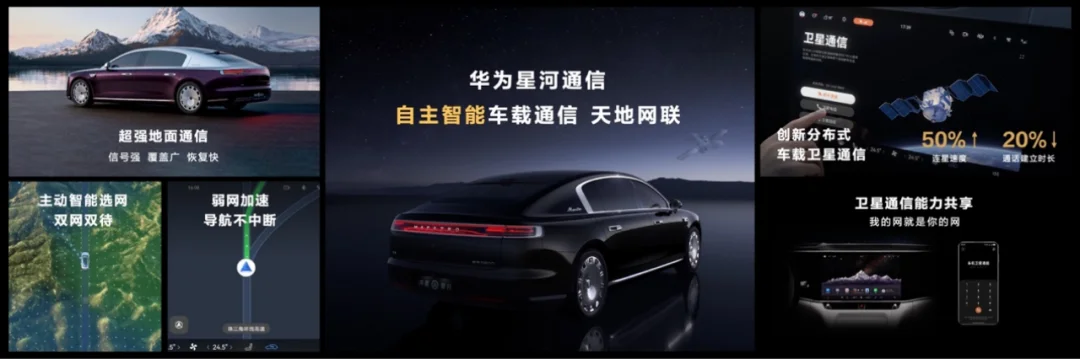
In terms of cabin capabilities, Huawei has finally brought satellite communication to the vehicle segment. Zunjie S800 is equipped with Huawei Xinghe Communication. For terrestrial connectivity, it supports dual-network dual-standby technology, offering stronger signals, broader coverage, faster reconnection, and weak-network acceleration for a smoother experience.
When WLAN and mobile data networks are unavailable, basic functions such as phone calls and SMS remain accessible via the satellite network. Furthermore, the vehicle’s satellite calling capability can be shared with smartphones within a 30-meter range, ensuring uninterrupted satellite calls even when outside the vehicle. Calls can also be made while driving. This feature appears more practical for rugged off-road vehicles, which have a higher probability of entering areas without signal coverage.
Additionally, Zunjie S800 features Hongmeng ALPS Zuocang 2.0. Through a dual-stream air circulation system and innovative adsorption-degradation materials, the system detects odors and autonomously purifies the cabin, removing smells from food and nicotine. It identifies bacteria and viruses for active disinfection and detects harmful gases for proactive protection, neutralizing emissions from combustion. Paired with a dual negative oxygen ion system, it creates a forest-level cabin environment.

Richard Yu also shared a brief anecdote: during the Spring Festival, his Xiangjie S9 was driven back to Shenzhen by his cousin. Upon retrieving the vehicle later, he noticed a lingering smell of smoke inside. He remarked that if he had been driving the Zunjie S800 at the time, this would not have occurred. The Hongmeng ALPS Zuocang 2.0 cabin system can eliminate interior smoke odors within 20 minutes.
Upgraded Million-Pixel Headlights
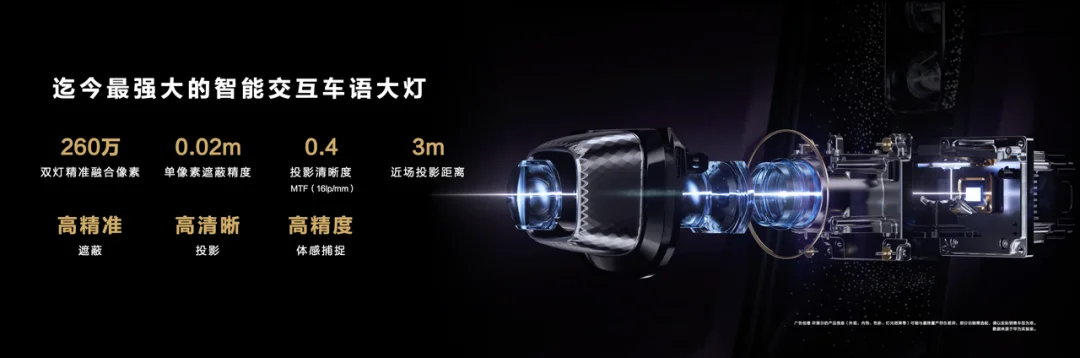
Lighting is a key design highlight of the Zunjie S800. Beyond its dazzling starlight headlight design, the functional capabilities have been further enhanced. The Zunjie S800 is equipped with HUAWEI XPIXEL intelligent interactive language headlights powered by Huawei’s Vehicle Language System 2.0. The hardware configuration remains consistent with that of the AITO M9, featuring dual lights with precisely fused pixels totaling 2.6 million. Each pixel achieves an accuracy of 0.02 meters, with a projection clarity of 0.4 MTF and a near-field projection distance of 3 meters.
Vehicle Language System 2.0 integrates closely with HUAWEI ADS and NearLink Xingshanjishu to enable precise light masking. For example, when pedestrians are detected ahead, the system masks only the eye area of the pedestrian to avoid glare. Additionally, when navigating narrow roads, the system automatically activates a light carpet to help drivers better assess whether the vehicle can pass through safely. In the event of driver incapacitation, the headlights project an “SOS” distress signal onto the road surface to facilitate assistance from others.
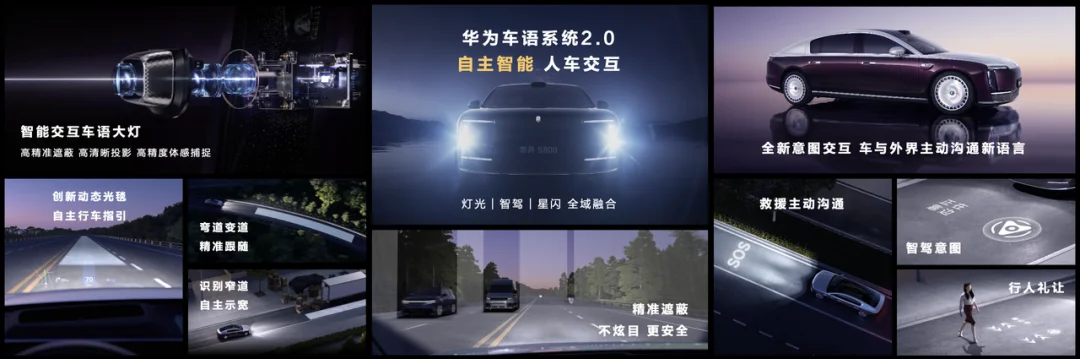
AITO M9 owners need not envy these features. Once the S800 is launched and delivered, this functionality will be rolled out to the M9 via OTA updates.
Putting 6C on an EREV? That's absurd!
I thought the Haobo HL EREV with 5C charging I experienced before the New Year was already outrageous, but this time the Zunjie S800 is even more so. The extended-range version actually uses an 800V architecture paired with a 6C battery pack. With a battery capacity of 65 kWh, the peak charging power can reach around 400 kW. Combined with the large battery and ultra-fast charging, the Zunjie S800 can essentially be used as a pure electric vehicle in city driving. Furthermore, given the Zunjie S800's early promotional claims about automatically navigating to supercharging stations for charging, this vehicle truly has the potential to deliver a highly efficient and seamless refueling experience.
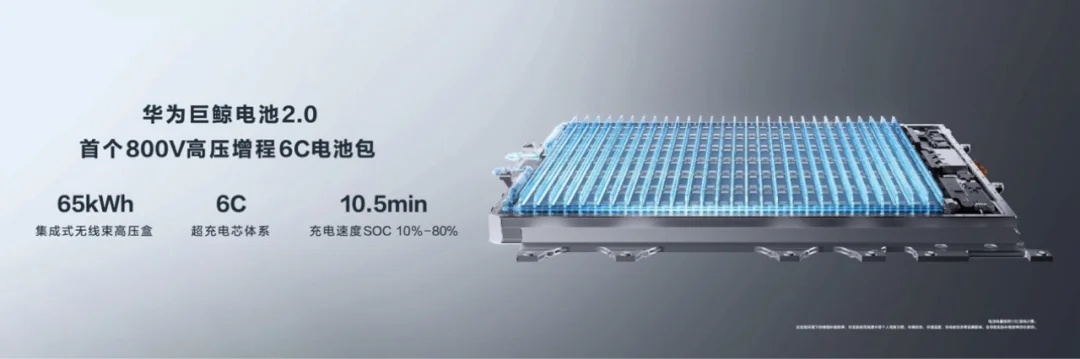
The battery C-rate for the pure electric version is slightly lower, "only" 5C, with a battery capacity of 97 kWh. Of course, there will certainly be versions with larger capacities.
Final Thoughts
As an ultra-luxury flagship sedan priced at over one million yuan, the Zunjie S800 has been shrouded in mystery since its debut. Everyone is eager to know what advanced Huawei technologies this most expensive product under the HIMA (Harmony Intelligent Mobility Alliance) umbrella actually features, particularly in the realm of intelligent driving, where Huawei has long held a strong advantage. With BYD spearheading a revolution in democratizing intelligent driving capabilities, it is even more intriguing to see how Huawei plans to leverage L3 autonomous driving to further solidify its competitive edge.
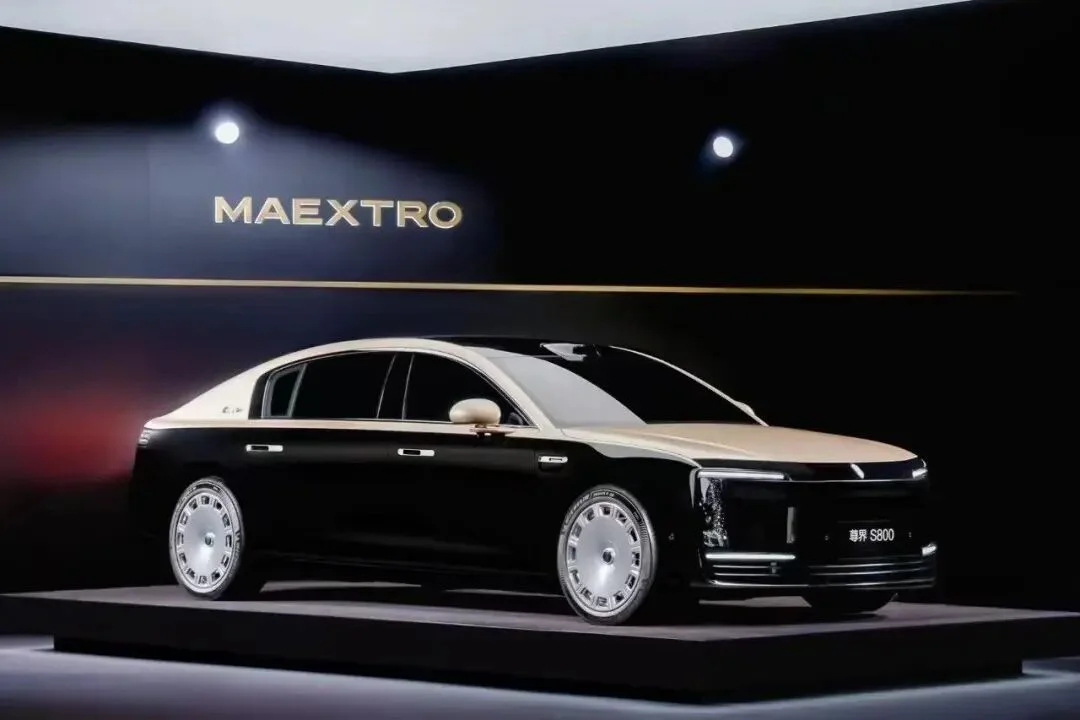
Unfortunately, at the highly anticipated Zunjie S800 technology launch event, Huawei did not unveil the ADS 4.0 system and L3-level autonomous driving as expected by the outside world. Instead, it turned into a "chassis technology showcase" to demonstrate its hardcore capabilities in the smart vehicle sector. Of course, the chassis performance presented by Tulinglongxingpingtai is already astonishing enough, and combined with the range-extender 6C battery, these technical strengths are sufficient to confidently shout out those four big characters.
True, the press conference may leave some regret due to the delay of ADS 4.0. Seeing the complete Zunjie S800 will likely have to wait until its official launch in late May.
Written by: Wentao Edited by: Wentao