


Huawei's Jin Yuzhi: ADS 4 Push Imminent, Zero Fatalities the Ultimate Goal
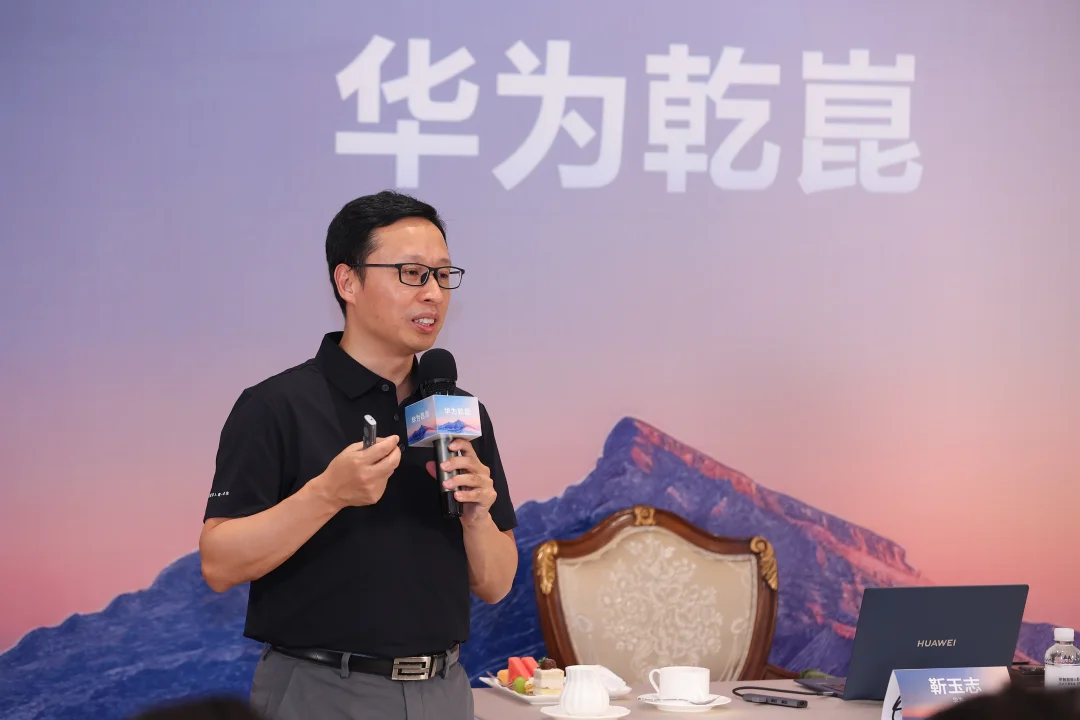
ADS 4 is finally arriving.
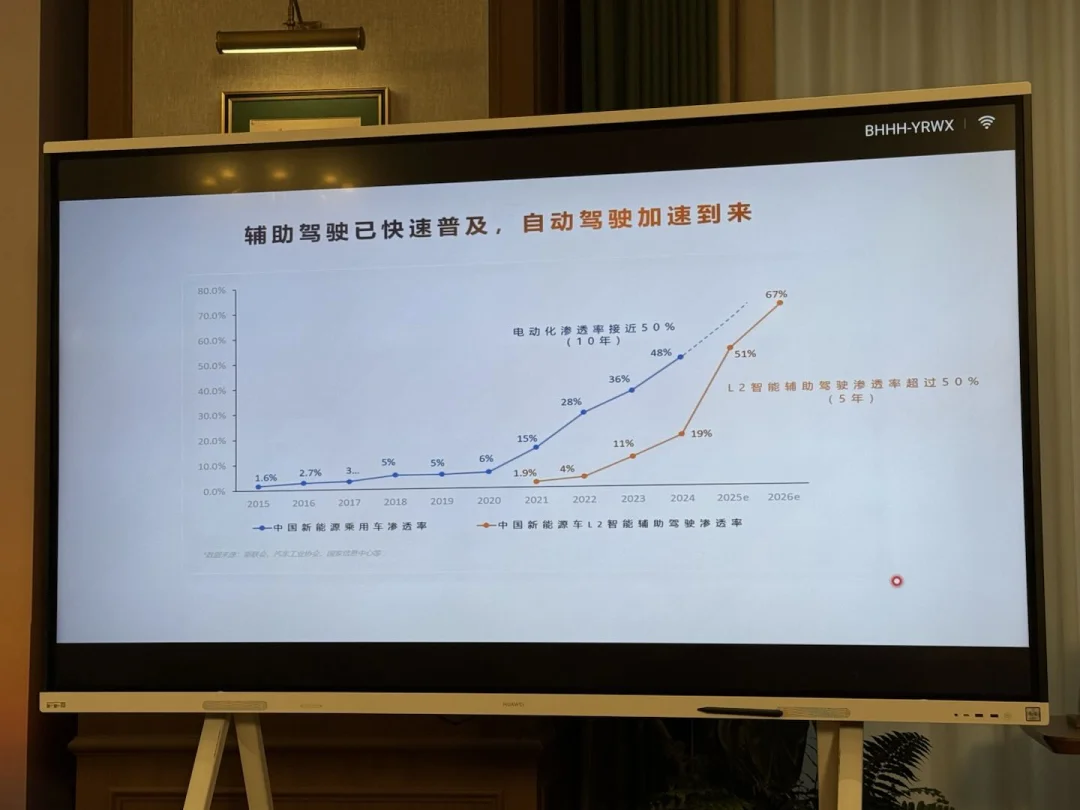
Jin Yuzhi of Huawei’s Intelligent Automotive Solution BU recently revealed that ADS 4 and HarmonyOS Cockpit 5, launched in April this year, will begin rolling out starting next month.
On August 22, 42HOW Auto held an in-depth discussion with Jin Yuzhi. He provided highly insightful answers regarding the positioning of ADS 4, the ultimate goal of Huawei Qiankun Intelligent Driving, and how Huawei understands the next stage of intelligent driving.
He emphasized that Huawei’s pursuit for assisted driving is zero casualties, and that ADS 4’s new architecture is designed to make driving safer, more efficient, and smoother. On the technical path, he believes that pure vision approaches will continue to improve, but LiDAR remains a necessary safety redundancy.
In terms of business model, Huawei acts more like a "pacer," helping automakers fill gaps in intelligence from product definition and design manufacturing to marketing. He also agrees that charging for assisted driving is an inevitable industry trend; whether users are willing to pay for safety and experience is the key measure of value.
Jin Yuzhi specifically noted that ADS 4 represents an architectural evolution: it is akin to adding a "digital driver" to the car, making driving safer and more efficient. Meanwhile, HarmonySpace 5 acts like a "digital nanny," proactively understanding and serving the owner's needs.
Jin Yuzhi also introduced the latest progress of Huawei Qiankun Intelligent Driving as of July:
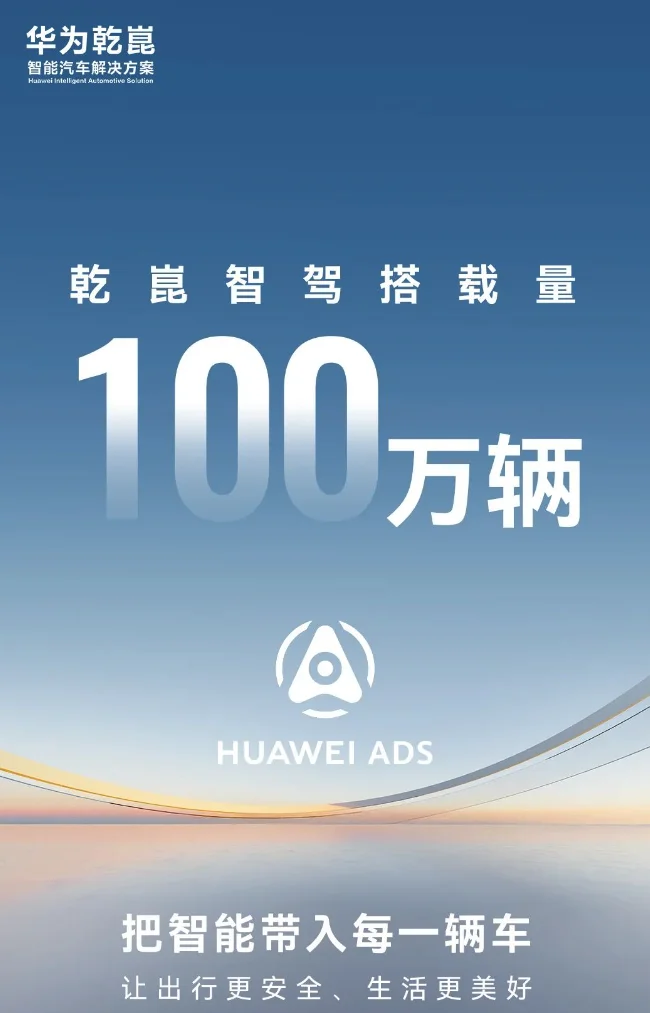
Vehicles equipped with Huawei Qiankun Intelligent Driving have reached 1 million units;
The number of vehicles equipped with Huawei LiDAR has also exceeded 1 million units;
Cumulative usage of 'parking spot to parking spot' navigation assist has surpassed 10 million times;
Cumulative assisted driving mileage has exceeded 4 billion kilometers, and is expected to surpass 4.5 billion kilometers in August;
Cumulative avoided potential collisions: 2.54 million times.
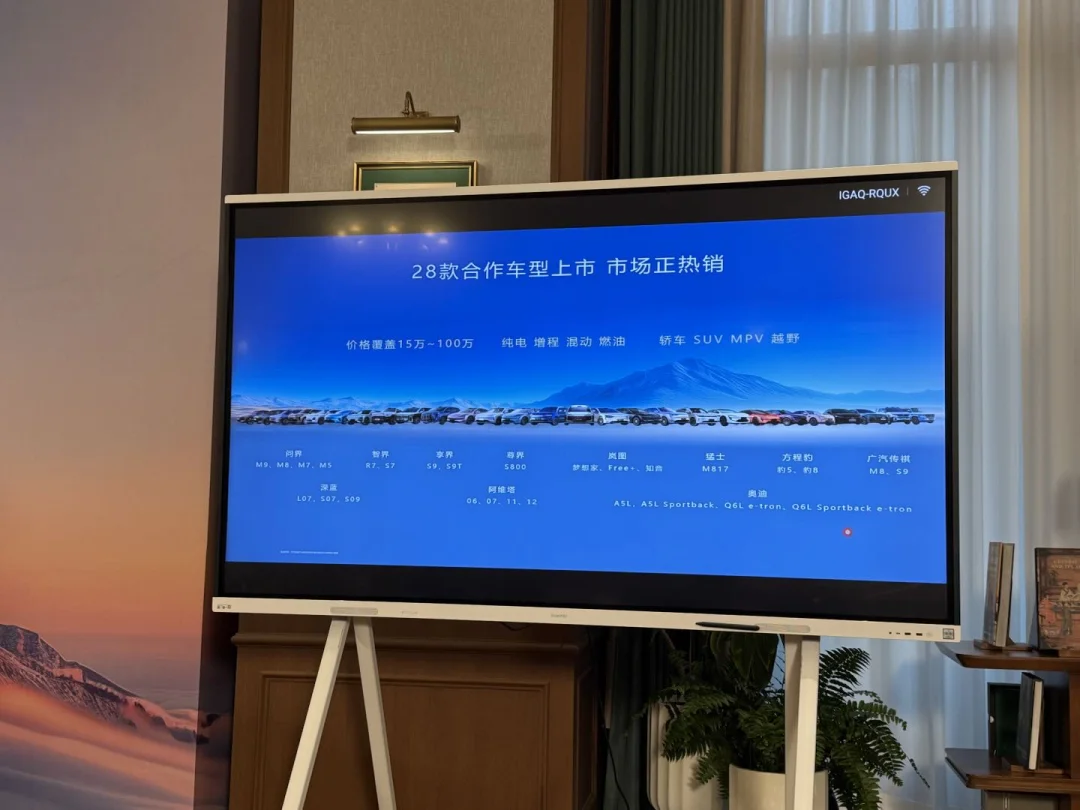
To date, 28 models equipped with Huawei Qiankun Intelligent Driving have been launched, covering a price range of RMB 150,000 to RMB 1 million.
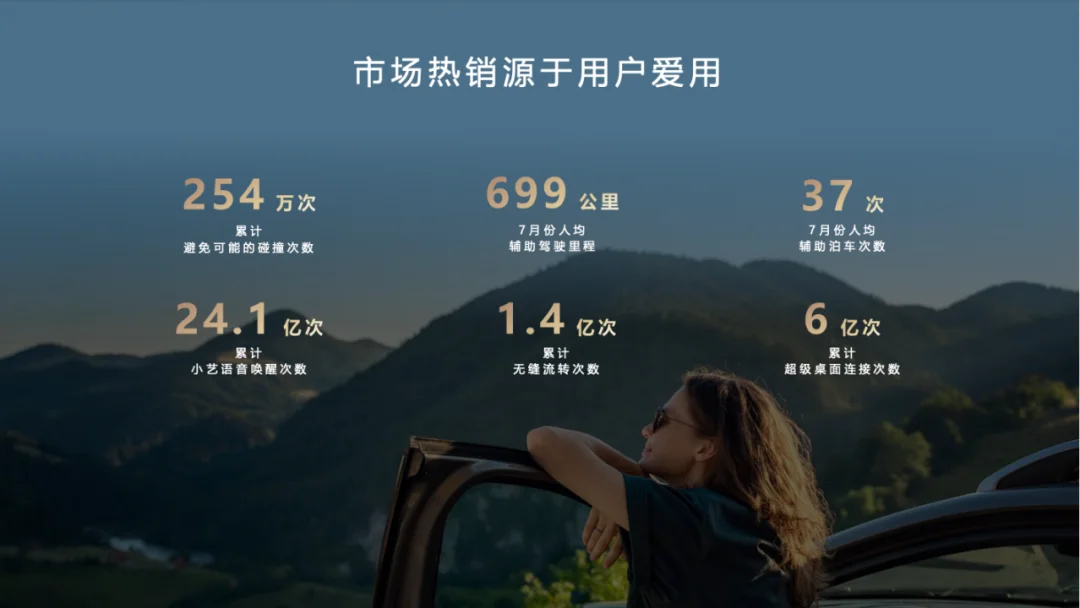
Behind these figures lies Huawei's leading advantage in the scale of intelligent driving implementation, reflecting the industry's view that Huawei Qiankun Intelligent Driving is transitioning from novelty to widespread adoption.
The following is the main content of the interview, edited by us without altering the original meaning:
01The Ultimate Goal of Qiankun Intelligent Driving Is Zero Casualties
Q: Huawei has achieved outstanding results in driver assistance. What did you do right, and what are your future goals?
A: First, we adhere to a user-centric value system and maintain a long-term investment perspective rather than focusing solely on short-term returns. Our future goal aligns with our slogan: making travel safer and life better. The ultimate objective is zero casualties. Achieving zero casualties means prioritizing safety, safety, and more safety; this is the pursuit of autonomous driving. Regarding the cabin, the goal is to transform it into a more capable AI assistant, gradually evolving toward an AI Agent. This will lead to smarter, more organized, and innovative deployments that feel highly intelligent like a human while eliminating many of the hassles associated with human service.
Q: Some automakers now believe that VLA is a long-term technical route, and can even lead to true L4. How does Huawei view this technological evolution? And looking at the next few years globally, how many players will remain capable of delivering true L3 or L4 autonomous driving capabilities?
A: Regarding technical approaches, there are currently two typical paths in the industry: one with LiDAR and one without. As AI capabilities strengthen, the performance of pure vision systems will inevitably improve; however, adding a LiDAR unit will undoubtedly enhance everyday safety.
What VLA attempts to do is convert video into language tokens for training, ultimately producing actions that control the vehicle's trajectory.
This differs from our assessment. We will not pursue the VLA path. We believe that while such an approach may appear clever, it is not the ultimate route to true autonomous driving. Instead, we place greater emphasis on WA (world action), which eliminates the language step. We are willing to take the currently difficult but direct path to the final destination: controlling the vehicle directly through behavioral inputs and vision. Vision serves merely as a representative modality; input could also come from sound or touch. This allows for direct vehicle control via information input, rather than converting various data into language and then using a large language model to drive.
We understand it this way: future technological development will follow this trajectory. Of course, these are different choices. Our approach may be more challenging, but it represents the ultimate solution.
Companies developing autonomous driving will increasingly consolidate. Five or six years ago, the autonomous driving industry was as hot as embodied intelligence is today. The number of players has already decreased significantly and will continue to shrink further.
Autonomous driving companies rely heavily on data-driven development. Competition centers on data volume, computing power, and algorithms. Eventually, the industry will recognize the critical importance of a shared intelligent platform, making independent investment by individual companies inefficient.
Q: I noticed OTA updates rolling out in September. None of the current OTA releases cover the Ultra version. Will non-Ultra models be unable to upgrade to Ultra in the future, or is hardware expansion required to enable the upgrade?
A: Let me clarify one point: supporting L3 requires specific hardware configurations. However, lacking L3-compliant hardware now does not prevent vehicles from upgrading to ADS 4. ADS 4 is built on a new architecture that enhances safety, efficiency, and smoothness. Upgrading to ADS 4 is unrelated to whether the vehicle’s existing hardware meets L3 standards.
Many users are concerned about whether hardware can be updated like software via OTA. Currently, regulations do not permit hardware upgrades, primarily to ensure user safety. We hope to allow hardware upgrades in the future, enabling older vehicles to reach L3 or even L4 capabilities. However, the core requirement is maintaining quality and safety during the upgrade process. This will require a gradual progression as the industry develops.
Q: Why are more and more LiDARs being added? Some people evaluate this as Huawei's Qiankun Intelligent Driving supporting a premium price. What is your comment on this?
A: Increasing sensor configurations is for greater safety; our ultimate goal is zero casualties, so any improvement in safety is worth the investment. For the Zunjie S800, in addition to the forward-facing LiDAR, we added three more solid-state LiDARs: two lateral and one rear-facing. Ultrasonic radars have lower precision, and cameras rely on training to learn because camera-captured images are flat and lack depth information. Many scenarios require LiDAR for safety redundancy. This is scenario-driven, not an intentional increase.
Q: What is the significance of lateral and longitudinal concepts in the cockpit for the future? What are the future development trends for the cockpit?
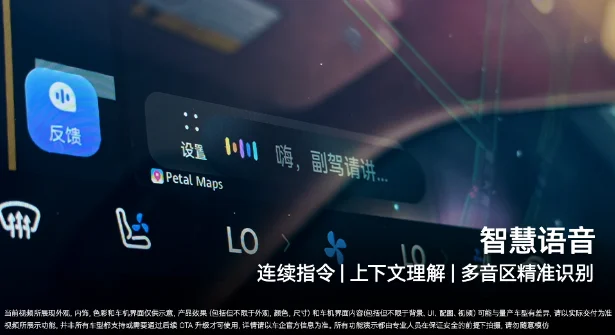
A: The cockpit will evolve toward greater digitalization and the role of a digital assistant. Horizontally, this means we must leverage the MoLA architecture to integrate various vertical applications, connecting all the apps used in daily life so that the system can autonomously execute tasks.
Vertical integration means that the prevailing habit is to pursue low cost and decoupling: screens from one supplier, hardware from another, software from a third. This may appear most economical on paper, but over the vehicle’s full lifecycle it is neither the most cost-effective nor the most rational approach. It leads to higher complexity and degraded user experience. When you integrate audio systems, displays, cockpit components, domain controllers and software from different vendors, many aspects of the experience are inevitably compromised. This is precisely why our autonomous driving stack—from sensors to hardware to software—is never developed in isolation. Safety is at stake; when issues arise, it can be impossible to determine which component or subsystem was responsible.
02Exploring New Cooperation Models
Q: Audi is currently the only foreign brand among Huawei’s 28 co-developed models. With a partnership also underway with GAC Toyota, can you share the progress of that collaboration? When might we see a third foreign or joint-venture brand partnering with Huawei?
A: Audi was the first foreign partner, but it certainly won’t be the last. The second, third, and fourth partners are already in the pipeline; we will need to wait for official announcements.
Q: Is Huawei exploring a new business model for automaker collaborations? What drives Huawei’s Qiankun systems and automakers to pursue deep, full-stack cooperation? Under this new model, how does Huawei provide deep empowerment to automakers in areas such as brand positioning, product design, definition, and marketing?
A: The rationale for deep empowerment lies in the fact that many automakers—particularly state-owned enterprises—possess strong mass-production capabilities, with rigorous control over quality and lean manufacturing processes. However, as they transition from internal combustion engines to electrification and intelligence, these companies often need strengthening at both the front end and back end. Huawei brings extensive experience in these areas. Many automakers are adopting Huawei’s IPD (Integrated Product Development) and IPMS (Integrated Product Marketing & Sales) workflows. Huawei acts as a guide, accompanying automakers through every stage—from product definition and design to manufacturing and channel management—to deliver deeper empowerment.
Q: As Huawei’s client base grows, its resources remain finite. How long does it take for Huawei’s Qiankun autonomous driving system to adapt to a single vehicle model? Can your team handle the workload? What is the future plan?
A: Our primary focus is ensuring quality and timely delivery, along with seamless integration between both parties. The fastest adaptation timeline is approximately six to nine months.
Q: Many automakers still choose to collaborate with other suppliers. What do you believe are the reasons behind these different strategic choices?
A: Every company has its own way of surviving. Huawei currently holds a very high penetration rate in vehicles priced above RMB 300,000. This means that for future luxury or expensive cars, consumers will trust Huawei the most. If a buyer purchases a brand with excellent autonomous driving capabilities, they can likely command a higher resale price later on. Conversely, if a user buys a car equipped with poor driver assistance systems, or if that brand disappears from the market, the vehicle’s secondhand value will certainly suffer.
Q: What are Huawei’s commercialization goals for its automotive business unit moving forward?
A: We do not have highly specific commercialization targets. At last year’s Beijing Auto Show, when media asked whether we had achieved current-period profitability this year, I responded that we are not focused on achieving profitability within a single year. However, there will inevitably be a year where we realize current-period profit, and another where we achieve cumulative profitability. As long as we persist in doing the right things, remain user-centric, and maintain long-term investment, commercial success will follow naturally.
03The Core is Long-Term Investment
Q: Recently, Bosch executive Wu Yongqiao called for advanced driver assistance systems (ADAS) to be charged for rather than offered for free. Could this lead to scenarios where Huawei’s ADAS is priced at RMB 70,000, while competitors price theirs at RMB 50,000 or RMB 40,000?
A: First, I believe there is truly no such thing as something being free. Some internet services appear free, but this is merely a business model—costs are ultimately passed on through advertising or other paid features; the consumer pays indirectly. For manufacturers currently offering temporary free ADAS, either the offer is time-limited, or the vehicle’s purchase price already incorporates the R&D costs of the assistance system.
The final pricing is based on reasonable user expectations. Purchasing an ADAS service may seem like a one-time transaction, but throughout the vehicle’s entire lifecycle, automakers must continuously update and upgrade the software, actively pushing new versions to ensure safer and smoother experiences. This requires sustained long-term investment. Some buyers may find ADAS cheap or free initially, only to discover two years later that further upgrades are no longer possible.
Q: A competitor mentioned that the supplier market share for the entire ADAS sector is roughly 7:2:1. How do you view the future proportions of this ratio? Compared to smart cockpits, many believe ADAS differentiation is lower. As competition intensifies, will bargaining power trend downward? With more partners entering the space, how will this affect Huawei’s bargaining position?
A: Competitors' statistics may come with certain limitations. We hope influential third parties will provide users with objective data. The essence of driver assistance is to offer a digital driver, pursuing zero accidents and zero casualties, while operating as smoothly as an experienced veteran driver with high traffic efficiency. Everyone's pursuit should not differ; cabin experiences, by contrast, are more personalized.
Premium pricing power is determined by users. The most important metric is whether users feel the system is worth the money. If users believe that using our driver assistance system allows them to forgo hiring a professional driver because the system performs at least as well as, or better than, a human driver, they may consider spending tens of thousands of yuan on the system to be a good deal.
Q: So far, the lowest price point for vehicles equipped with Huawei Qiankun Intelligent Driving is in the 150,000-yuan range. Cost reductions driven by economies of scale will gradually become apparent. In China's passenger vehicle market, the 100,000- to 150,000-yuan segment represents the largest volume. Is it possible that over the next three to five years, models equipped with Qiankun Intelligent Driving will see further price drops, entering the 100,000- to 150,000-yuan bracket?
A: We certainly hope our technology can serve more users. This is a gradual process. Regarding the 100,000- to 150,000-yuan price segment, there are no concrete plans yet, but I believe it is possible in the future. As time progresses, we hope to gradually expand into this price band, offering users more choices and serving a broader audience. For various reasons, we are currently focusing on a limited price range.
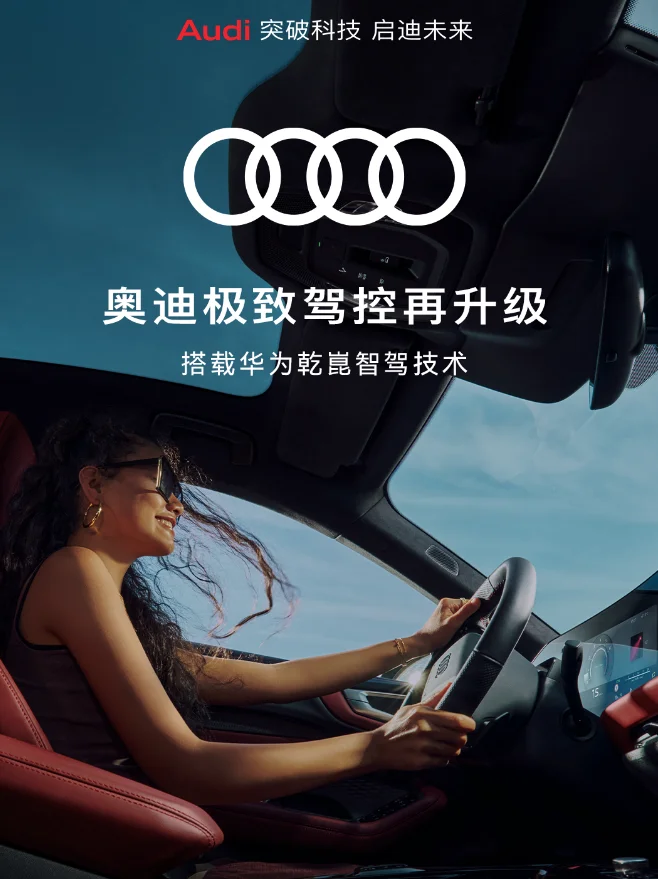
Q: Audi's internal combustion engine vehicles have also successfully integrated Qiankun Intelligent Driving, breaking the stereotype that only electric vehicles can deliver effective driver assistance. With this strong collaboration between Huawei and Audi, what do you think this means for the automotive industry, and what impact will it have?
A: Audi represents a century-old luxury brand. Its integration of Qiankun Intelligent Driving signals that future luxury brands must prioritize intelligence. It also indicates that in the new energy era, the hierarchy of premium brands has not solidified, presenting a significant opportunity for Chinese brands to move from low-end to high-end markets.
Q: The ADS system actually encompasses four hardware versions. Automakers may subsequently emphasize ADS 4 in their marketing while downplaying the ADS SE version. Could such communication strategies create cognitive bias among users, leaving those with SE versions unclear about the functional boundaries?
A: If you followed the Qiankun Intelligent Automotive Solution Technology Launch Conference at the April Shanghai Auto Show, ADS 4 covers ADS SE. ADS SE will also be upgraded to ADS 4. We cover ADS SE, Pro, Max and Ultra; all four are included. L3 is called Ultra, let me clarify that.
With SE models, the usage scenarios—support for highway driving, parking assistance, and urban LCC Plus—are clearly defined capability boundaries, which are fundamentally features of driver assistance. These operate within their designated application limits. After upgrading to ADS 4, experiences such as forward braking, starting, and longitudinal lane changes will become smoother, representing improvements in user experience; however, there are no other changes to its fundamental application boundaries.
Written by: Da Yong | Edited by: James