


Starting at RMB 708,000: Huawei-backed sedan arrives
"Zunjie S800 marks the beginning of Chinese automobiles' ascent to the premium segment. It may not be perfect yet, but it embodies the courage that defines China's automotive industry. Your determination, boldness, and pursuit have made it possible for us to create history!"
At the conclusion of last night's Zunjie S800 launch event, Richard Yu, Executive Director of Huawei and Chairman of the Terminal Business Group, delivered these impassioned remarks, bringing the atmosphere to a boil and underscoring the model's significance as a "leader of its era."
As the highest-priced vehicle in Huawei's technology portfolio to date, the top-spec Zunjie S800 carries a price tag of RMB 1.018 million, with a starting price of RMB 708,000. It targets the market ceiling long dominated by the Mercedes-Benz S-Class, BMW 7 Series, and Audi A8.
In terms of product features, the Zunjie S800 integrates high-specification configurations rarely seen on premium models from Chinese brands: the ADS 4.0 autonomous driving system, Hongmeng ALPS Zuocang cabin, a 43-speaker audio system, zero-gravity executive seats, an intelligent privacy cockpit, and a dual-platform three-motor powertrain combination. The concentration of multiple "first-to-market" technologies represents a significant technical showcase for this model.
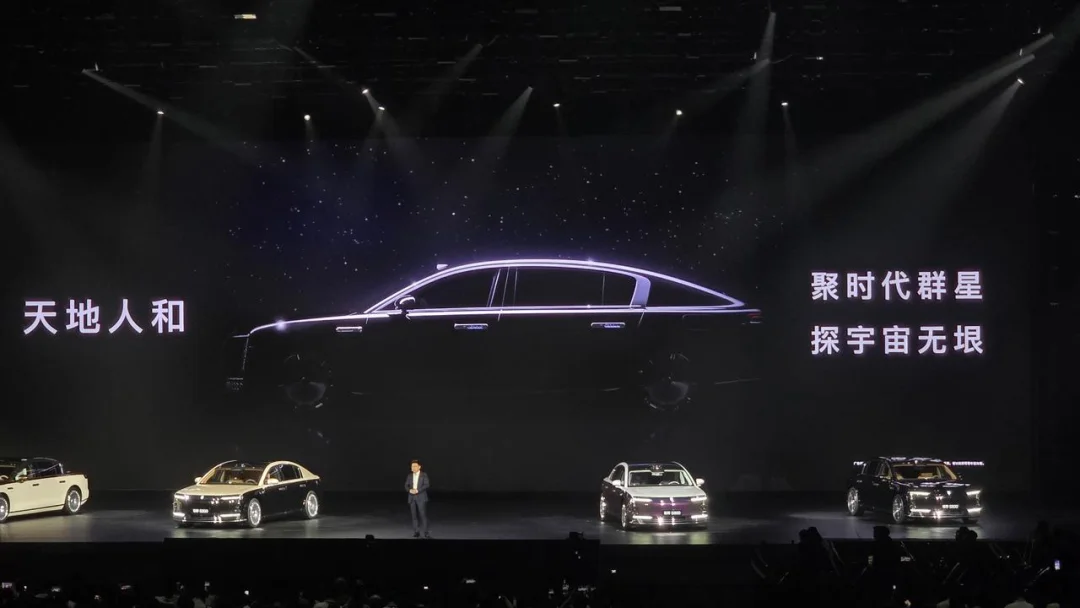
The car bears immense expectations. Its specifications justify the "flagship" title, and its pricing is competitive. However, at the million-yuan price point, the competition is no longer just about performance and configuration.
The real question remains: In an era where traditional luxury cars rely on brand heritage and history to project prestige, can a combination of a "new brand + new model + new technology" truly win over wealthy buyers?
Can a brand you’ve never heard of, paired with a model just launched, convince you to willingly spend RMB 1 million?
An hour after the Zunjie S800 went on sale last night, firm orders exceeded 1,000 units. Today, Richard Yu stated in a public speech that more than 70% of these customers selected the RMB 1.018 million version. The order data seems to have provided the answer.
01Not everyone dares to sell a car for a million yuan; what makes this one different?
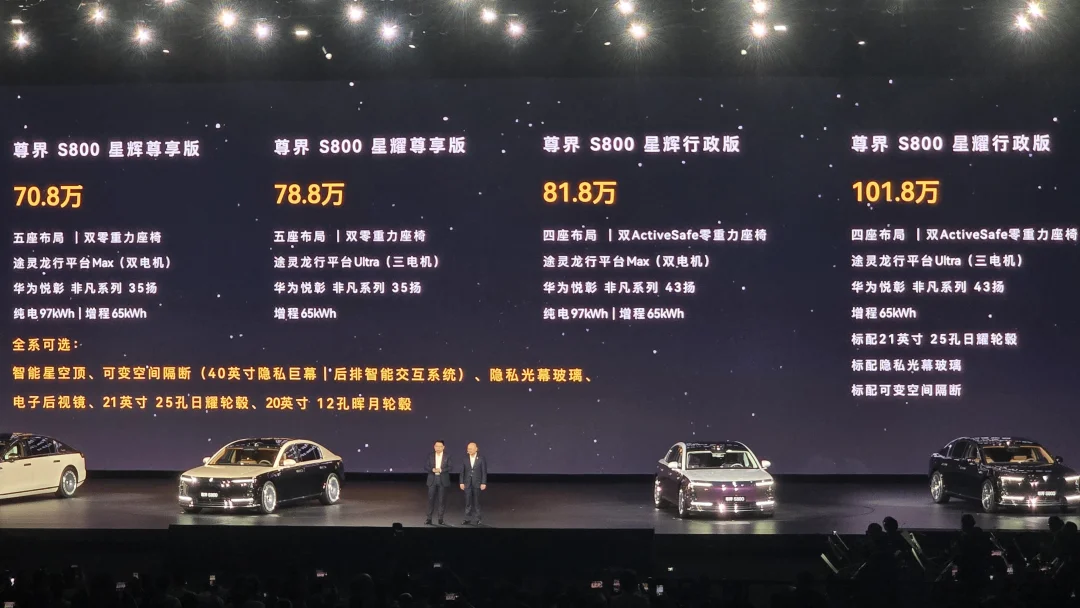
The Zunjie S800 was released in four models, including two four-seat and two five-seat variants:
Five-seat dual-motor range-extended/EV 'Xinghui Premium': RMB 708,000;
Five-seat triple-motor range-extended 'Xingyao Premium': RMB 788,000;
Four-seat dual-motor range-extended/EV with 43 speakers 'Xinghui Executive': RMB 818,000;
Four-seat triple-motor range-extended with variable space/privacy light screen 'Xingyao Executive': RMB 1.018 million.
On June 26, the Zunjie S800 began deliveries under its limited Pioneer Program of 599 units. In mid-August, the Zunjie S800 will commence large-scale batch deliveries. One hour after launch, only 219 slots remained in the limited 599-unit Pioneer Program.
By comparison, the manufacturer’s suggested retail price for the Mercedes-Benz S-Class ranges from approximately RMB 950,000 to RMB 2.05 million, while new energy D-segment vehicles such as the BMW i7 and Mercedes-Benz EQS are mostly concentrated in the RMB 800,000–1.3 million price range. With top-tier specifications and a price lower than expected, the Zunjie S800 has delivered a strong stimulus to the luxury market.
The ‘Zun’ (prestige) of Zunjie begins with manufacturing.
Jianghuaiqiche Chairman and General Manager Xiang Xingchu shouted the slogan ‘Everything for Zunjie, and everything of Zunjie’ at the Zunjie S800 launch event tonight.
According to him, in December last year, the Zunjiechaojigongchang, jointly built by Jianghuai and Huawei, was officially completed, marking the full readiness of the Zunjie manufacturing system. The Zunjieshanghaishejizhongxin was also established, along with an exclusive team of over 5,000 people. A new Zunjiechaojigongchang was constructed, with current investments exceeding RMB 10 billion.
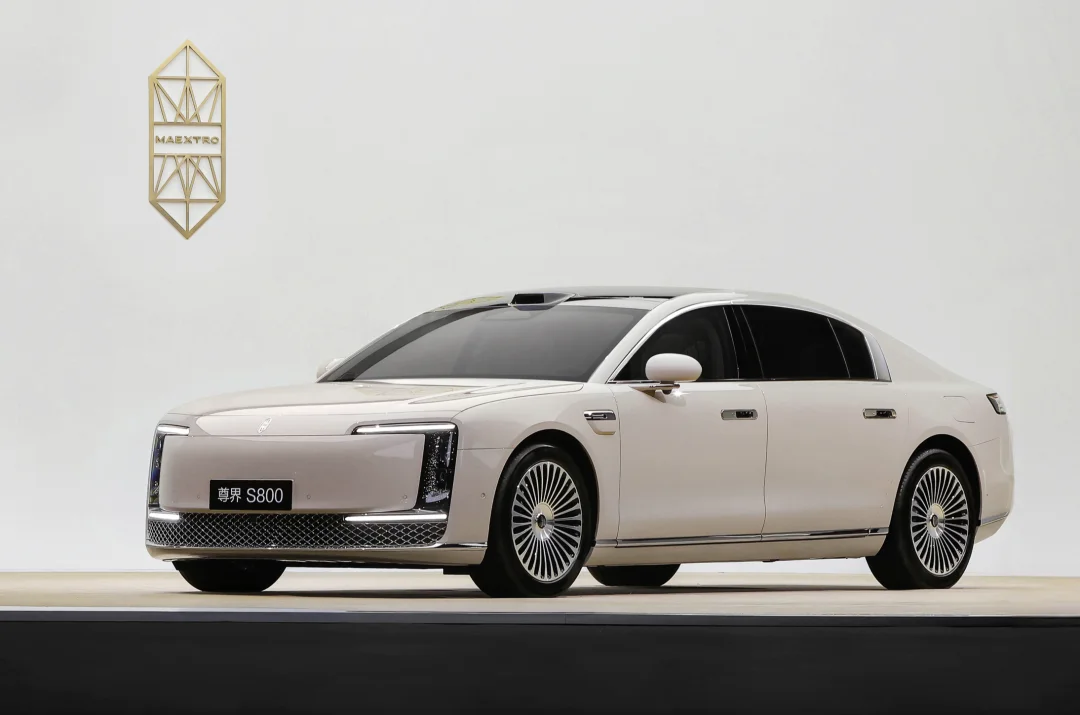
Returning to the product itself, the first aspect in which this car seeks to convey ‘prestige’ is visual grandeur and presence. With a length of 5,480 mm and a wheelbase of 3,370 mm, the vehicle’s dimensions exceed those of the long-wheelbase Mercedes-Benz S-Class, making it one of the production sedans with the longest wheelbase among Chinese brands.
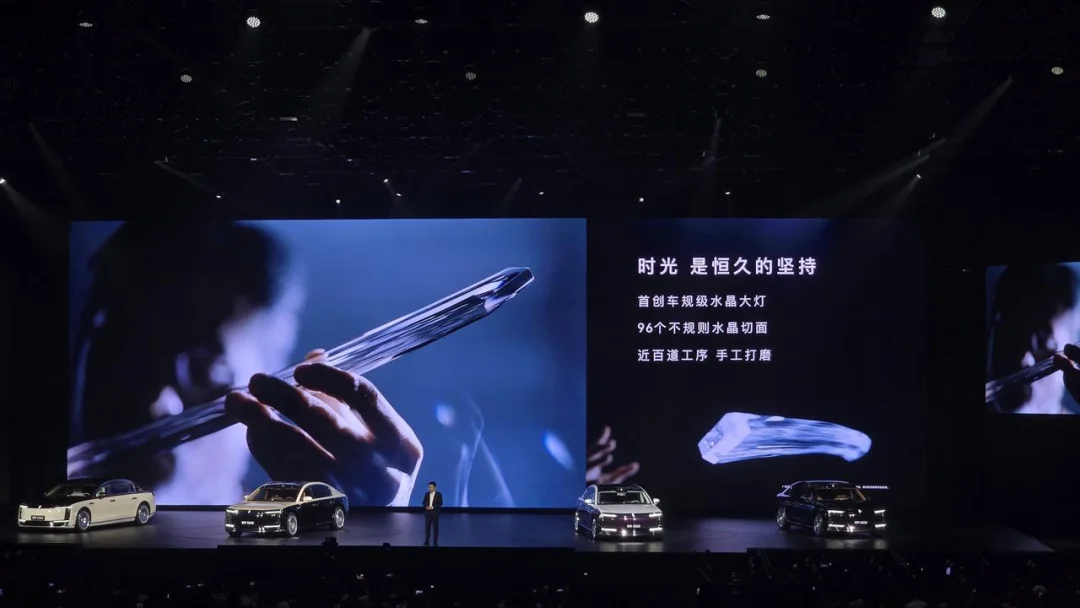
Coupled with smooth and minimalist body lines, a drag coefficient of 0.206, crystal accents throughout the vehicle, frameless electronic side mirrors, and the highly light-reflective ‘Ning Riyue Zhihua’ paint finish, the entire vehicle projects a first impression of ‘prestige’ even from a distance.
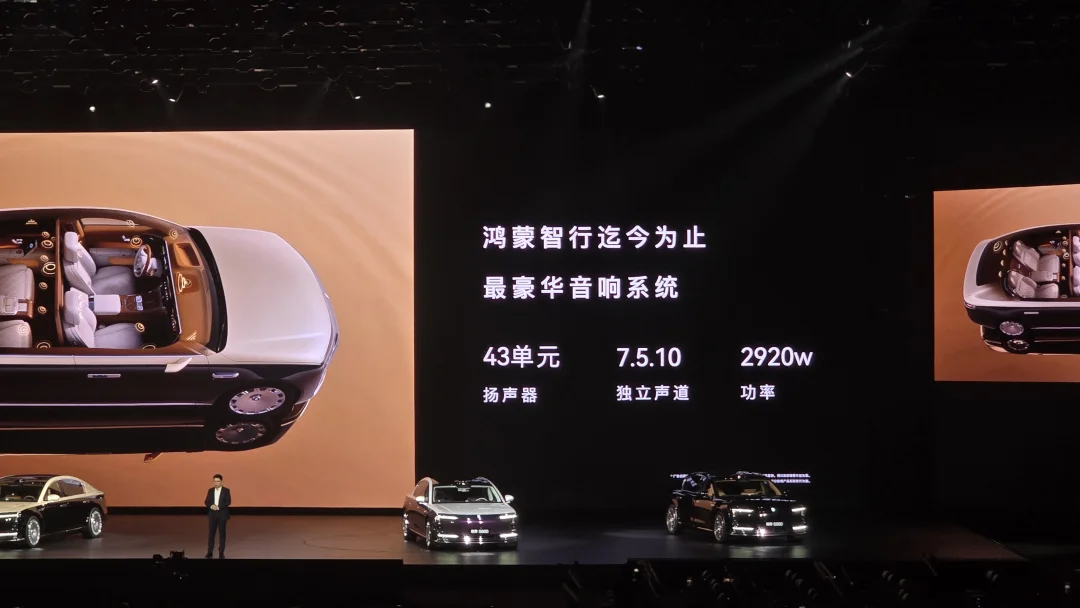
The core of luxury remains inside the cabin. The Zunjie S800 four-seat executive version features a triple-screen system within the HarmonyOS ecosystem, a 43-driver YueZhang audio system, and the Huawei Immersive Head-Up Display with an image area of 76 inches.
Richard Yu stated that the Zunjie S800 is equipped with the most luxurious audio system in the history of HIMA (Harmony Intelligent Mobility Alliance), and it also debuts four-seat headrest speakers with four drivers each.
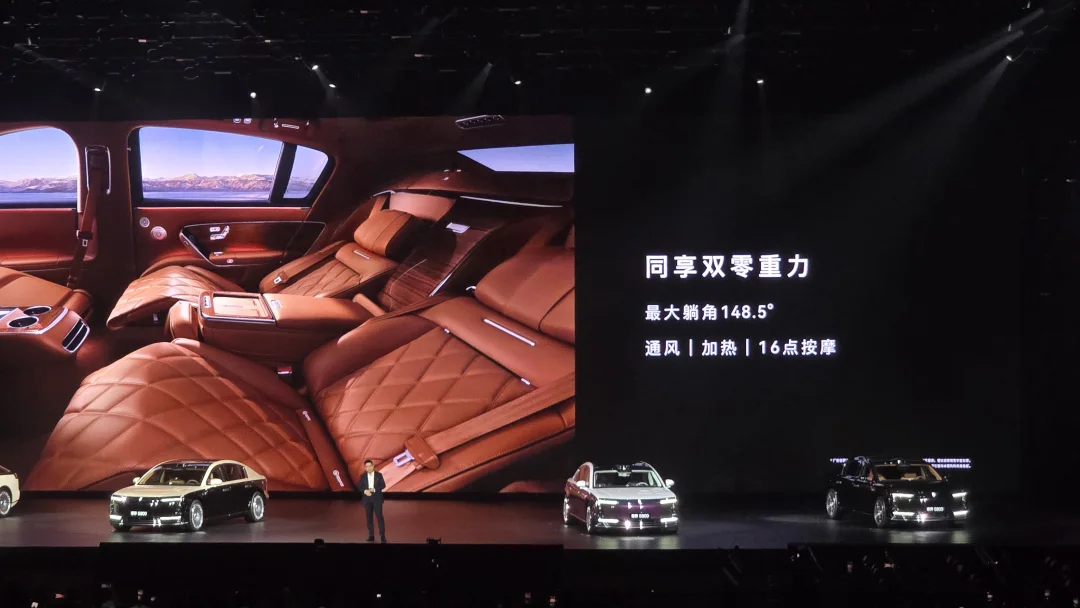
Both the four-seat and five-seat versions of the Zunjie S800 are equipped with dual zero-gravity rear seats. These seats support standard functions such as ventilation, heating, and massage, and can tilt to a maximum angle of 148.5°. Combined with a depth of nearly 2 meters and a dynamic posture linkage system, the seats actively identify your seating posture and make fine adjustments the moment you fasten your seatbelt.
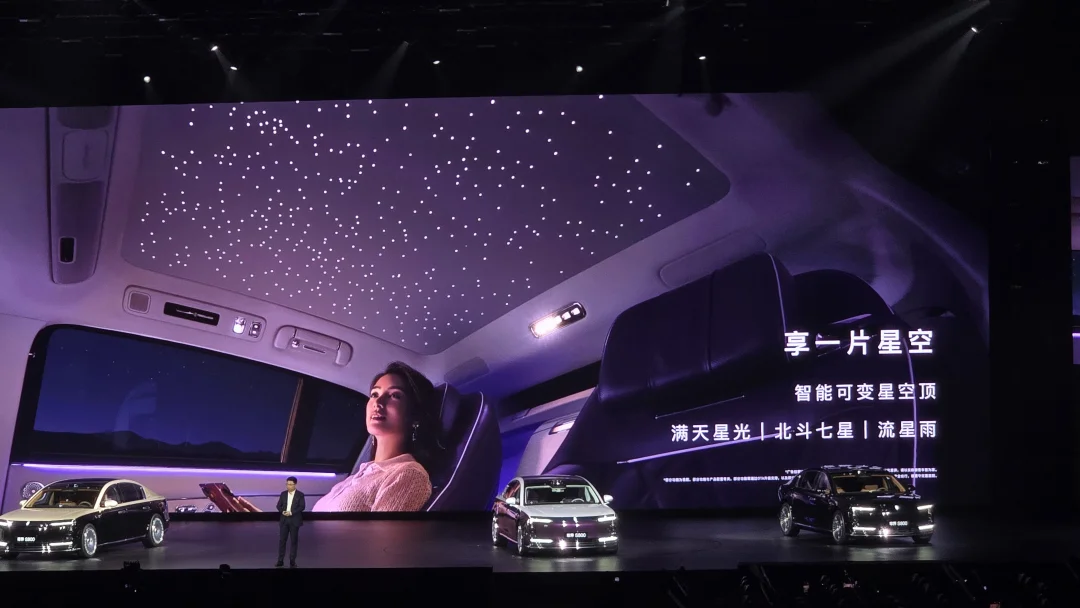
The Zunjie S800 cabin also debuts a smart variable starry sky roof, presenting special effects such as a starry sky, the Big Dipper, and meteor showers. Significant effort has been put into sun protection: the front windshield uses a three-layer nano-silver-plating technology, achieving a UV blocking rate of more than 99%.
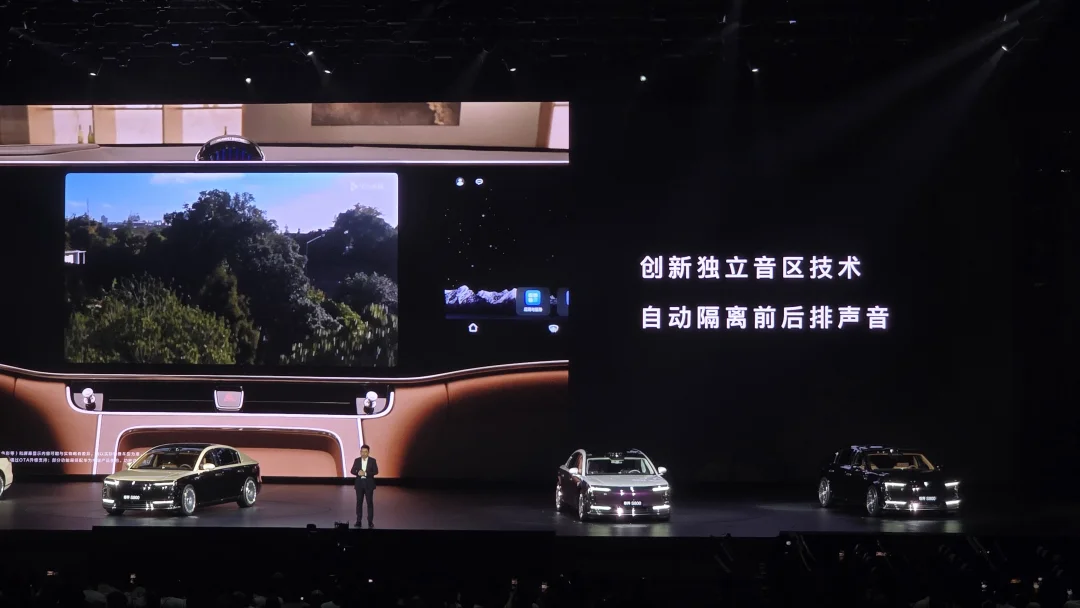
The cabin’s sound insulation and privacy are also meticulously engineered. The Zunjie uses more than 40 kg of sound-absorbing materials, combined with a front-rear partition, smart light-shading glass, and an acoustic isolation system, allowing rear passengers to enjoy a physical and psychological "invisible space" when the light screen is activated. The vehicle’s independent audio zone technology can isolate sound between the front and rear rows, enabling separate movie viewing for each area.
Notably, when highlighting the S800’s quietness, Richard Yu compared it against a sedan priced at over RMB 3 million and an SUV priced at over RMB 7 million.
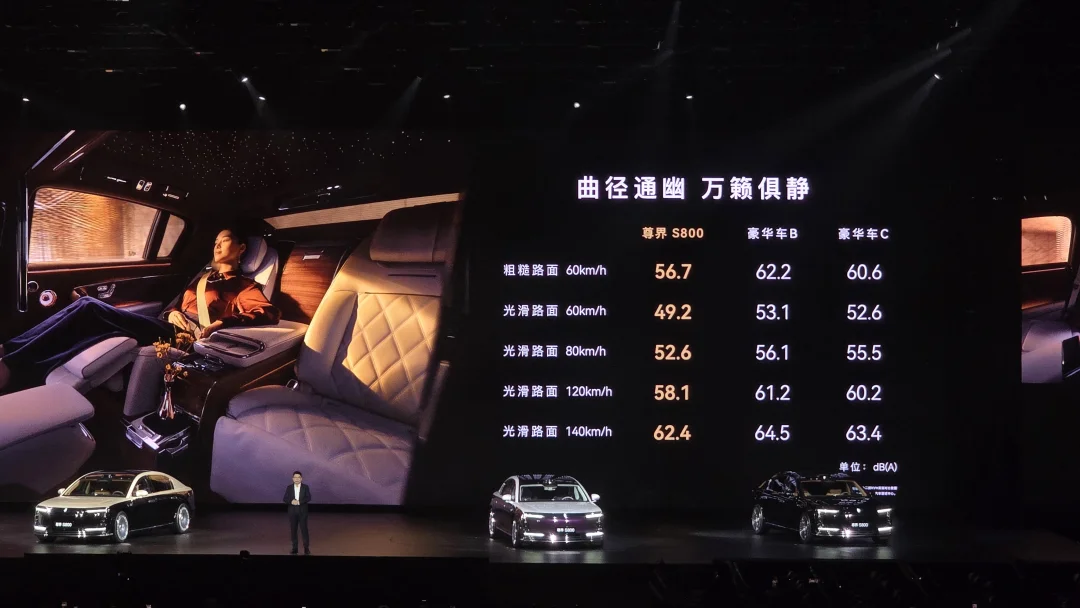
Additionally, the S800 features privacy glass with gesture-controlled light shading. Richard Yu stated that the response speed of this glass exceeds that of the Boeing 787 and claimed that "even shining a flashlight cannot penetrate it."
Based on the released information, the Zunjie S800 demonstrates solid completion in product structure, configuration coverage, and detail refinement. Whether the synergy between functions is smooth and whether scenario-based capabilities are ready for implementation will require feedback after delivery.
Rather than challenging traditional luxury directly, it has chosen a difficult path: a new car without brand heritage relies on configurations and luxury experiences to earn trust. This is a high-risk strategy and a product approach under significant pressure.
02Six debut technologies: Substance or just buzzwords?
The Zunjie S800 is equipped with six debut technologies. At last night's launch event, these six debut technologies were introduced one by one:
Tulinglongxingpingtai (Intelligent Digital Chassis);
Xuexiaozhinengzengchengpingtai (800 V electric drive architecture);
Huawei ADS 4 (intelligent driving system);
Jujingdianchipingtai 2.0 (high-safety battery system);
Xuanwucheshenjiegou (vehicle safety architecture);
Hongmeng ALPS Zuocang 2.0 (smart cockpit system).
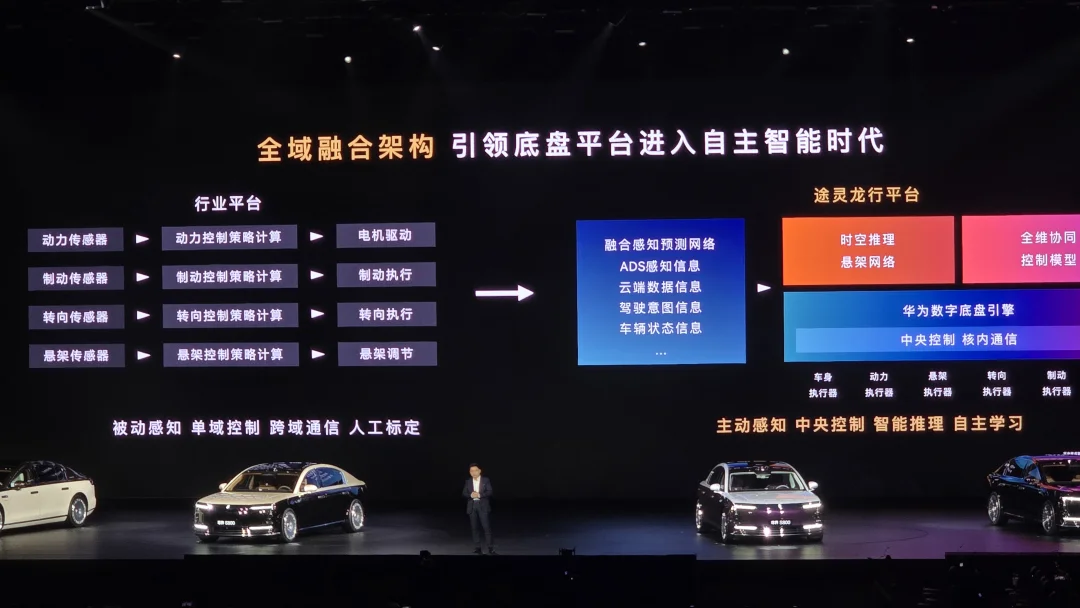
These technologies cover the vehicle's driving, energy consumption, safety, and comfort core systems, providing a complete suite of solutions for a "high-end executive sedan" at the functional level. However, an abundance of technical terms does not necessarily translate to an improved experience. Whether they truly benefit usage scenarios depends on the depth of their implementation.
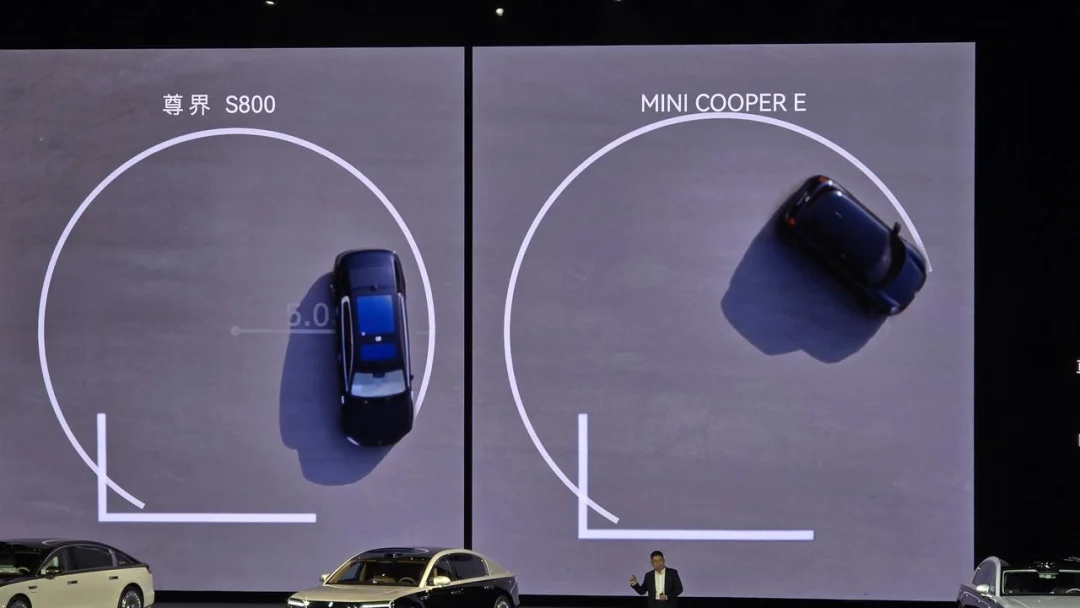
Taking Tulinglongxingpingtai as an example, the key to this chassis system lies not in the comprehensiveness of its hardware structure, but in the vehicle's overall response capability achieved through shortened decision-making chains. Control latency is compressed to 1 ms, with response speed improved by 22% compared to the previous generation. Paired with a front double-wishbone and rear five-link suspension structure, dual-chamber air suspension, and multi-wheel steering control, this executive sedan measuring 5.5 meters in length and 3.37 meters in wheelbase can achieve a turning radius of 5.05 meters, a braking distance from 100 km/h to zero of 34.5 meters, and a wading depth of 500 mm.
Regarding battery safety, Zunjie offers another fail-safe solution through Jujingdianchipingtai 2.0.
CATL Chairman Zeng Yuqun introduced the system at the launch event, noting that it adopts a thermoelectric separation structure. It supports millisecond-level active power cutoff and isolation mechanisms following cell thermal runaway. Features such as five-layer bottom protection, dual large-area liquid cooling plates, active exhaust, and pressure release structures aim to intercept thermal diffusion and explosion risks as early as possible.
Structurally, it not only enhances the impact resistance of the battery pack itself but also incorporates dedicated energy-absorbing structures on the vehicle chassis, such as subframe sinking and hot-formed steel protective beams, creating a second layer of isolation between the battery and the passenger cabin. These designs do not directly alter range performance or acceleration figures, but they influence user trust in the vehicle's underlying engineering.
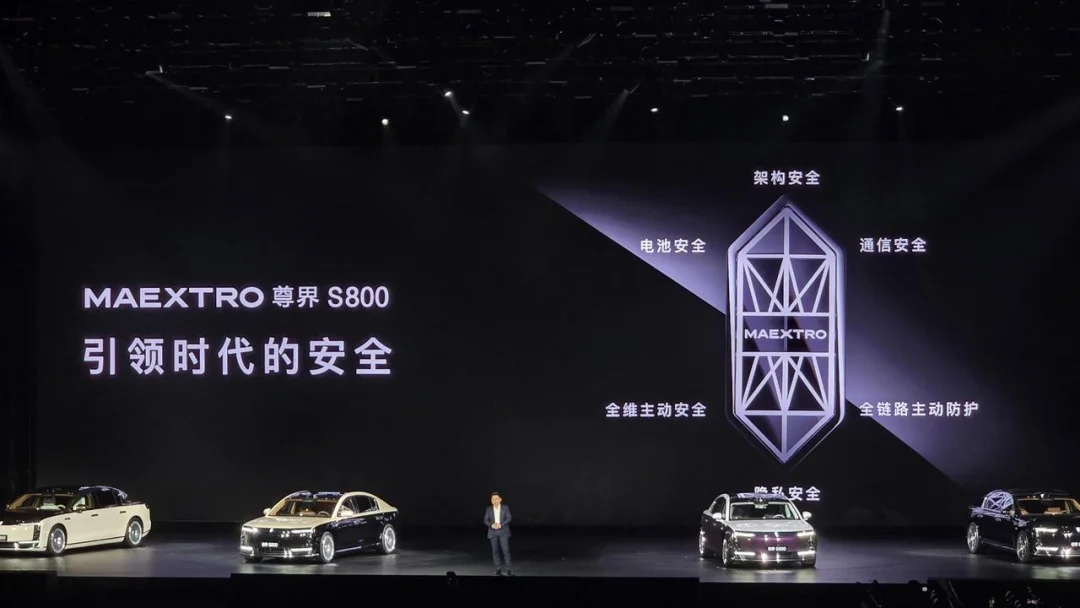
Richard Yu added that Jujingdianchipingtai 2.0 meets new national standards five years in advance.
In terms of range and energy consumption, Zunjie uses the Xuexiaozhinengzengchengpingtai to balance driving range with refueling efficiency. It supports a 6C ultra-fast charging cell system, enabling a charge from 10% to 80% in as little as 10.5 minutes.
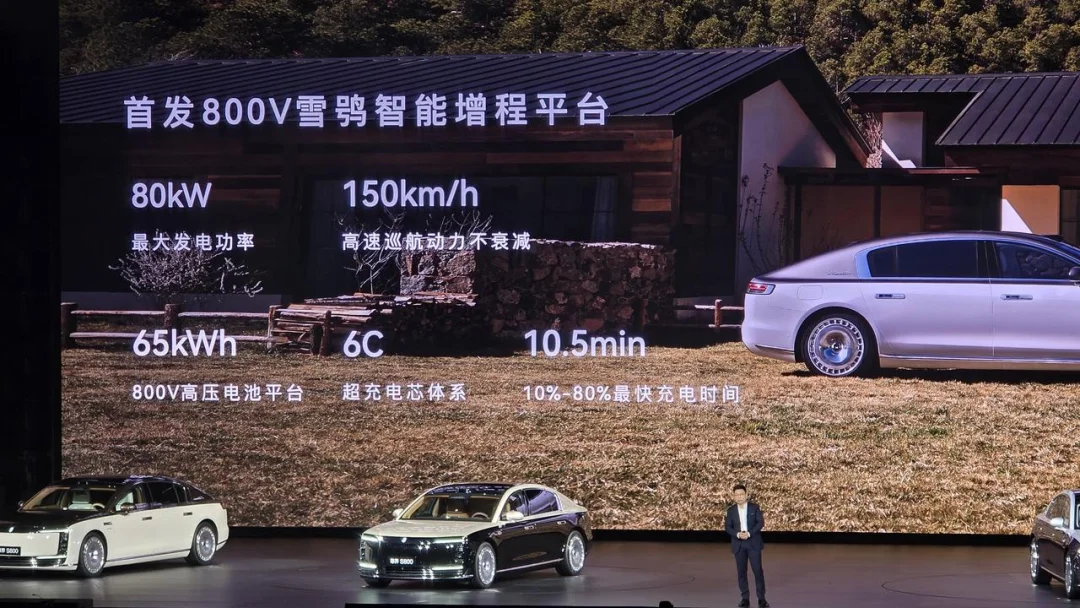
The extended-range version with dual motors offers a CLTC combined range of 1,333 km and an electric-only range of 400 km; the three-motor extended-range variant provides a CLTC combined range of 1,200 km and an electric-only range of 365 km.
The Zunjie S800 is also the first model within the Harmony Intelligent Mobility Alliance to feature an 800 V high-voltage pure-electric platform. The pure-electric dual-motor version is equipped with a 96.7 kWh battery, delivering a CLTC combined range of 702 km. It supports a 5C ultra-fast charging cell system, allowing a charge from 10% to 80% in just 12 minutes.
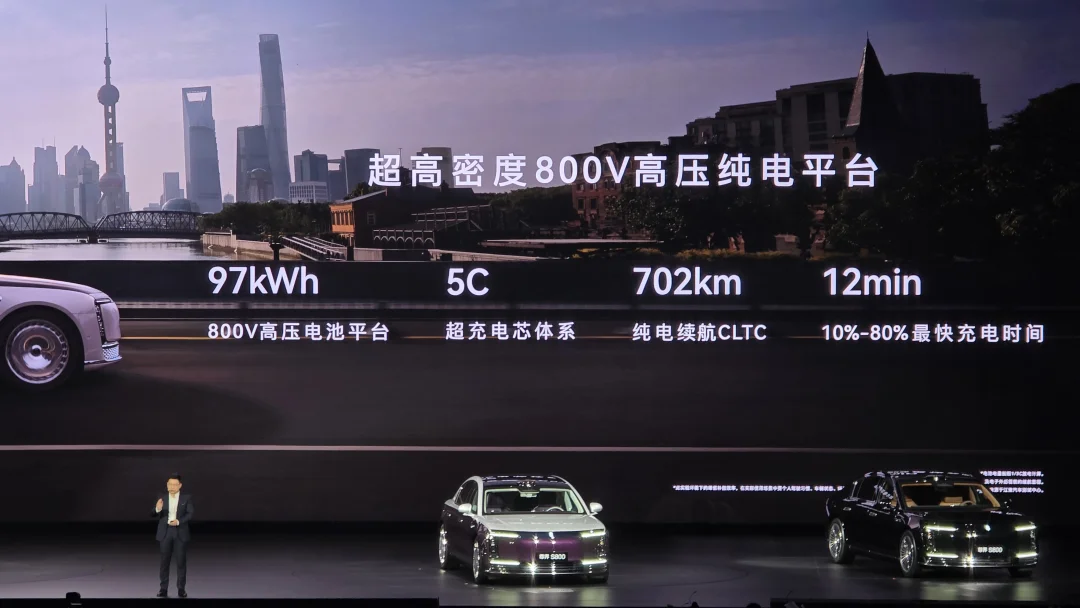
If these figures can be consistently replicated in real-world use, it would significantly reduce the time cost for users during refueling stops. This is particularly relevant for daily commuting, short highway breaks, and fast-charging scenarios in urban areas, making the refueling process nearly as quick as filling up with gasoline.
The Xuexiaozhinengzengchengpingtai addresses a common dilemma in past premium new-energy sedans: the trade-off between range and comfort. Typically, opting for spacious interiors and powerful performance resulted in high energy consumption and greater refueling burdens. The value of this platform lies in its ability to allow executive-class users to accept a new-energy vehicle without having to alter their usage habits.
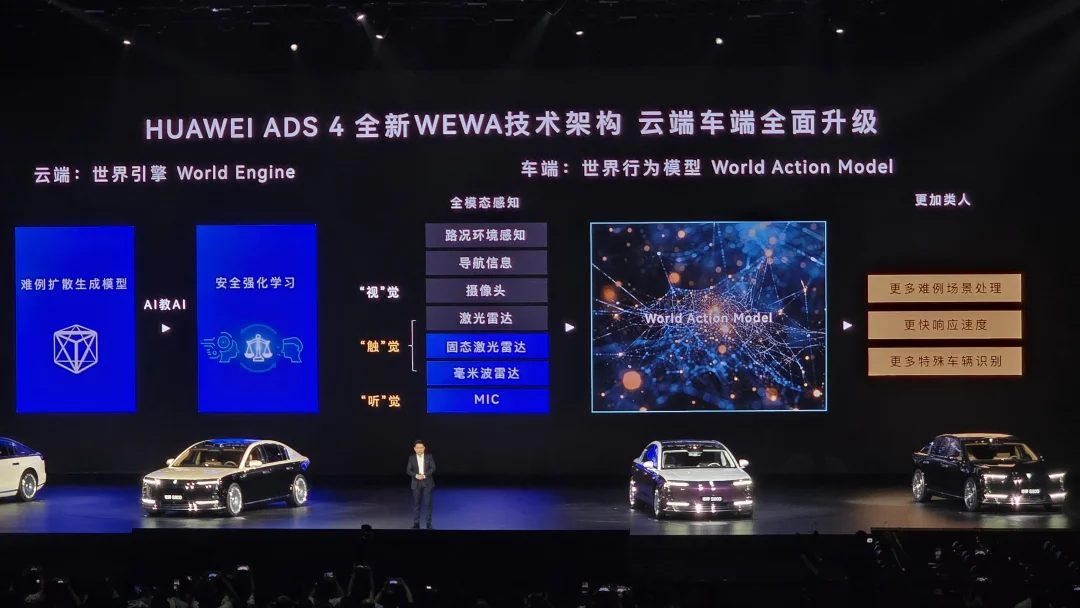
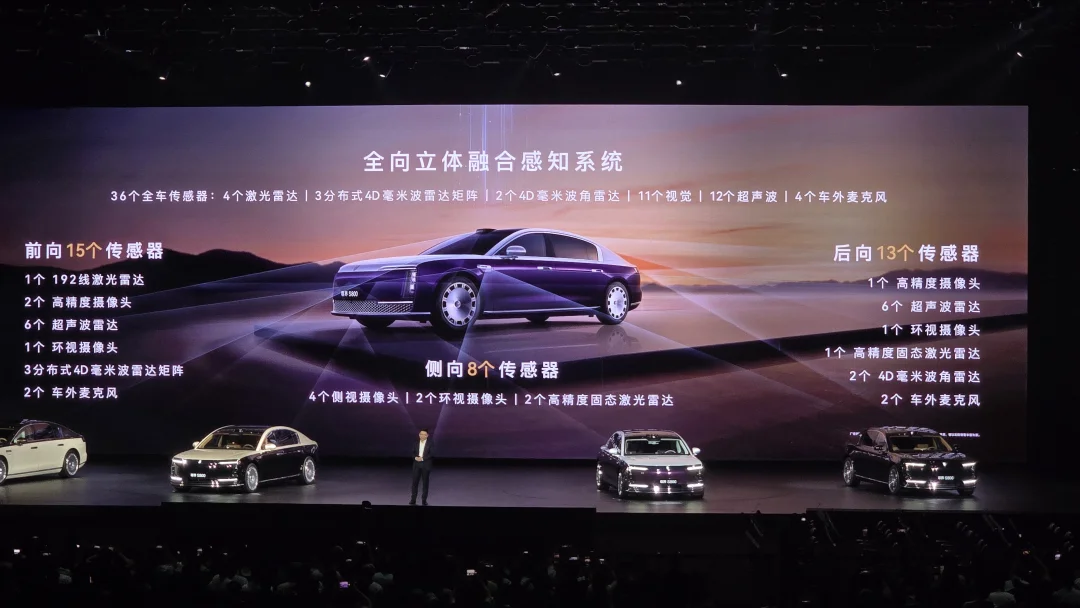
The remaining technologies also demonstrate a relatively high level of maturity. HUAWEI ADS 4, which debuted on the Zunjie S800, features a comprehensive fusion perception system equipped with 36 sensors. It supports remote summoning, can navigate complex scenarios such as narrow right-angle turns and U-turns at dead ends, and is capable of charging itself before vacating the parking spot. While the performance of ADS 4 in terms of perception redundancy, parking capabilities, and handling complex road conditions still requires real-world verification, its functional coverage is already quite extensive.
03Does luxury car prestige still require foreign brands?
From "domestic electric vehicles are getting better" to "domestic cars capturing the executive luxury segment," the path the Zunjie S800 aims to tread has few successful precedents.
Its pricing is bold, its technology is groundbreaking, and its presence is commanding, but will the market accept this new face as a symbol of luxury?
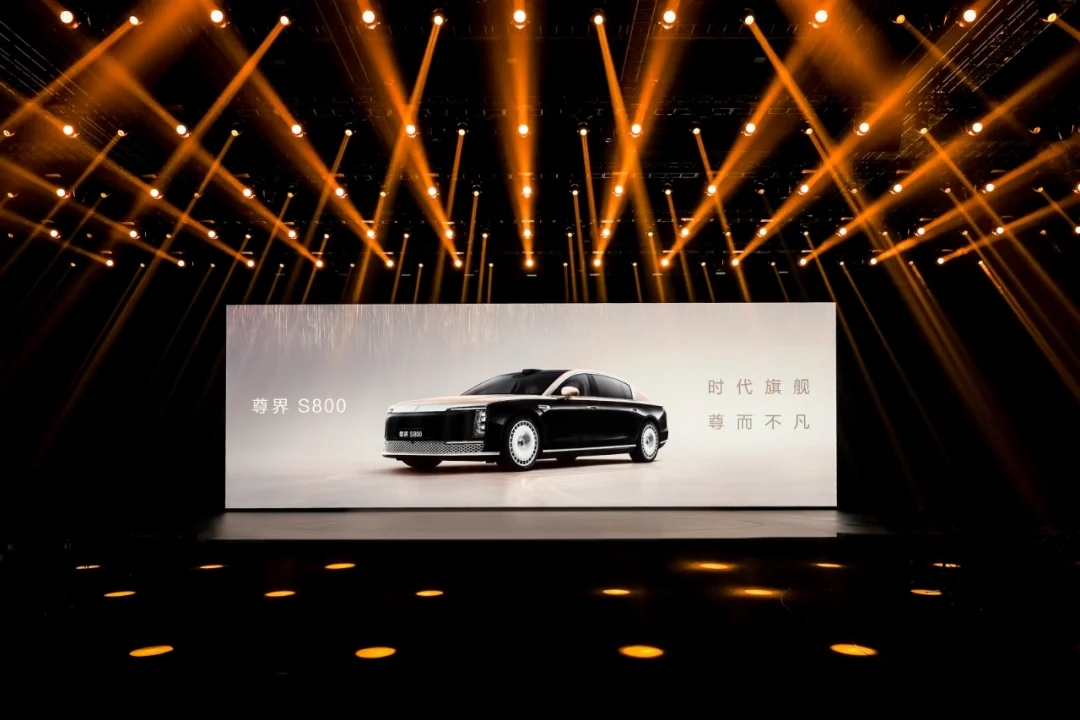
In fact, the launch of the Zunjie S800 may appear to be pioneering new ground, but it is essentially adapting to shifts in the market.
Chinese consumers' understanding of "luxury cars" is shifting from brand symbolism toward utilitarian value. According to research by Maikenxi last year, more than four in ten Chinese users are no longer willing to pay a significant premium for foreign brands; instead, they are focusing their decisions on genuine experience factors such as intelligence, comfort, and energy efficiency. This shift directly undermines the traditional market foundation that equated "luxury" with "foreign brands."
The AITO M9 was the first model to demonstrate this trend. As a new energy SUV priced around RMB 500,000, it became the monthly sales champion in its price segment in the first half of 2024, with cumulative orders exceeding 200,000 units. A significant proportion of these buyers came from Mercedes-Benz, BMW, and Audi trade-in groups. Its path to success did not rely on brand heritage; instead, it used technology stacks and experience integration to create a new set of evaluation criteria outside the traditional perception of Western luxury brands.
The Zunjie S800 aims to take an even more difficult path than the M9. Unlike the SUV market, the executive sedan segment has long held almost no share for Chinese brands. Consumer definitions of vehicles at this level are naturally conservative, with stronger perceptions of brand, history, and status. Whether Chinese cars can establish a new evaluation system for such products is a key hurdle they must overcome to break into the million-yuan market.
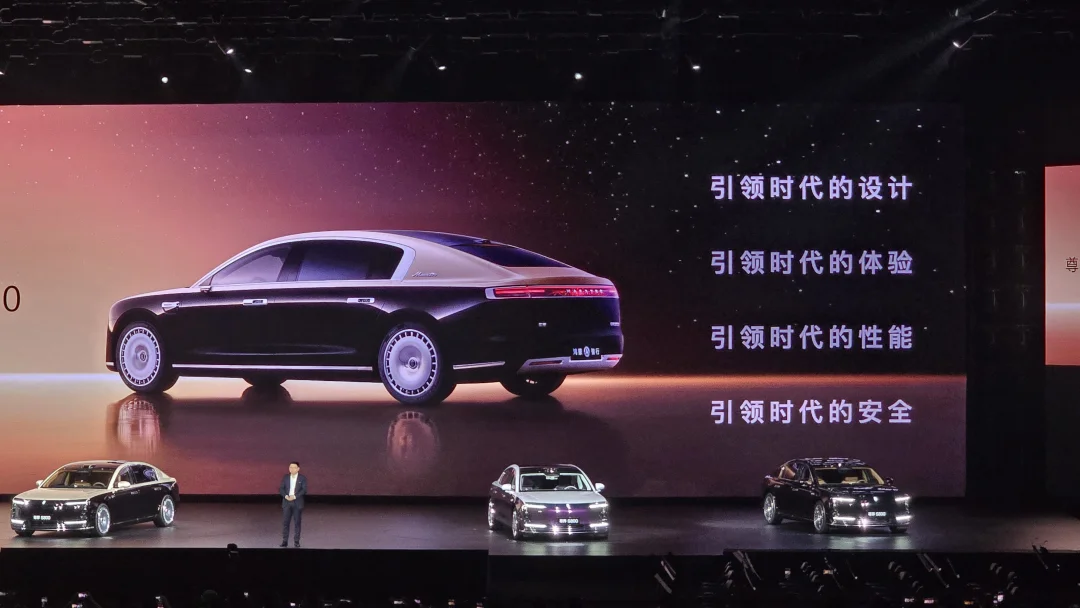
This is why the Zunjie S800 does not compete on cost-effectiveness. Instead, it pushes specifications, materials, autonomous driving capabilities, and manufacturing systems to high standards all at once, attempting to solve three core questions in one go: Is it worth it? Does it look the part? And is it reliable?
If the AITO M9 was the first exam paper testing whether technology can support a luxury experience, then the Zunjie S800 is like the final, most challenging question. It must not only deliver on specifications but also convince people that this is the new era’s million-yuan executive sedan.
The "face" value of a luxury car never automatically takes effect just by slapping on a Western brand logo. Ultimately, it depends on who can provide a new, convincing definition and product. As Richard Yu stated, the Zunjie S800 may not be perfect yet, but it has raised the question and taken the lead in answering it.
Written by: Da Yong Edited by: James