


NVIDIA GTC Draws China's Autonomous Driving Circle: VLA Models and End-to-End Systems Take Center Stage
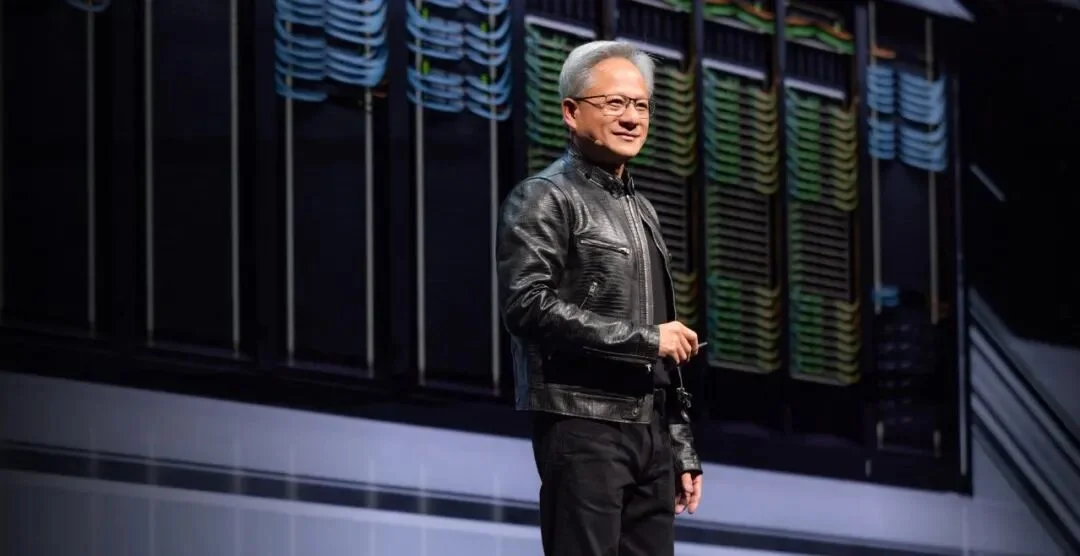
The global AI community’s premier event, NVIDIA GTC, has officially kicked off in Shenghesai on the U.S. West Coast. Yesterday and today, a significant portion of China’s autonomous driving sector gathered at GTC to discuss the future of smart driving in 2025.
Xiaogang Wang, CEO of SenseTime’s Jueying division; Jia Peng, head of Li Auto’s autonomous driving R&D; Zhou Guang, CEO of Yuanrongqixing; Yang Kuiyuan from Xiaomi’s autonomous driving and robotics department; and Chen Xiaozhi, CTO of Zhuoyu AI, delivered speeches. The core of their arguments centered on two aspects: the implementation of end-to-end autonomous driving and next-generation VLA (Vision-Language-Action) models.
Earlier today, Li Auto and Yuanrongqixing respectively released their VLA models. Xiang Li posted on Weibo: “This is the most important step on our path to L4. Just as the iPhone 4 redefined the smartphone, MindVLA will redefine autonomous driving.”
Regarding deployment timelines, these two companies, which were the first in the autonomous driving field to introduce VLA architectures, coincidentally aligned their plans. Li Auto’s MindVLA will arrive alongside the i8, while Yuanrongqixing plans to integrate its system into multiple vehicle models by mid-year.
In the 2025 autonomous driving competition, VLA will be a critical component.
During the process of mass-producing autonomous driving systems, “end-to-end” has become a technology that no manufacturer can bypass. Throughout last year, Xiaomi completed a three-stage technological route upgrade for its smart driving: highway NOA to rule-based urban NOA to end-to-end smart driving. The latest end-to-end version will utilize a model trained on more than 1,360 clips. SenseTime’s end-to-end smart driving solution, UniAD, is also scheduled for official mass production installation this year. Additionally, Zhuoyu aims to build a more personalized end-to-end smart driving system.
Behind the realization of end-to-end + VLA lies the core computing power and extensive toolchains provided by NVIDIA. In the Chinese autonomous driving market, NVIDIA has long held a central position. Facing strong opposition from rivals such as Huawei and Tesla, how NVIDIA and its ecosystem partners will respond to the 2025 autonomous driving competition was answered at this year’s GTC.
01Li Auto Unveils VLA Model: Voice Control for Autonomous Driving
Voice commands may soon seamlessly direct a vehicle’s autonomous driving functions. For instance, if you want coffee, you could simply ask the car to locate a Starbucks and drop you off at the entrance.
This scenario is no longer just a hypothetical concept. At the NVIDIA GTC conference, Jia Peng, head of intelligent driving R&D at Li Auto, demonstrated this capability via video.
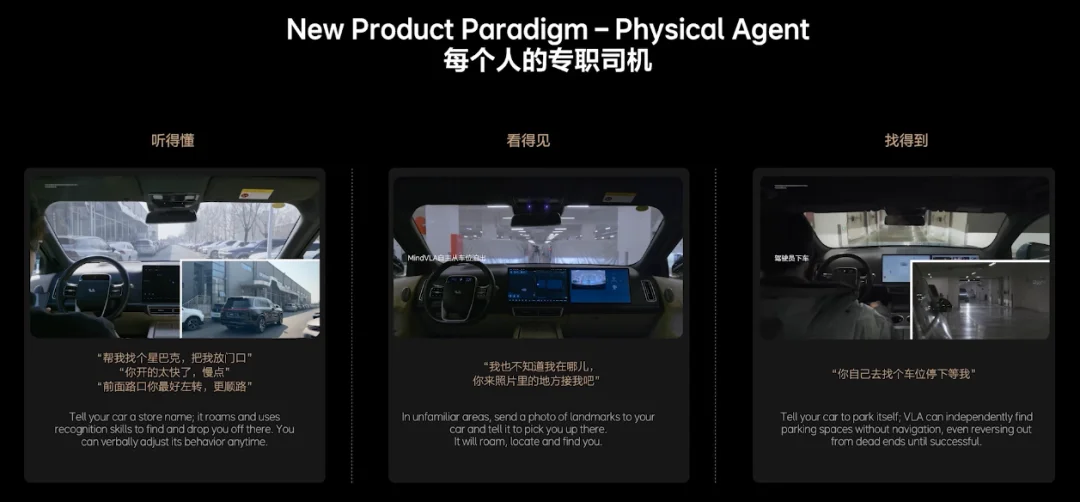
Jia Peng also showcased two additional scenarios: one where an owner, unsure of their location, calls the car to come pick them up; and another where the owner exits first and then instructs the vehicle to autonomously find a parking space.
Overall, Jia Peng described this as having "a dedicated driver for everyone" and stated that Li Auto intends to "redefine intelligent driving."
According to Jia Peng, enabling these scenarios relies on VLA technology—Vision-Language-Action Models—which Li Auto refers to as MindVLA.
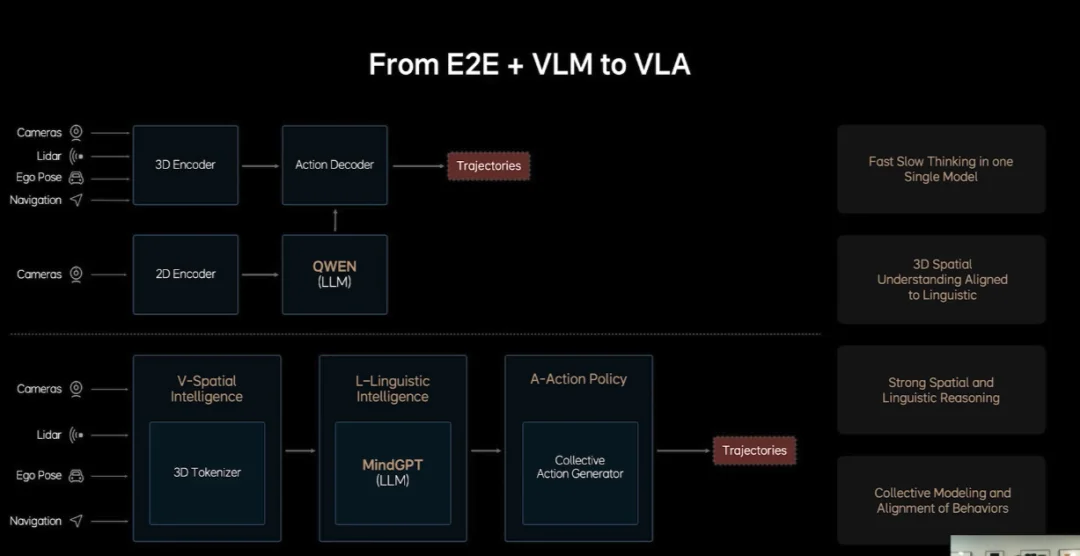
At present, Li Auto’s intelligent driving technology relies on an end-to-end architecture combined with a Vision-Language Model (VLM). Since this technical solution was deployed in vehicles, it has not only significantly elevated Li Auto’s autonomous driving capabilities but also contributed to the sales growth of its AD Max models. However, Jia Peng noted that the end-to-end + VLM approach still faces several challenges.
For instance, because the end-to-end model and the VLM are two separate systems, joint training is difficult. Additionally, the end-to-end + VLM framework struggles with insufficient understanding of 3D spatial environments, limited driving knowledge and memory bandwidth, and difficulties in handling the multimodal nature of human driving.
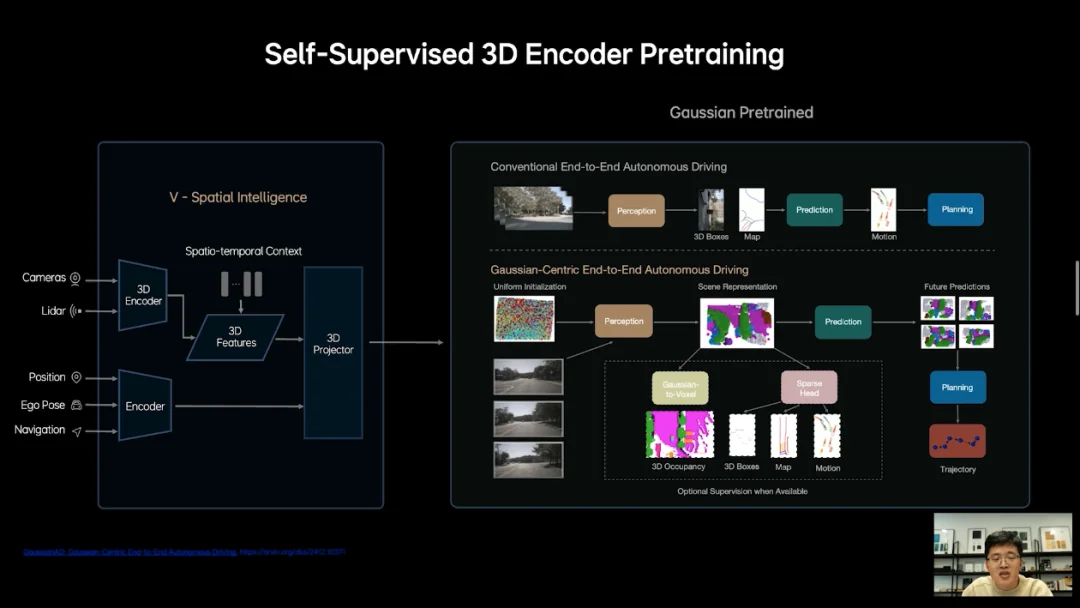
Regarding the multimodal nature of human driving, Jia Peng provided further clarification: the same driving maneuver can vary depending on the driver. Moreover, even for the same individual, driving behavior may change based on their mood or emotional state.
According to Jia Peng, MindVLA does not simply merge the end-to-end and VLM models in a crude manner; many modules require complete redesigns. In terms of capability, MindVLA raises both the upper and lower limits of autonomous driving performance, unifying spatial awareness, behavioral control, and language processing.
Specifically, MindVLA offers improved comprehension of 3D spaces, possesses language intelligence capable of interpreting voice commands from drivers, and can reinforce learning within world models.
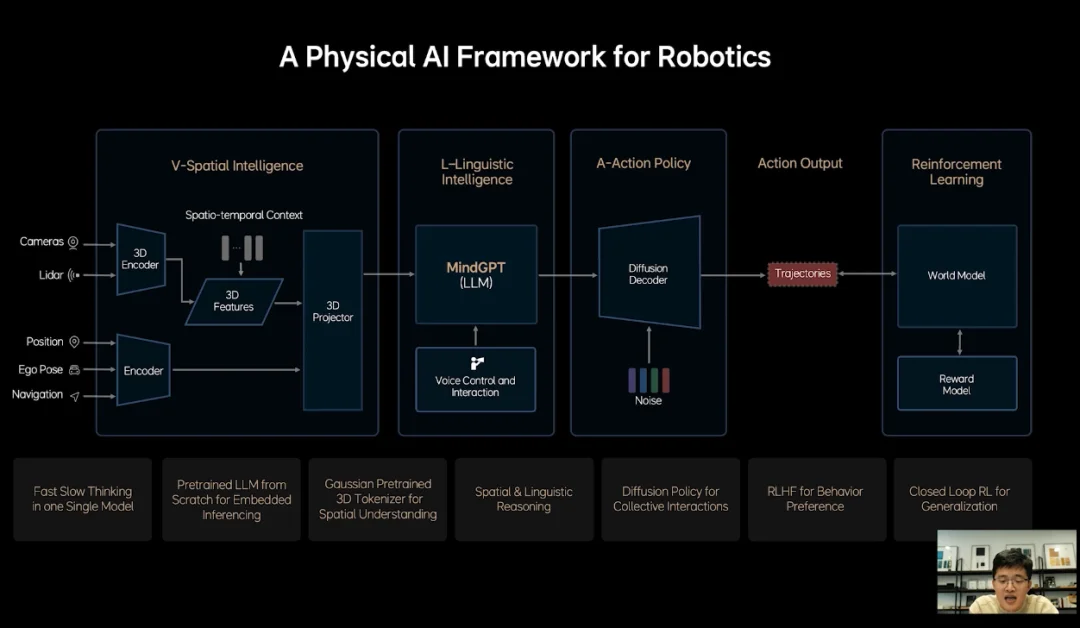
Ultimately, by leveraging VLA, Li Auto aims to realize the diverse driving scenarios mentioned at the beginning. Once these scenarios are fully implemented, vehicles will resemble four-wheeled robots more closely.
02Xiaomi's Yang Kuiyuan: End-to-End Data Volume Exceeds 13.6 Million Clips
Xiaomi Auto officially launched its project in 2021, at which time Yang Kuiyuan had already joined the company. Over the past four years, he has been involved in the entire process of developing, mass-producing, and delivering OTA updates for Xiaomi SU7’s driver assistance system.
At this year’s GTC, Yang Kuiyuan from Xiaomi Auto’s Autonomous Driving and Robotics Department shared technical details on how Xiaomi’s end-to-end full-scenario intelligent driving explores and models the physical world.
Unlike traditional modular architectures, end-to-end autonomous driving uses a single model from input to output, expanding from perception-only modeling to integrated perception, planning, and control modeling. For end-to-end systems, data-driven approaches and model generalization capabilities are crucial.
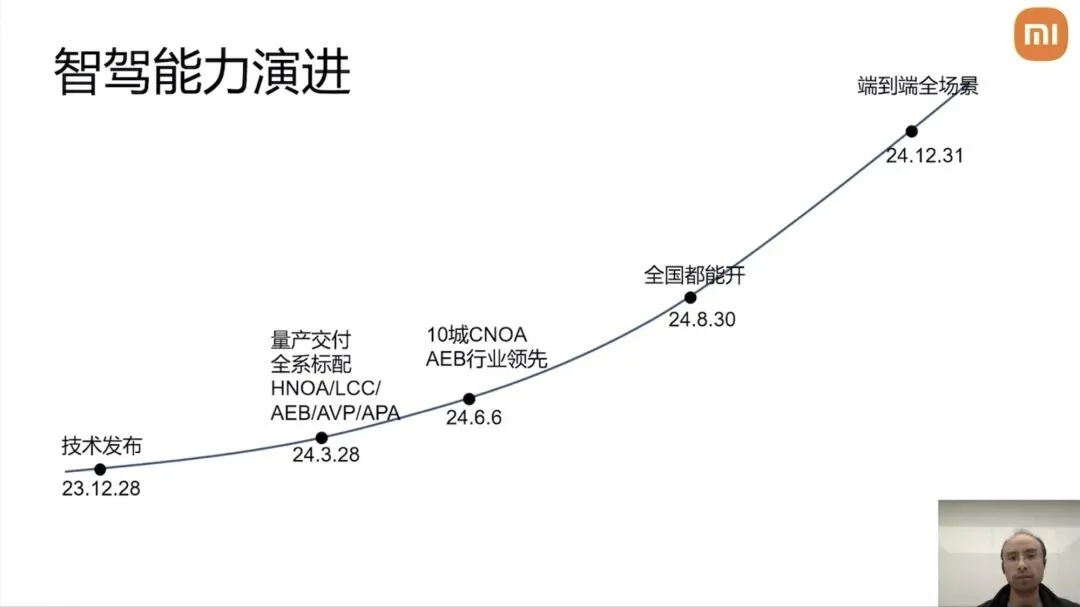
This is also the secret behind the rapid mass production and delivery of Xiaomi’s driver assistance system. In March 2024, the Xiaomi SU7 was delivered with highway NOA (Navigate on Autopilot) enabled out of the box; by August 2024, it achieved nationwide NOA coverage; and by the end of 2024, Xiaomi pushed out an end-to-end pioneer version. Currently, Xiaomi’s driver assistance system combines end-to-end architecture with Vision-Language Models (VLM). According to Yang Kuiyuan, "Xiaomi’s intelligent driving has caught up three generations in one year."
Yang Kuiyuan noted that whether for the SU7, SU7 Ultra, or YU7, Xiaomi considered the vehicles’ need to explore the physical world and meet high-level autonomous driving requirements during design. From an exterior perspective, sensor selection and installation maintain hardware consistency across different models, laying a solid hardware foundation for large-scale exploration of the physical world.
Since deliveries began last March, the fleet participating in physical world exploration currently exceeds 180,000 vehicles (Xiaomi Auto announced this afternoon that deliveries have surpassed 200,000), and continues to grow at a rate of 20,000 units per month.
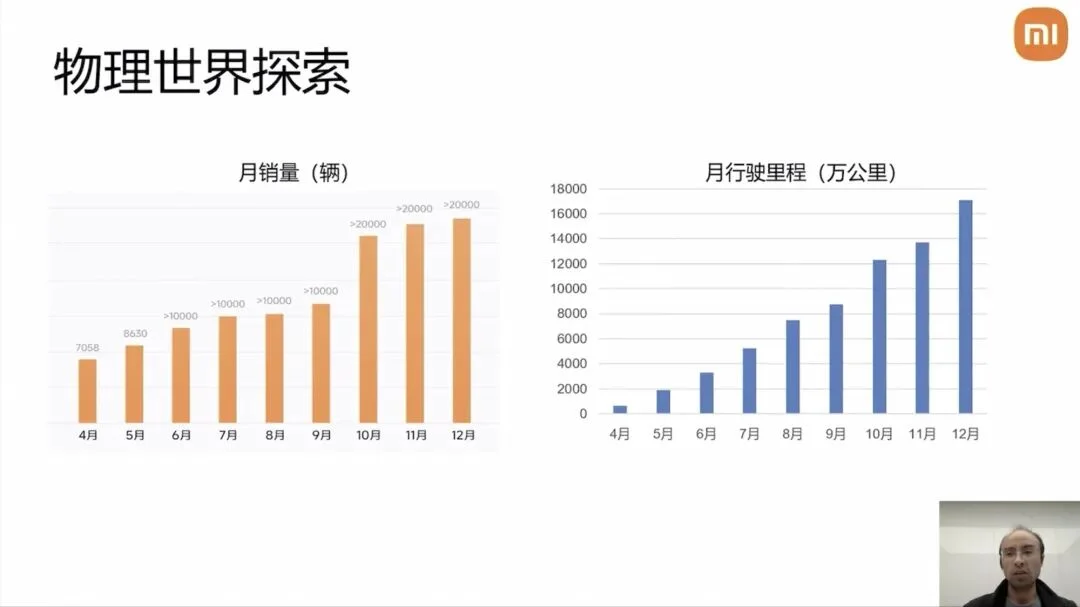
The rapid expansion of the fleet size has also led to a sharp increase in driving mileage. By the end of last year, the fleet was covering 5 million kilometers daily; currently, total daily mileage approaches 10 million kilometers.
For end-to-end autonomous driving systems, challenging scenarios include parking lots, ETC toll stations, urban roundabouts, and rural roads. Training for these scenarios requires continuous video clips. According to Yang Kuiyuan’s presentation, Xiaomi’s training data stood at 2.38 million clips as of October last year, accumulating to 13.638 million clips by February this year after four months.
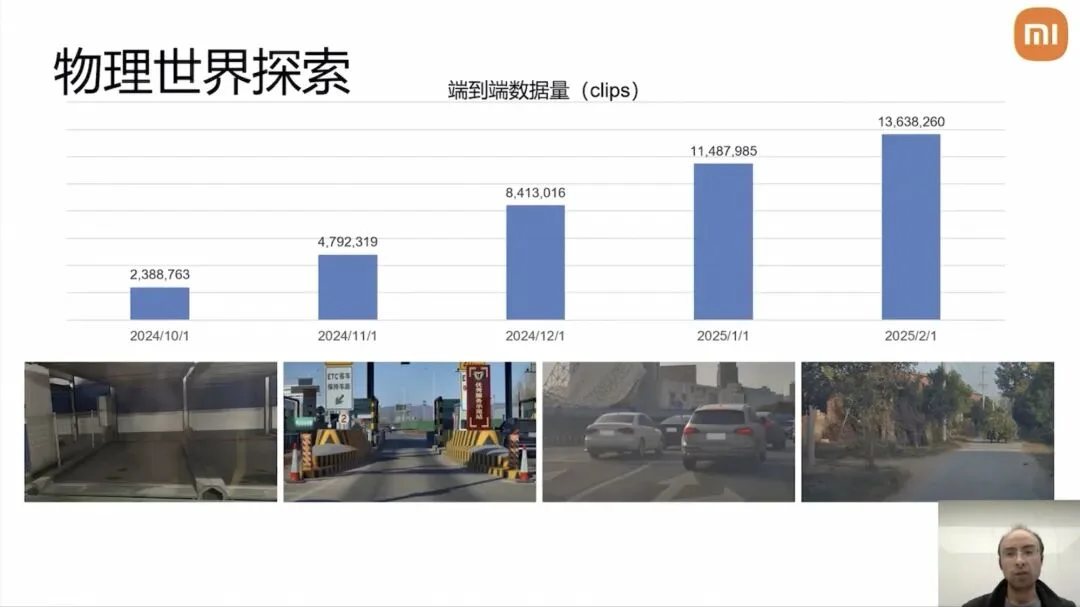
Yang Kuiyuan stated, 'This is also the volume of training data used for the next generation of end-to-end versions featuring tens of millions of clips.'
After accumulating extensive data on physical world exploration, it is necessary to model the physical world.
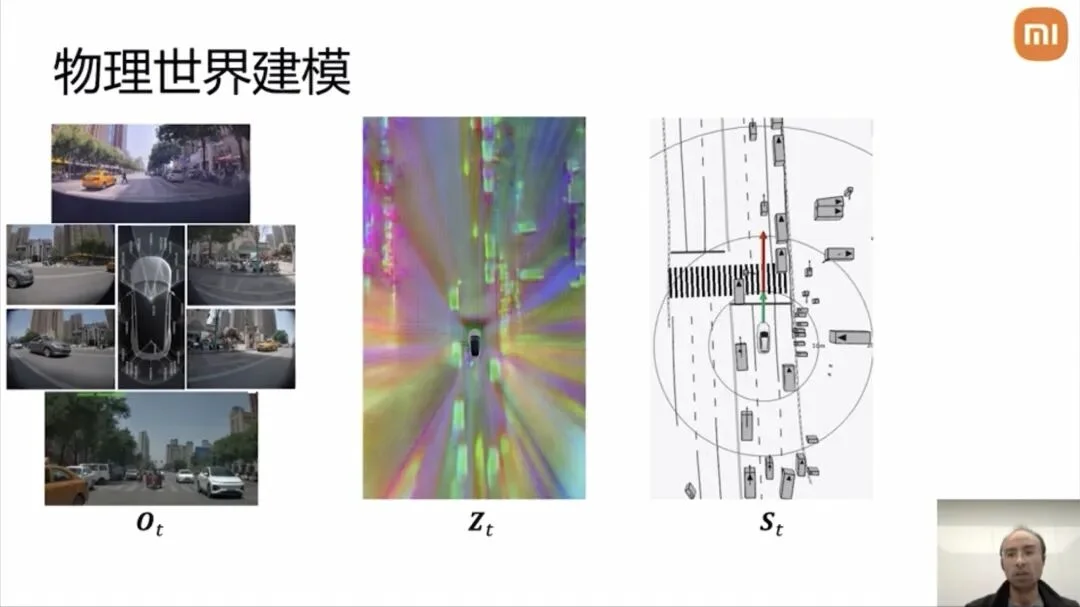
Yang Kuiyuan pointed out that physical world modeling consists of three layers: Ot (the raw data observation layer, which records the physical world via vehicle sensors), Zt (the implicit feature layer of deep neural networks, which forms an understanding of the current scene through data-driven methods), and St (the symbolic display layer, designed for human comprehension and operation).
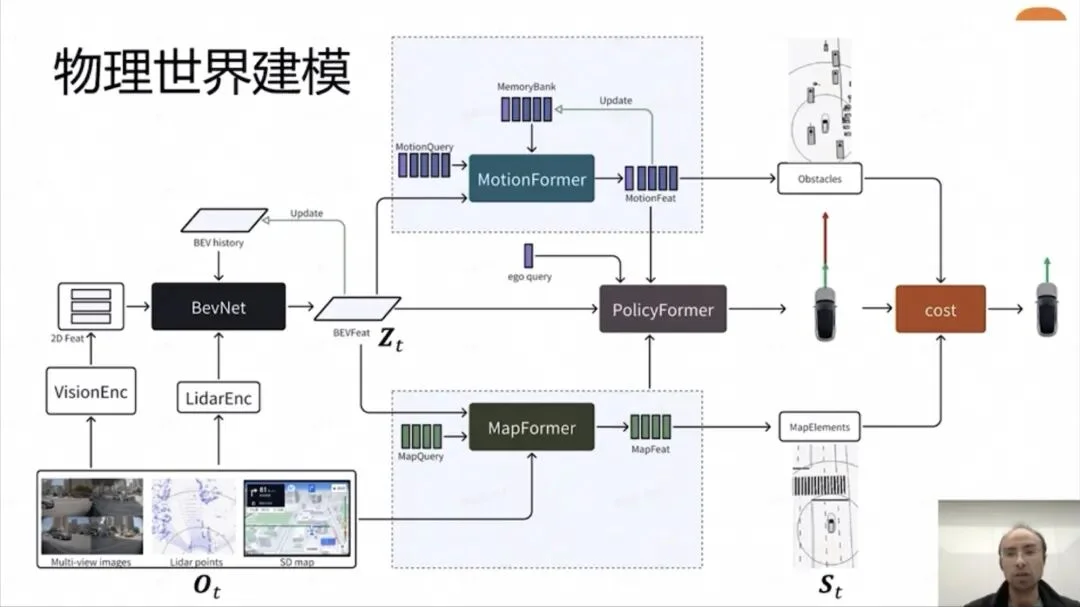
Corresponding to the input, hidden, and output layers of a neural network. The data observation layer requires images, LiDAR point clouds, and navigation information (Ot). Through a BEV encoding network, it obtains an implicit representation of the BEV (Zt). Different decoders then extract dynamic elements, static elements, and future trajectories. Various modeling methods are applied, and finally, manually modeled costs—including collision cost, lane deviation cost, and comfort cost—constrain the rationality of the trajectory.
There is also a temporal dimension. Modeling historical frames is straightforward, but future frames cannot be directly observed, making them the focus and difficulty of modeling.
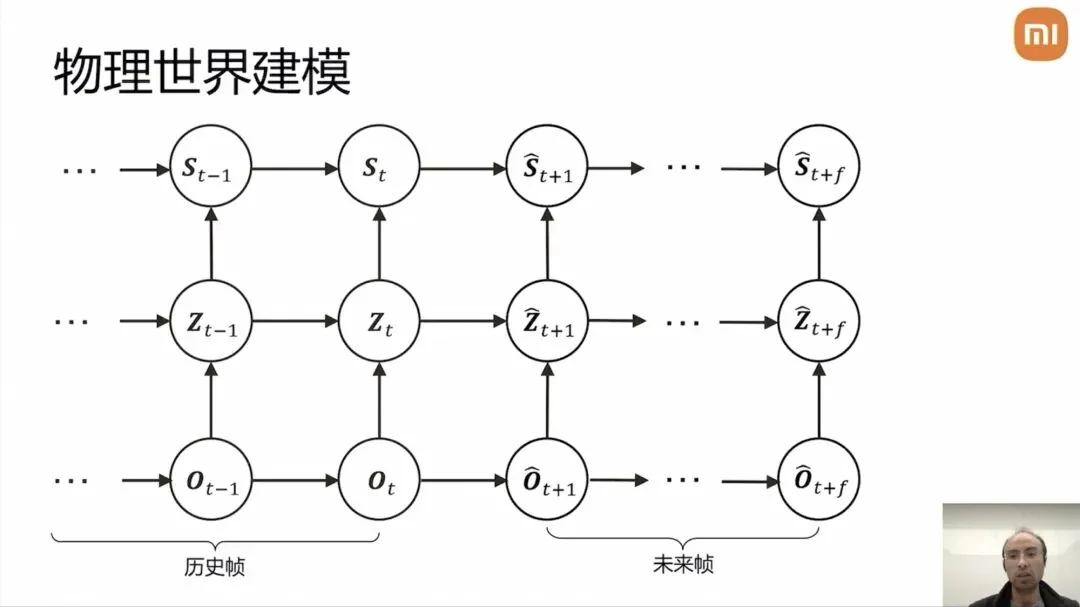
The data observation layer (Ot) offers various tools, such as 3DGS reconstruction technology, or OpenAI’s Sora and NVIDIA Cosmos. Generative large models can generate raw signals by directly fitting the probability distribution of raw data, supplemented by control conditions like historical frame images, implicit features, and explicit symbols. This generation process is relatively slow and is primarily used in cloud-based simulation of the physical world for closed-loop simulation evaluation and long-tail data generation. However, generative models are mainly used for recovering sensor detail signals, while their understanding capabilities are lacking. Of course, there are also implicit feature spaces that combine generation and understanding.
In the field of autonomous driving, there is no mature foundation model available to generate stable feature representations.
The explicit symbol layer allows humans to directly encode operations. Leveraging human existing modeling capabilities of the physical world, temporal modeling is completed through rule-based code combined with models. Examples include uniform acceleration and trajectory sampling.
Meanwhile, Xiaomi is attempting to perform temporal modeling by combining these three layers of representations. It can also extend the intermediate implicit features of deep neural networks along the temporal dimension into future frames, thereby forming a complete spatio-temporal neural network model driven entirely by data learning. When predicting changes in future frames, Xiaomi similarly processes dynamic and static elements separately.
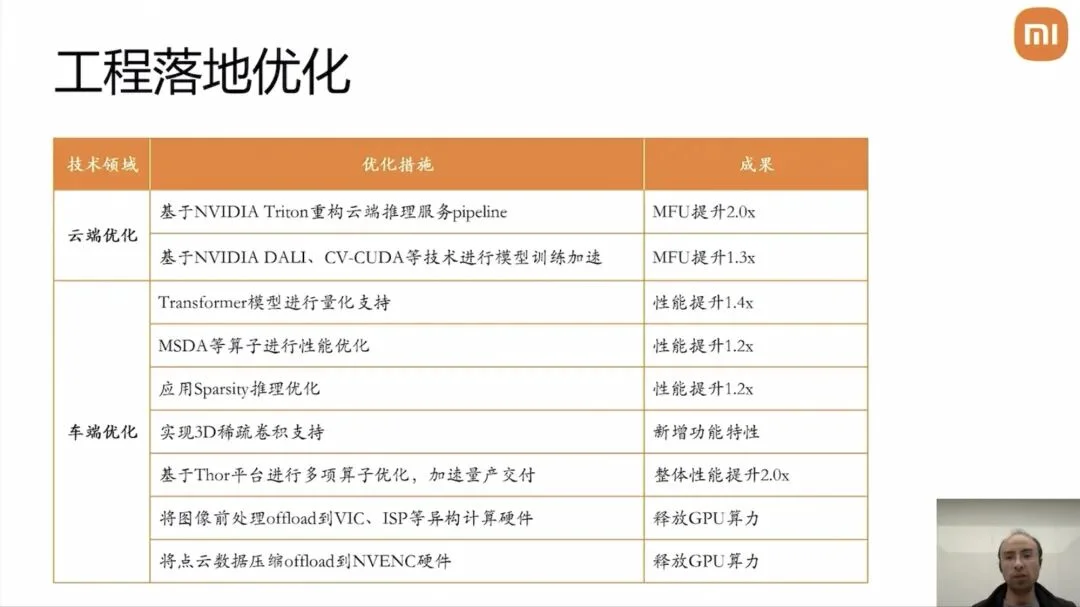
In terms of engineering implementation, Xiaomi and NVIDIA have carried out extensive optimization for deployment on both the cloud and vehicle sides.
03Yuanrongqixing CEO Zhou Guang: VLA to Enter Vehicles by Mid-Year
Zhou Guang first discussed Yuanrongqixing's progress in the field of intelligent driving during his speech.
Last year, Yuanrongqixing's intelligent driving solutions were implemented in two models (WEY Lanshan and smart #5), and more than ten intelligent driving models are expected to be launched this year. In the fourth quarter of 2024, Yuanrongqixing achieved a market share of 15.3% in China's urban intelligent driving sector.
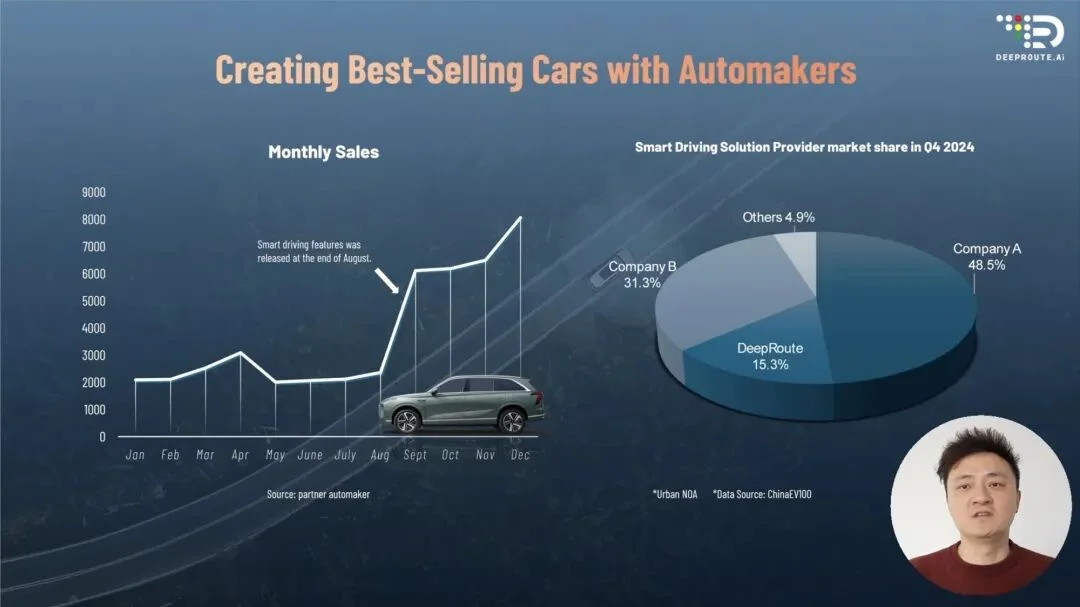
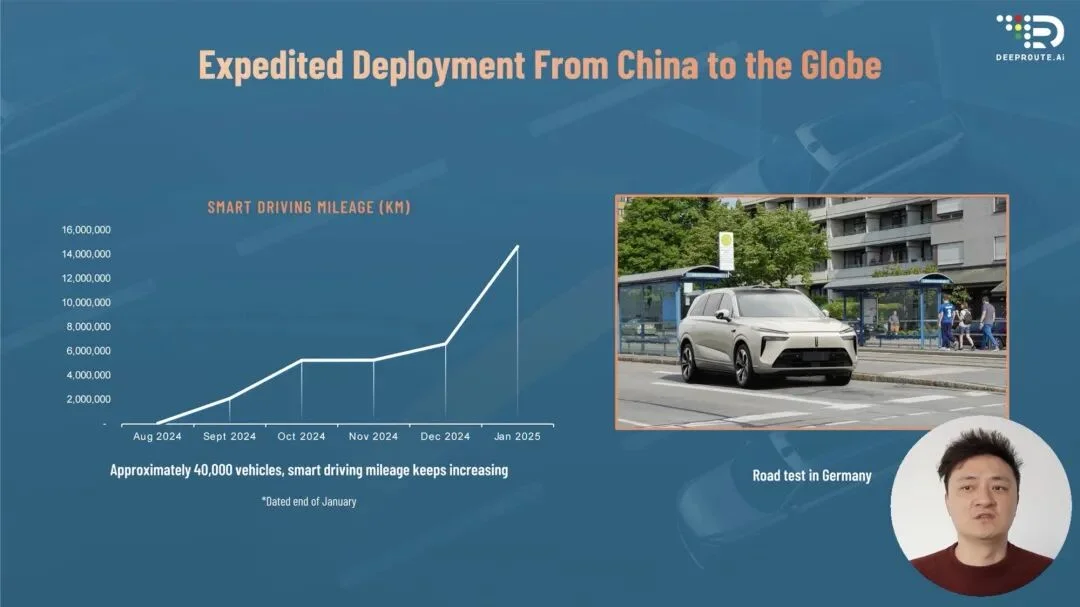
Currently, Yuanrongqixing's intelligent driving solution has been installed in over 40,000 vehicles. By the end of February, Yuanrongqixing's total intelligent driving mileage had reached 40 million kilometers. Zhou Guang expects that 200,000 units will enter the market this year, and 500,000 vehicles equipped with Yuanrongqixing's intelligent driving system will be on the road by 2026. Additionally, Yuanrongqixing has already conducted road tests in Germany.
As it rapidly expands its vehicle lineup, Yuanrongqixing is also developing its next-generation autonomous driving system. In September last year, the company began researching Vision-Language-Action (VLA) models to handle complex long-tail scenarios. According to its plan, Yuanrongqixing’s VLA model will be deployed across multiple car models by mid-year.
Zhou Guang presented the architecture of Yuanrongqixing’s VLA model:
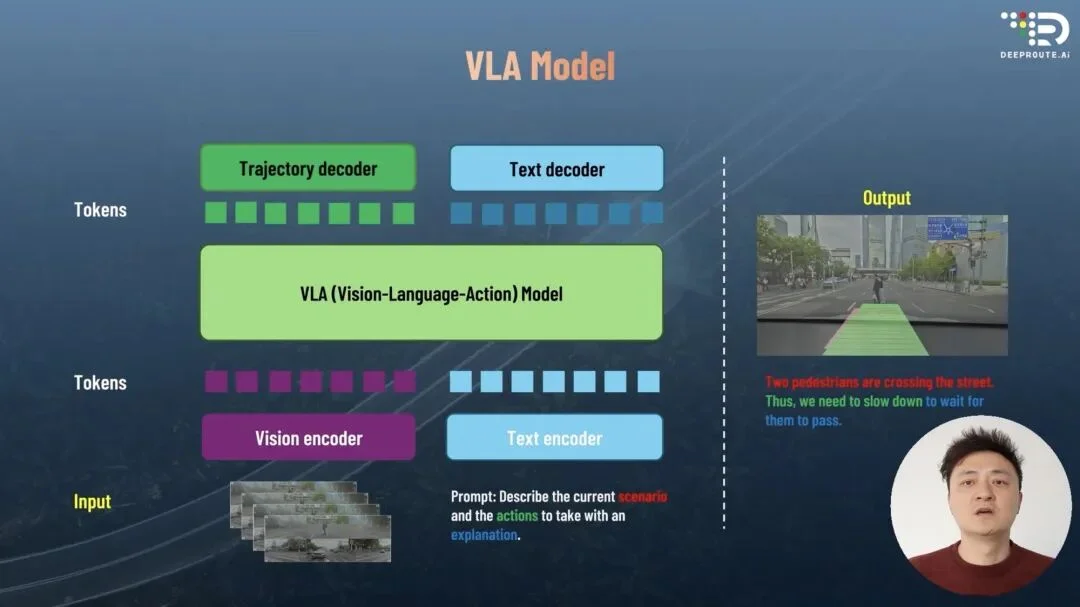
The input layer at the bottom includes image inputs from sensors such as cameras, as well as text inputs. These can be instruction inputs from occupants inside the vehicle, or information from the smart cockpit and navigation systems.
The next layer consists of a visual encoder and a text encoder. The visual encoder processes input images to extract features, while the text encoder captures semantics to understand textual instructions.
Above that lies the fusion of vision and text, which serves as the core of the VLA model, enabling it to simultaneously comprehend both image and text-based commands.
Finally, the model outputs driving behaviors along with textual responses.
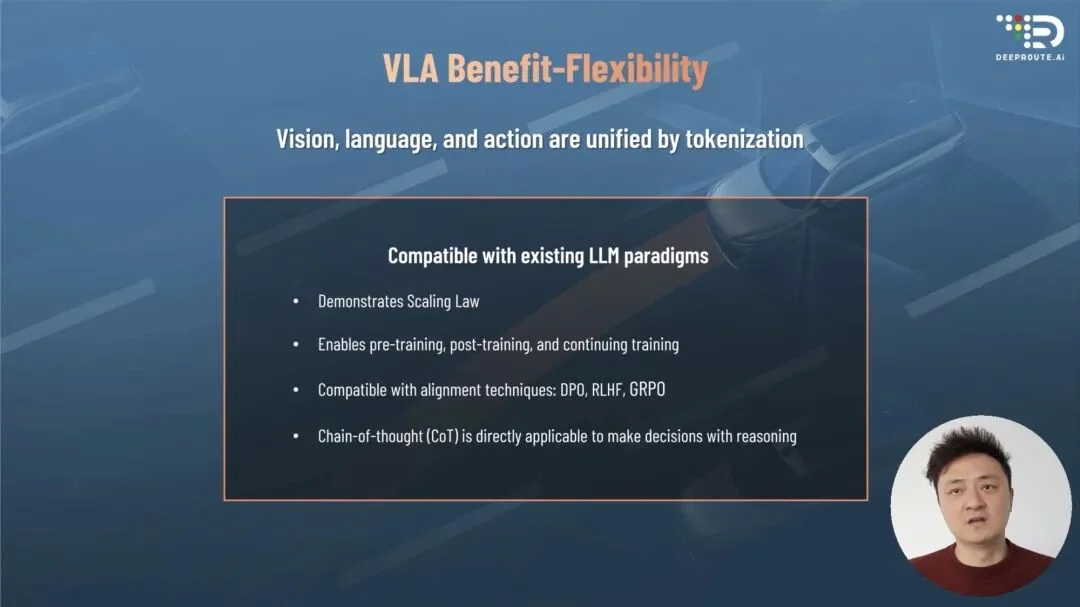
In practice, the VLA model offers significant advantages. One of its key strengths is compatibility with existing large language model paradigms. The VLA model adheres to Scaling Laws, meaning performance improves as model parameters increase. It also supports improvement through pre-training, post-training, and continuous training. Furthermore, it is compatible with techniques such as DPO, RLHF, and GRPO. Additionally, Chain-of-Thought reasoning can be directly applied to decision-making processes (such as navigating tidal lanes).
A second core advantage of VLA is that it makes autonomous driving more human-like. By injecting rule-based preferences into the model, VLA aligns with human-expected driving decisions. This means the VLA model can identify and prioritize safe driving behaviors, thereby reducing bad habits in the real world. Additionally, it can select the optimal path preferred by humans.
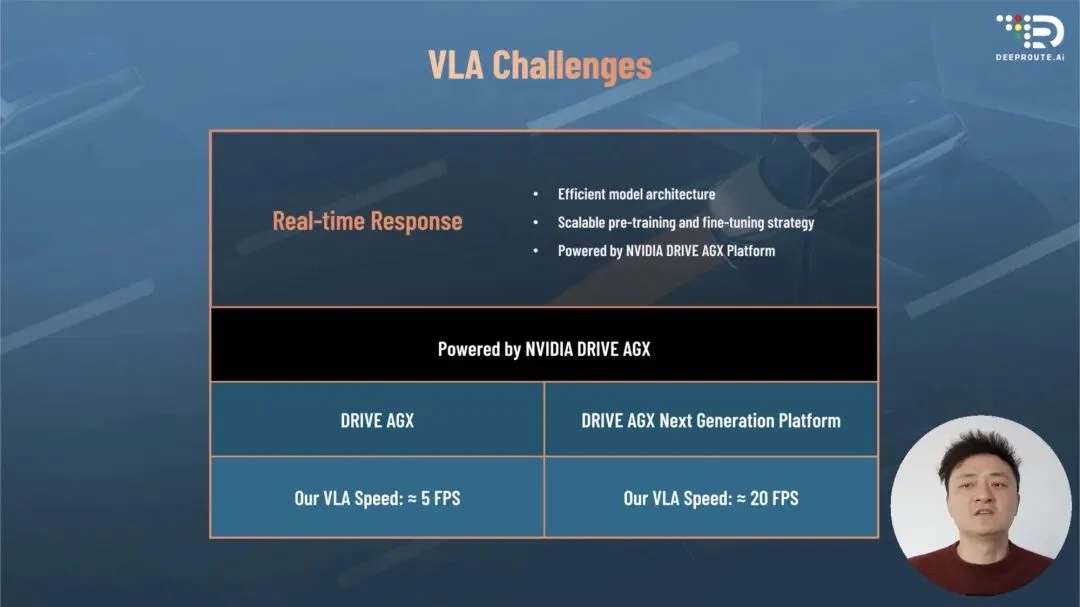
Zhou Guang also specifically addressed the challenges of VLA:
The most critical factor is the ability to respond in real time. On the current generation NVIDIA AGX platform, the processing speed of the current VLA product is approximately 5 FPS, while the next-generation platform will reach 20 FPS.
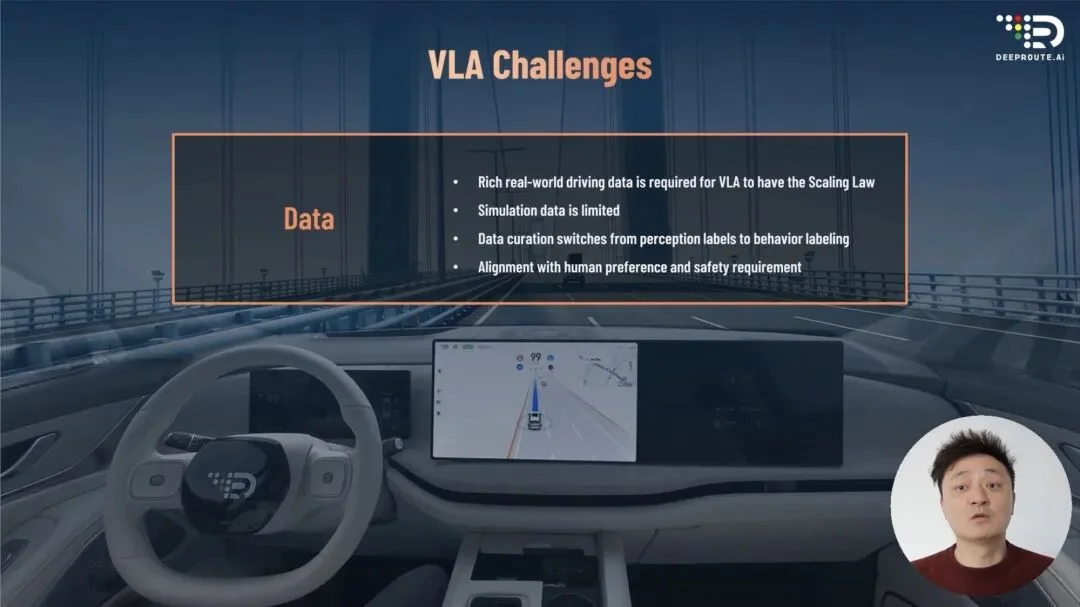
Data. Rich real-world data is required. VLA development prioritizes real-world data because the real world is far more complex than simulators.
After the release of the VLA model, Yuanrongqixing's next goal is to achieve Artificial General Intelligence on roads (RoadAGI).
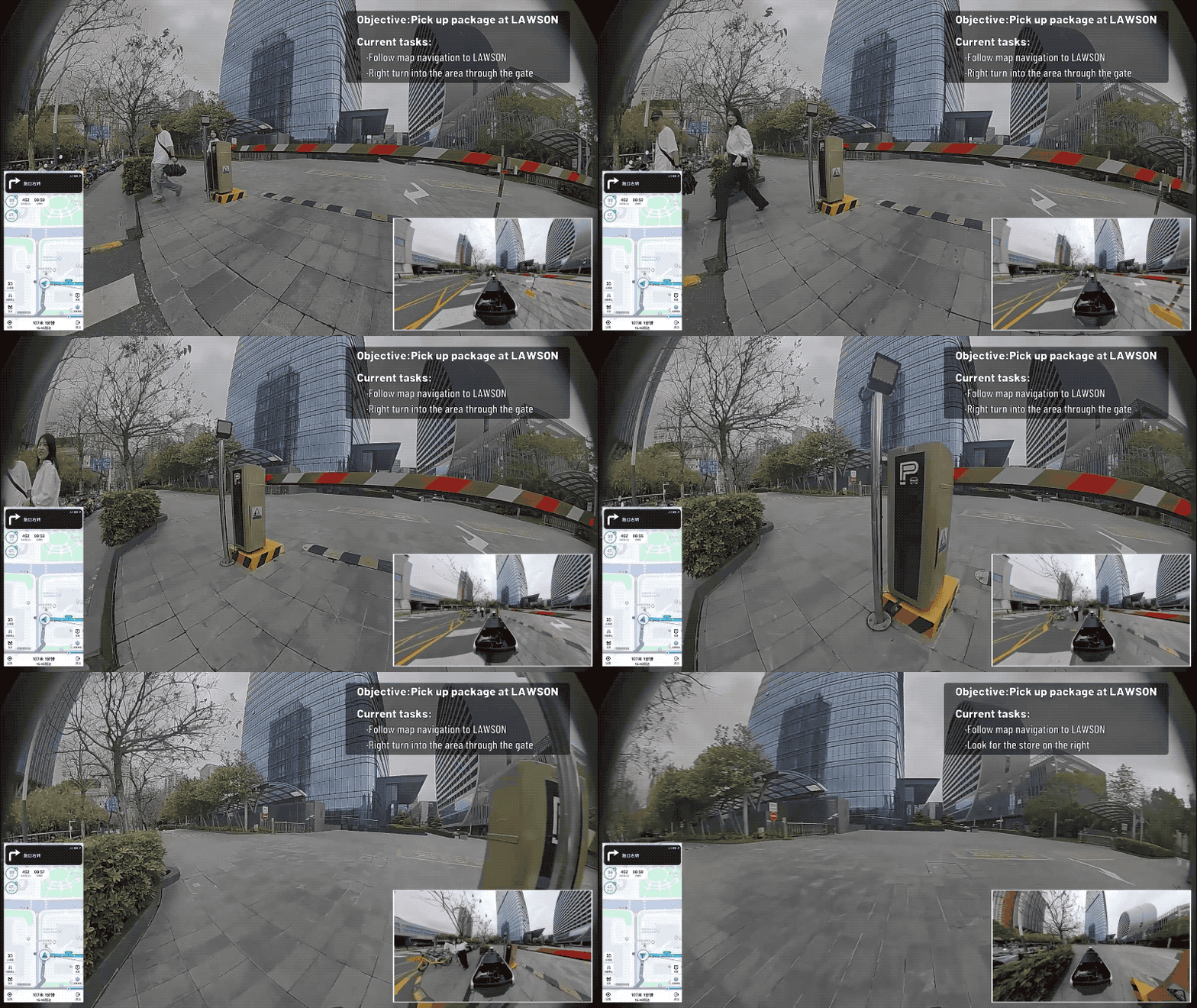
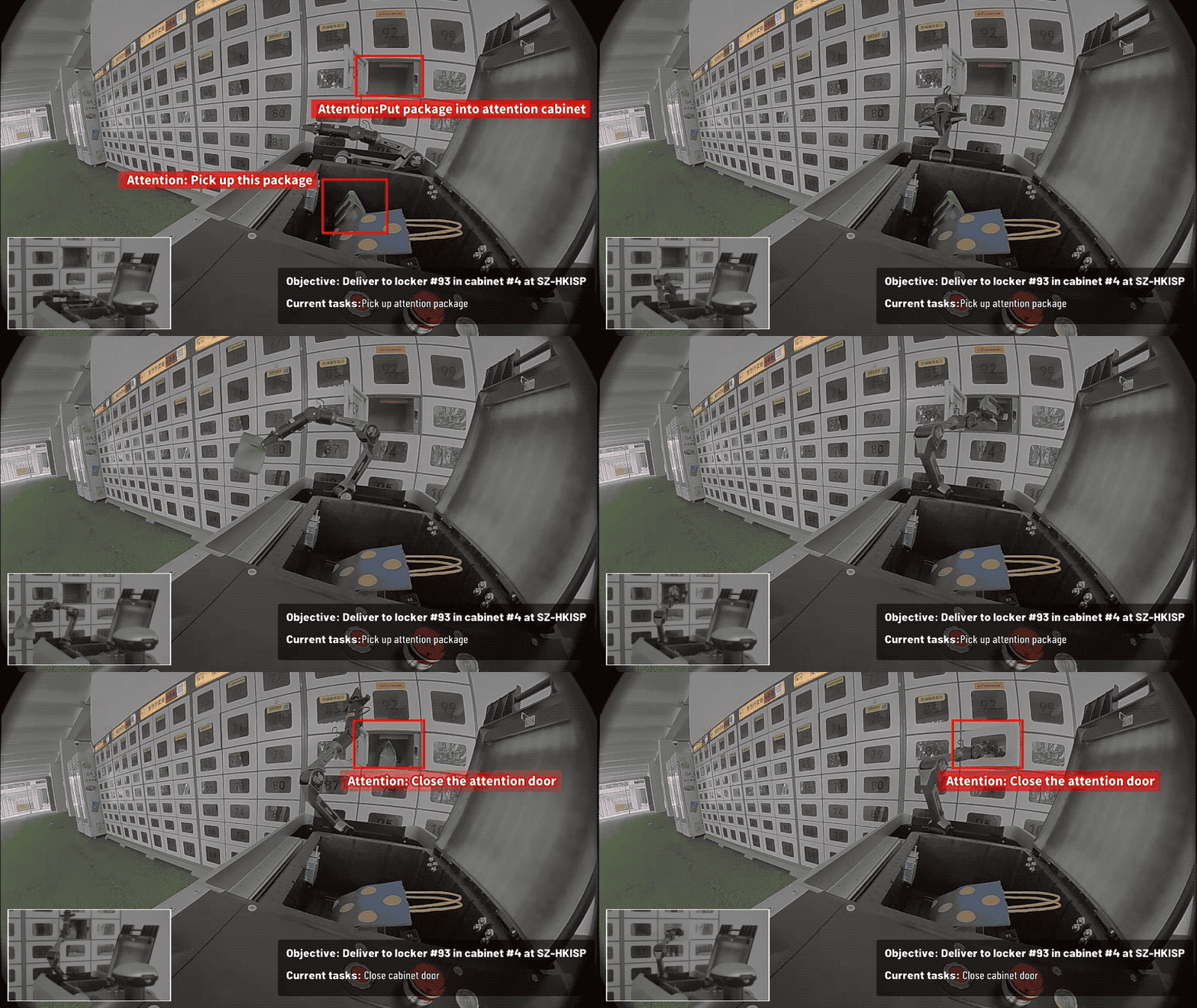
During his presentation, Zhou Guang played a video showing an unmanned delivery vehicle equipped with a robotic arm. The vehicle demonstrated point-to-point autonomous driving within a city, navigating from residential community to community and store to store like a food delivery courier. It maneuvered through narrow passages beside turnstiles, automatically identified roadside shops, and arrived at the storefront where the order was to be picked up. After the staff placed the food inside the vehicle, it proceeded along sidewalks and crossed streets to deliver the meal.
The first delivery destination was a smart locker. Here, the vehicle showcased its capabilities: a robotic arm hidden inside the delivery unit automatically retrieved the food and placed it into the locker before closing the compartment.
The second delivery went to an office building lobby. The vehicle navigated through the turnstile independently, used its robotic arm to press the elevator button, and finally left the food at the company reception desk.
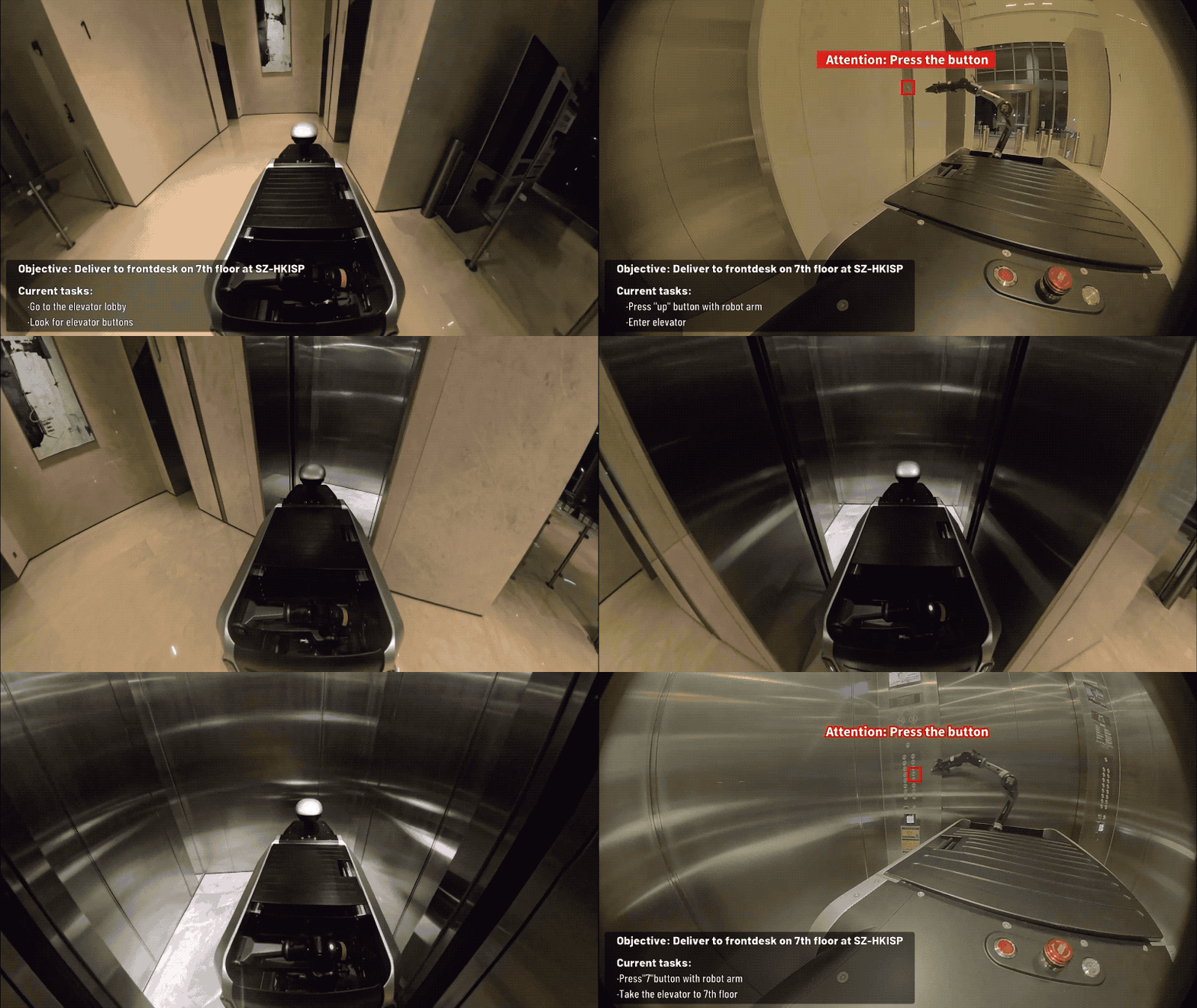
Zhou Guang did not disclose during the speech whether this unmanned delivery vehicle would enter mass production. However, such capabilities may reflect Yuanrongqixing’s vision for RoadAGI.
04SenseTime’s Xiaogang Wang: End-to-End Models to Enter Mass Production This Year
At NVIDIA GTC, SenseTime CEO Xiaogang Wang announced that UniAD has secured project nominations and will enter mass production this year.
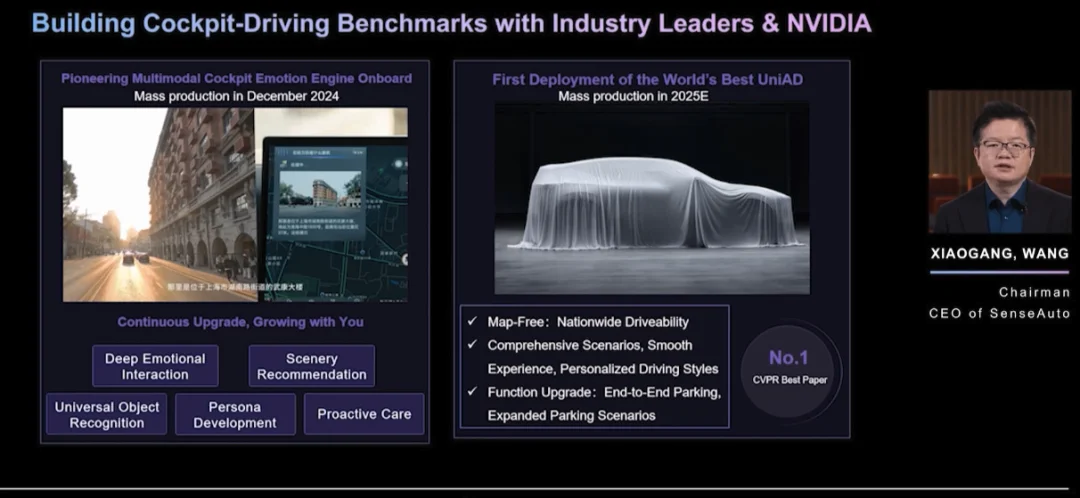
UniAD is an end-to-end autonomous driving solution developed by commercial SenseTime. SenseTime first proposed UniAD in 2022, and officially released it in November of last year.
Notably, UniAD is built on the MIG technology of the NVIDIA Drive AGX platform, supporting dual-system operation for both end-to-end and traditional rule-based solutions. Xiaogang Wang stated that SenseTime leverages the synergy of these two systems to design the first mass-production-grade, extremely safe end-to-end autonomous driving solution, ensuring vehicle safety in complex interaction scenarios.
Xiaogang Wang also introduced SenseTime’s world model, Kaiwu. He explained that Kaiwu can understand physical laws and traffic rules in the real world, generating highly controllable scenes with 'element-level' precision, fully meeting the high data quality requirements for end-to-end model training and simulation.
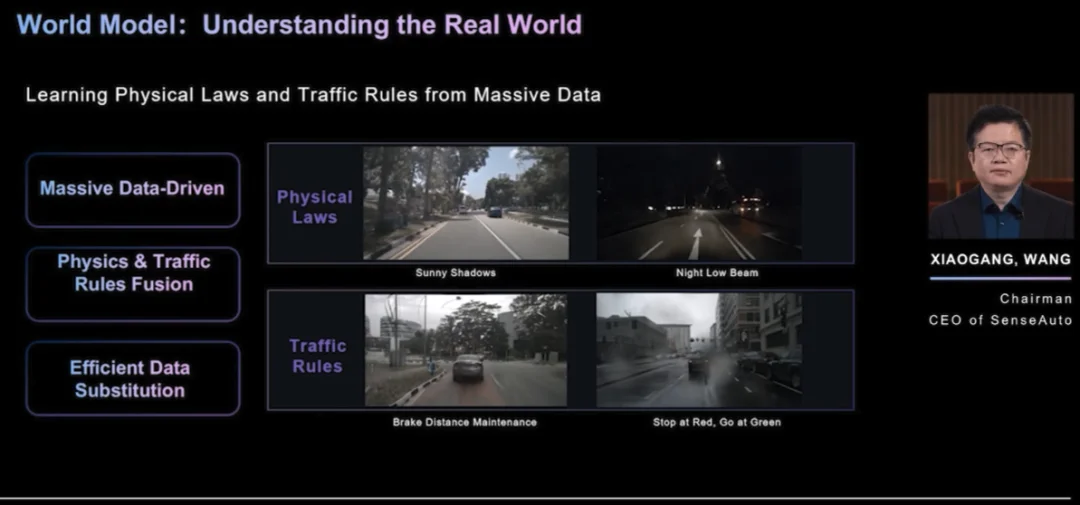
Kaiwu’s data production efficiency is also very high. According to Xiaogang Wang, based on 1 NVIDIA A100, Kaiwu’s average daily data production capacity is approximately equivalent to the data collection capability of 100 road-test vehicles.
Furthermore, through its world model, Kaiwu enables diverse and realistic scenario simulations and expert trajectory generation, ultimately forming a data closed-loop and self-iteration capability for end-to-end autonomous driving.
Regarding the comprehensive capabilities of the Kaiwu large model, Xiaogang Wang stated that it can significantly lower the data threshold for training end-to-end models and, after thoroughly exploring various possibilities, is expected to achieve driving performance far surpassing that of humans.
Beyond UniAD, Xiaogang Wang also introduced SenseTime’s Jueying research and development achievements in smart cockpits: A NEW MEMBER FOR U.
"A NEW MEMBER FOR U" is an emotional companion, released last November. According to Xiaogang Wang, "A NEW MEMBER FOR U" features high perceptual sensitivity and interactive enthusiasm. It continuously infers user needs, undergoes self-evolution through memory, remembers users' habits, and can even proactively remind children eating candy inside the vehicle to reduce their intake.
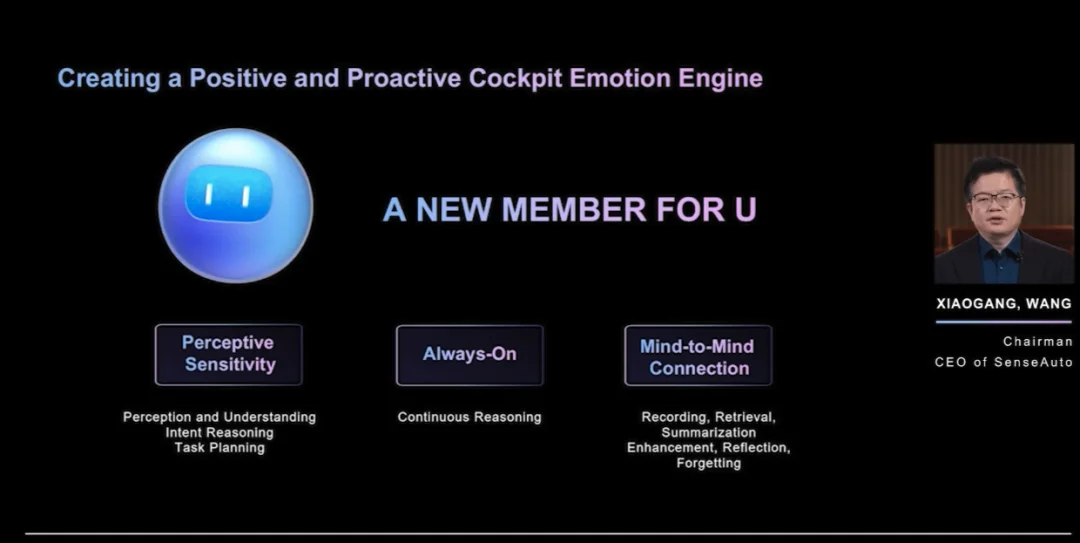
In terms of experience, "A NEW MEMBER FOR U" relies on an Always-on continuous operation framework, enabling zero-copy transmission and supporting continuous inference with a speed of up to 96 tokens per second, allowing for more real-time responses in complex scenarios.
Finally, Xiaogang Wang noted that by 2026, SenseTime Jueying will complete the mass production and deployment of cockpit-driving integration products across major automakers alongside NVIDIA, accelerating the entry of smart vehicles into the AGI era.
05Zhuoyu AI's Chen Xiaozhi: Making Intelligent Driving More Personalized
At NVIDIA GTC, Chen Xiaozhi, Chief Technology Officer of Zhuoyu AI, pointed out an issue: the driving skills learned by current end-to-end intelligent driving systems through data training represent an average style. However, in actual driving, everyone has their own unique style, meaning there is still a significant gap between end-to-end intelligent driving and real human driving.
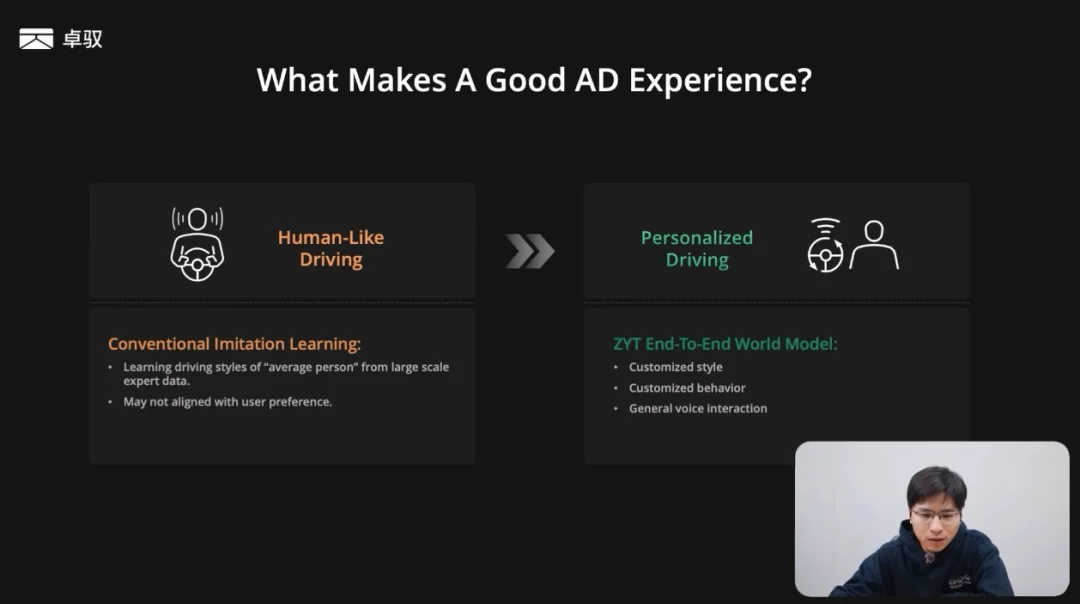
Therefore, Zhuoyu's goal is to move end-to-end autonomous driving beyond its average driving style, thereby satisfying users' personalized driving needs—whether aggressive or conservative. This personalization encompasses three aspects:
A personalized driving style requires the system to understand user driving behavior over a long-term horizon;
A personalized driving style refers to meeting specific user preferences in individual driving maneuvers;
Support for voice interaction.
Zhuoyu summarizes this technical solution as "Generative Driving Experience."
To achieve the "Generative Driving Experience," according to Chen Xiaozhi, Zhuoyu first completes pre-training and post-training for autonomous driving based on world models. Pre-training lays the foundation for core driving capabilities with weekly iterations, while post-training addresses long-tail issues with daily iterations.
Next comes end-to-end prompt reasoning: users can provide voice prompts to clarify their intentions, enabling the system to infer driving trajectories that align with those intentions.
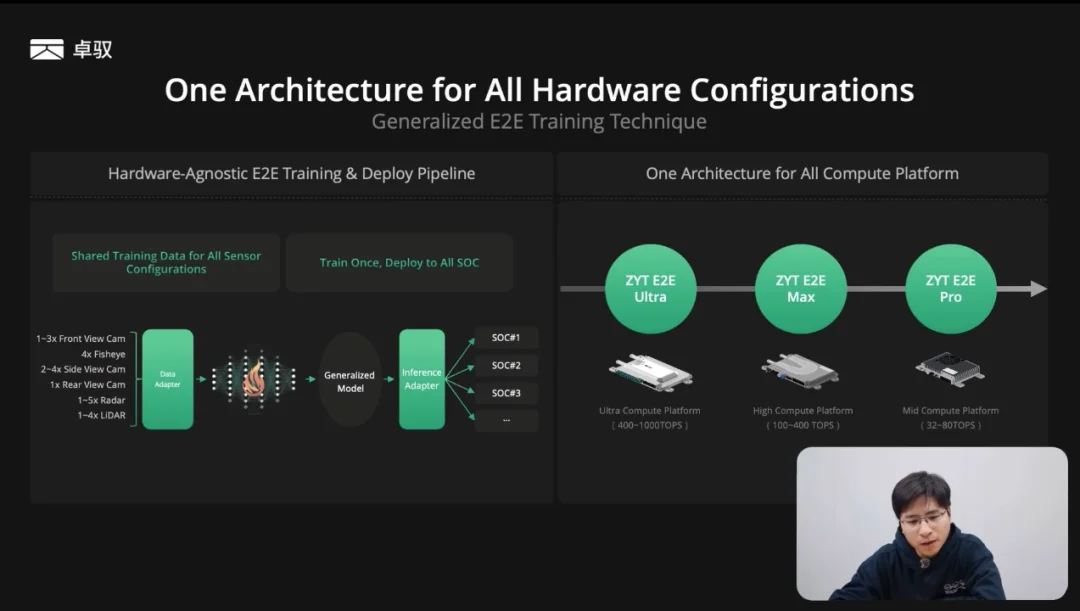
Additionally, Chen Xiaozhi noted that the 'Generative Driving Experience' is compatible with any hardware architecture and exhibits low dependency on prior maps.
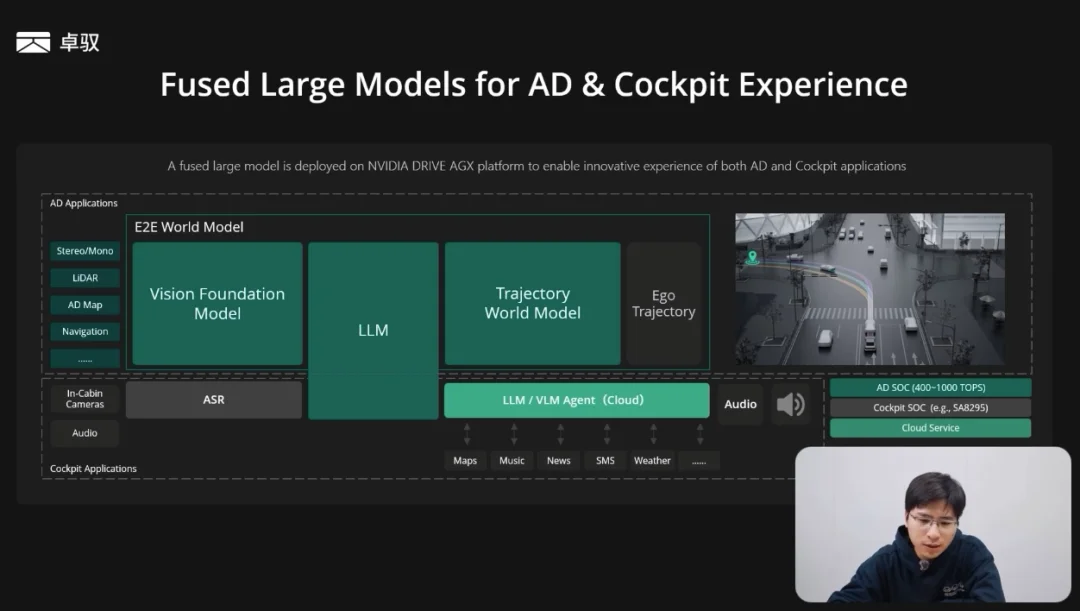
According to official information, Zhuoyu's 'Generative Driving Experience' is built on the NVIDIA DRIVE AGX platform. Zhuoyu has also developed an integrated cockpit-driving large model based on this platform. Chen Xiaozhi explained that, in simple terms, this means the driving domain and the cockpit domain share a single Large Language Model (LLM).
When asked about the timeline for the 'Generative Driving Experience,' Chen Xiaozhi stated that Zhuoyu plans to mass-produce it within this year.
06Conclusion
The NVIDIA GTC conference has witnessed a collective surge in China's autonomous driving sector. This year, Vision-Language-Action (VLA) models and end-to-end technology represent the core pathways toward more capable autonomous driving systems. Manufacturers such as Li Auto and Yuanrongqixing have been among the first to introduce VLA architectures, integrating language commands with driving decisions to transform vehicles into 'four-wheeled robots' capable of understanding human intent.
In this technological revolution, NVIDIA's computing infrastructure and toolchain have served as key catalysts, helping automakers bridge the gap between perception, decision-making, and execution. As VLA systems come to vehicles and end-to-end solutions achieve large-scale mass production, the 2025 autonomous driving competition will focus on scenario generalization capabilities and personalized user experiences. As automakers and technology companies collaborate to push the boundaries of innovation, autonomous driving is evolving from functional modules toward Artificial General Intelligence (AGI), potentially redefining the symbiotic relationship between humans and machines.
Written by: James Edited by: Daji