


NIO Reports Record 2024 Revenue but Wider Losses; Founder Confident in Q4 Profitability
In the afternoon Beijing time, NIO released its full-year 2024 financial results. The data showed a mix of positives and negatives, with key highlights as follows:
Quarterly and annual revenues hit record highs. Full-year revenue reached RMB 65.732 billion, an increase of over RMB 10 billion compared to 2023.
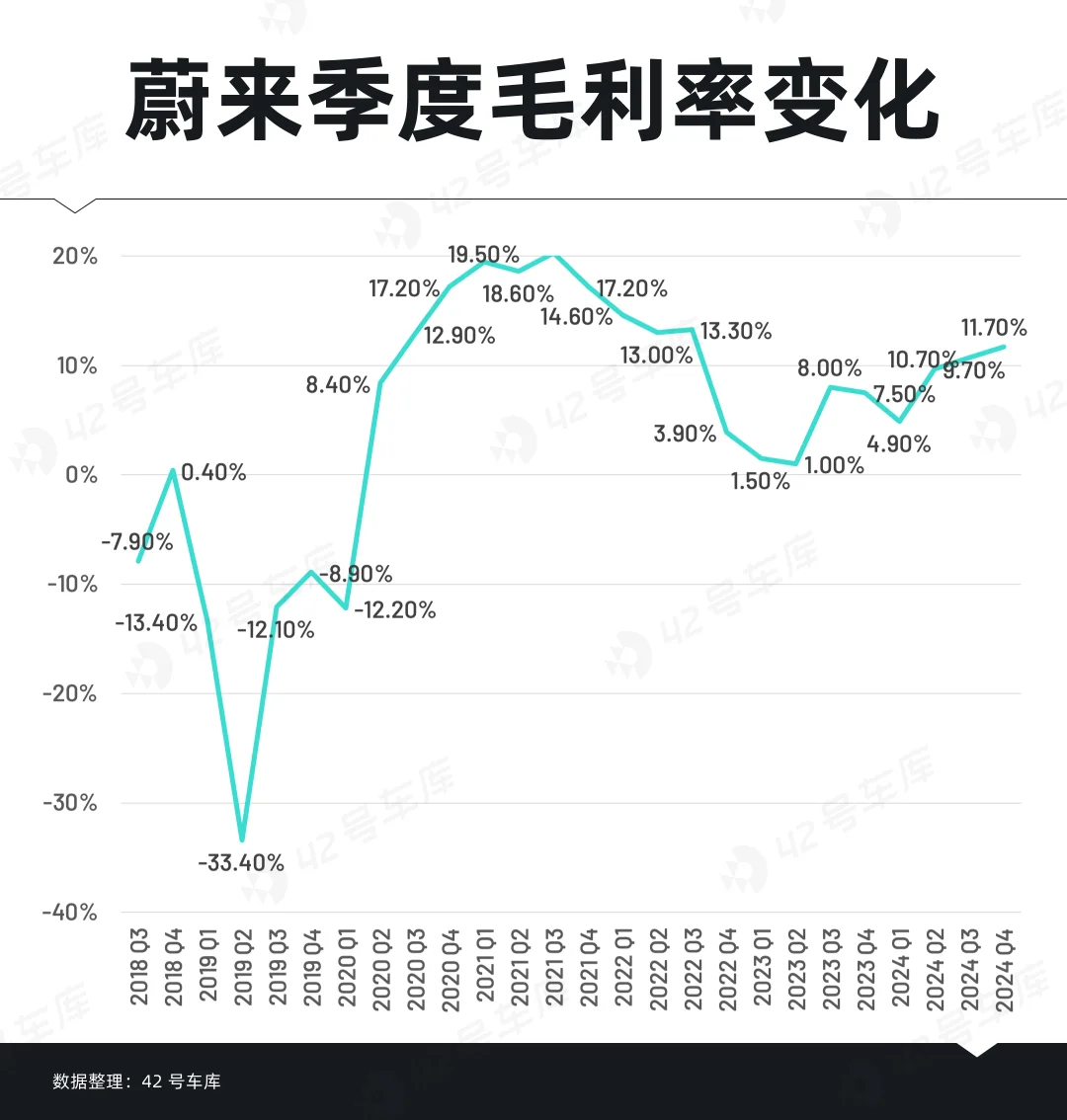
Gross margins continued to improve. The fourth-quarter gross margin was 11.7%, with vehicle gross margin at 13.1%. For the full year, the gross margin was 9.9%, a significant increase from 5.5% in 2023, while the full-year vehicle gross margin stood at 12.3%.
Fourth-quarter deliveries totaled 72,689 units. Full-year new vehicle deliveries reached 222,000 units, a 38.7% increase compared to 160,000 units in 2023.
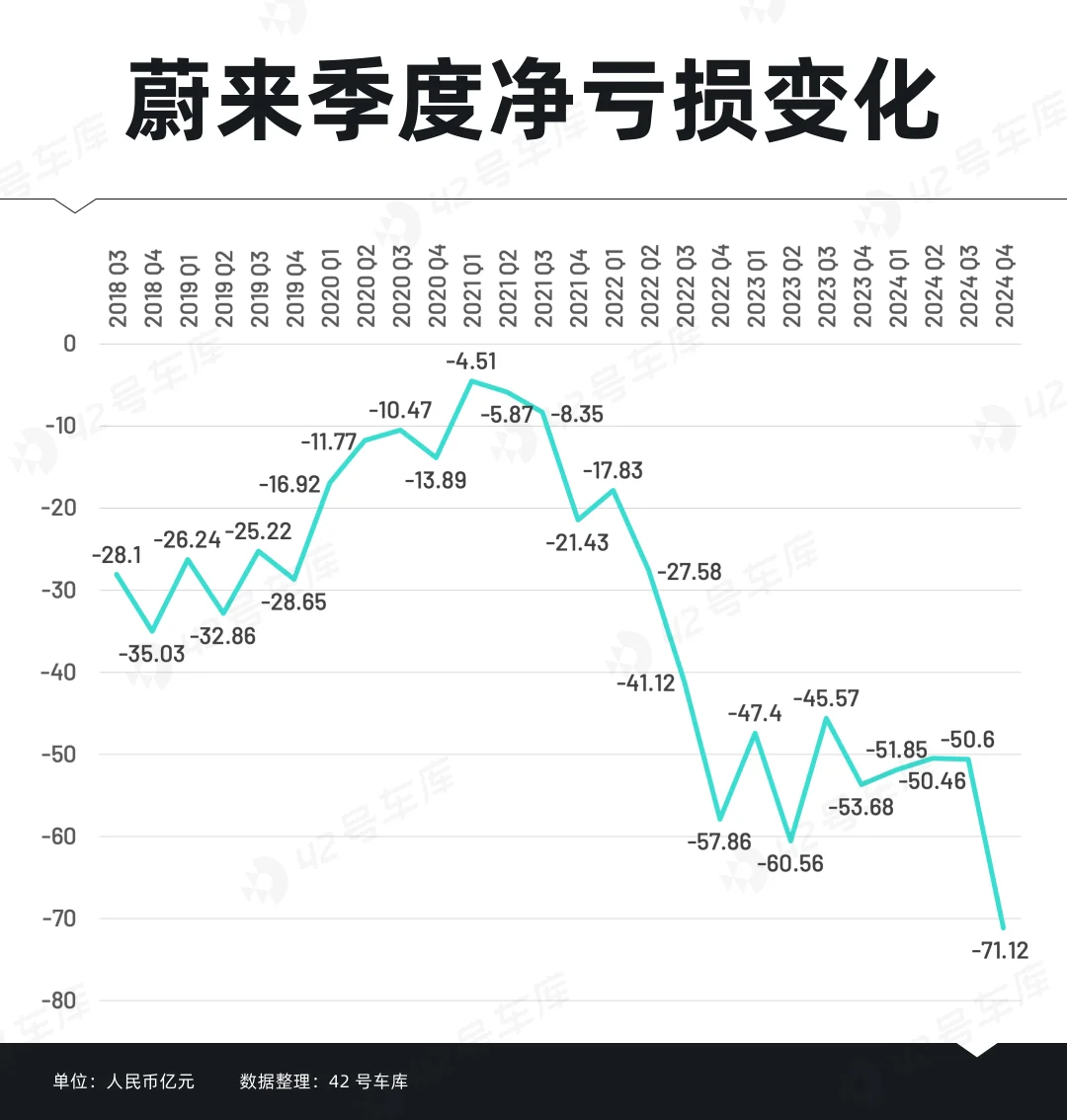
Losses widened. The fourth quarter of 2024 saw a loss of RMB 7.112 billion, bringing the full-year loss to RMB 22.402 billion.
R&D investment in the fourth quarter of 2024 was RMB 3.636 billion, and total R&D expenses for the full year of 2024 amounted to RMB 13.037 billion.
NIO expects first-quarter deliveries to range between 41,000 and 43,000 units, with revenue projected between RMB 12.367 billion and RMB 12.859 billion.
NIO's World Model Architecture (NWM) has achieved a breakthrough, with world model navigation launching in early April.
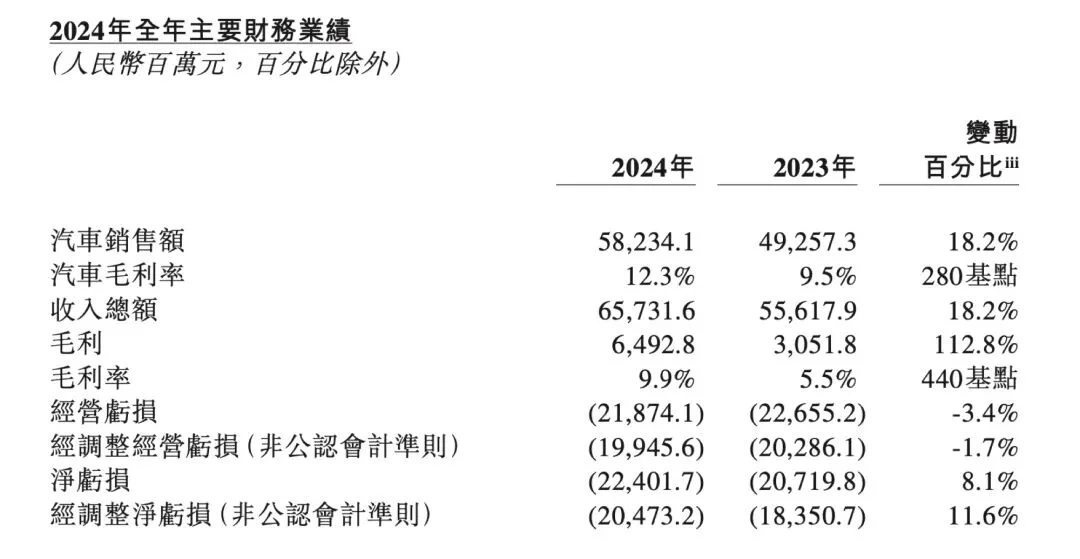
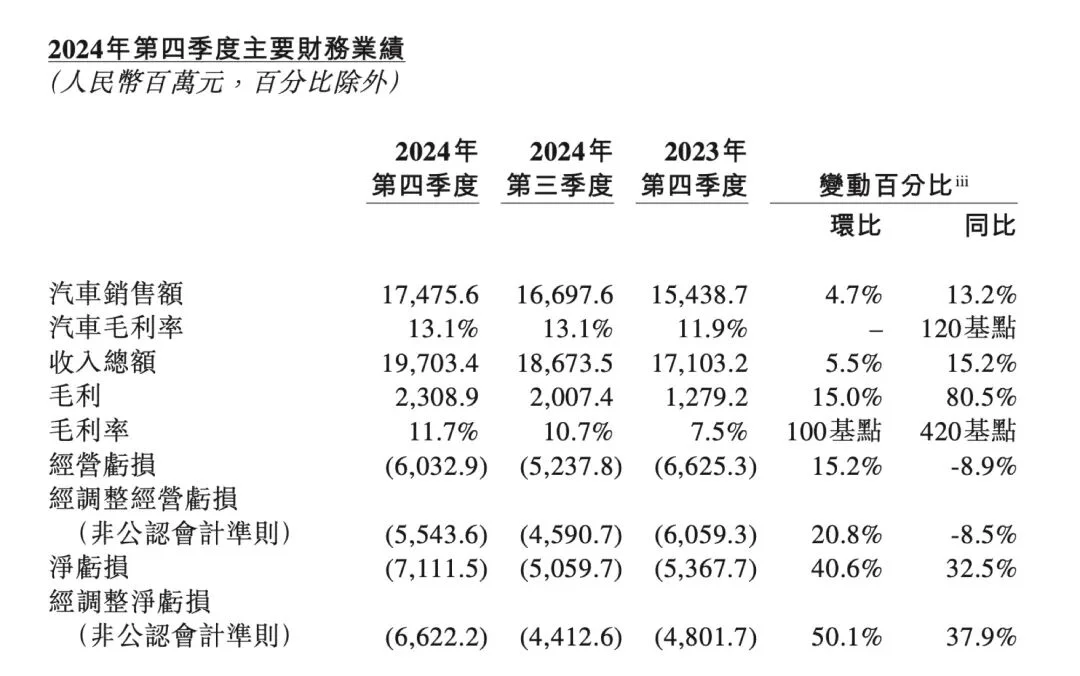
An analysis of NIO's Q4 and full-year 2024 financial reports reveals a key conclusion: revenue hit record highs, gross margins are improving, but losses continue to mount.
During the earnings call following the release of the financial report, NIO founder and chairman William Li and CFO Qu Yu answered investors' questions regarding new models, profitability, and brand strategy. Li expressed strong confidence that the company will achieve profitability in Q4 this year, citing the launch of nine new models and a series of cost-reduction measures that will continue to improve profitability.
CFO Qu Yu also noted that NIO currently has diverse financing channels and will arrange financing plans based on business development needs and market dynamics.
After the US stock market opened tonight, NIO's share price had already fallen 5.94%, with a market capitalization of USD 9.292 billion.
01Record Revenue, Continuous Margin Improvement
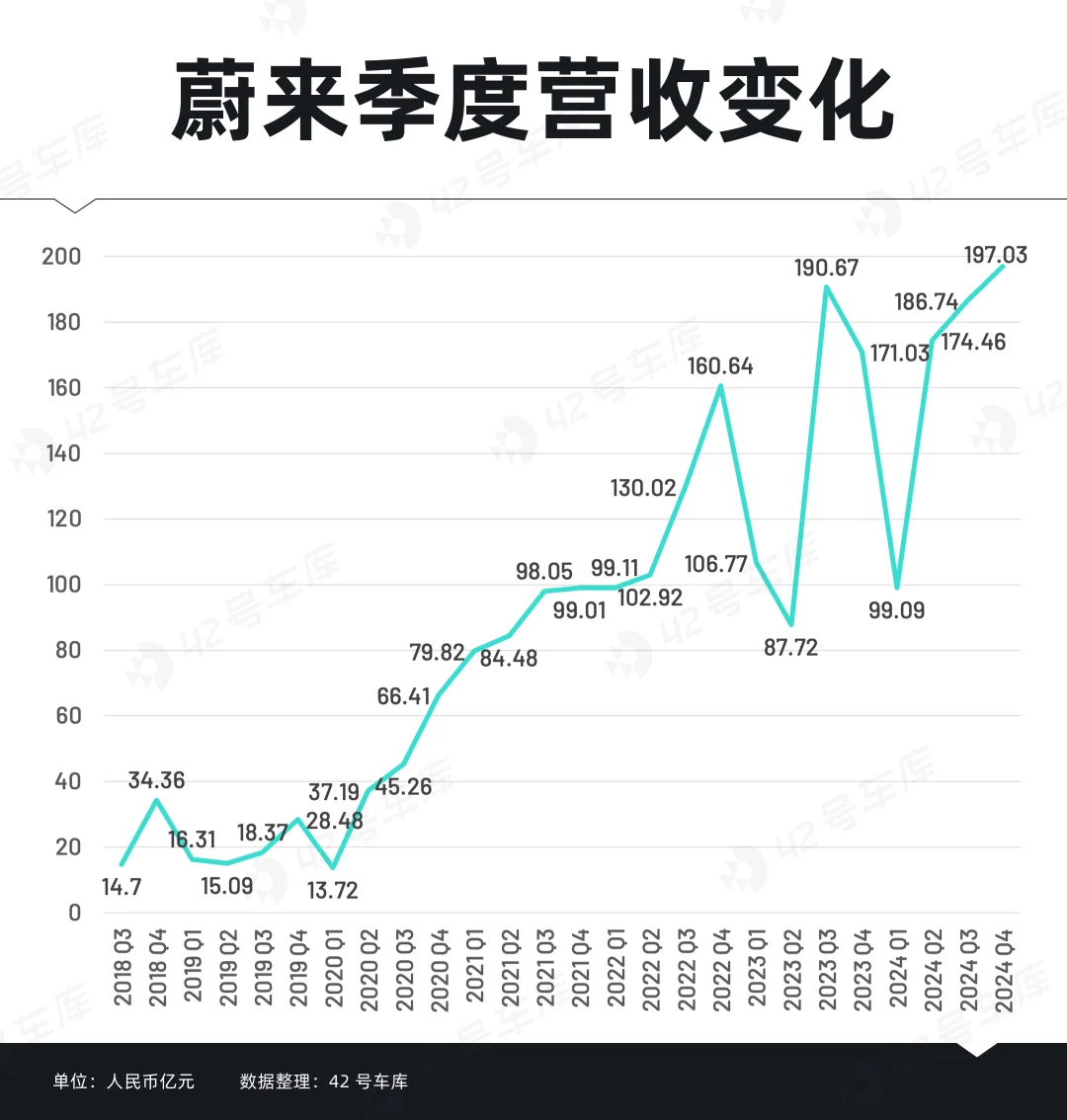
First, let's look at the most critical quarterly revenue figures. In the fourth quarter of 2024, NIO reported revenue of RMB 19.703 billion, a year-over-year increase of 15.2% and a quarter-over-quarter increase of 5.5%, marking the highest revenue quarter in the company's history. For the full year of 2024, NIO's total revenue reached RMB 65.732 billion, an increase of over RMB 10 billion compared to RMB 55.618 billion in 2023, setting a new all-time high for annual revenue.
Specifically, in the fourth quarter of 2024, NIO's automotive business revenue reached RMB 17.476 billion, a year-over-year increase of 13.2% and a quarter-over-quarter increase of 4.7%. Including the first three quarters of 2024, NIO's total automotive revenue for 2024 was RMB 58.234 billion, an 18.2% increase compared to 2023.
Next are the gross profit figures, which are key indicators of corporate profitability. NIO recorded a gross profit of RMB 2.309 billion in Q4 2024, a significant year-over-year jump of 80.5% and a quarter-over-quarter rise of 15%. The gross margin reached 11.7%, expanding by 420 basis points year-over-year and 100 basis points quarter-over-quarter. The core automotive business achieved a gross margin of 13.1%, up 120 basis points year-over-year with no change quarter-over-quarter.
Based on full-year 2024 data, NIO's gross profit was RMB 6.493 billion, an increase of 112.8% compared to 2023. The annual gross margin was 9.9%, up by 440 basis points from 2023, showing a significant improvement relative to the low point in 2023. NIO's core automotive business gross margin for the year was 12.3%, also an improvement from 9.5% in 2023.
In terms of delivery volumes, NIO set both quarterly and annual records. In Q4 2024, NIO delivered 72,689 vehicles, breaking the quarterly record set in Q3 2024, with a year-over-year increase of 45.2% and a quarter-over-quarter growth of 17.5%. By brand, the NIO brand delivered 52,760 units, while the ONVO brand delivered 19,929 units. Cumulative deliveries for the full year 2024 reached 222,000 new vehicles, a 38.7% increase from the 160,000 units delivered in 2023.
However, NIO's losses widened in the fourth quarter of 2024, reaching RMB 7.112 billion, an increase of 32.5% year-on-year and 40.6% quarter-on-quarter. Adjusted net loss (non-GAAP) was RMB 6.622 billion, up 37.9% year-on-year and 50.1% quarter-on-quarter. Looking at full-year data, NIO's loss for 2024 was RMB 22.402 billion (adjusted net loss of RMB 20.473 billion), widening further compared to RMB 20.721 billion in 2023.
Both quarterly and annual figures mark NIO’s highest losses since its listing on the New York Stock Exchange.
In the fourth quarter of 2024, NIO’s R&D expenditure was RMB 3.636 billion, down 8.5% year-over-year but up 9.6% quarter-over-quarter. The quarter-over-quarter decline in R&D costs was driven by two main factors: a reduction in personnel costs for R&D functions and lower design and development expenses across various stages of new product and technology development. For the full year of 2024, NIO’s R&D expenses totaled RMB 13.037 billion, a decrease of 2.9% compared to 2023.
As of December 31, 2024, NIO held RMB 41.9 billion in cash and cash equivalents, restricted cash, short-term investments, and long-term time deposits, maintaining a relatively stable position.
Looking ahead to the first quarter of 2025, NIO expects deliveries to range between 41,000 and 43,000 units, with revenue projected between RMB 12.367 billion and RMB 12.859 billion. Deliveries in January and February were 13,863 and 13,192 units, respectively, bringing the year-to-date total to 27,055 units. This implies that March deliveries should exceed 13,945 units.
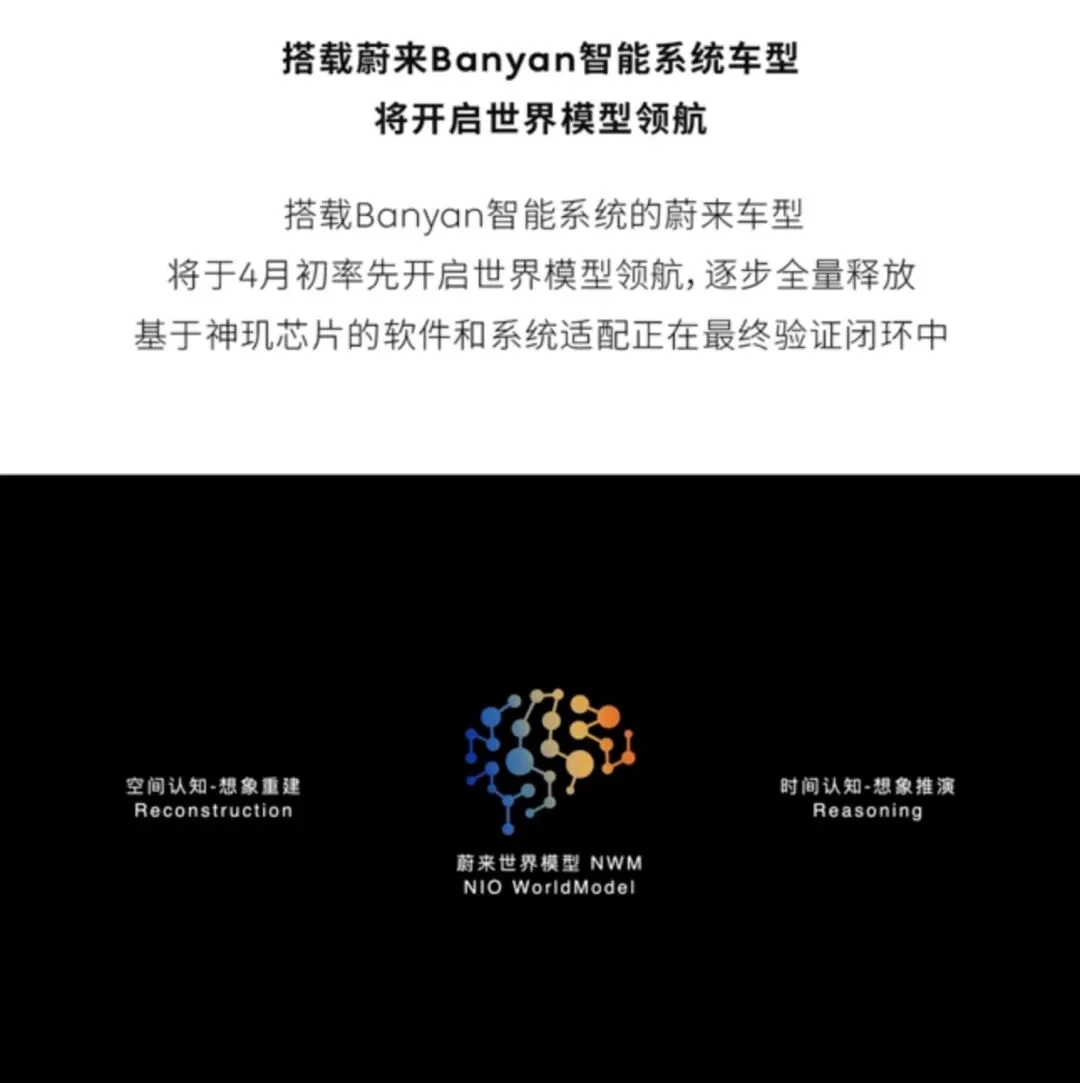
Additionally, the NIO World Model (NWM) architecture, previously announced, has achieved breakthrough progress. NIO vehicles equipped with the Banyan Intelligent System will begin rolling out world model navigation starting in early April, with gradual full-scale release. Meanwhile, software and system adaptation based on the Shenji Chip are undergoing final verification in a closed-loop process.
02William Li: Confident About Q4 Profitability
Following the release of its financial report, NIO held a conference call to discuss its full-year 2024 results at 8 p.m. tonight. The call featured William Li, founder and chairman of NIO, and Qu Yu, CFO of NIO.
NIO plans to launch nine new vehicles this year.
The NIO brand will introduce six new models. Among them, the ET9 is set to begin deliveries next week. In the second quarter of this year, four new models—the 2025 ET5, ET5T, ES6, and EC6—will be launched, featuring upgrades to their exterior design, user experience, and autonomous driving chips. Additionally, NIO will unveil another new model in the second half of the year.
The ONVO brand has two new models scheduled: the second model, L90, will be released in the second quarter and delivered in the third quarter; the third model for the ONVO brand will be unveiled in the fourth quarter.
The first model from the Firefly brand will begin deliveries in April.
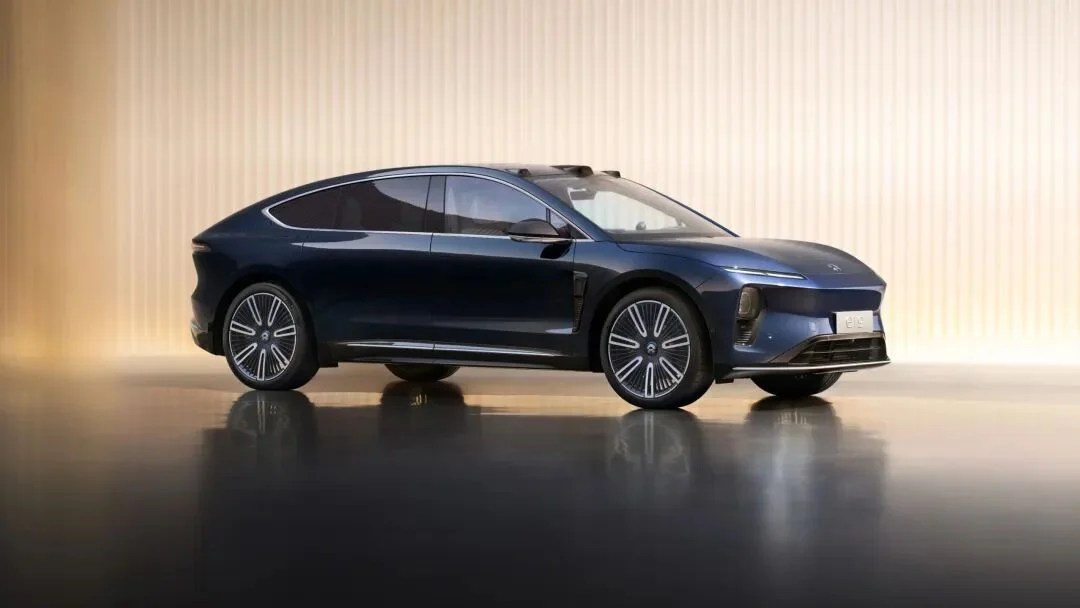
For NIO, this year marks a significant product expansion. However, amidst the extensive lineup of new vehicles, investors are primarily focused on NIO's profitability.
Addressing this concern right from the first question of the opening remarks, William Li stated: 'We are confident in achieving our profitability target for Q4.'
Qu Yu, NIO’s CFO, revealed the company’s financing status: NIO currently has diverse financing channels and will arrange financing plans based on business development and market dynamics.
Meanwhile, R&D investment remains at RMB 3 billion per quarter this year, but will focus on projects with high returns on investment.
Achieving profitability requires significant cost reduction. Qu Yu noted that NIO has implemented a series of cost-cutting measures since last year, including increasing parts commonality. For example, the seat frame platform is shared between NIO and ONVO, reducing costs by 10%. Standardizing smart hardware interfaces lowered costs from RMB 2,000 to RMB 1,000 per vehicle. Additionally, using the Shenji chip reduces costs by RMB 10,000 compared to four Orin chips.
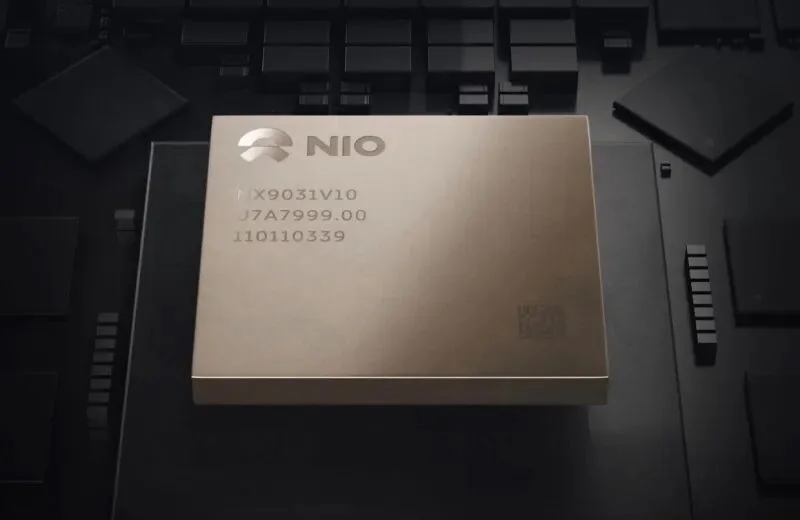
Due to the significant cost reduction in self-developed chips, William Li stated that NIO currently has no plans to use NVIDIA Thor chips.
New models launching this year, including NIO’s upcoming second-half releases and two new ONVO vehicles, will positively contribute to gross margins. Qu Yu added that NIO targets profitability in Q4, aiming for a 20% gross margin for the NIO brand and 15% for ONVO.
Regarding sales, William Li projected a 36%-43% growth in Q1 volume, with an annual target to double sales.
William Li addressed why ONVO’s sales have not met expectations. A key reason is brand awareness, which is significantly lower than competitors—approximately one-third of NIO’s brand strength. After existing orders are fulfilled, new order pressure increases. During the Spring Festival, ONVO increased marketing investments, including ads at high-speed rail stations and residential elevators, along with more active social media campaigns, steadily enhancing brand influence.
Second, the expansion of ONVO’s sales store network is a gradual process. When ONVO launched last year, there were 105 stores; by the end of last year, more than 100 additional stores had been added, bringing the total to over 400. Internal research indicates that stores open for three months operate at three times the efficiency of those open for only one month. The company will now focus on improving store efficiency.
Third is sales maturity. Currently, 60% of sales staff are new employees with less than three months of experience. Both in-store training and off-site sales development require new skills. Monthly new orders have been increasing throughout this year, and test drive volumes hit weekly records. These metrics are expected to convert into orders and sales volume.
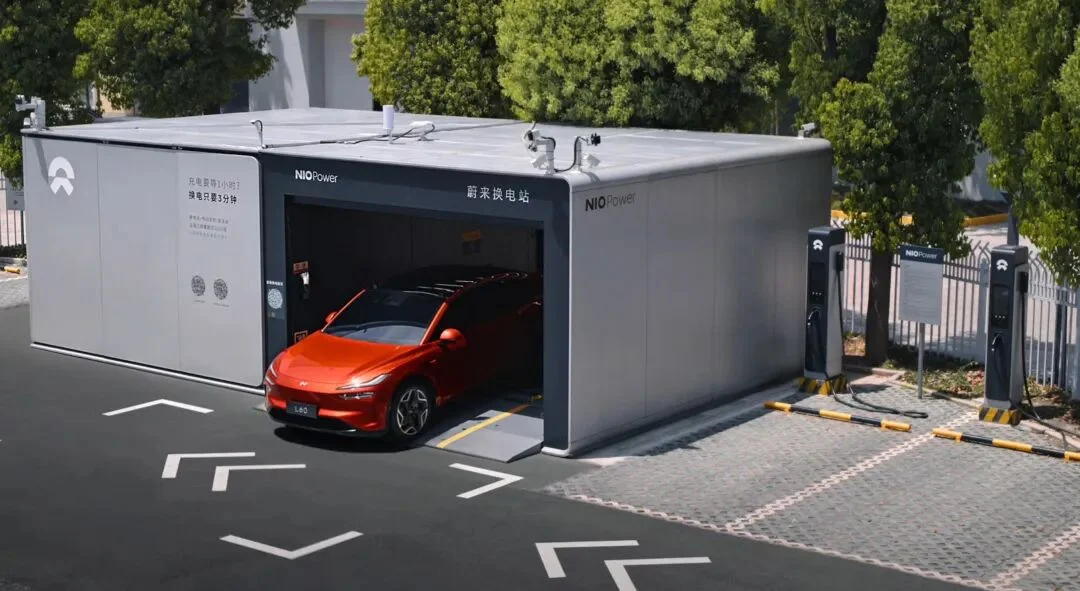
Fourth is the construction of battery swap stations. The number of swap stations compatible with ONVO has already exceeded 1,500. Although early battery supply was insufficient, user experience has improved significantly, enhancing customer reputation. In areas with a high density of swap stations, ONVO’s sales performance is stronger. The upcoming 'county-to-county' coverage for battery swapping will help ONVO penetrate third- and fourth-tier cities. Currently, ONVO’s sales exceed NIO’s in 12 regions, demonstrating the positive impact of the dual-brand strategy.
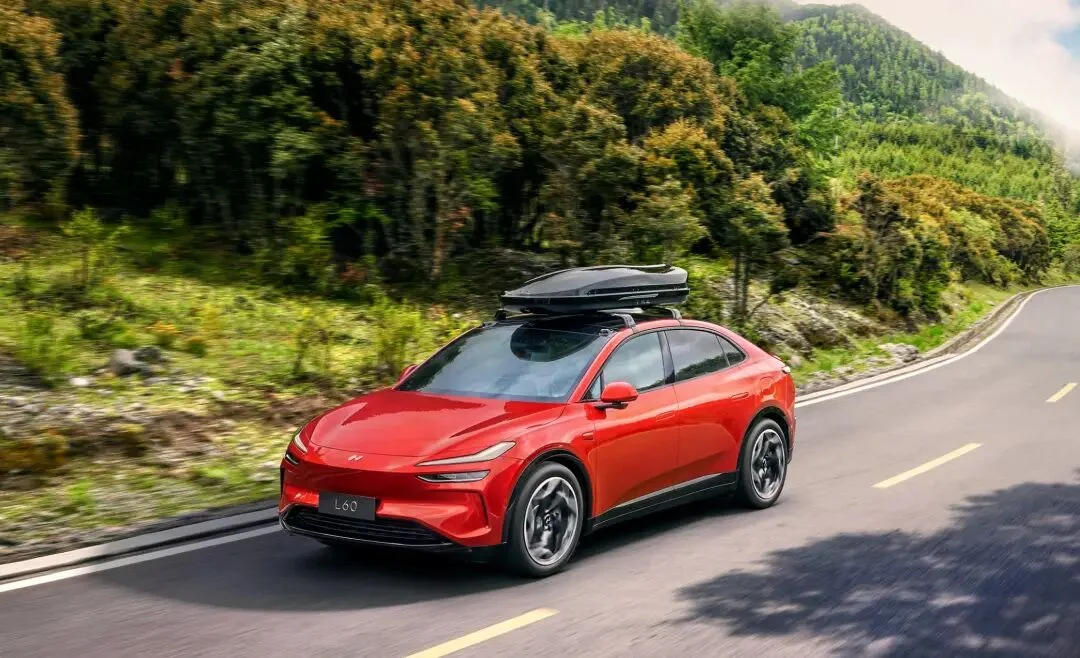
William Li believes that recent market competition and negative public sentiment have impacted sales by 30% to 40%. The ONVO L60 enjoys very high user reputation, with the highest user satisfaction and a strong Net Promoter Score (NPS). He remains highly confident in sales figures.
Additionally, after-sales, finance, and HR functions are shared between NIO and ONVO. In some regions, management teams are being tested to oversee sales and service for both brands simultaneously. However, NIO and ONVO stores will not be merged, as their target user groups differ significantly. Internally, incentive mechanisms have been introduced to encourage sales staff from one brand to sell vehicles from the other.
Regarding NIO brand sales, William Li noted that more than half of NIO’s sales are concentrated in Zhejiang, Jiangsu, and Shanghai, due to the mature battery swap network. By the end of this month, Zhejiang province will achieve county-to-county coverage, excluding only two islands. Rapid deployment of swap stations in Hubei and Anhui last year drove sales growth exceeding that of the previous two years. There is significant potential to increase market share in provinces such as Hebei, Henan, Shandong, and Sichuan, which holds particular value for ONVO.
In 2024, NIO’s non-automotive businesses achieved positive gross margins. Qu Yu attributed this to improved efficiency in NIO’s after-sales services, with technical service revenue reaching RMB 220 million in the fourth quarter of 2024. However, losses did not narrow despite the expansion of the swap station network. Technical service revenue is expected to continue in 2025, but it is tied to project cycles rather than quarterly reporting periods.
At the earnings call held tonight, a question from a Gaosheng investor struck at the core of NIO: What should be NIO's long-term sales volume, gross margin, and net profit levels?
William Li responded: "In the long run, to be a sustainable smart electric vehicle company, we need to achieve a scale of over 2 million units, a gross margin of 20%, and a net profit margin of approximately 7% to 8%. This is the basic survival line for long-term viability."
Currently, not only NIO, but most smart electric vehicle companies are still far from reaching such targets.
Written by: James Edited by: Daji