


Mobileye's Chen Yunxiang: First-Mover Advantage Helps Chinese Automakers Navigate Overseas Markets
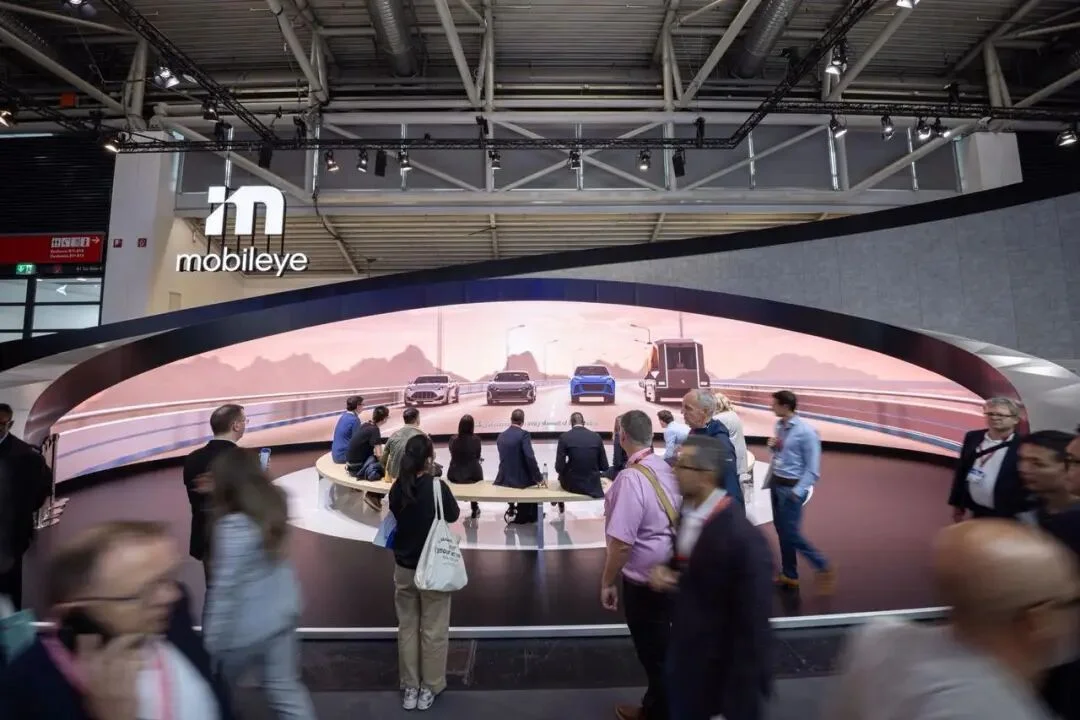
At this year's International Motor Show (IAA) in Germany, Chinese automakers emerged as one of the main protagonists, delivering "a little shock" to European audiences.
The global expansion of Chinese cars relies heavily on supplier support. As intelligent features—particularly driver assistance systems—become an unstoppable trend worldwide, deploying safety-critical ADAS across different markets presents significant hurdles, including varying regulations, road conditions, and the need for localized team support.
With 25 years of global deployment experience and over 200 million chips delivered, Mobileye believes there is no need for alarm.
During the IAA, 42HOW Auto conducted an in-depth interview with Chen Yunxiang, Head of Business Development and Strategy for Mobileye China, to discuss the core issues of Chinese automakers going global, the development of ADAS chips, and future industry trends.
01An average of one mass-production project per day
As Chinese automakers expand into global markets, seizing opportunities and rapidly launching products for users is critical. Consequently, speed-to-market has become a key metric when selecting suppliers. When facing the deadline for mass production, a mature solution proven in global markets is often the best choice.
Why does Mobileye enable such rapid deployment for automakers?
Chen Yunxiang emphasized that Mobileye’s solution is a mature, globally validated offering.
Mobileye currently has more than 300 mass-production projects annually worldwide—roughly one per day—with cumulative chip deliveries exceeding 200 million units. Chen Yunxiang stated, "Wherever there is an ADAS function, you will find Mobileye technology."
In recent years, Chinese automakers have widely deployed self-developed driver-assistance systems domestically. Is direct migration to overseas markets feasible? Chen Yunxiang believes that with the opportunities for going global, challenges also exist.

Safety regulations for driver assistance vary by country, and road conditions, driving habits, and cultural differences differ across regions. Chen Yunxiang believes that these issues cannot be resolved through simple "parameter tuning"; they may involve restructuring of models and algorithms, making deployment more difficult.
Chen Yunxiang here gave a very interesting example: in the Indian market, an automatic emergency braking (AEB) function tailored for animals is needed, because the local road environment involves actual situations where one might encounter animals such as cows.
In response to the different needs and challenges of global markets, Chen Yunxiang believes that Mobileye enjoys a first-mover advantage due to its long-term accumulated experience: "Through cooperation with partners and OEMs around the world, we have a deep understanding of driving habits, market demands, and other aspects in different countries, accumulating rich practical experience."
Chen Yunxiang also mentioned that Mobileye considered the high synergy of the overall product portfolio from the initial design of its driver-assistance platform. At the same time, Mobileye will provide platforms to help automakers achieve differentiation, such as Mobileye's DXP Driving Experience Platform. The synergy of solutions and differentiated customization capabilities both help automakers to land quickly in different markets.
02Driver Assistance Must Be Experienced Personally
The starting point of competition in the driver assistance industry is inevitably a contest of chip computing power. However, based on our years of testing and experience with driver assistance systems, performance quality does not directly correlate with raw computing power. So, how should potential consumers choose a driver assistance system?
Chen Yunxiang noted that earlier in the industry, companies competed primarily on computing power, often without a clear understanding of what those numbers actually meant, leading to a blind assumption that higher values were always better. From Mobileye’s perspective, "the focus is more on how to deliver a better user experience and safety."
According to Chen Yunxiang, the upcoming EyeQ6H chip, which will be integrated into mass-produced vehicles, can support Highway Navigate on Pilot (NOP) functionality with a single chip, while dual-chip configurations enable point-to-point navigation assistance within cities.
"Users care more about the specific experience the system provides on their frequently driven routes, such as the daily commute from home to the office," Chen Yunxiang said. He emphasized that users need to personally experience the system by sitting in the driver’s seat.
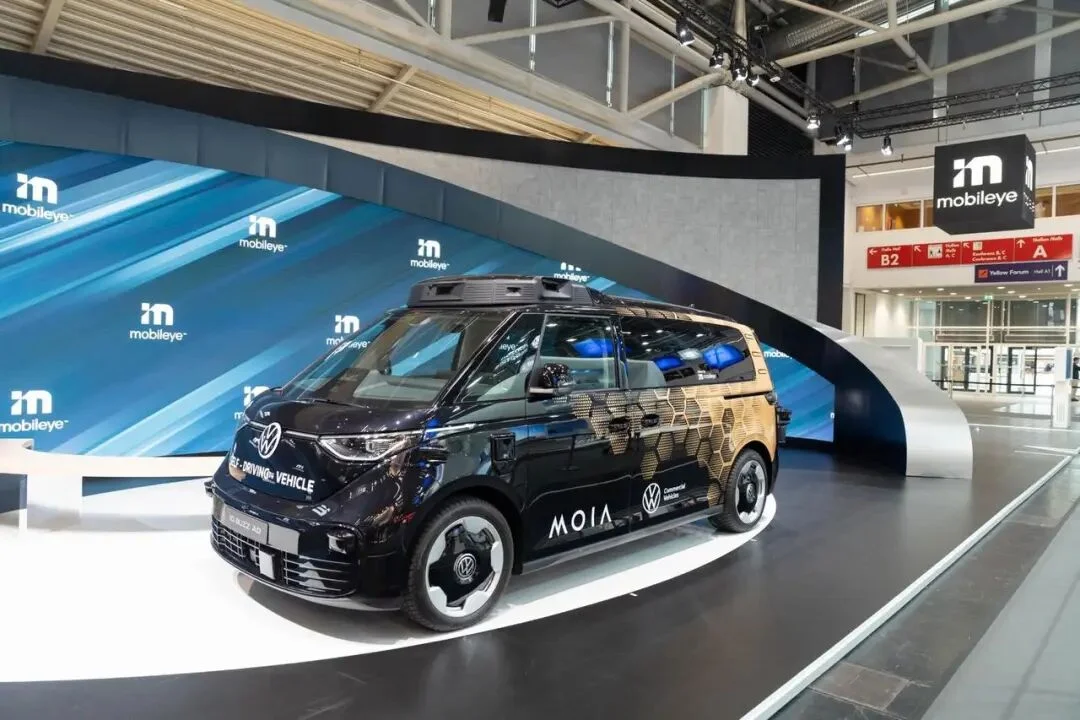
During the development of Mobileye chips, the company anchors to a "target performance" that encompasses both safety and user experience. This target is then broken down across dimensions such as sensors, algorithms, and cost. Ultimately, Mobileye has established a technical route centered on camera-based visual perception, supplemented by LiDAR and millimeter-wave radar for enhanced capability. This design enables high synergy across solution levels (L1–L4), avoiding redundant development and improving overall efficiency and scalability.
03China’s L3 Autonomous Driving Is Poised for Rapid Growth
In China's fiercely competitive market, how is Mobileye specifically responding? Chen Yunxiang stated that Mobileye does not fear price wars and aims to win customers through differentiated value.
"Mobileye focuses on dynamically assessing market conditions and making flexible, timely adjustments, with an emphasis on providing additional value to customers," Chen Yunxiang said. In other words, Mobileye's goal is not merely to compete on price, but to continuously build a technological "moat" by enhancing experience and performance to consolidate its market position. Furthermore, Chen Yunxiang noted, "I do not believe that price is king in the Chinese market; rather, I believe that performance, safety, and actual experience are the most important factors. As long as we can crack the code for creating a high-quality experience, customers will flock to us."
Regarding the future development of driver assistance in the Chinese market, Chen Yunxiang believes that the expansion of the overall market size is an inevitable trend. In May this year, the mandatory national standard "Technical Requirements and Test Methods for Automatic Emergency Braking Systems for Light Vehicles" was completed for drafting. Once this new standard takes effect, passenger vehicles will be equipped with automatic emergency braking systems as standard. Regardless of the vehicle's price tier, basic driver assistance features such as integrated cameras may become required. Even price-sensitive models will be covered, which will lead to a rapid expansion of the market size.
At the same time, highway NOP (Navigate on Pilot) driver assistance will further penetrate lower price segments as the market expands, while urban NOP functions are moving toward the goal of being "universally usable," with expected further growth in market space.
Additionally, with the improvement of regulations, China's L3 autonomous driving is poised for rapid development, and the potential market for L4 is gradually emerging. "To meet the demand for equipping more vehicles on a large scale, the cost-effectiveness of solutions becomes particularly important," Chen Yunxiang emphasized.
Below is the edited transcript of the conversation between 42HOW Auto and Chen Yunxiang, Head of Business Development and Strategy for Mobileye China.
Q: Many Chinese automakers exhibited at this year's IAA. Mobileye is currently helping Chinese automakers go global. What are Mobileye's core advantages in this regard?
A: First, our solution is highly mature and has been validated by the global market over a long period. This means that when Chinese OEMs expand overseas, choosing Mobileye's solution carries relatively low risk and does not require the OEMs to invest excessive additional effort.
Currently, Chinese automakers are racing against time to expand overseas. Those who can mass-produce new models and deploy new features in foreign markets first stand to capture an early batch of users. Therefore, automakers are keenly interested in which solutions allow for rapid deployment with minimal time, development cost, and effort.
In addition, Mobileye holds a distinct advantage in meeting local regulatory requirements. To date, Mobileye has shipped more than 200 million chips cumulatively. This means our solutions have been validated across various global markets. It is fair to say that wherever ADAS functions exist, Mobileye technology is likely present.
When entering new markets, lacking relevant experience can lead to costly detours. Choosing a supplier with extensive global experience helps automakers avoid these pitfalls. Mobileye has accumulated substantial practical experience through past projects, allowing automakers to leverage nearly two decades of our expertise to facilitate smoother mass production and deployment.
Q: What difficulties do you think Chinese-developed driver assistance solutions will face when going global?
A: The primary challenge is ensuring safe, worry-free mass production in local markets. Different countries have their own safety standards and driving habits. These differences impose high demands on the adaptability of autonomous driving systems. A solution that is mature in the Chinese market may not perform as seamlessly abroad. This issue cannot be resolved merely by "tuning parameters"; it often requires redeveloping model algorithms.
Furthermore, cultural differences act as a soft factor. For example, some Chinese automakers maintain rigid mass-production timelines even when changes occur during development, driven by intense competition over launch dates. In contrast, overseas markets tend to be more rational. If product changes arise, additional time is required for validation, which can delay mass production and delivery. Safety is paramount; any issues could severely impact a company's long-term sustainability.
Q: How does Mobileye help OEMs navigate these challenges to go global successfully?
A: Mobileye possesses a first-mover advantage in addressing these challenges. Our collaborations with partners and OEMs worldwide have resulted in cumulative chip shipments exceeding 200 million units. Consequently, we have gained deep insights into the driving habits and market demands of various countries, accumulating rich practical experience.
Mobileye has prioritized higher-level collaboration and efficiency for over two decades. With more than 300 mass-production projects annually—roughly one new project per day—the company’s global team of three to four thousand people demonstrates exceptional productivity.
This efficiency stems from designing the platform with high synergy across the entire product portfolio in mind. Based on a unified hardware architecture and software algorithm foundation, Mobileye also offers differentiated platforms, such as the Mobileye DXP (Driving Experience Platform), which can flexibly adapt to the specific needs of different customer projects.
In other words, by following established technical routes and leveraging existing architectures, we can flexibly accommodate diverse customer requirements while ensuring both efficiency and scalability.
We also optimize solutions for specific markets. For example, the Chinese market demands more advanced dynamic suspension systems; in India, AEB functionality must be tuned to detect animals like cows commonly found on roads. We provide differentiated solutions tailored to these distinct regional needs.
Q: Many users currently focus primarily on chip TOPS when choosing driver assistance systems. Does Mobileye agree with this perspective?
A: This view may have been influenced by marketing during the early stages of industry development. At that time, companies competed on computing power, but many lacked a clear understanding of what it actually meant, leading to the assumption that higher numbers were always better.
Now that the market is maturing, some manufacturers are no longer chasing higher chip counts or TOPS figures. They realize that what truly matters is the user experience, such as driving comfort and an extreme sense of safety.
Take Mobileye’s products as an example: our EyeQ6H chip delivers 34 TOPS. A single chip supports highway navigation assist, while a dual-chip configuration enables point-to-point urban navigation assist. This demonstrates that performance depends not just on raw computing power, but on the overall architecture, algorithm efficiency, and hardware-software synergy.
For Mobileye, the focus is less on raw compute numbers and more on delivering a superior user experience. What users actually perceive is whether driving feels smooth, safe, and reliable—not the size of the compute figure.
The market will ultimately return to rationality, with the core benchmark being functional experience itself. I believe only the solution that excels most in performance and experience can stand out.
Q: From a consumer’s perspective, you shouldn’t rely solely on spec sheets. Beyond compute power, what else should be considered?
A: For buyers who consider driver assistance features a key factor in their purchase decision, test-driving is essential; relying only on spec sheets is insufficient.
Because looking at specs alone makes it difficult to judge the system’s real-world performance. The differences in feature lists among some models are not significant—for example, the number of sensors installed. Moreover, these figures do not truly reflect differences in user experience.
From an end-user’s perspective, what matters more is how the system performs on the routes I drive regularly—providing both safety assurance and driving enjoyment. After all, I choose a car with driver assistance because of the sense of security and experience it offers.
Therefore, users must experience it firsthand by sitting in the driver’s seat.
Q: Besides monitoring TOPS compute power, what other specific dimensions does Mobileye focus on during development?
A: From a solution development perspective, we first define the performance targets the solution must meet. For example, with our second-generation SuperVision (SV62) combined driver assistance system, we determine metrics such as how many kilometers can be driven before a takeover is required, or what level of performance it needs to achieve relative to competitors. We then assess which sensors and algorithms are needed to support these targets, considering the implications for system cost.
Another key question is whether the design should pursue performance at any cost, or balance performance with cost-effectiveness, scalability, and safety. In the industry, some automakers take an early-stage, cost-agnostic or 'trial-and-error' approach. When the optimal domain controller design is unclear, they may install as many sensors as possible—cameras, millimeter-wave radar, and LiDAR—to ensure that neither the domain controller nor the algorithm is constrained under any scenario. They then refine and optimize the setup through continuous iteration. This is one approach.
Mobileye’s path differs. We first clarify performance goals, then design a solution that is safe, high-performing, scalable, and cost-effective, integrating the latest AI technologies. Our approach centers on camera-based perception, with millimeter-wave radar or LiDAR as supplementary inputs. This means our system delivers strong performance without additional sensors; adding more sensors further enhances capabilities. On this foundation, we emphasize scalability in both our algorithm architecture and domain controller design.
In overall solution design and product roadmap planning, clear considerations must be made from the outset. Mobileye builds a technology route that is highly cost-effective, scalable, and versatile, based on a clear judgment of future AI trends. This allows our different products to work in high synergy, rather than requiring us to start entirely new development projects every time a customer has a different requirement.
Q: The Chinese market’s driver assistance systems are developing more aggressively than other regions. Will Mobileye engage in a 'price war'?
A: We actively participate in market competition, but this does not mean we compete solely by lowering prices. Nor do we fear price competition, as we hold advantages in both product performance and cost. Mobileye focuses on dynamically assessing market conditions and making flexible adjustments. We also place strong emphasis on providing additional value, building competitive advantage through differentiation.
I do not believe that price is king in the Chinese market. Instead, I believe performance, safety, and real-world experience are most important. If we can crack the code to delivering a premium experience, customers will flock to us.
Q: What are Mobileye’s advantages in expanding its local business in China?
A: I see this from two perspectives. First, as mentioned earlier, we have a first-mover advantage in helping Chinese companies expand globally. Second, regarding support for local OEMs in the Chinese market, we can leverage Mobileye’s global strengths to make timely adjustments, ensuring our pace aligns with "China speed."
The Mobileye China team is composed of top-tier industry talent, enabling us to maintain the highest quality standards while ensuring delivery speeds match market rhythms. For instance, in the global collaboration between the company and Porsche on the latest-generation SuperVision (SV62) combined driver-assistance system, the China team is actively participating.
Mobileye remains fully committed to the Chinese market, with no reduction in personnel or resource allocation. We will continue to vigorously promote the localized implementation of our solutions.
Q: How do you view the future development trends of the driver-assistance and autonomous driving markets in China?
A: This question can be analyzed from multiple levels, starting with the foundational level of driver assistance. Currently, in the passenger vehicle sector, the government is about to introduce mandatory national standards for Automatic Emergency Braking (AEB) ("Technical Requirements and Test Methods for Automatic Emergency Braking Systems of Light-Duty Vehicles"). Once these new standards take effect, it is highly likely that both high-end and low-end models will need to be equipped with basic driver-assistance features such as integrated cameras. This requirement will extend to price-sensitive vehicles, rapidly expanding the market size. As the market penetrates deeper into lower price segments, costs are bound to decrease, meeting the equipment needs of more affordable models.
Furthermore, mid-level driver-assistance features, such as Highway Navigate on Pilot (NOP), will also see their price ranges drop further as the market expands. Urban NOP functionality is moving toward the goal of being "universally reliable," and its market space is expected to grow accordingly.
With the imminent opening of L3 regulations, the rapid development of L3 is also expected to be accelerated. In the future, matching this level of autonomous driving solution with vehicles currently equipped with driver assistance systems may no longer be an issue. The current market size for L4 is still small, but as L3 becomes widespread in the future, the potential market for L4 will gradually emerge. Mobileye's solution for L3 is already on the path to development and mass production, while efforts are intensifying globally in the L4-level Robotaxi sector.
Overall, the total market size will expand, which I believe is an inevitable trend. To meet the demand for equipping a larger number of vehicles, cost-effectiveness becomes particularly crucial.
Title: Talking with Mobileye's Chen Yunxiang: Helping Chinese Automakers Go Global, We Have a First-Mover Advantage By James Edited by James