


Changan and Dongfeng Parent Companies Plan Restructuring as China Imposes Tariffs on U.S. Imports
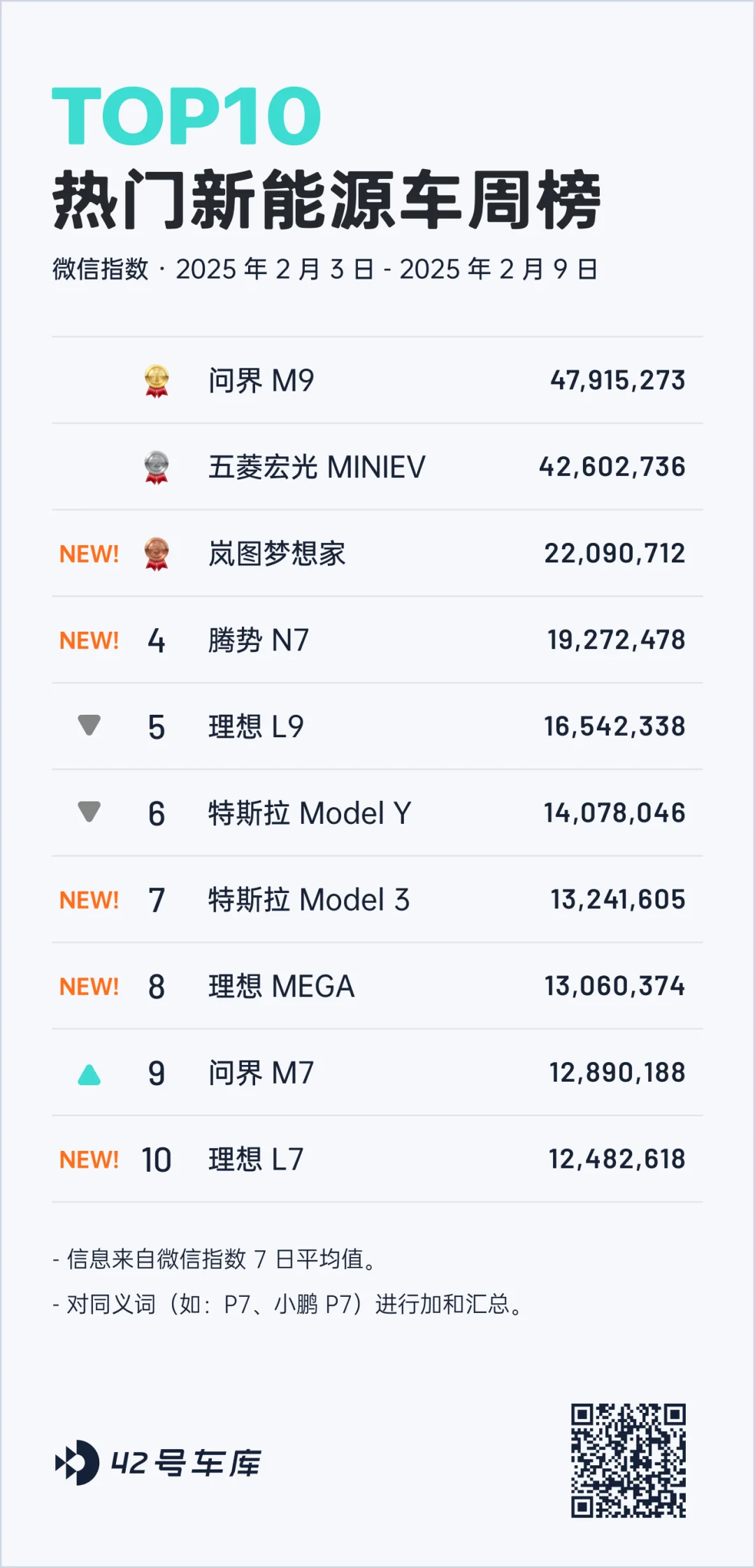
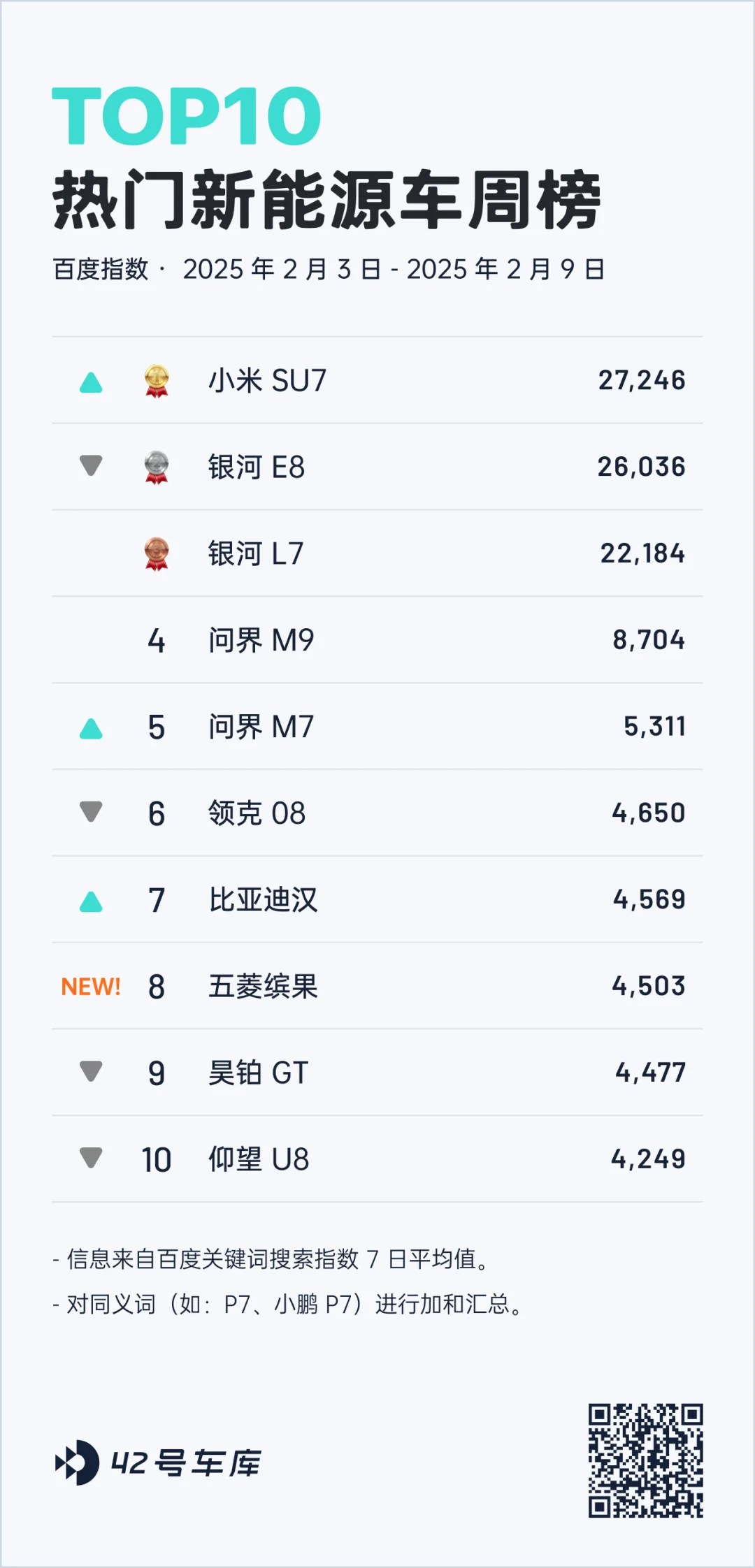
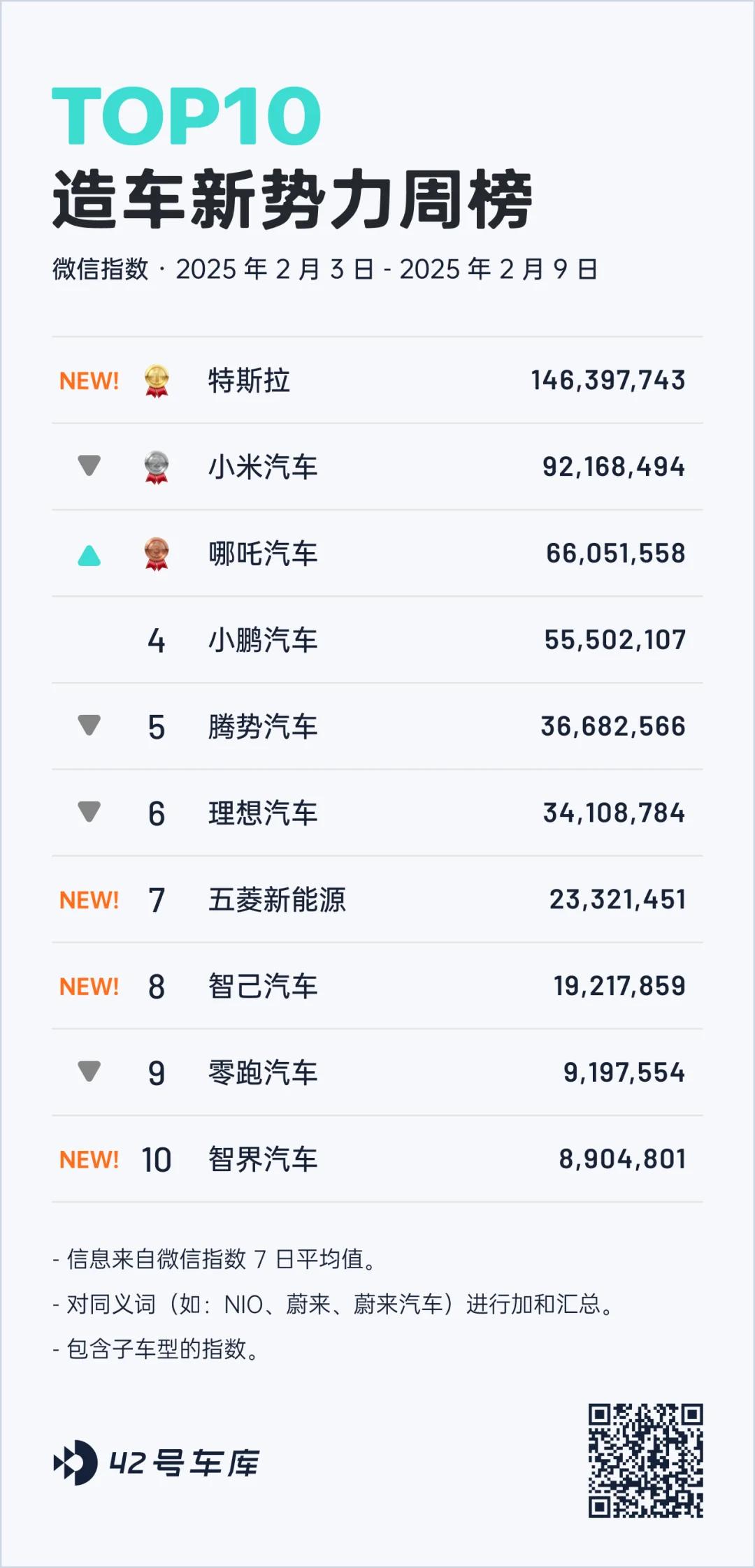
01Weekly Index
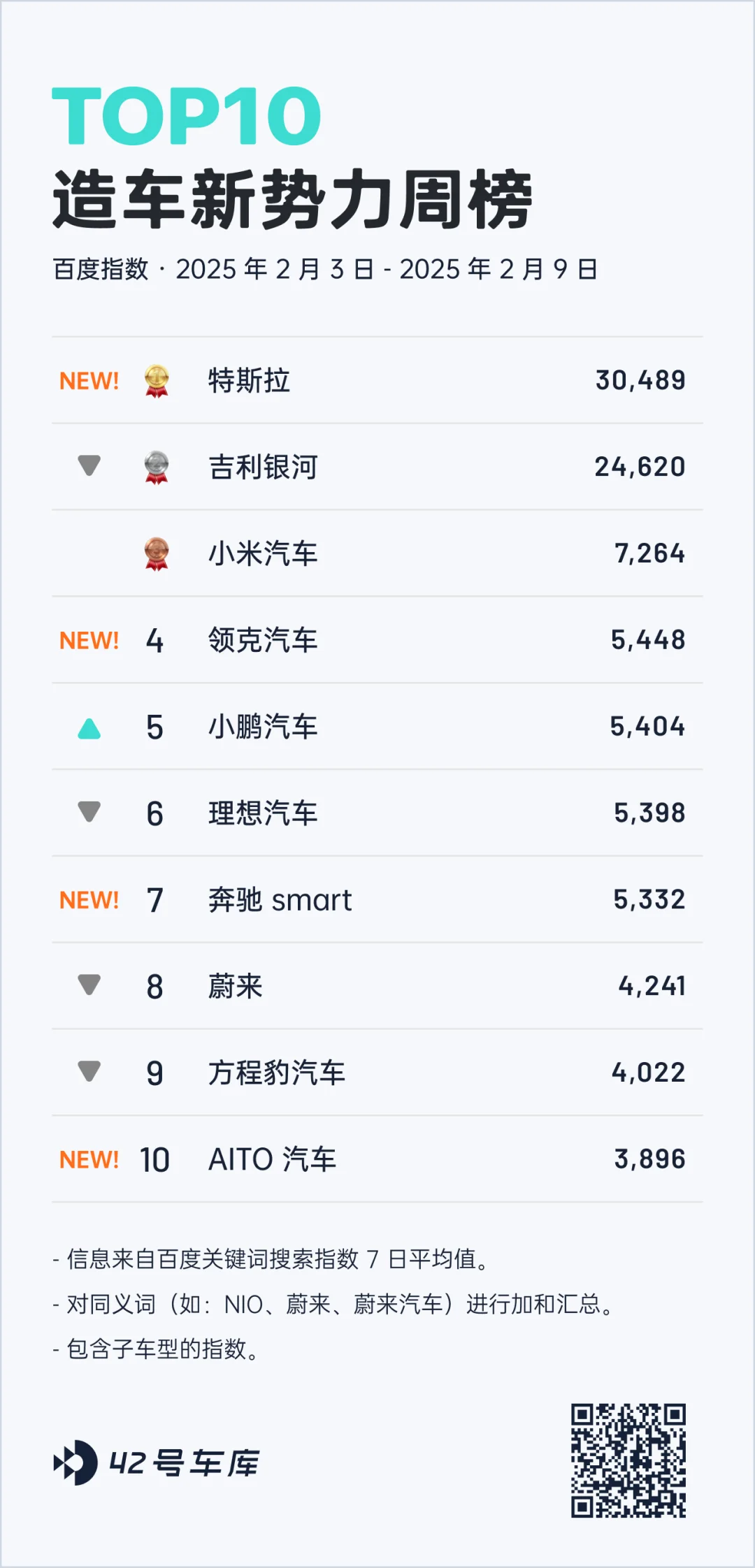
02Weekly News
Changan Launches Beidou Tianshu 2.0
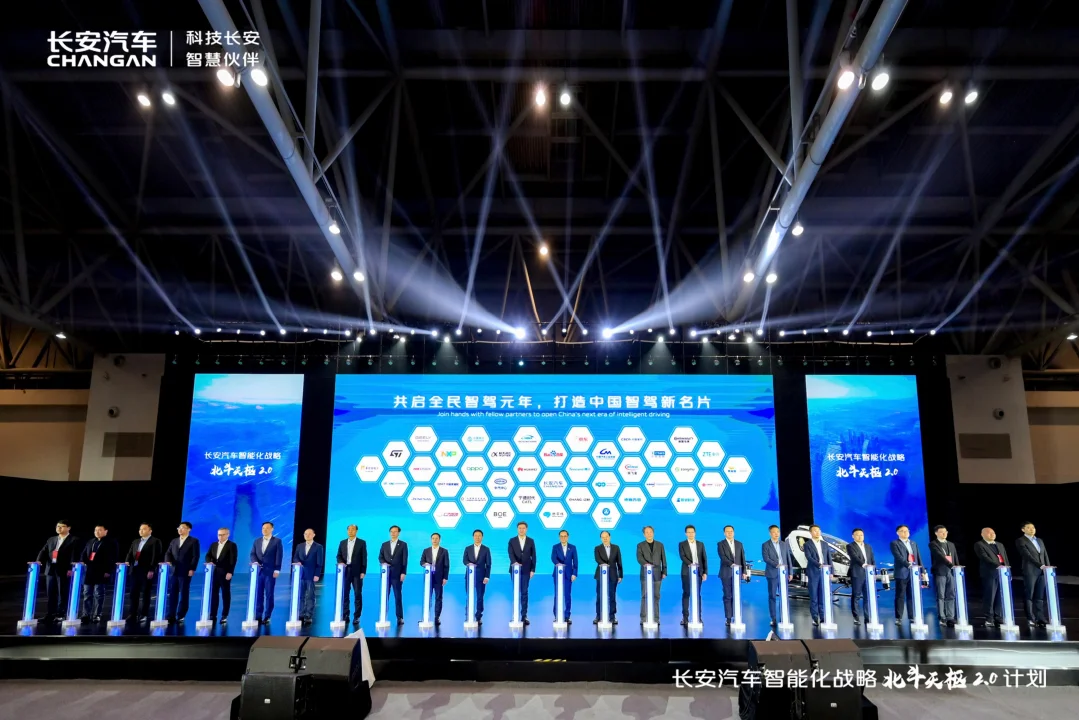
On February 9, 2025, Changan unveiled its "Beidou Tianshu" 2.0 intelligent strategy in Chongqing, leveraging advancements in AI and other technologies. The automaker partnered with Chery, Geely, GWM, BYD, Guangqi, Dongfeng, NIO, Beiqi, XPENG, Shangqi, Tencent, and Yingfeiling—dubbed "China's Intelligent Driving Partners"—to launch the era of mass-market intelligent driving and establish a new benchmark for China's smart mobility sector.
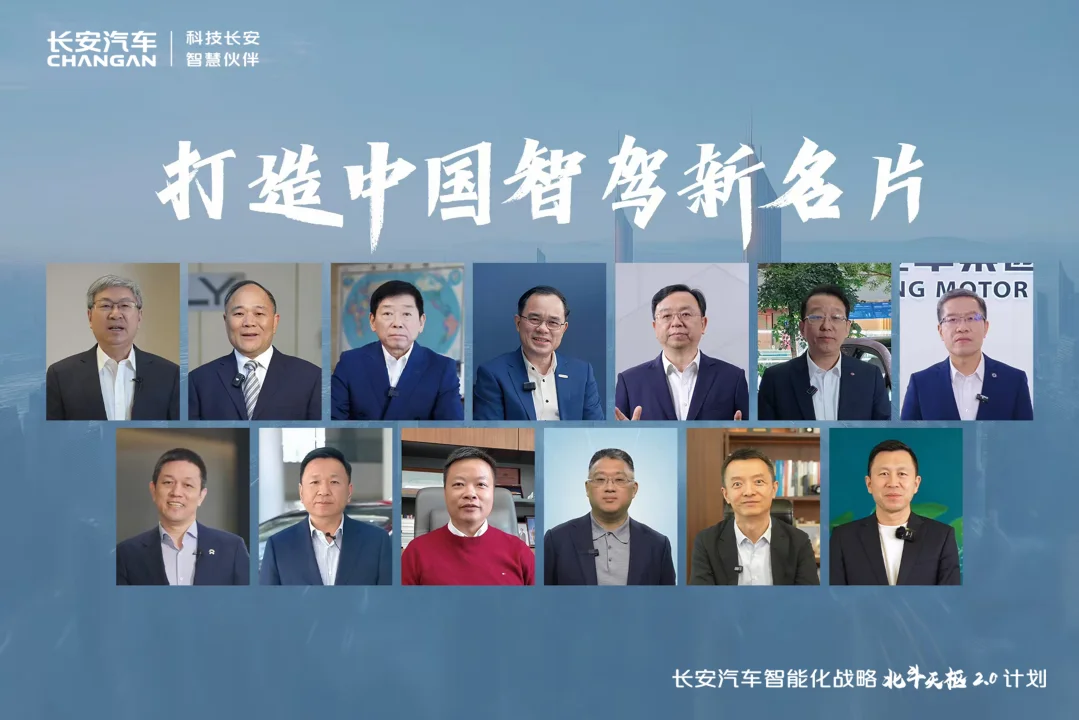
The "Beidou Tianshu" 2.0 initiative envisions creating "caring, intuitive AI-powered smart vehicles." It pursues a dual approach of independent R&D and collaborative innovation, initiating four key digital upgrades across products, manufacturing, operations, and ecosystems to elevate overall intelligence levels. Over the next three years, Changan plans to introduce 35 new smart models, including full-scenario Level 3 autonomous driving capabilities and the Golden Bell all-solid-state battery technology.
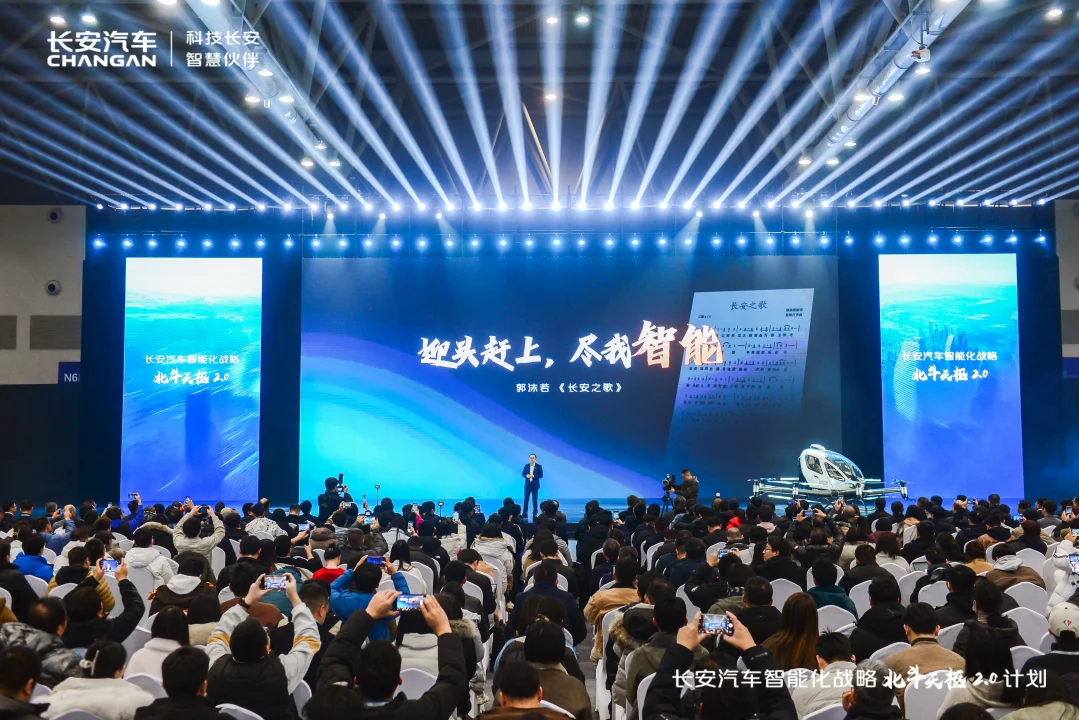
Since launching the "Beidou Tianshu" 1.0 plan in 2018, Changan has made significant strides in its intelligent transformation, continuously refining its strategic framework through partnerships with global technology firms.
On February 9, DEEPAL released its full-scenario intelligent driving solution, officially announcing deeper cooperation with Huawei to open a new chapter of "intelligent driving for all." The event was led by the DEEPAL S09, with multiple models including the DEEPAL S05, S07, and L07 appearing together.
Additionally, the AVATR 07 Pro+ and CHANGAN NEVO Q07 are set to follow. The AVATR 07 Pro+ is equipped with Huawei’s Qiankun Intelligent Driving system and HarmonyOS, positioning it among the market leaders in Huawei-integrated smart vehicles. Meanwhile, the upcoming Q07, built on the next-generation fully electric SDA platform, aims to deliver a smart SUV designed for entire families.
Changan also plans to upgrade its factory digital-intelligence standards to improve delivery efficiency, reduce carbon emissions, and lower costs.
Commentary:
Changan’s “Beidou Tianshu 2.0” initiative demonstrates the company’s bold approach to smart vehicles. Over the next three years, Changan will launch 35 digital-intelligent models featuring L3 autonomous driving and new battery technologies, aiming to enhance the driving experience. This plan not only reflects technical confidence but also signals a collaborative spirit with Chinese partners in smart driving. These moves could play a significant role in raising the industry’s overall intelligence level.
Multiple Automakers Announce Integration with DeepSeek Model
Recently, multiple automakers have announced deep integration with the DeepSeek large model. On February 6, Geely was the first to announce that its self-developed Xingrui large model had completed deep integration with DeepSeek-R1 through distillation training, improving the vehicle-side AI’s response capabilities. On February 7, Zeekr and VOYAH also announced their completion of integration with DeepSeek; VOYAH Zhiyin declared itself the first mass-produced model to integrate DeepSeek. On February 8, Baojunqiche, Zhijiqiche, Dongfengqiche, Leapmotor, and GWM followed suit. On February 9, Shangqirongwei Feifan also announced deep integration with DeepSeek.
These integrations are primarily focused on the smart cockpit domain. Leveraging DeepSeek’s AI technology, vehicles can achieve more natural voice interaction, more accurate scene understanding, and smarter feature iterations. For example, VOYAH Zhiyin’s “Xiaoyao Cockpit” will support AI multi-semantic command recognition and AI poetry generation. Additionally, DeepSeek’s low computational requirements and open-source nature make it an important tool for automakers to enhance their intelligence levels.
Editor’s Take: The widespread application of DeepSeek will accelerate the automotive industry’s intelligent transformation, driving rapid development in smart cockpits and autonomous driving technologies. Historically, AI technology has become one of the core competitive advantages in the automotive sector.
Overall, the deep integration between automakers and DeepSeek is an inevitable trend. However, true implementation and large-scale application still face challenges at both the technical and market levels.
Changan and Dongfeng Successively Announce Restructuring Plans
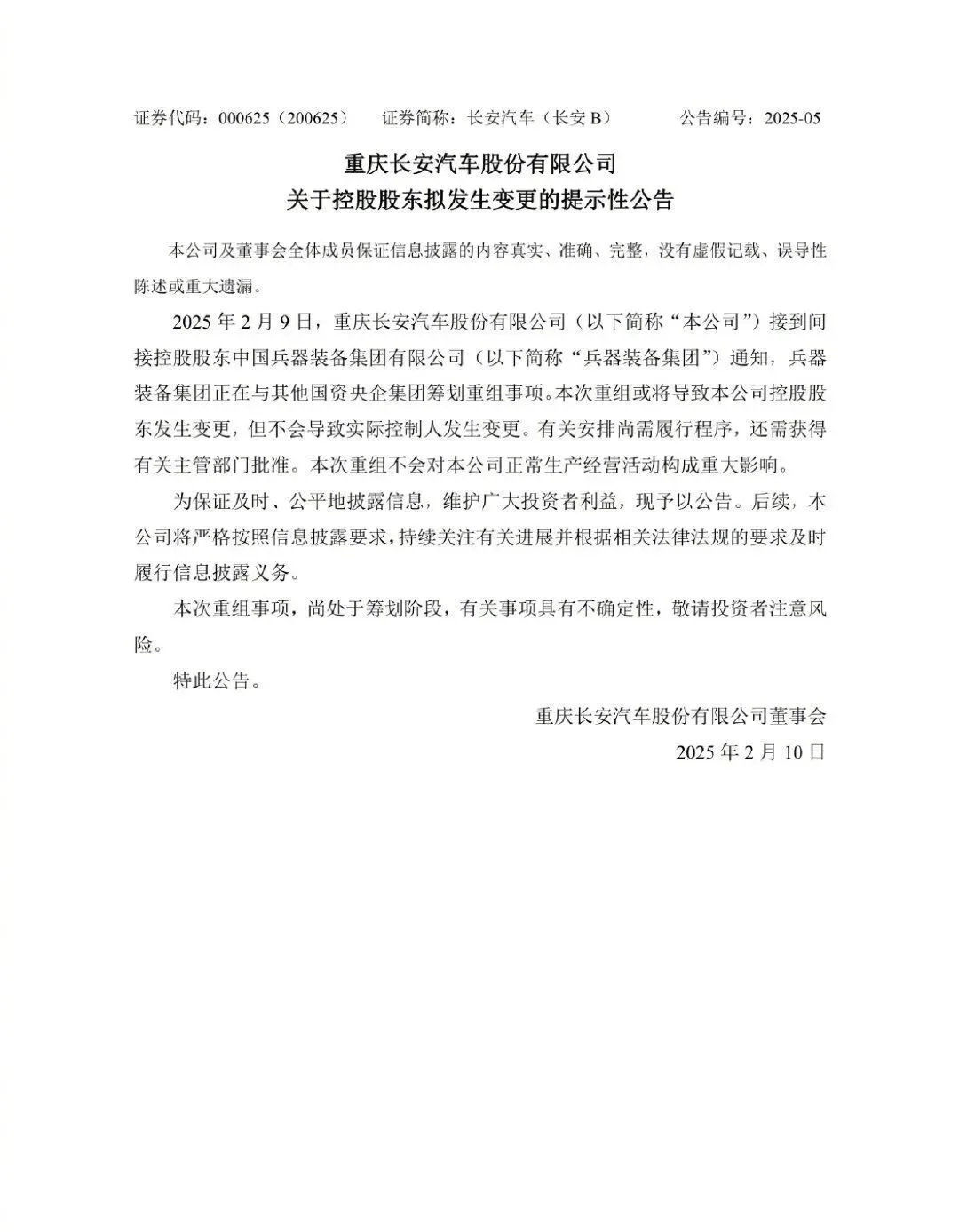
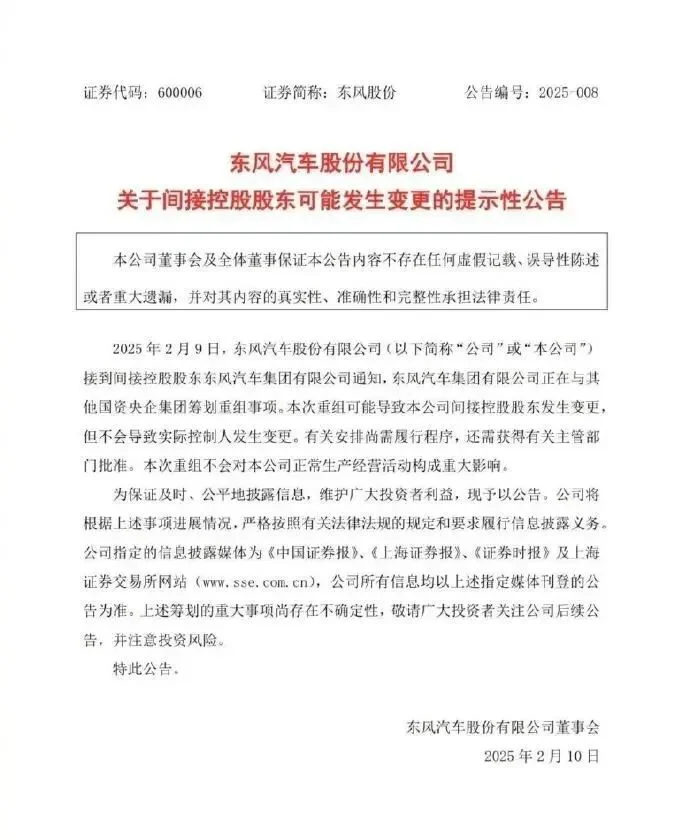
On February 10, 2025, Changan Automobile and Dongfeng Motor Group (Dongfengqiche), two major state-owned automotive enterprises, simultaneously released announcements stating that their controlling shareholders are planning restructuring with other state-owned central enterprise groups. This restructuring may result in a change of controlling shareholders for both companies, but the actual controllers will remain unchanged. The announcements noted that relevant arrangements still need to go through procedures and obtain approval from competent authorities. Both companies emphasized that this restructuring would not have a significant impact on their normal production and business operations.
Changan’s indirect controlling shareholder is Zhongguobingqizhuangbeijituanyouxiangongsi (China North Industries Group Corporation), while Dongfengqiche’s indirect controlling shareholder is Dongfengqichejituanyouxiangongsi (Dongfeng Motor Group Co., Ltd.). The two companies have close cooperation in business collaboration and executive team cross-appointments. Market speculation suggests there may be integration between the Ordnance Equipment Group and Dongfeng. If the two central enterprises merge, their cumulative sales volume in 2024 would reach 5.16 million units (Changan: 2.68 million + Dongfeng: 2.48 million), ranking them among the top five globally by sales volume. Scaling up would reduce component costs, achieve cost reduction and efficiency gains, and enhance export competitiveness.
However, the integration difficulty for these two automakers is greater due to the vast scope of businesses involved, such as commercial vehicles, passenger vehicles, and military vehicles, requiring adjustments in brand positioning. Additionally, joint venture brands such as Dongfengrichan (Dongfeng Nissan) and Changan Ford must balance independent and joint venture businesses after restructuring. Despite this, both companies committed to strictly following information disclosure requirements, continuously monitoring progress, and fulfilling information disclosure obligations in a timely manner according to relevant laws and regulations. Both companies also reminded investors to pay attention to the uncertainty of the restructuring matters and to follow subsequent announcements.
Commentary:
The planning of restructuring by the controlling shareholders of Changan Automobile and Dongfengqiche is one of the major strategic integrations in China’s automotive industry, with impacts spanning industrial landscape, market competition, technological innovation, and policy direction. This restructuring will significantly elevate the position of state-owned automakers in the global supply chain, but it must overcome management, technological, and market challenges during integration. The merged new group will form a full matrix product line covering low-end to high-end segments, reducing procurement and manufacturing costs by sharing supply chains, production bases, and R&D investment. However, potential challenges such as integration difficulties, lagging synergy effects, market competition uncertainty, and risks associated with policy approval and execution cannot be ignored.
China Imposes Additional Tariffs on Certain U.S. Imports
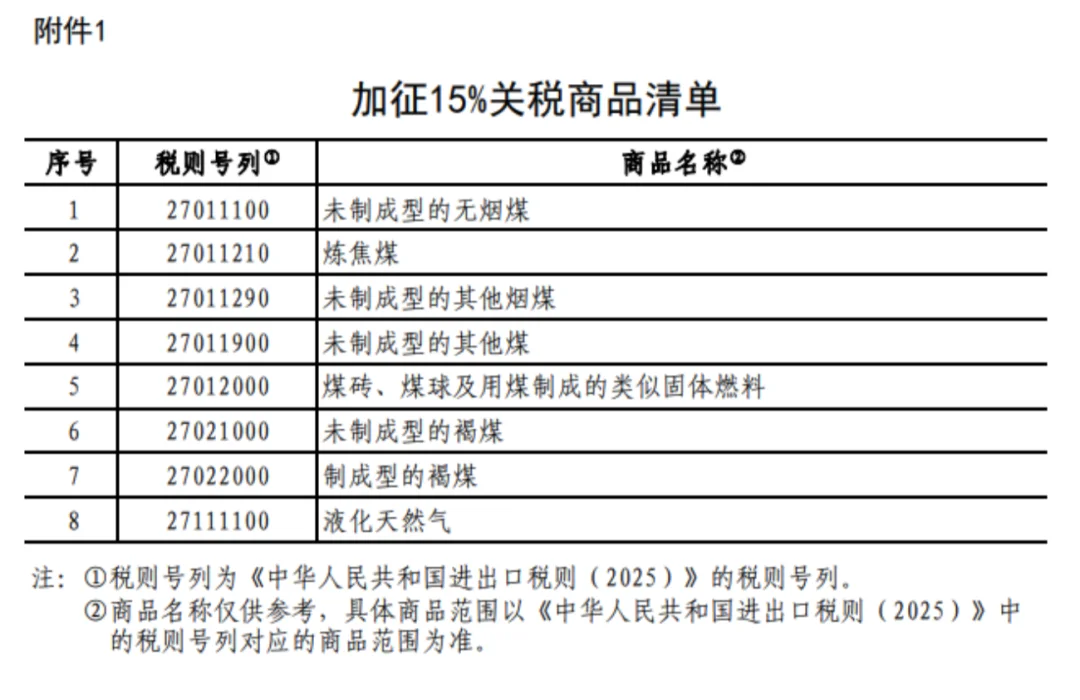
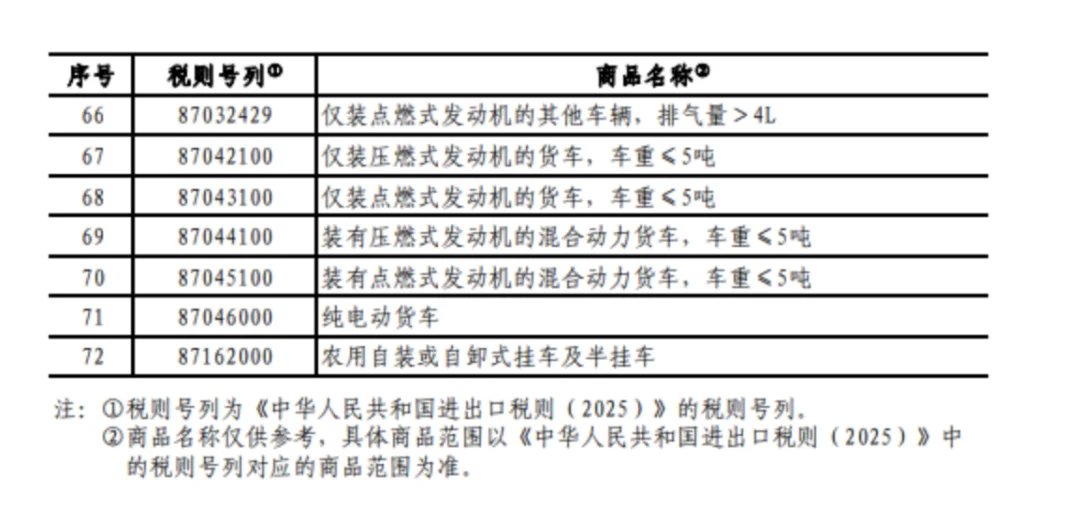
On February 4, 2025, the Customs Tariff Commission of the State Council of China announced that it would impose additional tariffs on certain imported goods originating from the United States, effective February 10. The new measures include a 10% tariff on crude oil, agricultural machinery, large-displacement vehicles, and pickup trucks. The scope of these additional tariffs covers internal combustion engine vehicles with displacements greater than 2.5 liters (including sedans, SUVs, and buses), trucks with a gross vehicle weight of 5 tons or less, and pure electric trucks.
Quick Commentary: China's imposition of an additional 10% tariff on large-displacement American vehicles is a countermeasure to unilateral U.S. tariff hikes. This policy will directly impact Ford, Tongyong, and other American automotive groups, as well as Tesla, which offers all-electric pickups. These tax policies may subsequently affect automotive markets outside the United States.
Written by: Yisong Edited by: Yisong