


DENZA N8 Launches, Leapmotor Unveils 'Four-Leaf Clover' Architecture as July Sales Data Released
01Weekly Index
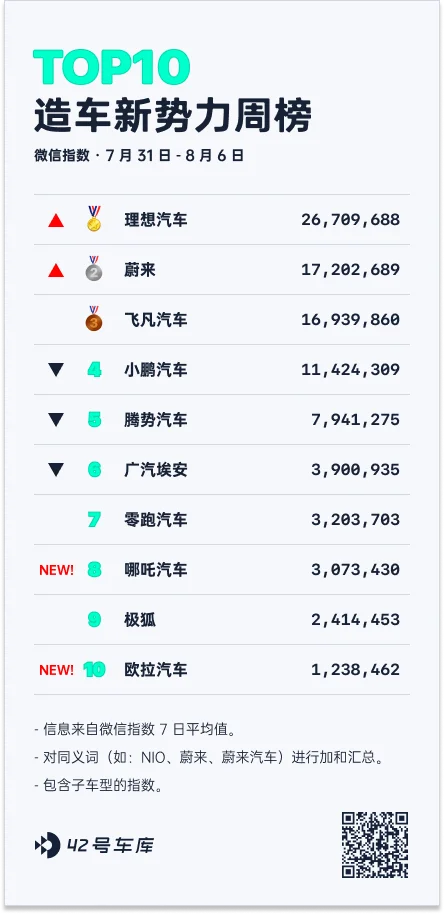
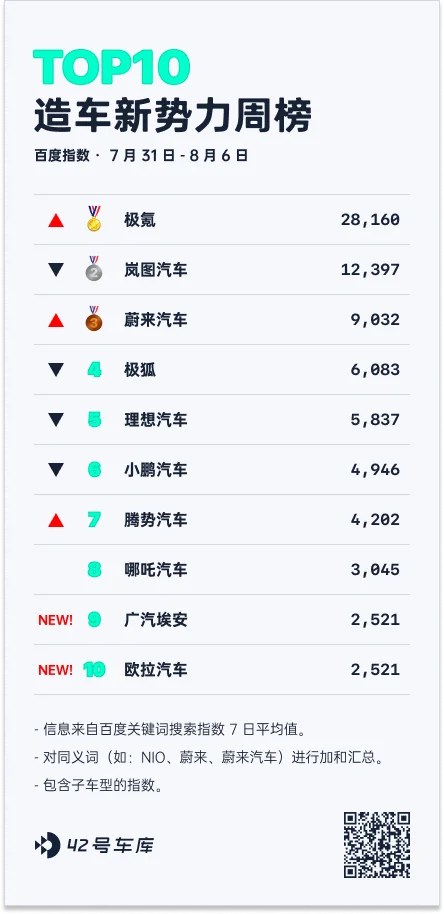
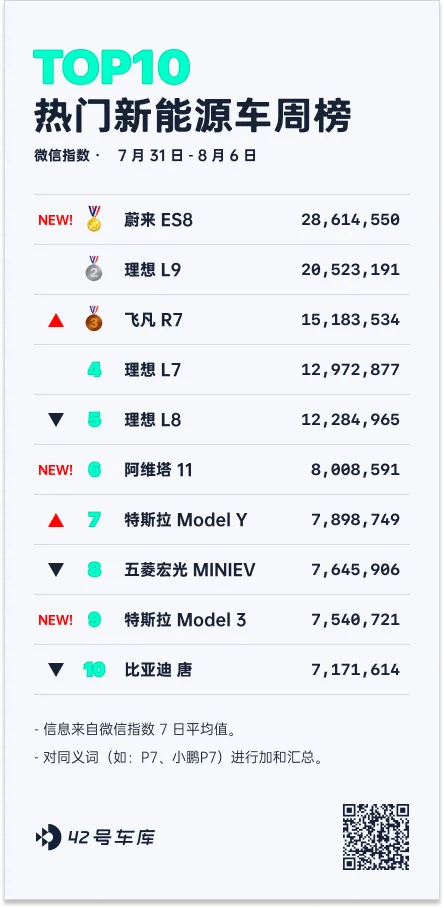
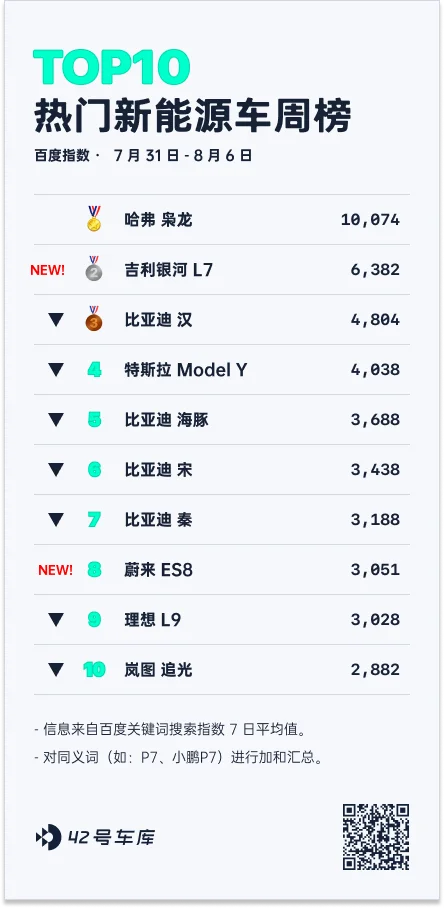
02Weekly Highlights
Major Manufacturers Release July Sales Figures; Top Three New Forces All Exceed 10,000 Units
Starting August 1, major manufacturers began releasing their July sales figures. Let's take a look at how everyone performed.
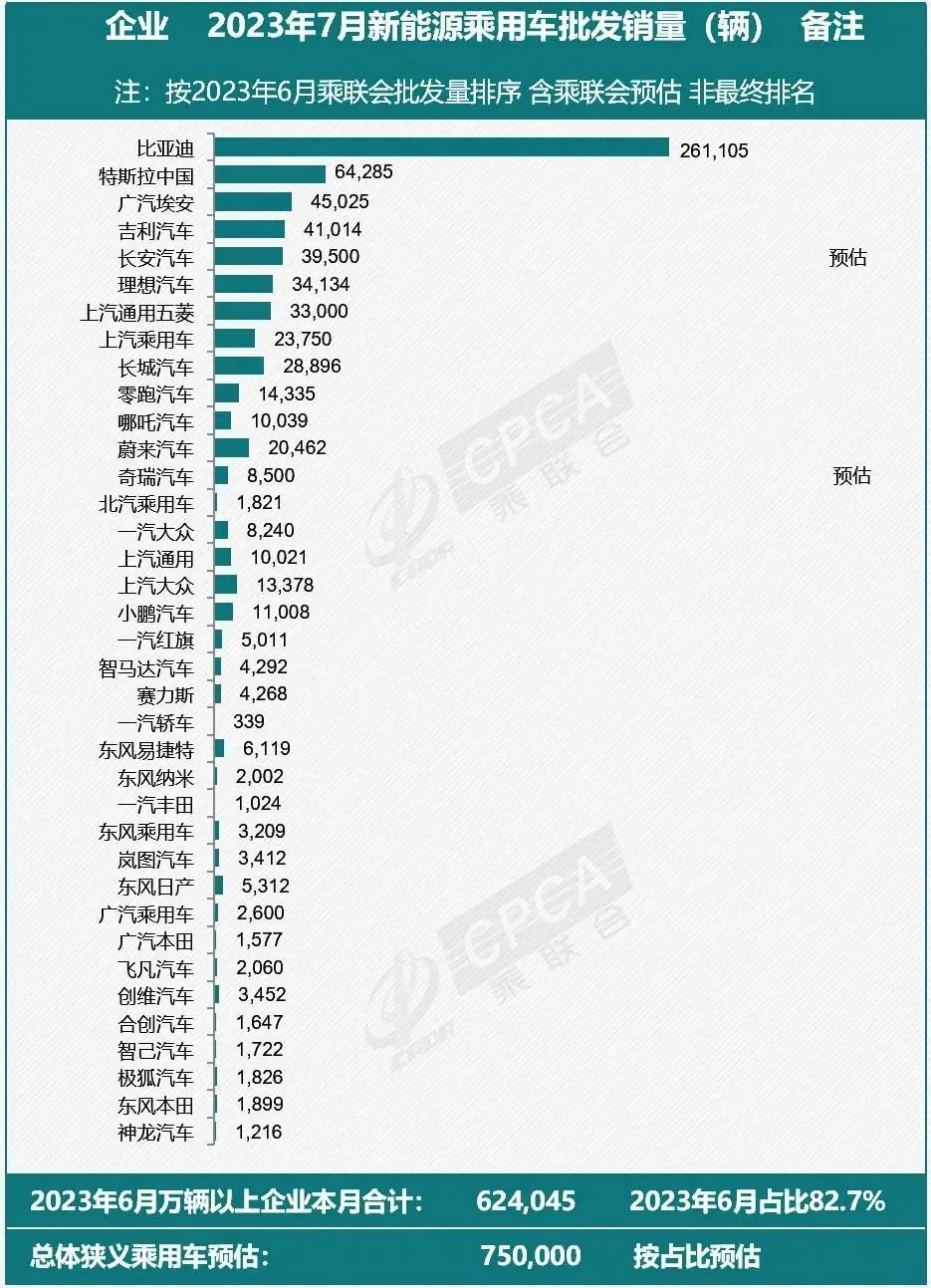
According to estimated data from Chenglianhui, Tesla's wholesale sales in China were 64,285 units in July, a 13.37% decline from the 74,212 units in June.
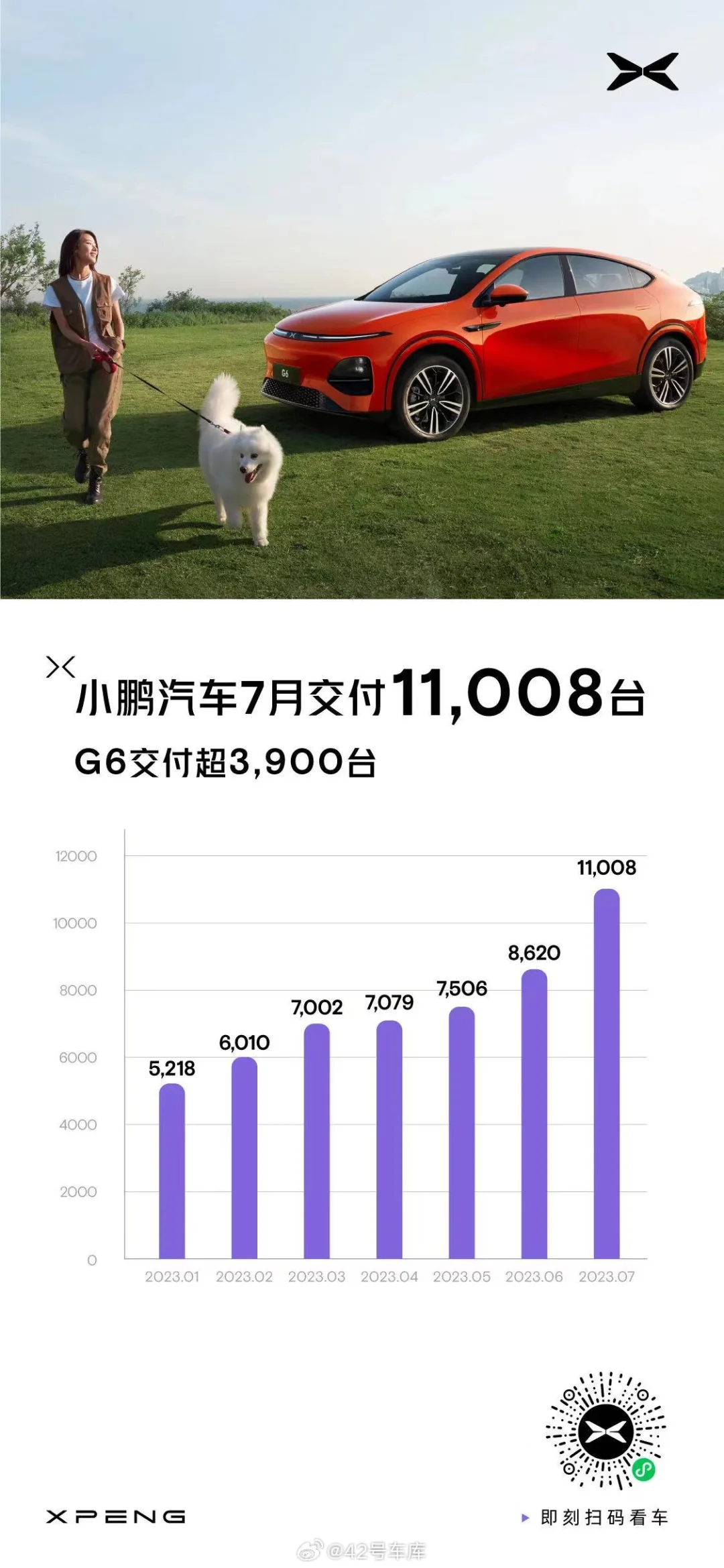
XPENG delivered 11,008 vehicles in July, marking its first time this year that monthly deliveries exceeded 10,000 units. The new G6 model played a crucial role in this achievement, with over 3,900 units delivered throughout July, accounting for more than one-third of XPENG’s total deliveries.
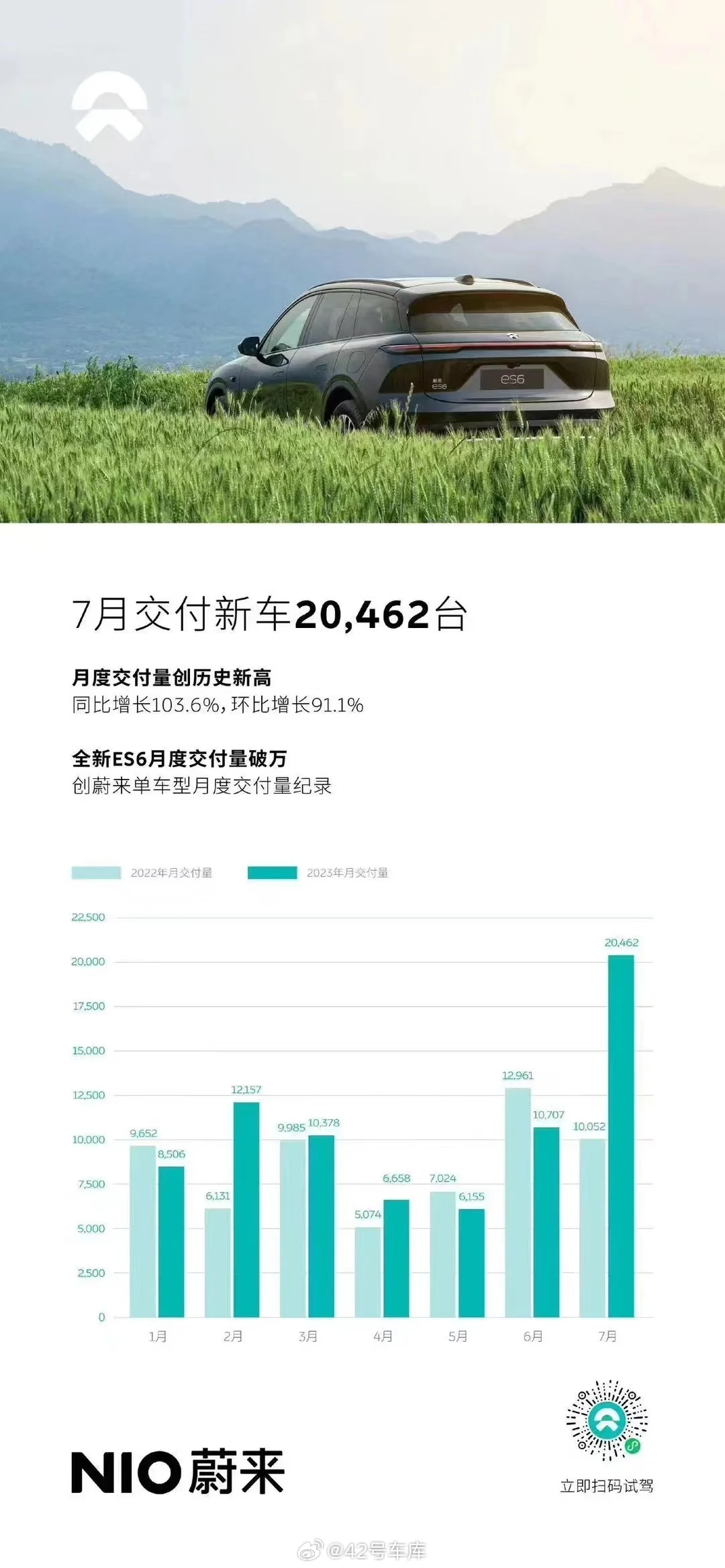
NIO also saw a significant boost in deliveries driven by new models. In July, NIO delivered 20,462 vehicles, representing a year-over-year increase of 103.6% and a month-over-month growth of 91.1%. The updated ES6 alone surpassed 10,000 units in deliveries, becoming NIO’s first model to achieve such a milestone in a single month.
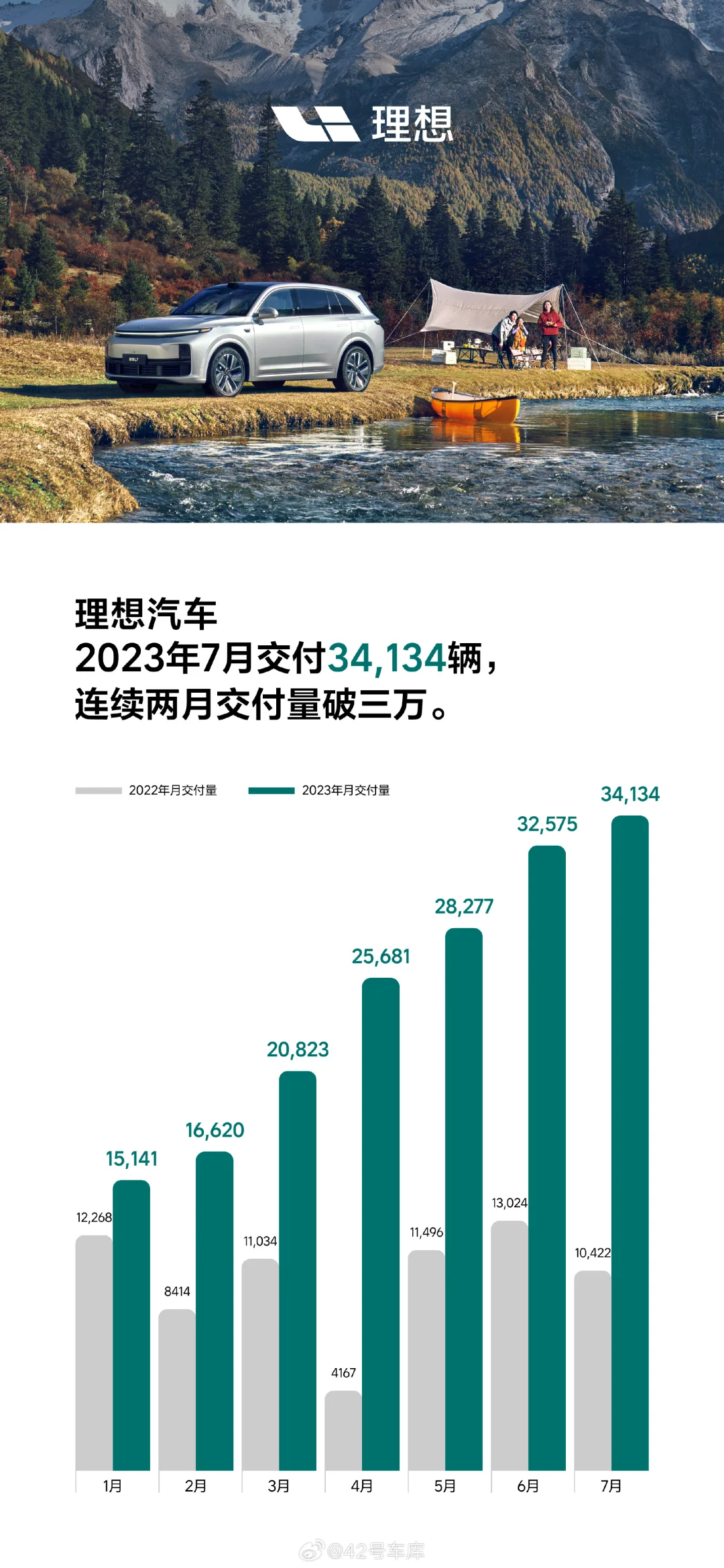
Following its delivery volume exceeding 30,000 units last month, Lixiang continued its strong performance in July with 34,134 units delivered, maintaining consecutive months of over 30,000-unit deliveries. Recent negative news surrounding Lixiang has not only failed to dampen sales but appears to have further increased the brand's visibility.
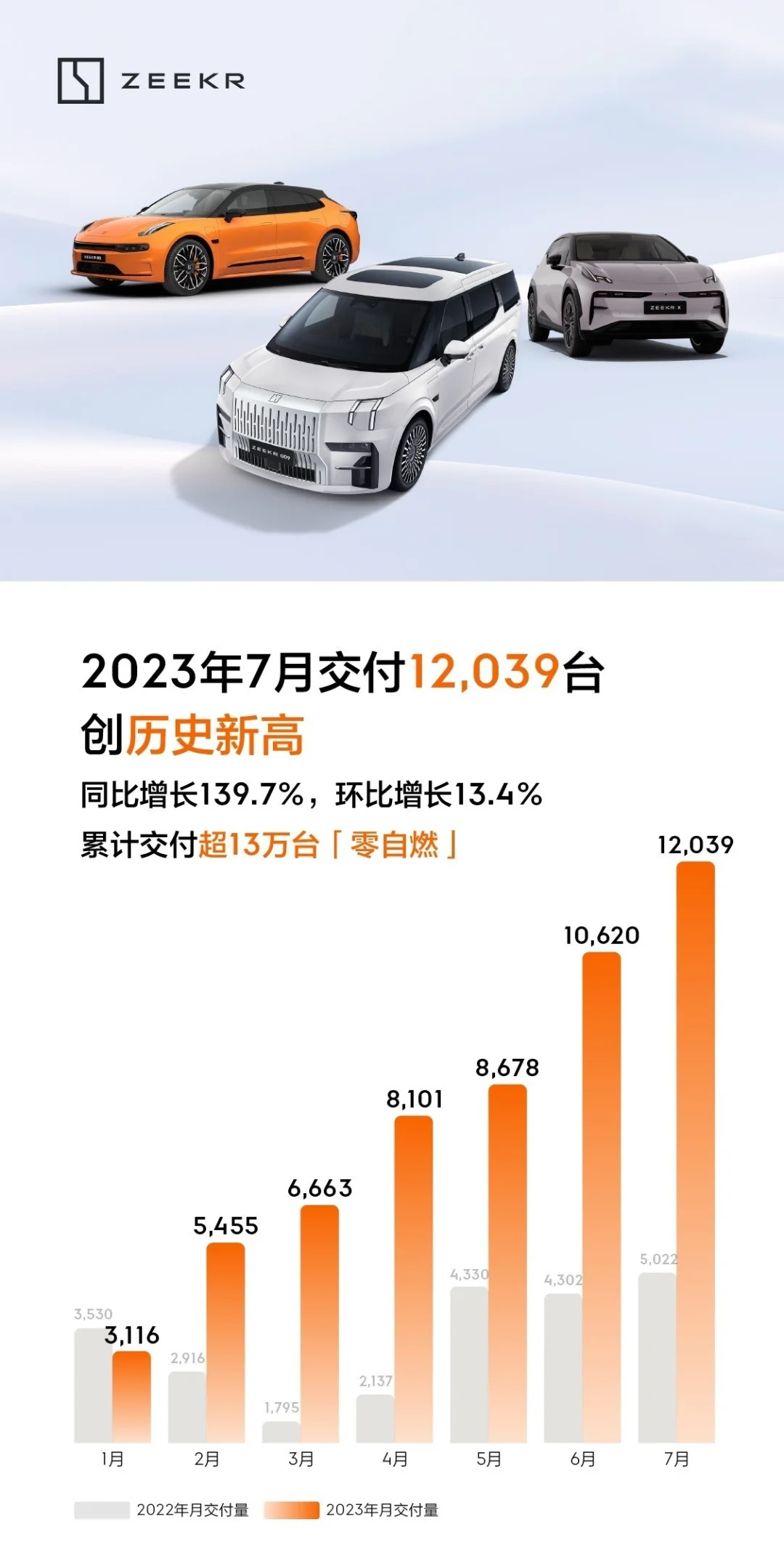
Zeekr delivered 12,039 vehicles in July, a year-over-year increase of 139.7% and a month-over-month rise of 13.4%, marking its highest single-month delivery volume this year and exceeding 10,000 units for two consecutive months.
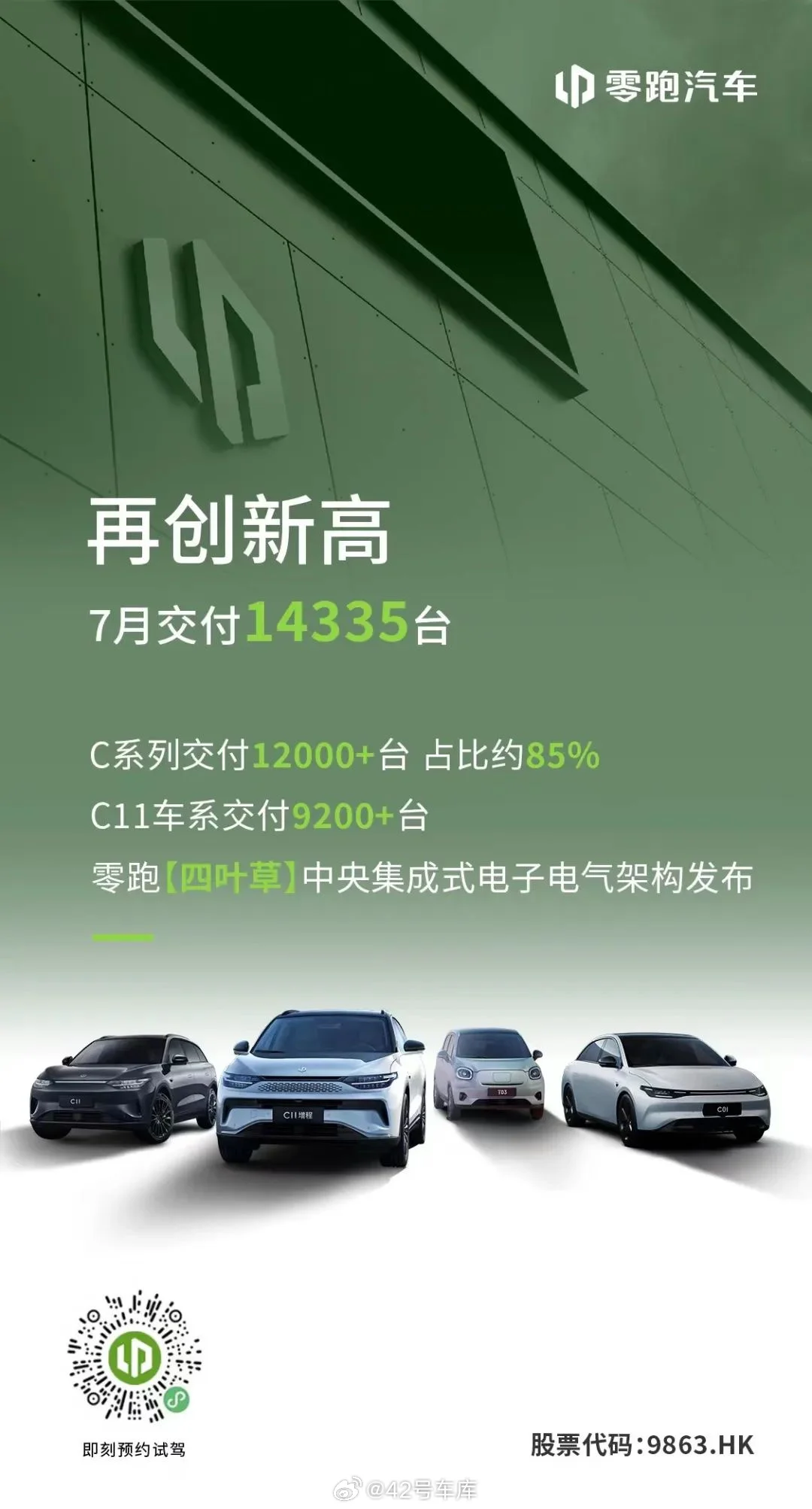
Leapmotor delivered 14,335 vehicles in July, with the C-series accounting for more than 12,000 units; the majority were C11 models, totaling over 9,200 units.
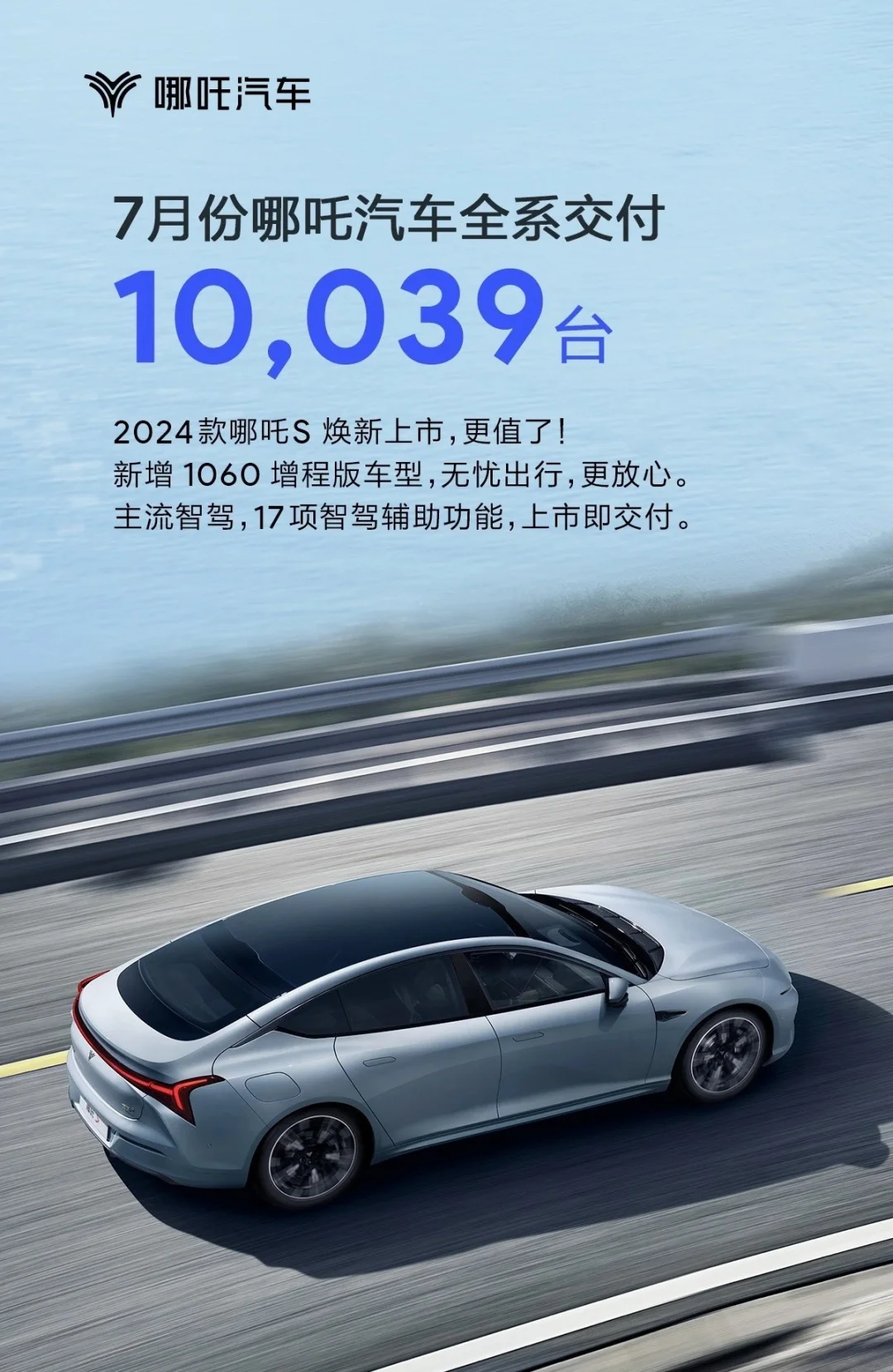
Hozon Auto reported July deliveries of 10,039 units, coinciding with the launch of the 2024 updated Neta S model.
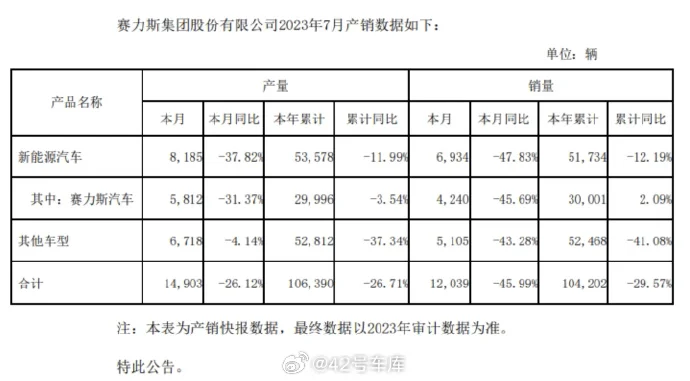
SERES recorded sales of 4,240 units in July, a year-over-year decline of 45.69%, according to its production and sales bulletin.
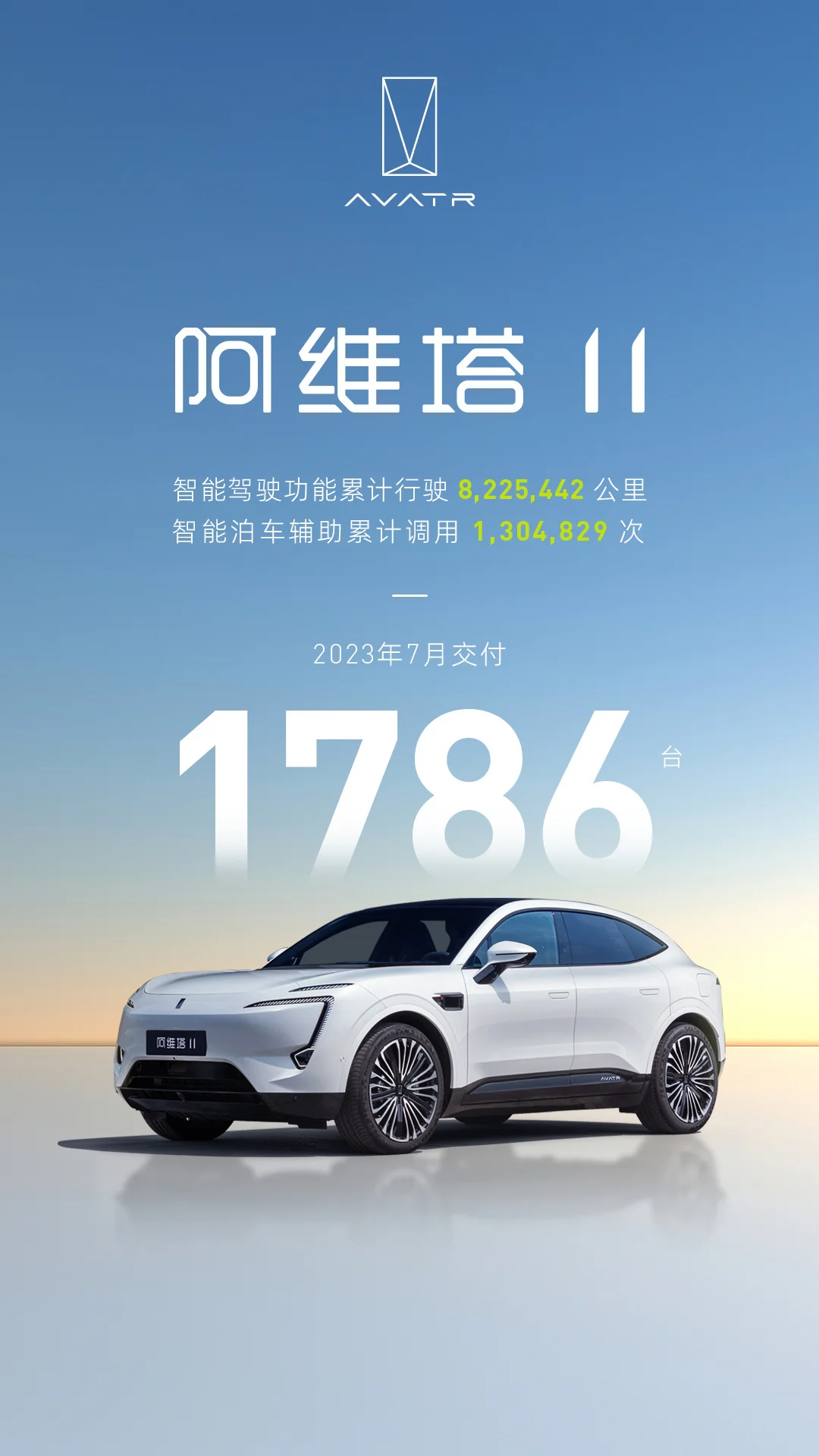
AVATR delivered 1,786 units in July, ranking second among new energy SUVs priced above RMB 300,000.
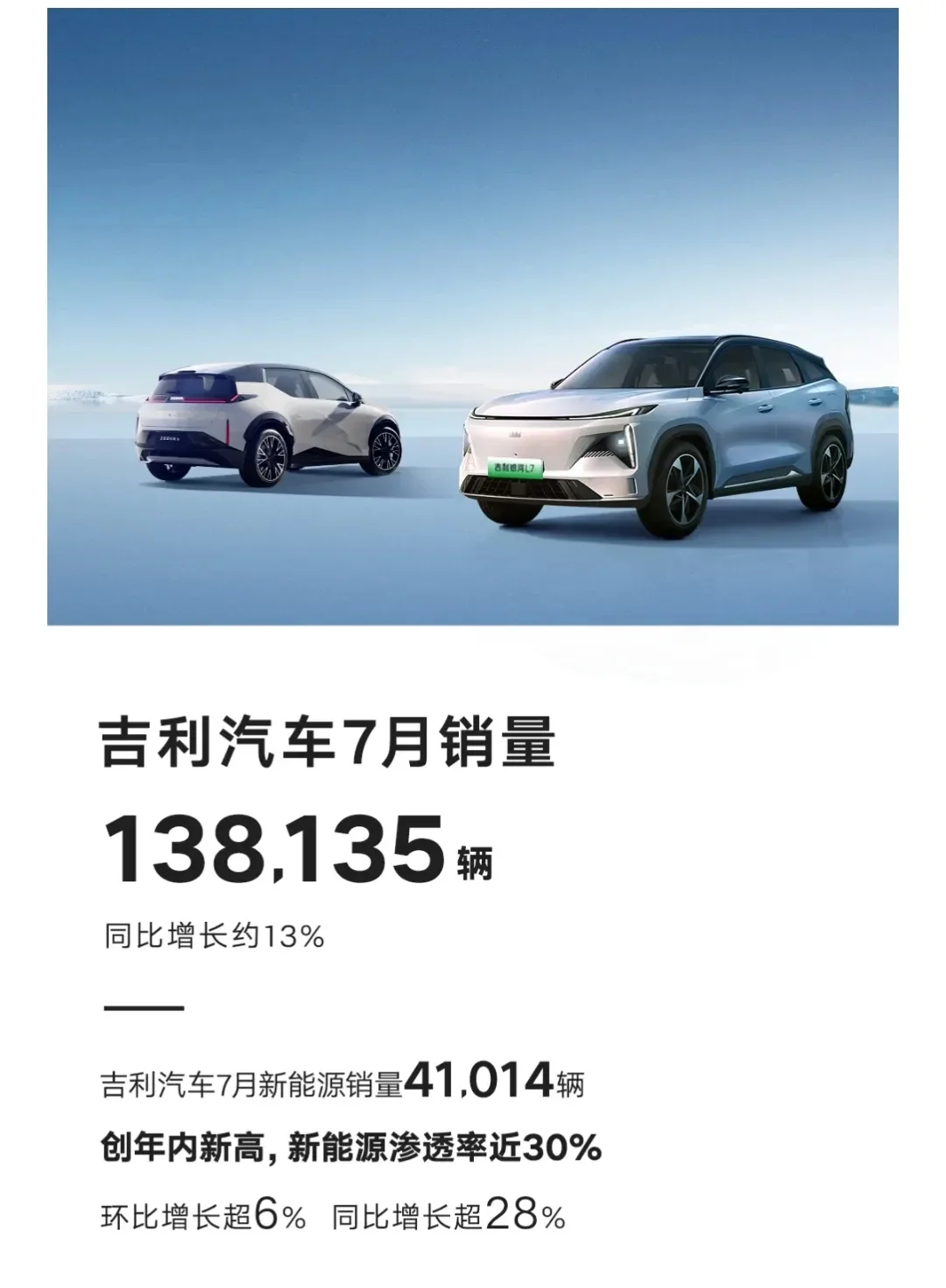
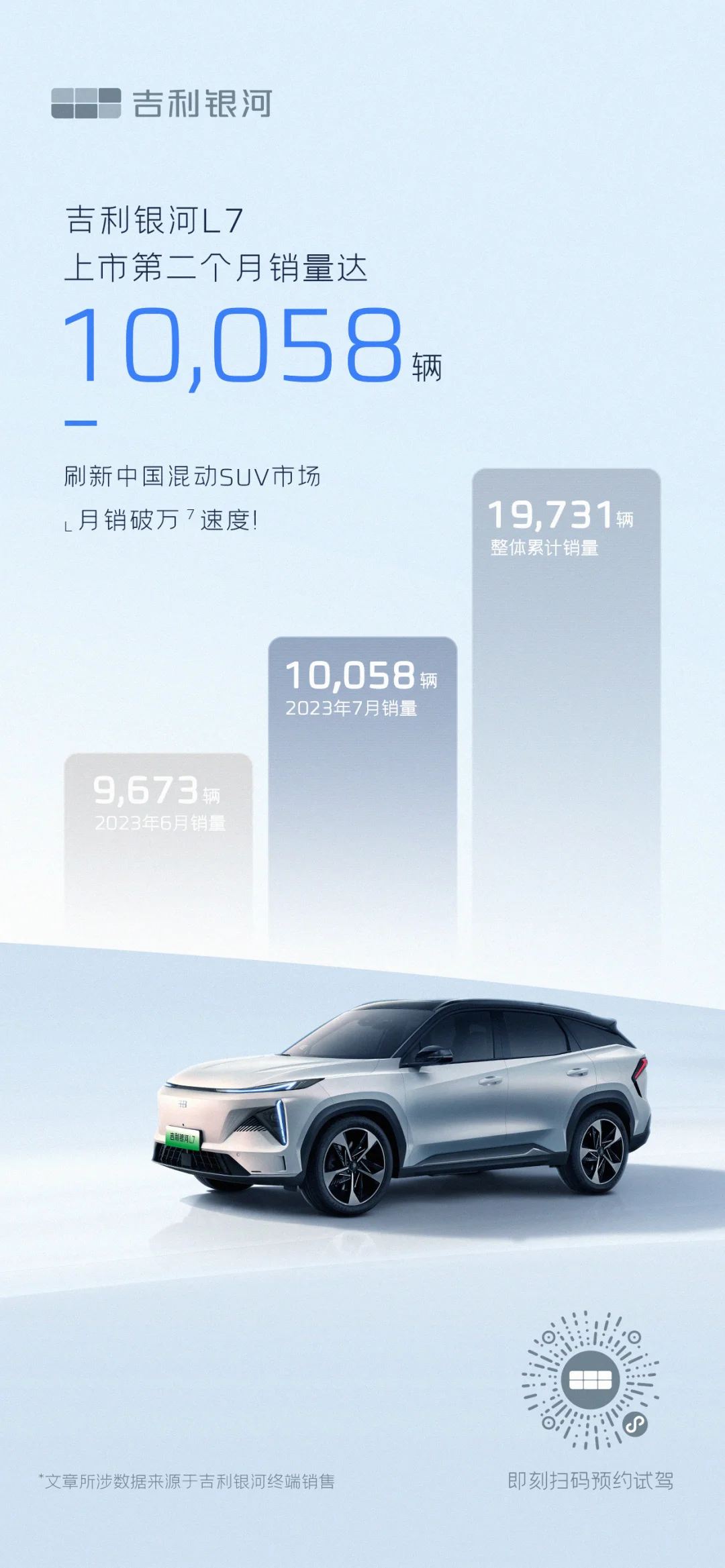
Geely reported total sales of 138,135 units in July, a year-on-year increase of approximately 13%. New energy vehicle sales reached 41,014 units, up more than 28% year-over-year and over 8% month-over-month. The Galaxy series alone delivered 10,058 units with the L7 as its sole model.
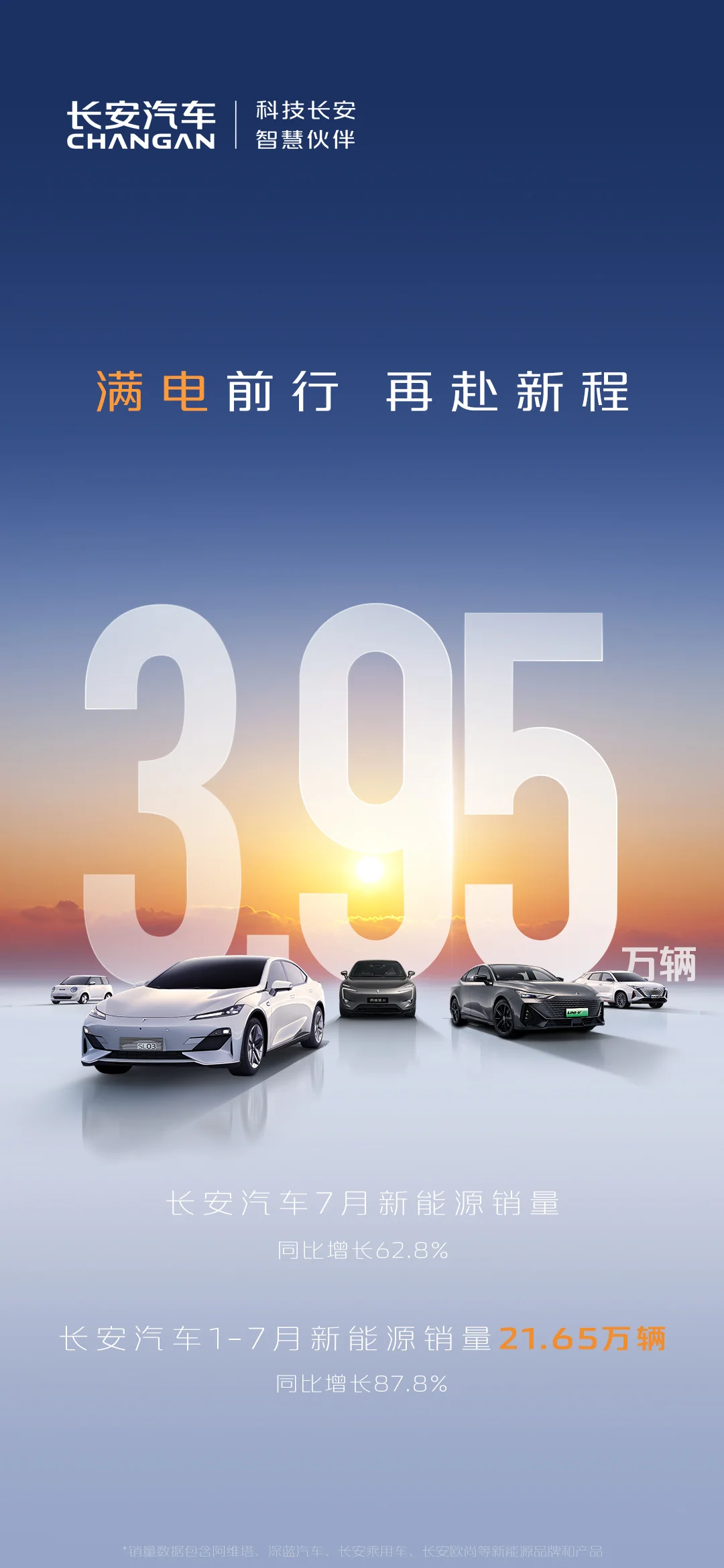
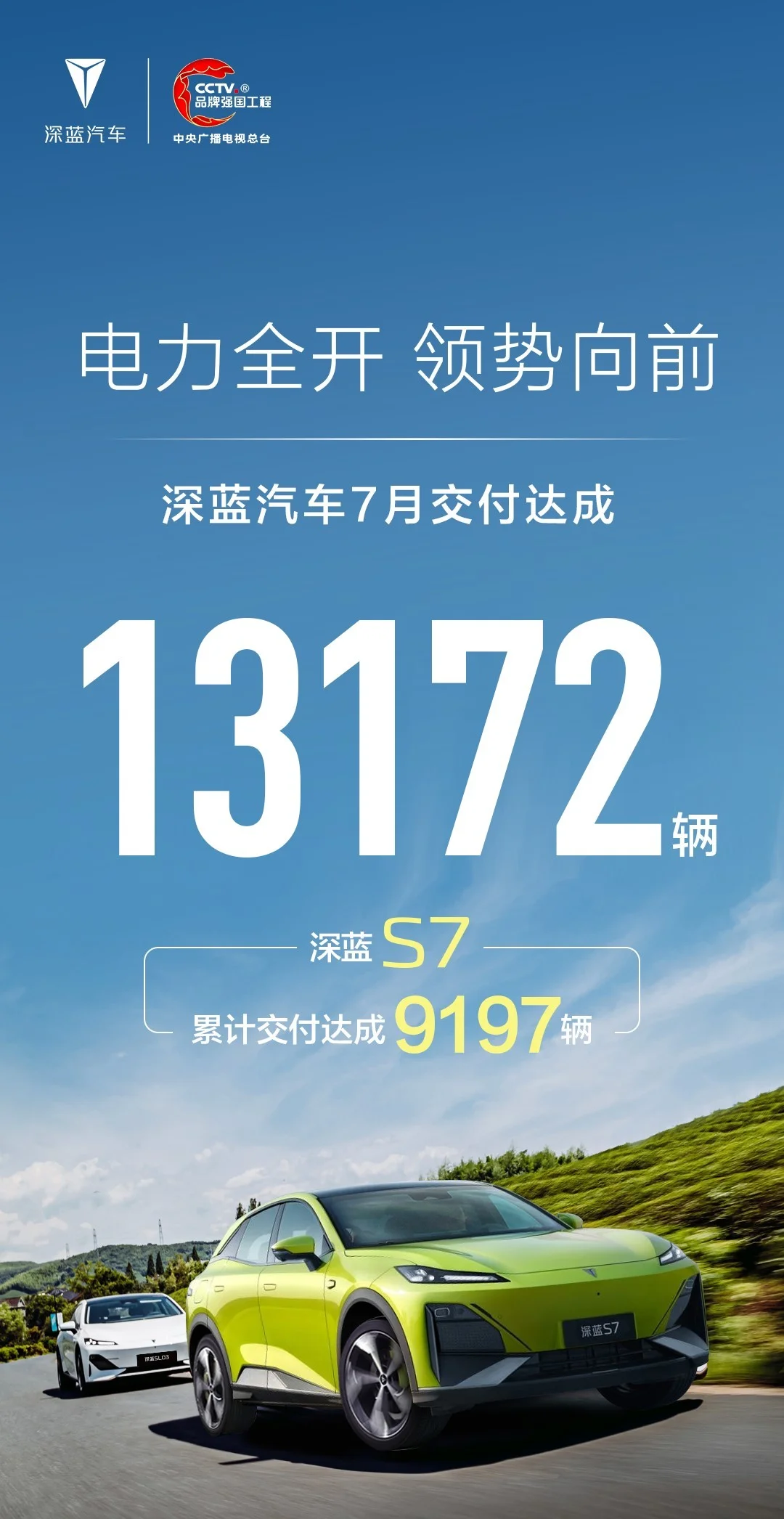
Changan’s new energy vehicle sales totaled 39,500 units in July, representing a 62.8% year-over-year increase. DEEPAL brand deliveries amounted to 13,172 units.
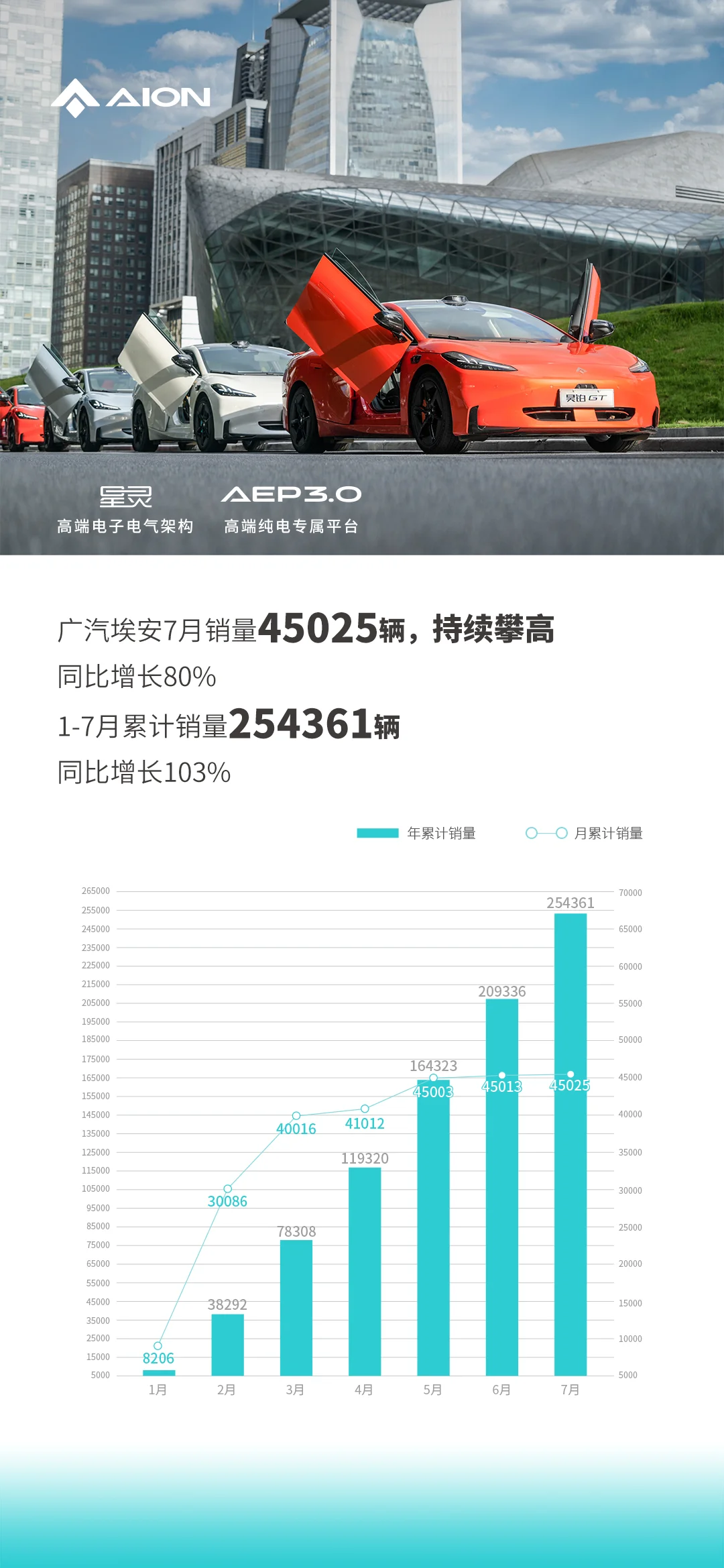
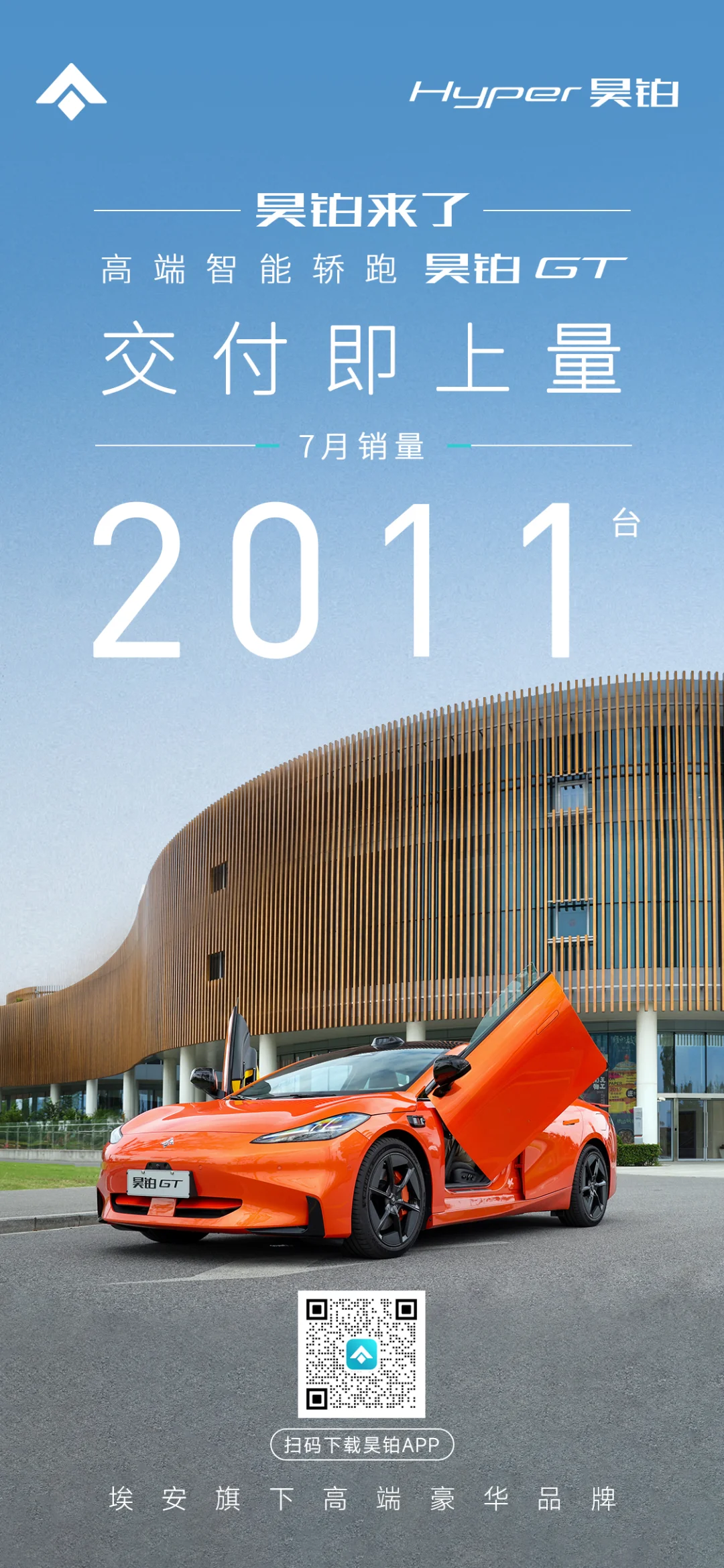
Guangqiaian's July sales volume was 45,025 units, an 80% year-on-year increase. Among them, the premium brand Hyper sold 2,011 units of its first mass-produced model, the Hyper GT.
GWM sold 109,091 vehicles in July, including 28,920 new energy passenger vehicles, a 163.1% year-on-year increase. HAVAL sales reached 62,967 units; WEY's new energy sales totaled 6,652 units, with the Lanshan DHT-PHEV accounting for 5,566 units; ORA sales were 10,116 units; TANK sales reached 13,490 units; and GWM Pickup sales totaled 15,841 units.
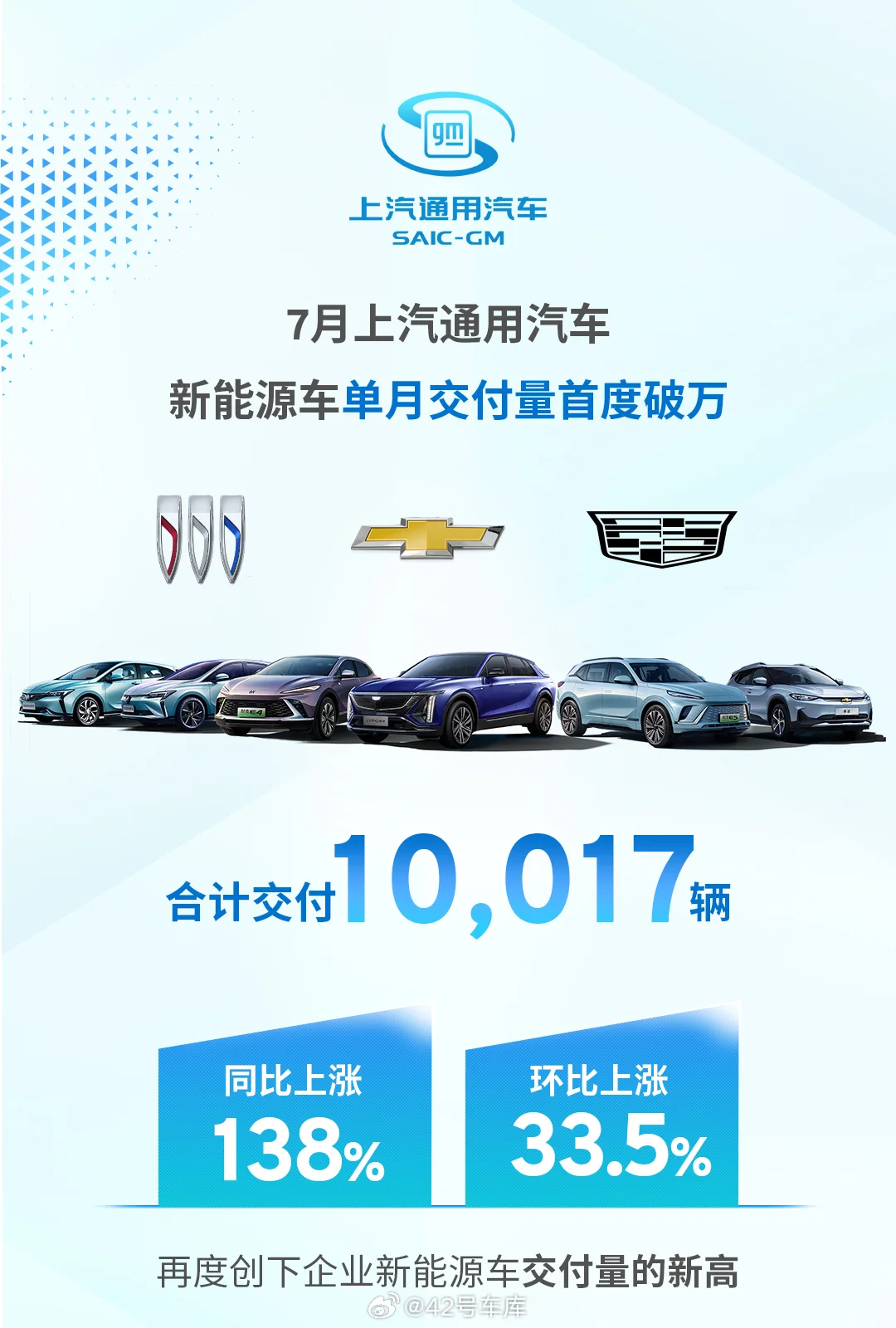
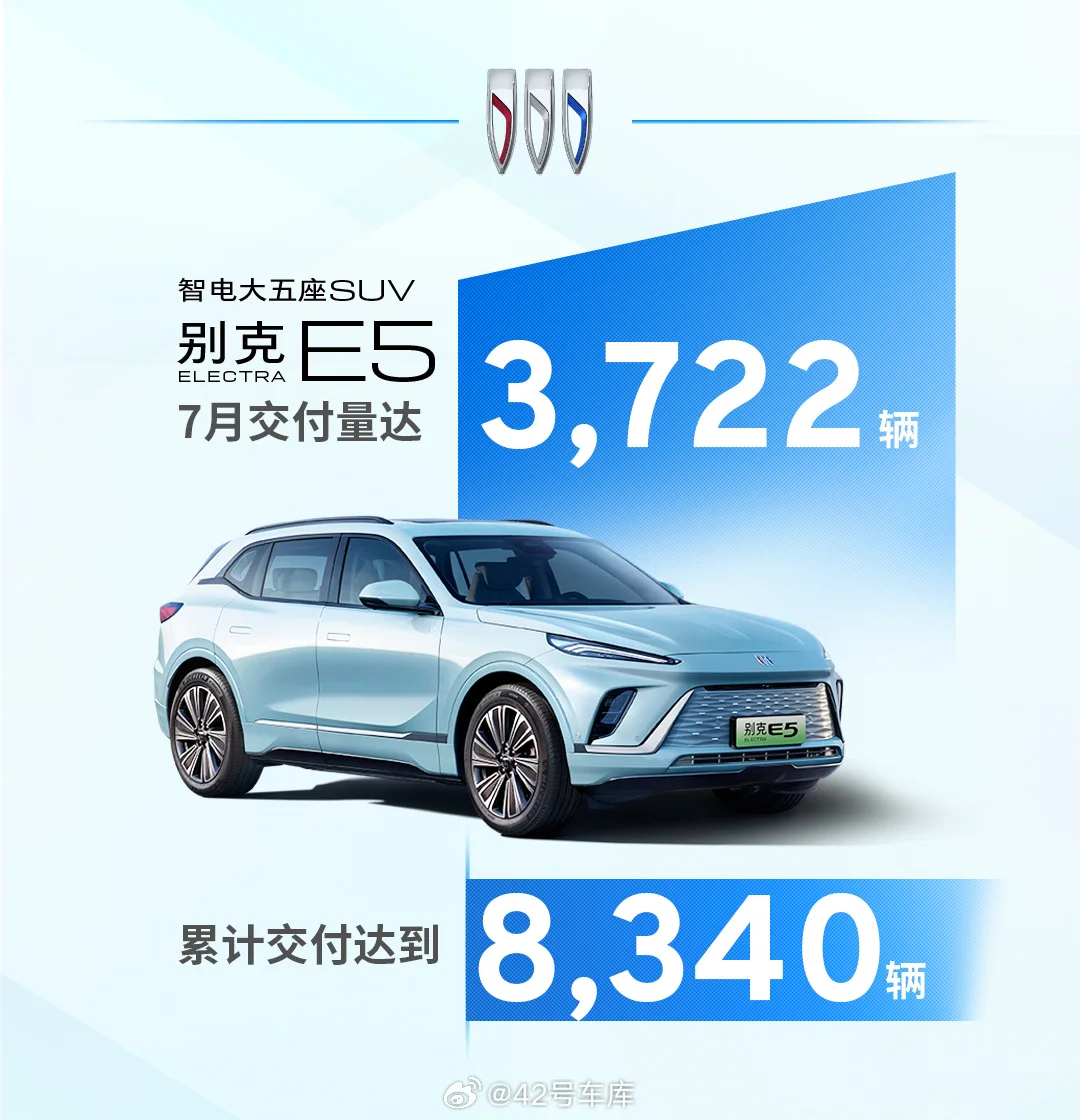
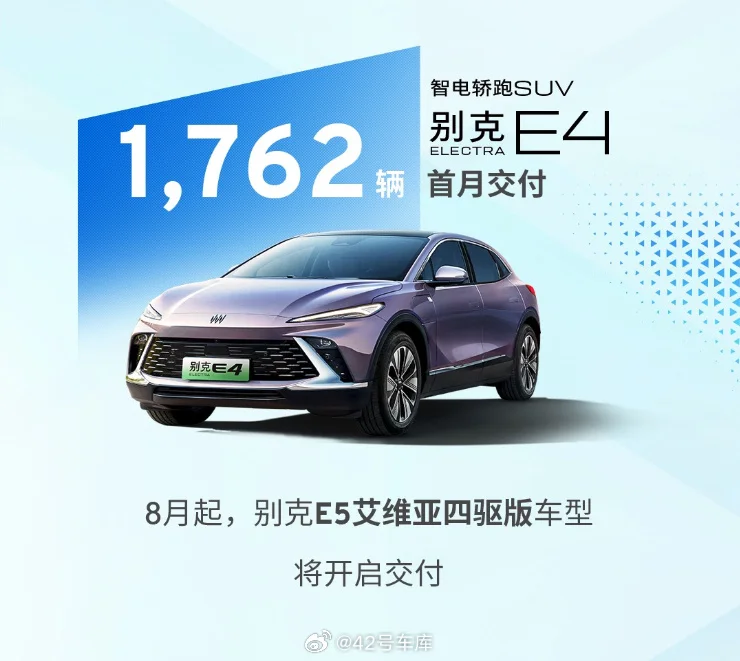
Shangqitongyongqiche new energy vehicle deliveries in July reached 10,017 units, a 138% year-on-year increase and a 33.5% month-on-month increase, marking the first time monthly deliveries exceeded ten thousand units. Among them, Buick E5 deliveries reached 3,722 units, while Buick E4 also had 1,762 units.
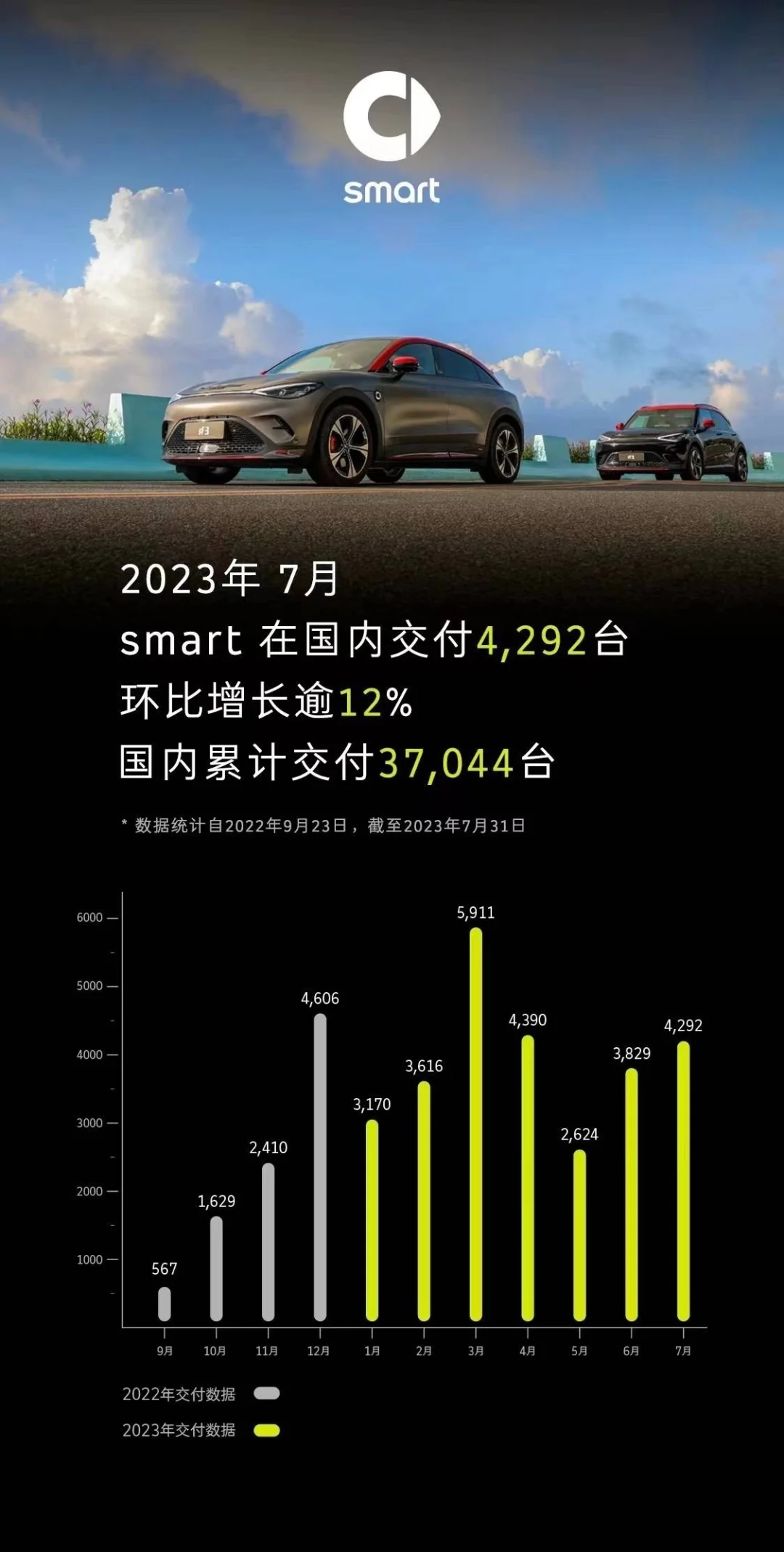
smart delivered 4,292 vehicles in China in July, a month-over-month increase of more than 12%.
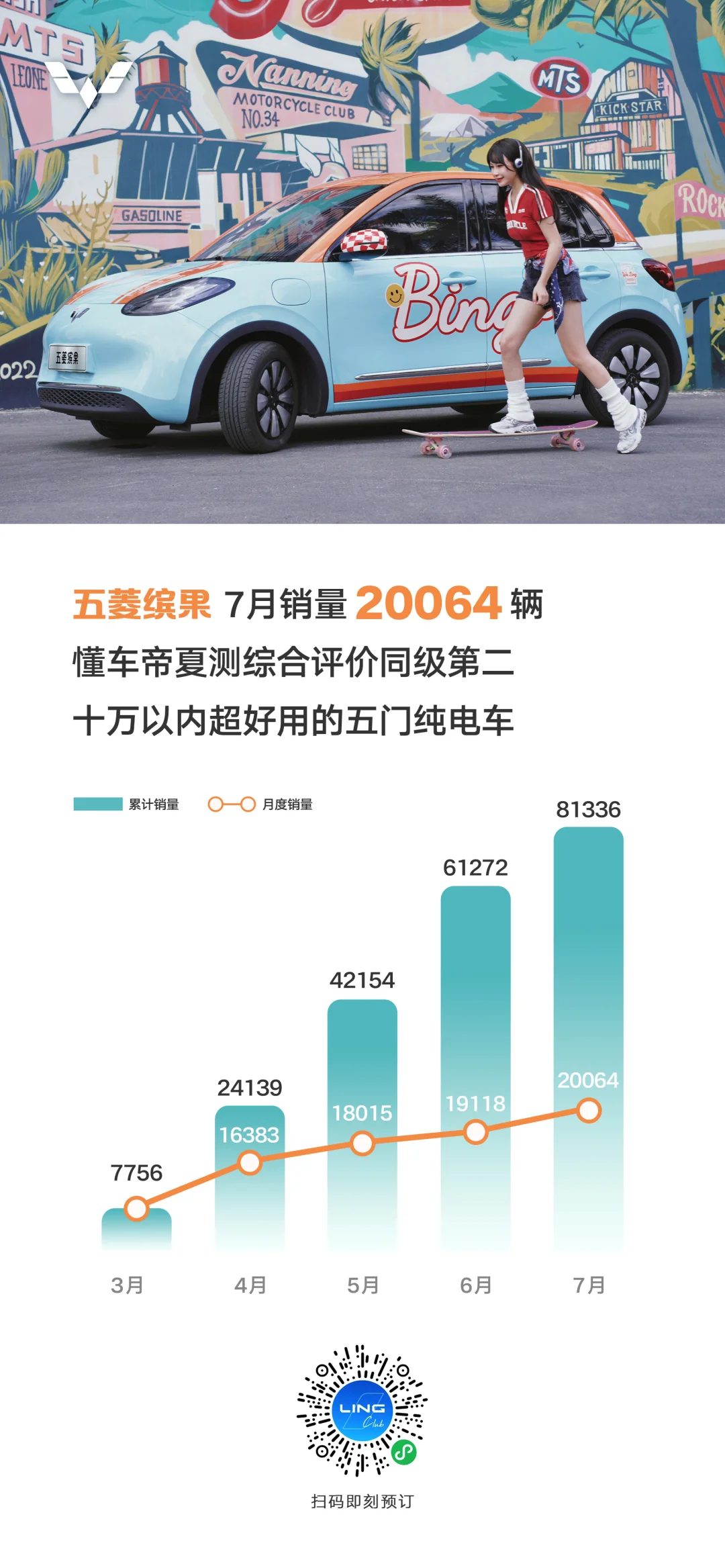
Wuling Bingo sales reached 20,064 units in July, suggesting that the market for compact cars with spacious interiors is substantial.
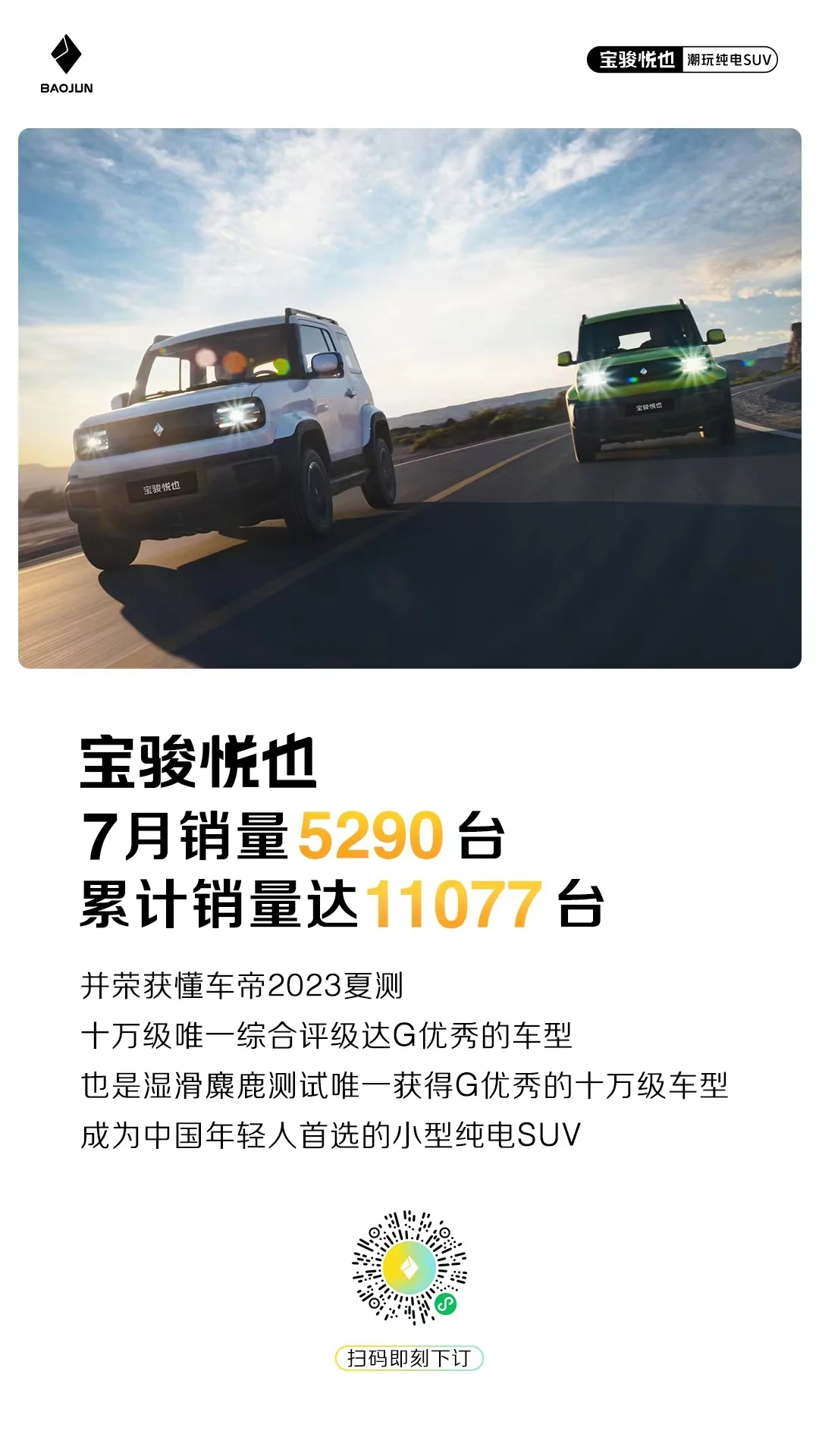
The Baojun Yep, another distinctive small car, sold 5,290 units in July. It remains to be seen how sales will perform once the Yun Duo begins deliveries.
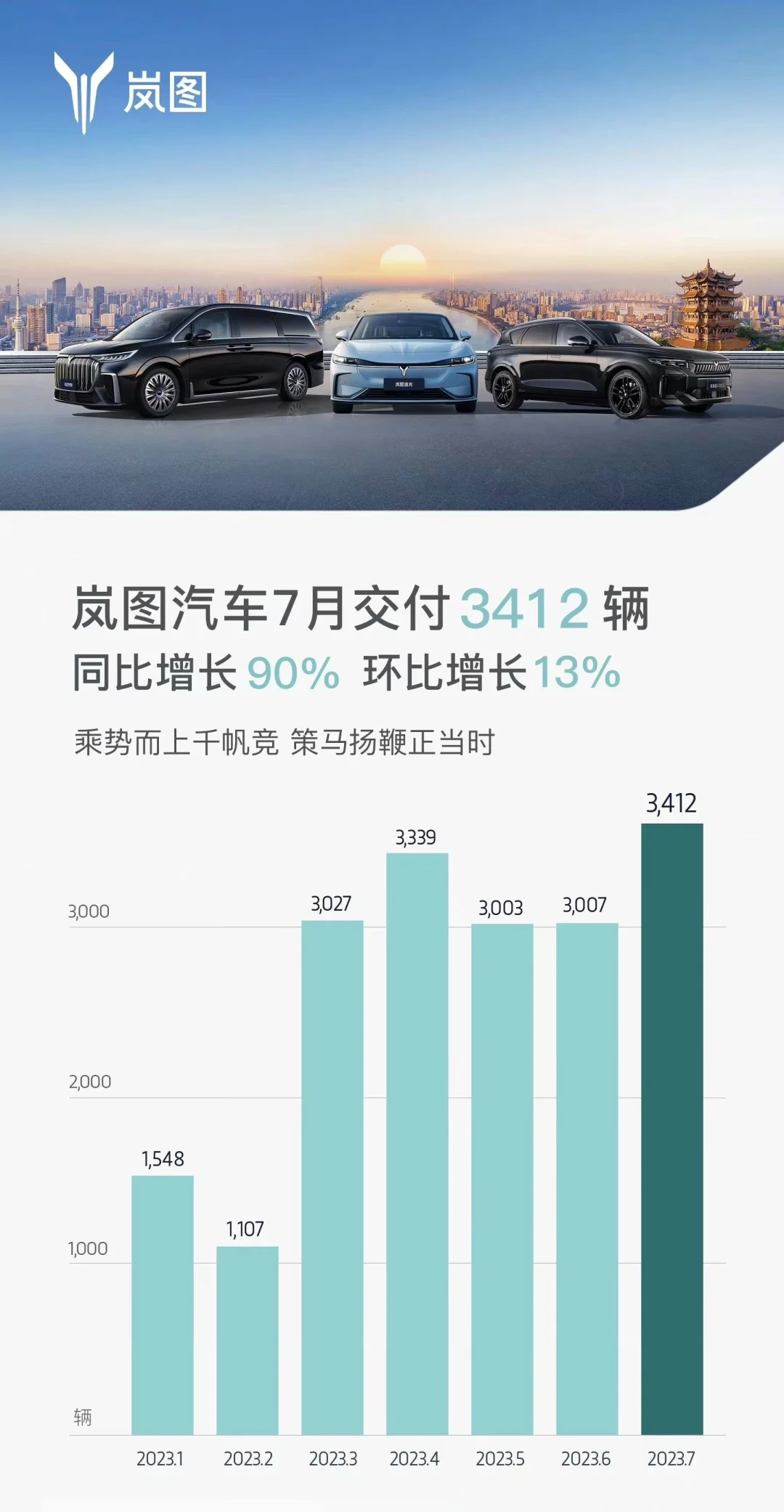
VOYAH delivered 3,412 vehicles in July, representing a year-over-year increase of 90% and a month-over-month increase of 12%.
Finally, BYD cannot be overlooked. In July, sales remained staggering at 262,161 units, of which passenger vehicle sales were 261,105 units, a year-over-year increase of 61%. The Dynasty and Ocean networks recorded 249,959 units in July, up 54.1% from the previous year. Passenger vehicle exports reached 18,169 units in July.

DENZA recorded 11,146 units in July, marking its fifth consecutive month exceeding 10,000 units. This volume was achieved with only the DENZA D9 on sale. With the recent launches of the N7 and N8, these figures are expected to rise further.

Quick Review:
July saw a collective surge in sales across the industry. Among the top-tier new energy vehicle makers, XPENG surpassed 10,000 units, NIO broke through 20,000 units, and Lixiang continued its streak above 30,000 units. In the second tier, Leapmotor and Hozon Auto also successfully exceeded 10,000 units. Traditional automakers like BYD continue their strong momentum, aiming for an annual sales target of 3 million units, while other manufacturers are not far behind. Joint venture brands such as Buick are gaining market share thanks to the product strength and cost-effectiveness of the E4 and E5.
However, amidst this collective success, some automakers like SERES experienced sales declines. We hope they will rebound and achieve better results in the coming months.
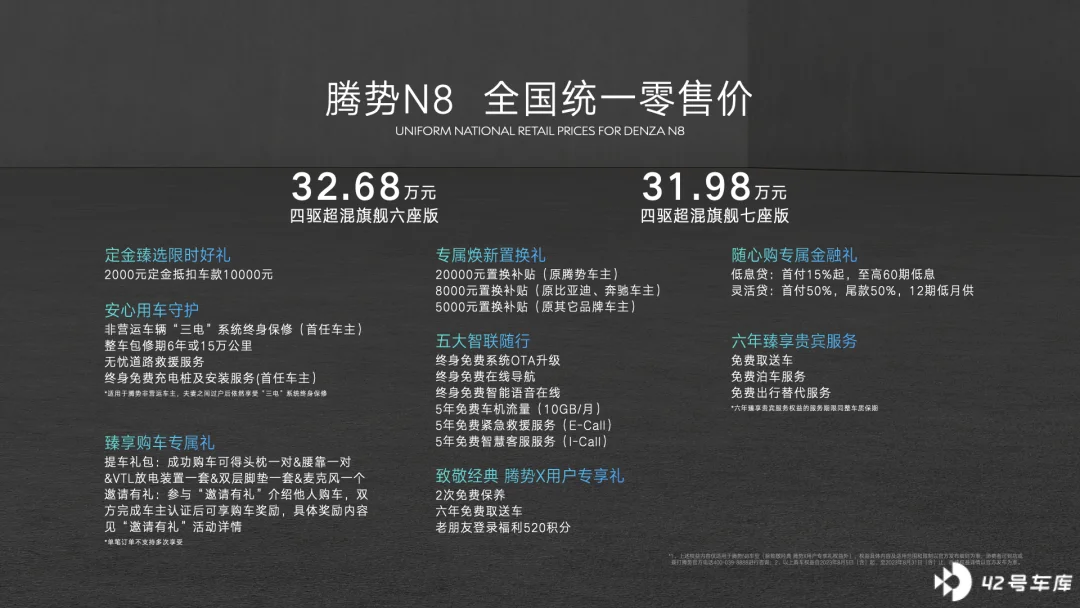
DENZA N8 Officially Launched Starting at RMB 319,800
On August 6, DENZA launched the N8 in two trims:
The four-wheel-drive super hybrid flagship six-seat version at RMB 326,800;
The four-wheel-drive super hybrid flagship seven-seat version at RMB 319,800.
Unlike the N7, which is available only as a pure electric vehicle, the N8 is offered exclusively with a hybrid powertrain.
The DENZA N8 includes more than 200 standard features, such as the Yunjian-C intelligent damping body control system, CCT comfort control system, and full-vehicle Nappa leather seats.
Key buyer benefits include:
A RMB 2,000 deposit that counts toward a RMB 10,000 reservation fee;
Lifetime warranty on the battery, electric motor, and electronic control systems for the first non-commercial owner; a 6-year or 150,000-kilometer vehicle warranty; and free installation of a home charging pile.
A RMB 20,000 trade-in subsidy for former DENZA owners; a RMB 8,000 trade-in subsidy for former BYD and Mercedes-Benz owners; and a RMB 5,000 trade-in subsidy for owners of other brands.
An additional benefit for former DENZA X owners: two free maintenance services, six years of free pickup and delivery service, and 520 points.
Five years of free infotainment data, with 10 GB per month.
A pickup gift package including a pair of headrests, a pair of lumbar supports, a VTL discharge device, double-layer floor mats, and one microphone.
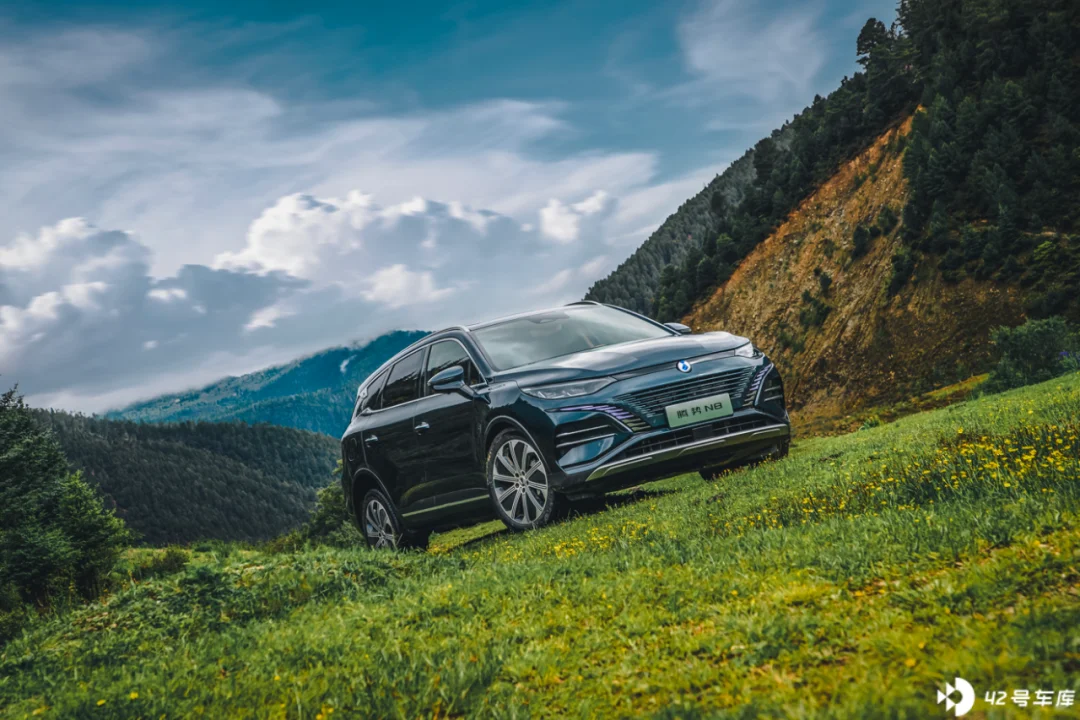
The DENZA N8 is the successor to the DENZA X, officially defined as an all-scenario SUV capable of both urban and off-road use. In terms of dimensions, the DENZA N8 measures 4,989 x 1,950 x 1,725 mm in length, width, and height, with a wheelbase of 2,830 mm. Compared to the DENZA X, it is 59 mm longer, while the width and height remain unchanged, and the wheelbase has increased by 10 mm, resulting in improved interior space.
The DENZA N8's interior features extensive soft-touch materials, suede-like fabric on the ceiling, and crystal trim around the gear selector and air vents, designed to provide a more refined and approachable feel.
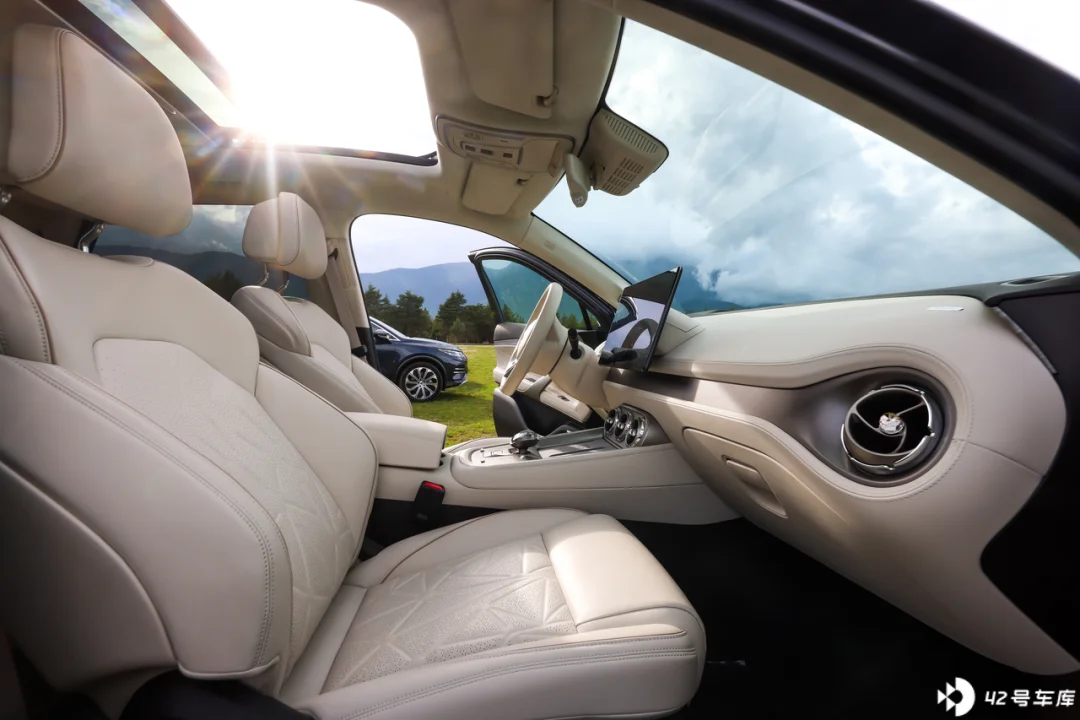
Notably, regarding seat upholstery, the DENZA N8 distinguishes itself from class competitors by using Nappa leather for the entire seat surface, rather than limiting it to areas in direct contact with occupants, thereby enhancing the cabin's luxurious feel.
The DENZA N8 is equipped with the DM-p super hybrid system, combining an EHS electric hybrid system and a 1.5-liter Xiaoyun engine with a thermal efficiency of 40.12%. The combined motor output reaches 360 kW, enabling acceleration from 0 to 100 km/h in just 4.3 seconds.
Meanwhile, the DENZA N8 inherits and upgrades the Mercedes-Benz chassis tuning from the DENZA X. It is equipped with the DiSus-C intelligent damping body control system and CCT comfort control technology, and supports OTA updates. In terms of four-wheel-drive performance, the DENZA N8 features an electronic four-wheel-drive system that offers shorter and more precise power transmission paths compared to traditional mechanical systems. It also includes a rear mechanical differential lock to further enhance off-road capability and improve the user's off-roading experience.

While boasting strong off-road performance, the DENZA N8 also prioritizes energy replenishment and cost-effectiveness. It is fitted with a 45.8 kWh dedicated hybrid Blade battery and supports 90 kW fast charging for its plug-in hybrid variant. Under NEDC conditions, it achieves an all-electric range of 216 km and a combined range of 1,030 km, with a fuel consumption of 6.45 L per 100 km when the battery is depleted.
In terms of smart interior space, the DENZA N8 features the DENZA Link ultra-smart interactive cockpit. This system enables three-screen linkage between the 12.3-inch instrument cluster, W-HUD, and 15.6-inch central touchscreen. It also supports voice control covering over 1,000 vehicle functions and allows for instant dialogue across four distinct audio zones.
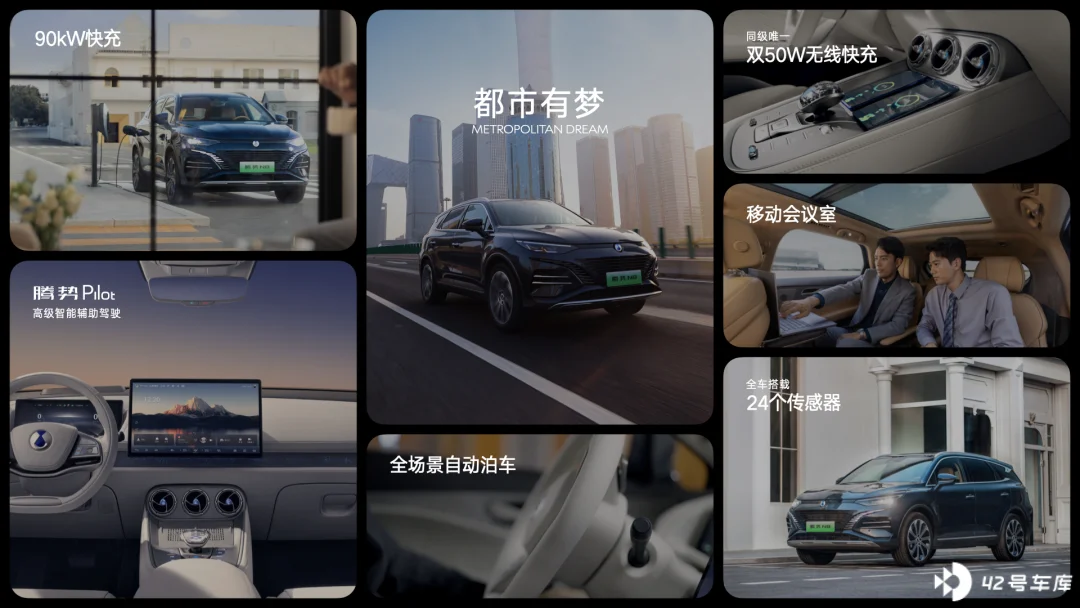
For intelligent driving, the DENZA N8 comes standard with the DENZA Pilot intelligent driver assistance system, equipped with 12 ultrasonic radars, five high-precision millimeter-wave radars, four intelligent surround-view cameras, and one intelligent high-perception camera, enabling L2+ level driver assistance. However, given the DENZA N8's product definition that balances urban use and off-road capabilities, it does not feature advanced driver assistance configurations like the 'God's Eye' system found in the DENZA N7.
Quick Review:
Although the DENZA N8 and the DENZA N7, priced at RMB 301,800 to RMB 379,800, have some price overlap, they will not engage in "brotherly infighting" when viewed from their target user groups and product definitions.
DENZA N8, as mentioned above, is a plug-in hybrid model that balances family needs with off-road capabilities, offering stronger "multi-functional attributes," while DENZA N7 serves as the product that sets the tone for the entire DENZA brand's electrification and intelligence. Although both are SUVs, they are actually two completely different products.
DENZA N8, N7, and even the D9 are all priced in the 300,000 to 500,000 yuan range. This allows DENZA to concentrate its efforts on breaking through in this specific price segment, aiming to establish and strengthen its brand image within the 300,000 to 500,000 yuan bracket. The three models cover different user groups, indicating that DENZA’s ability to respond and its speed of execution are continuously improving in the fiercely competitive market environment.
Leapmotor Unveils Next-Generation "Clover" E/E Architecture, Available for Licensing to Other Manufacturers
On July 31, Leapmotor unveiled its next-generation centrally integrated electronic and electrical architecture, named the "Clover." According to official information, the core electronic components of the Clover architecture are fully developed in-house by Leapmotor and are currently nearing mass production. The first vehicle to feature this architecture will make its debut at the Munich Motor Show in September.
Notably, with the release of its Cloverleaf architecture, Leapmotor no longer limits itself to the identity of an automaker; it also aims to serve as a provider of comprehensive smart electric vehicle solutions. Leapmotor Chairman Zhu Jiangming stated that the company is eager to share its technology and has already granted licensing agreements to two other automakers.
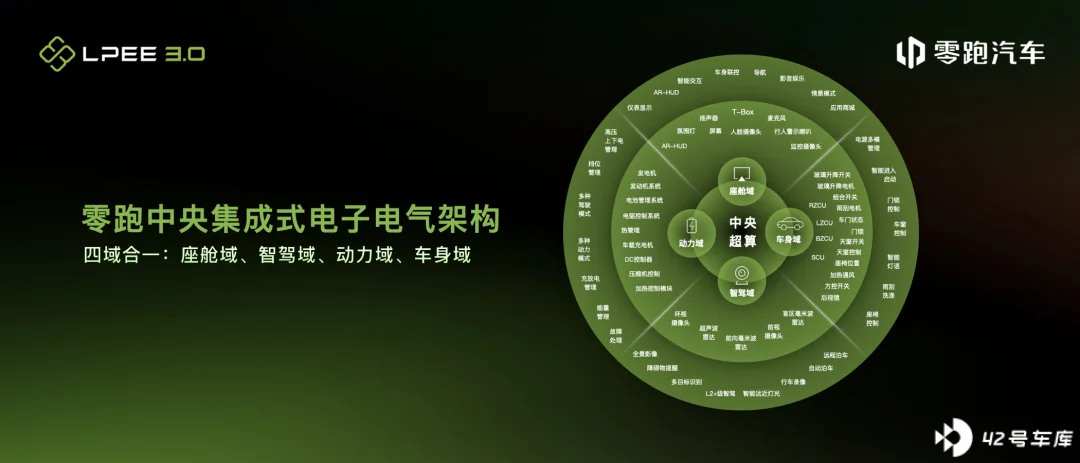
As Leapmotor's next-generation "Central Integrated Electronic and Electrical Architecture," the Clover architecture integrates the cockpit, intelligent driving, powertrain, and body domains into a single unit to achieve high-level central supercomputing. This design enables efficient coordination of core components in smart electric vehicles, representing the only electronic electrical architecture that has truly realized central integration.
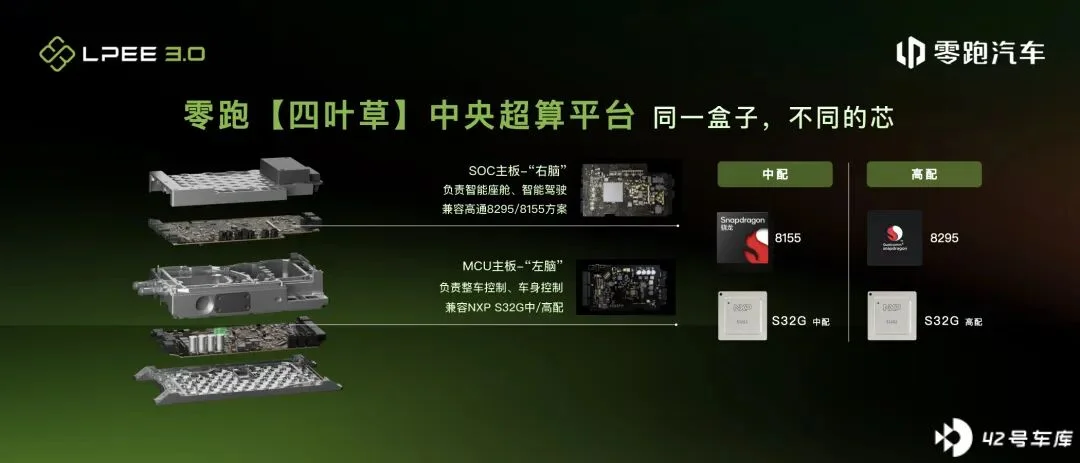
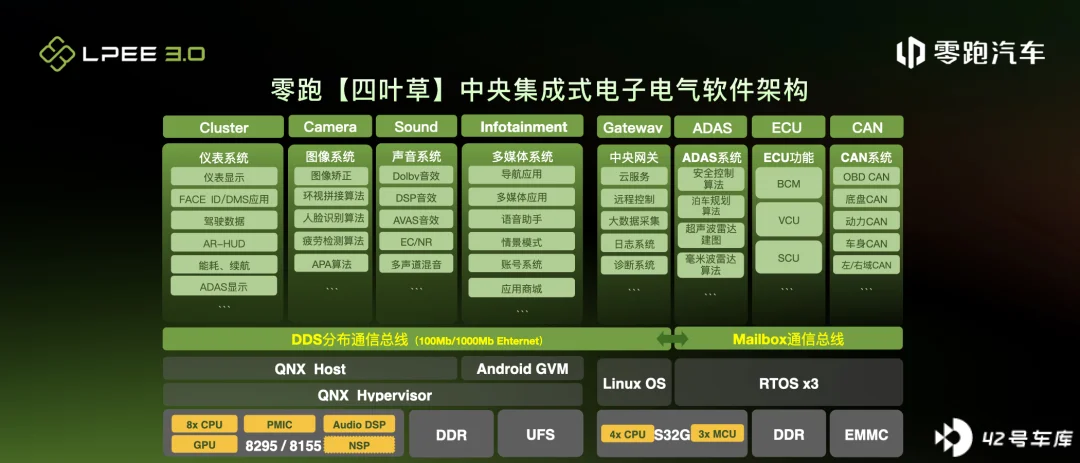
The Clover architecture is powered by two chips: an SoC (Qualcomm Snapdragon 8295 or 8155) and an MCU (NXP S32G). The Qualcomm Snapdragon 8295 delivers 30 TOPS of computing power, laying the foundation for efficient collaboration among internal vehicle modules. The NXP S32G offers robust security and communication capabilities, providing top-tier vehicle information processing capacity and supporting high-speed responses to massive data streams.
These two chips form the vehicle's "central supercomputer," functioning like its "left and right brains." The SoC acts as the "right brain," handling the smart cockpit and intelligent driving functions, while the MCU serves as the "left brain," managing overall vehicle control and body control. Through this coordinated effort, Leapmotor achieves more powerful autonomous driving capabilities and a smoother smart cockpit experience.
Leapmotor has fully self-developed 15 modules—including vehicle control, body control, gateway management, thermal management, instrument cluster information systems, infotainment systems, 360-degree surround view, Automatic Parking Assist (APA), fatigue monitoring, life sign detection, dashcam recording, Sentry Mode, sound alerts, DSP amplifiers, and video conferencing—and integrated them into a single central supercomputing module. This solution addresses the challenge of excessive Electronic Control Units (ECUs) found in previous distributed and domain-controller-based architectures.
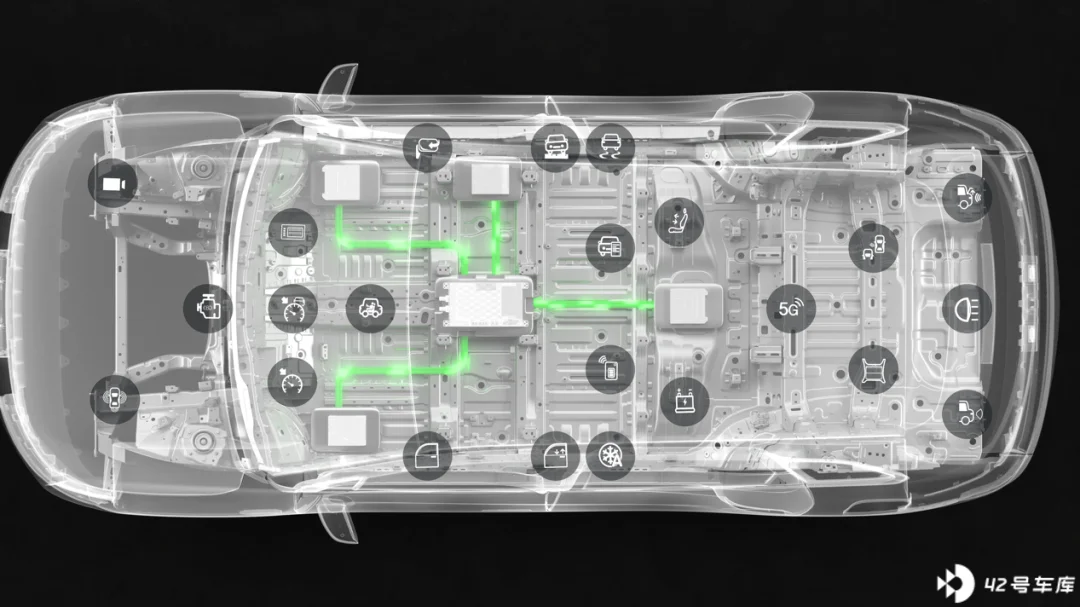
To ensure the central supercomputing module operates within the optimal temperature range for peak performance and longevity, Leapmotor employs liquid cooling for thermal management. This approach keeps the chips in their ideal working state, enhancing the vehicle's smart interaction capabilities and improving the response speed of its intelligent driving systems.
The significant reduction in ECUs has shortened the vehicle wiring harness to under 1.5 km, reducing its weight by 23 kg. This contributes to overall body weight reduction and improves energy efficiency. Additionally, the shorter harness enhances data transmission speeds.
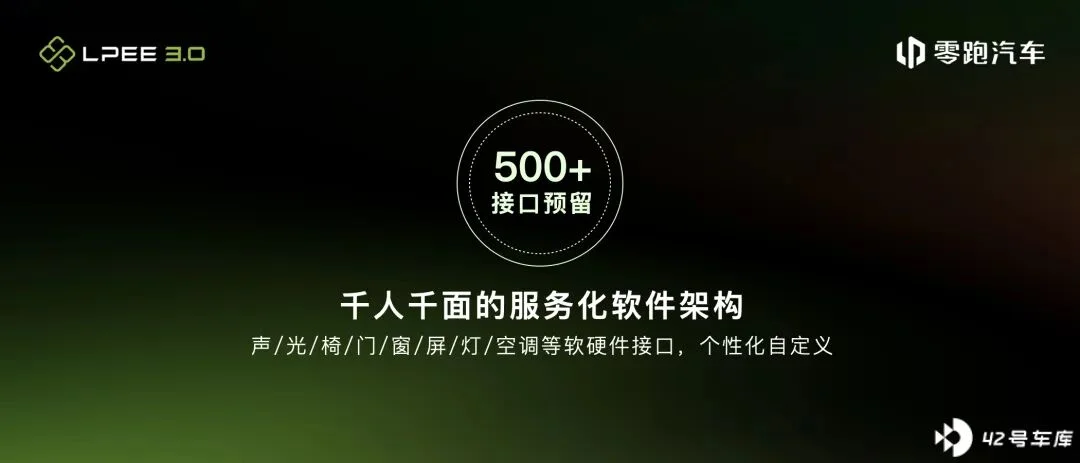
The Clover architecture features more than 500 reserved interfaces, enabling functional integration across the cockpit, autonomous driving, powertrain, and body systems. This provides users with greater customization options.
On the software side, the Clover architecture utilizes separate SoC and MCU codebases. This resolves issues common in traditional domain-controlled architectures, such as fragmented code management, difficult protocol standardization, and inefficient system operation, ultimately resulting in stronger compatibility between systems.
Thanks to the high level of central integration in the Clover architecture, Leapmotor can evolve the entire vehicle through a single over-the-air (OTA) update for its supercomputing platform. The system supports background automatic updates. Upon completion, the vehicle prompts the user to switch to the latest system, allowing for immediate activation and a more responsive OTA experience.
From a product implementation perspective, the Clover architecture will be applied to Leapmotor's entire model lineup, supported by three specific solutions. Specifically:
Standard solution:
Qualcomm 8155 + NXP S32G (3-core)
Supports 6 to 12 speakers, four screens, and an AR-HUD;
Supports four surround-view cameras, one face-recognition camera, and 12 ultrasonic radars.
Mid-tier solution:
Qualcomm 8295 + NXP S32G (7-core), delivering 30 TOPS of computing power.
Supports up to 20+ speakers (with external power amplifiers), four 2.5K-resolution video inputs, one 1080P input, and two 720P inputs.
Supports four surround-view cameras for L2 / L2+ intelligent driver assistance.
High-end solution:
Qualcomm 8295 + NXP S32G (7-core) + NVIDIA Orin X, providing the vehicle with 284 TOPS of computing power.
Supports up to 20+ speakers (with external power amplifiers), four 2.5K-resolution video inputs, one 1080P input, and two 720P inputs.
Supports LiDAR, high-definition maps, four surround-view cameras, four blind-spot cameras, and four blind-spot corner radars to enable L2++-level advanced driver assistance systems (ADAS).
Quick Review:
Overall, the launch of the Clover architecture is an inevitable outcome of Leapmotor’s push into automotive intelligence.
On one hand, Leapmotor aims to further leverage the cost advantages gained from its previous full-stack in-house development to expand profit margins. On the other hand, by exporting technology, Leapmotor hopes to diversify revenue streams beyond vehicle sales, thereby broadening its market presence. From a market perspective, Leapmotor also intends to demonstrate its technical capabilities to boost confidence among external stakeholders.
However, there will be a considerable amount of time between the introduction of the Clover architecture and when it translates into tangible revenue value for Leapmotor’s automotive business.
Therefore, against a backdrop of persistent and intensifying market uncertainty, it is crucial for new-energy automakers like Leapmotor to not only plan for the future but also prioritize immediate actions to boost monthly sales of their models—aiming for targets of 20,000 units or more. After all, survival is the prerequisite for long-term development.
Starting from 73,800 RMB: Neta AYA Officially Launched
On August 3, Hozon Auto unveiled the successor to the Neta V, the Neta AYA. The model is available in four trims:
318 Lite at RMB 73,800;
318 at RMB 78,800;
401 Lite at RMB 84,800;
401 at RMB 88,800.
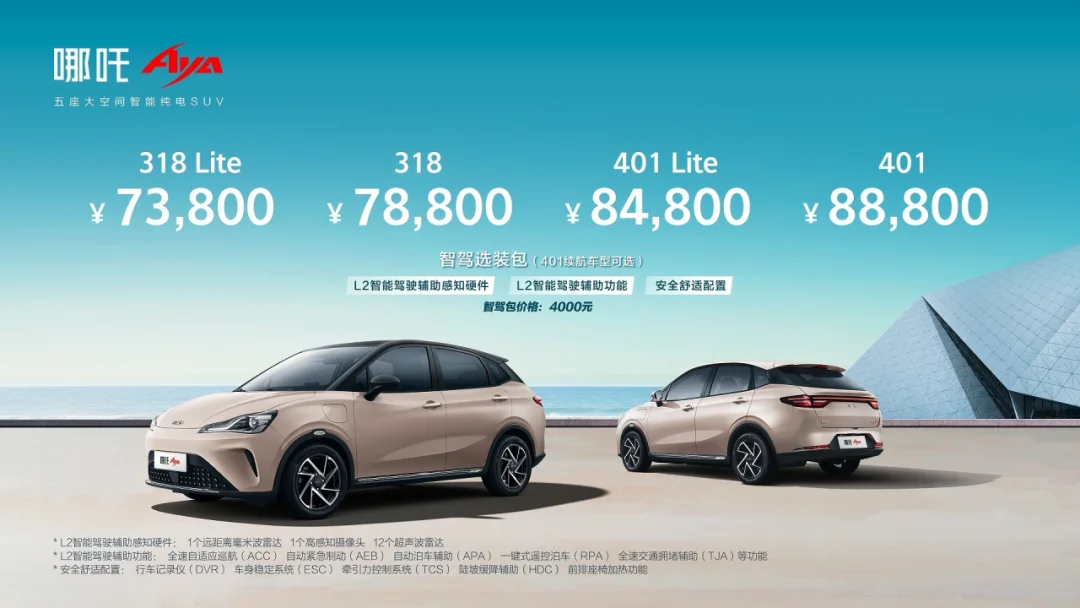
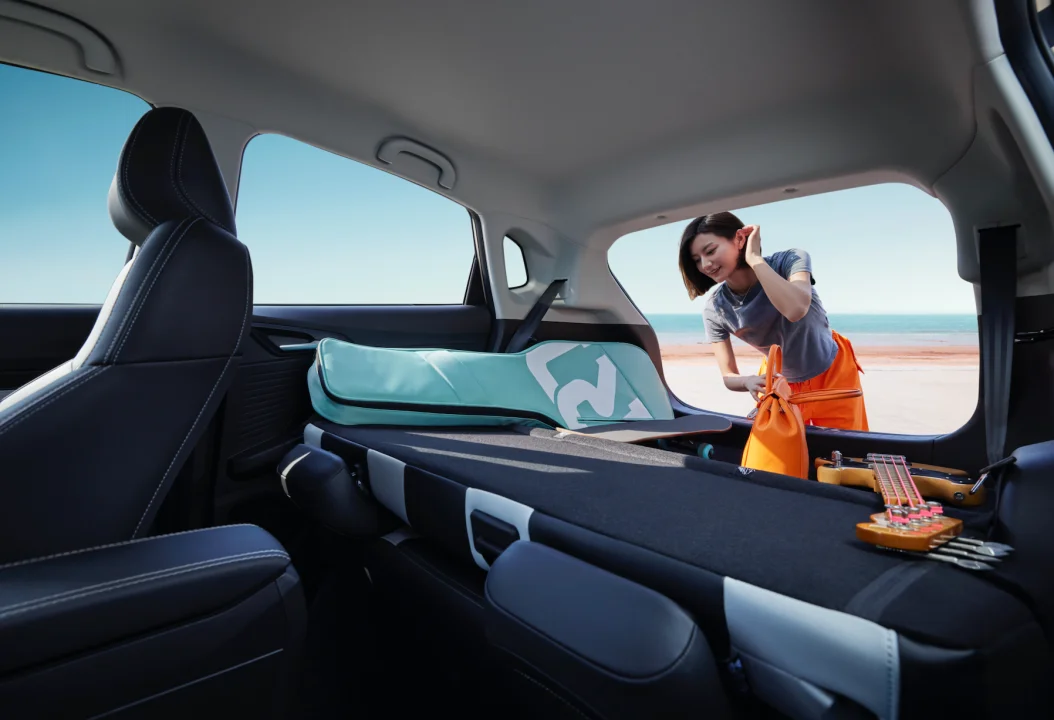
The Neta AYA measures 4,070 x 1,690 x 1,540 mm, offering a body size larger than typical A0-segment vehicles and featuring an innovative five-seat layout. The trunk provides 335 liters of space, expandable to 588 liters with seats folded. Design-wise, the Neta AYA continues the classic "Self-Confidence" theme and introduces "Universe" as a new design inspiration for the first time. Five trendy color options are available for consumers.
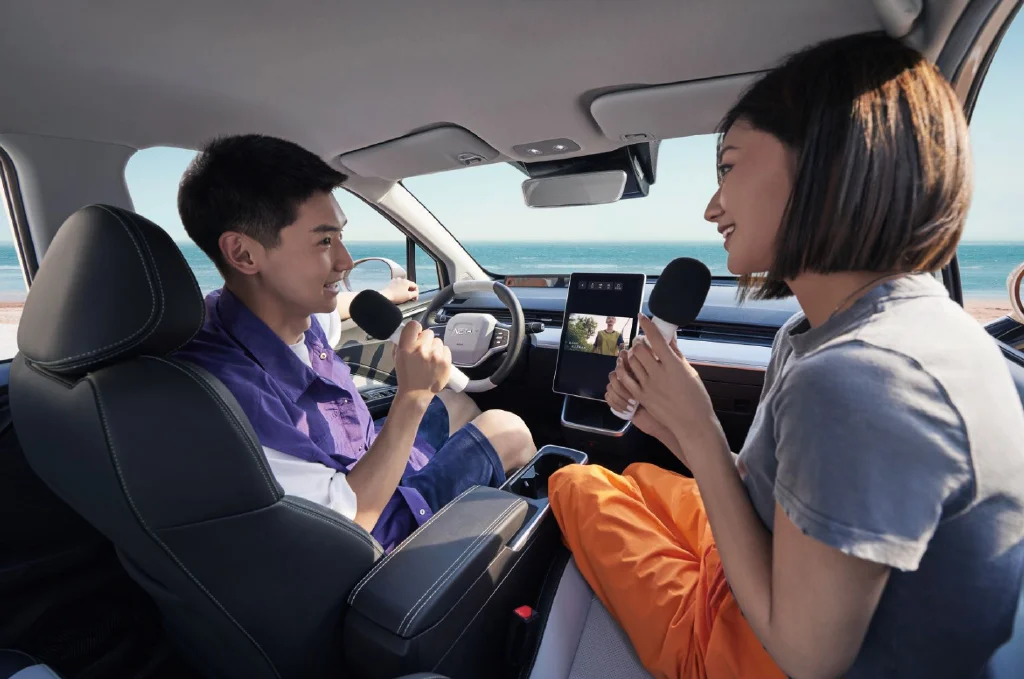
The Neta AYA comes standard across its entire lineup with a 14.6-inch large central control screen, powered by the more capable MT8675 chip. It features an industry-leading Neta AI voice system that supports 'what you see is what you say,' continuous dialogue, dual-zone positioning, and one-voice direct commands.
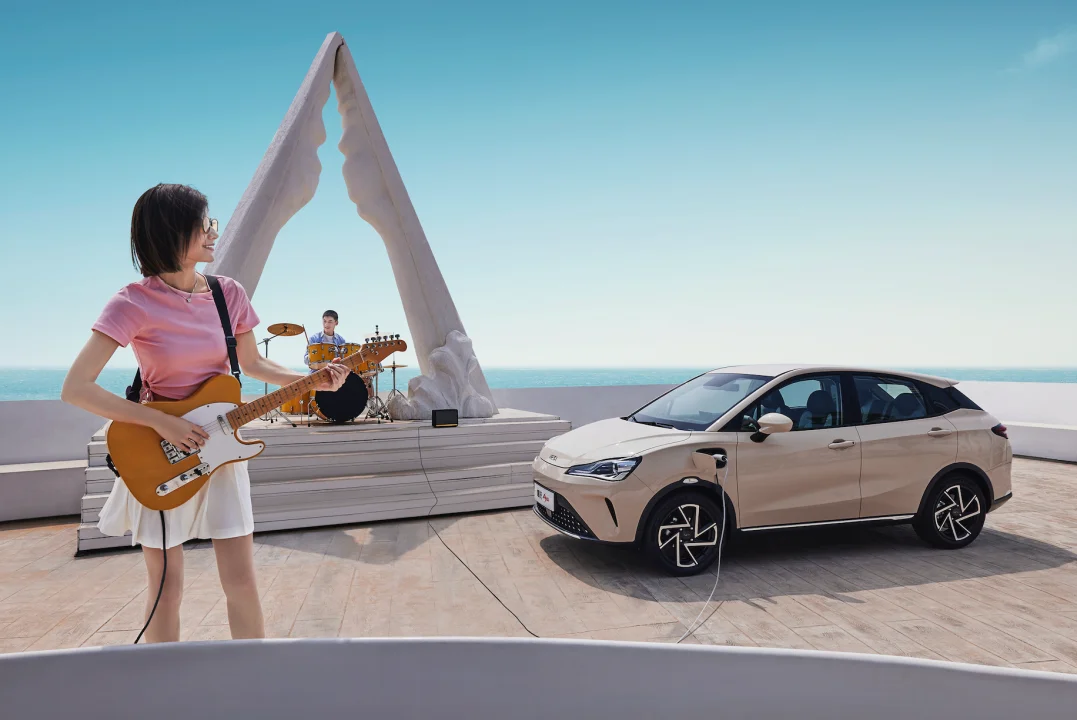
In CLTC comprehensive test cycles, the Neta AYA offers range options of 401 km and 318 km. It supports power bank functionality and fast charging, enabling users to enjoy long-distance travel. Equipped with a 70 kW six-in-one motor, the Neta AYa accelerates from 0 to 50 km/h in just 4.1 seconds, allowing drivers to fully enjoy both long trips and spirited driving.
The Neta AYA delivers L2-level intelligent driver assistance, featuring 16 functions including ACC full-speed adaptive cruise control, AEB automatic emergency braking, APA automatic parking, and RPA remote parking systems.
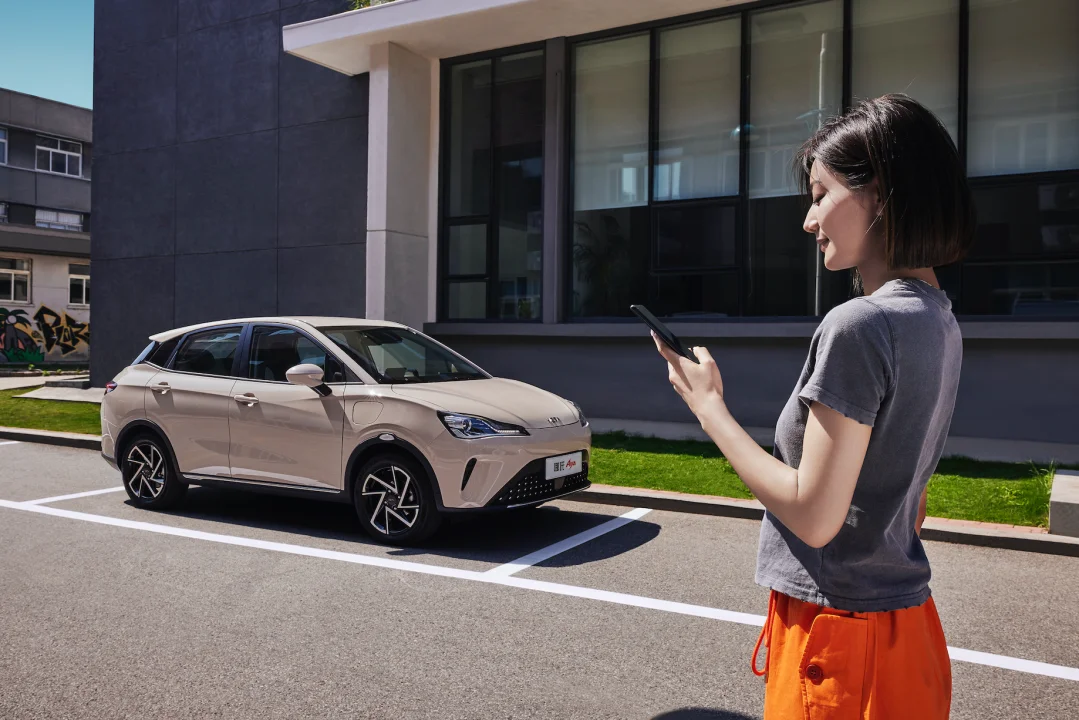
Additionally, the Neta AYA includes premium amenities such as high-grade leather seats, a multi-function leather steering wheel, and a front center armrest. Safety features include automatic headlights, rearview cameras, and one-touch auto-up/down anti-pinch windows on all four doors, ensuring comfort and safety for every journey.
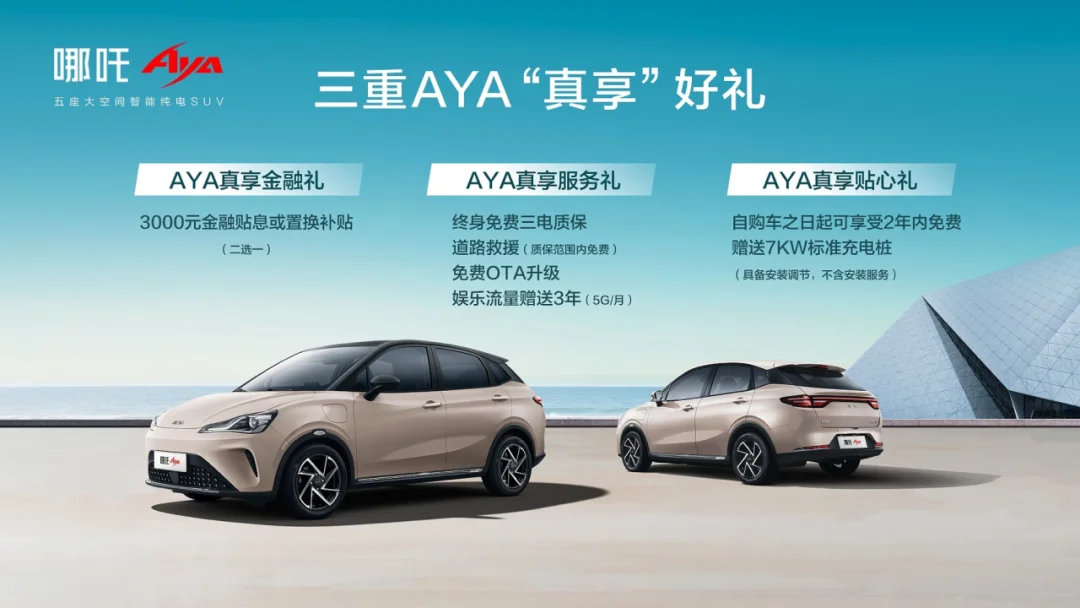
Purchase benefits are shown in the figure below.
Quick Review:
As a new energy vehicle priced under RMB 100,000, the main competitors of the Neta AYA are undoubtedly models such as the Wuling Bingo and Baojun Yep. As a compact SUV, it has a clear advantage in size and space.
If you are considering a commuter vehicle priced under RMB 100,000, the Neta AYA is certainly a good choice.
Written by: JOJO Edited by: Jiang Xiaohei