


Tesla Q2 Revenue Sees Largest Decade-Long Drop as It Enters Adjustment Phase
At dawn Beijing time today, Tesla released its second-quarter 2025 financial report. The results were largely negative. Revenue fell by 12% year over year, marking the largest decline in a decade. Net profit dropped sharply by 23%. After the report was released, Tesla's stock fell more than 4% in after-hours trading.
Why is the world's most valuable automaker seeing increasingly poor financial performance? The most direct cause is sales volume. In the second quarter of this year, Tesla's sales fell 13.5% compared to the same period last year.
Has Tesla hit bottom? It seems unlikely. During the earnings call, Elon Musk warned that with the disappearance of U.S. subsidy measures, Tesla could face several quarters of underperformance.
Elon Musk identified three potential business growth areas for Tesla: Robotaxi, humanoid robots, and unsupervised FSD.
Tesla's Robotaxi project appears to be one of the most smoothly progressing initiatives. Within a month of launch, it has already expanded its operational area once. Elon Musk revealed that further expansion of operating regions will occur in the coming weeks. Additionally, regulatory approvals are pending for operations in the San Francisco Bay Area, Nevada, Arizona, Florida, and other locations.
According to previous reports, mass production of Tesla Optimus faced obstacles. On the earnings call, Elon Musk confirmed that Optimus 3 is undergoing adjustments. A prototype is expected to be unveiled by the end of this year. He added, "We will definitely begin production early next year."
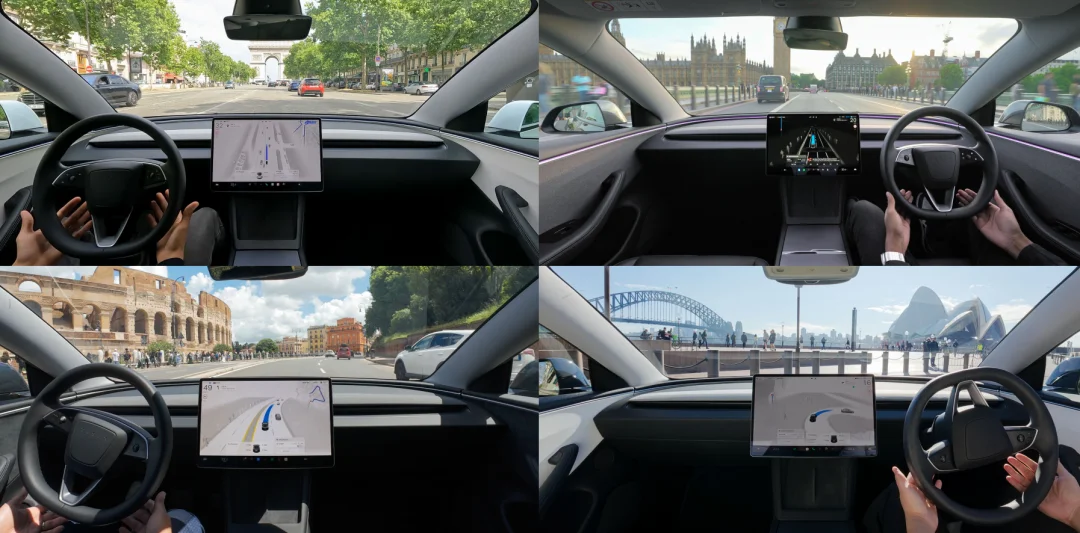
This year, Tesla FSD expanded beyond the United States, gradually entering global markets. In June, Tesla demonstrated a vehicle driving itself from the factory to a customer's home for delivery, completely unmanned.
However, Elon Musk revealed a startling figure: half of Tesla owners have never even tried FSD once.
The affordable model that could support Tesla's sales volume has been delayed again, pushed back by six months, with mass production now planned for the second half of this year.
With U.S. electric vehicle subsidies winding down, fierce competition in China, and Europe's electrification path slowing, Tesla's sales pressure is indeed mounting. Recently, Elon Musk left the Department of Government Efficiency to return to the factory for 24/7 work. How Tesla can achieve positive growth across its various businesses may be Musk's most critical task ahead.
01One of Tesla's Worst Quarterly Performances in Recent Years
Tesla's Q2 earnings report reveals little positive growth. Key metrics including revenue, gross profit, net income, and free cash flow all posted double-digit declines. Even the energy storage business, which had seen substantial growth in previous quarters, saw its revenue drop.
Total revenue was USD 22.5 billion, a year-over-year decrease of 12%;
Automotive segment revenue was USD 16.661 billion, a year-over-year decrease of 16%;
Energy generation and storage revenue for the second quarter was USD 2.789 billion, a year-over-year decrease of 7%;
Second-quarter operating profit was $923 million, a 42% year-over-year decline.
Gross margin stood at 17.2%, compared to 18% in the same period last year.
Q2 adjusted net profit of USD 1.393 billion, a 23% year-over-year decline, following a 39% drop in Q1;
Operating cash flow was $2.5 billion, while free cash flow fell to $146 million, an 89% year-over-year decrease.
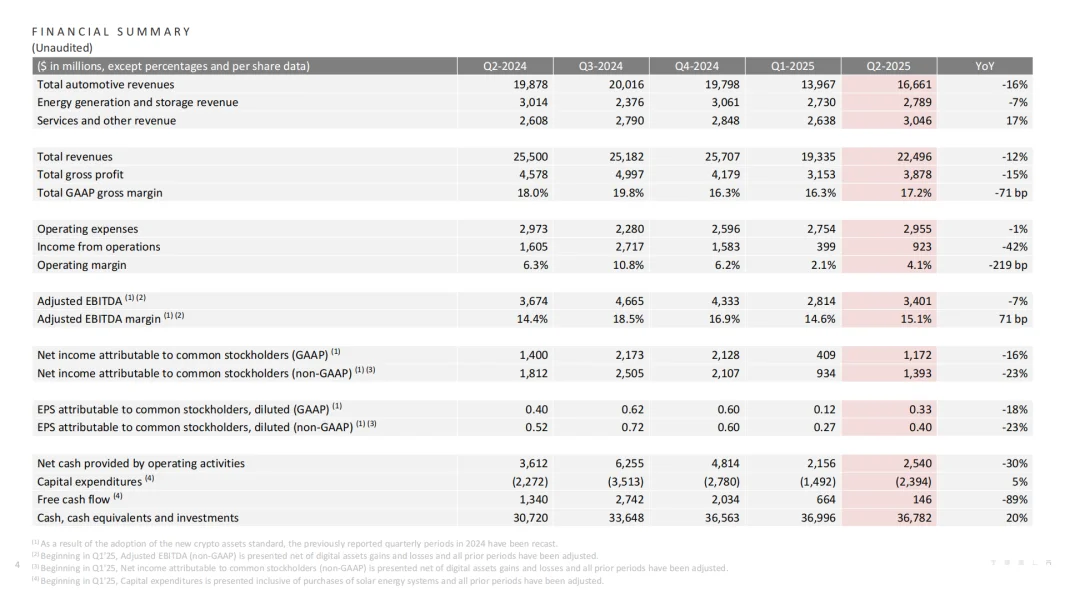
Tesla stated that the decline in revenue and profitability was primarily due to lower sales volumes and reduced carbon credit income.
As a manufacturer of electric vehicles only, Tesla generates excess carbon credits it does not need, which it sells for additional revenue that contributes directly to its net profit.
In the second quarter, Tesla earned $439 million from other automakers purchasing carbon credits, less than half the $890 million recorded in the same period last year.
Carbon credit revenue is likely to shrink significantly in the future, as recent U.S. federal tax reforms have eliminated several electric vehicle subsidies and new energy industry tax credits. Traditional automakers will no longer need to purchase carbon credits to meet compliance standards.
Another policy-related negative development emerged during the earnings call, when Tesla’s chief financial officer stated that Congress’s recently passed "Big and Beautiful Act" would impact Tesla’s business.
The bill includes provisions to eliminate the $7,500 federal electric vehicle tax credit by the end of the third quarter. This is unfavorable for Tesla’s profit margins and may force the company to lower prices.
Additionally, Tesla’s free cash flow in the second quarter dropped to just USD 146 million—a figure that warrants caution, given that some institutions had previously predicted Tesla’s free cash flow could turn negative in 2025.
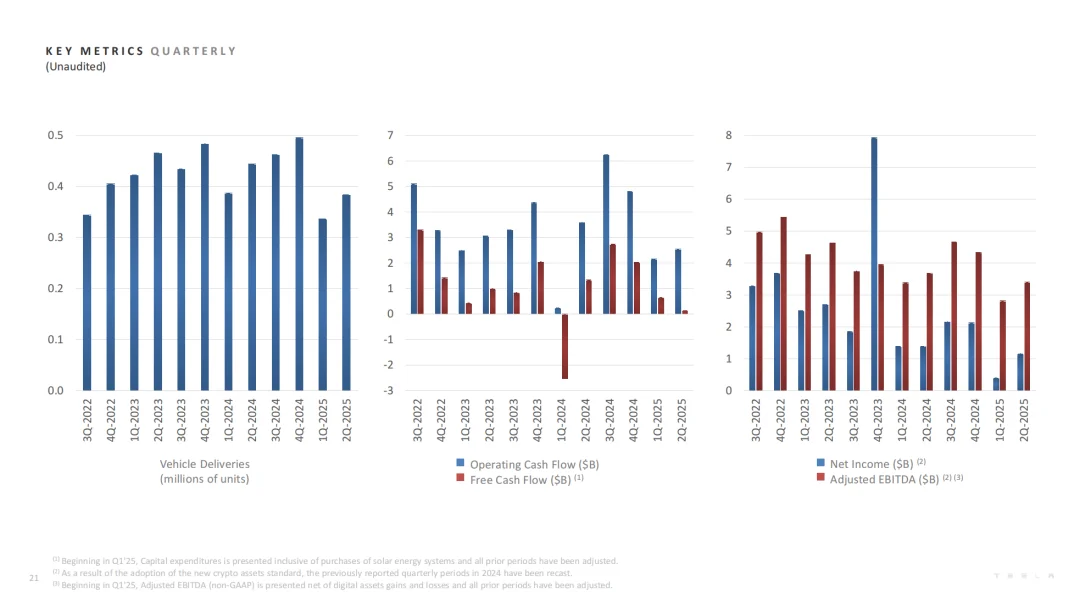
When Tesla’s once-prized automotive business can no longer provide sufficient cash flow to support the expansion of ventures like Robotaxi, it signals that the company faces three major challenges this year: funding, regulatory scrutiny, and declining sales. This pressure may explain why Elon Musk rushed to launch Robotaxi testing in June, aiming to inject fresh market imagination amid weakening finances and sales.
In May, Elon Musk posted on X that he had returned to a 24-hour work schedule, sleeping directly in conference rooms, server rooms, and factories.
From a financial perspective, however, Musk’s grueling efforts have yet to yield substantial returns.
However, Elon Musk also shared a positive sales update during the earnings call: In June, the Model Y became the best-selling car in Turkey, the Netherlands, Switzerland, and Austria. "We haven't yet received approval for supervised FSD in Europe. Therefore, we believe that once we can provide customers with the same experience as in the U.S., Tesla's sales in Europe will increase significantly."
02Core Business Weakness, Tesla Relies on Future Stories to Sustain Momentum
Despite financial warning signs, Tesla defined Q2 as a historic turning point.
The confidence behind this statement may stem from several major moves in business expansion during the second quarter. During the earnings call, Elon Musk devoted significant time to detailing Tesla's progress and subsequent implementation milestones for Robotaxi, the humanoid robot Optimus, and unsupervised FSD.
In June, Tesla's Robotaxi service officially launched in Austin. Elon Musk stated on today's earnings call that the service area in Austin will be expanded significantly in the coming weeks, far exceeding the coverage of competitors. Currently, Tesla is seeking regulatory approval for Robotaxi operations in the San Francisco Bay Area, Nevada, Arizona, Florida, and other regions. At some point next year, personal vehicles will be able to join the Robotaxi network.
After the launch of Tesla's first batch of Robotaxi services, many questioned the full autonomous driving capabilities due to the presence of safety drivers on board. Elon Musk explained on the earnings call that the safety driver in the passenger seat is currently intended only to accelerate regulatory approval and is not strictly necessary.
Elon Musk also stated that Tesla's goal is to make autonomous ride-hailing services available to approximately half of the U.S. population by the end of this year. "I believe we have the technical capability; it depends on whether regulatory approvals come in time." He also emphasized that Tesla does not want to take risks and will proceed cautiously.
Regarding the goals for its Robotaxi business, Elon Musk stated that operations in the Austin area have already covered more than 7,000 miles, with overall feedback being positive. The next step is to work on reducing costs, aiming to bring the cost per mile down to USD 0.3–0.4. The future Cybercab, a model dedicated specifically to Robotaxi service, should be capable of automatic charging; even if the cost per mile remains around USD 0.5, it would still be highly competitive. It is expected to have a positive impact on financial performance by the end of next year.
To achieve full self-driving, Elon Musk stated that the number of training parameters is expected to expand to about 10 times the previous level. However, increasing the parameter count would further increase the demand for resources such as memory and bandwidth. Although this is a challenging task, it is achievable.
In its automotive business, Tesla stated it will continue to enrich its product lineup. The first batch of prototype vehicles for the more affordable model was completed in June, with mass production planned for the second half of 2025. Meanwhile, Tesla is also advancing the development of the Semi electric truck and Cybercab, both of which are scheduled to begin mass production in 2026.
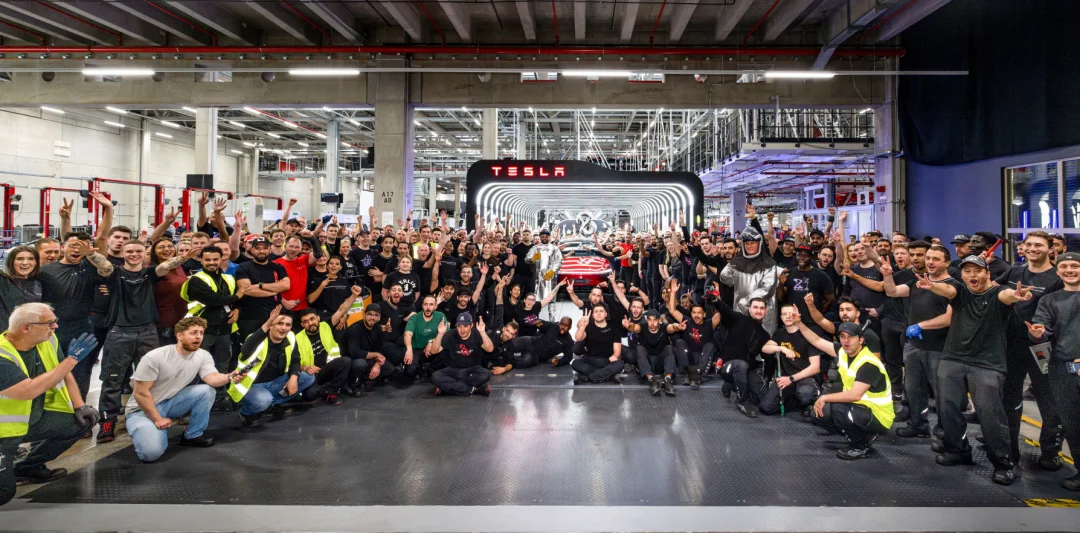
However, Tesla CFO Vaibhav Taneja stated on the earnings call that before launching new products in the next quarter, Tesla needs to navigate more complex regulatory and policy changes. Some models may be released later than expected, and deliveries in the U.S. market may not be very fast from late August onward.
Vaibhav Taneja also stated that earlier today, Tesla released its Vehicle Safety Report, showing that vehicles using FSD are ten times safer than those not using it. Over the past few months, FSD adoption in North America has increased. In June, Tesla also achieved autonomous vehicle delivery from the factory directly to customers' homes. However, regarding when users' private vehicles will achieve unsupervised autonomous driving, Tesla did not provide a clear timeline.
In the energy storage business, Tesla stated that its energy storage deployment volume for the past 12 months has set a new high for the 12th consecutive quarter, and its first lithium iron phosphate battery manufacturing plant will go online by the end of this year.
Humanoid robot production is also set to make new progress. Elon Musk stated that the company is reconfiguring Optimus 3, with a prototype expected to be unveiled by the end of this year and mass production scheduled for next year. Musk promised, "We will definitely start production in early next year." However, he also noted that as product updates increase, the pace of capacity ramp-up may slow due to potential supply chain disruptions or internal errors.
Musk expressed strong confidence in his own artificial intelligence capabilities. He claimed that Google is not proficient in real-world AI. "Tesla is actually much better than Google, and much better than anyone else in real-world AI. So far, Tesla has the best reasoning efficiency."
Overall, despite financial pressure and downward trends in its core business, Tesla is fully betting on future technologies. The company aims to build new growth drivers through autonomous driving, robotics, and energy businesses, attempting to navigate the current downturn with grand visions.
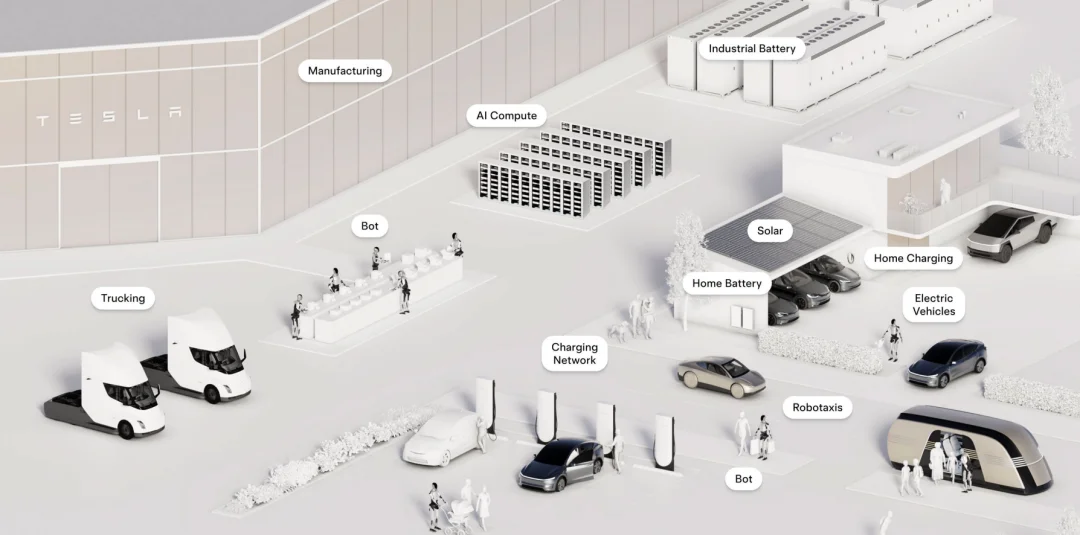
Musk described the current period as a special transition phase, noting that many welfare policies are being canceled in the United States and other countries around the world. Overall, Tesla remains optimistic and plans to promote technological advancement through increased R&D investment.
03Final Thoughts
Tesla's underperforming financial data contrasts sharply with its aggressive push on technology routes like Robotaxi, presenting a somewhat contradictory situation:
On one hand, the grand narrative surrounding autonomous driving and Robotaxi continues to stimulate market imagination, supporting current valuations; on the other hand, the company's main revenue driver, the automotive business, shows a continuous decline.
As market competition intensifies, with rivals launching more cost-effective models better aligned with consumer needs, Tesla has yet to deliver a new vehicle with sufficient appeal to capture market share. This gap, combined with mounting public pressure on Elon Musk and the impact of tariff adjustments and policy shifts, makes this year particularly challenging for the company.
Elon Musk has suggested that Tesla’s Robotaxi and Full Self-Driving (FSD) are only waiting on regulatory approval before sweeping across the nation and globally. In reality, there is still a significant distance between trial operations and widespread deployment. From its sluggish financial performance, it is clear that Tesla urgently needs new narratives to bolster market confidence. However, during downturns, patience is crucial. Public acceptance of autonomous driving remains limited, and society is highly sensitive to accidents.
Regarding FSD adoption, Musk noted during an earnings call that half of Tesla owners have never tried the feature. He later posted on X that the team is working hard to ensure all owners can experience FSD.
This indicates that Tesla still faces substantial cognitive barriers and high user education costs in scaling autonomous driving. Technological breakthroughs and official marketing alone are insufficient. To achieve widespread FSD implementation, Tesla must find a more stable balance among product experience, user trust, and public sentiment.
Before that, stabilizing its core automotive business and achieving positive growth in sales and profits to provide ample cash flow for high-investment areas like autonomous driving remain Tesla’s immediate priorities.
Written by: Da Yong Edited by: James