


Why They Chose the AITO M7 | 42Talk Vol.15 Transcript
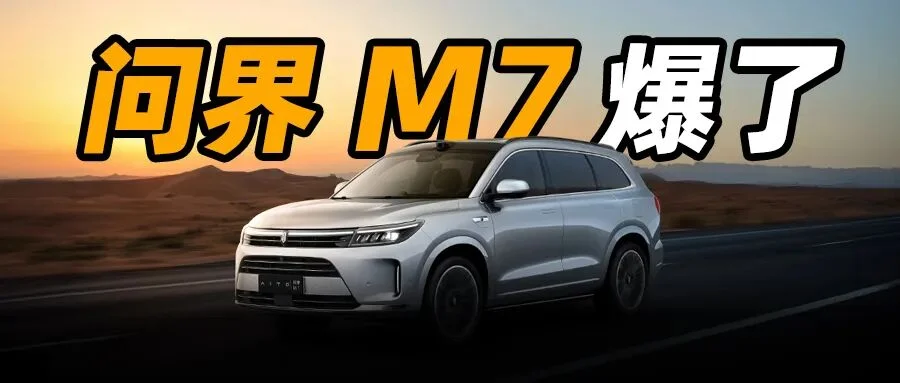
"42Talk" is an online chat show produced by 42HOW Auto, designed for new energy vehicle owners. We hope these authentic voices from real owners can help you find the most suitable new energy vehicle.
Join us on "42Talk" to discover the most genuine owner perspectives.
Hello everyone. In just over a month since its launch, the AITO M7 has secured more than 60,000 firm orders, becoming an instant hit. What enabled it to stand out and earn widespread recognition? What specific features attracted owners during their brief decision-making process? With the rapid development of the new energy sector, do current owners worry about being let down by the brand years later as early adopters?
This episode of 42Talk focuses on the AITO M7. We invited two owners who placed large, non-refundable deposits for the AITO M7 Five-Seat Intelligent Driving Edition:
Teacher Gao: 30 years old, based in Xi'an, Shaanxi. Owner of a BYD Qin DM-i. Placed his deposit on October 6.
Teacher Wang: 35 years old, based in Suzhou, Jiangsu. Owner of a Leapmotor T03. Placed his deposit on October 4.
(For the podcast version, please click "Read Original" at the end of this article to access the "42Talk Channel" on the Xiaoyuzhou APP.)
01Why Buy the AITO M7
Usage Scenarios
Teacher Gao:
I bought this car primarily for family use. I believe most people buying a vehicle in this segment are looking for a family car. From a personal perspective, given our age group, I actually prefer sedans.
If you're choosing between Lixiang and the AITO M7, which is at the same level, it should be for family use. For a single person, I think there's rarely a need for such a large vehicle. I have a BYD Qin DM-i, but as my child grew older, this car began to feel inadequate in terms of space, comfort, features, and so on.
Wang:
I primarily use it for commuting and family trips, such as traveling during holidays.
Key Factors Considered When Buying a Car
Wang:
My main considerations are safety, space, and intelligence. At our age, safety is paramount, both for myself and my family.
Intelligence includes the infotainment system and driver assistance features. Driver assistance also enhances safety; these two aspects can be viewed separately or as mutually reinforcing.
I previously purchased a Leapmotor T03, whose intelligent driving performance was virtually non-existent. I have been closely following developments in intelligent technology. When the first-generation P7 was launched, its intelligent driving capabilities were not yet mature, but now I believe it has reached a stage where it is ready to buy. I am also quite willing to try out intelligent driving, as driving on highways or during long trips can be quite tiring.
Teacher Gao:
I share Teacher Wang's view that safety is the absolute first consideration. If a car's quality or safety standards are not met, then all other features are like the 1s following a 0—mere castles in the air. For instance, with children at home, safety is undoubtedly the top priority.
Second for me is intelligent driving. I have a rigid need to drive from Shaanxi to Hunan two or three times a year, covering about 3,000 kilometers each trip. Without intelligent driving assistance, doing over 10,000 kilometers of long-distance driving annually would be truly painful and exhausting. The third point is intelligence, such as the smart cockpit.
Did You Buy AITO Because of Huawei?
Wang:
Without Huawei's support, I likely wouldn't have bought it. I consider myself a Huawei fan and have purchased many Huawei products.
Many cars offer intelligent driving capabilities, including those from Huawei, XPENG, NIO, and Lixiang. Among these, Huawei and XPENG are generally recognized as leading the pack. However, if AITO did not have Huawei's backing, I would definitely choose XPENG, as I actually prefer pure electric vehicles.
Teacher Gao:
I don't think we can discuss the AITO M7 without mentioning Huawei. Every aspect of this car bears Huawei's influence. Without Huawei, would it still be in our consideration set? Would any single feature stand out as superior to competitors? I've thought about it, and honestly, it wouldn't necessarily be that prominent.
When I was interviewed by 308, I said that if the entire decision-making process were scored out of 10, Huawei alone accounted for an 8. It wasn't because I'm a fan of the brand that I bought the AITO M7; it's simply because the product is genuinely excellent.
02Comparison Models at the Time of Purchase
Teacher Gao:
I have actually wanted to buy a pure electric vehicle for a while now. When the XPENG P7 first launched, I seriously considered it. At that time, I hadn't yet purchased my first car, but I ended up buying a BYD for various reasons.
So why didn't I choose XPENG when adding a second car? I really like its features and am satisfied with the vehicle itself, but something always felt slightly off—a final push needed to drive the decision. I can't quite pinpoint what's missing. Looking at XPENG's recent news, their internal governance seems disorganized. How can consumers trust them to provide reliable, long-term service under such circumstances? Although their products are indeed good, they often receive praise without strong sales. I hope XPENG improves in the future.
Wang:
I compared many cars, including the XPENG G6 and G9, the new NIO ES6, Li L7, AITO M5, Zhiji LS6, and AVATR 11. I visited showrooms for all of these. First, I had to ensure sufficient trunk space and seat comfort; these two criteria eliminated most models.
AVATR 11: The trunk space is simply too small.
Zhiji LS6: I don't particularly like the design.
AITO M5: First, the space is too small; second, the seats are too hard, and the rear seats are very uncomfortable.
Li L7: Actually, I'm not a fan of the Lixiang brand. It feels overly marketing-driven, and I'm not fully convinced by its technical capabilities. This includes incidents involving its intelligent driving system, such as when it misidentified a billboard of sprinter Su Bingtian as a real person, causing the car to brake suddenly on the highway. That made me feel the technology might not be reliable.
NIO ES6: First, the price is a bit high. Second, I find the rear seat less comfortable than that of the XPENG G6.
So those cars were basically ruled out. In the end, I narrowed it down to XPENG and Huawei. I ultimately chose Huawei mainly because I was impressed by its safety features. During my holiday trip nearby, there was heavy traffic on the highway and many accidents. Driving for long periods left me feeling very tired. Afterward, I watched many videos online about AITO's AEB (Automatic Emergency Braking). So, the day I returned, I placed an order for the AITO M7.
Teacher Gao:
Actually, like Teacher Wang, I've always wanted to buy another car and have been keeping a close eye on new energy vehicles, including Lixiang, XPENG, AVATR, and Zeekr. I've been following all of them in depth.
AVATR 11 and Zhiji LS6: I saw photos of the interiors and decided not to visit the showrooms.
XPENG G6: I seriously considered it, but the delivery wait time for the G6 was simply too long.
I actually like Lixiang quite a bit. I’ve been following them since the internal launch of Lixiang one, but I haven’t placed an order yet because I need a fully electric vehicle. My original plan was to wait for Lixiang’s EV model to be released, when the technology might be more mature.
However, my decision regarding the AITO M7 was made very quickly. During the National Day holiday, while visiting family in Hunan, I was flooded with autonomous driving reviews on short-video platforms. The sheer volume was overwhelming, and it instantly won me over. I placed my deposit just three days later.
Before this, I had never looked into AITO. I felt its sales were mediocre, and I couldn’t see what would appeal to me; frankly, the exterior design isn’t particularly striking. But this time, the massive buzz around its autonomous driving capabilities on social media convinced many people, including myself. That’s why I went to the dealership to see the car and ultimately placed my order.
Would you regret impulsive spending after placing the deposit?
Teacher Gao:
To be honest, there was indeed an element of impulse buying. There are aspects of the AITO M7 that I don’t like, such as some baffling feature reductions, and as mentioned, the exterior design is not exactly stunning.
I don’t regret it. Regardless, the AITO M7 is undoubtedly a good car. If we rate cars out of 100, there are probably no vehicles on the market scoring above 85. The AITO M7 sits around an 80. Among the models we considered, it ranks at the very top. So, aside from the exterior design, which I still don’t particularly like, I’m quite satisfied with everything else.
Wang:
I have no regrets either; I’m looking forward to getting my car as soon as possible. My view aligns closely with Teacher Gao’s: its exterior isn’t ugly, but in the current era of new energy vehicles (NEVs), it doesn’t look sufficiently like one. It retains a traditional front-end styling reminiscent of the Volkswagen Tiguan from many years ago, lacking the visual cues typical of NEVs.
Regarding the interior, I prefer column-mounted shifters because they save space and allow for a more minimalist design. Instead, it features a crystal gear selector, a design choice I really dislike.
03Reasons Behind the AITO New M7’s Sales Surge
Wang:
I believe it is the result of multiple factors compounding, not a single factor. Its car was unveiled at the Chengdu Auto Show on August 25, and then launched on September 12.
The Mate 60 launched on August 29, if I recall correctly. Its release sparked massive buzz that has lasted well beyond just a couple of days. The Mate 60 boosted national confidence and significantly increased trust in the Huawei brand, generating enormous traffic—both online and in showrooms—which greatly benefited the new M7.
So why is the M7 the hit rather than the M5? I think it comes down to the M7’s positioning and pricing, which stand out.
Positioning means it’s a large vehicle. We often say Lixiang got its product positioning exactly right by making big cars—colloquially known as 'dad cars.' I don’t really like that term, though. A larger car isn’t just comfortable for families with kids; it’s comfortable even if you’re not transporting children, right? The fact that the M7 is popular while the M5 isn’t shows that the M7 appeals to a broader range of buyers.
Second, I find the M7’s pricing very competitive. It’s roughly RMB 60,000 to 70,000 lower than the comparable model from Lixiang. That, in my view, is a key reason for its success.
I’m not overly concerned about delivery times. When I placed my order, the salesperson said it would take eight to twelve weeks. At the time, I was already ranked around 40,000th in line. Deliveries will inevitably go through a ramp-up phase. Given the previously weak sales volume, the company needs to hire new staff, train them, scale production, and coordinate with all suppliers. This is a major systemic undertaking that cannot be rushed.
Moreover, I am quite satisfied with the progress of its production capacity improvement. This is because a few days ago, rumors circulated online that their delivery plan was 14,000 units in October, 18,000 units in November, and December's deliveries would certainly be higher than November's. I think this delivery capability is already very impressive. Regarding the XPENG G6, I understand that it might only break through 10,000 units in October. It was launched at the end of June, and it has taken three months to break through 10,000 units. The difference in delivery capability is clear. Huawei's supply chain management capability is definitely on a different level compared to XPENG, which I can see from the deliveries.
Teacher Gao:
The viral success of the Mate 60 significantly boosted the online buzz around the AITO M7. I had no prior knowledge of AITO and wasn’t actively seeking it out; in fact, I felt AITO wasn’t particularly prominent online before. But with the Mate 60 launch, the AITO M7 gained considerable attention. People reasoned that if Huawei could break through chip restrictions, surely they could build a good car too.
The AITO M7 was already an excellent vehicle. During the National Day holiday, many people had time to visit dealerships. Coupled with a flood of reviews across short-video platforms, these factors combined to make what should have been a hit car, actually become one.
I placed my order on October 6, the day before the promotional benefits expired. At that time, I estimated our order position was around 50,000, meaning delivery would likely take more than two months.
Given that production in October might be only about 10,000 units, it is unrealistic to expect 30,000 to 40,000 units in November. My expectation was simply to receive the car before the Lunar New Year. Huawei’s supply chain management capabilities are undoubtedly industry-leading, and as Teacher Wang mentioned, I felt confident. Seres is an experienced veteran automaker; although some online commentators view it with bias, its supply chain management is actually very strong, so there should not be major issues.
04Expectations for AITO's Future
Wang:
I have been following the AITO brand since its inception, paying attention from the launch of the SF5 and its first model, the M5. Starting around April or May last year, this car gained significant popularity. At that time, the M5 was the intelligent driving version equipped with Huawei’s HarmonyOS cockpit, which delivered an impressive effect and went viral online.
We know that AITO sales broke 10,000 units for several consecutive months at that time, but momentum later stalled due to the intense competition in China’s new energy vehicle market. Every manufacturer is rolling out new technologies rapidly; a model that was popular in March or April often struggled to compete by the second half of the year as rivals significantly upgraded their capabilities.
The second wave of popularity occurred when the M5 launched. It generated some buzz online, but sales did not follow. In my view, this was due to issues with cost-effectiveness and market positioning.
The AITO M7, however, became a complete hit. With the M9 scheduled for release in December, I believe it will achieve immediate success given the current heat surrounding the M7. As a flagship product, if the M9 succeeds, subsequent models like a potential M8 next year or a facelifted M5 will naturally follow. In that case, I believe the brand will be firmly established.
Teacher Gao:
This AITO M7 has made a strong start. Why? Because it successfully identified its differentiated marketing point: intelligent driving. It can play other cards later on. The M7 can offer a rear-wheel-drive intelligent driving version and an all-electric version; these are its backup strategies.
My expectation is that they should really hire a designer instead of someone with such an old-fashioned, bureaucratic style. The market sales would likely be better because the 70 to 80 percent of people who currently accept new energy vehicles are young. Honestly, I don't think even the most devoted Huawei fans can appreciate its exterior or interior design.
05Frequent Price Cuts in New Energy Vehicles: How Are Owners Feeling?
Wang:
This is how I see it: "No backstabbing, no progress." I support backstabbing. Because if I buy a car and it looks exactly the same ten years later, when I go to replace it, will I buy the same one again, or not?
And the reason I waited until now to buy this car is that I feel autonomous driving capabilities have finally reached a mature stage. In previous years, although some vehicles claimed to offer smart driving features, their performance was far inferior to what we see today. I believe the current level of capability has arrived; while the vehicle may become outdated in many aspects over the next few years, its autonomous driving functions will not be so inadequate as to be completely obsolete. I think maintaining a technology level that isn't too lagging behind should remain viable for a considerable period.
I'm still fairly confident in it, because any backstabbing is definitely a technological advancement. In terms of space, they're mostly just making pure electric vehicles and carving out a front trunk for you, so I think there's not much room left to optimize the space. As for intelligent driving, while some new technologies may emerge in a few years, I don't believe they will create a significant gap—there won't be a sudden leap from what Richard Yu described as L2.999 to L4, where hands-off driving becomes possible. I feel that such a level is not achievable in the short term.
I think there are two areas for improvement, as Teacher Gao mentioned: first, redesigning the 'old cadre' aesthetic in both exterior and interior styling; second, completely revising the vehicle's architecture.
Actually, I think the first true collaboration between Huawei and Sailisi was with the M9. The M5 and M7 were developed on Seres' previous platform under Chongqing Sokon.
I compared the exterior dimensions of the AITO M5, XPENG G6, and Model Y. Their length, width, and height are quite similar. However, in terms of weight, the M5 is over 200 kg heavier than the XPENG G6 and about 300 kg heavier than the Model Y.
This is unreasonable. For vehicles of the same size, such a significant weight difference indicates that the design has many areas for optimization, making it difficult to achieve low energy consumption. When Huawei updates the M5, I expect we will see a substantial reduction in its curb weight.
Teacher Gao:
First, this is a consumer product, and I think many people haven't adjusted their mindset. It is not an investment asset. Even investments can lose value, so why expect a consumer good not to drop in price? Moreover, new energy vehicles are currently in a stage of rapid development and frequent model updates. After purchase, prices will inevitably drop quickly. But if you avoid buying cars out of fear of being 'backstabbed' by price cuts, that is also inappropriate. Why? Because there will always be better cars available. For the same price, you could always buy a better car later. Does that mean we should never buy anything? Probably not.
My view is that technology development, as Mr. Wang pointed out, has moved past the explosive phase of one or two years ago. Progress and development are now relatively steady.
The AITO M7 is likely limited to L2.999 autonomous driving due to regulatory restrictions; if regulations allowed, it might be classified as L3. Will it launch L4 next year? Probably not. This is not due to regulatory limits, but because the technology is not yet ready.
So now, when buying a car, I believe that in the short term, its updates—whether software or hardware—won't be as drastic as they were one or two years ago. So I think it's still a reasonable time to buy. Besides, you enjoy it sooner if you buy early; how long are you going to keep waiting? Buying a car at 40 feels completely different from buying one at 35.
Thank you all for your time. That concludes this episode! If there are any topics you'd like to discuss or hear about, feel free to let me know in the comments.
This content is compiled from the podcast program '42Talk'.
Click 'Read Original' below to unlock more past episodes.