


AITO New M7 to Enable Nationwide Map-Free Smart Driving by Year-End
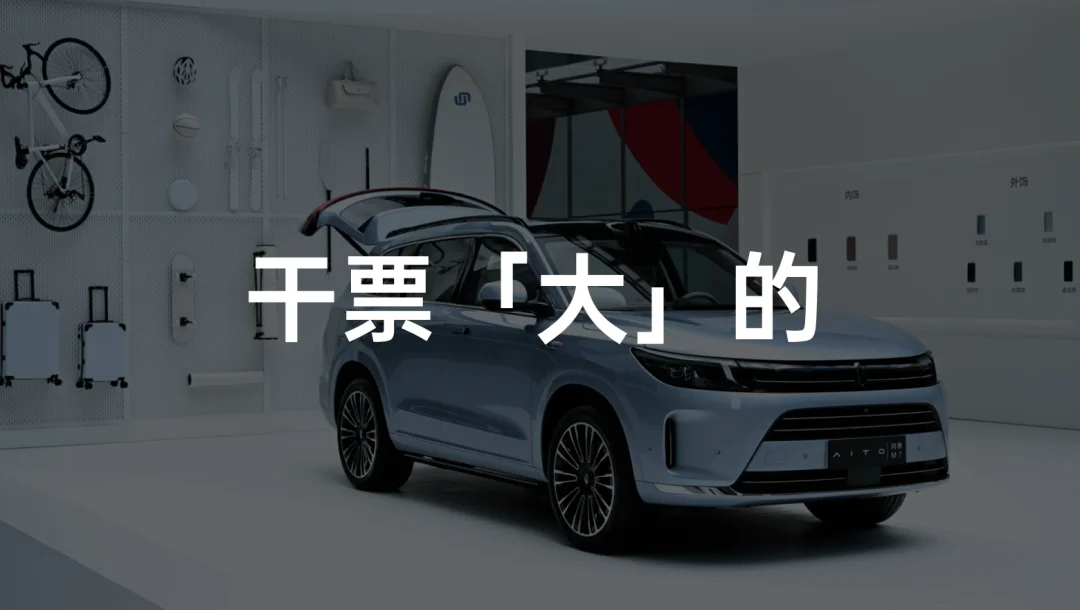
When Richard Yu announced that Huawei's high-level autonomous driving would be available nationwide by the end of the year and would not rely on high-definition maps, cheers erupted at the AITO M7 launch event, particularly for the phrase "far ahead." Although this news had already spread before the launch, the audience could not help but cheer when Richard Yu announced it in person.
After all, in the high-stakes arms race for advanced autonomous driving in urban areas, other competitors are still fighting slow, grinding battles on a city-by-city basis.
Huawei plants the trees, AITO enjoys the shade. For the new AITO M7, regardless of whether a surprise competitor emerges along the way before nationwide mapless advanced autonomous driving is launched by year-end, it has already established widespread influence in the market ahead of schedule. This influence has delivered immediate returns: on its launch day, the new AITO M7 received more than 15,000 orders.
To ensure the AITO M7 achieves its current level of success, Huawei, as the key backer behind it, has fully leveraged its technical capabilities in intelligent and electrified technologies.
01Investing in Root Technologies, That Is, Racing Ahead for the Future
The AITO M7 unveiled this time is a powerful manifestation of Huawei's years of technological layout, particularly at the level of foundational technologies.
At the intelligent technology exchange meeting before the AITO M7 launch event, Wang Yanmin, President of the Smart Selection Vehicle Business Department at Huawei Terminal BG, stated:
Because the future is built on foundational technologies, which we call root technologies, only by making solid investments in these areas can we achieve technological leadership. And only through technological leadership can we achieve product leadership.
Wang Yanmin referred to as 'root technologies' the deep accumulation Huawei has built since entering the ICT field, spanning operating systems, AI, and ecosystem development.
It is precisely this deep accumulation in root technologies that allows Huawei, once it enters the smart vehicle sector, to quickly translate its capabilities into products and establish a leading advantage, particularly in autonomous driving, which users perceive more strongly and care about more.
Currently, automakers are all striving hard to compete in high-level autonomous driving. However, to achieve this, vehicles must first correctly perceive and understand physical information from the outside world.
However, a common challenge facing automakers today is that most vehicle perception systems have strong perception and understanding capabilities only for conventional objects such as pedestrians and other vehicles.
The reality is that driving environments are constantly changing. On the road, there may be trees broken after wind and rain, or soil and rocks dropped by dump trucks... When vehicles face such special situations, how should they respond?
In response to this issue, Huawei's answer is GOD 2.0 (General Obstacle Detection).
Beyond perceiving and understanding common objects like pedestrians and vehicles through its fused perception BEV network and GOD network, GOD 2.0 adds open-set attribute recognition capabilities, enabling continuous self-supervised learning for unusual objects.
Specifically, GOD 2.0 can perform 3D reconstruction of historical driving scenarios to identify all physical information present, such as trees, guardrails, curbs, or other obstacles.
After identifying all physical information, GOD 2.0 extracts traffic flow trajectory data from the driving scenario. This allows the system to learn correct driving paths and which obstacles to avoid, ultimately generating extensive simulation training data to continuously enrich its perception and understanding of unusual objects.
Regarding the actual capabilities of GOD 2.0, Miao Junhai, Director of Huawei Intelligent Driving Products, stated:
GOD 1.0 made ADS safer; GOD 2.0 makes ADS more human-like.
To illustrate the actual recognition performance of ADS based on GOD 2.0, Miao Junhai provided specific examples.
He explained that when parking, if greenery obscures the parking lines, the system can ignore the vegetation and park normally, much like a human driver. When following another vehicle, it can predict the lead vehicle's dynamics to decide whether to continue following or overtake.
02Active and Passive Safety: It’s All About Stacking the Features
The reason Huawei has devoted a considerable amount of effort to the R&D of GOD 2.0 is not only to make ADS more human-like, but more importantly, as one of the core technologies of Huawei ADS 2.0, GOD 2.0 can play a significant role in enhancing safety for Huawei ADS 2.0.
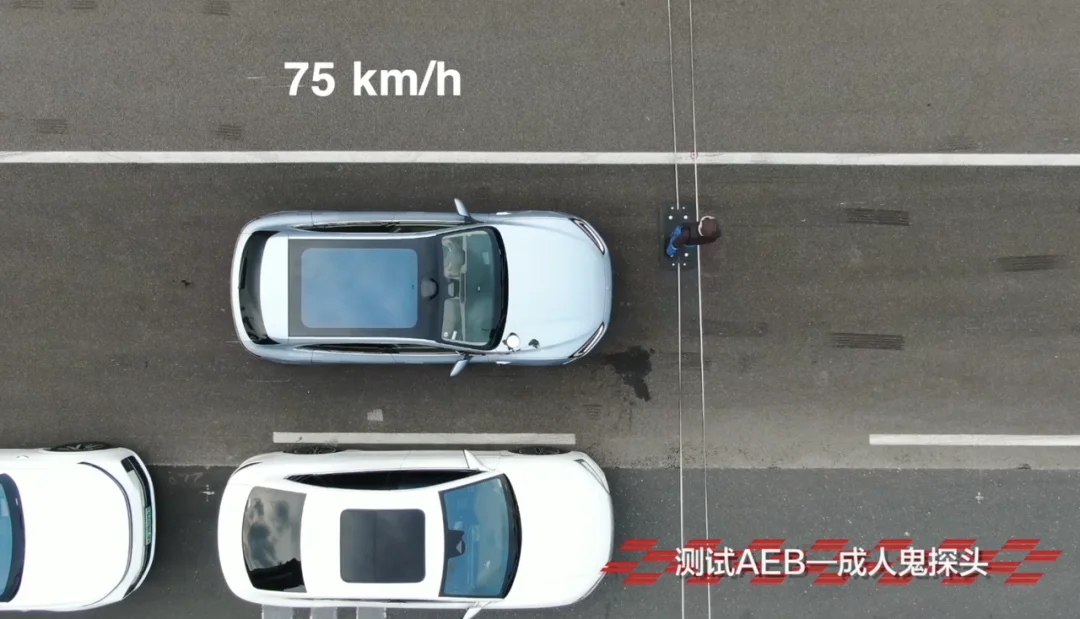
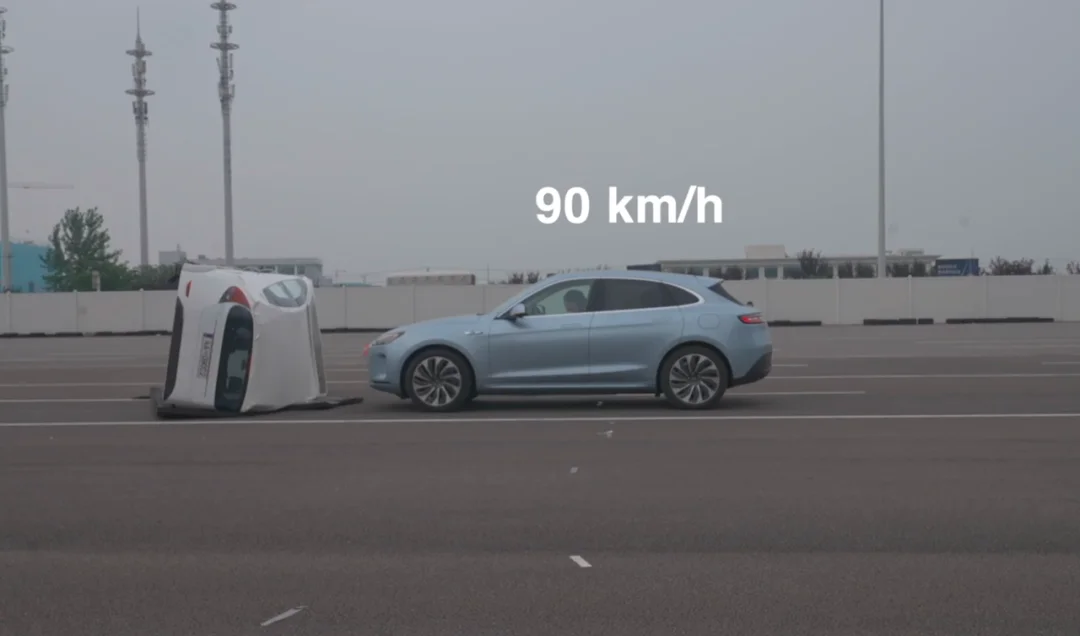
According to Huawei, the AITO M7 equipped with Huawei ADS 2.0 can accurately identify unconventional obstacles such as overturned vehicles, cardboard boxes, water-filled barriers, curbs, and guardrails.
When an obstacle is detected in the forward path, the system can trigger automatic emergency braking (AEB) to bring the vehicle to a complete stop at speeds up to 90 km/h. If a side collision risk with objects like guardrails is detected, it engages Emergency Lane Keeping (ELK) to correct the steering direction, providing more comprehensive protection.
Furthermore, Huawei ADS 2.0 extends automatic emergency braking capabilities to low-speed driving scenarios, reducing the risk of minor scrapes or unintended rolling on inclines for users.
Additionally, the Huawei ADS 2.0 in the AITO M7 employs a fused intelligent driving solution combining LiDAR and visual perception. The newly added roof-mounted LiDAR offers a maximum detection range of approximately 200 meters and a horizontal field of view of 120 degrees. This allows the AITO M7 to perceive environments in advance during sudden pedestrian crossings or when entering tunnels with mixed lighting conditions, enabling early deceleration or evasive maneuvers.
These features represent the active safety capabilities of the AITO M7 based on Huawei ADS 2.0. However, a vehicle must not only avoid collisions but also withstand them.
Therefore, beyond active safety, Huawei has completely redesigned the body structure of the AITO M7 to comprehensively enhance its passive safety performance.
First, in terms of materials, the AITO New M7 features submarine-grade hot-formed steel accounting for 24.4% of the vehicle body, with high-strength steel and aluminum alloy comprising 80.6%. Additionally, CBS composite body materials are integrated into the A-pillars and B-pillars, enhancing durability, stiffness, and crash safety while reducing overall weight.
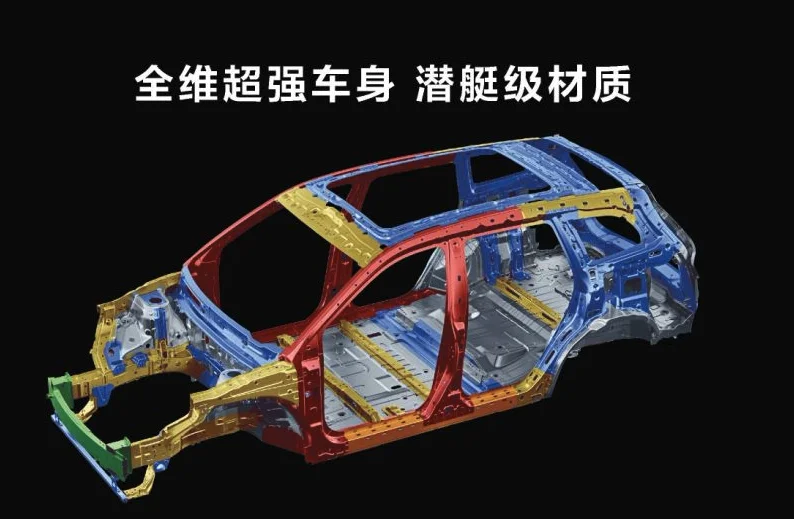
Secondly, regarding structural design, the AITO New M7 employs a cage-type body structure. It utilizes a dual anti-collision beam design at the front and reinforces the areas adjacent to the battery pack with nested hot-formed steel and aluminum profiles.
Consequently, during a collision, the body is better able to distribute impact forces absorbed by the main structure, thereby lowering risks to occupants and mitigating the potential for secondary disasters caused by battery damage.
Finally, inside the cabin, the AITO New M7 comes standard with eight airbags, including driver and passenger frontal airbags, front side airbags, side curtain airbags on both left and right sides, and second-row side airbags. It also features high-performance dual pretensioner seatbelts for the front seats.
This demonstrates that Huawei has comprehensively upgraded the safety of the AITO New M7, covering both active and passive systems as well as body and cabin components. Evidence confirms that these efforts have not been in vain.
According to test data from Zhongguoqiyan Super Crash, when a 4-ton truck traveling at 40 km/h collided with the AITO New M7 moving at 60 km/h, the vehicle’s body structure remained intact overall. The A-pillars, upper A-pillar beams, and rear body showed no significant deformation, and all four doors could still be opened normally.
In terms of safety, the new AITO M7 has achieved a qualitative leap compared to the previous-generation AITO M7.
03The HarmonyOS 3.0 Era: Rear-Seat Experience Upgraded
After two years of iterative development, the HarmonyOS smart cockpit has entered its 3.0 era in the AITO New M7.
In HIMA Cockpit 3.0, with the HarmonyOS at its core, Huawei further eliminates boundaries between various hardware devices, enabling them to collaborate and form a super terminal.
On this super terminal, the tap-to-transfer feature between phones and car screens is no longer exclusive to navigation; top applications such as Douyin, Kuaishou, Weibo, and WeChat will all support it. Even when users are playing games or controlling drones on their phones, they can stream the screen to the central control display, achieving a seamless transition from small to large screens.
Another significant change in HIMA Cockpit 3.0 is that the rear cabin supports the installation of two Huawei Pad screens. According to Huawei, the primary purpose is to achieve "passenger-driver equity" in terms of experience.
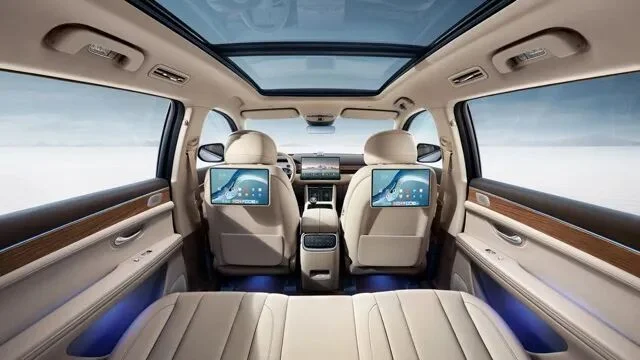
At a technical exchange meeting, Huawei pointed out that although many current models are equipped with screens in both the front and rear seats, "consumers lack a more convenient and flexible solution for rear entertainment screens." Therefore, the solution of installing two Huawei Pad screens in the rear was born to address this pain point.
These two Huawei Pad screens, as their name suggests, function exactly like Huawei Pads, allowing users to freely engage in office work, entertainment, and gaming.
What’s more interesting is that Huawei leveraged the latest MagLink technology combined with a distributed soft bus to connect the central control screen with two Pad screens.
The central control screen serves as the core of the three-screen setup, precisely identifying which Pad is on the left and which is on the right. It can then view and control the content displayed on the Pads, with a data transmission rate of up to 160 MB/s and an end-to-end latency of less than 40 ms. Audio-visual synchronization latency ranges from -50 ms to 20 ms.
This means that when a family or a group of friends travels together, passengers in both the front and rear rows can watch the same movie or play the same online game simultaneously without experiencing degraded performance due to screen desynchronization.

Additionally, if there are children in the back seat, parents can use the central control screen to manage the Pad screens—helping children find videos or songs, and adjusting volume and brightness. When parents feel it’s time for the children to stop watching, they can also directly turn off the Pad screens via the central control unit.
Notably, in HarmonyOS Smart Cockpit 3.0, Huawei has enhanced intelligence not only in visible areas like screens but also in underlying systems.
HarmonyOS Smart Cockpit 3.0 features powerful intelligent perception capabilities. When a user enters the vehicle, it automatically recognizes their height proportions and adjusts the seats, HUD, and rearview mirrors to optimal positions.
Tasks that previously required manual adjustment based on user intuition are now handled by algorithms and models in HarmonyOS Smart Cockpit 3.0.
Overall, the HarmonyOS Smart Cockpit 3.0 in the new AITO M7 is not only as simple, intuitive, and fluid as before, but also covers more application scenarios, extending even beyond the vehicle to make intelligent features more ubiquitous and accessible.
04Conclusion
With Huawei ADS 2.0, HarmonyOS Smart Cockpit 3.0, newly enhanced safety features, and a starting price of RMB 249,800, the product strength of the new AITO M7 has become visibly stronger, while its pricing has become increasingly competitive.
In addition, the new AITO M7 possesses a trait that aligns well with Chinese consumer needs: spaciousness. With an overall length of 5,020 mm and an interior effective space of 3,338 mm, it even surpasses the Li L7 Max.
This means that for RMB 250,000, users can acquire a high-end smart vehicle with full-size SUV space, meeting the needs of families with both elderly members and children; and for RMB 300,000, they can experience Huawei’s nationwide advanced autonomous driving by year-end. Among models in the same class, the competitiveness of the new AITO M7 should not be underestimated.
Empowered by Huawei, AITO has truly intensified its market competition.
The reason AITO is so competitive today is closely related to its backing by Huawei, which has always emphasized rapid product iteration and quality.
Moreover, a fierce battle for sales volume and scale is currently underway in the new energy vehicle market. To break through in this contest, AITO must deliver greater value and product strength than its rivals. In short, AITO needs a hit model.
How exactly was this hit model built? The AITO M7 may well be the answer AITO has delivered to the market.
Written by: Isaiah Edited by: 308