


Jiyue Debuts Pure-Vision Urban Navigation Assist, Challenging Tesla's Dominance
City navigation-assisted driving is about to gain a formidable new competitor: Jiyue.
On October 17, Jiyue released an uncut video showing its production model successfully executing navigation-assisted driving on urban roads in Shanghai. The company also publicly unveiled for the first time its Occupancy Network (OCC) technology, jointly developed with Baidu.
Compared with city navigation-assisted driving solutions from competitors such as Huawei and XPENG, Jiyue’s demonstrated approach features a significant distinction: it relies on a "pure vision" architecture, making LiDAR no longer a standard requirement.
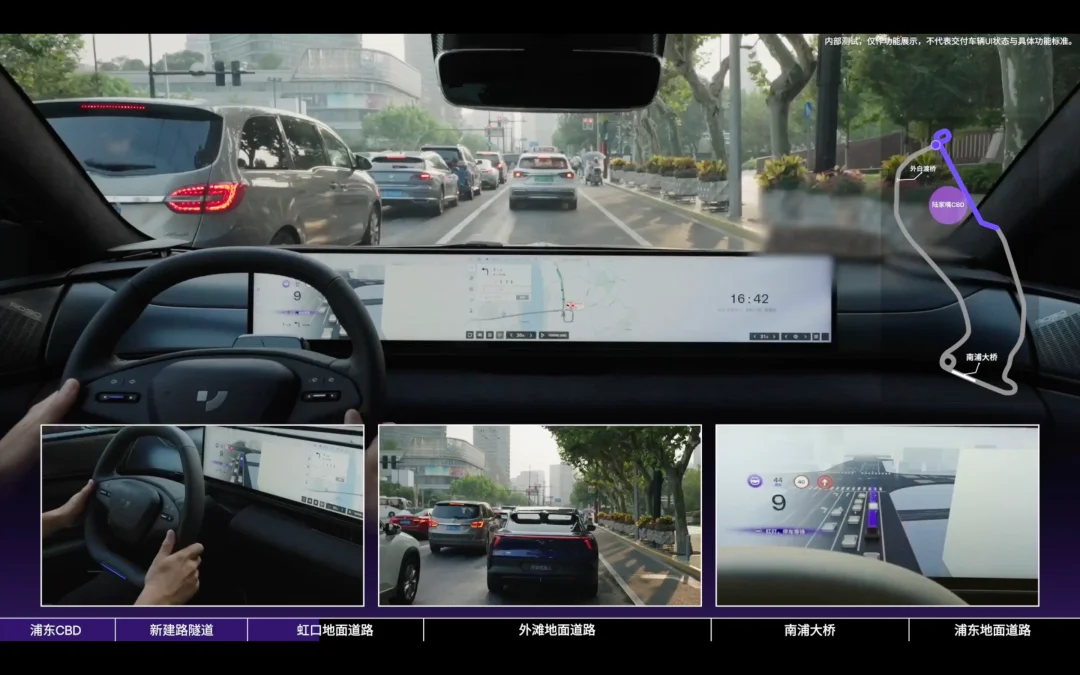
In fact, what Jiyue presented is China’s first high-level autonomous driving solution based on BEV+Transformer pure vision technology. This means that while many urban navigation-assisted driving systems are currently being mass-produced using LiDAR, Jiyue has chosen to directly benchmark Tesla across the ocean, carving out a distinct technical path in this sector.
With approximately one week remaining until the official launch of the Jiyue 01 on October 27, if the autonomous driving system showcased by Jiyue is ultimately mass-produced and deployed, Jiyue will become the only domestic automaker to adopt a pure vision route for high-level autonomous driving.
Furthermore, we have learned that all high-level intelligent features of the Jiyue 01 will be available at the time of delivery upon launch—a speed that is certainly impressive.
What Makes Jiyue’s Pure Vision Approach Unique?
For any automaker striving to achieve mass production of autonomous driving, urban navigation-assisted driving remains the core scenario for demonstrating intelligent driving capabilities.
The key question is how it actually performs.
Based on the official video released in this demonstration, Jiyue’s urban navigation-assisted driving function shows a relatively high level of product maturity. Specifically:
On the road. Starting from the Jiyue store in Lujiazui, Shanghai, the vehicle navigated through typical urban routes including the Lujiazui Central Business District, the Bund, and the Nanpu Bridge. The entire 15.8-kilometer journey passed through 36 traffic lights with zero manual interventions.
In terms of scenarios. The routes shown in the video cover urban surface roads, tunnels, and complex elevated highways—scenarios that rigorously test technical proficiency in urban navigation-assisted driving.
Perception. From the perception information displayed on the instrument cluster after activating the pilot assist, the vehicle quickly and accurately identifies traffic lights, lane markings, other vehicles, pedestrians, and traffic cones.
Driving behavior. On the sharp curves of the Nanpu Bridge, the vehicle maintained its position within the correct lane without swerving. In scenarios such as merging into lanes, entering or exiting ramps, and avoiding other vehicles, it demonstrated a relatively steady driving style.
Regarding lane changes, the vehicle completed 15 maneuvers in the video. The overall style was not aggressive, prioritizing safety as the primary criterion; however, when the system determined it was safe, the actions were relatively decisive, aligning with human perceptual expectations.
Overall, under the pure vision technology route, Jiyue’s urban navigation-assisted driving demonstrated a level of usability that exceeded our expectations—particularly on typical complex roads such as those in downtown Shanghai. Its perception, processing, and traversal capabilities across different scenarios have indeed helped us build confidence in the viability of the pure vision approach for urban navigation-assisted driving.
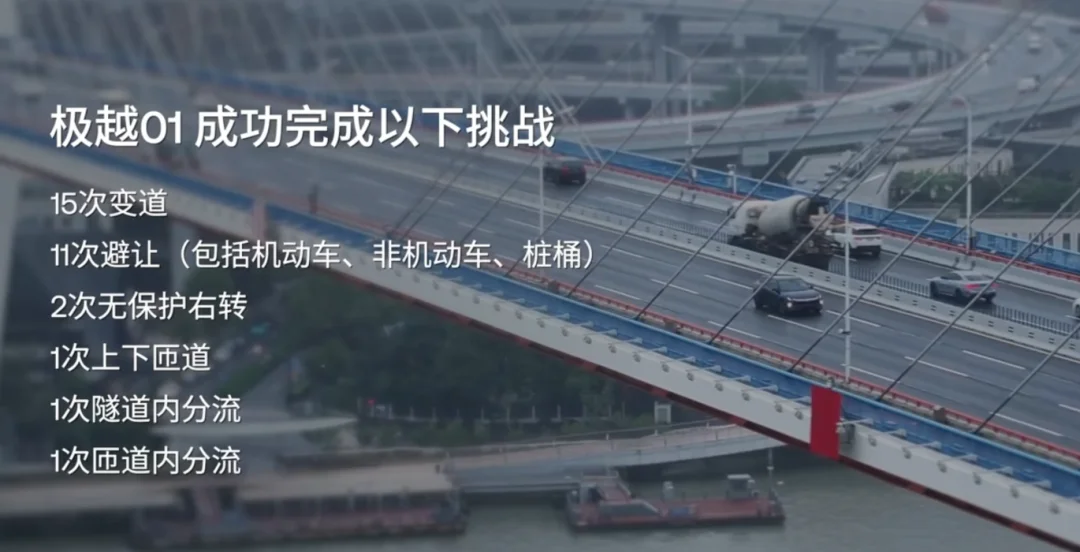
Especially at the perception level, Jiyue’s pure vision approach breaks free from strong dependence on LiDAR sensors.
Not relying on LiDAR means that Jiyue must invest greater effort in further enhancing the efficiency and capability of the BEV+Transformer algorithm framework, thereby raising the ceiling for visual perception.
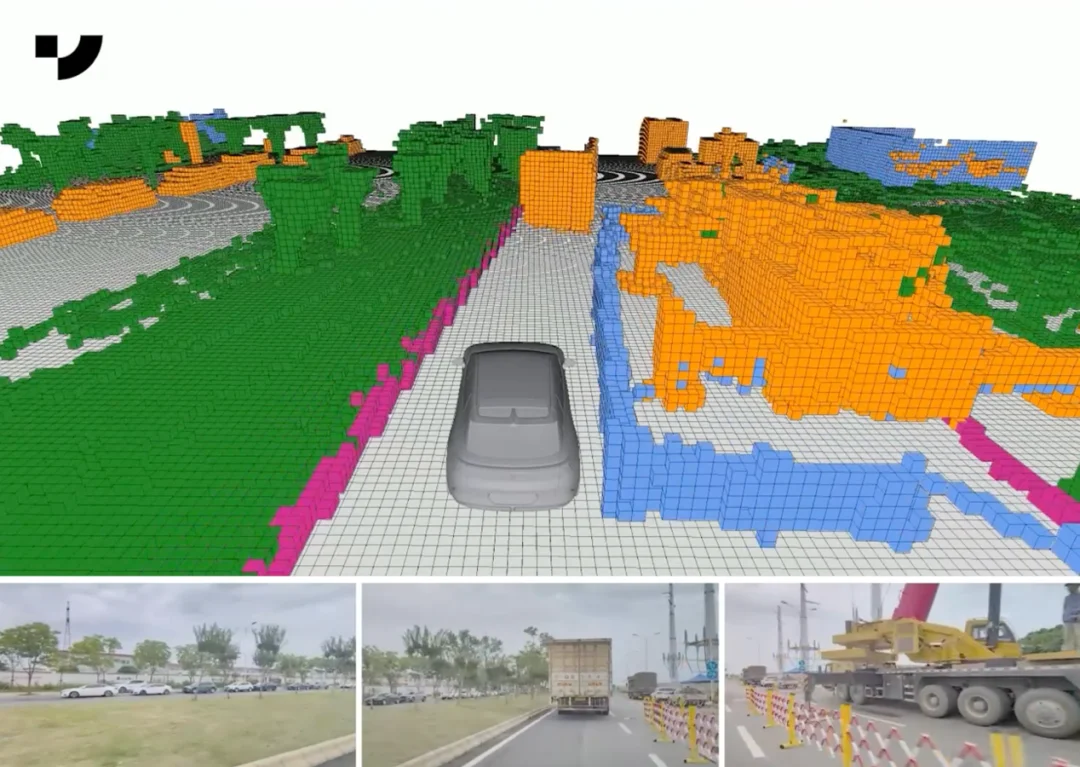
In fact, the Occupancy Network Technology showcased by Jiyue enables the vehicle to better reconstruct 3D scenes and acquire three-dimensional structural information with higher resolution than LiDAR point clouds. It also reduces missed detections and false positives while compensating for the spatial height information that vision systems lack. This significantly breaks through the upper limits of perception capabilities and greatly enhances generalization ability.
For these reasons, Jiyue’s solution can make up for the perception shortcomings caused by the absence of LiDAR and meet visual perception requirements under varying lighting conditions and road scenarios.
This is not easy—but so far, Jiyue appears highly confident.
It remains unclear which autonomous driving solution Jiyue will ultimately adopt upon launch, but its marketing suggests that the Jiyue 01’s driver assistance features will be ready for use from day one. This means users can experience urban navigation-assisted driving in specific cities immediately after taking delivery, without waiting for subsequent over-the-air (OTA) updates.
In terms of deployment speed, Jiyue’s urban navigation-assisted driving is indeed leading in China. Across the industry, the pace at which Jiyue has achieved mass production and implementation of intelligent driving capabilities is unprecedented.
This implies that in the product rollout rhythm for urban intelligent driving, Jiyue has surpassed many automakers and technology providers that started earlier. It is now prepared to compete alongside top domestic players such as Huawei and XPENG, who have already implemented urban navigation-assisted driving in specific cities. Furthermore, as a latecomer, Jiyue is aiming for a spot among the “Top 3” in China’s high-end autonomous driving sector.
Directly Benchmarking Tesla: Where Does Jiyue’s Confidence Come From?
The pure vision solution released by Jiyue this time follows a technical route closest to Tesla’s.
From a computing power perspective, Jiyue’s system is equipped with two NVIDIA DRIVE Orin chips, delivering up to 508 TOPS of AI computing power. This is also the standard computing power frequently adopted by domestic players, including XPENG, for urban navigation-assisted driving scenarios.
From an algorithmic framework standpoint, Jiyue’s solution utilizes the BEV+Transformer perception architecture, which is widely chosen across the industry. It also incorporates OCC Occupancy Network technology, jointly developed by Jiyue and Baidu, to identify irregular obstacles and further enhance Jiyue’s pure vision perception capabilities.
So why did Jiyue choose to announce its new pure vision route just before the launch of its first model? A core reason is the breakthrough in core capabilities driven by AI.
According to information we have learned, Jiyue actually adopted a fusion-based high-level intelligent driving solution with "vision-centric + LiDAR" during its early R&D phase 1.0, where the two solutions are mutually independent and complementary.
In Phase 2.0, however, Jiyue found that vision-based solutions relying on BEV (Bird's Eye View) and Transformer architectures were maturing. With the support of Occupancy Network technology, its 3D perception capabilities showed significant improvements in both perception quality and efficiency. Consequently, the company began reevaluating the necessity of LiDAR and gradually reduced its reliance on high-definition maps.
However, Jiyue CEO Xia Yiping told us during the exchange session that another core consideration for Jiyue's exploration of the pure vision approach is: compared to the point cloud information obtained by LiDAR, the image information obtained based on pure vision cameras actually has greater data mining potential.
Specifically, this is more conducive to Jiyue integrating large models and end-to-end capabilities into a data-driven closed loop, thereby providing a more efficient channel for subsequent improvements in perception performance.
In other words, according to Xia Yiping, while LiDAR did provide valuable assistance for 3D perception in the early stages, the pure-vision route has proven its capability under the combined support of BEV+Transformer algorithm frameworks and Occupancy Networks. Its future potential will continue to be amplified by cutting-edge technologies such as AI large models and end-to-end systems.
During the interview, Xia Yiping emphasized that choosing the pure-vision route hinges on confidence in the technology's current capabilities and its capacity for future iteration—a decision driven by long-termism.
Wang Liang, Chairman of the Technical Committee for Baidu's Intelligent Driving Business Group, also told us that he had to face the debate between LiDAR and pure-vision routes right from the beginning of his entry into the autonomous driving industry.
But he realized from the start that LiDAR is not necessarily the endgame, and if used improperly, it could even cause interference. Therefore, looking at future development trends, autonomous driving will follow the principle of "simplicity" in sensor selection, with fewer sensors overall.
Interestingly, beyond aligning its technical route with Tesla, Jiyue already demonstrates stronger advantages in mass production and deployment capabilities compared to Tesla.
In an interview, Xia Yiping told us that compared to Tesla, Jiyue has more home-field and localization advantages in mass production and deployment, including data and maps. He also stated that even if Tesla FSD operates in China, Jiyue is confident it can compete head-to-head on the same battlefield.
The Paradigm for Mass Deployment of Intelligent Driving May Have Changed
For the entire intelligent driving industry, the urban navigation-assisted driving solution showcased by Jiyue this time, along with its "mass production equals delivery" strategy in terms of delivery pace, carries multiple significances.
On one hand, through rapid mass production, deployment, and delivery capabilities, it joins Huawei, XPENG, and other rivals in competing against Tesla across the ocean, directly challenging Tesla on technical routes. Although Tesla FSD has not yet landed in China, Jiyue, as a latecomer, has already presented competitiveness that is difficult for outsiders to ignore, thanks to underlying advantages such as data volume and map data support.
On the other hand, the pure vision-based intelligent driving technology capability demonstrated by Jiyue this time actually conforms to and confirms a new trend currently emerging in the industry's deployment process.
That is: as intelligent driving has developed to this point, technology is certainly important, but cost must also be considered.
Currently, with the perception algorithm framework having achieved a generational breakthrough through BEV+Transformer+OCC occupancy network technology, it is no longer the only option for automakers from a mass-production perspective to continue relying on solutions that stack expensive sensors and processors. Such approaches struggle to deliver user experience value commensurate with the hardware investment.
Therefore, the most difficult and critical challenge lies in transforming intelligent driving technology into a deployable product.
In fact, throughout the development of intelligent driving, the entire automotive industry has been exploring an effective path to reach mainstream consumers across multiple dimensions, including technology, market, and policy. It was not until 2023, with features such as city navigation-assisted driving arriving at consumers via mainstream mass-produced models, that the industry finally saw the opportunity for intelligent driving to achieve large-scale deployment.
What the industry needs to do now is, under the premise that perception capabilities and computing power meet requirements, continuously optimize and iterate through different methods at the software and algorithm levels to achieve better experiential results.
More importantly, with the emergence of large models in the AI field and the autonomous driving industry’s exploration and application of frontier technologies such as end-to-end systems, AI technology’s further empowerment of autonomous driving has provided automakers and solution providers in this sector with more possibilities for mass production and deployment, making the industry more 'diverse and vibrant.'
It can be said that under this trend, pioneers like Tesla and latecomers like Jiyue are both triggering new industry reflections on the question of whether high-level intelligent driving must rely on LiDAR, through their respective choices of technical routes.
Notably, according to information we have gathered, beyond Tesla and Jiyue, some new EV manufacturers in the industry have already begun exploring the possibility of removing LiDAR in urban scenarios. In this sense, Jiyue’s approach carries a certain benchmarking significance.
In short: The paradigm for the mass production and deployment of intelligent driving has changed.
Therefore, regardless of other factors, Jiyue’s entry into the Chinese market is a positive development for the progress of intelligent driving deployment, both in terms of its chosen technical route and its participation in mass production. As for whether it will win user and market approval in terms of experience, we look forward to seeing the answer through 42HOW Auto’s actual evaluation after the launch of the Jiyue 01.
Written by: 308 Edited by: 308