


"Fake Female Demand: Pink."
The market has changed.
Following the Xiaomi SU7's legendary success last year, the newly launched Xiaomi YU7 has once again sparked a wave of enthusiasm among female users.
Last night, Lei Jun shared the latest data in a live broadcast: among YU7 locked orders, women account for 30 percent. At noon today, Lei Jun posted on Weibo: "This is the data from the first few days of the YU7 initial sales period. Currently, more than 40 percent of SU7 buyers are women, and women make up about half of drivers."
In the earlier car-buying decision stage, according to statistics from Che fans, within 72 hours of the Xiaomi YU7 launch, frontline sales staff reported that customers visiting the showroom were aged 22–35, with female users accounting for 45% of the demographic. The proportion of women making purchasing decisions was very high.
If the viral breakout of the Xiaomi SU7 was an accident, then the sustained popularity of both the Xiaomi SU7 Ultra and the Xiaomi YU7 among women tells the market that seeing and catering to female needs is inevitable.
According to survey data, the proportion of female new-car buyers is rising rapidly, and their contribution to the auto market is growing. The "Female Auto Market Insight Report (2024 Edition)" released by Yicheyanjiuyuan shows that from 2014 to 2023, women's contribution to China's passenger car market has been significant. Overall sales rose from less than five million units to 8.23 million units, with their share increasing from less than 30% to 38.08%.
In this light, Lei Jun did not "discover" women's needs through sun protection; he merely uncovered the tip of the iceberg.
At an internal speech last April, Lei Jun said: "They are moved by the good looks, sun protection, and storage of Xiaomi cars. The 2.78 seconds we are proud of, they might not even remember."
It is not just Lei Jun; in the promotional narratives of many automakers, women's needs stop at appearance, sun protection, and vanity mirrors. Is this really the case? Beyond sun protection and makeup mirrors, what other key or deeper expectations do female users have for cars?
Lei Jun shared on Weibo in March this year that nearly 20% of the first batch of Xiaomi SU7 Ultra owners were women, a proportion that continues to rise. However, in the comments section of his Xiaohongshu video recommending the SU7 Ultra to female users, the most liked and vocal comments were no longer expressions of support, but calls for the validation of women's true needs:
"Mr. Lei, there is no need to always associate female car owners with looks, sun protection, storage, and vanity mirrors. Female owners also pay for performance, safety, and range. They are not brainless people limited to superficial aspects."
"Female owners care about more than just looks, sun protection, and vanity mirrors. Girls can understand horsepower and performance just as well as boys, and they understand crash test results. I hope future video planning will truly respect women, rather than engaging in superficial marketing."
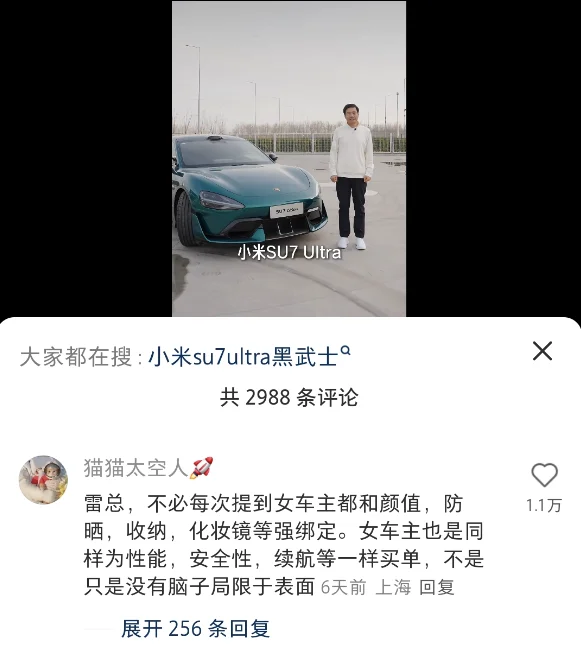
The era in which female users passively waited for their needs to be 'guessed' and acted only as bystanders in purchasing decisions is passing. They are no longer silently satisfied with looks, sun protection, and vanity mirrors; instead, they are using their orders to vote, reshaping a market where they can be seen, respected, and catered to.
01From 'Tech Bro' to 'Women's Friend'
"Will Xiaomi launch a custom car for women next?"
"Will AITO launch a customized vehicle for women next?"
Last June, during the audience Q&A session at Shenzhen's Future Pioneers Conference, a female journalist repeatedly posed the same question to the speakers on stage.
In response to this question, one of the speakers, Richard Yu, replied: "We will definitely strive to fully meet women's needs. We hope to make our colors, configurations, and features particularly appealing to female users."
Richard Yu also mentioned that the AITO M7's color-temperature-adjustable vanity mirror was a feature requested by female employees, and AITO was the first to implement it. Interestingly, just minutes earlier on stage, Lei Jun had stated that Xiaomi was the first to introduce the color-temperature-adjustable vanity mirror.
Customized vehicles for women may still be a distant goal for Xiaomi and AITO, but at the recent Xiaomi YU7 launch event, it was evident from Lei Jun's remarks that Xiaomi's understanding of female users' needs, perceptions, and psychology has indeed become more tailored.
For example, when discussing sun protection, Lei Jun no longer relied solely on figures for ultraviolet and infrared ray blockage rates. Instead, he used language that female users could instantly understand to describe the glass's protective strength: the sun protection level is equivalent to SPF 100+ and PA++++ in sunscreen.
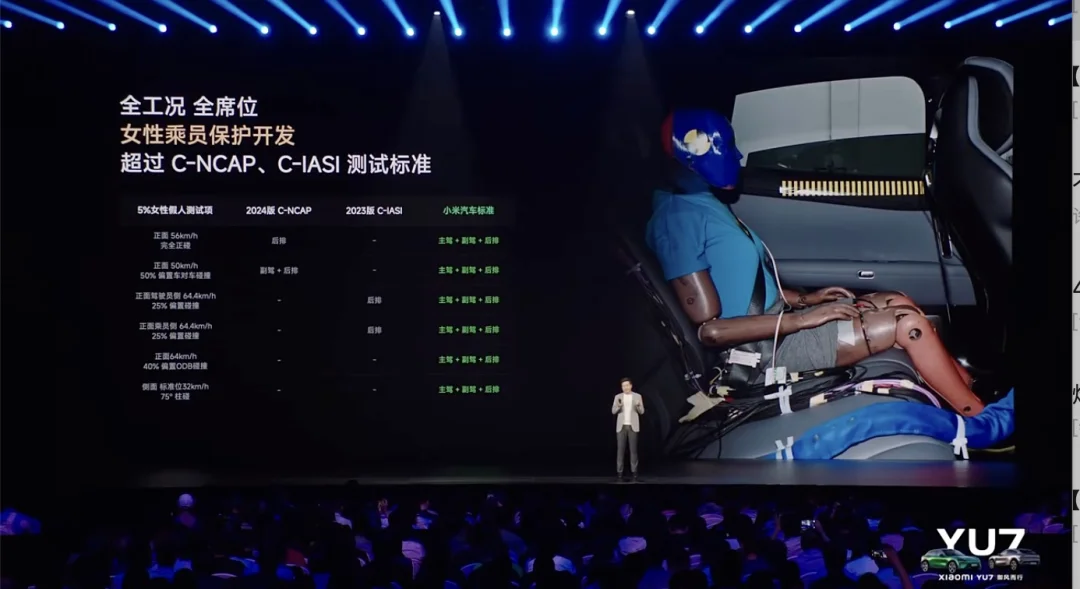
Regarding safety, Lei Jun stated that the Xiaomi SU7 Ultra was developed using female crash test dummies across all operating conditions and seating positions. Since current national standards do not mandate this requirement, tests involving female dummies represent a missing link for many automakers.
At the end of his speech, Lei Jun defined the target users for the YU7 as: mothers who drop their children off at school in the morning and buy themselves a bouquet of flowers on the way; fathers who take their families camping on weekends and keep a set of fishing gear in the trunk for themselves.
Lei Jun’s efforts to appeal to female consumers have been rewarded with strong sales. Female buyers are validating automakers’ insights into women’s needs with their purchases. According to Che fans’ report, "Xiaomi YU7 72-Hour New Car Launch Field Report":
The exterior and interior design strongly attract women. Many women actively chose to purchase the car and placed orders for specific configurations on-site. The proportion of female decision-makers increases in first- and tier-two cities.
Most customers visiting the store belong to young families. In most cases, wives take the lead in viewing the vehicle. They prioritize exterior and interior design, show significantly higher acceptance of pure electric vehicles, and frequently mention the dual zero-gravity seats. This awareness is surprisingly strong.
A prospective YU7 owner named Liu Liu said the zero-gravity seats were the main factor that won her over. "I can lie down and rest whenever I want during my commute," she said. "If there weren’t zero-gravity seats, I wouldn’t have chosen this model." She also likes large cars and chose Xiaomi because "it feels like many other brands on the market are at risk of going out of business."
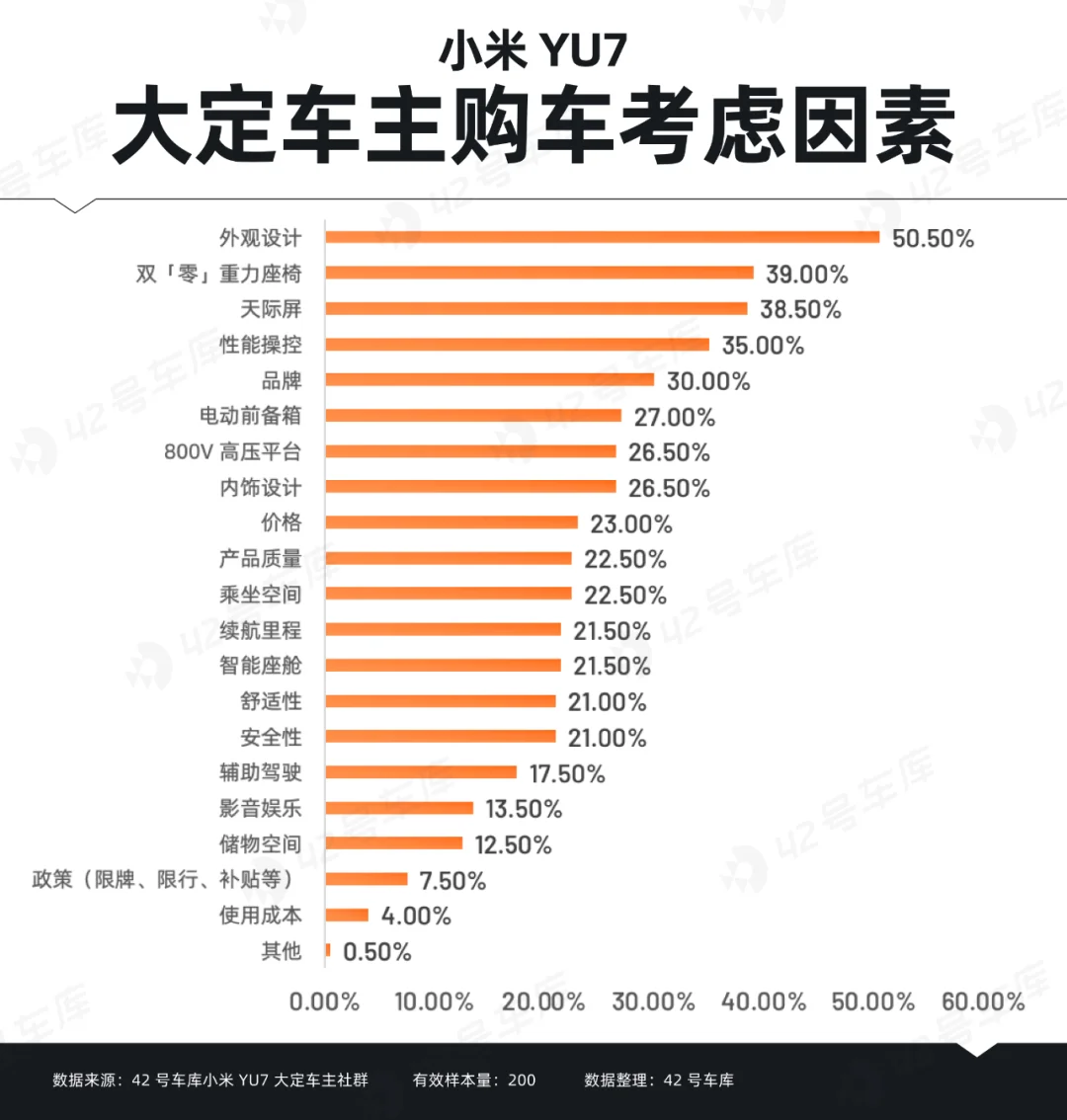
For female users, the rest experience provided by the zero-gravity seats is particularly popular, a finding confirmed by our own research. Among factors considered when purchasing a car, "dual zero-gravity seats" had a mention rate of 39%, second only to exterior design. This shows that this comfort feature not only appeals to female users like Liu Liu but also has strong attraction across a broader user base.
Since Xiaomi’s automotive division went viral in March last year, capturing a significant number of female users, and through debates over vanity mirrors on forums to marketing narratives tailored to women across various models and brands, it has become evident that the topic of female consumer needs—once considered optional or vaguely defined—is now being actively debated and driving substantive product changes. Even executives in the automotive industry, often characterized by their engineering-focused personas, are competing to position themselves as 'friends of women' who truly understand female consumers.
This shift is not a fleeting trend within the auto sector but an inevitable result of the vast consumption potential of women in the car market being recognized.
Especially as automakers accelerate their new energy vehicle (NEV) layouts, female users are participating with greater initiative.
According to the 'Q1 2025 Domestic New Energy Vehicle Market Insight' released by Meirihudong in May, compared to male groups, female users show a stronger preference for NEVs. The Female TGI (Target Group Index) reaches 111.91 when compared to the proportion of NEV users in the total population, which is 1.2 times that of men.
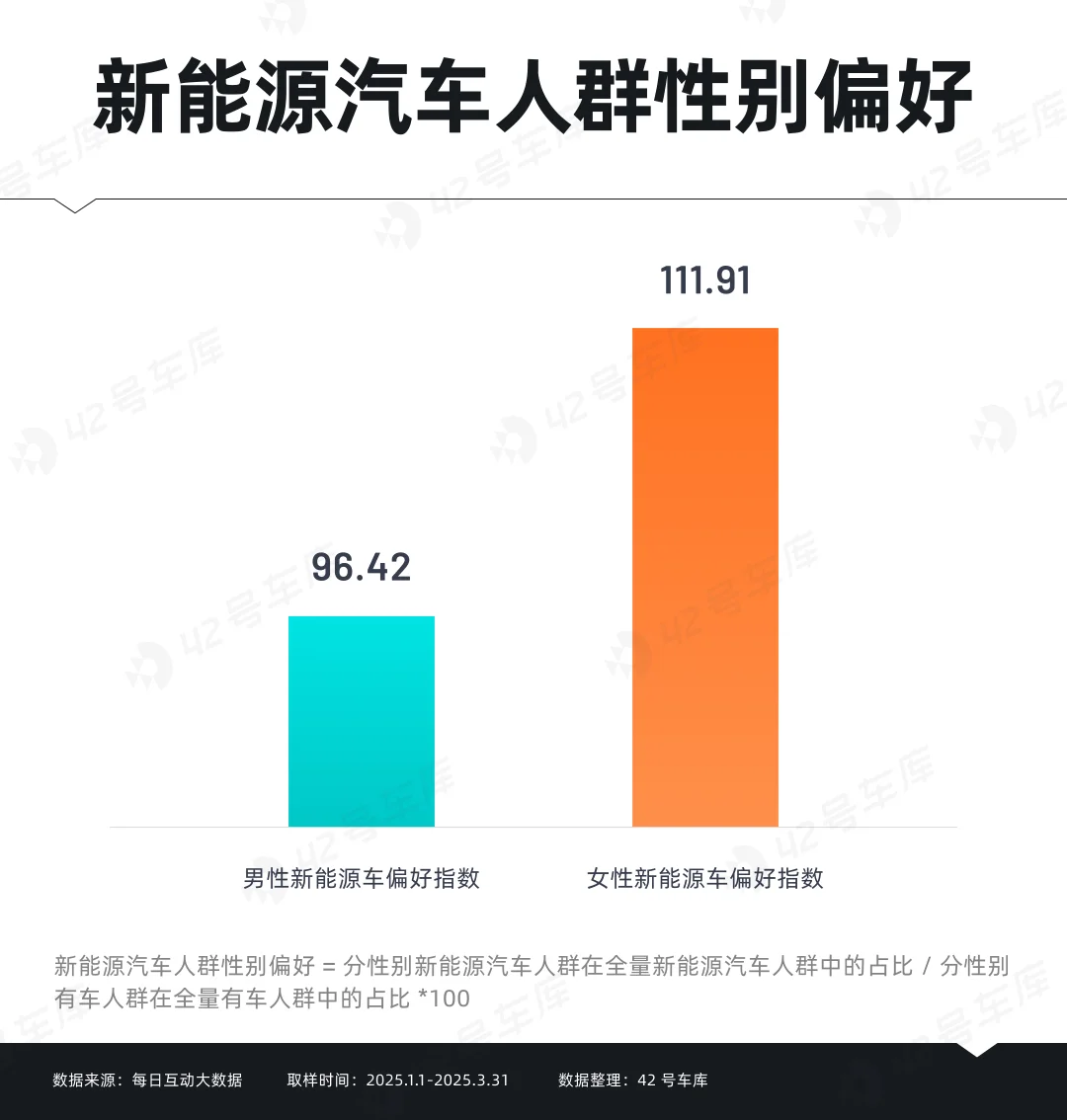
Meanwhile, the structure of car purchases is also changing: the proportion of first-time buyers has decreased, while the group of additional purchase users has expanded, with female additional purchase users showing the most significant growth. Latest data from J.D.Power shows that female additional purchase users account for 33% of all female users, far exceeding the 25% for men.
Not only is the frequency of car purchases increasing among women, but their budgets are also rising. Another report, the 'China Women's Automotive Consumption Trends Report (2024)', indicates that the average price paid by female users is RMB 225,000, slightly higher than the RMB 211,000 for men. Among them, 44.5% of women chose models priced above RMB 200,000, compared to 39.9% of men.
This means that if automakers' new energy strategies lack insight into the female demographic, they risk becoming mere theoretical exercises.
To align with shifting market trends, automakers have made numerous adjustments in product design. NIO was an early adopter of the "Queen's Passenger Seat," reserving space under the center console for women's handbags. XPENG and Lixiang followed suit, launching features such as "Queen Exclusive Space" and "Second-Row Queen Seats."
Beyond basic configurations, vehicles are increasingly attentive to fine details, adding sun-protection features, installing makeup mirrors with adjustable color temperature, and optimizing storage spaces. Catering to female consumers has gradually become a default "KPI" for automakers.
Real-world feedback suggests that these thoughtful details do resonate with female users. Xiaolu, the first owner of a Xiaomi SU7 in Wuxi, said the car provides significant emotional value through many subtle touches: "When I open the door, sit down, and step on the accelerator, the instrument cluster flips over, creating a sense of ritual; the refrigerator can both cool and heat, which really caters to women."
Before buying a Xiaomi, Xiaolu already had several gasoline cars at home. After owning the car for a full year, she said she could no longer drive other vehicles. "Those cars were just cars, nothing special. They didn't respond well to voice commands, weren't that smart, and required manual operation for navigation and music. You had to carry keys and lock the doors manually; with Xiaomi, you can activate many functions just by speaking."
Automotive designer Mr. Wang told 42HOW Auto that some models targeting female users, such as the electric MINI, make buttons for key functions larger. "Because manicures are common among women, touchscreens can be inconvenient. Therefore, enlarging buttons for their ease of use is necessary and must be considered."
While putting considerable effort into products, automakers also directly target women in brand positioning and marketing, actively catering to female preferences in colors, styling, and dimensions. This has led to a consistent design tendency: models must be compact, body colors must include pink, and names must feature cute elements, such as Oulahaomao, BYD Seal, and QQ Bingqilin.
Saying goodbye to "paternalistic" tones, new marketing slogans have emerged: "The car brand that loves women more," "Girls love driving too," and "Off-roading is every man's and every woman's dream."
An interesting shift is that while high-end models or self-media previously featured attractive, curvy female hosts to cater to male aesthetics, there are now more women with pleasant appearances and figures sweetly calling viewers "sister" on camera.
From a traditionally masculine aesthetic to female-friendly design, automakers have reaped tangible benefits by targeting the vast women's market segment.
The first domestic new energy vehicles to benefit from the female consumer boom were A00 and A0 class cars. The Wulinghongguang MINI EV sold more than one million units in just over two years. Oula reached 135,000 sales in 2021, while BYDHaitun gained momentum later, selling 205,000 units in 2022 and 367,000 units in 2023, becoming a hit model. Between 2021 and 2023, BYD's female penetration rate surged from 25.54% to 43.83%.
Automakers are now promoting the idea that "women can also drive large vehicles." Brands such as Xiangjie S9, XPENG X9, and Lixiang highlight their substantial female user bases. For instance, in a user profile released by Hongmengzhixing on June 24, women accounted for 40% of Xiangjie S9 extended-range vehicle owners. Additionally, when XPENG X9 launched last June, women comprised 20% of its owners, significantly higher than the traditional MPV average of 5%.
It used to be said that the "first half of the new energy vehicle era is electrification, and the second half is intelligence." Now, facing a situation where women contribute nearly 67% of sales in the pure electric market, some argue: "The first half of China's auto market was for men, and the second half is for women."
02Women's Needs Are More Than Just "Pink"
After Xiaomi's explosive popularity, Lei Jun posed a rather bewildered question during a speech: "I just can't figure it out. After a century of automotive industry development in China, how did no one think to focus on making good sun protection?"
As Lei Jun pointed out, throughout the long history of automotive development, many genuine needs have been overlooked and misunderstood. The stereotype that women prioritize aesthetics while men prioritize performance has persisted for a long time.
Interestingly, the sun-protection feature in automotive glass was not pioneered by Xiaomi Auto; rather, most other automakers had simply not positioned it as a primary selling point prior to Xiaomi. For new energy vehicles equipped with panoramic sunroofs, spacious headroom and the open feeling of being able to view the sky at any time became the core selling points. The incidental "sunbathing" experience for all passengers could be mitigated by applying a single layer of dark tint film, which would assure users that the sun-protection effect was "not bad."
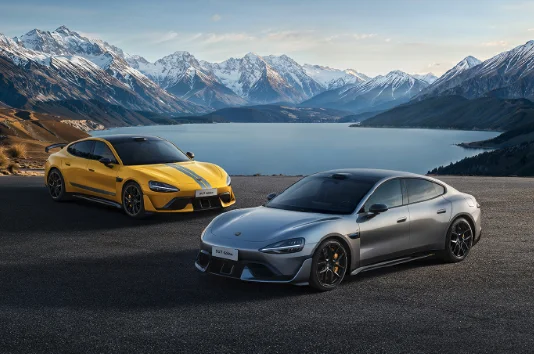
In reality, every summer brings EV passengers using umbrellas and wearing straw hats inside their cars. A dark window tint may reduce light transmission, but it does little to block external heat; ultraviolet rays still pass through the film and glass, directly hitting passengers' skin.
When the Xiaomi SU7 was launched, Lei Jun specifically highlighted its "distinctive" window glass: a dual-layer silver-coated panoramic roof, triple-layer silver-coated front windshield, and sun-protection insulation coatings on all side windows. Subsequently, many popular new energy vehicles, including the refreshed Tesla Model Y and the AITO M8, were also equipped with windows featuring silver coatings.
Several automotive executives told 42HOW Auto that they also have sun-protection features similar to Xiaomi's, but they were unable to make what most people consider standard features compelling enough to resonate with users or achieve widespread viral spread, unlike Lei Jun.
Even as women's needs enter the public eye, they remain overlooked and misinterpreted. Even car company bosses skilled at marketing, such as Lei Jun, who garnered a large female fanbase for Xiaomi by highlighting women-friendly features like sun protection, have their limitations—for instance, ignoring performance-oriented female users' pursuit of key factors such as performance and seat comfort when introducing the Xiaomi SU7 Ultra, a high-performance model.
Richard Yu once self-deprecatingly admitted in public remarks: "I focus only on technology and don't understand young women's needs." He stated: "We must strive to pay attention to small details that appeal to young female users, such as exterior design, colors, and aesthetics."
The fact that car companies cannot escape gender-stereotyped marketing reflects an interesting paradox in their attempts to cater to female users and study their needs:
This perspective overlooks the significant commonalities between men and women in vehicle usage needs, such as the emphasis on performance, handling, and safety. At the same time, it simplifies women’s preferences to mere choices of color and styling, ignoring their genuine and nuanced concerns regarding space, convenience, sun protection, safety features, and privacy in real-life scenarios.
For instance, Nana, a prospective owner of the Xiaomi YU7, believes there is no fundamental difference between men and women when selecting a car, with safety being the top priority for both. "When choosing a family vehicle, comfort is key; for personal use, driving feel matters. Men also care about exterior design, but their aesthetic preferences differ from those of women. Generally, men prefer sleek looks, while some women like cute designs and others prefer sleek ones," she said.
Sun protection, highlighted by Lei Jun, is just one of many previously overlooked needs. In reality, vehicle usage requirements are not static; they evolve with gender, age, life stage, and even professional identity. For a long time, traditional automobiles—viewed merely as transportation tools—have failed to adequately address many high-frequency, specific scenario-based needs, including privacy.
Chen Ming, a debater on the program Qi Pa Shuo (The Ugly Truth), once shared a telling detail: "Where do nursing mothers currently prefer to pump breast milk? In their cars. Mothers carry boxes, take the elevator down to the basement, get into their cars, and block the windows with foil..." Applying foil to car windows serves as a makeshift alternative to interior privacy curtains.
Beyond pumping breast milk, scenarios such as lunch breaks and changing clothes require a high degree of privacy. Most current models lack convenient solutions for this, with only some luxury vehicles offering electric privacy curtains. For most owners with similar needs, the process of blocking visibility before resting or changing clothes is cumbersome and fragmented, leading to a disjointed user experience. Some users have told 42HOW Auto that pregnant women often need to rest well in their cars during lunch breaks, but getting in and out and adjusting the seat can be quite inconvenient.
Even regarding safety—a basic automotive attribute—women have numerous unmet needs. A study released in 2019 by Fujiniyadaxueyingyongshengwulixuezhongxin revealed a startling fact: even when wearing seatbelts, women are 73% more likely to suffer serious injuries in car crashes than men.
This conclusion was drawn after controlling for factors such as crash intensity, occupant age, height, body mass index, and vehicle model year. Women face particularly prominent risks of lower-limb injuries. The data sample covered nearly 23,000 frontal collision accidents involving over 31,000 occupants, with an almost equal gender ratio.
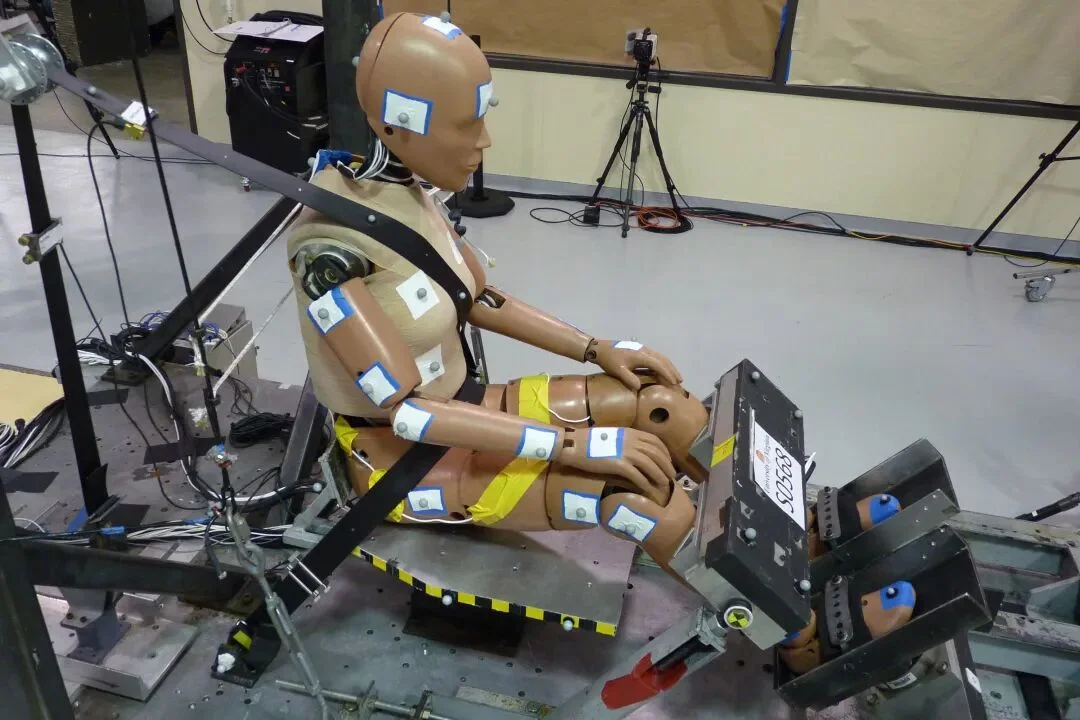
When targeting female users, automakers still tend to emphasize elements such as aesthetics, automatic parking, vanity mirrors, and compact body size in their marketing, rarely addressing how well a vehicle's core attributes align with the needs of female drivers—such as safety, handling, and driving enjoyment. However, real-world users let their purchasing choices speak for what truly matters.
In reality, when women talk about cars, what do they discuss?
Xiaomi YU7 prospective buyer Liu Liu said she purchased the YU7 as a second car because her family's gasoline vehicle had too few features and consumed too much fuel, adding, "If you want to enjoy life, you should buy an electric vehicle." When buying the car, the features and configurations she cared about most, ranked by importance, were: seat massage and ventilation, zero-gravity seats, acceleration speed, and the infotainment system. Appearance, sun protection, and makeup mirrors were merely bonus items. Nana placed her deposit for the YU7 based on a combination of factors including appearance, range, the battery-motor-electronic control systems, chassis performance, LiDAR, overall interior space, seat comfort, and smart interaction.
"Pink is truly a pseudo-demand; if it comes to bright colors, I prefer yellow," Xiao Yi, an owner of the Lynk & Co Z20 and a former employee in the design department of a new energy vehicle company, told 42HOW Auto. "If I were considering buying a car myself, aesthetics would definitely rank high, but safety is what I consider more. Being a woman doesn't mean I don't pursue performance or like cool features; even if I might not use them, I need to have them."
Xiaomi SU7 owner Xiaolu mentioned that while many believe automatic parking is friendly to female drivers, she does not necessarily agree. "There are some difficult parking spots where I can park faster myself. I feel very confident driving the Xiaomi; when I want to overtake, I step on the accelerator and it responds promptly. To some extent, I find that the female car owners around me drive more steadily, have better moods, and also enjoy the fun of driving."
Another female Xiaomi owner, Yezi, emphasized how high performance helps women drive. "Sometimes the reason girls are not decisive when driving may be a lack of familiarity with controlling the car, so good handling is a very helpful feature. If you drive a car with slow acceleration, hesitation might cause you to miss an opportunity, whereas high performance helps me make quick decisions." She believes intelligent driving is also one of the key points women should focus on. "I think women can try out intelligent driving more; situations like changing lanes at highway exits can be handled more timely and safely by the system than by manual operation."
Mr. Wang, the male automotive designer mentioned earlier, also shared his girlfriend's preferences: "She prefers SUVs because she can sit higher, see the front of the car, and feel more secure. Many new energy vehicles lower the hood significantly to reduce aerodynamic drag, which blocks the driver's view and makes her feel insecure. This is actually a widely observable phenomenon."
On social media platforms frequented by female users, women often criticize the stereotypical nature of automotive design and voice their genuine needs:
"Do carmakers really not consider that women also like performance cars? I want a beautiful car with strong power and good handling."
"As a young woman, I feel the most important direction for automotive feminization is seat safety and fit, especially an increase in female crash test dummies."
"I want a safe, highly maneuverable, fully functional, and smart medium-sized stylish hot hatch, not a plastic big toy with half its range."
"True female needs: comfortable seats and pedal positions designed for average female height; crash test dummies based on Chinese women's average height rather than white male height. False female needs: pink."
"Female needs have entered the view of automakers not just in recent years, but some brands and models claiming to be 'exclusive to women' have either failed at launch or lacked sustained momentum."
"For example, Changcheng, known for its 'tough guy' image, once gained popularity with Oulahong under the slogan 'loves women more.' In 2021, Changcheng Oula achieved annual sales of 135,000 units, becoming a dark horse in its segment for a time."
"Subsequently, BYD Haitun rose rapidly, selling 205,000 units in 2022 and 367,000 units in 2023, setting a new record for annual sales in the A0-class segment in 2023, and maintaining stable sales of 198,300 units in 2024."]}
This serves as a reminder: competing in the women's automotive market requires technical expertise and a deep understanding; being cute and petite is not enough to win over a diverse female consumer base. Those who truly understand their users are the ones who can capture women's right to choose.
03How to Rise by Catering to 'Her'?
Automakers have long been trapped in imagined female needs. However, since user research is a necessary step in R&D, why does this mismatch between supply and demand persist?
Mr. Wang, an automotive designer, told 42HOW Auto that this is because many companies do not value user research or do not know how to use it effectively. "Too much user research is actually done to please the boss. The boss has an idea first, and the user research is conducted with a predetermined result to prove the boss right. Therefore, we believe Xiaomi's success is highly correlated with Mr. Lei Jun's high standards for user research," he said.
This point was further corroborated by Ms. Yang, a senior female automotive media professional. She told 42HOW Auto that she once attended a model review centered on female car owners. The model manager asked the male journalists present for their thoughts on what their wives wanted in a car, but did not give the female journalists a chance to speak. "I raised my hand several times at the scene but was not allowed to speak. Later, when this model launched, it indeed failed miserably," she said.
Refusing to listen to women naturally means ignoring their real needs. Ms. Yang said that in traditional automotive design, human-machine interfaces such as seats, steering wheels, and pedals are primarily designed based on average male height as a reference standard. "I say the seat is uncomfortable, but others don't feel it," she noted.
Previously, when chatting with a female employee at a new energy vehicle company, Ms. Yang found that when they tested seat comfort, it was mostly male colleagues who went to experience it, without specifically inviting female colleagues. "We can't guarantee that no women sat there, but certainly, female riding comfort was not treated as a specific agenda item," she said.
The perspective mentioned by Mr. Wang is that this is largely driven by cost considerations: "The lowest cost is definitely using that universal model, which is 'a 175 cm tall, standard-build white middle-aged man.' That differs significantly from the average height, weight, and body curves of Asian women."
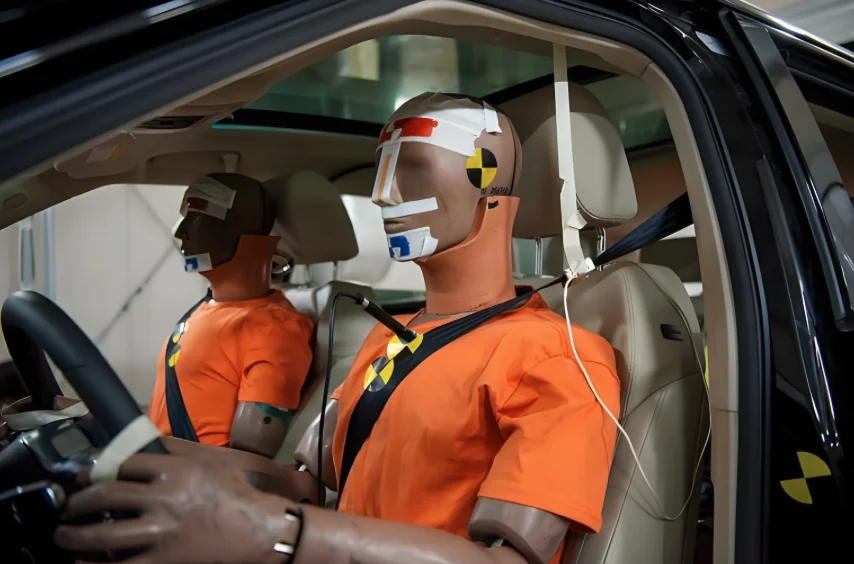
"The biggest difference in my experience compared to others is the position of the lumbar support." Ms. Yang previously thought that how the lower back felt was simply related to height differences, but later learned that women may have a greater anterior pelvic tilt when sitting, making them more prone to issues like "the seatback not supporting the waist" or "a gap under the lower back."
This aligns with feedback from many female users of 42HOW Auto, who emphasized their need for comfortable seats. One female owner stated, 'I find those gas-powered cars unbearable to sit in; the seats are very uncomfortable.'
How can automakers break through the mismatch between supply and demand often encountered when targeting the female market?
Mr. Wang said automakers need more authentic user input. 'If you want to address the pain points of female owners, conducting in-depth interviews with a hundred women is essential. And you must do this without preconceived outcomes; any conclusions drawn from user interviews should not be preset. That is the most important part.' He noted that he is currently tracking an off-road project where he participates in every round of user research, and female respondents have provided many different perspectives.
According to Mr. Wang, his ongoing off-road vehicle research aims for a gender ratio of respondents close to 1:1. 'However, in actual recruitment, there are fewer female users, which we find regrettable.'
During research and discussions, Mr. Wang found that women are particularly concerned about high heels damaging air mattresses. There are also different preferences between men and women regarding mud on shoes in off-road scenarios: 'Women’s request is to be able to change shoes and avoid stepping into the car with mud, while men prefer that dirt is easy to wash off, ideally with a floor that can be rinsed with water. Therefore, many off-road vehicles have drainage holes in the floor, but not necessarily a dedicated place for shoes. Of course, this isn’t just limited to off-roading; a common need for female users is having a place to put changed shoes. I feel current products haven’t deeply addressed this scenario yet.'
Similar gender differences appeared in research on driving mode preferences. Mr. Wang stated, 'We conducted interviews on automatic off-road modes, and expectations between men and women were very different. Female respondents had high expectations for this mode, hoping the car would automatically adjust everything so they could drive with peace of mind, whereas male respondents wanted as many adjustable options as possible. Women pursue designs associated with safety and atmosphere, hoping for rich visual expressions to create a hardcore off-road vibe, while men prefer functionality.'
"The problem extends beyond the research methodology itself. A deeper issue lies in the long-term absence of female perspectives in product decision-making and team structures. Even when women are involved, they often struggle to have a genuine voice at critical junctures."
"Xiao Yi, a former design department employee at a new energy vehicle company, told 42HOW Auto that this structural gap is particularly evident in the product design process: 'At the company I worked for, most exterior designers were men. There might have been one or two women among interior designers, but the decision-makers were still men. Only those working on colors and materials were female, meaning women had relatively little say.'"
"Female users, whose agency and purchasing power continue to grow, no longer accept passive, stereotyped market positioning. They need more than just 'queen's co-pilots' or 'empress seats'; they also want driving positions tailored specifically for them. Fortunately, automakers' mindsets are shifting, moving from merely catering to aesthetics to focusing on core needs such as safety and handling."
"On International Women's Day, Lei Jun shared a message he received from a colleague on his personal Weibo account:"
"A female user stated that she hoped marketing aimed at female owners would not focus solely on features like makeup mirrors and sun protection. She explained that female owners choosing the Ultra model wanted the same confidence as men to master a powerful performance machine."
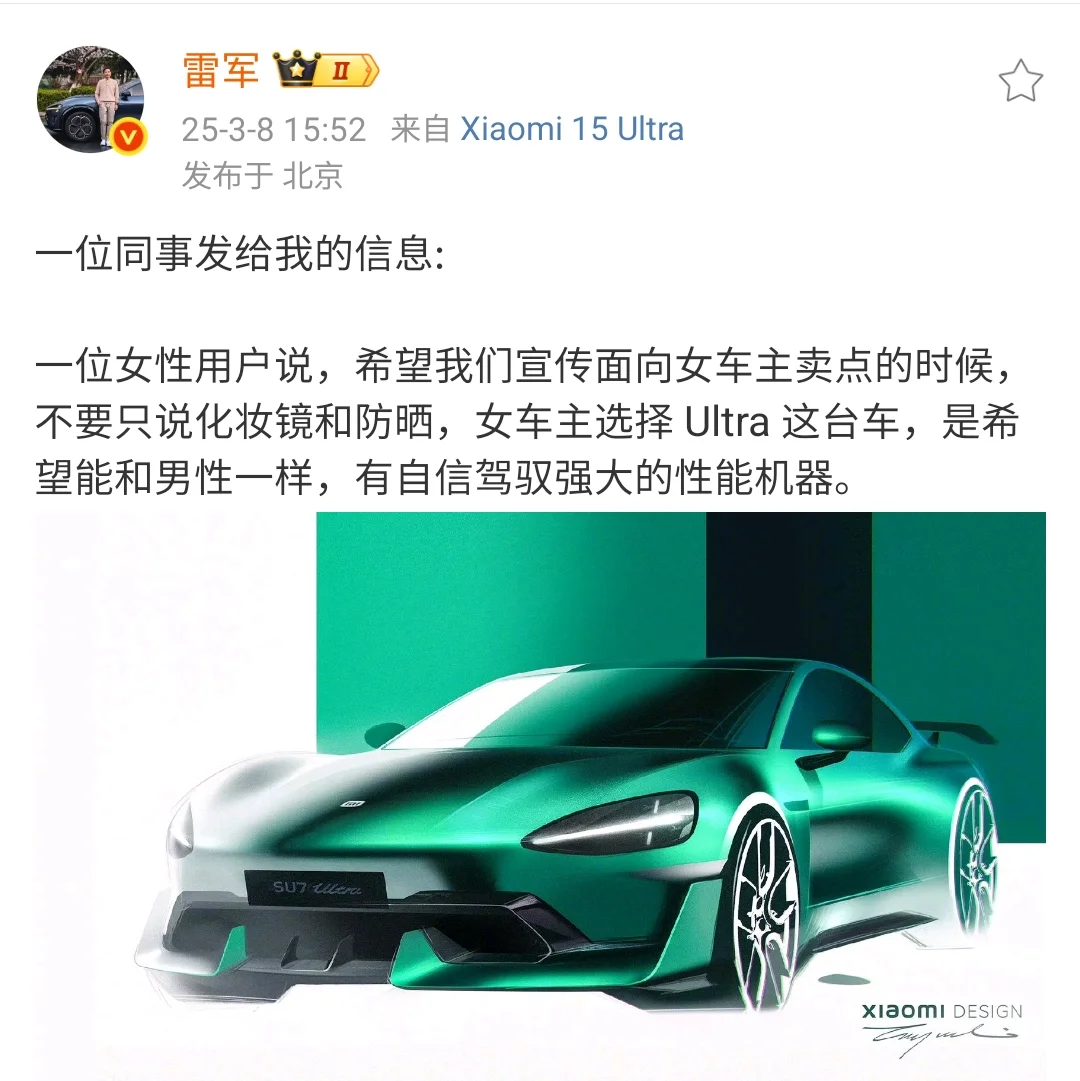
"The public sharing of this viewpoint indicates, to some extent, that voices from female users are being genuinely heard. For automakers, this means re-examining product design and marketing strategies to avoid oversimplifying or labeling female needs. Companies must truly understand and meet the diverse demands of female consumers and implement these insights into products as soon as possible."
"Some automakers have already begun to notice and value female feedback. After the launch of the Lynk & Co Z20, Chen Dingfang, Product Lead at Lynk & Co, told 42HOW Auto: 'This model underwent safety testing using female dummies. We have considered and evaluated this since our first car, the Lynk & Co 01; incorporating female dummies for evaluation is mandatory. Regarding handling, you can try it out—it is very easy to get started with. No matter what car you drove before, this one feels agile and responsive.'"
Chen Dingfang also noted that the female crash test dummies used by Lynk & Co differ from male dummies not only in size and weight, but also in physiological factors such as chest pressure sensitivity.
He further explained that the flat-bottom steering wheel on the Z20 was designed with female drivers in mind, who tend to sit closer to the wheel. This provides more legroom and reduces the risk of the steering column intruding into the occupant’s space during a collision. The rear seatbelts also feature anti-choking loops to prevent discomfort for petite women whose necks might otherwise be strained by the belt.
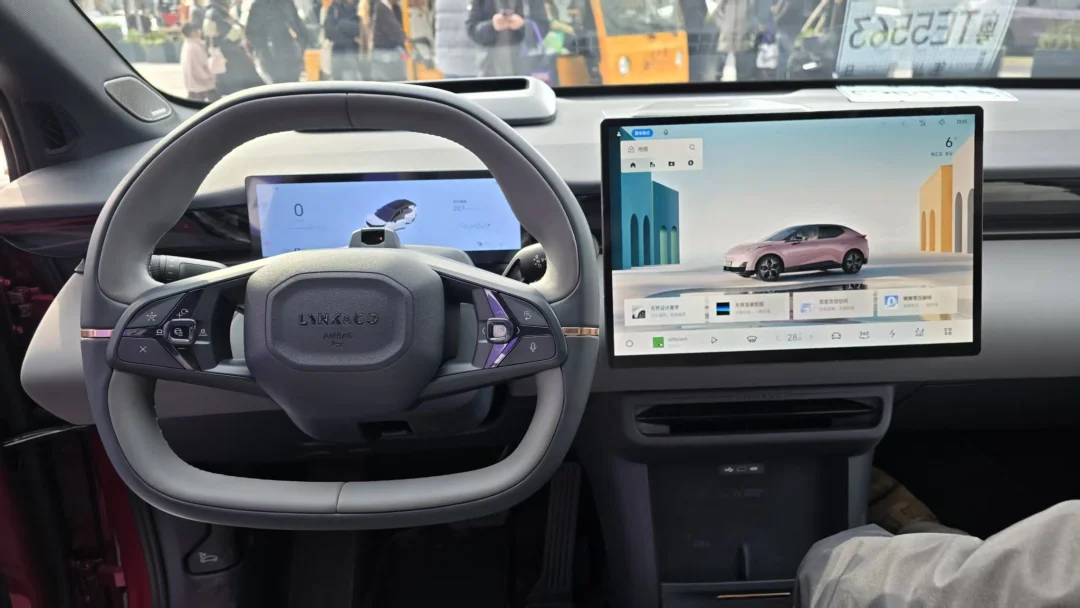
However, these features have not been effectively communicated to users at the marketing level. Much like sun-protection functions common in many cars, they seem to have slipped under the radar. Xiao Yi, a Lynk & Co Z20 owner who had not attended the product launch, said she was "completely unaware" that her car had been tested using female dummies. "Why didn't they promote this?"
It was only after learning why the steering wheel was flat-bottomed that Xiao Yi finally understood. "Friends used to say my steering wheel looked like it had fallen over, and kept asking me if I had straightened it," she recalled.
Xiao Yi suggested that many car buyers do not watch product launches. "But during offline purchases, sales staff never proactively mentioned these points to boost my interest, even though they knew I was a woman. This suggests their outreach during test drives may have been inadequate."
This indicates that a model’s performance in the female market is rarely determined by a single factor. It depends on a chain of processes spanning corporate hiring practices, user research, needs identification, product design, marketing, and sales execution. When the female perspective is missing at any stage, it ultimately results in a mismatch between the product and its users.
The disconnect is particularly evident in the products themselves. Cars explicitly marketed as "female-specific" often fail to win over the market because they stray from genuine needs and remain superficial. Conversely, some large or performance-oriented vehicles unexpectedly gain popularity among women. This raises a new question: what kind of products truly resonate with female consumers?
Xiaolu’s answer is: good-looking, safe, and smart. A Ford owner named Danta said that as a young woman, she believes the most important feminine direction for cars should be seat safety and fit, especially with the increase in female crash test dummies. "As for performance and appearance, I would never buy a car that diminishes women by castrating its performance."
The China Women's Automotive Consumption Trends Report (2024), jointly launched by 21 Shijijingjibaodao, 21 Shijixinqicheyanjiuyuan, and Niersen IQ, points out that among the key factors women consider when buying a car, the top three are safety performance, space size, and power handling. Moreover, women place greater importance on intelligent features than on interior design and brand.
"From a designer's perspective," Mr. Wang stated, "we actually hope to first maintain a neutral angle to get the basics right before adding adjustments based on user preferences."
He believes this amounts to a design philosophy issue: "I wouldn't dare to claim what truly works, but if the people making this product do not understand real female users, do not sit next to them to listen sincerely, do not painfully think and dig into women's real needs, do not go to the front lines of design and production to practically solve every problem, and do not communicate honestly with users, they will certainly fail to move the users they aim to win over."
(To protect the privacy of interviewees, Xiaolu, Yezi, Mr. Wang, Danta, Nana, Liuliu, and Xiaoyi are pseudonyms.)
Written by: Dayong Edited by: Daji, James