Horizon Robotics CEO Yu Kai: Urban ADAS to Reach 100,000 RMB Cars, 10 Million Units in 3-5 Years
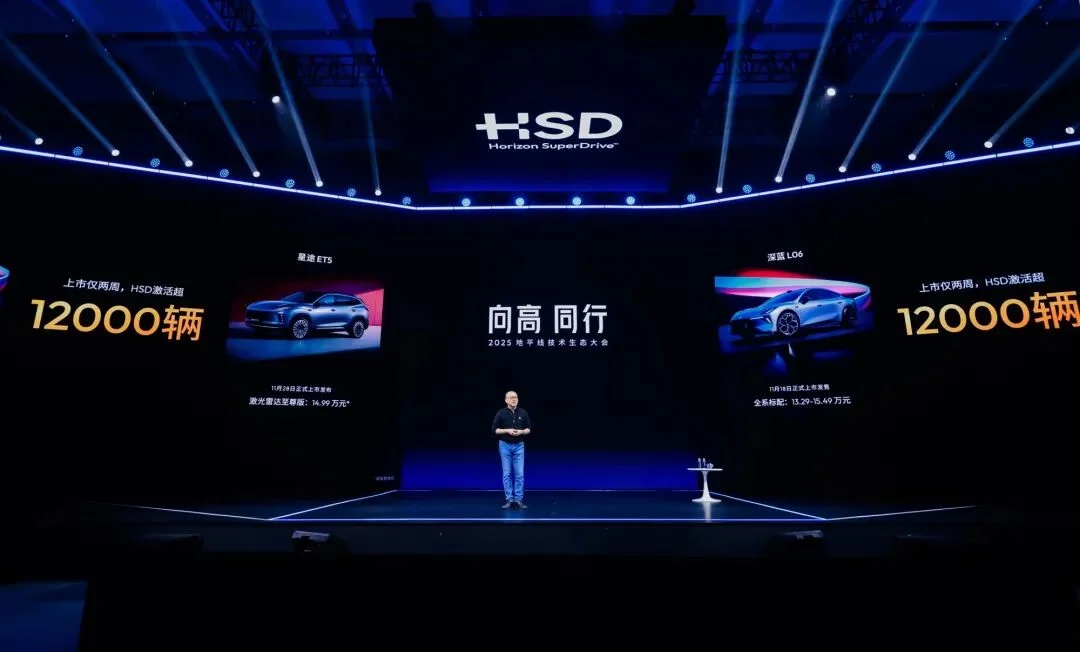
"Urban driver assistance will become accessible in mainstream cars priced at RMB 100,000, and urban driver assistance will reach the 10-million-unit production scale within the next 3–5 years." At the 2025 Horizon Robotics Technology Ecosystem Conference held this morning, Dr. Yu Kai, founder and CEO of Horizon Robotics, set out these two goals. This means the industry's 2025 ambition of "driver assistance for everyone" has now been upgraded to "urban driver assistance for everyone."
For the driver assistance industry, this marks another major upheaval.
In his 100-minute speech, Yu Kai discussed the latest mass-produced HSD (Horizon Smart Driving) systems, Horizon Robotics' core business model, and teased the upcoming Journey 7 series chips. These chips are expected to launch simultaneously with Tesla AI5, aiming to help Chinese driver assistance chips catch up with global leaders.
Beyond smart vehicles, Horizon Robotics also announced it will open-source two models in the field of embodied intelligence—the cerebellum and the brain—continuously promoting the mass production of consumer-grade robots and industry progress.
So how does Horizon Robotics realize its vision of mass-producing urban driver assistance for tens of millions of units? How does Horizon Robotics face fierce commercial competition? The answer lies in Horizon Robotics' latest business model and technical architecture.
01Urban ADAS Will Also Be Available in the 100,000 RMB Segment
Horizon Robotics' business model has never been limited to selling chips alone.
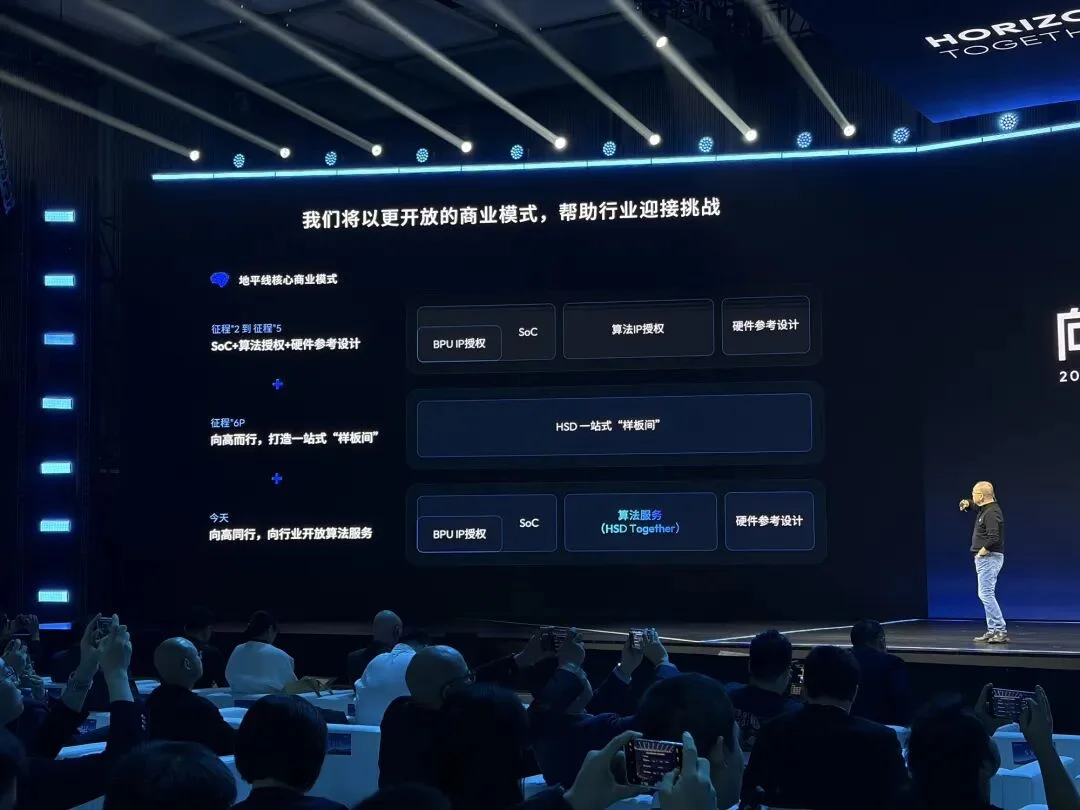
From the Journey 2 era through to the Journey 5 generation, Horizon Robotics' business model involved selling SoCs, algorithm licenses, and hardware reference designs, enabling a wide range of Chinese brands to replace imported chips with domestic alternatives.
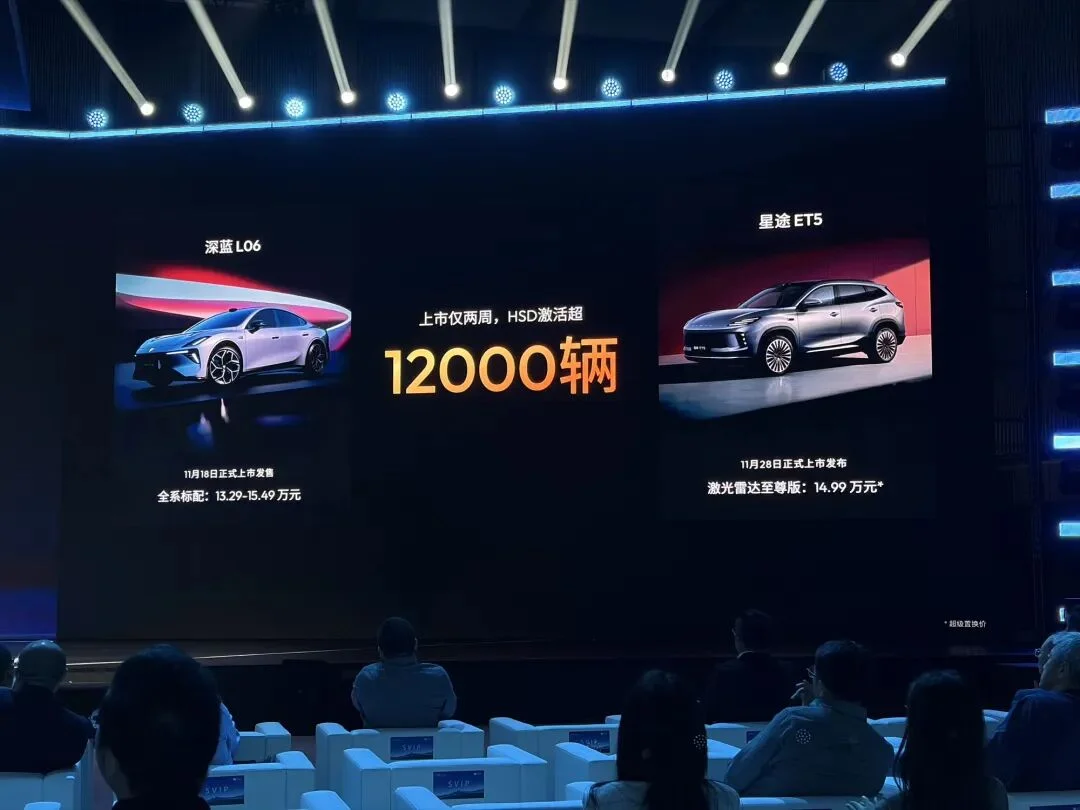
Just last month, Horizon Robotics launched an HSD driver assistance solution based on its Journey 6P chip. Yu Kai described this solution as the 'showroom model' for urban driver assistance at Horizon Robotics. According to the latest data, since the Deepal L06 and Exeed ET5 equipped with the Horizon Robotics HSD solution went on sale on November 18, the number of activated HSD systems reached 12,000 units within two weeks.
In the fiercely competitive 150,000–200,000 RMB price segment, such sales figures are impressive.
After establishing the Journey 6P as a 'showroom model,' Horizon Robotics set a new goal: 'moving forward together with peers and opening up algorithm services to the industry,' known as HSD Together.
What exactly is the Horizon Robotics HSD Together algorithm service model? Based on the Horizon Robotics HSD 'showroom model,' Horizon Robotics can provide base model authorization for HSD, available in either white-box or black-box modes. It also offers algorithm adaptation engineering and consulting services to partners. Additionally, it provides a development platform in SaaS mode. For Horizon Robotics' partners, such as automakers or driver assistance solution providers, this means they may not need to collect and label as much data, ultimately facilitating faster feature delivery.
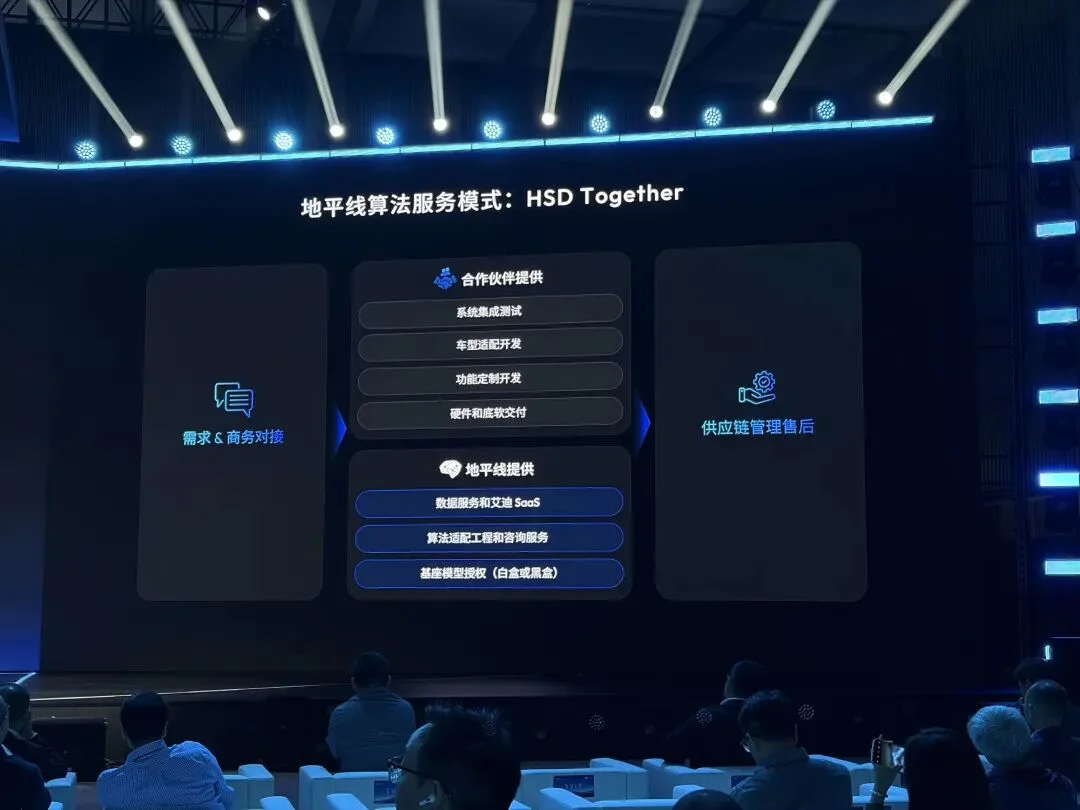
Yu Kai stated that under this cooperative model, partners can reduce labor costs, computing power expenses, and development time by 90%.
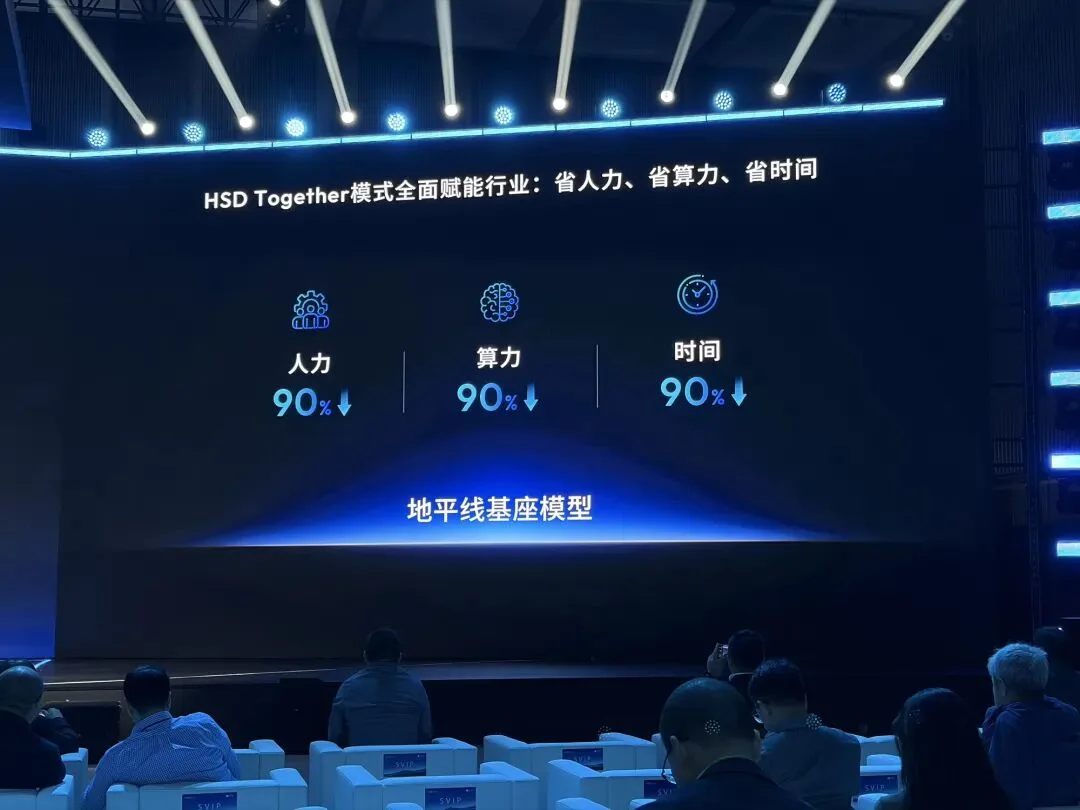
Lower costs mean that features once exclusive to high-end models will inevitably become available in more affordable vehicles.
Yu Kai announced that Horizon Robotics, together with its partners, can deliver a highly usable and smooth urban driver assistance system based on the single Journey 6M chip. This capability will be integrated into national-level vehicles priced around RMB 100,000.
Currently, companies including Bosch, Zhuoyu, and QCraft are developing urban driver assistance functions based on the single Journey 6M chip, utilizing chips, toolchains, and reference designs provided by Horizon Robotics. Under the HSD Together model, Horizon Robotics will jointly launch urban driver assistance solutions based on the single Journey 6M with Denso, CARIZON, and Horizon Continental Technology.
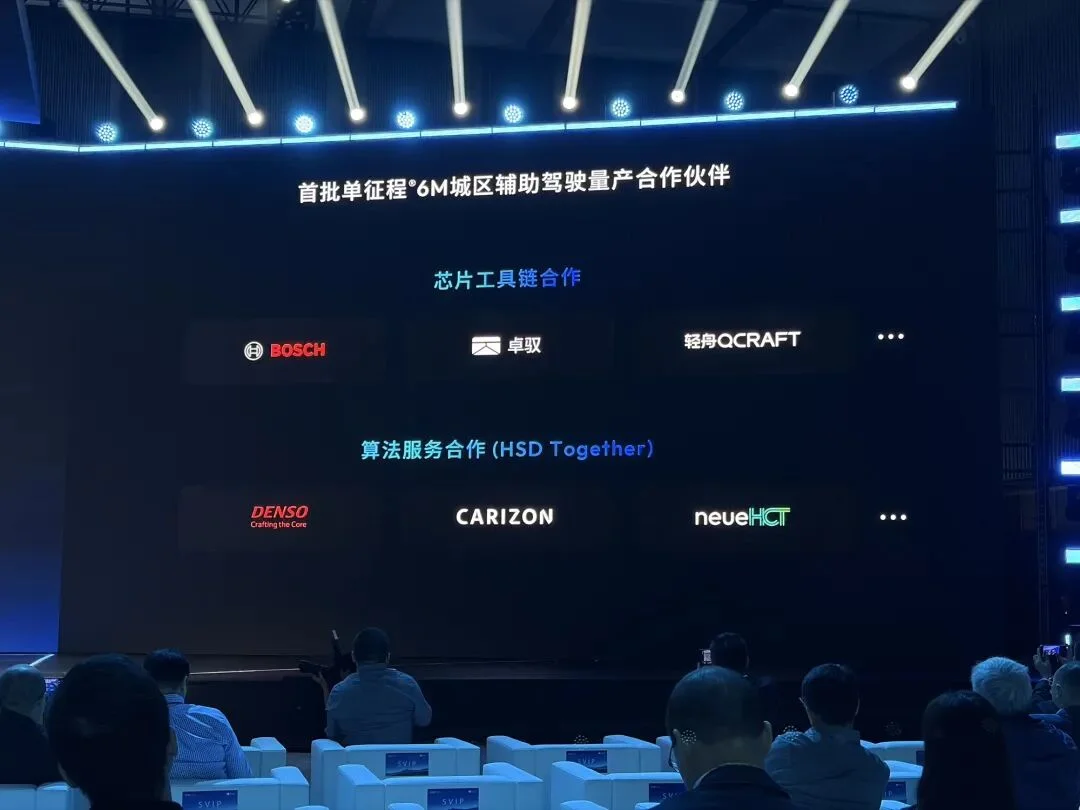
Looking ahead three to five years, Yu Kai proposed higher targets: together with partners, achieving mass production of urban driver assistance systems at a scale of tens of millions of units. He estimated that seven or eight out of ten would be implemented jointly with partners, while the remaining part would be Horizon Robotics' own HSD 'showroom' projects.
02Journey 7 to Launch in Sync with Tesla AI5
As urban autonomous driving enters the 100,000 RMB vehicle segment, Horizon Robotics continues its push upmarket. The company officially unveiled its fourth-generation BPU Li architecture today, which will be standard across the upcoming Horizon Robotics Journey 7 series.
Yu Kai explained that the Li architecture is not merely about "stacking" higher compute power, but rather optimizing algorithms and architecture to improve the utilization of operator hardware.
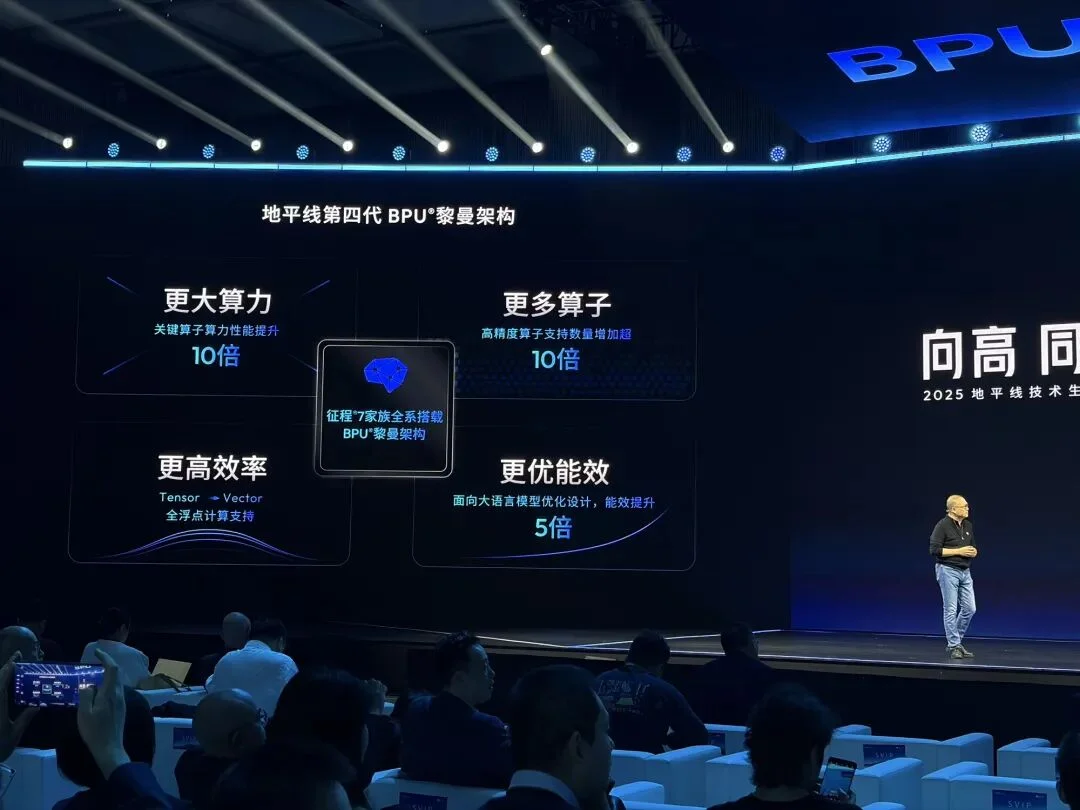
Compared to the Nash architecture in the Journey 6 series, the Li architecture delivers a 10x increase in key operator compute performance and supports more than 10 times as many high-precision operators. It also fully supports floating-point calculations from Tensor to Vector units, boosting efficiency; additionally, TOPS per unit of power consumption increases by more than 5x.
In fact, the performance gains achieved by Horizon Robotics over four generations of BPUs and ten years have surpassed Moore's Law in certain metrics. For instance, under CNN networks, the Li architecture achieves a 1,000x improvement; in Transformer computations, BPU performance has increased 150-fold.
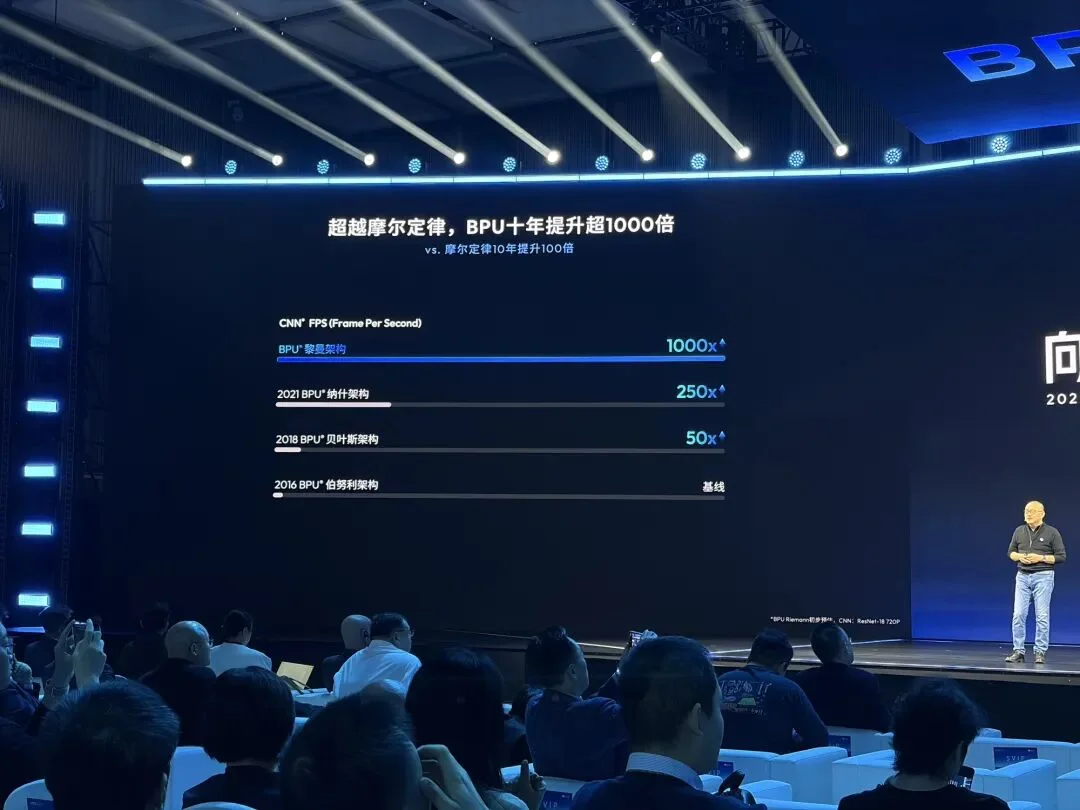
Yu Kai noted that since its founding, Horizon Robotics has essentially been in a state of "rushing." With the launch of the Journey 6P, its performance scale and compute levels have basically caught up with Tesla's AI4.
However, the mass production timeline for Horizon Robotics' Journey 6P is nearly three years behind that of Tesla's AI4 (with the first batch of Tesla AI4 hardware entering vehicles in January 2023).
Horizon Robotics' progress is evident. Yu Kai announced: "The Journey 7 series will be launched in sync with Tesla's next-generation AI5. It will deliver exceptional performance across all metrics."
Yu Kai believes the BPU Riemann architecture will be Horizon Robotics' ultimate architecture for general-purpose robot computing.
03Open-Source Embodied AI Foundation Model
Beyond smart vehicles, Horizon Robotics has become China's largest computing platform for consumer robots. Leveraging its subsidiary D-Robotics, more than 100 robot products have achieved mass production. The company has over 100 partners across the industry supply chain and an ecosystem of more than 100,000 developers.
The Fourier companion robot GR-3, the K1 known for its acceleration demonstrations on football fields, Roborock robotic lawnmowers exported to overseas markets, and drone products from Insta360 all utilize D-Robotics solutions.
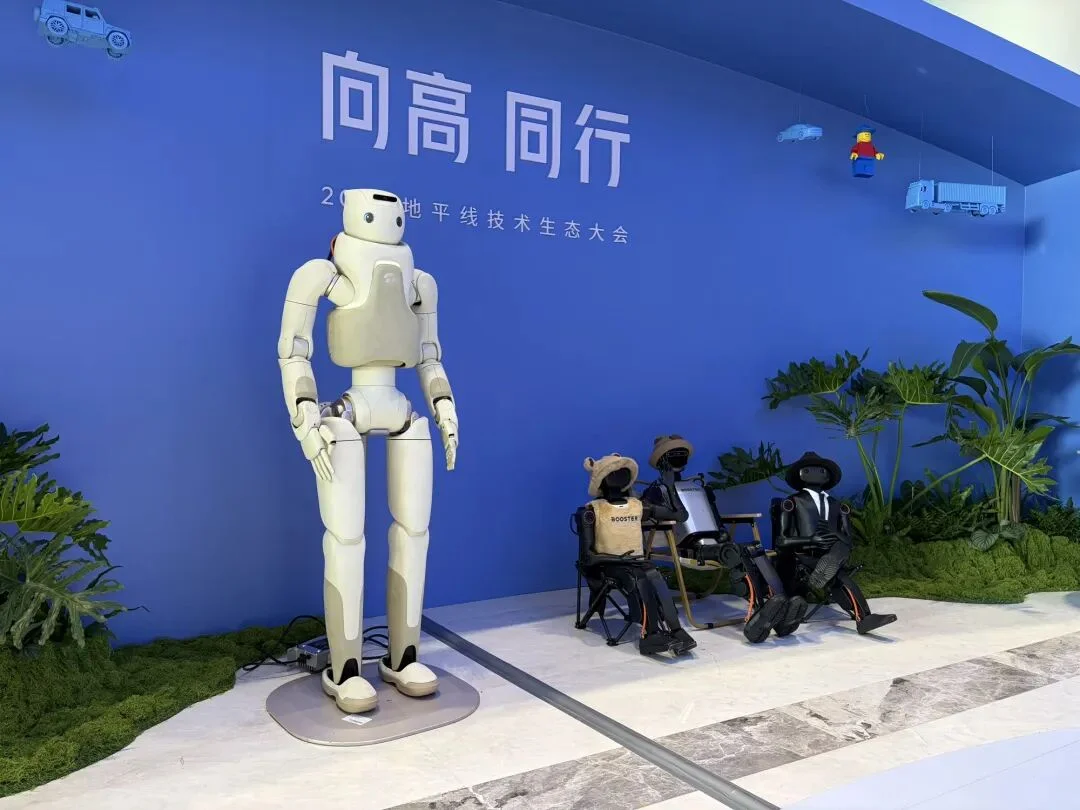
D-Robotics does not limit itself to providing toB chip solutions; it also builds a developer ecosystem for different age groups. Yu Kai stated in his speech that users ranging from 12-year-old children to people in their 70s can develop embodied intelligence products based on D-Robotics' open-source models.
Yu Kai announced on site that the embodied intelligence cerebellum foundational model HoloMotion and the embodied intelligence brain foundational model HoloBrain are officially open source.
HoloMotion can achieve motion intelligence based on a single model. Based on D-Robotics' computing platform, it also supports Transformer MOE and operates at a high frame rate of 50 Hz.
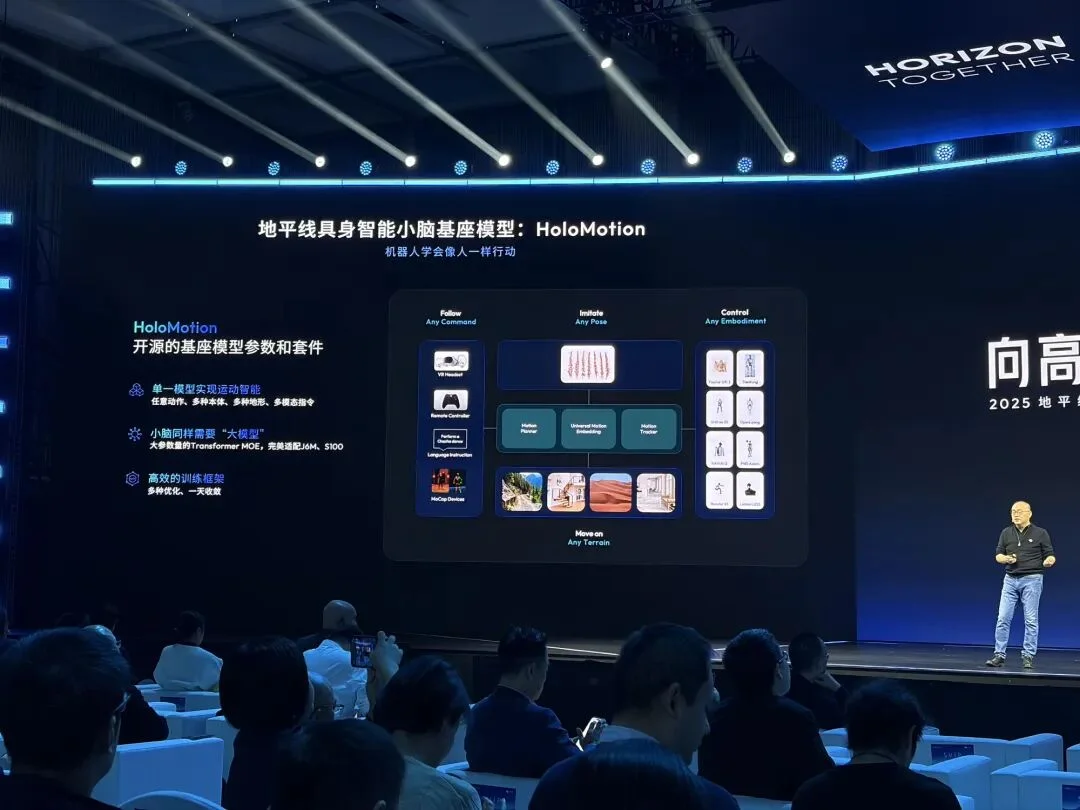
In the demonstration video, the Unitree G1 based on HoloMotion can mimic Michael Jackson's dance moves, and can also achieve high-dynamic movement capabilities through teleoperation, such as boxing movements.
The embodied intelligence brain foundational model HoloBrain will provide a complete training framework from pre-training to post-training by Horizon Robotics, and can also provide comprehensive toolchain support.
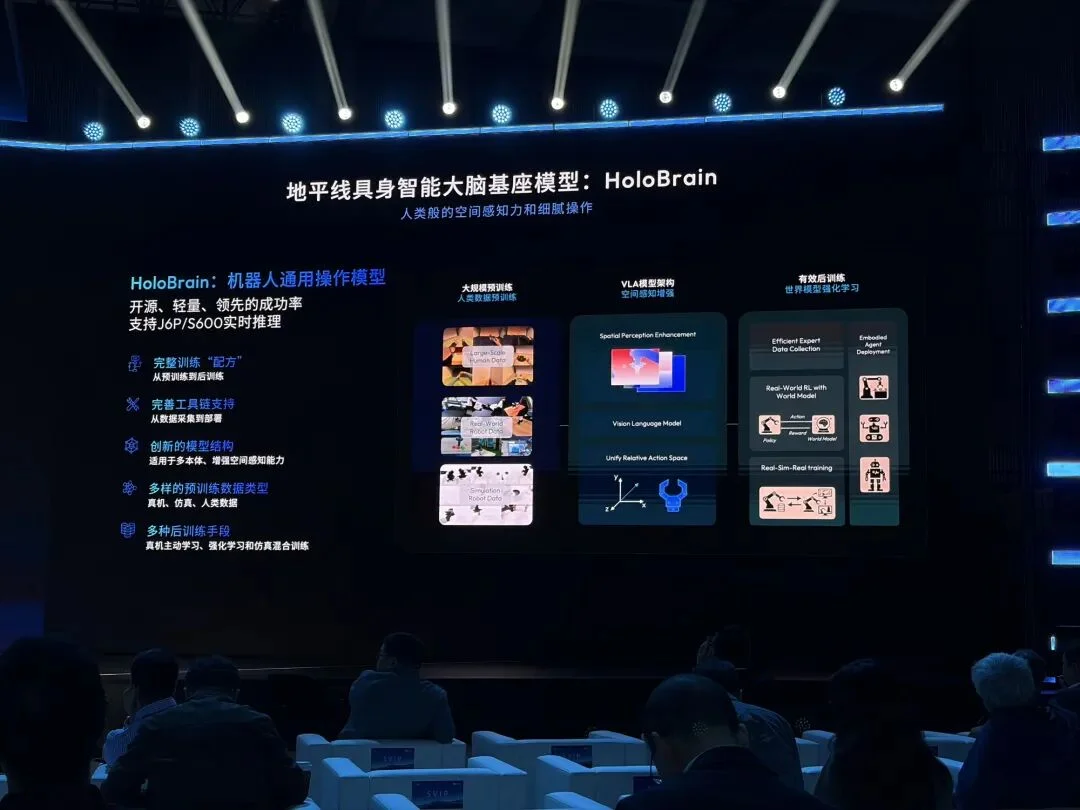
In the demonstration video, two gripper robotic arms based on HoloBrain can complete long-sequence tasks such as tidying up the desktop, folding clothes, and mixing drinks. In the on-site demonstration, the gripper robotic arm based on D-Robotics S100 can fold a piece of clothing in about one and a half minutes, which is very fast compared to other models in the industry. Of course, there is still a certain gap compared to humans.
From the popularization of urban assisted driving, to the direct alignment between Journey 7 and Tesla's next-generation AI5 chip, to the open source of embodied intelligence foundational models, Horizon Robotics is transforming from a company 'racing to catch up' into a core company with more discourse power in the industry. It also indicates that the iteration of smart cars has not yet reached the end, and the embodied intelligence industry is still on the eve of an explosion.
By James Edited by Daji