The Xiaomi SU7 Looks Unchanged, But It's Actually a Different Car
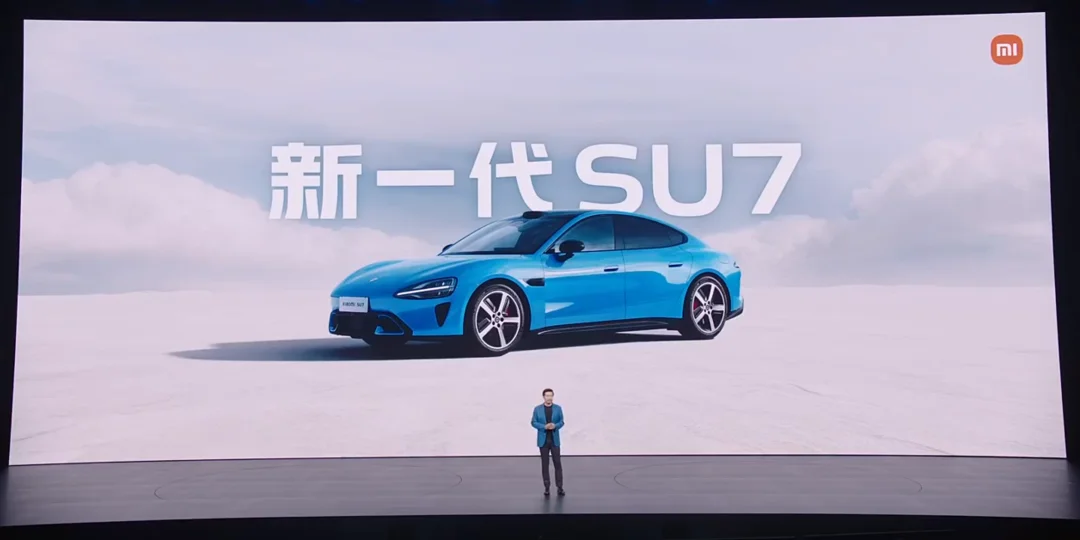
The highly anticipated new Xiaomi SU7 has finally launched. After teasing the update in January, it took three months of waiting—Xiaomi stretched out the campaign just enough.
However, as Lei Jun had predicted, the new Xiaomi SU7 did indeed see a price increase, but the good news is that "the increase isn't significant." The next-generation SU7 remains available in three trims, with all prices rising by 4,000 yuan compared to the previous model:
Standard: RMB 219,900;
Pro: RMB 249,900;
Max: RMB 303,900.
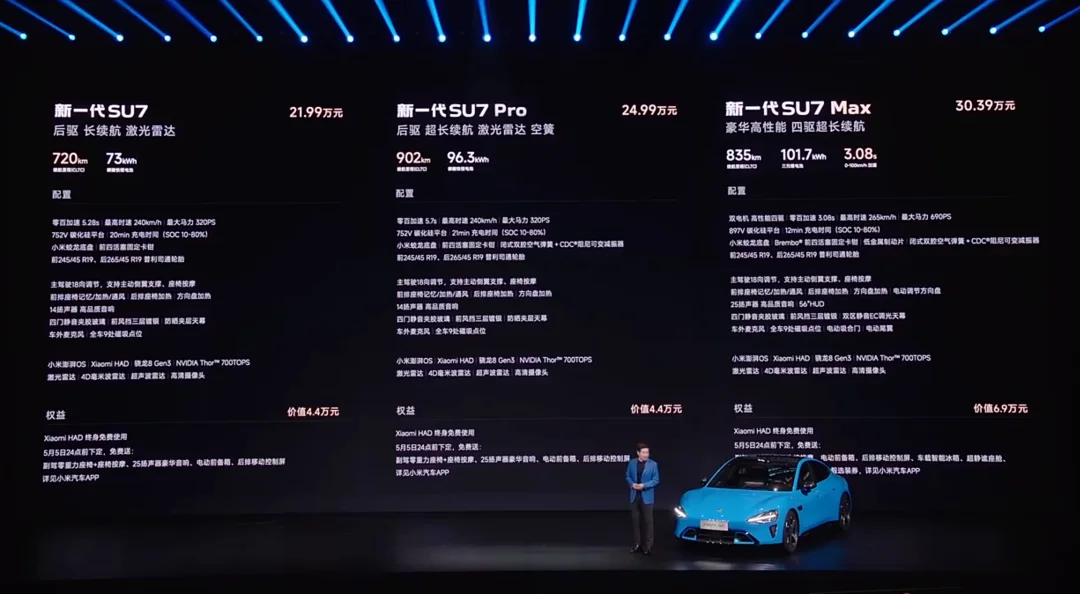
A range of launch benefits is also included. Orders placed before May 5 receive a zero-gravity front passenger seat, a 25-speaker audio system, an electric frunk, and a rear mobile control screen. Max buyers get these plus a compressor refrigerator, ultra-quiet cabin package, carbon fiber kit, and a RMB 6,000 wheel upgrade voucher for free 20-inch wheels.
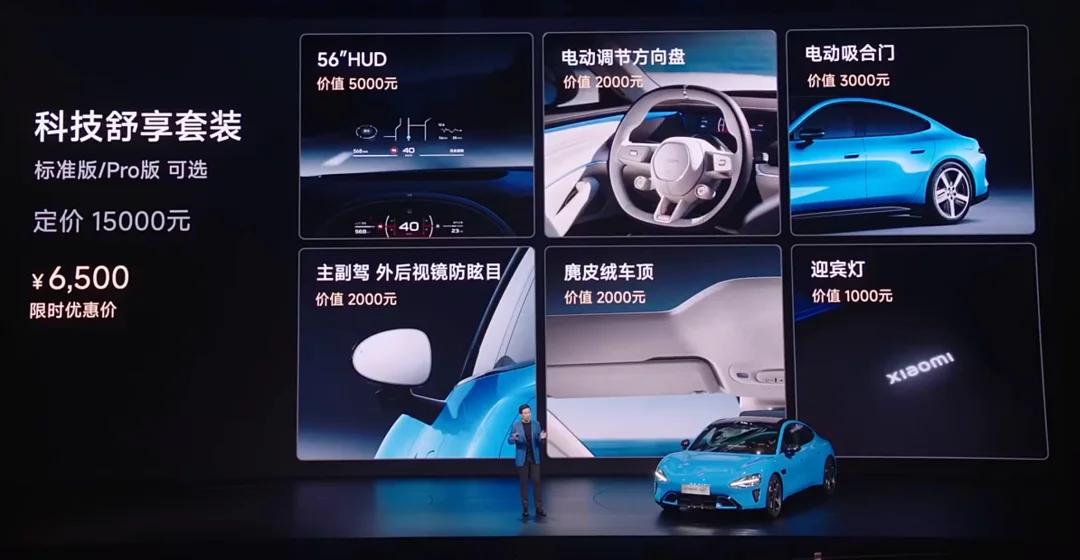
For the Standard and Pro versions, buyers can opt for the Technology & Comfort Package to add features such as the 56-inch HUD, power-adjustable steering wheel, and soft-close doors—features previously unavailable on older SU7 models. This package is offered at a limited-time price of RMB 6,000. This approach is commendable, especially since items like the head-up display and power-adjustable steering wheel are highly practical.
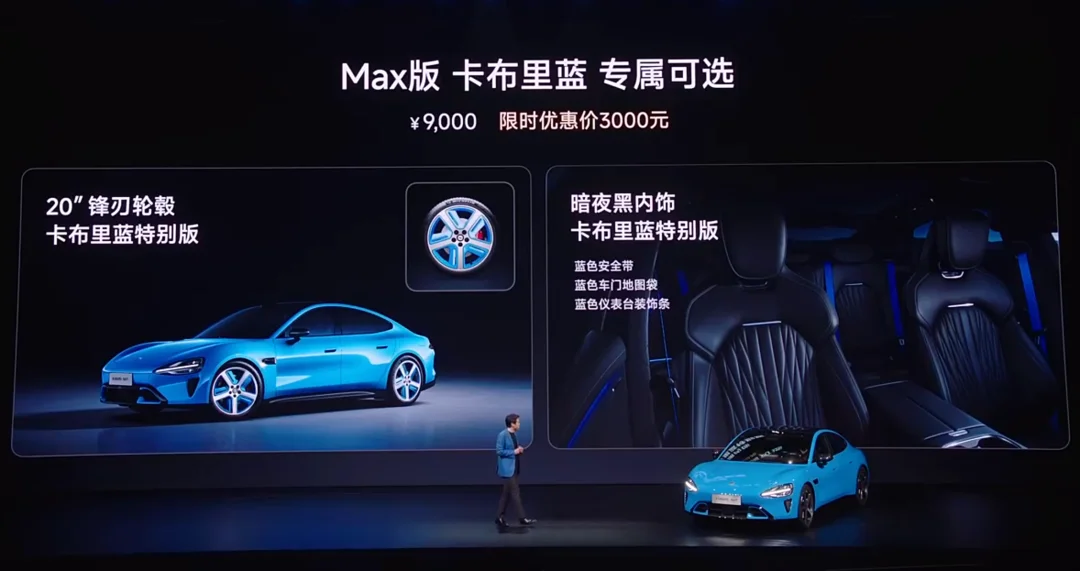
The new SU7 also introduces a special edition in Capri Blue, available as an optional extra for RMB 3,000 during the promotional period. With this option, the car’s exterior and interior are unified in blue, featuring exclusive 20-inch blade-style wheels, blue seatbelts, and blue dashboard trim accents. The striking design was so impressive that Lei Jun remarked on stage he could barely hold it together.
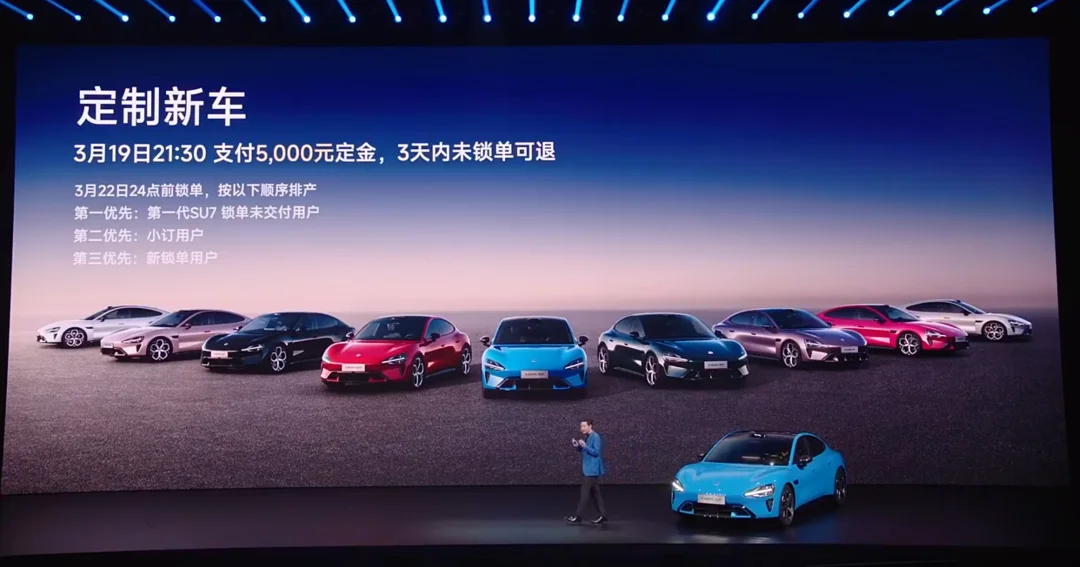
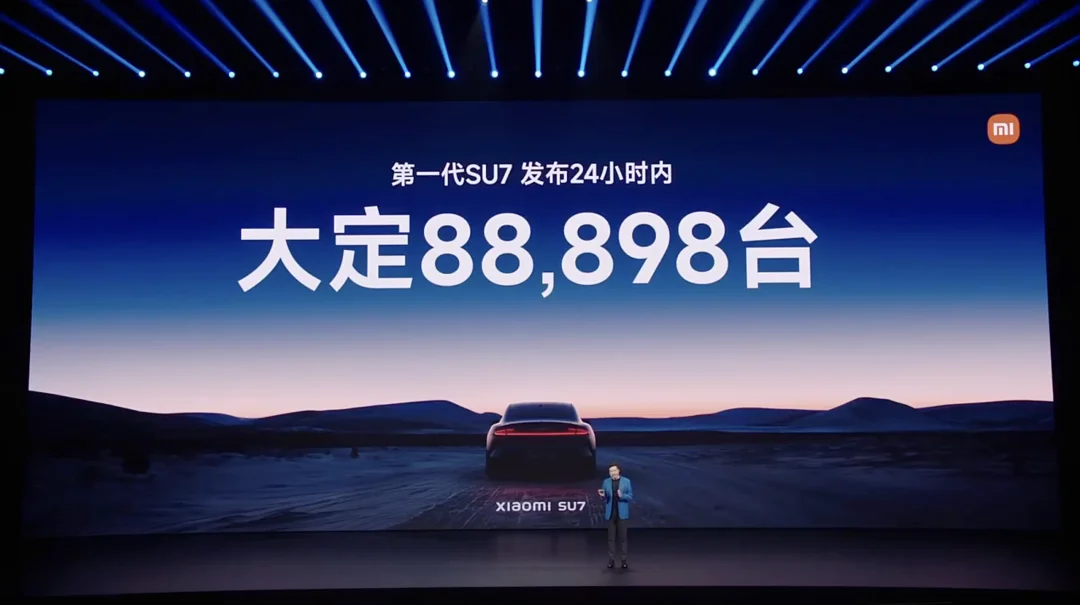
Xiaomi has also refined its purchase policies. Production priority will be given to users who locked orders for the first-generation model but have not yet taken delivery, followed by those with small deposits and newly locked-order customers. A three-day cooling-off period is provided to allow more time for consideration. Given the long wait times for deliveries of the first-generation SU7 and YU7, customers waiting more than 90 days for the new SU7 will receive 200 daily points, capped at 50,000 points. For those who miss out tonight, these points serve as compensation; Lei Jun ensures no one waits in vain.
With experience from the first-generation SU7 and YU7, plus a three-month preparation period, Xiaomi appears better prepared for the launch of the new SU7.
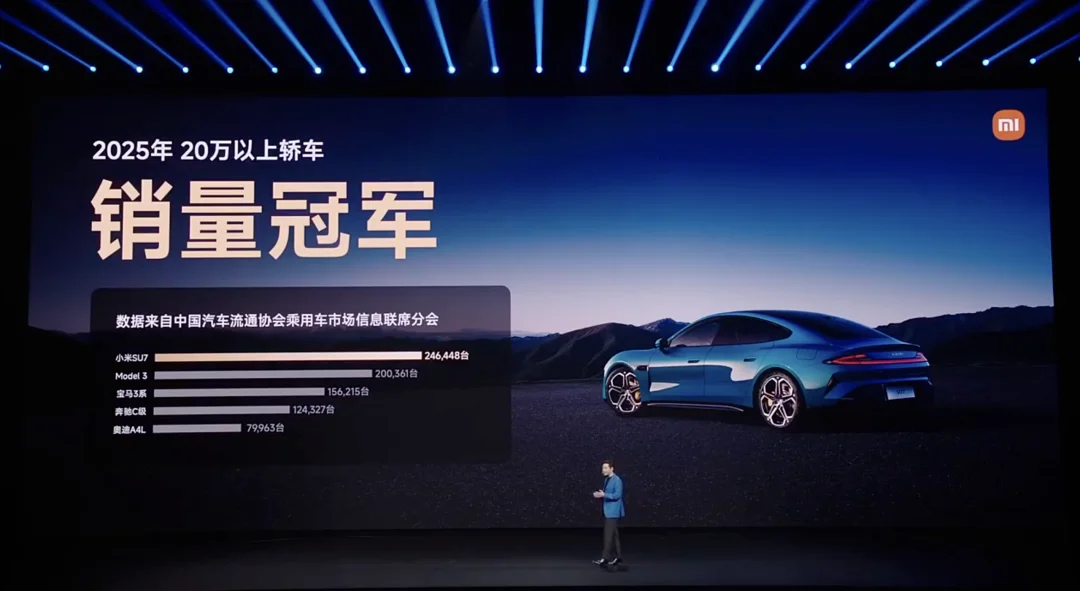
Unlike previous launch events, Xiaomi placed the all-new SU7 front and center tonight. This deviation from tradition likely signals Xiaomi’s desire to share the success of the first-generation SU7 with the public as early as possible. Lei Jun’s tone was full of confidence when he announced that last year’s Xiaomi SU7 achieved the highest delivery volume in China’s automotive market for vehicles priced above RMB 200,000, far surpassing the Model 3. Indeed, before the Xiaomi SU7, no domestic brand had ever produced an electric sedan that could claim the industry’s top spot—a feat worthy of pride.
Lei Jun also invited numerous industry leaders to share in this joy. Attendees on site included Wang Chuanfu, Li Xiang, Xingxing Wang, and Zhang Jianyong, who came to witness Lei Jun unveil the first generational update of Xiaomi’s automobiles.
How to Distinguish Between the Old and New Models
In traditional automotive narratives, dramatic changes in exterior design are often considered the primary standard for a “generational update.”
However, the new SU7, which Xiaomi calls the “next generation,” does not follow this convention. If parked side by side, most people would struggle to tell which is the new model and which is the old one.
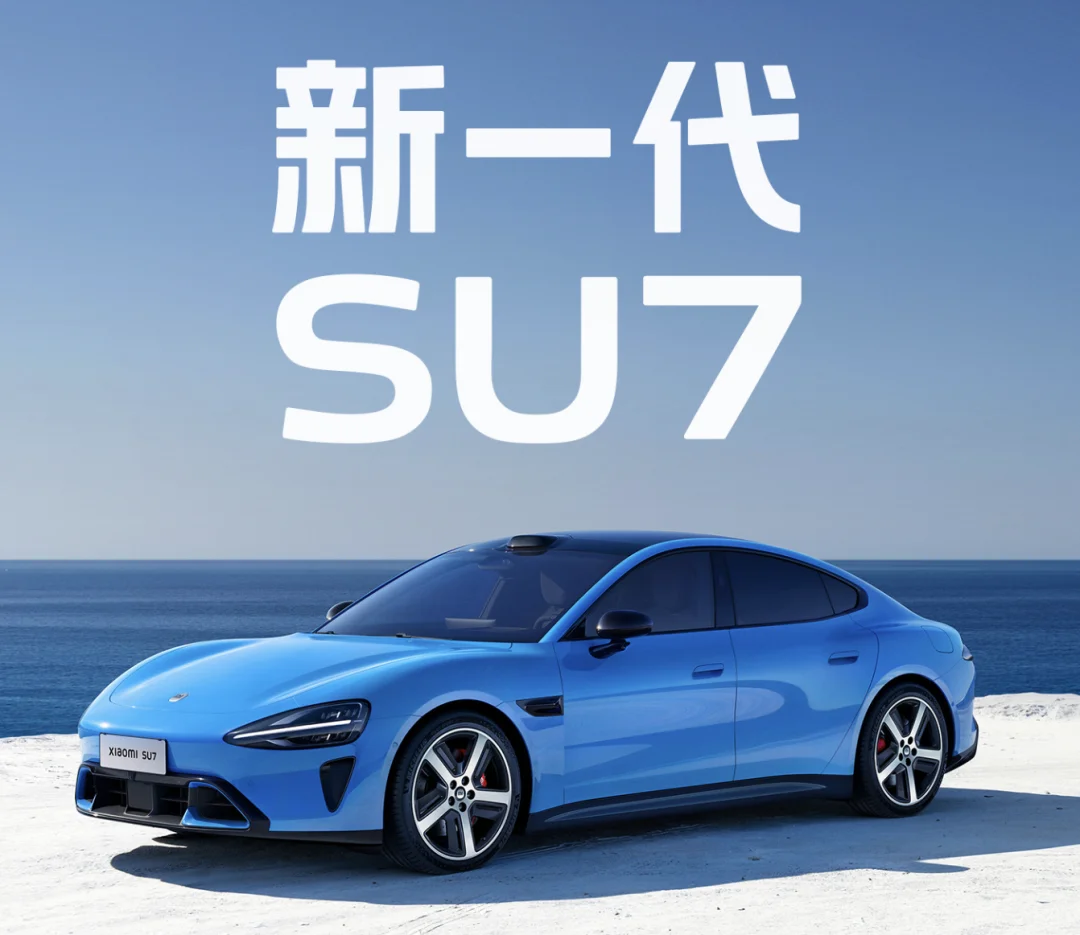
Even in the new energy era, where vehicle iteration cycles have been significantly compressed, it remains rare for a new model like the Xiaomi SU7 to show almost no change in appearance. However, after watching Lei Jun’s launch event tonight, you may understand that Xiaomi’s approach is not a sign of creative exhaustion, but rather stems from sufficient confidence in the SU7’s design. This allows them to devote more energy to creating a next-generation SU7 with comprehensive improvements in product performance beneath that familiar shell.
If the SU7 launched two years ago broke through to the mainstream by relying on extreme specifications and Lei Jun’s personal influence, the evolved new SU7 is a product that builds on this foundation to become more user-friendly and comprehensive.
At first glance, it is difficult to spot any changes in the appearance of the new SU7. The most obvious difference lies at the front fascia, where the millimeter-wave radar has been integrated into the front grille. To determine whether an SU7 on the road is the new model, simply check this area.
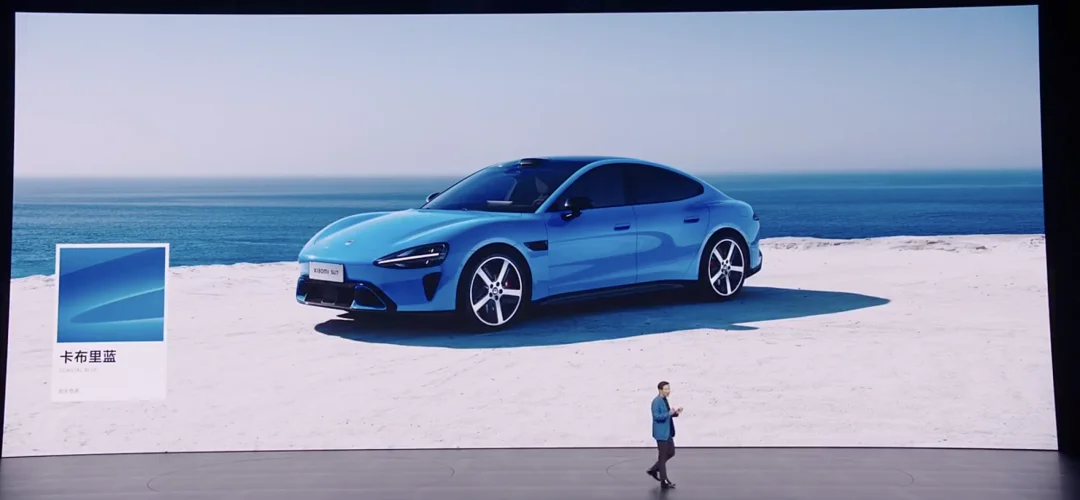
Of course, if you want the new model to be even more distinguishable so that others can identify it at a glance after purchase, consider one of the three newly introduced colors: Crimson Red, Capri Blue, or Indigo Stone Green. Pairing these with the newly available 21-inch dual-layer forged plum blossom wheels would create what our editorial team unanimously considers the most striking look for the new SU7. Just be mindful when driving daily; the low-profile tires with only a 40 aspect ratio are expensive to replace.
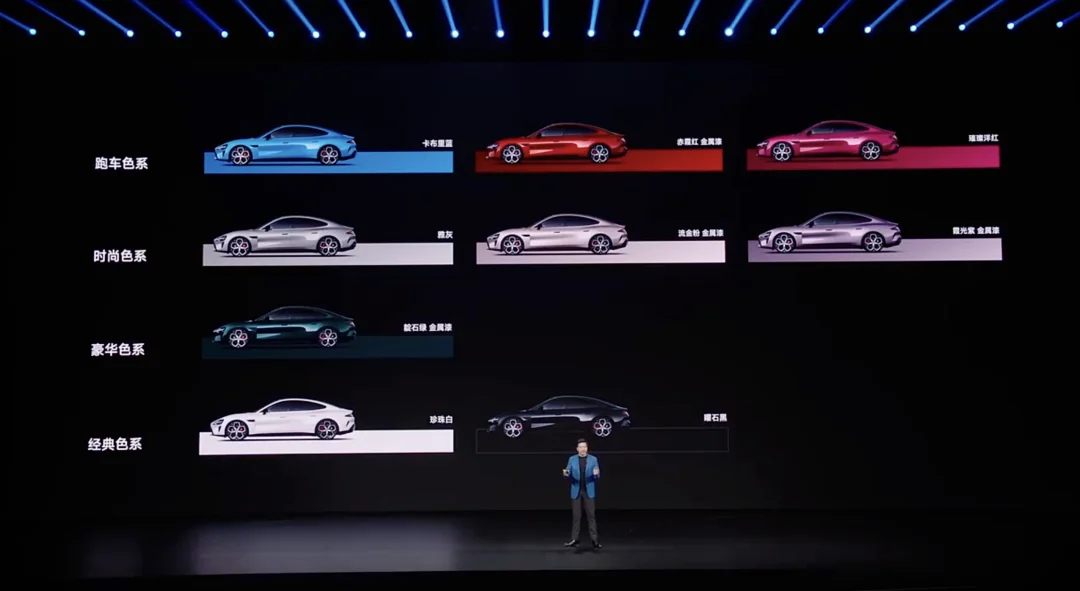
In addition to these three exclusive color options, classic shades such as Flowing Gold Pink and Radiant Purple remain available, bringing the total number of color choices to nine. This continues Xiaomi’s tradition of offering a rich palette.
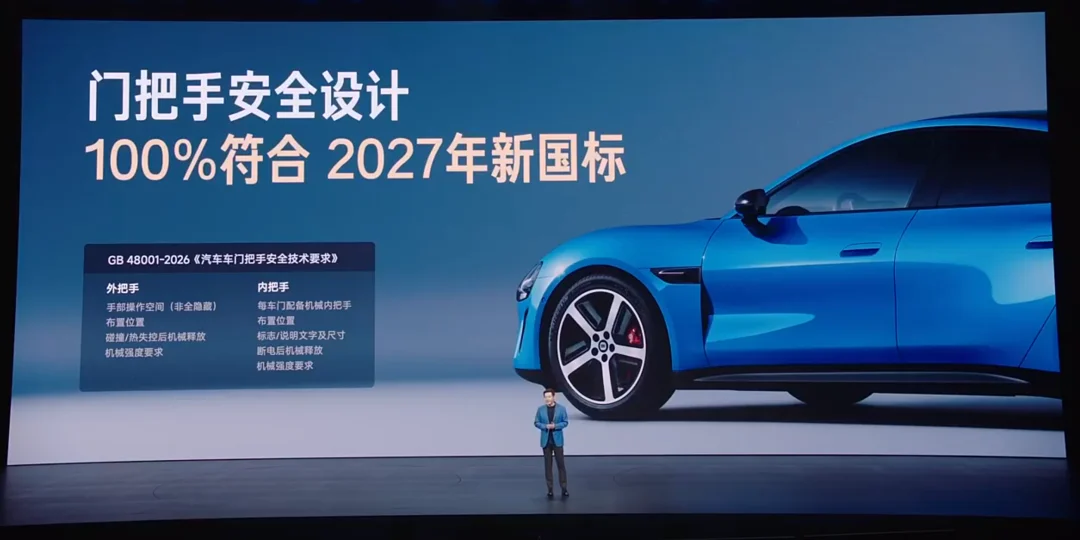
Regarding the door handles that have drawn considerable attention, the new SU7 now features a hybrid electric-mechanical design. A normal press activates the electric pop-out mechanism, while pulling upward engages the manual release. Unlike many vehicles using similar solutions, the new SU7 requires minimal force to pull the handle fully open. Combined with the car’s low body height, a slight upward angle of the hand is sufficient to open the door.
Interior: More Refined and Comfortable
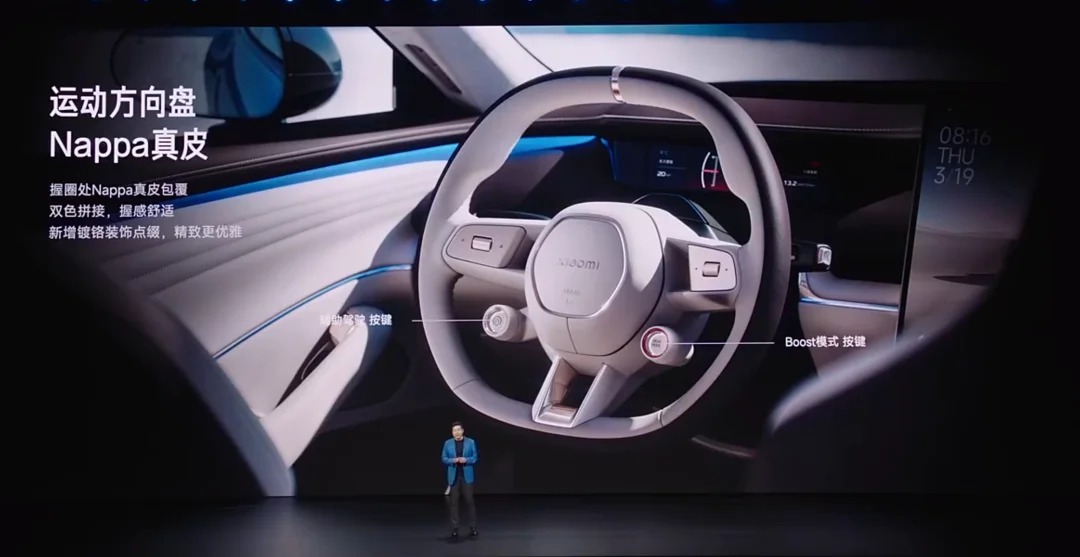
Compared to the exterior, the changes inside the all-new SU7 are more significant and have been highly anticipated. The most noticeable improvement is a stronger sense of premium quality, with greater attention to detail in design and materials. The area covered by soft-touch materials in the cabin has increased substantially, complemented by an enveloping layout and three-layer ambient lighting, resulting in noticeably better texture.
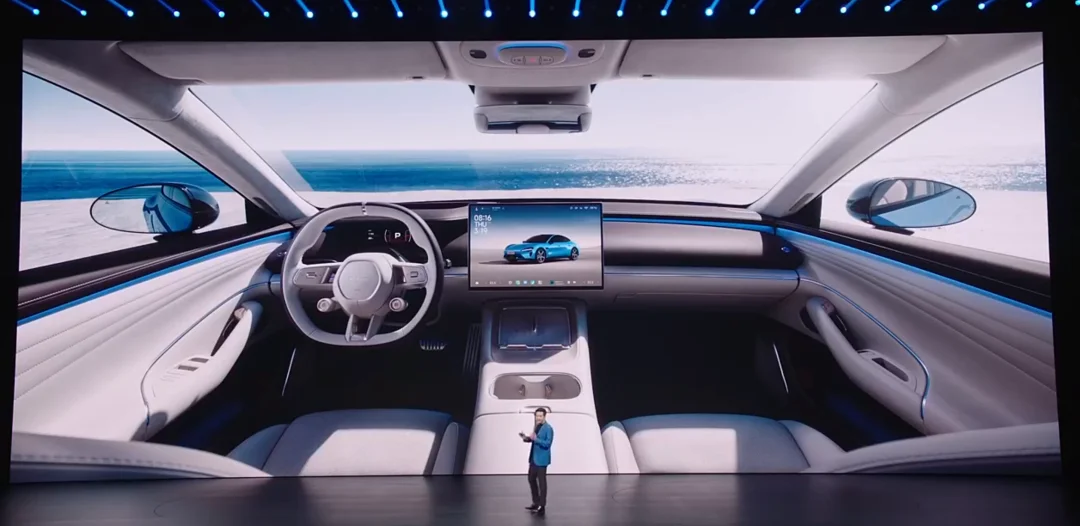
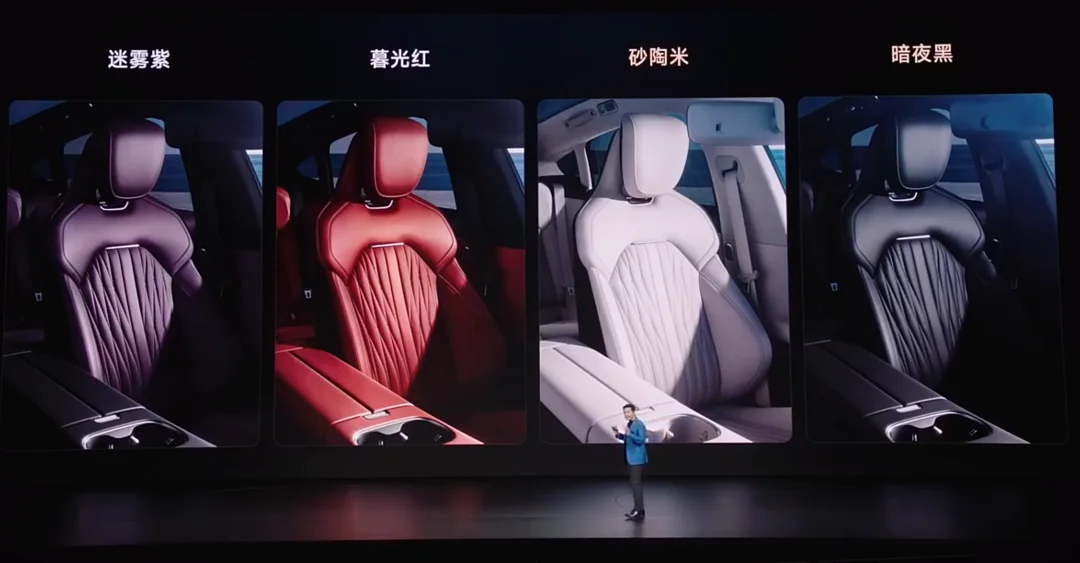
In terms of color options, two new interior colors—Sand Ceramic Beige and Dark Night Black—have been added, while existing options like Twilight Red and Mist Purple from the previous model remain available to meet diverse aesthetic preferences.
The functional zones on the center console have been reorganized. The physical start button has been removed, and all controls are now arranged horizontally, paired with a faux wood trim for a more refined and orderly appearance. Wireless charging power has been upgraded from 50 W to 80 W; however, only one pad is provided, which would be preferable if there were two, especially at this price point.
The panoramic roof on the previous SU7 received praise from female owners for its sun protection but was somewhat dark. The all-new SU7 addresses this with an EC variable-tint panoramic roof, maintaining sun protection while offering greater versatility. To manage costs, Xiaomi has divided the glass into two sections with a central beam. If you prefer not to have this beam, the standard panoramic roof option remains identical to the previous model’s.”]}”}
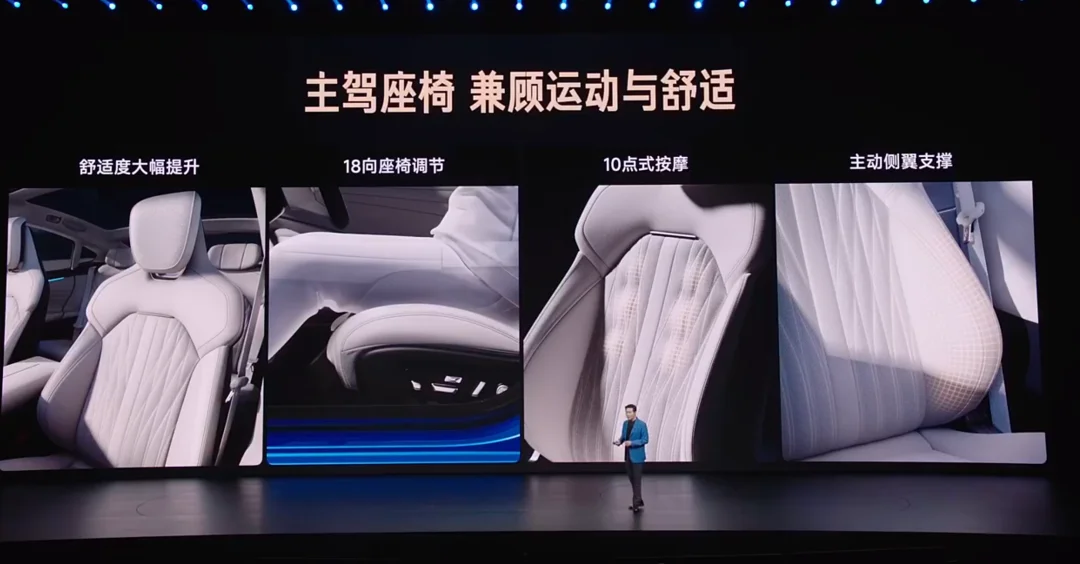
Beyond creating a more refined interior atmosphere, the all-new SU7 has also improved seat configuration and comfort. For instance, seat massage, which many owners of the previous model had long desired, is now available as standard equipment across the entire lineup. The all-new SU7 has optimized the seat filling material, making it softer and more comfortable to sit on, rather than emphasizing the strong wrapping feel of the previous model. Additionally, a zero-gravity mode has been added for the front passenger seat, providing greater comfort whether for a family member or for daily naps.
Moving to the rear seat, the old model's stiff, upright bench has been retired. The all-new SU7 features improved seat cushion angle and thickness, providing noticeably better support for the underside of the thighs and allowing for a more relaxed posture. In terms of features, it still only offers heated seats, but this has been upgraded from heating just the cushion to heating both the cushion and the backrest.
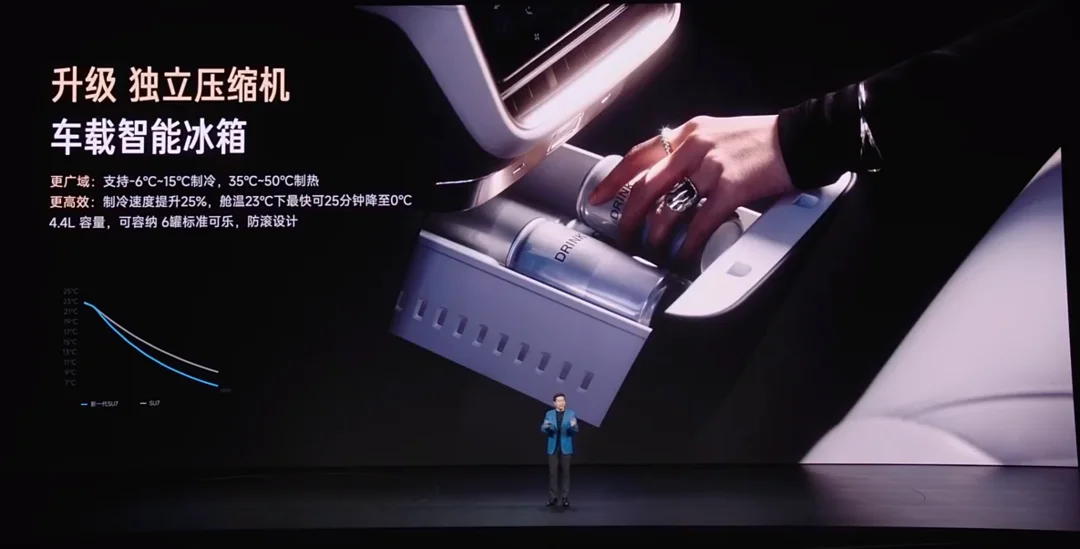
The rear seats also feature a control screen identical to the one in the YU7, along with electrically adjustable air vents. The refrigerator, which has been a topic of great interest, has now been upgraded from a semiconductor-based unit to a compressor-driven one, offering cooling down to -6°C and heating up to 50°C, significantly enhancing its practicality.
Shifting from Sport to Comfort
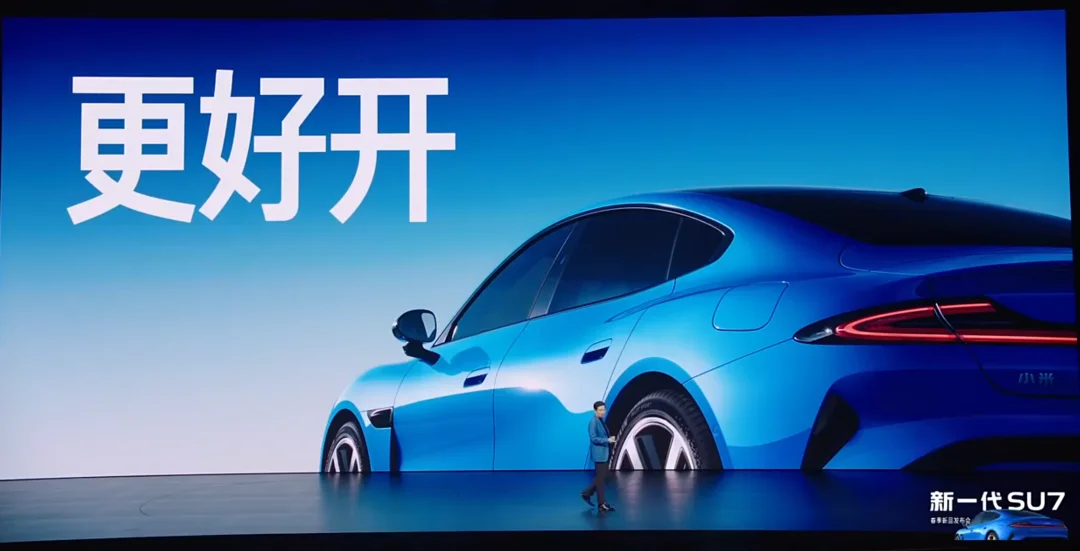
Before the launch of the Xiaomi SU7, it was nearly impossible to find a product from any Chinese automotive brand that had broken into the market and become a hit by emphasizing sportiness. Those vehicles merely talked about being sporty, perhaps offering a slightly more dynamic exterior design to attract young buyers, while their core focus remained on comfort and family practicality. The SU7, however, truly looked sporty, positioned itself as a sporty car, and delivered a sporty driving experience. This perception was further solidified by the subsequent introduction of the Ultra variant and its record-breaking lap times at the Nürburgring and on domestic tracks, convincing many of the SU7's genuine sporting credentials.
This sportiness is "pure," which enthusiasts who pursue driving pleasure are happy to accept. However, for consumers who like the SU7's appearance but also need a vehicle that accommodates family life, it was perhaps too "hardcore," even though they could choose the more comfortable YU7. Xiaomi likely recognized this deeply, so with the all-new SU7, they made the car somewhat milder.
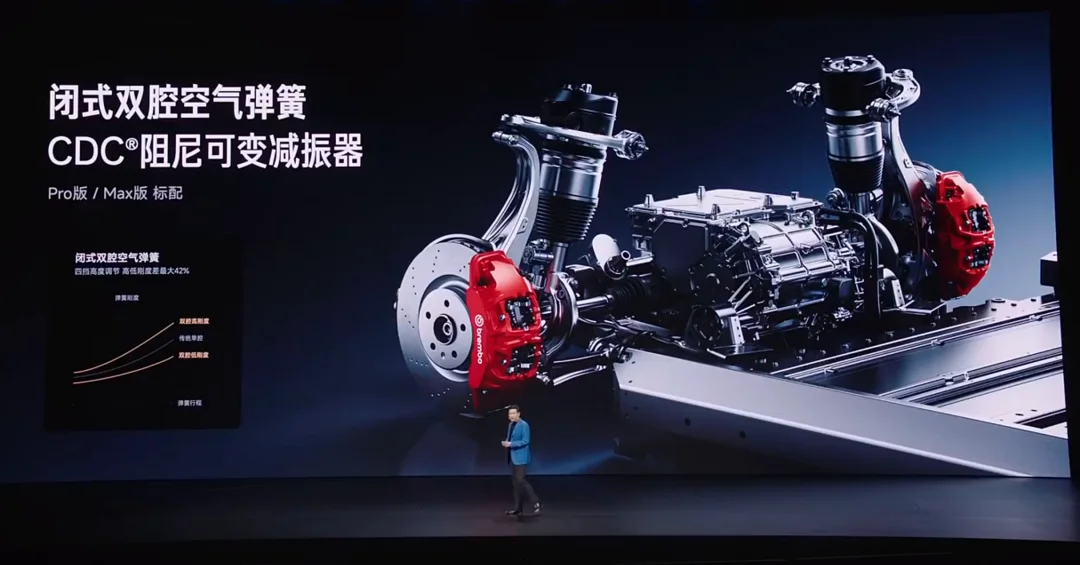
To achieve this goal, Xiaomi upgraded the chassis hardware of the all-new SU7, equipping it with dual-chamber closed air suspension similar to that of the Ultra, paired with CDC (Continuously Damping Control) continuously variable damping shock absorbers. Compared to the single-chamber air suspension of the previous model, the advantage of closed dual-chamber systems lies in faster adjustment speeds and the ability to adjust stiffness, giving the chassis a different character.
The most noticeable difference is in Comfort mode. Driving or riding in the all-new SU7 feels somewhat unfamiliar. It is no longer as rigid as the old model, where every pebble on the road would be communicated through your seat. Instead, it isolates these trivial vibrations beneath your seat; what you feel is the high-quality damping sensation when the wheels pass over manhole covers or speed bumps. Even with 21-inch wheels, the all-new SU7's Comfort mode does not feel rigid at all, offering only stability and elegance. If the chassis of the old SU7 Max felt like a Porsche when driven, the chassis style of the all-new SU7 Max leans more toward Audi: resilient and comfortable without compromise.
Speaking of comfort, it is worth noting that the all-new SU7 has also made significant progress in NVH (Noise, Vibration, and Harshness), with substantial optimization of road noise and tire noise. This improvement cannot be achieved merely by adding double-glazed glass to the front and rear seats; Xiaomi must have invested effort into the overall NVH of the vehicle.
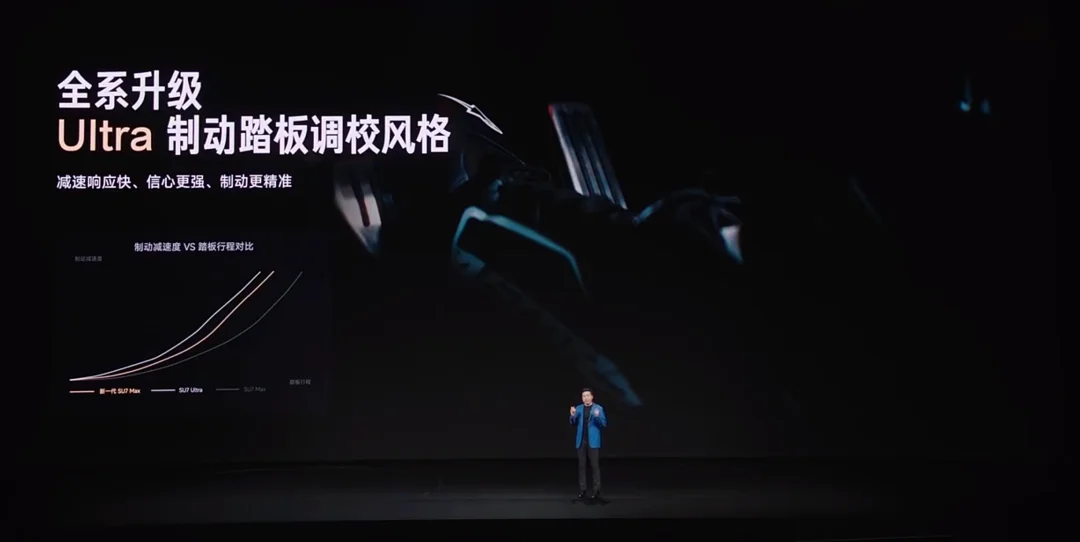
Of course, comfort does not mean the all-new SU7 has abandoned sportiness or the pursuit of driving pleasure. When you switch to Sport or Sport+ modes, it remains the familiar image—or rather, the impression—of what an SU7 should be: taut suspension, firm brake pedal feel, rapid acceleration, and still full of fun.
Moreover, this suspension setup is no longer exclusive to the Max trim; Xiaomi has also made it available on the new SU7 Pro model, a move that can be considered quite wise. After all, not everyone requires zero-to-100 km/h acceleration in the three-second range, but a chassis with excellent hardware and outstanding refinement is something everyone desires.
All Models with 800 V
Along with the chassis hardware upgrade, the three-electric system capabilities have also been enhanced. If the soft spot of the previous SU7 in terms of configuration is considered, the standard version and Pro model being on a 400 V platform can certainly be counted as one. Especially after the widespread adoption of 800 V technology in recent years, it has put the previous SU7 in an awkward position. Therefore, the all-new SU7 upgrading to 800 V across the entire lineup is a predictable change.
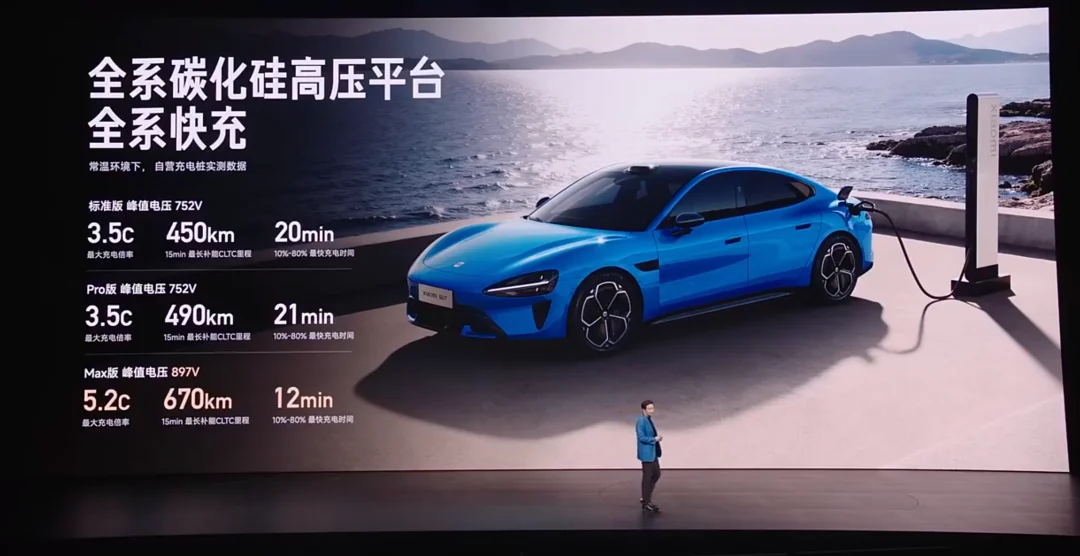
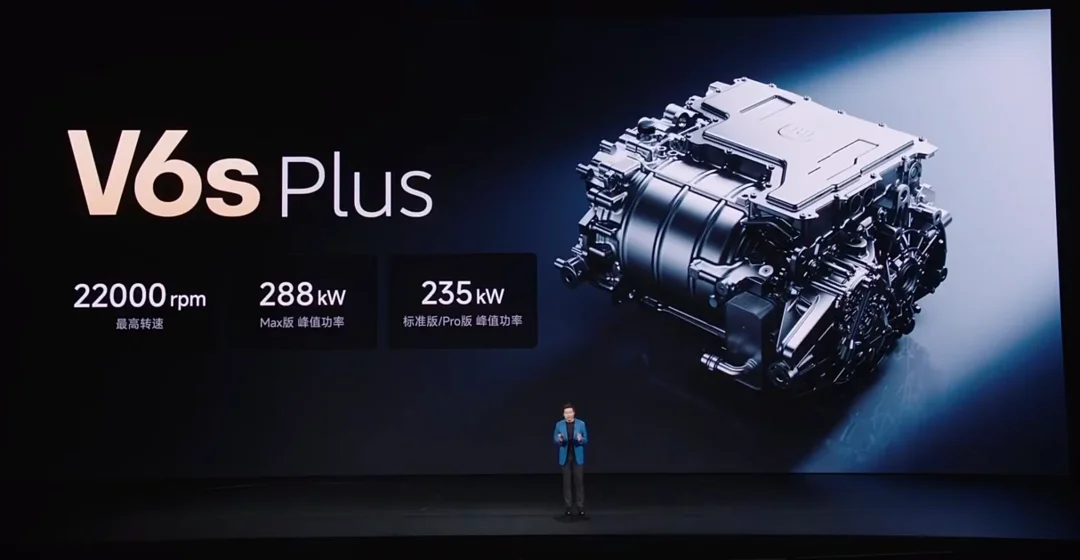
However, there are still slight differences among the configurations. The Standard and Pro versions feature a 752 V platform, while the Max version offers a higher voltage of 897 V. Combined with the standard V6s Plus motor across all trims, the new SU7 achieves improved energy efficiency. With battery capacity remaining virtually unchanged, CLTC range increases for all three versions: the Standard, Pro, and Max models now offer 720 km, 902 km, and 835 km, respectively.
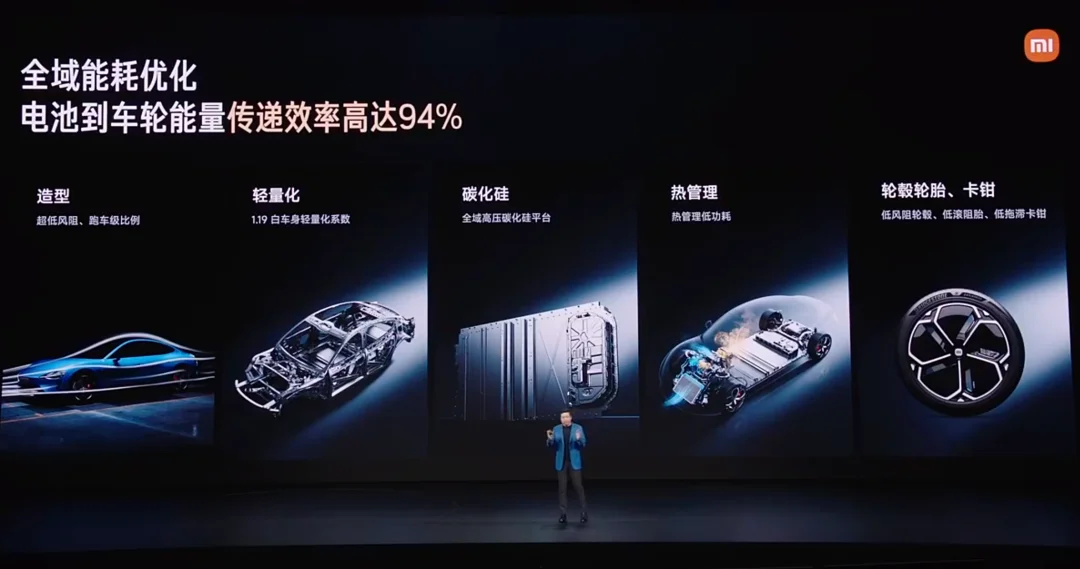
With a higher voltage platform, charging capability has also been enhanced. After all, even the Max version of the previous SU7 was equipped with only a 3C-rate battery. This time, the new entry-level standard version of the SU7 features a 3.5C charging capability, as does the Pro version. For faster charging speeds, the Max remains the choice, capable of reaching 5.2C; Xiaomi claims this adds 670 km of range in just 15 minutes. The improvement in charging capability across the entire lineup allows users to significantly reduce daily replenishment time, especially as ultra-high-power charging piles gradually become more common.
XLA is Finally Coming
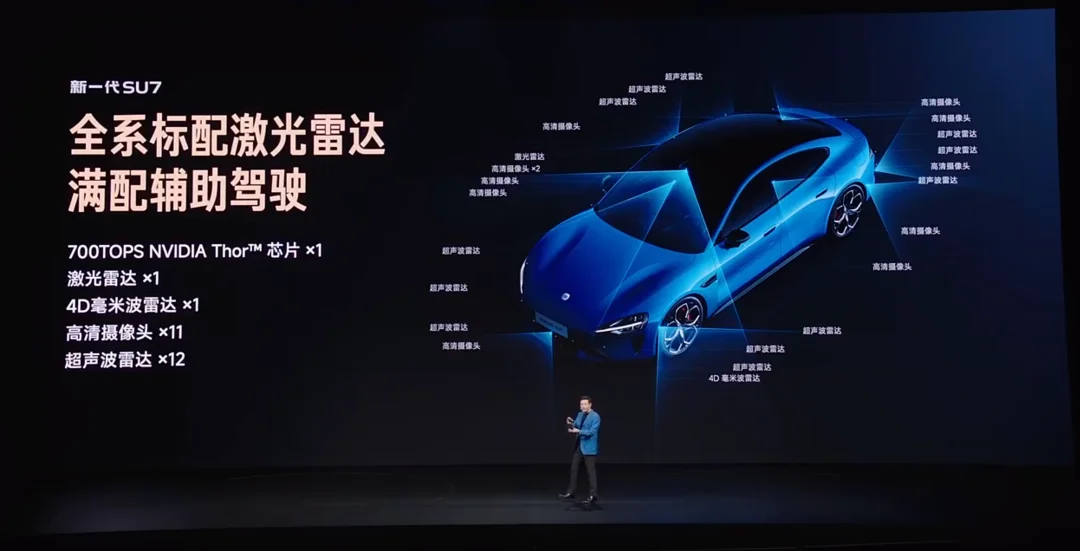
The Xiaomi SU7 may look unchanged, but it has effectively become a different car. The advanced driver-assistance hardware found on the YU7—featuring LiDAR, 4D millimeter-wave radar, and an NVIDIA Thor chip—is now standard across all new SU7 trims, eliminating configuration distinctions to achieve 'autonomous driving equity.'
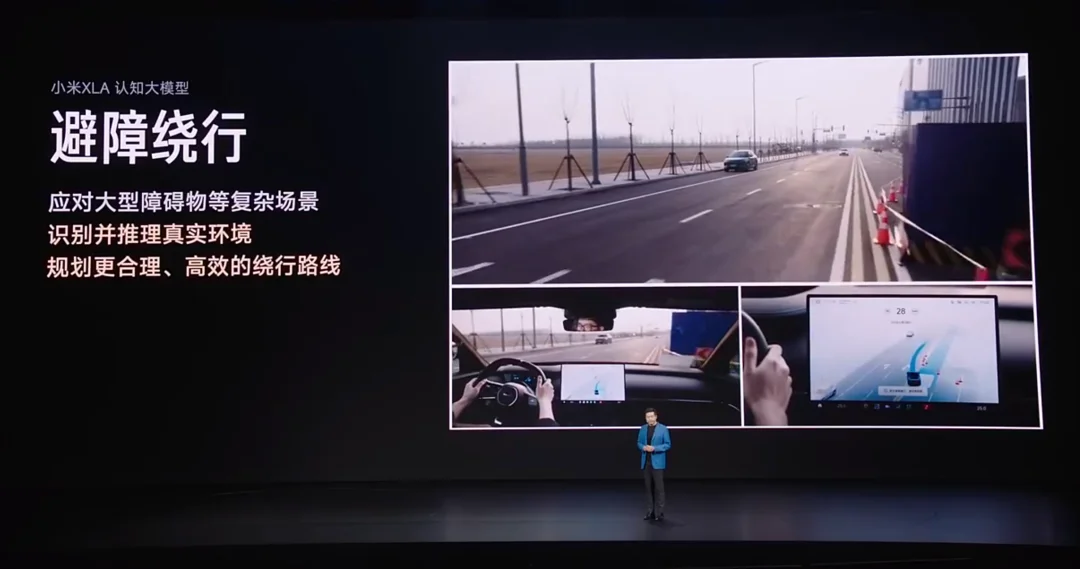
However, what is even more anticipated than the hardware is Xiaomi's XLA architecture. Powered by Xiaomi's self-developed 'MiMo-Embodied' foundation model, XLA integrates multimodal and multi-agent data to enhance the model's general understanding capabilities, thereby strengthening spatial perception and reasoning within the XLA framework. Unlike data-driven imitation learning, the XLA architecture possesses situational understanding and trial-and-error reasoning abilities, enabling the driver-assistance system to handle long-tail scenarios it has not previously learned.
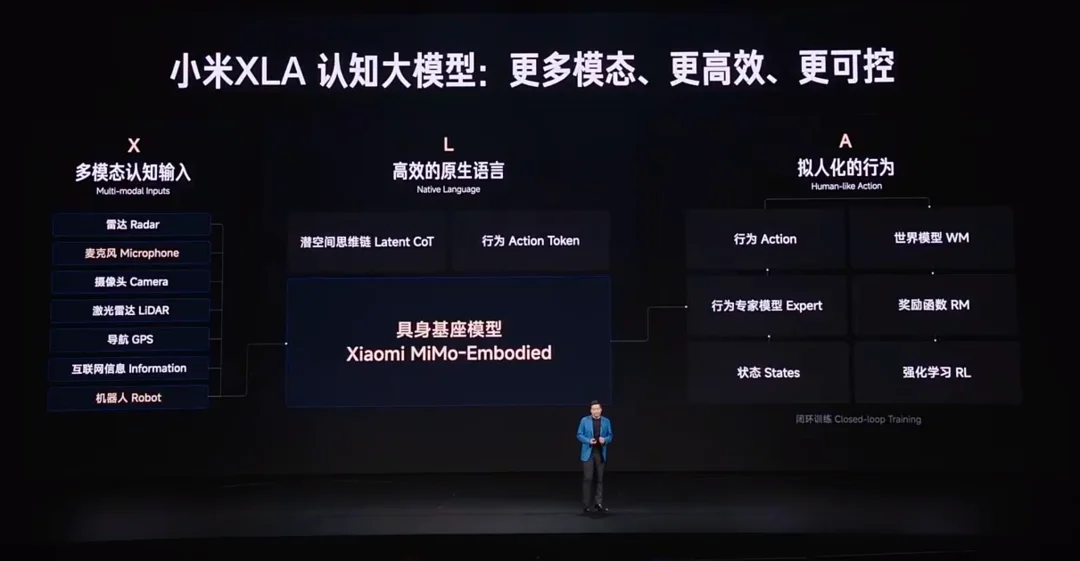
XLA endows the driver-assistance system with stronger comprehension skills, allowing it to interpret construction barriers, vehicles temporarily stopped or moving slowly, and ETC or manual toll lanes, navigating them flexibly through passage or detours. It also supports voice-controlled vehicle functions and voice recognition; for instance, in a shopping mall, if you tell Xiao Ai you want to visit a specific store, the system will locate the nearest elevator based on your command and indicate its direction.
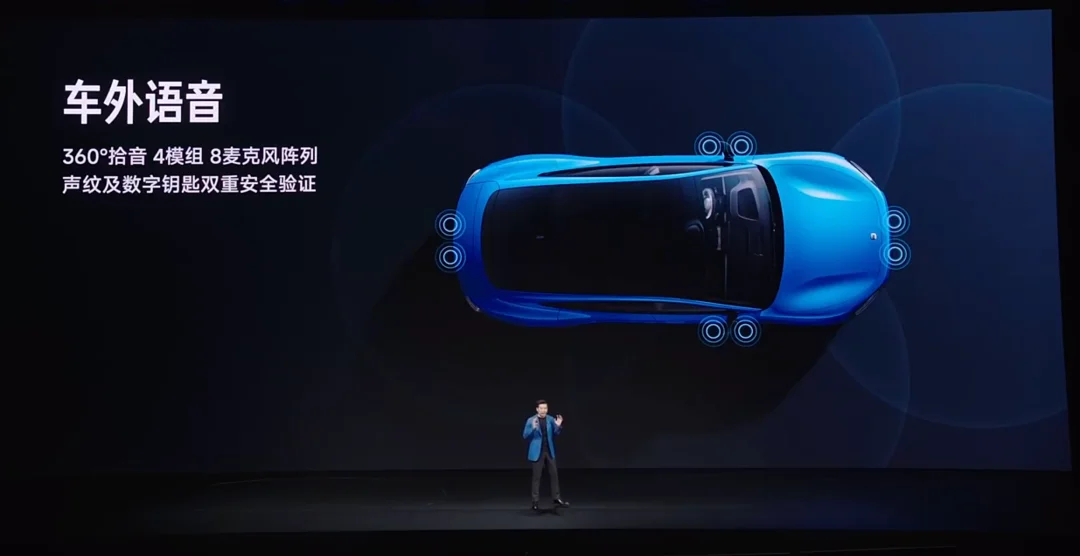
In addition to the in-car Xiao Ai, the new SU7 introduces exterior voice control. You can wake up Xiao Ai from outside the vehicle to help drive it out. More commonly, however, you might use it to open the front and rear trunks, as the new SU7’s front trunk now features electric opening similar to the Ultra variant, complete with the release button placed in the same position.
As for how the XLA actually performs, we’ve already tested it in advance. The video will go live tomorrow, so stay tuned if you’re curious.
Final Thoughts
A subtle exterior update paired with a complete interior overhaul is a strategically astute choice. This facelift of the Xiaomi SU7 bears a resemblance to the Porsche 911. After all, the 911’s classic status stems from its adherence to a single design language over half a century. The Xiaomi SU7 has become a highly recognizable visual symbol, and Lei Jun is well aware that the current priority is not to change its face, but to equip this attractive exterior with the most formidable performance capabilities.
The new-generation Xiaomi SU7 is a quintessential “all-rounder.” It has shed the slightly immature extremism of the previous model, replacing it with a versatile, balanced product. By addressing all shortcomings—such as standardizing the 800V platform across the lineup, integrating the Thor chip, and refining various details—the Xiaomi SU7 has regained its footing in the mainstream on hard-spec metrics.
The biggest change in the all-new SU7 is that it is no longer merely a traffic-generating machine; through its own efforts, it has evolved into a genuine product without significant weaknesses.
Written by: Wentao | Edited by: Wentao