


42HOW Auto Survey: Xiaomi YU7 Reservation Deposits Signal Demand from Young Families and Tech-Savvy Buyers
On June 26, 2025, the Xiaomi YU7 was officially launched. We conducted a questionnaire survey among its confirmed-order owners; below are the core findings of this research.
Survey Channel: 42HOW Auto Xiaomi YU7 Confirmed-Order Owner Community
Sample Size: 200 valid responses
01Buyer Profile
The Xiaomi YU7 confirmed-order owners surveyed are widely distributed across cities of all tiers nationwide. Users in first-tier cities (Shanghai, Beijing, Hangzhou, Shenzhen) show the highest concentration, indicating that consumers in higher-tier cities have a stronger acceptance of innovative technologies in smart electric vehicles. Meanwhile, frequent appearances of users from third- and fourth-tier cities such as Hengshui and Nanyang confirm the demand potential for electric smart SUVs in lower-tier markets.

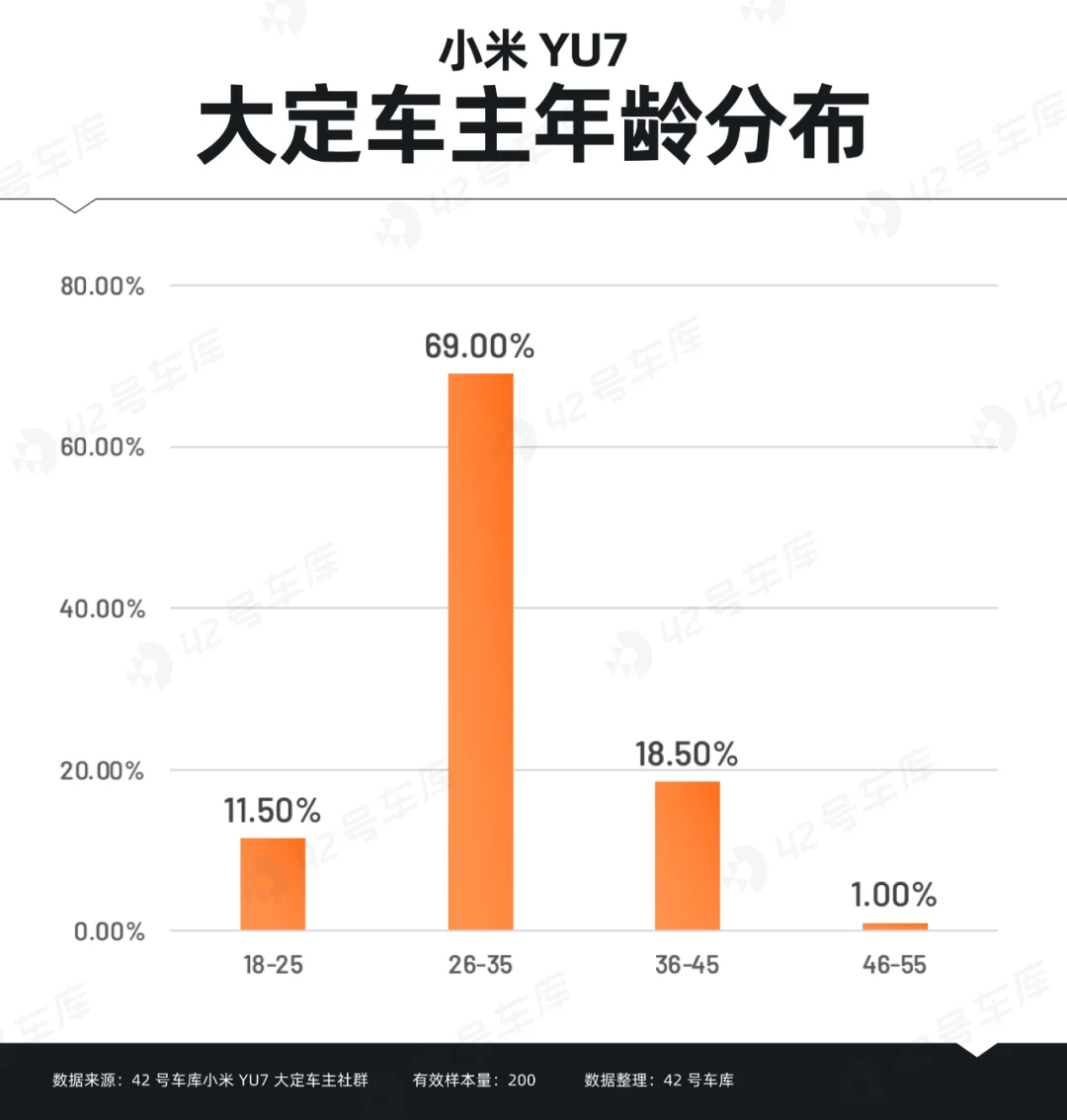
Among the surveyed owners, 83% were male and 16.5% were female, with an average age of 31.5 years. The 26–35 age group accounted for 69% of respondents, forming the absolute core of consumption; users aged 46 and above comprised only 1%, highlighting Xiaomi Auto’s influence advantage in the new-generation consumer market.
Among the respondents, 66% are married. Half of these married users are raising children, with 50.98% of those children in the preschool stage. This indicates that the core user base for the Xiaomi YU7 consists primarily of young married couples with a clear need for family-oriented vehicles.
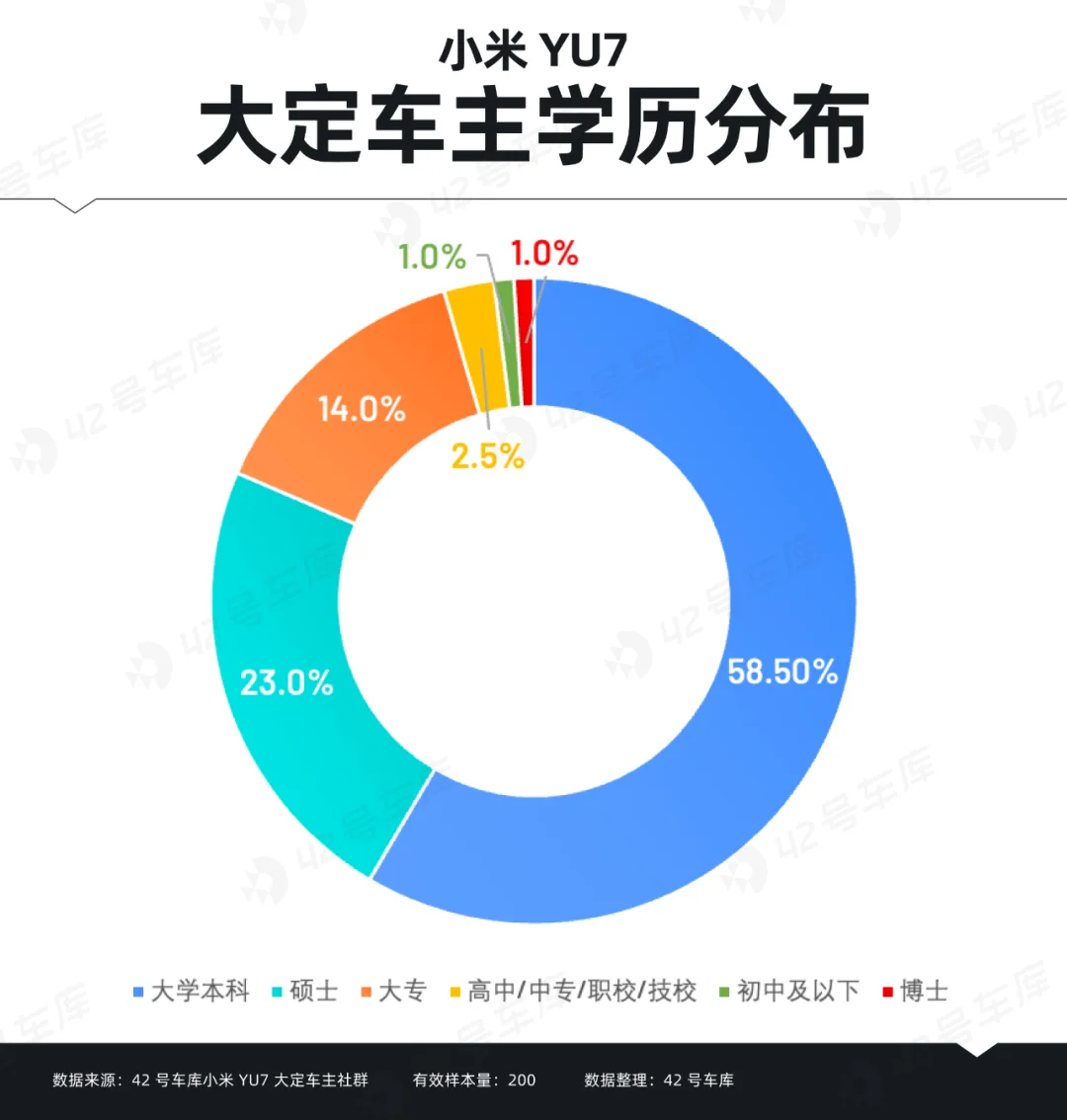
Regarding education levels, respondents with bachelor’s and master’s degrees accounted for 58.5% and 23% of the total, respectively; in terms of industry distribution, more than three-tenths concentrated in the IT, telecommunications, electronics, and internet sectors, indicating that core Xiaomi YU7 users are highly educated and exhibit high technology sensitivity.
Comparison with Xiaomi SU7 Owners
The Xiaomi YU7 owners surveyed here and the Xiaomi SU7 owners we surveyed last year are both concentrated in first-tier cities. However, third- and fourth-tier cities appear frequently in this survey’s results, indicating that the brand momentum accumulated through the SU7 is gradually expanding into lower-tier markets.
Additionally, while the Xiaomi SU7 focuses on 'young singles or childless families,' the Xiaomi YU7 covers 'young married families with children.' The two models complement each other in age and family status, jointly targeting the core consumer demographic aged 25 to 35.
02Vehicle Ownership and Purchase Details
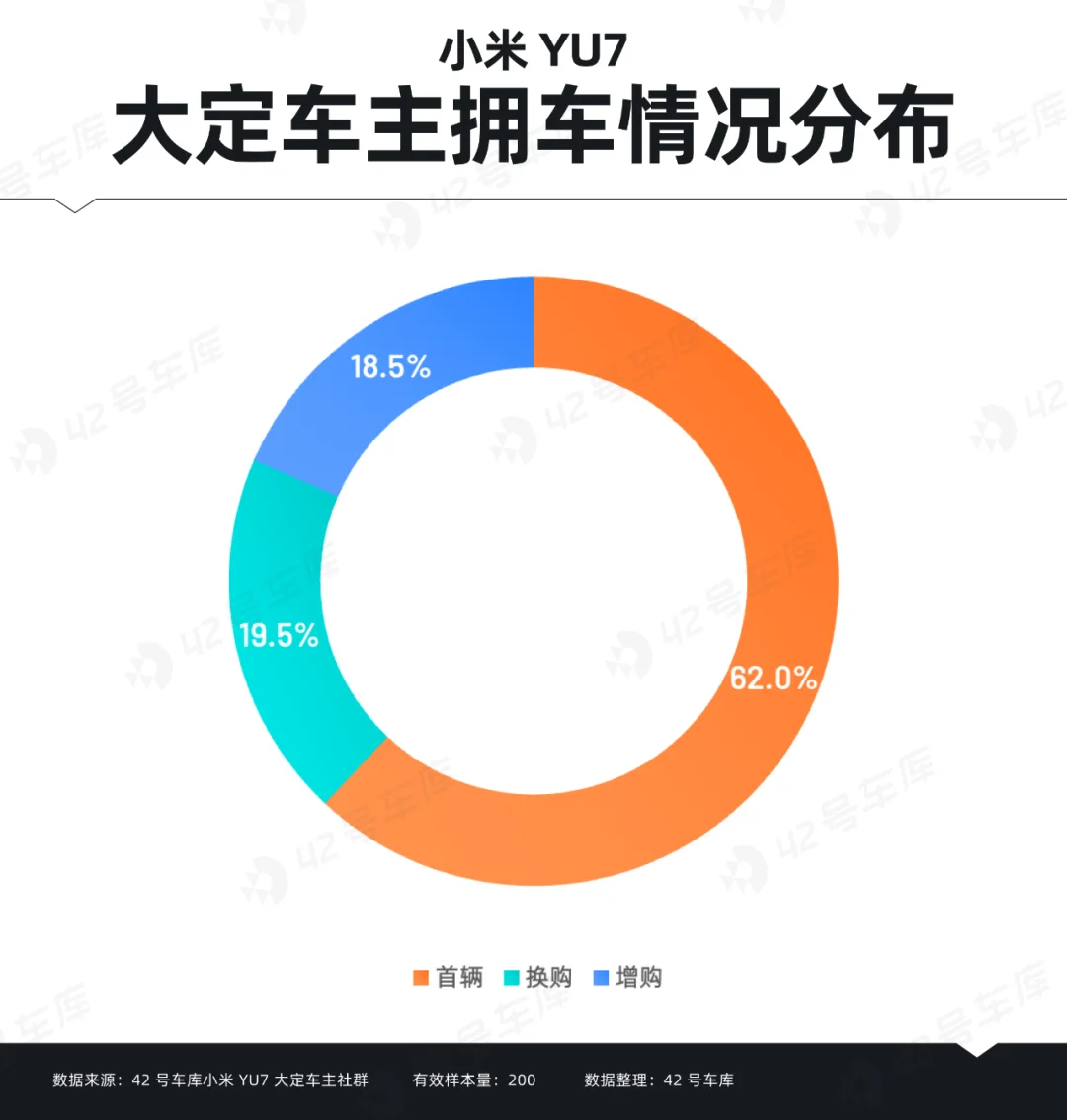
In this survey, more than half (62%) of respondents were first-time car buyers. Among non-first-time buyers, 43.4% had previously purchased a Xiaomi vehicle; of those, 78.8% switched from the Xiaomi SU7, while 21.2% added a new Xiaomi to their existing fleet.
Among Xiaomi Auto’s trade-in and upgrade customers, their previous vehicles were primarily from Tesla, Volkswagen, Lixiang, Zeekr, and NIO. Among these upgrade buyers, Tesla owners accounted for the largest share.
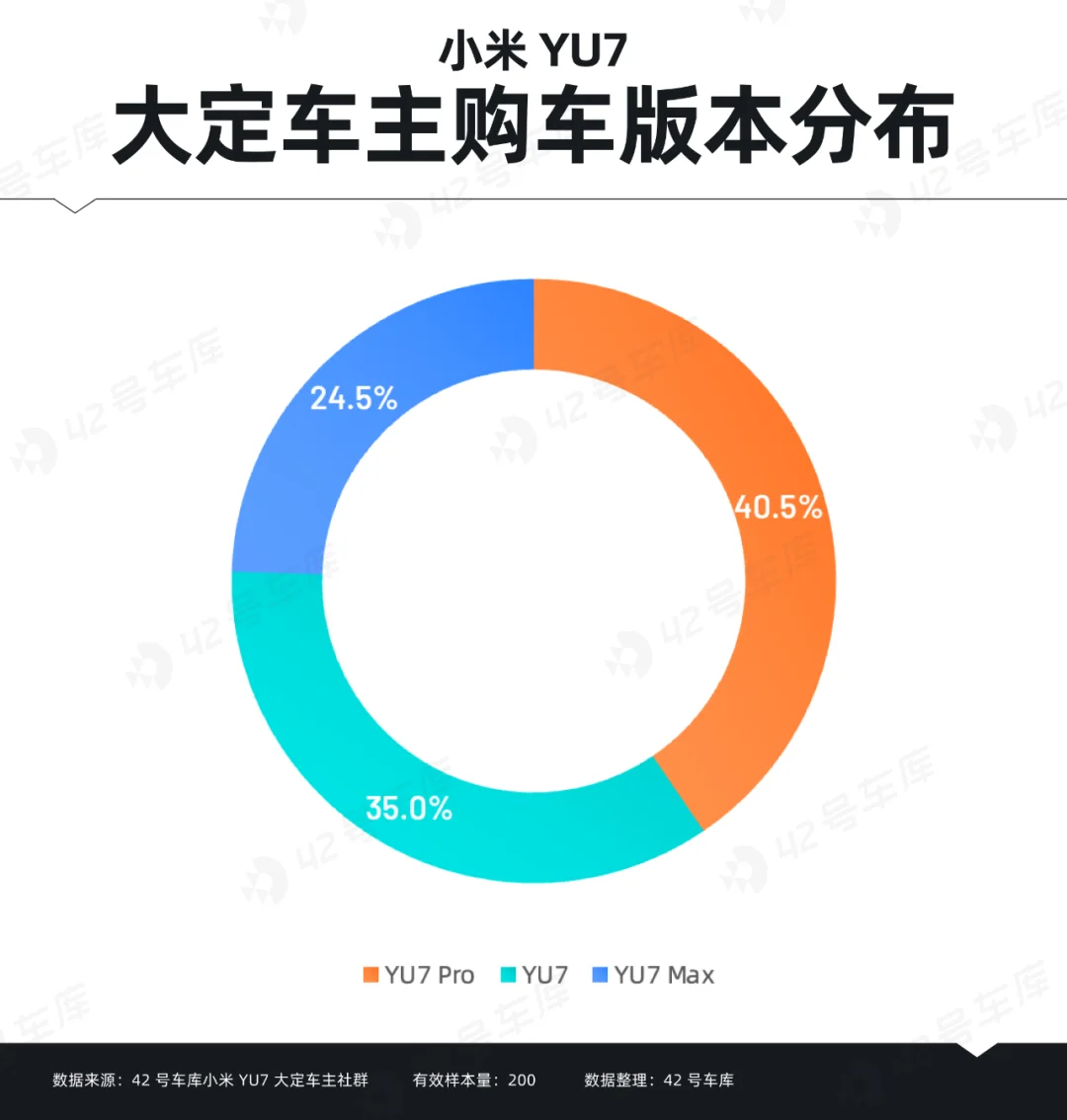
The Xiaomi YU7 Pro version was the most selected trim among respondents, accounting for 40.5%; followed by the YU7 Biaozhunban (35%) and the YU7 Max Ban (24.5%).
Regarding exterior paint, over half of respondents chose Titanium Metallic, representing 63.5% of selections. Yingqing received the lowest preference at just 0.5%.
Selections for interior colors were relatively evenly distributed.
Comparison with Xiaomi SU7 Owners
More than half of the first batch of Xiaomi YU7 and Xiaomi SU7 owners are purchasing their first vehicle, indicating that the Xiaomi automotive brand has strong penetration into incremental new energy vehicle consumers. Among users upgrading or replacing vehicles, in addition to some former internal combustion engine car owners, there is a significant number of owners from other new energy brands such as Lixiang and Tesla.
In terms of trim selection, the most popular choice for Xiaomi YU7 owners is the Pro version (40.5%), while the most popular choice for Xiaomi SU7 owners is the Max version (55%).
03Purchase Decision
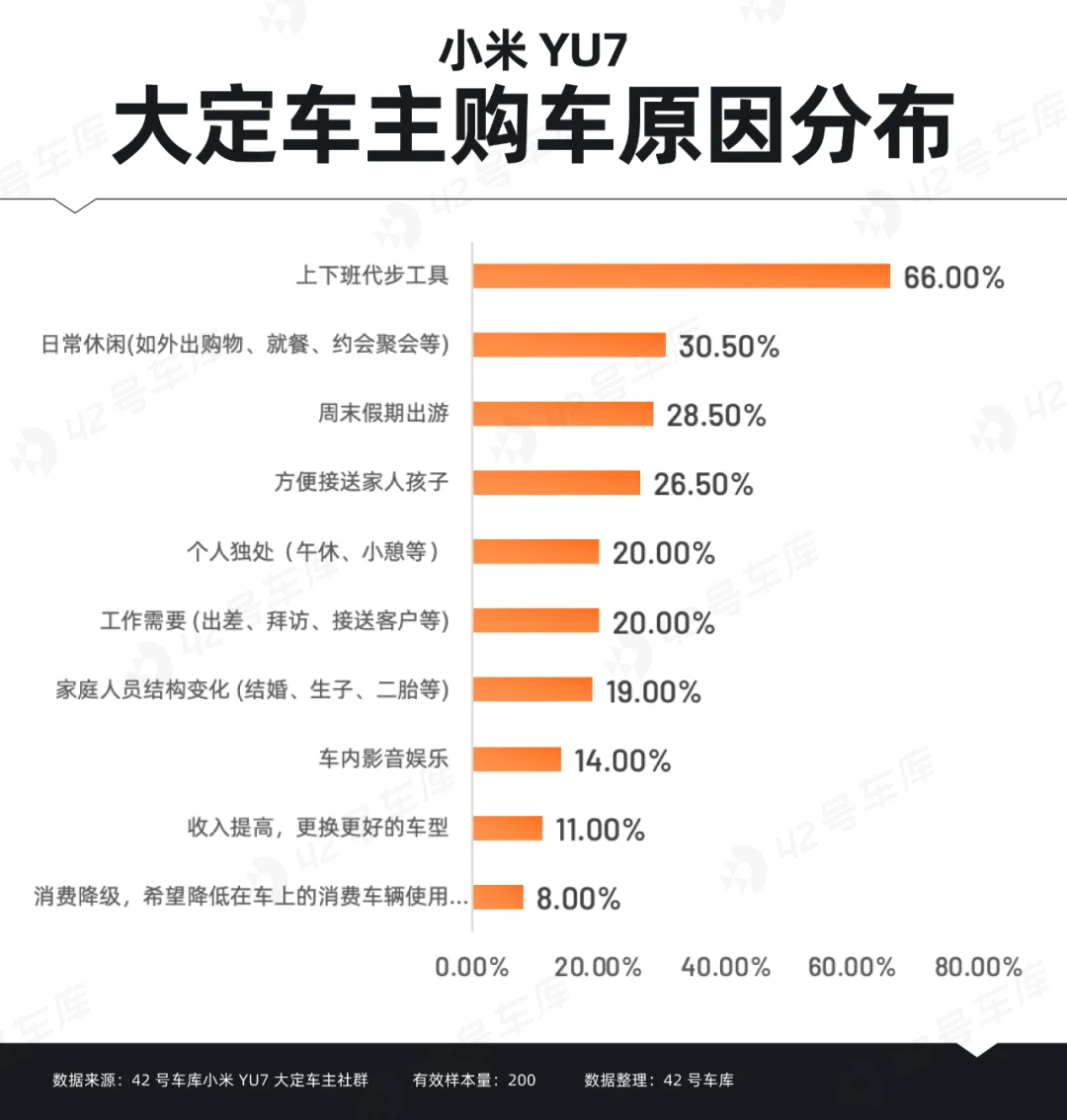
"Commuting," "daily leisure," and "weekend holiday travel" are the main reasons respondents chose the Xiaomi YU7, which aligns with the younger demographic profile of this model's primary audience.
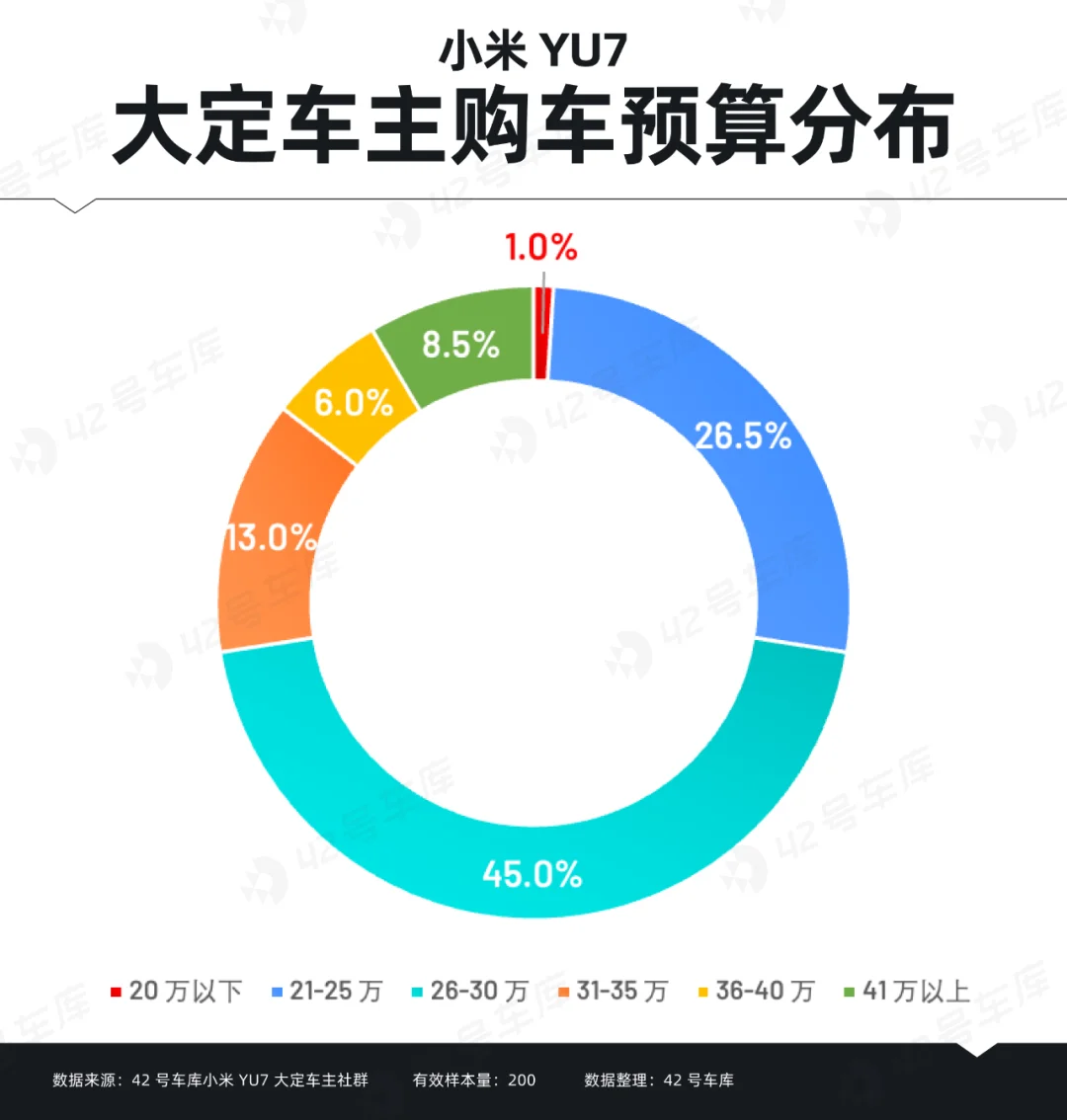
The average purchase budget of respondents was RMB 292,300, with nearly half of users having a budget between RMB 260,000 and RMB 300,000.
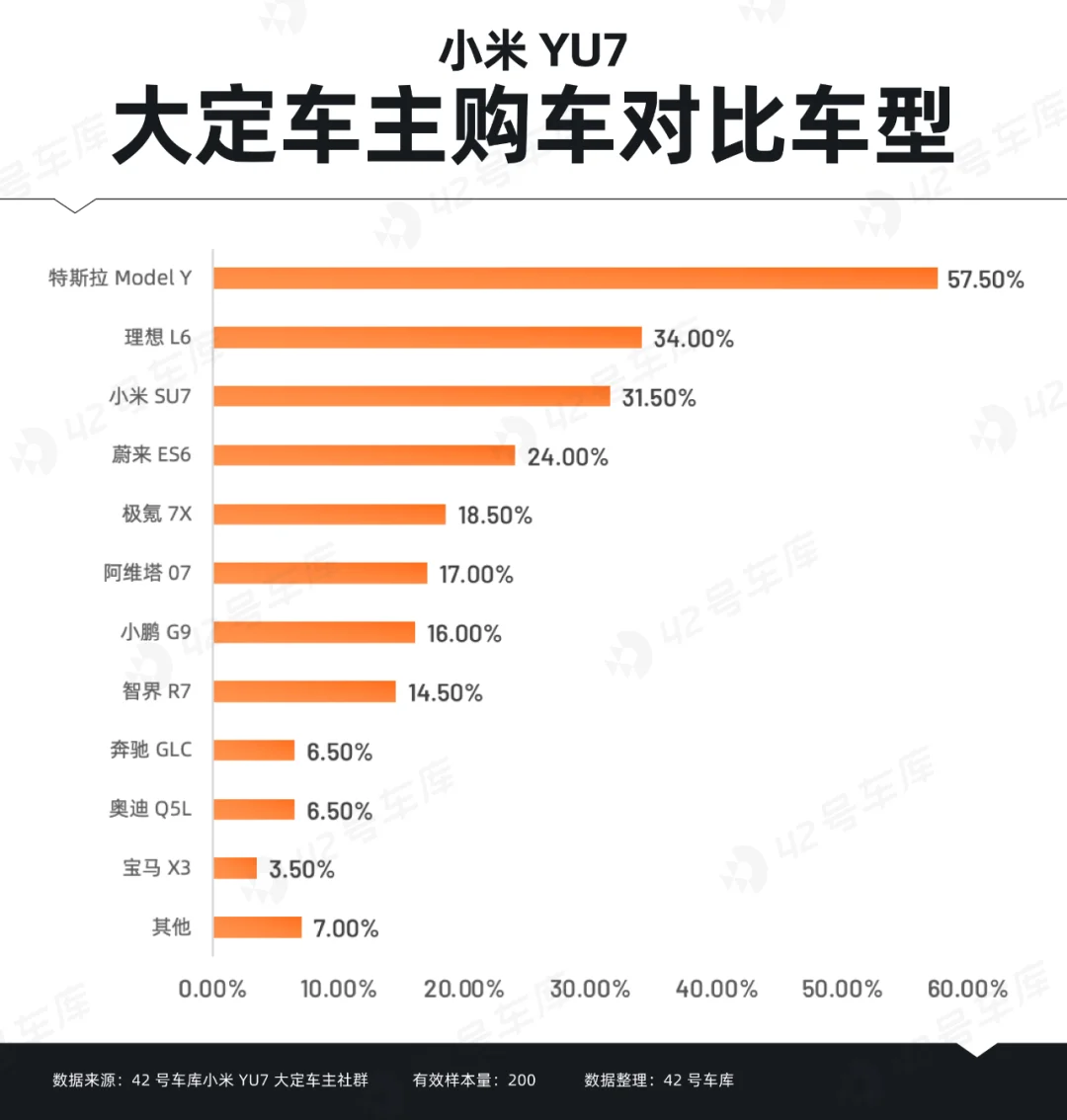
More than half of the respondents compared the Xiaomi YU7 with the Tesla Model Y during the purchasing process, accounting for 57.5%; the next most commonly compared models were the Li L6 and Xiaomi SU7, at 34% and 31.5%, respectively.
In terms of purchase decisions, nearly half of respondents indicated a short hesitation period; 85.5% placed their deposit without hesitation or after only brief consideration.
A remaining 14.5% stated they wanted to compare competitors further or wait for feedback from the first batch of owners before deciding.
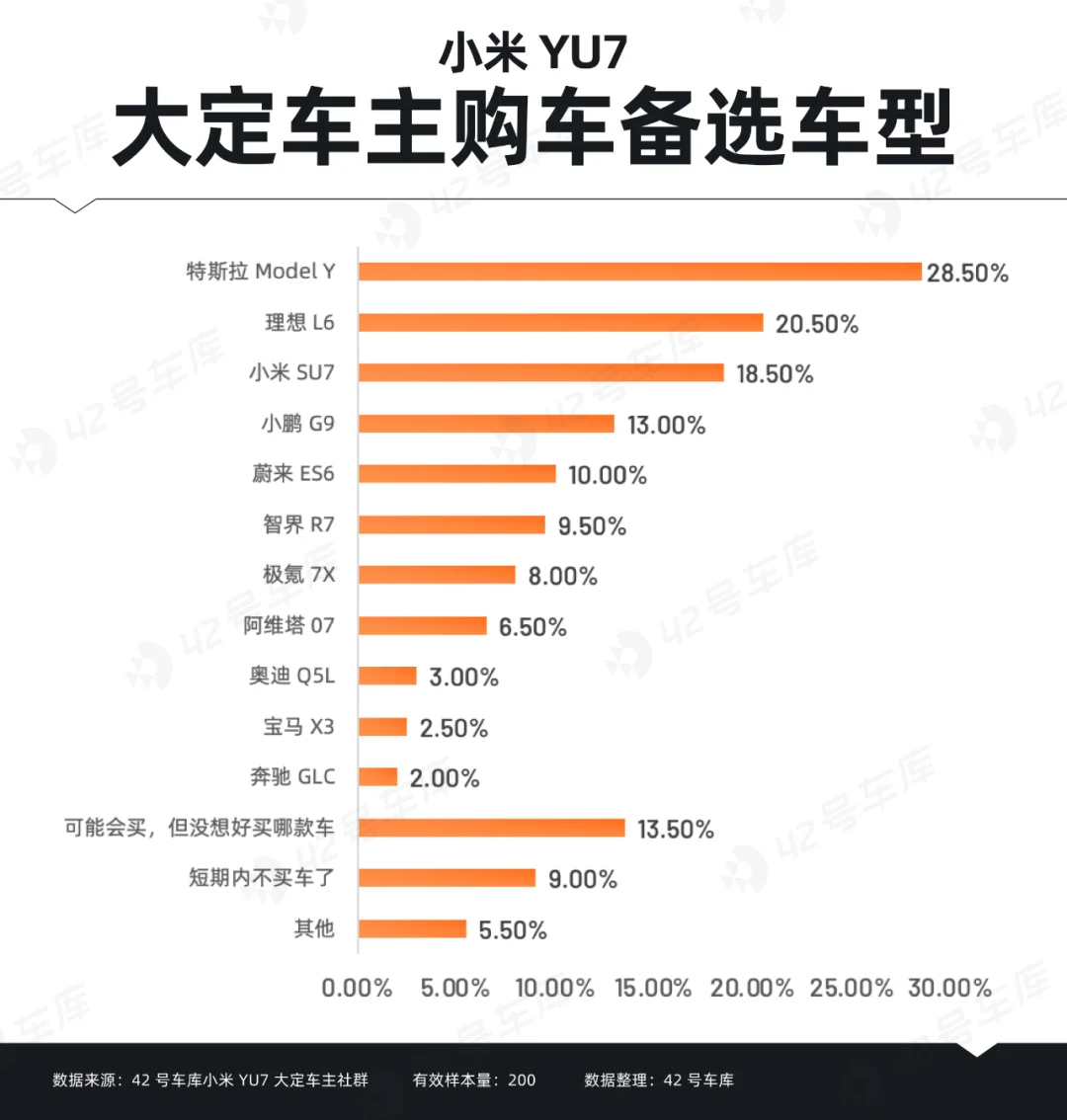
When asked which vehicle they would choose if Xiaomi YU7 were unavailable, the most common alternative was Tesla Model Y (28.5%), followed by Li L6 (20.5%). This reflects not only the benchmark status of Tesla Model Y but also indicates that a segment of Xiaomi YU7 buyers have family vehicle needs.
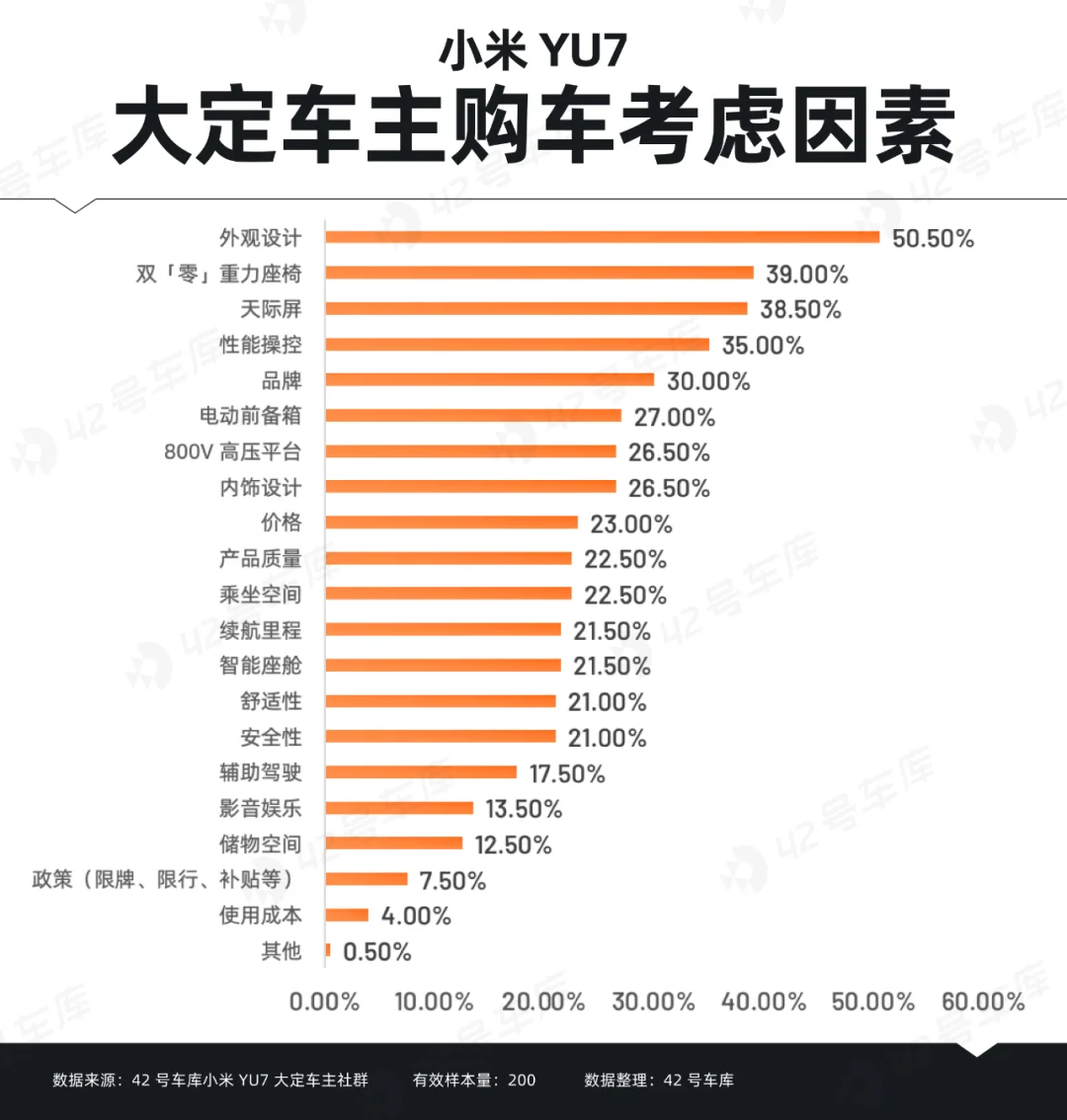
Key factors influencing the decision to buy Xiaomi YU7 included 'exterior design,' 'dual zero-gravity seats,' and the 'skyline screen.' 'Performance handling' and 'brand' ranked next, while 'driver assistance' and 'audio-visual entertainment' were mentioned less frequently.
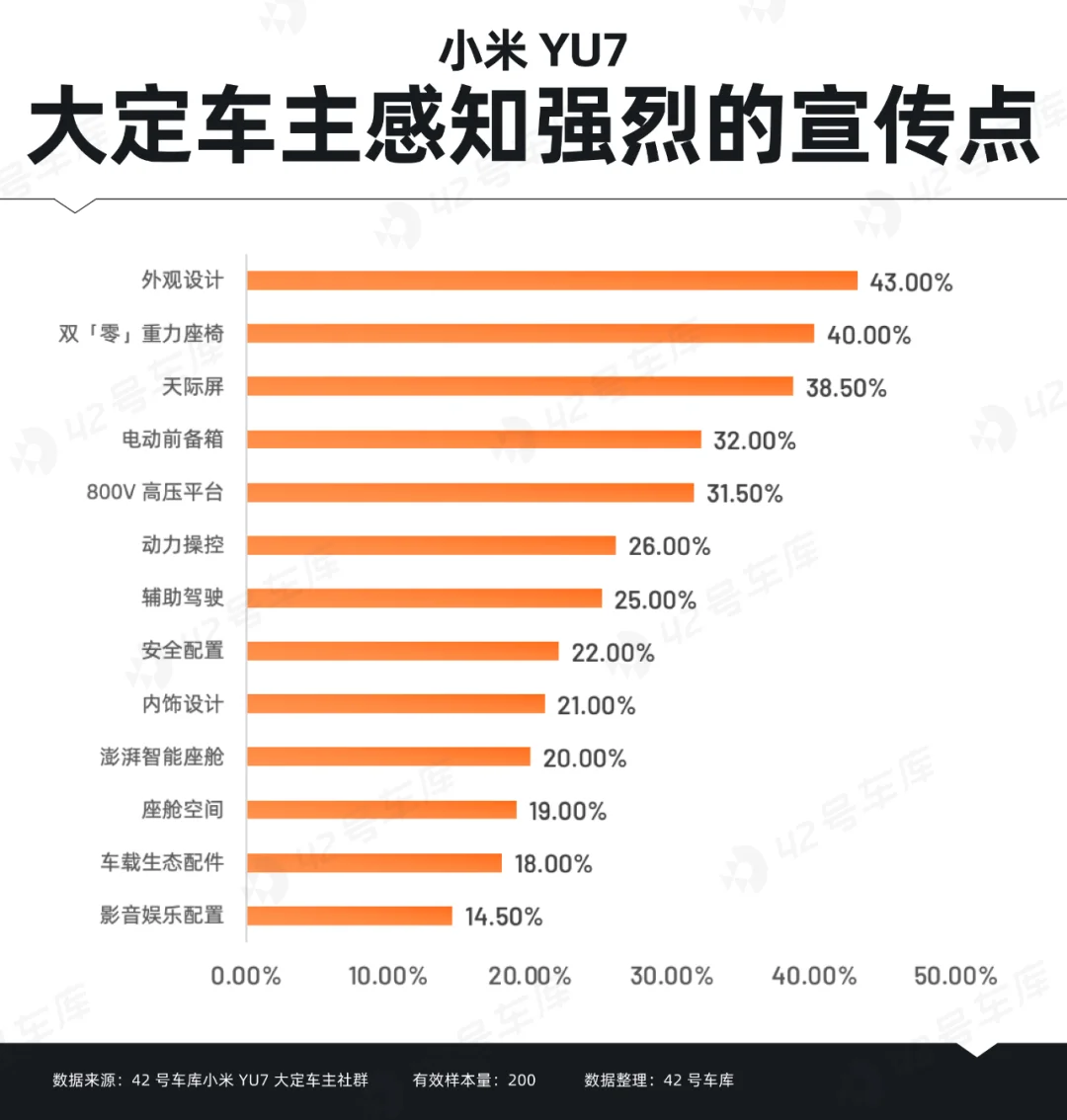
Xiaomi conducted extensive pre-launch promotional campaigns for the YU7 to highlight its key features. When surveyed users were asked which product promotion points encouraged their purchase, 'exterior design' and 'dual zero-gravity seats' were mentioned most frequently, accounting for 43% and 40% respectively; followed by the 'skyline screen' and 'electric front trunk.'
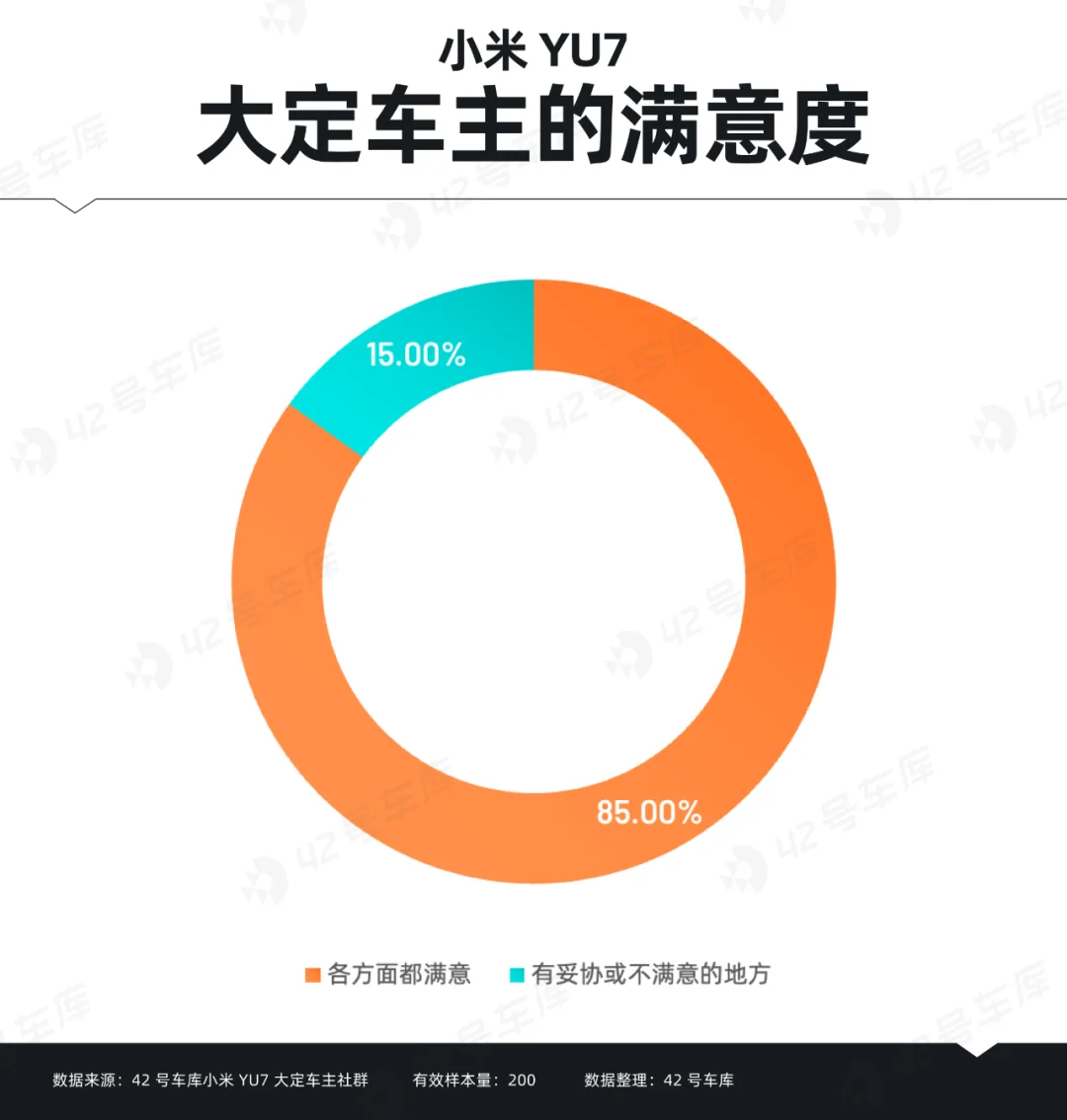
Among respondents, 15% indicated they still had some concerns or areas of dissatisfaction when deciding to purchase the Xiaomi YU7.
The most frequently cited issue was unreasonable model configuration segmentation, accounting for 60.61%. Dissatisfaction with pricing was mentioned by 21.21% of respondents, primarily focusing on points such as "the price of the YU7 Max Ban is too high" and "additional charges for preferred colors."
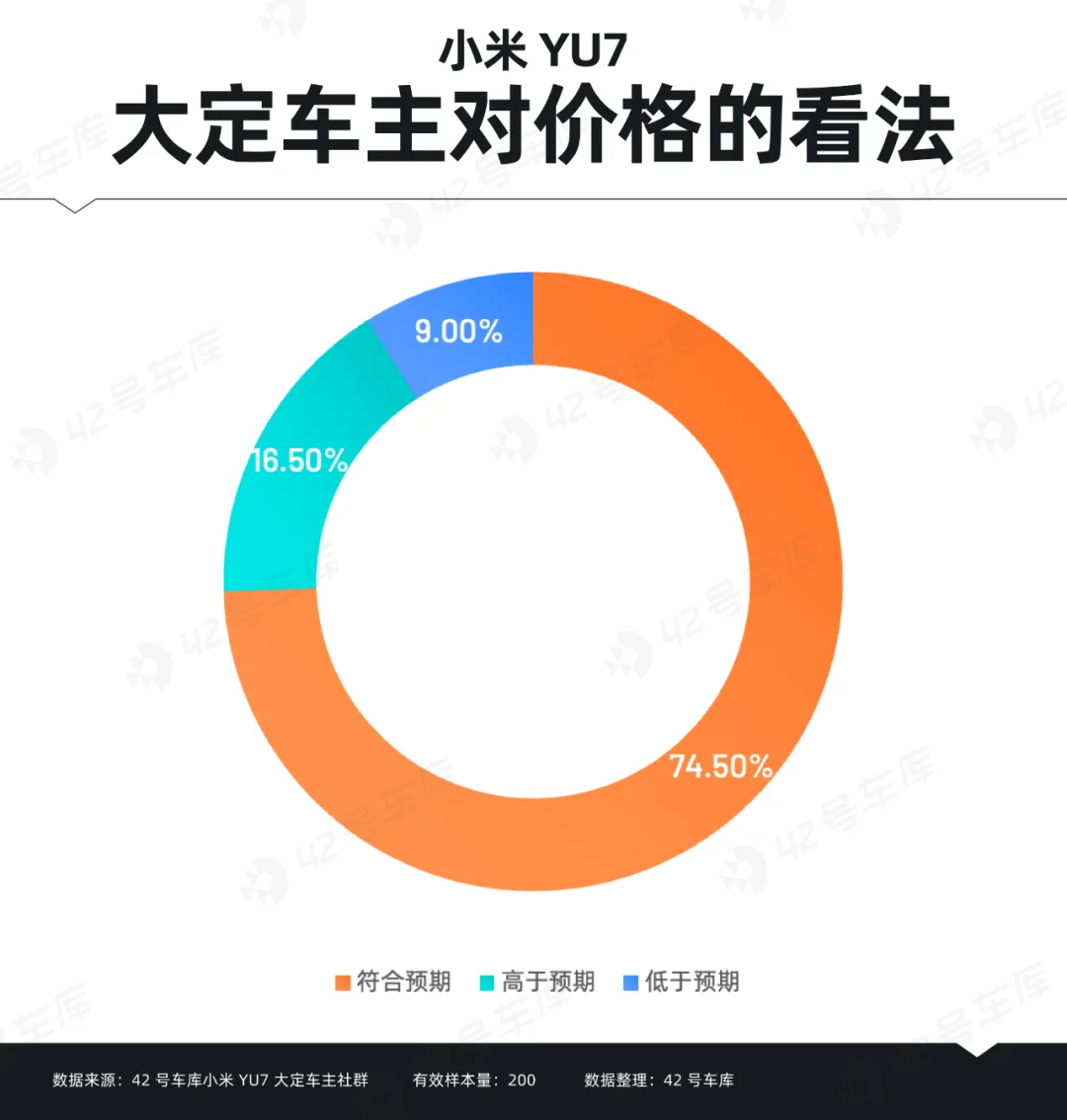
When asked whether the pricing of the Xiaomi YU7 met their expectations, 74.5% of confirmed buyers said it did, 16.5% said it exceeded expectations, and 9% said it fell below expectations.
Comparison with Xiaomi SU7 Owners
Personal uses such as "daily commuting" and "leisure" were the main reasons for both models' owners to make a purchase. However, unlike the SU7, family-related needs such as "convenience in picking up family members and children" and "changes in family structure" saw a significant increase in proportion among Xiaomi YU7 confirmed buyers. Additionally, the purchasing budget of Xiaomi YU7 confirmed buyers was generally slightly higher than that of Xiaomi SU7 owners.
Tesla is the core comparison brand for users purchasing either of the two models. In addition, among Xiaomi YU7 confirmed buyers, the most frequently compared model is the Li L6 (34%), while for Xiaomi SU7 owners, the most frequently compared model is the Zeekr 001 (60%).
More than 85% of respondents for both models said they made their purchase decision without hesitation or with only brief consideration. "Exterior design" and "performance handling" were among the most frequently cited factors in their purchasing decisions, consistent with the brand messaging they perceived. "Storage space," however, was a factor considered less by owners of both models.
Regarding satisfaction, the overall satisfaction rate of Xiaomi YU7 owners (88%) is slightly higher than that of Xiaomi SU7 owners (55%), with both groups citing "unreasonable model configuration segmentation" as their primary dissatisfaction. For "space," the dissatisfaction rate among Xiaomi SU7 owners (23.81%) is higher than that of Xiaomi YU7 owners (15.15%). In terms of price acceptance, more than 60% of respondents for both models believe the pricing meets expectations.
04Brand Perception
Among the evaluations of the Xiaomi brand by interviewees, the most frequently mentioned aspects were cost-effectiveness, technology, and youthfulness.

When evaluating the Xiaomi YU7, they mentioned most frequently that its design is attractive, dynamic, and technological.

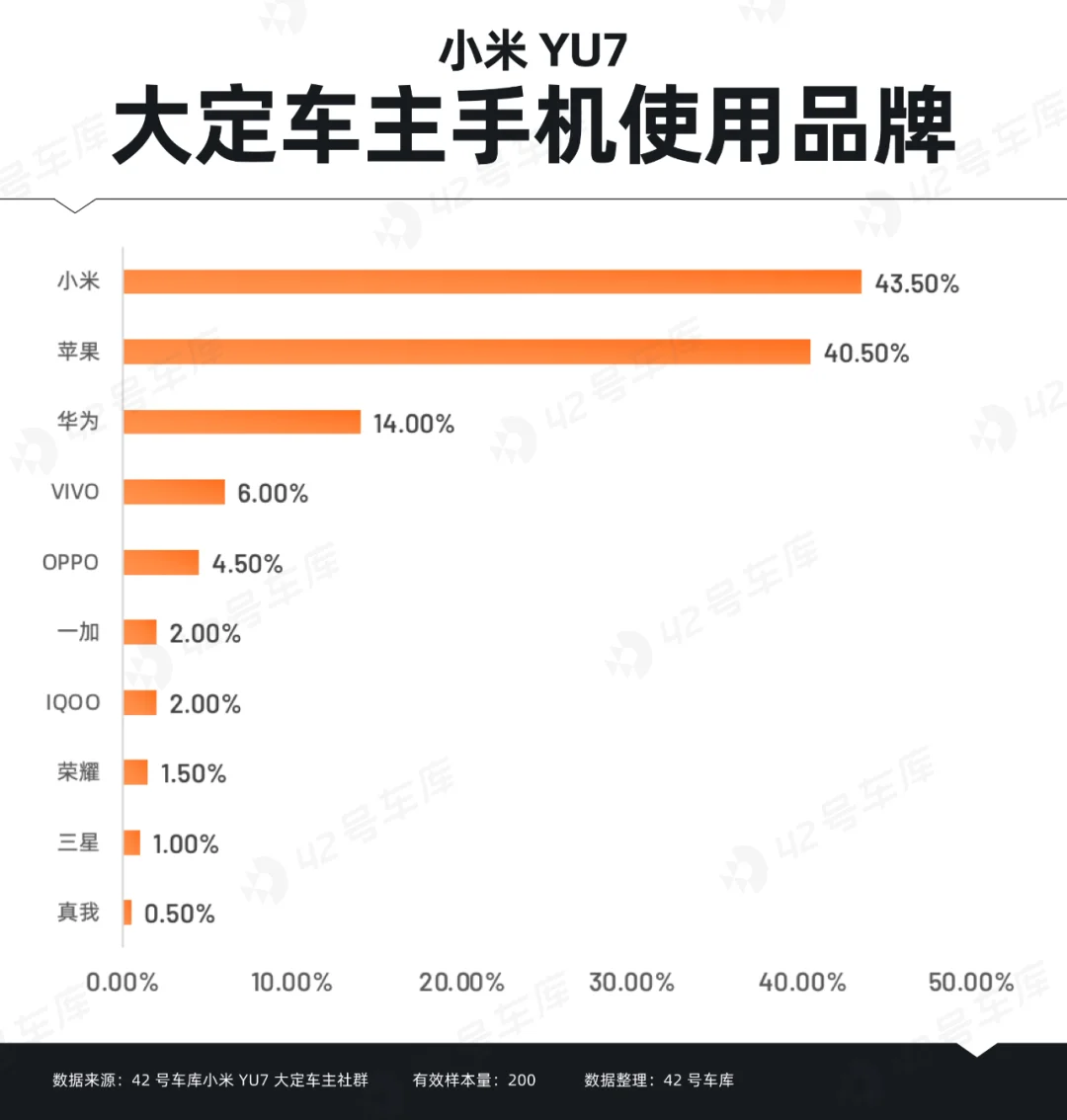
Among the respondents, Xiaomi and Apple smartphones were used in comparable proportions, at 43.5% and 40.5%, respectively; 14% of respondents used Huawei devices.
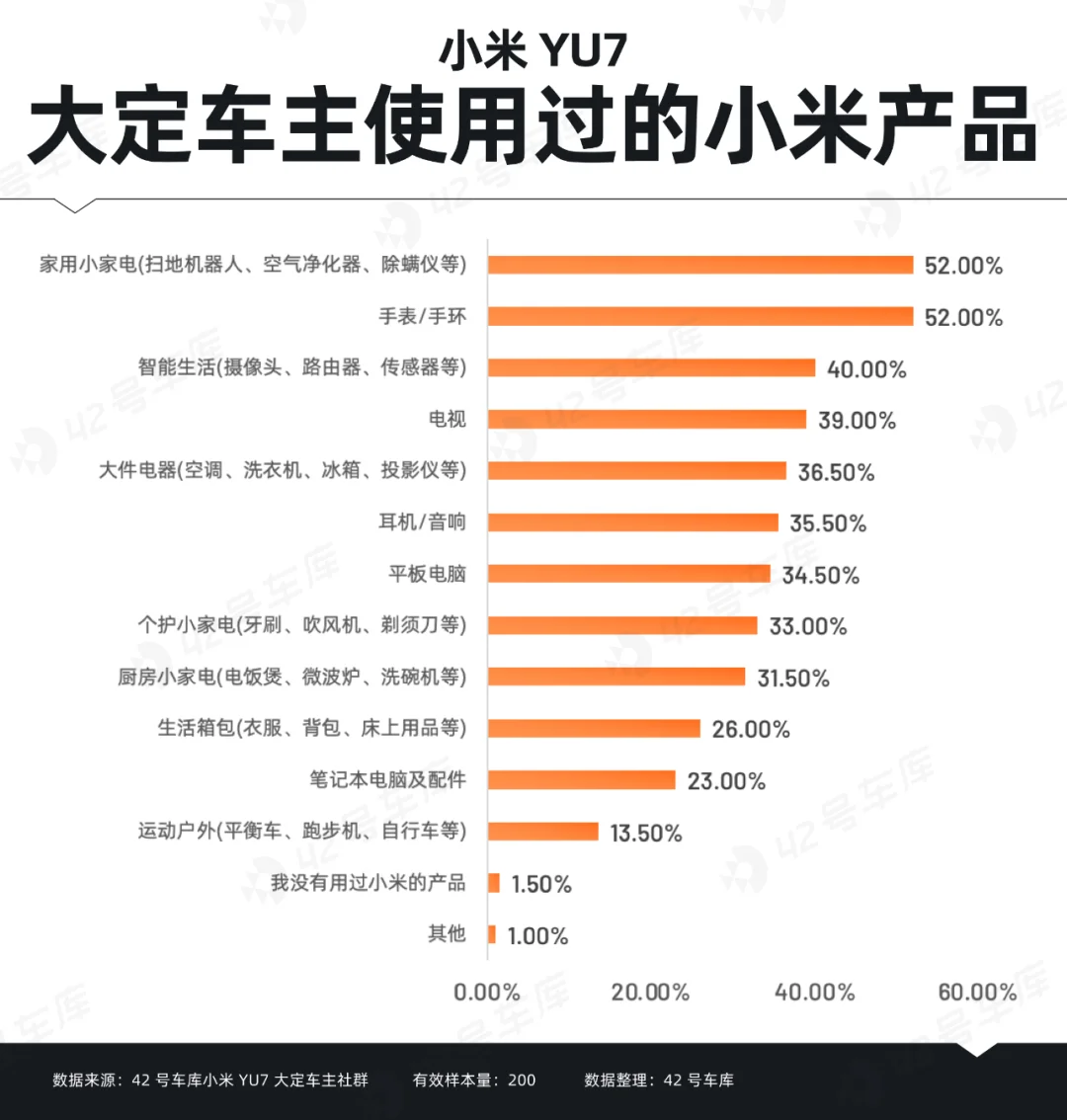
98.5% of respondents reported having used a Xiaomi product. When asked which non-phone Xiaomi products they use regularly, home small appliances and wearable devices such as smartwatches and fitness bands were cited most frequently, each at 52%. Smart home products like cameras and routers followed at 40%.
Only 1.5% of respondents stated they had never used any Xiaomi products.
Comparison with Xiaomi SU7 Owners
Owners of both the Xiaomi YU7 and the Xiaomi SU7 evaluated the Xiaomi brand primarily on "cost-effectiveness" and "technology." When describing their specific vehicles, both groups highlighted "attractive design" and "strong handling."
Xiaomi and Apple are the dominant smartphone brands among owners of both models. Among SU7 owners, 66% use Xiaomi phones; this share drops to 43.5% for YU7 owners, nearly matching Apple's 40.5% share. In both cohorts, only about 1% of users have never used a Xiaomi product.
05Summary
This survey covered 200 valid users, revealing the core user profile of Xiaomi YU7 buyers: they are young and have strong purchasing power, hold higher education degrees, are tech-savvy, value cost-effectiveness, and prioritize comfort.
Regarding car purchases, 62% of respondents were first-time buyers. Among those buying a second vehicle, 33% were existing Xiaomi SU7 owners, while 78.8% of those trading in had transferred their orders from the SU7. More than half of the respondents compared the Tesla Model Y when making their purchase decision; without the Xiaomi YU7, they would likely have bought a Tesla Model Y, Li L6, or Xiaomi SU7, but also considered the XPENG G9, NIO ES6, and Zhijie R7. The core factors driving purchases were exterior design, dual zero-gravity seats, and the panoramic sky screen, reflecting a consumer preference for "experience first."
Respondents' impressions of the Xiaomi brand centered on "cost-effectiveness, technology, and youth," which aligns closely with product evaluations of the Xiaomi YU7 as having an "attractive design, dynamic styling, and advanced technology." The report also highlights the significant penetration effect of the Xiaomi ecosystem: 98.5% of respondents had used Xiaomi ecosystem products (with smartwatches/fitness bands and small home appliances each accounting for 52%), and 43.5% simultaneously used Xiaomi smartphones. This has created a competitive barrier through "human-car-home" ecological integration.
The survey also identified areas for product optimization: 15% of users expressed concerns. Of these concerned users, 60.61% cited "unreasonable configuration segmentation," specifically pointing to issues such as "rear seats lacking ventilation and massage functions" and "no standard refrigerator." Although 74.5% of users felt the pricing met expectations, optimizing the configuration gradient is still necessary to balance the premium of high-end trims with the cost-effectiveness of base models.
Overall, the Xiaomi YU7 has established its competitive advantage in the smart electric SUV market by precisely targeting young family users, balancing cost-effectiveness with design experience, and activating synergistic effects within its ecosystem.
Produced by the 42HOW Auto User Research Team
If you are interested in our research, please contact us via email at majunmeng@42how.com.