


2023 Autonomous Driving Review: Commercial Rollout and AI Exploration
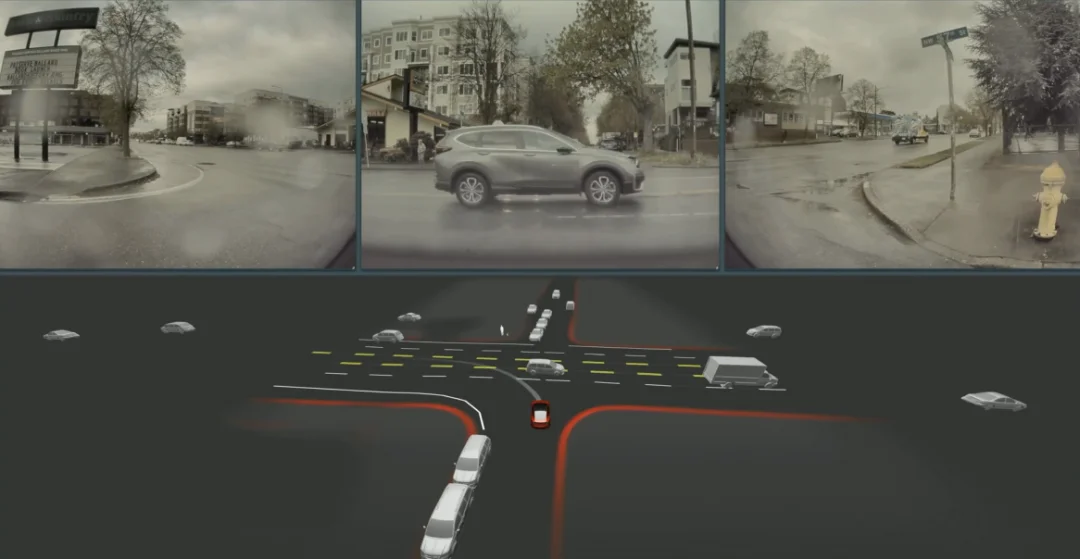
2023 was a turbulent year for the development of intelligent driving.
With the overarching framework of intelligent driving hardware and software gradually taking shape, leading players began advancing the testing and deployment of urban and highway navigation-assisted driving in their mass-produced vehicles, while exploring business models based on software subscriptions.
Consequently, commercial deployment became a key theme for intelligent driving in 2023.
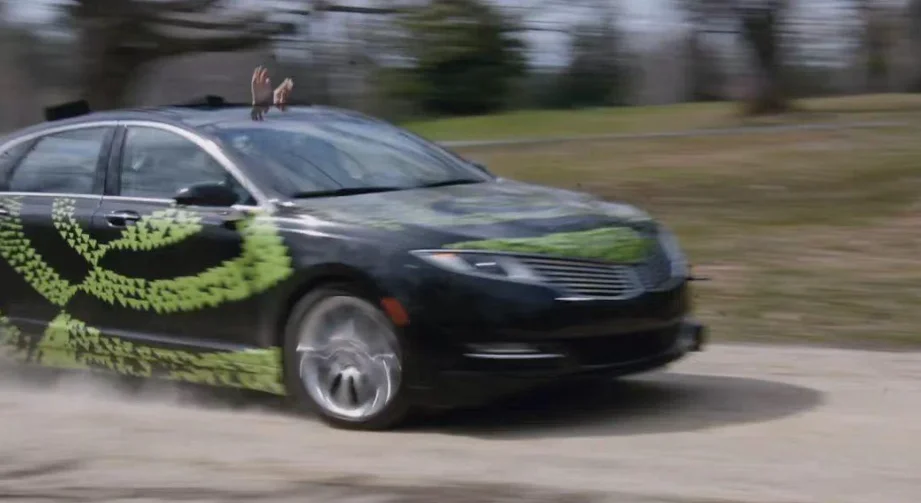
On the other hand, the rollout of urban navigation-assisted driving is not achieved overnight. Beyond technical capabilities, manufacturers must invest heavily in engineering implementation and end-user experience. Players are employing diverse strategies, integrating more practical algorithmic models into engineering solutions, with the incorporation of large language models emerging as a highlight.
Of course, current intelligent driving technology is far from mature. Pioneers like Tesla are validating the performance of end-to-end algorithms and even exploring the technological direction of next-generation intelligent driving.
Against this backdrop, the 2023 intelligent driving industry can be described as a fierce competition among many contenders. Major players invested significant effort across intersecting dimensions of technological exploration, commercial deployment, and brand perception, staging a spectacular annual drama in the intelligent driving sector.
As 2023 draws to a close, we have compiled an annual review of the ten most significant events in the intelligent driving industry this year, arranged chronologically. Our aim is to outline the general trajectory of the sector's development.
1. Huawei ADS 2.0: Balancing Technology and Cost
Huawei officially released ADS 2.0 on April 16, 2023.
As Huawei’s next-generation intelligent driving solution, Huawei ADS 2.0 employs a BEV + Transformer network architecture for its software algorithms. It also incorporates two major networks: the industry-first laser-fused GOD (General Obstacle Network) and the RCR (Road Topology Reasoning Network).
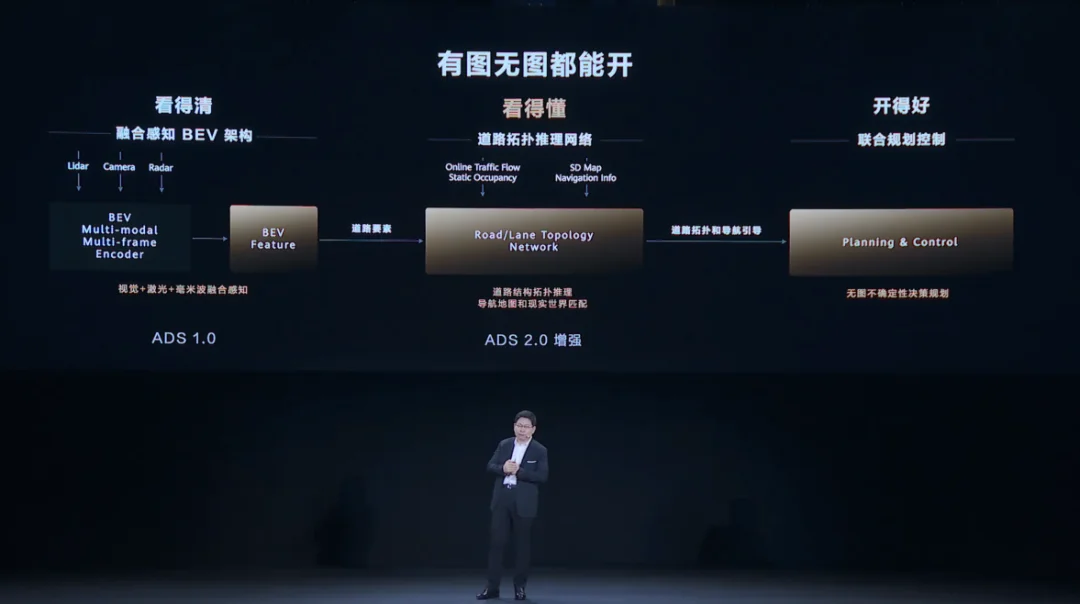
Notably, in terms of hardware implementation on AITO models, Huawei ADS 2.0 utilizes an MDC 610 computing platform paired with a single LiDAR. This contrasts with the ADS 1.0 configuration, which relied on the MDC 810 platform and three LiDARs. Rather than focusing solely on computational power and sensor hardware, Huawei ADS 2.0 takes an engineering-oriented approach, balancing deployment costs with user experience.
From an industry perspective, the launch of Huawei ADS 2.0 not only solidified Huawei’s leading position in intelligent driving deployments in 2023 but also aligned with the sector’s broader trend that year: emphasizing engineering capability, user experience, and cost efficiency alongside hardware performance.
2. XPENG G6 Max: Lowering the Entry Threshold for Urban Intelligent Driving
On June 29, 2023, XPENG launched the G6 with a starting price of RMB 209,900 and an RMB 229,900 starting price for the Max version, a difference of RMB 20,000. In terms of hardware, the XPENG G6 Max is equipped with 31 high-performance intelligent driving sensors, including a LiDAR, and dual Orin-X chips delivering a total computing power of up to 508 TOPS.
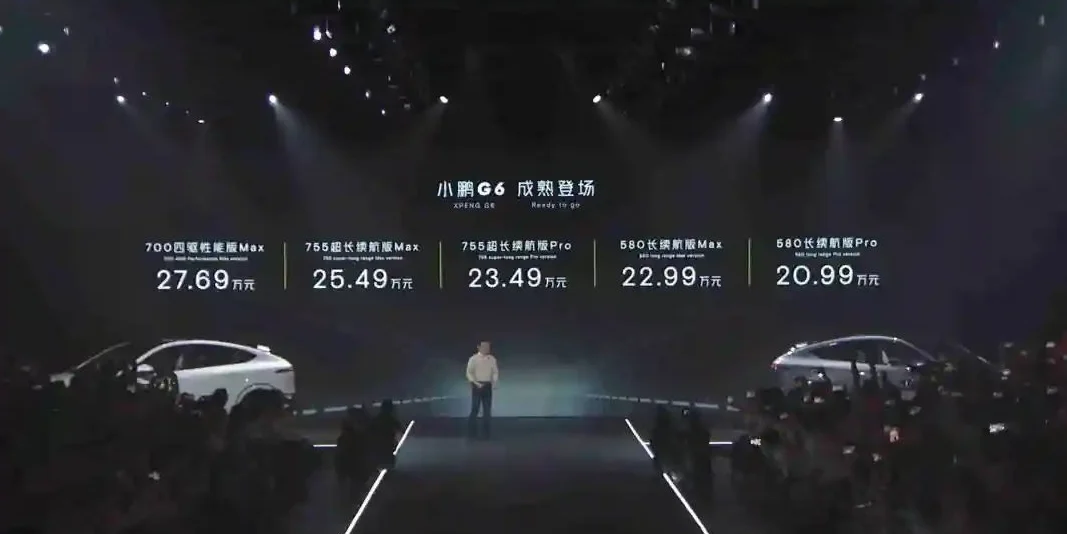
This meant that under the fiercely competitive market conditions of the ongoing price war, users could purchase a smart electric vehicle supporting urban navigation-assisted driving (NOA) for as little as RMB 229,900 through the XPENG G6 580 Max variant.
With a starting price of RMB 229,900, the XPENG G6 Max broke through the industry-wide price floor for models featuring urban NOA at the time, significantly lowering the cost of bringing urban NOA to market. From an industry perspective, while XPENG G6 aggressively promoted urban NOA adoption among mainstream consumers, it also set a new value benchmark for mass production implementation in the intelligent driving sector.
3. BYD Launches High-End Intelligent Driving Assistance System 'Tianshenzhiyan'
On July 3, 2023, during the launch event for the DENZA N7, BYD officially unveiled its high-end intelligent driving assistance system, 'Tianshenzhiyan'.
The DENZA N7 features the global debut of BYD's 'Tianshenzhiyan' high-end intelligent driving assistance system. Based on 'Tianshenzhiyan', DENZA Pilot offers two intelligent driving assistance platform solutions: a standard intelligent driving assistance system and a high-end intelligent driving assistance system.
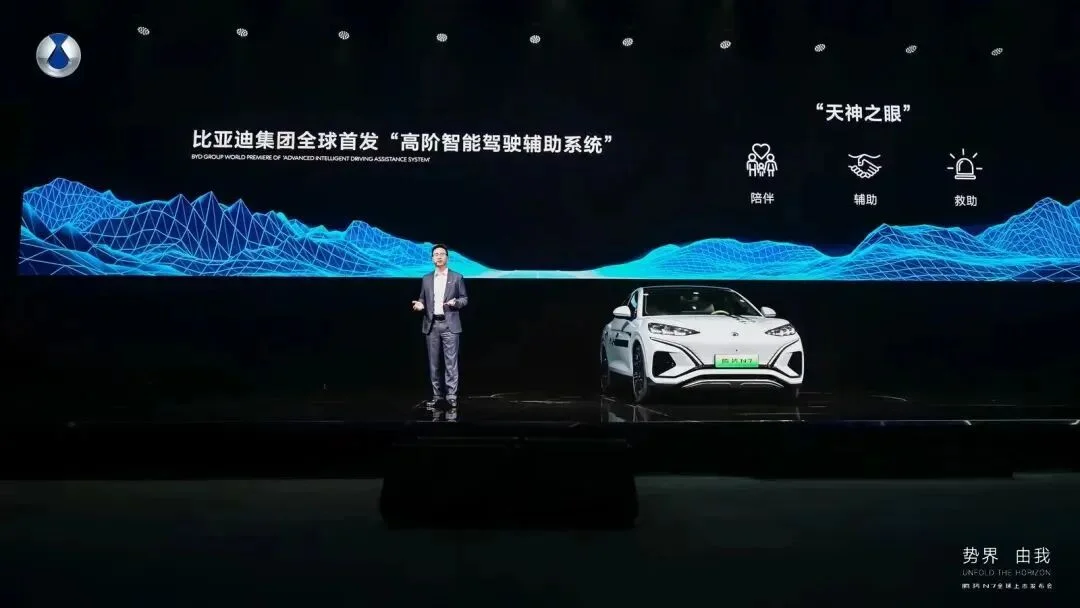
As the initiator of BYD’s second half of intelligentization, the launch of the DENZA N7 marks a critical step for BYD in intelligence, particularly in autonomous driving. Given BYD’s position in the Chinese automotive industry, its embrace of autonomous driving has, in a sense, accelerated the entire industry’s adoption of the technology.
4. Elon Musk Live-Streams FSD V12 End-to-End Capabilities
On August 26, 2023, Elon Musk conducted a live stream on social media showcasing the autonomous driving capabilities of FSD V12. Unlike previous Tesla FSD solutions that relied on software algorithmic approaches, FSD V12 adopts an end-to-end architecture.
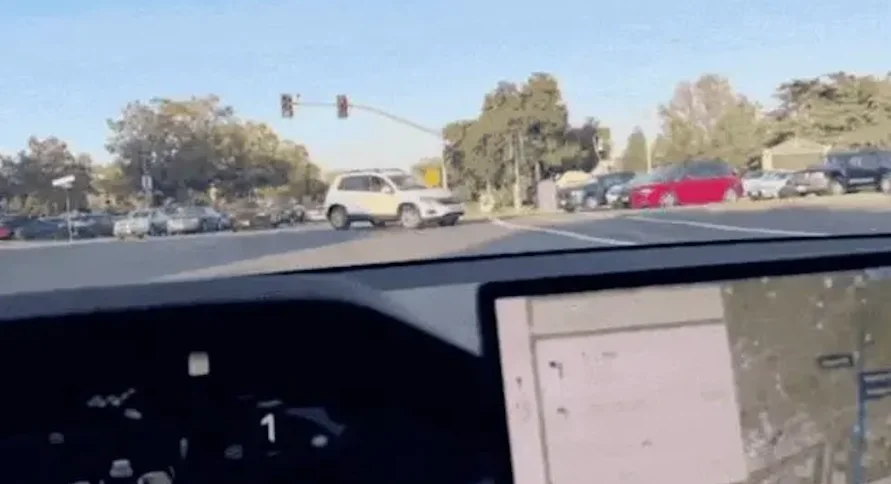
The live stream demonstrated high completion rates for tasks such as unprotected left turns, pulling over to park, and yielding to pedestrians. The overall performance was commendable.
During the broadcast, Elon Musk took control of the vehicle only once. At an intersection, following a pre-set route, the vehicle intended to proceed straight. However, when a traffic light ahead indicated a left turn was permitted, the Model S in the live stream suddenly began moving forward. Elon Musk intervened in time to take control.
Regarding this intervention, Elon Musk stated that this is precisely why the version had not yet been released to the public. For the autonomous driving industry, however, this live stream marked Tesla’s first public demonstration of the actual performance of an end-to-end algorithmic architecture. Tesla soon thereafter began further iterations of its software algorithms.
5. XPENG Integrates Large Models into XNet 2.0 Perception Architecture
On October 24, 2023, at the fifth 1024 XPENG Automotive Technology Day, XPENG unveiled XBrain, its ultimate architecture for full-scenario intelligent driving. This includes the next-generation perception technology architecture, XNet 2.0, and XPlanner, which handles planning and control based on neural networks.
Within the XNet 2.0 perception architecture, XPENG introduced dynamic BEV (Bird's Eye View) and static BEV networks, along with a visual occupancy network. Additionally, XNet 2.0 leverages large language models to interpret textual information, possess spatial-temporal awareness, and understand traffic elements specific to different cities.
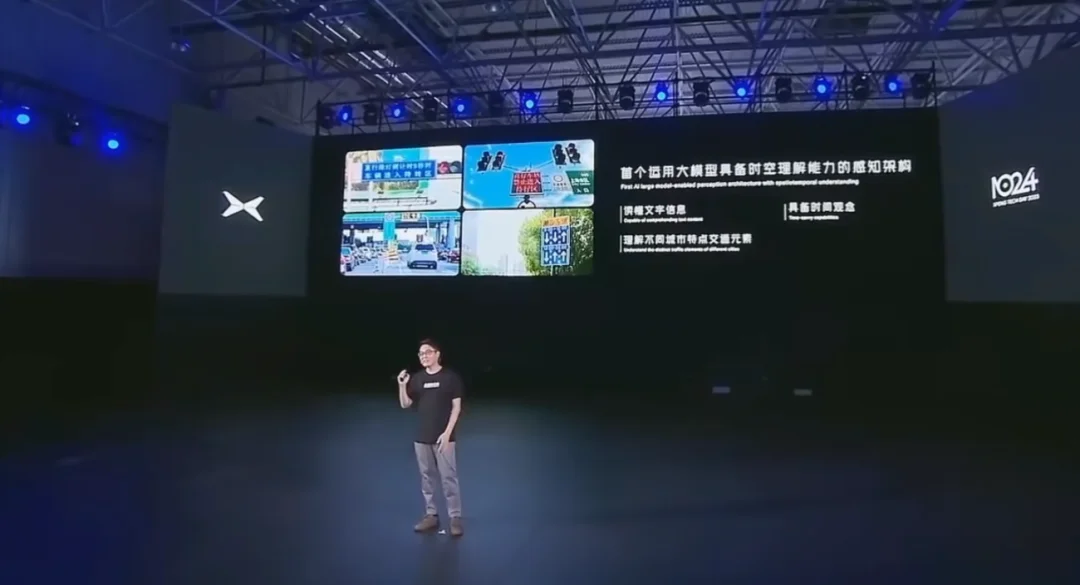
Consequently, XPENG’s XNet 2.0 became the industry’s first perception architecture to utilize large models and feature spatial-temporal perception capabilities. This represents XPENG’s latest exploration in enhancing intelligent driving perception, offering significant inspiration and serving as a benchmark for the entire automotive industry.
6. Jiyue 01 Adopts China’s Only 'Pure Vision' High-End Intelligent Driving Solution
Jiyue 01 was officially launched on October 27, 2023. Unlike many domestic vehicles equipped with urban navigation-assisted driving features, the entire Jiyue 01 lineup is devoid of LiDAR sensors. It stands as the only vehicle in China to implement city navigation-assisted driving using a 'pure vision' approach, ready for use upon release.
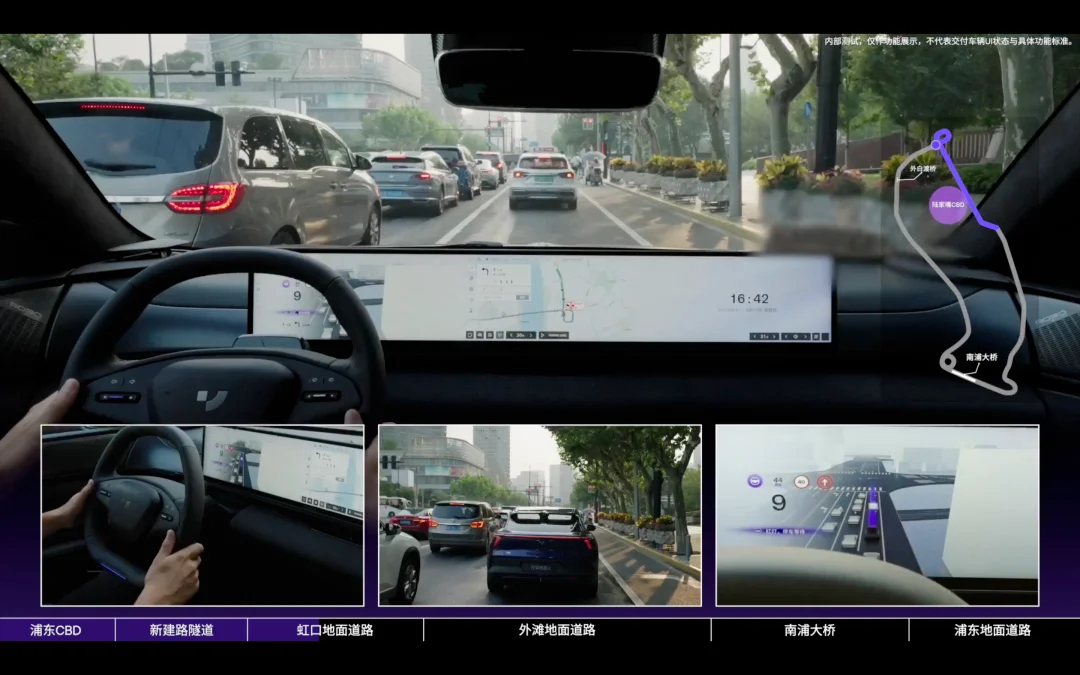
Specifically, empowered by Baidu Apollo’s complete high-end autonomous driving capabilities and safety systems, Jiyue adopted an algorithmic architecture combining BEV, Transformer, and OCC (Occupancy Network). This decision carves out a distinct 'pure vision' technical path in a market where most urban navigation-assisted driving systems are relying on LiDAR for mass production.
From an industry perspective, the launch of the Jiyue 01 means that in the process of intelligent driving implementation in China, Jiyue has become the only domestic automaker to choose a pure vision route for high-level autonomous driving.
7. L3 and L4 Vehicles Officially Qualified for Road Testing
On November 17, 2023, multiple government departments jointly issued a notice on conducting pilot programs for the access and road passage of intelligent connected vehicles. This means that, from a policy standpoint, intelligent connected vehicles equipped with L3 and L4 functions have finally gained the qualification for road testing.
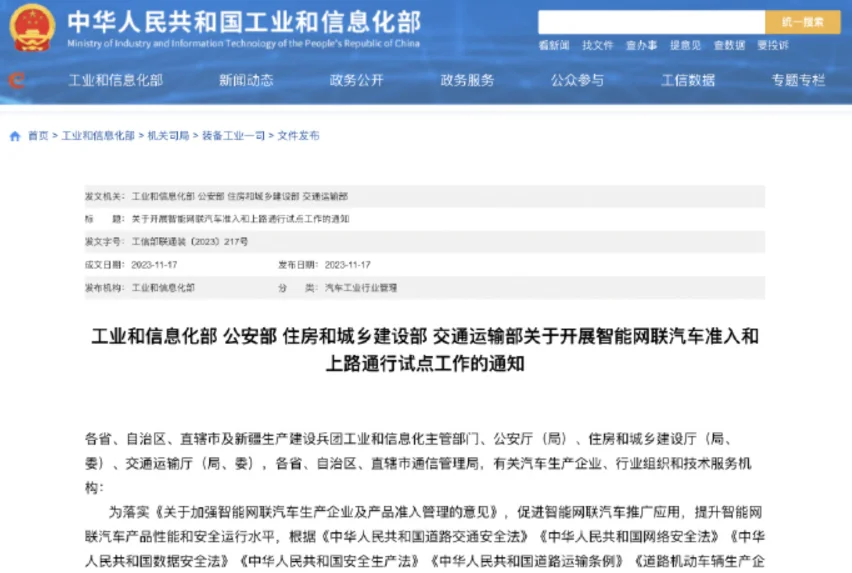
According to the policy itself, the requirements for conducting L3 and L4 tests involve selecting intelligent connected vehicle products with autonomous driving functions that are ready for mass production, and carrying out road passage pilots within designated areas. Additionally, vehicles used for commercial transport must meet the operational qualifications and management requirements set by transportation authorities. Therefore, regulators have adopted a highly cautious yet supportive attitude toward L3 and L4 technologies.
Notably, within one month after the issuance of this notice, numerous car models under brands such as BMW, Mercedes-Benz, Jihu, Zhiji, DEEPAL, AVATR, SERES, and DENZA had already obtained corresponding autonomous driving test licenses.
8. Tesla Announces Next-Generation Autonomous Driving Based on Large Models
On December 2, 2023, Tesla AI, the official social media account of Tesla, announced that Tesla is building a new generation of autonomous driving based on a single foundational video network. This foundational network will be capable of directly controlling the vehicle.
At the same time as releasing the above information, Tesla AI also launched recruitment for engineers and stated its intention to build "the best end-to-end model based on large-scale fleet data." According to the job postings, Tesla is primarily recruiting AI engineers for directions such as foundation models and generative modeling.
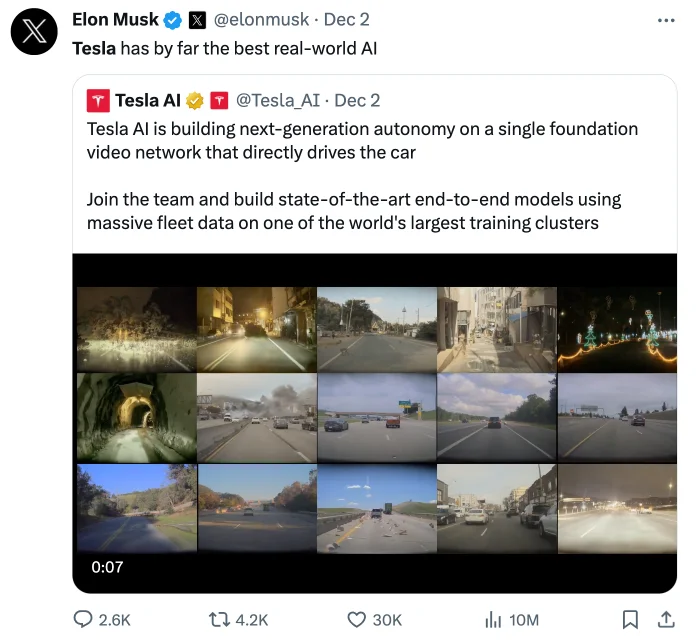
Although Tesla has not yet announced the specific direction of its next-generation autonomous driving system, the aforementioned information suggests that it will leverage its vast amount of data and large-scale computing infrastructure to develop the next generation of autonomous driving using the thinking and methods of large models. However, this exploratory direction is still in its early stages.
9. NIO officially releases self-developed intelligent driving chip Shenji NX9031
On December 23, 2023, at the NIO Day 2023 event, NIO officially unveiled the ET9, an executive flagship sedan with a pre-sale price of RMB 800,000, and introduced its first self-developed intelligent driving chip, the Shenji NX9031.
Specifically, the Shenji NX9031 is the industry's first intelligent driving chip manufactured using a 5 nm automotive-grade process, featuring more than 50 billion transistors. Through its self-developed inference acceleration unit (NPU), it can flexibly and efficiently run various AI algorithms such as BEV and Transformer. NIO stated that the efficiency of the Shenji NX9031 in typical algorithms is significantly higher than that of existing benchmark products.
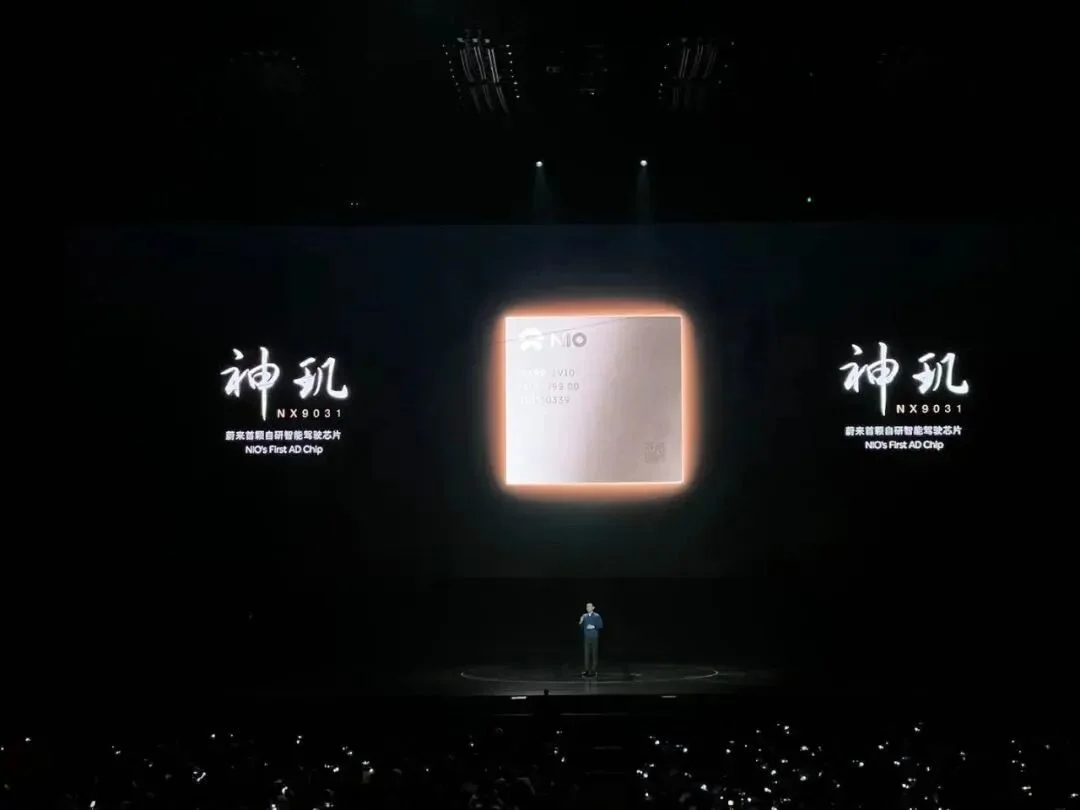
Notably, with the release of the Shenji NX9031, NIO became the first automaker in the entire Chinese automotive industry to publicly announce the development of its own intelligent driving chip.
10. Major Players Push Urban NOA Deployment at Year-End
By December, new force automakers including NIO, XPENG, and Li Auto were rapidly advancing the deployment of urban navigation-assisted driving features.
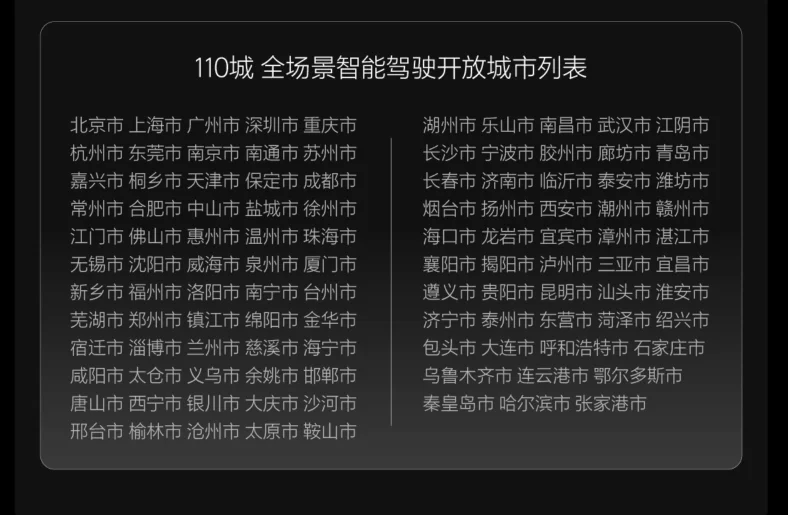
On December 10, Li Auto released OTA 5.0. In terms of intelligent driving, its full-scenario intelligent driving system now covers all highways and urban ring roads nationwide, as well as urban roads in 110 cities. The safety of full-scenario intelligent driving in highway scenarios has also been upgraded; it can timely detour or avoid dangerous construction zones, irregular work vehicles, or extreme cut-ins to ensure driving safety.
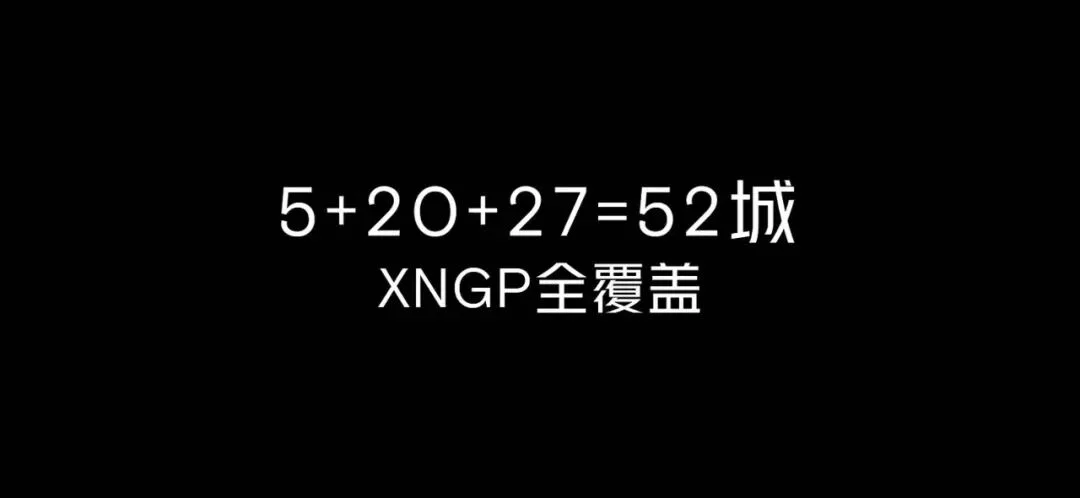
On December 28, XPENG officially rolled out the new Xmart OS 4.5.0 system version to all users of the G9, G6, and P7i models. With this rollout, XPENG completed the layout and application of its mapless urban navigation-assisted driving function across 52 cities nationwide. This OTA update also significantly enhanced capabilities in highway NGP, LCC, and SR perception, balancing the speed and depth of intelligent driving evolution.
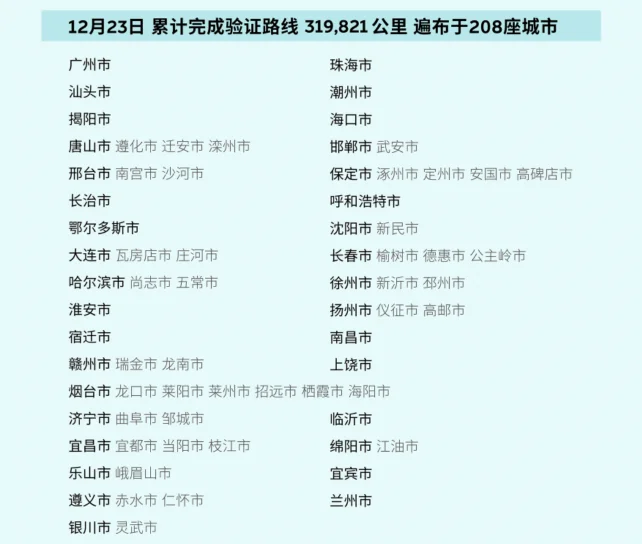
Also on December 28, Ren Shaoqing, Vice President of NIO's Intelligent Driving R&D, announced that NIO's NOP+ (Navigate on Pilot Plus) had cumulatively opened up 319,821 kilometers of urban mileage, breaking the previously announced goal of "completing 250,000 kilometers of urban navigation route verification by the end of the year." As of December 28, NIO added 74 new cities to its networked coverage, bringing the total to 208 cities.
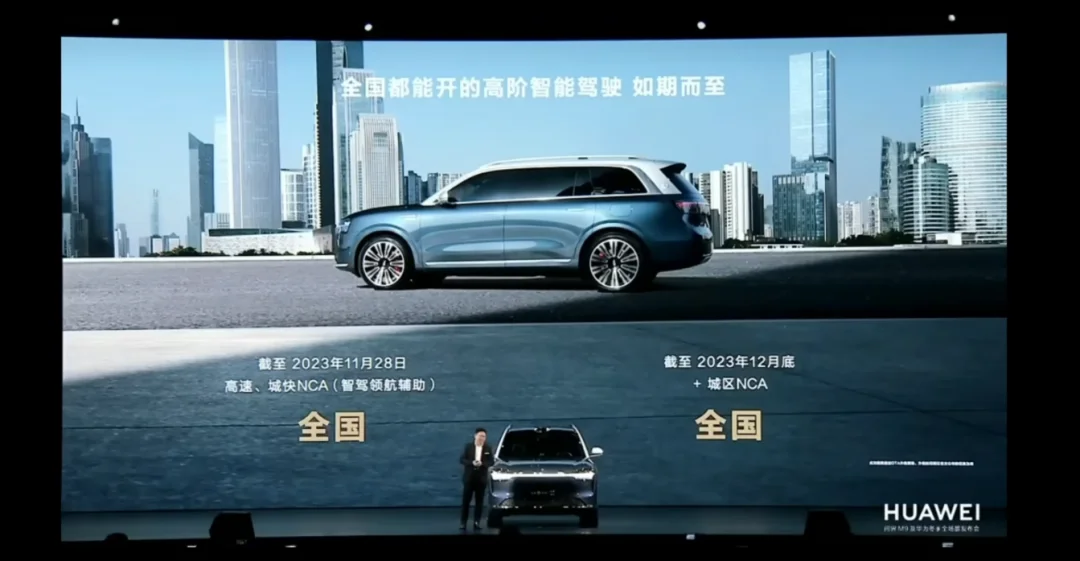
Notably, at the AITO M9 launch event on December 26, Richard Yu stated that high-level autonomous driving capable of operating nationwide would be rolled out to users via OTA updates by the end of December.
Final Thoughts
Looking back at the development of the autonomous driving industry in 2023, it is clear that the sector has reached a critical juncture.
From a commercial perspective, autonomous driving, as a core component of vehicle intelligence, is being implemented in an increasing number of mass-produced models. Its performance is playing a growing role in consumers' purchasing decisions, and public awareness and acceptance are rising. Even from the standpoint of highway navigation-assisted driving, there is a trend toward broader adoption in highway scenarios.
However, from a technical standpoint, the evolution of autonomous driving technology routes is far from mature. In particular, at the urban navigation-assisted driving level, the technological framework has entered a plateau phase, making engineering implementation capabilities the primary focus. With advancements in AI and the emergence of large language models, players like Tesla are striving to explore new possibilities for autonomous driving paradigms.
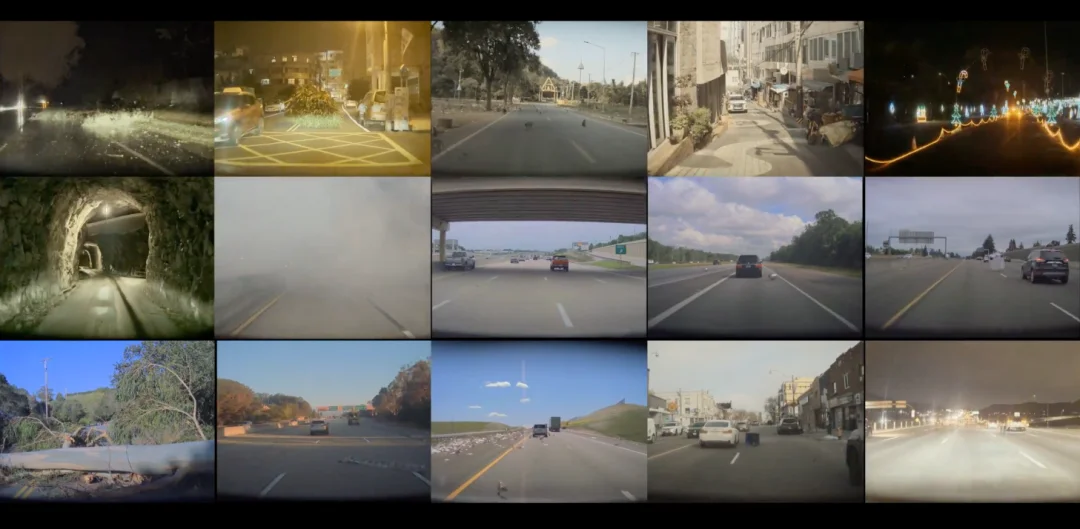
One direction is downward popularization; the other is upward exploration—yet they are not contradictory.
Looking at a longer time horizon, intelligent driving remains a long track, but the number of players in this track will continue to grow, making competition increasingly fierce. At the same time, it is precisely through this intense competition that intelligent driving has the opportunity to make step-by-step progress from technical, engineering, and commercial implementation perspectives, ultimately benefiting a broader base of ordinary consumers.
Thus, as 2023 draws to a close, intelligent driving will continue to move forward, heading toward and welcoming what may be an even more magnificent and turbulent 2024—and we remain expectant.
Written by: 308 Edited by: 308