Tesla Shareholders Meeting: FSD Is Coming, Robotaxi Production Scheduled, Elon Musk Bets His Next 10 Years
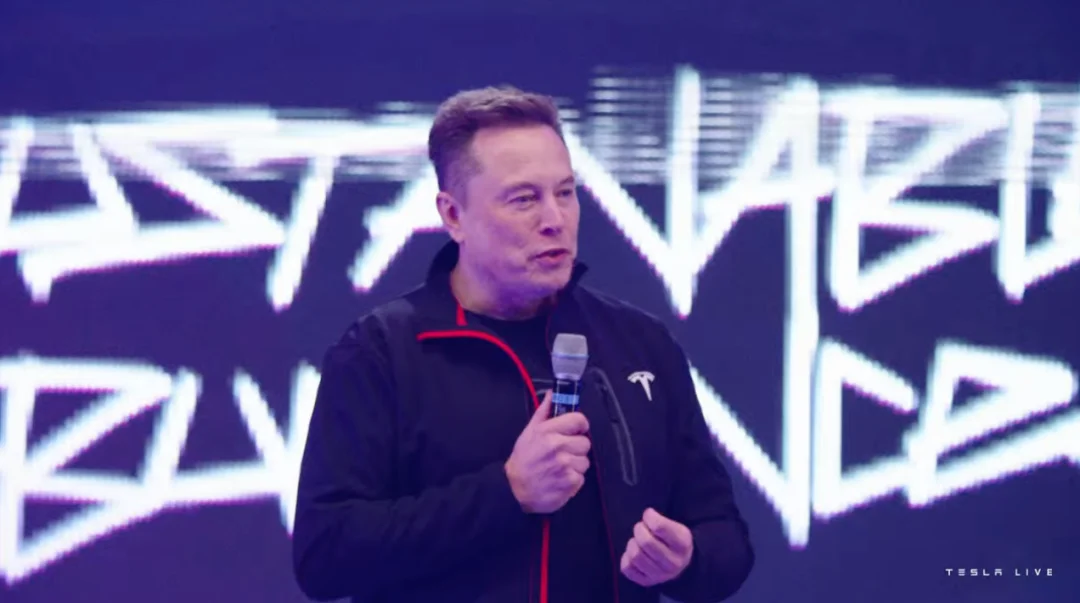
On the early morning of November 7, Beijing Time, the 2025 Tesla shareholders' meeting took place as scheduled.
Amid cheers on the scene, the question of whether Elon Musk would remain at Tesla has finally been resolved—his trillion-dollar compensation package received more than 75 percent in favor, ensuring he will continue to steer Tesla and further tighten his control.
In addition to this unprecedented incentive package, Elon Musk unveiled a host of new developments at the shareholder meeting: the production timeline for Cybercab, a newly designed electric Semi truck, the third-generation humanoid robot Optimus, and the significantly more powerful AI5 chip. Along with updated and more long-term visions, the event was, in many ways, a future roadmap presentation aimed at capital markets.
Elon Musk's rhythm is very clear: maintain control, fulfill old promises, and let new stories take off. FSD is already operating in multiple countries, with the Chinese market awaiting final approval; "we hope to receive full approval around February or March." The Robotaxi plan targets mass production in 2026, aiming for operating costs as low as a few cents per kilometer. Optimus, which he calls "the greatest product ever," will accelerate mass production, targeting a goal of producing ten billion units to change the global economic structure.
The keyword for Tesla over the past year has been "transition."
Capacity expansion has been stalled between technical validation and regulatory compliance, FSD's rollout pace has fallen short of expectations, and the stock price has experienced multiple fluctuations. Yet at this year's shareholder meeting, Elon Musk once again used his wildly imaginative vision to refresh the market's imagination. This time, he staked a target market capitalization of USD 8.5 trillion and a full decade.
01Million Salary Plan
This compensation plan, valued at approximately USD 1 trillion, is an unprecedented package. Under the agreement, Tesla’s board granted Elon Musk up to 423.7 million shares of restricted stock, representing about 12% of the company’s adjusted total outstanding shares.
Elon Musk will not receive all incentives at once; instead, they are unlocked progressively in stages, akin to clearing levels in a game, with a total of 12 target groups to unlock.
In terms of market capitalization, in the first stage, Tesla's market cap needs to be pushed up from around USD 1.5 trillion currently to USD 2 trillion. Subsequently, each subsequent stage requires an incremental increase of USD 500 billion, while the final two stages require increases of USD 1 trillion each, with a final target of USD 8.5 trillion.
The operational dimension must not be overlooked; each stage must achieve at least one business metric, such as FSD subscription users exceeding ten million, delivering 20,000,000 vehicles, deploying 1,000,000 Robotaxi units for operations, or Optimus humanoid robots reaching cumulative deliveries of one million. The most stringent requirement is profitability: ultimately achieving an annualized EBITDA (earnings before interest, taxes, depreciation, and amortization) target of $400,000,000,000.
This design compels Elon Musk to sprint through phases, pushing both risk and incentive to the extreme in a high-pressure binding mechanism. This structure ensures Elon Musk remains for ten years without relaxing targets. Ultimately, the plan passed with over 75% support. Elon Musk’s shareholding may rise to more than 25%, and combined with immediate voting rights, his actual control over Tesla will become even more solid.
When the voting results were announced, cheers erupted in the venue, with attendees chanting Elon Musk’s name.
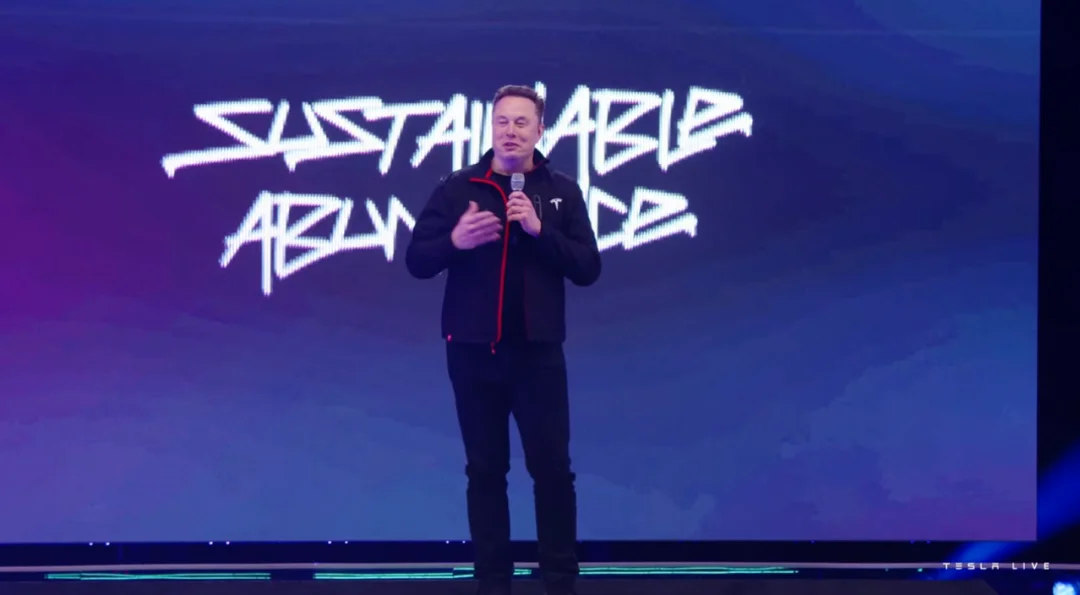
However, prior to the vote, there were voices of opposition at the shareholder meeting, primarily from the Norway Government Pension Fund, proxy advisory firms ISS and Glass Lewis, as well as shareholders expressing dissatisfaction with reduced shareholder rights. Their concerns centered on the possibility that such a massive incentive might dilute ordinary shareholders’ equity, exacerbate key-person risks, and blur the independence of the board.
The results are in; only time will reveal the chain reactions triggered by this vote.
02Multiple New Models to Launch: Is FSD Finally Set for Full Rollout in China?
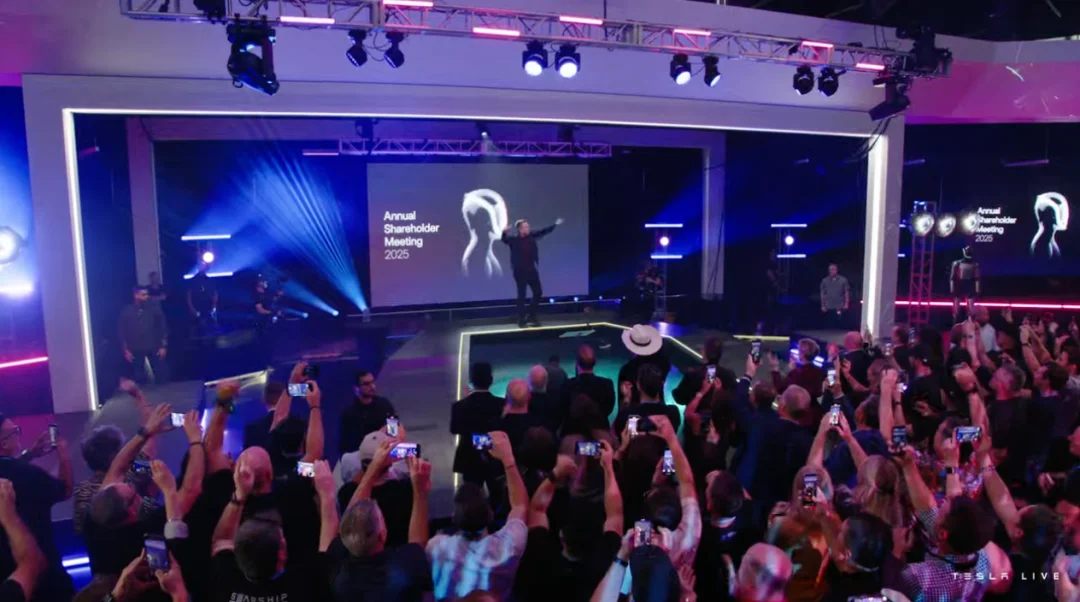
After securing the compensation plan, Elon Musk took the stage amid a lively atmosphere, accompanied by an enthusiastic dance from Optimus. He announced upcoming new vehicle plans, as well as product layouts and production schedules for chips and other components.
Tesla’s automotive narrative is becoming increasingly diverse, spanning from fully autonomous driving to performance sports cars and heavy-duty logistics trucks.
First up is the Cybercab, Tesla’s first purpose-built, fully autonomous model designed specifically for Robotaxi operations. Equipped with eight cameras and devoid of a steering wheel, pedals, or rearview mirrors, it operates entirely on AI. Elon Musk stated that its operating cost per kilometer amounts to just a few cents. Mass production is scheduled to begin in April 2026 at the Texas Gigafactory. Musk’s vision for the production pace is one vehicle every 5–10 seconds, targeting an annual capacity of 5 million units.
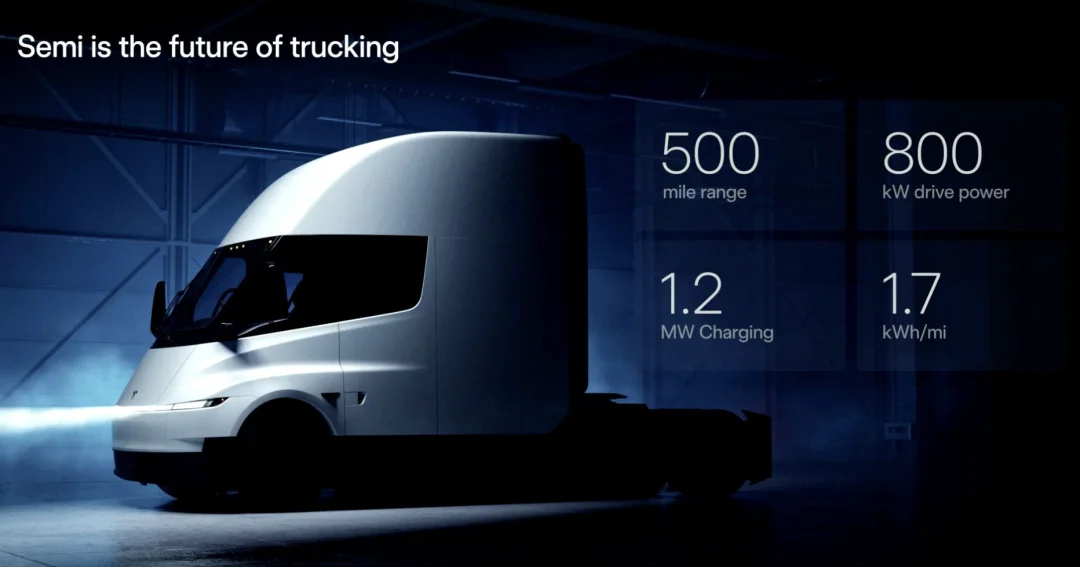
Next, the previously quiet Semi electric semi-truck has been brought back into focus, featuring a redesigned product. Elon Musk announced that the Semi will officially enter production at the Nevada Gigafactory in 2026, aiming to deliver a true diesel-replacement solution for zero-carbon logistics. It boasts an 800 km range, 800 kW output power, and 1.2 MW fast-charging capability, consuming approximately 1 kWh per kilometer. Beyond energy efficiency, it also reduces labor costs, as the entire vehicle is designed around a future architecture for full autonomous driving.
However, with the previous generation of the Semi yet to achieve true mass production, the next generation has already followed closely, pushing the production timeline back once again.
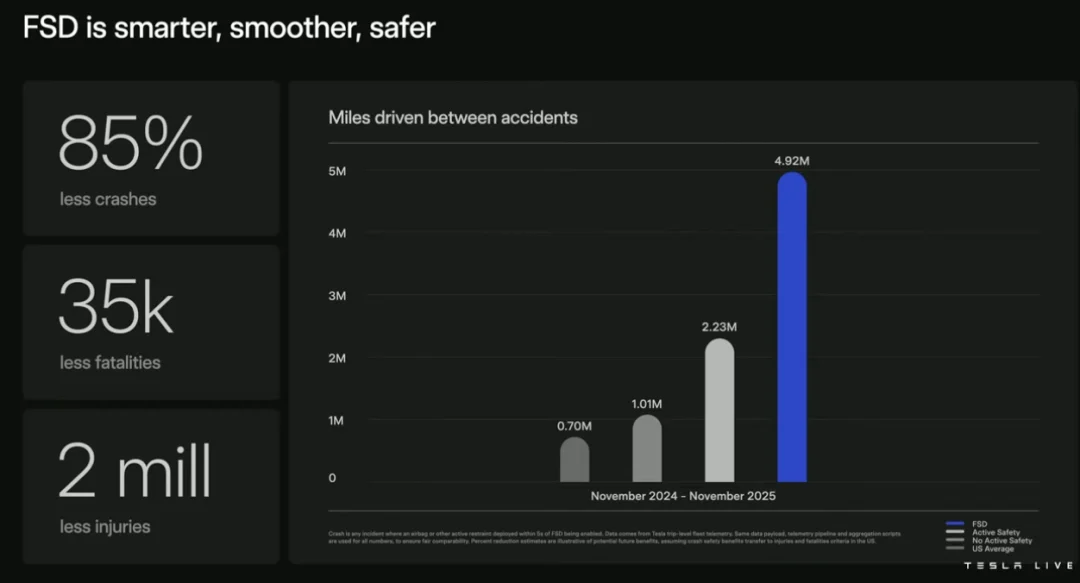
Meanwhile, FSD V14 is being rolled out more rapidly. Elon Musk stated that the latest version is safe enough to "allow people to text with peace of mind." Notably, despite Elon Musk's strong confidence in FSD, it remains classified as a Level 2 driver assistance system from a regulatory perspective, with legal liability still resting on the driver.
FSD is already live in six countries, but regulatory approval in the European market remains challenging. As for the Chinese market, Elon Musk stated he "hopes to receive full approval around February or March 2026".
Finally, the return of an old familiar face: the Roadster. Elon Musk has promised to deliver "the most shocking product demonstration in history" on April 1, 2026—April Fools' Day next year—and expects mass production to begin 12 to 18 months later. The new vehicle will integrate rocket thrusters and an omnidirectional vector propulsion system, meaning Elon Musk is once again breaking the boundaries of what a car can be.
The Cybercab focuses on Robotaxi, the Semi restructures logistics layout, and the Roadster is responsible for sustaining performance and imagination; each new vehicle has a clear division of labor. Elon Musk also stated that as FSD matures, Tesla's overall vehicle production capacity will accelerate expansion: the target output for 2025 is two million seven hundred thousand units, aiming to reach five million units by 2028.
03Humanoid Robots and Chips
Compared to the rollout pace of new vehicles, what Elon Musk talked about most and seemed most excited by at the conference were humanoid robots and in-house chips.
He first showcased Optimus V2.5, which has accompanied him on stage for a long time and can walk autonomously, wave, interact, and even dance. Elon Musk stated that the V3 version will enter mass production in 2026; it will look more human-like and possess stronger self-judgment and task-execution capabilities.
Elon Musk emphasized one key point: he believes Optimus will be the greatest product ever made. It is not merely a high-tech toy, but an "infinite money loop" that could reshape the entire economic landscape. "In some ways, artificial intelligence and robotics can make global economic growth 10 times or even 100 times larger," he said.
To support this goal, Tesla’s plan is to first build a million-unit production line in Fremont, followed by a tens-of-millions-scale line in Texas, ultimately aiming to produce 100 million robots annually. Once annual production reaches the million-unit scale, the cost per unit is expected to drop below USD 20,000, making it competitive with human labor directly.
Elon Musk jokingly presented two long-term visions for humanoid robots: the world may eventually have hundreds of billions of Optimus units. On one hand, they could assist in healthcare, addressing medical shortages caused by poverty. "They will provide incredible medical services; in healthcare, robots will outperform even the best human surgeons."
On the other hand, humanoid robots could "stop crime in a more humanitarian way by tracking you and preventing you from committing crimes."
These real-world AI applications are supported by underlying chip systems. The shareholder meeting also revealed details about the AI5 chip: compared to AI4, AI5 will offer 9 times the memory capacity, 10 times the computational energy efficiency, and a 50-fold increase in total performance, while consuming only one-third of the power of NVIDIA Blackwell and costing less than one-tenth.
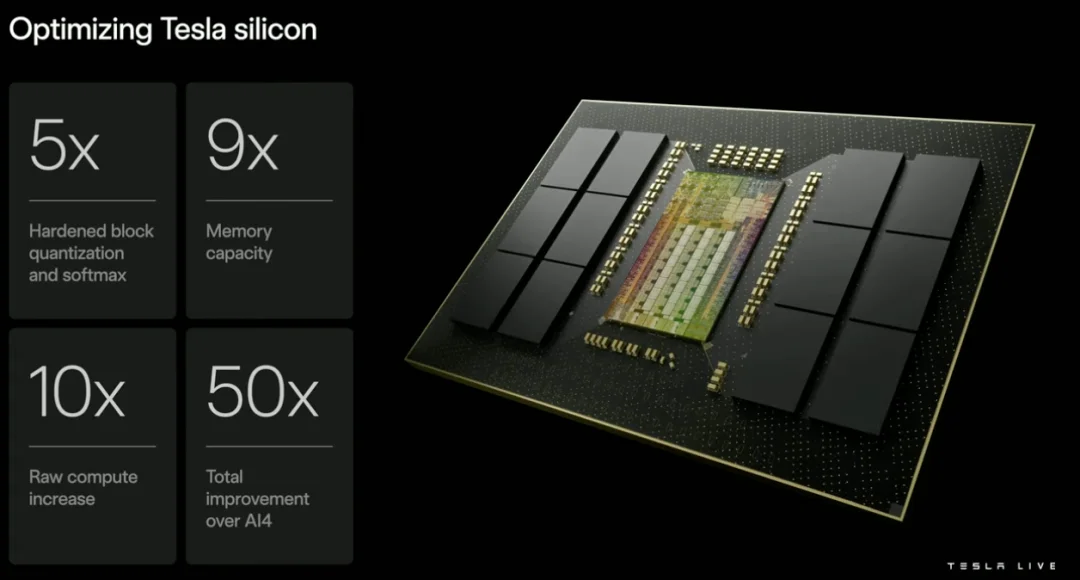
Elon Musk stated that to meet the required chip capacity, Tesla is currently negotiating with Samsung, TSMC, and NVIDIA, and may need to establish a Tesla Tarafab (a chip super-factory), similar to Giga factories. He also expressed hope that within less than a year after AI5 production begins, the same factory could transition to producing AI6, doubling all performance metrics.
The voting results at the shareholder meeting indicate that capital markets remain willing to bet on Elon Musk and Tesla. Although Robotaxi has not yet officially launched, Optimus may still be years away from entering households, and the Super AI chip factory remains a conceptual sketch, this shareholder meeting marks the beginning of a clearer new narrative for Tesla—one focused on profitability and operational data.
Written by: Da Yong Edited by: James