


Porsche Is Cool, but Tesla Can Fly!
Sixteen years later, Porsche unveiled a mid-engine supercar concept in New York. Just four hours later, did the Tesla Roadster take off in Texas? Whether you favor one camp or the other, car enthusiasts likely woke up this morning feeling like it was Chinese New Year.
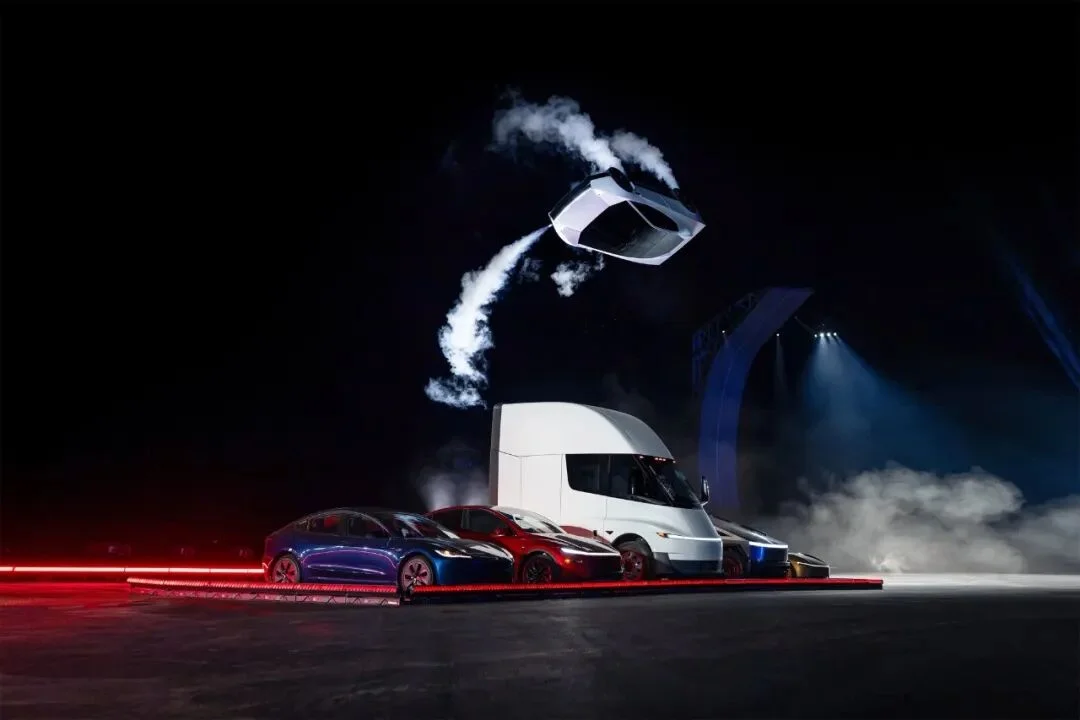
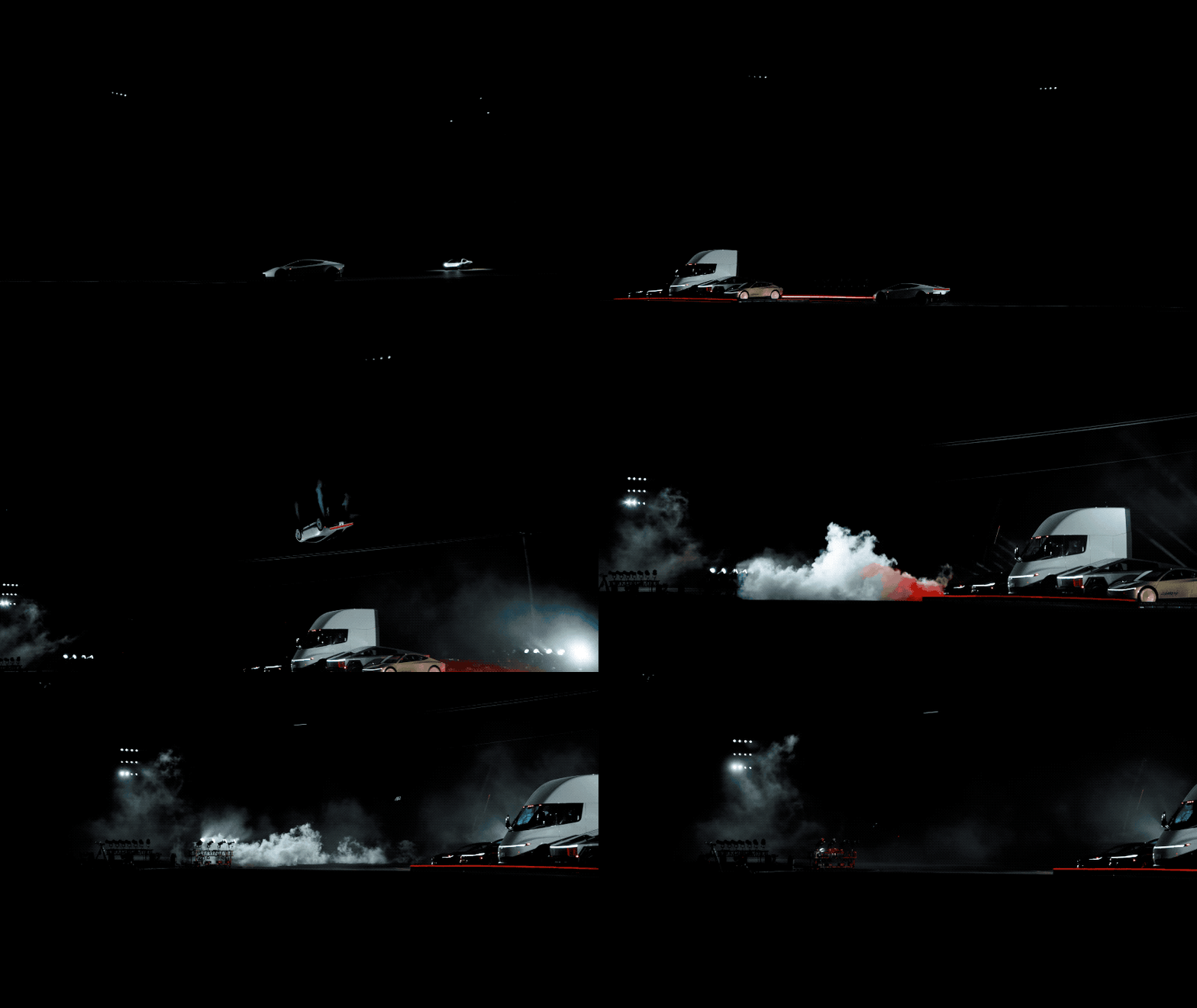
It has been nine full years since the second-generation Roadster debuted in 2017 and faced repeated delays. Before the launch event, people were still debating how electric sports cars could appeal to consumers. Then, a Roadster with Optimus aboard climbed along a curved track, its nose pointing toward the ground and its body nearly completely inverted against the surface. After a brief hover, it detached from the ramp at a height of approximately 21 meters, used bottom-mounted thrusters to elegantly roll and adjust its attitude in midair, and finally landed steadily.
Afterward, the Roadster flew directly over an entire row of Tesla vehicles and completed a flip maneuver in the air similar to a skateboard kickflip. To convince everyone that this was not an AI-generated video, Elon Musk specifically emphasized that there had to be real spectators on site.
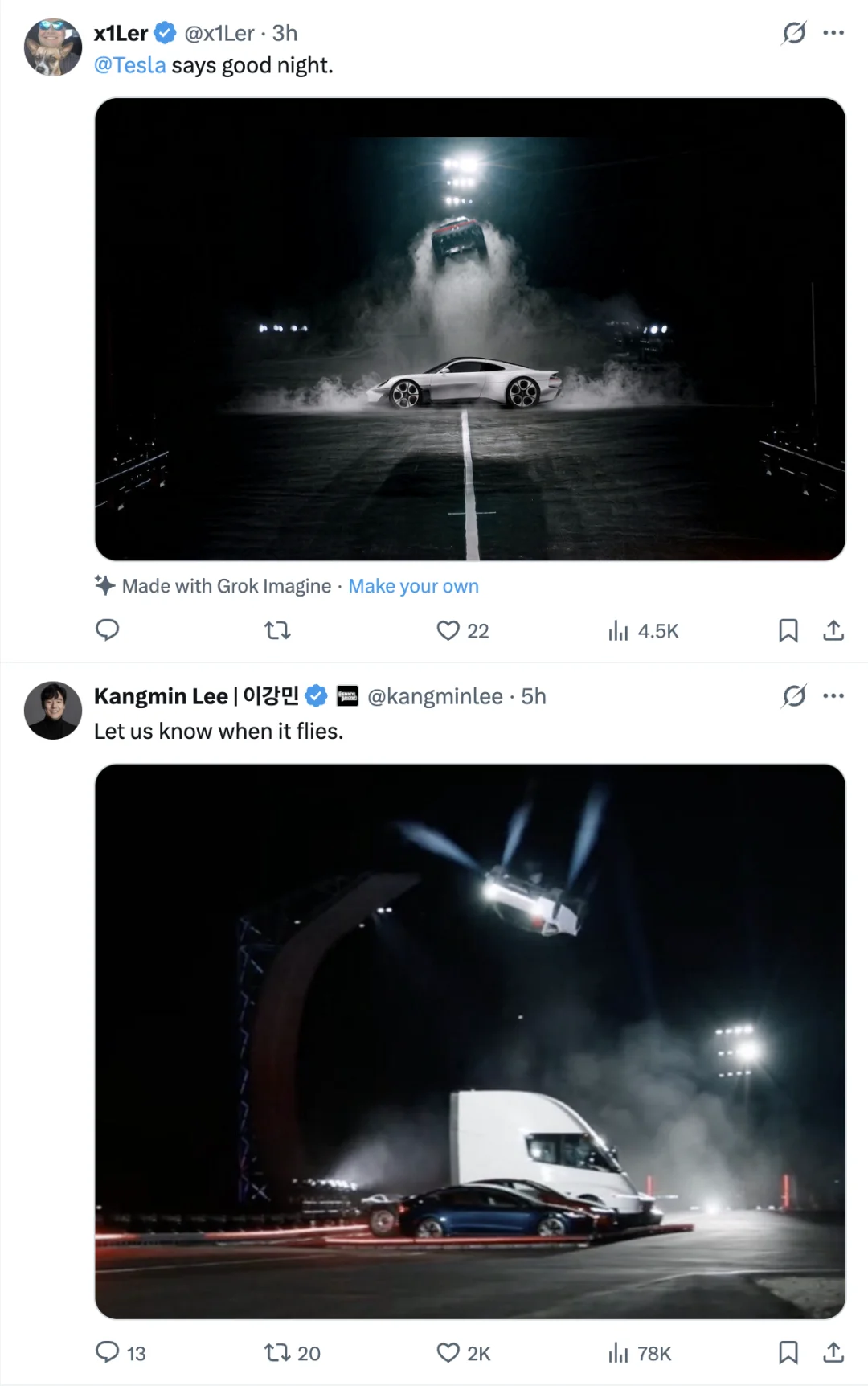
Following the event, netizens flocked to Porsche’s social media accounts to leave comments. Some said, “Let me know when it can fly”, while others used AI to generate images of the Tesla Roadster leaping over the Porsche Mission S.
Once the excitement settled, questions remained. How exactly did this Roadster fly? What technologies does it possess that traditional supercars, and even other electric supercars, cannot match? More importantly, why would a company that aims to eliminate the steering wheel devote such significant effort to building a car billed as "the final pinnacle of the human driving era"?
01What’s new with the Roadster?
The second-generation Roadster unveiled this time differs significantly from the red concept car that debuted in 2017. Its design language clearly aligns with the Cybertruck and Cybercab. The wedge-shaped body gives the front and rear ends sharp, angular lines, while the full-width light strip, upward-opening doors, and numerous aerodynamic structures hidden within the body make it look more like a fighter jet with its wings removed.
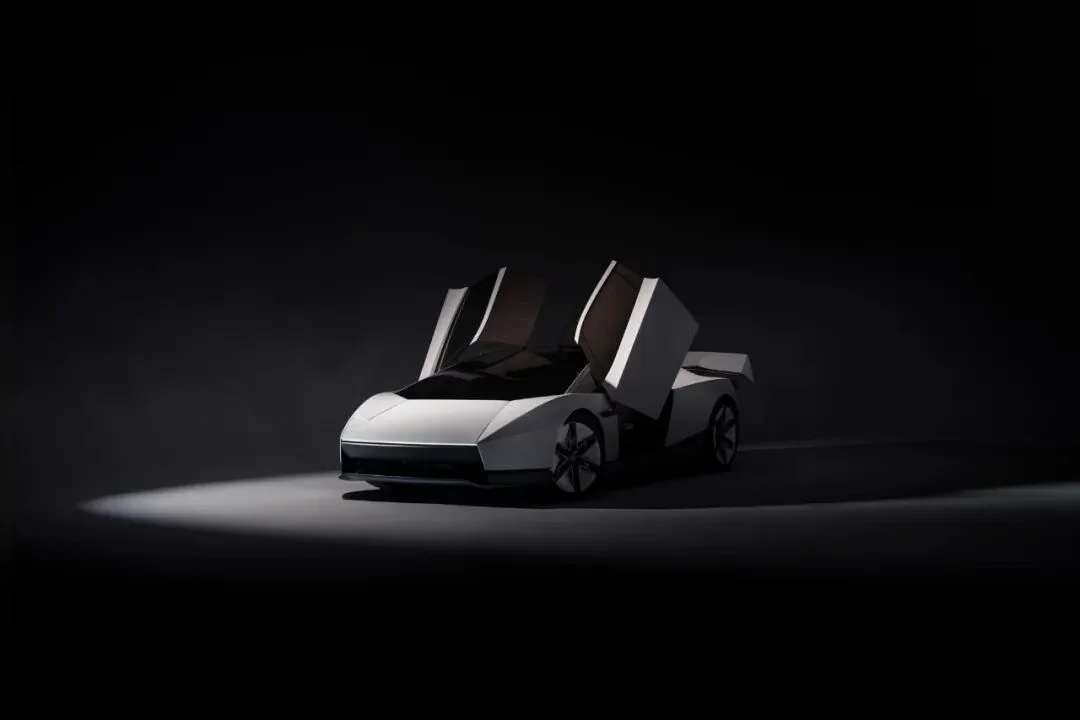
Tesla Design Director Franz von Holzhausen also stated bluntly that the new car was designed with flight capability in mind from the outset, so design references included the SR-71 "Blackbird" high-altitude reconnaissance aircraft.
The cabin is equally radical. It features a yoke steering wheel, steer-by-wire, brake-by-wire, and seats integrated directly into the body structure, while many conventional mechanical connections and comfort features have been reduced. After all, fitting a flight system inside the vehicle requires careful balancing of space and weight.
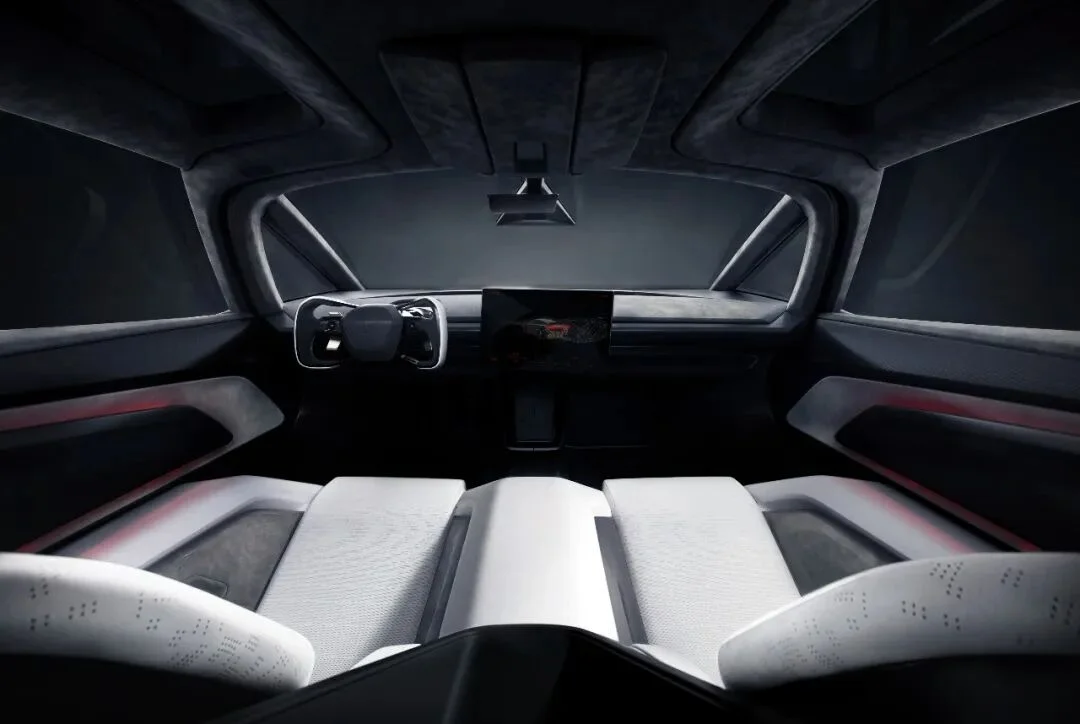
The Roadster is available in three versions: Performance, Thrust, and Rocket, with clearly distinct positioning.
Performance: A performance car that is street-legal
This is the version closest to a traditional supercar, and the only one in China for which a reservation deposit of RMB 332,000 can be paid. It features two seats, an active aerodynamics package, and a multi-mode negative-pressure suction system, with a 0–60 mph (approximately 96.6 km/h) acceleration time of under 1.6 seconds. This figure alone is staggering. Consider how many years it took top supercar brands such as Bugatti and Koenigsegg to bring production-car acceleration into the 2-second range. Yet for this Roadster, 1.6 seconds is merely entry-level.
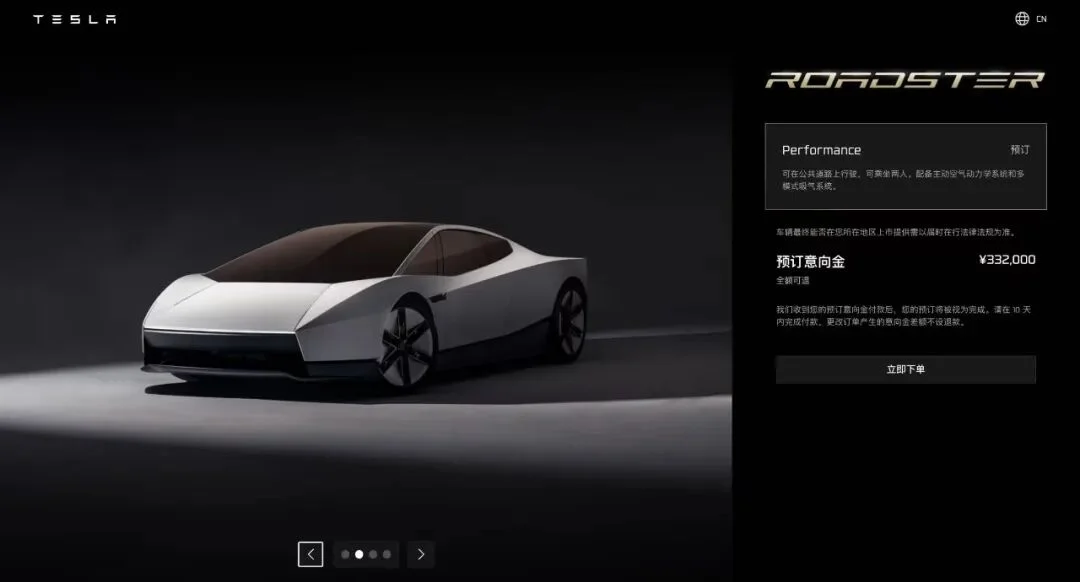
Thrust: Adding rocket propulsion to a car
Building on the Performance model, Thrust adds a cold-gas propulsion system jointly developed by Tesla and SpaceX. Four nozzles at the rear directly expel high-pressure gas to provide thrust.
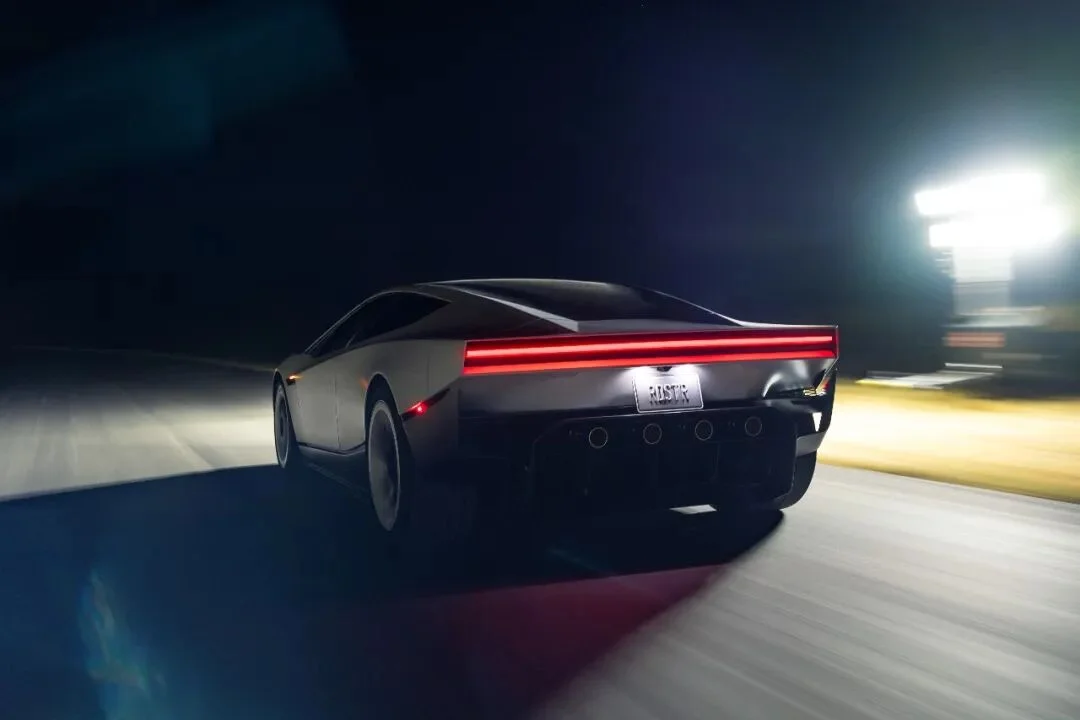
As a result, the 0–60 mph acceleration time is further reduced to under 0.9 seconds. In a live demonstration, a Roadster equipped with the rear thrusters recorded a time of 0.81 seconds, with average acceleration reaching 3.4 g—more intense than the launch of a catapult roller coaster. The Thrust version is available in limited quantities on the U.S. official website, with a limit of one unit per customer. A small reservation deposit of USD 5,000 (refundable) is required, followed by a non-refundable large order deposit of USD 245,000 within 10 days.
Rocket: The version that truly flies
The standout at the launch event was Rocket, which extends the cold-gas thrusters around the entire vehicle. With a total of 10 nozzles, it not only provides forward acceleration but also jets downward and sideways to control vertical movement and body rotation.
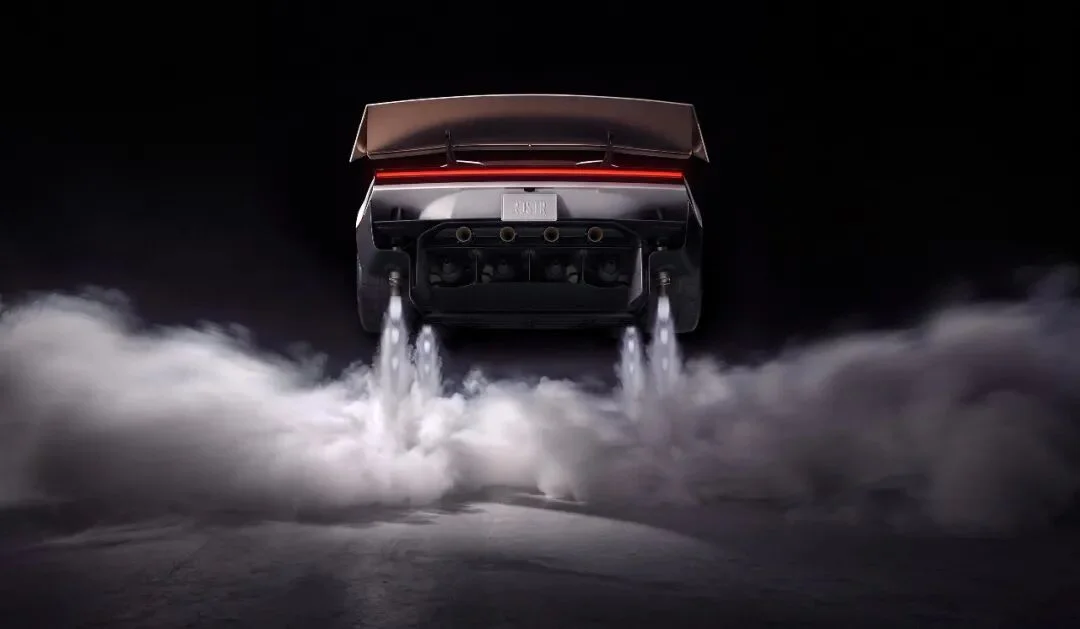
It has only one seat, with an official 0–60 mph acceleration target of under 0.59 seconds and a top speed exceeding 230 mph (approximately 370 km/h). However, the Rocket version is currently available only to invited customers, and Tesla has explicitly stated that it is not yet approved for use on public roads.
Meanwhile, Elon Musk also presented more aggressive speed targets at the launch event.
Elon Musk said that, according to Newton’s second law (F=ma), reducing vehicle weight improves acceleration. He added that the production Roadster will deliver even better real-world acceleration performance. On stage, Elon Musk remarked, “Our limit is ensuring that occupants’ retinas do not detach.”
For top speed, Elon Musk set a target of reaching Mach 0.5 (approximately 612 km/h).
Regarding range, Tesla has set a target of more than 300 miles (approximately 483 km) for the new Roadster. However, specific battery capacity, range differences across versions, and complete electric powertrain specifications have not yet been disclosed.
Finally, Elon Musk’s latest mass-production target is 2028. After nine years of delays, waiting another two years should be acceptable to everyone, right?
02How to drive a car upside down?
The most spectacular performance of the Roadster is, of course, its flight capability. However, from an automotive engineering perspective, let’s first discuss the negative-pressure adhesion system. Many people are familiar with a classic piece of F1 trivia: if the speed is high enough, the downforce generated by an F1 car can exceed its own weight, theoretically allowing it to drive upside down on a ceiling. (Many production cars also perform 360-degree rotations in tunnels as a stunt.)
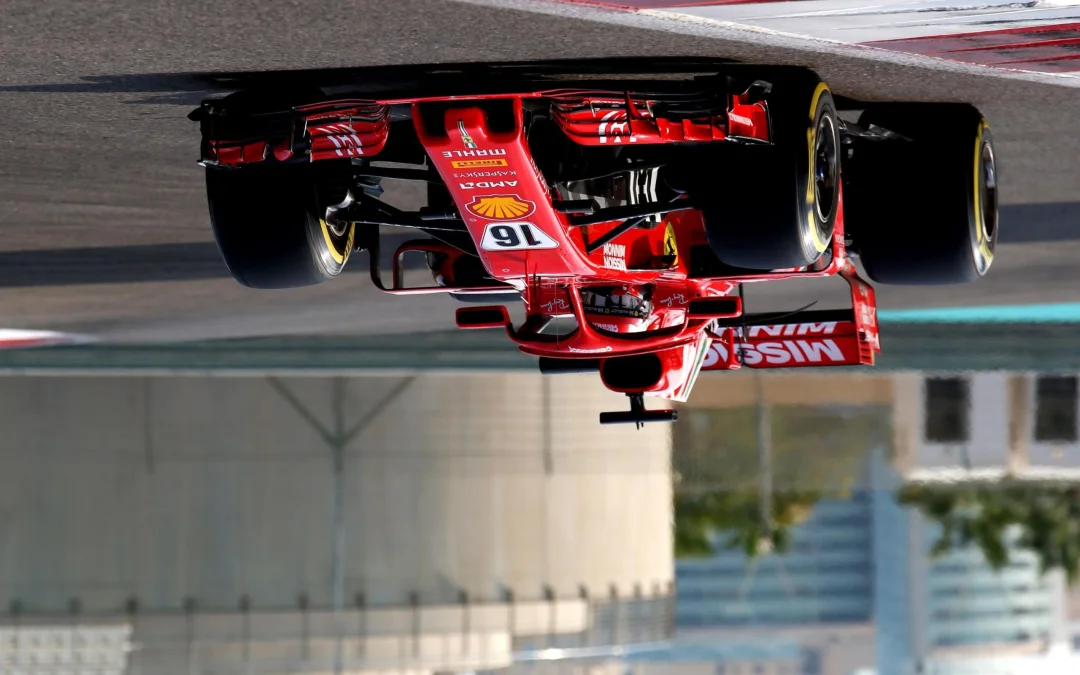
This is because high-speed airflow passing over the race car's front wing, floor, diffuser, and rear wing creates a pressure differential, generating aerodynamic downforce on the body. The way the floor and diffuser harness this airflow is what is commonly known as ground effect.
The problem is that traditional aerodynamics rely heavily on vehicle speed. The higher the speed, the greater the downforce; once the car slows down, aerodynamic effects become increasingly ineffective.
So even if an F1 car could theoretically drive upside down, it couldn’t remain stationary on a ceiling. The Roadster’s solution is straightforward and brute-force: since vehicle speed is insufficient, it generates its own airflow. It installs high-power suction fans under the car, working in conjunction with actively controlled underbody air channels and sealing structures, to continuously extract air from beneath the chassis. This creates a low-pressure zone between the underbody and the ground. With relatively higher air pressure above the body, a downward force is generated, pressing the car against the road surface.
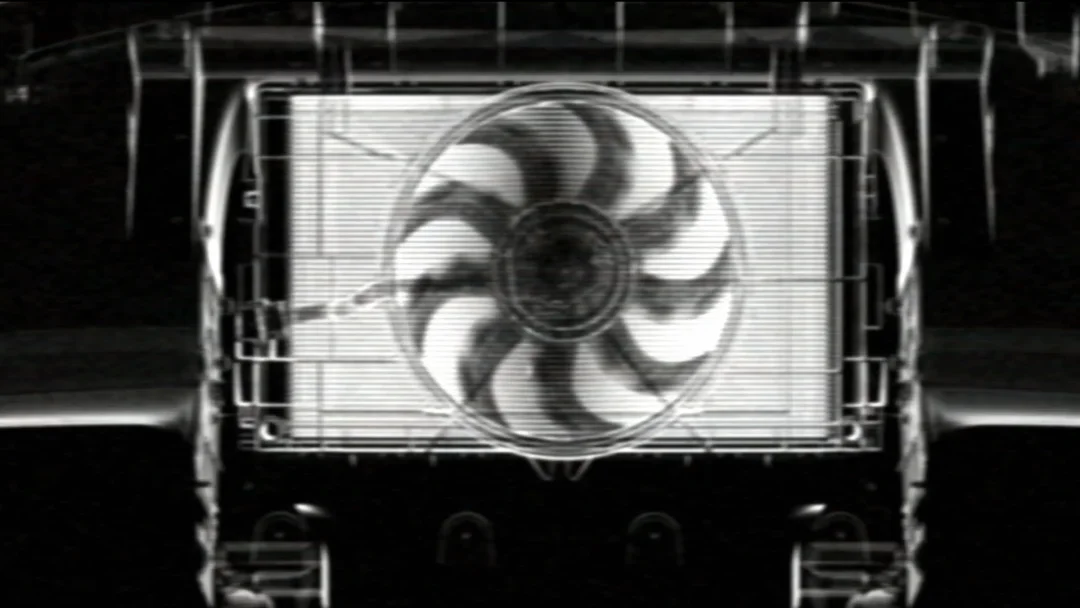
In simple terms, it is like installing an absurdly powerful vacuum cleaner on the car. Tesla claims that this system can generate an adhesive force of approximately 2 g. During the inverted demonstration at the launch event, the vehicle’s telemetry even showed a downforce reading of approximately 4,700 kg.
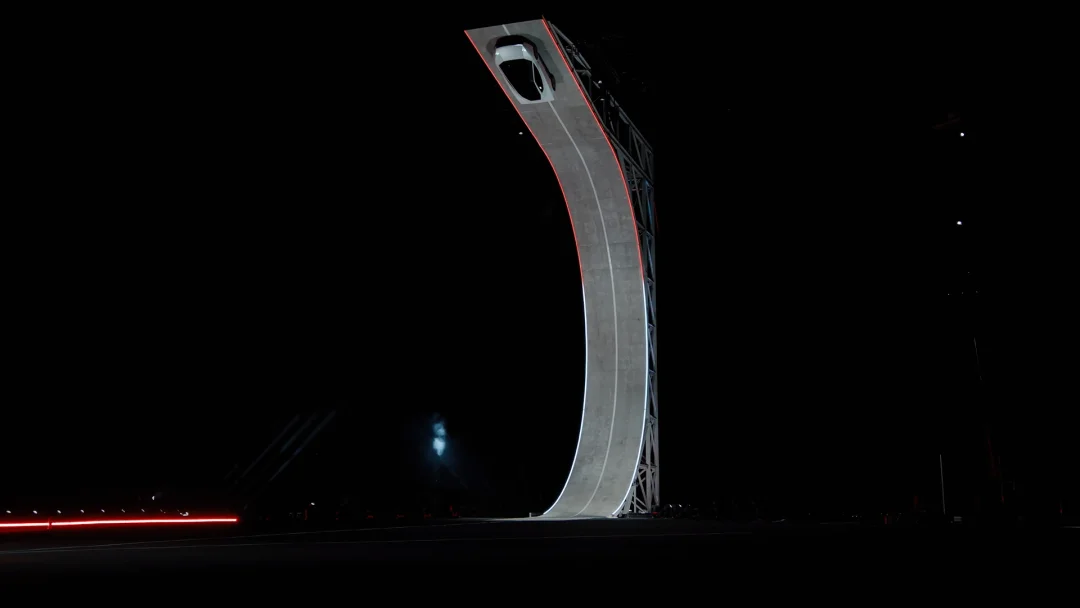
Back to reality: when a car is parked normally on the ground, the primary vertical load on the tires is simply the vehicle’s weight. However, if a negative-pressure system generates downforce equivalent to several times the car’s weight, it presses the tires harder against the road surface, thereby increasing available grip.
Even if the car were upside down, as long as the suction force is sufficient to counteract gravity and still press the tires against the contact surface, the vehicle could continue to move. Moreover, unlike traditional aerodynamic components such as front splitters and rear wings, this downforce can be generated even when the vehicle is stationary.
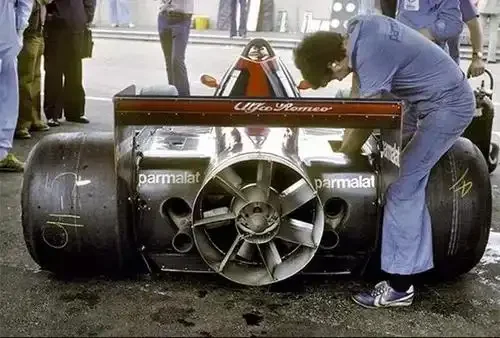
Of course, using fans to suck a car onto a ceiling was not pioneered by Tesla. The 1978 Formula 1 racer Brabham BT46B used fans to assist downforce, earning it the nickname “fan car.” After winning the 1978 Swedish Grand Prix, it faced strong protests from other teams and remains the only car in F1 history with a 100% win rate. In 2025, the British McMurtry Spéirling electric race car even demonstrated inverted driving from a standstill.
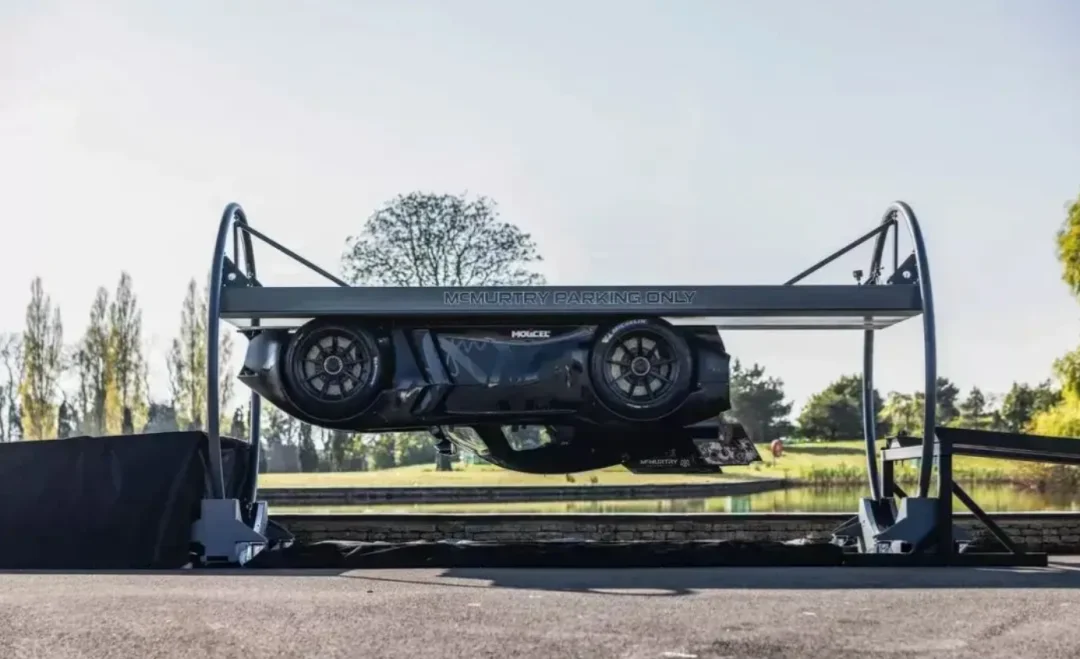
What the Roadster aims to do is integrate the fan-based negative-pressure system with active aerodynamics into a comprehensive variable system. According to the demonstration, at low speeds, grip is primarily provided by the fans extracting air; at high speeds, the underbody airflow channels can be adjusted, working in conjunction with active front wings, rear wings, and body components to switch between high-downforce and low-drag modes.
This addresses a longstanding dilemma in traditional racing: straightaways demand minimal drag, while corners require maximum downforce. Formula 1 introduced the Drag Reduction System (DRS) and later further developed active aerodynamics, but ultimately, these solutions still involve trading off drag against grip at different speeds.
The Roadster effectively adds another card to the deck. It can actively suction itself to the ground in low-speed corners, leverage aerodynamics in high-speed corners, and minimize drag on straightaways. Lars Moravy, Tesla’s engineering head, claims that the fan system enables the Roadster to achieve cornering capabilities exceeding 2 g.
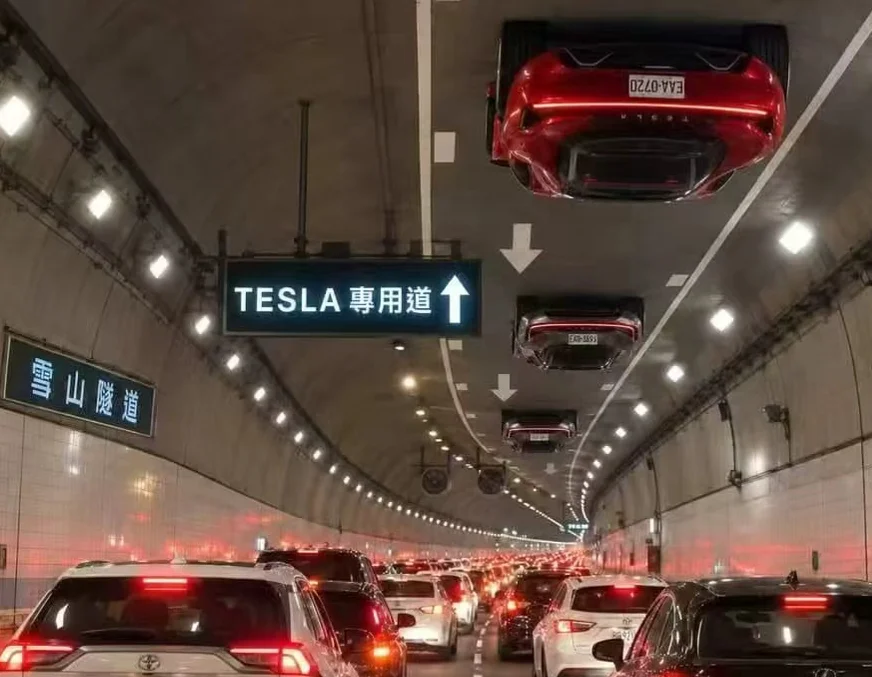
It may be a powerful piece of “track technology,” but if you’re thinking about driving your Roadster upside down on the ceiling of an underground parking garage to find a spot, forget it.
03Did SpaceX Really Put a Rocket Inside a Car?
If negative-pressure fans represent an evolution of traditional automotive aerodynamics, then cold-gas thrusters truly belong to another realm.
Over the past ten years, electric vehicles have pushed acceleration performance to unimaginable levels. But have you noticed a problem? Today’s top-tier electric supercars often boast more than 2,000 horsepower, yet their 0–100 km/h acceleration times are struggling to achieve revolutionary improvements. This is because acceleration depends not only on how much power is available, but also on how much of that power the tires can transfer to the road surface.
The driving force of ordinary cars comes from the friction between the tires and the ground. Even if an electric motor can instantly output huge torque, as long as it exceeds the tire's grip limit, the excess power will turn into slipping and wheelspin. This is why many top-tier electric performance cars are competing in terms of tires, four-wheel drive control, torque distribution, and downforce. Even the paving materials of the test tracks for 0–100 km/h acceleration tests need to be specially made—Tesla, we're talking about you!
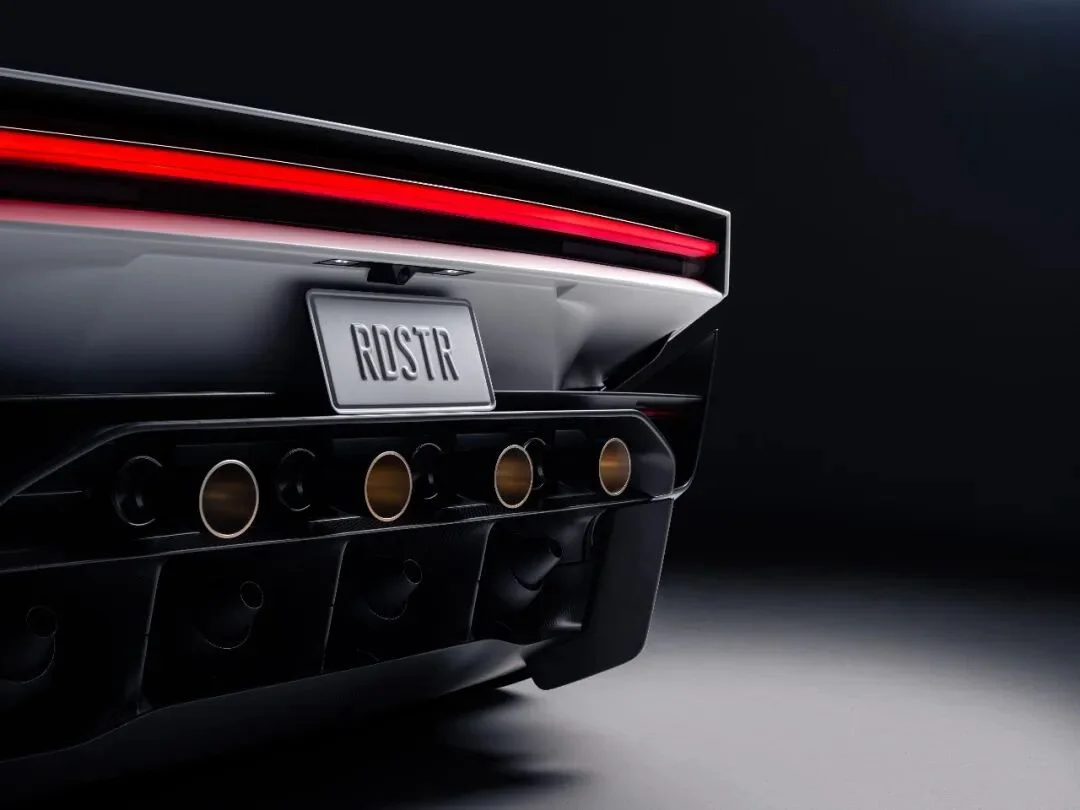
So, what is the Roadster’s approach? Since the tires cannot handle the load, it bypasses them entirely. The four nozzles at the rear of the Thrust version use Cold Gas Thrusters. Instead of fuel injection and combustion, this system releases pre-compressed gas at high speed through high-pressure pipes, valves, and nozzles, using the resulting reaction force to propel the vehicle forward.
Most of us played with balloons as children. If you let go of an inflated balloon, it flies erratically in the opposite direction of the escaping air. The Roadster uses the same physical principle, but replaces the balloon with aerospace-grade high-pressure vessels, allowing precise control over the direction and flow of the expelled gas.
The gas storage container is called a COPV, short for Composite Overwrapped Pressure Vessel. The interior ensures gas tightness, while the exterior uses high-strength composite materials to provide pressure resistance, allowing high-pressure gas storage with controlled weight. This is not new technology; SpaceX has long used it extensively in its rockets. According to information disclosed at the launch event, the Roadster’s demonstration system uses two such high-pressure containers, with a combined gas storage volume of approximately 600 L, storing about 250 kg of compressed gas.
Note that this refers to 250 kg of gas, not the entire propulsion system weighing 250 kg. This figure does not even account for the weight of the container itself, piping, valves, nozzles, and mounting structures. For a sports car, the weight burden of this system is substantial. During operation, high-pressure gas flows through electronically controlled valves into the nozzles and is expelled outward at supersonic speeds. Tesla claims that the total thrust of the entire propulsion system exceeds 80 kN, roughly equivalent to the gravitational force exerted by an eight-ton mass.
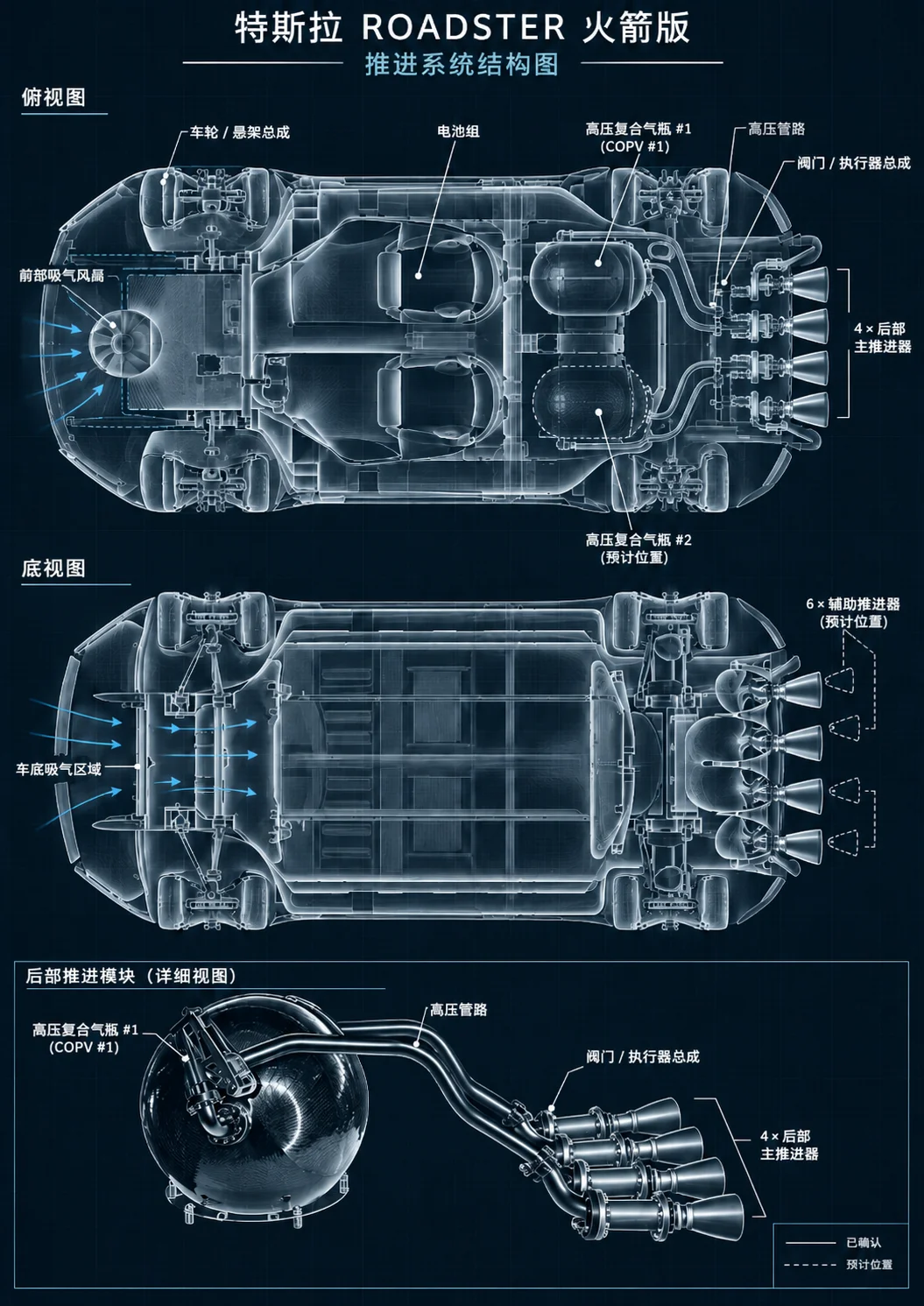
Here is another interesting engineering detail. The length of the piping from the gas storage tank to the four main nozzles at the rear of the vehicle needs to be kept as consistent as possible. This is because any differences in flow resistance or response speed as high-pressure gas passes through the pipes and valves could lead to asymmetric thrust from the left and right nozzles.
Imagine a car accelerating to 100 km/h in nearly one second. If the left thruster suddenly delivers more thrust than the right, the vehicle may experience unintended yaw. Ordinary cars can still rely on tires and the Electronic Stability Control (ESC) system to attempt correction, but under such acceleration, the result is essentially a loss of control.
Therefore, Tesla has undertaken extensive engineering design for its piping, valves, and nozzles, using materials such as titanium alloys and high-temperature nickel-based alloys. Some of the electric actuators are even related to the joint technology used in the Optimus robot.
Of course, the four rear-facing nozzles can only make the car go faster; they cannot make it take off. The core upgrade of the Rocket version is the addition of multiple thrusters in different directions around the body. They can generate forward, upward, and lateral forces respectively, using combinations of thrust from different positions to control the vehicle’s pitch, yaw, and roll attitudes.
This involves a critical aerospace technology: RCS, or Reaction Control System. In space, spacecraft cannot steer using a steering wheel, nor can they stabilize their attitude using conventional aerodynamic control surfaces like aircraft. Instead, they rely on small thrusters oriented in different directions to generate precise torque and adjust their flight path.
The Roadster’s approach is quite similar. When the vehicle needs to take off, bottom-mounted thrusters fire downward to produce upward thrust. To lift the nose, differential thrust from front and rear thrusters creates a pitching moment. For mid-air flips, nozzles at various positions coordinate to adjust angular velocity. As the vehicle nears the ground, the system uses thrusters to decelerate, ensuring the body lands as smoothly as possible. Tesla calls this “hyper-dimensional driving,” a term that is very much on brand for Tesla.
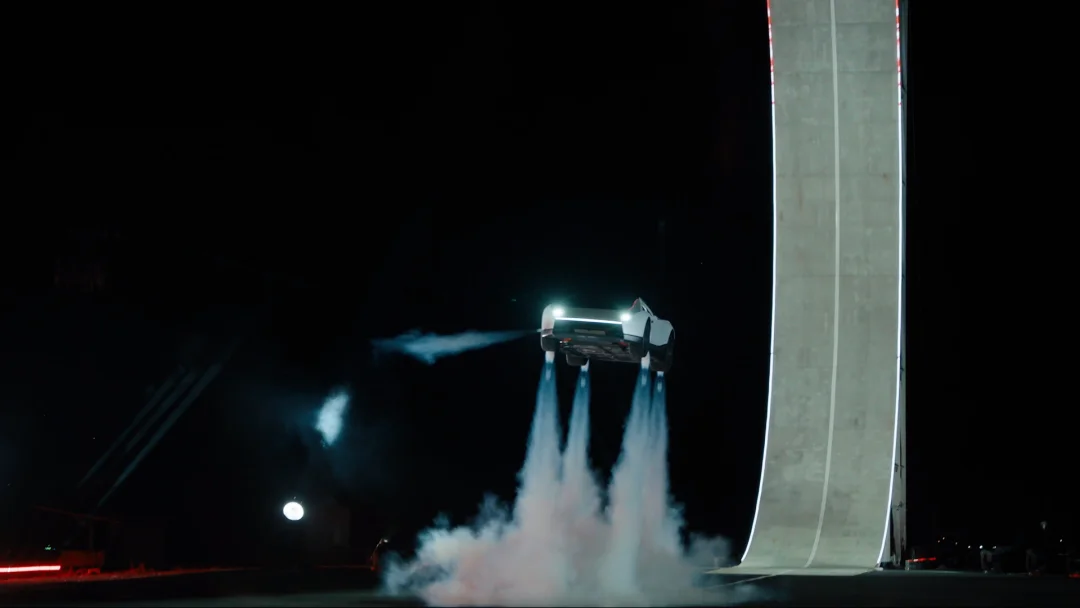
Once the tires leave the ground, many traditional chassis control methods become ineffective. The steering wheel cannot generate steering force without tire contact, and the Electronic Stability Control (ESC) system cannot stabilize the body by braking individual wheels. The vehicle must estimate its position, speed, attitude, and angular velocity in real time, along with the actual thrust each thruster can provide, coordinating the nozzles accordingly. These actions must be executed continuously within fractions of a second.
The flight demonstration at the launch event did not involve a human driver; instead, the vehicle performed the maneuvers autonomously. Elon Musk’s explanation was straightforward: to ensure no one gets killed. While this sounds typical of Elon Musk, it is no joke. The Roadster may be among the first cars that require highly automated control to push the limits of human driving potential.
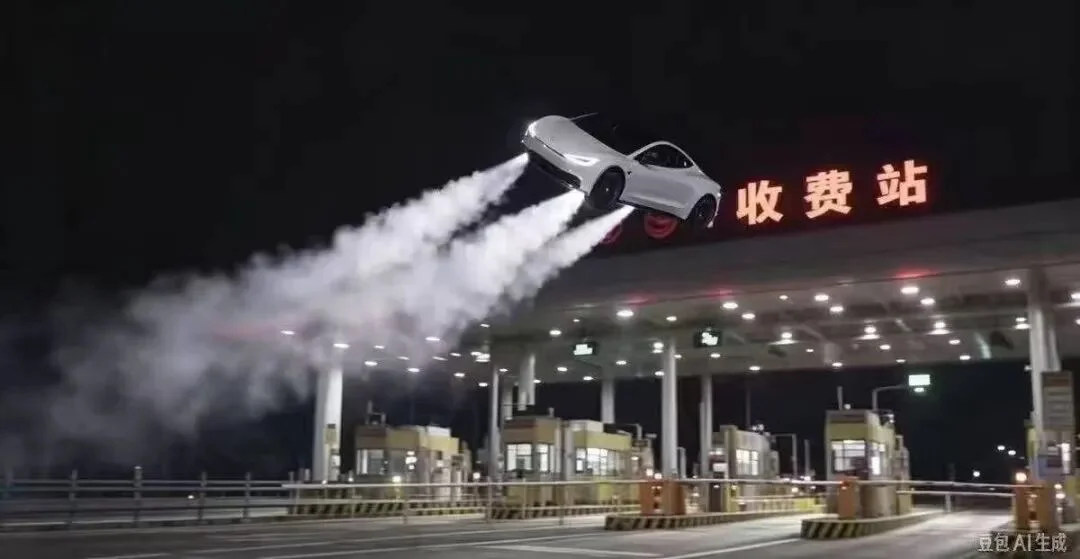
But do not expect to fly over rush-hour traffic on the North–South Elevated Highway anytime soon. The Roadster uses compressed gas, not continuously operating jet engines. The gas supply is fixed; once it is depleted, it is gone, similar to the “nitro boost” in racing games. Elon Musk also stated that the vehicle can replenish its compressed air on its own, but refilling consumes energy, and the storage tanks face challenges related to temperature changes, high-pressure safety, and refill time.
Therefore, the capability currently demonstrated by the Roadster is more accurately described as brief periods airborne, attitude adjustment, and controlled landing, which remains far from a truly sustained flying car. Nevertheless, enabling a multi-ton vehicle to perform maneuvers in the air that were previously possible only for stunt planes and spacecraft is already quite remarkable.
04What is Tesla trying to achieve with the Roadster?
After discussing the technology, let’s return to a more interesting question. Why is Tesla still building a sports car? The company’s most important goal now is clearly not to sell a few more Model 3 or Model Y vehicles, but rather to focus on Robotaxi, FSD, and Optimus, even transforming into an AI and robotics company, joining SpaceX in its quest for the stars.
According to Elon Musk’s plan, cars will be able to drive themselves in the future, and humans may not even need to learn how to drive. The Cybercab does not even have a steering wheel or pedals. But the Roadster is exactly the opposite. It has only one or two seats, sacrificing space, comfort, and range to pack in a large amount of expensive and complex hardware for extreme performance, and even features driving dynamics specifically designed to exceed human daily driving capabilities. Isn’t this a company that emphasizes efficiency, scale, and autonomous driving doing the most inefficient thing possible?
But the Roadster serves at least three purposes. The first is to reestablish technical authority. Tesla has long excelled at redefining automotive metrics that people take for granted. The original Roadster proved that electric vehicles could be fast, the Model S brought high-performance all-electric sedans into the mainstream, and the Model 3 and Model Y achieved mass-market adoption.
But by today, Tesla's first-mover advantage in pure electric performance is no longer as obvious. Many domestically produced electric vehicles priced at two hundred thousand to three hundred thousand yuan are already capable of delivering quite exaggerated acceleration figures. If the second-generation Roadster is merely equipped with a 2,000-horsepower motor, achieves an acceleration time of just over one second, and breaks a few more track records, strong as it may be, for the entire industry it would simply represent yet another new performance benchmark.
It is unlikely to deliver the same cognitive shock to everyone as it did in 2017. So Elon Musk simply changed the rules. You may not understand the battery, electric motor and electronic control systems or world models, but you should have a sense of what it means for a car to flip over your head.
The second thing is to truly cross-pollinate the technologies of Tesla and SpaceX. Tesla has capabilities in electric motors, batteries, robotic actuators, control algorithms, and complete vehicle engineering; SpaceX has long researched high-pressure gas systems, aerospace materials, attitude control, and reliability in extreme environments. In the past, we often heard about technological synergies between the two companies, but there were not many cases that actually made it into automotive products. The Roadster provides a clear demonstration of that collaboration.
Of course, for ordinary passenger cars, the weight, cost, maintenance requirements, and usage risks of high-pressure air storage systems could well outweigh the performance value they provide. Let alone family cars; most professional race cars may not even need such a system. However, certain technologies within it do have room for further application.
For example, active fan-generated downforce can provide high-performance EVs with additional grip in low-speed corners. High-response actuators derived from robotics technology can enable more complex active aerodynamics. Fast-acting valves and attitude control algorithms also hold potential for applications in specialized robots, unmanned platforms, and other engineering equipment. Of course, the fact that technology can be transferred does not mean the resulting product is necessarily viable for mass production.
The third point is proving that Tesla can still attract top-tier engineering talent. Elon Musk himself has acknowledged that the Roadster may not contribute significantly to Tesla’s revenue. But if you are an engineer in aerospace, robotics, control algorithms, or materials science, wouldn’t you be intrigued by a company that allows its team to push automotive engineering to this extent?
When traditional automakers recruit engineers, they might offer the chance to work on next-generation intelligent chassis development. Tesla, by contrast, can place a car capable of doing a backflip right in front of you and say, “We are actually building this.”
In a sense, this Roadster is both a product and a massive recruitment advertisement. With a single launch event, it allows professionals from the automotive, aerospace, and robotics industries to simultaneously witness Tesla’s engineering capabilities.
05The last masterpiece of the human-driving era?
Finally, let’s discuss the Roadster and the Mission S. The simultaneous launch of these two vehicles was a remarkably clever coincidence. Porsche has chosen to return to mechanical purity. Mid-engine layout, lightweight construction, analog instruments, physical buttons, and even the deliberate removal of the traditional fixed central touchscreen. It wants drivers to refocus their attention on the steering wheel, the engine, and the vehicle itself, rather than on increasingly complex digital interfaces. This is Porsche’s answer to the future of supercars.
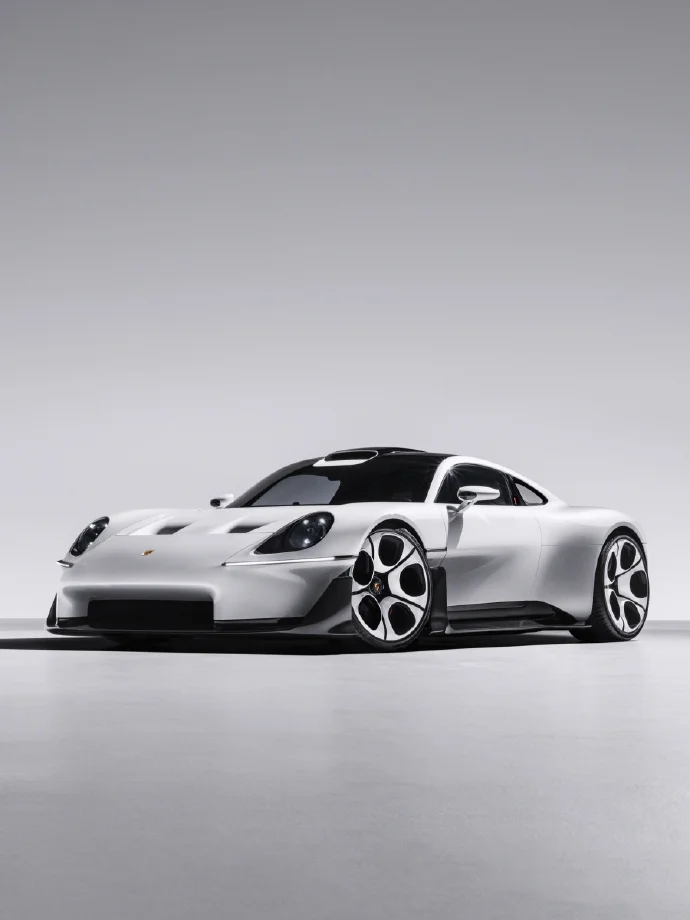
Tesla, however, has gone to the opposite extreme. Since tires have grip limits, let air and high-pressure gas help; since the body needs more downforce, install fans to actively suck it down; since traditional driving methods cannot control aerial attitude, let computers take over thrusters and body control. In Tesla’s framework, there seems to be no physical limitation that cannot be challenged by adding hardware, computing power, and control algorithms.
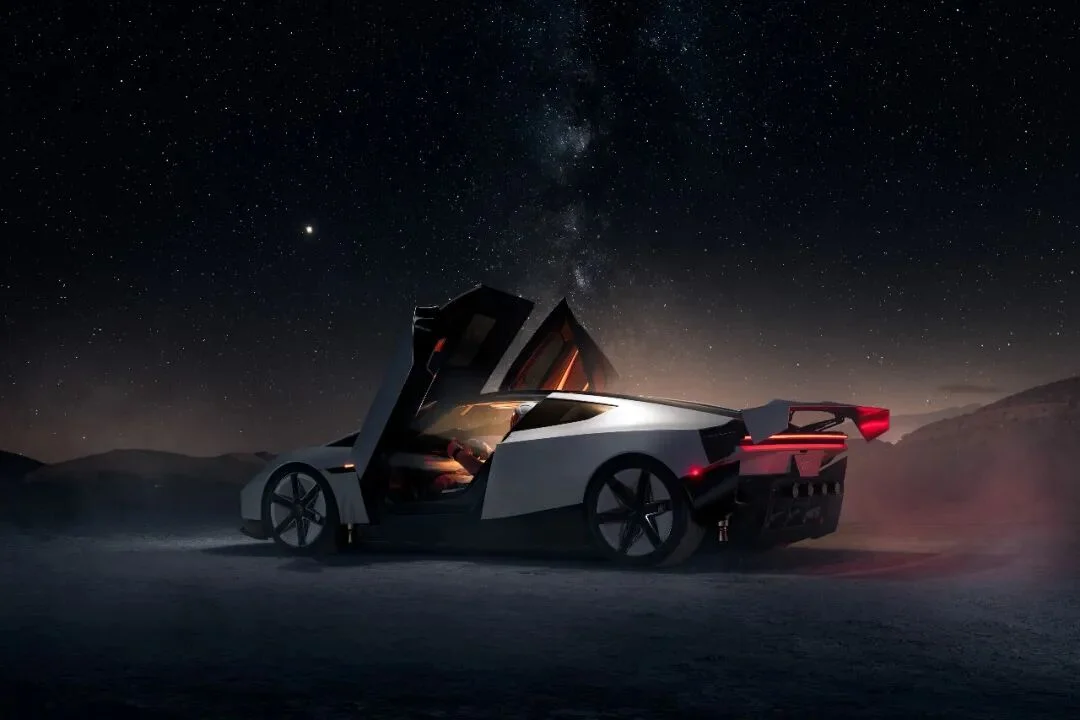
This aligns closely with Elon Musk’s engineering philosophy: rather than following industry conventions, he first asks whether the laws of physics permit a concept, then figures out how to build it.
Of course, this approach can easily swing to the other extreme. Is the driving pleasure of a sports car really determined solely by how much acceleration and downforce it can generate? If so, Formula 1 cars would have long since turned into Asurada. But in reality, drivers’ pursuit of mechanical feedback, engagement in handling, and vehicle predictability has never disappeared.
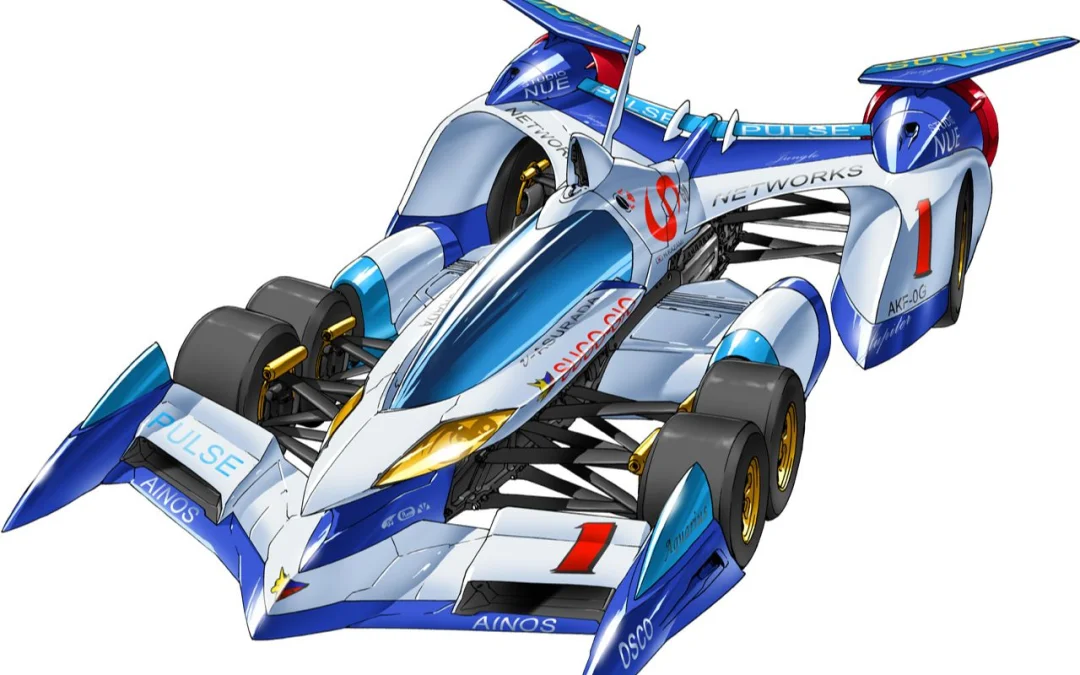
The Roadster even presents an interesting paradox. Elon Musk calls it “the last peak of the human-driving era,” yet its most astonishing feature relies entirely on computers.
When a car’s acceleration exceeds what an average person can comfortably control, and it can even adjust its three-dimensional attitude in midair, the driver’s role is effectively shrinking. Drivers can still decide when to accelerate and where to go, but the complex control required to execute these actions is increasingly handed over to machines. So the Roadster may not be the ultimate answer to traditional “driving pleasure”; it is more like a showcase of engineering capability at its limits.
From this perspective, Porsche and Tesla are actually answering two different questions. Porsche asks: Why will we still need to drive cars ourselves in the future? Tesla asks: If we are no longer constrained by the technical boundaries of conventional automobiles, just how far can we push what a car can do?
One aims to preserve the inherent value of driving itself, while the other seeks to continuously expand the range of what driving can achieve. Neither approach is inherently superior, but together they mark a fascinating fork in the road for the automotive industry.
Nine years ago, Tesla already showed us that electric vehicles can be incredibly fast. Nine years later, if Elon Musk merely shaves a few tenths of a second off that record, it would likely fail to rekindle excitement among all car enthusiasts.
But this time he has chosen a different direction. We can certainly question the Roadster’s production timeline, commercial viability, real-world use cases, and how much those outlandish features will ultimately be scaled back. Yet there is no need to rush to dismiss it on grounds of “practicality.”
After more than a century of automotive development, many technologies we now take for granted were born from engineers pushing the limits. The Roadster’s cold-gas thrusters may end up confined to the garages of a handful of collectors, or they may spawn applications no one has yet imagined. Only time will tell.
But the fact that a car can drive upside down, leap into the air, perform a flip, and land smoothly demonstrates that Elon Musk is not content to reduce automobiles to mere A-to-B transportation. That may well be the most intriguing aspect of the Roadster.
A company fully committed to autonomous driving has built a car that seems utterly unnecessary yet makes people eager to get behind the wheel. As for when it will actually be delivered? 2028, says Elon Musk, who insists he is serious this time. Let’s hope this is the last time we hear that promise!