


What Can a Hybrid Family Sedan Offer You? The Yinhe L6 Has Different Answers
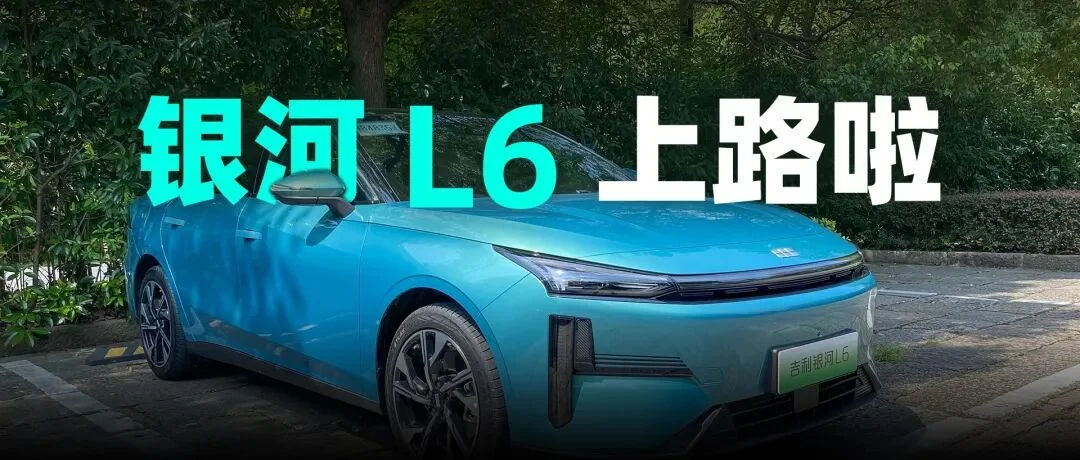
Two months after Geely's Yinhe L7 began deliveries, it achieved monthly sales exceeding 10,000 units, demonstrating strong consumer recognition. Shortly thereafter, the second model in the Yinhexilie lineup—the Yinhe L6—was officially introduced to us.
I had previously test-driven the L7 and was impressed by its sporty chassis tuning. This time, I was eager to conduct an in-depth test drive of the L6 across unrestricted routes within Hangzhou's urban area.
01Front-Wheel Drive Under RMB 200,000: How Is the Driving Quality?
For those unfamiliar with this vehicle, here are the key powertrain specifications for the Yinhe L6:
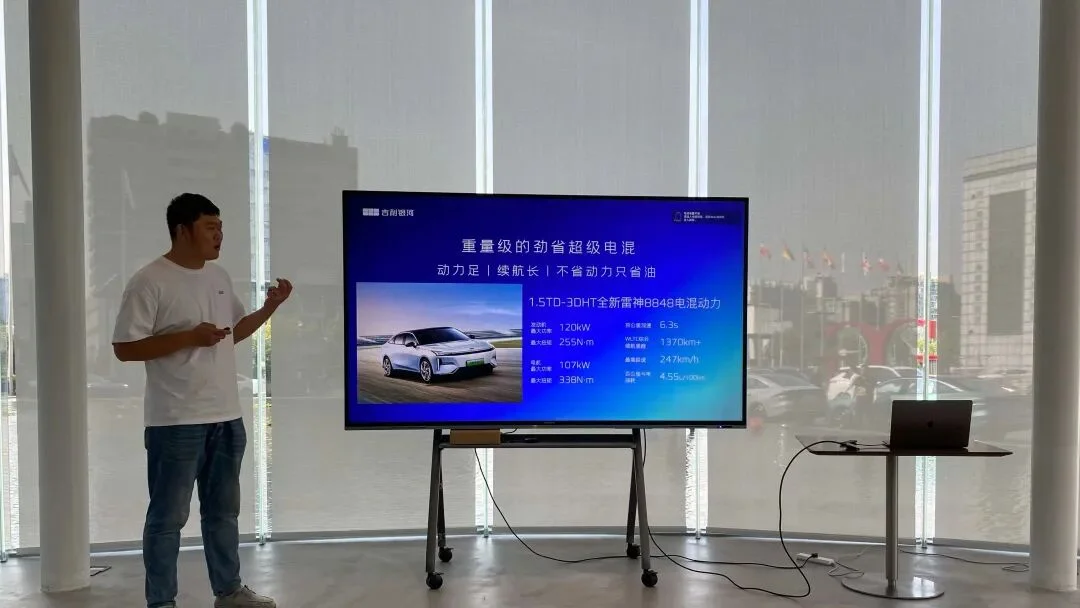
It is equipped with the next-generation Leishen 8848 Dianhunxitong, comprising a 1.5T B-Plus Fadongji and two motors, P1 and P2. The engine delivers a maximum power output of 120 kW and a peak torque of 255 N·m, achieving a thermal efficiency of 44.26%.
The P1 motor has a maximum power of 60 kW, while the P2 motor reaches 107 kW. In daily driving, the P2 motor provides propulsion; however, when the accelerator is pressed deeply, the P1 motor can briefly assist in acceleration.
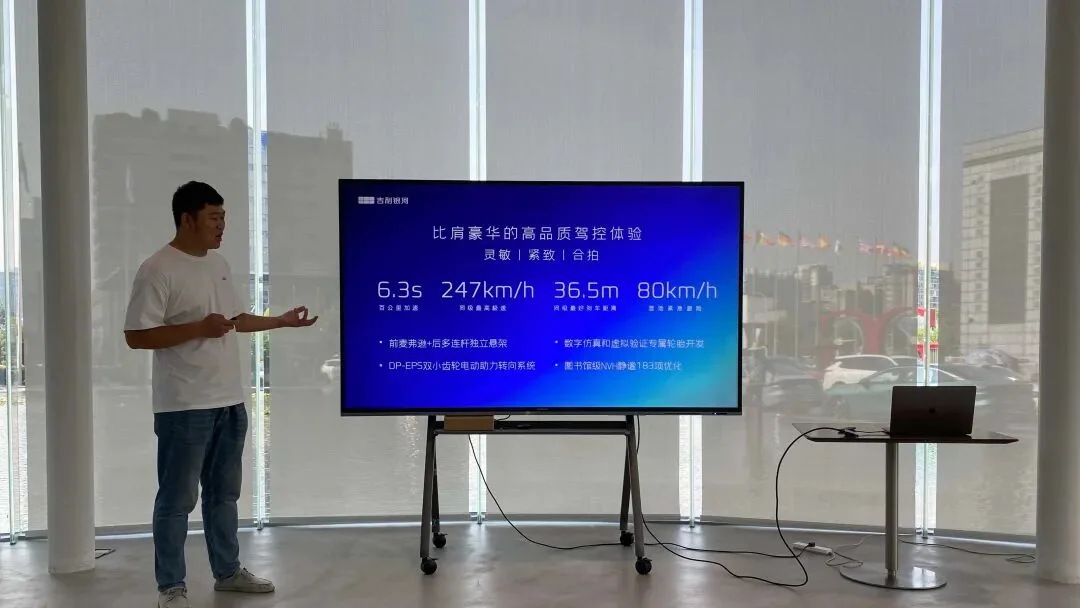
The combined system maximum power is 287 kW, with a total torque of 535 N·m, enabling a 0–100 km/h sprint in 6.5 seconds.
The Sandang DHT Biansuxiang (three-speed DHT gearbox) covers three speed ranges: 0–20 km/h, 20–80 km/h, and above 80 km/h.
The suspension features a front MacPherson strut and a rear multi-link setup.
The Yinhe L6 has four driving modes: Smart, Pure Electric, Extended Range, and Hybrid, corresponding to four different usage scenarios. Since the other modes were tested during the previous drive, today's session used the Smart mode throughout to observe the vehicle's performance. The vehicle started with a full tank of fuel and a fully charged battery.
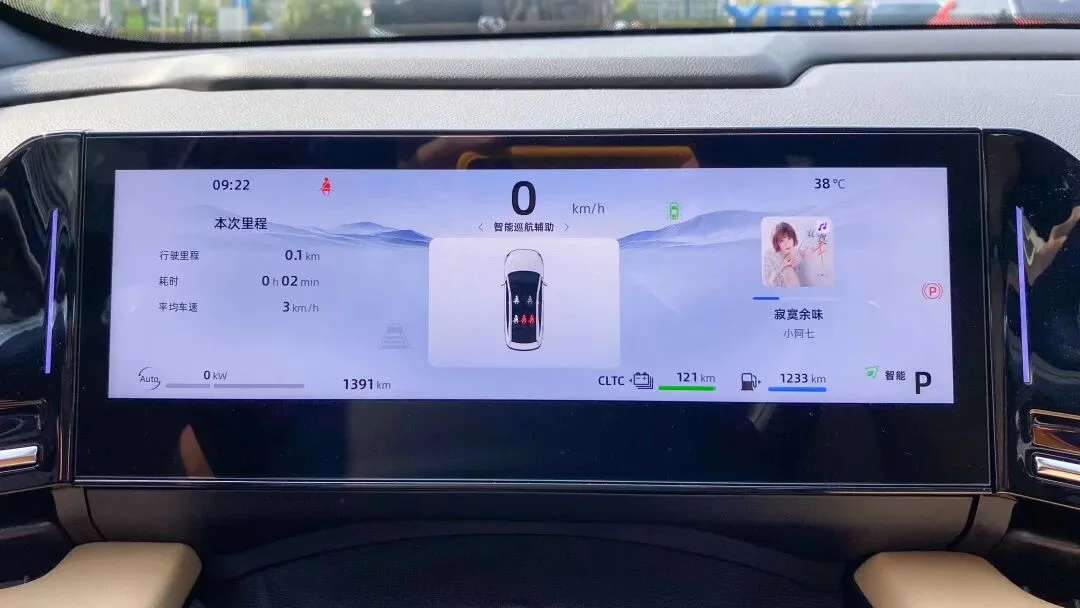
Because the battery is fully charged, in smart mode the vehicle prioritizes pure electric driving. The power response is basically consistent with that of single-motor pure electric vehicles that accelerate from zero to one hundred kilometers per hour in about seven seconds; at this time, the engine does not intervene. After driving about seventy kilometers, as the battery level decreases, the engine actively intervenes and works together with the motor to drive the vehicle. At this stage, the vehicle's power output is basically consistent with that in pure electric mode, but when the accelerator pedal is pressed deeply, there is inevitably a brief power lag caused by gear shifting.
Regarding pedal calibration, the accelerator and brake pedals of the Yinhe L6 are both tuned to be relatively linear, making them easy to get used to. The accelerator builds power gradually as the driver presses it deeper, rather than having a response that takes about 1 second after pressing, or experiencing a sudden explosive increase in power when pressed to one-third to one-half.
If the brake pedal feel is unusual or the braking force lacks linearity, the vehicle may exhibit a 'nodding' motion during deceleration, causing discomfort to occupants. None of these issues were present in the L6; the brake pedal response was linear and predictable, allowing drivers to master its behavior within just three to five red-light stops.
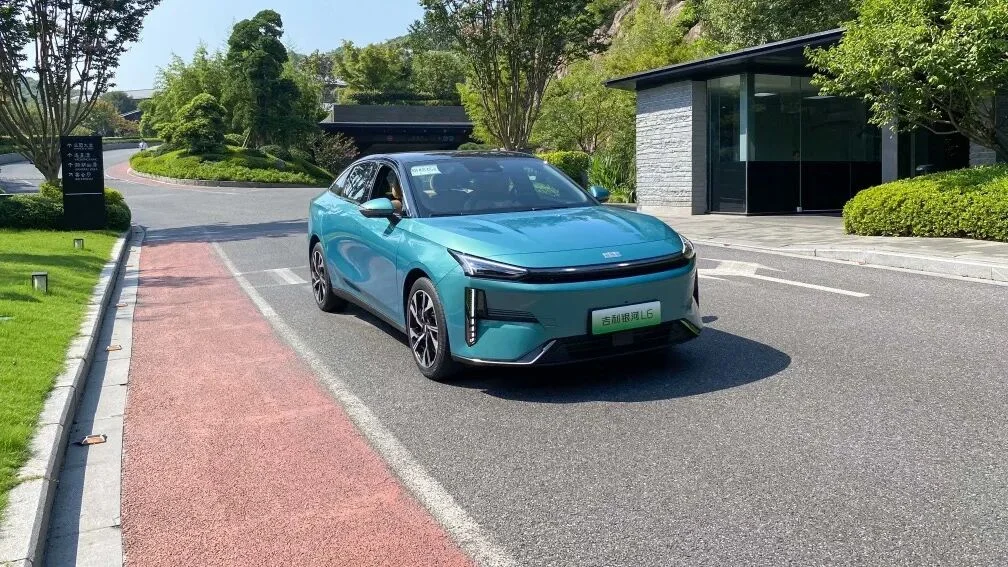
The vehicle’s regenerative braking system offers four adjustable levels, including a fully off setting. Even at the highest regeneration level, the braking force remains mild. Releasing the accelerator does not produce strong deceleration, resulting in an experience closer to that of a conventional internal combustion engine vehicle.
The vehicle features a DP-EPS speed-sensitive electric power steering system, which provides variable assistance based on speed. Steering precision is sharp with minimal play, as previously experienced on a Gymkhana course. The infotainment system allows users to link steering assistance to driving modes or set it independently to Comfort or Sport. I preferred the Sport mode, which offered the ideal tactile feedback.
The Yinhe L6 carries over the suspension tuning philosophy from the L7, leaning toward a sporty character. During normal city driving, the suspension handled manhole covers and road joints with crisp, decisive damping, eliminating unnecessary body oscillation. However, since roads in Hangzhou are well-paved, I could not test its performance on rough surfaces.
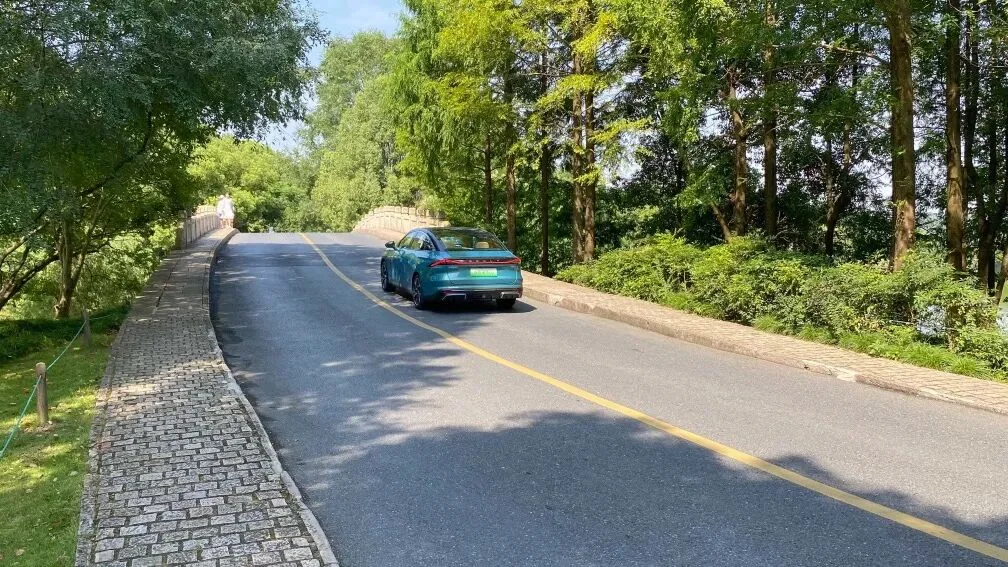
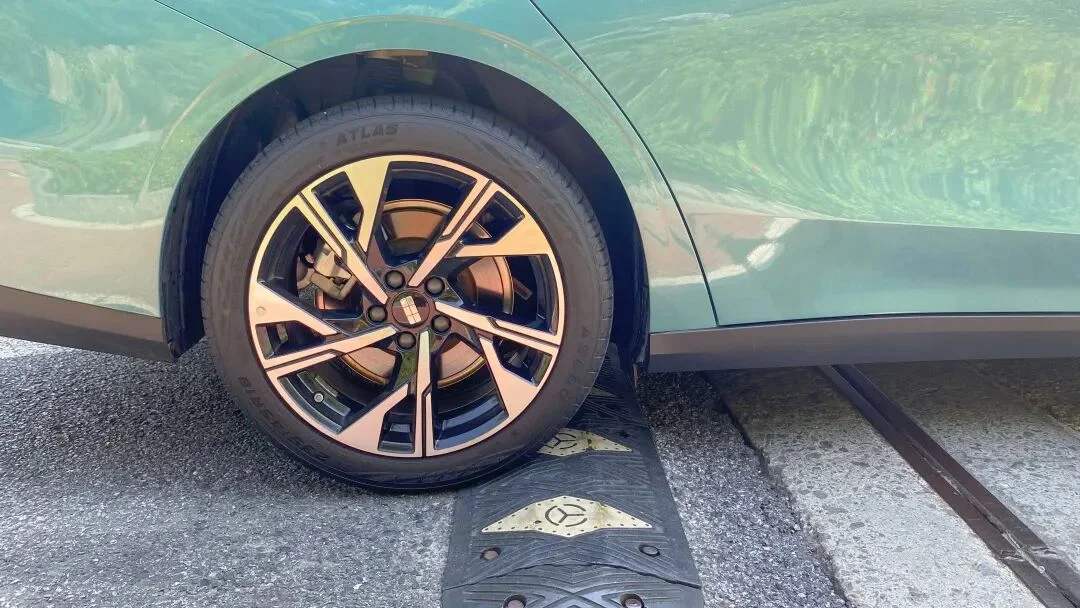
When descending ramps and hitting dips, the suspension quickly controlled the body motion. Sitting in the rear seat, I did not experience headroom-related impacts. Nevertheless, traversing speed bumps with the firmer suspension setup caused slight discomfort for rear passengers.
02Driver Assistance: Functional and Stable
I previously tested the Yinhe L7 in Xinjiang, using its driver assistance system for about 70 km on highways. Its stable performance left a deep impression. This time, the test drive of the L6 took place within Hangzhou city, without a fixed route, so I certainly wanted to try its driver assistance features.
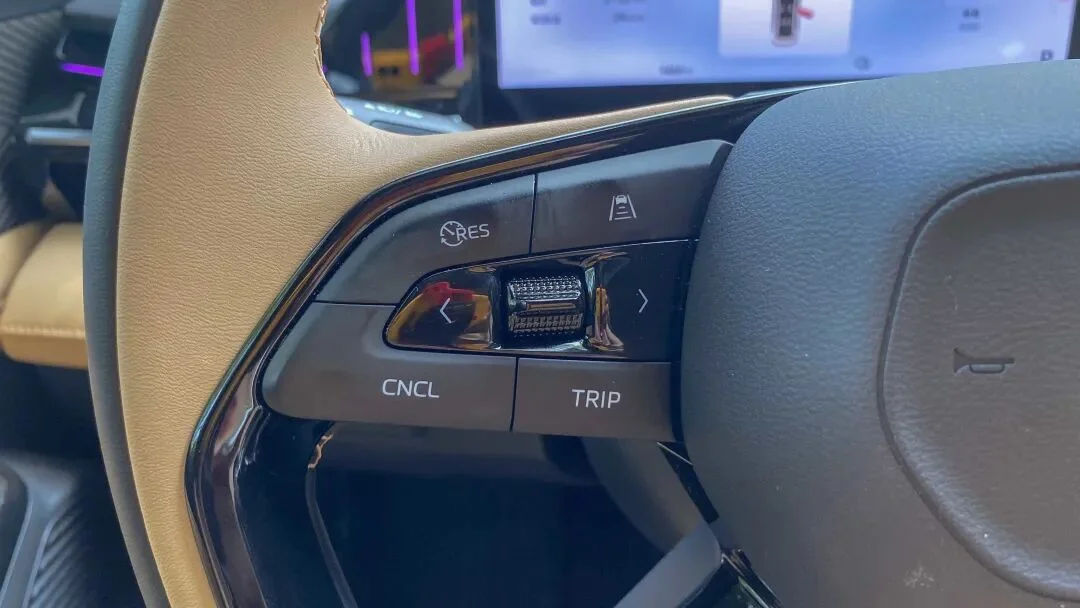
The lane-keeping function of the Yinhe L6 is also activated with a single press of the RES button on the left side of the steering wheel. The button on the right adjusts the following distance, which has three adjustable levels. Within the same level, the following distance dynamically adjusts based on vehicle speed; Level 1 is sufficient for city driving. Moving the stalk up or down once increases or decreases the set speed by 5 km/h.
When activated on an expressway, the vehicle maintains a steady lane position and travels at the speed of the car ahead or the set speed on straight sections. On curves with slight curvature, it can pass without slowing down or with only minor deceleration. However, on sharper curves, the vehicle does not decelerate quickly enough, resulting in slight lane-line encroachment, requiring the driver to intervene.
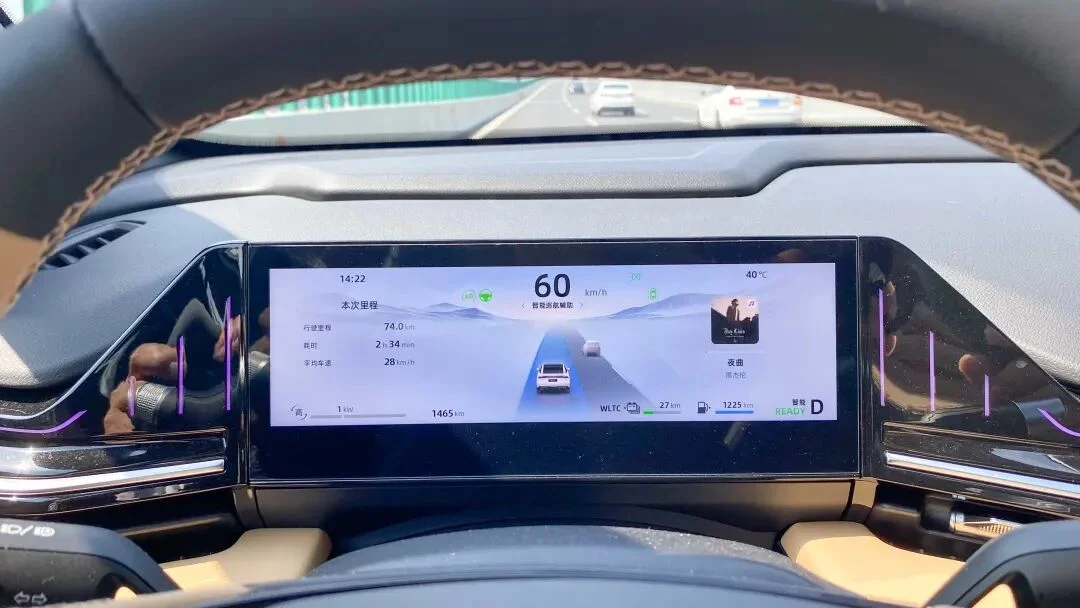
I also encountered congestion on the expressway. When the car ahead slowed down, the braking control was good, but acceleration from a stop was slow, making the vehicle susceptible to being cut off by other cars. Additionally, in cases of close-range cut-ins, the vehicle's braking response was sometimes delayed, necessitating timely driver intervention.
If the road layout changes from one lane to two, the lane-keeping function does not disengage; instead, it defaults to continuing in the right-hand lane.
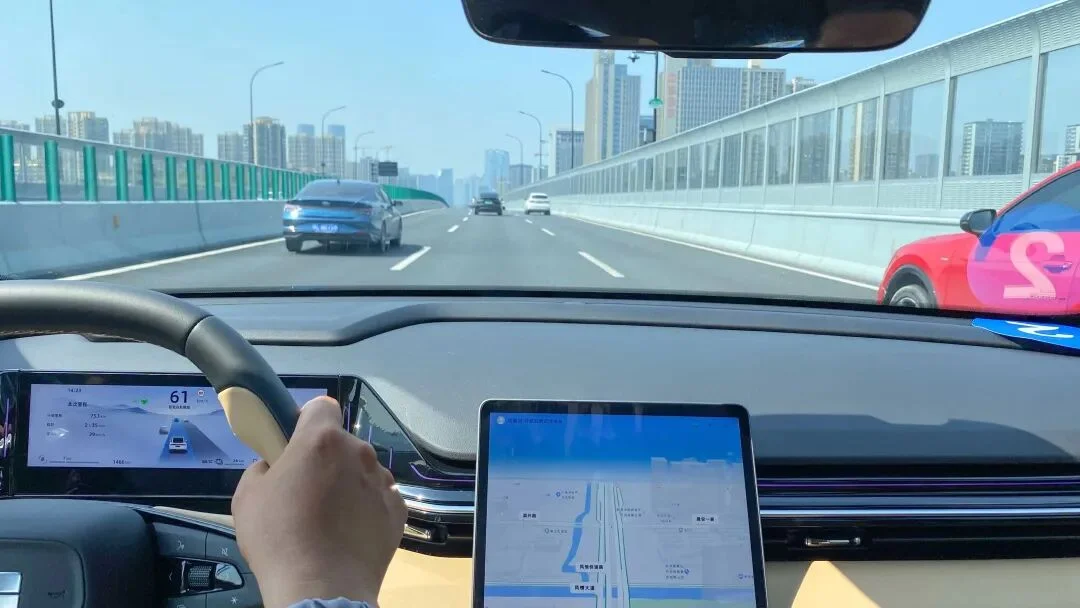
The Yinhe L6 lacks an automatic lane-change feature triggered by the turn signal. When the driver activates the indicator, the vehicle enters Adaptive Cruise Control (ACC) mode. After the manual lane change is completed and the system detects lane markings, it automatically resumes Lane Keeping Assist.
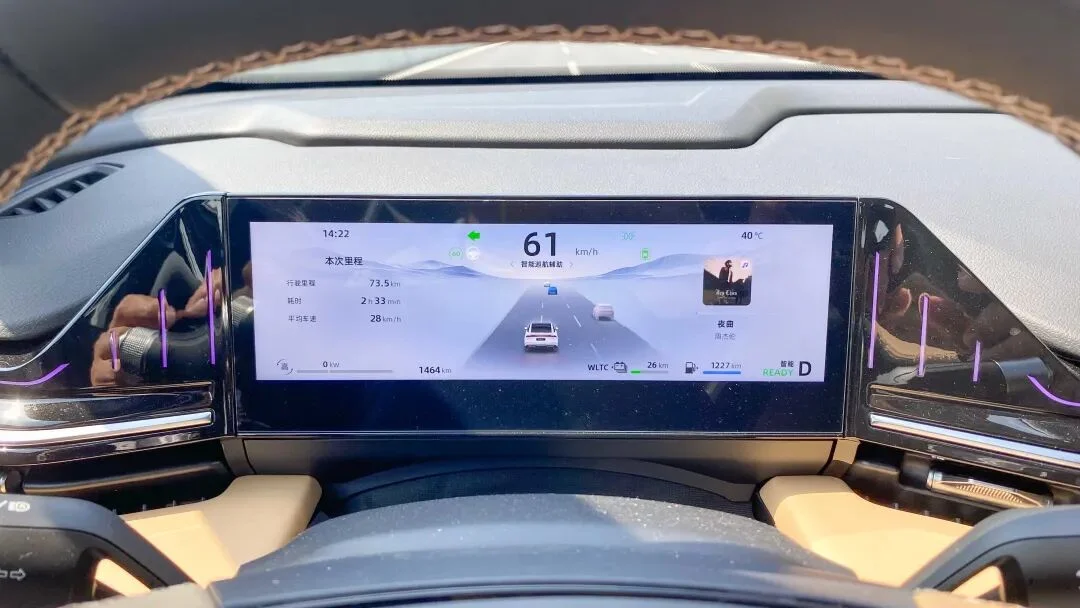
Overall, although Geely has not disclosed the specific hardware used, the Yinhe L6’s driver assistance capabilities are commendable for a vehicle priced under RMB 200,000. It can be relied upon on highways and elevated roads most of the time, but drivers must remain ready to take over in emergency situations.
03Static Review: Interior Space
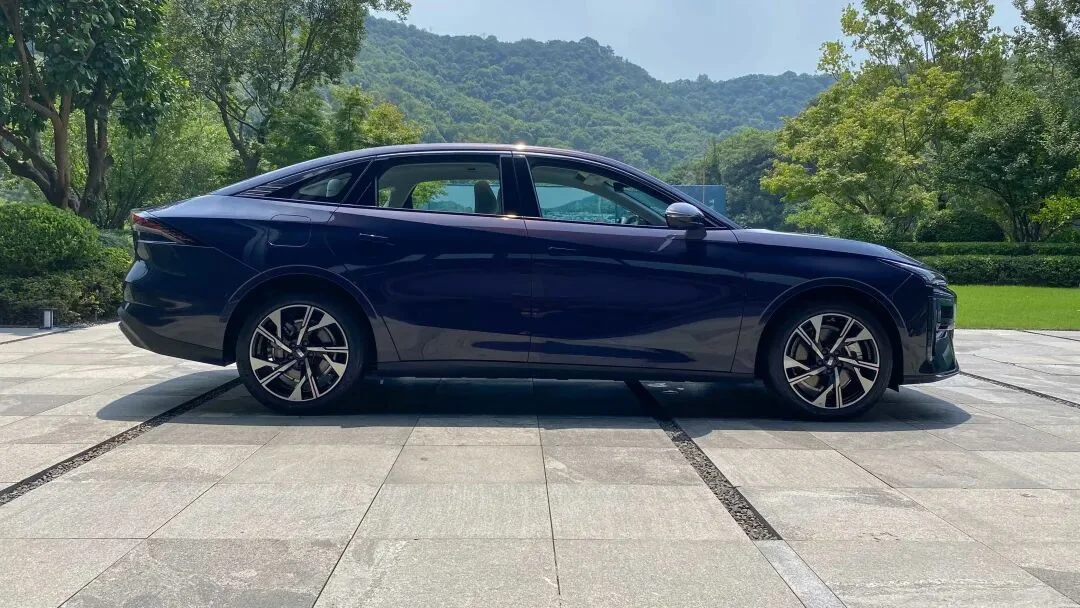
You have likely seen the Yinhe L6’s exterior design many times before, so I will not dwell on it here. Purple and green real-world vehicles were available at the event; see the photos below. Which color do you prefer?
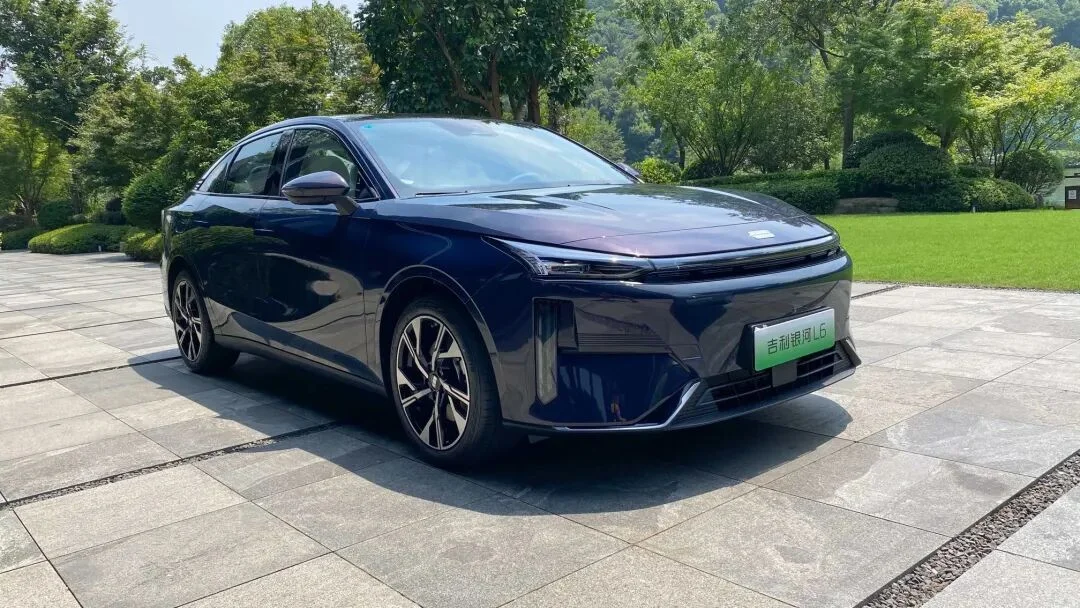
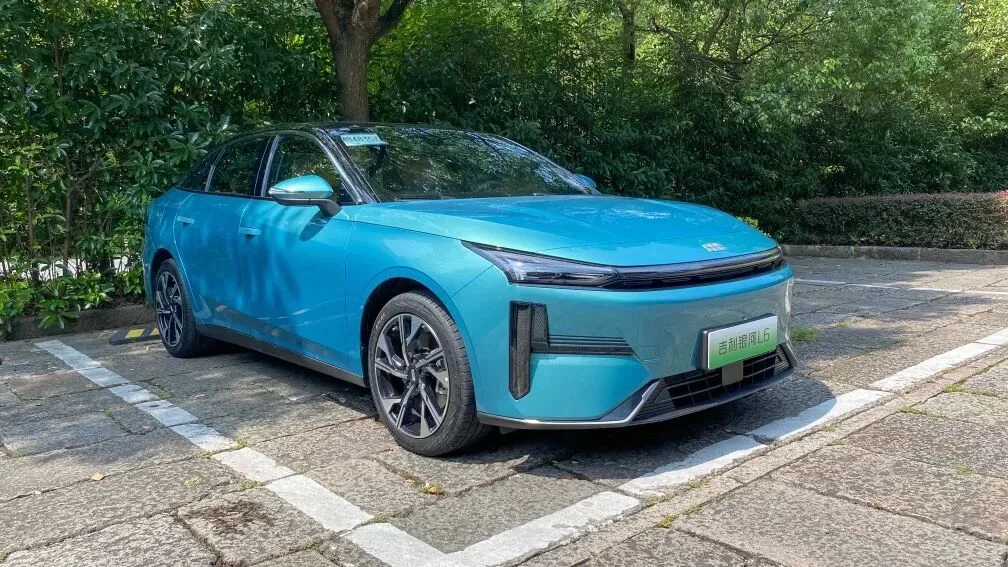
The Yinhe L6 measures 4,872 mm in length, 1,875 mm in width, and 1,489 mm in height, with a wheelbase of 2,752 mm. I will now get inside to demonstrate the interior space. Standing at 176 cm tall and weighing 100 kg, I have adjusted my seat to a comfortable driving position. Even then, I still have more than two fists' worth of legroom.


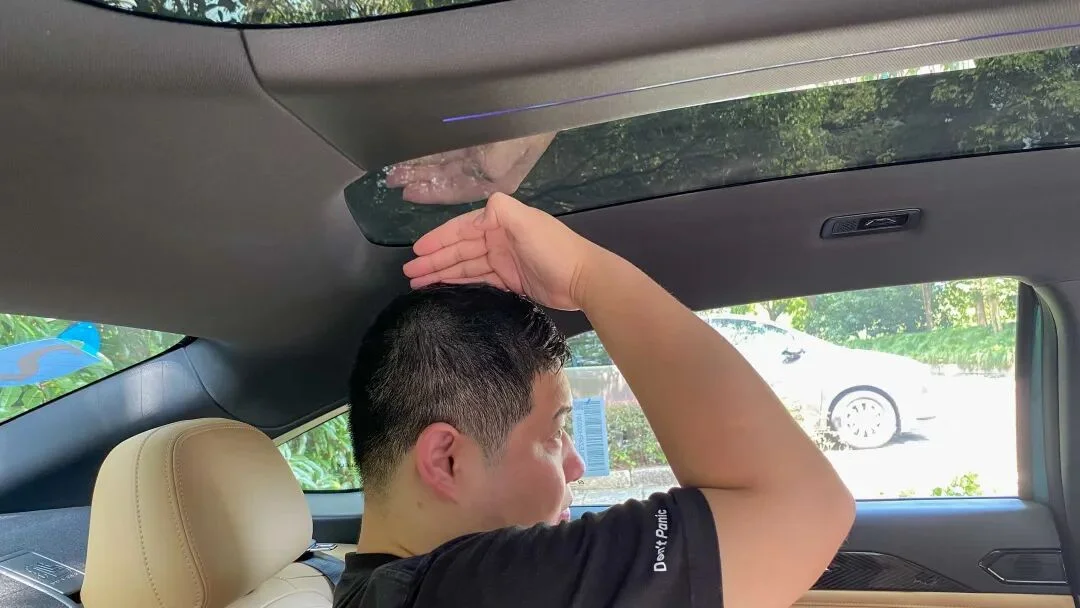
There are about four fingers of headroom between my head and the glass sunroof. However, if I lean back completely against the seatback, that headroom becomes quite limited.
It is worth mentioning that the filling of both the left and right rear seats of the Yinhe L6 is quite soft, and the seat cushion length is sufficient; for someone with my height, it can fully support my thighs.

We previously covered the infotainment system in detail in our review titled 'First In-Depth Experience: How Good Is the Yinhe N OS?'. If you are interested, you can check that out. Here, I will highlight a few other noteworthy aspects of the interior design.
The Yinhe L6 also features a rather interesting function: exterior voice control. Equipped with three external microphones located on the left and right side mirrors and the front left of the vehicle, it can recognize voice commands from up to 1.5 meters away. I tested it in practice, and operating the air conditioning from outside the car worked without issue.
Some readers might ask whether people outside the vehicle can also use voice commands to operate it. I asked Geely’s official staff, who confirmed that this is not possible. To use the exterior voice function, two conditions must be met: the key fob must be outside the vehicle, and there must be no one in the driver’s seat. I tested both scenarios, and the vehicle provides corresponding audio prompts to respond, preventing situations where someone outside could operate the car while the owner is sitting inside waiting.
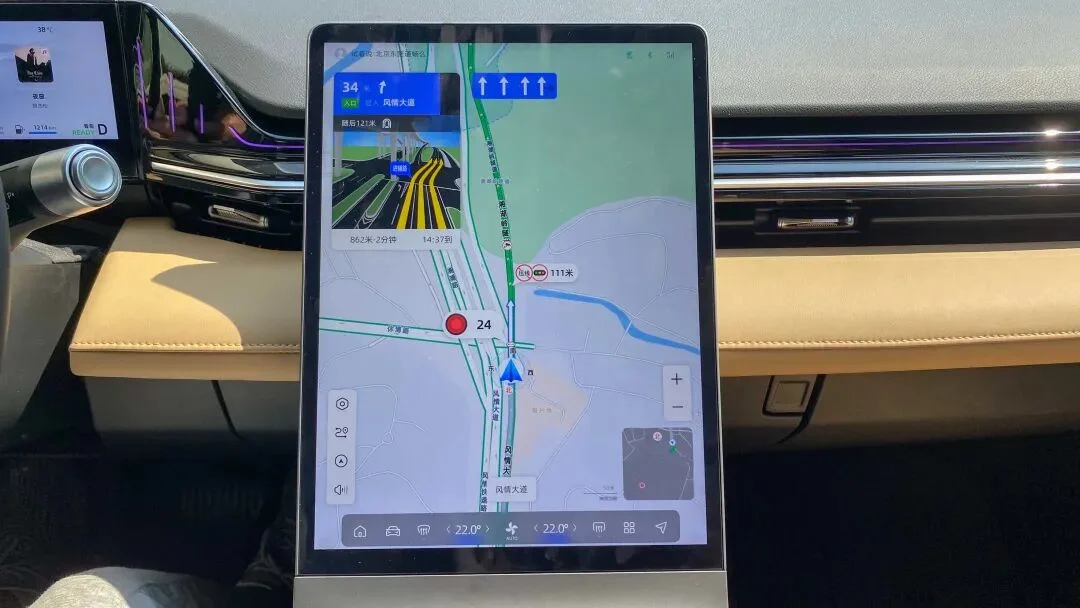
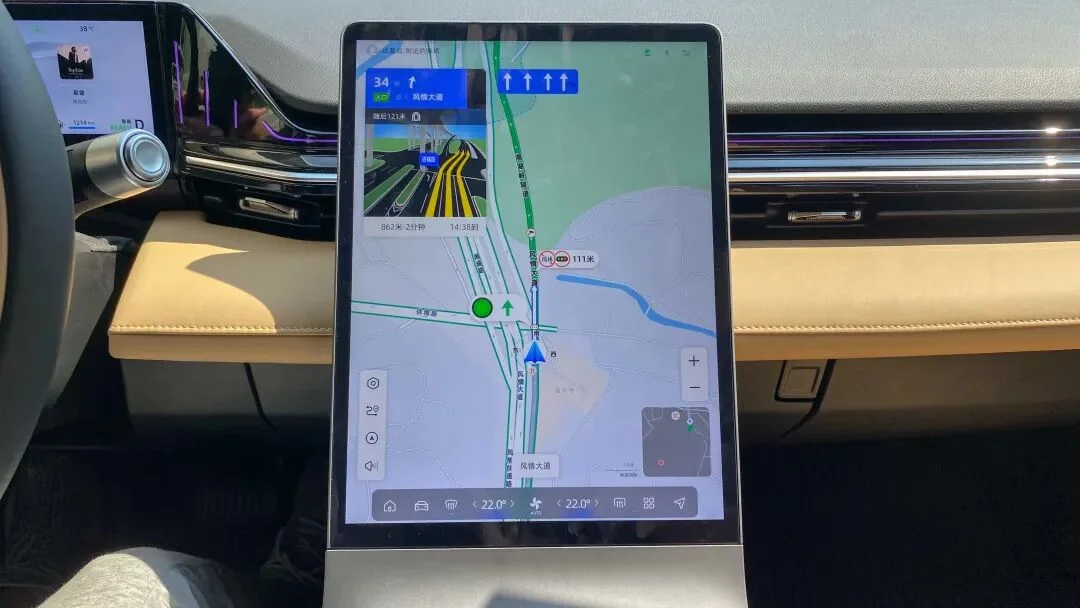
The vehicle’s map supports traffic light countdown functionality. However, this is not based on real-time perception by the vehicle but rather obtained through map data, which naturally introduces some latency. Unlike some vehicles that show a delay of 1–2 seconds before the light turns green, the L6 displays the light turning green 1 second earlier on the map. Additionally, about 5 seconds before the change, it emits an audible prompt. This prevents delayed starts that might trigger honking from cars behind. However, if you are the first car at the stop line, remember to start slightly later.
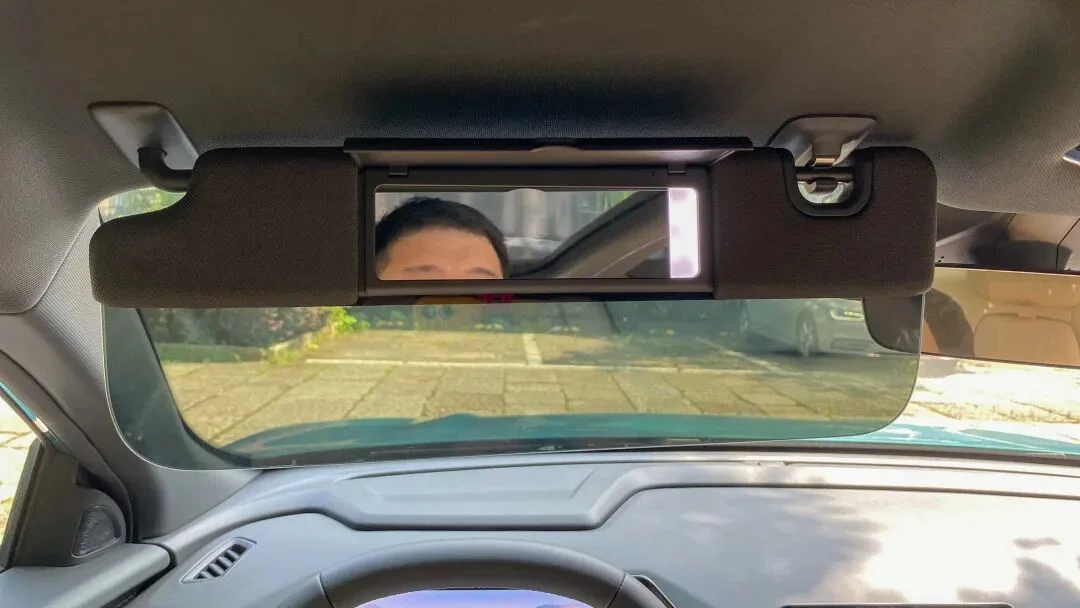
The sun visor is divided into upper and lower sections. The upper part is a standard sun visor, while the lower section features a filter similar to sunglasses lenses. This design maximizes visibility and serves as a backup if you forget to wear sunglasses. However, the downside is obvious: the vanity mirror can only be made quite small, which may strongly annoy those who like to apply makeup in the car.
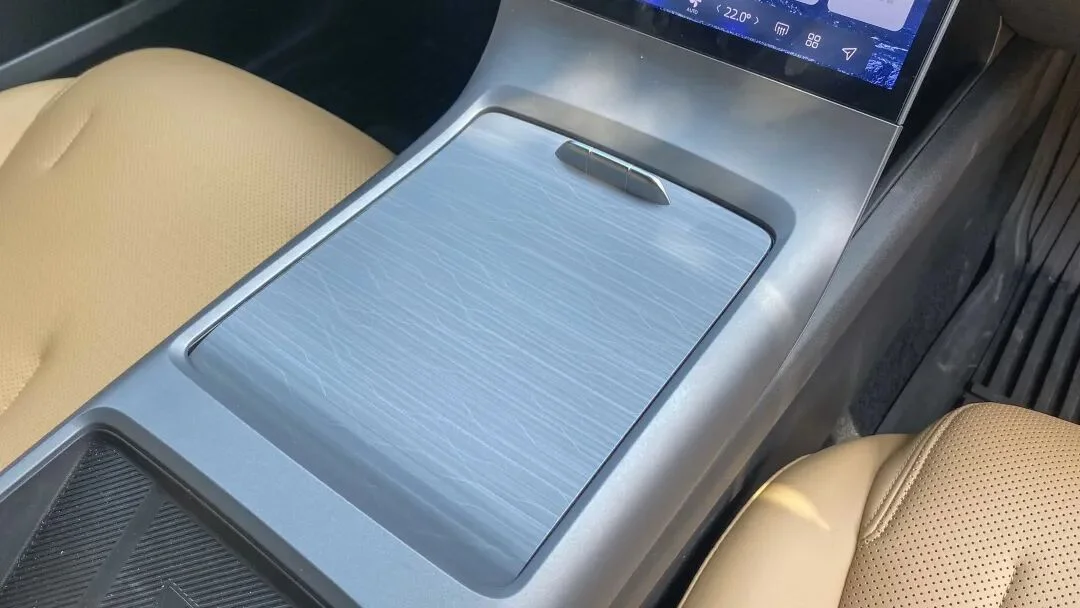
There is a hidden compartment under the cover in front of the center armrest. When opened normally, it reveals a space similar to an armrest box, with a depth roughly equivalent to a small bottle of mineral water.
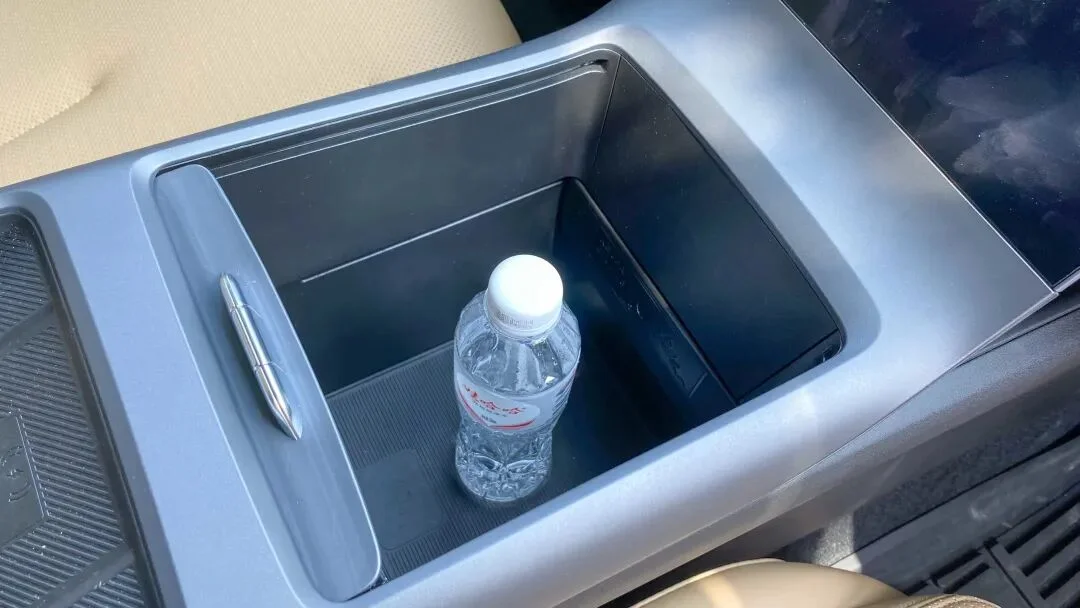
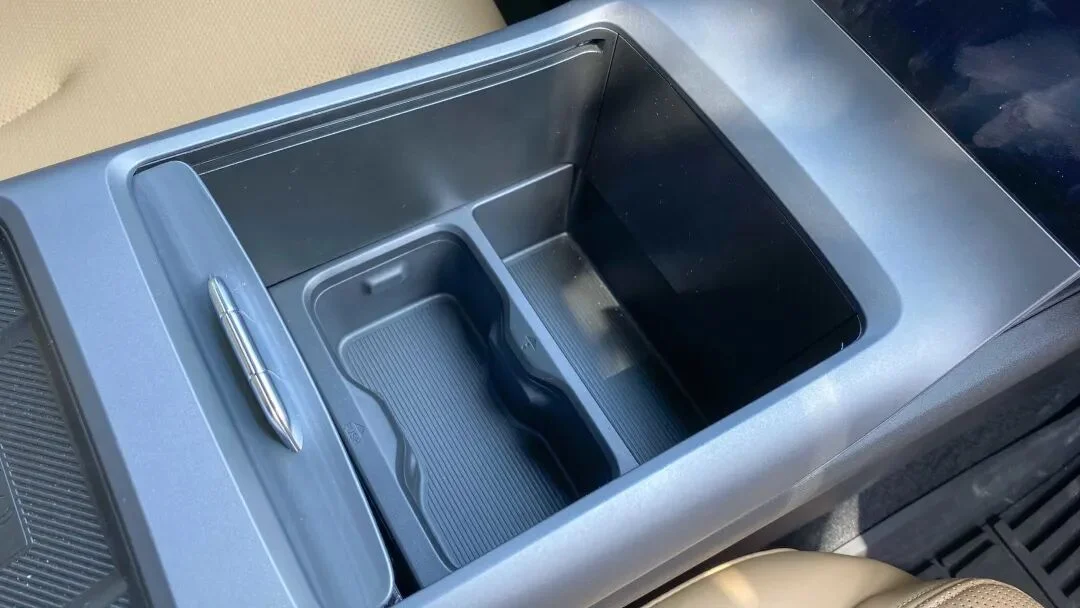
In fact, there is also a hidden compartment that reveals two cup holders and small storage cubbies when pressed open.
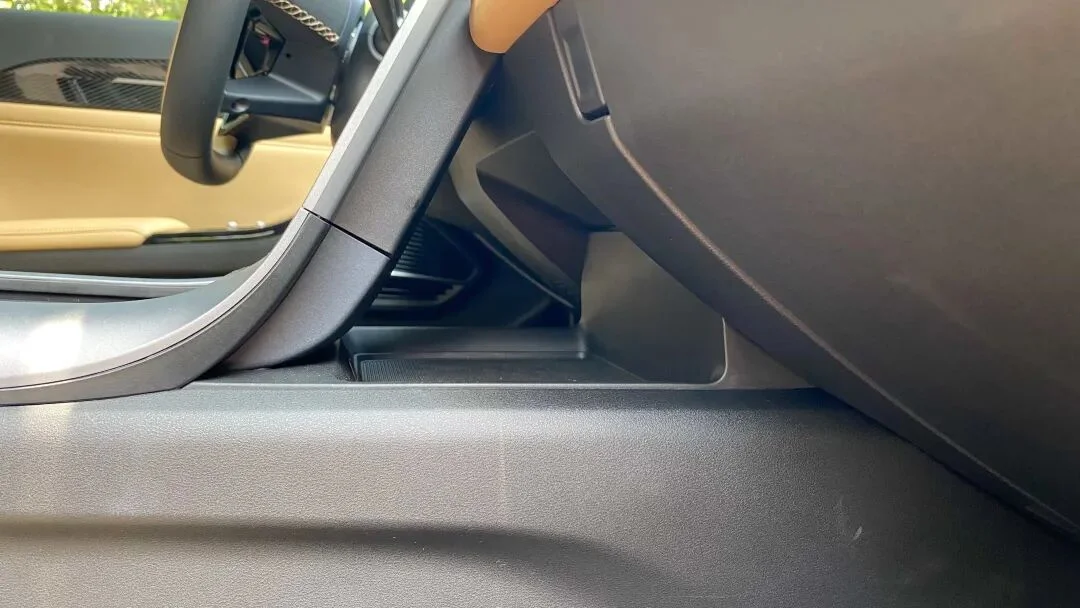
Behind the central infotainment screen, there is a small open area. Some vehicles turn this space into a wireless charging pad, making it inconvenient to retrieve phones. However, the Yinhe L6 does not do this; here it is simply an ordinary storage area that can be used to store items such as tissues and wet wipes.
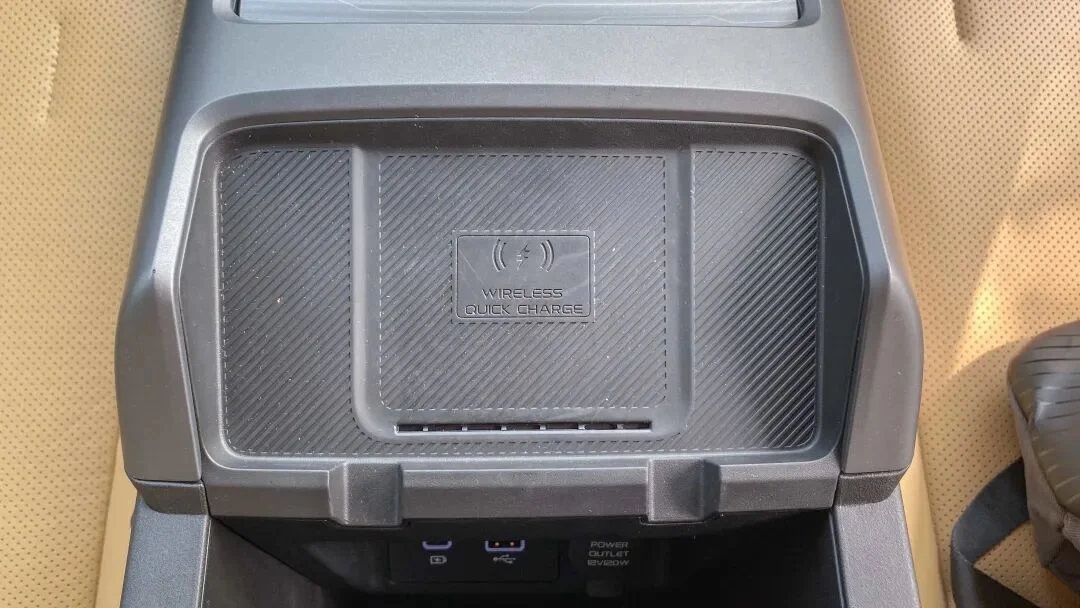
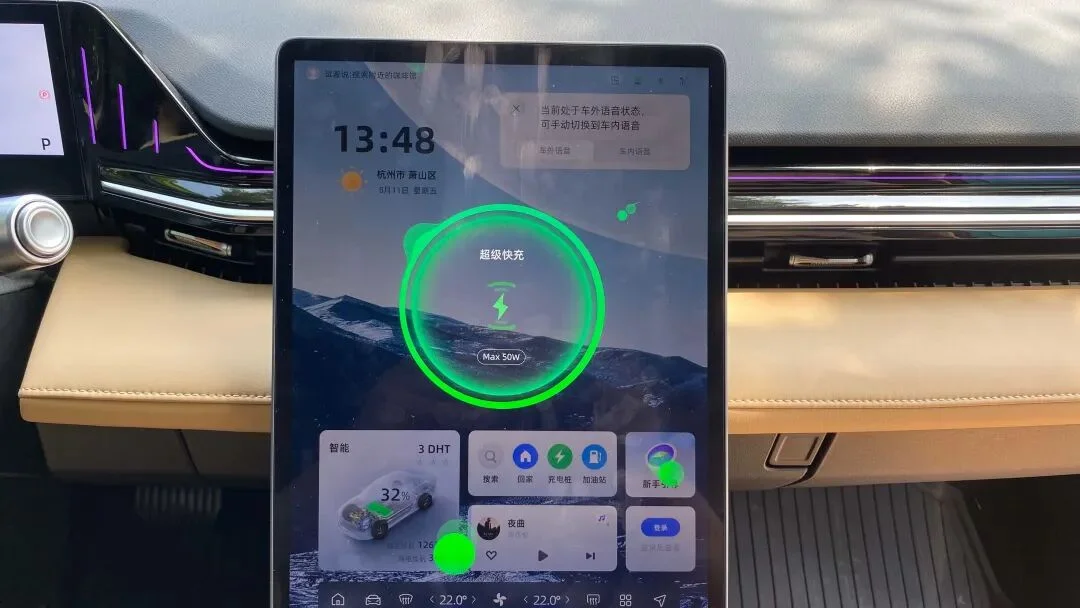
The true wireless charging position is at the front of the armrest box, featuring a cooling air outlet. It is currently summer, and wireless chargers without ventilation holes often stop charging due to overheating. The presence of these holes not only avoids this problem but also helps increase the vehicle's wireless charging power to 50 W.
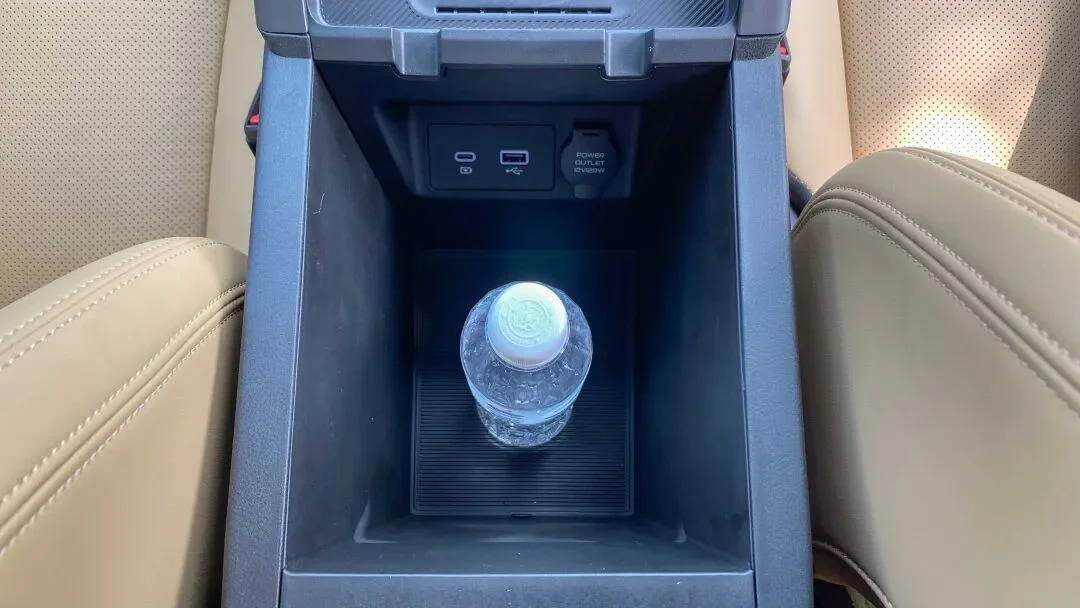
The center armrest bin is roughly the same depth as the front storage compartment, holding about one small bottle of water. The USB-C port, data A port, and vehicle fast-charging port are also located inside the armrest.
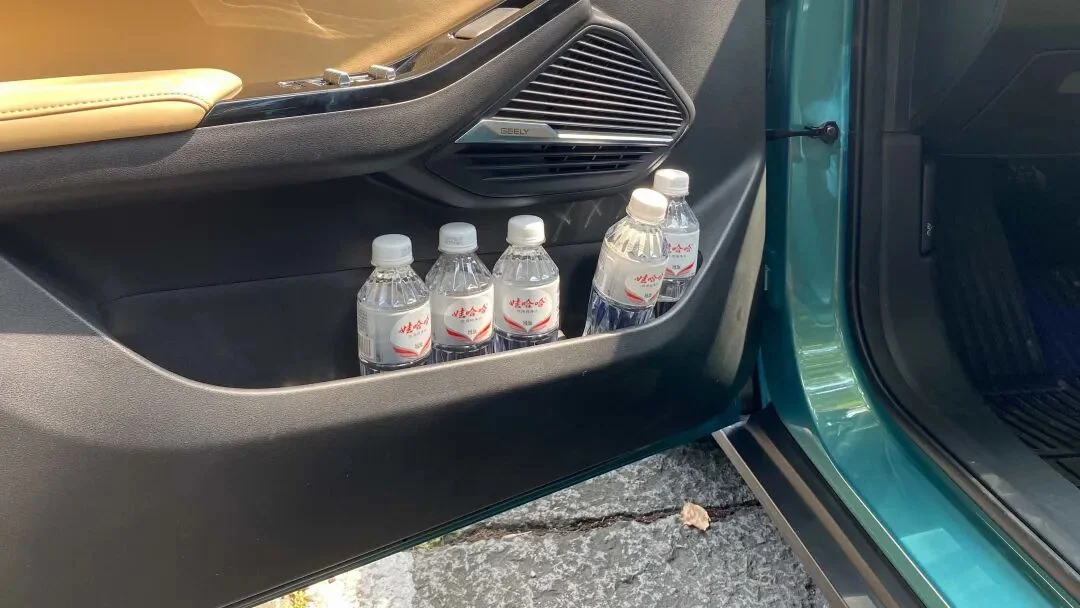
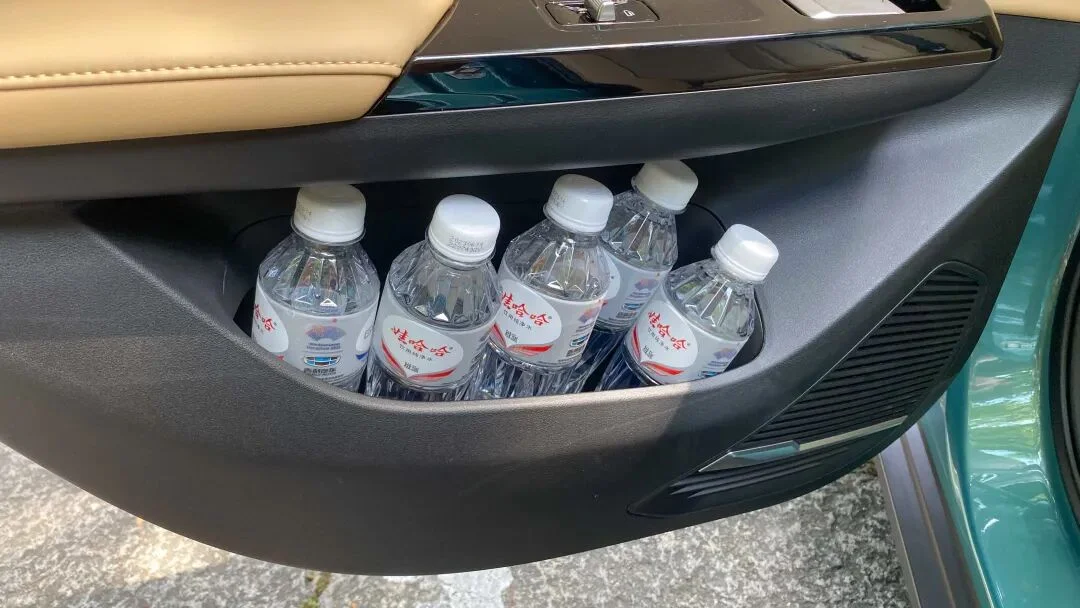
The door panel storage in the Yinhe L6 is exceptionally large; five small bottles of water were insufficient to test the front door bins, but they fit perfectly in the rear door panels.
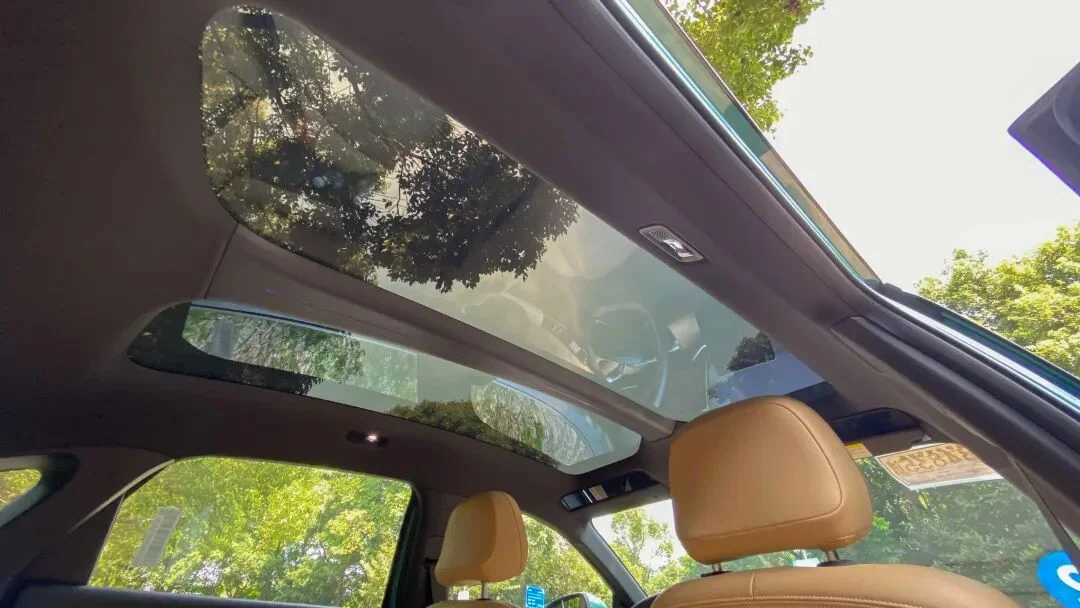
The panoramic glass roof is not a single pane or two separate front-and-rear sections, but rather split into left and right panes, with an ambient light strip running along the central longitudinal beam. If you install an aftermarket sunshade, be aware that each individual glass pane has an asymmetrical shape on its left and right sides.
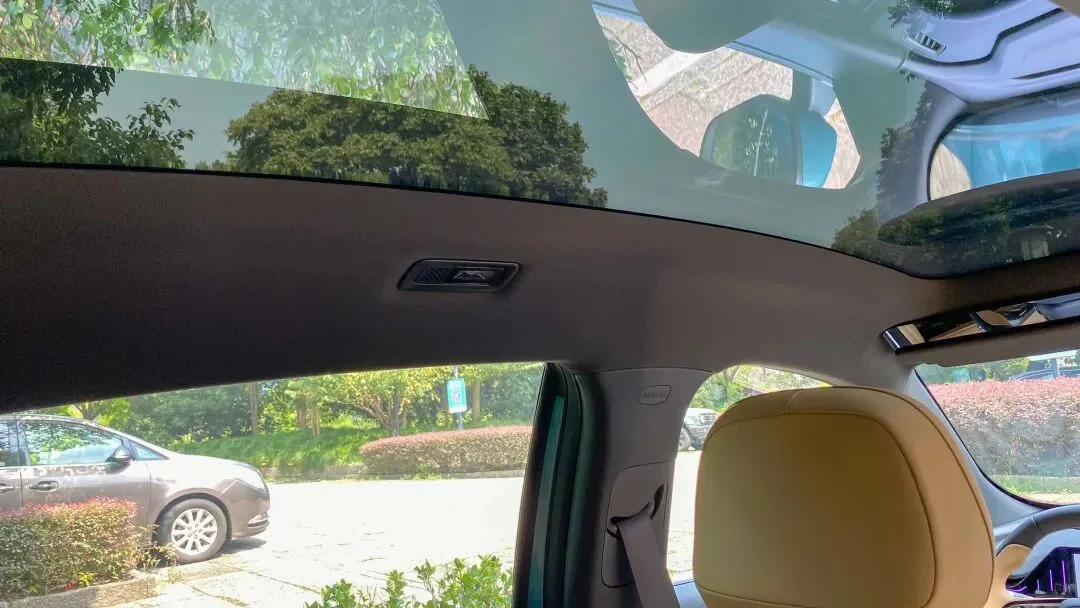
The cabin has no overhead grab handles. If the driver is taking corners hard and you happen to be a passenger, make sure to hold onto anything you can.
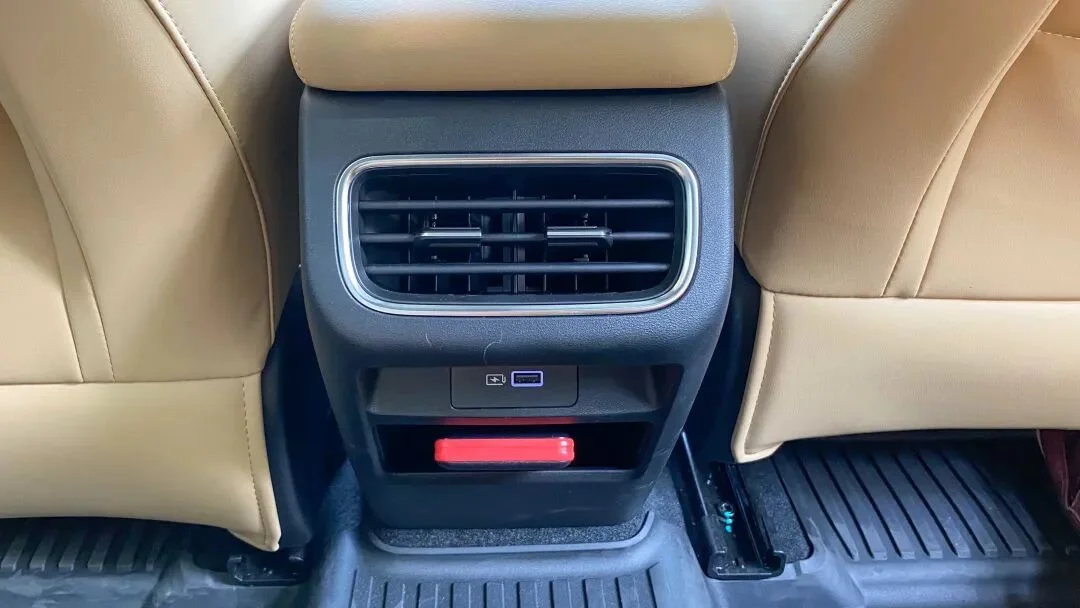
At the end of the center console, there are two air vents and an A-type USB port. The storage compartment below is just barely large enough to fit two smartphones.
04Final Thoughts
I had previously test-driven the earlier version of the Yinhe L6 at a testing facility in Zhaoyuan, Shandong, so I already had a certain understanding of its driving feel and extreme performance. This second test drive in Hangzhou, however, gave me some different experiences.
With precise steering feel, competitive performance for a hybrid sedan, sport-tuned suspension, and pedal calibration that requires no adaptation, the Yinhe L6 ranks among the top front-wheel-drive sedans under RMB 200,000 in terms of driving quality.
[This is a continuation of the previous section.] Furthermore, with stable driver assistance performance among similarly priced models and a relatively refined infotainment experience, the L6 demonstrates formidable competitiveness in its segment. Although it is currently still an engineering prototype, compared to our previous test drive, all aspects are increasingly approaching the final mass-production version.
Although the final price is still unknown, based on current official competitor models, the Yinhe L6's price may fall within the RMB 140,000 to RMB 180,000 range. So, what do you think the final pricing for the Yinhe L6 will be?
Written by: JOJO Edited by: Jiang Xiaohei