


Qualcomm's 5nm Snapdragon 8295 Hits Mass Production in Luxury and EV Models
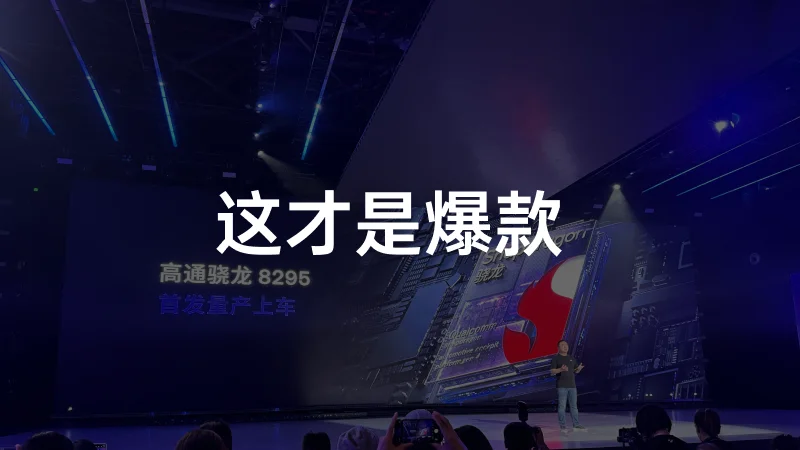
In the second half of 2023, with the successive launches of the all-new Mercedes-Benz Long Wheelbase E-Class, Jiyue 01, and Zeekr 001 FR, chips manufactured on a 5nm process finally achieved mass production in vehicles. This chip is Gaotong's automotive-grade Xiaolong 8295.
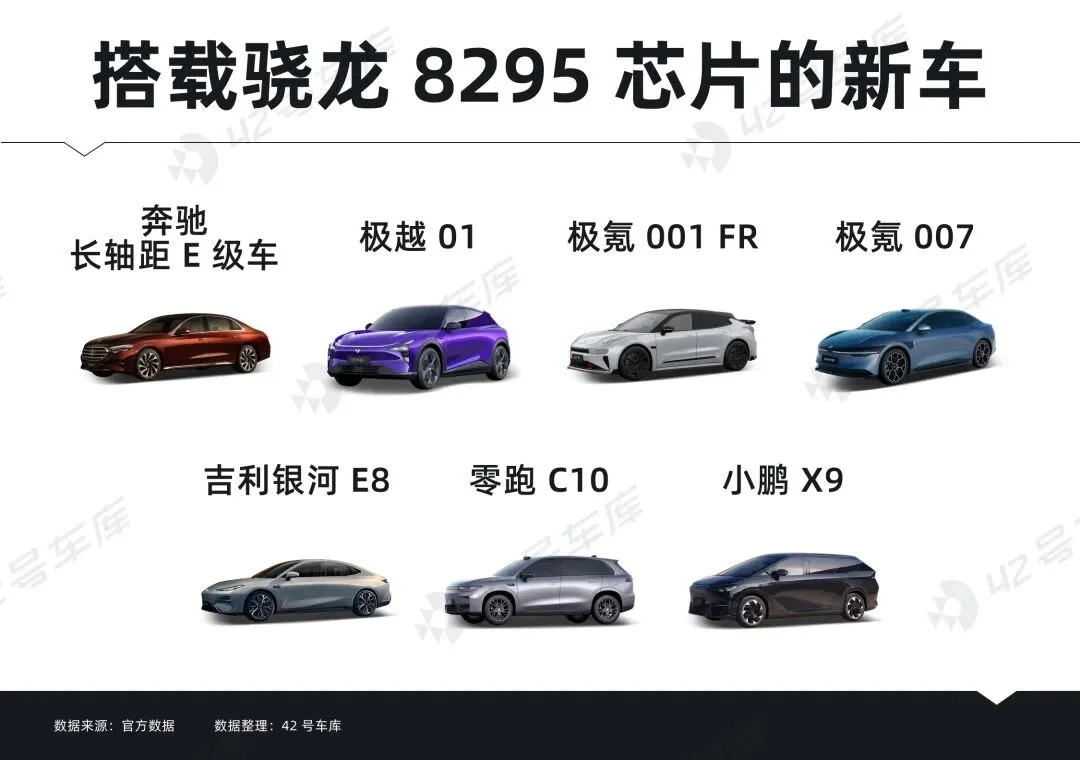
At the Guangzhouchezhan, which concluded last week, we observed that at least seven popular new models were equipped with this chip. It is foreseeable that in 2024, Xiaolong 8295 will become standard equipment for more models emphasizing technology and new functional experiences.
It is not just about the 5nm process; accompanied by Xiaolong 8295 comes PC-level absolute performance. Inside the cabin, high-resolution screens at the 6K and 8K levels have finally entered vehicles. Running major mobile games is no longer a burden. Coupled with a significant boost in local AI capabilities, tasks that previously could only be completed via the cloud can now be executed entirely locally. This includes the currently popular AI large language models.
The emergence of the Xiaolong 8295 chip lays the foundation for a more comprehensive flagship cockpit.
If you are considering buying a car or are not yet familiar with Xiaolong 8295, we will next analyze the significance of this product to the industry and users, examine the advantages of the "ceiling" of next-generation vehicle chips, and explore how automakers leverage stronger chip performance to develop tangible upgrade experiences.
01First Vehicle Integration of 5nm Chip
The mass production and vehicle integration of the Xiaolong 8295 constitutes a major upgrade in the automotive chip industry: as the first automotive-grade 5nm chip to be installed in vehicles, it achieves a technological iteration from 7nm to 5nm, representing the most advanced semiconductor process currently available for users to experience in mass-produced cars.
With the exception of the newly released third-generation Xiaolong 8, which utilizes a 4nm process, the top-tier consumer chips this year still rely on the 5nm process node. Advanced processes bring improvements in performance and energy efficiency, meaning that as an automotive-grade chip, the Xiaolong 8295 leads the industry in process nodes and, more importantly, delivers sufficient performance.
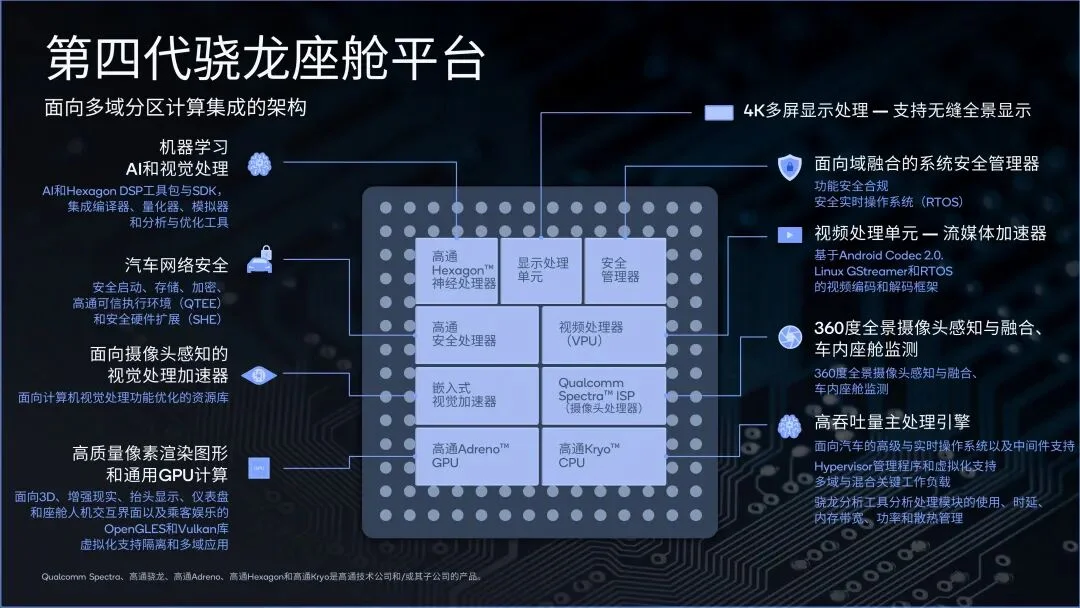
First, let's look at the CPU. The Xiaolong 8295 is equipped with Gaotong's sixth-generation Kryo CPU, adopting a quad super-core plus four big-core architecture. This design philosophy differs significantly from mobile phone chips; mobile chips prioritize energy efficiency and thermal management, typically incorporating more power-efficient little cores. In contrast, automotive chips benefit from better space, heat dissipation, and redundancy conditions, which facilitate greater performance release, hence they all use big cores.
The CPU computing power of the Xiaolong 8295 chip can reach 230K DMIPS. In comparison, the CPU computing power of current mainstream infotainment chips is basically designed according to the standard of 100K DMIPS, with the Xiaolong 8295's computing power directly doubling that figure.
Of course, Gaotong's brand-new CPU architecture, Oryon, is already on its way. This new architecture will likely be integrated into terminals such as automobiles next year, at which point CPU performance will be even stronger.
Next, looking at the GPU core for graphics processing, the Xiaolong 8295 adopts the sixth-generation Gaotong Adreno GPU, capable of achieving 2.9 trillion single-precision floating-point operations per second (2.9 TFLOPS) or 5.8 trillion half-precision floating-point operations per second (5.8 TFLOPS). This places it in a different league compared to other mainstream automotive infotainment chips. Even when compared to PC chips like the Apple M1, whose GPU computing power is 2.6 TFLOPS, the Xiaolong 8295 performs better, falling between the M1 and M2. This GPU performance is more than sufficient for playing mobile games.
It is precisely because of the stronger GPU performance, combined with the Display Processing Unit (DPU), that the Xiaolong 8295 can support up to thirty-two screens, or up to six 4K displays, which amounts to nearly fifty million pixels.
In terms of AI capabilities, the Xiaolong 8295 achieves a considerable leap. Its compute metrics are even more striking: it outperforms Apple's latest flagship chip, the A17 Pro, and surpasses the AI compute power of many autonomous driving chips. As in-cabin interaction design becomes more complex and usage scenarios expand, cockpit functions will extend across the entire vehicle, becoming richer and more immersive.
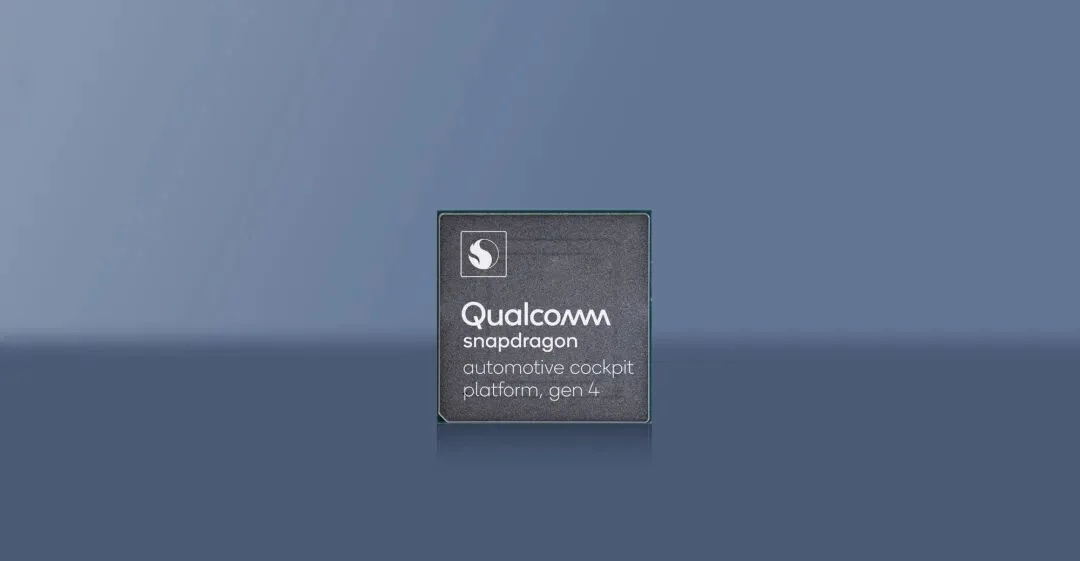
In addition, the core components of the Xiaolong 8295 include the Video Processing Unit (VPU), visual processing accelerator, security manager, and security processor. In short, among Gaotong's cockpit chip products, the latest is the fourth-generation Snapdragon Cockpit Platform, with the 'flagship' tier represented by the Xiaolong 8295.
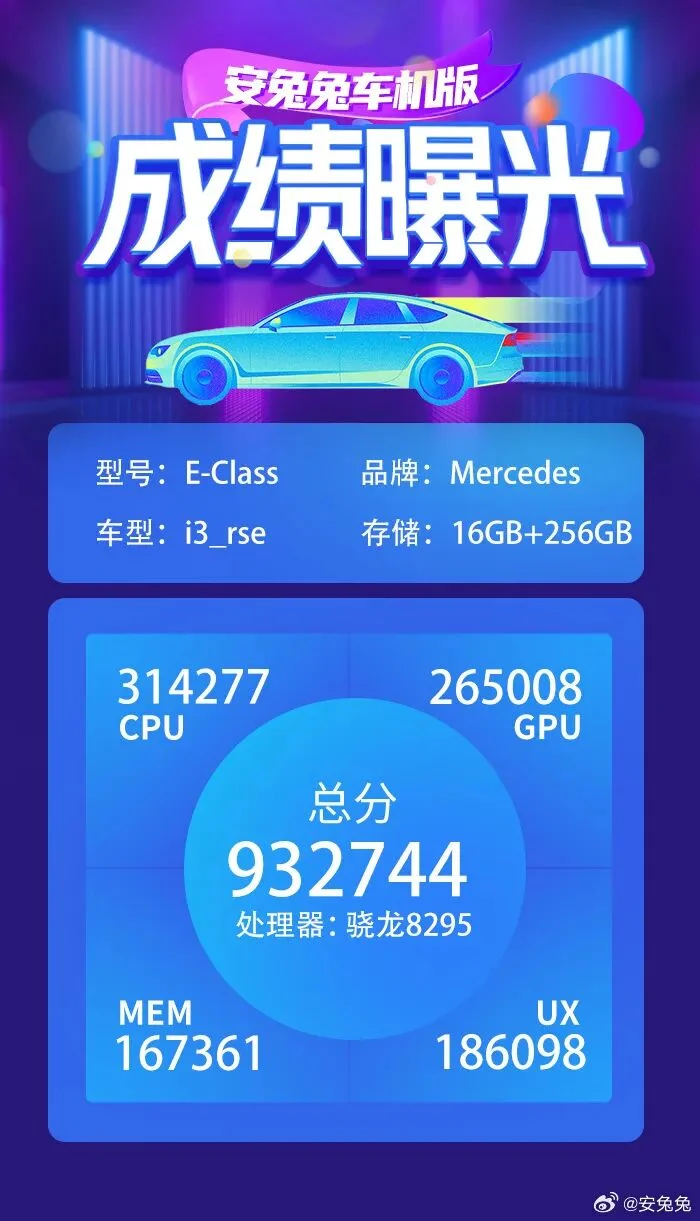
Given its strong performance, let’s run a benchmark. Antutuchejiban recently published benchmark data for the Mercedes-Benz long-wheelbase E-Class infotainment system, exceeding 930,000 points—double that of mainstream automotive infotainment chips. It is important to emphasize here that car infotainment benchmarks and mobile phone benchmarks belong to two different systems, making their scores incomparable. At the same time, the benchmark data presented reflects only theoretical performance; actual experience depends on the automaker’s deep software tuning.
So, where will the formidable performance of the Xiaolong 8295 be put to use?
02How is such powerful performance utilized?
Let’s return to the early stages of smart cockpits, when the goal of large in-car screens was simply to replace phone mounts and fundamentally change navigation and audio-visual experiences. Today, this objective has been largely achieved.
The next stage of smart cockpits is to evolve into computing centers. With basic user experience secured, audio-visual entertainment and gaming are poised to become the next growth drivers, but more importantly, intelligent experiences require a significant upgrade. The foundation for realizing these application scenarios lies in stronger computing power.
Vehicles equipped with the Xiaolong 8295 are currently laying out strategies around three key areas: audio-visual entertainment, gaming, and intelligent experiences.
High-Resolution Screens — The Foundation for Smoother Entertainment and Display
For in-car entertainment, screen size and resolution are the basics of excellent display quality. Driven by higher demands for cockpit entertainment, high-quality screens have now entered vehicles.
The all-new Mercedes-Benz Long-Wheelbase E-Class features a 12.3-inch instrument cluster, a 14.4-inch central control screen, and a 12.3-inch passenger screen.
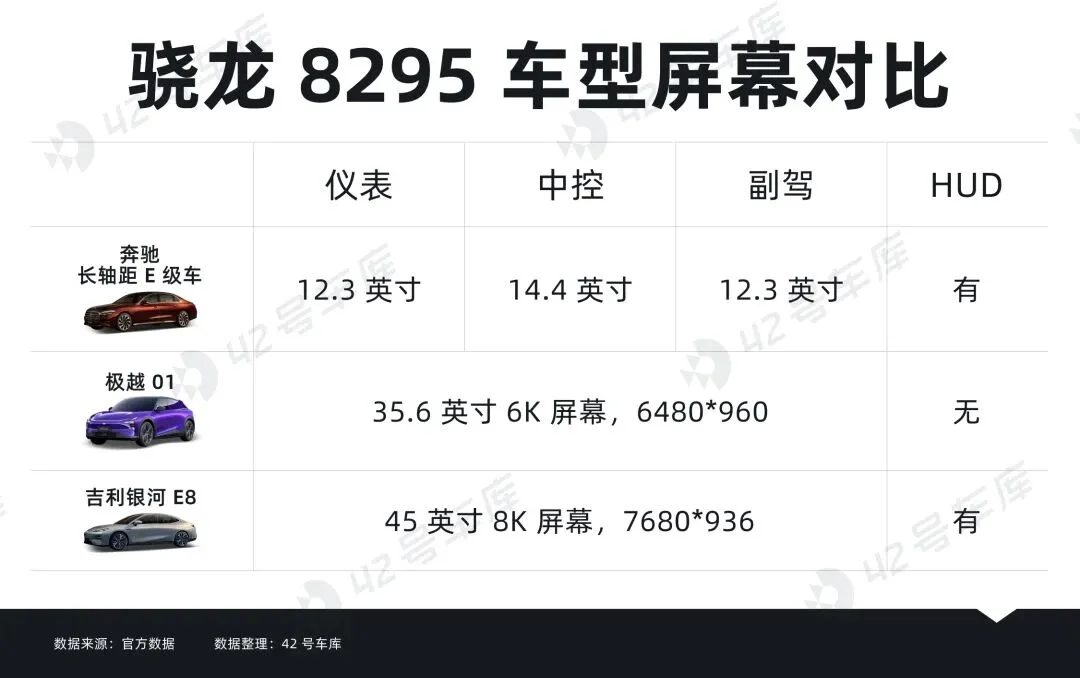
In the Jiyue 01 and Geely Galaxy E8, the front-row screens are integrated into single units rather than being spliced from multiple panels, offering significantly better immersion. The Jiyue 01 has a horizontal screen resolution of 6K, while the Geely Galaxy E8 reaches 8K horizontally.
The substantial increase in pixel count means greater pressure on graphics processing; the Xiaolong 8295 is designed precisely for such application scenarios. Conversely, with this stronger foundation, automakers have more room for imagination.
Hot Mobile Games — The Next Growth Driver
The significant performance boost in infotainment chips makes gaming one of the most prominent applications. Two years ago, Elon Musk equipped the Model S and X with chips comparable to the PlayStation 5, specifically preparing them for higher-load gaming.
At that time, many vehicles supported in-car gaming via screen mirroring or external devices, but this was less direct than launching an app directly. Meanwhile, the driver-phone interconnection model entered the spotlight, with NIO pursuing end-to-end connectivity between the NIO Phone and NIO vehicles using a dual Snapdragon platform.
Today, more powerful GPUs entering the vehicle cabin are designed to deliver superior gaming experiences.
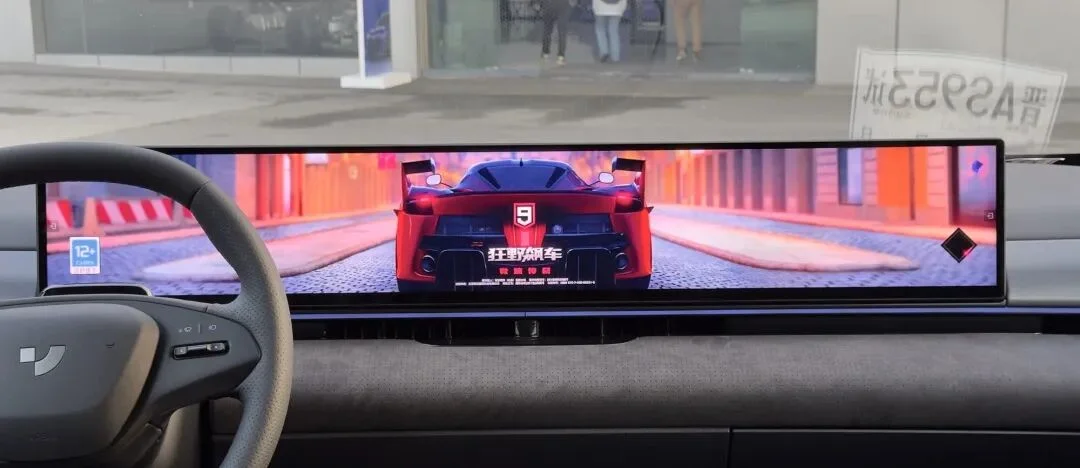
At the Jiyue 01’s infotainment system, we can play Kuangyebiaoche 9 in full-screen mode. Playing games on such a wide screen provides a remarkably expansive field of view; combined with the street views on either side of the car, the immersion level is significantly higher than that of smartphones or tablets.
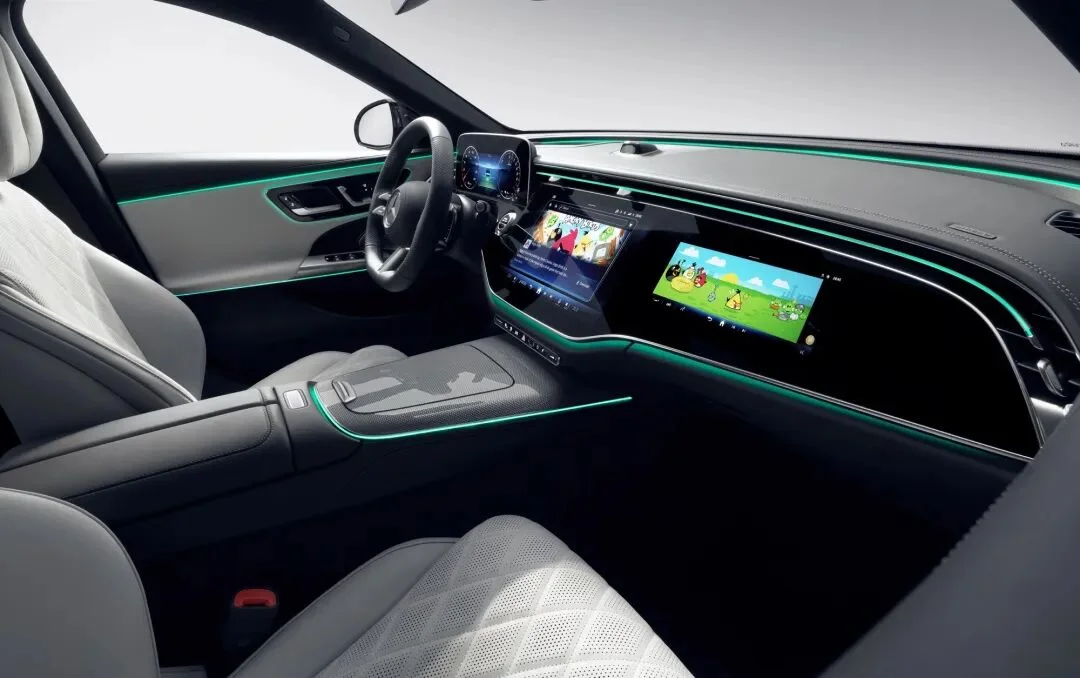
On the overseas version of the Mercedes-Benz E-Class, users can play Angry Birds on the screen, marking the first collaboration between Angry Birds and a luxury automotive brand.
The long-wheelbase Mercedes-Benz E-Class sold in China has taken things a step further by enhancing the navigation interface. Developed jointly with Unity Zhongguo, the system delivers more detailed map rendering along with special effects such as real-time lighting and shadows, grass animations, and water reflections. Achieving these visual effects requires stronger GPU performance, making the Xiaolong 8295 a superior choice.
It can be said that gaming and more refined UI design will become the next growth drivers in the smart cockpit sector.
AI Makes the Cockpit Smarter
In recent years, generative AI has advanced rapidly, with many automakers planning or already integrating large language models into their vehicles. Previously, constrained by local AI computing power, automakers relied on a combination of cloud and local processing for tasks ranging from simple voice recognition to complex AI models.
This approach created a problem: when vehicles are in areas with poor network coverage, such as underground garages or tunnels, cloud-dependent tasks either suffer from high latency and poor user experience or become completely unusable. The best solution is to shift the computational load previously handled by the cloud to the vehicle itself, processing it locally.
The upgrade in user experience from cloud-based to local processing is multifaceted. The infotainment system can respond quickly at any time without being affected by network conditions. Running locally also protects privacy, eliminating the risk of data leakage.
Jiyue 01 deserves mention here. By utilizing two NPUs of the Xiaolong 8295, it achieved fully offline voice capabilities. Official data shows that Jiyue 01’s voice recognition speed is 500 ms, with a response time under 700 ms. In contrast, the measured voice response time for most other models exceeds one second. Fully local voice capability is indeed faster than cloud-based alternatives.
Of course, official specifications and real-world test results are not directly comparable. We have recently acquired a production Jiyue 01 and will conduct our own testing round soon.
Beyond voice capabilities, AI large models will soon be integrated into vehicles. The Xiaolong 8295, with its stronger AI computing power, can naturally deploy some models locally to achieve faster response times.
Leveraging the performance advantages of Xiaolong 8295, different automakers are focusing their efforts on three major areas: audio-visual entertainment, gaming, and AI. It is precisely because of the performance advantages of Xiaolong 8295 that smart cockpits have greater room for evolution.
For the next stage of intelligent cockpits, a more versatile cockpit experience and core functions tailored to specific travel scenarios represent the direction of evolution. The mass production integration of the Xiaolong 8295 has thus accelerated the evolution of intelligent cockpits by another step.
03Empowering the Intelligent Vehicle Ecosystem with the 'Digital Chassis'
Whether it is a century-old automaker or a new entrant in vehicle manufacturing, intelligence and electrification are core objectives. The foundation of intelligence lies in chips. Meanwhile, having just one cockpit chip is far from enough. Gaotong's layout aims to provide a 'digital chassis' for intelligent vehicles, starting from the most fundamental design of the vehicle to deliver an intelligent solution that spans the entire vehicle system.
Thus, the birth of Xiaolongshuzidipan provides the answer for functions such as in-vehicle infotainment, intelligent driving, in-vehicle connectivity, and vehicle-to-cloud services.

Among them, the third-generation flagship Snapdragon cockpit platform — Xiaolong 8155 — has already become a 'standard configuration' for many models. At this Guangzhouchezhan, including the 2023 Kaimeirui, Bieke ELECTRA E5 Xianfengban, CHANGAN NEVO A07, Chuanqi M8 Zongshi, Chuanqixinnengyuan E8, Ford Ranger, VOYAH PHEV, Lutesi EMEYA, MG Cyberster, Nezha X, the all-new BMW 5 Series, TANK 700 Hi4-T Launch Edition, WEY Blue Mountain DHT-PHEV, Woerwo EM90, and Xingjiyuan ES, among other models, have been equipped with this chip.
The fourth-generation Snapdragon Cockpit Platform has just entered vehicles, with nearly 10 car models already equipped with this generation of cockpit chips.
In the field of intelligent driving, Gaotong also has a layout. In China, GWM uses Gaotong's Snapdragon Ride platform on its own models through its autonomous driving company Haomozhixing. After combining the Snapdragon Ride SoC and accelerators, the Xiaomohe 3.0 platform built by Haomozhixing achieves a single-board computing power of 360 TOPS, which can be continuously upgraded to 1440 TOPS. It is precisely based on this platform that Haomozhixing's city navigation-assisted driving NOH is being implemented in multiple cities.
Data shows that 250 million vehicles worldwide have adopted Xiaolongshuzidipan. Since 2021, more than 40 domestic automotive brands have launched over 100 models using Xiaolongshuzidipan solutions.
In overseas markets, brands such as Audi, BMW, Buick, Kaidilake, and Volvo have also launched numerous models based on Xiaolongshuzidipan. For example, Kaidilake models adopting Gaotong's intelligent driving solution, the Snapdragon Ride platform, have been released. Recently, Kaidilake announced that its all-electric Escalade (ESCALADE IQ) will be equipped with the Snapdragon Cockpit Platform, Snapdragon Automotive Connectivity Platform, and Snapdragon Ride Platform. This model will be delivered by next year. Models also equipped with Xiaolongshuzidipan include Woerwo EX90. Compared to the current generation model, the information and entertainment system speed of the EX90 has doubled directly, and the graphics processing speed has increased tenfold.
Overall, in 2023, when the automotive circle continues to intensify competition and innovation accelerates, new features such as 5G, AI, and vehicle-phone interconnection are entering vehicles. Especially for vehicle-phone interconnection, communication between multiple devices, computing power sharing, and ecological integration actually cannot do without the support of underlying chips and development environments. Gaotong, with deep accumulation in terminals of multiple categories such as mobile phones and automobiles, may enable more possibilities for our driving experience in the future.
Written by: James Edited by: James