


Jiyue 01 Cabin Review: Voice Control and SR Navigation Lead 42Mark Rankings
In 2024, you might notice one thing: on the one hand, the mass production of the 8295 has led all existing brands and models to switch from their previous 8155 versions to 8295 versions; on the other hand, we seem to hear very little about how significant the improvement in intelligent experience brought by the 8295 actually is.
If you look for a standout example among vehicles now equipped with the 8295, the spotlight shifts away from the industry’s top-tier players—collectively known as Weixiaolimi (NIO, XPENG, Li Auto, and Xiaomi)—to the seemingly unassuming Jiyue 01 on the market today.
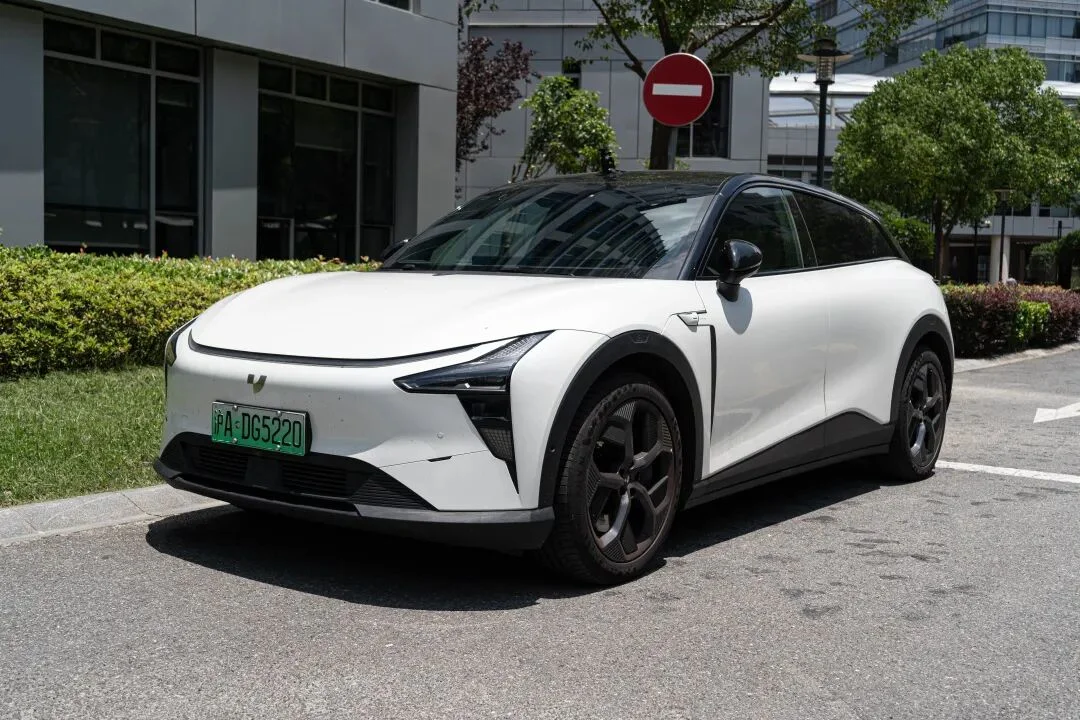
As one of the first domestic models to feature the 8295 chip, the Jiyue 01 reveals a fundamentally different definition of the smart cockpit the moment you get behind the wheel. To summarize my driving impressions in one sentence: "Other car infotainment systems rely on screens; the Jiyue 01 relies almost entirely on voice commands."
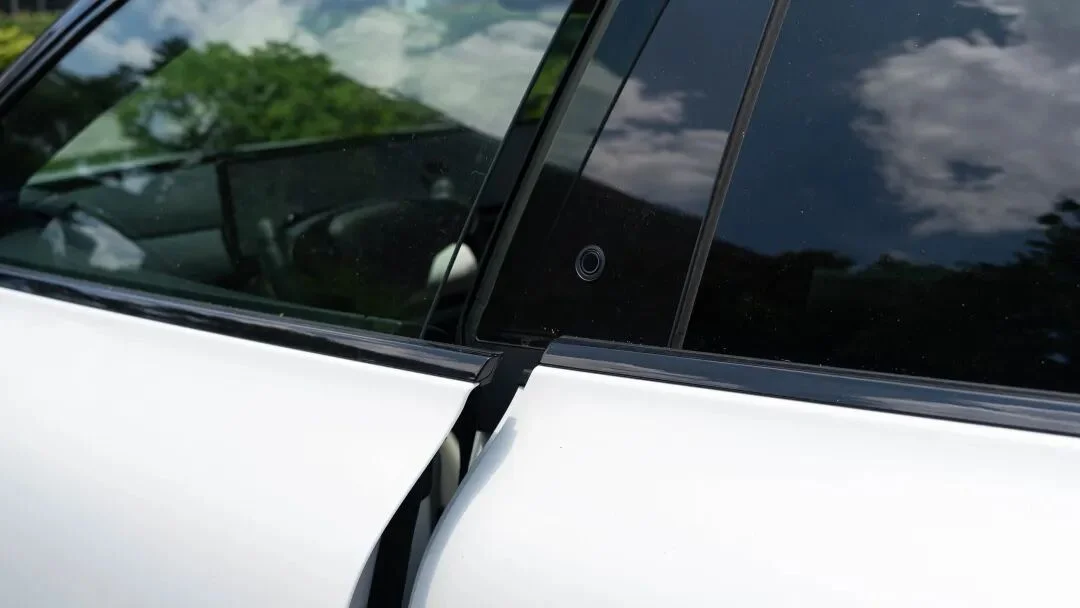
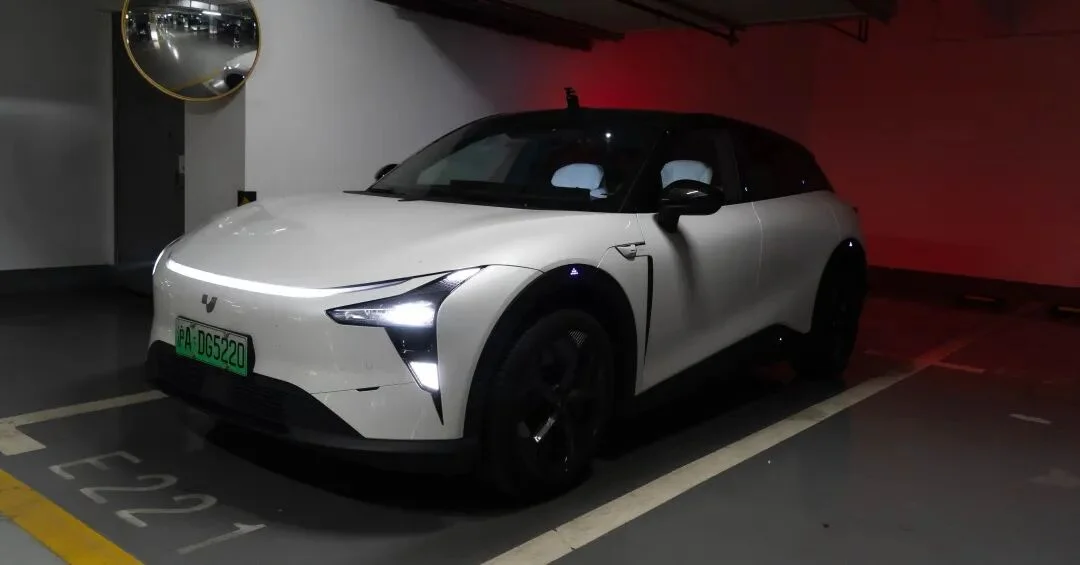
Beyond what meets the eye, the Jiyue 01 boasts even more distinctive features. It completely eliminates traditional door handles, replacing them with touch-sensitive buttons located on the B-pillar and C-pillar. The standard four electric doors open with a sense of ceremony, creating a novel first impression for many observers.
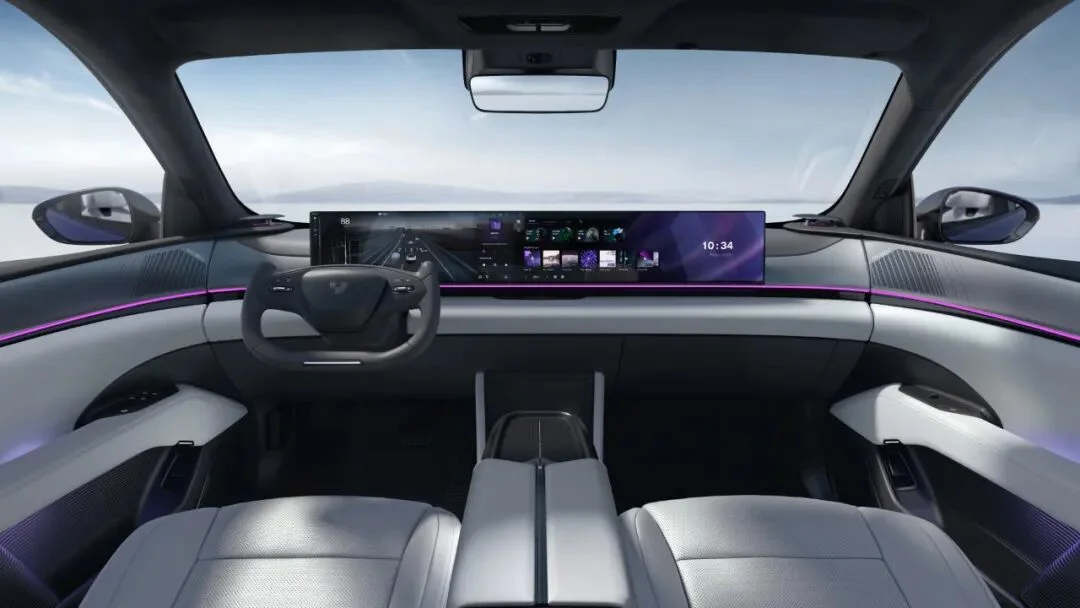
Stepping inside further highlights the boldness of the Jiyue 01’s design. A massive 35.6-inch integrated screen dominates the field of view, leaving only physical buttons for unlocking the doors and controlling the windows. Turn signals are controlled via the semi-rim steering wheel, and gear shifting is integrated into the touchscreen, mirroring the layout found in the Tesla Model S.
The front cabin layout differs from the norm, featuring a sunken cupholder and storage area in the center to enhance connectivity between the driver and front passenger. With an overall length of 4,853 mm and a wheelbase of 3,000 mm, the resulting wheelbase-to-length ratio allows for a well-proportioned cabin arrangement: the front row is spacious, while the rear seats and trunk offer ample room. Paired with the same powertrain as the Zeekr 001, the Jiyue 01 strikes a balance between driving dynamics and ride comfort.
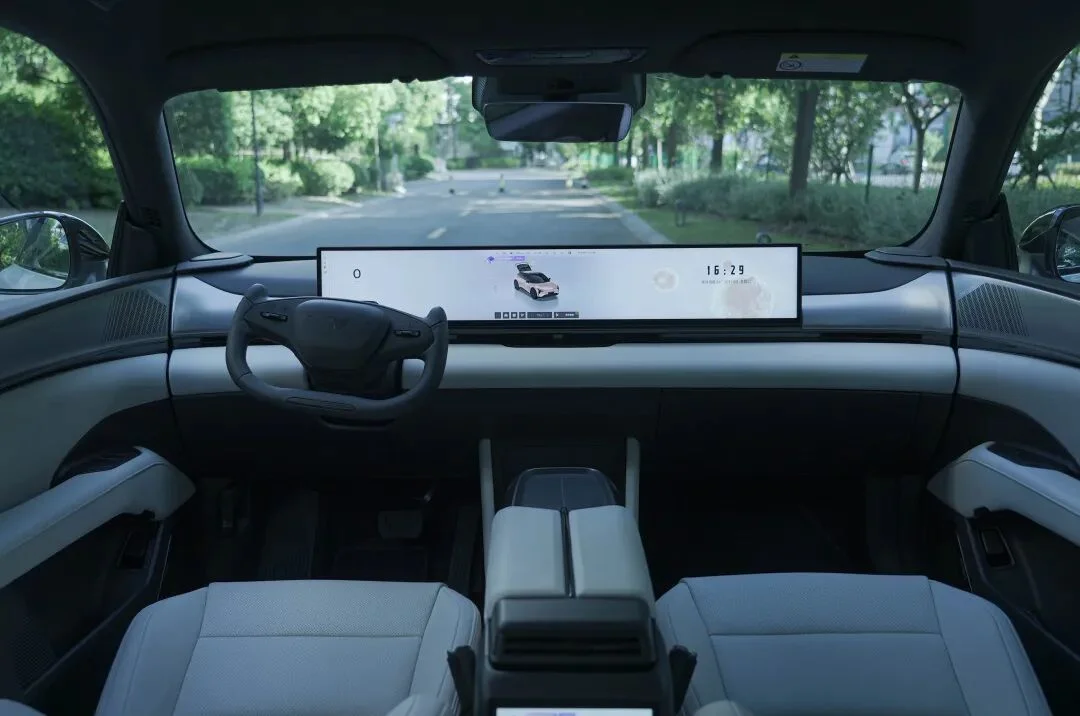
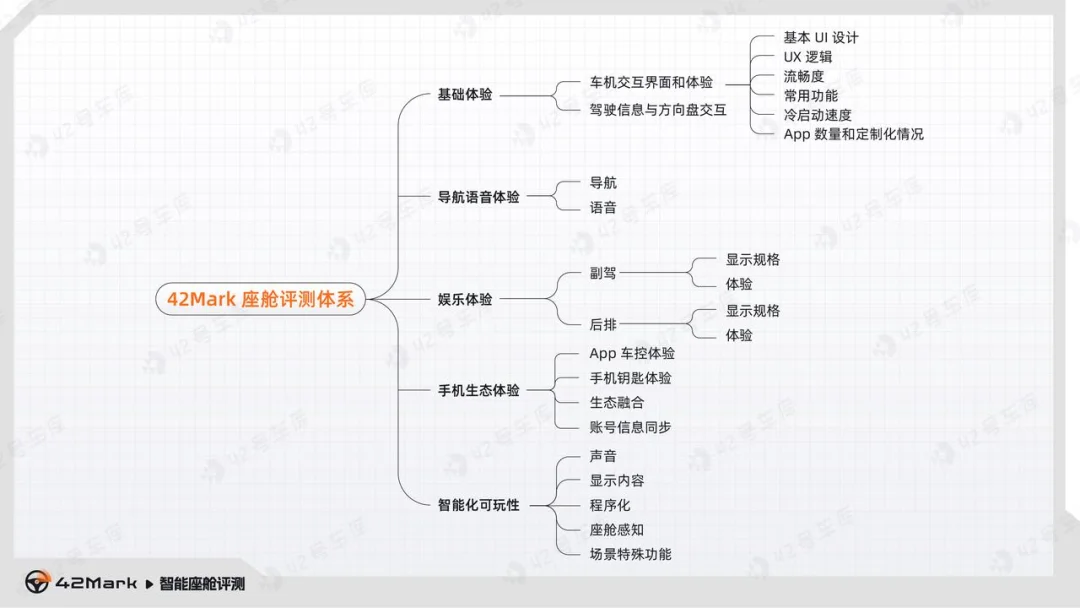
This raises an important question: In a market where features like refrigerators, large screens, and plush sofas are becoming increasingly competitive, why did Jiyue release such a distinctive vehicle? Can intelligence, technology, and voice control truly become selling points for the Jiyue 01? This also sparks curiosity about where the Jiyue 01 stands in terms of smart capabilities under the 42Mark cabin evaluation system, and what these features and definitions bring to Jiyue. We will evaluate it across five dimensions: basic experience, navigation and voice interaction, entertainment, mobile ecosystem integration, and smart playability.
01Jiyue 01 Cabin Unboxing Experience
The test model was the 2023 Jiyue 01 Max Performance top-tier version, finished in Yushuo White interior, equipped with a U-shaped steering wheel and the Comfort Package. The cabin chip uses the 8295 processor paired with two NPUs delivering 60 TOPS of computing power. The software version is V1.5.0; the latest V1.6.0 update only covers autonomous driving improvements, with no changes to the cabin interface or functionality compared to the current version.
Basic Experience
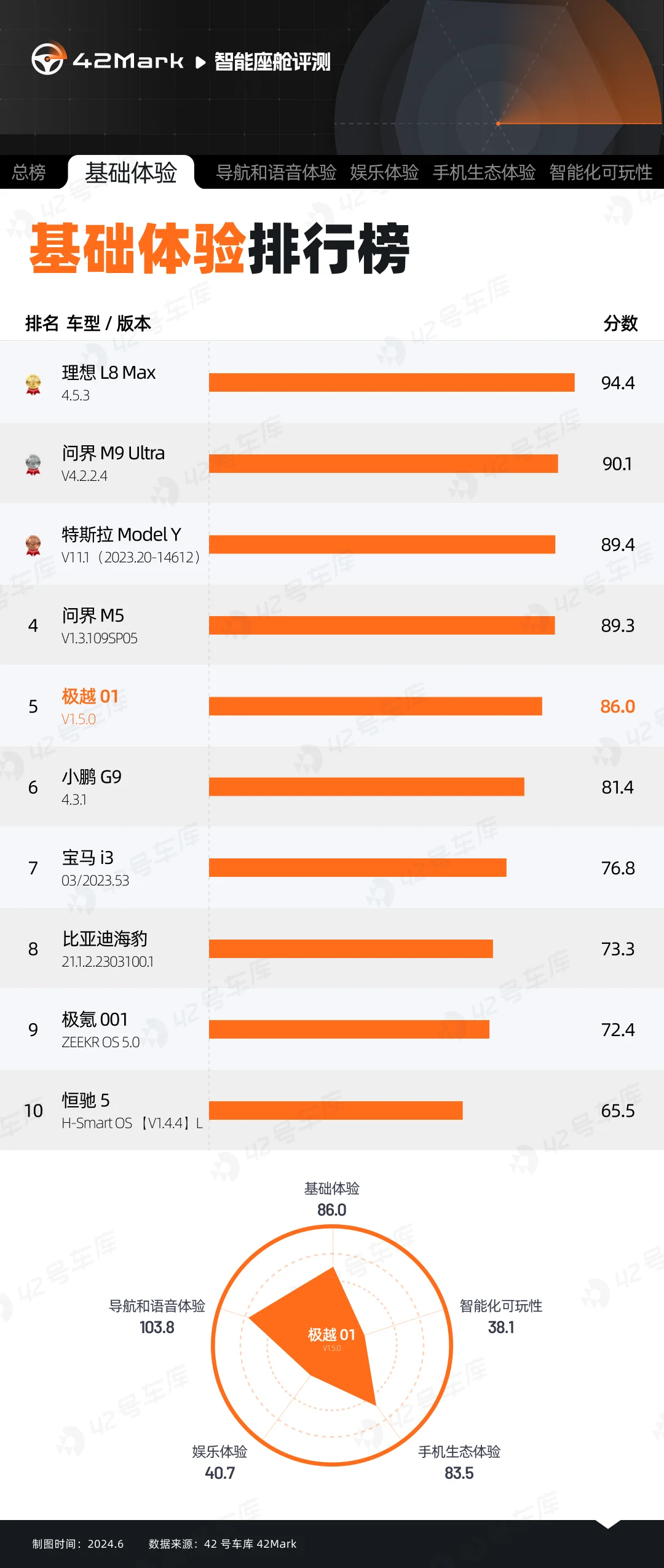
Under the 42Mark cabin testing standards, basic experience reflects the maturity and usability of a screen-based vehicle infotainment system. The Jiyue 01’s V 1.5.0 system scored 86 points, ranking fifth on the current 42Mark leaderboard, behind Lixiang, AITO, and Tesla. For a new brand’s first model, this mid-tier result is respectable.
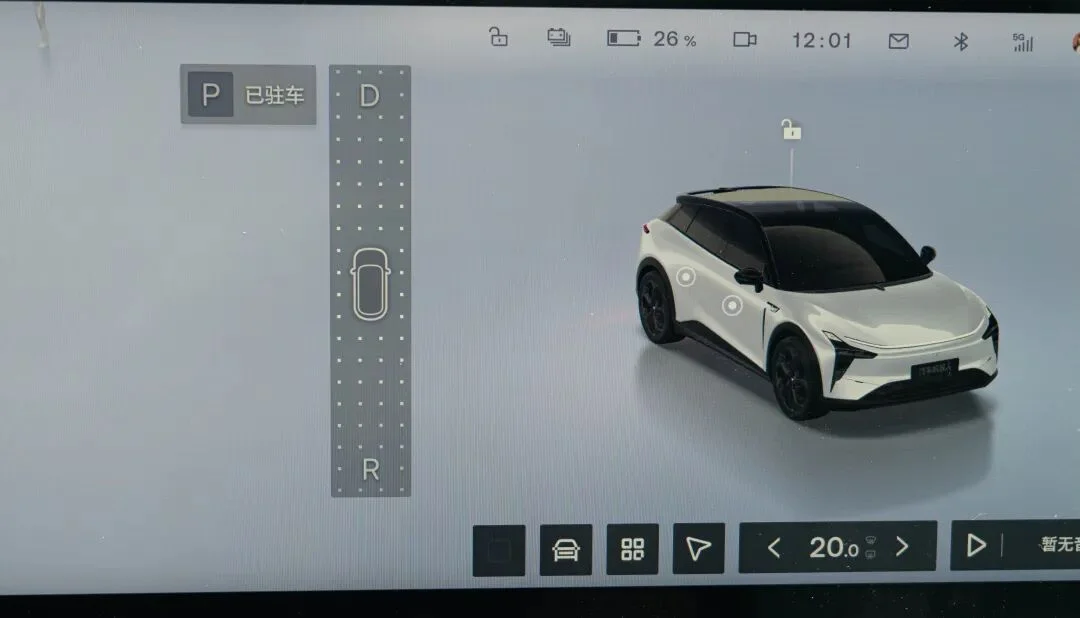
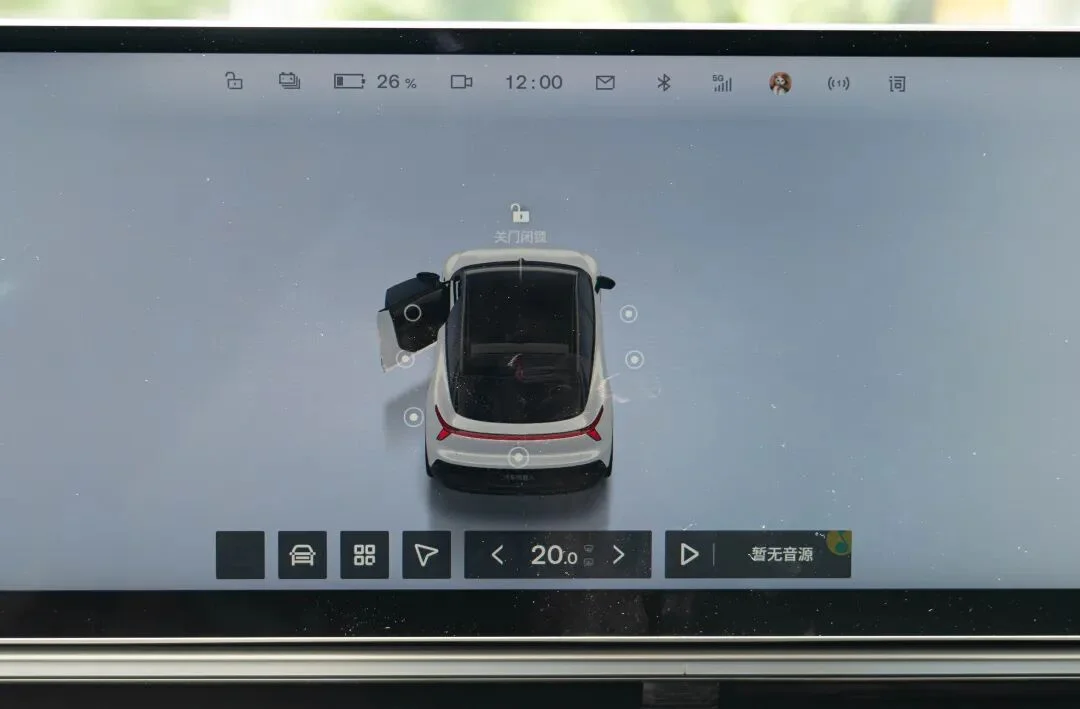
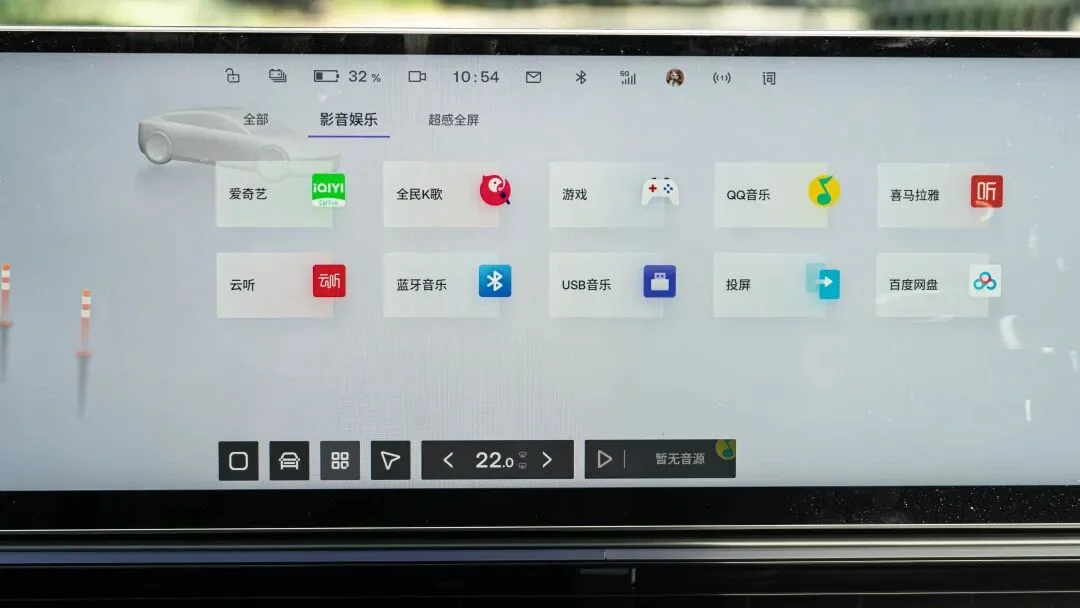
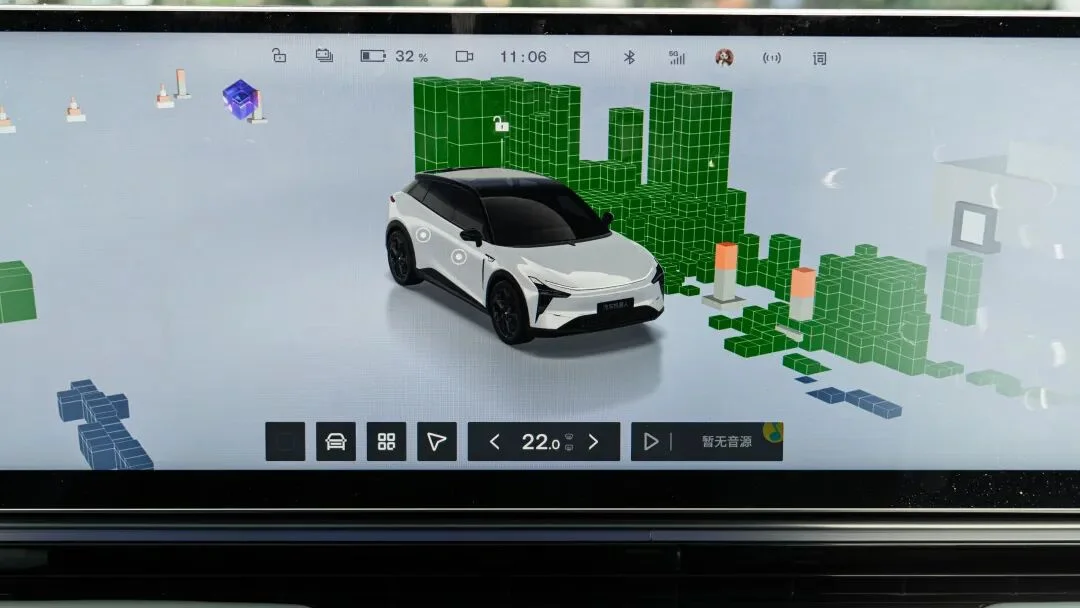
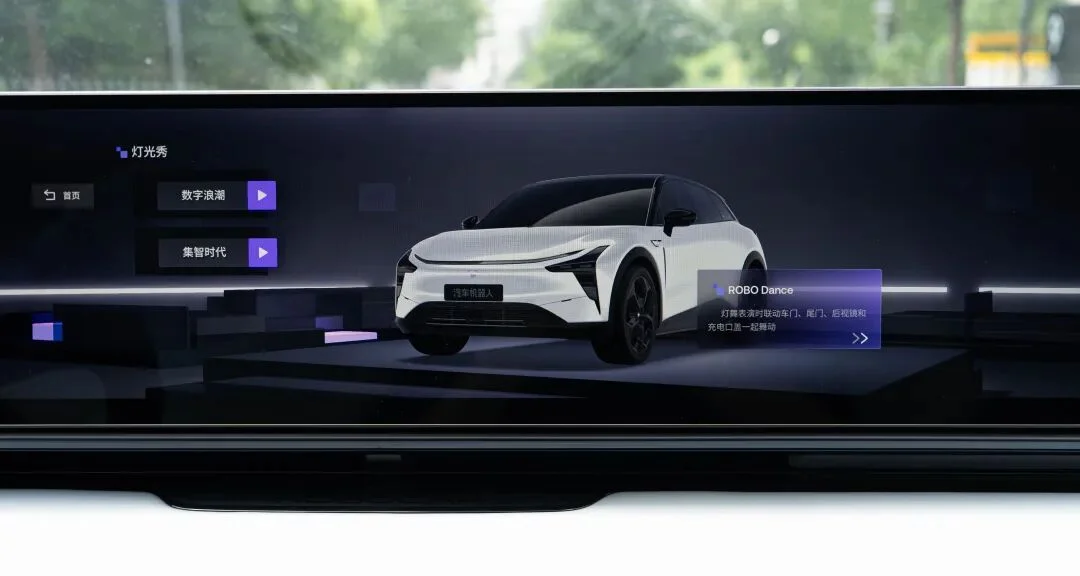
Thanks to the large screen’s 6K resolution, the 3D models in the Jiyue 01 are rendered with exceptional detail. Lighting, projection, reflection, and rendering effects are all top-tier. Notably, the visual fidelity extends to environmental elements such as traffic cones and pillars, which display precise reflections within the virtual environment. The model integrates functions like locking/unlocking, the electric opening and closing of all five doors, and the charging port, accurately mirroring the vehicle’s real-time status.
Although the long screen is visually divided into three zones for the instrument cluster, center console, and passenger display, the model transitions to different interfaces based on your operation flow, with conversion animations that are exceptionally smooth. In P gear, if you tap the information details button, the model also provides refined, fluid animations to help you understand, while in D gear, the model is responsible only for SR display. As more cars like to set the car model as the main interface, achieving the level of Jiyue 01 is rare; it can be said that Jiyue 01 fully leverages the performance advantages of the 8295 GPU.
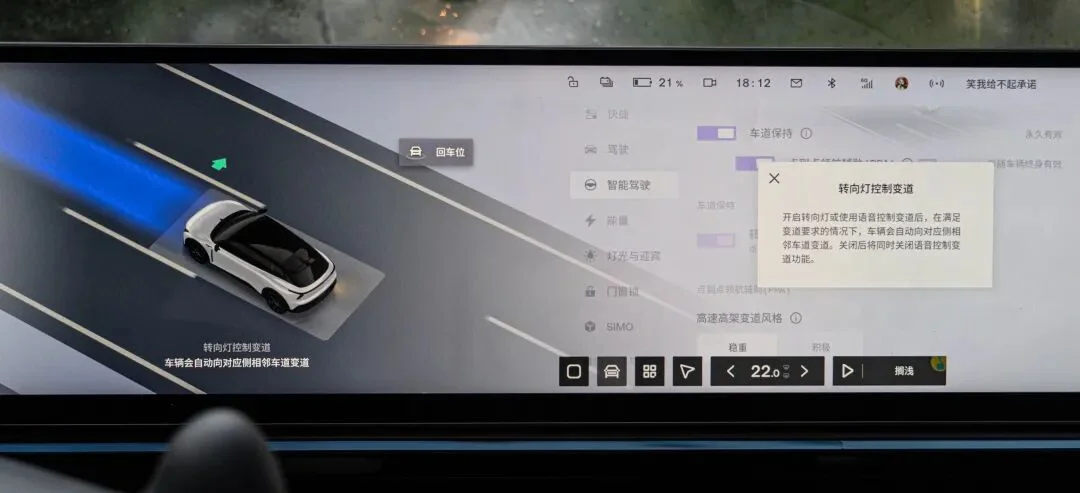
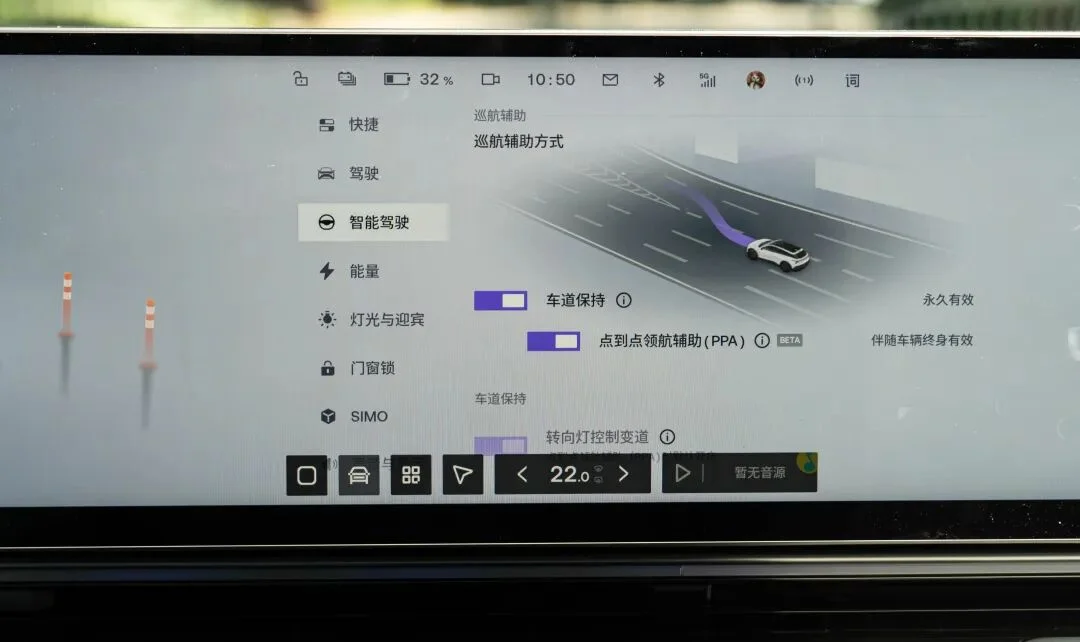
The Jiyue 01’s UI style unifies purple and white tones, evoking a cool, futuristic aesthetic. It is worth noting that the Jiyue 01 is one of the few brands to maintain such cohesive visual identity (VI) integration. From marketing materials and the App interface to the vehicle’s interior and exterior design, as well as the infotainment UI, the VI consistency is remarkably high—a notable achievement. Interaction logic for layer switching and overlaying is clear and intuitive. While opening other applications does not trigger intelligent split-screen automatically, using a two-finger swipe left or right conveniently splits the application between the center and passenger displays. The learning curve is low, and the overall interaction flow is smooth.
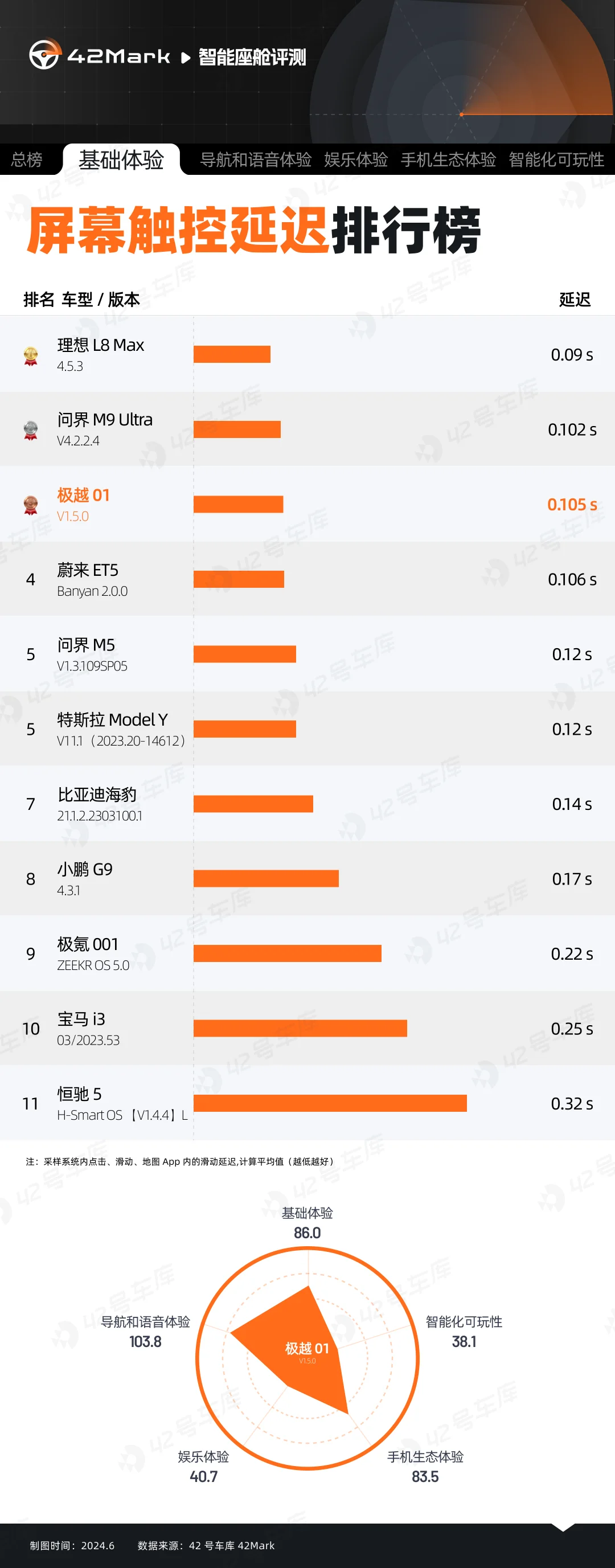
In terms of responsiveness, multiple sampling and sliding tests revealed that the Jiyue 01 has an average screen touch latency of 0.105 seconds. This ranks just behind the Li L8 and AITO M9, indicating that its operation feels direct and responsive.
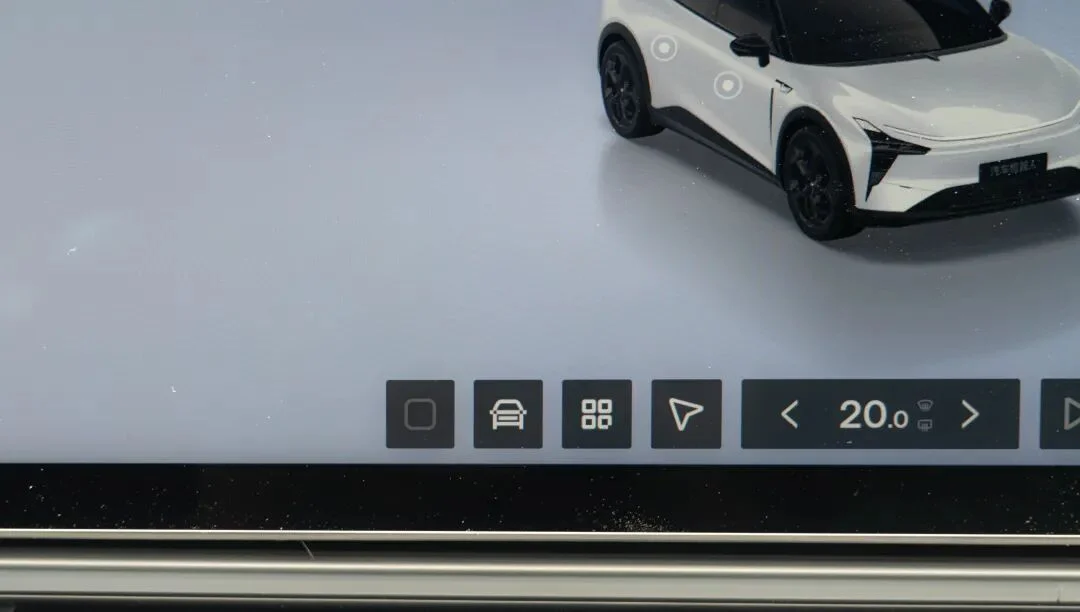
However, the infotainment system has shortcomings. The four physical vehicle control buttons at the bottom are small. Additionally, due to the stepped design of the screen base and the screen’s recessed placement, the actual posture for pressing them is uncomfortable and unnatural. Screen gesture interactions are also limited: two-finger vertical swipes only exit apps, while horizontal swipes move content to the passenger display.
The app ecosystem remains a weak point for this system. Video options are restricted to Aiqiyi and B Zhan, while music is limited to the native QQ Yinyue. Support for other third-party applications is largely absent. Relying solely on these few apps, the Jiyue 01 still needs to strengthen its application ecosystem.
Regarding steering wheel interaction, the Jiyue 01 clearly prioritizes visual design. It features only two sets of physical buttons on the left and right sides, which can be pressed or toggled up and down to control functions such as intelligent driving, speed, and music playback.
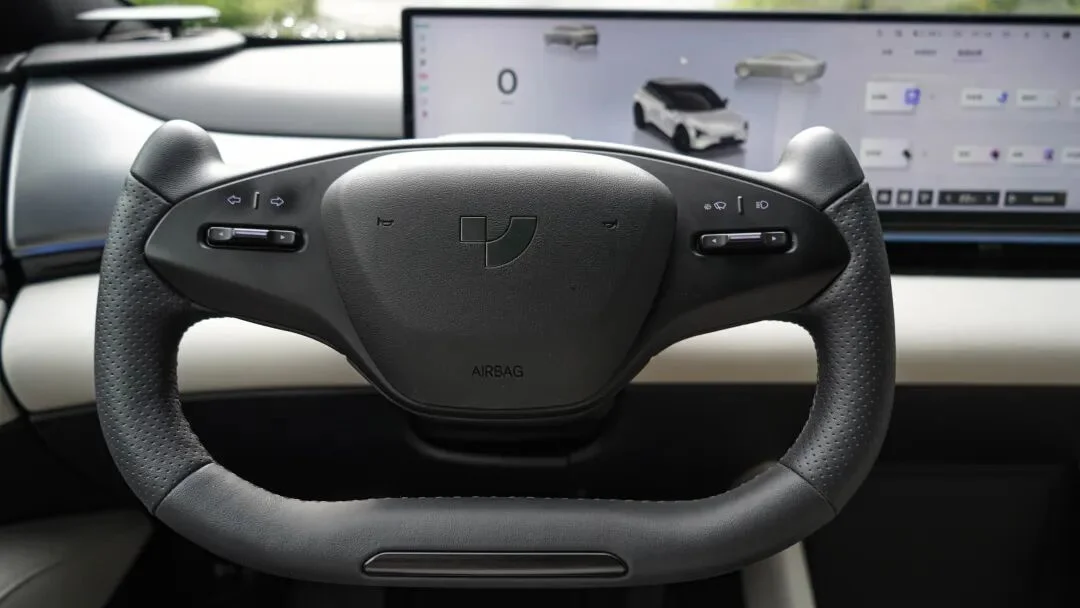
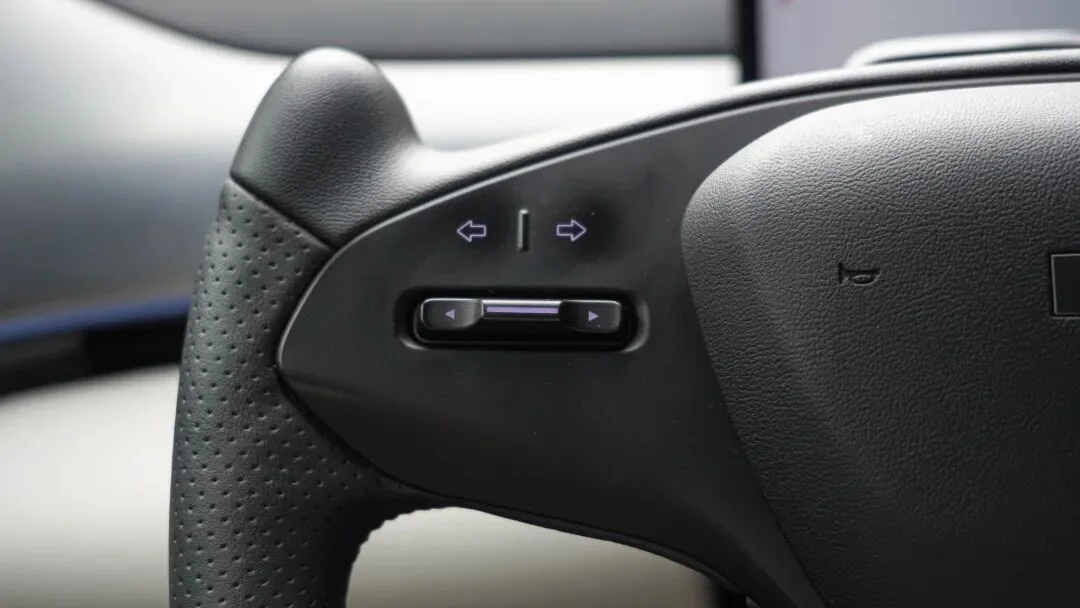
The downside, however, is that while the idea of integrating commonly used functions such as turn signals, hazard lights, and windshield wipers into the steering wheel panel to eliminate stalks is good, the use of capacitive buttons results in touch feedback that is delayed and not crisp enough. Compared with Tesla, which uses a similar design, the experience is inferior. Jiyue has cleverly implemented some functional remedies, such as "automatic turn signal completion," which automatically activates the corresponding direction's turn signal when the vehicle performs a lane change maneuver. However, this only sounds like a closed-loop experience; it would be preferable to adopt common physical buttons or stalks instead.
Overall, the Jiyue 01's basic experience meets mainstream standards, and its attention to detail is evident in features such as motion effects. How would you rate this original-style infotainment system?
Navigation and Voice
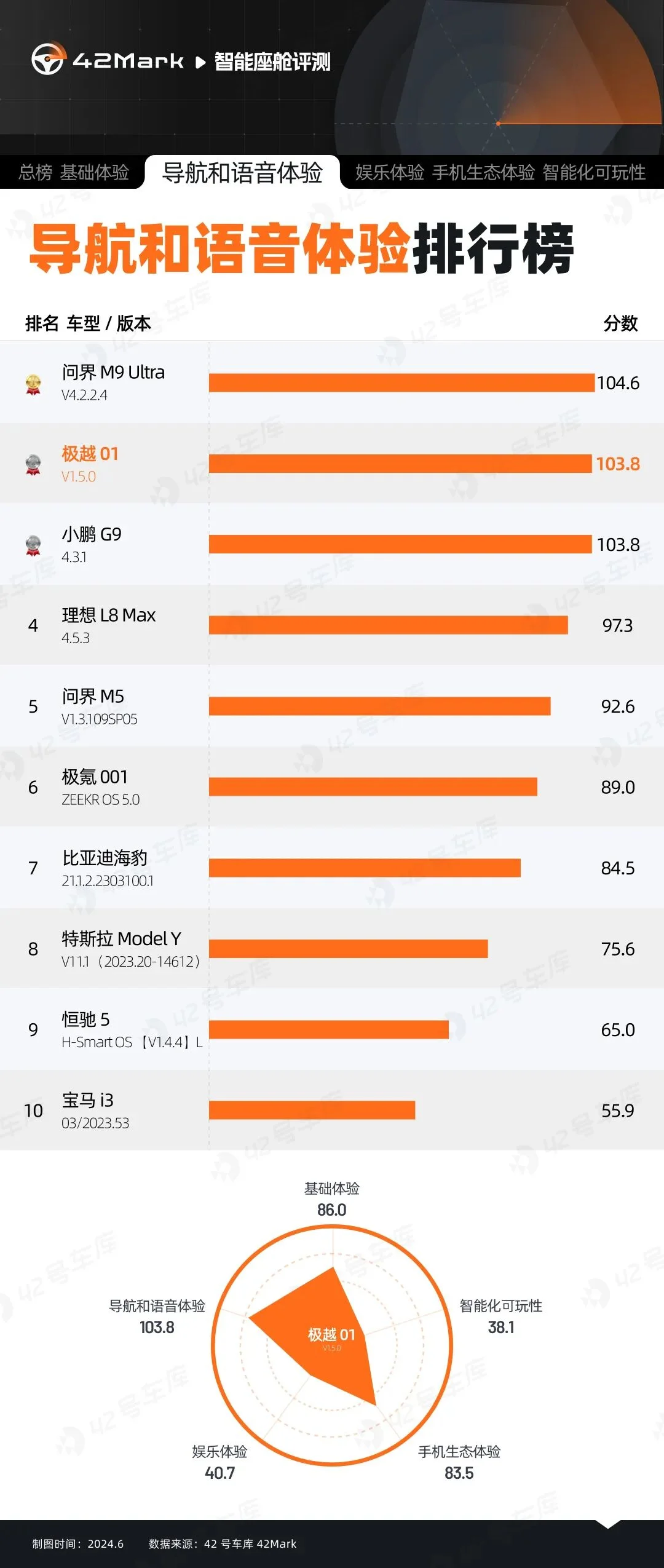
After completing the basic experience, it was time to take Jiyue 01 on the road to test whether its navigation system is easy to use. We drove Jiyue 01 along a twenty-six-kilometer test route, passing through various road types in Shanghai including highways, elevated roads, surface streets, and tunnels, and also tested the voice function experience. In the overall navigation and voice experience module, we scored 103.8, ranking second in the current 42Mark leaderboard; the score for navigation alone was 104.2.
The Jiyue 01 uses Baidu Maps, which provides complete lane information, thumbnail previews, and intersection distances. Information updates quickly after passing through an intersection, with no navigation deviations occurring throughout the journey. Compared to the more mainstream Amap, the actual experience difference is not significant.
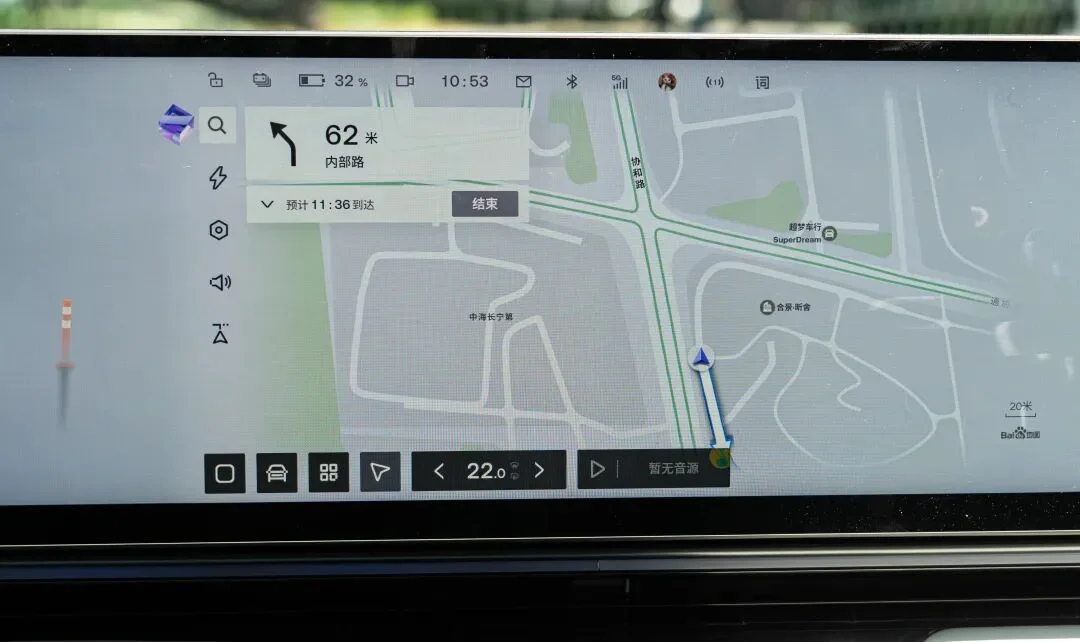
Although it lacks a Head-Up Display (HUD), the Jiyue 01’s integration of navigation and SR (Surrounding Reality) display is highly innovative. The SR interface differs from other solutions in that Jiyue merges navigation visualization into the virtual environment. When high-definition maps are available, road information rendering is extremely detailed; additionally, models for pedestrians, vehicles, electric scooters, buildings, and traffic cones are sufficiently refined to maximize the restoration of the real-world environment.
Regardless of whether high-definition maps are present, the Jiyue 01 displays a navigation-based guide line on the current SR interface to indicate the vehicle's path and lane. Theoretically, if this approach continues to develop, it could replace existing standalone navigation interfaces, effectively merging them with the SR display.
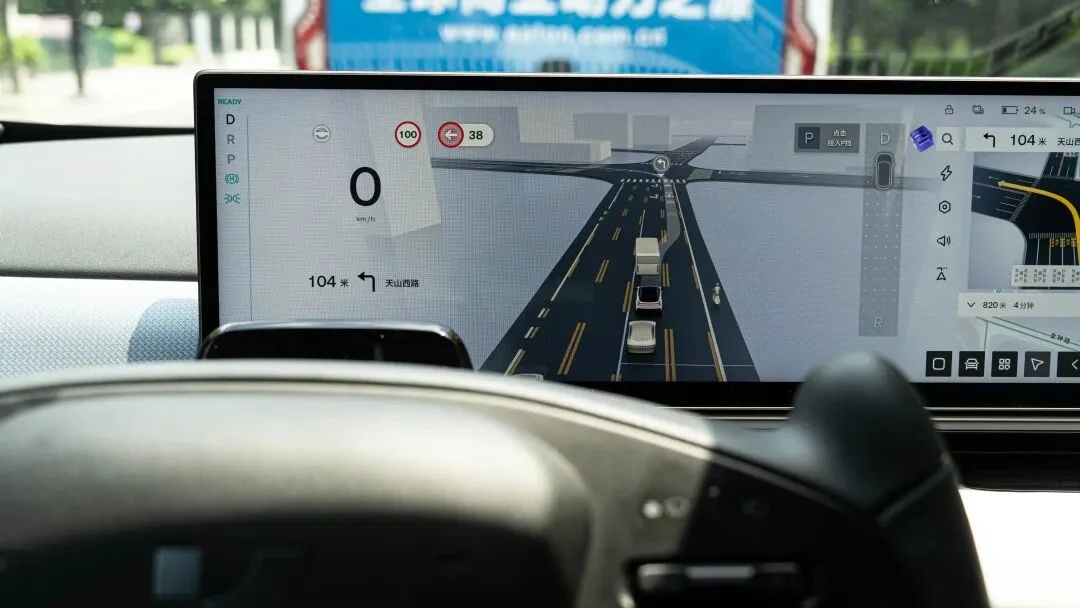
However, challenges remain: can this solution achieve sufficient precision in navigation information fusion, and will there be significant experience gaps across different road conditions? Only Jiyue can answer this, as few companies possess both the capability to define navigation software and control the in-vehicle system.
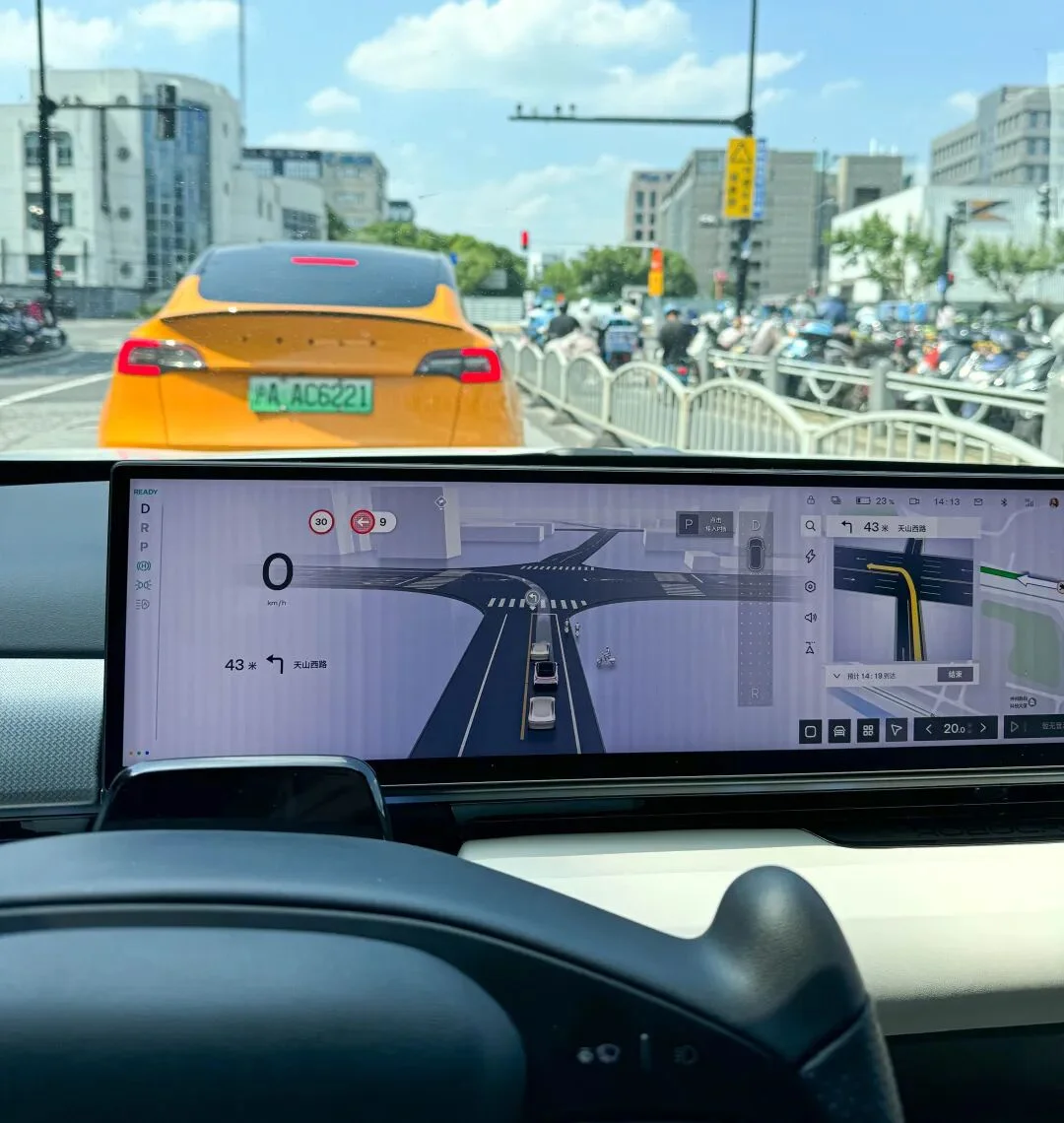
Another subtle highlight involves how the Jiyue 01 handles traffic light countdowns. While most map applications display this information directly on the map, Jiyue integrates the countdown into the SR area. When the perception system detects the actual countdown, it prioritizes displaying real-time data; when unavailable, it relies on cloud data displayed in the same position. This advantage prevents contradictory information from appearing on different interfaces when cloud and perception data mismatch, which would otherwise be counterproductive.
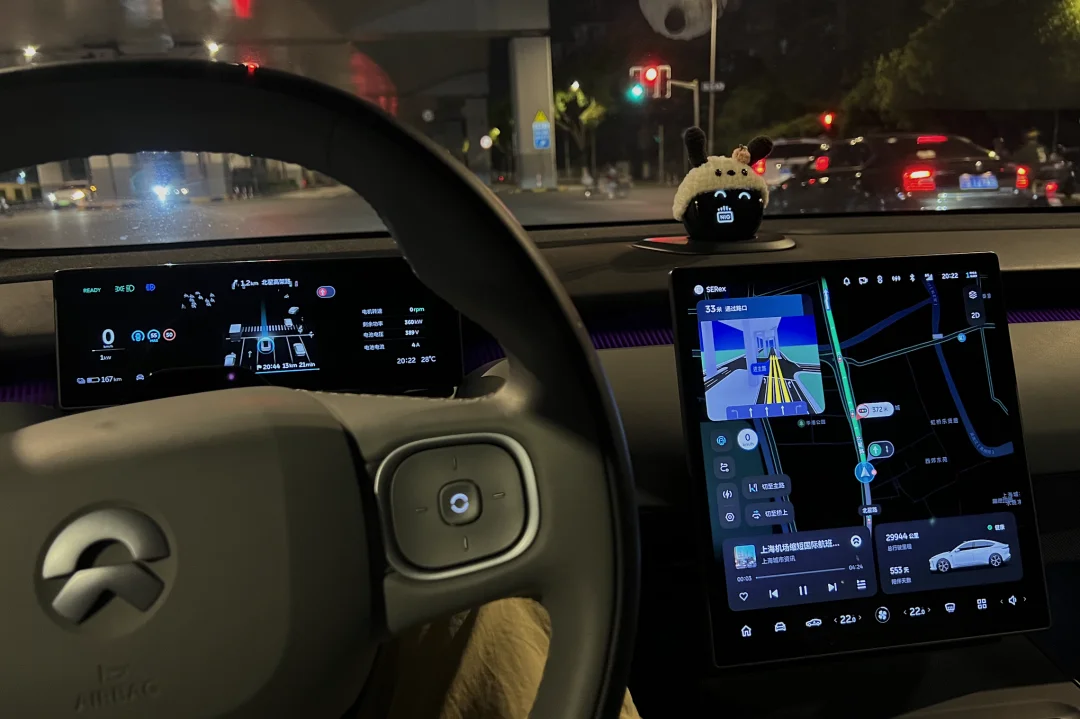
Finally, Jiyue recently added a small easter egg: saying 'Open OCC' to SIMO triggers a surprise, switching the visualization to a Minecraft-style block mode. This provides entertainment while stuck in traffic by viewing the SR interface.
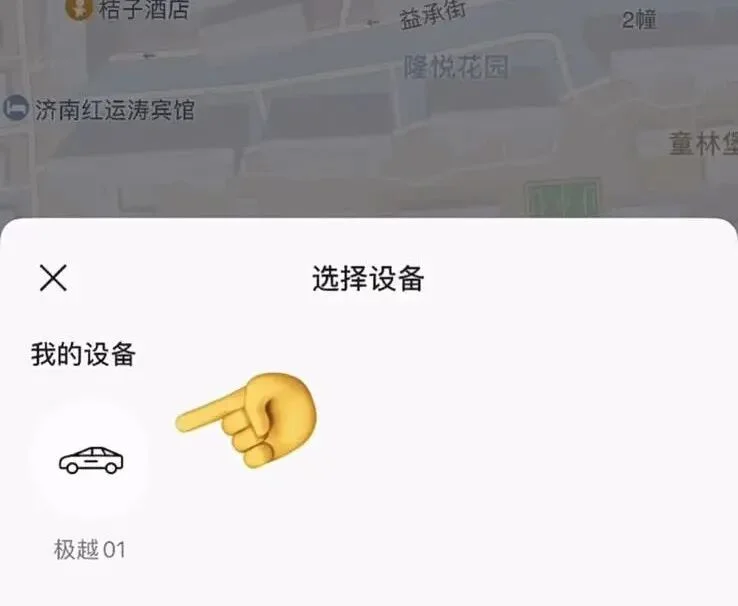
One drawback remains puzzling: for the convenience of daily navigation, addresses received on a smartphone typically need to be sent to the vehicle. However, the Jiyue 01 only supports sending locations to the car after binding the phone App and WeChat.
Moreover, although Baidu Maps supports seamless navigation between mobile and in-car systems, the Baidu Maps app on the Jiyue 01 does not allow account login. This prevents syncing information across devices and transferring data from the mobile Baidu Maps app to the head unit. It also lacks native support for third-party apps to send locations, reducing its navigation convenience.
Let’s discuss its voice experience. In the past, automakers often emphasized "response speed"—the time elapsed from issuing a command to the head unit reacting. The Jiyue 01 is not only incredibly fast; after using it a few times, you’ll find that controlling certain features via voice is faster than manual operation. Additionally, the Jiyue 01’s voice control covers a wide range of functions, including doors, windows, steering wheel, mirrors, and driving modes, with almost no feature left out. This enhances usability and reduces the risk of distraction by minimizing manual interactions while driving.
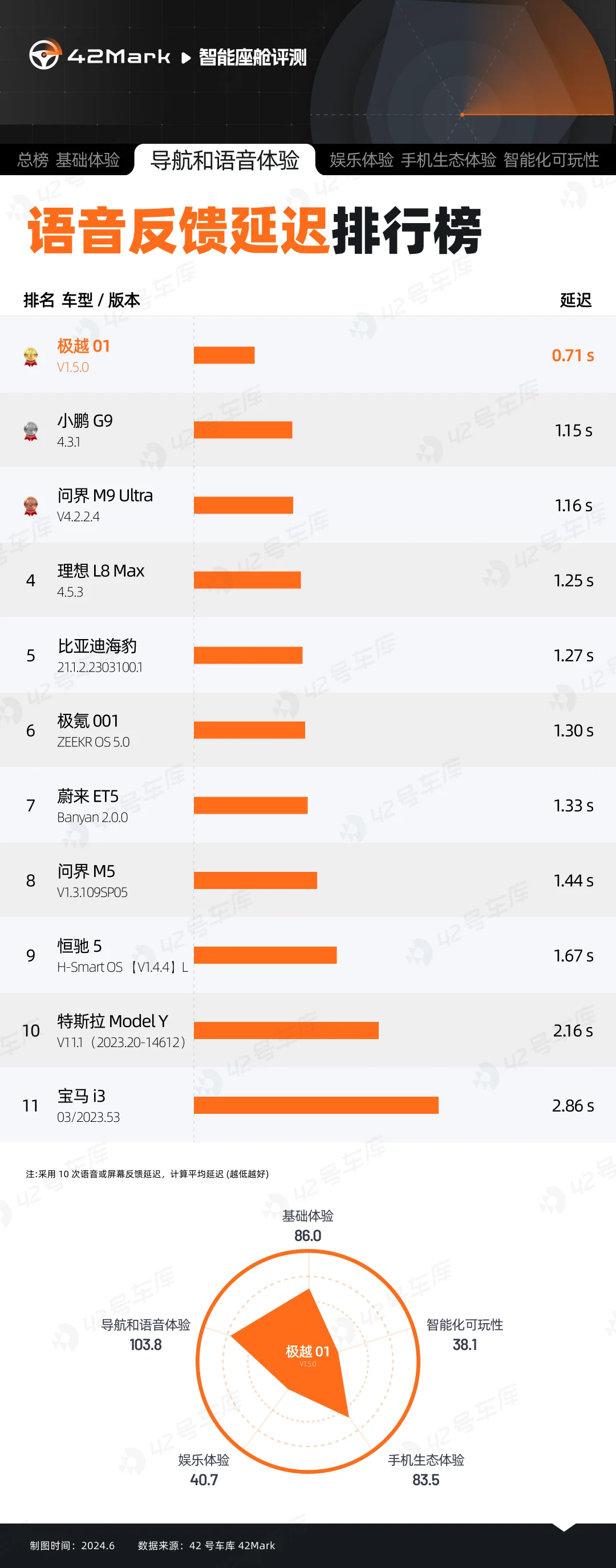
The Jiyue 01 leads significantly in command recognition speed. Across multiple dimensions, ten tests yielded an average voice feedback latency of 0.71 seconds, which is one-third faster than the XPENG G9 running version 4.3.1 last year.
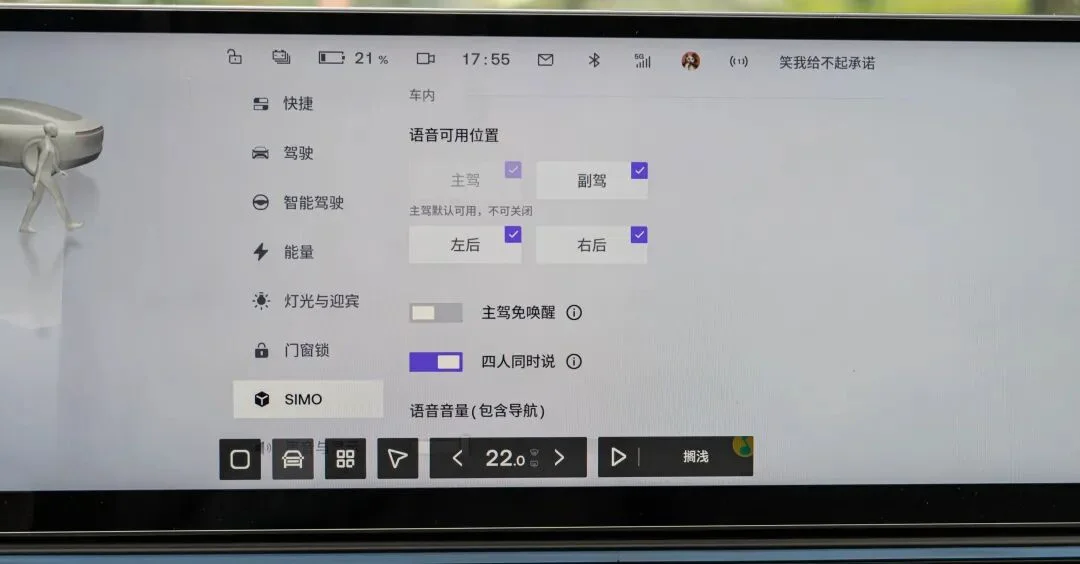
When seated in the driver’s seat, voice support is nearly wake-word-free across most functions. The system accurately distinguishes between command inputs and casual conversation, resulting in very few false triggers. However, it can be slightly awkward when the wake-word-free feature accidentally activates Wenxinyiyan. The system also handles vague instructions well, which is friendly to new users; for example, saying “comfort mode” is correctly interpreted as a request to set the suspension to “softer,” significantly lowering the barrier to natural speech.
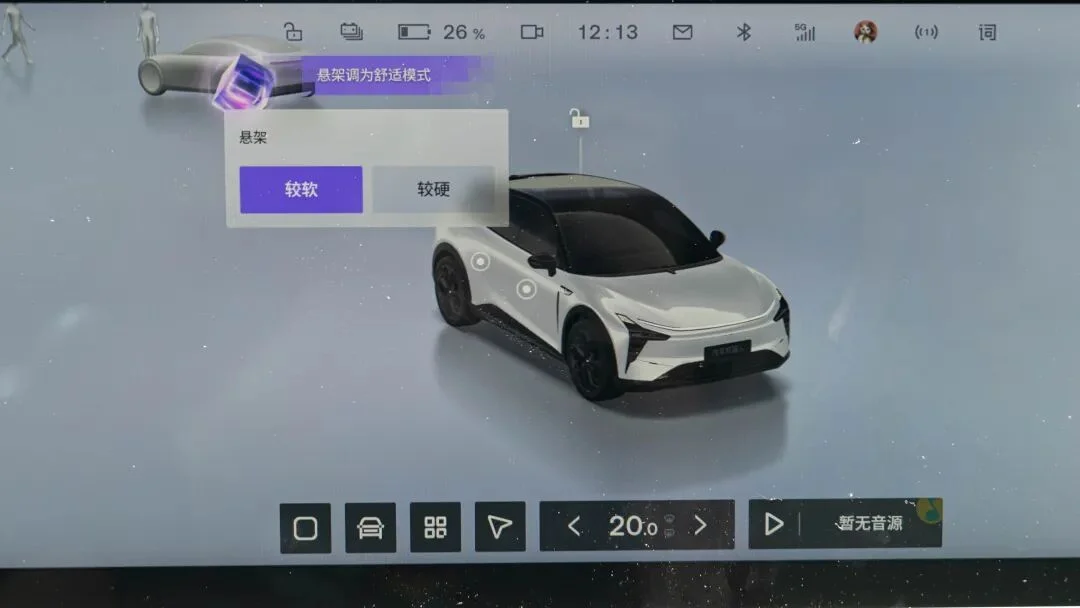
Features such as zone-specific voice control, continuous dialogue, and “what you see is what you say” are often heavily marketed on other vehicles, yet on the Jiyue 01 they seem almost taken for granted. If one must nitpick, the Jiyue 01 does not yet support as many dialects as Lixiang does. Of course, achieving this level of experience while supporting multiple dialects is not something that can be done easily.
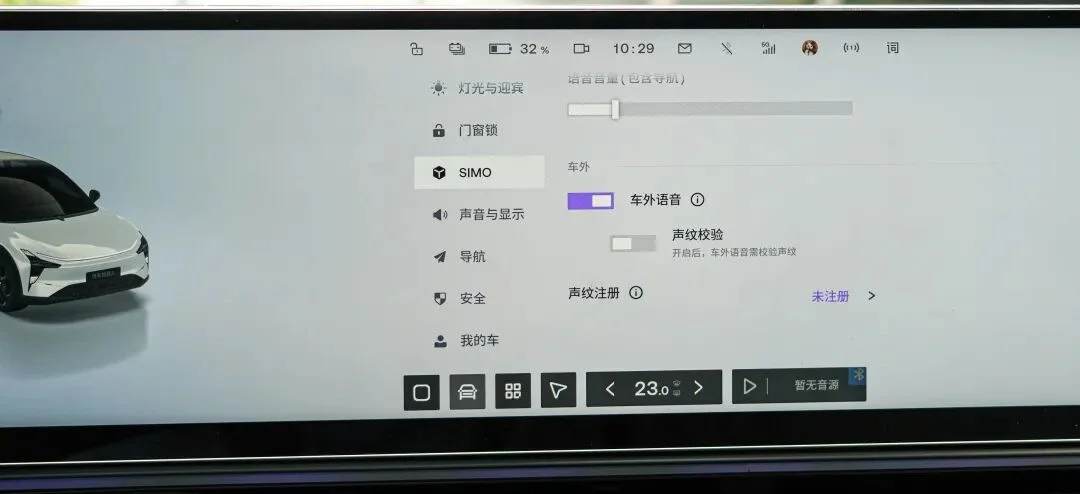
Powered by the 8295 chip, the Jiyue 01 offers a unique external voice interaction function. If you are comfortable shouting “HI SIMO” outside the vehicle, you can use voice commands to open the door when your hands are full with bags, or instruct the car to pull out of a tight parking spot.
Once “voiceprint recognition” is enabled, the car will only respond to your specific voice, preventing strangers from controlling it via voice commands externally. In this regard, the Jiyue 01 indeed behaves like an “automotive robot,” executing voice commands both inside and outside the vehicle.
Backed by Baidu, the Jiyue 01’s AI capabilities are robust. With the industry-leading Wenxinyiyan large language model integrated into the vehicle, it provides AI-enhanced responses to various questions, serving as a highly efficient information retrieval tool, especially while driving.
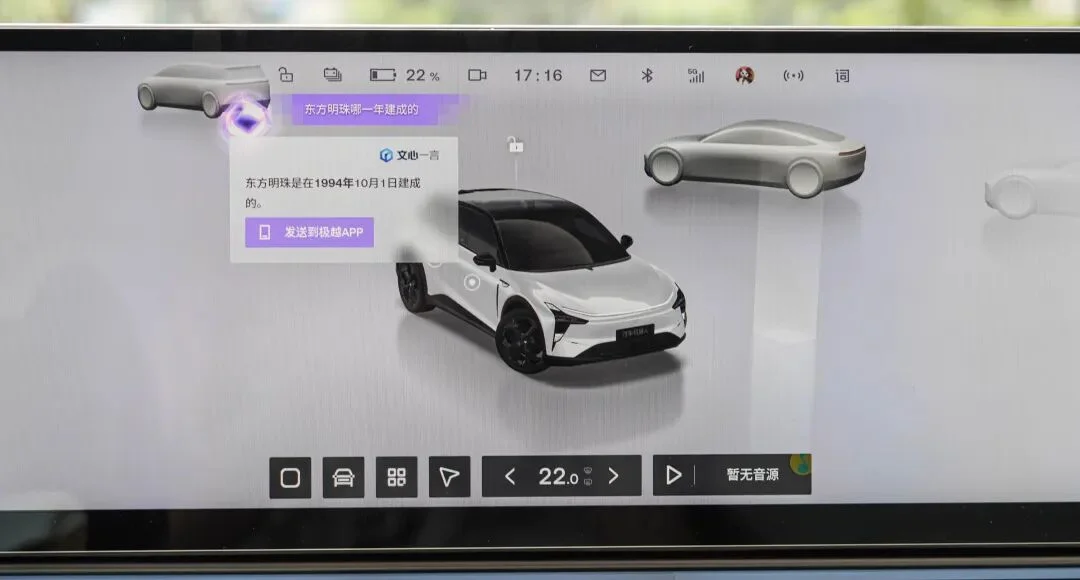
This earned the Jiyue 01 a final voice score of 103.3, placing it at the top of the 42Mark Voice Ranking.
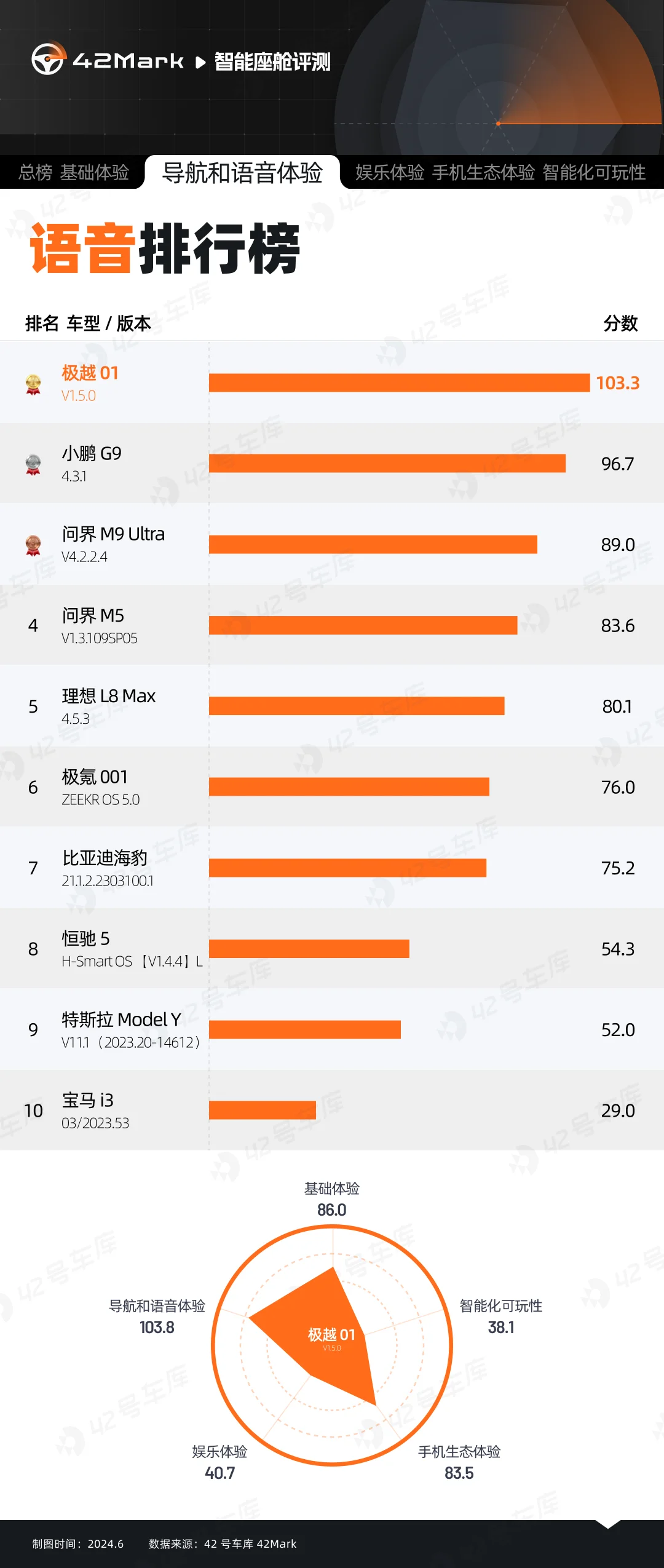
From this perspective, the Jiyue 01’s voice system performs at an exceptionally high level. The disruptive innovation in its voice experience appears overly advanced even by our current 42Mark standards. While we continuously test new vehicles, encountering one that challenges these benchmarks is truly surprising. We hope more manufacturers will invest in 'niche' areas like voice interaction to broaden the dimensions of smart cockpits.
Entertainment Experience
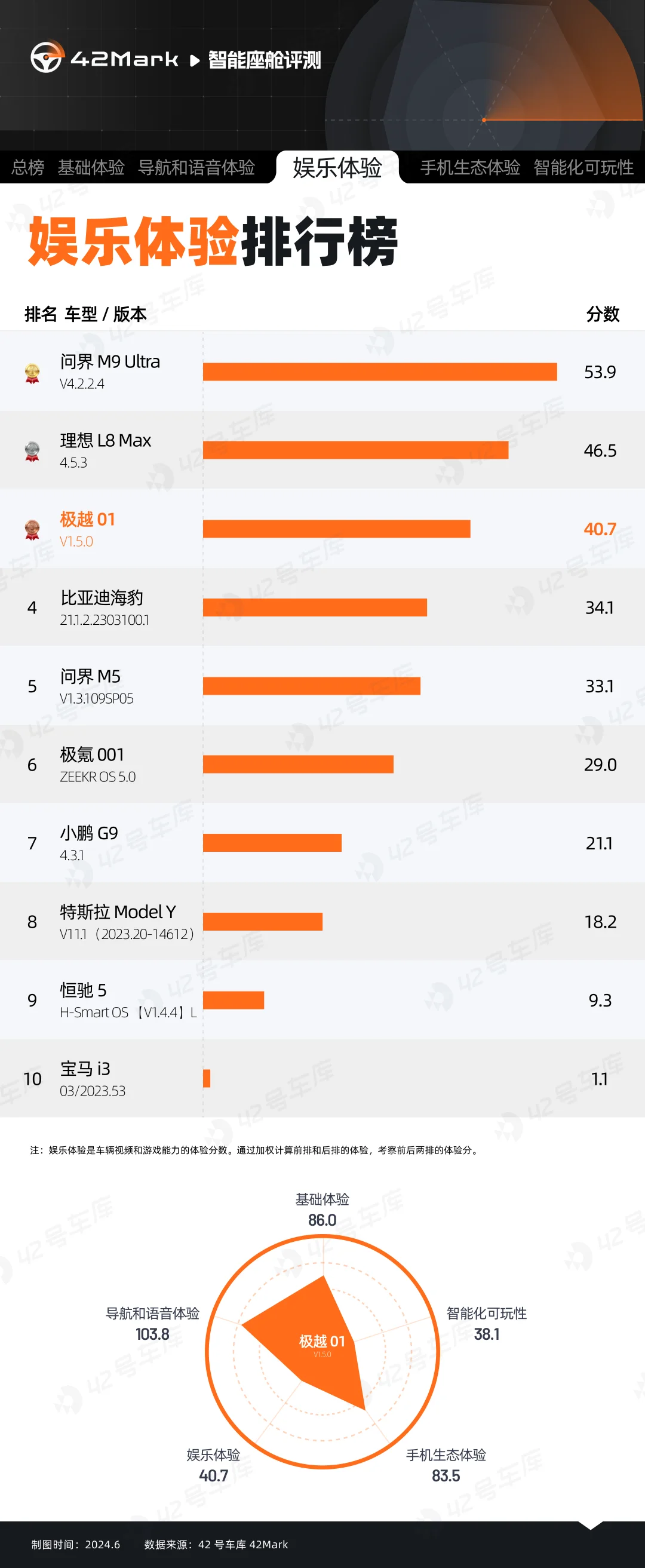
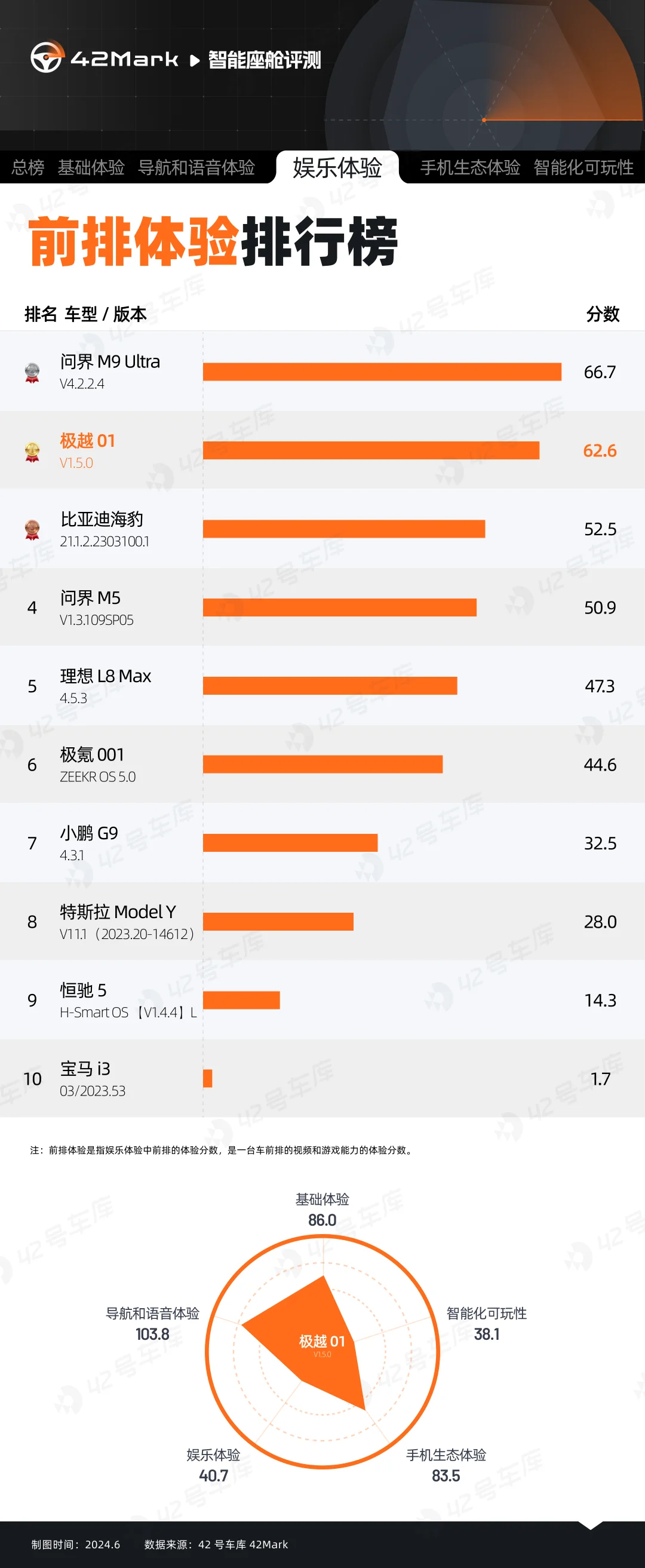
As mentioned earlier, the number of supported applications on the Jiyue 01 is not large, yet it still achieved a high score in the entertainment category — 40.7 points, ranking third on the current 42Mark Real-Test Leaderboard.
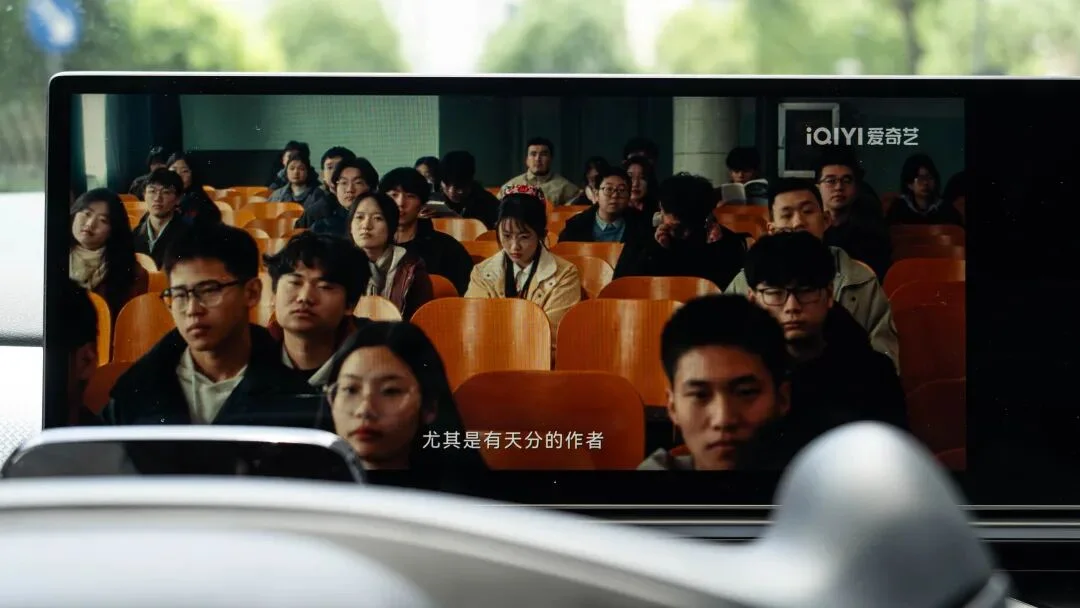
The Jiyue 01 features an LCD screen with a 6K resolution and a peak brightness of 878 nits. Despite being an LCD panel, it delivers a solid viewing experience. The screen’s length allows the image to extend directly in front of each occupant, minimizing the need to turn one’s head. Although the effective visible area is not particularly large, the semi-rim steering wheel does not obstruct the driver’s line of sight, making the Jiyue 01 the only vehicle we have tested where the driver can comfortably watch shows.
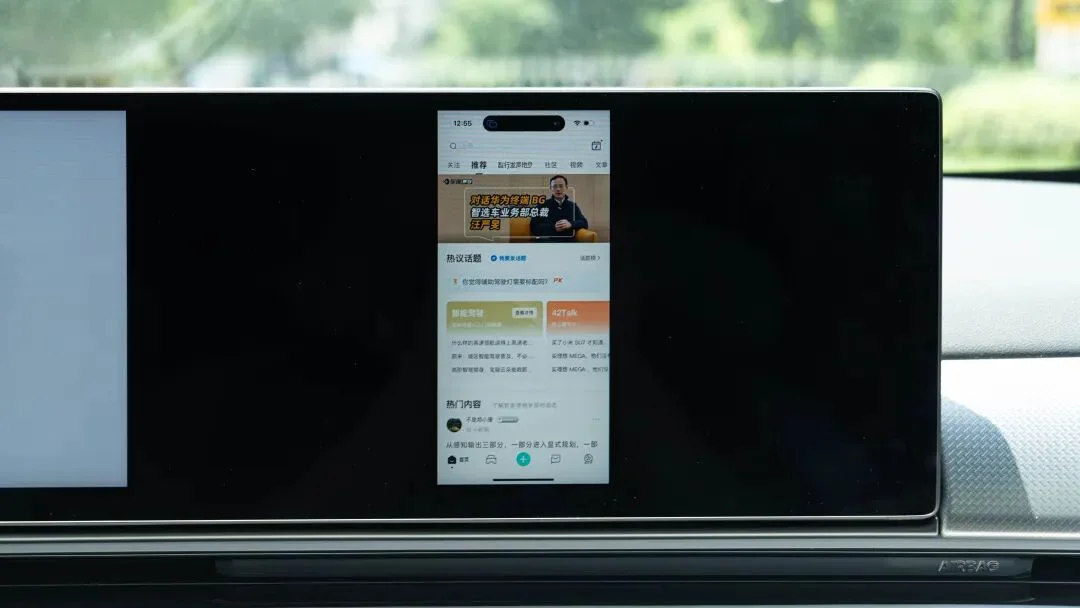
If you prefer not to disturb the driver, the front passenger area supports independent Bluetooth headphones, wireless screen mirroring for phones or computers, and split-screen video playback that does not distract the driver. Alternatively, when parked, the dual screens can mirror each other so both occupants can watch together.
The Jiyue 01 offers a decent gaming experience. Its "Game Arcade" features five titles deeply customized for the vehicle. For example, "Kuangyebiaoche 9" can be controlled via the steering wheel and pedals; with the seatbelt fastened, interactive feedback is provided, making it more realistic than buying a racing simulator at home. If two people are present, one can hand over the controller to the other for multiplayer battles, enabling a shared experience. Before experiencing this car, I would have found the scenario of "playing games in the car during lunch break" hard to imagine.
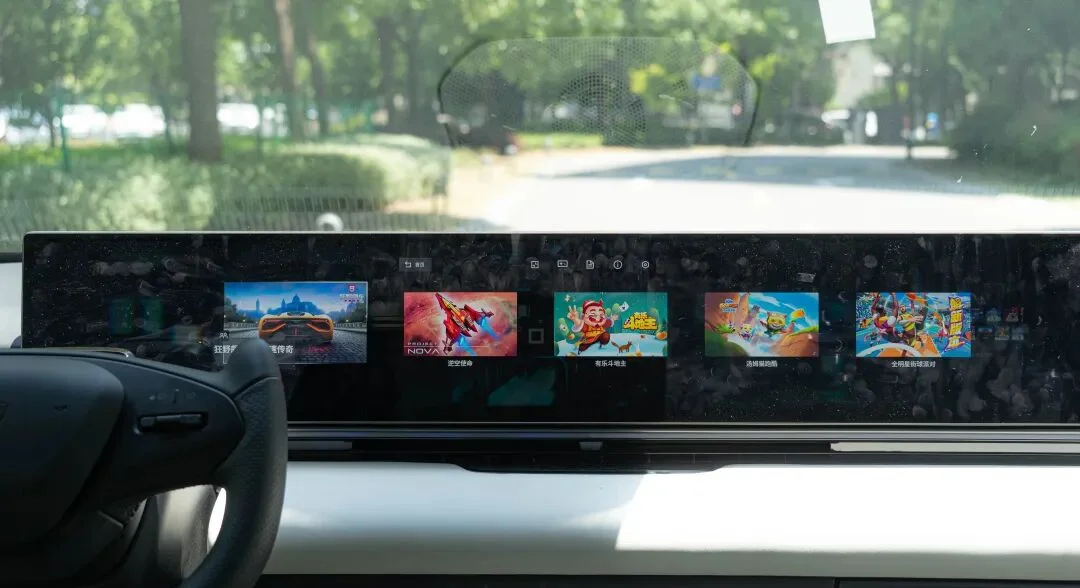
This contributes to the Jiyue 01's solid performance, ranking it ahead of most other models.
In summary, the Jiyue 01's large ultrawide "curtain screen" indeed provides ample room for innovation, distinguishing its form factor fundamentally from other multi-screen vehicles.
Mobile Ecosystem Experience
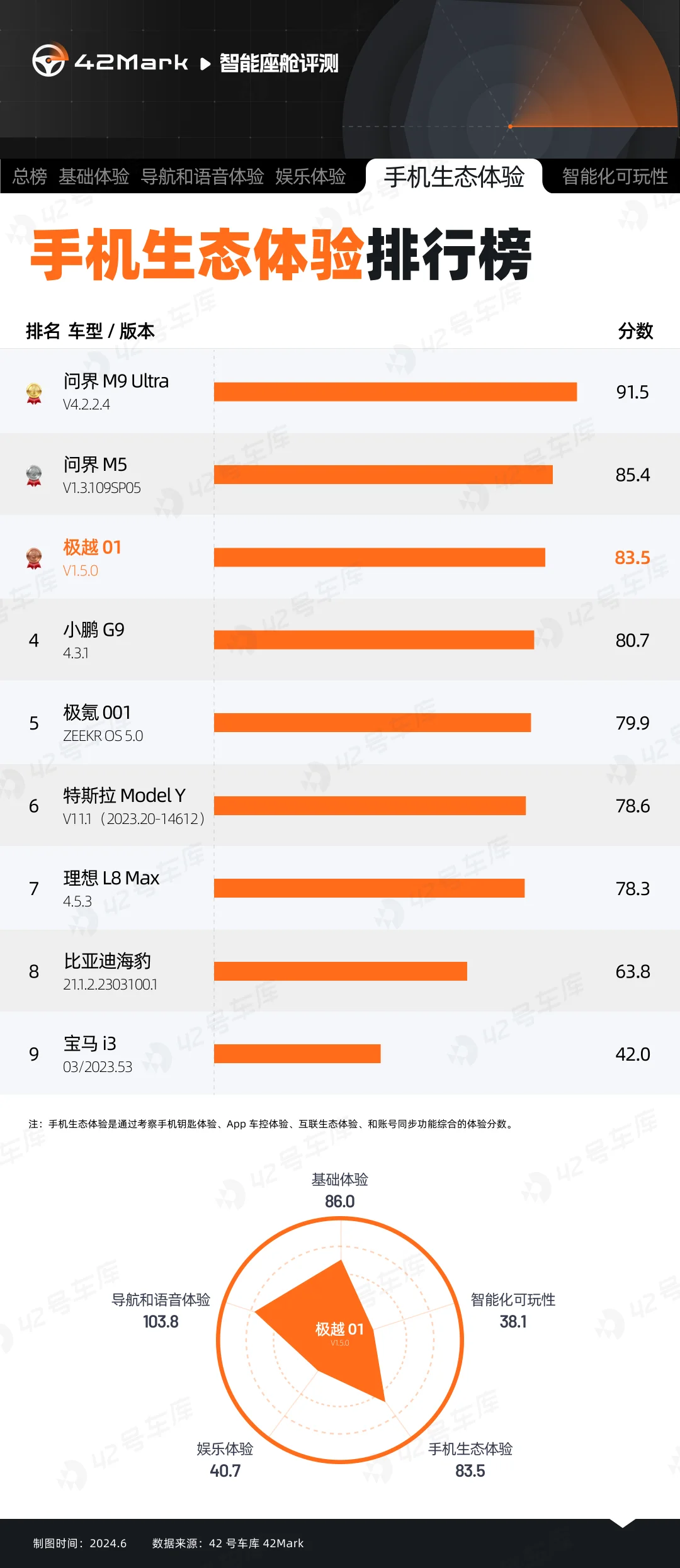
Compared to the many standout features mentioned earlier, Jiyue 01's mobile app experience is relatively standard. The Jiyue 01 app includes most of the functions and advantages found in mainstream automotive apps, while also optimizing vehicle control latency and unlocking experiences. In this category, Jiyue 01 scored 83.5 points, trailing only AITO, which benefits from its HarmonyOS integration.
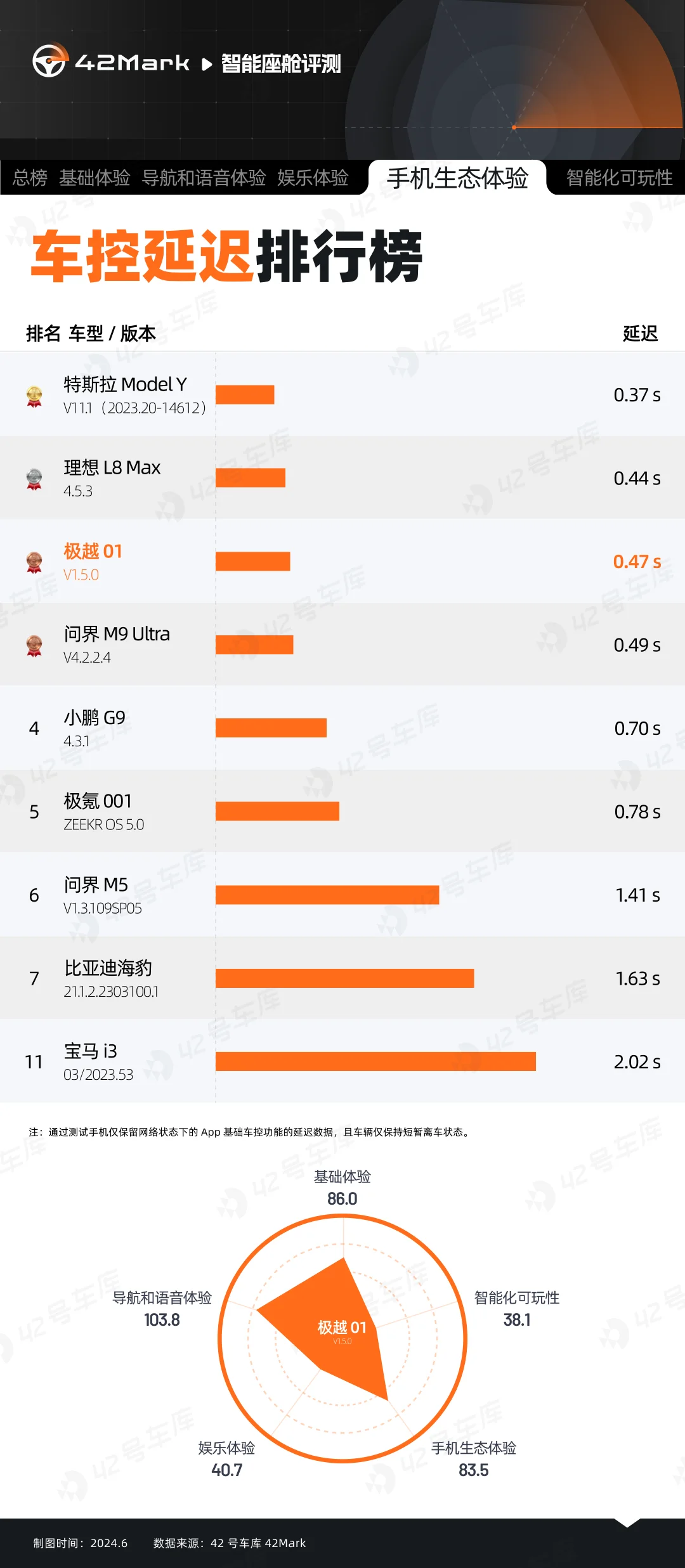
In terms of basic vehicle controls such as unlocking, air conditioning, and window operation, Jiyue 01 delivers a stable experience with an average feedback latency as low as 0.47 seconds, slightly faster than that of the AITO M9.
The success rate for unlocking via Bluetooth proximity is high; the app remains functional even when running in the background for extended periods, eliminating the need to fumble for your phone. Notably, given the electric doors, you can simply exit the vehicle and walk away, allowing the car to close and lock itself automatically—achieving what some might call "true macho behavior: never looking back to lock the car."
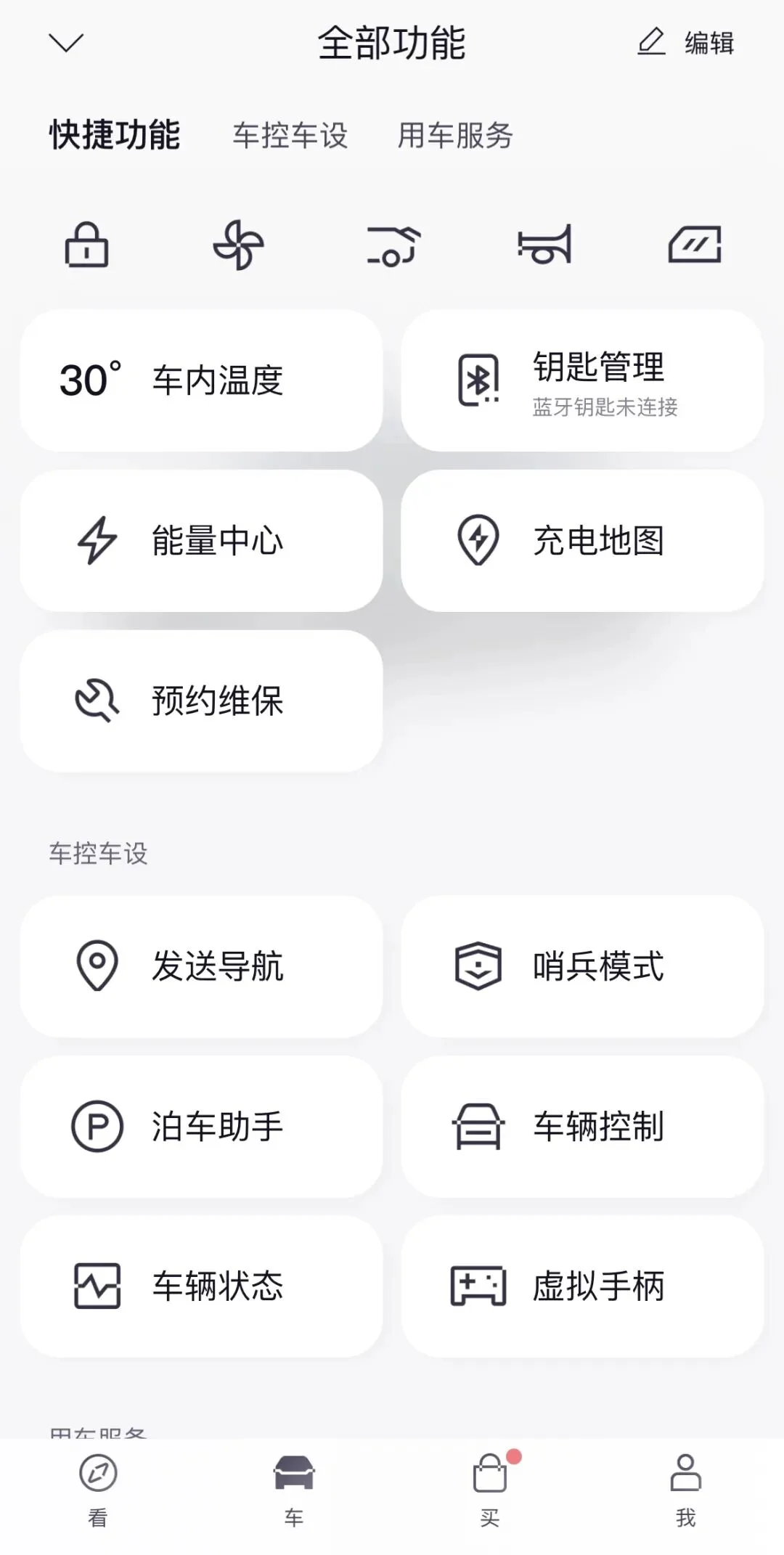
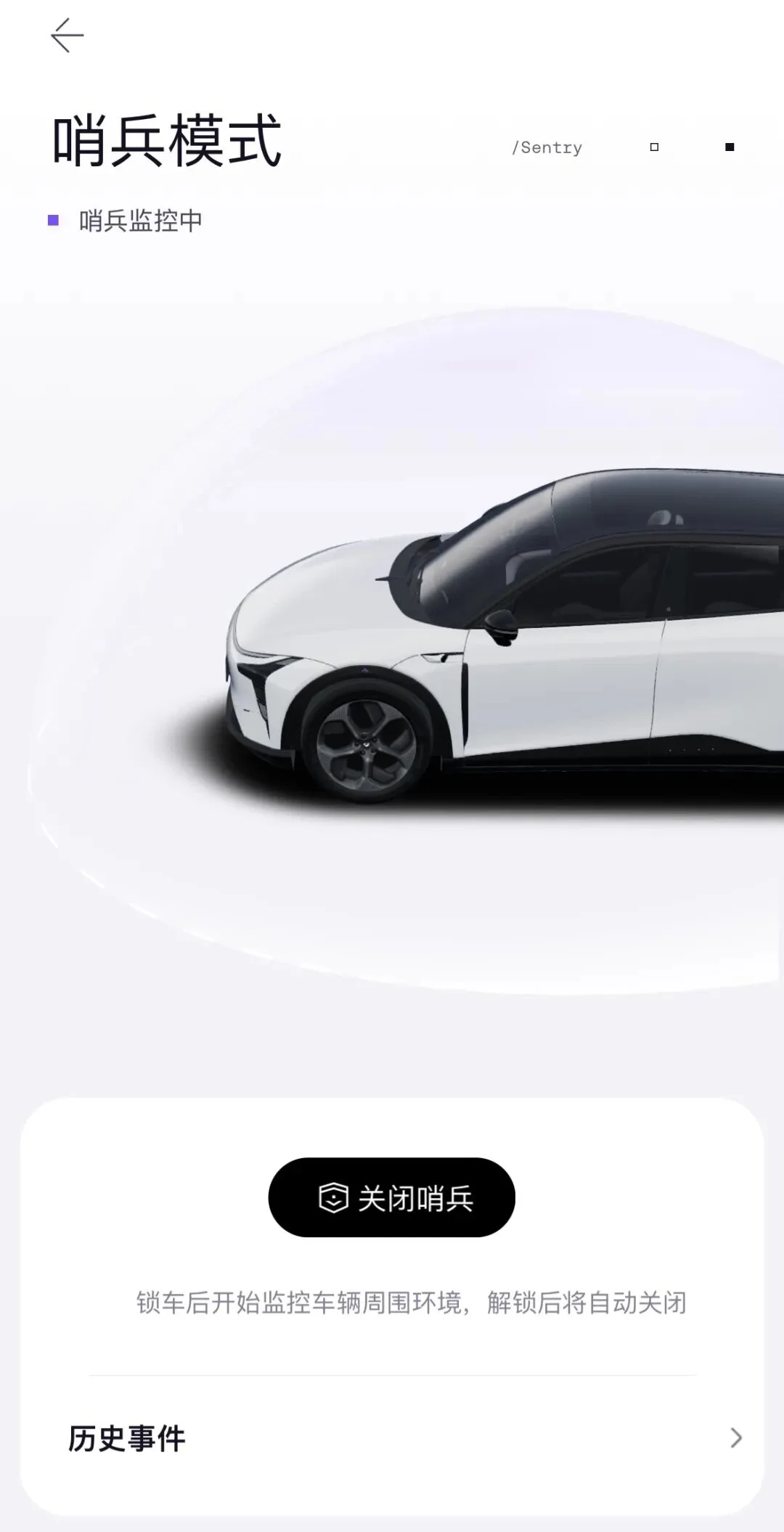
If you park too far away and cannot locate your vehicle, the Jiyue app supports flashing lights and honking the horn to help pinpoint the car's general location. Unfortunately, it lacks photo capture capabilities and precise positioning data. The Sentry Mode currently only offers on/off toggles without remote viewing options. We look forward to these features being added via future OTA updates.
In this light, using the Jiyue 01 in daily life is as simple as carrying a smartphone; having a physical key introduces an unnecessary risk of loss. Do people still prefer physical keys today?
Smart Features and Playability
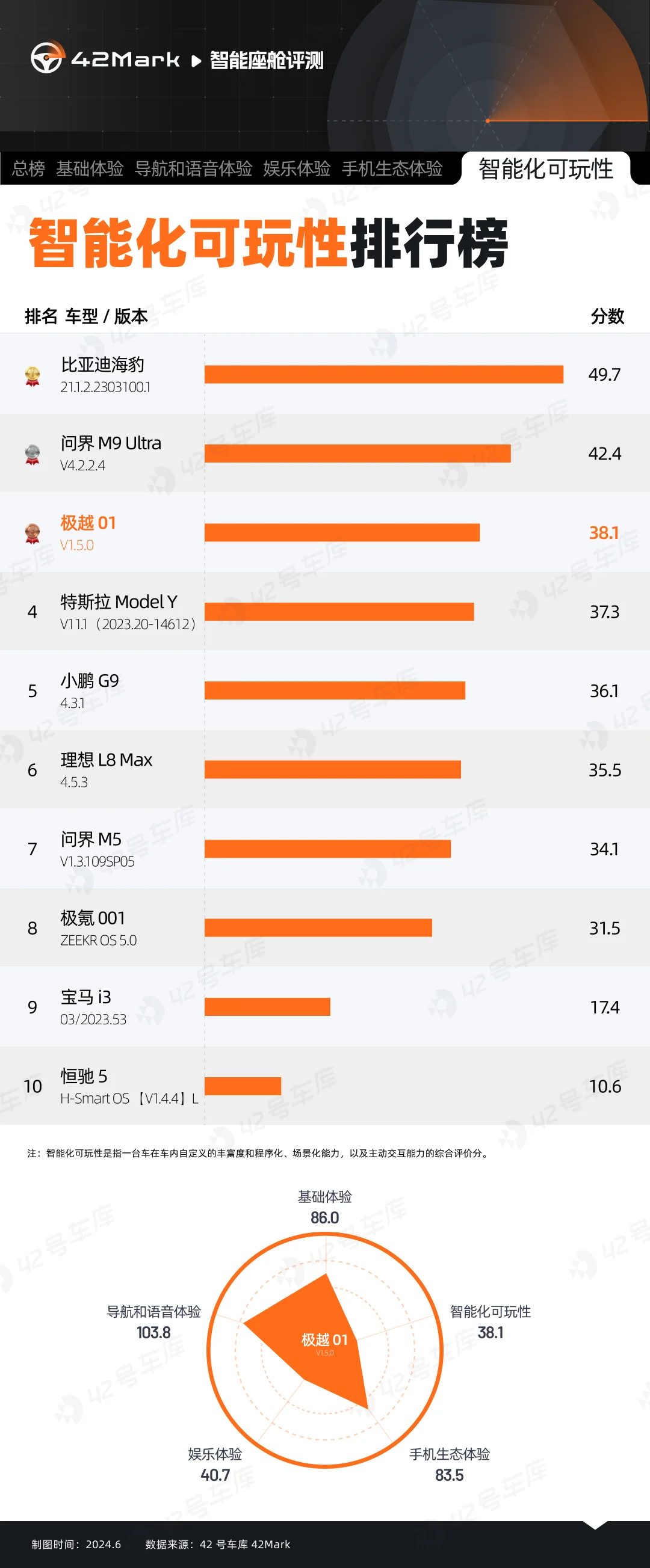
Beyond the cabin experience highlighted above, our 42Mark evaluation also emphasizes the vehicle's smart features and playability, exploring what new interactions it enables. Given that the Jiyue 01 positions itself as an 'AI-powered intelligent pure-electric SUV,' its smart experience naturally stands out, earning a final score of 38.1, which ranks third on the current leaderboard.
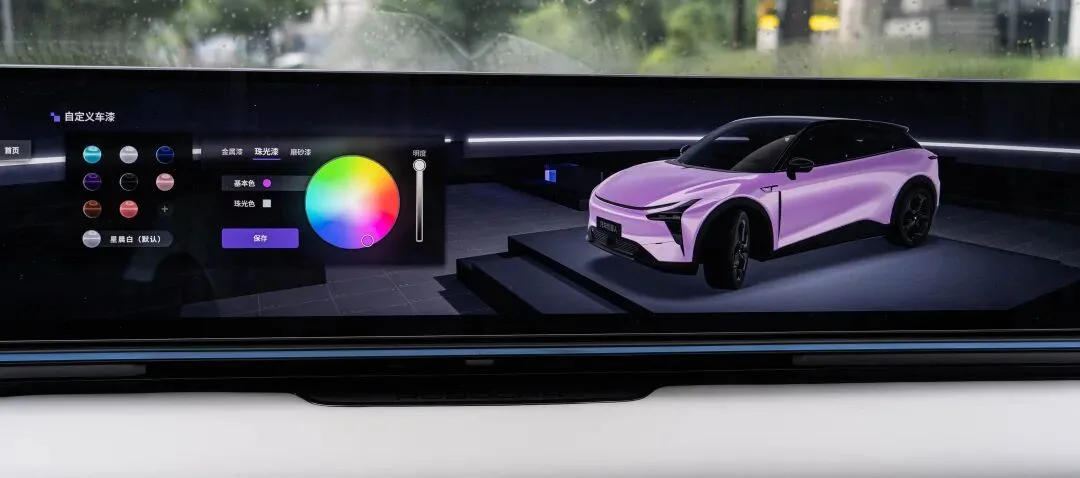
To highlight a few key points: the previously mentioned 3D car model allows users to change paint colors, with a wide variety of options available. There are also three wheel design choices. If you later decide to change the wrap or upgrade your wheels, the digital model syncs instantly with your actual vehicle configuration, achieving a seamless 'inside-out' consistency. While the technical difficulty of this feature may not be high, the result is both cool and practical, marking another detail worth praising.
Another fun aspect is the ROBO Dance light show. All four doors and even the rear spoiler extend outward, appearing to 'dance' along with the music played through the external speakers, while interior lights pulse in rhythm. However, this feels more like a display of capability—a clever way to showcase the vehicle's integrated intelligence. Aside from showing off to friends, it’s hard to imagine other everyday scenarios where this feature would be used.
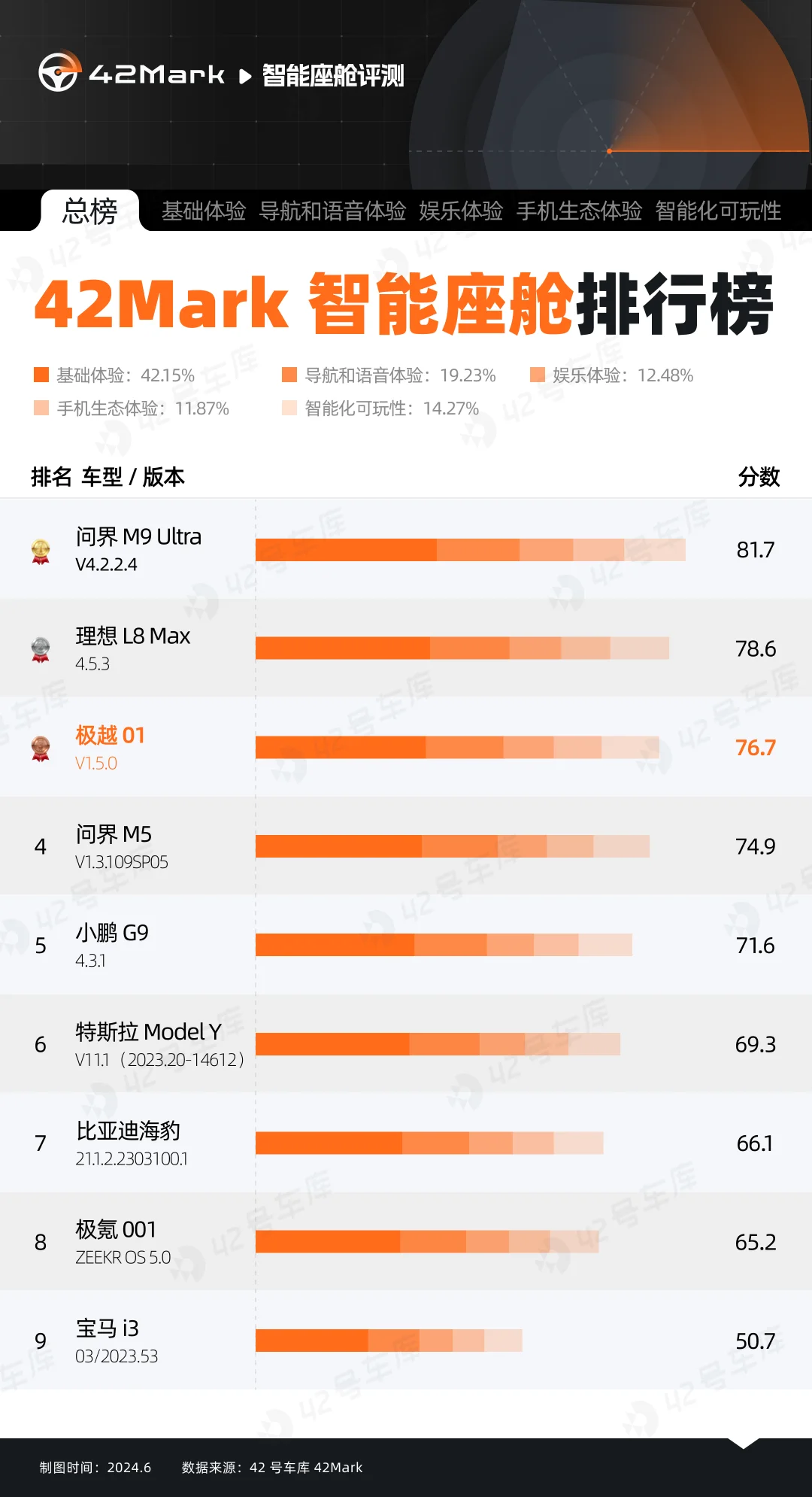
That concludes this episode of the Jiyue 01 cabin test. Congratulations to the Jiyue 01 for finally scoring 76.7, ranking third on the current comprehensive cabin leaderboard, surpassing the vast majority of models from last year.
02Last
Backed by two established giants, Geely and Baidu, and supported by the underlying architecture of the 8295 chip, the Jiyue 01 has no obvious shortcomings in cabin experience. Thus, as a newcomer, it secured third place on the smart cabin rankings—a performance that should not be underestimated.
It must be said that Jiyue, with its mature voice control features, brings a refreshing feel to the heavily homogenized domestic new energy vehicle market, while also maintaining a well-rounded basic experience without significant weaknesses. This has sparked a new line of thinking: Is it better for automakers to play it safe by producing assembly-line products that appeal to the majority, or should they take the risk of being misunderstood and continuously innovate to expand the possibilities of the cabin?
As industry observers, we are eager to see more "Jiyue 01" models on the market. If all brands produce identical products, it would signal that the industry has reached its peak. The update pace of the Jiyue 01 is accelerating, further raising our expectations for its future performance. Within a week, we will publish a cabin comparison review featuring four vehicles, each a recent hot topic. This lineup includes the Xiaomi SU7 and Li MEGA. Our video will reveal how the newcomer Xiaomi performs in terms of cabin experience.
Written by: Huoshan Edited by: Yisong