


80 kWh Range-Extended EV: Leapmotor D19 Debuts Tonight

Tonight, Leapmotor unveiled its flagship model, the Leapmotor D19, boasting impressive specifications.
The vehicle features an 80.3 kWh battery paired with an 800V range-extender system, delivering a pure-electric range exceeding 500 km—double that of most range-extended vehicles in the industry. It debuts with dual Qualcomm Snapdragon 8797 chips, providing 1,280 TOPS of computing power to support on-device cabin large language models and VLA-assisted driving capabilities. Additionally, it boasts a length of over 5.2 meters and closed-chamber dual-cavity air suspension.
Most notably, the price is expected to fall within the RMB 300,000 tier. This raises questions: Is Leapmotor actually making money selling cars?
Leapmotor CEO Zhu Jiangming stated: "The most fiercely competitive segment in the automotive industry currently consists of vehicles with '9-series' designations, and these same '9-series' models also exhibit the greatest disparity in both product quality and pricing. Leapmotor's D19 is positioned as the pinnacle of premium offerings and the flagship among flagships."
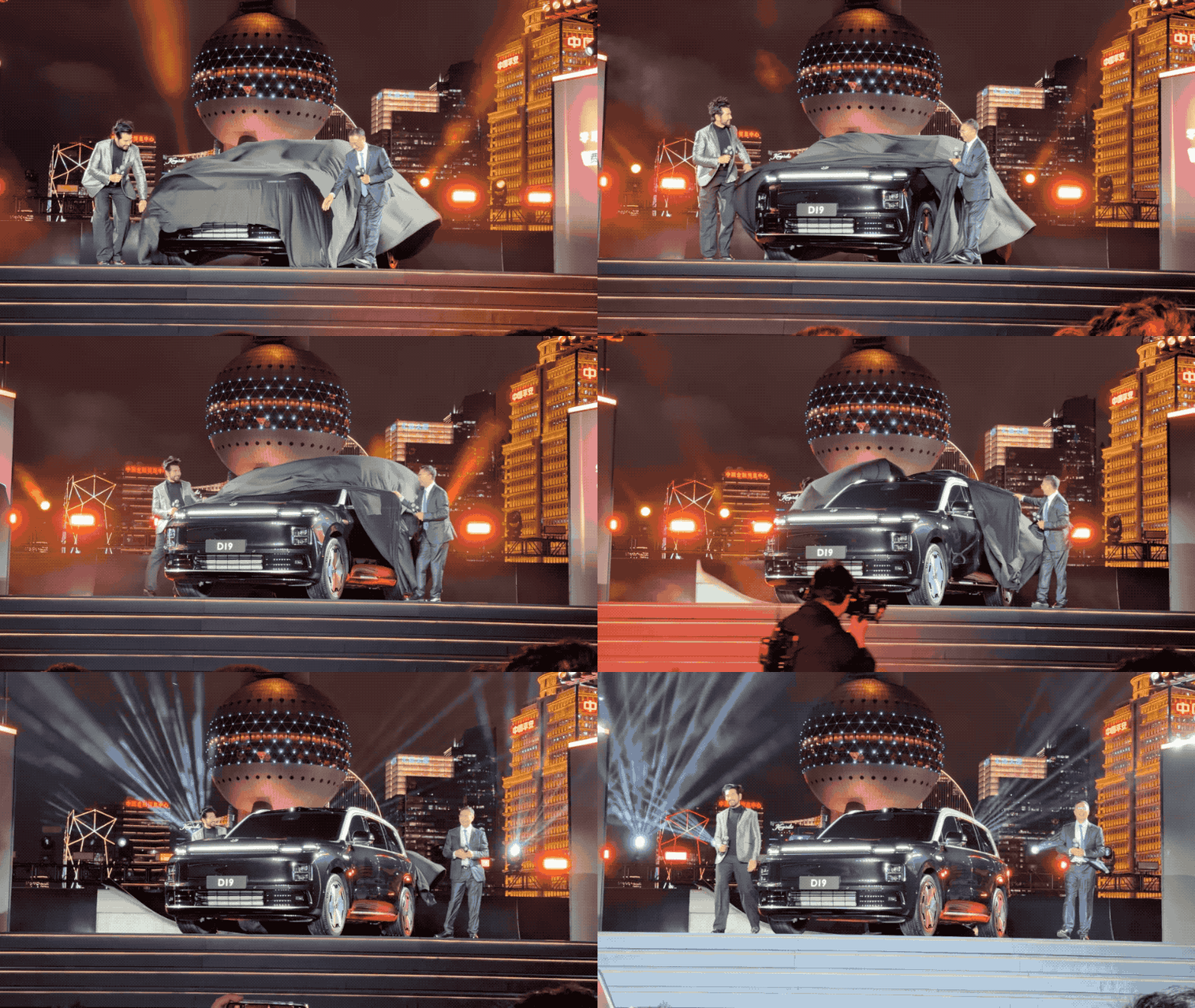
Earlier today, by the Huangpu River, Fei Xiang, the spokesperson for Leapmotor's D series, appeared alongside Zhu Jiangming to unveil the new flagship D19. With parameters and technology heavily emphasized, Zhu Jiangming discussed the core technologies behind the fully equipped Leapmotor D19. In such a highly competitive market for RMB 300,000 hybrid SUVs, can the D19 establish a firm foothold?
01Larger Dimensions, Familiar Elements
With a full-size SUV footprint, the Leapmotor D19 measures over 5.2 meters in length, nearly 2 meters in width, and features a wheelbase exceeding 3.1 meters. This size allows it to compete with the Maibahe GLS.

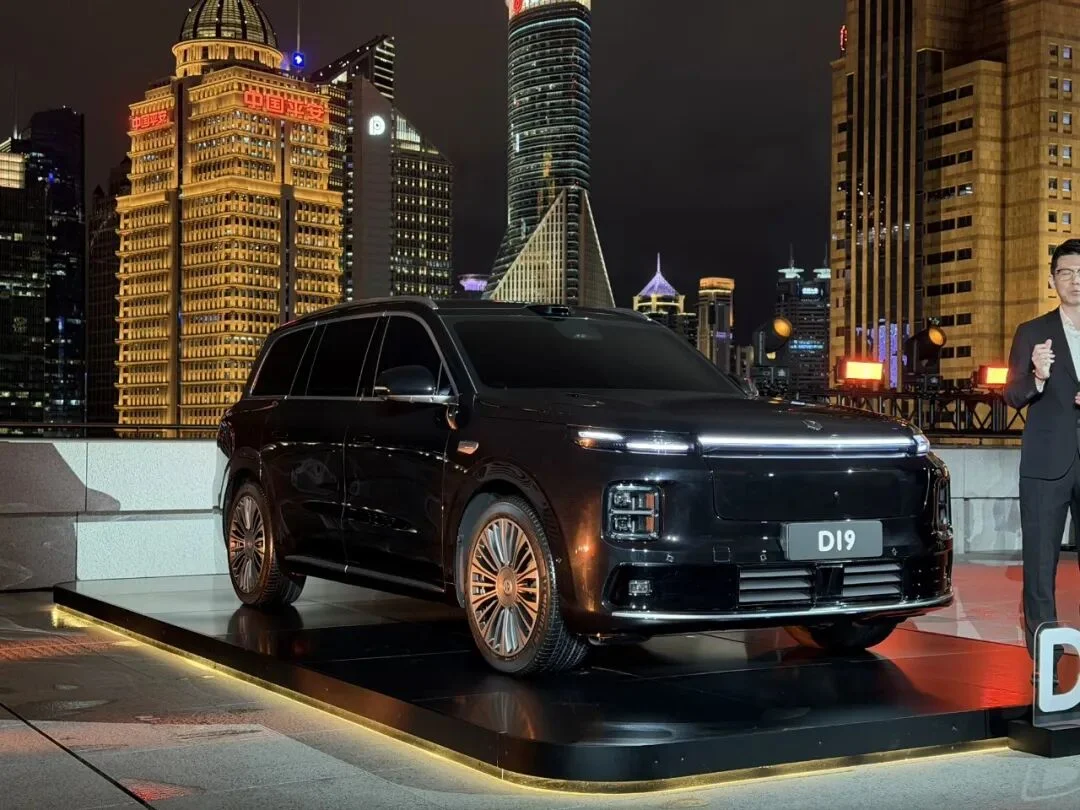
In terms of exterior design, the Leapmotor D19 once again draws inspiration from Lixiang, featuring familiar elements such as a continuous daytime running light bar and square headlight clusters. A notable highlight is the extra-wide opening front trunk (frunk) on the pure-electric version, similar to those found in the Lucid Gravity and ONVO L90, which facilitates easier loading and access to items.
Moving to the side, the D19 gives a sufficiently grand impression. The side of the body lacks complex lines, featuring only pure surfaces. Meanwhile, the D19 has flush side windows, which look better and also make for quieter driving. The Leapmotor D19's D-pillar design is very special, adopting wider chrome trim that gives this car higher recognizability.
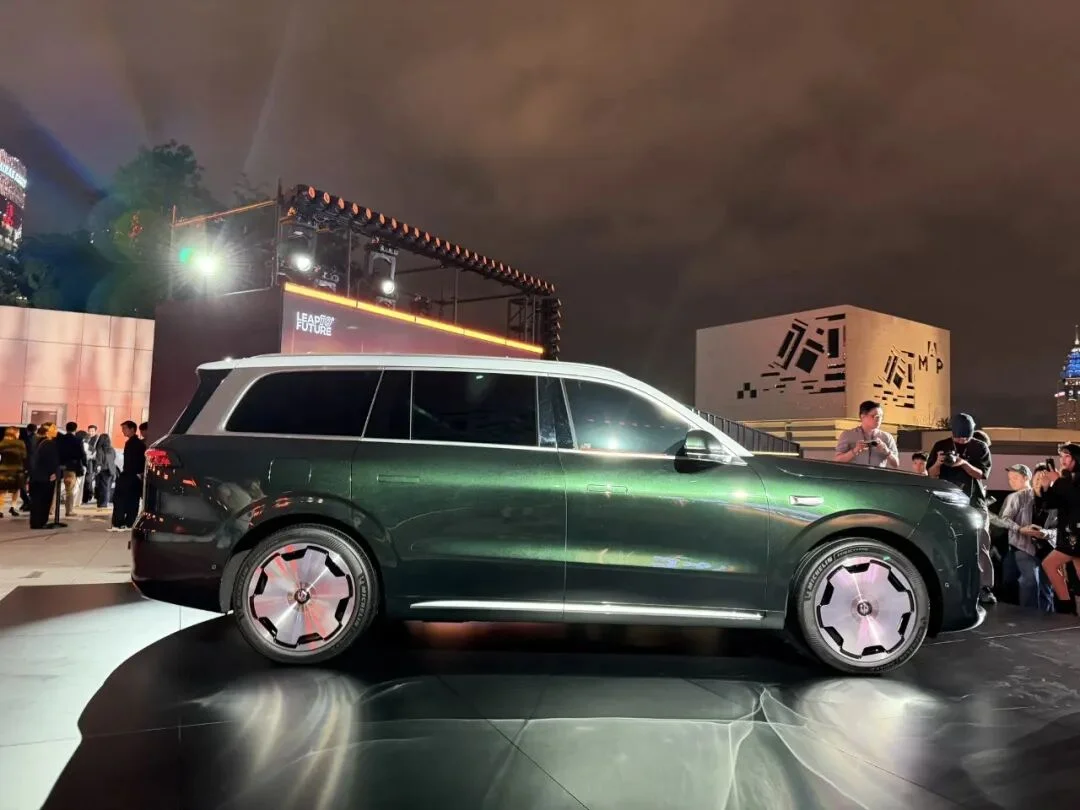
On site, we saw two wheel designs for the Leapmotor D19: one is a "disk" style wheel typically seen on luxury cars, and the other is a multi-spoke design; both are 21 inches.
Additionally, the Leapmotor D19 incorporates an autonomous driving indicator "blue light," while the front headlights feature million-pixel DLP projection technology. The rear lights adopt a continuous design complemented by an ISD surround light panel below, promising to elevate the vehicle's premium presence when illuminated at night.
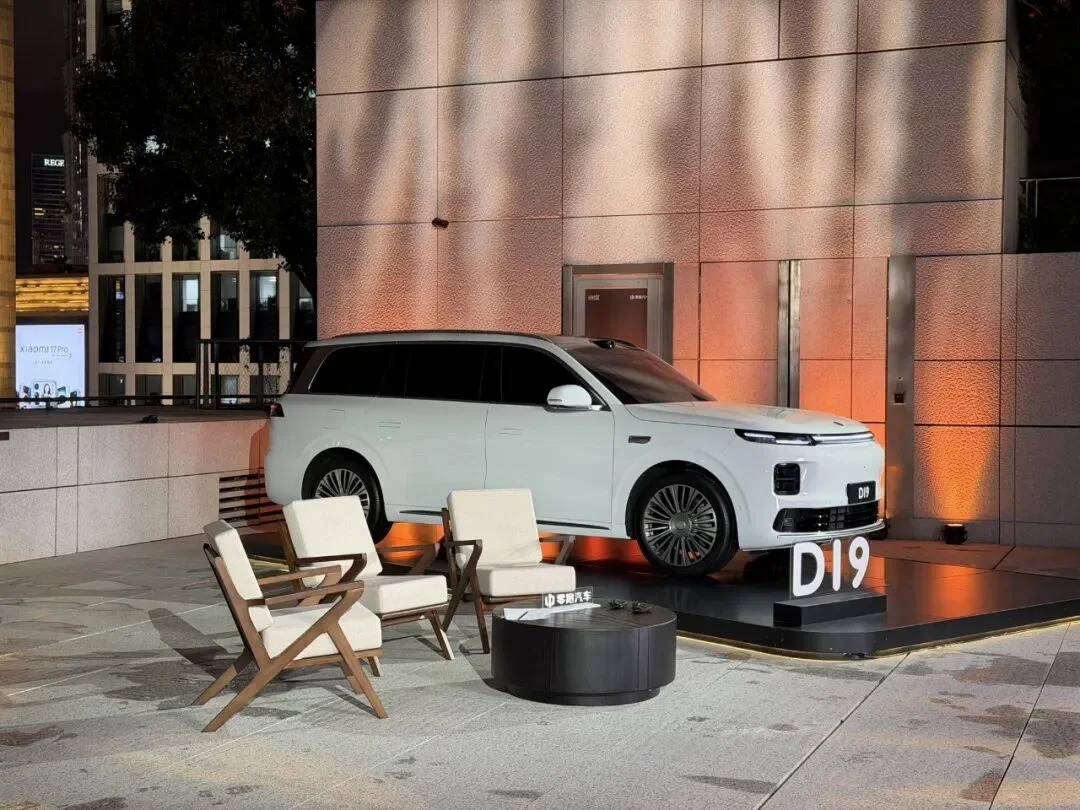
Leapmotor D19 offers five exterior colors: Pine Valley Green, Photon White, Galaxy Silver, Sky Gray, and Metallic Black. These are relatively subdued tones; which one will you choose?
In terms of body structure, the Leapmotor D19 uses 2,000 MPa high-strength steel at 16 key points. The front crash beam covers 80% of the vehicle's width, achieving a torsional stiffness of 50,500 N·m/deg.
The D19 is also equipped with dual-chamber closed-air suspension and CDC variable-damping shock absorbers. This setup enhances ride comfort while enabling one-touch body leveling and an active pre-scan 'Lingbo Weibu' function that keeps wheels from dropping into potholes.

With its exterior design, body structure, and chassis configuration, the Leapmotor D19 stands out as a flagship product.
02A Range-Extended Vehicle with an 80.3 kWh Battery
In 2025, large-battery hybrids have become a key metric for defining premium flagship vehicles. The Zunjie S800 features a 65 kWh battery, while the Zeekr 9X goes further with a 70 kWh pack, offering nearly 400 km of pure electric range.
Leapmotor, meanwhile, has further increased the battery capacity of its hybrid models. The D19 is equipped with an 80.3 kWh battery pack, delivering a CLTC pure-electric range of more than 500 km—range capabilities that even surpass those of many fully electric vehicles. However, the larger battery occupies relatively more space, which to some extent reduces the fuel tank volume. The D19’s fuel tank holds only 40 liters, making it smaller than those of comparable hybrids.
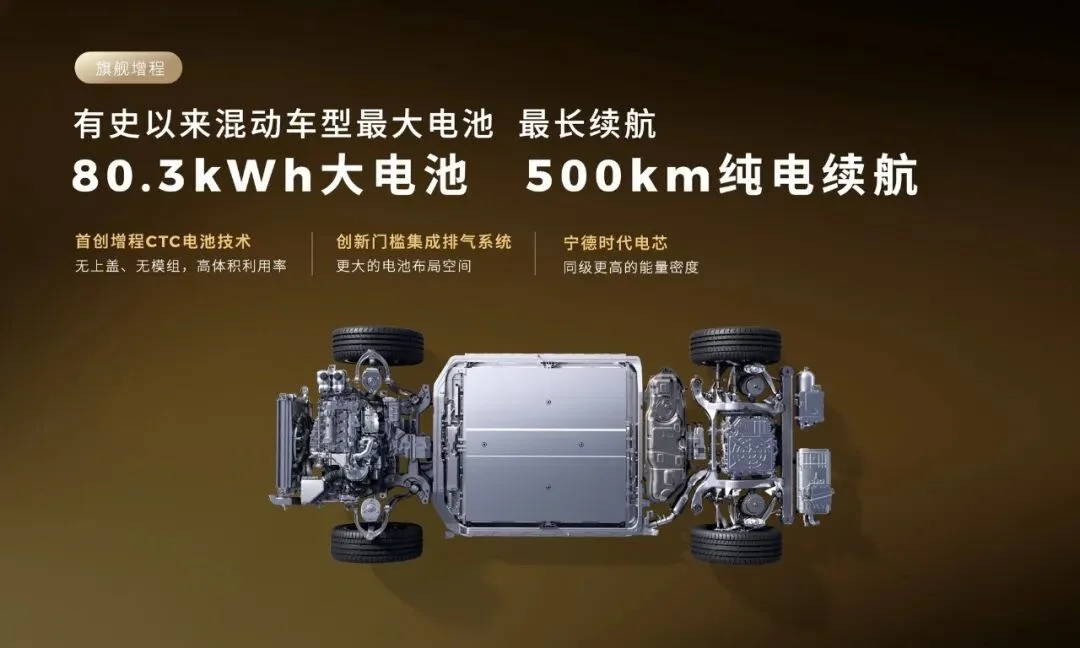
The Leapmotor D19 pure electric version is equipped with a 115 kWh battery, offering a pure electric range of more than 700 km, which is also an excellent performance among models in the same class.
According to CATL, the Leapmotor D19 is equipped with CATL batteries across all trims, with no mixed sourcing; both the pure electric and extended-range versions support a peak charging rate of 3C and an average of 2.2C, with a 30% to 80% charge time of 15 minutes.

Among them, the extended-range model uses CATL's super hybrid system battery. Based on a lithium iron phosphate (LFP) chemistry, it incorporates high-energy-density nickel-cobalt-manganese (NCM) lithium elements to enable the simultaneous use of both materials within the same cell. However, LFP and NCM materials have different characteristics. To enhance compatibility, reduce side reactions, and improve material stability, CATL added a protective film between the LFP and NCM cathode materials. This ultimately resulted in a battery product that balances high specific energy with slow capacity degradation.
03The VLA World Model Arrives
In terms of chips, the Leapmotor D19 debuts with the Gaotongxiaolong 8797 chip, and two are installed. These two chips are integrated into a single domain controller, creating the LEAP4.0 central domain control architecture.
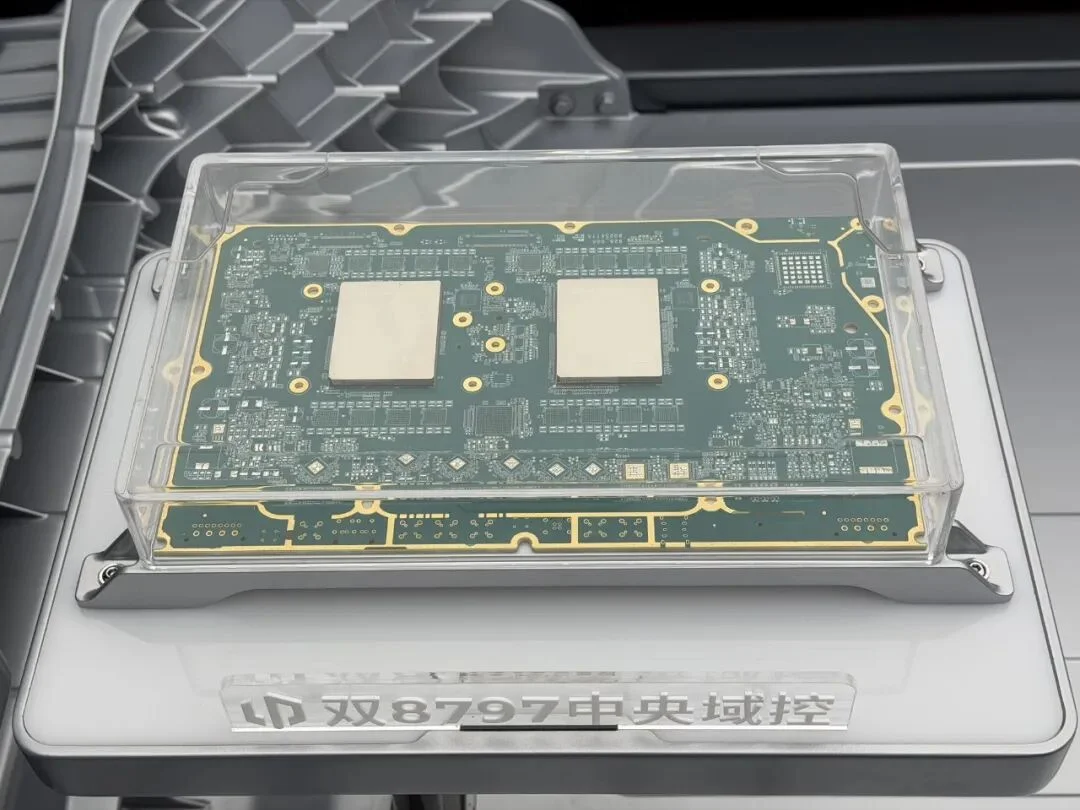
The Snapdragon 8797 is Qualcomm’s latest automotive chip, built on a 4 nm process with performance that significantly surpasses previous generations. Key specifications include:
CPU performance reaching up to 560K DMIPS;
GPU performance of 8.1 TFLOPS;
NPU performance of up to 640 TOPS (sparse compute). The Leapmotor D19, equipped with two 8797 chips, delivers a combined AI computing power of 1,280 TOPS;
An image processing engine capable of handling 7.8 gigapixels per second;
Memory bandwidth of 540 GB/s.
What do these figures mean? Compared to the Snapdragon 8295 commonly used in current smart cockpits, the CPU and GPU performance see more than a twofold increase, while NPU performance improves by over ten times. This means the 8797 can enable smoother smart cockpit experiences and support longer OTA update cycles. In driver assistance, it provides the computing headroom needed to deploy VLA (Vision-Language-Action) models on vehicles.
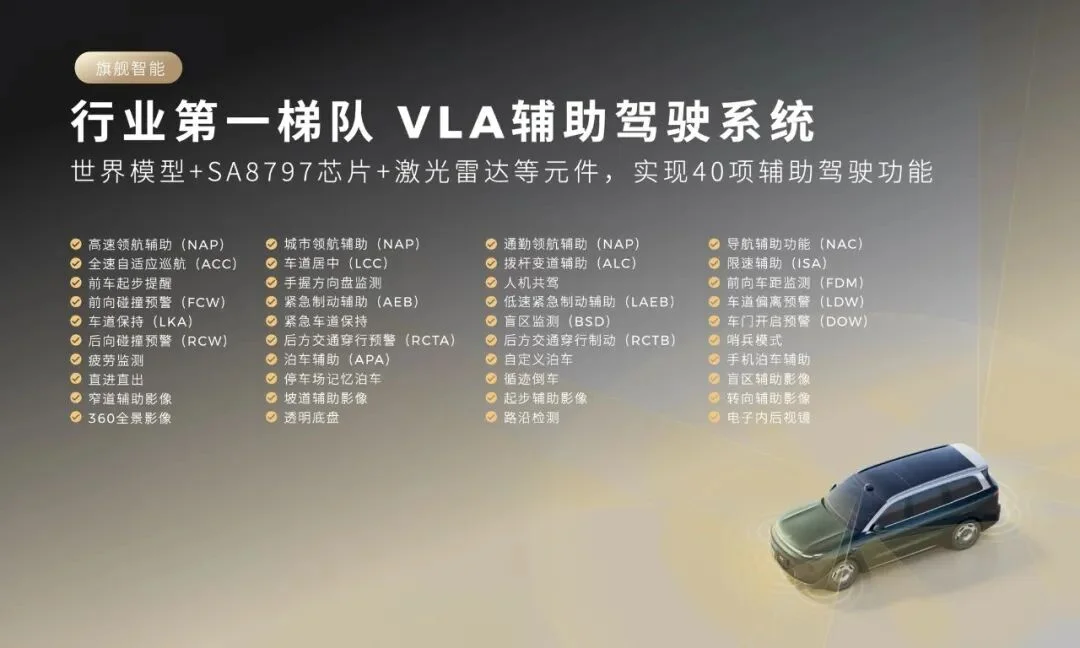
Leapmotor’s plan is exactly that: side AI capabilities and VLA world model-assisted driving will both be integrated into the Leapmotor D19.
As for the experience of the smart cockpit and driver assistance in Leapmotor vehicles, stay tuned. With the launch date approaching, we expect to have the opportunity to arrange a detailed review for you soon.
In 2025, the market landscape for large SUVs is quietly shifting, with larger TVs, colder fridges, softer sofas, and more cost-effective products becoming commonplace, almost covering every angle in the RMB 300,000–600,000 price range. The entry of the Leapmotor D19 feels more like it is here to "clean up" the market, teaching other automakers how to deliver better value for money.
Written by James Edited by James