


CATL Unveils Five New Battery Technologies and Super-Swap Network to Defend Market Share
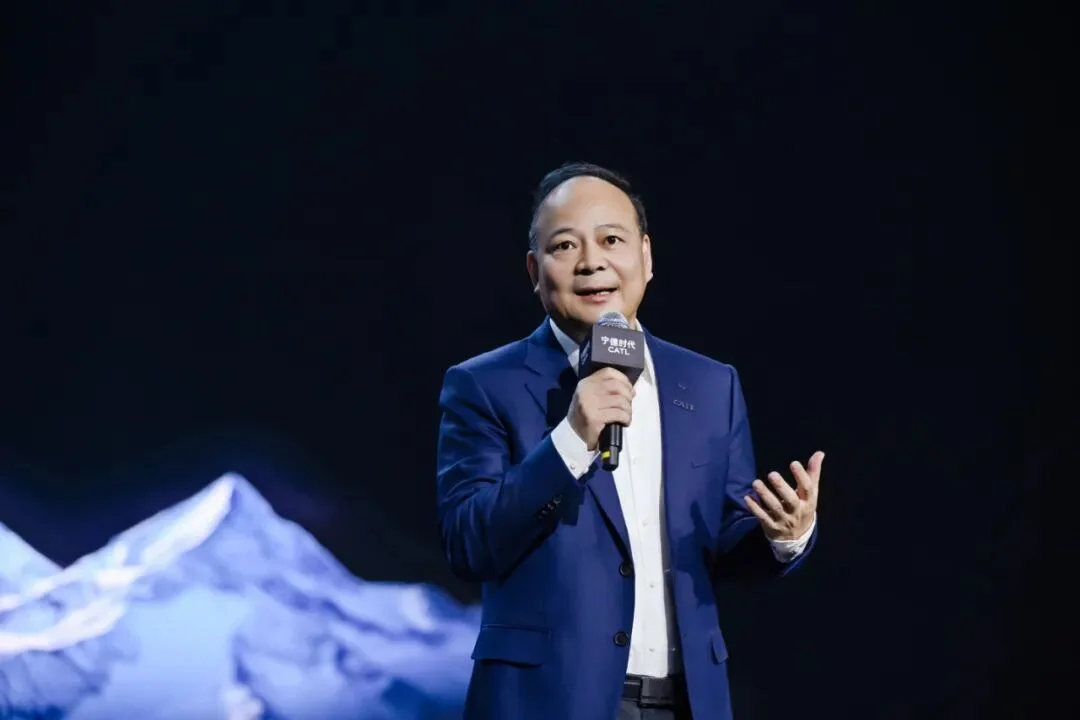
As the global leader in power batteries, CATL is ushering in a new round of technological updates.
On the evening of April 21, CATL held its 2026 Super Technology Day product launch event in Beijing, unveiling five brand-new battery products and an expansion plan for its integrated super-swap charging network. The company aims to address pressure from competitors such as BYD through a more diversified technological layout and more efficient solutions, while consolidating its technological advantages and leading position in the new energy sector.
Notably, about a week earlier, CATL had just released a strong performance report: In Q1 2026, against the backdrop of downstream automakers experiencing volume growth without revenue growth, or revenue growth without profit growth, CATL achieved double-digit growth in both revenue and profit. Its quarterly revenue reached RMB 129.13 billion, a year-on-year increase of 52.5%, with a net profit of RMB 20.74 billion, up 48.5% year on year.
Furthermore, unlike automakers whose sales are generally cooling due to factors such as the phase-out of purchase tax exemptions and seasonal effects like the Spring Festival, CATL’s battery installation volume and market share continued to rise as a supplier. According to data from the China Automotive Power Battery Industry Innovation Alliance, CATL accounted for 47.7% of power battery installations in Q1 2026, a year-on-year increase of 3.4 percentage points.
In this regard, CATL management analyzed during the earnings call that the company’s position in the passenger vehicle market has been further strengthened, with the average battery usage per passenger vehicle also continuing to rise. Additionally, the electrification wave in the new energy commercial vehicle market is accelerating, driving continuous growth in battery sales. Moreover, energy demand from overseas energy storage and AI data centers has also boosted CATL’s performance.
Affected by these factors, CATL’s stock price continued to rise after the earnings release, reaching as high as RMB 453.02 per share and breaking through the RMB 2 trillion market capitalization mark.
However, despite the seemingly favorable market atmosphere, CATL cannot afford to be complacent. On one hand, following executive share reductions last November, the fourth largest shareholder announced a high-level reduction of 58 million shares after the latest earnings release on April 17, putting pressure on CATL’s stock price. As of now, CATL’s latest market capitalization has fallen back below the RMB 2 trillion threshold.
On the other hand, amid overall overcapacity in China’s lithium-ion battery sector and automakers’ pressure to cut costs across the board, intensifying competition within the power battery industry is an undeniable fact. Since November 2025, multiple national departments have held three consecutive symposiums on “anti-involution” for the power battery and energy storage battery industries, aiming to guide rational capacity planning, orderly overseas expansion, and competitive behavior.
In fact, following CATL’s preview of a new round of technology updates during its Q1 earnings call, the entire industry has been watching closely for the landing of CATL’s new technologies, products, and ecosystem. This is because BYD recently released its next-generation Blade Battery paired with a supercharging solution that includes energy storage, which has drawn significant public attention, while capital markets are waiting for a response from CATL to reprice the sector.
01Behind the Most Intense Technology Release: Ningwang’s Anxiety
“CATL does not fantasize about miracles of ‘overnight disruption,’ but rather holds reverence for boundaries,” Zeng Yuqun, Chairman and CEO of CATL, stated at the outset of his speech on April 21. He pointed out that the boundaries of electrochemistry are far from reached, and the possibilities of materials science have not been exhausted. Over the past decade, CATL has invested more than RMB 100 billion in R&D, and it will continue to increase investment to move closer to these boundaries.
At this press conference, officially hailed as having the “highest technology density in history,” CATL launched a barrage of technological announcements in just 90 minutes, featuring its third-generation Shenxing Superfast Charging Battery, third-generation Qilin Battery, Qilin Condensed Matter Battery, second-generation Xiaoyao Super Range-Extended Hybrid Battery, and Sodium New Battery. These “ace” products signaled to the outside world that the first half of electrification is far from over.
Whether intentional or not, Zeng Yuqun and CATL used this latest Tech Day to indirectly respond to comments made by BYD.
More than a month ago, BYD founder Wang Chuanfu boldly declared at the launch event for the new generation Blade Battery that pairing the second-generation Blade Battery with flash charging technology could solve inherent problems such as slow charging and difficulties with low-temperature charging, achieving speeds comparable to refueling gasoline vehicles. He stated that the first half of the electrification of new energy vehicles could be considered perfectly concluded, and the second half would focus entirely on intelligent competition.
"We do not blindly worship novelty, scale, or hype," Zeng Yuqun pointed out at the press conference. CATL believes in using verifiable, replicable, and implementable technology to solidify every step. Ultimately, this round of product and technology updates answers a single question: In the new energy era, how should we solve the most critical and difficult problems?
Behind this call for calm and rationality lies a shift in the survival waters that even a dominant player like Ningwang must face.
According to statistics from the China Association of Automobile Manufacturers, China's new energy vehicle penetration rate reached 50.8% in 2025, crossing the key threshold of 50%. Passenger car penetration hit 54%. With national subsidies and purchase tax exemptions gradually phasing out, industry consensus expects new energy vehicles to exit their high-growth penetration phase in 2026, facing pressure from slowing growth rates.
Meanwhile, the adoption of pure electric technology has not been instantaneous. Over the past few years, lagging infrastructure such as charging networks, combined with policy subsidies that treated pure electric and plug-in hybrid vehicles equally, led to a market reality where hybrid versions of the same model often outsold their pure electric counterparts. This encouraged many brands originally focused on pure electric lines to pivot back to hybrids, including XPENG, Zeekr, and IM Motors.
Furthermore, the rise of lithium iron phosphate (LFP) batteries, represented by BYD's Blade Battery, has pressured CATL, which traditionally emphasized ternary lithium batteries. As new battery technologies spread, the energy density gap between LFP and ternary systems narrowed. LFP's inherent stability and lower cost became increasingly prominent, driving these batteries—previously confined to entry-level models—into the premium segment.
A clear signal is that premium brands like Tesla and Mercedes-Benz are now widely adopting LFP batteries. Mainstream brands such as Xiaomi and Deepal reserve ternary lithium batteries only for their top-tier trims. Volkswagen explicitly announced last year that its electric vehicles will transition entirely to LFP batteries starting in 2026. Public data shows LFP batteries currently hold over 80% of the power battery market share and nearly 100% in the energy storage sector.
This forces CATL, which relies heavily on the prosperity of the new energy market, pure electric vehicle sales, and its heavy bets on ternary lithium batteries, to seek new changes. For instance, since 2024, CATL has stepped up its expansion into battery-swapping technology, attempting to build an ecosystem of super-swap stations and partner with automakers. This strategy aims to move beyond one-off battery sales into full-lifecycle operational services, cultivating a second curve for performance growth.
On the technical front, CATL has successively launched the Shenxing and Shenxing Pro series of ultra-fast-charging batteries since 2023, continuously expanding the shipment volume and market share of its LFP products. To date, CATL's Shenxing batteries are tightly integrated with automakers such as Xiaomi, Tesla, and Geely. They hold approximately 38% of the domestic LFP market share, a figure significantly lower than CATL's control exceeding 80% in the ternary lithium battery market.
To defend the market share of ternary lithium batteries, CATL CTO Gao Huan even stated at this Technology Day that "using lithium iron phosphate (LFP) batteries in pure electric vehicles priced above RMB 250,000 constitutes a disguised reduction in specifications."
However, this cannot ultimately stop automakers from choosing to vote with their feet. Facing a complex market environment and diverse mobility scenarios, CATL is also actively exploring new technical solutions such as condensing-state batteries and sodium-ion batteries.
"Currently, LFP batteries are gradually approaching the theoretical limit of energy density. Therefore, it is more suitable to develop a technology route centered on ultra-fast charging to achieve an ultimate balance," Wu Kai, Academician of the Chinese Academy of Engineering and Chief Scientist at CATL, explained at the press conference. Different materials have different advantages, boundaries, and development directions. Whether considering consumer demand or energy security, the battery industry must move toward diversification.
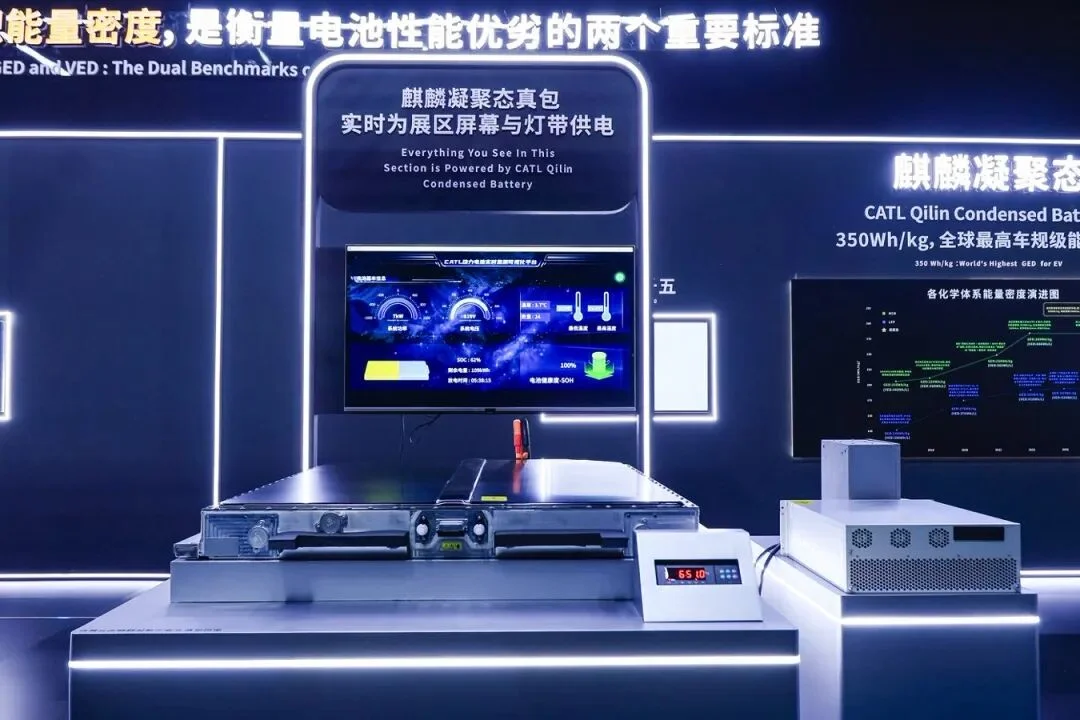
At this Technology Day, CATL first brought aviation-grade condensing-state technology down to the passenger vehicle sector, heavily launching a condensing-state battery with a cell energy density as high as 350 Wh/kg. According to 42HOW Auto, this new type of battery aggregates a series of innovative technologies including ultra-high specific energy cathodes, condensed solid electrolytes, novel anodes, and separators, but essentially remains a lithium-ion battery based on an innovative electrolyte system.
Compared to solid-state or semi-solid-state batteries, the landing cycle for condensing-state batteries will be shorter, but they will still face significant cost pressures during the initial mass production phase.
To alleviate the cost pressure of lithium-ion batteries, CATL had already bet on sodium-ion battery technology as early as 2016 and released its first-generation product in July 2021. In December last year, as a new upward trend in lithium battery raw material prices took shape, CATL further announced at a supplier conference that it would apply sodium-ion batteries on a large scale in fields such as battery swapping, passenger vehicles, commercial vehicles, and energy storage starting from 2026, to reduce dependence on lithium resources.
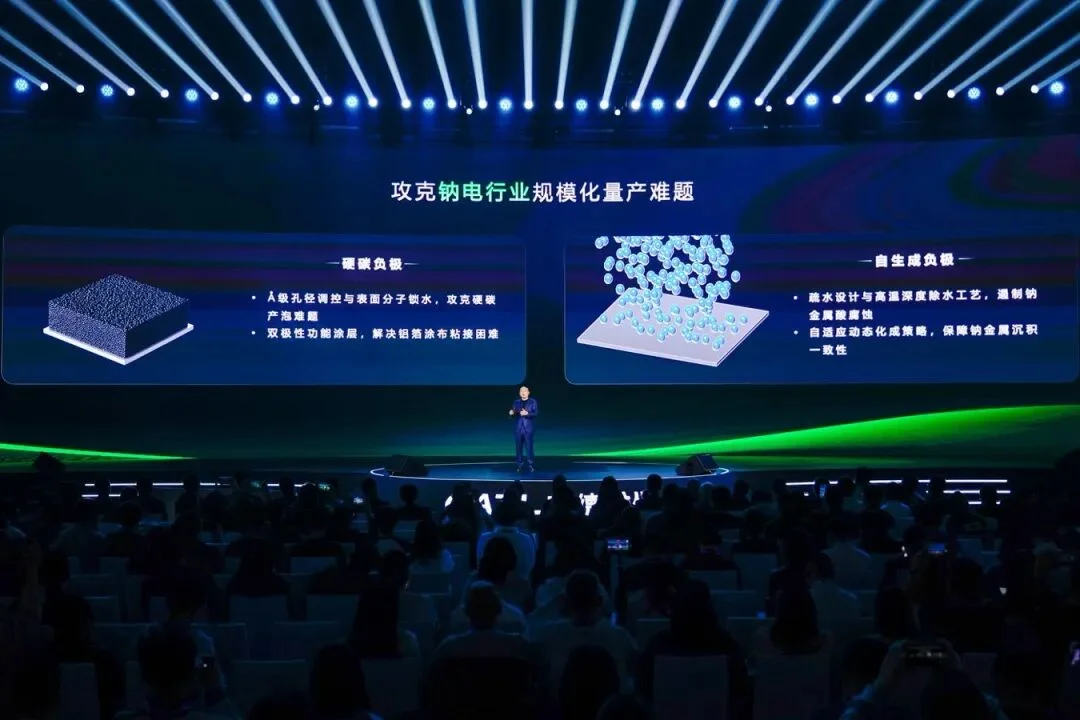
According to disclosures by Wu Kai, over the past 10 years, CATL has invested nearly one billion yuan in sodium-ion batteries, conducted R&D and testing on nearly 300,000 battery cells, and deployed more than 300 R&D personnel and over 20 PhDs. This year, it has overcome hundreds of engineering challenges, successfully breaking through the four major industry hurdles for mass production of sodium-ion batteries: extreme water control, hard carbon gas generation, aluminum foil bonding bottlenecks, and scaled mass production of self-generated anodes.
According to its plan, CATL's sodium-ion battery will enter large-scale mass production by the end of 2026, with initial cell costs of approximately RMB 0.35–0.40 per Wh.
02New Technologies, New Boundaries: CATL’s Accommodation and Adherence
"Entering 2026, the new energy market continues to develop rapidly. Over the past few months, new technologies, products, and expressions have emerged constantly, indicating that the entire industry is still moving forward and everyone is actively exploring new possibilities," Zeng Yuqun stated clearly. However, he emphasized that it is precisely at such stages that the industry needs to return to the essence of technological innovation, tackle complex problems, and overcome difficult challenges.
From five battery products covering all chemical material systems to the comprehensive implementation of the integrated super-swap charging network, CATL broke through its original technological boundaries and application scenarios at this Super Technology Day. It established a full-chain layout from battery products to charging infrastructure, aiming to drive new energy mobility from "point breakthroughs" to "full-scenario coverage," ensuring that every user travel need finds the optimal solution.
Zeng Yuqun explained that the third-generation Shenxing Superfast Charging Battery addresses time efficiency; the third-generation Qilin Battery addresses extreme performance; the newly launched integrated super-swap charging network addresses energy efficiency; and the sodium-ion battery is not merely an additional technology reserve but provides a more resource-resilient choice for larger-scale and broader regional energy transitions in the future.
"Today, the industry has many concepts and hot topics," Zeng Yuqun pointed out, noting that many so-called "innovations" are essentially a loss of patience for solving complex problems. True innovation often does not occur in the most bustling places but rather in the details of material systems, structural designs, and the countless details of thermal management, manufacturing processes, and quality control—what is referred to as "creating a dojo within a snail shell."
For example, in the battery field, micron-level defects, ppm-level impurities, and millivolt-level voltage fluctuations—things imperceptible to ordinary people—can eventually evolve into safety incidents. A human hair is approximately 70 micrometers in diameter, while CATL requires coating thickness deviation to be no more than 0.5 micrometers. If this limit is exceeded, the production line automatically stops.
He believes that for Chinese technology to go global, it cannot rely solely on speed and scale but must depend on "high-quality innovation" and "verifiable capabilities." CATL adheres to "extreme manufacturing," aiming to solve not just today's safety issues but those of five, ten, fifteen, twenty, and twenty-five years later, and throughout the entire lifecycle, ensuring continued safety, stability, and reliability.
The financial data disclosed at the launch event demonstrates CATL's growing capability to expand the boundaries of electrification.
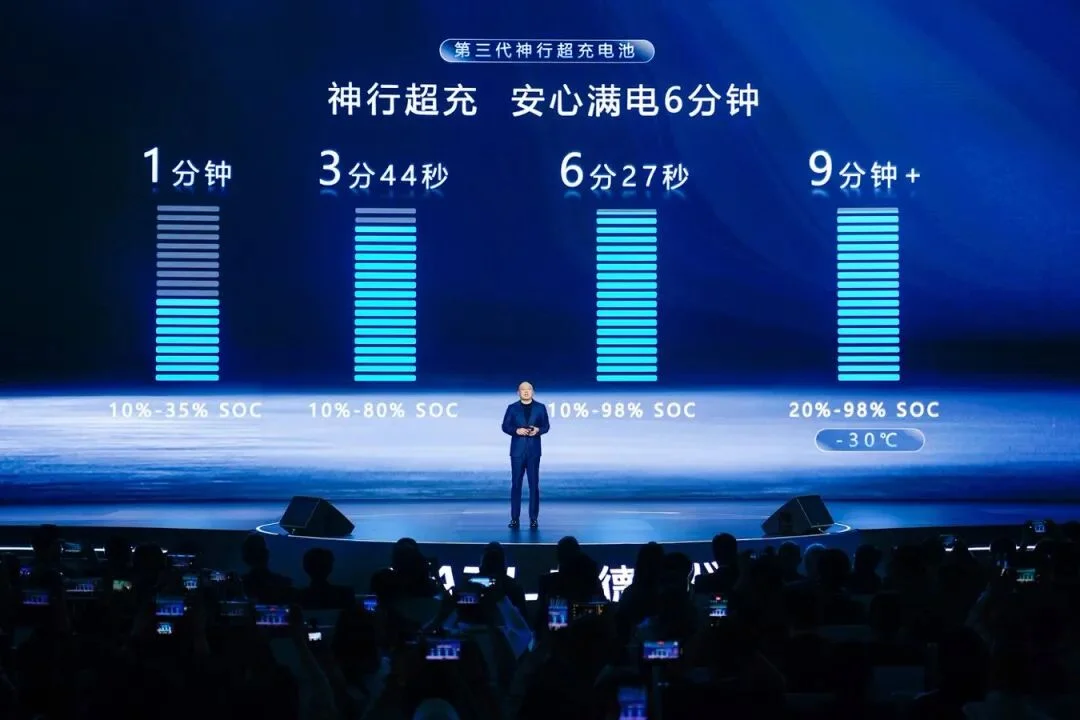
The third-generation Shenxing Supercharging Battery, with equivalent 10C and peak 15C capabilities, has once again pushed the industry's charging rate to new heights. At room temperature, it takes only 1 minute to charge from 0% to 35% SOC, only 3 minutes and 44 seconds to charge from 10% to 80% SOC, and only 6 minutes and 27 seconds to charge from 10% to 98% SOC. Meanwhile, while enhancing supercharging capability, it also maintains battery longevity, with battery capacity remaining above 90% after 1,000 full cycles.
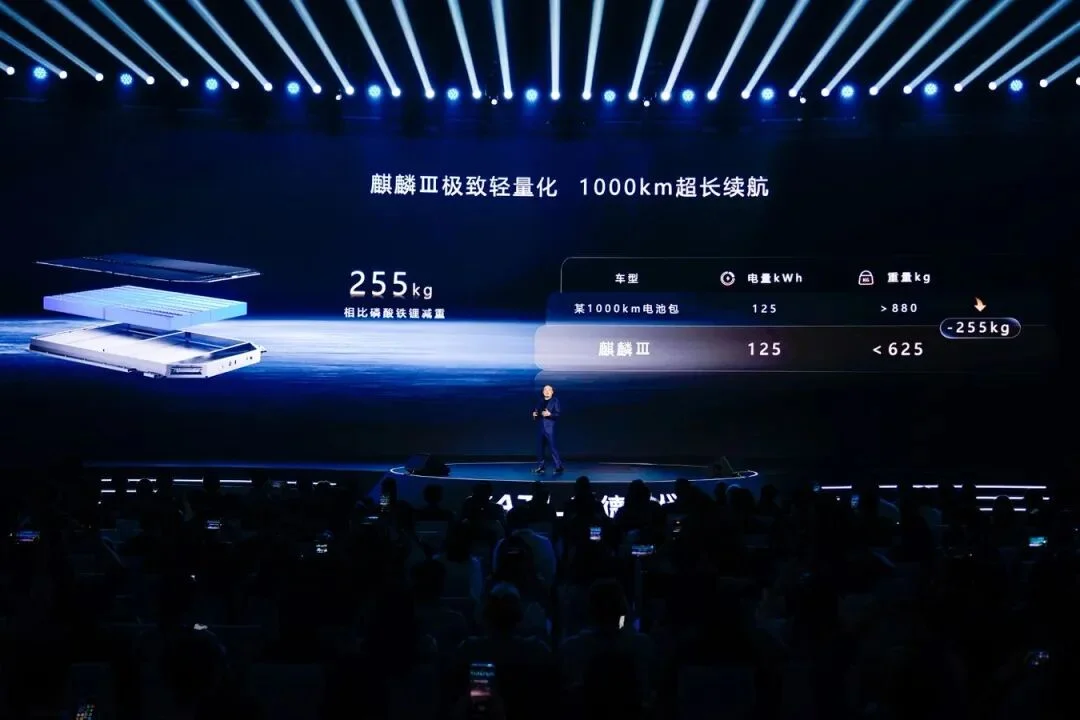
The third-generation Qilin Battery achieves simultaneous advancements in performance and lightweighting at an energy density of 280 Wh/kg. Its instantaneous power is double that of the previous generation, reaching 3 MW. A battery pack with a 1,000-kilometer range weighs under 625 kg; compared to commercially available long-range lithium iron phosphate models in the same class, this represents a weight reduction of 255 kg and a space saving of 112 liters, equivalent to saving approximately 0.78 kWh per 100 kilometers.
The second-generation Xiaoyao Super Range-Extending Hybrid Battery sets a new industry benchmark with a pure electric range of 600 kilometers and a total vehicle range of 2,000 kilometers. By using gradient mixing of ternary and lithium iron phosphate powder particles, the lithium iron phosphate version of the second-generation Xiaoyao battery can achieve a pure electric range of 500 kilometers, which is sufficient for weekly charging. The entire series is equipped with standard 10C supercharging to address the slow-charging issues of hybrid vehicles.
It is foreseeable that as CATL's new generation of super range-extending hybrid batteries are integrated into vehicles, the boundary between pure electric and extended-range vehicles will become increasingly blurred.
In fact, the range of extended-range electric vehicles has been gradually expanding over the past few years. Leapmotor's D19, unveiled last year, achieved a maximum pure electric range of 500 kilometers under CLTC conditions. According to industry statistics, the usage rate of range extenders in hybrid vehicles with a pure electric range of less than 400 kilometers is as high as 15%. However, when the range reaches 600 kilometers, the usage rate of the range extender may drop to below 1%.
If the three mainstream lithium-ion batteries mentioned above are set to significantly expand the product boundaries of electric vehicles, then in an environment where automakers face widespread product homogenization and intense cost-reduction pressures, CATL’s current optimal technical and cost solutions for its high-end and low-end markets are condensed-matter batteries with energy densities starting at 350 Wh/kg and sodium-ion batteries costing between RMB 0.35 and RMB 0.40 per Wh.
According to official disclosures, CATL’s new sodium-ion battery achieves a maximum energy density of up to 175 Wh/kg, nearly matching that of ordinary lithium iron phosphate (LFP) batteries available on the market. It also delivers peak industry performance, such as stable discharge at -50°C, offering significant advantages over LFP batteries in low-temperature environments. With a pure-electric range of up to 400 kilometers, it is poised to be highly competitive in entry-level models.
In terms of charging infrastructure, CATL continues to directly compete with longtime rival BYD. At this press conference, CATL further unveiled the No. 26 Chocolate Battery and announced the upgrade of all its previous battery-swapping stations into supercharging-and-swapping integrated stations. Yang Jun, General Manager of CATL’s battery-swapping business, stated at the Technology Day event that charging-with-storage solutions are merely transitional, and that supercharging-and-swapping integrated stations represent the future optimal form of energy replenishment.
According to 42HOW Auto, CATL’s No. 26 Chocolate Battery features an 800V high-voltage architecture. The initial version offers 75 kWh of capacity, with larger-capacity versions to follow. It fully adapts to B-segment through C-segment 800V models. Combined with previously released products, CATL can now cover A0-segment through C-segment vehicles and has partnered with 11 automakers—including Changan, Chery, GAC Group, Seres, SAIC-GM-Wuling, and BAIC—across 18 brands and 25 models.
Under its plan, CATL aims to complete the construction of 4,000 supercharging-and-swapping stations this year, covering nearly 190 cities and a highway network consisting of 12 vertical and 11 horizontal routes.
Standing at the crossroads of new technologies, the answer CATL provided at this Technology Day was not a single specific choice, but a comprehensive suite of solutions.
In response, Guosen Securities noted in its latest research report that CATL leads industry development through continuous technological innovation, strengthens its leading position, and maintains its profit forecasts for CATL. According to Guosen Securities’ estimates, CATL’s net profit attributable to shareholders will increase from RMB 96.351 billion in 2026 to RMB 140.887 billion in 2028, corresponding to PE valuations of 21.2 times and 14.5 times, respectively.
Written by: Florence Edited by: Daji