


Pure EV and Super Hybrid: Rongwei Accelerates New Energy Transition
How short can the interval be between launching two different versions of the same model? For Rongwei, it is one month.
On July 11, Rongwei released official images of the second member of its new 'D Jiazu' series — the D7 DMH. This comes just one month after the launch of the D7 EV.
'In martial arts, speed is everything.' Is Rongwei pressing the accelerator on its transition to new energy vehicles?
Without further ado, here are some images.
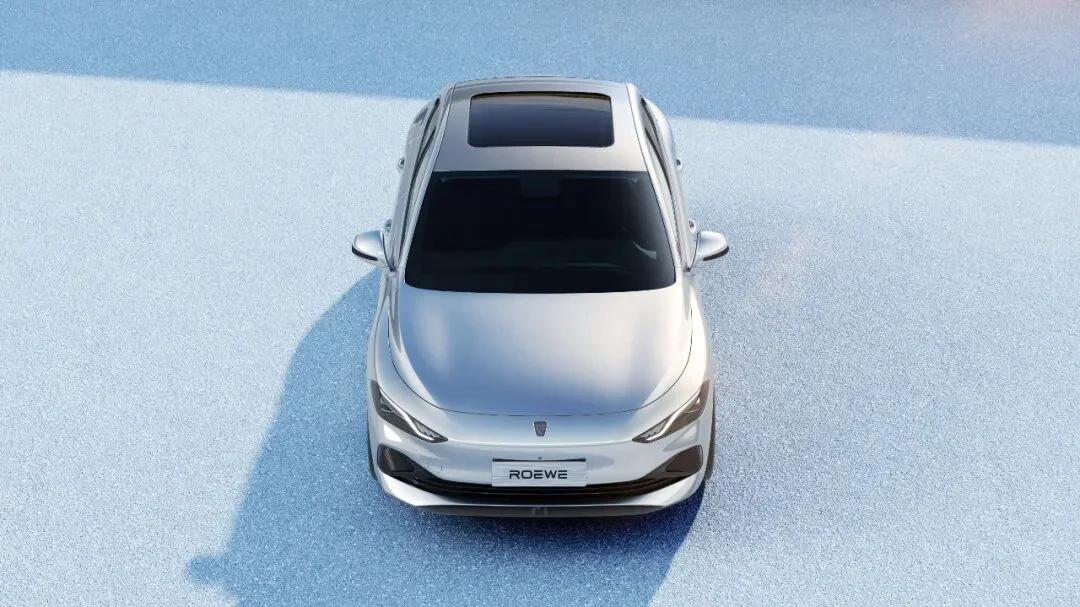
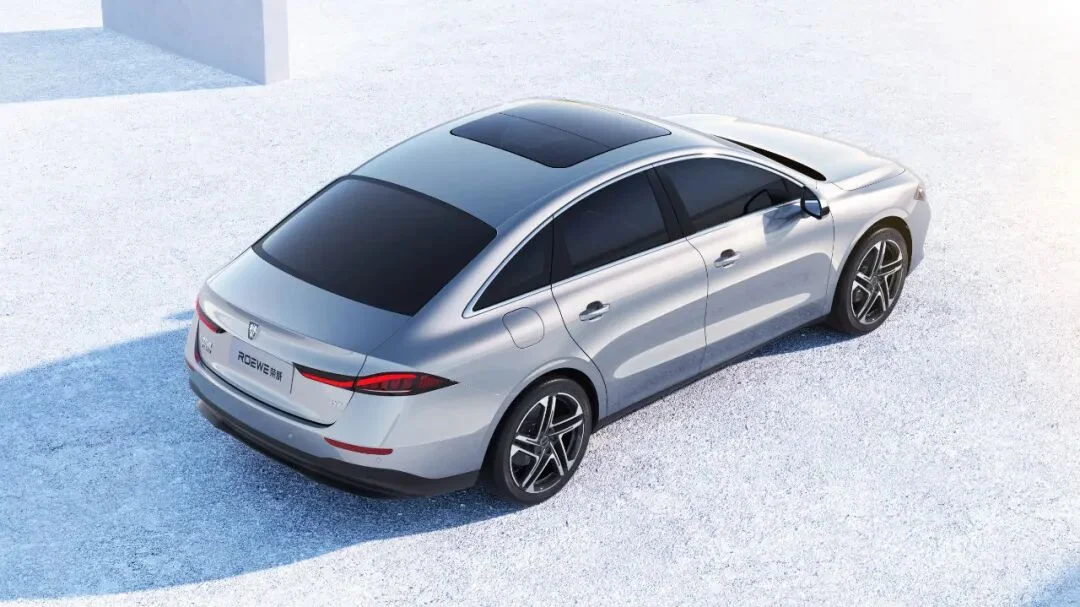
What do you think of the look of the D7 DMH?
Exterior Design: A 'Face' Change
The front end of the D7 DMH is clearly distinct from that of the D7 EV.
As a hybrid, the D7 DMH requires a grille, precluding the fully closed-face design and minimalist aesthetic of the D7 EV. It adopts a mainstream modern style, using an expanded grille to convey a sense of power.
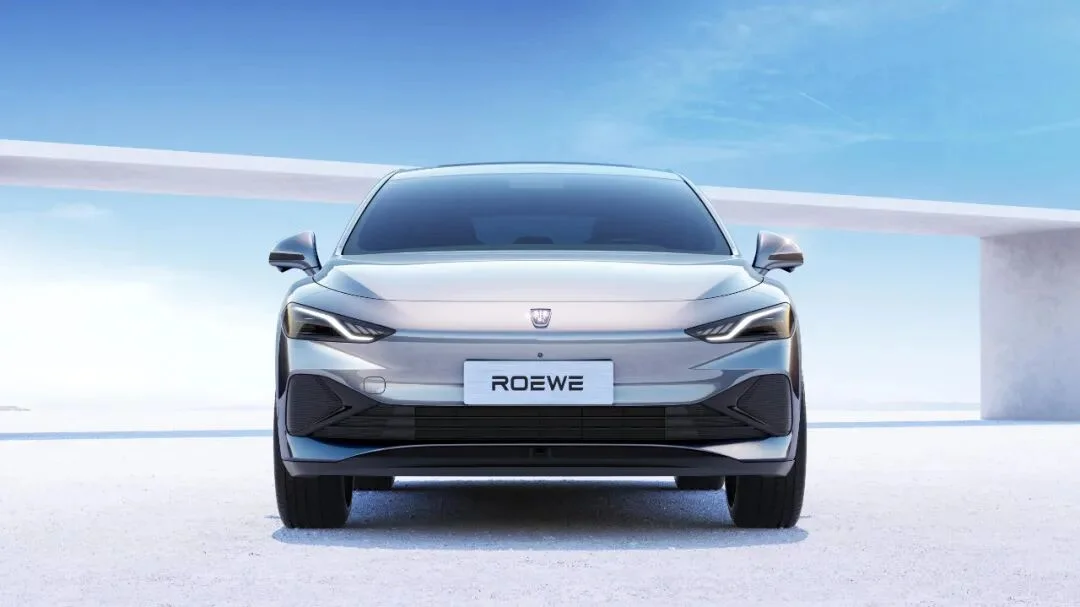
The grille's expansion allowed the split headlights of the D7 EV to merge into a single "lightning-bolt" unit on the D7 DMH. The lightning-shaped daytime running lights extend outward, creating visual tension while echoing the taillights for a balanced design.
Despite these frontal differences, the D7 DMH retains the design language introduced by the D7 EV to maintain brand identity.
Beyond the front, the D7 DMH inherits the D7 EV's fastback silhouette, smooth waistline, arched lower body, and small ducktail spoiler. On the side and rear, the only changes are the replacement of hidden door handles with conventional ones and the addition of a fuel filler cap; otherwise, the designs are nearly identical.
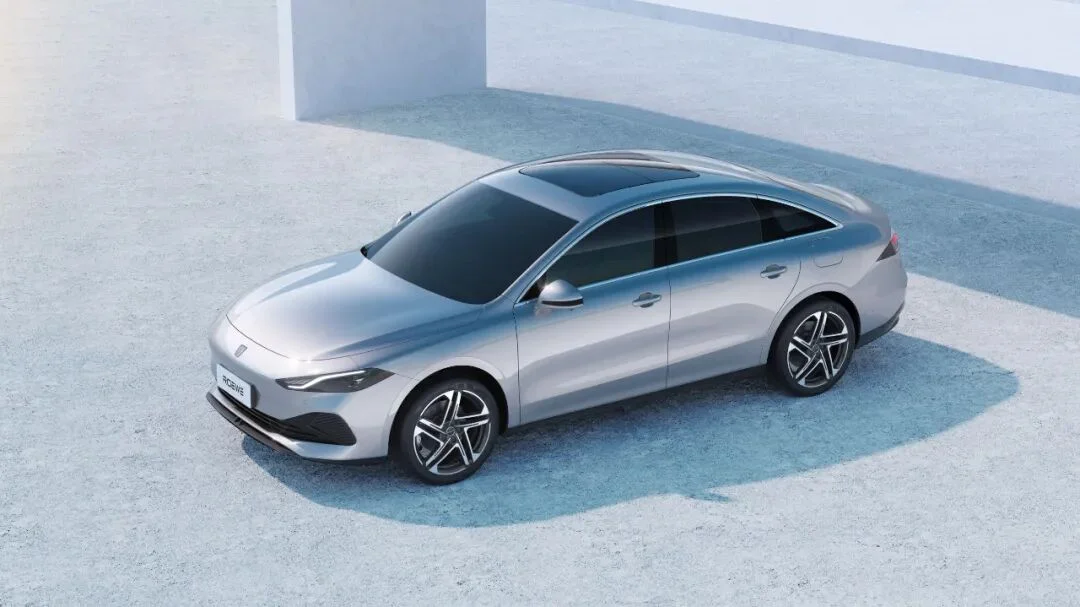
With dimensions of 4,890mm in length, 1,890mm in width, and 1,510mm in height, and a wheelbase of 2,810mm, the D7 DMH features a solid B-segment footprint. This size ensures ample interior space while enabling a low-slung stance that enhances visual impact.
Overall, the designs of the D7 DMH and D7 EV share a common lineage while each maintaining its own distinct characteristics. The D7 DMH incorporates design elements that convey a stronger sense of power, aligning with modern mainstream aesthetics; in contrast, the D7 EV reflects current design trends for pure electric vehicles through a more minimalist approach.
The redesigned D7 DMH, paired with the D7 EV, establishes a "dual front fascia" design for Rongwei's "D Jiazu" lineup. Driven by aesthetic considerations, this strategy could potentially appeal to a broader range of users.
Entering the B-segment Market: Precise Positioning for the D7 DMH
The B-segment market has always been fiercely contested territory. However, Rongwei’s entry into this space is backed by unique advantages.
First, most models under the Rongwei brand are priced between RMB 150,000 and RMB 200,000. In the era of internal combustion engines, this price bracket for B-segment cars was largely dominated by traditional joint-venture brands. With the rise of new energy vehicles (NEVs) and improvements in domestic automotive manufacturing capabilities, the balance of power between traditional joint-ventures and domestic brands is gradually shifting in favor of the latter. Rongwei is capitalizing on these favorable conditions for domestic brands.
Second, within the RMB 150,000–RMB 200,000 price range, there are few B-segment hybrid sedan options, meaning few products directly compete with the D7 DMH. Currently, the only notable competitor appears to be the extended-range version of the Changan DEEPAL SL03.
Therefore, the D7 DMH’s positioning as a "B-segment super-hybrid sedan priced between RMB 150,000 and RMB 200,000" is both distinctive and precise. It benefits from the current favorable environment for domestic brands while avoiding the brutal competition inherent in the traditional B-segment fuel vehicle market.
For the D7 DMH to achieve strong sales, the external conditions are already in place; the next step is whether the product’s capabilities can meet user expectations.
The core strength of the D7 DMH lies in its "DMH Chaojihundongxitong" (Super Hybrid System).
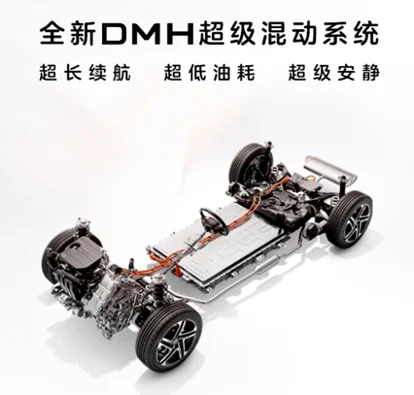
Equipped with the DMH Shuangdianjichaojihundongxitong (Dual-Motor Super Hybrid System), which utilizes an Atkinson cycle and a hybrid-specific engine with a thermal efficiency exceeding 43%, the D7 DMH achieves a CLTC battery-depleted fuel consumption of 4.3 L/100 km, a CLTC pure-electric range of 125 km, and a combined CLTC range of up to 1,400 km.
With its long range and low fuel consumption, the D7 DMH meets the practicality and economic needs of buyers in the RMB 150,000–200,000 price segment.
Compared with the DEEPAL SL03 Extended-Range Electric Vehicle (EREV) variant, the D7 DMH holds a competitive edge in terms of technical advantages.
Under CLTC testing conditions, the DEEPAL SL03 EREV offers a range of 1,200 km and a battery-depleted fuel consumption of 4.5 L/100 km, figures that are inferior to those of the D7 DMH.
Notably, the BYD Seal DM-i is expected to launch later this year. Leveraging the brand influence of BYD, the Seal series, and the DM-i technology, it is likely to become a formidable competitor to the D7 DMH.
Once all three models hit the market, the D7 DMH, DEEPAL SL03 EREV, and Seal DM-i will likely engage in fierce competition within the B-segment hybrid sedan market priced between RMB 150,000 and 200,000. The intensity of this rivalry remains to be seen.
At present, the D7 DMH’s capabilities and ambitions are indeed substantial, but competitors are also continuously intensifying their market efforts. To realize its ambitions, the D7 DMH must accelerate its launch schedule to quickly enter the market, secure a foothold in the B-segment hybrid sedan segment, and accumulate first-mover advantages.
Dual-Track Layout: Rongwei Accelerates Entry into the New Energy Track
Amidst the industry-wide rush into new energy vehicles (NEVs), Rongwei has begun an unceasing transformation process.
Previously, consumer demand for NEVs was primarily driven by "novelty-seeking" and "cost-saving" motives, concentrating purchases at the high-end and low-end extremes of the market. However, as NEV technology matures and consumer understanding deepens, the mid-range segment—now the largest share of consumption—is rising.
In the B-segment pure electric sedan and B-segment hybrid sedan markets, few brands have entered so far. The brand that completes its layout first is likely to seize the market's commanding heights.
Leveraging both pure electric and hybrid technologies, Rongwei has preliminarily established a dual-track layout in the B-segment NEV market with the D7 EV and D7 DMH, building a competitive 1.0 product matrix. Rongwei’s push to capture market share is formidable.
Looking ahead, including the D7 EV and D7 DMH, Rongwei plans to launch eight new energy models over the next three years, covering sedans, SUVs, and MPVs to fully address mainstream segments such as compact, mid-size, and large vehicles.
Backed by Shangqi, Rongwei’s new energy transformation has officially begun. Both the D7 EV and D7 DMH are scheduled for launch this year. We will wait and see what further developments unfold.
Title: Pure Electric + Super Hybrid: Roewe New Energy Accelerates Its Transformation By Isaiah Edited by 308